Chapter 7: Law and Sustainable Development
On the night of 2–3 December 1984, a highly toxic gas escaped from a pesticide plant in Bhopal, Madhya Pradesh. It spread over sleeping neighbourhoods around the factory. Thousands of people died, and many thousands more were left with injuries they carried for the rest of their lives. It remains one of the worst industrial disasters the world has known.
In the months that followed, India asked itself a hard question. It was not only who is to blame. It was how did our law allow this. There were laws on water, laws on air, laws on factory safety — but no single authority holding the whole picture, and no general power in the Central Government to set standards for hazardous substances wherever they were stored or used. Parliament’s answer, two years later, was the Environment (Protection) Act, 1986 — a law meant to sit above the others like an umbrella. The Supreme Court moved in the same direction, reading the right to a clean environment into the right to life guaranteed by Article 21.
Bhopal is about preventing harm. But there is a second, larger question behind this chapter: how does a country keep growing — building factories, roads and power plants — without handing the next generation a damaged planet? That question runs from a 1972 conference in Stockholm to the 17 Sustainable Development Goals adopted by the United Nations in 2015, and straight into India’s own statute book.
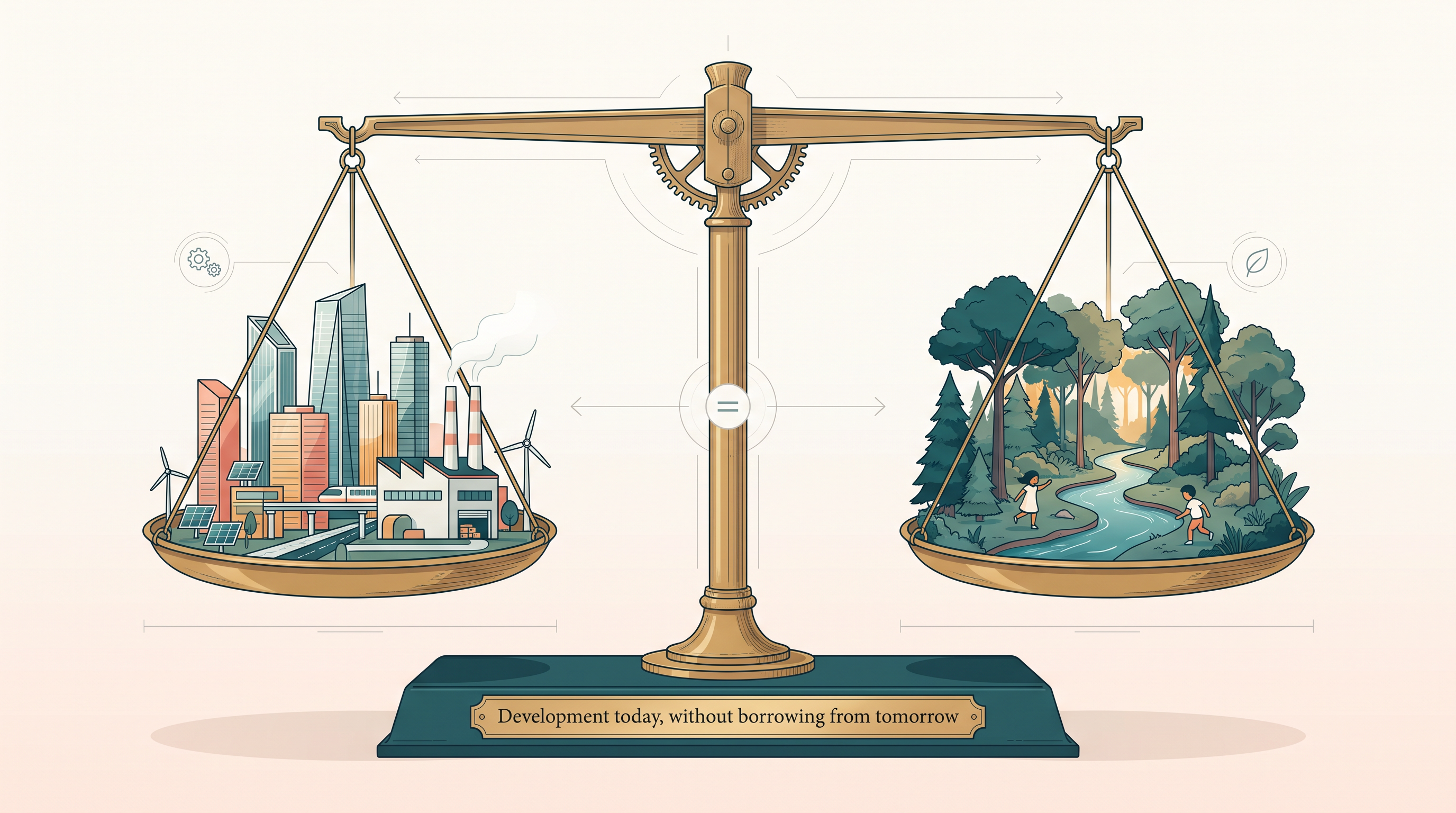
Fig. 7.0 – The balance of sustainable development.
You cannot answer these questions yet — but you will be able to answer every one of them by the time you finish this chapter.
7.1 Understanding Sustainable Development
Every generation uses the earth. It cuts trees for timber, digs out coal and iron, draws water from rivers and burns fuel to run its factories. The question that troubled thinkers in the twentieth century was a simple one: what is left for the generation that comes next?
The answer given in 1987, in the report of the World Commission on Environment and Development placed before the United Nations General Assembly, has become the standard definition of sustainable development. Development is sustainable when it meets the needs of people living today without taking away the ability of future generations to meet their own needs.
What the Definition Is Really Saying
Notice that the definition does not ask a country to stop developing. It does not say “protect the environment instead of growing”. It says growth and protection must happen together.
The aim of sustainable development is to achieve long-term economic growth by lowering the impact that growth has on the environment — by reducing air, water and soil pollution — so that a better life is secured for the generations that follow. Growth that poisons a river may raise incomes for ten years and destroy livelihoods for the next fifty. That is development, but it is not sustainable development.
The everyday examples are ordinary ones. Harnessing solar energy produces power without adding pollution to the environment. Planting different types of crops on the same land on a rotational basis improves soil fertility, so the field is still productive for the farmer’s children.
Sustainable Development in Law
Lawyers and policymakers use the term slightly differently from environmentalists. In law it is not a slogan or a moral appeal — it is a method of planning. When a government decides where a highway will run, whether a mining lease will be granted, or what emission standard a factory must meet, sustainable development is the principle that tells it how to weigh those decisions.
This is why the concept matters to a student of law. It is not merely an idea about the environment; it is a standard that legislatures use when drafting statutes and that courts use when testing whether a project or a permission was lawfully granted.
7.2 The Sustainable Development Goals
An idea, by itself, changes nothing. If the world agrees that development should be sustainable, someone must still say what that means in practice — which problems are to be tackled, by whom, and by when. That is the work the Sustainable Development Goals do.
The Sustainable Development Goals (SDGs) are a collection of 17 interlinked goals that provide a shared blueprint for peace and prosperity for people and the planet, now and into the future. They are also known as the Global Goals.
The SDG framework was adopted by the United Nations in 2015 as a universal call for action to: (a) protect the planet, (b) end poverty, and (c) ensure that all people enjoy peace and prosperity by 2030.
Two words in that sentence deserve attention. The framework is universal — it is not a set of instructions issued to poor countries by rich ones; every country accepts obligations under it. And it carries a deadline, 2030, which turns a general aspiration into something progress can be measured against.
Achieving these goals is not the work of governments alone. The creativity, knowhow, technology and financial resources of all of society are necessary — industry, universities, civil society organisations, local bodies and ordinary citizens included.
The Seventeen Goals
The 17 Sustainable Development Goals to transform our world are set out below, and are shown together in Fig. 7.1.
- Goal 1: No Poverty
- Goal 2: Zero Hunger
- Goal 3: Good Health and Well-being
- Goal 4: Quality Education
- Goal 5: Gender Equality
- Goal 6: Clean Water and Sanitation
- Goal 7: Affordable and Clean Energy
- Goal 8: Decent Work and Economic Growth
- Goal 9: Industry, Innovation and Infrastructure
- Goal 10: Reduced Inequalities
- Goal 11: Sustainable Cities and Communities
- Goal 12: Responsible Consumption and Production
- Goal 13: Climate Action
- Goal 14: Life Below Water
- Goal 15: Life on Land
- Goal 16: Peace, Justice and Strong Institutions
- Goal 17: Partnerships for the Goals
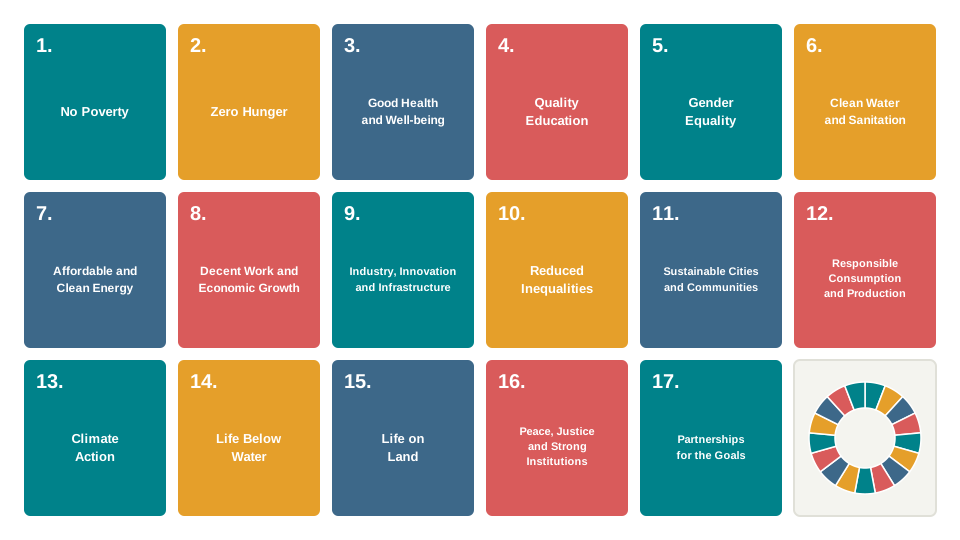
Fig. 7.1 – The seventeen Sustainable Development Goals.
Why the Goals Are Called Interlinked
Read the list again and a pattern appears. The goals are not seventeen separate projects standing side by side; they pull on one another.
Clean water (Goal 6) is not only an environmental goal — a child who falls ill from contaminated water cannot attend school, so Goal 6 is doing work for Goal 3 and Goal 4 as well. Affordable and clean energy (Goal 7) supports decent work and economic growth (Goal 8), and at the same time serves climate action (Goal 13). This is what “interlinked” means, and it is why the framework insists that progress cannot be claimed by picking a few easy goals and ignoring the rest.
7.3 International Initiatives on Environment and Development
Pollution does not respect borders. Smoke from one country’s chimneys becomes another country’s acid rain; a river polluted upstream reaches the sea through a second nation’s fields. A problem shaped like that cannot be solved by any one Parliament, however good its laws. That is why the story of environmental law begins not in a national legislature but at a series of international conferences, each of which pushed the next step of the argument forward. The sequence is shown in Fig. 7.2.
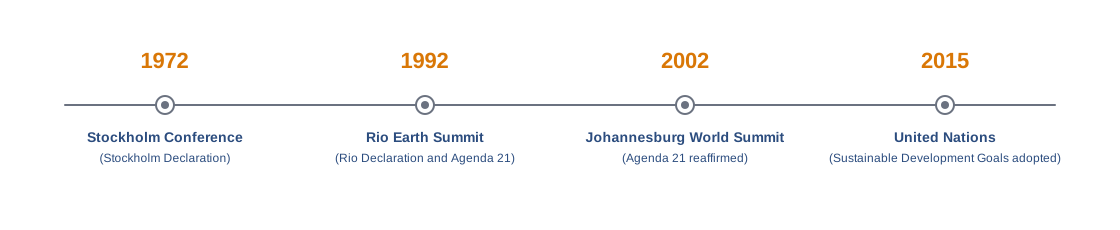
Fig. 7.2 – Timeline of international environmental conferences.
7.3.1 The Stockholm Declaration, 1972
The Stockholm Declaration, 1972 came out of the United Nations Conference on the Human Environment, held at Stockholm in Sweden. It was the first occasion on which environmental issues were discussed on a global scale, and that alone makes it a landmark.
Until then, damage to the environment was treated as a local nuisance — a smoky factory here, a dirty drain there — to be handled, if at all, by municipal authorities. Stockholm recast it as a question concerning humanity as a whole.
The Declaration proclaims a set of truths about the relationship between human beings and their surroundings. Its central proposition is that man is both a creature of his environment and the moulder of it: the environment shapes human life, and human activity in turn shapes the environment, for better or for worse. From this the Declaration draws the point that runs through everything after it — the preservation of the environment is not optional, because human well-being depends on it.
7.3.2 The Rio Declaration, 1992 — the Earth Summit
Twenty years after Stockholm, the United Nations Conference on Environment and Development (UNCED), better known as the ‘Earth Summit’, was held at Rio de Janeiro in Brazil in 1992. The Conference marked the twentieth anniversary of that first International Human Environment Conference at Stockholm, Sweden, in 1972. Representatives from 179 countries attended, to discuss the impact of human socio-economic activities on the environment.
The objective of the Rio ‘Earth Summit’ was to formulate a blueprint for global action on environment and development issues. Notice how the two words now sit together in a single title. Stockholm had established that the environment mattered; Rio’s contribution was to insist that environment and development are one subject and not two.
The Summit recognised that integrating and balancing economic, social and environmental concerns in meeting our needs is vital for sustaining human life on planet Earth. This triggered action by governments across the globe on how to ensure sustainability along with development.
The Earth Summit produced several major actions by countries across the globe, in the form of conventions and resolutions. To name a few: (a) Agenda – 21 (b) UNFCCC – United Nations Framework Convention on Climate Change (c) Convention on Biological Diversity (d) The Declaration on the Principles of Forest Management (e) Commission on Sustainable Development
7.3.3 Agenda 21
Agenda 21 was one of the most daring programmes calling for action strategies. The number in its name refers to the twenty-first century: it was a working agenda for the century the world was about to enter.
It focussed on new methods of education, new ways of preserving natural resources, and new ways of participating in a sustainable economy. The implementation of Agenda 21 was reaffirmed in the World Summit on Sustainable Development held at Johannesburg in 2002 — an important detail, because a programme that survives a decade and is renewed by the same countries that framed it has proved itself more than a conference document.
Agenda 21 treats community participation as one of the major prerequisites for sustainable development. This is its most distinctive idea. Environmental damage happens where people live and work, and the people who live there usually know before anyone else that a lake is shrinking or a landfill is leaking. A programme that reaches them is likelier to work than one written only for ministries.
Attaining sustainability therefore requires addressing the fundamental issues and challenges of development at local, regional and global levels simultaneously, and by all segments of society. Thus the key objective of sustainable development — to improve human well-being and to sustain those improvements over a period of time — remains the focus of Agenda 21.
7.4 Provisions Under the Indian Constitution
International conferences produce principles. Turning those principles into rights and duties that an Indian citizen can actually rely on is the work of the Constitution. Three separate parts of the Constitution carry environmental provisions, and each works differently, as Fig. 7.3 shows.

Fig. 7.3 – Constitutional framework for the environment.
Article 21 and the Right to a Clean Environment
The Constitution of India under Article 21 enshrines the ‘Right to Life’. Read narrowly, that Article says only that a person shall not be deprived of life or personal liberty except according to procedure established by law. Read as the Supreme Court has read it, it means a great deal more.
The Court has held that ‘life’ in Article 21 does not mean mere animal existence — it means life with dignity, with everything that makes such a life possible. In this wider interpretation, Article 21 encompasses the ‘Right to clean environment’ as an important facet of ‘life’.
Ask why that reading is not a stretch, and the answer is straightforward. A person who breathes toxic air or drinks contaminated water is being deprived of life just as surely, if more slowly, as one who is assaulted. The deprivation is simply spread over years.
The Directive Principles: Articles 38 and 48A
Part IV of the Constitution contains the Directive Principles of State Policy. These are not enforceable in a court in the way a Fundamental Right is, but they are fundamental in the governance of the country, and the State is expected to legislate and administer in accordance with them.
Article 38 shoulders the State with the responsibility of maintaining social order for ensuring a welfare state. The connection to this chapter is direct: a welfare state is possible only where people live in a pollution-free environment. A State cannot claim to be securing the welfare of its people while allowing the air they breathe to be poisoned.
Article 48A was inserted by the 42nd amendment to the Constitution of India. It places the environment squarely among the State’s obligations.
Read the words closely. The State must “protect and improve”. Those are two different obligations, and the Article accordingly requires the State to adopt two kinds of policy.
Protectionist policy imposes a ban on those things which lead to environmental degradation — for example, a ban on the use of leaded petrol, or a ban on the use of plastic bags. It works by stopping something harmful.
Improvinistic policy refers to alternatives that can be used for the improvement of the environment — for example, the use of CNG or low sulphur fuel in place of dirtier fuels, or tree plantation in industrial areas. It works by putting something better in place.
Neither alone is enough. Banning a fuel without providing a cleaner substitute simply stops economic activity; planting trees while permitting unchecked emissions treats the symptom and ignores the cause.
Article 51A(g): The Duty of Every Citizen
A duty has also been imposed on all citizens to protect our environment. Governments regulate industries, but individuals decide whether to burn waste in the open, dump refuse in a lake, or leave a hillside stripped of trees, and no inspectorate is large enough to police that.
Fundamental Duties, like Directive Principles, are not directly enforceable against a citizen by way of punishment. Their value lies elsewhere: they tell courts and legislatures what the constitutional expectation of a citizen is, and a statute that imposes environmental obligations on individuals draws its legitimacy from this Article.
The Legal Mechanism
Put the provisions together and the constitutional design becomes visible. The Constitution clearly endows a duty on the State to protect and improve the environment and to safeguard the forests and wildlife of the country. To strengthen environment protection at the grassroot level, it further imposes a fundamental duty on every citizen to protect and improve the natural environment including forests, lakes, rivers and wildlife.
The State, indispensably, has been directed by way of provisions under Part III and Part IV to ensure the protection of the environment by suitable legislations, regulations and otherwise. Part III supplies the right a citizen may enforce; Part IV supplies the standard the State must legislate towards. The statutes that follow in the next section are the State discharging that direction.
The Honourable Supreme Court in K. M. Chinnappa v. Union of India defined “Environmental Law”.
Two words in that definition repay attention. “Omission” tells us that environmental law reaches a failure to act — not installing the effluent treatment plant the licence required is as much a breach as actively discharging waste. “Likely to pollute” tells us the law does not wait for damage to occur; a risk of pollution is enough to attract regulation. Both features run through every statute discussed in this chapter.
7.5 The Legal Framework for Environment Protection in India
It is with the enactment of the Environment (Protection) Act, 1986 that a concrete step was taken for combating modern day challenges in environment protection and improvement.
Prior to the enactment of that Act, the environment protection regime was more ‘regulatory’ in nature. Laws existed, but each addressed one kind of pollution through its own authority and its own procedure — water here, air there — and no single statute gave the Central Government a general power to set standards across the field. A hazardous chemical that fell neatly under none of the existing headings could slip between them.
At present, environment protection in India comprises the following legislations and regulatory bodies.
- Environment (Protection) Act, 1986 — the general or “umbrella” law, examined in the next section.
- Air (Prevention and Control of Pollution) Act, 1981 — controls emissions into the air and empowers the Pollution Control Boards to set air quality standards.
- Water (Prevention and Control of Pollution) Act, 1974 — the statute under which the Central and State Pollution Control Boards were first constituted, and which regulates the discharge of sewage and trade effluents.
- The Noise Pollution (Regulation and Control) Rules, 2000 — prescribe permissible noise limits for different zones and for different hours of the day.
- National Green Tribunal Act, 2010 — establishes a specialised tribunal to hear environmental disputes.
- Energy Conservation Act, 2001 — promotes the efficient use of energy, on the reasoning that energy not consumed is pollution not created.
Notice that item (d) is a set of Rules while the rest are Acts. An Act is passed by the legislature; Rules are made by the government under the authority an Act gives it, and can therefore be amended far more quickly as conditions change. Both are law, and both bind — the difference lies in who makes them and how easily they can be revised.
7.6 The Environment Protection Act, 1986
In the wake of the Bhopal tragedy, the Government of India enacted the Environment (Protection) Act, 1986 under Article 253 of the Constitution. The disaster had exposed exactly the gap described in the previous section: laws existed for water and for air, but nothing gave the Central Government a general power over hazardous substances wherever they were stored, handled or released.
Why Article 253
Article 253 matters here, and students are often puzzled by it. Subjects such as public health and industry are ordinarily within the States’ domain, so a central law reaching into them needs a source of power.
Because the Act was framed to implement decisions taken at an international conference, Parliament could legislate for the whole country regardless of the usual division of subjects. Environmental protection thus entered Indian law through India’s international commitments.
The Purpose of the Act
The purpose of the Act is to implement the decisions of the United Nations Conference on the Human Environment — the Stockholm conference of 1972 discussed earlier in this chapter — relating to the protection and improvement of the human environment, and the prevention of hazards to human beings, other living creatures, plants and property arising from human activities undertaken for economic development.
Read that purpose carefully. The protected class is not only people. Other living creatures, plants and property are named alongside human beings, which is why the Act can be invoked over damage to a forest or a wetland where no individual has been personally injured.
An “Umbrella” Legislation
The Act is described as an “umbrella” legislation. It is designed to provide a framework for the Central Government to coordinate the activities of various central and State authorities established under previous laws, such as the Water Act and the Air Act.
An umbrella law does not replace the statutes beneath it. Those Acts and their authorities continue to function; what the umbrella supplies is a single co-ordinating power above them — general standard-setting authority, and the capacity to act on any environmental hazard that the earlier, subject-specific laws did not anticipate.
India, like any other developing nation, faces an alarming concern in environmental degradation caused by economic activities. The Act’s framers were conscious of one weakness in particular: control mechanisms to guard against the slow, insidious build-up of hazardous substances in the environment — especially new chemicals — remain weak.
That phrase, slow and insidious, is the important one. A gas leak announces itself within hours. A chemical accumulating quietly in groundwater or in soil over two decades announces itself only when the harm is already done, and by then the plant responsible may have closed and its records vanished. Legislating against a danger of that shape is far harder than legislating against a visible accident, and it remains the central difficulty of environmental regulation.
7.7 Pollution Control Boards
A statute can declare that water shall not be polluted, but declarations do not test effluent or inspect chimneys. Somebody must measure, permit, monitor and prosecute. In India that work is done by the Pollution Control Boards — one at the Centre and one in each State, arranged as shown in Fig. 7.4.
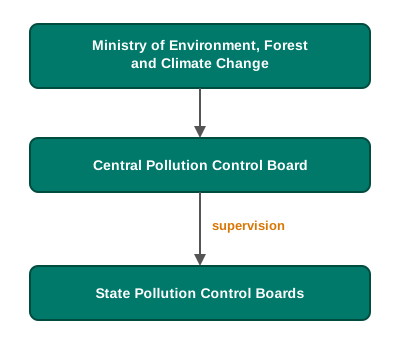
Fig. 7.4 – Hierarchy of pollution control boards.
7.7.1 The Central Pollution Control Board
The Central Pollution Control Board (CPCB) is a statutory organisation under the Ministry of Environment, Forest and Climate Change. It is constituted under the Water (Prevention and Control of Pollution) Act, 1974.
Calling it a statutory organisation is not a formality. It means the Board owes its existence to an Act of Parliament rather than to an administrative order, so its powers, composition and functions are fixed by law and cannot be curtailed at the convenience of a department.
The principal functions of the CPCB have been spelt out in the Water (Prevention and Control of Pollution) Act, 1974 and the Air (Prevention and Control of Pollution) Act, 1981. Its broad functions are to promote the cleanliness of streams and wells in different areas of the States by the prevention, control and abatement of water pollution, and to improve the quality of air and to prevent, control or abate air pollution in the country.
Analysed in detail, those functions may be summarised as follows: (a) Advise the Central Government on any matter concerning the prevention and control of water and air pollution and the improvement of the quality of air; (b) Plan and cause to be executed a nation-wide programme for the prevention, control or abatement of water and air pollution; (c) Coordinate the activities of the State Boards and resolve disputes among them; (d) Provide technical assistance and guidance to the State Boards, and carry out and sponsor investigation and research relating to problems of water and air pollution and their prevention, control or abatement; (e) Plan and organise the training of persons engaged in programmes on the prevention, control or abatement of water and air pollution; (f) Organise, through mass media, a comprehensive mass awareness programme on the prevention, control or abatement of water and air pollution; (g) Collect, compile and publish technical and statistical data relating to water and air pollution and the measures devised for their effective prevention, control or abatement; (h) Prepare manuals, codes and guidelines relating to the treatment and disposal of sewage and trade effluents, as well as for stack gas cleaning devices, stacks and ducts; (i) Disseminate information in respect of matters relating to water and air pollution and their prevention and control; (j) Lay down, modify or annul, in consultation with the State Governments concerned, the standards for a stream or well, and lay down standards for the quality of air; and (k) Perform such other functions as may be prescribed by the Government of India.
Look at what kind of body this list describes. Only two of these functions — coordinating the State Boards and laying down standards — involve the CPCB commanding anyone. The rest are advisory, technical, research-based and educational. The Central Board is best understood as the country’s environmental brain: it sets the standards, produces the data and the manuals, trains the personnel, and settles disputes between States. The hands that apply that work on the ground belong to the State Boards.
7.7.2 The State Pollution Control Boards
The State Pollution Control Board (SPCB) is a statutory organisation established under the Water (Prevention and Control of Pollution) Act, 1974, which works under the supervision of the Central Pollution Control Board to implement the environmental laws and rules within the respective State for the protection of the environment.
It is mandatory for every business, whether new or existing, to obtain the necessary authorization from the respective State Pollution Control Board in order to carry out the activities of the business in a State. This single requirement is the practical heart of Indian pollution control. It converts environmental standards from advice into a condition of doing business, and it places the Board at the entrance to industrial activity rather than at the scene of the damage afterwards.
Objectives
The objectives of the State Board are: (a) Preservation of natural resources; (b) Promotion of sustainable development for the economic growth of the nation, along with environmental protection and social equity; (c) Effective waste management for the protection of the environment; (d) Spreading awareness about the protection of the environment among consumers; (e) Encouraging the general public to use environment-friendly products such as paper bags, public transport and CFLs, to help reduce environmental pollution.
Objective (b) is worth pausing on. It states the theme of this whole chapter in the language of an administrative body: economic growth, environmental protection and social equity, pursued together rather than traded against one another.
Functions of the Board
The broad functions of the State Board are in line with the functions of the Central Board and are aimed at the prevention, abatement and control of air and water pollution. Moreover, its primary motive is to assist entrepreneurs and industries in the fulfilment of Corporate Environmental Responsibility (CER) — the expectation that a business will take responsibility for the environmental consequences of its own operations, rather than treating them as somebody else’s problem.
The functions of the Board may be detailed as follows: (a) Issue NOCs (No-Objection Certificates) from the perspective of environmental pollution, including the adequacy of the site from the environmental angle; (b) Assessment of ambient air quality; (c) Assessment of inland surface waters’ quality; (d) Issuance of consent under the provisions of Section 21 of the Air (Prevention and Control of Pollution) Act, 1981; (e) Issue of consent under the provisions of sections 25/26 of the Water (Prevention and Control of Pollution) Act, 1974; (f) Collection and assessment of water cess, under the provisions of the Water (Prevention and Control of Pollution) Cess Act, 1977; (g) Assessment and identification of municipal and industrial pollution sources, and their control; (h) Conducting mass awareness programmes; (i) Development of pollution control technologies; (j) Notification of emission and effluent standards; (k) Instituting legal action against defaulters; (l) Implementing the Biomedical Waste Rules, 1998; (m) Issuance of authorization under the Hazardous Waste Management Rules, 1989; (n) Identifying onsite crisis management plans, isolated storage and the like, under the Manufacture, Storage and Import of Hazardous Chemicals Rules, 1989.
Compare this list with the Central Board’s. Where the CPCB advises, plans and publishes, the SPCB inspects, measures, permits and prosecutes. Functions (b), (c) and (g) are measurement; (a), (d), (e) and (m) are permission; (k) is enforcement. This is a working regulator, and it is the body a citizen actually deals with.
Law, Goals and Implementation
The SDGs can be among the most useful tools for building economies in a way that provides for future generations sustainably. All countries must work together to achieve these goals and create a sustainable world.
India has put together a legislative framework for the attainment of these goals — the constitutional provisions, the statutes and the Boards set out in this chapter. What is needed now is strong implementation of these laws, to achieve a better relationship between society and the environment.
That last sentence deserves to be taken seriously rather than read as a pious ending. Every institution described above already has the legal power it needs. Whether a river runs clean depends less on the drafting of the next statute than on whether the consent conditions in the last one are actually monitored, and whether defaulters are actually prosecuted.
7.8 Summary
- Sustainable development is economic development that meets the needs of the present without compromising the ability of the future generations to meet their own needs (United Nations General Assembly, 1987).
- The aim of sustainable development is long-term economic growth achieved by lowering the impact of that growth on the environment, through the reduction of air, water and soil pollution.
- Common examples of sustainable practice include harnessing solar energy to reduce pollution, and planting different crops on the same land on a rotational basis to improve soil fertility.
- In law, sustainable development is an approach to economic planning that attempts to foster economic growth while preserving the quality of the environment for future generations.
- The Sustainable Development Goals (SDGs), also called the Global Goals, are 17 interlinked goals providing a shared blueprint for peace and prosperity for people and the planet.
- The SDG framework was adopted by the United Nations in 2015 as a universal call for action to:
- protect the planet;
- end poverty; and
- ensure that all people enjoy peace and prosperity by 2030.
- Achieving the SDGs requires the creativity, knowhow, technology and financial resources of all of society, and not of governments alone.
- The goals are interlinked, which means progress on one supports progress on others, and a gain purchased by a loss elsewhere in the framework is not sustainable progress.
- The Stockholm Declaration, 1972 was the first occasion on which environmental issues were discussed on a global scale, and it proclaims that man is both a creature and the moulder of his environment.
- The United Nations Conference on Environment and Development, known as the Earth Summit, was held at Rio de Janeiro, Brazil, in 1992, and was attended by representatives of 179 countries.
- The Earth Summit produced several major outcomes, including:
- Agenda – 21;
- the United Nations Framework Convention on Climate Change (UNFCCC);
- the Convention on Biological Diversity;
- the Declaration on the Principles of Forest Management;
- the Commission on Sustainable Development.
- Agenda 21 called for new methods of education, new ways of preserving natural resources and new ways of participating in a sustainable economy, and its implementation was reaffirmed at the World Summit on Sustainable Development held at Johannesburg in 2002.
- Agenda 21 treats community participation as a major prerequisite of sustainable development, requiring action at local, regional and global levels by all segments of society.
- Article 21 of the Constitution enshrines the Right to Life, and in its wider interpretation this includes the right to a clean environment as an essential facet of life.
- Article 38 places on the State the responsibility of maintaining social order for ensuring a welfare state, which is possible only where people live in a pollution-free environment.
- Article 48A, inserted by the 42nd amendment, directs the State to endeavour to protect and improve the environment and to safeguard the forests and wild life of the country.
- Article 48A requires the State to adopt two kinds of policy:
- protectionist policy, which bans things that cause environmental degradation, such as leaded petrol or plastic bags;
- improvinistic policy, which provides alternatives that improve the environment, such as CNG or low sulphur fuel and tree plantation in industrial areas.
- Article 51A(g) makes it the duty of every citizen of India to protect and improve the natural environment including forests, lakes, rivers and wild life, and to have compassion for living creatures.
- The Supreme Court in K. M. Chinnappa v. Union of India defined environmental law as an instrument to protect and improve the environment and to control or prevent any act or omission polluting or likely to pollute the environment.
- Environment protection in India presently comprises the following legislations and regulatory bodies:
- Environment (Protection) Act, 1986;
- Air (Prevention and Control of Pollution) Act, 1981;
- Water (Prevention and Control of Pollution) Act, 1974;
- The Noise Pollution (Regulation and Control) Rules, 2000;
- National Green Tribunal Act, 2010;
- Energy Conservation Act, 2001.
- The Environment (Protection) Act, 1986 was enacted in the wake of the Bhopal tragedy, under Article 253 of the Constitution, which empowers Parliament to legislate for implementing decisions taken at an international conference.
- The purpose of the Act is to implement the decisions of the United Nations Conference on the Human Environment relating to the protection and improvement of the human environment and the prevention of hazards to human beings, other living creatures, plants and property.
- The Act is an umbrella legislation, providing a framework for the Central Government to coordinate the activities of central and State authorities established under earlier laws such as the Water Act and the Air Act.
- The Central Pollution Control Board is a statutory organisation constituted under the Water (Prevention and Control of Pollution) Act, 1974, and its principal functions are spelt out in that Act and in the Air (Prevention and Control of Pollution) Act, 1981.
- The functions of the Central Board are largely advisory, coordinating and technical — advising the Central Government, planning nation-wide programmes, coordinating State Boards and resolving disputes among them, and laying down standards for streams, wells and air quality in consultation with the State Governments concerned.
- The State Pollution Control Board is a statutory organisation established under the Water (Prevention and Control of Pollution) Act, 1974, and works under the supervision of the Central Pollution Control Board within its State.
- It is mandatory for every business, whether new or existing, to obtain the necessary authorization from the State Pollution Control Board in order to carry on its activities in that State.
- The functions of the State Board are regulatory and enforcement-oriented, and include issuing No-Objection Certificates, granting consent under Section 21 of the Air Act and sections 25/26 of the Water Act, assessing air and water quality, notifying emission and effluent standards, and instituting legal action against defaulters.
- India has a legislative framework in place for attaining the Sustainable Development Goals; what it needs now is strong implementation of those laws to achieve a better relationship between society and the environment.
7.9 Key Terms
Sustainable development — economic development that meets the needs of the present without compromising the ability of the future generations to meet their own needs.
Sustainable Development Goals (SDGs) — a collection of 17 interlinked goals adopted by the United Nations in 2015, providing a shared blueprint for peace and prosperity for people and the planet, and also known as the Global Goals.
Stockholm Declaration, 1972 — the declaration adopted at the United Nations Conference on the Human Environment, the first occasion on which environmental issues were discussed on a global scale.
Earth Summit — the United Nations Conference on Environment and Development (UNCED) held at Rio de Janeiro, Brazil, in 1992, which framed a blueprint for global action on environment and development.
Agenda 21 — the action programme adopted at the Earth Summit calling for new methods of education, new ways of preserving natural resources and new ways of participating in a sustainable economy, reaffirmed at Johannesburg in 2002.
Community participation — the involvement of all segments of society in decisions affecting the environment, treated by Agenda 21 as a major prerequisite of sustainable development.
Right to clean environment — the right recognised as a facet of the Right to Life under Article 21 of the Constitution through its wider judicial interpretation.
Directive Principles of State Policy — the provisions in Part IV of the Constitution which are not directly enforceable in a court but are fundamental in the governance of the country.
Protectionist policy — a policy that imposes a ban on things which lead to environmental degradation, such as a ban on leaded petrol or plastic bags.
Improvinistic policy — a policy that provides alternatives for the improvement of the environment, such as the use of CNG or low sulphur fuel and tree plantation in industrial areas.
Fundamental Duty — an obligation placed on every citizen by Part IVA of the Constitution, including the duty under Article 51A(g) to protect and improve the natural environment.
Environmental law — an instrument to protect and improve the environment and to control or prevent any act or omission polluting or likely to pollute the environment.
Umbrella legislation — a law that does not replace earlier statutes but sits above them, providing a framework for the Central Government to coordinate the authorities created under them.
Statutory organisation — a body that owes its existence, powers and functions to an Act of the legislature rather than to an administrative order.
Central Pollution Control Board (CPCB) — the statutory organisation under the Ministry of Environment, Forest and Climate Change, constituted under the Water (Prevention and Control of Pollution) Act, 1974, whose functions are largely advisory, coordinating and standard-setting.
State Pollution Control Board (SPCB) — the statutory organisation established under the Water (Prevention and Control of Pollution) Act, 1974 which works under the supervision of the Central Board to implement environmental laws within its State.
Consent — the permission a business must obtain from the State Pollution Control Board under Section 21 of the Air Act or sections 25/26 of the Water Act before emitting into the air or discharging effluent.
No-Objection Certificate (NOC) — a certificate issued by the State Pollution Control Board from the perspective of environmental pollution, including the adequacy of the proposed site from the environmental angle.
Trade effluent — liquid waste discharged from an industrial or commercial process, the disposal of which is regulated under the Water (Prevention and Control of Pollution) Act, 1974.
Ambient air — the outdoor air in a given area, whose quality the State Pollution Control Board is required to assess.
Corporate Environmental Responsibility (CER) — the responsibility of a business for the environmental consequences of its own operations, in the fulfilment of which the State Board assists entrepreneurs and industries.
7.10 Points to Ponder
The 1987 definition asks the present generation not to compromise the ability of future generations to meet “their own needs”. We cannot know what people will need in a hundred years. How can a law be framed to protect needs nobody can yet describe?
The right to a clean environment was not written into Part III of the Constitution; it was read into Article 21 by the courts. Is a right that reaches citizens through judicial interpretation as secure as one the framers wrote down? Should Parliament put it in express words?
Article 48A is a Directive Principle and cannot be enforced in a court in the way a Fundamental Right can. Would environmental protection in India be stronger if it were made directly enforceable against the State — and what difficulties would that create?
Article 51A(g) places a duty on every citizen but attaches no punishment for breaching it. Is a duty without a sanction of any use? Consider what changes, if anything, when a duty is written into the Constitution rather than left to conscience.
A protectionist policy such as a ban on plastic bags falls on everyone equally, but not everyone can equally afford the alternative. Should environmental restrictions take into account who can bear their cost?
Suppose a State can lift thousands of families out of poverty by permitting a project that will worsen air quality for a nearby town. The SDGs speak to both outcomes. How should a government, and a court reviewing its decision, weigh one against the other?
State Pollution Control Boards regulate the same industries that State governments are competing to attract. Does that create a conflict between a Board’s regulatory duty and its State’s economic interest, and how might the law reduce it?
The Stockholm Declaration proclaims principles rather than binding rules, and no country can be prosecuted for departing from it. What, then, gives such declarations their influence — and is that influence enough?
Agenda 21 treats community participation as a prerequisite of sustainability. How much say should the residents of an area have over a project the national government considers essential? Where would you place the limit?
The chapter closes by saying that what India needs now is strong implementation rather than more legislation. Looking at the framework in Sections 7.5 to 7.7, identify the point at which you think implementation most often fails, and explain your choice.
7.11 Textbook Questions
What is the meaning of sustainable development? What does it aim to achieve?
When and why was the SDG framework adopted? How can these SDGs be achieved?
Identify the SDGs which provide for protection of the environment.
Describe the legal framework in India for environment protection.
What are the main functions of:
- the Central Pollution Control Board;
- the State Pollution Control Board?
7.12 Objective Questions
The definition of sustainable development as development that meets the needs of the present without compromising the ability of future generations to meet their own needs dates from the year:
- 1972
- 1987
- 1992
- 2015
The Sustainable Development Goals are:
- 8 in number, adopted in 2000
- 15 in number, adopted in 2010
- 17 in number, adopted in 2015
- 21 in number, adopted in 1992
The SDG framework calls for action to ensure that all people enjoy peace and prosperity by the year:
- 2025
- 2030
- 2040
- 2050
The United Nations Conference on Environment and Development, known as the ‘Earth Summit’, was held at:
- Stockholm, Sweden, in 1972
- Rio de Janeiro, Brazil, in 1992
- Johannesburg, South Africa, in 2002
- New York, United States, in 2015
The number of countries represented at the Earth Summit was:
- 97
- 151
- 179
- 193
The implementation of Agenda 21 was reaffirmed at the World Summit on Sustainable Development held in 2002 at:
- Rio de Janeiro
- Johannesburg
- Stockholm
- Nairobi
Which Article of the Constitution, inserted by the 42nd amendment, directs the State to protect and improve the environment and to safeguard the forests and wild life of the country?
- Article 21
- Article 38
- Article 48A
- Article 51A(g)
A ban on the use of leaded petrol is an example of:
- improvinistic policy
- protectionist policy
- community participation
- corporate environmental responsibility
The Environment (Protection) Act, 1986 was enacted by Parliament under:
- Article 21
- Article 51A(g)
- Article 253
- Article 368
The Central Pollution Control Board is constituted under the:
- Environment (Protection) Act, 1986
- Air (Prevention and Control of Pollution) Act, 1981
- Water (Prevention and Control of Pollution) Act, 1974
- National Green Tribunal Act, 2010
Consent for emissions into the air is issued by the State Pollution Control Board under:
- Section 21 of the Air (Prevention and Control of Pollution) Act, 1981
- Section 25/26 of the Water (Prevention and Control of Pollution) Act, 1974
- Section 253 of the Environment (Protection) Act, 1986
- Section 48A of the Air (Prevention and Control of Pollution) Act, 1981
Which of the following in India’s environmental legal framework is a set of Rules rather than an Act?
- Energy Conservation, 2001
- National Green Tribunal, 2010
- Noise Pollution (Regulation and Control), 2000
- Environment (Protection), 1986
Assertion (A): The right to a clean environment is a Fundamental Right in India, although the word ‘environment’ does not appear in Article 21. Reason (R): The Supreme Court has interpreted ‘life’ in Article 21 to mean more than mere animal existence, and to include the enjoyment of pollution-free water and air.
Assertion (A): The Environment (Protection) Act, 1986 is described as an umbrella legislation. Reason (R): The Act repealed the Water Act and the Air Act and replaced the authorities constituted under them.
Assertion (A): The Central Pollution Control Board must act in consultation with the State Governments concerned before laying down standards for a stream or well. Reason (R): The Central Board works under the supervision of the State Pollution Control Boards.
Assertion (A): A Directive Principle of State Policy cannot be enforced in a court in the way a Fundamental Right can. Reason (R): Directive Principles are nevertheless fundamental in the governance of the country and the State is expected to legislate in accordance with them.
Assertion (A): Every business, whether new or existing, must obtain authorization from the State Pollution Control Board to carry on its activities in a State. Reason (R): This requirement places the Board at the entrance to industrial activity rather than only at the scene of damage after it occurs.
7.13 Check Your Concepts
A project raises incomes in a district for ten years but leaves a river unusable for the next fifty. Incomes have risen, so why is this not sustainable development?
Distinguish between the general meaning of sustainable development and its meaning in law.
Why are the Sustainable Development Goals described as interlinked? Illustrate your answer using any two goals.
State the three purposes for which the SDG framework was adopted as a universal call for action.
Why does it matter that the SDG framework carries a deadline of 2030 rather than being stated as a general aspiration?
What was the distinctive contribution of the Rio Earth Summit, as compared with the Stockholm Conference held twenty years earlier?
Why does Agenda 21 treat community participation as a prerequisite of sustainable development? Give one reason drawn from how environmental damage actually comes to notice.
The word ‘environment’ does not appear in Article 21. Explain, step by step, how the right to a clean environment is nevertheless traced to that Article.
Distinguish between protectionist policy and improvinistic policy, giving one example of each, and explain why neither is sufficient on its own.
A Fundamental Duty under Article 51A(g) cannot be enforced against a citizen by way of punishment. What purpose, then, does it serve?
The definition of environmental law refers to any act or omission polluting or likely to pollute the environment. Explain how the words “omission” and “likely to pollute” each widen the reach of environmental law.
Why is the Environment (Protection) Act, 1986 called an “umbrella” legislation? What would be wrong in saying that it replaced the Water Act and the Air Act?
Public health and industry are ordinarily matters for the States. Identify the constitutional provision under which Parliament could still enact the Environment (Protection) Act, 1986, and explain why it applied.
Identify the constitutional provision described in each case:
- The State shall endeavour to protect and improve the environment and to safeguard the forests and wild life of the country.
- It shall be the duty of every citizen to protect and improve the natural environment and to have compassion for living creatures.
- The State is responsible for maintaining social order for ensuring a welfare state.
Each of the following statements contains an error. Identify it and state the correct position:
- The Stockholm Declaration, 1972 is a treaty aimed at protecting human health from persistent organic pollutants.
- Article 48A is a Fundamental Right and can be enforced directly in a court.
- The Central Pollution Control Board issues the No-Objection Certificate to a business proposing to set up a factory in a State.
Arrange the following in chronological order and state the year of each:
- Adoption of the Sustainable Development Goals
- The Stockholm Declaration
- The Rio Earth Summit
- Enactment of the Environment (Protection) Act
- The World Summit on Sustainable Development at Johannesburg
Arrange the following steps in the correct order for a business seeking authorization from a State Pollution Control Board:
- The Board attaches conditions specifying emission and effluent standards.
- The business applies to the Board of the State in which it proposes to operate.
- The unit operates, subject to monitoring by the Board.
- The Board examines the adequacy of the site from the environmental angle and issues or refuses a No-Objection Certificate.
- Consent is granted under the relevant provisions of the Air Act and the Water Act.
State the objectives of the State Pollution Control Board.
The Central Pollution Control Board may lay down standards for a stream or well only in consultation with the State Governments concerned. Why does the statute impose that condition?
Distinguish between the Central and State Pollution Control Boards on the basis of their dominant role, and explain which of the two an ordinary citizen is more likely to deal with.
What happens if a business begins operating without obtaining the consent of the State Pollution Control Board? Identify the function of the Board that is attracted.
Why is the slow, insidious build-up of hazardous chemicals in the environment harder for the law to control than a single industrial accident?
“India has the laws; what it lacks is implementation.” Using the framework described in this chapter, explain what implementation actually requires of a State Pollution Control Board after a consent has been granted.
7.14 Case-Based Questions
- A textile dyeing unit in a small town applied to the State Pollution Control Board before it was set up, and was granted consent subject to conditions limiting the effluent it could release. Two years later, to cut costs, the unit stops running its treatment plant at night and releases untreated effluent into the river from which three villages downstream draw their drinking water. Residents fall ill and approach a lawyer.
- Which Board is responsible for acting against the unit, and under which Act was that Board established?
- The unit argues that it holds a valid consent and has therefore committed no wrong. Is this argument sound? Give reasons.
- Which function of the Board is attracted by the unit’s conduct?
- Would the legal position be different if the unit had never applied for consent at all? Explain what changes and what does not.
- A company proposes to build a cement plant on the edge of a town. It obtains a No-Objection Certificate from the State Pollution Control Board for a site five kilometres outside the municipal limits. After the certificate is issued, the company decides that transport costs would be lower nearer the highway, and constructs the plant on a different plot adjoining a residential colony instead. It begins operations without returning to the Board.
- What was the Board assessing when it examined the original site, and why does that assessment matter?
- Under which provision would consent for the plant’s emissions into the air have had to be obtained?
- Residents of the colony wish to challenge the plant. Identify the Fundamental Right they may rely upon and explain how it applies to air pollution.
- Would your answer to (a) change if the company had built on the approved site but exceeded the emission standards attached to its consent? Identify which fact is doing the work in each situation.
- A State government proposes a four-lane highway that will cut through 40 hectares of forest. The project will bring jobs and connect an underserved district to a district hospital two hours away. A group of villagers whose grazing land lies in the path of the road are not consulted at any stage, and they file a petition.
- Identify two constitutional provisions the villagers might rely upon, and state what each requires.
- Which principle from Agenda 21 does the failure to consult the villagers offend, and why does that principle exist?
- Name two Sustainable Development Goals that support the highway and two that the forest clearance sets back. What does the interlinked character of the goals suggest about how the decision should be taken?
- A trader files a petition in the High Court alleging that a rival’s factory is polluting a canal, and seeks its closure. During the hearing it emerges that the canal water has been tested and found within prescribed limits, and that the petitioner had earlier offered to withdraw the case if the rival agreed to buy stock from him.
- Assuming the pollution had been established, would the right claimed by the petitioner fall within Article 21? Explain.
- What difficulty does the petitioner’s conduct create for his petition, quite apart from the test results?
- Explain, with reference to the case law studied in this chapter, why a court may recognise a right and still dismiss the petition claiming it.
- A factory has stored drums of an industrial solvent on its premises for over fifteen years. There has been no accident, no leak reported and no complaint. A survey now finds the solvent present in the groundwater of the surrounding area at rising concentrations, and residents have begun reporting health problems. The factory points out that it has never been prosecuted and that no single incident can be identified.
- Which weakness in environmental control, expressly recognised when the Environment (Protection) Act, 1986 was framed, does this situation illustrate?
- Explain how the definition of environmental law given by the Supreme Court answers the factory’s argument that no single polluting incident can be identified.
- Identify the function of the State Pollution Control Board that relates to the storage of hazardous chemicals, and the Rules under which it is exercised.
- Would the factory’s position be stronger if the solvent had been listed as harmless at the time it was first stored? Consider what the State’s obligation to “protect and improve” the environment requires as knowledge changes.
7.15 Landmark Cases & Maxims
State the principle settled in Subhash Kumar v. State of Bihar regarding the scope of Article 21, and explain why that principle makes environmental protection enforceable by an individual citizen.
In Subhash Kumar v. State of Bihar the Supreme Court recognised the right claimed and still dismissed the petition. What second principle, about the use of public interest litigation, does the case establish?
State the definition of “environmental law” given by the Supreme Court in K. M. Chinnappa v. Union of India, and explain the significance of the words “act or omission” in it.
Residents of a locality find that the piped water supplied to them is contaminated, and wish to argue that a Fundamental Right has been violated. Which authority studied in this chapter would you cite, and for exactly what proposition?
A unit holds a valid consent but has never installed the effluent treatment plant its consent required, and claims it cannot be proceeded against because it has not actively discharged anything. Identify the authority whose definition answers this argument, and explain how it applies.
Match each case in Column A with the proposition it supports in Column B:
| Column A | Column B |
|---|---|
| a. Subhash Kumar v. State of Bihar | i. Environmental law is an instrument to control or prevent any act or omission polluting or likely to pollute the environment. |
| b. K. M. Chinnappa v. Union of India | ii. The right to life includes the right to the enjoyment of pollution-free water and air. |