Chapter 8: Forms of Legal Entities
Aron Salomon made leather boots in London. For thirty years he ran the business in his own name — his tools, his stock, his debts. In 1892 he did something that was still new at the time: he turned the business into a company. He sold his boot business to the company, and in return took shares and a secured loan called a debenture. The other shareholders were his wife and children, because the law then required seven members to form a company.
Within a year the business collapsed. When the company was wound up, there was barely enough money to pay Salomon’s own secured debenture, and nothing left for the outside traders who had supplied him. Those creditors argued that the whole thing was a trick. The company, they said, was only Salomon wearing a different coat, so Salomon should pay them out of his own pocket.
In 1897 the House of Lords disagreed. Once a company is properly registered, it becomes a person in the eyes of law — separate from the people who own it, with its own property and its own debts. Salomon and his company were two different persons, and the creditors could not reach him.
The rule looked harsh. It also became the foundation of modern business law. Every entrepreneur since has faced the same question Salomon faced: should I trade in my own name, or through something the law treats as separate from me?
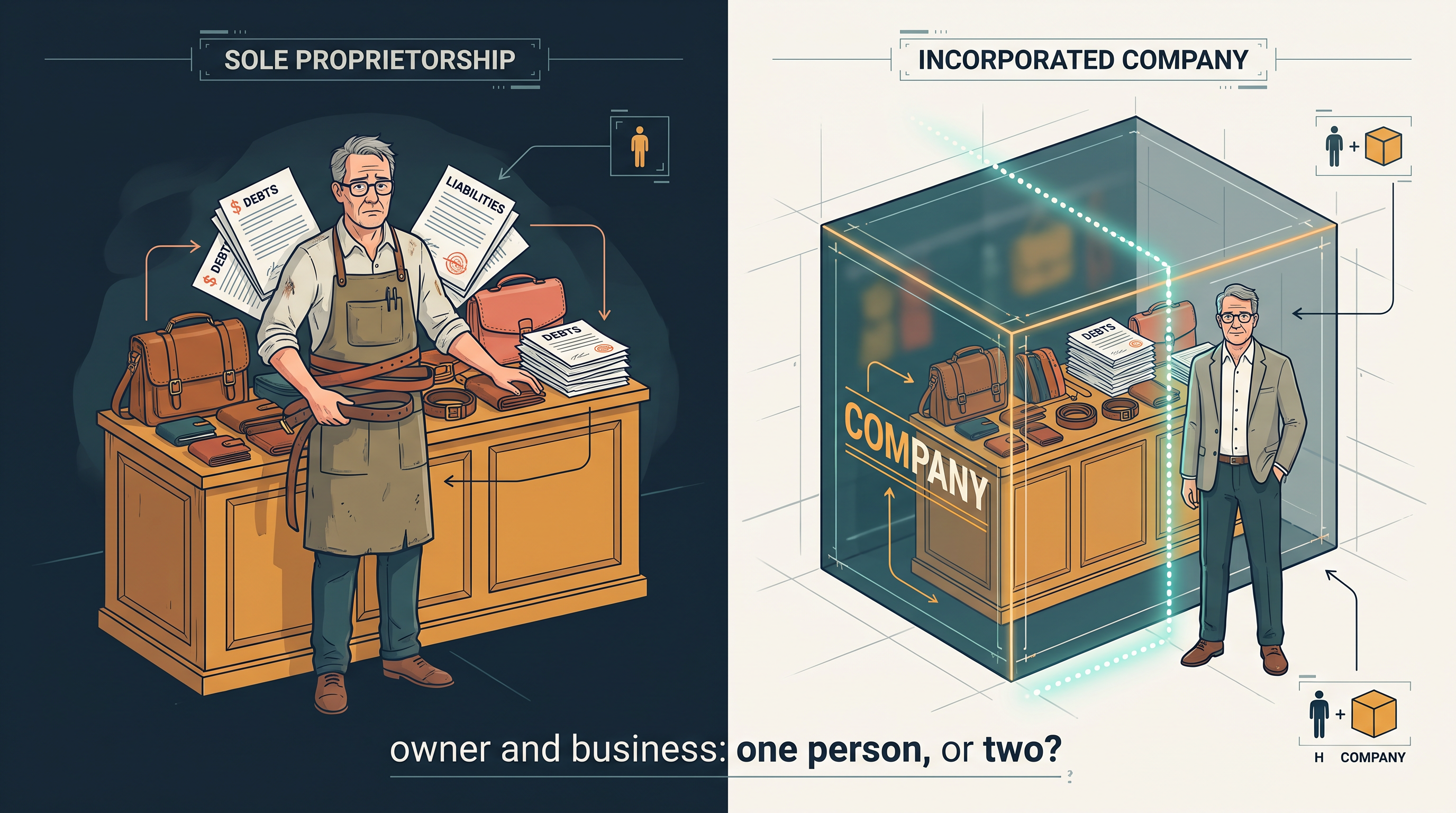
Fig. 8.0 – The separate legal personality of a company.
This chapter will answer each of these questions as you work through the different forms of legal entities.
8.1 Introduction to Legal Entities
Suppose a person decides to start something of her own — a bakery, a tuition centre, an app, a small unit that stitches uniforms. Long before the first sale, one decision has to be taken: what legal form will this business have?
That decision is not paperwork for its own sake. Choosing the right legal structure has to fit the goals of the business, and it has to fit the central and State laws of the place where the business wants to set up its base. The same shop run in two different forms is treated very differently by the law.
The form of the business decides four practical things: how many owners it can have, who has to pay if the business runs into loss, how easily it can raise money, and how much paperwork and reporting it must do every year. A student who understands those four questions can already work out which form suits a given situation.
What a Legal Entity Is
The expression legal entity is used throughout this chapter, so it is worth fixing its meaning at the start. A legal entity is any business or organisation that the law recognises as having rights and obligations of its own — for example, the obligation to file its taxes. Because the law recognises it, it can enter into agreements as a buyer, a vendor or a supplier, and it can go to court or be taken to court.
Notice that this recognition comes in degrees. Some forms of business, such as a company, are treated by the law as persons entirely separate from their owners. Others, such as a sole proprietorship, are not separate at all — in the eyes of the law, the owner and the business are one and the same. Almost every difference you will study in this chapter grows out of that single distinction.
The Main Forms in India
In India there are three major types of business framework — sole proprietorship, partnership, and company, whether public or private. Over the years, hybrid and newer versions of the same idea have arisen, such as the limited liability partnership, and more recently the one person company. Each form of business has its own advantages and its own drawbacks; none of them is simply the best. Fig. 8.1 sets out the forms this chapter will take up, one by one.
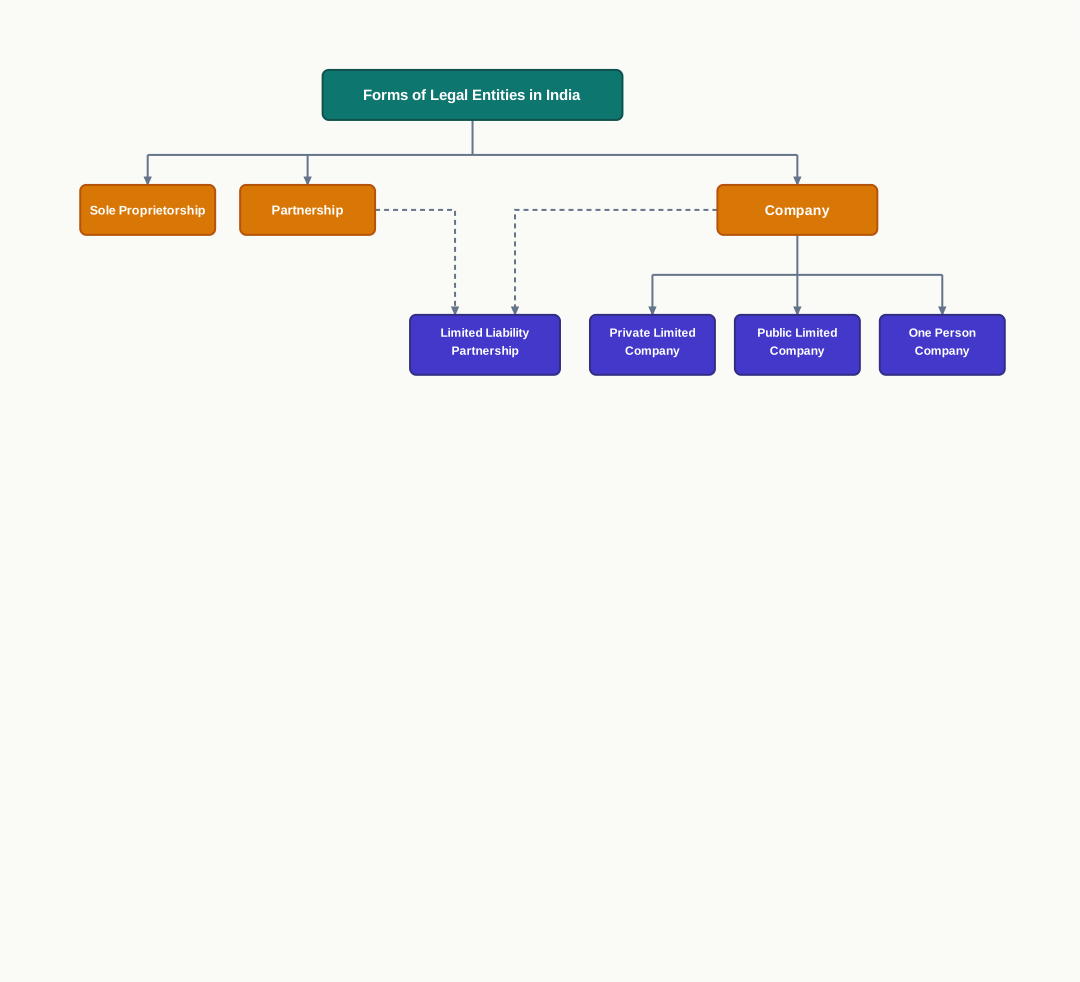
Fig. 8.1 – Forms of legal entities in India.
Why the Law Regulates Business Forms
Why should the law concern itself at all with the shape a private business chooses? It could simply let people trade as they please.
The purpose of regulating forms of legal entities is to provide a framework for the creation, management and dissolution of different types of organisations — corporations, partnerships and sole proprietorships alike. The law lays down how each one comes into existence, how it is to be run, and how it is to be brought to an end.
These regulations aim to protect the rights and interests of everyone who deals with the business. Shareholders, employees, customers and creditors all stand to lose if a business behaves carelessly or dishonestly, and each of them is entitled to know what they are dealing with. The framework exists so that these entities function fairly and transparently within the wider legal and economic system.
The regulation also serves three further purposes. It promotes competition, it works to prevent fraud and misconduct, and it gives everyone a clear understanding of who carries which responsibilities and liabilities.
Each of the forms that follows is examined in the same order — what it is, how it is formed, how many members it may have, who bears the liability, and what its advantages and drawbacks are. Reading them in that order makes the comparison at the end of the chapter much easier to follow.
8.2 Sole Proprietorship
The sole proprietorship is the most widely used form of business organisation in India, and it is the form best suited to small businesses, particularly in their first years of operation. It is the simplest arrangement the law allows: one person owns the business, one person runs it, one person keeps whatever it earns, and one person carries whatever it loses.
Sole proprietorship refers to a form of business organisation which is owned, managed and controlled by an individual who is the recipient of all profits and the bearer of all risks. Every one of those words does work. The same person supplies the capital, takes the decisions, collects the profit, and absorbs the loss.
The name explains itself. The word “sole” implies “only”, and “proprietor” refers to “owner”. A sole proprietor is therefore the one who is the only owner of a business.
Where This Form Is Found
It is the easiest type of business to establish or to take apart, because there is very little government regulation to satisfy. No special statute governs it, no partners have to be persuaded, and closing it down needs no formal winding-up process.
For that reason these businesses are very popular among sole owners of businesses, individual self-contractors and consultants. Most small businesses start as sole proprietorships, and then either stay that way or expand and transition into a limited liability entity or a corporation as they grow.
The form is particularly common in personalised services — beauty parlours, hair salons — and in small-scale activities such as running a retail shop in a locality. What these have in common is that the customer is really buying the skill and attention of one particular person, so there is little to gain from a larger structure.
Salient Features
The features of a sole proprietorship follow from the single fact that the owner and the business are the same person in law.
No separate entity. There is no difference in the eyes of the law between the owner and the business. The business has no legal existence apart from the person running it.
Formation. There is no specific law governing the creation of a sole proprietorship; the business is owned by a single person; and no formal registration is required to bring it into existence.
Number of members. Minimum one, maximum one. A second owner would make it some other form of business altogether.
Liability. The liability of the proprietor is unlimited. The owner is personally responsible for all the losses, debts and liabilities of the business.
Profit. If the business is successful, the owner enjoys all the profits, without having to share them with anyone.
Control and decision making. The right to run the business and to make all decisions lies absolutely with the sole proprietor.
Limited life of the business. Because the business is owned and controlled by one person, the death, mental incapacity, imprisonment, physical incapacity or bankruptcy of that person has a direct impact on the business and leads to its closure.
Confidentiality. Sole decision-making authority enables the proprietor to keep all information relating to business operations confidential and to maintain secrecy.
Understanding Unlimited Liability
Of these features, the one that decides most examination questions is unlimited liability, and it deserves to be understood properly rather than memorised. Unlimited liability means that the owner’s responsibility for the debts of the business is not capped at the money he has put into it. If the business assets fall short, the creditors may proceed against his personal property — his savings, his vehicle, his house — because in law those debts are his own debts, not the debts of some separate organisation.
Advantages of a Sole Proprietorship
There are several benefits as well as limitations to running a sole proprietorship. The benefits are these.
- Quick decision making, because there is no one else to consult.
- Confidentiality of information.
- The owner receives all the profits.
- The owner makes all decisions and is in complete control of the business.
- It is the easiest and least expensive form of ownership to organise.
- Ease of formation and of closure.
- The business does not pay separate taxes. All income passes directly to the owner and is taxed at the owner’s personal tax rate.
The last of these is worth a moment’s thought. Because the business is not a separate person in law, it is not a separate taxpayer either. There is only one income and one taxpayer, and so the profits are not taxed twice over.
Disadvantages of a Sole Proprietorship
- Unlimited liability if anything goes wrong in the business.
- Limited ability to raise funds.
- No separate legal status.
- Limited funds and resources.
- Limited skills and managerial ability of the proprietor.
These drawbacks are not five separate problems so much as one problem seen from five angles. A business that rests on a single person can draw only on that person’s money, that person’s credit and that person’s abilities. This is precisely the limitation that led to the next form of organisation — the partnership.
8.3 Partnership
A sole proprietorship works well until the business begins to grow. The inherent disadvantage of the sole proprietorship in financing and managing an expanding business paved the way for the partnership as a viable option. Partnership serves the needs of greater capital investment, varied skills, and the sharing of risks.
The form is governed by the Indian Partnership Act, 1932, which defines partnership as the relation between persons who have agreed to share the profits of a business carried on by all or any of them acting for all.
Read that definition slowly, because three separate requirements are packed into it: there must be an agreement, the agreement must be to share the profits of a business, and the business must be carried on by all of them or by any one of them acting on behalf of all. The last phrase is the important one — it means each partner acts as an agent for the others.
The Act also fixes the vocabulary. Persons who have entered into partnership with one another are called individually “partners” and collectively “a firm”, and the name under which their business is carried on is called the “firm-name”.
What Partnership Gains and What It Costs
A successful partnership can help a business thrive by allowing the partners to pool their labour and their resources. Two people bring twice the capital, and often two quite different sets of skills.
But there is an additional risk in joining a partnership. In addition to sharing the profits, the partners may also have to assume responsibility for any losses or debts brought about by the other partners. A partner who has done nothing wrong may still have to pay for what a fellow partner has done in the course of the firm’s business.
Partnerships in Practice
Strategic partnerships are formed when two or more businesses or individuals come together to achieve mutual goals and to enhance their respective brands. By co-branding and combining resources, strategic partnerships can deliver benefits such as increased brand awareness, improved brand trust, and access to new markets and customers. Well-known examples include Spotify and Google, Sherwin-Williams and Pottery Barn, and McDonald’s and Coca-Cola, arrangements that helped both sides grow in their respective markets. Collaborations of this kind are business alliances between two organisations, and should not be confused with the firm created under the 1932 Act, where the partners together carry on one single business.
In the case of law firms and medical practice, individuals who are experts in their own field often join together in partnership with other experts. Doing so enhances the knowledge available in one place, gives the practice greater reach, brings several sub-specialisations under one roof, adds to its trustworthiness, and allows it to offer all-round solutions to its clients.
Salient Features
No separate entity. A partnership firm has no separate legal existence of its own. The firm and the partners are one and the same in the eyes of law.
Formation. Three points arise here.
There are two types of partnership firms — registered and unregistered. It is not compulsory to register a partnership firm.
Registration, where it is done, is by the Registrar of Firms under the Indian Partnership Act, 1932.
To enter into partnership, a clear agreement on the terms, conditions and all aspects concerning the partners is essential, so that no misunderstanding arises later among them. This written agreement is called a Partnership Deed.
Number of partners. Minimum two, maximum fifty.
Liability. The liability of the partners is unlimited, and the partners are jointly and severally liable for the liabilities of the firm.
Profit. Partners share the profits in a mutually agreed ratio.
Control and decision making. Partners enjoy shared responsibility amongst each other. This may sometimes give rise to conflicts in decision making.
Dissolution. A partnership firm can be dissolved either by way of compulsory dissolution or by way of agreement between the partners.
Funds. Capital is contributed by the partners, which makes it possible to put larger amounts of funds into the business than a single owner could manage.
Jointly and Severally Liable
This phrase appears in feature (d) and carries real consequences, so it is worth unpacking. To be jointly and severally liable means that a creditor of the firm may recover the whole of the debt from all the partners together, or the whole of it from any one partner alone, as he chooses. The partner who has paid may then recover the others’ shares from them — but that is a matter between the partners, and the creditor is not concerned with it.
Partnership Advantages
- Easy to establish, with the exception of the work involved in developing a partnership agreement.
- The risks of the business are shared among the partners instead of resting on one person alone.
- Partners may have complementary skills.
- Start-up cost is low.
- More capital is available for the business.
Partnership Disadvantages
- Partners are jointly and individually liable for the actions of the other partners.
- Profits must be shared with the partners.
- Decision making is divided.
- The business can suffer if a detailed partnership agreement is not in place.
The first and the last of these are connected. A partner is exposed to the acts of the others, and the only real protection against surprises is a carefully drafted Partnership Deed setting out what each partner may and may not do, how profits and losses are to be shared, and what happens if someone wants to leave. A firm that never wrote its terms down has nothing to fall back on except the general rules of the Act.
8.4 Limited Liability Partnership
The ordinary partnership gives its partners flexibility but exposes them to unlimited liability. The company, as the next sections will show, gives limited liability but comes with a heavier structure. The limited liability partnership was designed to sit between the two.
A limited liability partnership, usually written as LLP, is a body corporate formed and incorporated under the Limited Liability Partnership Act, 2008. To call it a body corporate is to say that the law treats it as an artificial person in its own right — capable of owning property, making contracts, and going to court in its own name.
An LLP is a type of business that combines the benefits of limited liability with the flexibility of a partnership. It allows the members to organise their internal structure on the basis of an agreement among themselves rather than according to a rigid statutory pattern.
This form suits entrepreneurs, professionals, and enterprises that provide services or work in scientific and technical disciplines. It is also a good option for small enterprises, and for investment by venture capital, because its structure and operation remain flexible.
Salient Features
- Separate entity. Three consequences follow.
- An LLP is a separate legal entity from that of its partners.
- It shall have perpetual succession.
- Any change in the partners shall not affect the existence, rights or liabilities of the LLP.
Formation. A written agreement known as a “limited liability partnership agreement” is entered into between the partners of the LLP, or between the LLP and its partners, and it determines their mutual rights and obligations.
Number of partners. Minimum two; there is no maximum limit.
Liability. Two rules apply together.
The liability of the partners is limited to their agreed contribution in the LLP.
- No partner is liable on account of the independent or unauthorised actions of other partners.
Capital. An LLP can be started with no minimum amount of capital contribution.
Less registration cost. The cost of registration is lower than that of a private limited company or a public limited company.
Perpetual Succession
The expression perpetual succession means that the entity continues to exist independently of the persons who happen to be its members at any given time. Partners may die, retire, be replaced or fall out with one another; the LLP itself carries on, holding the same property and bound by the same contracts as before. Recall from the previous section that an ordinary firm has no existence apart from its partners, so a change in the partners strikes at the firm itself. That is precisely the weakness the LLP was built to remove.
Advantages of an LLP
- The terms and conditions of an LLP rest on a mutually agreed LLP agreement, which gives greater flexibility and ease.
- The cost of registering an LLP is lower than the cost of incorporating a public or private limited company.
- Partners are liable only up to their agreed contribution, and no joint liability is created by the actions of another partner.
- The registration process is simpler than that of a company.
- Remuneration, voting rights and other such matters are clearly defined in the LLP agreement, with no restriction on partner remuneration so long as the agreement authorises it.
- The LLP can sue and be sued in its own name, which protects the partners from being personally sued for the LLP’s debts.
- There is greater flexibility in becoming a partner, leaving the LLP, or transferring an interest in it.
- Partners are free to enter into any contract, and the LLP enjoys higher credit-worthiness than a partnership firm, though lower than a company.
- Auditing of accounts is not required of every LLP, and the LLP can raise funds from private equity investors and financial institutions.
The last point needs a qualification that students are often tested on. Under Section 34(4) of the Limited Liability Partnership Act, 2008 read with Rule 24(8) of the Limited Liability Partnership Rules, 2009, an LLP must have its accounts audited once its turnover in a financial year exceeds Rs 40 lakh, or its contribution exceeds Rs 25 lakh. Below those thresholds the audit is voluntary. The correct statement, therefore, is not that an LLP never needs an audit, but that a small LLP need not have one.
Disadvantages of an LLP
- Actions taken by one partner without the consent of the others can bind the LLP, and in some cases partners may also be personally liable for the LLP’s debts.
- The winding-up process, as set out in the Limited Liability Partnership (Winding Up and Dissolution) Rules, 2012, can be lengthy and costly.
- LLPs have lower credit-worthiness than companies.
- LLPs are required to file annual statements of accounts and solvency, as well as an annual return, with the Registrar of Companies — a requirement that does not apply to ordinary partnerships.
The Position After 2022
The Limited Liability Partnership (Amendment) Act, 2021, which came into force on 1 April 2022, has made the form lighter still to operate. It recognises a category of small LLPs — broadly, those whose partner contribution and turnover stay within the prescribed limits — and a category of start-up LLPs, both of which pay lower fees and face reduced penalties in the event of default. It also decriminalises a number of minor and procedural defaults, replacing prosecution with monetary penalties determined by adjudicating officers, and provides for special courts to deal with the offences that remain. The direction of the change is easy to state: routine lapses in paperwork are now treated as matters to be penalised, not prosecuted, while fraud continues to attract criminal liability.
8.5 Private Limited Company
The private limited company is a popular business structure amongst growing businesses and companies. A private limited company is a separate legal entity registered under the Companies Act, 2013.
It is a type of business entity owned by a small group of individuals and registered for specific business objectives. It is a popular choice for start-ups and for businesses with high growth ambitions, because of the limited liability protection it offers to its shareholders and the flexibility it gives in matters of ownership and management structure.
The owners of a company are called its shareholders or members, because ownership is divided into units called shares. The people who actually run it are the directors. In a small private company the same people are often both, but the two roles remain distinct in law.
Salient Features
Separate entity. A private limited company is a separate legal entity. It can therefore sue, and can also be sued, in its own name.
Formation. Two requirements are essential.
The private limited company must be registered under the Companies Act, 2013.
Incorporation documents such as the Memorandum of Association and the Articles of Association are required.
Number of members. Minimum two, maximum two hundred.
Liability. The liability of each member or shareholder is limited. The personal, individual assets of the shareholders are not at risk.
Capital. No minimum paid-up capital is prescribed. The Companies (Amendment) Act, 2015 removed the minimum paid-up capital requirement, so a private limited company may now be incorporated with whatever capital its promoters choose.
Borrowing capacity. A private limited company enjoys the advantage of being able to borrow larger funds than an unincorporated business.
Easy exit. A private limited company can be sold or transferred, either partially or in full, to another individual or entity without any disruption to the business as it stands.
Perpetual succession. The company keeps on existing in the eyes of law even on the death, insolvency or bankruptcy of any of its members.
The Two Founding Documents
The Memorandum of Association and the Articles of Association are worth distinguishing, because the base of every company rests on them. The Memorandum of Association states what the company is and what it may do — its name, its registered office, its objects, and the liability of its members. It faces outward, telling the world the boundaries within which the company operates. The Articles of Association face inward: they contain the rules by which the company governs itself, such as how meetings are called, how directors are appointed, and how shares may be transferred.
Examples of well-known private limited companies include Flipkart, Freecharge and the Serum Institute of India.
8.6 Public Limited Company
The Companies Act, 2013 defines a public company in an unusual way — by telling you what it is not. As per Section 2(71) of the Act, a public company means a company which is not a private company.
A definition of this kind is called a residual definition, and it works only if you already know the previous one. A private company is the restricted form: limited membership, restrictions on the transfer of its shares, and no invitation to the general public to subscribe. Remove those restrictions and what is left is a public company.
A public limited company is recognised as an entity separate from its owners, and it has the ability to enter into agreements in its own name. It operates independently of its owners and has its own set of rules, obligations, regulations and legal rights. The owners run the company but have limited liability for its debts and obligations. This legal separation gives the owners a higher level of protection, and it makes it easier for the company to raise capital by selling shares to the public.
The owners of a public limited company are referred to as shareholders or stakeholders, and the ownership of the company is divided into units known as shares or equity shares. These units of ownership may be held by many individuals or by other corporations, which is what makes it possible for the company to raise capital by selling shares to the public. The shareholders have the right to participate in the decision-making process of the company, and to receive dividends out of the company’s profits.
Salient Features
Separate entity. A public limited company is a separate legal entity registered under the Companies Act, 2013.
Formation. Three points arise.
The public limited company must be registered under the Companies Act, 2013.
Incorporation documents such as the Memorandum of Association and the Articles of Association are required.
Public limited companies may be listed on the stock market, or they may be unlisted.
Number of members. Minimum seven; there is no maximum limit.
Limited liability. The liability of the shareholders is limited to their stake in the company only.
- Capital. Two points arise.
- No minimum paid-up capital is prescribed. That requirement was removed by the Companies (Amendment) Act, 2015.
- A public limited company enjoys a greatly increased ability to raise capital through the stock market, and by issuing debentures and bonds to the public.
Perpetual succession. The life span of the public limited company is not affected by the death of any member or shareholder.
Strict regulation. A public limited company is strictly regulated and is required to publish its true financial health to its shareholders.
Transparency. All information relating to a public limited company is available to the public, including detailed financial statements and the structure of its management.
Transferability of shares. Shareholders are free to buy, sell or trade shares with anyone — through the stock market if the company is listed, and through dealers and other platforms if the company is unlisted.
Listed and Unlisted Companies
A company is listed when its shares are admitted to trading on a recognised stock exchange, so that anyone may buy or sell them there. Being public and being listed are therefore two different things: every listed company is public, but a public company may choose never to have its shares traded on an exchange. Listing brings in money from a very wide pool of investors, and it brings with it the heavier disclosure obligations described in features (g) and (h).
Those obligations are not a penalty. They are the price of using other people’s money. Once thousands of strangers have been invited to invest their savings, the law insists that they be told the truth about what is being done with it, which is why transparency and strict regulation sit alongside the freedom to raise capital.
Well-known public limited companies in India include Indian Oil Corporation Limited, Bharat Petroleum Corporation Limited and Reliance Industries Limited.
8.7 One Person Company
Until 2013, anyone who wanted the protection of a company had to find at least one other person to join as a member. A person who genuinely wished to work alone was left with the sole proprietorship, and with the unlimited liability that comes with it. The one person company was created to close that gap.
As per Section 2(62) of the Companies Act, 2013, a “one person company” means a company that has only one person as a member. It is a recent invention, meant to help entrepreneurs own and manage companies on their own.
Salient Features
- Separate entity. Two consequences follow.
- The OPC receives a separate legal entity status distinct from its member.
- That separate legal entity gives protection to the single individual who has incorporated it.
Liability. The liability of the member is limited to his or her shares, and the member is not personally liable for the losses of the company.
Formation. Four points arise.
It is incorporated by a single person.
It is incorporated as a private company under the Companies Act, 2013.
Its compliance requirements are lighter than those of a private company.
An individual may form a company with one single member and one director, and the director and the member may be the same person.
Number of members. Minimum one, maximum one.
Easy to obtain funds. Since an OPC is a private company, it can raise money through venture capital funds, angel investors, incubators and similar sources.
Perpetual succession. An OPC has perpetual succession even though there is only one member. While incorporating the OPC, the single member is required to appoint a nominee. Upon the member’s death, the nominee will run the company in the member’s place.
No minimum paid-up share capital. The Companies Act, 2013 has not prescribed any amount as minimum paid-up capital for OPCs.
Why the Nominee Matters
Feature (f) solves a problem the law had to face squarely. Perpetual succession normally works because the shares of a member who dies pass to someone else while the company carries on untouched. In an OPC there is no one else — the single member is the whole membership. If nothing were provided for, the company would be left with no member at all the moment its founder died.
The nominee is the answer. The name is recorded at the time of incorporation, with the nominee’s consent, so that the company always has someone ready to step in. The company itself never stops existing; only the person holding it changes.
Who May Form an OPC Today
The rules governing this form were relaxed by the Companies (Incorporation) Second Amendment Rules, 2021, with effect from 1 April 2021, and the current position is worth knowing. An OPC no longer has to convert itself into a private or public company merely because its paid-up capital or its turnover has grown beyond a prescribed figure; it may continue as an OPC however large it becomes, and may convert voluntarily at any time it chooses. The residency requirement for the person forming it was reduced from 182 days to 120 days in the preceding financial year, and non-resident Indians were permitted to incorporate OPCs in India. Taken together, these changes remove the ceilings that once limited how far a single-owner company could grow.
A sole proprietorship may look very similar to a one person company, since both involve a single person owning the business, but the two differ in the point that matters most. The difference lies in the nature of the liabilities each carries, and everything else in the table follows from it.
8.8 Comparative Evaluation of Business Entities
Each form of business has now been studied on its own. Setting the three principal forms side by side makes the pattern clear, because the same six questions decide the answer every time: how hard is it to start, how many owners may it have, how much money can it raise, who pays if it fails, who takes the decisions, and what happens when an owner leaves or dies.
Reading the Table
Notice that the rows are not independent of one another. Almost everything in the last four rows follows from a single underlying question — whether the law treats the business as a person separate from its owners.
Where there is no separate personality, as in the proprietorship and the firm, liability is unlimited, finance is limited to what the owners themselves can bring or borrow, and the business is unstable because it lives and dies with them. Where there is separate personality, as in the company, liability is limited, capital can be gathered from a wide public, and the business continues regardless of who owns it.
The row on control and management repays a second look. In a proprietorship the owner is the manager. In a firm the partners are the managers. In a company the shareholders own the business but directors run it, and this separation between ownership and management is what allows a company to be owned by thousands of people who know nothing about running it. The cost of that separation is the elaborate regulation and reporting you met in the previous two sections.
The limited liability partnership and the one person company are best understood against this table rather than as separate columns in it. The LLP takes the flexible management of a firm and adds the separate personality and limited liability of a company. The OPC takes the single owner of a proprietorship and gives that owner the same protection.
8.9 Choosing the Right Form of Entity
Knowing the forms is only half the skill. The other half is choosing between them for a given business, and that choice has to be made deliberately rather than by default.
The choice of business structure has a major impact on four things: taxes, funding, the paperwork required, and personal responsibility. It is crucial to make this decision before registering a business, because changing form later means fresh registration, fresh documentation, and often the transfer of contracts and property from the old entity to the new one.
The Four Deciding Factors
Taxes. In a proprietorship there is only one taxpayer, since the income of the business is the income of the owner. Once the business is a separate legal person, it is taxed as one.
Funding. How much money will the business need, and where will it come from? Savings and a small loan point towards a proprietorship or a firm. Outside investors, venture capital or money from the general public point towards a company.
Paperwork. Every increase in protection is paid for in compliance. A proprietorship needs no registration at all; a firm may register if it wishes; an LLP and a company must be incorporated, and must file returns every year.
Personal responsibility. This is usually the decisive factor. The question to ask is simple: if this business fails owing a large sum, should the owner’s own house and savings be available to pay it?
The factors do pull against each other, and no form scores well on all four. A proprietorship is cheapest to run and worst for protection; a public limited company is best for raising capital and heaviest to comply with. Choosing well means knowing which factor matters most for the particular business in front of you — which is exactly what a case-based question in the examination asks you to do.
8.10 Summary
- A legal entity is a business or organisation that the law recognises as having rights and obligations of its own, including the capacity to make agreements and to sue and be sued.
- Choosing the right legal structure must fit the goals of the business and the central and State laws of the place where it is set up.
- In India there are three major types of business framework — sole proprietorship, partnership, and company, whether public or private — along with newer hybrid forms such as the limited liability partnership and the one person company.
- The law regulates forms of legal entities in order to:
- provide a framework for their creation, management and dissolution;
- protect the rights and interests of shareholders, employees, customers and creditors;
- ensure fair and transparent functioning within the legal and economic system;
- promote competition and prevent fraud and misconduct;
- make clear who carries which responsibilities and liabilities.
- A sole proprietorship is a form of business owned, managed and controlled by one individual, who receives all the profits and bears all the risks.
- A sole proprietorship has no separate legal entity, needs no specific law or formal registration, and has exactly one member.
- The liability of a sole proprietor is unlimited, so personal assets may be used to pay business debts.
- A sole proprietorship ends with the death, mental incapacity, imprisonment, physical incapacity or bankruptcy of the proprietor.
- Its advantages are quick decision making, confidentiality, all profits to the owner, complete control, cheap and easy formation and closure, and no separate taxation of the business.
- Its disadvantages are unlimited liability, no separate legal status, limited funds and resources, limited ability to raise money, and limited skills of one person.
- Section 4 of the Indian Partnership Act, 1932 defines partnership as the relation between persons who have agreed to share the profits of a business carried on by all or any of them acting for all.
- Those persons are individually the partners, collectively the firm, and the name they trade under is the firm-name.
- A partnership firm has no separate legal existence; registration with the Registrar of Firms is optional; and the terms are set out in a written Partnership Deed.
- A firm may have a minimum of 2 and a maximum of 50 partners, who share profits in a mutually agreed ratio.
- Partners have unlimited liability and are jointly and severally liable for the debts of the firm, so a creditor may recover the whole debt from any one partner.
- A limited liability partnership is a body corporate incorporated under the Limited Liability Partnership Act, 2008, combining limited liability with the flexibility of a partnership.
- An LLP is a separate legal entity with perpetual succession, so a change in its partners does not affect its existence, rights or liabilities.
- Liability in an LLP is limited to the partner’s agreed contribution, and no partner is liable for the independent or unauthorised acts of another partner.
- An LLP needs a minimum of 2 partners with no maximum, requires no minimum capital, and is governed internally by the limited liability partnership agreement.
- An LLP must have its accounts audited once its turnover exceeds Rs 40 lakh or its contribution exceeds Rs 25 lakh, and must file annual accounts, a statement of solvency and an annual return with the Registrar of Companies.
- A private limited company is a separate legal entity registered under the Companies Act, 2013, with a minimum of 2 and a maximum of 200 members.
- Its incorporation requires a Memorandum of Association, which states what the company is and may do, and Articles of Association, which contain its internal rules.
- Shareholders of a company have limited liability, so their personal assets are not at risk for the company’s debts.
- A company has perpetual succession and continues to exist despite the death, insolvency or bankruptcy of any member.
- Under Section 2(71) of the Companies Act, 2013, a public company means a company which is not a private company.
- A public limited company needs a minimum of 7 members with no maximum, may be listed or unlisted, and may invite the public to subscribe to its shares.
- A public limited company can raise capital through the stock market and by issuing debentures and bonds, and in return is strictly regulated and must publish its true financial position.
- Shares of a public company are freely transferable, whereas a private company restricts their transfer and cannot invite the public to subscribe to its securities.
- No minimum paid-up capital is prescribed for a private or a public limited company, that requirement having been removed by the Companies (Amendment) Act, 2015.
- Under Section 2(62) of the Companies Act, 2013, a one person company means a company which has only one person as a member.
- An OPC is incorporated as a private company, may have the same person as its single member and single director, and carries lighter compliance requirements than a private company.
- An OPC has perpetual succession because its member must appoint a nominee at the time of incorporation, who takes the member’s place on the member’s death.
- A sole proprietorship and an OPC differ in the nature of the liability they carry: the OPC is a separate legal entity whose promoter is not personally liable for its debts, whereas a proprietor’s own assets may be attached and sold.
- Compared with a proprietorship and a firm, a company has larger financial resources, limited liability, stable continuity, and a separation between ownership and management, but a compulsory, lengthy and expensive formation process.
- The choice of business structure has a major impact on taxes, funding, paperwork and personal responsibility, and should be settled before the business is registered.
8.11 Key Terms
Legal entity — a business or organisation that the law recognises as having rights and obligations of its own, including the capacity to make agreements and to sue and be sued.
Sole proprietorship — a form of business organisation owned, managed and controlled by a single individual, who receives all the profits and bears all the risks.
Unlimited liability — liability that is not capped at the amount invested in the business, so that the owner’s personal assets may be used to pay business debts.
Partnership — the relation between persons who have agreed to share the profits of a business carried on by all or any of them acting for all.
Partners — the persons who have entered into partnership with one another, taken individually.
Firm — the partners of a partnership taken collectively.
Firm-name — the name under which the business of a partnership firm is carried on.
Partnership Deed — the written agreement recording the terms, conditions and mutual rights of the partners of a firm.
Jointly and severally liable — liable in such a way that a creditor may recover the whole debt from all the partners together or from any one of them alone.
Dissolution — the bringing to an end of a partnership firm, either compulsorily or by agreement between the partners.
Limited liability partnership — a body corporate incorporated under the Limited Liability Partnership Act, 2008, which combines limited liability with the flexibility of a partnership.
Body corporate — an organisation that the law treats as an artificial person, capable of owning property, contracting and litigating in its own name.
Limited liability partnership agreement — the written agreement between the partners of an LLP, or between the LLP and its partners, determining their mutual rights and obligations.
Limited liability — liability restricted to the amount a person has agreed to contribute or invest, beyond which personal assets cannot be reached.
Perpetual succession — the continued existence of an entity irrespective of the death, insolvency or departure of its members.
Private limited company — a company registered under the Companies Act, 2013 with a restricted membership, restricted transfer of shares, and limited liability for its members.
Share — a unit into which the ownership of a company is divided.
Shareholder — a person who holds shares in a company and is thereby one of its members or owners.
Director — a person appointed to manage the affairs of a company on behalf of its shareholders.
Memorandum of Association — the incorporation document stating what a company is and what it may do, including its name, registered office, objects and the liability of its members.
Articles of Association — the incorporation document containing the internal rules by which a company governs itself.
Public company — under Section 2(71) of the Companies Act, 2013, a company which is not a private company.
Listed company — a company whose shares have been admitted to trading on a recognised stock exchange.
Debenture — an instrument by which a company borrows money from the public, repayable on agreed terms.
Dividend — the share of a company’s profits distributed to its shareholders.
One person company — under Section 2(62) of the Companies Act, 2013, a company which has only one person as a member.
Nominee — the person named by the single member of an OPC at the time of incorporation, who takes the member’s place upon the member’s death.
Separation between ownership and management — the arrangement in a company under which the shareholders own the business while directors run it.
8.12 Points to Ponder
Limited liability protects the owners of a company, but it also means that an unpaid supplier may recover nothing at all. Where should the loss fall when a business fails — on those who invested in it, or on those who supplied it on credit?
Registration of a partnership firm is optional, while incorporation of a company is compulsory. Is there a good reason for treating the two differently, or should every business that has more than one owner be required to register?
The law calls a company a “person”. In what ways is that description useful, and in what ways might it mislead someone who takes it literally?
Now that a single individual can incorporate a one person company, is there any good reason for a person to still choose the sole proprietorship?
A public limited company must publish detailed information about its finances and its management. Does a business ever have a legitimate claim to keep such information private, and if so, when?
Every increase in legal protection in this chapter is paid for in compliance — more forms, more filings, more cost. Does that trade-off work against the smallest businesses, which are the ones least able to afford professional help?
Many family businesses in India run for decades without a written Partnership Deed. Why do you think people avoid putting terms in writing with those closest to them, and what does the law lose by that silence?
Choosing the right form of entity assumes that a person knows the choices exist. Whose responsibility is it to make that knowledge available to a first-generation entrepreneur in a small town?
8.13 Textbook Questions
State the differences between a private limited company and a public limited company.
Ajay and Nilam decide to contribute Rs 10,000 and Rs 20,000 respectively to start a partnership firm selling saris. Since they are good friends, they do not register the partnership and have only a verbal agreement to share profits and losses. In the very first year the firm suffers a loss of Rs 30,000. Ajay insists that the losses should be borne in the same ratio as their initial contribution, so that he bears Rs 10,000 and Nilam bears Rs 20,000, while Nilam wants the losses to be borne equally. With reference to this situation, discuss the nature and essential characteristics of a partnership firm, the types of partnership firms, and why it is important for partners to have a written agreement or Partnership Deed.
The people of a village in India make a special kind of silk dress. Because of social media, the dress has become immensely popular in India and abroad, and designers are willing to pay crores of rupees for bulk orders. Individual weavers cannot handle orders of that size, so they have approached a lawyer from their own village for help. They want to form a legal entity in order to enter the supply business formally, and they know that coming together will increase their bargaining power. They are ready to contribute a fixed amount at the start, but they also realise that they will need to raise capital from investors to fulfil the orders. A few of them have adult, educated children who are ready to take up the management of the entity. About a hundred weavers are willing to come together. If you were the lawyer they have approached, which form of legal entity would you suggest, and why?
Raj owns a small provisions store. He has borrowed Rs 70,000 from a moneylender to run his business, and he dies before repaying the amount. Can the moneylender recover his money? Discuss the liabilities of a sole proprietorship firm, along with its advantages and disadvantages.
A large cola company wants to enter the Indian market. It already has a huge market in other countries, and it also wants to raise funds from the public in India. What is the best way for it to enter the market? What legal entity should it form in order to do business in India? Discuss the characteristics of such an entity.
Two friends, Tanmay and Pinaki, decide to start a business. Each has five thousand rupees to contribute. They want to share the profits equally, but in case of a loss Tanmay has agreed to bear 60 per cent. They have decided to run the business from Tanmay’s commercial property at 1, Mango Lane, Bangalore - 2, which will be the registered address. They have also agreed that if the business is ever wound up, the assets and liabilities existing at that point will be shared equally between them. Draft a partnership agreement between the two partners, adding any other details you think are necessary for the conduct of the business.
Identify one partnership firm, one proprietorship firm, one private limited company and one limited liability partnership functioning in your city, town or country. Discuss how you use their products or services, and what the extent of the liability of their stakeholders is, given the form of business each has chosen. OR Research, identify and discuss the legal form of each of the following entities:
- Coca Cola, India
- KFC India
- An e-commerce giant that started as a sole proprietorship firm in India
- A law firm that is a partnership
- The first limited liability partnership firm of India
8.14 Objective Questions
The maximum number of members a private limited company may have is:
- 50
- 100
- 200
- unlimited
The maximum number of partners a partnership firm may have is:
- 2
- 20
- 50
- no limit
A limited liability partnership is formed and incorporated under:
- the Indian Partnership Act, 1932
- the Companies Act, 2013
- the Limited Liability Partnership Act, 2008
- no specific statute
Which of the following forms of business has no separate legal entity?
- One person company
- Partnership firm
- Limited liability partnership
- Private limited company
The minimum number of members required to form a public limited company is:
- 1
- 2
- 7
- 20
Registration of a partnership firm under the Indian Partnership Act, 1932 is:
- compulsory for every firm
- optional
- compulsory only where there are more than ten partners
- not permitted
Under Section 2(62) of the Companies Act, 2013, a “one person company” means a company which has:
- only one director
- only one person as a member
- only one class of shares
- only one place of business
The documents required at the time of incorporating a company are:
- the Partnership Deed and the annual return
- the Memorandum of Association and the Articles of Association
- the limited liability partnership agreement and the statement of solvency
- the prospectus and the debenture certificate
The single member of a one person company is required, at the time of incorporation, to appoint:
- an auditor
- a managing partner
- a nominee
- a company secretary
Under Section 2(71) of the Companies Act, 2013, a public company means:
- a company owned by the Government
- a company listed on a stock exchange
- a company which is not a private company
- a company with more than 200 members
In a limited liability partnership, the liability of a partner is limited to:
- the whole of the debts of the LLP
- the agreed contribution of that partner
- the profits earned by that partner
- the minimum capital prescribed by the Act
Assertion (A): If a sole proprietorship cannot pay its debts, the proprietor’s own house and savings may be sold to meet them. Reason (R): A sole proprietorship has no legal existence separate from the person who owns it.
Assertion (A): A partner who neither placed an order nor knew of it may still be made to pay the entire amount due on it. Reason (R): The partners of a firm are jointly and severally liable for the liabilities of the firm.
Assertion (A): A company continues to exist even after the death or insolvency of a member. Reason (R): A company has perpetual succession, being a legal person distinct from its members.
Assertion (A): A one person company must appoint a nominee at the time of its incorporation. Reason (R): The compliance requirements of a one person company are lighter than those of a private company.
8.15 Check Your Concepts
Why does the law say that a sole proprietor has unlimited liability? Explain the reasoning behind the rule rather than merely stating it.
State the salient features of a sole proprietorship.
What happens to a sole proprietorship when its owner dies? Explain why the law reaches that result.
Identify the provision: which section of which Act defines partnership, and what three requirements does that definition contain?
Explain the meaning of the words “acting for all” in the definition of partnership, and show why they matter to a creditor of the firm.
Distinguish between a partnership firm and a limited liability partnership on any four bases.
What is a Partnership Deed, and what can go wrong in a firm that does not have one?
Why is a partner said to be “jointly and severally” liable? Explain what a creditor may do, and what the paying partner may then do.
What happens if a partner of an LLP, acting entirely on his own and without authority, incurs a large debt in his own name? Would the other partners be liable?
Correct the error: “An LLP never has to get its accounts audited.” State the correct legal position.
Correct the error: “A partnership firm has separate legal status, which protects the partners from liability.” Explain what is wrong with the statement.
Explain the meaning of perpetual succession, and state two forms of business organisation that have it and two that do not.
Distinguish between the Memorandum of Association and the Articles of Association.
Why does the Companies Act, 2013 define a public company by saying only that it is a company which is not a private company? What must a student know first before that definition becomes useful?
A public limited company enjoys the greatest freedom to raise capital, yet it is also the most heavily regulated. Explain why these two features go together.
Distinguish between a listed and an unlisted public company, and state whether every public company must be listed.
Why must the single member of a one person company appoint a nominee? What problem would arise if no nominee were named?
Distinguish between a sole proprietorship and a one person company on any three bases, and state which difference is the most important.
Explain what is meant by the separation between ownership and management in a company, and state one advantage and one disadvantage of it.
Arrange in order the steps a person should follow in choosing an appropriate form of legal entity, and state why the choice should be made before the business is registered.
State the four factors on which the choice of business structure has a major impact, and explain which of them would weigh most heavily for a business likely to take on large debts.
8.16 Case-Based Questions
- Sunita runs a tailoring unit in her own name. She takes a loan of Rs 8,00,000 from a finance company to buy embroidery machines. Two seasons later the orders dry up, and the machines and stock together fetch only Rs 3,00,000. The finance company issues a notice saying it will proceed against the flat Sunita owns. Sunita protests that the loan was taken “for the business, not for me personally”.
- Is the finance company entitled to proceed against Sunita’s flat? Give reasons.
- Which feature of a sole proprietorship decides this answer?
- Would the answer have been different if Sunita had incorporated a one person company before taking the loan? Explain the difference the change of form would make.
- Devika and Harpreet run a catering business together as partners. They never registered the firm and never wrote down their terms. Harpreet, without telling Devika, orders refrigeration equipment worth Rs 5,00,000 for the catering kitchen from a supplier who knows both of them. The business fails. Devika says she should not have to pay, because she neither knew of nor approved the order.
- Can the supplier recover the entire amount from Devika alone? State the rule you are applying.
- Which fact in the passage is the one that makes the firm liable for Harpreet’s act, and what fact would have changed that outcome?
- What difference would a written Partnership Deed have made to the dispute between Devika and Harpreet?
- Was the firm entitled to remain unregistered?
- Four architects incorporate an LLP, each agreeing to contribute Rs 3,00,000. In its third year the LLP’s turnover reaches Rs 55,00,000. In the same year one of the partners, acting entirely on his own and outside the LLP’s business, borrows money from a lender who assumes the LLP will stand behind it. The LLP later fails, owing Rs 40,00,000 to its own trade creditors.
- To what extent are the four partners liable for the Rs 40,00,000 owed by the LLP?
- Are the other three partners liable for the loan taken by the fourth partner acting on his own? Give reasons.
- Does this LLP have to get its accounts audited? Identify the provision and the threshold you rely on.
- A private limited company manufacturing solar lamps has 180 shareholders and wants to expand rapidly. Its directors propose to advertise in newspapers inviting the general public to buy its shares. They also want to allow existing shareholders to sell their shares freely to anyone who is willing to buy.
- Can a private limited company invite the public to subscribe to its securities? Give reasons.
- What restriction applies to the transfer of shares in a private company, and why does the law impose it?
- Which form of company would allow the directors to do both of the things they propose, and what additional obligations would that form bring with it?
- Ismail has run a hardware shop alone for twenty years. His accountant advises him to convert the business into a one person company, warning him that if he does not, the shop will close the day he dies and his creditors will be able to reach his personal estate. Ismail is willing, but says he has no partner and no interest in finding one.
- Can Ismail incorporate a company without any partner? Identify the provision that permits it.
- Is the accountant correct about what happens to the shop on Ismail’s death as things presently stand? Explain.
- What step must Ismail take at the time of incorporation to ensure the company continues after his death, and what does that step achieve?
- State two obligations Ismail will take on after incorporation that he does not have today.
8.17 Landmark Cases & Maxims
State the principle settled in Salomon v. A Salomon & Co Ltd and explain why it is described as the foundation of company law.
The creditors in Salomon’s case argued that the company was really the same person as its founder. Why did the court reject that argument, and what would have followed for company law if it had accepted it?
A supplier delivers goods worth Rs 12,00,000 to a business and is not paid. Identify which principle governs his claim, and state whether he can proceed against the owners personally, in each of the following situations:
- the business is a sole proprietorship;
- the business is an unregistered partnership firm;
- the business is a private limited company.
Two students are arguing. One says that a company is “just the people who own it, with extra paperwork”. Using the principle of separate legal personality, explain why that statement is wrong, and give two practical consequences that follow from the company being a person in law.
The founder of a business dies owing money to a bank. State which authority or principle you would rely on to decide whether the business survives and whether the bank can reach the founder’s estate, and explain how your answer changes according to the form the business had taken.