Chapter 1: The End Of Bipolarity
On the night of 9 November 1989, people gathered on both sides of a wall that ran through the middle of Berlin, and began to break it.
The wall had been built in 1961 to separate East Berlin from West Berlin. It was more than 150 kilometres long, and it had stood for twenty-eight years. It was not merely a wall of concrete. It was the sharpest symbol of a divided world: capitalist on one side, communist on the other, each side armed against the other, each convinced that history would prove it right.
No army pulled it down. Ordinary men and women did — some with hammers, some with their hands, first making a tiny hole through the concrete, then widening it, until a whole section was opened and people simply walked through. Border guards who had been trained to stop them stood aside.
Within a year the two parts of Germany, divided since the Second World War, were one country again. One after another, the eight East European countries of the Soviet bloc replaced their communist governments in response to mass demonstrations. The Soviet Union, the superpower that had led that bloc, did not send in its army. Two years later, it had ceased to exist.
A world that had been organised around two rival superpowers ended — not by war, but by decisions taken in crowded streets and in a few quiet rooms.
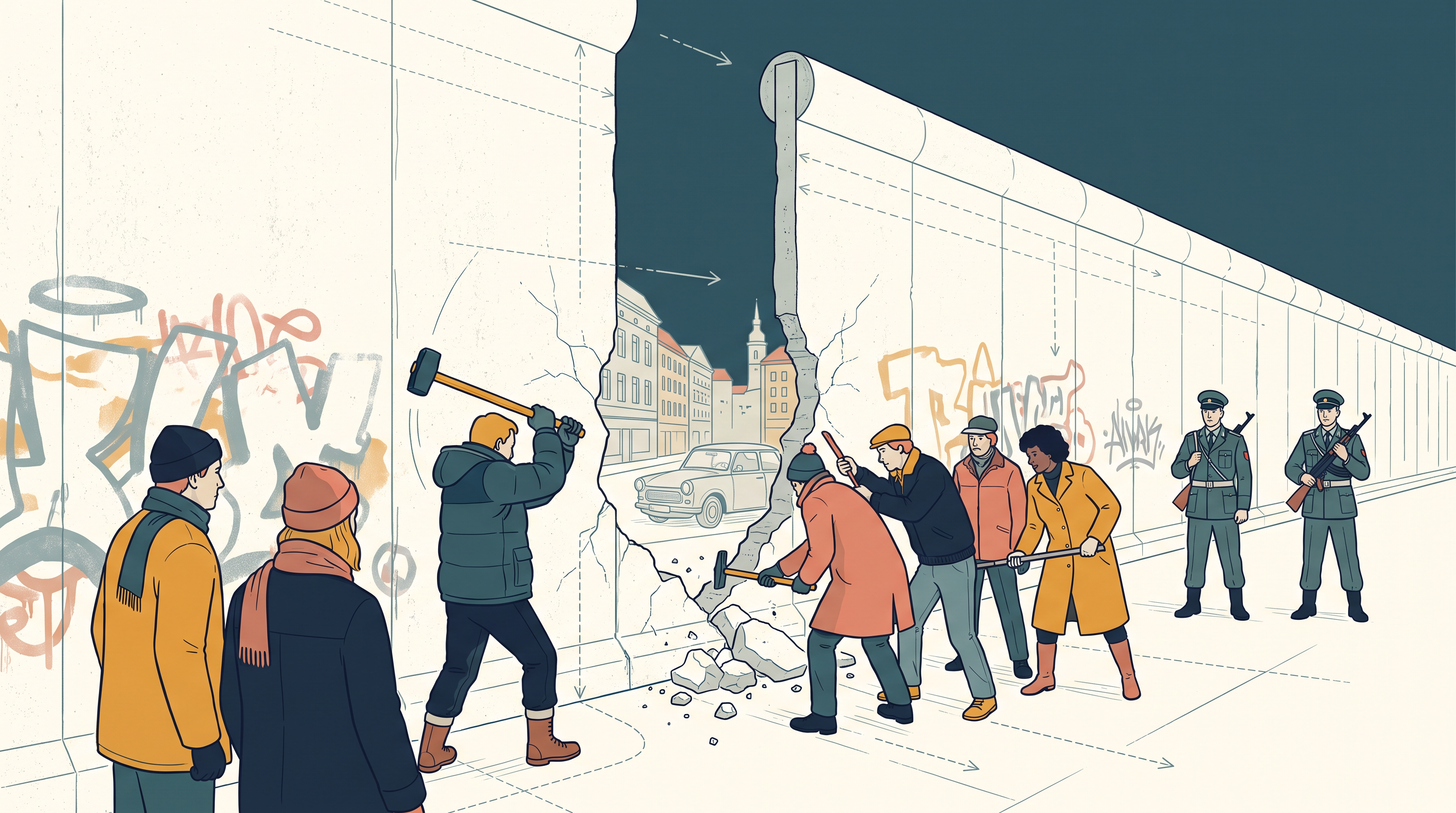
Fig. 1.0 – The Berlin Wall, 1961–1989.
Map
Map 1.A1 Caption: Germany and the city of Berlin as they were divided between 1961 and 1989. Brief: Simple locator map of Germany in the period 1961–1989, showing the division into East Germany and West Germany, with an inset of the city of Berlin showing East Berlin and West Berlin and the line of the wall between them. Label only Germany, East Germany, West Germany, Berlin, East Berlin, West Berlin. State clearly on the map that it shows the period 1961–1989 and not the present day. All international boundaries to follow the official position of the Government of India. Do not add any country, boundary, claim or label the chapter does not state. India is not shown on this map.
1.1 What Was The Soviet System?
A Revolution Against Private Property
The Union of Soviet Socialist Republics (USSR) came into being after the socialist revolution in Russia in 1917. It was a vast state stretching across eastern Europe and northern Asia, and it was built on an idea about how human societies ought to be organised.
That idea was socialism — the belief that the main productive resources of a society, such as land, mines and factories, should be owned in common and used for the benefit of all. It was set against capitalism, in which those resources are privately owned and run for profit by their owners. The revolution was inspired by the ideals of socialism and by the need for an egalitarian society, a society in which people are treated as equals and great gaps of wealth and privilege do not open up between them.
This was perhaps the biggest attempt in human history to abolish the institution of private property and consciously design a society based on principles of equality. Notice the word ‘design’. The Soviet system was not something that grew slowly out of custom. It was planned, deliberately, by people who believed they could build a just society from a blueprint.
The State, The Party And The Plan
In building this new society, the makers of the Soviet system gave primacy to the state and to the institution of the party. The state was to hold the productive wealth of the country, and a single party was to hold the state.
The Soviet political system therefore centred around the communist party. No other political party and no opposition was allowed. There was no question of one party being voted out and another voted in, because there was no other party to vote for.
The economy was planned and controlled by the state. In a planned economy, officials — not buyers and sellers in a market — decide what will be produced, in what quantity, and at what price it will be sold. Every major economic decision was, in the end, a political decision taken by the party-run state.
The Second World And The Warsaw Pact
After the Second World War, the east European countries that the Soviet army had liberated from the fascist forces came under the control of the USSR. The political and the economic systems of all these countries were modelled after the USSR: one party in power, and an economy owned and planned by the state.
This group of countries was called the Second World, or the ‘socialist bloc’. The Warsaw Pact, a military alliance in which the member states promised to defend one another, held them together. The USSR was the leader of the bloc.
This is where the word in the chapter’s title comes from. Bipolarity describes a world organised around two rival poles — the socialist bloc led by the USSR on one side, and the capitalist world led by the US on the other — with most other countries pulled towards one or the other. When that arrangement ends, so does bipolarity.
A Superpower Economy
The Soviet Union became a great power after the Second World War. The Soviet economy was then more developed than the rest of the world except for the US. That is a claim worth pausing over: on the measures of the day, only one country on earth was ahead of it.
It had a complex communications network and vast energy resources, including oil, iron and steel. It had machinery production, and a transport sector that connected its remotest areas with efficiency. It had a domestic consumer industry that produced everything from pins to cars, though their quality did not match that of the Western capitalist countries.
The Soviet state ensured a minimum standard of living for all citizens. The government subsidised basic necessities, including health, education, childcare and other welfare schemes. A subsidy means the state pays part of the cost so that the citizen does not have to.
State ownership was the dominant form of ownership. Land and productive assets — the things with which wealth is made — were owned and controlled by the Soviet state.
What The System Cost Its Citizens
The Soviet system, however, became very bureaucratic and authoritarian, making life very difficult for its citizens. Decisions travelled slowly through offices, and citizens had little power to challenge them.
Lack of democracy and the absence of freedom of speech stifled people, who often expressed their dissent in jokes and cartoons. When open criticism is unsafe, humour becomes the safest form of politics available.
Most of the institutions of the Soviet state needed reform. The one-party system, represented by the Communist Party of the Soviet Union, had tight control over all institutions and was unaccountable to the people. Being unaccountable means that no election, no court and no free press could compel it to answer for what it did.
The party also refused to recognise the urge of people in the fifteen different republics that formed the Soviet Union to manage their own affairs, including their cultural affairs. A republic here is one of the fifteen units the USSR was made of, each with its own peoples and languages.
Although, on paper, Russia was only one of the fifteen republics that together constituted the USSR, in reality Russia dominated everything. People from other regions felt neglected and often suppressed. Hold on to this sentence. It is the seed of the nationalism that later broke the Union apart.
The Arms Race And The Long Stagnation
In the arms race, the Soviet Union managed to match the US from time to time, but at great cost. An arms race is a competition in which each side builds more and better weapons because the other side is doing so — a race that has no finishing line, and that both sides must keep paying for.
The Soviet Union lagged behind the West in technology and in infrastructure, such as transport and power. Most importantly, it lagged in fulfilling the political or economic aspirations of its citizens. The Soviet invasion of Afghanistan in 1979 weakened the system even further.
Though wages continued to grow, productivity and technology fell considerably behind that of the West. Wages that grow while goods do not are wages that buy nothing. This led to shortages in all consumer goods, and food imports increased every year — a country with vast farmland was buying its food from abroad.
The Soviet economy was faltering in the late 1970s and became stagnant. Stagnation means an economy that has stopped growing and improving, though it has not collapsed. It is a slow crisis, and it is the crisis the next section’s reformer inherited.
1.2 Gorbachev And The Disintegration
The Reformer Arrives
Mikhail Gorbachev had become General Secretary of the Communist Party of the Soviet Union in 1985. In a one-party state, that post was the most powerful office in the country: whoever led the party led the Soviet Union. Gorbachev sought to reform the system he had inherited.
Reforms were necessary to keep the USSR abreast of the information and technological revolutions taking place in the West. A stagnant economy could not keep pace with them, and a country that cannot match the technology of its rival cannot remain its equal for long.
So reform was not a luxury, and it was not weakness. It was, in Gorbachev’s judgement, the price of remaining a superpower.
The Effects Nobody Intended
However, Gorbachev’s decision to normalise relations with the West and to democratise and reform the Soviet Union had some other effects that neither he nor anyone else intended or anticipated. To normalise relations means to end hostility and to deal with the other side as an ordinary state rather than as an enemy.
The people in the East European countries which were part of the Soviet bloc started to protest against their own governments and against Soviet control. These were the countries whose systems had been modelled on the USSR, and whose governments had always been able to count on Soviet backing.
Unlike in the past, the Soviet Union, under Gorbachev, did not intervene when the disturbances occurred. That single decision — the decision not to send in troops — changed everything. The communist regimes collapsed one after another.
Reform At Home, Resistance Within
These developments were accompanied by a rapidly escalating crisis within the USSR that hastened its disintegration. What was happening in eastern Europe and what was happening inside the Soviet Union now fed each other.
Gorbachev initiated the policies of economic and political reform and democratisation within the country. To democratise means to open decisions up to the people — through elections, debate and criticism — instead of leaving them to a single party.
The reforms were opposed by leaders within the Communist Party. This is worth noticing. The most serious resistance to Gorbachev came not from outside the system but from the men who ran it, and who stood to lose by its opening.
The Coup Of 1991
A coup took place in 1991 that was encouraged by Communist Party hardliners. A coup is a sudden attempt, usually by people already inside the state or the army, to seize power without an election. Hardliners are those who reject compromise and want the old order kept intact.
The coup failed, and the reason it failed matters more than the coup itself. The people had tasted freedom by then and did not want the old-style rule of the Communist Party. A population that has been allowed to speak does not easily agree to be silenced again.
Boris Yeltsin emerged as a national hero in opposing this coup. The Russian Republic, where Yeltsin won a popular election, began to shake off centralised control. He held an authority that the Soviet centre no longer had: he had been chosen by voters.
Power Moves To The Republics
Power began to shift from the Soviet centre to the republics. It shifted especially in the more Europeanised part of the Soviet Union, whose republics saw themselves as sovereign states — states with full authority over their own territory, answering to no higher power above them.
The Central Asian republics did not ask for independence and wanted to remain with the Soviet Federation. Hold on to this contrast. The push to break up the Union was coming from its western, more prosperous republics, and not from the ones where rebellion was expected.
In December 1991, under the leadership of Yeltsin, Russia, Ukraine and Belarus, three major republics of the USSR, declared that the Soviet Union was disbanded. The Communist Party of the Soviet Union was banned. Capitalism and democracy were adopted as the bases for the post-Soviet republics.
The Soviet system had rested on the party, on state ownership and on the plan. All three were now abandoned by the very republics that had once led it.
Dissent In The Form Of A Joke
At this point the chapter prints a joke from Soviet times, and it is worth reading as evidence rather than as entertainment. A Communist Party bureaucrat drives down from Moscow to a collective farm to register a potato harvest. He asks the farmer how the harvest has been this year. By the grace of God, the farmer answers, we had mountains of potatoes. But there is no God, the official counters. In that case, says the farmer, there are no mountains of potatoes either.
The joke works because both men know that the official figures and the real harvest are two different things. Section 1.1 noted that citizens expressed their dissent in jokes and cartoons. This is what such dissent looked like: not a protest, which was unsafe, but a story that told the truth sideways.
Russia As The Successor State
The declaration on the disintegration of the USSR and the formation of the Commonwealth of Independent States (CIS) came as a surprise to the other republics, especially to the Central Asian ones. The CIS was a grouping of the former Soviet republics, and the three republics that announced it had not consulted the rest.
The exclusion of these republics was an issue that was quickly solved by making them founding members of the CIS. A founding member joins on the same terms as those who set the organisation up, rather than being admitted later as an applicant.
Russia was now accepted as the successor state of the Soviet Union — the state that inherits the rights and the obligations of a country that has ceased to exist. It inherited the Soviet seat in the UN Security Council, the body of the United Nations that carries the main responsibility for international peace and security.
Russia accepted all the international treaties and commitments of the Soviet Union. It took over as the only nuclear state of the post-Soviet space, and carried out some nuclear disarmament measures with the US — steps to reduce the stock of nuclear weapons the two sides had built against each other.
The old Soviet Union was thus dead and buried. What replaced it was not one state but many, and the question the next section asks is the one that every observer was left with: how did the second most powerful country in the world come apart?
1.3 Why Did The Soviet Union Disintegrate?
A Question Worth Asking
How did the second most powerful country in the world suddenly disintegrate? This is a question worth asking not just to understand the Soviet Union and the end of communism, but also because the Soviet Union is not the first and may not be the last political system to collapse.
While there are unique features of the Soviet collapse, there may be more general lessons to be drawn from this very important case. That is why a political scientist studies it. A collapse of this size tells us something about what any political system needs in order to survive.
The answers that follow are of two kinds. Some are clear and agreed upon. Others are contested, and the chapter says so openly rather than pretending otherwise.
The Weakness Inside The Institutions
There is no doubt that the internal weaknesses of Soviet political and economic institutions, which failed to meet the aspirations of the people, were responsible for the collapse of the system. Notice where the explanation begins: not with an enemy outside, but with institutions inside that stopped delivering what people expected of them.
Economic stagnation for many years led to severe consumer shortages. Section 1.1 described that stagnation; here we see its political effect.
A large section of Soviet society began to doubt and question the system, and to do so openly. In a state where dissent had been confined to jokes, open questioning was itself a change of enormous significance.
Where The Money Went
Why did the system become so weak and why did the economy stagnate? The answer is partially clear.
The Soviet economy used much of its resources in maintaining a nuclear and military arsenal. An arsenal is a stock of weapons; maintaining one is not a single purchase but a permanent cost. It also spent heavily on the development of its satellite states in Eastern Europe — the countries of the socialist bloc whose systems were modelled on its own — and on regions within the Soviet system, the five Central Asian Republics in particular.
This led to a huge economic burden that the system could not cope with. Money spent on missiles and on supporting other states is money not spent on shops, hospitals, roads and homes.
At the same time, ordinary citizens became more knowledgeable about the economic advance of the West. They could see the disparities between their system and the systems of the West.
After years of being told that the Soviet system was better than Western capitalism, the reality of its backwardness came as a political and psychological shock. That phrase deserves attention. The damage was not only to living standards. It was to belief — and a system that loses the belief of its own people has lost something it cannot buy back.
An Administration That Had Stopped Working
The Soviet Union had become stagnant in an administrative and political sense as well. The Communist Party that had ruled the Soviet Union for over 70 years was not accountable to the people.
Ordinary people were alienated by a slow and stifling administration, by rampant corruption, by the inability of the system to correct mistakes it had made, by the unwillingness to allow more openness in government, and by the centralisation of authority in a vast land. Read that list again as a list of causes, not complaints. Each item is a reason a citizen might stop believing that the state was theirs.
Worse still, the party bureaucrats gained more privileges than ordinary citizens. A system built on the promise of equality was visibly producing a privileged class of its own.
People did not identify with the system and with the rulers, and the government increasingly lost popular backing.
Why Was Such A System Admired?
At this point the chapter asks, through a student in its margin, how so many sensitive people all over the world could admire a system like this.
The chapter’s own material suggests an answer. What was admired was the promise and the scale of the attempt: the biggest effort in human history to abolish private property, a state that guaranteed every citizen health, education, childcare and a minimum standard of living, and an economy that had become the second most developed in the world. What was less visible from far away — and what Soviet citizens themselves were told was not true — was the cost: no democracy, no free speech, no opposition, and a party answerable to nobody. Admiration and disillusion were both responses to the same system, seen from different distances.
The Tug Of War Over Reform
Gorbachev’s reforms promised to deal with these problems. He promised to reform the economy, to catch up with the West, and to loosen the administrative system.
You may wonder why the Soviet Union collapsed in spite of Gorbachev’s accurate diagnosis of the problem and his attempt to implement reforms. Here is where the answers become more controversial, and we have to depend on future historians to guide us better. A textbook that says this is not being evasive. It is telling you the truth about the state of the evidence.
The most basic answer seems to be that when Gorbachev carried out his reforms and loosened the system, he set in motion forces and expectations that few could have predicted and that became virtually impossible to control.
There were sections of Soviet society which felt that Gorbachev should have moved much faster, and were disappointed and impatient with his methods. They did not benefit in the way they had hoped, or they benefited too slowly.
Others, especially members of the Communist Party and those who were served by the system, took exactly the opposite view. They felt that their power and privileges were eroding and that Gorbachev was moving too quickly.
In this ‘tug of war’, Gorbachev lost support on all sides and divided public opinion. Even those who were with him became disillusioned, as they felt that he did not adequately defend his own policies.
Nationalism: The Final Cause
All this might not have led to the collapse of the Soviet Union but for another development that surprised most observers, and indeed many insiders.
The rise of nationalism — the feeling that a people with a shared identity form a nation, and that a nation should govern itself — and the desire for sovereignty within various republics proved to be the final and most immediate cause of the disintegration of the USSR. This was true of Russia, of the Baltic Republics (Estonia, Latvia and Lithuania), of Ukraine, of Georgia, and of others.
Here again there are differing views, and it is worth learning to hold two explanations side by side rather than choosing between them too quickly.
One view is that nationalist urges and feelings were very much at work throughout the history of the Soviet Union, and that whether or not the reforms had occurred there would have been an internal struggle within the Soviet Union. This is a ‘what-if’ of history — a claim about what would have happened in a world that never came about — but surely it is not an unreasonable view, given the size and diversity of the Soviet Union and its growing internal problems.
Others think that Gorbachev’s reforms speeded up and increased nationalist dissatisfaction to the point that the government and the rulers could not control it. On this reading, the nationalism was real but manageable, and the reforms made it unmanageable.
The Surprise: Where The Nationalism Came From
Ironically, during the Cold War many thought that nationalist unrest would be strongest in the Central Asian republics, given their ethnic and religious differences with the rest of the Soviet Union and their economic backwardness. The expectation was that the poorest and most different regions would be the first to leave.
However, as things turned out, nationalist dissatisfaction with the Soviet Union was strongest in the more ‘European’ and prosperous part — in Russia and the Baltic areas, as well as Ukraine and Georgia.
Ordinary people here felt alienated from the Central Asians and from each other. They concluded also that they were paying too high an economic price to keep the more backward areas within the Soviet Union.
This is the finding that unsettles the easy assumption. Secession was demanded not by those who had least, but by those who felt they were carrying the rest. It also explains a fact from Section 1.2: the Central Asian republics did not ask for independence, and were left out of the announcement that ended the Union.
The Sequence, In One Place
The chapter sets out the whole sequence of the disintegration in Fig. 1.1. Read it beside the argument above: the dates show how little time separated the first reform from the last day of the Soviet Union.
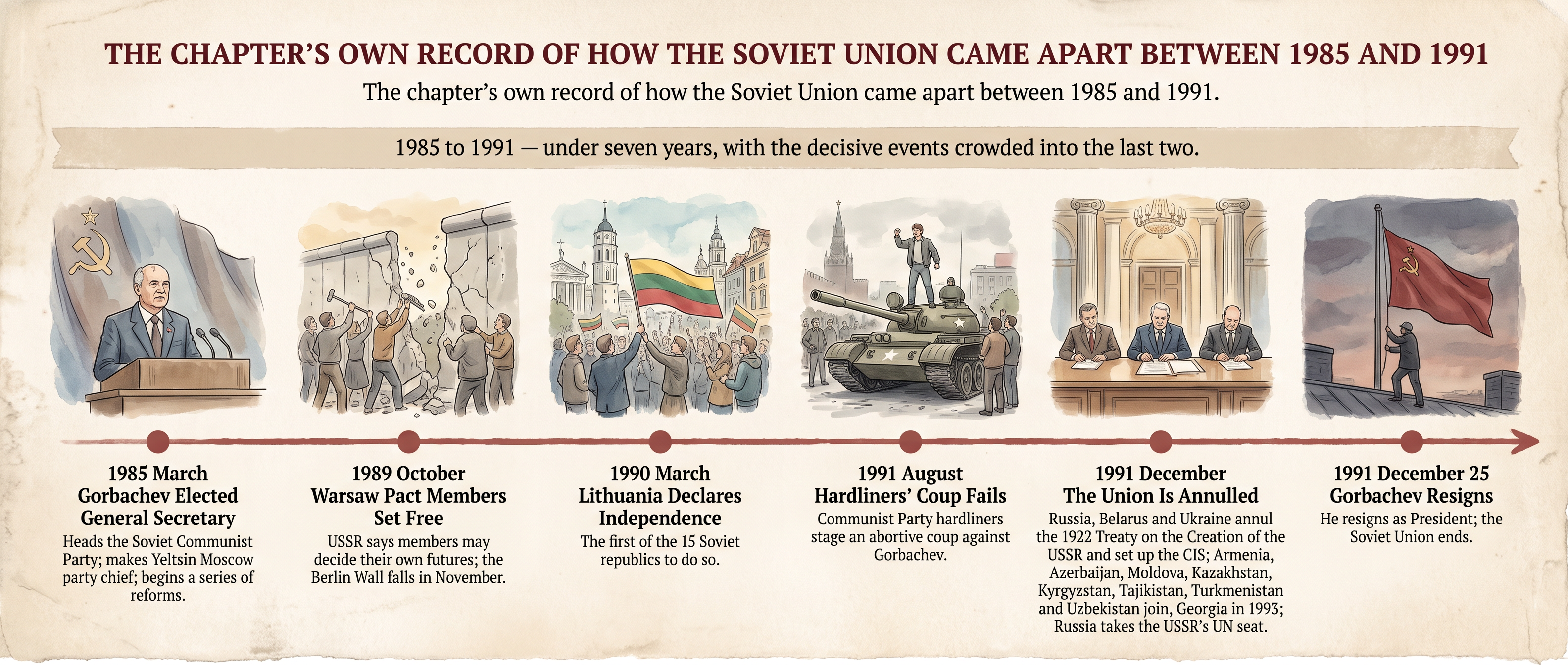
Fig. 1.1 – Timeline of disintegration of the Soviet Union.
Read the dates as a chain of decisions rather than as a list. Reform begins in 1985; the bloc is released in 1989; the first republic leaves in 1990; the attempt to turn the clock back fails in August 1991; and four months later the Union is annulled by three of its own republics. What the timeline cannot show you is the argument you have just read — whether the reforms of 1985 caused everything that followed, or merely uncovered it.
1.4 Consequences Of Disintegration
Three Enduring Changes
The collapse of the second world of the Soviet Union and of the socialist systems in eastern Europe had profound consequences for world politics. A superpower had gone, and with it the arrangement that had organised international politics for four decades.
Let us note here three broad kinds of enduring changes that resulted from it. Each of these had a number of effects that we cannot list here — so treat these three as headings under which many smaller changes belong, not as the whole story.
First: The End Of Cold War Confrontations
First of all, the disintegration meant the end of Cold War confrontations. The ideological dispute — a dispute between rival sets of ideas about how society ought to be organised — over whether the socialist system would beat the capitalist system was not an issue any more. One of the two contestants had withdrawn from the field.
This dispute had not stayed on paper. It had engaged the military of the two blocs. It had triggered a massive arms race and the accumulation of nuclear weapons. It had led to the existence of military blocs, of which the Warsaw Pact was one.
The end of the confrontation therefore demanded an end to this arms race and a possible new peace. Read that sentence carefully. It says ‘demanded’ and ‘possible’ — the opportunity was real, but it was an opportunity, not a guarantee.
Second: A New Balance Of Power
Second, power relations in world politics changed, and therefore the relative influence of ideas and institutions also changed. When one of the two great powers goes, the ideas it stood for and the bodies it backed lose weight along with it.
The end of the Cold War left open only two possibilities. Either the remaining superpower would dominate and create a unipolar system — a world with a single power at its centre. Or different countries, or groups of countries, could become important players in the international system, thereby bringing in a multipolar system, where no one power could dominate.
As it turned out, the US became the sole superpower. The first possibility, not the second, is what the 1990s delivered.
Backed by the power and the prestige of the US, the capitalist economy was now the dominant economic system internationally. Ideas do not spread on their own; they spread with the power of those who hold them.
Institutions like the World Bank and the International Monetary Fund (IMF) became powerful advisors to all these countries, since they gave them loans for their transitions to capitalism. Both are international bodies that lend money to states, and a lender who is also an advisor is in a strong position: the advice arrives attached to the loan. Keep this point in mind — the next section is about the advice these two institutions gave.
Politically, the notion of liberal democracy — a system of multi-party elections, individual rights and limits on the power of government — emerged as the best way to organise political life.
Third: Many New Countries
Third, the end of the Soviet bloc meant the emergence of many new countries. Fifteen republics had made up the USSR, and the socialist bloc had held eight East European countries. All of them were now states in their own right.
All these countries had their own independent aspirations and choices. For the first time, each could decide for itself who its friends would be.
Some of them, especially the Baltic and east European states, wanted to join the European Union and become part of the North Atlantic Treaty Organisation (NATO). The European Union is an economic and political grouping of European states; NATO is the military alliance of the Western bloc — the alliance the Warsaw Pact had been built against.
The Central Asian countries wanted to take advantage of their geographical location. They wanted to continue their close ties with Russia, and also to establish ties with the West, the US, China and others.
Thus the international system saw many new players emerge, each with its own identity, interests, and economic and political difficulties. A world of two blocs had become a world of many states, each bargaining for itself.
It is to these issues that we now turn — to what the transition to capitalism did to these countries, and to what it cost the people who lived through it.
1.5 Shock Therapy In Post-Communist Regimes
A Painful Transition
The collapse of communism was followed in most of these countries by a painful process of transition from an authoritarian socialist system to a democratic capitalist system. Two things were being changed at once: how the country was governed, and how its economy was owned and run.
The model of transition in Russia, Central Asia and east Europe that was influenced by the World Bank and the IMF came to be known as shock therapy. The name carries its own argument: the pain was to be sudden and severe, and it was supposed to be a cure.
Shock therapy varied in intensity and speed amongst the former second world countries, but its direction and features were quite similar. Different doses, in other words, of the same medicine.
What Shock Therapy Required
Each of these countries was required to make a total shift to a capitalist economy. This meant rooting out completely any structures that had evolved during the Soviet period — not adjusting them, but removing them.
Above all, it meant that private ownership was to be the dominant pattern of ownership of property. This was the exact reversal of the Soviet principle you met in Section 1.1, where land and productive assets belonged to the state.
Privatisation — the sale of state-owned assets to private buyers — and corporate ownership patterns were to be immediately brought in. Collective farms were to be replaced by private farming and by capitalism in agriculture.
This transition ruled out any alternate or ‘third way’, other than state-controlled socialism or capitalism. There were to be only two doors, and one of them had just been shut.
Turning The Economy Outwards
Shock therapy also involved a drastic change in the external orientation of these economies — that is, in how they dealt with the world outside.
Development was now envisaged through more trade, and thus a sudden and complete switch to free trade — trade without government restrictions such as high taxes on imports — was considered essential.
The free trade regime and foreign direct investment (FDI), which is investment by foreign companies directly into factories and businesses in the country, were to be the main engines of change.
This also involved openness to foreign investment, financial opening up or deregulation, which means removing government rules and controls over banks and businesses, and currency convertibility — the freedom to exchange the national currency for foreign currencies.
Cutting The Old Ties
Finally, the transition also involved a break up of the existing trade alliances among the countries of the Soviet bloc. These countries had traded mainly with one another, within a bloc led by the USSR.
Each state from this bloc was now linked directly to the West, and not to each other in the region. The lines of trade were redrawn to run outward rather than across.
These states were thus to be gradually absorbed into the Western economic system. The Western capitalist states now became the leaders, and thus guided and controlled the development of the region through various agencies and organisations.
Notice what has happened to power in this paragraph. One centre of guidance and control — Moscow — has been replaced by another set of leaders and organisations. The direction of dependence changed; dependence itself did not disappear.
The Two Models, Side By Side
The chapter has now described two complete systems: the Soviet model of Section 1.1, and the capitalist model that shock therapy was to install. Table 1.A1 puts them next to each other.
Reading The Map
The chapter prints a map of the region that this transition was applied to. Look at how many separate states now occupy the space that the Soviet Union and its bloc once filled, and find the five Central Asian Republics, which the chapter has repeatedly singled out.
Map
Map 1.1 Caption: Map of Central, Eastern Europe and the Commonwealth of Independent States. Brief: Reproduce the map printed in the chapter, showing Central and Eastern Europe and the CIS states. Label only the countries the chapter’s map labels — Russia, Belarus, Ukraine, Moldova, Romania, Bulgaria, Serbia, Montenegro, Slovenia, Croatia, Bosnia and Herzegovina, Kosovo, Albania, FYR Macedonia, Turkey, Georgia, Armenia, Azerbaijan, Kazakhstan, Uzbekistan, Turkmenistan, Kyrgyzstan and Tajikistan — and retain the marking for the undetermined boundary. Add no claim, boundary or label beyond what the chapter’s map states. All boundaries to follow the official position of the Government of India; India is not shown on this map. Retain the printed source line — https://www.unicef.org/hac2012/images/HAC2012_CEE-CIS_map_REVISED.gif — and the printed note that the boundaries, names and designations shown do not imply official endorsement or acceptance by the United Nations.
The map shows you the political shape of the region after the collapse: a large number of separate sovereign states, from the Baltic in the north-west to Central Asia in the east. It also shows why location mattered so much to the Central Asian republics, which sit between Russia and the rest of Asia.
But be clear about what a map like this cannot tell you. It cannot show you the shock therapy that was being applied inside these borders, or what it did to the people living within them. Boundaries on a map say nothing about who owns the factories, whether the shops have food, or whether the government is elected. For that, you have to read the next section.
1.6 Consequences Of Shock Therapy
The Promised Utopia That Did Not Arrive
The shock therapy administered in the 1990s did not lead the people into the promised utopia of mass consumption. The promise had been shops full of goods and lives like those in the West. That is not what came.
Generally, it brought ruin to the economies and disaster upon the people of the entire region. The textbook chooses hard words here, and the evidence in this section is what earns them.
A student in the original chapter puts the objection sharply in the margin: I can see the shock, but where is the therapy — why do we talk in such euphemisms? A euphemism is a mild word used in place of a harsh one. The question is a good one to carry through this section: does the word ‘therapy’ describe what actually happened to these societies?
The Largest Garage Sale In History
In Russia, the large state-controlled industrial complex almost collapsed, as about 90 per cent of its industries were put up for sale to private individuals and companies. Almost the entire industrial base of a superpower changed hands in a few years.
Since the restructuring was carried out through market forces and not by government-directed industrial policies, it led to the virtual disappearance of entire industries. Nobody planned which factories should survive; whatever could not sell, closed.
This was called ‘the largest garage sale in history’, as valuable industries were undervalued and sold at throwaway prices. Though all citizens were given vouchers to participate in the sales, most citizens sold their vouchers in the black market because they needed the money. The people who were meant to become owners sold their claim to ownership for the price of a meal.
Savings, Food And A Shrinking Economy
The value of the ruble, the Russian currency, declined dramatically. The rate of inflation was so high that people lost all their savings. Inflation is a general rise in prices, and when prices race ahead, money saved over a lifetime buys less and less until it buys nothing.
The collective farm system disintegrated, leaving people without food security, and Russia started to import food. A country that had fed itself now had to buy its food abroad.
The real GDP of Russia in 1999 was below what it was in 1989. Read that number slowly. GDP measures the total value of goods and services a country produces in a year, and ‘real’ means the figure is adjusted for price rise. So after ten years of transition, the Russian economy was producing less than it had produced under the system that was supposed to have failed.
The old trading structure broke down with no alternative in place. The bloc’s economies had been built to supply one another; when those links were cut, nothing had been prepared to replace them.
The banks went with the rest.
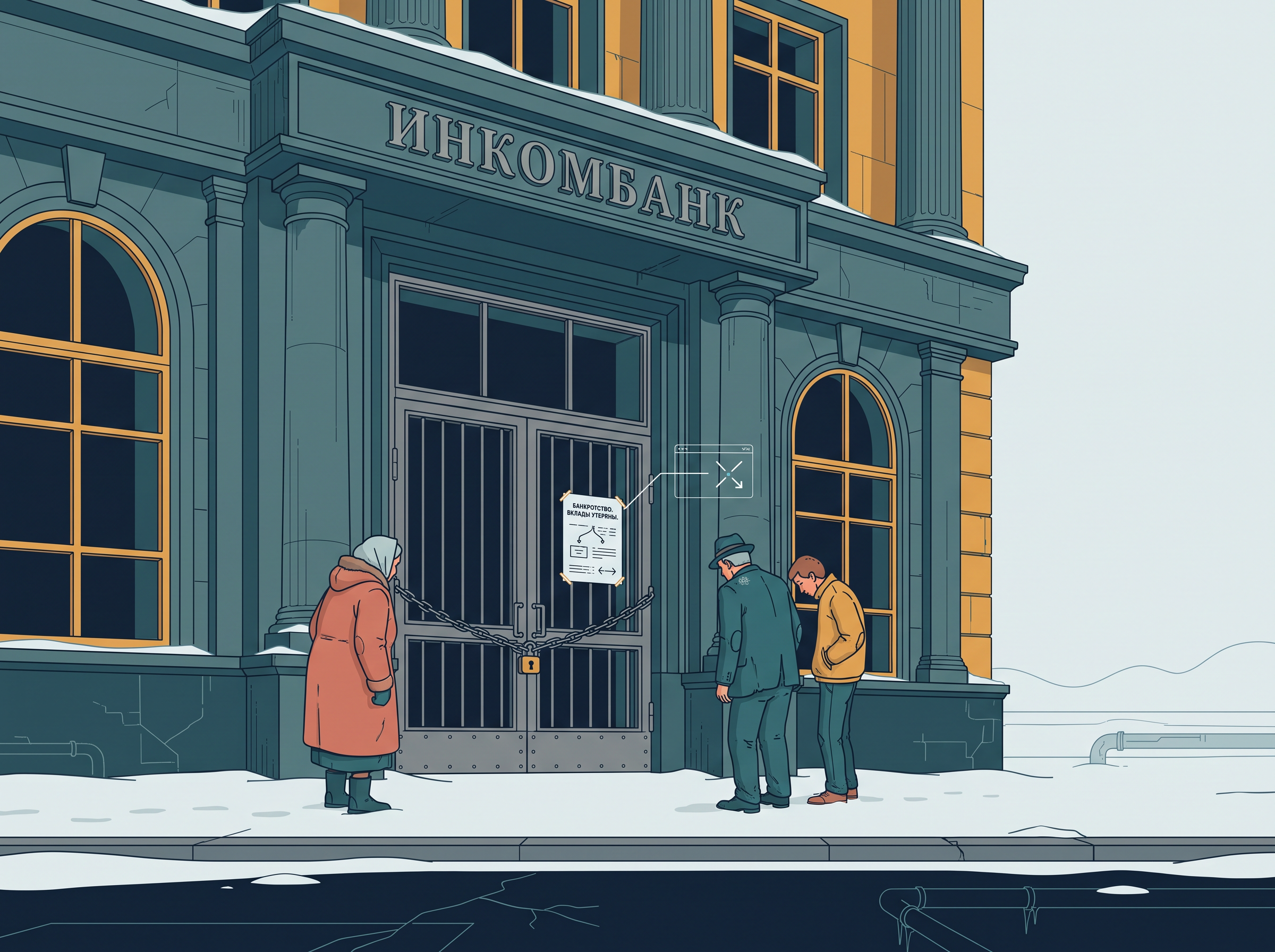
Fig. 1.2 – The bankrupt Inkombank in Russia.
Hold the figures in that caption together. About half of 1,500 banks and other financial institutions failed. In one bank alone, 10,000 corporate and private shareholders lost their money, and so did ordinary customers who had simply kept their savings there.
But notice what a photograph of a bank building cannot tell you. It cannot show you the depositor who lost a lifetime’s savings, and it cannot tell you whether the bankruptcies were caused by the speed of the transition, by the design of the policy, or by decisions taken inside the bank. A picture records the fact of failure. It does not explain it.
Welfare Destroyed, Inequality Created
The old system of social welfare was systematically destroyed. The withdrawal of government subsidies pushed large sections of the people into poverty — the subsidies on health, education and childcare that Section 1.1 described as the one solid gain of the Soviet system.
The middle classes were pushed to the periphery of society. The academic and intellectual manpower disintegrated or migrated: teachers, scientists and researchers either left their work or left the country.
A mafia emerged in most of these countries and started controlling many economic activities. Where the state withdraws and no law-governed market replaces it, force fills the gap.
Privatisation led to new disparities. Post-Soviet states, especially Russia, were divided between rich and poor regions. Unlike the earlier system, there was now great economic inequality between people. The society that had been built to abolish inequality now produced it faster than any of its neighbours.
Democracy Left For Later
The construction of democratic institutions was not given the same attention and priority as the demands of economic transformation. Building an economy came first; building a democracy could wait.
The constitutions of all these countries were drafted in a hurry. Most, including Russia, had a strong executive president with the widest possible powers, which rendered elected parliaments relatively weak. A parliament that cannot check a president cannot hold a government to account.
In Central Asia, the presidents had great powers, and several of them became very authoritarian. For example, the presidents of Turkmenistan and Uzbekistan appointed themselves to power first for ten years and then extended it for another ten years. They allowed no dissent or opposition.
A judicial culture and the independence of the judiciary was yet to be established in most of these countries. Without courts that can rule against the government, a written constitution is only paper.
Revival After 2000, And What Paid For It
Most of these economies, especially Russia, started reviving in 2000, ten years after their independence. A decade is a long time in a human life, and a whole generation grew up inside that decade.
The reason for the revival for most of these economies was the export of natural resources like oil, natural gas and minerals. Azerbaijan, Kazakhstan, Russia, Turkmenistan and Uzbekistan are major oil and gas producers.
Other countries have gained because of the oil pipelines that cross their territories, for which they get rent — a payment simply for allowing the pipeline to pass through. Some amount of manufacturing has restarted.
So the recovery came, but it came from what lay under the ground rather than from what the transition had built. That is a fact worth carrying into the next section, because oil and gas do not only bring income. They bring outside powers.
1.7 Tensions And Conflicts
A Region Prone To Conflict
Most of the former Soviet Republics are prone to conflicts, and many have had civil wars and insurgencies. A civil war is a war fought between groups within the same country, and an insurgency is an armed revolt against the government by a group inside the state.
Complicating the picture is the growing involvement of outside powers. Conflicts that begin as local quarrels do not stay local when the region concerned sits on oil.
Before going further, settle a distinction the original textbook raises with some irony in its margin. What is the difference between nationalism and secessionism? Secession is the withdrawal of a region from a state in order to form a state of its own. The two claims are the same claim — a people saying they should govern themselves — and the aside makes the uncomfortable point that the label often depends on the outcome: if you succeed, you are celebrated as a nationalist hero, and if you fail you are condemned for crimes of secessionism.
Conflicts Inside Russia
In Russia, two republics, Chechnya and Dagestan, have had violent secessionist movements. Both lie within the Russian Federation and are not separate countries.
Moscow’s method of dealing with the Chechen rebels and its indiscriminate military bombings have led to many human rights violations. Those are the chapter’s own words, and they should not be softened: bombing that does not distinguish between fighters and civilians harms civilians.
They also failed to deter the aspirations for independence. Force did not end the demand. That is a finding, not an opinion, and it is one worth remembering when any state’s answer to a political demand is a military one.
Conflicts Across Central Asia, The Caucasus And Beyond
In Central Asia, Tajikistan witnessed a civil war that went on for ten years, till 2001. The region as a whole has many sectarian conflicts — conflicts between groups divided by religion or sect.
In Azerbaijan’s province of Nagorno-Karabakh, some local Armenians want to secede and join Armenia. In Georgia, the demand for independence has come from two provinces, resulting in a civil war.
There are movements against the existing regimes in Ukraine, Kyrgyzstan and Georgia. Countries and provinces are fighting over river waters, because rivers do not stop at the new borders that the break-up created.
All this has led to instability, making life difficult for the ordinary citizen. Behind every line in this list is a family that cannot count on tomorrow.
Central Asia As A Zone Of Competition
The Central Asian Republics are areas with vast hydrocarbon resources — oil and natural gas — which have brought them economic benefit. This is the same wealth that Section 1.6 identified as the engine of the region’s revival after 2000.
Central Asia has also become a zone of competition between outside powers and oil companies. Look at where it sits. The region is next to Russia, China, Afghanistan, and Pakistan, and close to West Asia.
After 11 September 2001, the US wanted military bases in the region. It paid the governments of all Central Asian states to hire bases, and to allow airplanes to fly over their territory during the wars in Afghanistan and Iraq.
However, Russia perceives these states as its ‘Near Abroad’ and believes that they should be under Russian influence. The phrase is telling. It treats independent countries as a neighbourhood in which one power expects the final word.
China has interests here because of the oil resources, and the Chinese have begun to settle around the borders and conduct trade. Three outside powers, then, with three different reasons for wanting the same region.
Eastern Europe — Two Break-Ups, Two Endings
In eastern Europe, Czechoslovakia — a state in central Europe — split peacefully into two, with the Czechs and the Slovaks forming independent countries. A country can be divided by agreement, and it was.
But the most severe conflict took place in the Balkan republics of Yugoslavia, a federation in south-eastern Europe. After 1991, it broke apart, with several provinces like Croatia, Slovenia and Bosnia and Herzegovina declaring independence.
Ethnic Serbs opposed this, and a massacre of non-Serb Bosnians followed. The NATO intervention and the bombing of Yugoslavia followed the inter-ethnic civil war.
Set the two break-ups side by side and the lesson is unavoidable. The same event — a state coming apart — produced a peaceful separation in one place and mass killing in another. Nothing in the fact of separation decides which. What decides it is how the claims of the different peoples inside the state are handled, and by whom.
1.8 India And Post-Communist Countries
The Strongest Tie Is Still With Russia
India has maintained good relations with all the post-communist countries. When a bloc of states is reborn as a set of independent countries, another country must decide how to deal with each of them, and India chose to deal well with all.
But the strongest relations are still those between Russia and India. India’s relations with Russia are an important aspect of India’s foreign policy — the set of positions and dealings by which a country manages its relations with the rest of the world.
Indo-Russian relations are embedded in a history of trust and common interests, and are matched by popular perceptions. That last phrase is easy to skim past, and it should not be. It says that this relationship is not only an affair of governments. It lives in what ordinary people in both countries feel about each other.
Indian heroes from Raj Kapoor to Amitabh Bachchan are household names in Russia and many post-Soviet countries. One can hear Hindi film songs all over the region, and India is part of the popular memory there.
Hindi Films In Tashkent
How far does this popular affection actually reach? The chapter prints a news report from Tashkent, the capital of Uzbekistan in Central Asia, written seven years after the Soviet Union collapsed. Read it for what it shows about culture as a link between countries — and then read it again for what a report of this kind cannot establish.
The report is doing two things at once. It records an affection that survived the collapse of a superpower, and it shows how that affection travels — not through embassies, but through a shopkeeper, a market, a hundred videos a day, and a route that runs from Peshawar to Tashkent.
Now the limit, and it matters. This is a news report built on two conversations. The figure of 70 per cent is a shopkeeper’s estimate of his own customers, not a survey of Tashkent, and the diplomat is describing the dignitaries he happens to meet. Neither man is in a position to speak for a country.
The report can therefore tell you that Indian films are loved and widely sold in Uzbekistan. It cannot tell you how many Uzbeks feel that way, whether the affection extends to India’s policies, or whether it has any bearing on what the two governments decide. Culture is evidence of a link between peoples. It is not, by itself, evidence of a link between states.
What Each Side Gains
A relationship between two states lasts because both get something from it. The chapter is unusually direct about what each side gets, and you should be able to state both halves.
India stands to benefit from its relationship with Russia on issues like Kashmir, energy supplies, sharing information on international terrorism, access to Central Asia, and balancing its relations with China.
Russia stands to benefit because India is the second largest arms market for Russia. The Indian military gets most of its hardware from Russia — the aircraft, tanks and equipment with which it is armed.
Energy runs through the relationship in both directions. Since India is an oil-importing nation, Russia is important to India and has repeatedly come to the assistance of India during its oil crises. India is seeking to increase its energy imports from Russia and from the republics of Kazakhstan and Turkmenistan, and cooperation with these republics includes partnership and investment in oilfields.
Russia is important for India’s nuclear energy plans, and it assisted India’s space industry by giving, for example, the cryogenic rocket when India needed it. Russia and India have collaborated on various scientific projects.
Flashback — India And The USSR
The closeness did not begin in 1991. During the Cold War era, India and the USSR enjoyed a special relationship, which led critics to say that India was part of the Soviet camp. It was a multi-dimensional relationship, and the chapter sets out its four dimensions.
Economically, the Soviet Union assisted India’s public sector companies at a time when such assistance was difficult to get. It gave aid and technical assistance for steel plants like Bhilai, Bokaro and Visakhapatnam, and machinery plants like Bharat Heavy Electricals Ltd. It also accepted Indian currency for trade when India was short of foreign exchange — an arrangement of real value to a country that had little foreign money to spend.
Politically, the Soviet Union supported India’s positions on the Kashmir issue in the UN. It also supported India during its major conflicts, especially during the war with Pakistan in 1971. India too supported Soviet foreign policy in some crucial but indirect ways.
Militarily, India received most of its military hardware from the Soviet Union at a time when few other countries were willing to part with military technologies. The Soviet Union entered into various agreements allowing India to jointly produce military equipment.
Culturally, Hindi films and Indian culture were popular in the Soviet Union, and a large number of Indian writers and artists visited the USSR. That is the history behind the shopkeeper in Tashkent.
A Class Project
The chapter closes with a project for the whole class, and it is worth doing carefully.
Select any five Cold War allies each of the Soviet Union and the US. Divide the class accordingly, into ten groups, and allot one country to each group. Each group collects information on the political, social and economic profile of its country during the Cold War days.
Each group should then prepare a profile of that country after the collapse of communism, and say what difference, if any, the disintegration of the second world made to that country.
Each group is to present its findings to the entire class. Ensure that students talk about how the people of these countries felt about themselves as citizens.
Two ideas for the teacher are printed alongside. The findings can be linked to the working of the democratic system and the communist system, highlighting the pros and cons of both. And students can be encouraged to discuss whether there is an alternative to both communism and capitalism — the very question this chapter left open in Section 1.5.
1.9 Summary
The Soviet System
- The USSR came into being after the socialist revolution in Russia in 1917, and was the biggest attempt in history to abolish private property and design a society on principles of equality.
- Its political system centred on the communist party; no other party or opposition was allowed, and the economy was planned and controlled by the state.
- After the Second World War, the east European countries the Soviet army had liberated came under Soviet control, forming the Second World or ‘socialist bloc’, held together by the Warsaw Pact.
- The Soviet economy was second only to that of the US: vast energy resources, machinery, transport, a consumer industry, and a guaranteed minimum standard of living with subsidised health, education and childcare.
- The same system was bureaucratic and authoritarian. There was no democracy and no freedom of speech, the Communist Party was unaccountable, and the fifteen republics were not allowed to manage their own affairs, while Russia dominated everything.
- The arms race, the invasion of Afghanistan in 1979 and falling productivity left the economy short of consumer goods, importing food, and stagnant by the late 1970s.
Reform And Break-Up
- Mikhail Gorbachev, General Secretary from 1985, reformed the economy, democratised the system and normalised relations with the West, because the USSR was falling behind the information and technological revolutions in the West.
- East Europeans protested against their governments and Soviet control; the USSR did not intervene, and the communist regimes collapsed one after another.
- Party leaders opposed the reforms. A coup by hardliners in 1991 failed, and Boris Yeltsin emerged as a national hero opposing it.
- In December 1991, Russia, Ukraine and Belarus declared the Soviet Union disbanded; the Communist Party was banned, and capitalism and democracy became the basis of the post-Soviet republics.
- The Commonwealth of Independent States was formed, with the Central Asian republics — surprised by their exclusion — made founding members. Russia became the successor state, inheriting the Soviet seat in the UN Security Council, the treaties, and the nuclear weapons.
Why It Happened
- The internal weaknesses of Soviet political and economic institutions, which failed to meet people’s aspirations, were responsible for the collapse.
- Resources went into the nuclear and military arsenal and into the satellite states and the Central Asian republics, creating a burden the system could not bear.
- Citizens who came to know of the West’s advance suffered a political and psychological shock on learning how far behind they were.
- Administratively, seventy years of unaccountable party rule produced corruption, stifling administration and privileged bureaucrats, and the government lost popular backing.
- Gorbachev’s diagnosis was accurate, but loosening the system released expectations he could not control: some found him too slow, others too fast, and he lost support on all sides.
- The rise of nationalism and the desire for sovereignty in the republics was the final and most immediate cause — and it was strongest not in Central Asia, as expected, but in the more ‘European’ and prosperous republics.
What Changed In World Politics
- Cold War confrontations ended, and with them the reason for the arms race and the military blocs, making a new peace possible.
- The end of the Cold War left two possibilities, unipolar or multipolar; the US became the sole superpower, capitalism became the dominant economic system, the World Bank and the IMF became powerful advisors, and liberal democracy emerged as the accepted way to organise political life.
- Many new countries emerged, each with its own choices — the Baltic and east European states towards the European Union and NATO, the Central Asian states towards Russia, the West, the US and China.
Shock Therapy And Its Cost
- The transition model backed by the World Bank and the IMF, known as ‘shock therapy’, required a total and immediate shift to capitalism: private ownership, privatisation, private farming, free trade, FDI, deregulation and convertibility, with no ‘third way’.
- Old trade links within the bloc were broken, and each state was tied directly to the Western economic system.
- The results were ruinous: about 90 per cent of Russia’s industries sold off in ‘the largest garage sale in history’, savings destroyed by inflation, real GDP in 1999 below that of 1989, welfare withdrawn, a mafia in control of economic activity, and great inequality between people and regions.
- Democratic institutions were built last: constitutions drafted in a hurry, strong executive presidents, weak parliaments, and no independent judiciary in most of these countries.
- Most economies began reviving in 2000, mainly through the export of oil, natural gas and minerals.
Conflicts And India
- Many former Soviet republics have seen civil wars, insurgencies and secessionist movements — Chechnya and Dagestan in Russia, a ten-year civil war in Tajikistan, Nagorno-Karabakh, and conflicts in Georgia.
- Central Asia’s hydrocarbons and location have made it a zone of competition between the US, Russia and China.
- Czechoslovakia split peacefully; Yugoslavia broke apart violently, with a massacre of non-Serb Bosnians and NATO’s bombing following the inter-ethnic civil war.
- India has good relations with all post-communist countries, and its strongest with Russia — built on Cold War economic, political, military and cultural ties, and now on arms, oil, nuclear energy, space cooperation and a shared vision of a multipolar world order.
1.10 NCERT Questions
- Which among the following statements that describe the nature of Soviet economy is wrong?
- Socialism was the dominant ideology
- State ownership/control existed over the factors of production
- People enjoyed economic freedom
- Every aspect of the economy was planned and controlled by the State
- Arrange the following in chronological order:
- Soviet invasion of Afghanistan
- Fall of the Berlin Wall
- Disintegration of the Soviet Union
- Russian Revolution
- Which among the following is NOT an outcome of the disintegration of the USSR?
- End of the ideological war between the US and USSR
- Birth of CIS
- Change in the balance of power in the world order
- Crises in the Middle East
- Match the following:
| Column A | Column B |
|---|---|
| a. Mikhail Gorbachev | i. Successor of USSR |
| b. Shock Therapy | ii. Military pact |
| c. Russia | iii. Introduced reforms |
| d. Boris Yeltsin | iv. Economic model |
| e. Warsaw | v. President of Russia |
Fill in the blanks.
- The Soviet political system was based on ___________________ ideology.
- _________________ was the military alliance started by the USSR.
- ____________________ party dominated the Soviet Union’s political system.
- ______________________ initiated the reforms in the USSR in 1985.
- The fall of the ____________________ symbolised the end of the Cold War.
Mention any three features that distinguish the Soviet economy from that of a capitalist country like the US.
What were the factors that forced Gorbachev to initiate the reforms in the USSR?
What were the major consequences of the disintegration of the Soviet Union for countries like India?
What was Shock Therapy? Was this the best way to make a transition from communism to capitalism?
1.11 Check Your Concepts
The Soviet state guaranteed its citizens certain things and denied them others. State two of each, and explain in your own words why a system could do both at the same time.
Read the caption printed with Fig. 1.2. What do its figures tell you about what happened to ordinary savers in Russia? Now state one thing a photograph of a bankrupt bank cannot explain about why that bank failed.
Study Map 1.1. Using the location of the Central Asian republics and the resources they possess, explain why the region became a zone of competition between outside powers.
In Source 1.1, a shopkeeper in Tashkent says that at least 70% of the people there buy Indian films. What does this report establish about India’s links with the region, and what does it not establish? Give reasons for both halves of your answer.
During the Cold War, nationalist unrest was expected to be strongest in the Central Asian republics. In fact it was strongest in the more ‘European’ and prosperous republics. Reconstruct the reasons the chapter gives for this, step by step.
The chapter records two different views on the relationship between Gorbachev’s reforms and the rise of nationalism. Set out both views, and explain why the chapter says the evidence cannot finally settle between them.
Czechoslovakia split peacefully into two countries. Yugoslavia broke apart with a massacre of non-Serb Bosnians, an inter-ethnic civil war and NATO’s bombing. Both were break-ups of communist-era states. What does the difference between them suggest about when a separation turns violent?
In the post-communist countries, the building of democratic institutions was not given the same priority as economic transformation. Describe what this produced in Russia and in Central Asia, and explain why a weak parliament and a judiciary that is not independent matter to an ordinary citizen.