Chapter 4: International Organisations
In the spring of 1945 the Second World War was in its last months. For two months, delegates from across the world sat in the American city of San Francisco, at a meeting called the United Nations Conference on International Organisation. One question sat in front of them. Could states build an organisation that would stop the next war before it began?
An earlier attempt had already failed. After the First World War, many people believed that an international organisation would help the world avoid war, and the League of Nations was born. Despite some early success, it could not prevent the Second World War of 1939–45, a war in which more people died and were wounded than in any war before it.
So the delegates at San Francisco were designing a second attempt, and they made a hard choice. An organisation of equals would be fairer. But the states with the largest armies and the deepest treasuries could simply walk away from it, and then it would be worth nothing. So the new body would seat every member in a General Assembly, each with one vote — and it would also hand five states, the most powerful states and the victors of the war just ended, permanent seats on a Security Council and the power to block a decision they disliked.
On 26 June 1945, fifty nations signed the UN Charter. Poland signed on 15 October, making 51 original founding members. The UN was founded on 24 October 1945. India joined on 30 October. That bargain of 1945 is still the bargain, and it is still being argued about.
Fig. 4.0 – The United Nations emblem.
4.1 Why International Organisations?
Begin with two drawings. Both are political cartoons, and both are making the same complaint: that the United Nations Organisation — usually called the UN — was of little use when it was most needed. The episode they refer to is the Lebanon crisis of 2006.
In June 2006 Israel attacked Lebanon, a small country on the eastern shore of the Mediterranean Sea, saying that this was necessary to control the militant group called Hezbollah. Large numbers of civilians were killed. Many public buildings, and even residential areas, came under Israeli bombardment. The UN passed a resolution on this only in August, and the Israeli army withdrew from the region only in October.
Look at the dates before you look at the drawings. The attack began in June; the world organisation set up to deal with exactly this kind of conflict spoke in August; the fighting on the ground ended in October. Both cartoonists are drawing that gap.
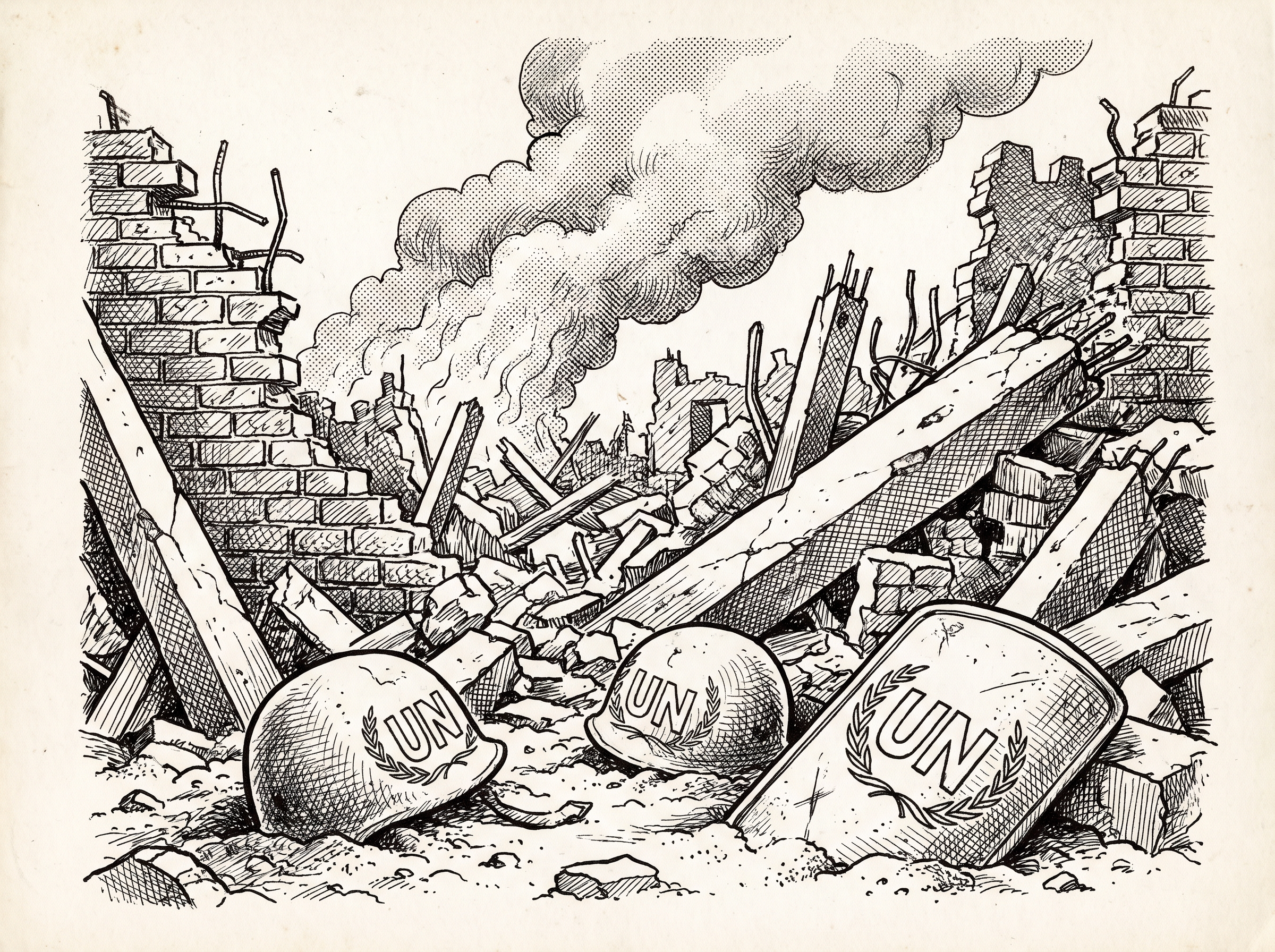
Fig. 4.1 – The UN and the Lebanon crisis. Inspiration: Harry Harrison, Cagle Cartoons Inc.
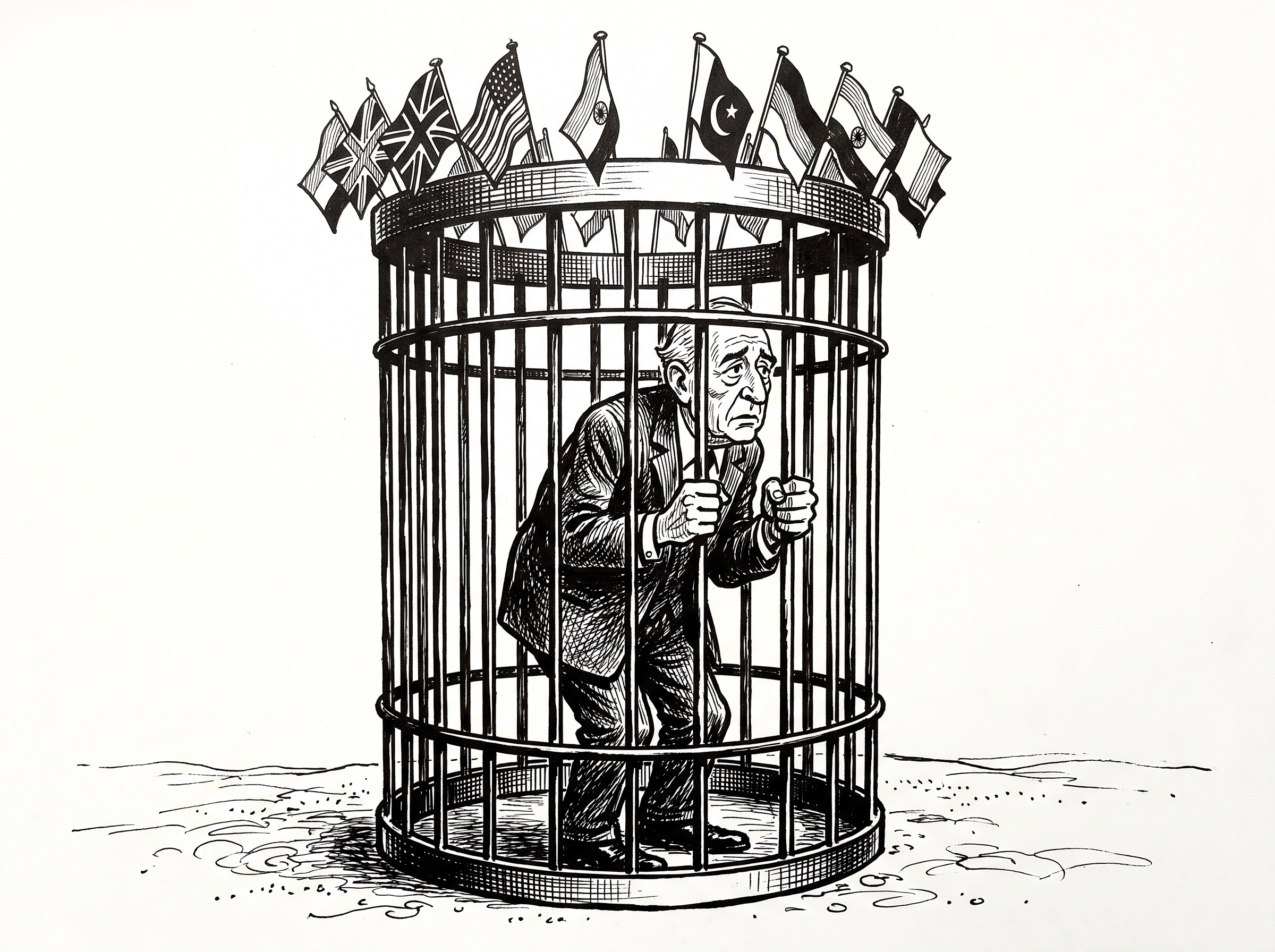
Fig. 4.2 – The Secretary-General constrained. Inspiration: Petar Pismestrovic, Cagle Cartoons Inc.
The first cartoon puts the UN emblem in the rubble. The emblem is the symbol of an organisation created to keep peace, and the cartoonist has drawn it lying in the wreckage of a war that went on regardless. The exaggeration is the point: nothing in the drawing is doing anything. The second cartoon puts the Secretary-General inside a cage that is made of the member states themselves, drawn as flags. He is visible, he is in charge, and he cannot move.
Read together, the two drawings make one argument in two ways. The UN, they say, is present at a war and powerless in it. That is an opinion many people hold, and you will hear it whenever the UN is slow.
But notice what a cartoon cannot do. It states one opinion in one image, and it cannot draw the reply. Neither cartoonist tells you what the UN could legally have done in June 2006, who inside the organisation delayed the resolution, or what happened in the months of negotiation that produced it in August. A cartoon is evidence of what people thought about the UN. It is not evidence of what the UN was able to do.
Two Voices From Inside The UN
There is another view, and it is just as widely held. The UN is generally regarded as the most important international organisation in today’s world. In the eyes of many people all over the world it is indispensable, and it represents the great hope of humanity for peace and progress.
Both things are said about the same organisation. So why do we need organisations like the UN at all? Let us hear two insiders.
Read that sentence slowly, because it is doing something careful. Hammarskjold is not defending the UN by claiming it will make the world good. He is lowering the standard by which it should be judged. Heaven is not the promise; avoiding hell is. On that standard, an organisation that is slow, quarrelsome and imperfect can still be worth having.
The second voice answers the oldest jibe against the UN — that it is merely a talking shop, a place where people make speeches and nothing follows.
The General Assembly he mentions is the chamber in which every member state sits, each with a single vote. Tharoor does not deny the charge. He accepts it and then turns it around: talking is boring, and the alternative to boring is bleeding. ‘Jaw-jaw is better than war-war’ is his shorthand for the whole case.
That defence should sound familiar. The same thing is said about a parliament — that it is a talking shop where members argue and little gets done. Does the charge mean we should not have parliaments? If your answer is no, ask yourself why the same answer would not hold for the UN.
Now the limit, and it matters here more than usual. Both these men held high office in the UN. Hammarskjold led it; Tharoor spoke for it. Each is defending an institution he served, in words chosen to be quoted. They tell you the best case the UN’s own insiders make for it. They do not tell you whether that case is true, and they were never designed to record what the organisation looked like to a family in Lebanon in the summer of 2006.
Put the two views together and you get the honest position, which is the one this chapter takes. International organisations are not the answer to everything. But they are important. They help with matters of war and peace, and they help countries cooperate to make better living conditions for us all.
What An International Organisation Is — And Is Not
Countries have conflicts and differences with each other. That does not mean they must go to war to settle them. They can instead discuss contentious issues and find peaceful solutions. Indeed, though this is rarely noticed, most conflicts and differences between countries are resolved without going to war. War makes the news; a settlement usually does not.
An international organisation is a body created by states to help them deal with shared problems. It is not a super-state with authority over its members. It does not stand above governments and give them orders. It is created by states, and it responds to states.
That single sentence explains most of what follows in this chapter, so hold on to it. An international organisation comes into being when states agree to create it. Once created, it can help member states resolve their problems peacefully. What it cannot do is compel a member to behave, if the member is strong enough to refuse.
A student who has understood this will stop asking why the UN did not stop a war, and start asking a better question: which states wanted it stopped, and which did not.
The IMF is worth pausing on, because it shows the same point in a different room. States created it, and states decide inside it — but not equally. Seven countries together control more than two-fifths of the votes, while India, with a far larger population than any of them, holds 2.64 per cent. Membership is universal; influence is not. Keep that distinction in mind, because it returns when we come to the Security Council.
Problems No Country Can Solve Alone
International organisations are helpful in another way, and it has nothing to do with war. Nations can usually see that there are some things they simply must do together. There are issues so challenging that they can only be dealt with when everyone works together.
Disease is an example. Some diseases can only be eradicated if everyone in the world cooperates in inoculating or vaccinating their populations. A country that vaccinates its own people well can still be reinfected from across a border it does not control. The last stretch of the job is the hardest, and it cannot be done alone.
Or take global warming and its effects. As temperatures rise because of the increase in greenhouse gases in the atmosphere, there is a danger that sea levels will also rise, submerging many coastal areas of the world, including huge cities.
Of course, each country can try to find its own solution to the effects of global warming — sea walls, drainage, relocation. But in the end a more effective approach is to stop the warming itself. And that requires at least all of the major industrial powers to cooperate, because they are the ones putting the gases into the air.
Why Knowing Is Not Enough
Unfortunately, recognising the need for cooperation and actually cooperating are two very different things. This is the hinge of the whole argument, so go through it slowly.
Nations can agree that a problem must be solved together, and still fail to solve it. They cannot always agree on how best to act. They cannot agree on how to share the costs of cooperating. They cannot agree on how to make sure that the benefits of cooperating are justly divided. And each of them worries about the same thing: how do we ensure that others do not break their end of the bargain and cheat on an agreement?
That last worry is the deadliest. If a country suspects the others will cheat, it will not act — and its inaction gives the others reason to suspect it in turn. Everyone loses a bargain that everyone wanted.
This is where an international organisation earns its keep. It can help produce information and ideas about how to cooperate. It can provide mechanisms, rules and a bureaucracy — a permanent staff that keeps records, monitors compliance and reports what members are actually doing. That machinery helps members have more confidence that costs will be shared properly, that the benefits will be fairly divided, and that once a member joins an agreement, it will honour the terms and conditions of that agreement.
A New Question After The Cold War
With the end of the Cold War, we can see that the UN may have a slightly different role to play. The United States and its allies emerged victorious from that long confrontation, and that victory created a new anxiety.
Many governments and peoples became concerned that the Western countries led by the US would be so powerful that there would be no check against their wishes and desires. No rival bloc was left to balance them.
So a question arises, and it is the question this chapter ends on. Can the UN serve to promote dialogue and discussion with the US in particular? Could it limit the power of the American government? Hold the question. We shall try to answer it at the end of the chapter.
4.2 Evolution Of The UN
The UN was not the world’s first attempt at an international organisation. It was the second, and it was built by people who had watched the first one fail.
The Attempt That Failed
The First World War encouraged the world to invest in an international organisation to deal with conflict. Many believed that such an organisation would help the world avoid war. As a result, the League of Nations was born — a body of member states created after the First World War to settle disputes before they turned into wars.
However, despite its initial success, the League could not prevent the Second World War (1939–45). And that war was worse than the one before it. Many more people died and were wounded in it than ever before.
Notice what that failure did to the argument. It could have persuaded states that international organisations are useless. Instead it persuaded them to try again, and to try harder — because the alternative had just cost more lives than any event in human history.
Building The Successor
The UN was founded as a successor to the League of Nations. It was established in 1945, immediately after the Second World War. The organisation was set up through the signing of the United Nations Charter by 51 states. The Charter is the founding treaty of the UN: it lists the organisation’s purposes, creates its organs and sets out what each may do.
The sequence that produced it is set out in Fig. 4.3. Read the dates carefully. The planning began in 1941, while the war was still being fought and long before anyone knew who would win it.
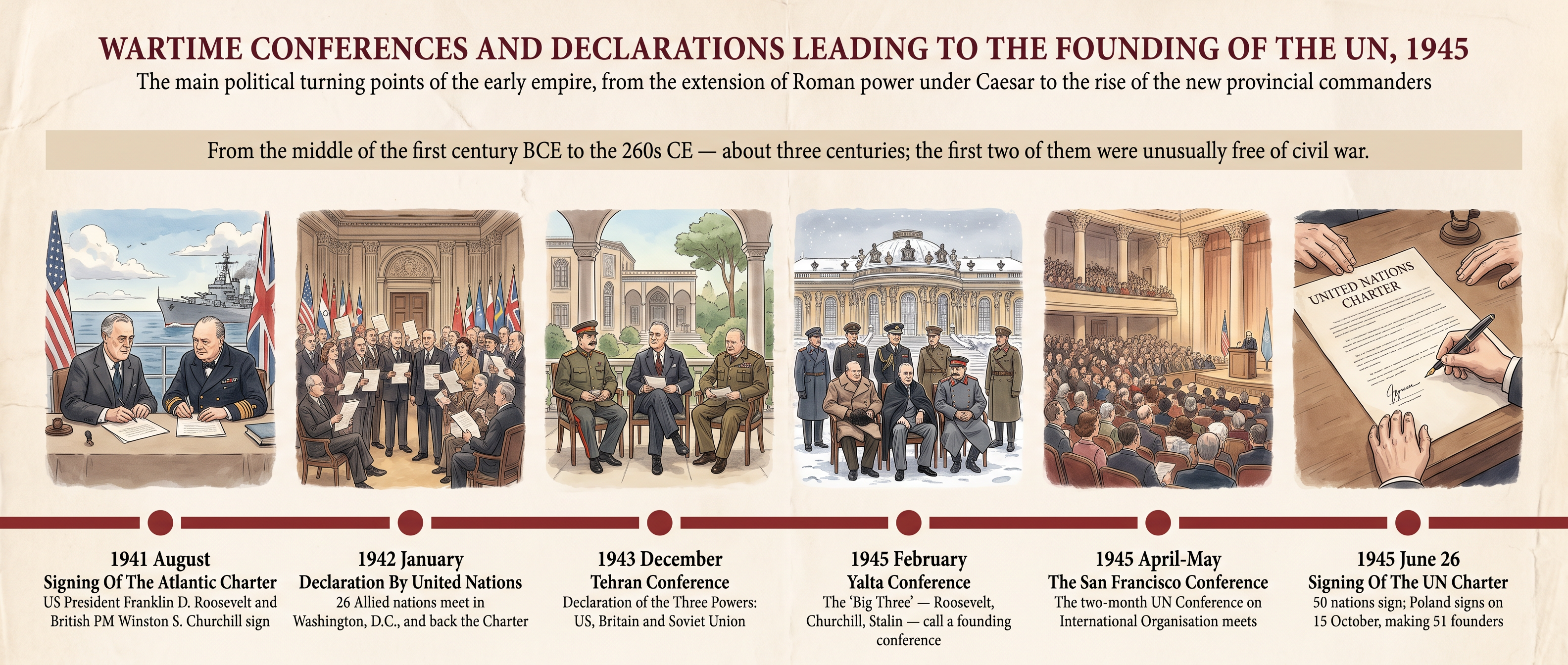
Fig. 4.3 – Founding of the United Nations.
The organisation was, in other words, designed by the states that were winning a war, for the world they expected to run afterwards. That origin is written into its structure, and it explains most of the arguments about reform that fill the rest of this chapter.
The poster in Fig. 4.4 makes the point in a way no paragraph can.
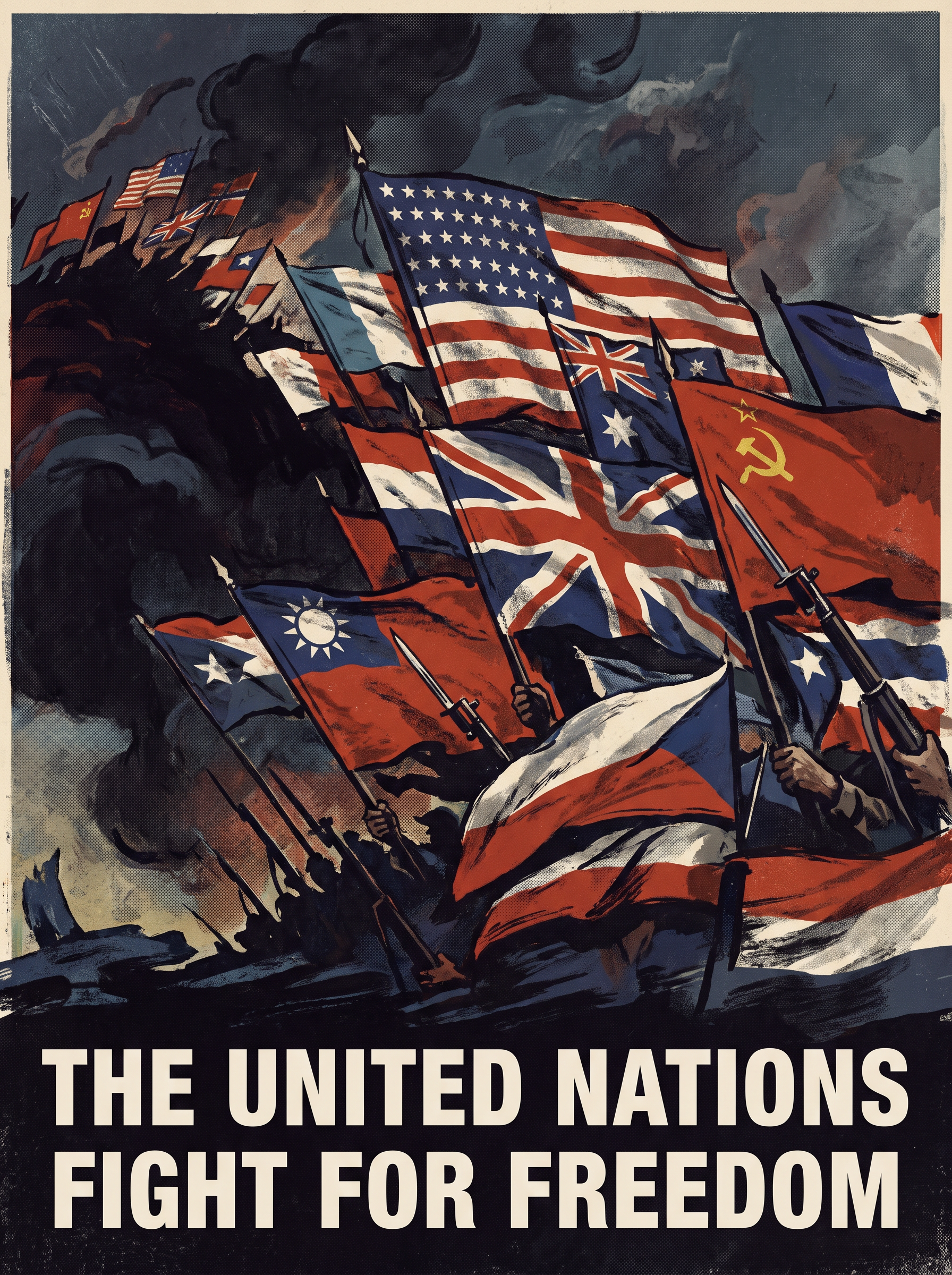
Fig. 4.4 – The United Nations as a wartime alliance.
The poster does not show diplomats. It shows flags flying over a battle, and its slogan is about fighting. In 1942, ‘United Nations’ was the name of a war alliance, not of a peace organisation. The UN’s origins are belligerent — that is, they lie in war — and that is worth remembering whenever the UN is criticised for behaving like a club of the powerful.
What the poster cannot tell you is what the alliance intended to build once the war ended. A wartime propaganda poster is designed to hold a coalition together, not to describe an institution. For that you have to read the Charter, and the Charter came three years later.
What The UN Was Set Up To Do
The UN tried to achieve what the League could not between the two world wars. Its objective is to prevent international conflict and to facilitate cooperation among states.
It was founded with the hope that it would act to stop conflicts between states escalating into war and, if war broke out, to limit the extent of hostilities. Both halves matter. Preventing war is the first goal; when prevention fails, containing the war is the second.
The founders also took a wider view of what causes war. Conflicts often arose from the lack of social and economic development. So the UN was intended to bring countries together to improve the prospects of social and economic development all over the world. Poverty, hunger and illiteracy were treated not merely as misfortunes but as sources of war.
Who Sits In It, And Who Decides
By 2011, the UN had 193 member states. These included almost all independent states in the world. Membership is very nearly universal — which is exactly what gives the UN its authority, and also what makes it slow.
In the UN General Assembly, the chamber in which every member state is represented, all members have one vote each. India’s vote and the vote of the smallest island state count the same. In this room, sovereign equality is real.
In the UN Security Council, the organ responsible for international peace and security, there are five permanent members. These are: the United States, Russia, the United Kingdom, France and China. These states were selected as permanent members because they were the most powerful immediately after the Second World War, and because they constituted the victors in the War.
Their permanent seats come with the veto — the power of any one of them to block a decision, however many other members support it. We shall see exactly how the veto works when we come to reform.
This raises a question a student is entitled to ask. If every member has one vote in the General Assembly, does it matter what kind of government sends the representative? Some argue that one reform is needed above all others: that only democratic leaders should be allowed to represent their countries in the UN, and that a dictator should not be permitted to speak in the name of a people who never chose him. The UN as it exists takes the opposite view — it seats states, not governments of a particular type. Both positions have a cost, and you should be able to say what each costs.
The Secretary-General
The UN’s most visible public figure, and its representative head, is the Secretary-General — the chief officer of the organisation, who heads its permanent staff and speaks for it in public.
The present Secretary-General is António Guterres. He is the ninth Secretary-General of the UN and took over on 1 January 2017. He was the Prime Minister of Portugal (1995–2002) and the UN High Commissioner for Refugees (2005–2015) — the official who leads the UN body responsible for people forced to flee their countries.
The Secretary-General is not elected by the world’s people, and he does not command an army. How, then, does he get the job? The procedure is set out in Fig. 4.5, and it explains a great deal about how much independence the office really has.
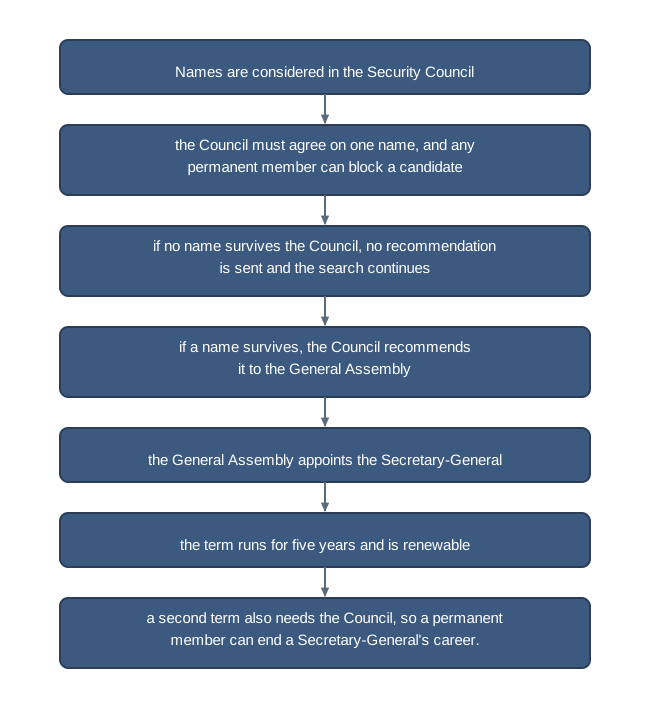
Fig. 4.5 – Appointment of the Secretary-General.
The Machinery Beneath
The UN consists of many different structures and agencies. Fig. 4.6 maps the whole system. Do not try to memorise it; learn to read it, because the shape of the chart is the argument.
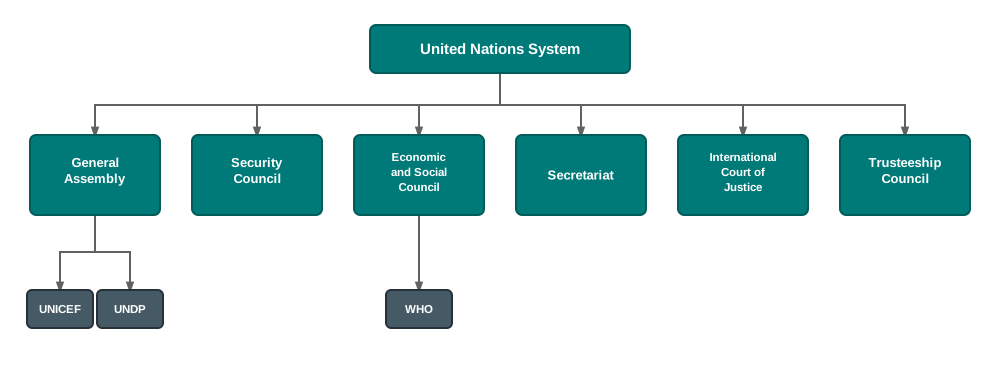
Fig. 4.6 – Principal organs of the United Nations system.
Read the chart for one thing first — the line under the Security Council box that says its decisions are binding on all UN members, and the line under the General Assembly box that says its decisions are not. That single difference is why almost every fight about reforming the UN is a fight about the Security Council. The room where everyone is equal cannot compel anyone; the room that can compel everyone is the room where five members hold a veto.
War and peace, and differences between member states, are discussed in the General Assembly as well as the Security Council. Social and economic issues are dealt with by many agencies. These include the World Health Organisation (WHO), the United Nations Development Programme (UNDP), the United Nations Human Rights Commision (UNHRC), the United Nations High Commission for Refugees (UNHCR), the United Nations Children’s Fund (UNICEF), and the United Nations Educational, Scientific, and Cultural Organisation (UNESCO), among others.
These are the parts of the UN a 17-year-old is most likely to have already met without noticing — a WHO logo on a vaccine programme, a UNICEF sticker on a school kit, a UNESCO listing on a monument. The Security Council makes the headlines. The agencies do most of the daily work.
The chart also records something easy to miss: one principal organ, the Trusteeship Council, was suspended on 1 November 1994, once Palau — the last UN trust territory — became independent. Its job, supervising territories that were not yet self-governing, had been finished. An organ of the UN can be wound down when the world it was built for has gone. Hold that thought, because it is the strongest argument the reformers have.
4.3 Reform Of The UN After The Cold War
Reform and improvement are fundamental to any organisation that must serve the needs of a changing environment. A body designed for one world cannot work unaltered in another. The UN is no exception.
In recent years there have been demands for reform of the world body. But there is little clarity and consensus on the nature of reform — that is, people agree that something must change, and disagree about what.
Two Kinds Of Reform
Two basic kinds of reforms face the UN, and it is worth separating them carefully, because they are often confused with each other.
The first is reform of structures and processes — changing how the organisation is built and how it takes decisions. Who sits in the Security Council? How are its members chosen? How is the UN’s money raised and spent?
The second is a review of jurisdiction — a rethinking of which issues fall within the organisation’s authority in the first place. Should the UN be settling wars, or feeding the hungry, or both?
Almost everyone is agreed that both aspects of reform are necessary. What they cannot agree on is precisely what is to be done, how it is to be done, and when it is to be done.
On the reform of structures and processes, the biggest discussion has been on the functioning of the Security Council. Related to this has been the demand for an increase in the Security Council’s permanent and non-permanent membership, so that the realities of contemporary world politics are better reflected in the structure of the organisation. In particular, there are proposals to increase membership from Asia, Africa and South America.
Beyond this, the US and other Western countries want improvements in the UN’s budgetary procedures and its administration — how the organisation raises money, how it spends it, and how efficiently its staff work.
On the issues to be given greater priority, or to be brought within the jurisdiction of the UN, opinion splits along a different line. Some countries and experts want the organisation to play a greater or more effective role in peace and security missions. Others want its role to be confined to development and humanitarian work — health, education, environment, population control, human rights, gender and social justice.
We shall look at both sets of reforms, with an emphasis on reform of the structures and processes — because that is where the argument is hardest, and where nothing has moved.
Nine Officers, One Pattern
Before we turn to the structures, look at the people who have held the UN’s highest office. Their careers are a compressed history of the organisation itself, and Fig. 4.7 puts their faces beside their records.
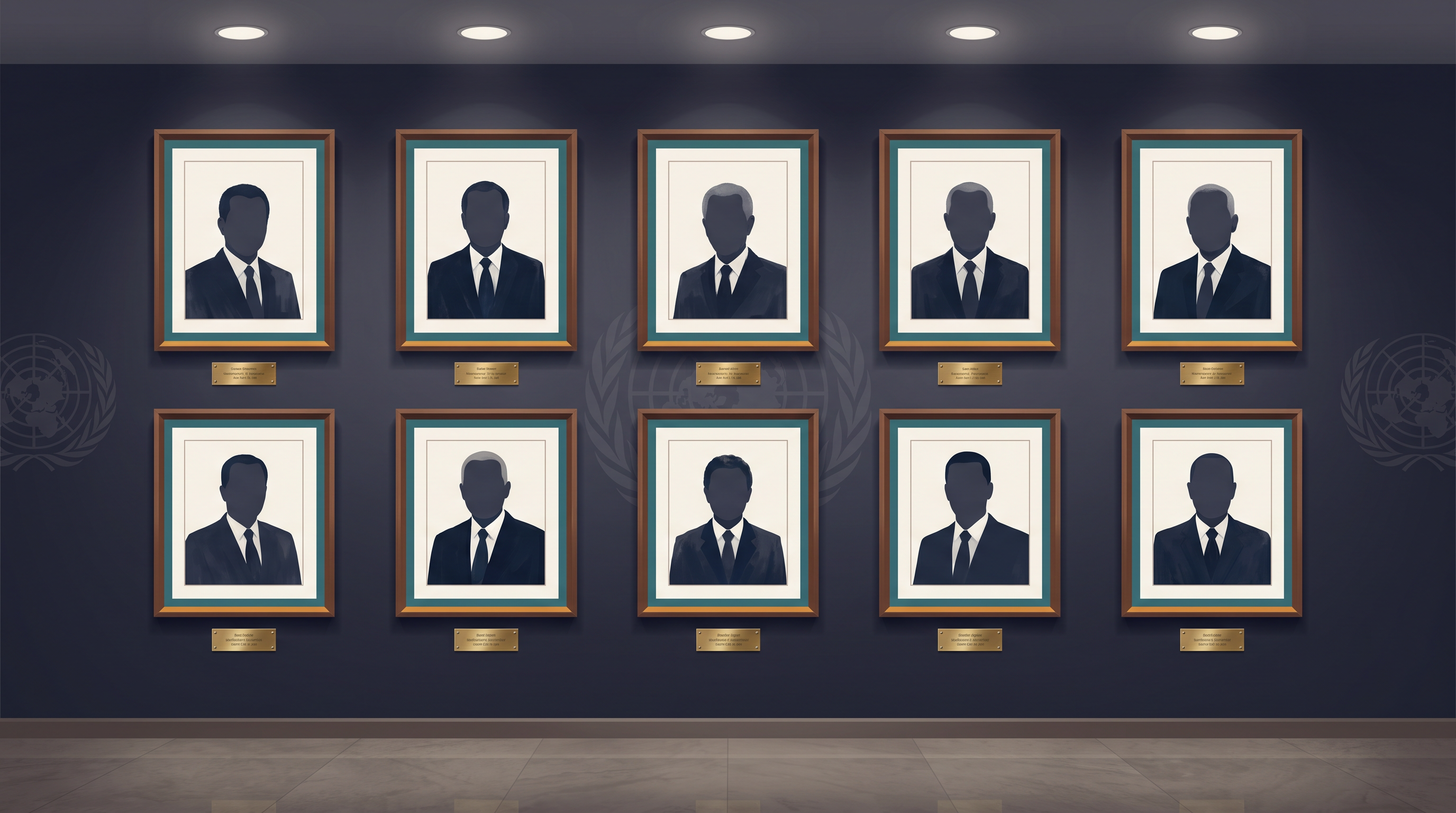
Fig. 4.7 – The nine Secretaries-General of the United Nations.
Trygve Lie (1946–1952) of Norway, a lawyer and foreign minister, was the first. He worked for a ceasefire between India and Pakistan on Kashmir, and was criticised for his failure to quickly end the Korean war. The Soviet Union opposed a second term for him, and he resigned from the post.
Dag Hammarskjöld (1953–1961) of Sweden, an economist and lawyer, worked on the Suez Canal dispute and on the decolonisation of Africa. He was awarded the Nobel Peace Prize posthumously in 1961 — that is, after his death — for his efforts to settle the Congo crisis. The Soviet Union and France criticised his role in Africa.
U Thant (1961–1971) of Burma (Myanmar), a teacher and diplomat, worked for the resolution of the Cuban Missile Crisis and for ending the Congo crisis. He established the UN Peacekeeping Force in Cyprus, and criticised the US during the Vietnam War.
Kurt Waldheim (1972–1981) of Austria, a diplomat and foreign minister, made efforts to resolve the problems of Namibia and Lebanon, and oversaw the relief operation in Bangladesh. China blocked his bid for a third term.
Javier Perez de Cuellar (1982–1991) of Peru, a lawyer and diplomat, worked for peace in Cyprus, Afghanistan and El Salvador. He mediated between Britain and Argentina after the Falklands War, and negotiated for the independence of Namibia.
Boutros Boutros-Ghali (1992–1996) of Egypt, a diplomat, jurist and foreign minister, issued a report titled An Agenda for Peace and conducted a successful UN operation in Mozambique. He was blamed for the UN failures in Bosnia, Somalia and Rwanda. Due to serious disagreements, the US blocked a second term for him.
Kofi A. Annan (1997–2006) of Ghana, a UN official, created the Global Fund to fight AIDS, Tuberculosis and Malaria. He declared the US-led invasion of Iraq an illegal act, and established the Peacebuilding Commission and the Human Rights Council in 2005. He was awarded the 2001 Nobel Peace Prize.
Ban Ki-moon (2007–2016) of the Republic of Korea (South Korea), a diplomat and foreign minister, was the second Asian to hold the post. He highlighted climate change, focused on the Millennium Development Goals and the Sustainable Development Goals, worked for the creation of UN Women, and emphasised conflict resolution and nuclear disarmament.
António Manuel de Oliveira Guterres (2017– ) of Portugal, whom you have already met, was also President of the Socialist International from 1999 to 2005. He is serving as the ninth Secretary-General of the United Nations.
Now read the list again for a pattern rather than for names. The Soviet Union opposed a second term for Lie. China blocked Waldheim’s third term. The US blocked a second term for Boutros-Ghali. Three of the nine had their careers cut short by a single permanent member of the Security Council — exactly as Fig. 4.5 would predict. The most senior officer of a body of 193 states serves at the sufferance of five of them.
And note what these biographies cannot tell you. They record what each Secretary-General attempted and what he was criticised for. They do not tell you what he was prevented from attempting, because refusals happen in private rooms and leave no entry in a list of achievements.
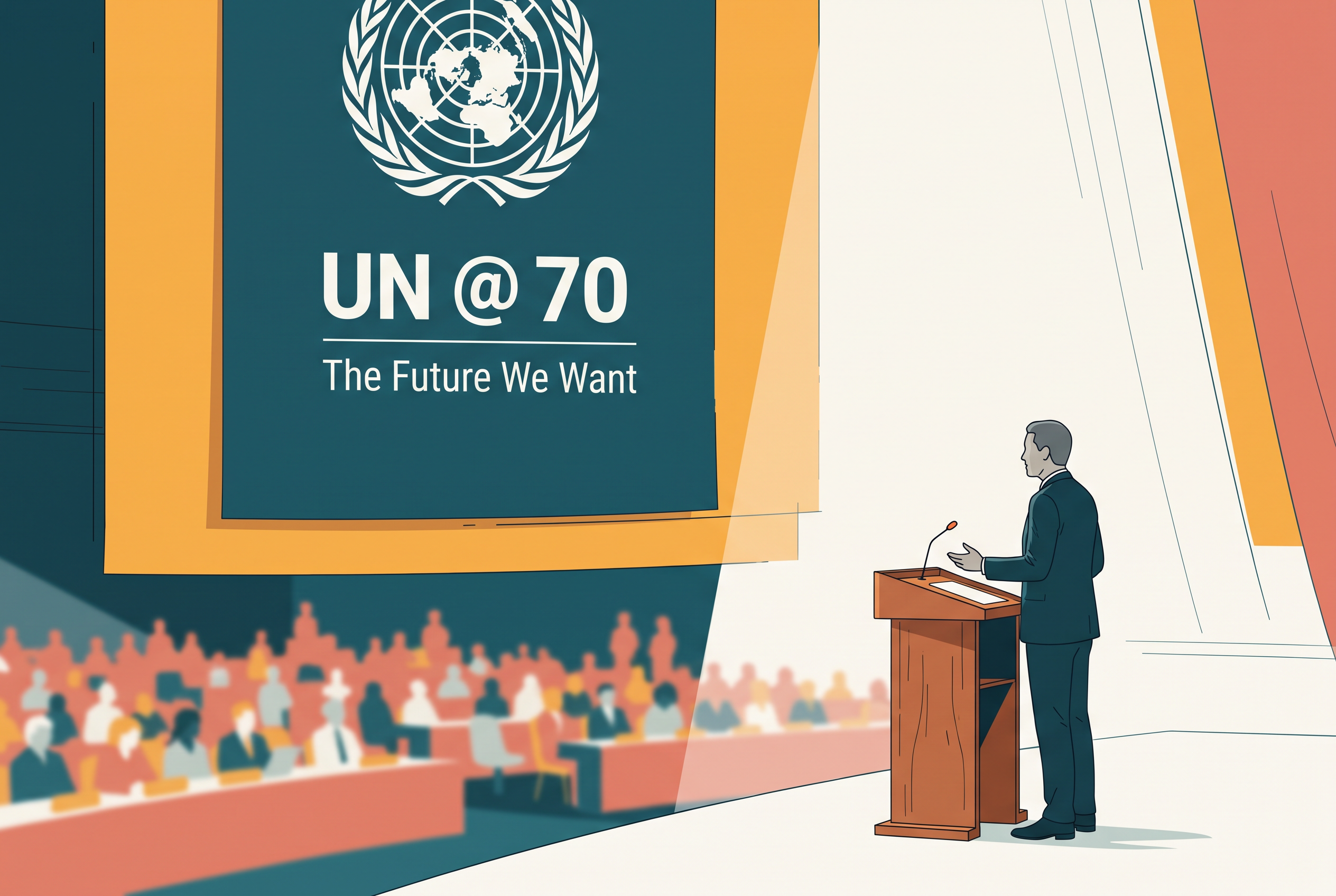
Fig. 4.8 – UN @ 70 anniversary event in New Delhi, 2015.
Seventy years is a long life for an institution. The photograph shows an anniversary being celebrated in New Delhi; the argument of this chapter is about whether the institution being celebrated still fits the world outside the hall.
The World The UN Was Built For Is Gone
The UN was established in 1945, immediately after the Second World War. The way it was organised, and the way it functioned, reflected the realities of world politics at that moment. After the Cold War, those realities are different. Here are some of the changes that have occurred:
- The Soviet Union has collapsed.
- The US is the strongest power.
- The relationship between Russia, the successor to the Soviet Union, and the US is much more cooperative.
- China is fast emerging as a great power, and India also is growing rapidly.
- The economies of Asia are growing at an unprecedented rate.
- Many new countries have joined the UN, as they became independent from the Soviet Union or from former communist states in eastern Europe.
- A whole new set of challenges confronts the world: genocide, civil war, ethnic conflict, terrorism, nuclear proliferation, climate change, environmental degradation and epidemics.
Look at that last item closely, because it is doing the heaviest work. In 1945 the danger the UN was designed against was one state’s army crossing into another state’s territory. Most of the new challenges are not like that at all. Genocide and civil war happen inside a country’s own borders. A virus and a warming atmosphere carry no passport. An organisation built to stand between states is being asked to deal with dangers that ignore the line between them.
The Question That Followed
In this situation, in 1989, as the Cold War was ending, the question facing the world was a plain one: is the UN doing enough?
It broke into four smaller questions, and every argument in the rest of this chapter is an attempt to answer one of them. Is the UN equipped to do what is required? What should it be doing? And how? What reforms are necessary to make it work better?
For the past decade and a half, member states have been trying to find satisfactory and practical answers to these questions. The word to notice is ‘trying’.
4.4 Reform Of Structures And Processes
While the case for reform has widespread support, getting agreement on what to do is difficult. This section is about that difficulty. It is not a story of villains blocking a good idea; it is a story of reasonable states wanting different things.
Let us examine the debate over reform of the UN Security Council, because that is where the whole argument lives.
The Three Complaints Of 1992
In 1992, the UN General Assembly adopted a resolution. The resolution reflected three main complaints:
- The Security Council no longer represents contemporary political realities.
- Its decisions reflect only Western values and interests, and are dominated by a few powers.
- It lacks equitable representation.
Take them one at a time. The first says the Council is out of date. The second says it is biased. The third says it is unfair in its shape — that whole regions of the world are absent from it. They are different charges, and a reform that answers one may not answer the others.
In view of these growing demands for the restructuring of the UN, on 1 January 1997, the UN Secretary-General Kofi Annan initiated an inquiry into how the UN should be reformed. The first practical question was the obvious one. How, for instance, should new Security Council members be chosen?
Six Criteria, And The Trouble With Each
In the years since then, a number of criteria have been proposed for new permanent and non-permanent members of the Security Council. A new member, it has been suggested, should be:
- A major economic power
- A major military power
- A substantial contributor to the UN budget
- A big nation in terms of its population
- A nation that respects democracy and human rights
- A country that would make the Council more representative of the world’s diversity in terms of geography, economic systems, and culture
One of those criteria can be tested against real figures. Table 4.1 lists what each of the largest contributors actually pays into the UN’s regular budget.
Read it in steps. The USA alone pays 22.0 per cent of the regular budget — more than one rupee in every five. Add the five permanent members together and you get
\[22.0 + 12.0 + 4.5 + 4.4 + 2.4 = 45.3\]
where each figure is that state’s share of the 2019 regular budget, expressed as a percentage. The five states with the veto pay 45.3 per cent of the budget listed here. Japan and Germany, who hold no permanent seat, pay 8.5 and 6.0 per cent — more than the UK, France and Russia. India, whose claim to a permanent seat we shall examine later, appears at number 21, paying 0.8 per cent.
Now the limit, and it is a hard one. This table counts money and nothing else. It does not count soldiers sent on peacekeeping missions, or population, or the number of people a state’s decisions affect. It lists only the top 21 contributors, so it tells you nothing about the other 170-odd members. If a seat on the Council were sold to the highest bidder, this table would be the price list. That is precisely the objection to using it as a criterion.
Clearly, each of the six criteria has some validity. But governments saw advantages in some criteria and disadvantages in others, depending on their interests and their aspirations. That is the heart of it: a criterion is never neutral. It is a door, and every state can see exactly who it lets in and who it keeps out.
Even countries with no desire to be members themselves could see that the criteria were problematic. Work through the questions they asked.
How big an economic or military power did you have to be, to qualify for Security Council membership? Nobody could name the line. What level of budget contribution would enable a state to buy its way into the Council — and should a seat be buyable at all? Was a big population an asset or a liability for a country trying to play a bigger role in the world? A large population means many mouths as well as many hands.
And if respect for democracy and human rights was the criterion, countries with excellent records would be in line to be members. But would they be effective as Council members? A state may be admirable at home and powerless abroad.
Your teacher may let you choose the group whose criterion you yourself favour. When all six lists are on the board, compare them: see how many names are common to several lists, and how often India appears. Then keep some time for an open-ended discussion on which criterion should be adopted.
Representation: A Question With No Clean Answer
Furthermore, how was the matter of representation to be resolved? Suppose everyone agreed that the Council should represent the world fairly. Fairly by what measure?
Did equitable representation in geographical terms mean that there should be one seat each from Asia, Africa, and Latin America and the Caribbean? Or should the representation be by regions or sub-regions, rather than by whole continents? Asia contains west Asia, south Asia and east Asia, and they do not share interests.
And why should the issue of equitable representation be decided by geography at all? Why not by levels of economic development? Why not, in other words, give more seats to members of the developing world?
Even here there are difficulties. The developing world consists of countries at many different levels of development. A seat given to ‘the developing world’ would still have to be given to one country in it, and the others would ask why.
What about culture? Should different cultures or ‘civilisations’ be given representation in a more balanced way? Here the difficulty is worse. How does one divide the world by civilisations or cultures, given that nations have so many cultural streams within their borders? India alone would defeat the exercise.
The Veto
A related issue was to change the nature of membership altogether. Some insisted, for instance, that the veto power of the five permanent members be abolished. Many perceived the veto to be in conflict with the concept of democracy and of sovereign equality in the UN, and thought that the veto was no longer right or relevant.
To weigh that claim you must first know exactly what the veto is, and exactly who holds it.
In the Security Council there are five permanent members and ten non-permanent members. The Charter gave the permanent members a privileged position in order to bring about stability in the world after the Second World War. The main privileges of the five permanent members are permanency and the veto power.
The non-permanent members serve for only two years at a time, and give way after that period to newly elected members. A country cannot be re-elected immediately after completing a term of two years. The non-permanent members are elected in a manner that ensures they represent all continents of the world.
Most importantly, the non-permanent members do not have the veto power.
So what is the veto power? In taking decisions, the Security Council proceeds by voting, and all members have one vote. However, the permanent members can vote in a negative manner, so that even if all the other permanent and non-permanent members vote for a particular decision, any permanent member’s negative vote can stall that decision. This negative vote is the veto.
Read that once more. Fourteen members may vote yes. One permanent member votes no. The decision does not pass. The veto is not a power to make things happen; it is a power to prevent them.
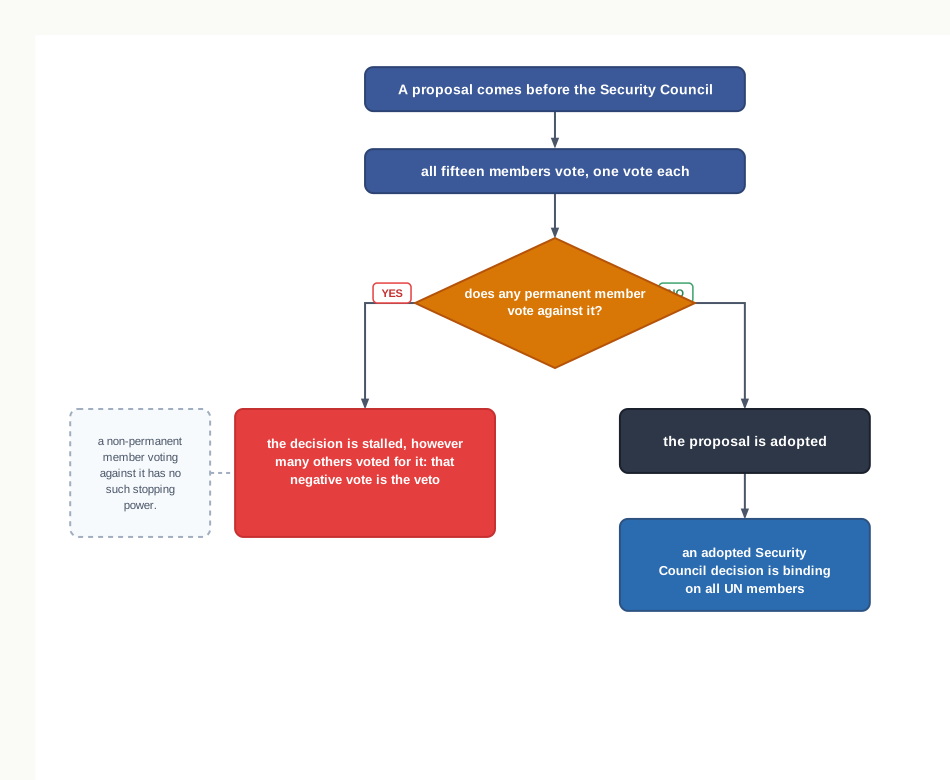
Fig. 4.9 – How a single negative vote stalls a decision.
Before we take the two sides, set out the difference between the two kinds of membership plainly, because the board and the newspapers both assume you know it.
The permanent members are five, named in the Charter, and they never have to face an election. The non-permanent members are ten, elected for two years, chosen so that all continents are represented, and barred from immediate re-election. Both kinds sit in the same room. Both have one vote. Only one kind can stop a decision dead.
Should The Veto Go?
Now the argument. Many people find the veto indefensible, and a student meeting it for the first time usually agrees at once. It is very unfair, the objection runs — and in any case it is the weaker countries who need a veto to protect themselves, not the ones who already have so much power.
That objection is worth taking seriously, and so is the answer to it.
While there has been a move to abolish or modify the veto system, there is also a realisation that the permanent members are unlikely to agree to such a reform. Ask yourself who would have to approve it, and the difficulty becomes obvious: the veto could be used to block the abolition of the veto.
There is a second answer, and it is deeper. The world may not be ready for such a radical step, even though the Cold War is over. Without the veto, there is the danger — as there was in 1945 — that the great powers would lose interest in the world body, that they would do what they pleased outside it, and that without their support and involvement the body would be ineffective.
That is the trade the founders made. The veto is the price of keeping the strong inside the room. Whether the price is worth paying is the question, and it is not one this book will settle for you.
The record of how the veto has actually been used is given in Fig. 4.10.
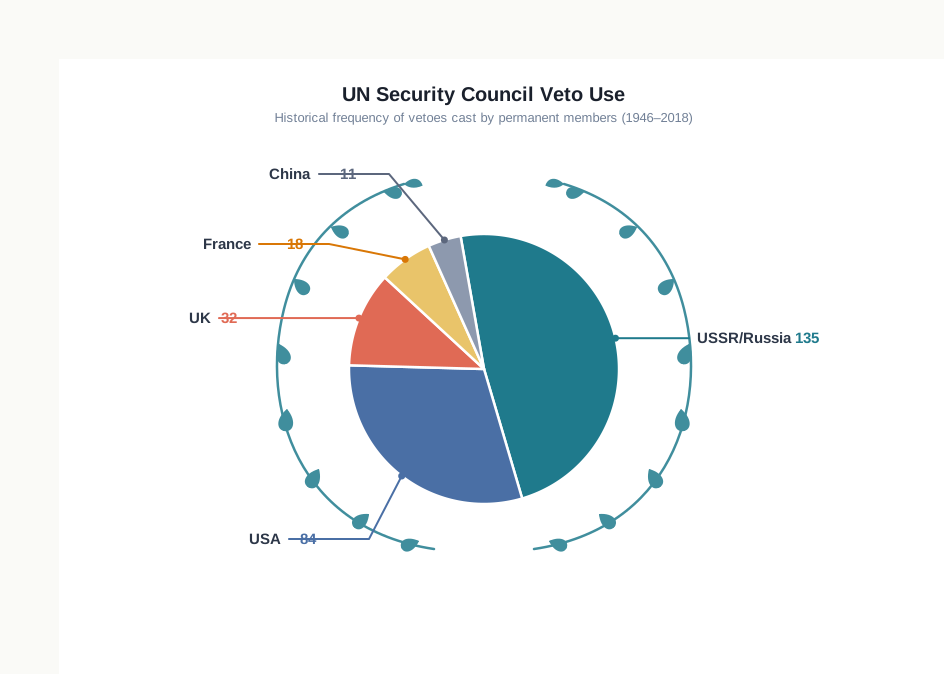
Fig. 4.10 – Vetoes cast by permanent members up to 2018.
The figures repay a slow look. Up to 1 June 2018 the USSR and Russia had cast 135 vetoes, far more than any other state, and the USA 84. The UK had used it 32 times, France 18, and China 11 — the least of the five. A student who assumed that the veto is simply an American instrument, or simply a Russian one, is corrected by the chart.
And the limit, which is the most important thing on the page. The chart counts vetoes that were cast. It cannot count the vetoes that were never needed — the resolutions that were never tabled, or were quietly watered down, because everyone in the room already knew which permanent member would kill them. The real power of the veto is exercised in the drafting, and it leaves no mark on any chart.
4.5 Jurisdiction Of The UN
The question of membership is a serious one. In addition, though, there are more substantial issues before the world — questions not about who sits in the UN, but about what the UN is entitled to do at all.
An organisation’s jurisdiction is the range of matters it has the authority to act on. Widening the UN’s jurisdiction means letting it act on things it could not touch before. That sounds like a technical adjustment. It is in fact the most political question in the chapter.
The Meeting Of September 2005
As the UN completed 60 years of its existence, the heads of all the member-states met in September 2005 to celebrate the anniversary and to review the situation. This was not a ceremonial gathering only. The leaders in this meeting decided that the following steps should be taken to make the UN more relevant in the changing context.
- Creation of a Peacebuilding Commission — a body to help countries rebuild after a war has ended.
- Acceptance of the responsibility of the international community in case of failures of national governments to protect their own citizens from atrocities.
- Establishment of a Human Rights Council, operational since 19 June 2006.
- Agreements to achieve the Millennium Development Goals (MDGs) — a common set of targets on poverty, health and education.
- Condemnation of terrorism in all reductions and manifestations.
- Creation of a Democracy Fund.
- An agreement to wind up the Trusteeship Council, whose work, as we have seen, had already ended.
Two of these had been pressed by Kofi Annan, who established the Peacebuilding Commission and the Human Rights Council in 2005 while he was Secretary-General.
Now read the second item again, slowly, because it is the boldest sentence in the chapter. Until then, what a government did to its own people inside its own borders was, in principle, its own business. In 2005 the world’s leaders accepted that when a national government fails to protect its own citizens from atrocities, the responsibility passes to the international community.
Agreement In Principle, Deadlock In Practice
It is not hard to see that these are equally contentious issues for the UN. Every item on the list is a sentence everyone can sign, and a policy nobody has agreed to.
What should a Peacebuilding Commission actually do? There are any number of conflicts all over the world. Which ones should it intervene in? Is it possible, or even desirable, for it to intervene in each and every conflict?
Similarly, what is the responsibility of the international community in dealing with atrocities? What are human rights, and who should determine the level of human rights violations, and the course of action to be taken when they are violated? Notice that this is not one question but two — a question of fact, and a question of who is entitled to judge.
Given that so many countries are still part of the developing world, how realistic is it for the UN to achieve an ambitious set of goals such as those listed in the Sustainable Development Goals? Can there be agreement on a definition of terrorism? How shall the UN use funds to promote democracy? And so on.
The pattern is the same one you met in the debate over membership. Agreement is easy at the level of the principle and impossible at the level of the case.
One Crisis, And What It Shows
The next cartoon puts the whole problem into a single image. It concerns Darfur, a region in western Sudan, in north-eastern Africa.
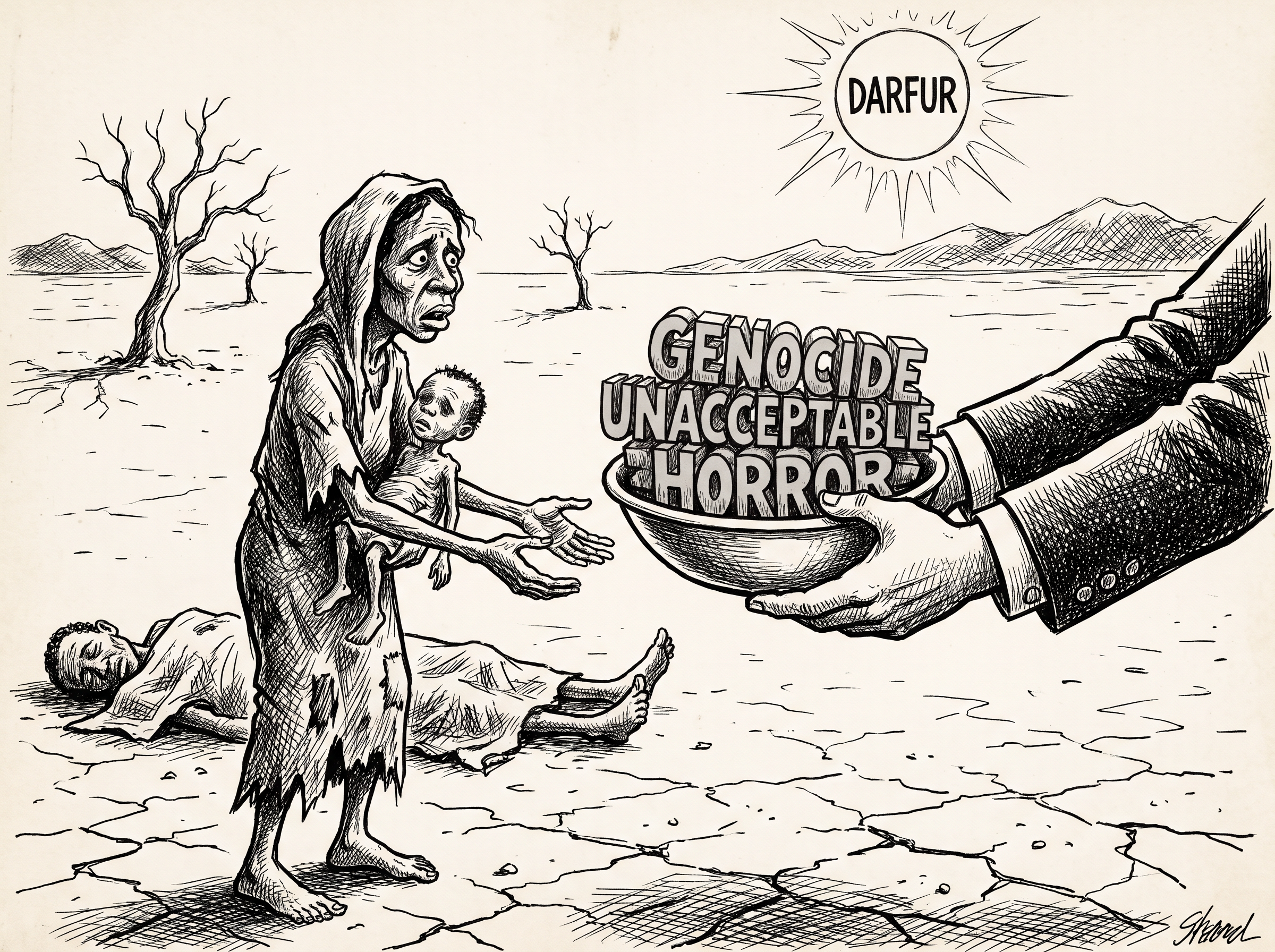
Fig. 4.11 – Empty promises and the Darfur crisis. Inspiration: Pat Bagley, Cagle Cartoons Inc.
The joke, if it can be called that, is in the bowl. A hungry woman is offered a meal, and the meal is made of statements. Every word heaped into it is one that the international community has used about Darfur: genocide, unacceptable, shocking, never again. The cartoonist is saying that the words were the whole of the response.
The exaggeration is doing exact work here. Words are not usually drawn as objects; by making them one, the cartoonist forces you to ask what they weigh. And the drawing points at the international community, not at any single government — the failure it alleges is collective.
The limit is the same as for any cartoon, and worth repeating because this one is so persuasive. Bagley states an opinion and cannot state the reply. He does not tell you what the UN would have needed — legally, militarily, financially — to do more than speak, nor who inside the Security Council would have had to agree. A cartoon can show you that promises were empty. It cannot show you why.
Where The UN Actually Goes
The UN does deploy. Fig. 4.12 shows the peacekeeping operations that were running when the map was drawn — missions of soldiers and civilian staff, sent under the UN flag into places where a conflict has been fought.
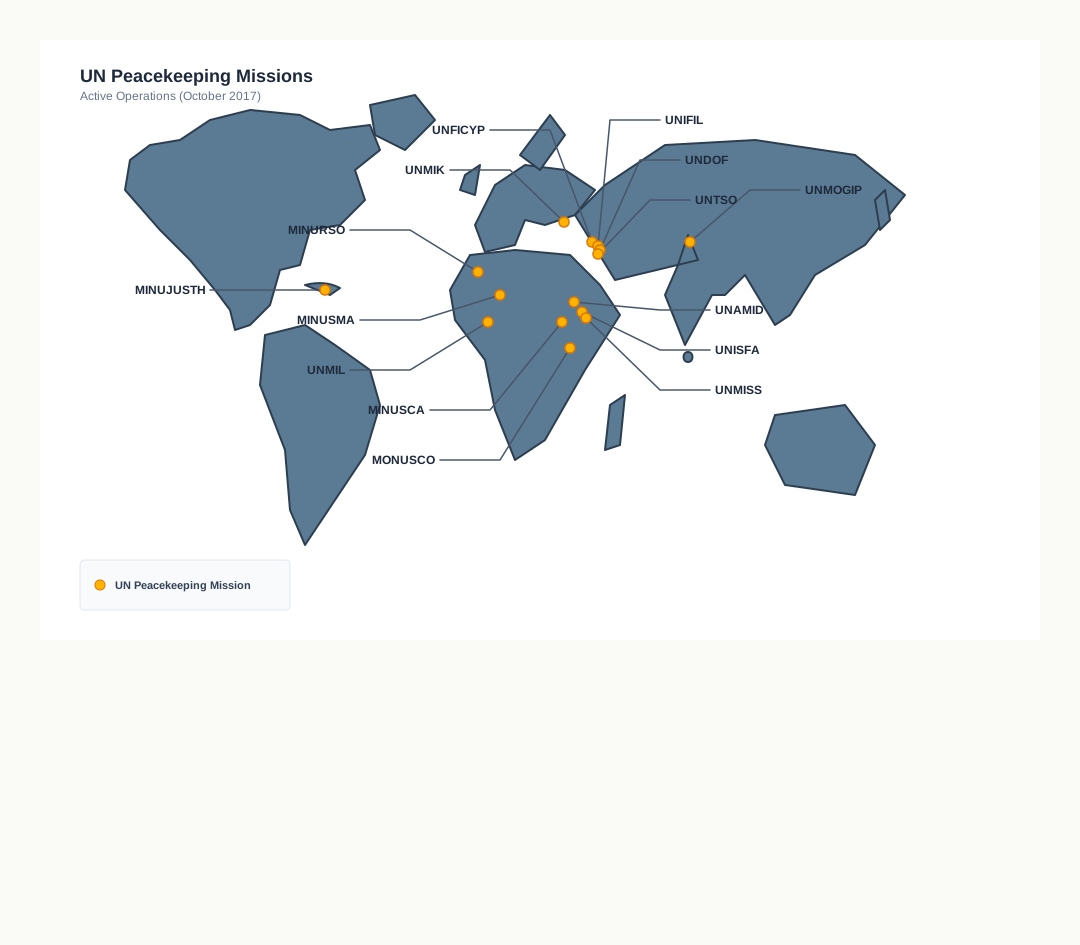
Fig. 4.12 – UN peacekeeping operations, October 2017.
Read the distribution first. The dots cluster in Africa and in west Asia; there is one in the Caribbean, and one in Europe. This is not a map of where conflict exists in the world. It is a map of where the Security Council agreed to send people.
That distinction is the limit, and it is the last thing to take from this section. The map records presence, not effect: it does not tell you how large any mission was, how long it lasted, or whether it worked. Above all it cannot show the missing dots — the conflicts where no mission was ever authorised, because a permanent member would not have it. The map shows you what the UN did. The argument of this chapter is about what it could not.
4.6 India And The UN Reforms
India has supported the restructuring of the UN on several grounds. Its position is not simply that India should get a seat. That comes later, and it comes last.
India believes that a strengthened and revitalised UN is desirable in a changing world. It also supports an enhanced role for the UN in promoting development and cooperation among states.
Behind this lies a claim about the causes of war, and it is the same claim the UN’s founders made in 1945. India believes that development should be central to the UN’s agenda, because development is a vital precondition for the maintenance of international peace and security. Poor and unstable societies produce conflict; a body that ignores poverty will spend its life putting out fires it helped to light.
The Council That Never Grew
One of India’s major concerns has been the composition of the Security Council. The Council has remained largely static, while the membership of the UN General Assembly has expanded considerably.
India considers that this has harmed the representative character of the Security Council. It also argues that an expanded Council, with more representation, will enjoy greater support in the world community — a Council more people recognise as theirs will find its decisions easier to enforce.
We should keep in mind one fact here. The membership of the UN Security Council was expanded from 11 to 15 in 1965. But there was no change in the number of permanent members. Since then, the size of the Council has remained stationary.
Set that beside the General Assembly, which has grown to 193 members. The overwhelming majority of the UN General Assembly members now are developing countries. Therefore, India argues, they should also have a role in shaping the decisions in the Security Council which affect them.
India supports an increase in the number of both permanent and non-permanent members. Its representatives have argued that the activities of the Security Council have greatly expanded in the past few years — it does more, in more places, than it once did.
And the success of the Security Council’s actions depends upon the political support of the international community. A decision that most of the world regards as illegitimate is hard to carry out. Any plan for restructuring of the Security Council should therefore be broad-based. For example, the Security Council should have more developing countries in it.
The WTO is worth a glance beside the Security Council, because it shows the same complaint in a different building. There, every decision is taken unanimously — formally, that is as equal as an organisation can be. And still the developing countries say they are pushed around. Formal equality on paper and unequal influence in practice can live together quite comfortably. That is the objection India is making about the Council, made about trade.
India’s Own Claim
Not surprisingly, India itself also wishes to be a permanent member in a restructured UN. Here are the grounds, and it is worth being able to state them in order.
India is the most populous country in the world, comprising almost one-fifth of the world population. India is also the world’s largest democracy. India has participated in virtually all of the initiatives of the UN, and its role in the UN’s peacekeeping efforts is a long and substantial one — Indian soldiers have served under the UN flag for decades.
The country’s economic emergence on the world stage is another factor that perhaps justifies India’s claim to a permanent seat in the Security Council. India has also made regular financial contributions to the UN, and has never faltered on its payments.
Notice how those grounds line up against the six criteria you met earlier: population, democracy and human rights, a record of service, economic weight, and reliability as a contributor. India’s case is built to answer them.
There is one more reason, and India states it openly. Permanent membership of the Security Council also has symbolic importance. It signifies a country’s growing importance in world affairs. That greater status is an advantage to a country in the conduct of its foreign policy — the reputation for being powerful makes you more influential.
That last sentence deserves a hard question, and you should put it to yourself before the exam asks you to defend the claim. If the big five are criticised for behaving like bosses of the world, what exactly does India want? Do we want to oppose the bossism of the big five — or do we want to join them and become another boss? A student who cannot answer that has not yet understood India’s position; a student who thinks the question is unfair has not understood the criticism.
Why It Has Not Happened
Despite India’s wish to be a permanent veto-wielding member of the UN, some countries question its inclusion, and their reasons are not all the same.
Neighbouring Pakistan, with which India has troubled relations, is not the only country that is reluctant to see India become a permanent veto member of the Security Council. Some countries, for instance, are concerned about India’s nuclear weapons capabilities. Others think that its difficulties with Pakistan will make India ineffective as a permanent member — a Council member locked in a quarrel of its own, they argue, cannot settle the quarrels of others.
Yet others object for a reason that has nothing to do with India at all. They feel that if India is included, then other emerging powers will have to be accommodated — such as Brazil, Germany, Japan, perhaps even South Africa — whom they oppose. India’s seat, on this view, is a door, and it is the others walking through behind it that they mean to stop.
And there are those who feel that Africa and South America must be represented in any expansion of the permanent membership, since those are the only continents not to have representation in the present structure. That is a claim about justice, and it does not concede India’s turn first.
Given these concerns, it may not be very easy for India, or for anyone else, to become a permanent member of the UN in the near future.
The IAEA is placed here for a reason. When other states raise India’s nuclear weapons capabilities as an objection, they are pointing at exactly the boundary the IAEA was built to police — the line between the atom used for electricity and the atom used for a weapon. Whether a state’s position on that line should decide its place in the Security Council is, once again, a question the chapter puts to you rather than answers.
4.7 The UN In A Unipolar World
We now return to the question left open at the start of the chapter.
Among the concerns about the reform and restructuring of the UN has been the hope of some countries that changes could help the UN cope better with a unipolar world — a world in which one state, the US, was the most powerful country, with no serious rivals to balance it.
The hope contained two questions. Can the UN serve as a balance against US dominance? And can it help maintain a dialogue between the rest of the world and the US, and prevent America from doing whatever it wants?
Why US Power Is Hard To Check
Start with the honest answer, which is the discouraging one. US power cannot be easily checked, and there are two reasons — one outside the UN and one inside it.
First, with the disappearance of the Soviet Union, the US stands as the only superpower — a state whose military and economic strength puts it in a class of its own. That strength allows it to ignore the UN, or any other international organisation, whenever it chooses to. An organisation cannot restrain a member who can simply walk away from it.
Secondly, within the UN, the influence of the US is considerable — and this is the part a student usually misses. The US does not have to leave the room to get its way. It can get its way inside the room.
As the single largest contributor to the UN, the US has unmatched financial power; you saw the figure in Table 4.1. The fact that the UN is physically located within US territory gives Washington additional sources of influence. The US also has many of its nationals in the UN bureaucracy — the organisation’s permanent staff.
In addition, with its veto power, the US can stop any moves that it finds annoying or damaging to its interests, or to the interests of its friends and allies. The power of the US and its veto within the organisation also ensure that Washington has a considerable degree of say in the choice of the Secretary General of the UN — which is exactly what the record of the nine officeholders showed. And the US can, and does, use this power to ‘split’ the rest of the world and to reduce opposition to its policies.
The last item is the sharpest. A dominant state does not need to defeat a united world; it needs only to make sure the world is not united.
Consider a small, concrete illustration. The UN’s headquarters stands on American soil, so anyone the UN invites must enter the United States to attend. What happens if the UN invites someone to New York and the US does not issue a visa? Nothing in the Charter is broken, and yet the invitation is worth nothing. That is what it means to say that the host of an organisation holds a form of power over it.
The cartoonist in Fig. 4.13 puts the same argument in one drawing, and puts it more brutally than any paragraph could.
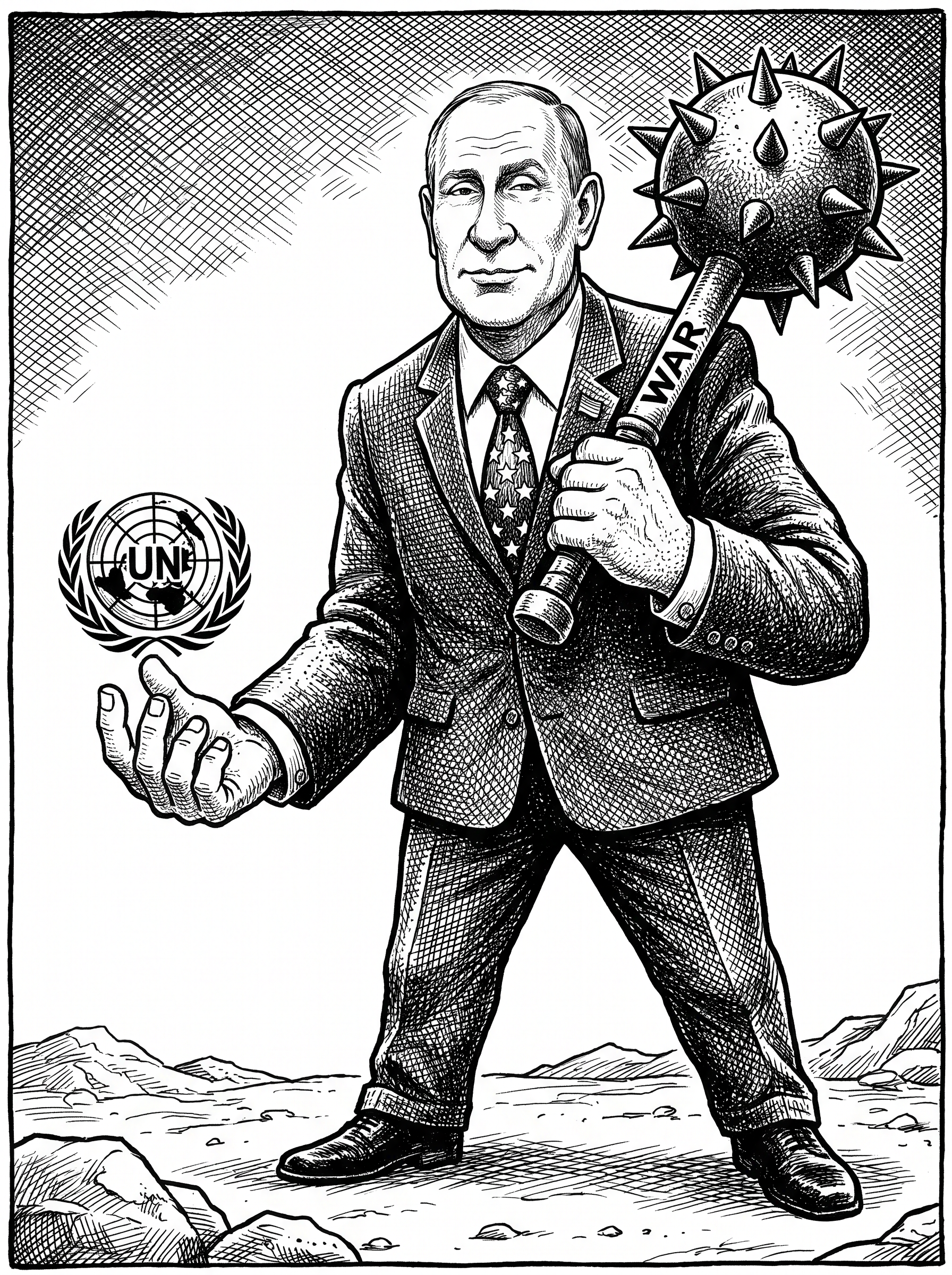
Fig. 4.13 – The UN and US dominance. Inspiration: Mike Lane, Cagle Cartoons Inc.
Decode it slowly. The two hands belong to one body. The olive branch and the mace are not alternatives offered by different people; they are held by the same figure, who is drawn as calm and well dressed. The gentle hand is small, and the violent one is enormous.
The cartoonist’s claim is therefore not that the UN is useless. It is worse than that. It is that the UN has become one of two instruments of a single dominant power — the polite instrument, offered first. Take the offer or take the mace.
And the limit, once again. A cartoon can make an accusation stick in your memory; it cannot test it. Lane cannot show you a single case in which the UN did restrain a US policy, nor a single case in which it failed to. He is drawing a suspicion, powerfully. Whether the suspicion is correct is a question of evidence, and the evidence is not in the drawing.
What The UN Can Still Do
The UN is not, therefore, a great balance to the US. That much must be conceded plainly.
Nevertheless, in a unipolar world in which the US is dominant, the UN can and has served to bring the US and the rest of the world into discussions over various issues. Being in the room has a cost, even for the strongest state in it.
US leaders, in spite of their frequent criticism of the UN, do see the organisation as serving a purpose in bringing together over 190 nations in dealing with conflict and with social and economic development. Washington complains about the UN and keeps using it — and that is evidence about the UN’s value, not about American consistency.
As for the rest of the world, the UN provides an arena in which it is possible to modify US attitudes and policies. Modify, note, not defeat. The rest of the world is rarely united against Washington, and it is virtually impossible to ‘balance’ US power. But the UN does provide a space within which arguments against specific US attitudes and policies are heard, and within which compromises and concessions can be shaped.
The Imperfect Body
Here, then, is the chapter’s conclusion, and it refuses both of the easy positions you met on its first page.
The UN is an imperfect body, but without it the world would be worse off. That is the whole verdict, and every word in it is doing work. It does not say the UN succeeds. It says the alternative is worse.
Consider what the alternative would mean. Given the growing connections and links between societies and issues — what we often call interdependence, the condition in which what happens in one country cannot be kept from affecting others — it is hard to imagine how more than seven billion people would live together without an organisation such as the UN. Trade, disease, weapons, migration and a warming atmosphere do not stop at borders, and none of them can be managed by a state acting alone.
Technology promises to increase planetary interdependence still further. Therefore the importance of the UN will only increase, not diminish. The organisation that many people consider outdated is, on this argument, becoming more necessary each year.
What follows is a task, not a prophecy. Peoples and governments will have to find ways of supporting and using the UN and other international organisations in ways that are consistent with their own interests and with the interests of the international community more broadly. Nobody will do this for them.
Beyond The UN
And the UN is not alone in this work. Some of the organisations that press hardest on governments were not created by governments at all. They are NGOs — non-governmental organisations, bodies set up by citizens rather than by states.
Read the sentence about Amnesty once more: governments are not always happy with these reports. That is not a complaint about the organisation. It is a description of what it is for. An international organisation is created by states and answers to them. An NGO of this kind is created by citizens and reports on states — including the strongest ones, which no veto can protect from being written about.
4.8 Summary
Why International Organisations Exist
- International organisations are not the answer to everything, but they matter. They help with war and peace, and they help states cooperate for better living conditions.
- Countries have conflicts. That does not mean they must go to war: most differences between states are settled without war, though this is rarely noticed.
- An international organisation is not a super-state. It is created by states, it responds to states, and it comes into being only when states agree to create it.
- Some problems can only be solved together — the eradication of disease, or stopping global warming rather than only coping with its effects.
- But seeing the need to cooperate is not the same as cooperating. States quarrel over how to share costs, how to divide benefits, and how to stop others from cheating.
- An organisation supplies information, rules, mechanisms and a bureaucracy. That is what gives members the confidence to sign, and to keep, an agreement.
How The UN Is Built
- The League of Nations was created after the First World War and could not prevent the Second World War (1939–45). The UN was founded in 1945 as its successor, through the signing of the UN Charter by 51 states.
- Its objective is to prevent international conflict and to facilitate cooperation among states — and, since conflict grows out of poverty, to improve social and economic development everywhere.
- By 2011 the UN had 193 member states. In the General Assembly all members have one vote each, but its decisions are not binding.
- The Security Council’s decisions are binding on all members. It has five permanent members — the US, Russia, the UK, France and China — chosen in 1945 as the most powerful states and the victors of the war, and ten non-permanent members elected for two years.
- The Secretary-General is the UN’s representative head. António Guterres, the ninth, took office on 1 January 2017.
- Beneath the principal organs sits a system of agencies — WHO, UNDP, UNHRC, UNHCR, UNICEF, UNESCO and others — which do most of the UN’s daily work.
The Reform Argument
- Two kinds of reform face the UN: reform of its structures and processes, and a review of its jurisdiction. Everyone agrees both are needed; nobody agrees what, how or when.
- After the Cold War the world changed: the Soviet Union collapsed, the US became the strongest power, Asia rose, new states joined, and new threats appeared — genocide, civil war, ethnic conflict, terrorism, nuclear proliferation, climate change, environmental degradation, epidemics.
- In 1992 a General Assembly resolution made three complaints: the Security Council no longer reflects contemporary realities, its decisions are dominated by a few Western powers, and it lacks equitable representation.
- On 1 January 1997 Kofi Annan opened an inquiry into reform. Six criteria for new members were proposed — economic power, military power, budget contribution, population, respect for democracy and human rights, and the world’s diversity — and every one of them proved contestable.
- Representation itself has no clean measure: by continent, by region, by level of development, or by culture — each answer creates a new unfairness.
- The veto is the negative vote of a permanent member, which stalls a decision even against all fourteen others. Many hold it to be against democracy and sovereign equality.
- But the permanent members are unlikely to surrender it, and without it the great powers might lose interest in the UN, act outside it, and leave it ineffective.
- At the sixtieth anniversary summit of September 2005, leaders agreed on seven steps — among them a Peacebuilding Commission, a Human Rights Council, the Millennium Development Goals, a Democracy Fund, and the acceptance that the international community bears responsibility when a government fails to protect its own citizens from atrocities.
- Each of those steps left the hardest questions open: which conflicts, whose judgement, whose soldiers, whose money.
India, The US And The Rest
- India supports restructuring, wants development at the centre of the UN’s agenda, and points out that the Council was enlarged only once, from 11 to 15 in 1965, with no change in its permanent seats.
- India seeks a permanent seat: the largest population, the world’s largest democracy, a long peacekeeping record, an emerging economy, and payments never missed.
- Others object — its nuclear weapons capabilities, its relations with Pakistan, and the claims of Brazil, Germany, Japan and South Africa, and of the unrepresented continents, that would follow it in.
- US power cannot easily be checked. The US is the only superpower, the largest contributor, the host state, well represented in the UN bureaucracy, and holds a veto.
- The UN is therefore not a balance to the US. It is an arena, in which arguments against American policy are heard and concessions can be shaped.
- The UN is an imperfect body, but without it the world would be worse off. Growing interdependence makes it more necessary, not less.
- Other trans-national bodies also matter — the IMF, the World Bank, the WTO, the IAEA — and NGOs such as Amnesty International and Human Rights Watch, which are created by citizens and report on states.
4.9 NCERT Questions
- Mark correct or wrong against each of the following statements about the veto power.
- Only the permanent members of the Security Council possess the veto power.
- It’s a kind of negative power.
- The Secretary-General uses this power when not satisfied with any decision.
- One veto can stall a Security Council resolution.
- Mark correct or wrong against each of the following statements about the way the UN functions.
- All security and peace related issues are dealt with in the Security Council.
- Humanitarian policies are implemented by the main organs and specialised agencies spread across the globe.
- Having consensus among the five permanent members on security issues is vital for its implementation.
- The members of the General Assembly are automatically the members of all other principal organs and specialised agencies of the UN.
- Which among the following would give more weightage to India’s proposal for permanent membership in the Security Council?
- Nuclear capability
- It has been a member of the UN since its inception
- It is located in Asia
- India’s growing economic power and stable political system
- The UN agency concerned with the safety and peaceful use of nuclear technology is:
- The UN Committee on Disarmament
- International Atomic Energy Agency
- UN International Safeguard Committee
- None of the above
- WTO is serving as the successor to which of the following organisations?
- General Agreement on Trade and Tariffs
- General Arrangement on Trade and Tariffs
- World Health Organisation
- UN Development Programme
- Fill in the blanks.
- The prime objective of the UN is ___________________________
- The highest functionary of the UN is called _________________
- The UN Security Council has _____ permanent and _____ non-permanent members.
- ______________________ is the present UN Secretary-General.
- Match the principal organs and agencies of the UN with their functions:
| Column A | Column B |
|---|---|
| a. Economic and Social Council | i. Oversees the global financial system |
| b. International Court of Justice | ii. Preservation of international peace and security |
| c. International Atomic Energy Agency | iii. Looks into the economic and social welfare of the member countries |
| d. Security Council | iv. Safety and peaceful use of nuclear technology |
| e. UN High Commission for Refugees | v. Resolves disputes between and among member countries |
| f. World Trade Organisation | vi. Provides shelter and medical help during emergencies |
| g. International Monetary Fund | vii. Debates and discusses global issues |
| h. General Assembly | viii. Administration and coordination of UN affairs |
| i. World Health Organisation | ix. Providing good health for all |
| j. Secretariat | x. Facilitates free trade among member countries |
What are the functions of the Security Council?
As a citizen of India, how would you support India’s candidature for the permanent membership of the Security Council? Justify your proposal.
Critically evaluate the difficulties involved in implementing the suggested reforms to reconstruct the UN.
Though the UN has failed in preventing wars and related miseries, nations prefer its continuation. What makes the UN an indispensable organisation?
‘Reforming the UN means restructuring of the Security Council’. Do you agree with this statement? Give arguments for or against this position.
4.10 Check Your Concepts
Look again at Fig. 4.10, which counts the use of the veto up to 1 June 2018. Which permanent member had used it most often, and which least? Then state one thing this chart cannot count, and explain why that omission matters.
Table 4.1 lists the major contributors to the UN regular budget for 2019. Where does India stand in it, and what does it pay? Using this table, explain why ‘a substantial contributor to the UN budget’ is a problematic criterion for choosing new Security Council members.
In the General Assembly every member has one vote, but its decisions are not binding; the Security Council’s decisions are binding on all members. Explain how this single difference accounts for the fact that almost every argument about UN reform becomes an argument about the Security Council.
Fig. 4.12 shows where UN peacekeeping operations were deployed. Describe where the missions cluster. Then explain why a map of deployments is not a map of the world’s conflicts, and what the map therefore cannot show you.
Reconstruct, as a chain, the changes after the Cold War that produced the demand for reform of the UN. Begin with the collapse of the Soviet Union and end with the new challenges the chapter lists.
Walk through the procedure by which a Secretary-General is appointed. Then explain what the careers of Trygve Lie, Kurt Waldheim and Boutros Boutros-Ghali reveal about how much independence the office actually has.
Source 4.1 and Source 4.2 both defend the UN. What standard for judging the UN does each of them set? Both men held high office in the organisation — explain what their words therefore cannot tell you about it.
Study Fig. 4.11 on Darfur. What is being offered in the bowl, and what claim is the cartoonist making about the international community? Set that claim beside the responsibility the world’s leaders accepted in September 2005, and explain what the principle left undecided.