Chapter 6: Environment And Natural Resources
Phulbari is a small town in the North-West district of Dinajpur, in Bangladesh — the country along India’s eastern border, low-lying, crowded and crossed by great rivers. In 2006 a project was proposed there: an open-cast coal mine. An open-cast mine does not sink a shaft into the ground. It strips the surface away, field by field, to reach the coal seam lying underneath.
The town did not stay quiet. An entire community erupted in protest against the proposed mine. Among the crowds were several dozen women, one of them carrying her infant child, chanting slogans as they marched.
Look closely at what was being argued about. The minerals industry is one of the most powerful forms of industry on the planet. Its work — extracting earth, using chemicals, polluting waterways and land, clearing native vegetation, displacing communities — invites criticism and resistance in many parts of the globe, and Phulbari was one of them.
So the quarrel there was never only about coal. It was about questions no geography lesson can settle. Who decides that this field, and not some other, will be dug up? Who gains from the power the coal will generate? Who pays the price, in lost land and lost home? And who is answerable afterwards?
Those are questions about who holds power. That is exactly what makes the environment a political subject — and the subject of this chapter.
Map
Map 6.A1 Caption: Phulbari lies in the North-West district of Dinajpur in Bangladesh, close to India’s eastern border. Brief: Present-day political map of eastern South Asia. Show India in its full extent as officially defined by the Government of India, including Jammu and Kashmir and Ladakh; no part of India to be shown as disputed or ceded. Show Bangladesh in a contrasting shade, with the district of Dinajpur outlined and the town of Phulbari marked with a dot. Label only India, Bangladesh, Dinajpur and Phulbari. Boundaries throughout to follow the official position of the Government of India. Add nothing the text does not state — no mine sites, no resource symbols.
6.1 Environmental Concerns In Global Politics
So far in this book, ‘world politics’ has been discussed in a fairly limited sense. It has meant wars and treaties, the rise and decline of state power, the relationship between the governments that represent their countries in the international arena, and the role of inter-governmental organisations — bodies such as the United Nations, whose members are states rather than individuals.
In Chapter 5 the scope of world politics was widened to take in issues like poverty and epidemics. That was not a very difficult step to take. We all think that governments are responsible for controlling poverty and disease, so these plainly fall within the scope of world politics.
Now consider a different set of issues. Read the five paragraphs below and ask yourself an honest question: do these belong to contemporary world politics, or to some other subject altogether?
Five Warnings About A Damaged Planet
Throughout the world, cultivable area is barely expanding any more, and a substantial portion of existing agricultural land is losing fertility. Grasslands have been overgrazed and fisheries over-harvested. Water bodies have suffered extensive depletion and pollution, which severely restricts food production.
According to the Human Development Report 2016 of the United Nations Development Programme, 663 million people in developing countries have no access to safe water. A further 2.4 billion have no access to sanitation. The result is the death of more than three million children every year.
Natural forests help stabilise the climate, moderate water supplies, and harbour a majority of the planet’s biodiversity on land. Biodiversity is the variety of living species in a given area, and the web of relationships between them. These forests are being cut down and people are being displaced. The loss of biodiversity continues, because habitat is destroyed in exactly those areas that are richest in species.
There has also been a steady decline in the total amount of ozone in the Earth’s stratosphere — the upper layer of the atmosphere. This decline is commonly referred to as the ozone hole, and it poses a real danger to ecosystems and to human health.
Coastal pollution too is increasing globally. The open sea is relatively clean; the coastal waters are becoming increasingly polluted, largely because of activities carried out on land. If this goes unchecked, intensive human settlement of coastal zones across the globe will lead to further deterioration in the quality of the marine environment.
What A Dying Sea Looks Like
Damage on this scale is not an abstraction. It has an address, and people who used to live at it. The photograph below is from the Aral Sea.
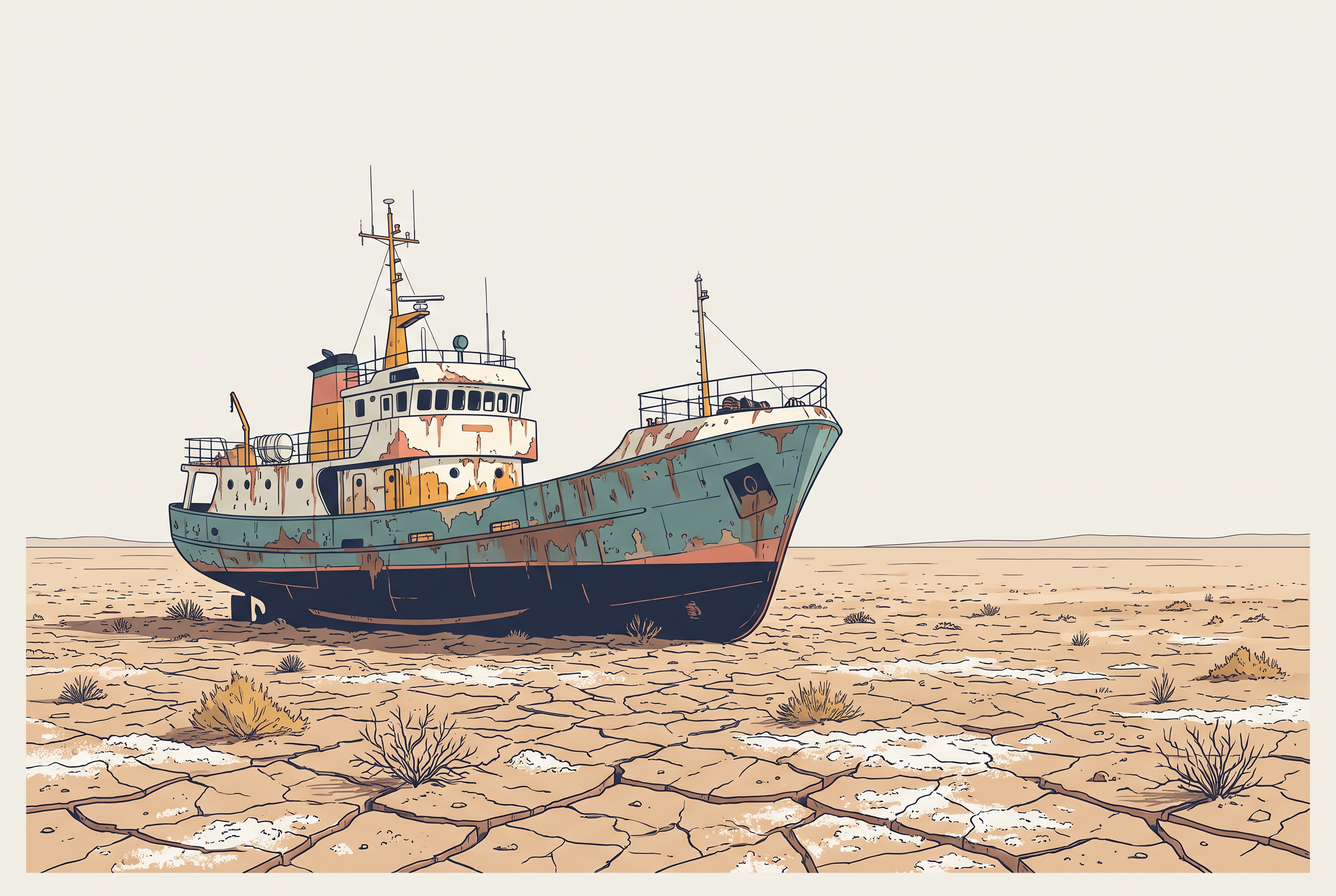
Fig. 6.0 – A stranded ship on the dried bed of the Aral Sea.
The shipping industry and all the related activities that depended on the sea have collapsed. Rising concentrations of salt in the soil have caused low crop yields, so people could not simply turn from fishing to farming. Numerous studies have been conducted on the disaster. Locals joke that if everyone who had come to study the Aral had brought a bucket of water, the sea would be full by now.
That joke is worth pausing over, because it is really a complaint. It says that the area has had plenty of attention and very little repair. A photograph, however, can only show you the wreck. It cannot tell you who decided what, or who now has the authority to put it right. For that you need politics.
Geography Or Politics?
You might ask whether all this is not simply ‘natural phenomena’ — something to be studied in geography rather than in political science. But think about it again.
If various governments take steps to check environmental degradation of the kind described above, then these issues have political consequences, because governments must decide, spend and enforce. Most of these problems are also such that no single government can address them fully. A river, a wind, an ocean current and a warming atmosphere do not stop at a border. Therefore they have to become part of ‘world politics’.
Issues of environment and natural resources are political in another, deeper sense. Who causes environmental degradation? Who pays the price for it? And who is responsible for taking corrective action? Who gets to use how much of the natural resources of the Earth?
Every one of those questions is a question about who wields how much power. That is why they are deeply political questions, and not merely technical ones. A student meeting this argument for the first time sometimes reacts with a shrug: politics in forests, politics in water, politics in the atmosphere — what is not political, then? The answer the chapter gives is that a thing becomes political the moment its use, its cost and its repair have to be decided among people who do not agree.
A cartoonist can make the same argument in a single image, and often does it faster than a paragraph can.
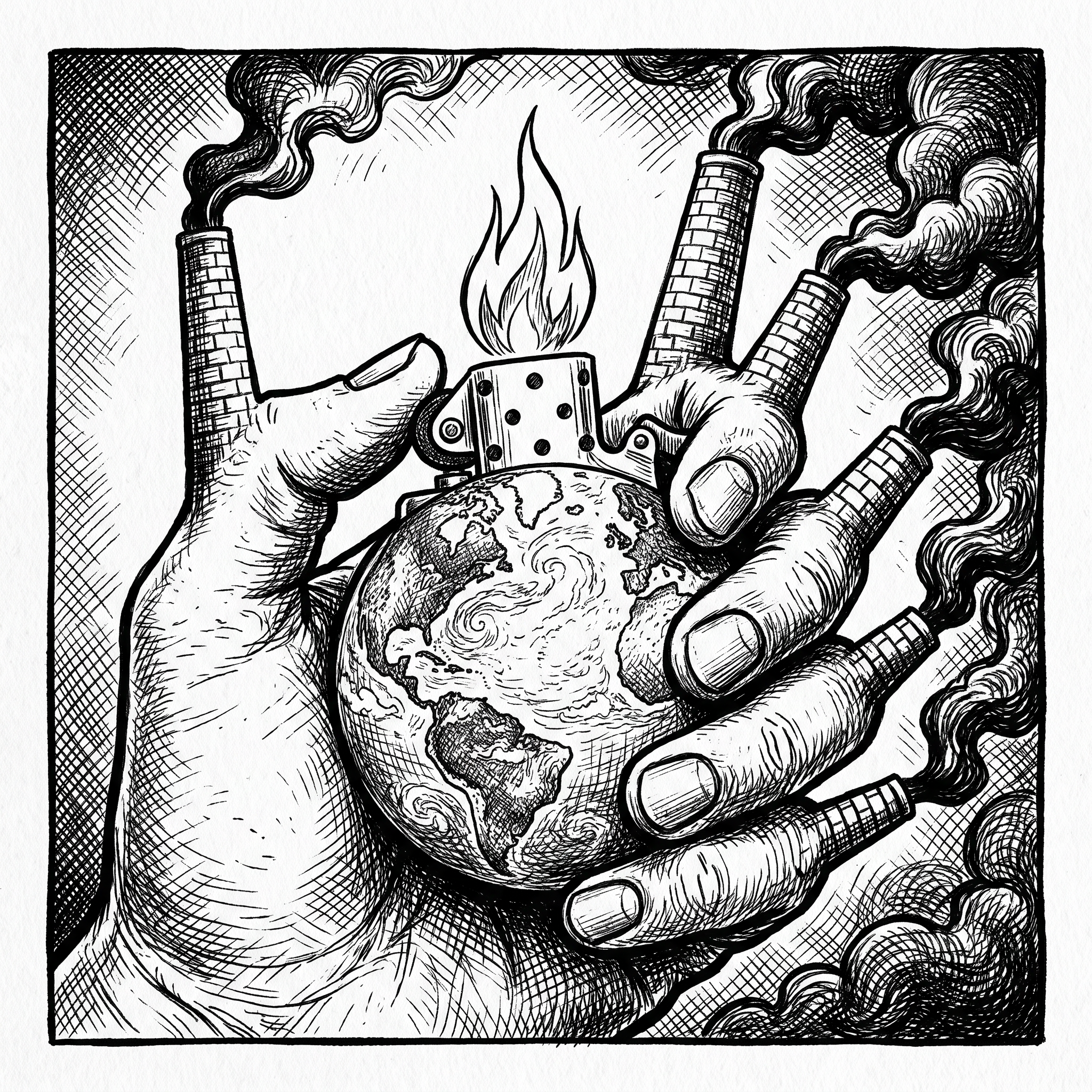
Fig. 6.1 – Global warming. Inspiration: Ares, Cagle Cartoons Inc.
The hand is human, and it is industrial: the fingers are chimneys, which is the cartoonist’s way of saying that the burning is not an accident of nature but the work of factories. The lighter is the Earth itself, held casually, thumb on the wheel. The exaggeration carries the claim — that the planet is being treated as a disposable object, and that the flame is being lit deliberately.
Now notice what the cartoon cannot do. It names no country, no company and no year. It does not tell you whether the chimneys belong to the rich world or the poor one, and it offers no counter-argument from anyone who thinks industrial growth is worth its costs. A cartoon states one opinion in one image; it cannot cross-examine itself. To find out whose chimneys these are, you have to read on.
The 1960s: Alarm Becomes Political
Environmental concerns have a long history. What changed is that awareness of the environmental consequences of economic growth acquired an increasingly political character from the 1960s onwards.
In 1972 the Club of Rome, a global think tank — a body of experts who research public problems and publish their findings — brought out a book entitled Limits to Growth. It dramatised the potential depletion of the Earth’s resources against the backdrop of a rapidly growing world population. The argument was blunt: a finite planet cannot support endlessly expanding consumption.
International agencies, including the United Nations Environment Programme (UNEP) — the UN body that coordinates environmental action among member states — began holding international conferences and promoting detailed studies. The aim was a more coordinated and effective response to environmental problems. Since then, the environment has emerged as a significant issue of global politics.
The sequence that took environmental alarm from a book to a summit is set out in Fig. 6.2. It is also worth doing something the original textbook asks of you: collect news clippings from your own locality that link environment and politics, and see how many of the four questions above — who caused it, who pays, who repairs it, who may use it — each report actually answers.
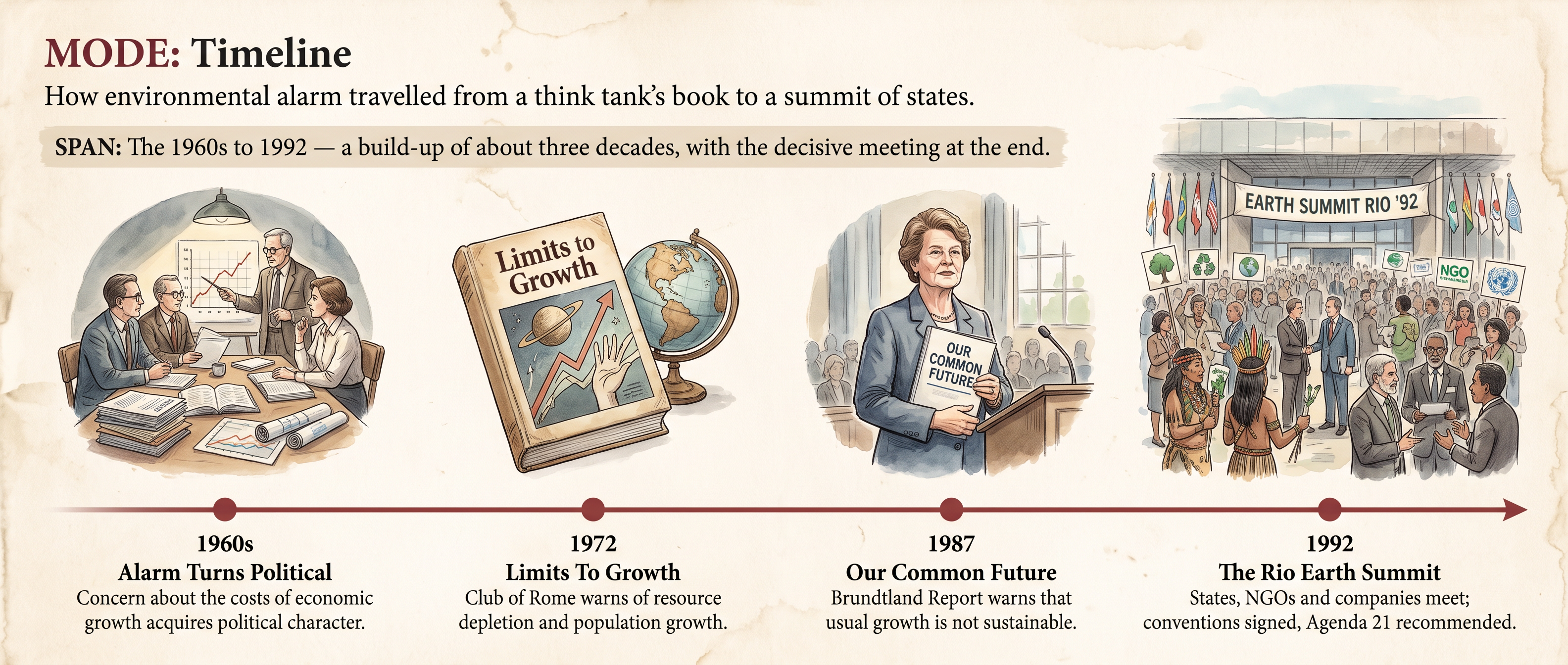
Fig. 6.2 – Environment Enters World Politics.
The Earth Summit, Rio 1992
The growing focus on environmental issues within the arena of global politics was firmly consolidated at the United Nations Conference on Environment and Development, held in Rio de Janeiro, Brazil, in June 1992. It is usually called the Earth Summit.
The summit was attended by 170 states, thousands of NGOs and many multinational corporations. That guest list is itself a lesson. The environment had become an issue on which governments, voluntary organisations and large companies all claimed a right to be heard.
Five years earlier, the 1987 Brundtland Report, Our Common Future, had warned that traditional patterns of economic growth were not sustainable in the long term. The warning was sharpened by a fact nobody could wish away: the countries of the South were demanding further industrial development, and had every intention of getting it.
What was obvious at the Rio Summit was that the rich and developed countries of the First World, generally referred to as the global North, were pursuing a different environmental agenda from the poor and developing countries of the Third World, called the global South. The Northern states were concerned with ozone depletion and global warming. The Southern states were anxious to address the relationship between economic development and environmental management.
A second cartoon in the chapter puts that disagreement in a room, and asks you to look at who is sitting where.
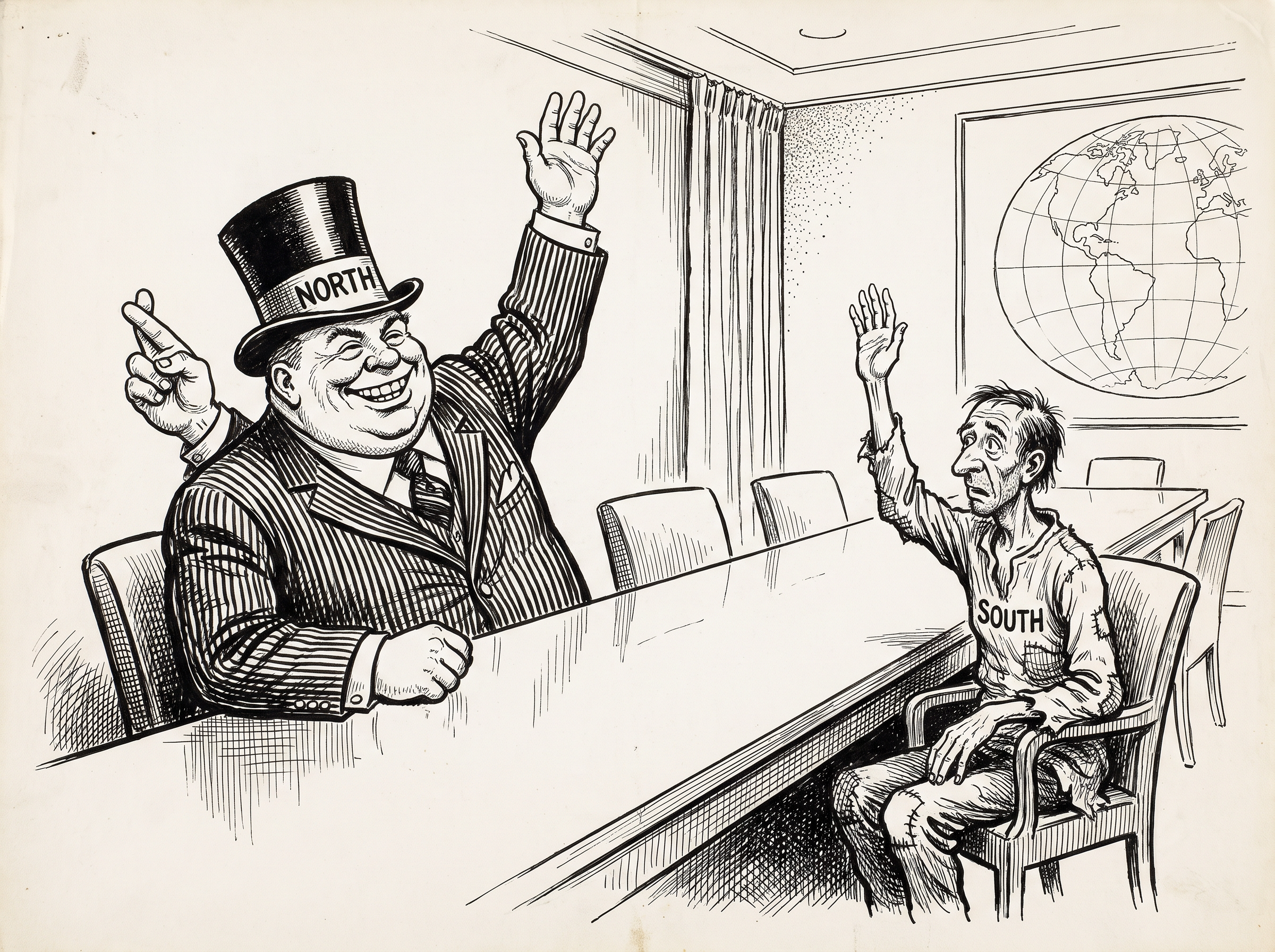
Fig. 6.3 – Environmental negotiations. Inspiration: Ares, Cagle Cartoons Inc.
Both figures raise a hand, so both, on the record, want to save the planet. The cartoonist’s charge lies in the crossed fingers: the wealthy figure is drawn as promising what he does not mean. The two are not equals at the table, and the artist wants you to notice that the same words can be spoken from very different chairs.
The limit is worth stating plainly, because it also protects you from being led. The cartoon accuses; it does not prove. It offers no evidence that any particular rich country broke any particular promise, and it gives the wealthy figure no reply. A cartoon is a claim in ink, and a claim still has to be tested against what states actually did — which is what the rest of this chapter examines.
What Rio Settled, And What It Did Not
The Rio Summit produced conventions dealing with climate change, biodiversity and forestry. It also recommended a list of development practices called ‘Agenda 21’.
It left unresolved considerable differences and difficulties. There was a consensus on combining economic growth with ecological responsibility. This approach to development is commonly known as sustainable development — growth that meets present needs without destroying the basis on which future generations will have to meet theirs.
The problem, however, was how exactly this was to be achieved. A phrase that everyone can sign is not yet a policy that anyone must follow. Some critics have pointed out that Agenda 21 was biased in favour of economic growth rather than ensuring ecological conservation.
That is the honest position at the end of Rio: an agreed goal, a disputed method, and a suspicion on one side that the goal was written to protect growth. With that in hand, we can look at some of the contentious issues in the global politics of environment.
6.2 The Protection Of Global Commons
‘Commons’ are those resources which are not owned by anyone, but are rather shared by a community. Think of a ‘common room’ in a hostel, a ‘community centre’, a park, or a river. Nobody’s name is on it, and everybody’s use depends on everybody else’s restraint.
Now scale that idea up to the planet. There are some areas or regions of the world which lie outside the sovereign jurisdiction of any one state. Sovereignty is the supreme authority a state has to make and enforce law within its own territory, and to be free of outside command. An area outside anyone’s sovereign jurisdiction has, by definition, no government to police it.
Such areas therefore require common governance by the international community. They are known as res communis humanitatis, or global commons. They include the earth’s atmosphere, Antarctica, the ocean floor, and outer space.
Who Owns Antarctica?
Antarctica is the clearest test case the world has, so the chapter sets it out in full.
The Antarctic continental region extends over 14 million square kilometres. It comprises 26 per cent of the world’s wilderness area, and represents 90 per cent of all terrestrial ice and 70 per cent of planetary fresh water. The Antarctic also extends to a further 36 million square kilometres of ocean.
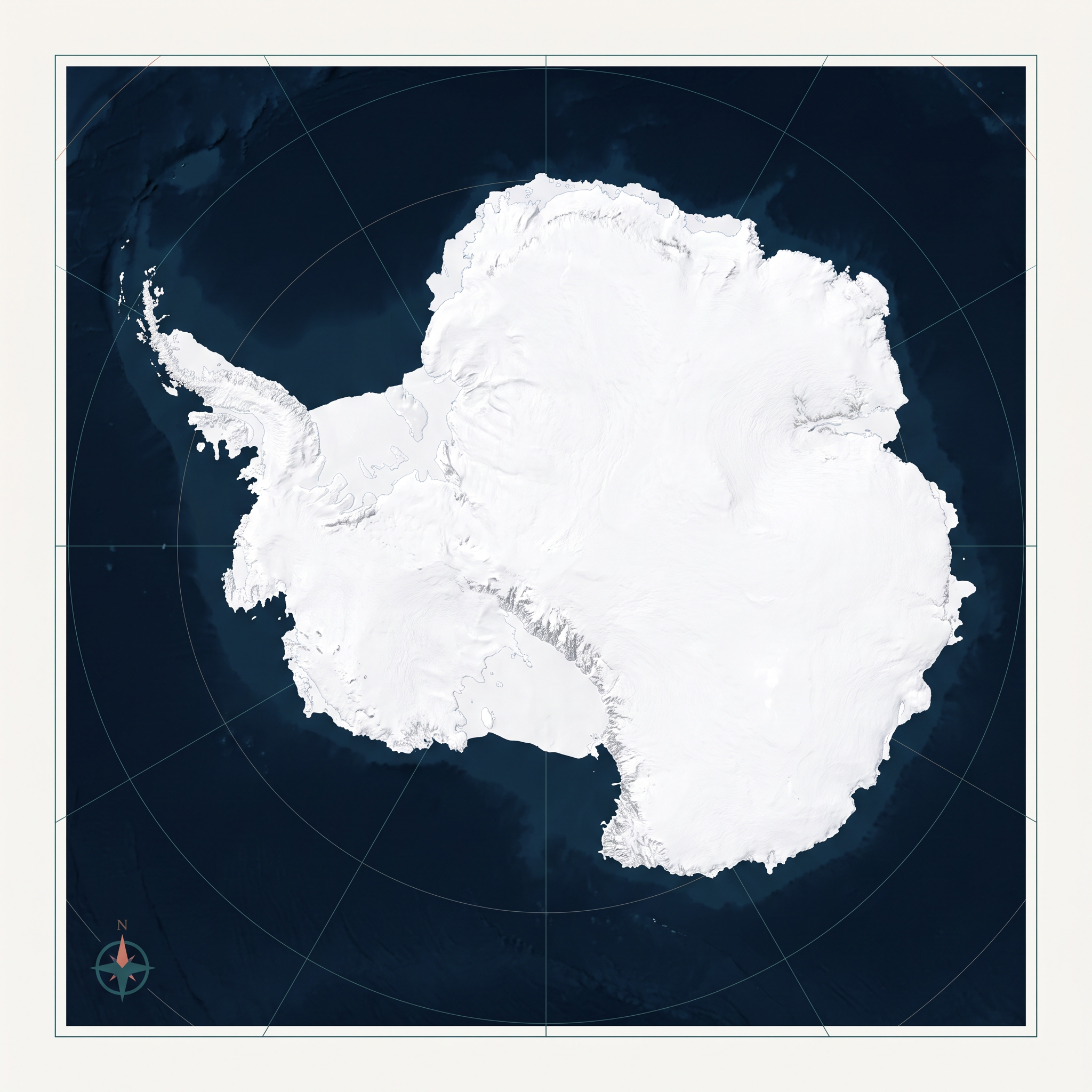
Fig. 6.4 – Antarctica.
It has limited terrestrial life and a highly productive marine ecosystem. On land there are only a few plants — microscopic algae, fungi and lichen. In and around the water there are marine mammals, fish and hordes of birds adapted to harsh conditions, as well as the krill, a small shrimp-like creature that is central to the marine food chain and on which other animals depend.
The Antarctic also plays an important role in maintaining climatic equilibrium. Deep ice cores drilled from it provide an important source of information about greenhouse gas concentrations and atmospheric temperatures of hundreds and thousands of years ago. The ice, in other words, is a record as well as a resource.
So who owns this coldest, farthest and windiest continent on the globe? There are two claims about it.
Some countries — the UK, Argentina, Chile, Norway, France, Australia and New Zealand — have made legal claims to sovereign rights over Antarctic territory. Most other states have taken the opposite view: that the Antarctic is a part of the global commons, and is not subject to the exclusive jurisdiction of any state.
These differences, however, have not prevented the adoption of innovative and potentially far-reaching rules for the protection of the Antarctic environment and its ecosystem. Both the Antarctic and the Arctic polar regions are subjected to special regional rules of environmental protection.
Since 1959, activities in the area have been limited to scientific research, fishing and tourism. Even these limited activities have not prevented parts of the region from being degraded by waste as a result of oil spills.
That last sentence deserves a moment. Antarctica is about as protected as any place on Earth: no farming, no mining, almost nobody living there permanently. And it is still being damaged. If the strictest regime we have cannot keep the ice clean, the difficulty of governing the atmosphere or the ocean floor — where far more is at stake commercially — is obvious.
Why Cooperation Is So Hard
Cooperation over the global commons is not easy. There have been many path-breaking agreements: the 1959 Antarctic Treaty, the 1987 Montreal Protocol, and the 1991 Antarctic Environmental Protocol.
A major problem underlying all ecological issues is the difficulty of achieving consensus on common environmental agendas on the basis of vague scientific evidence and time frames. States are being asked to accept costs today for a harm that scientists describe in probabilities, and that may fall due decades from now — possibly on someone else.
In that sense the discovery of the ozone hole over the Antarctic in the mid-1980s revealed both the opportunity and the dangers inherent in tackling global environmental problems. A visible, measurable, frightening hole in the sky gave negotiators something concrete to point at. It also showed how much damage can accumulate before the evidence becomes clear enough to force agreement.
When The Land Itself Fails
The costs of ecological damage are not paid equally, and they are rarely paid by the people who caused them. One of the biggest catastrophes in Africa in the 1970s makes that plain.
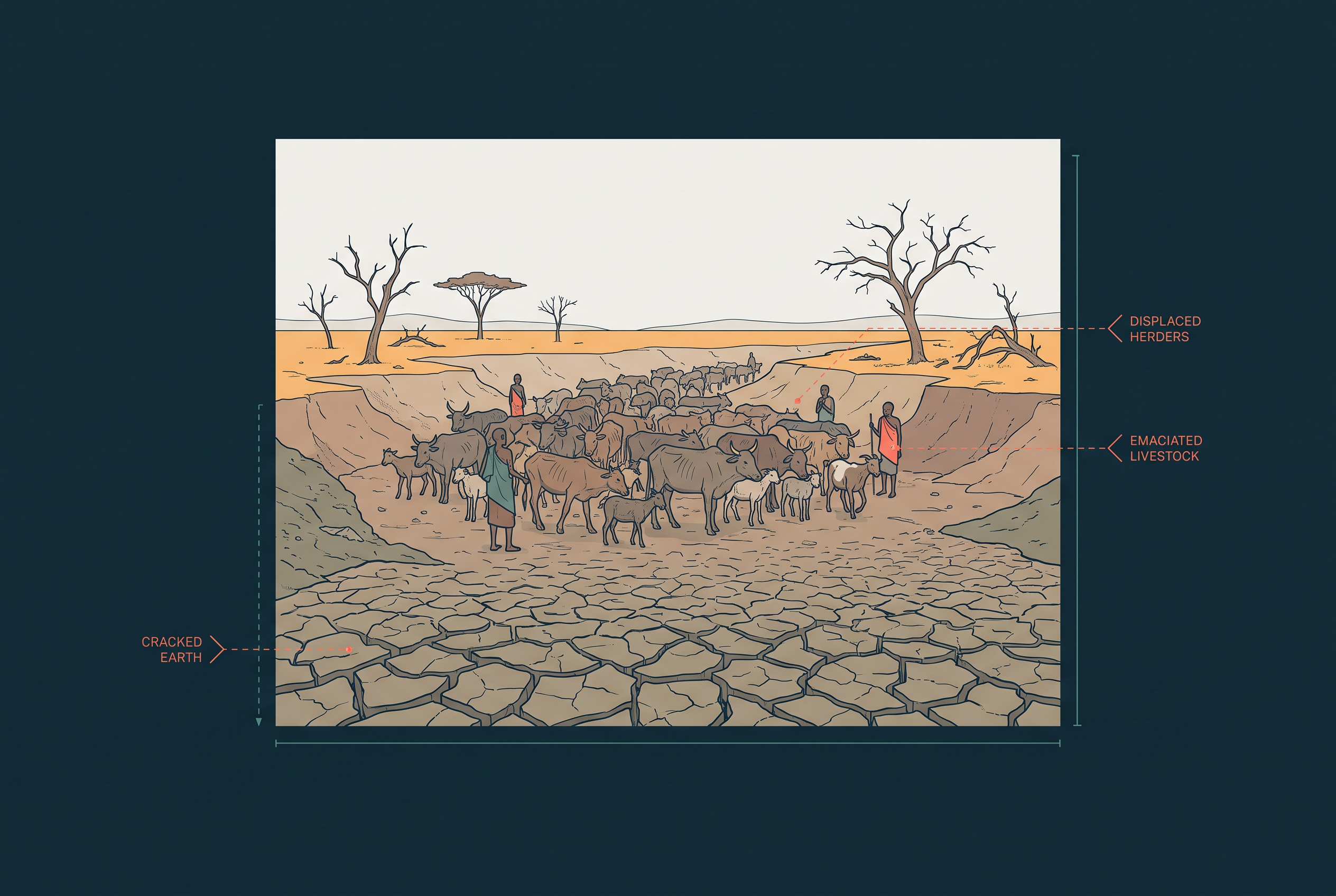
Fig. 6.5 – Environmental refugees in Africa during the 1970s drought.
The term ‘environmental refugees’ came into popular vocabulary after this drought. Many people had to flee their homelands because agriculture was no longer possible there. Notice the word ‘refugee’ — until then it had been used for people driven out by war or persecution, that is, by other people. Here it was being used for people driven out by the failure of the land itself.
The photograph shows the herds and the cracked earth. It cannot show you who, if anyone, was answerable for the crops that failed, or where those who fled were finally allowed to settle. Those are political questions, and they had no settled answer at the time.
Outer Space, And Who Gets There First
The history of outer space as a global commons shows that the management of these areas is thoroughly influenced by North-South inequalities. As with the earth’s atmosphere and the ocean floor, the crucial issue here is technology and industrial development.
This matters for a simple reason. Space is legally common, but reaching it is not. Only states and companies that command advanced technology can actually exploit it, so the benefits of exploitative activities in outer space are far from being equal, either for the present or for future generations.
A student in the original textbook responds to all this with a half-joke: very soon, at this rate, we will have ecological degradation of the moon. It is worth taking seriously. The commons are not protected by the fact that nobody owns them. They are protected only by rules that states agree to keep — which is why so much of the politics of the environment is a politics of agreements. The next section takes up the argument that decided how those agreements would be written.
Before you go on, do what the original chapter asks. Find out more about the Kyoto Protocol: which major countries did not sign it, and why? Hold your answer against what you read next.
6.3 Common But Differentiated Responsibilities
We have noted above a difference in the approach to the environment between the countries of the North and the South. It is now worth setting that difference out slowly, because it is the hinge on which almost every environmental negotiation of the last three decades has turned.
Two Ways Of Counting Responsibility
The developed countries of the North want to discuss the environmental issue as it stands now. Their position is that everyone should be equally responsible for ecological conservation. The atmosphere is shared, the damage is shared, so the duty should be shared.
The developing countries of the South answer that this way of counting begins the story too late. They feel that much of the ecological degradation in the world is the product of industrial development undertaken by the developed countries. If those countries have caused more degradation, they must also take more responsibility for undoing the damage now.
There is a second half to the Southern argument. The developing countries are still in the process of industrialisation, and they must not be subjected to the same restrictions which apply to the developed countries. A country that has already built its factories can afford limits that would stop another country from ever building any.
Thus, on this view, the special needs of the developing countries must be taken into account in the development, application, and interpretation of the rules of international environmental law.
The Principle Written Into Rio
This argument was accepted in the Rio Declaration at the Earth Summit in 1992. It is called the principle of common but differentiated responsibilities — the duty to protect the environment is common to all states, but what each state must do is different, depending on what it has done and what it can do.
Read the relevant part of the Declaration itself. It is short, and every clause in it is doing work.
Notice the two grounds the text gives for treating the developed countries differently. The first is what their societies have done — the pressures they place on the global environment. The second is what they are able to do — the technological and financial resources they command. Cause and capacity, in a single sentence.
Notice also what the extract does not do. It does not say by how much any country must cut its emissions, by when, or who checks. A declaration records what states were willing to sign in public; it does not record what they then did at home. To find that out you have to look at the treaties that followed, and at the behaviour of governments afterwards.
The Climate Convention And The Kyoto Protocol
The 1992 United Nations Framework Convention on Climate Change (UNFCCC) — a treaty in which states set out the shared principles they would follow on climate change — carried the same idea forward.
The Convention provides that the parties should act to protect the climate system on those terms. The words ‘respective capabilities’ matter as much as ‘differentiated responsibilities’: a state is being asked to do what it can, not merely to repent for what it did.
The parties to the Convention agreed on two findings of fact. First, that the largest share of historical and current global emissions of greenhouse gases has originated in developed countries. Second, that per capita emissions in developing countries are still relatively low.
China, India, and other developing countries were, therefore, exempted from the requirements of the Kyoto Protocol. The Kyoto Protocol is an international agreement setting targets for industrialised countries to cut their greenhouse gas emissions.
Certain gases — carbon dioxide, methane, hydro-fluoro carbons and others — are considered at least partly responsible for global warming, the rise in global temperature which may have catastrophic consequences for life on Earth. The protocol was agreed to in 1997 in Kyoto in Japan, and was based on principles set out in the UNFCCC.
Holding The Two Positions Side By Side
The disagreement is easier to revise once you can see it whole. The table below sets out the two positions as the chapter states them — but read the last line of the table with care, because a grid always makes an argument look tidier than it is.
An Analogy, And Its Limits
Students often notice that this principle sounds familiar. Treating unequal parties unequally, in order to be fair to the one that started behind — that, as one reader of the original textbook remarks, is a little like the reservation policy in our own country.
The comparison is useful, and it has a limit. Reservation is a policy made inside one constitutional order, where a government can enforce it and a court can review it. ‘Common but differentiated responsibilities’ is a principle between sovereign states, where no one stands above the parties to make them comply. The principle can be written into a declaration. Whether it is honoured is a separate question — and, as the next sections show, a contested one.
6.4 Common Property Resources
The last two sections looked at resources that belong to nobody at all. This one looks at something different, and much older: resources that belong to a group.
Rights And Duties Together
Common property represents common property for the group. The underlying norm here is that members of the group have both rights and duties with respect to the nature of a given resource, the levels at which it may be used, and its maintenance.
That pairing is the heart of the idea, and it is worth saying slowly. Common property resources are not free-for-alls. A member may take from the pond, the pasture or the grove — that is the right. The same member must also keep within agreed limits and help maintain the resource — that is the duty. Take away the duties and the commons collapses; take away the rights and it is no longer common.
Through mutual understanding and centuries of practice, many village communities in India have defined members’ rights and responsibilities in exactly this way. Nobody wrote them a statute. The rules grew out of long use, and were enforced by the community itself.
Why The Commons Are Shrinking
Common property has been dwindling in size, quality, and availability to the poor in much of the world. The chapter names a combination of factors, and it is important not to reduce them to one.
Privatisation is the first: a resource once held in common is converted into property that a private owner can hold, fence and sell. This is what puzzles students when they hear that rivers have been sold in parts of Latin America. If a river is common property, how can anyone sell it? The answer is that it can be sold only once someone has first been recognised as its owner — and that recognition is a political act, not a natural fact.
The other factors work more quietly. Agricultural intensification takes more out of the same land. Population growth puts more claimants on the same resource. Ecosystem degradation reduces what there is to share in the first place.
Notice who is hit hardest when these forces combine. The chapter says the loss falls on availability to the poor. A landowner who loses access to a common pasture has other pastures. A landless household that loses it has nothing else.
Sacred Groves In India
India also offers one of the world’s clearest surviving examples of a common property regime. The institutional arrangement for the actual management of sacred groves on state-owned forest land fits the description of a common property regime closely. Along the forest belt of South India, sacred groves have been traditionally managed by village communities.
Protecting nature for religious reasons is an ancient practice in many traditional societies. Sacred groves in India are parcels of uncut forest vegetation kept in the name of certain deities, or of natural or ancestral spirits. They exemplify that practice, and as a model of community-based resource management they have lately gained attention in conservation literature.
A sacred grove can be seen as a system that informally forces traditional communities to harvest natural resources in an ecologically sustained fashion. The word ‘informally’ is doing a lot of work: there is no forest officer, no fine and no licence. The restraint is carried by belief and by the watchfulness of neighbours. Some researchers believe that sacred groves hold the potential for preserving not only biodiversity and ecological functions, but also cultural diversity.
Sacred groves embody a rich set of forest preservation practices, and they share characteristics with common property resource systems. Their size ranges from clumps of a few trees to several hundred acres. Traditionally, they have been valued for their embodied spiritual and cultural attributes. Hindus commonly worshipped natural objects, including trees and groves, and many temples have originated from sacred groves.
This tells you something important about why the groves survived. Deep religious reverence for nature, rather than resource scarcity, seems to be the basis for the long-standing commitment to preserving these forests. The forest was not spared because it was running out. It was spared because it was held to be sacred.
Two Owners, One Grove
The groves are now under pressure, and the pressure comes from two directions at once.
The first is physical. In recent years, expansion and human settlement have slowly encroached on sacred forests. The second is institutional. In many places the institutional identity of these traditional forests is fading with the advent of new national forest policies.
A real problem in managing sacred groves arises when legal ownership and operational control are held by different entities. The land is state-owned forest land; the day-to-day management is the community’s. The two entities in question, the state and the community, vary in their policy norms and underlying motives for using the sacred grove.
That is not a small technicality. It means that the paper answer to ‘who owns this?’ and the practical answer to ‘who looks after this?’ point at different people. When the two disagree, there is no obvious rule to decide between them.
The sacred groves are often held up as proof that communities can conserve better than governments. Before accepting that, hold on to what the chapter itself records: the groves are being encroached upon, and their institutional identity is fading. A practice that worked for centuries under one set of pressures is not thereby shown to work under a different set. What the groves prove is narrower, and still valuable — that rules made by a community, and kept by belief rather than by punishment, can protect a forest for a very long time.
6.5 India’s Stand On Environmental Issues
India signed and ratified the 1997 Kyoto Protocol in August 2002. To ratify a treaty is to give it formal approval at home, so that the state is bound by what its negotiators signed abroad.
India, China and other developing countries were exempt from the requirements of the Kyoto Protocol. The reason given was historical: their contribution to the emission of greenhouse gases during the industrialisation period — the emissions believed to be causing today’s global warming and climate change — was not significant.
The Argument Against The Exemption
That exemption has not gone unchallenged. Critics of the Kyoto Protocol point out that sooner or later, both India and China, along with other developing countries, will be among the leading contributors to greenhouse gas emissions.
The force of this objection is that it looks forward rather than back. It concedes the history, and then says the history is not the point. If the atmosphere is what has to be protected, then what matters is who will be filling it in the decades to come.
India’s Reply: Count Per Person
At the G-8 meeting in June 2005 — a meeting of major industrialised countries — India made its answer plain. The per capita emission rates of the developing countries are a tiny fraction of those in the developed world.
Following the principle of common but differentiated responsibilities, India is of the view that the major responsibility of curbing emission rests with the developed countries, which have accumulated emissions over a long period of time.
India’s international negotiating position relies heavily on principles of historical responsibility, as enshrined in the UNFCCC. That convention acknowledges that developed countries are responsible for most historical and current greenhouse gas emissions. It also emphasises that ‘economic and social development are the first and overriding priorities of the developing country parties’.
So India is wary of recent discussions within the UNFCCC about introducing binding commitments on rapidly industrialising countries — such as Brazil, China and India — to reduce their greenhouse gas emissions. A binding commitment is one a state is legally obliged to meet, not merely a target it promises to aim at. India feels that such a move contravenes the very spirit of the UNFCCC.
Nor does it seem fair to India to impose restrictions on the country when its rise in per capita carbon emissions by 2030 is likely to still represent less than half the world average of 3.8 tonnes in 2000. Indian emissions are predicted to rise from 0.9 tonnes per capita in 2000 to 1.6 tonnes per capita in 2030.
Work that through slowly, because the figures carry the whole argument. Half of the world average for 2000 is
\[\frac{3.8}{2} = 1.9 \text{ tonnes of carbon emissions per person per year}\]
India’s predicted figure for 2030 is 1.6 tonnes per person — still below 1.9, and thirty years later. The claim is not that India will emit little in total. It is that each Indian will still be emitting less than half of what an average person in the world was emitting in the year 2000.
Is India’s Stand Simply ‘Our Turn To Pollute’?
Students often reduce this position to a slogan: first they destroyed the earth, now it is our turn to do the same. Is that India’s stand?
The record does not support that reading, and the next few paragraphs are the evidence. India’s argument is not that pollution is a right that has come round to it in rotation. Its argument is about the terms on which limits are set, and about who pays for the change — and, in the meantime, it has been acting.
What India Has Actually Done
The Indian government is already participating in global efforts through a number of programmes. India’s National Auto-fuel Policy mandates cleaner fuels for vehicles. The Energy Conservation Act, passed in 2001, outlines initiatives to improve energy efficiency. The Electricity Act of 2003 encourages the use of renewable energy.
Trends in importing natural gas and in encouraging the adoption of clean coal technologies show that India has been making real efforts. The government has also been keen to launch a National Mission on Biodiesel, using about 11 million hectares of land to produce biodiesel by 2011–2012.
India ratified the Paris Climate Agreement on 2 October 2016. And India has one of the largest renewable energy programmes in the world. The sequence of these commitments is set out in Fig. 6.6.
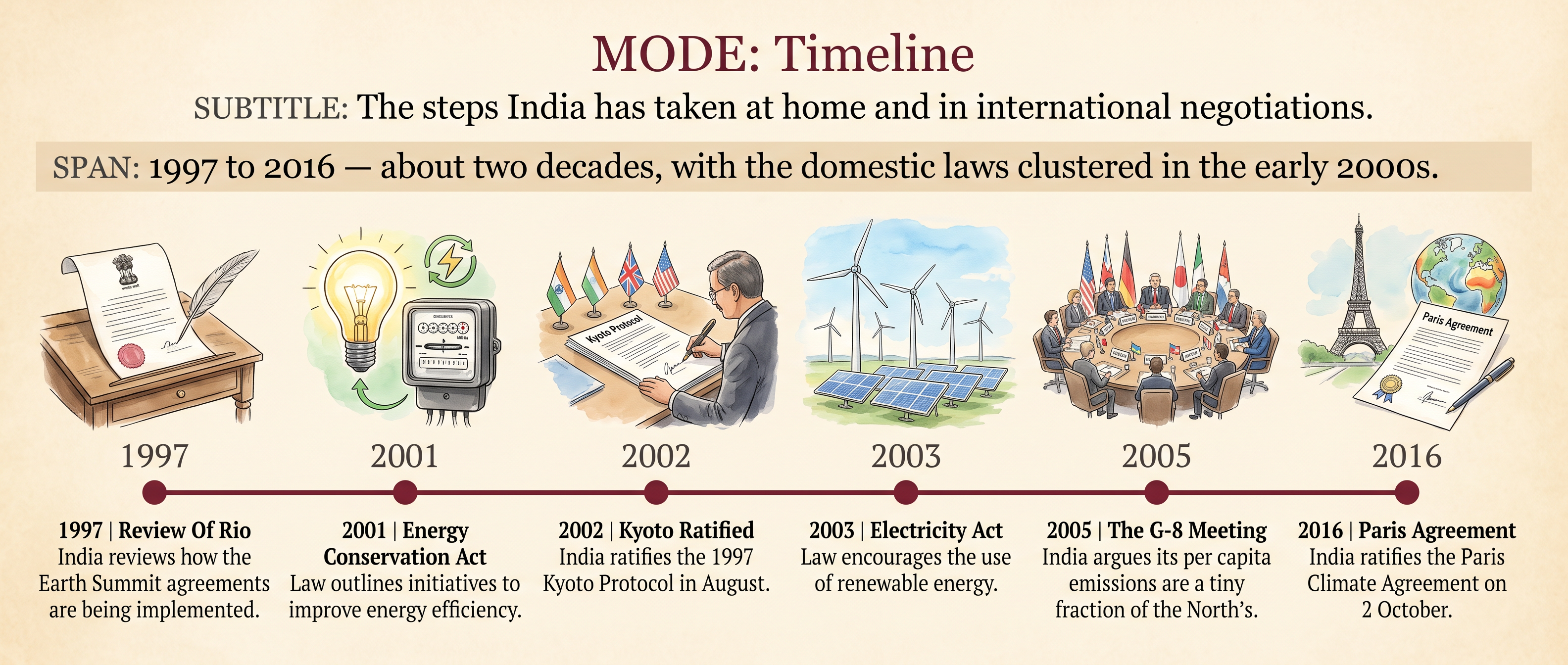
Fig. 6.6 – India’s Environmental Commitments.
What The North Promised, And What Came Of It
A review of the implementation of the agreements at the Earth Summit in Rio was undertaken by India in 1997. One of the key conclusions was blunt. There had been no meaningful progress with respect to the transfer of new and additional financial resources, or of environmentally-sound technology on concessional terms, to developing nations.
That finding explains a great deal about India’s negotiating stance. The bargain at Rio had two halves: the South would pursue development in an environmentally responsible way, and the North would help pay for it and share the technology that made it possible. India’s view is that the second half has not been delivered.
India therefore finds it necessary that developed countries take immediate measures to provide developing countries with financial resources and clean technologies, so that these countries can meet their existing commitments under the UNFCCC.
India is also of the view that the SAARC countries — the states of the South Asian regional grouping — should adopt a common position on major global environment issues, so that the region’s voice carries greater weight. A single small state at a conference of 170 is easy to overlook. A region speaking with one voice is not.
The Poster On The Wall
None of this negotiation is abstract for the communities who live along India’s rivers. The original chapter reproduces a poster that maps their situation across the country, and it repays slow reading.
Map
Map 6.1 Caption: Troubled waters, trapped people — a snapshot of the many problems faced by communities in different parts of India, from pollution, overfishing and damming. Brief: Reproduce the printed poster ‘Troubled Waters, Trapped People’ exactly as it appears in the original. It is a map of India, which must be shown in its full extent as officially defined by the Government of India, including Jammu and Kashmir and Ladakh, with no part of India shown as disputed or ceded. Retain the state-wise call-out panels listing rivers, major fishing communities and threats, and the two side panels on coastal environmental issues and fish laws, with all names and wording set exactly as printed. Add nothing that is not on the original poster.
Read what the poster is actually doing. For each region it lists three things together: the rivers, the communities that depend on them, and the threats they face — industrial pollution, damming, overfishing, sewage, water extraction. Putting those three columns side by side is itself an argument. It says that a polluted river is not merely a chemical fact; it is a fact about particular people whose living has been taken away.
Now the limit. A poster is made to persuade, and this one selects. It names threats but not the industries, dams or authorities responsible for them; it does not say what any of these communities received in compensation, or whether any of the laws listed in its ‘fish laws’ panel were ever enforced. It shows you where the damage is. It cannot tell you who will answer for it — which is exactly the question the whole chapter keeps returning to.
6.6 Environmental Movements: One Or Many?
We have, so far, looked at the way governments have reacted at the international level to the challenge of environmental degradation. Summits, declarations, conventions, protocols: the environment as seen from a conference table.
But some of the most significant responses to this challenge have come not from governments at all. They have come from groups of environmentally conscious volunteers working in different parts of the world. Some of them work at the international level. Most of them work at the local level, on one forest, one mine, one river.
These environmental movements are amongst the most vibrant, diverse, and powerful social movements across the globe today. A social movement is a sustained collective effort by ordinary people, outside the machinery of government, to change how something is done. It is within social movements that new forms of political action are born or reinvented.
These movements raise new ideas and long-term visions of what we should do and what we should not do in our individual and collective lives. The heading of this section asks whether they are one movement or many. Keep the question open as you read the examples below, because the answer is not obvious.
The Forest Movements
The forest movements of the South — in Mexico, Chile, Brazil, Malaysia, Indonesia, continental Africa and India, to list only a few — are faced with enormous pressures.
The record is discouraging, and the chapter does not hide it. Forest clearing in the Third World continues at an alarming rate, despite three decades of environmental activism. The destruction of the world’s last remaining grand forests has actually increased in the last decade.
That is worth sitting with. Three decades of campaigning, and the felling has gone up, not down. A movement can be vibrant, admired and widely reported, and still be losing.
Are Forests ‘Wilderness’?
What distinguishes the forest movements of the South from those of the North is a fact about the forests themselves. The forests of the South are still peopled. The forests of the North are more or less devoid of human habitat — or are, at least, perceived as such.
This explains, to some extent, the prevailing notion of wilderness in the North: a ‘wild place’ where people do not live. In this perspective, humans are not seen as part of nature. ‘Environment’ is perceived as ‘somewhere out there’, as something that should be protected from humans, through the creation of parks and reserves.
Most environmental issues in the South begin from the opposite assumption: that people live in the forests. If that is true, then a forest emptied of its people to make a reserve has not been saved. It has been taken.
Wilderness-oriented perspectives have been predominant in Australia, Scandinavia, North America and New Zealand. In these regions there are still large tracts of relatively ‘underdeveloped wilderness’, unlike in most European countries.
This is not to say that wilderness campaigns are entirely missing in the South. In the Philippines, green organisations fight to protect eagles and other birds of prey from extinction. In India, a battle goes on to protect the alarmingly low number of Bengal tigers. In Africa, a long campaign has been waged against the ivory trade and the slaughter of elephants. Some of the most famous wilderness struggles have been fought in the forests of Brazil and Indonesia.
All of these campaigns focus on individual species as well as on the conservation of the wilderness habitats that support them. Many of the wilderness issues have been renamed biodiversity issues in recent times, because the concept of wilderness proved difficult to sell in the South. Many of these campaigns have been initiated and funded by NGOs such as the Worldwide Wildlife Fund (WWF), in association with local people.
Alongside this argument the chapter prints a cartoon about the campaigners themselves — and it is not flattering.
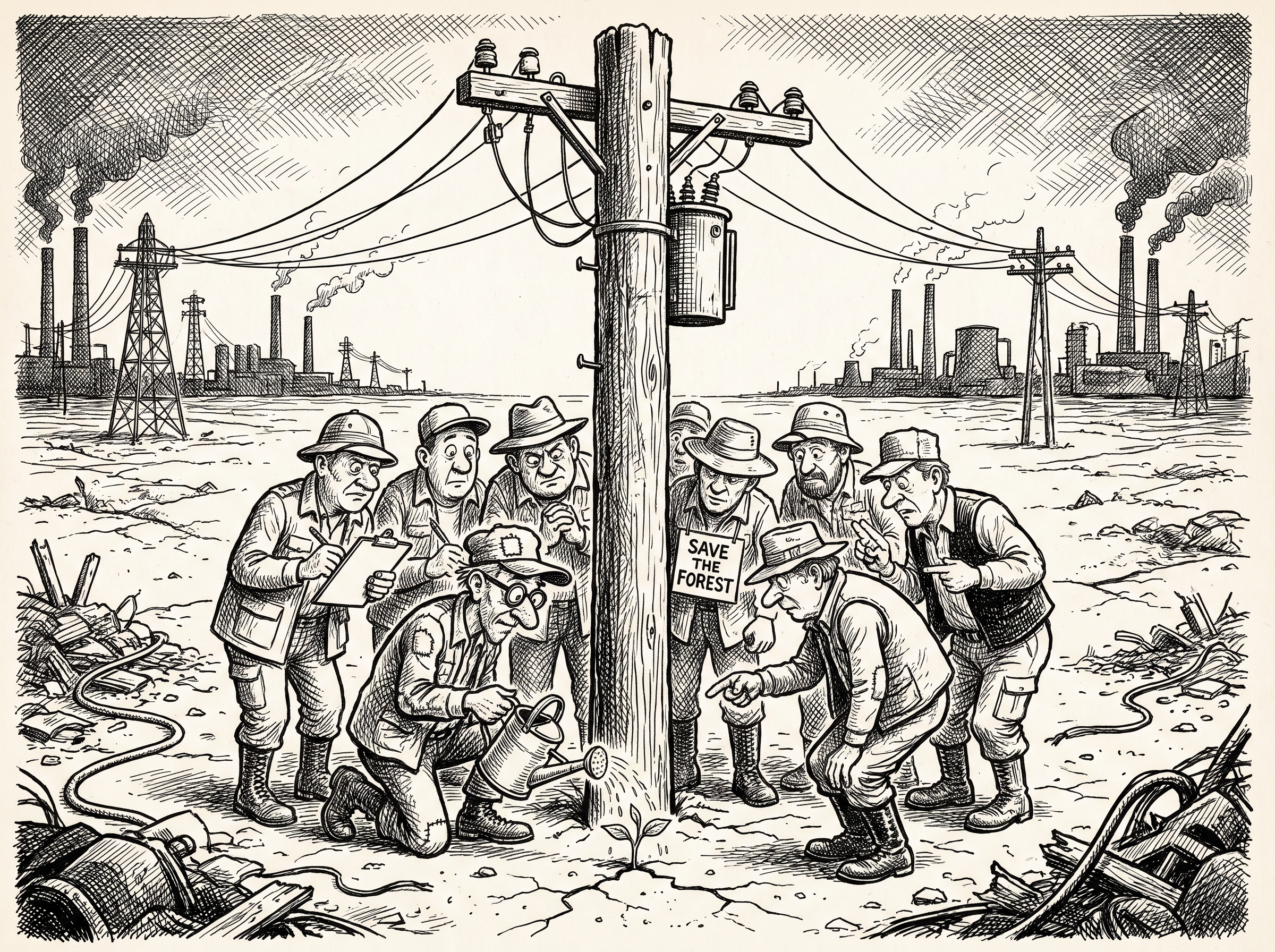
Fig. 6.7 – Ecologists and deforestation. Inspiration: Ares, Cagle Cartoons Inc.
The joke is at the ecologists’ expense. They are drawn crowding, in a huddle, fussing over one small shoot at the foot of a dead pole in a landscape where the trees have already gone. The exaggeration makes a charge: that the effort is earnest, well-meaning and far too small for the damage it faces.
You are entitled to disagree with the charge, and the question printed under the cartoon invites you to. Note what the drawing leaves out. It shows no felling, no company, no government — only the campaigners. A cartoon can mock the people who are trying; it cannot, in the same frame, show you who cut the forest down. Judge the ecologists, if you like, but do not let the cartoon decide who else should have been in the picture.
Since both kinds of forest movement now sit inside the same chapter, it helps to hold them side by side before going further.
The original chapter asks you to go and find out about the ‘Chipko Movement’ at this point. Do that with the contrast above in your hand, and ask which column it belongs in — or whether it refuses to sit in either.
The Movements Against Mining
The minerals industry is one of the most powerful forms of industry on the planet. A large number of economies of the South are now being re-opened to MNCs — multinational corporations, companies that operate across many countries — through the liberalisation of the global economy.
The industry’s work invites criticism and resistance in various parts of the globe: its extraction of earth, its use of chemicals, its pollution of waterways and land, its clearance of native vegetation, and its displacement of communities, amongst other factors.
One good example of that resistance is set out below.
The chapter also prints a photograph of one such community in the middle of its protest.
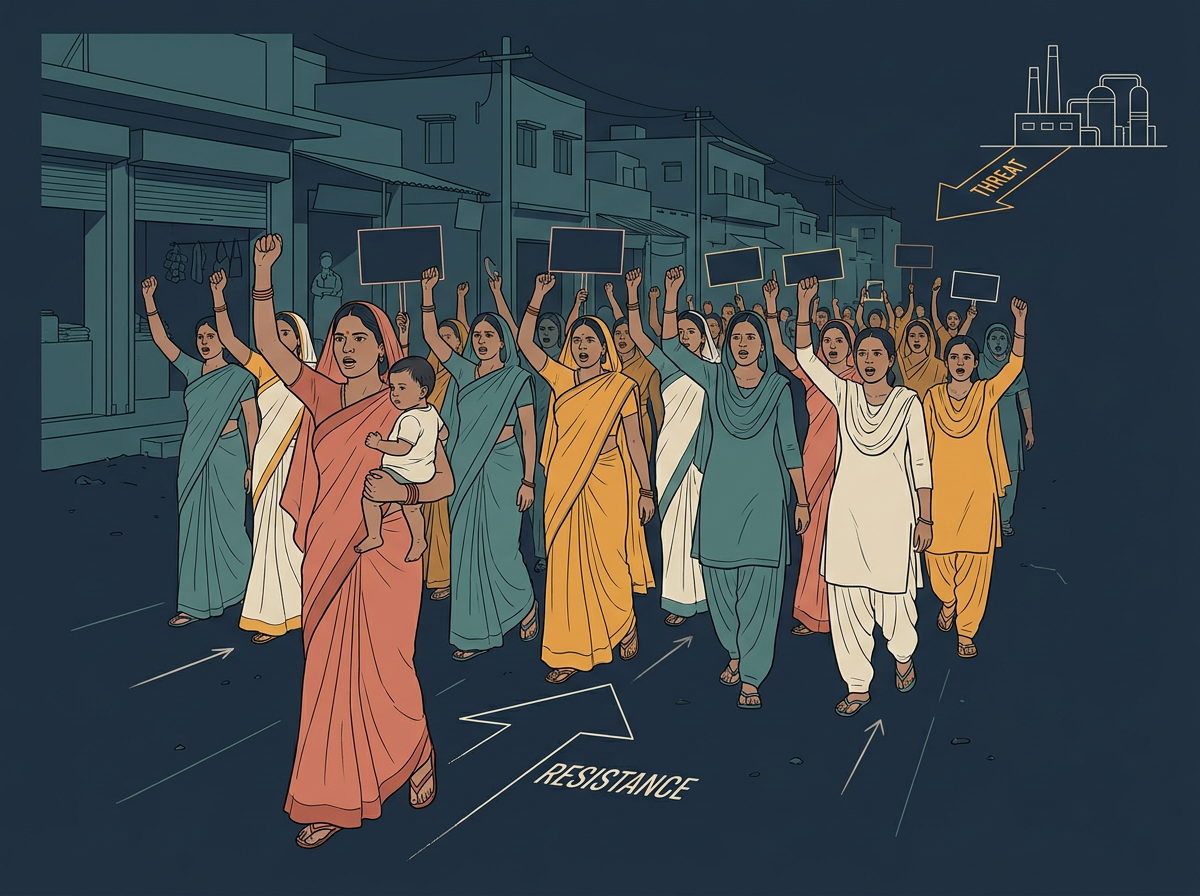
Fig. 6.8 – Protests against the Phulbari coal mine, Bangladesh, 2006.
Look at who is in the frame. Not activists flown in from a capital city, but women of the town, one of them holding a baby, standing in their own street. That is what most environmental movements actually look like: local, unpaid, and made up of the people who would have to live with the decision.
And there the photograph stops. It cannot tell you whether the mine was built, what the town was offered, or what the coal would have been worth to the country. A photograph freezes one afternoon of a long argument, and an argument cannot be settled from a single afternoon.
The Movements Against Mega-Dams
Another group of movements are those involved in struggles against mega-dams. In every country where a mega-dam is being built, one is likely to find an environmental movement opposing it.
Increasingly, anti-dam movements are also pro-river movements. They do not merely oppose a structure; they argue for a more sustainable and equitable management of river systems and valleys — which is a claim about how a resource should be shared, and therefore a political claim.
The early 1980s saw the first anti-dam movement launched in the North: the campaign to save the Franklin River and its surrounding forests in Australia. Notice that it was three things at once — a wilderness campaign, a forest campaign and an anti-dam campaign. The neat categories of this section do not always hold.
At present there has been a spurt in mega-dam building in the South, from Turkey to Thailand to South Africa, from Indonesia to China. India has had some of the leading anti-dam, pro-river movements, and the Narmada Bachao Andolan is one of the best known of these.
One feature of the Indian experience is worth ending on. In anti-dam and other environmental movements in India, the most important shared idea is non-violence. That is a striking fact about a set of struggles in which people are resisting the loss of their land, their village and their livelihood.
So: one movement or many? The examples resist a tidy answer. They differ in what they want protected, in who funds them and in whether they see people as part of the forest or apart from it. What they share is a conviction that the decision about a forest, a mine or a river should not be made only by those who profit from it.
6.7 Resource Geopolitics
Resource geopolitics is all about who gets what, when, where and how. It is the study of how the location of resources shapes the behaviour of states — who has them, who needs them, and what is done to keep them flowing.
Timber, Trade And War
Resources have provided some of the key means and motives of global European power expansion. They have also been the focus of inter-state rivalry.
Western geopolitical thinking about resources has been dominated by the relationship of trade, war and power. At the core of that relationship were overseas resources and maritime navigation — the ability to sail, to trade and to fight far from home.
This produced a chain of dependence worth following. Sea power rested on ships; ships were built of timber; therefore naval timber supply became a key priority for the major European powers from the 17th century onwards. A forest, in this way of thinking, was not scenery. It was a fleet waiting to be built.
The critical importance of ensuring an uninterrupted supply of strategic resources — in particular oil — was well established during both the First World War and the Second World War. Armies that ran on petrol could be stopped by cutting off the petrol.
Securing Supply In The Cold War
Throughout the Cold War, the industrialised countries of the North adopted a number of methods to ensure a steady flow of resources. Read the list carefully, because it is a list of instruments of power, not of trade.
They deployed military forces near exploitation sites and along sea-lanes of communication — the shipping routes along which cargo and fuel travel. They stockpiled strategic resources against future shortage. They made efforts to prop up friendly governments in producing countries. They gave support to multinational companies, and they secured favourable international agreements.
Traditional Western strategic thinking remained concerned with access to supplies, which might be threatened by the Soviet Union. A particular concern was Western control of oil in the Gulf, and of strategic minerals in Southern and Central Africa.
After the end of the Cold War and the disintegration of the Soviet Union, the security of supply continues to worry government and business decisions with regard to several minerals, in particular radioactive materials. However, oil continues to be the most important resource in global strategy. TL 6.A3 sets out how resources moved to the centre of Western strategy.
Oil: The Resource Everything Turns On
The global economy relied on oil for much of the 20th century as a portable and indispensable fuel. It could be carried anywhere, and almost nothing else would do the work it did.
The immense wealth associated with oil generates political struggles to control it. The history of petroleum is therefore also the history of war and struggle. Nowhere is this more obviously the case than in West Asia and Central Asia.
The geography is worth learning as a set of numbers, because the numbers explain the politics. West Asia, specifically the Gulf region, accounts for about 30 per cent of global oil production. But it holds about 64 per cent of the planet’s known reserves.
Hold those two figures side by side. A region that pumps less than a third of today’s oil is sitting on nearly two-thirds of what is left underground. That is why it is the only region able to satisfy any substantial rise in oil demand — and why, whenever demand rises anywhere, attention turns there.
Within the region, Saudi Arabia has a quarter of the world’s total reserves and is the single largest producer. Iraq’s known reserves are second only to Saudi Arabia’s, and since substantial portions of Iraqi territory are yet to be fully explored, there is a fair chance that its actual reserves might be far larger.
Now add the last fact, which turns geology into geopolitics. The United States, Europe, Japan, and increasingly India and China, which consume this petroleum, are located at a considerable distance from the region. The people who need the oil most do not live where it is.
A Cartoonist’s Verdict
One cartoonist puts the whole argument of the last three paragraphs into a single frame, and puts it very harshly.

Fig. 6.9 – How neocolonialism works. Inspiration: Andy Singer, Cagle Cartoons Inc.
The word in the title is the argument: neocolonialism, meaning control exercised over a country’s economy and resources without ruling it outright, as a colonial power once did. The soldiers are drawn as businessmen making an offer, and the offer is the punchline — the country will pay for its own reconstruction in oil.
Read it as a claim, not as a finding. The cartoon names no war, no year and no company. It gives the accused no reply, and it does not distinguish between a state that intervenes for resources and one that does so for some other reason. What it does well is state a suspicion that many people in the producing regions genuinely hold, and that suspicion is itself a political fact — governments must negotiate with it whether or not it is fair.
Everybody’s Oil
The original chapter prints a satirical feature that widens the accusation. It begins with a plain statement of how deeply oil is woven into ordinary life.
The feature then hands the microphone to four caricatured figures, each of whom is happy to explain himself.
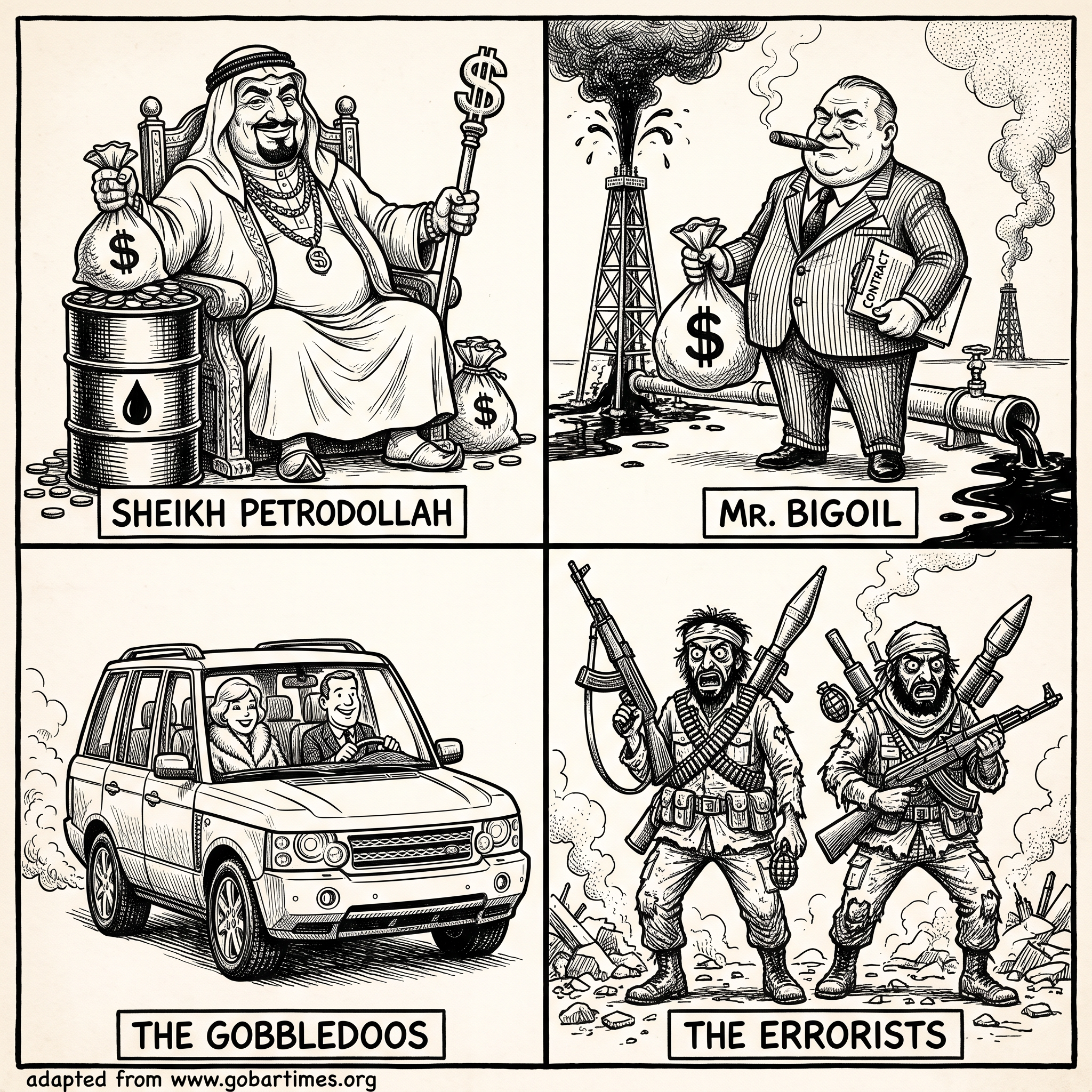
Fig. 6.10 – Everyone is playing crude. Inspiration: Gobar Times.
Sheikh Petrodollah rules the land of Black Gold and calls himself filthy rich. Since oil was found, he says, nothing has been the same: Mr Bigoil’s company and Mr Bigoil’s government came prospecting, they struck oil, and they struck a deal. They armed him to the teeth. In return, Bigoil and Sons buy all his oil and all his loyalty, and he turns a blind eye to their military in his land. Bigoil’s President, he says, values freedom and democracy — so he keeps both safely under lock and key.
Mr Bigoil, the CEO, says his country has an enormous appetite for oil, so of course he provides it. He believes in the free market: free to dig up oil in far-away countries, free to create pliable dictators to keep local populations at bay, and free to destroy ecology. His company plays no politics, he insists — it merely pays at election campaigns and gets politicians to invest in the company.
Mr and Mrs Gobbledoo are simply leading the good life. There is a new car outside the garage: sleek finish, power steering, excellent pick-up, great mileage, low on emissions — gentle on the atmosphere, global warming and all that stuff — and now they really must zoom off.
The Errorists, who describe themselves as loose cannonballs, say they were armed and trained to fight invading Ruffians, and did not realise it was the oil that was wanted. The rules kept changing, they say, so now they have rules of their own, and the guns they were given come in handy.
Notice what the feature is doing. It refuses to let anyone off: the ruler who sells his people’s loyalty, the corporation that buys governments, the comfortable consumer who never asks where the fuel came from, and the armed group that turns the weapons back on those who supplied them. The Gobbledoos are the reader — which is the sharpest point in the whole box.
Now the limits, and they are serious ones. This is satire, and satire works by caricature. It flattens a whole region into a single greedy king, a whole industry into one cynical CEO, and armed conflict into a joke about ‘Errorists’. Real rulers, companies, consumers and combatants are more varied than that, and a caricature of a people can slide very easily into contempt for them. The feature is evidence of how the politics of oil is criticised. It is not evidence of who did what, to whom, and when — and you should not take it as such.
Water: The Next Quarrel?
Water is another crucial resource that is relevant to global politics. Regional variations, and the increasing scarcity of freshwater in some parts of the world, point to the possibility of disagreements over shared water resources becoming a leading source of conflicts in the 21st century.
Some commentators on world politics have referred to ‘water wars’ to describe the possibility of violent conflict over this life-sustaining resource. The phrase is a warning, not a description of something that has already happened on a large scale — keep that distinction in mind.
Countries that share rivers can disagree over many things. A typical disagreement is a downstream state’s objection to pollution, excessive irrigation, or the construction of dams by an upstream state. In the language of water politics, the downstream state is the lower riparian and the upstream state the upper riparian — ‘riparian’ simply means lying along the bank of a river. What the upper riparian does may decrease the quantity, or degrade the quality, of the water that reaches the lower one.
States have used force to protect or seize freshwater resources. Examples of violence include those between Israel, Syria, and Jordan in the 1950s and 1960s, over attempts by each side to divert water from the Jordan and Yarmuk Rivers. More recent threats have passed between Turkey, Syria, and Iraq over the construction of dams on the Euphrates River.
A number of studies show that countries that share rivers — and many countries do share rivers — are involved in military conflicts with each other. Read that sentence carefully before you accept it. It reports that river-sharing states fight; it does not, by itself, prove that they fight because they share a river. Countries that share a river also share a border, a history and often a quarrel. Establishing which of these caused the fighting is a much harder task than counting how often it occurred.
The chapter prints one more cartoon here, and it asks you a question about how it was drawn.
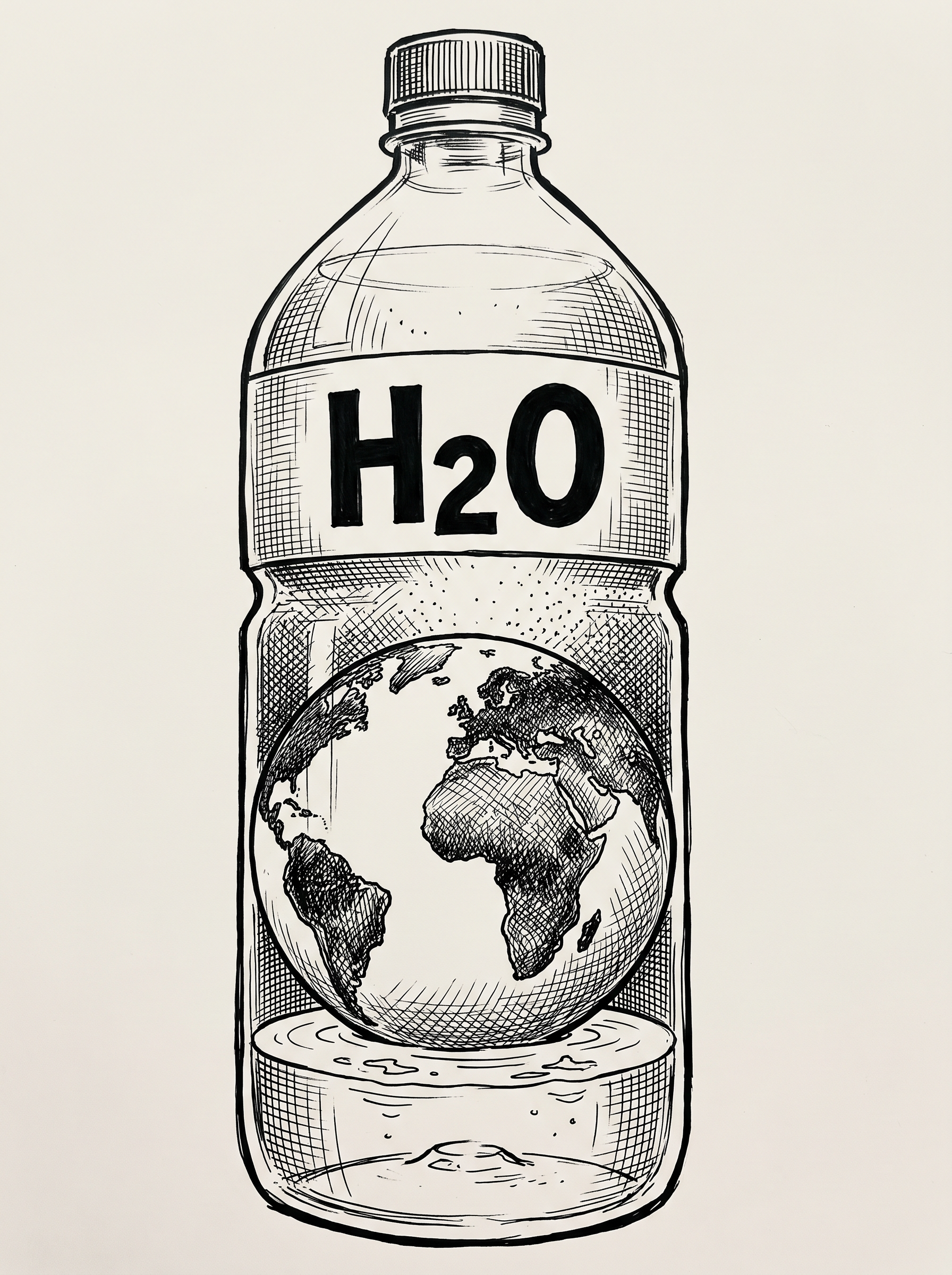
Fig. 6.11 – Water scarcity. Inspiration: Ares, Cagle Cartoons Inc.
The bottle is the point. Putting the planet inside a container of the kind you buy at a shop turns water into a product with a price and an owner. And by drawing the land large and the water as a shallow layer at the bottom, the cartoonist reverses what you know to be true of the globe — that most of its surface is water. The distortion is deliberate: it shows how little of that water is fresh, reachable and usable, which is the only water any of this politics is about.
The cartoon cannot tell you how much fresh water there actually is, where the shortages fall hardest, or who is drinking whose share. It converts a statistic into a feeling. That is a legitimate thing for a cartoon to do, and it is not a substitute for the statistic.
Finally, hold on to a question the original textbook puts in the margin at exactly this point: how are these conflicts different from the many water conflicts within our own country? One difference is worth naming, because the whole chapter rests on it. A dispute between two states within India is settled inside a single constitutional order, which has courts and authorities above both parties. A dispute between two sovereign states has no such authority above them — which is why, when rivers are shared across borders, negotiation is the only alternative to force.
6.8 The Indigenous Peoples And Their Rights
The question of indigenous people brings the issues of environment, resources and politics together in a single place. Everything this chapter has discussed separately — a forest, a mine, a river, a right to be consulted — meets in the life of a community that has lived on the land longest and been asked about it least.
Who Counts As Indigenous?
The UN defines indigenous populations as comprising the descendants of peoples who inhabited the present territory of a country at the time when persons of a different culture or ethnic origin arrived there from other parts of the world and overcame them.
Read that definition slowly, because it is doing something unusual. It does not define indigenous people by race, by religion or by how they live. It defines them by an event: someone else arrived, and overcame them. The category is created by a history of conquest.
The definition has a second half. Indigenous people today live more in conformity with their particular social, economic, and cultural customs and traditions than with the institutions of the country of which they now form a part. They are inside a state, and outside much of its ordinary life.
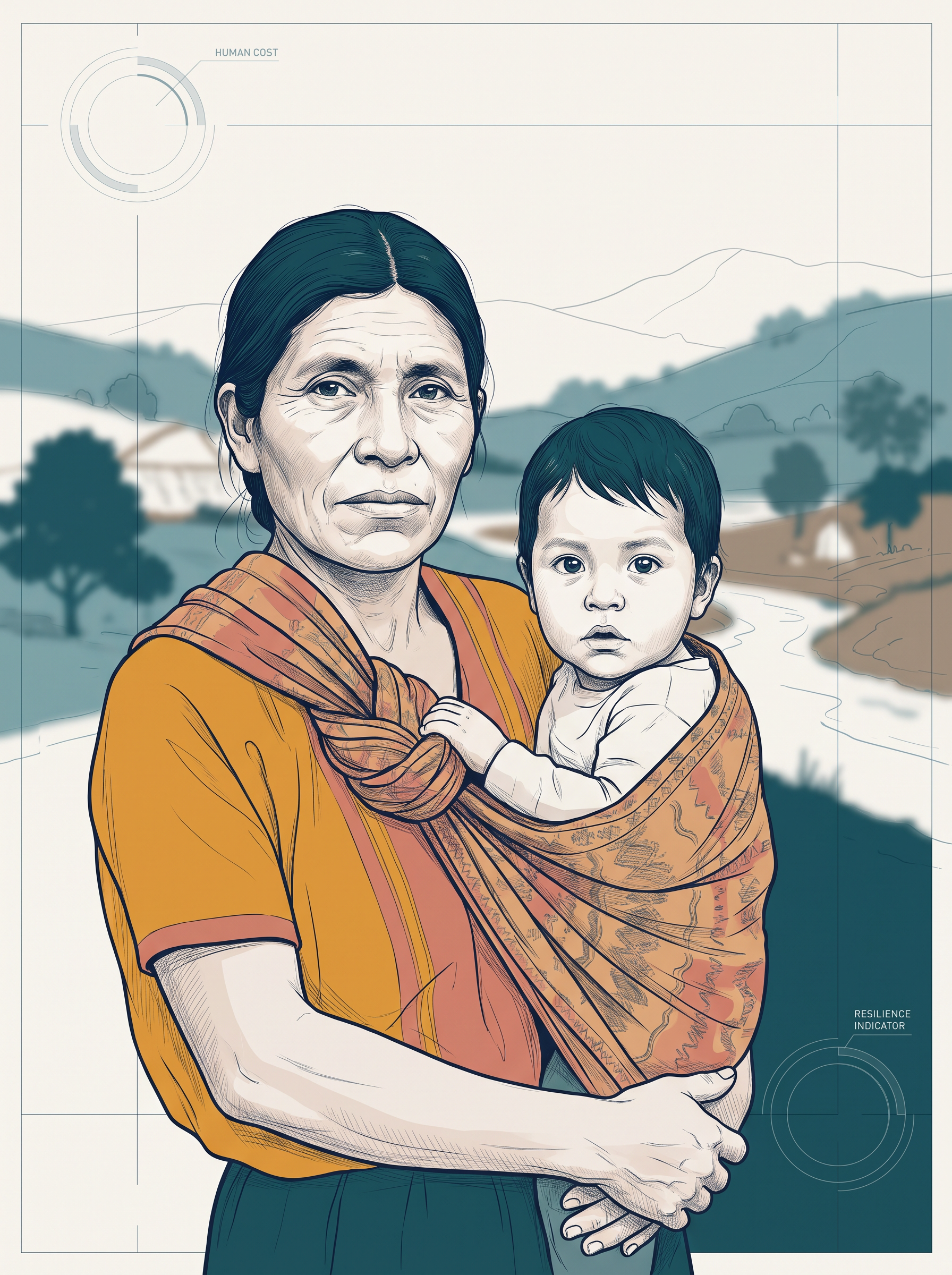
Fig. 6.12 – An indigenous woman and her child.
How Many, And Where
In the context of world politics, what are the common interests of approximately 30 crore indigenous peoples spread throughout the world, including India? Thirty crore is three hundred million — a population larger than that of most countries on earth, scattered across almost every continent and belonging to no single state.
The chapter lists some of them. There are 20 lakh indigenous people of the Cordillera region of the Philippines, and 10 lakh Mapuche people of Chile, a country along the western edge of South America. There are six lakh tribal people of the Chittagong Hill Tracts in Bangladesh, and 35 lakh North American natives. There are 50,000 Kuna living east of the Panama Canal, and 10 lakh Small Peoples of the Soviet North.
Indigenous people occupy areas in Central and South America, Africa, India — where they are known as Tribals — and Southeast Asia. Many of the present-day island states in the Oceania region, including Australia and New Zealand, were inhabited by the Polynesian, Melanesian and Micronesian people over the course of thousands of years.
Like other social movements, indigenous people speak of their struggles, their agenda and their rights. That sentence places them exactly where the last section placed the forest and anti-dam movements: not as a problem to be managed by governments, but as political actors making claims of their own.
What They Are Asking For
The indigenous voices in world politics call for the admission of indigenous people to the world community as equals. They appeal to governments to come to terms with the continuing existence of indigenous nations as enduring communities with an identity of their own.
‘Since times immemorial’ is the phrase used by indigenous people all over the world to refer to their continued occupancy of the lands from which they originate. It is a claim about time, and it is aimed at a particular kind of argument — the argument that says a land title begins with a document. Their reply is that their occupancy began before any document existed.
The worldviews of indigenous societies, irrespective of their geographical location, are strikingly similar with respect to land and the variety of life systems supported by it. This is a remarkable finding: communities that have never met, on opposite sides of the planet, think about land in much the same way.
The loss of land, which also means the loss of an economic resource base, is the most obvious threat to the survival of indigenous people. The chapter then asks the hardest question in this section, and does not answer it: can political autonomy be enjoyed without its attachment to the means of physical survival?
A Cartoon About Wanting Nature
The chapter prints a cartoon at this point, and it is not really about indigenous people at all. It is about the people who are now discovering, at a distance, that they want some nature too.
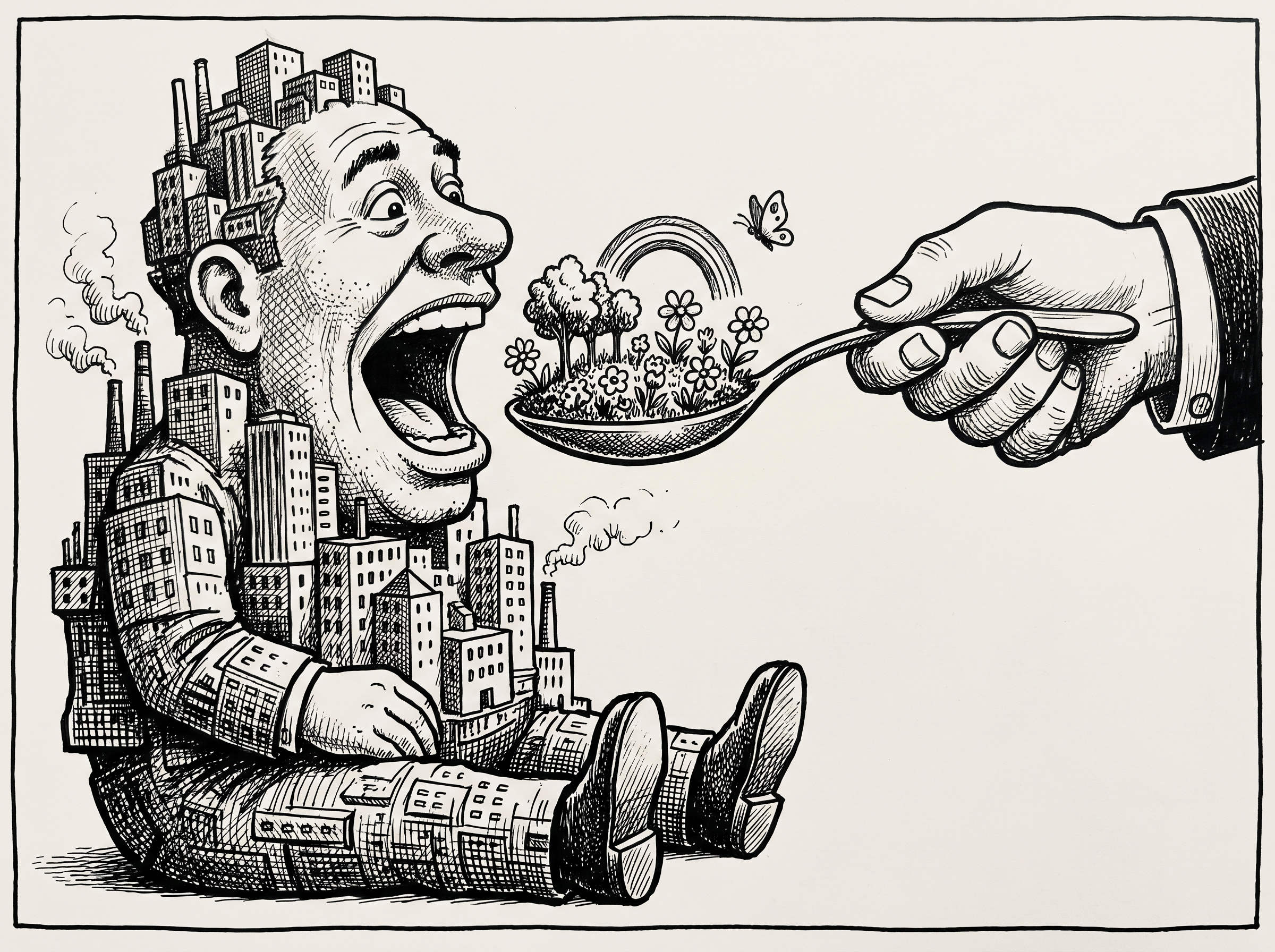
Fig. 6.13 – A spoonful of ecology. Inspiration: Ares, Cagle Cartoons Inc.
The man is made of the city. The buildings are his body, which is the cartoonist’s way of saying that he is what industrial growth has produced. And now he sits with his mouth open, being fed nature by the spoonful — a rainbow, a butterfly, a few trees, served like medicine.
The claim is that the developed world consumed the forest and now wants it back as an experience, in small helpings, on its own terms. Set that beside the wilderness argument you met earlier and you can see why some communities are suspicious of conservation itself.
Now the limit. The cartoon assigns all the appetite to one urban figure and none to anyone else, which is a caricature, and it is not evidence about what any particular society actually did. You may reject the charge — the printed question invites you to. But notice that even the rejection has to be argued, not merely felt.
Indigenous People In India
In India, the description ‘indigenous people’ is usually applied to the Scheduled Tribes, who constitute nearly eight per cent of the population of the country.
With the exception of small communities of hunters and gatherers, most indigenous populations in India depend for their subsistence primarily on the cultivation of land. For centuries, if not millennia, they had free access to as much land as they could cultivate.
It was only after the establishment of British colonial rule that areas which had previously been inhabited by the Scheduled Tribe communities were subjected to outside forces. Land that had been used without a title now had to be held under one — and the people using it were not the ones who wrote the titles.
Although they enjoy a constitutional protection in political representation, they have not got much of the benefits of development in the country. In fact they have paid a huge cost for development, since they are the single largest group among the people displaced by various developmental projects since independence.
Hold those two sentences together, because they are the whole argument of this section stated in Indian terms. The same community has a guaranteed place in the country’s legislatures and the largest share of its displacement. Representation and dispossession, at once.
From The Margins To The UN
Issues related to the rights of indigenous communities have been neglected in domestic and international politics for a very long time. Why, students often ask, do we hear so little about indigenous people and their movements — is the media biased against them? It is a fair question to put to the newspapers you read, and a fair one to test: count, over a week, how many reports about a forest, a mine or a dam quote the people who live there.
What changed was that indigenous leaders began to find each other.
What Do You Consume?
The original chapter closes with a task, and it is a good one to end a chapter on the environment with, because it turns the argument back on the reader.
List any ten items you consume or use every day — a pen, paper, an eraser, a computer, water. Then work out how much natural resource went into making each one. For a finished product like a pen or a computer, estimate the materials it took. For something like water, count the electricity used to purify and pump it, along with the litres you actually use. Arrive at an approximate figure for yourself.
Then add up the figures for your whole class, and imagine that total projected across every class in your school, and every school in the country. Ask yourself what that number would look like in a country where people consume much more than we do — and what it will look like for you, ten years from now.
That is not an arithmetic exercise. It is the chapter’s four questions arriving at your desk: who uses how much, who pays for it, who decides, and who answers for it afterwards.
6.9 Summary
- Environmental and resource issues belong to world politics because no single government can settle them alone, and because every one of them raises the questions of who caused the damage, who pays for it, who must repair it, and who may use what. Those are questions about power.
- The chapter’s five warnings describe the scale of the damage: shrinking and less fertile cultivable land, 663 million people without safe water and 2.4 billion without sanitation, forests being cut and people displaced, the thinning of ozone in the stratosphere, and rising coastal pollution.
- Awareness of the environmental costs of economic growth became political from the 1960s onwards, with the Club of Rome’s Limits to Growth in 1972 and the international conferences promoted by agencies such as UNEP.
- The Earth Summit at Rio de Janeiro in June 1992, attended by 170 states, thousands of NGOs and many multinational corporations, consolidated the environment as a subject of global politics. It produced conventions on climate change, biodiversity and forestry, and recommended Agenda 21.
- Rio agreed on ‘sustainable development’ — combining economic growth with ecological responsibility — but not on how it was to be achieved. Some critics argue Agenda 21 was biased towards growth rather than conservation.
- The global commons — the earth’s atmosphere, Antarctica, the ocean floor and outer space — lie outside the sovereign jurisdiction of any state and need common governance. Agreements such as the 1959 Antarctic Treaty, the 1987 Montreal Protocol and the 1991 Antarctic Environmental Protocol exist, but consensus is hard when scientific evidence and time frames are vague.
- The North and the South approach the environment differently: the North wants everyone equally responsible now; the South argues that those who caused most of the degradation must do most to undo it, and that countries still industrialising cannot face the same restrictions.
- The Rio Declaration accepted this as the principle of ‘common but differentiated responsibilities’, echoed in the UNFCCC. Under the Kyoto Protocol of 1997, targets fell on industrialised countries, and India, China and other developing countries were exempted.
- Common property resources give a group both rights and duties over a shared resource. They are dwindling through privatisation, agricultural intensification, population growth and ecosystem degradation, and the poor lose most. India’s sacred groves are a surviving common property regime, now pressed by settlement and by new forest policies.
- India ratified the Kyoto Protocol in August 2002 and the Paris Climate Agreement on 2 October 2016. It argues from historical responsibility and from per capita emissions, resists binding commitments on rapidly industrialising countries, presses the developed world to transfer finance and clean technology, and wants SAARC to speak with one voice.
- Some of the most significant responses have come not from governments but from environmental movements: forest movements, campaigns against the minerals industry such as the one against Western Mining Corporation in the Philippines, and anti-dam, pro-river movements, from the Franklin River in Australia to the Narmada Bachao Andolan in India, where the most important shared idea is non-violence.
- Forest movements of the North and the South differ over whether people belong in a forest — the ‘wilderness’ question — and many wilderness campaigns have since been renamed biodiversity campaigns.
- Resource geopolitics asks who gets what, when, where and how. It ran from naval timber in the 17th century to oil in the World Wars, and to the methods the North used in the Cold War to keep supplies flowing. The Gulf holds about 64 per cent of known oil reserves while producing about 30 per cent of the world’s oil, and the largest consumers live far away.
- Shared freshwater is the other flashpoint. Lower riparian states object to dams, diversion and pollution by upper riparian states, and force has been used, as between Israel, Syria and Jordan over the Jordan and Yarmuk, and in threats among Turkey, Syria and Iraq over the Euphrates.
- Approximately 30 crore indigenous people worldwide ask to be admitted to the world community as equals. Loss of land, and with it their economic resource base, is the gravest threat. In India the Scheduled Tribes, nearly eight per cent of the population, have constitutional protection in political representation, yet form the single largest group displaced by development projects since independence.
6.10 NCERT Questions
Which among the following best explains the reason for growing concerns about the environment?
- The developed countries are concerned about protecting nature.
- Protection of the environment is vital for indigenous people and natural habitats.
- The environmental degradation caused by human activities has become pervasive and has reached a dangerous level.
- None of the above.
Mark correct or wrong against each of the following statements about the Earth Summit:
- It was attended by 170 countries, thousands of NGOs and many MNCs.
- The summit was held under the aegis of the UN.
- For the first time, global environmental issues were firmly consolidated at the political level.
- It was a summit meeting.
Which among the following are TRUE about the global commons?
- The Earth’s atmosphere, Antarctica, ocean floor and outer space are considered as part of the global commons.
- The global commons are outside sovereign jurisdiction.
- The question of managing the global commons has reflected the North-South divide.
- The countries of the North are more concerned about the protection of the global commons than the countries of the South.
What were the outcomes of the Rio Summit?
What is meant by the global commons? How are they exploited and polluted?
What is meant by ‘common but differentiated responsibilities’? How could we implement the idea?
Why have issues related to global environmental protection become the priority concern of states since the 1990s?
Compromise and accommodation are the two essential policies required by states to save planet Earth. Substantiate the statement in the light of the ongoing negotiations between the North and South on environmental issues.
The most serious challenge before the states is pursuing economic development without causing further damage to the global environment. How could we achieve this? Explain with a few examples.
6.11 Check Your Concepts
What is a common property resource? Explain how the management of sacred groves along the forest belt of South India fits this description, and state the problem that arises when legal ownership and operational control over a grove are held by different entities.
Read Source 6.1, the extract from the Rio Declaration. It gives two different grounds for treating the developed countries differently from the rest. Identify both. Then state one important thing the extract does not settle.
Look again at Fig. 6.3, in which both figures raise a hand to save the planet. What claim is the cartoonist making about the rich countries, and how is the drawing used to make it? What can a cartoon of this kind not prove?
West Asia produces about 30 per cent of the world’s oil but holds about 64 per cent of its known reserves, and the largest consumers of that oil live far away. Using these facts, explain why the region has been so central to the strategy of the industrialised countries.
How do the forest movements of the North and the South differ in their assumptions about whether people belong in a forest? Why were many wilderness issues later renamed biodiversity issues in the South?
India argues that it is not fair to impose emission restrictions on it. Reconstruct that argument using the figures the chapter gives: 0.9 tonnes per capita in 2000, a predicted 1.6 tonnes per capita in 2030, and a world average of 3.8 tonnes in 2000. Then state the strongest objection that the critics of the Kyoto Protocol make to it.
The chapter asks whether political autonomy can be enjoyed without its attachment to the means of physical survival. Answer it, using what the chapter records about the Scheduled Tribes in India — their constitutional protection in political representation, and their place among those displaced by development projects since independence.