Chapter 2: Contemporary Centres Of Power
Six years after the Second World War ended in Europe, six countries did something that would have looked impossible in 1940.
In April 1951, France, West Germany, Italy, Belgium, the Netherlands and Luxembourg signed the Treaty of Paris. It set up the European Coal and Steel Community. Coal and steel were the raw materials of heavy industry, and heavy industry is what builds armies. Every one of these six states had, within living memory, been at war with one or more of the others. Now they agreed to run those two industries in common, under an authority that no single one of them controlled.
Look closely at what that decision cost. A state that pools control over its coal and steel gives up something governments guard above almost everything else — the right to decide alone. The surrender was the whole point. The wager was that countries tied tightly enough together would find war with one another too expensive to imagine, and that prosperity, rather than conquest, would become the way a nation measured its success.
The wager was not obviously going to work, and nobody in 1951 could have told you that it would. But the six became many, and the community became a union with its own flag, its own currency and a seat at the world’s negotiating tables.
Europe was not the only region to make such a bet. This chapter follows the others.
The chapter opens with two images of the same country, taken decades apart. Read them together before you read anything else.
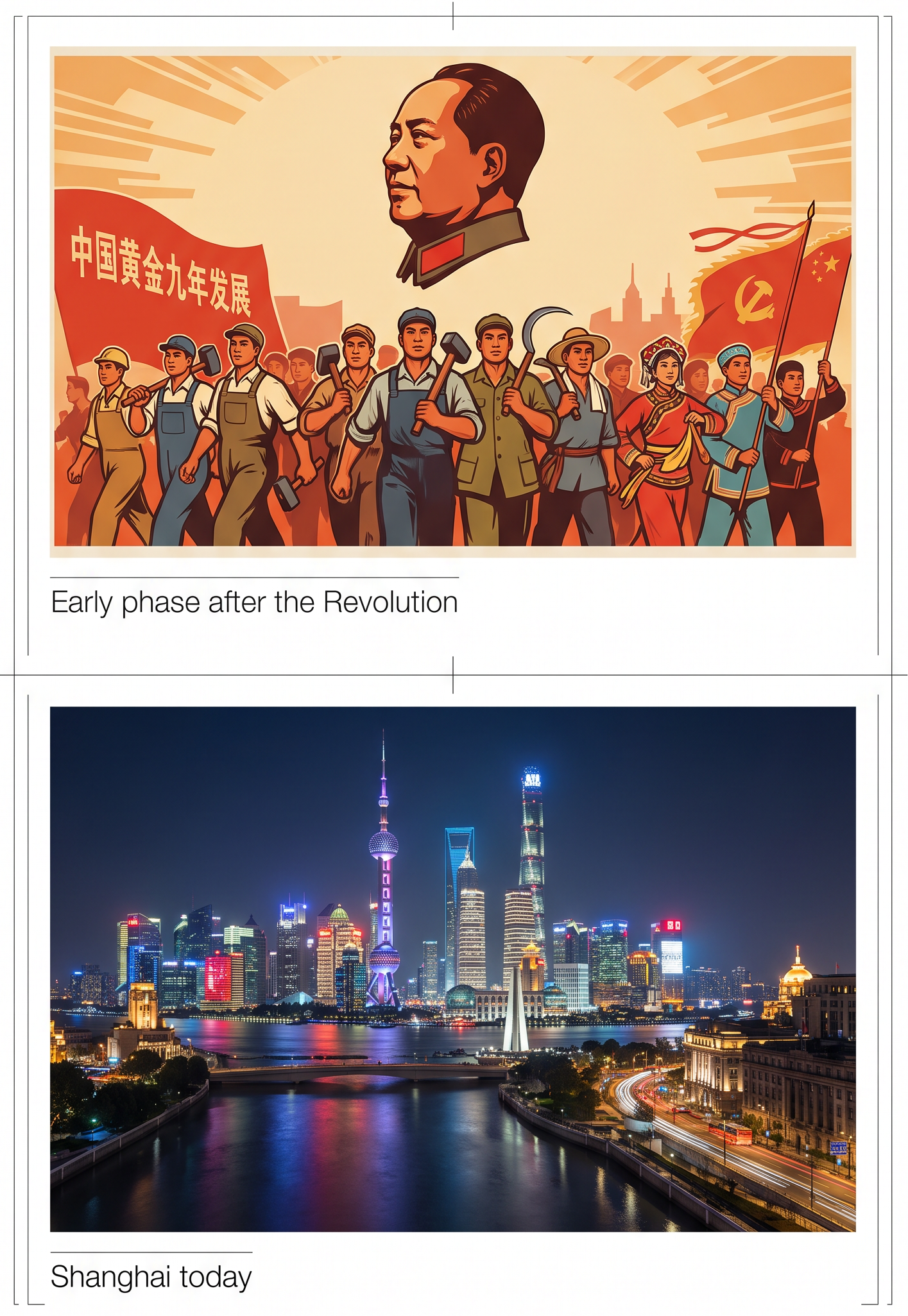
Fig. 2.0 – Two phases of China’s history.
2.1 Overview
What Changed In The Early 1990s
For most of the second half of the twentieth century, world politics had a bipolar structure. Bipolarity means that power sits at two poles — two rival superpowers — and most other countries arrange themselves around one or the other. That structure ended in the early 1990s.
Once it ended, something became clear. Alternative centres of political and economic power could grow, and they could place limits on America’s dominance. No single country had to match American strength on its own for this to happen.
Two of these centres were regional. In Europe, the European Union (EU) emerged. In Asia, the Association of South East Asian Nations (ASEAN) did. Both became forces to reckon with.
How Two Regions Rebuilt Theirselves
Neither region began from a position of strength. Both carried historical enmities — old rivalries and recent wars between neighbours — and both carried economic weaknesses. What the EU and ASEAN did was to work out regional solutions to those problems rather than wait for a great power to solve them.
They built alternative institutions and conventions. An institution is a body with rules, offices and a permanent existence. A convention is an accepted way of behaving that people follow even when no rule compels them to.
Together, these institutions and conventions built a more peaceful and cooperative regional order, and transformed the countries of each region into prosperous economies. That is a large claim, and the rest of the chapter is where you test it.
The Third Story
The third development is not regional but national. The economic rise of China — one country, not a grouping — has made a dramatic impact on world politics.
This chapter takes these emerging alternative centres of power in turn: the European Union, ASEAN, the rise of the Chinese economy, and India’s relations with China. It then asks what to make of Japan and South Korea.
Notice the chapter’s own promise. It does not merely describe these centres of power; it assesses their possible role in the future. Assessing means weighing how much power each one really has — and finding the point where that power runs out.
2.2 European Union
The Question Of Europe
As the Second World War came to an end, many of Europe’s leaders were left holding a single hard question. They called it the ‘Question of Europe’.
The question was this. Should Europe be allowed to go back to its old rivalries — the pattern of suspicion, alliance and war that had produced two world wars in one lifetime? Or should it be rebuilt on principles and institutions that would give international relations a more positive shape?
This was not an abstract debate. The Second World War had shattered many of the assumptions and structures on which the European states had based their relations with one another. In 1945, those states faced two ruins at once: the ruin of their economies, and the destruction of the assumptions and structures on which Europe had been founded.
How The Cold War Helped
European integration after 1945 was aided by the Cold War. That sounds odd, so it is worth being exact about how.
America extended massive financial help to revive Europe’s economy under what was called the ‘Marshall Plan’. The United States also created a new collective security structure under NATO — an alliance through which its members organised the defence of Western Europe together rather than separately.
Under the Marshall Plan, the Organisation for European Economic Cooperation (OEEC) was established in 1948 to channel aid to the west European states. It quickly became something more than a delivery system for money. It became a forum in which the western European states began to cooperate on trade and economic issues.
The Council of Europe, established in 1949, carried the same logic into politics. The economic integration of the European capitalist countries then proceeded step by step, as Fig. 2.1 sets out, leading to the formation of the European Economic Community in 1957.
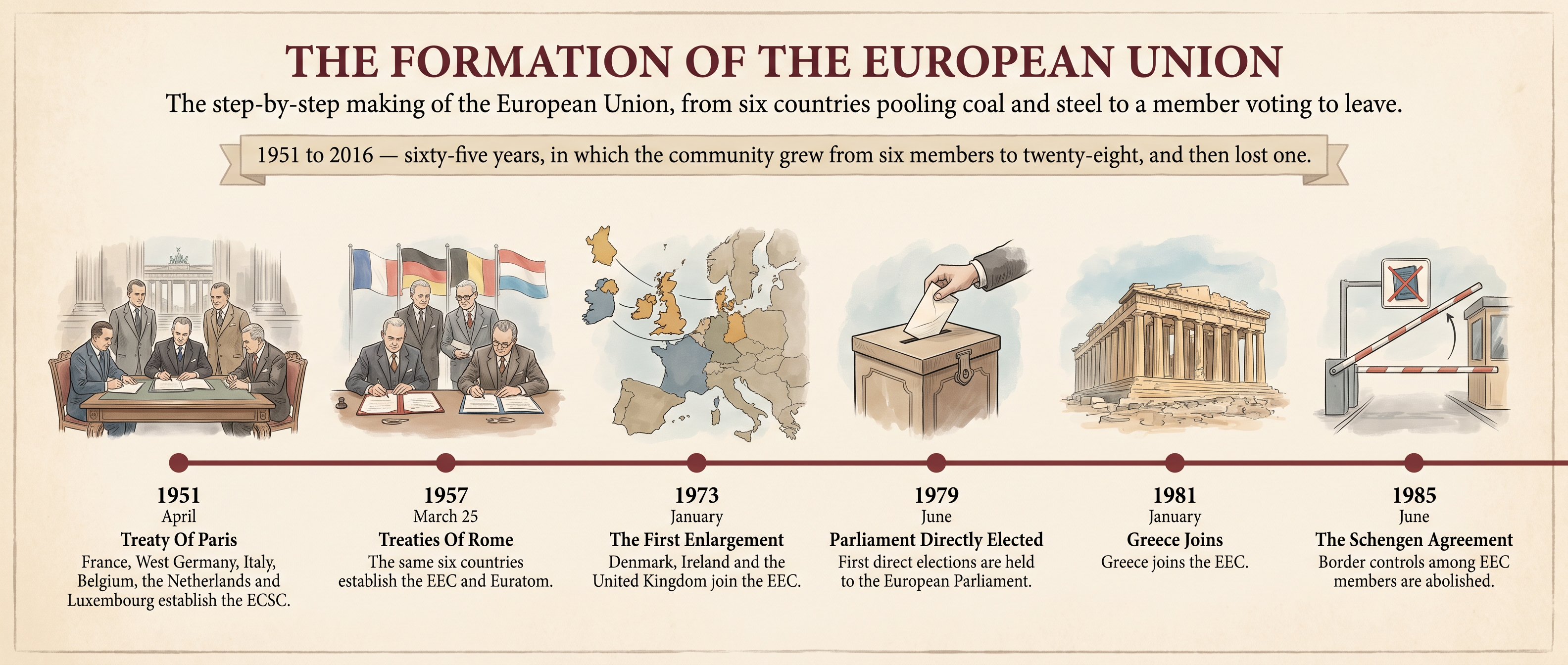
Fig. 2.1 – Timeline Of European Integration.
Notice what the timeline shows and what it cannot show. It records the dates on which governments signed. It cannot record how much argument went on inside each country before a signature was possible.
This economic process then acquired a political dimension with the creation of the European Parliament — a body directly elected by voters across the member countries, so that citizens, and not only governments, had a voice in the community.
The collapse of the Soviet bloc put Europe on a fast track. It resulted in the establishment of the European Union in 1992. The foundation was thus laid for three things at once: a common foreign and security policy, cooperation on justice and home affairs, and the creation of a single currency.
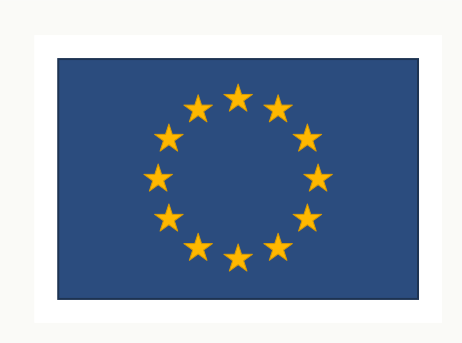
Fig. 2.2 – The flag of the European Union.
The flag is worth pausing on. Every star is the same size and no star stands at the top, which is a statement in itself: this is meant to be a union of equals, not an empire with a centre.
From An Economic Union To A Political One
The European Union has evolved over time from an economic union into an increasingly political one. It has started to act more as a nation state acts.
The evidence for that is partly symbolic and partly real. Attempts to give the EU a Constitution have failed. Yet it has its own flag, its own anthem, its own founding date and its own currency, and it has some form of a common foreign and security policy in its dealings with other nations.
It has also tried to expand the areas in which its members cooperate while taking in new members, especially from the erstwhile Soviet bloc — the countries of eastern Europe that had been under Soviet influence during the Cold War. Map 2.1 shows which states these newer members are.
Map
Map 2.1 Caption: European Union map, showing older members and newer members. Brief: Political map of Europe as printed in the chapter, with EU member states shaded in two tones and a key reading ‘Older Members’ and ‘New Members’. Older members to be labelled: Ireland, United Kingdom, Portugal, Spain, France, Luxembourg, Belgium, Netherlands, Germany, Denmark, Sweden, Finland, Austria, Italy, Greece. Newer members to be labelled: Estonia, Latvia, Lithuania, Poland, Czech Republic, Slovakia, Hungary, Slovenia, Croatia, Romania, Bulgaria, Malta, Cyprus. Non-member states of Europe to be left unshaded and unlabelled. All boundaries to follow the position officially recognised by the Government of India. Label nothing beyond what the chapter states, and add no dates of accession to the map itself.
Read the map carefully. It tells you that the Union stretches from Ireland in the west to the Baltic and the Black Sea in the east, and that the newer members are concentrated in the east — the part of Europe that lay on the other side of the Cold War divide.
What the map cannot tell you is how the expansion felt from inside. The process has not proved easy. In many countries people are not very enthusiastic about giving the EU powers that were until then exercised by the government of their own country. There are also reservations about including some new countries within the EU.
That resistance is not irrational. It also explains why the EU’s power is easier to measure than it is to use.
What The European Union Can Do
The EU has three kinds of influence: economic, political and diplomatic, and military.
Take the economic first. The European Union’s GDP was projected to be approximately $19.35 trillion in the year 2024. Its currency, the euro, can pose a threat to the dominance of the US dollar — the currency in which most of the world’s trade and reserves are held.
Its share of world trade is much larger than that of the United States, which allows it to be more assertive in trade disputes with the US and with China. That economic weight gives it influence over its closest neighbours, and reaches as far as Asia and Africa. It also functions as an important bloc in international economic organisations such as the World Trade Organisation (WTO), the body that makes and enforces the rules of world trade among its members.
Integration is also visible to any ordinary traveller. Under the Schengen agreement, you have to get a visa from just one of the EU countries, and that allows you entry into most of the other European Union countries. A single visa for many states is a small thing to carry and a large thing to have agreed to.
Now the political and diplomatic influence. One member of the EU, France, holds a permanent seat on the UN Security Council — the organ of the United Nations charged with maintaining international peace and security, whose decisions bind all UN members. The EU also includes several non-permanent members of the Security Council at any given time.
This has enabled the EU to influence some US policies, such as the current US position on Iran’s nuclear programme. Its preferred instruments are diplomacy, economic investment and negotiation rather than coercion and military force — and those instruments have worked, as in its dialogue with China on human rights and environmental degradation.
Militarily, the EU’s combined armed forces are the second largest in the world. Its total spending on defence is second after the US. One EU member state, France, also has nuclear arsenals of approximately 335 nuclear warheads. The EU is also the world’s second most important source of space and communications technology.
Put together, that is a formidable list. The rest of this section explains why the list is not the same thing as power.
Where Its Power Runs Out
The EU is a supranational organisation: a body that stands above its member states and can take decisions binding on them. That is what allows it to intervene in economic, political and social matters across the Union.
But in many areas the member states keep their own foreign relations and defence policies, and those policies are often at odds with each other. When the United States invaded Iraq, Britain’s Prime Minister Tony Blair was America’s partner in the invasion, and many of the EU’s newer members made up the US-led ‘coalition of the willing’ — the group of states that backed the invasion. Germany and France opposed American policy.
On the single largest question of war and peace of that moment, in other words, the Union did not have one position. It had several.
There is also a deep-seated Euro-skepticism in some parts of Europe — a settled doubt about the EU’s integrationist agenda, and about how much further it should go. Britain’s former Prime Minister Margaret Thatcher kept the UK out of the European Market. Denmark and Sweden have resisted the Maastricht Treaty and the adoption of the euro, the common European currency. All of this limits the ability of the EU to act in matters of foreign relations and defence.
It is worth holding on to how ordinary this resistance is. Imagine, for a moment, that the EU fielded a single European Union football team. The idea is funny precisely because national loyalty is not something a flag, an anthem or a currency has replaced.
Fig. 2.3 was drawn at a moment when that difficulty became visible to everyone.
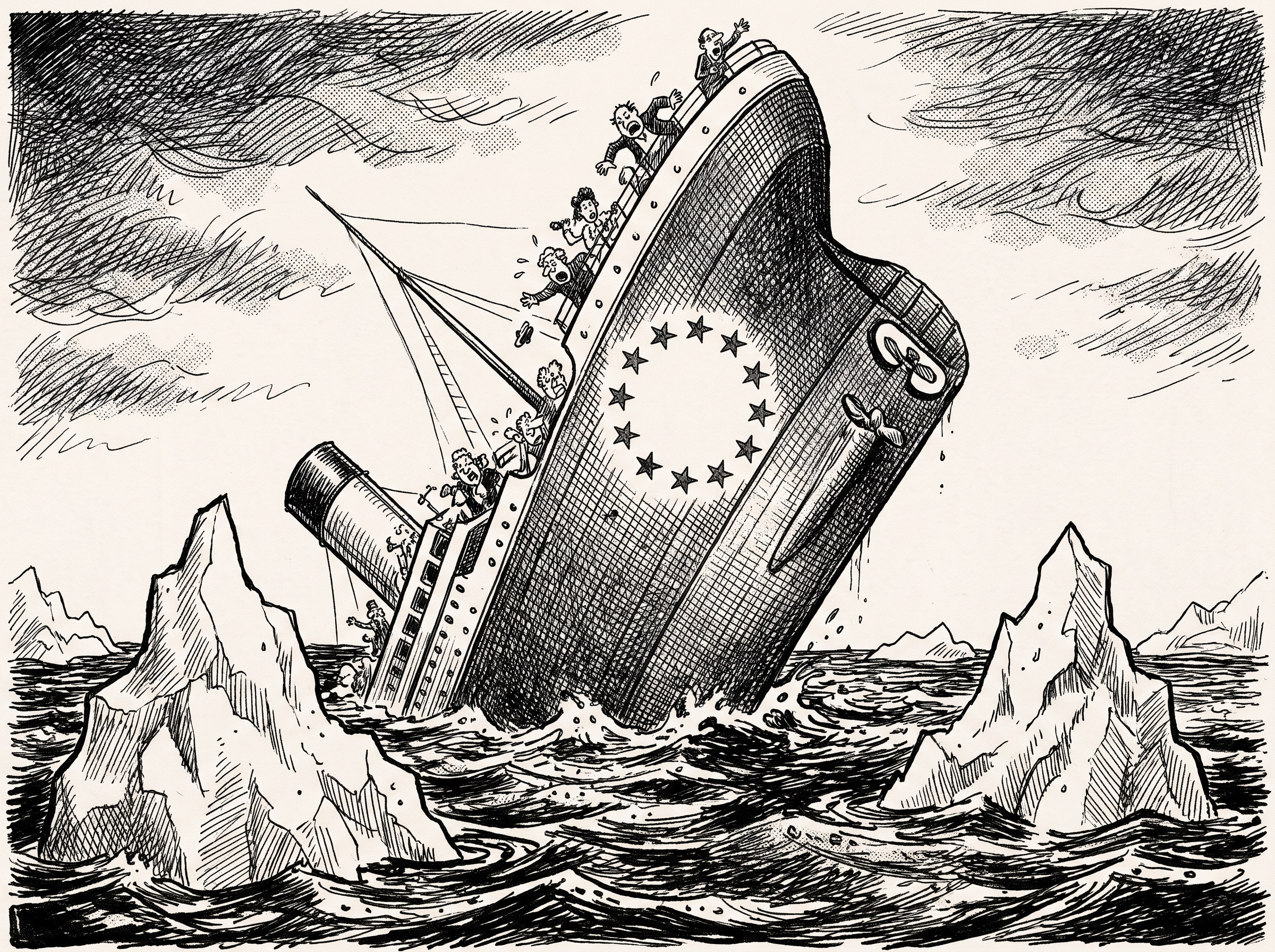
Fig. 2.3 – The European Union as a sinking ship. Inspiration: Ares, Cagle Cartoons Inc.
Decode it step by step. The Titanic was the ship that everyone believed could not sink and that sank on its first voyage. By drawing the EU as that ship, the cartoonist makes a single claim: an enterprise this confident, this large and this admired can still go under, and the ice it hits is already in the water around it.
The failure of the constitution is the iceberg he has in mind. A union that cannot agree on a founding text, he is saying, is a union sailing on assumptions rather than agreements.
Now the limit. A cartoon states one opinion in one image, and it is drawn to persuade, not to weigh. This one cannot show you the EU’s twenty-eight members, its Nobel Peace Prize, its trade weight or the six decades in which the wager of 1951 held. It captures a fear, sharply. It does not settle whether the fear was right.
2.3 Association Of South East Asian Nations (ASEAN)
A Region With A Difficult Inheritance
Take a look at the political map of the world. Which countries would you say fall in the southeastern region of Asia? Map 2.2 will help you fix them in your mind before you read further.
Map
Map 2.2 Caption: Map of East Asia and the Pacific. Brief: Political map of East Asia and the Pacific as printed in the chapter, each country shaded and labelled — including China, Mongolia, the Republic of Korea, the Democratic People’s Republic of Korea, Japan, Myanmar, Lao PDR, Thailand, Cambodia, Viet Nam, Malaysia, Singapore, Brunei Darussalam, Indonesia, the Philippines, Timor-Leste, Papua New Guinea and the Pacific island states. Where any part of India appears, it must show the full extent of India as officially defined by the Government of India, including Jammu and Kashmir and Ladakh. All other boundaries must follow the position officially recognised by the Government of India. Add no shading or label beyond what the chapter prints. Credit lines to be carried with the map: Source: http://www.unicef.org/eapro/EAP_map_final.gif — Note: Maps on this site do not reflect a position by UNICEF on the legal status of any country or territory or the delimitation of any frontiers.
Now look at what this region carried into the second half of the twentieth century. Before and during the Second World War, it suffered the economic and political consequences of repeated colonialisms — European and Japanese.
At the end of the war, three burdens arrived together. There were the problems of nation-building: building a state, a government and a sense of common citizenship where a colonial administration had stood. There were the ravages of poverty and economic backwardness. And there was the pressure to align with one great power or another during the Cold War.
That combination was a recipe for conflict — and conflict was exactly what the countries of Southeast Asia could ill afford.
Why A Regional Answer
Larger attempts at unity had already been tried and had not delivered. Efforts at Asian and Third World unity, such as the Bandung Conference and the Non-Aligned Movement — the grouping of newly independent countries that refused to join either Cold War bloc — were ineffective in establishing the conventions for informal cooperation and interaction that the region needed.
Hence the Southeast Asian alternative: to build something smaller, closer and their own.
ASEAN was established in 1967 by five countries of the region — Indonesia, Malaysia, the Philippines, Singapore and Thailand — by signing the Bangkok Declaration.
The objectives of ASEAN were primarily to accelerate economic growth, and through that growth to achieve ‘social progress and cultural development’. A secondary objective was to promote regional peace and stability, based on the rule of law and the principles of the United Nations Charter.
Over the years the association grew. Brunei Darussalam, Vietnam, Lao PDR, Myanmar (Burma) and Cambodia joined ASEAN, taking its strength to ten.
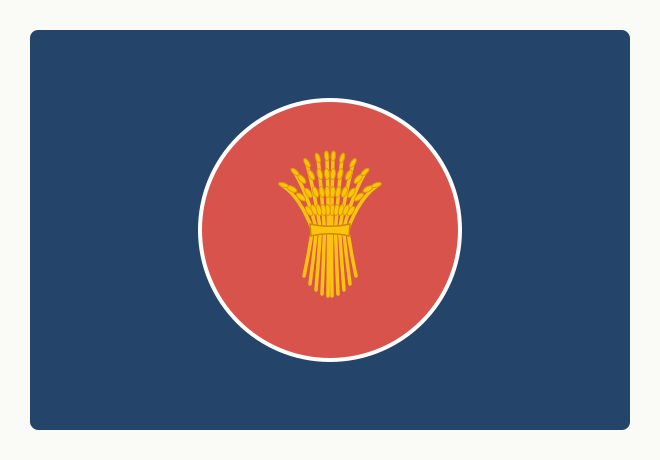
Fig. 2.4 – The flag of ASEAN.
The ASEAN Way
Here ASEAN parts company with the European Union. Unlike the EU, there is little desire in ASEAN for supranational structures and institutions — for bodies standing above the member states and binding them.
Instead, ASEAN countries have celebrated what has become known as the ‘ASEAN Way’: a form of interaction that is informal, non-confrontationist and cooperative. Respect for national sovereignty — a state’s supreme authority to take its own decisions within its own territory — is critical to the functioning of ASEAN.
This is a genuine choice between two designs, and each carries a cost.
Broadening The Objectives
With some of the fastest growing economies in the world, ASEAN broadened its objectives beyond the economic and social spheres. In 2003, ASEAN moved along the path of the EU by agreeing to establish an ASEAN Community, comprising three pillars: the ASEAN Security Community, the ASEAN Economic Community and the ASEAN Socio-Cultural Community.
The ASEAN Security Community was based on a single conviction: that outstanding territorial disputes should not escalate into armed confrontation. Notice how modest and how demanding that is at the same time. It does not promise to settle the disputes. It promises only that they will not be settled by force.
By 2003, ASEAN had several agreements in place by which member states promised to uphold peace, neutrality, cooperation, non-interference, and respect for national differences and sovereign rights. The ASEAN Regional Forum (ARF), established in 1994, is the organisation that carries out coordination of security and foreign policy.
Still, Above All, An Economic Association
ASEAN was and still remains principally an economic association. As a whole, the ASEAN region is a much smaller economy than the US, the EU or Japan — but it is growing much faster than all of them. That is what accounts for the growth of its influence, both in the region and beyond it.
The objectives of the ASEAN Economic Community are to create a common market and production base within ASEAN states, and to aid social and economic development in the region. The Economic Community would also like to improve the existing ASEAN Dispute Settlement Mechanism, the procedure through which economic disputes between members are resolved.
ASEAN has focused on creating a Free Trade Area (FTA) for investment, labour and services — an arrangement in which members cut the barriers that keep goods, money and workers from moving between them. The US and China have already moved fast to negotiate FTAs with ASEAN.
ASEAN is rapidly growing into a very important regional organisation. Its Vision 2020 has defined an outward-looking role for ASEAN in the international community, building on the existing ASEAN policy of encouraging negotiation over conflicts in the region. Thus, ASEAN has mediated the end of the Cambodian conflict and the East Timor crisis, and meets annually to discuss East Asian cooperation.
ASEAN And India
The current economic strength of ASEAN makes it an attractive proposition for its neighbours — especially its relevance as a trading and investment partner to the growing Asian economies such as India and China.
India was slow to see this. During the Cold War years Indian foreign policy did not pay adequate attention to ASEAN. In recent years, India has tried to make amends. It signed trade agreements with three ASEAN members — Malaysia, Singapore and Thailand — and the ASEAN-India FTA came into effect in 2010.
Geography makes the question sharper still. Is India not itself a part of Southeast Asia? The north-eastern states are very close to the ASEAN countries, which is one reason the relationship matters more to India than the distance from Delhi might suggest.
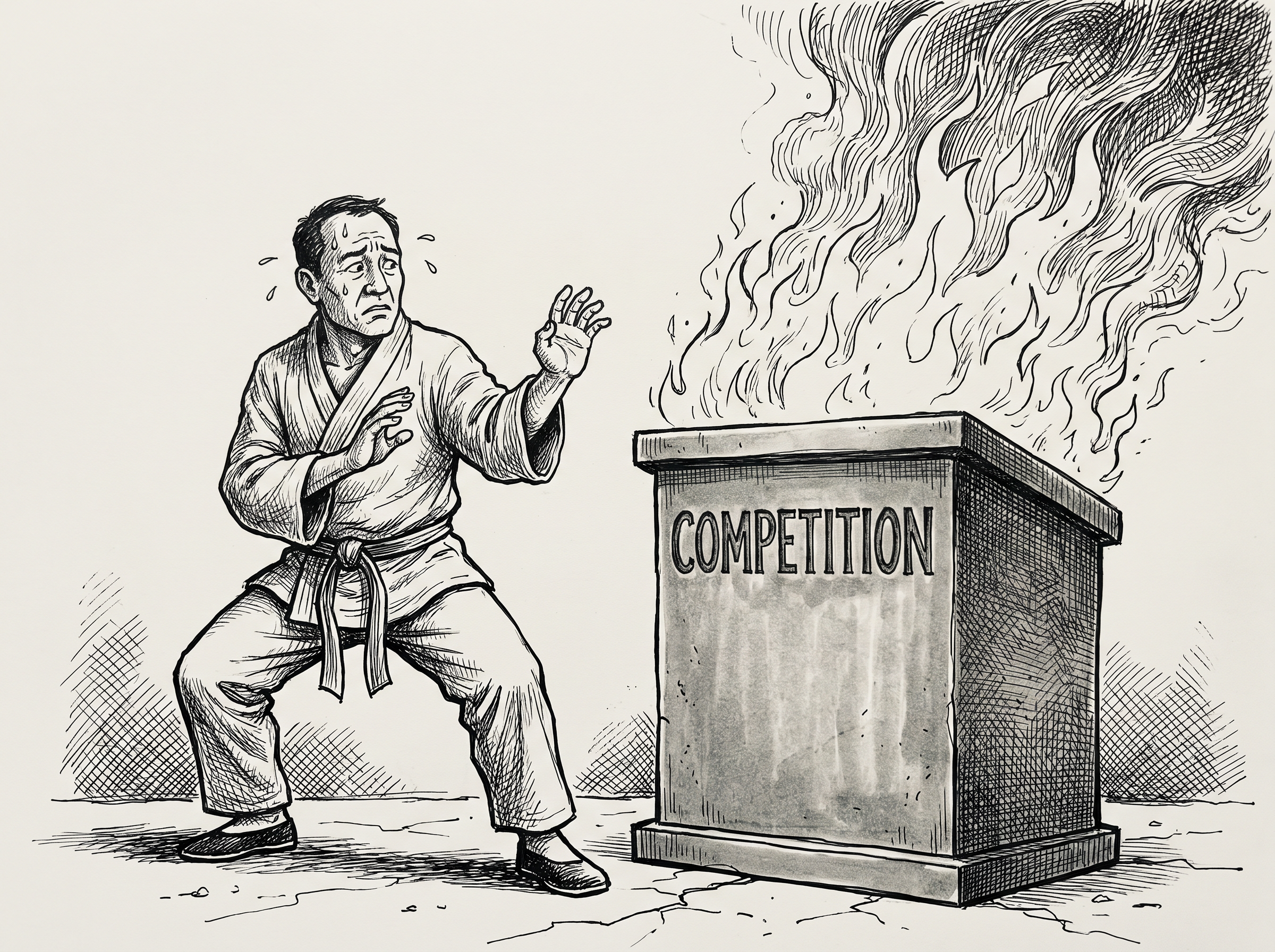
Fig. 2.5 – India’s Look East policy. Inspiration: Keshav, The Hindu.
Read the cartoon slowly. The figure in the martial-arts robe stands for the East Asian nations, and the fire he must get used to is labelled ‘COMPETITION’. He is not being attacked and he is not running. He is bracing.
The cartoonist’s claim is that greater economic engagement with a country like India is not a gift arriving; it is a contest opening. Every new market that opens for you also opens you to somebody else’s exporters.
And here is the limit. A cartoon compresses a whole policy into one gesture. This one cannot tell you which sectors gained, which lost, or by how much — and it cannot tell you what East Asian governments themselves thought, since it records the opinion of one cartoonist in one newspaper.
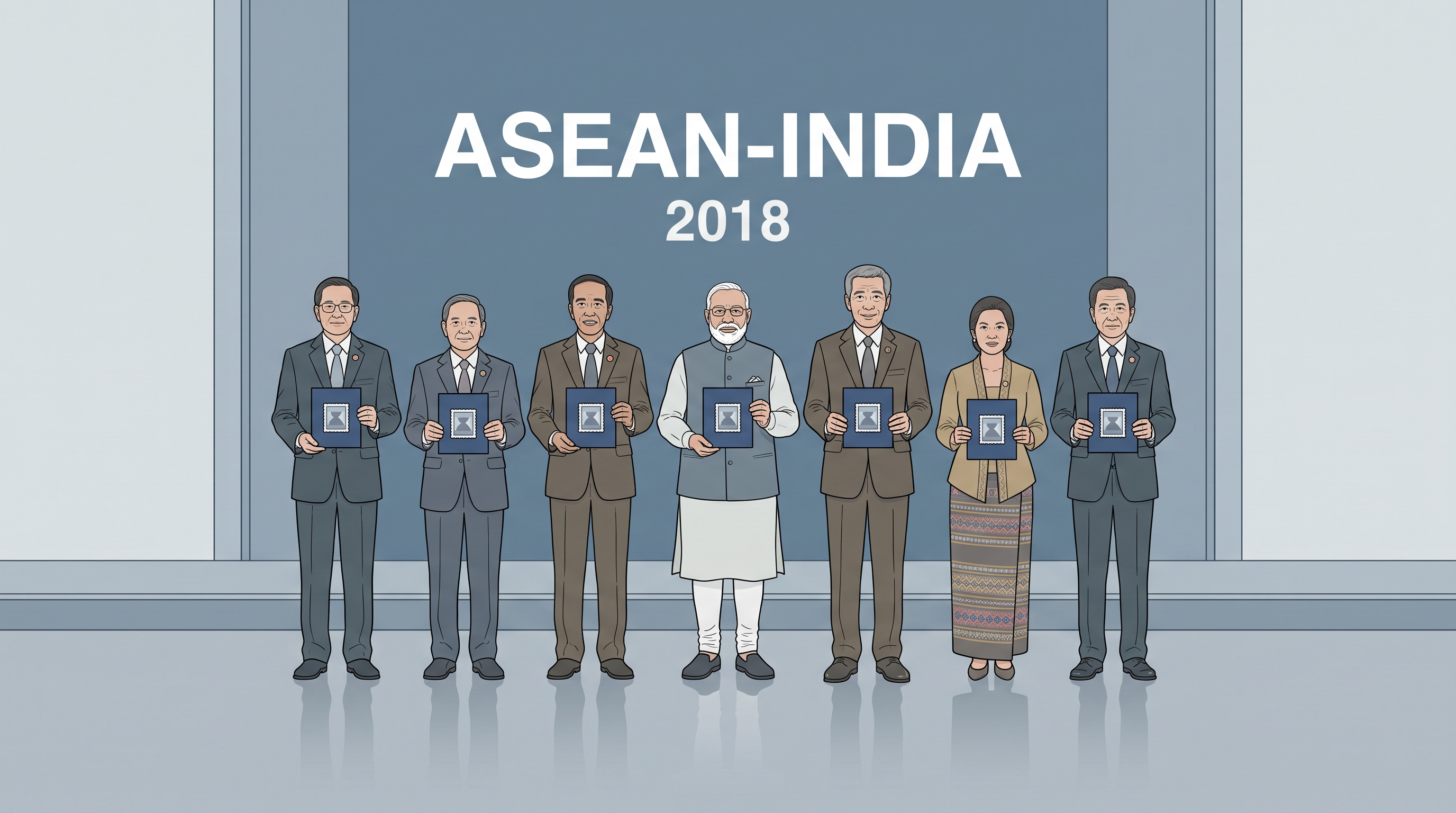
Fig. 2.6 – Leaders commemorate the India-ASEAN partnership in 2018.
ASEAN’s real strength, however, does not lie in any single agreement. It lies in its policies of interaction and consultation — with member states, with dialogue partners, and with other non-regional organisations. It is the only regional association in Asia that provides a political forum where Asian countries and the major powers can sit down together and discuss political and security concerns.
That achievement invites a hard question, and the chapter leaves it open for you: why did ASEAN succeed as a regional association, whereas the South Asian Association for Regional Cooperation (SAARC), the grouping of India’s own neighbourhood, did not? Hold the question. You will need the rest of the chapter to attempt it.
Two Regions, Two Designs
Before you leave ASEAN, set it beside the European Union, because the contrast is the whole point of these two sections.
The EU chose depth. It built supranational institutions, took powers away from its member governments, adopted a common currency and tried — and failed — to write a constitution. ASEAN chose breadth without depth. It kept sovereignty intact, refused supranational structures, and relied on informal, non-confrontationist habits of consultation.
Each design buys something and pays for it. The EU can act with real weight in trade, but splits when war and peace are at stake. ASEAN never splits loudly, because it rarely asks its members to submit to anything they would want to reject.
2.4 The Rise Of The Chinese Economy
The Third Centre Of Power
Let us now turn to the third major alternative centre of power, and to our immediate neighbour: China.
China’s economic success since 1978 has been linked to its rise as a great power. It has been the fastest growing economy since the reforms first began there. It is projected to overtake the US as the world’s largest economy by 2040.
Its economic integration into the region makes it the driver of East Asian growth, and that in turn gives it enormous influence in regional affairs. The strength of its economy, together with other factors — population, land mass, resources, regional location and political influence — adds to its power in significant ways.
Notice that list. Economic weight is only one item on it. China would matter even without the reforms; what the reforms did was turn size into strength.
The Model China Began With
After the inception of the People’s Republic of China in 1949, following the communist revolution under the leadership of Mao, its economy was based on the Soviet model.
The economically backward communist China chose to sever its links with the capitalist world. Having done so, it had little choice but to fall back on its own resources — and, for a brief period, on Soviet aid and advice.
The model itself was simple to state and very hard to run. Capital would be squeezed out of agriculture and used to create a state-owned heavy industries sector. Because China was short of the foreign exchange it needed to buy technology and goods on the world market, it decided to substitute imports by domestic goods — that is, to make at home, however inefficiently, what it could not afford to buy abroad.
This was a command economy: an economy in which the state, not the market, decides what shall be produced, in what quantity, and at what price.
What The Model Achieved, And Where It Failed
The model worked, up to a point, and the point matters.
It allowed China to use its resources to establish the foundations of an industrial economy on a scale that did not exist before. Employment and social welfare were assured to all citizens. China moved ahead of most developing countries in educating its citizens and in ensuring better health for them. The economy also grew at a respectable rate of 5-6 per cent.
Then the arithmetic turned against it. An annual growth of 2-3 per cent in population meant that economic growth of 5-6 per cent was insufficient to meet the needs of a growing population. Agricultural production was not sufficient to generate a surplus for industry — and the surplus from agriculture was the whole engine of the model.
In Chapter 1 we discussed the crisis of the state controlled economy in the USSR. A similar crisis was to face China too. Its industrial production was not growing fast enough, its international trade was minimal, and its per capita income — the national income divided by the number of people — was very low.
The Decisions Of The 1970s
The Chinese leadership took major policy decisions in the 1970s, and they came in a sequence.
China first ended its political and economic isolation, with the establishment of relations with the United States in 1972. Premier Zhou Enlai then proposed the ‘four modernisations’ — agriculture, industry, science and technology, and the military — in 1973. By 1978, the then leader Deng Xiaoping announced the ‘open door’ policy and economic reforms in China.
The purpose of the open door policy was precise: to generate higher productivity by investments of capital and technology from abroad. The very foreign links that had been severed in 1949 were now to be the source of growth.
Reform Without Shock
China followed its own path in introducing a market economy. The Chinese did not go for ‘shock therapy’ — the sudden, wholesale switch from state control to the market that other communist economies attempted. They opened their economy step by step instead.
The steps are worth memorising in order, because the order is the argument. The privatisation of agriculture in 1982 was followed by the privatisation of industry in 1998 — sixteen years apart. Trade barriers were eliminated only in Special Economic Zones (SEZs), where foreign investors could set up enterprises.
In China, the state played, and continues to play, a central role in setting up a market economy. This is the point students most often miss. The market did not arrive in China against the state; it was built by the state, on the state’s timetable, in the places the state chose.
Note one striking comparison. China has a total of 6 SEZs. India has more than 200 approved SEZs. Is a larger number of zones automatically better for a country — or does it dilute the very concentration of investment, infrastructure and attention that made China’s few zones work? The chapter puts the question to you and does not answer it.
What The Reforms Produced
The new economic policies helped the Chinese economy to break from stagnation, and the chain runs like this.
The privatisation of agriculture led to a remarkable rise in agricultural production and in rural incomes. High personal savings in the rural economy led to an exponential growth in rural industry. The Chinese economy, including both industry and agriculture, grew at a faster rate.
The new trading laws and the creation of Special Economic Zones led to a phenomenal rise in foreign trade. China has become the most important destination for foreign direct investment (FDI) — money put in by foreign firms to build or buy businesses inside the country — anywhere in the world.
It also holds large foreign exchange reserves, and those reserves now allow it to make big investments in other countries. China’s accession to the WTO in 2001 has been a further step in its opening to the outside world. The country plans to deepen its integration into the world economy and to shape the future world economic order.
Fig. 2.7 sums up the mood all over the world about the rise of China as an economic power.
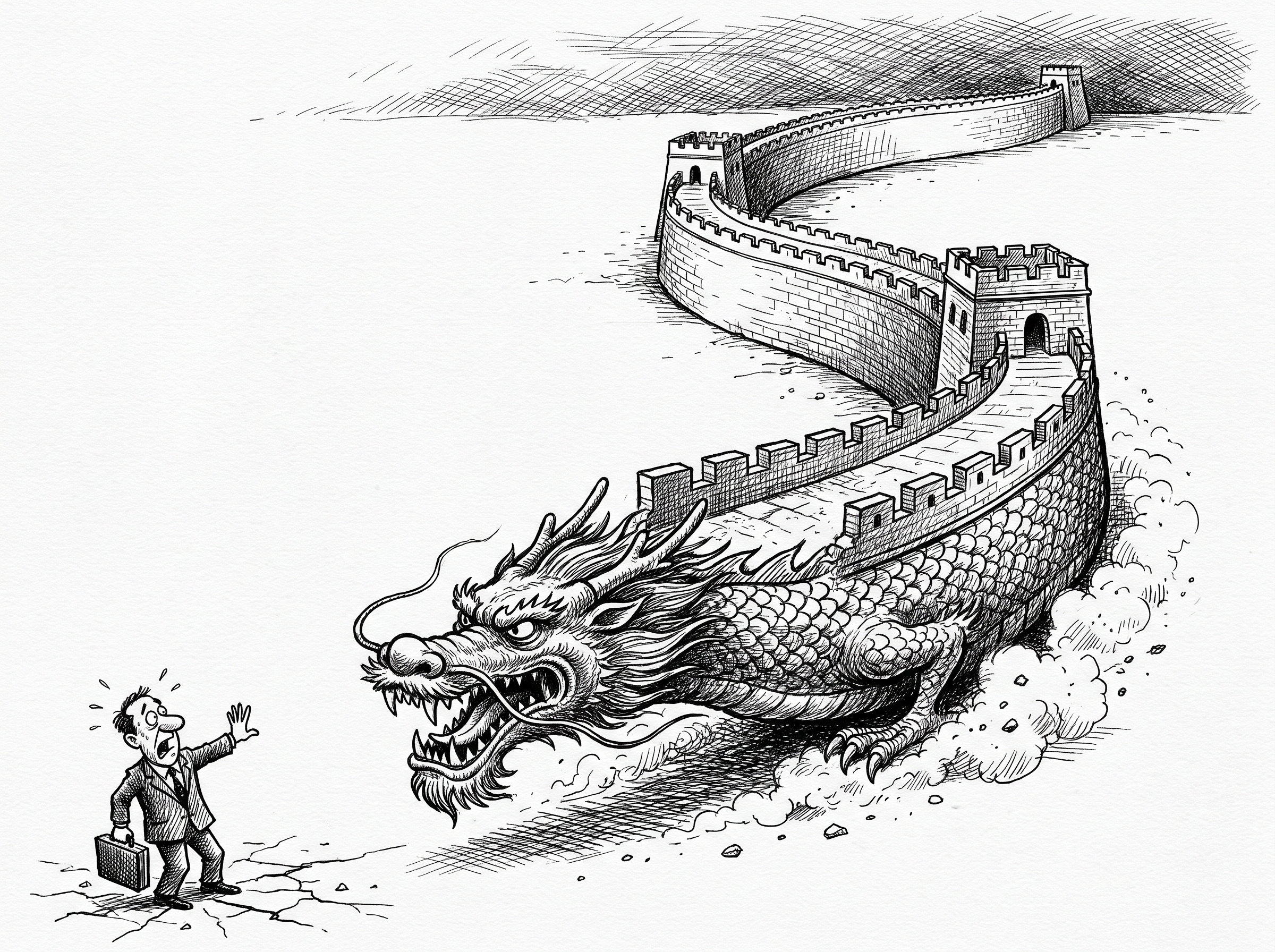
Fig. 2.7 – China’s economic rise. Inspiration: Deng Coy Miel, Cagle Cartoons Inc.
The cartoonist has fused two symbols. The Great Wall was built to keep the outside world out; the dragon is the traditional emblem of Chinese power. Drawing them as one creature makes a claim: what was once a barrier has become something that moves — and it is moving towards you.
The little man is left deliberately unlabelled. He could be a rival economy, a foreign government, a worker whose factory cannot compete. Whoever he is, his raised hand is the joke: the gesture is far too small for the thing approaching, and the cartoonist plainly thinks it will not work.
Now the limit. This cartoon is a warning, not a measurement. It cannot tell you whether China’s rise threatens anyone, or how fast the dragon is moving, or what China’s own citizens have gained and lost. It records a mood — the mood of those watching from outside — and moods are evidence of fear, not proof of danger.
Who Has Not Benefited
While the Chinese economy has improved dramatically, not everyone in China has received the benefits of the reforms. The chapter is exact about this, and so should you be.
Unemployment has risen, with nearly 100 million people in China looking for jobs. Female employment, and conditions of work generally, are as bad as they were in Europe of the eighteenth and nineteenth centuries.
Environmental degradation and corruption have increased. So has economic inequality — between rural and urban residents, and between the coastal provinces, where the zones and the foreign money went, and the inland provinces, where they did not.
Two cartoons in the chapter comment on this change in China. Like the opening images of the chapter, the first of them comments on the change in China’s orientation.
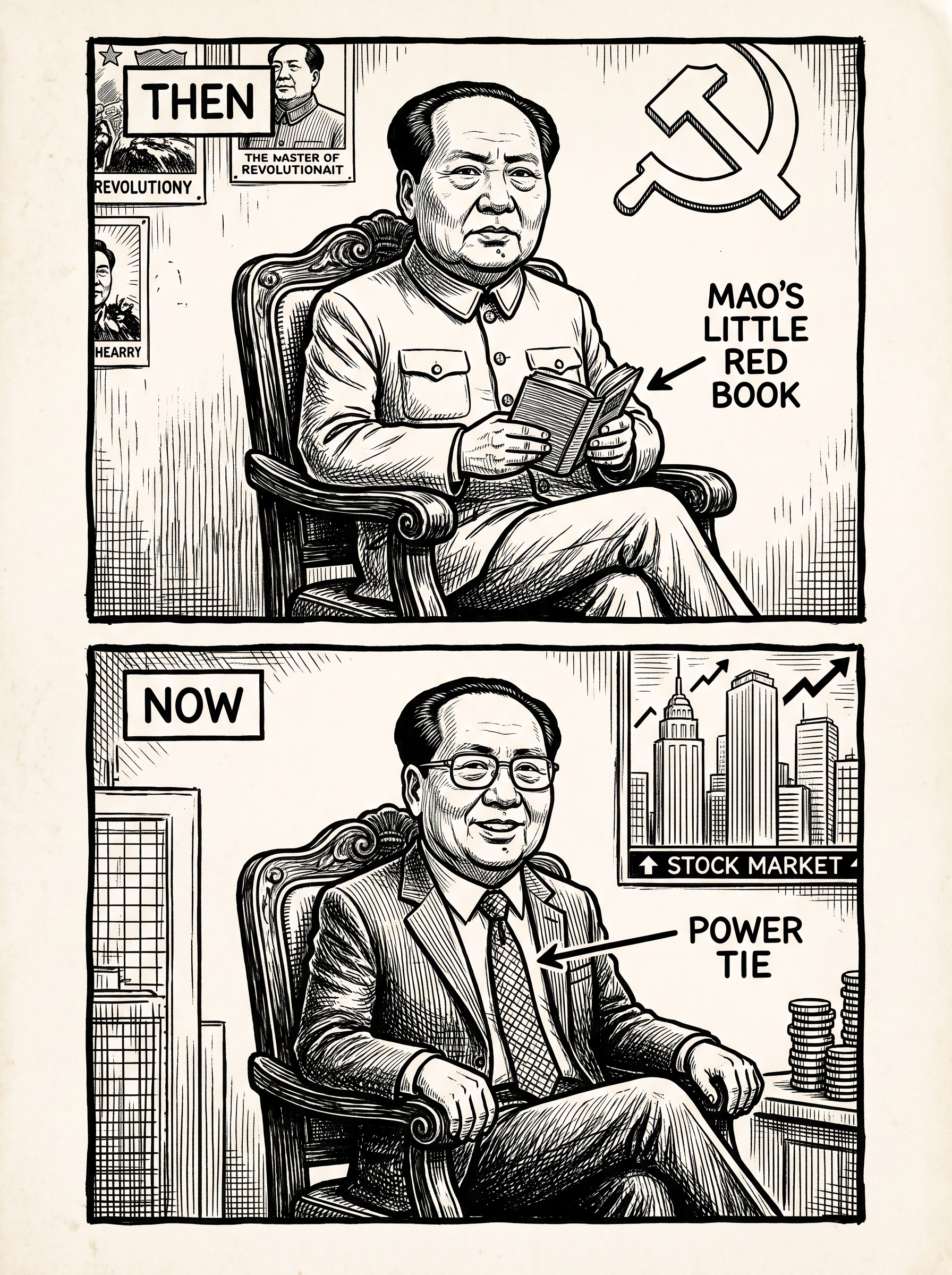
Fig. 2.8 – China then and now. Inspiration: Mike Lane, Cagle Cartoons Inc.
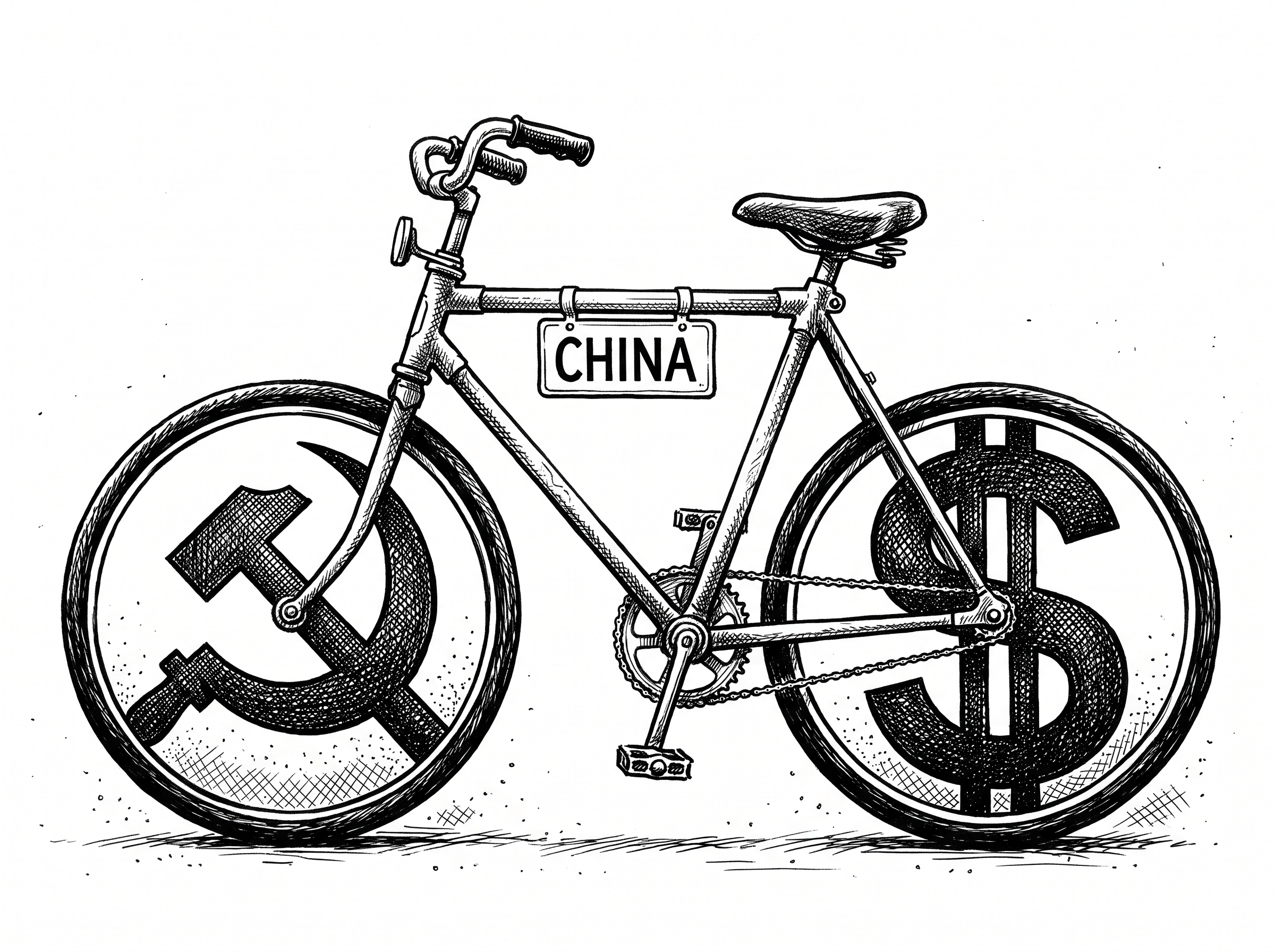
Fig. 2.9 – The duality in today’s China. Inspiration: Ares, Cagle Cartoons Inc.
Take them together, because they make the same point twice. In the first, the same chair is occupied by the same kind of leader, and only the object in his hand has changed — the little red book has become the red power tie. The cartoonist is saying that the ideology has been swapped for the wardrobe of business, while the seat of power has not moved at all.
The second draws the duality as a machine. A bicycle needs both wheels to turn, and this bicycle runs on one communist wheel and one capitalist wheel. Whether that is a contradiction, or simply a design — a market economy built and steered by a communist state — is exactly the question the cartoonist leaves you to answer.
And the limit, once again. Both cartoons are shorthand. Neither can show you the 1982 privatisation of agriculture, the 1998 privatisation of industry, or the fenced-off zones through which the change was actually made. A cartoon can pose the paradox in one frame. Only the history can explain how it was built.
China’s Power In The Region And The World
Whatever its internal strains, regionally and globally China has become an economic power to reckon with.
The integration of China’s economy into the world, and the inter-dependencies this has created, have enabled China to have considerable influence with its trade partners. Its outstanding issues with Japan, the US, ASEAN and Russia have accordingly been tempered by economic considerations — when two countries need each other’s markets, a quarrel becomes expensive.
It hopes to resolve its differences with Taiwan, an island off its coast which it regards as a renegade province, by integrating it closely into its economy. And fears of China’s rise have been mitigated by its contributions to the stability of the ASEAN economies after the 1997 financial crisis that struck the region.
Its more outward looking investment and aid policies in Latin America and Africa are increasingly projecting it as a global player on the side of the developing economies.
2.5 India – China Relations
Two Great Powers Who Rarely Met
India and China were great powers in Asia long before the advent of Western imperialism. Each shaped a large part of the continent — and, for most of that history, they barely touched each other.
China had considerable influence and control on the periphery of its borders, based on its unique tributary system, in which neighbouring rulers acknowledged China’s superior authority while continuing to run their own affairs. At different times in China’s long history of dynastic rule, Mongolia, Korea, parts of Indo-China — the mainland region of Southeast Asia — and Tibet accepted China’s authority.
Various kingdoms and empires in India also extended their influence beyond their borders. In both cases, the influence was political, economic and cultural.
But the regions where India and China exercised influence rarely ever overlapped. There was therefore limited political and cultural interaction between the two, and the result was that neither country was very familiar with the other.
That unfamiliarity has consequences we still live with. In the twentieth century, when both nations finally confronted each other directly, they had some difficulty evolving a foreign policy to deal with each other. Neither had centuries of practice at reading the other’s intentions.
Hope, And What Marred It
After India regained its independence from Britain, and China expelled the foreign powers, there was hope that both would come together to shape the future of the developing world, and of Asia particularly. For a brief while, the slogan of Hindi-Chini bhai-bhai was popular.
Chinese aggression on the Indian border marred that hope.
Soon after independence, the two states were involved in differences arising from the Chinese takeover of Tibet in 1950, and from the final settlement of the Sino-Indian border. China and India were then involved in a border conflict in 1962, over competing territorial claims principally in Arunachal Pradesh and in the Aksai Chin region of Ladakh.
The Slow Thaw
After the change in China’s political leadership from the mid to late 1970s, China’s policy became more pragmatic and less ideological. It was therefore prepared to put off the settlement of contentious issues while improving relations with India.
That is a particular kind of diplomacy, and it is worth naming. The hardest questions are not answered; they are parked, so that the easier ones can be dealt with.
Since the end of the Cold War, there have been significant changes in India–China relations. Their relations now have a strategic as well as an economic dimension. Both view themselves as rising powers in global politics, and both would like to play a major role in the Asian economy and in Asian politics.
Rajiv Gandhi’s visit to China in December 1988 provided the impetus for an improvement in India–China relations. Since then both governments have taken measures to contain conflict and to maintain ‘peace and tranquility’ on the border. They have also signed agreements on cultural exchanges and on cooperation in science and technology, and have opened four border posts for trade.
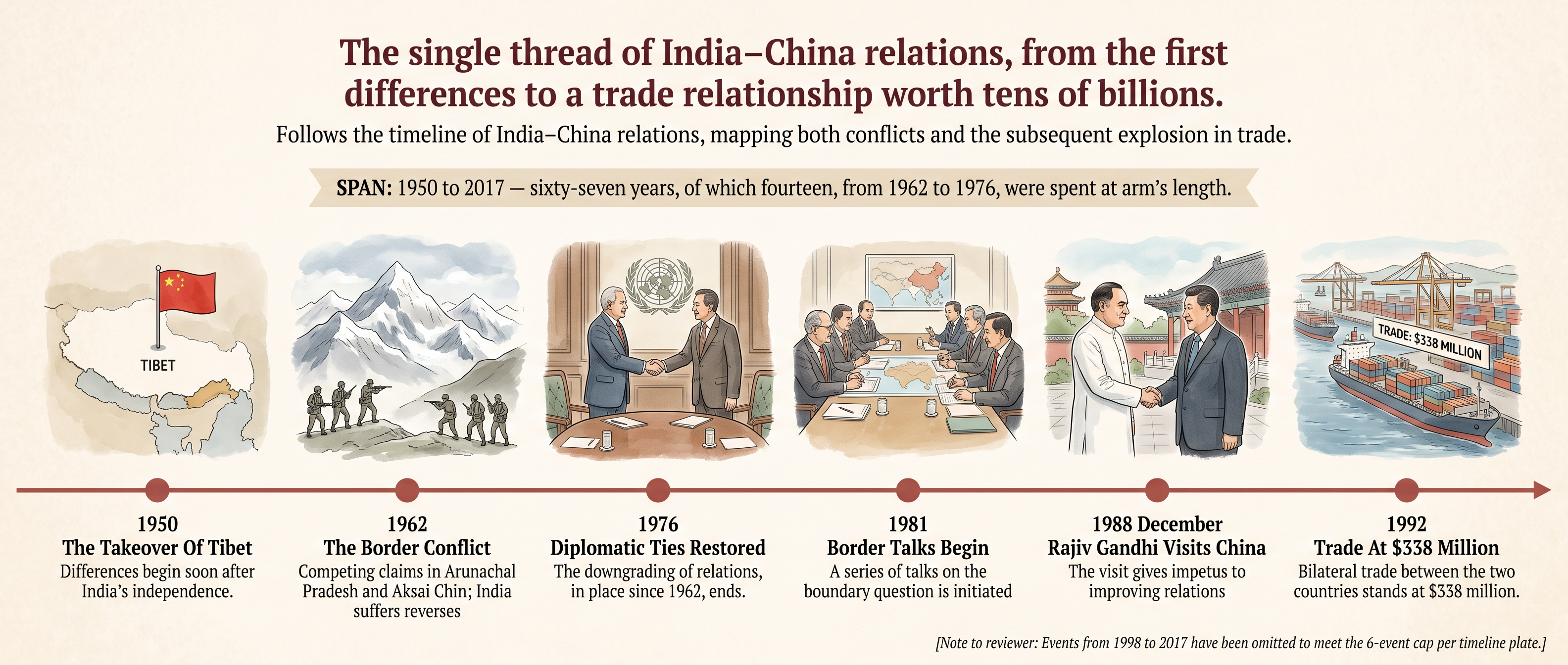
Fig. 2.10 – India And China, 1950 To 2017.
What Trade Did To The Relationship
With India–China trade growing at 30 per cent per year since 1999, a more positive perspective on relations with China has emerged. Bilateral trade between India and China increased from $338 million in 1992 to more than $84 billion in 2017.
Do that arithmetic yourself, because the size of it is the point. Eighty-four billion dollars is eighty-four thousand million. So the increase over twenty-five years is roughly
\[\frac{84{,}000 \text{ million}}{338 \text{ million}} \approx 248\]
— that is, trade grew about two hundred and fifty times over. Very few relationships between any two countries have changed that fast.
More recently, both countries have agreed to cooperate with each other in areas that could otherwise create conflict between the two, such as bidding for energy deals abroad. At the global level, India and China have adopted similar policies in international economic institutions like the World Trade Organisation.
You may hear it said that Chinese products are going to flood our market — and you may then look around and wonder where exactly they are. It is a fair question to ask of any large claim about trade, and the way to answer it is not by impression but by the figures.
The Issues That Remain
None of this has made the difficulties disappear.
India’s nuclear tests in 1998 were justified on the grounds of a threat from China. They did not stop greater interaction between the two countries. It is true that China was seen as contributing to the build-up of Pakistan’s nuclear programme, and China’s military relations with Bangladesh and Myanmar were viewed as hostile to Indian interests in South Asia.
However, none of these issues is likely to lead to conflict between the two. One sign of this is that the talks to resolve the boundary question have continued without interruption, and military-to-military cooperation is increasing.
Indian and Chinese leaders and officials visit Beijing and New Delhi with greater frequency, and both sides are now becoming more familiar with each other — which is precisely what the two countries lacked for most of their history. Increasing transportation and communication links, common economic interests and shared global concerns should help establish a more positive and sound relationship between the two most populous countries of the world.
Recently, the relation between the two countries has taken a downslide. Border disputes, the China-Pakistan economic corridor — the network of transport and energy links China is building through Pakistan — and China’s support to Pakistan in the UN against India’s move to counter terrorism are some of the factors for it.
A Class Activity
The chapter sets the class a task at this point, and it is a good way to hold the whole chapter together.
Divide the classroom into three groups. Assign each group one organisation to work on: the EU, ASEAN, and SAARC. Each group prepares a fact file containing information on the objectives, the functions and the recent activities of its organisation, and may collect pictures of the conferences and summit meetings. Each group then presents its fact file before the class.
The chapter also leaves four notes for the teacher. Focus on the functions of these organisations. Draw students’ attention to the achievements of regional organisations. Link the role of regional economic organisations to the overall development of the member countries. And sensitise students to the growing importance of regional economic organisations as an alternative approach to the peace and security of the world.
2.6 Japan
A Country Built On Very Little
You might have heard about famous Japanese brands such as Sony, Panasonic, Canon, Suzuki, Honda, Toyota and Mazda. They have a reputation for making high-technology products, and you can probably find at least one of them in your own home.
Now set that beside a fact that ought to make it impossible. Japan has very few natural resources and imports most of its raw materials. Even then, it progressed rapidly after the end of the Second World War.
That is the puzzle Japan poses. Almost everything a country is supposed to need in order to industrialise — coal, ore, oil, land — Japan has to buy from somebody else.

Fig. 2.11 – ASIMO, the world’s most advanced humanoid robot.
What Japan Weighs In The World
Japan became a member of the Organisation for Economic Cooperation and Development (OECD) in 1964 — the grouping through which the world’s industrial economies coordinate economic policy among themselves.
In 2017, it was the third largest economy in the world. It is the only Asian member of the G-7, the group of seven major industrial economies whose leaders meet to settle common economic positions. It is also the eleventh most populous nation in the world.
Read those two facts together, because the combination is unusual. Japan is the third largest economy and only the eleventh largest population. Its weight in the world does not come from numbers of people; it comes from what each of those people produces.
Japan is also the second largest contributor to the regular budget of the UN, paying almost 10 per cent of the total. Money of that kind buys standing in an organisation, even when it does not buy a vote.
The Constraint Japan Carries
Japan is the only nation that has suffered the destruction caused by nuclear bombs. It has had a security alliance with the US since 1951 — an arrangement under which its defence has rested substantially on American power.
And its own Constitution places a limit on it that no other major economy accepts. Read Source 2.1 slowly.
Notice how far the words go. It is not only war that is renounced. It is the threat of force as a means of settling international disputes. A country that gives up threatening is a country that has given up one of the ordinary instruments of great-power diplomacy.
Notice also the phrase ‘as a sovereign right of the nation’. War is normally understood as something a sovereign state is entitled to choose. Article 9 says the Japanese people give that entitlement up — permanently, and by their own constitutional text.
Now the limit of this evidence. A constitutional Article records what a country has written down, not what it does. It cannot tell you how the words have been interpreted by Japanese governments and courts since 1947, and it cannot tell you what happens when the words meet a real security threat. A text sets the terms of an argument; it does not end it.
Here is the tension in one line. Japan’s military expenditure is only one per cent of its GDP — and it is still the seventh largest in the world. One per cent of an economy that large is an enormous sum of money. A state that has renounced war as an instrument of policy nevertheless spends more on defence than almost every other country on earth.
2.7 South Korea
A Peninsula Cut In Two
At the end of the Second World War, the Korean peninsula was divided into South Korea (the Republic of Korea) and North Korea (the Democratic People’s Republic of Korea), along the 38th Parallel — a line of latitude, drawn on a map, which became a border between two states.
The Korean War during 1950-53, and the dynamics of the Cold War era, further intensified the rivalries between the two sides.
Both the Koreas finally became Members of the UN on 17 September 1991 — more than four decades after the division, and only after the Cold War that had frozen the peninsula was itself ending.
The Miracle On The Han River
Meanwhile, South Korea emerged as a centre of power in Asia. Between the 1960s and the 1980s it rapidly developed into an economic power, a transformation that came to be called the ‘Miracle on the Han River’.
Signalling its all-round development, South Korea became a Member of the OECD in 1996. In 2017, its economy was the eleventh largest in the world, and its military expenditure was the tenth largest.
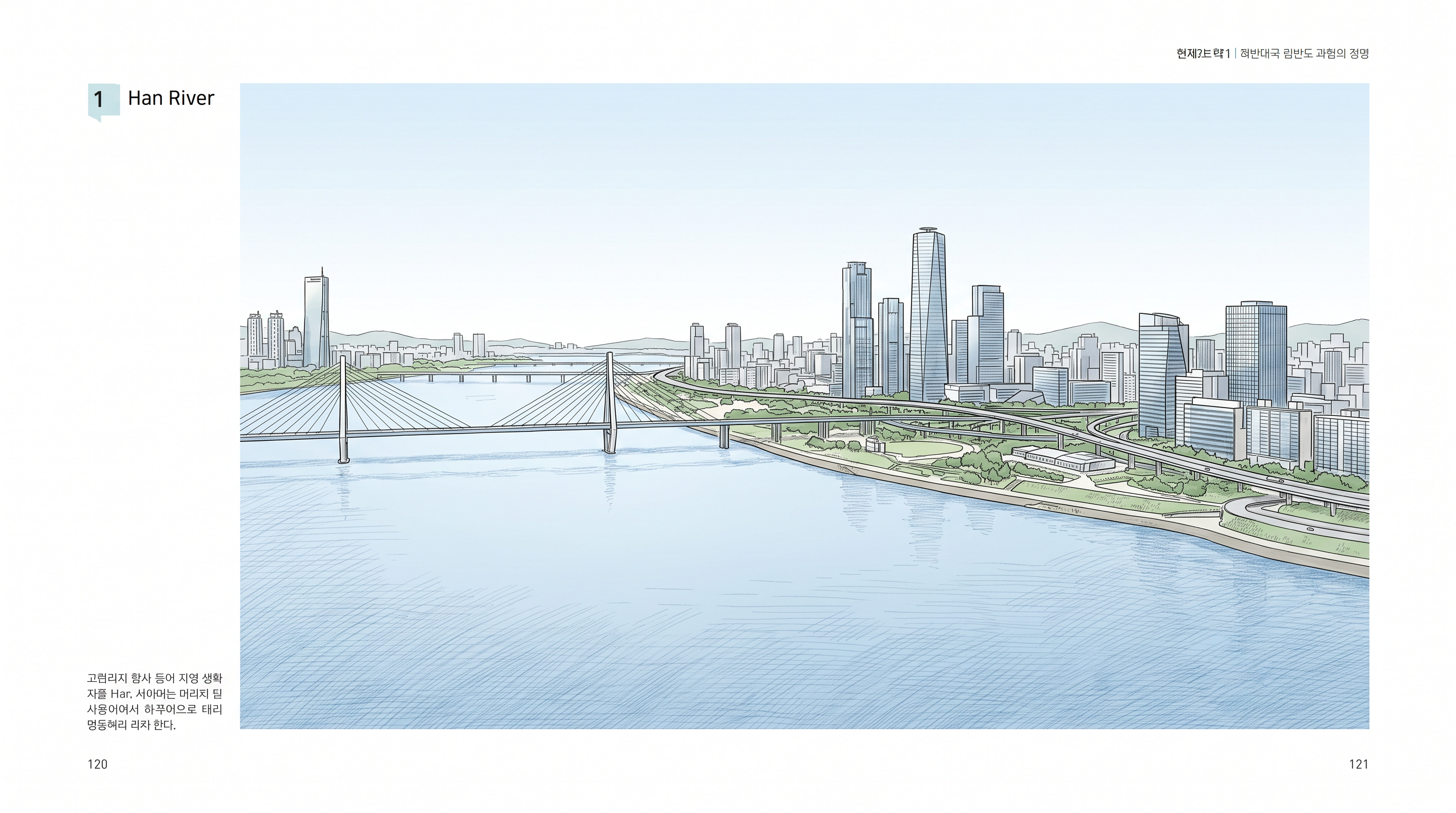
Fig. 2.12 – Skyline of Seoul near the Han River.
How The Miracle Was Made
Rapid growth is not, by itself, human development. A country can grow fast and leave most of its people behind. South Korea did not, and the chapter tells you why.
According to the Human Development Report 2016, the HDI rank of South Korea is 18. The Human Development Index is a measure that combines a country’s income with the health and education of its people, so that a country cannot score well on income alone.
Source 2.2 gives the Report’s own explanation of what produced that result.
Take the four in turn. Land reforms redistributed farmland, which changed who owned the countryside. Rural development meant the countryside was not simply drained to pay for the cities. Human resources development means investment in the skills and education of people. And the growth was not merely rapid; the Report calls it equitable — it reached across the society rather than pooling at the top.
The chapter adds four further factors: export orientation, strong redistribution policies, public infrastructure development, and effective institutions and governance.
Now the limit of this evidence. Source 2.2 is a short quotation from a Report that ranks countries; it names the factors it found associated with high human development, in a single clause. It cannot tell you which of those factors mattered most, in what order they came, or what they cost the people who lived through them. A ranking measures an outcome. It does not narrate the process, and it does not record the objections of anyone who lost by it.
It is worth holding South Korea beside China, since the chapter gives you both. Both grew very fast. But the growth described in Source 2.2 is called equitable, and its foundation was land reform and redistribution — whereas China’s reforms, as you have seen, widened the gap between rural and urban residents and between coastal and inland provinces. Two roads to rapid growth; two very different distributions of what the growth produced.
South Korea And India
The South Korean brands such as Samsung, LG and Hyundai have become renowned in India. Numerous agreements between India and South Korea signify their growing commercial and cultural ties.
2.8 Summary
What This Chapter Established
- The bipolar structure of world politics ended in the early 1990s, leaving the United States dominant. Alternative centres of political and economic power then emerged that could limit that dominance.
- After the Second World War, Europe’s leaders faced the ‘Question of Europe’: revert to old rivalries, or rebuild on new principles and institutions.
- European integration was aided by the Cold War. Marshall Plan aid, NATO, the OEEC of 1948 and the Council of Europe of 1949 led step by step to the European Economic Community in 1957.
- The collapse of the Soviet bloc put Europe on a fast track, and the European Union was established in 1992 — with a common foreign and security policy, cooperation on justice and home affairs, and a single currency.
- The EU has economic, political and diplomatic, and military influence: a projected GDP of approximately $19.35 trillion in 2024, a trade share larger than America’s, a permanent Security Council seat through France, and the world’s second largest combined armed forces.
- The EU’s power is limited from inside. Member states keep their own foreign and defence policies, as the split over Iraq showed, and Euro-skepticism runs deep in parts of Europe.
- Southeast Asia, scarred by repeated colonialisms, poverty and Cold War pressure, built its own answer. ASEAN was founded in 1967 by five countries through the Bangkok Declaration, and grew to ten members.
- ASEAN chose the opposite design to the EU. It has little desire for supranational structures, and works instead through the ‘ASEAN Way’ — informal, non-confrontationist, cooperative, and built on respect for national sovereignty.
- In 2003 ASEAN agreed to an ASEAN Community with three pillars: security, economic, and socio-cultural. The ASEAN Regional Forum, established in 1994, coordinates security and foreign policy.
- ASEAN remains principally an economic association, but it is the only regional association in Asia offering a political forum where Asian countries and the major powers discuss political and security concerns.
- China’s economy, built on the Soviet model after 1949, achieved industrialisation, employment, education and health — but grew too slowly for its population and produced no agricultural surplus for industry.
- China’s leadership responded in the 1970s: relations with the US in 1972, the ‘four modernisations’ in 1973, and Deng Xiaoping’s ‘open door’ policy in 1978.
- China avoided ‘shock therapy’ and reformed step by step — agriculture privatised in 1982, industry in 1998, trade barriers lifted only inside Special Economic Zones — with the state central throughout.
- The reforms made China the fastest growing economy and the world’s leading destination for foreign direct investment. They also brought unemployment, harsh working conditions, corruption, environmental degradation, and inequality between rural and urban, coastal and inland.
- India and China exercised influence in Asia for centuries without overlapping, and so never learnt to read each other. Tibet in 1950 and the border conflict of 1962 froze relations until 1976.
- Relations have since been rebuilt through talks from 1981, Rajiv Gandhi’s visit of 1988, and trade that rose from $338 million in 1992 to more than $84 billion in 2017 — though the relationship has recently taken a downslide.
- Japan, with few natural resources, became the third largest economy and the only Asian member of the G-7, while Article 9 of its Constitution renounces war and the threat of force.
- South Korea, divided from the North at the 38th Parallel, achieved the ‘Miracle on the Han River’ — growth that the Human Development Report 2016 describes as not only rapid but equitable.
2.9 NCERT Questions
Arrange the following in chronological order.
- China’s accession to WTO
- Establishment of the EEC
- Establishment of the EU
- Birth of ARF
The ‘ASEAN Way’
- Reflects the life style of ASEAN members
- A form of interaction among ASEAN members that is informal and cooperative
- The defence policy followed by the ASEAN members
- The road that connects all the ASEAN members
Which of the following nations adopted an ‘open door’ policy?
- China
- South Korea
- Japan
- USA
Fill in the blanks:
- The border conflict between China and India in 1962 was principally over ______________ and __________________ region.
- ARF was established in the year ______________________ .
- China entered into bilateral relations with __________ (a major country) in 1972.
- ________________ Plan influenced the establishment of the Organisation for European Economic Cooperation in 1948.
- ___________ is the organisation of ASEAN that deals with security.
What are the objectives of establishing regional organisations?
How does geographical proximity influence the formation of regional organisations?
What are the components of the ASEAN Vision 2020?
Name the pillars and the objectives of the ASEAN Community.
In what ways does the present Chinese economy differ from its command economy?
How did the European countries resolve their post-Second World War problem? Briefly outline the attempts that led to the formation of the European Union.
What makes the European Union a highly influential regional organisation?
The emerging economies of China and India have great potential to challenge the unipolar world. Do you agree with the statement? Substantiate your arguments.
The Peace and prosperity of countries lay in the establishment and strengthening of regional economic organisations. Justify this statement.
Identify the contentious issues between China and India. How could these be resolved for greater cooperation? Give your suggestions.
2.10 Check Your Concepts
Read Source 2.1 again. What exactly does Article 9 of the Japanese Constitution ask the Japanese people to give up? Then state one fact from this chapter which shows that a constitutional text cannot tell you what a state is actually capable of.
Source 2.2 names four reasons for South Korea’s high human development. List them. Then explain why rapid economic growth on its own would not have been enough to produce an HDI rank of 18.
Explain, step by step, why the Soviet-model economy that China built after 1949 ran into crisis. Your answer should connect agriculture, foreign exchange and the rate of population growth.
The EU and ASEAN answered the same problem in opposite ways. Compare their attitudes to national sovereignty, and then state one thing this neat contrast hides.
Fig. 2.3 and Fig. 2.7 each make a prediction. State what each one is claiming. Then explain one important thing that neither cartoon is able to show you, and say what kind of evidence you would need instead.
‘Not everyone in China has received the benefits of the reforms.’ Using only the chapter, say who has borne the costs of China’s economic rise, and explain why a national growth figure does not reveal them.
The border between India and China has still not been settled, yet trade rose from $338 million in 1992 to more than $84 billion in 2017. Explain how the two countries rebuilt their relationship around the dispute rather than through it, and what the recent downslide suggests about the limits of that method.
Fig. 2.1 records that the EU was awarded the Nobel Peace Prize in 2012 and that in 2016 a majority of British voters chose to leave it. Hold both facts together and explain what they tell you about the EU’s authority. What does the timeline not tell you about why voters decided as they did?