Chapter 7: Globalisation
In January 2004, thousands of people arrived in Mumbai for the fourth meeting of the World Social Forum — a global platform that brings together human rights activists, environmentalists, and labour, youth and women activists opposed to neo-liberal globalisation. They came from dozens of countries. They agreed on one thing: that the way the world economy was being run was doing harm. On almost everything else, they disagreed loudly.
A supplement published that February captured the noise as a page of competing voices. One speaker warned that any attempt to centralise the movement would be a disaster. Another dismissed neoliberalism as old wine in a new bottle. A third insisted that a genuine socialist order could be achieved only through struggle, not through endless and often not very meaningful debates. Someone else described the Forum as a permanent process of seeking and building alternatives — plural, diversified, non-governmental, non-party. Across the page, a rival gathering called Mumbai Resistance 2004 accused the Forum itself of being reformist. And in the middle of it all, one exasperated voice asked the question printed largest of all: excuse me, may I know who’s in charge here?
That question is the real subject of this chapter. Goods, money, ideas and people are moving across the world faster than ever before. Who decided this should happen? Who gains, who loses — and who, if anyone, is in charge?
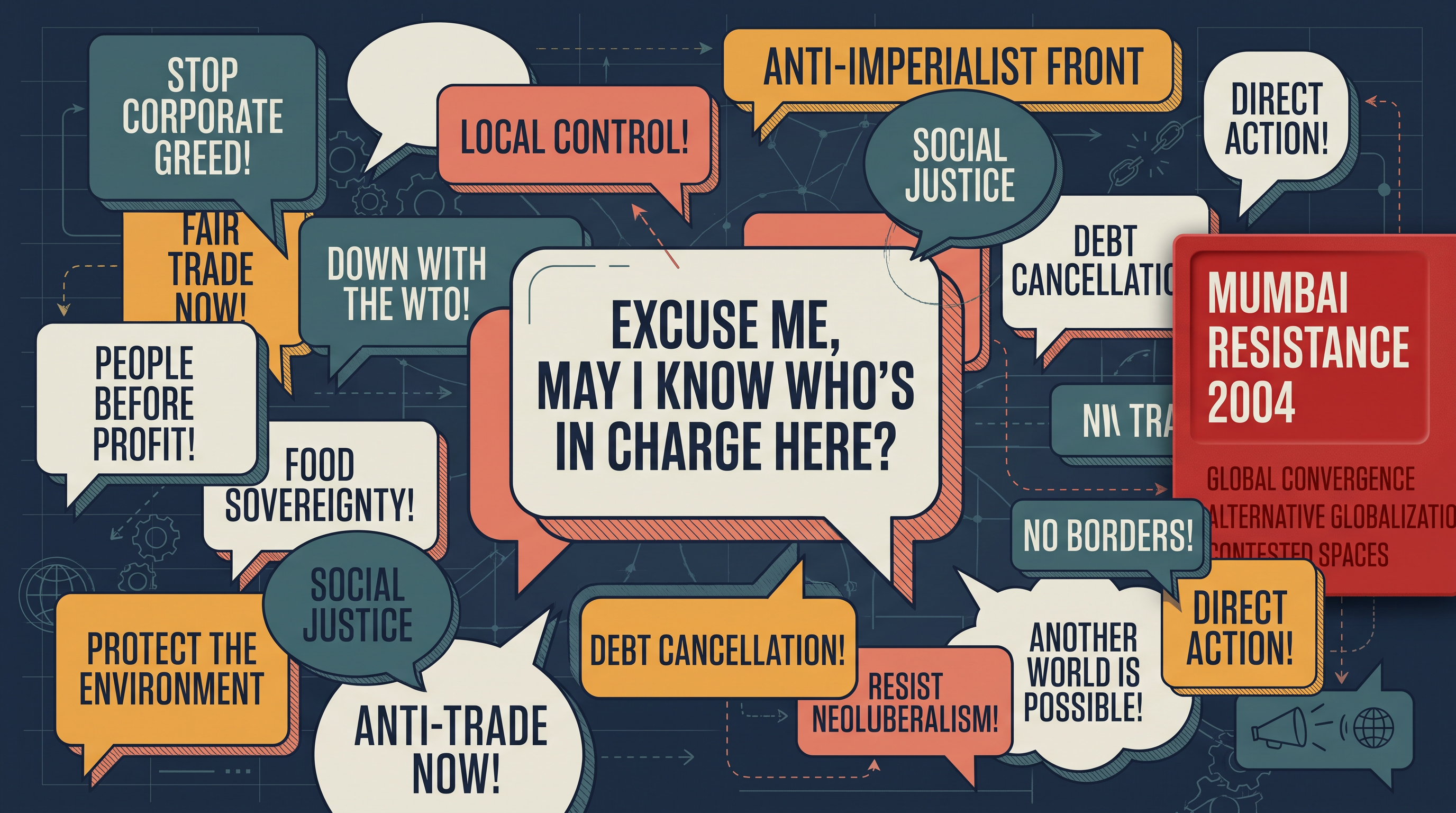
Fig. 7.0 – Voices of resistance at the World Social Forum.
7.1 The Concept Of Globalisation
Three Lives, Three Flows
Janardhan works in a call centre. He leaves late in the evening for work, becomes John when he enters his office, acquires a new accent, and speaks a different language from the one he speaks at home. He does this in order to talk to clients who are living thousands of miles away.
He works all night, which is daytime for his overseas customers. Janardhan is rendering a service to somebody he is, in all probability, never likely to meet physically. This is his daily routine. Even his holidays do not correspond to the Indian calendar but to the calendar of his clients, who happen to be from the US.
Ramdhari has gone shopping to buy a birthday gift for his nine-year-old daughter. He has promised her a small cycle, and he searches the market for something he finds affordable as well as of reasonable quality. He finally buys a cycle that is actually manufactured in China but is being marketed in India.
The cycle meets his requirements of quality as well as affordability, and Ramdhari decides to go ahead with the purchase. Last year, on his daughter’s insistence, he had bought her a Barbie doll — a doll originally manufactured in the US but sold to him in an Indian market.
Sarika is a first-generation learner, the first in her family to be educated. She has done remarkably well throughout her school and college life by working very hard. She now has an opportunity to take on a job and begin an independent career, something the women of her family had never dreamt of earlier. While some of her relatives are opposed, she finally decides to go ahead, because of the new opportunities that have been made available to her generation.
All three examples illustrate one aspect each of what we call globalisation. Janardhan was participating in the globalisation of services — the work itself sits in one country while the customer sits in another. Ramdhari’s birthday purchases tell us something about the movement of commodities, that is, of goods, from one part of the world to another.
Sarika’s case is the least visible and the most personal. She faces a conflict of values, partly arising from a new opportunity that was earlier not available to the women in her family, but that today is part of a reality which has gained wider acceptability. Nothing crossed a border in her story, and yet something moved.
When Globalisation Goes Wrong
If we look for uses of the term ‘globalisation’ in real life, we will find it in many different contexts. Consider some examples, quite different from the three above.
Some farmers committed suicide because their crops failed. They had bought very expensive seeds supplied by a multinational company. A multinational company, or MNC, is a firm that owns or controls production in more than one country, and so answers to shareholders far from the fields where its seeds are sown.
An Indian company bought a major rival company based in Europe, despite protests by some of the current owners. Many retail shopkeepers fear that they would lose their livelihoods if some major international companies were to open retail chains in the country.
A film producer in Mumbai was accused of lifting the story of his film from another film made in Hollywood. And a militant group issued a statement threatening college girls who wear western clothes.
These examples show us that globalisation need not always be positive. It can have negative consequences for people. Indeed, there are many who believe that globalisation has more negative consequences than positive ones.
The examples show us two further things, and both are easy to miss. Globalisation need not be only about economic issues — a threat over what a student wears is not an economic transaction. And the direction of influence is not always from the rich countries to the poor ones. In the second example, it is an Indian company buying a European one, and the protest comes from the richer side.
The chapter you are reading is illustrated throughout with photographs of the political, economic and cultural faces of globalisation, taken from different parts of the world. The first of these picture strips appears here.
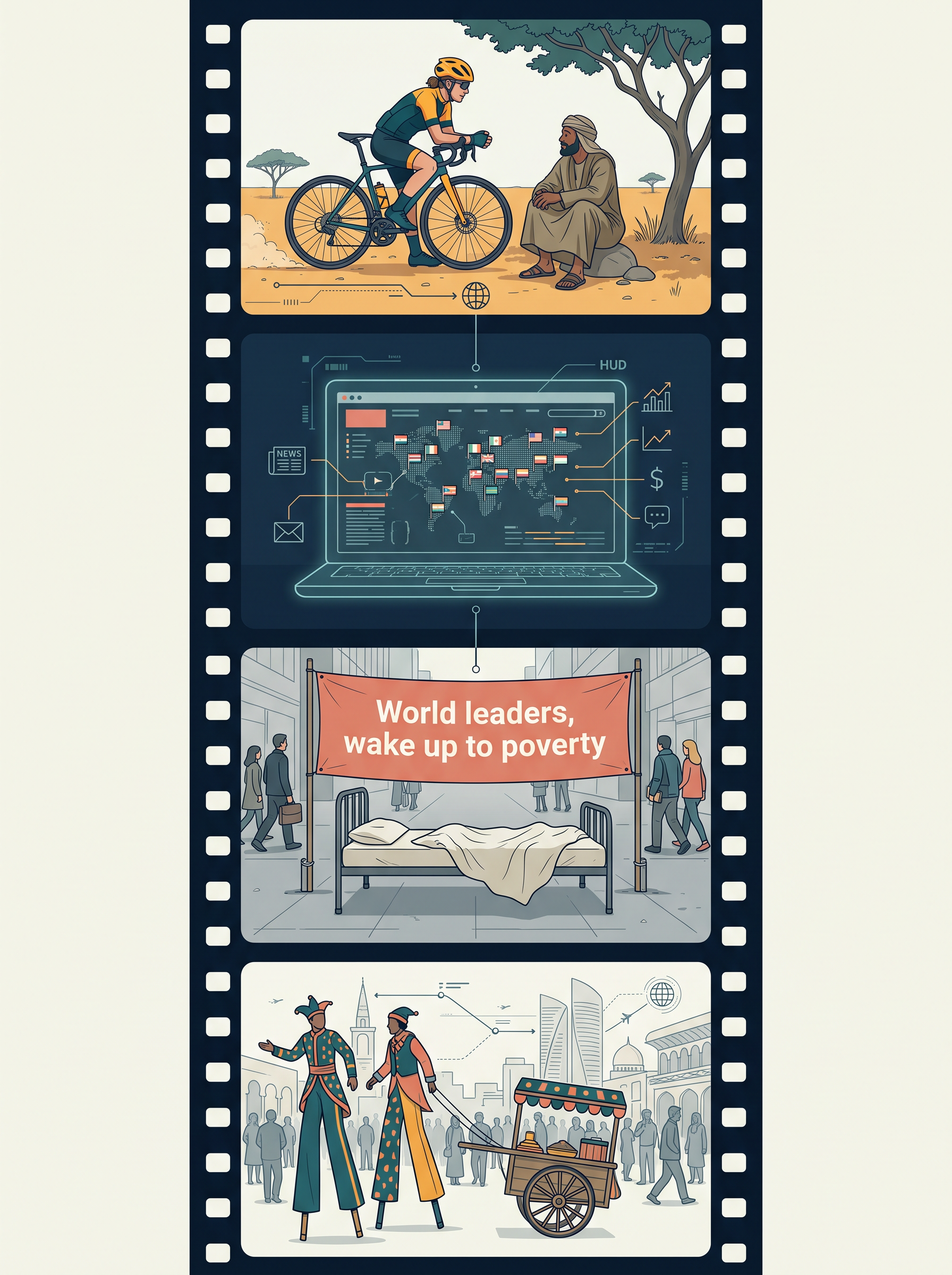
Fig. 7.1 – The political, economic and cultural faces of globalisation.
Look at what these four images have in common. Each shows a place where something from elsewhere has arrived — a technology, a campaign, a traveller, a performance. None of them is a photograph of a trade agreement, and that is the point: globalisation is met in ordinary streets long before it is met in a treaty.
The images also carry a warning that this section keeps repeating. A photograph shows an arrival; it cannot show whether the arrival was welcome, who paid for it, or what it displaced. For that, we need argument and evidence, not pictures.
What Globalisation Actually Means
Since much of the usage of the word tends to be imprecise, it becomes important to clarify what we mean by it. Globalisation, as a concept, fundamentally deals with flows. Something is moving, constantly, from one part of the world to another.
These flows could be of various kinds. Ideas move from one part of the world to another. Capital — that is, money invested in order to earn a return — is shunted between two or more places. Commodities are traded across borders. And people move in search of better livelihoods to different parts of the world.
The crucial element is the worldwide interconnectedness that is created and sustained as a consequence of these constant flows. It is not any single flow that makes the world global. It is the fact that the flows never stop, and that they tie distant places into one another’s fate.
This definition helps us settle some confusions quickly. Nepalese workers coming to India to work is a flow of people across a national boundary in search of a livelihood — so yes, that is an instance of globalisation, even though neither country is a Western one. The direction of a flow does not decide whether it counts.
The definition also tells us what globalisation is not. If Chinese goods are smuggled into India, the smuggling is a crime, and it is created by the rules of a state, not by interconnectedness. Globalisation increases the volume of goods that cross borders; it does not by itself explain why some of them cross illegally.
A Multi-Dimensional Idea
Globalisation is a multi-dimensional concept. It has political, economic and cultural manifestations, and these must be adequately distinguished from one another. It is wrong to assume that globalisation has purely economic dimensions, just as it would be mistaken to assume that it is a purely cultural phenomenon.
The impact of globalisation is also vastly uneven. It affects some societies more than others, and some parts of some societies more than others. Janardhan’s night shift and Sarika’s new career belong to the same country as the farmer whose expensive seed failed.
This unevenness is exactly why it is important to avoid drawing general conclusions about the impact of globalisation without paying sufficient attention to specific contexts. A sentence that begins ‘globalisation has made people…’ is almost always too large to be true. Ask instead: which people, in which place, and by what measure?
One more question is worth holding on to from the start. Is globalisation simply a new name for imperialism — the domination of one country by another, whether by conquest or by economic control? If the flows are so uneven, and if the powerful gain most, why do we need a new word at all? The chapter does not brush this question aside; it returns to it when we come to the critics of globalisation.
One way to begin testing all of this is to stop reading and start looking. Go through the newspapers for a week and collect clippings on anything you find related to globalisation — a factory closing, a company being bought, a film dispute, a visa rule, a protest, a new product. Then sort your clippings into the three dimensions named above: political, economic and cultural. The clippings that refuse to sit in only one pile are the ones worth arguing about.
7.2 Causes Of Globalisation
Is Any Of This New?
What accounts for globalisation? If globalisation is about the flows of ideas, capital, commodities and people, it is perhaps logical to begin by asking whether there is anything novel about the phenomenon at all.
The honest answer is that, in terms of these four flows, globalisation has taken place through much of human history. Traders, missionaries, armies, migrants and pilgrims have carried goods and ideas across long distances for centuries. Nothing in the list of four flows was invented in our lifetime.
Those who argue that there is something distinct about contemporary globalisation therefore rest their case elsewhere. They point out that it is the scale and the speed of these flows that account for the uniqueness of globalisation in the contemporary era. Not that things move, but how much of them moves, and how fast.
This is a claim worth examining rather than accepting. Globalisation has a strong historical basis, and it is important to view contemporary flows against that backdrop. If you do not know what the older flows looked like, you cannot say whether today’s are different in kind or only larger in size.
Technology As The Enabler
Globalisation is not caused by any single factor. But technology remains a critical element in explaining it.
There is no doubt that the invention of the telegraph, the telephone and, in more recent times, the microchip has revolutionised communication between different parts of the world. The telegraph sent written messages down a wire in minutes rather than weeks. The telephone carried the voice itself. The microchip, the tiny circuit at the heart of every computer and phone, made it possible to store and send vast quantities of information at almost no cost.
The chapter offers an older parallel, and it is a striking one. When printing initially came into being, it laid the basis for the creation of nationalism — the sense of belonging to a single people, which you met in earlier classes. A shared printed language let strangers who would never meet imagine themselves as one nation. Technology did not merely carry the idea; it made the idea thinkable.
So we should expect, today, that technology will affect not only the way we think about our personal lives, but also the way we think about our collective lives. What the printing press did for the nation, the microchip may be doing for something wider.
The chapter prints a cartoon on this theme. Read it before you read what follows it.
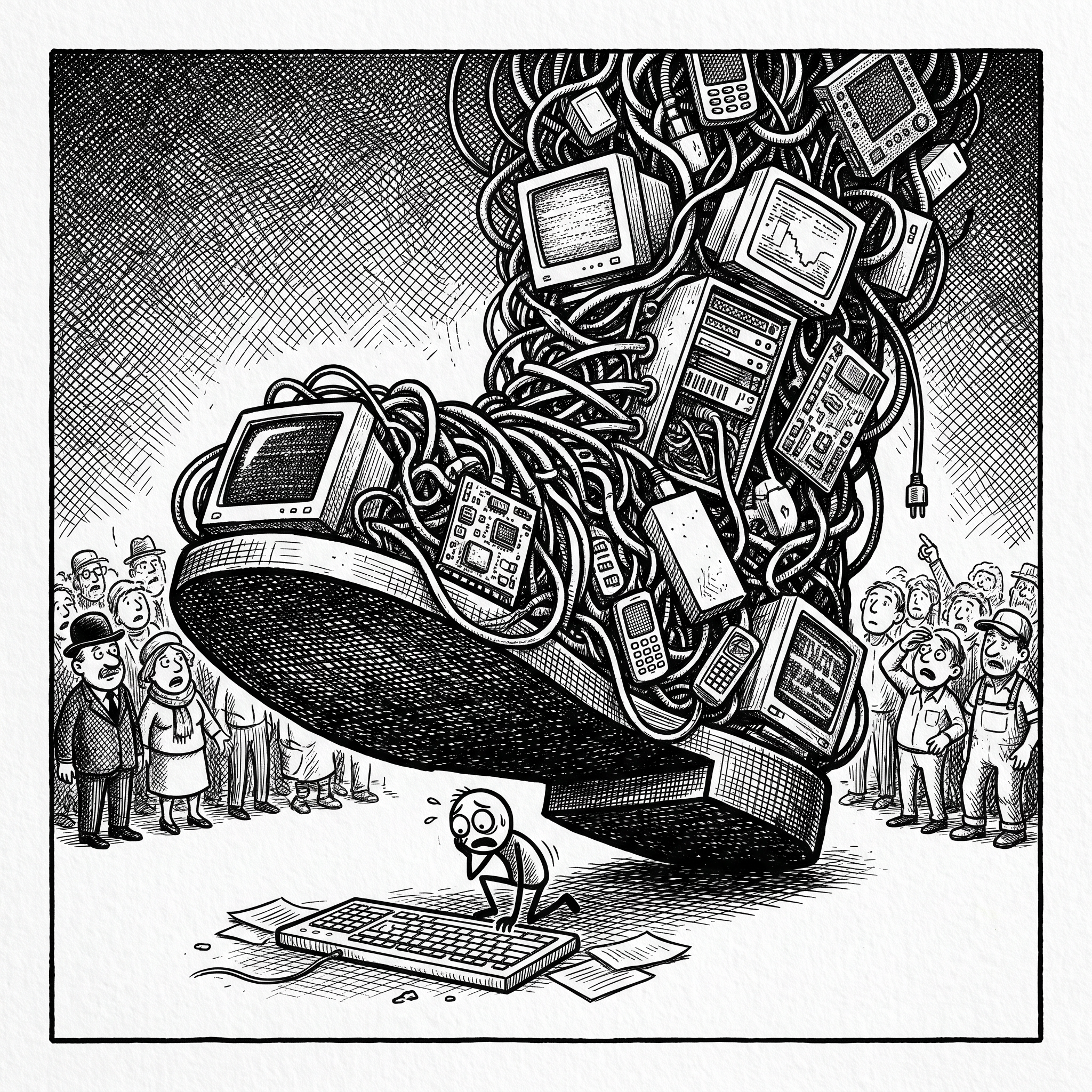
Fig. 7.2 – Digital economy. Inspiration: Ares, Cagle Cartoons Inc.
The drawing makes an argument in one image. The digital economy is not weightless and friendly; it is heavy, tangled and immense, and it comes down on top of the ordinary machine at which an ordinary person sits. The cartoonist is saying that the technology which connects us also presses on us.
Now notice what the cartoon cannot do. It states an opinion about the digital economy; it cannot show who owns that economy, who is enriched by it, or who is crushed. A cartoon has one frame and one punch. It can make you suspicious of a claim, but it cannot supply the evidence to settle it — for that you need the data on who gains and who loses, and those come later in this chapter.
The ability of ideas, capital, commodities and people to move more easily from one part of the world to another has been made possible largely by technological advances. But the pace of these flows may vary a great deal. The movement of capital and commodities will most likely be quicker and wider than the movement of peoples across different parts of the world. Money can cross a border in a second; a worker needs a visa.
Awareness Of Interconnection
Globalisation, however, does not emerge merely because improved communications are available. A cable running under an ocean does not by itself globalise anything.
What is important is for people in different parts of the world to recognise these interconnections with the rest of the world. Globalisation is partly a matter of consciousness — of ordinary people, businesses and governments coming to understand that they are not sealed off from elsewhere.
Currently, we are aware of the fact that events taking place in one part of the world could have an impact on another part of the world. Bird flu, an infectious disease that spreads through birds and can pass to human beings, is not confined to any particular nation. Neither is a tsunami, the ocean wave thrown up by an undersea earthquake. Such events do not respect national boundaries.
Similarly, when major economic events take place, their impact is felt outside their immediate local, national or regional environment, at the global level. A crisis in one country’s banks or one country’s factories is now felt in the price of goods and the availability of jobs far away.
This is the point at which the causes stop being merely technical. The wire, the chip and the ship make the flows possible. It is the recognition that we live inside those flows — that a distant collapse is our problem too — that turns connection into globalisation.
7.3 Political Consequences
One of the debates generated by the contemporary processes of globalisation relates to its ongoing political impact. The question at the centre of that debate is this: how does globalisation affect traditional conceptions of state sovereignty?
Sovereignty is the supreme authority of a state within its own territory — the right to make the final decision, with no higher power inside the country able to overrule it. If flows of capital, goods, ideas and people cross borders freely, does that final authority survive?
There are at least three aspects we need to consider before answering. Notice as you read them that they do not all point the same way. That is not a flaw in the argument; it is the argument.
The Erosion Of State Capacity
At the most simple level, globalisation results in an erosion of state capacity — that is, of the ability of governments to do what they do.
All over the world, the old welfare state is now giving way to a more minimalist state. A welfare state is one that takes responsibility for the economic and social well-being of its citizens, through jobs, education, health and sanitation. A minimalist state performs only certain core functions, such as the maintenance of law and order and the security of its citizens, and withdraws from many of its earlier welfare functions.
In place of the welfare state, it is the market that becomes the prime determinant of economic and social priorities. What gets produced, what gets funded and what gets neglected is decided less by a government’s plan and more by what buyers and sellers find profitable.
The entry and the increased role of multinational companies all over the world adds to this. Their presence leads to a reduction in the capacity of governments to take decisions on their own. A government that needs the investment must think about what will keep the investor.
Having read the contrast in prose, hold the two kinds of state side by side.
The chapter’s second picture strip appears at this point, and each image is a political consequence in a different register.
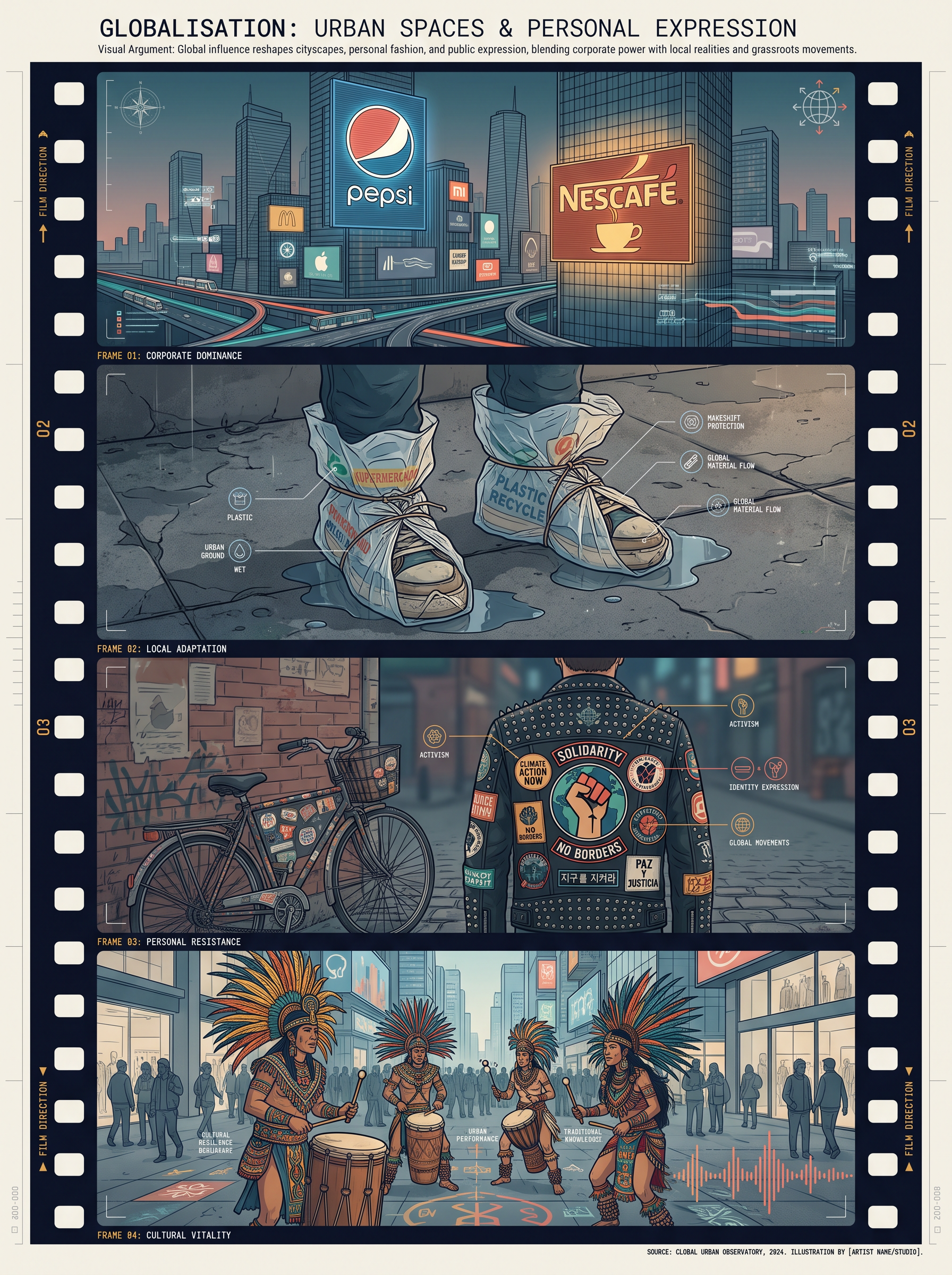
Fig. 7.3 – Globalisation across different parts of the world.
The State That Did Not Disappear
At the same time, globalisation does not always reduce state capacity. This is the second aspect, and it cuts against the first.
The primacy of the state continues to be the unchallenged basis of political community. There is still no rival unit that people belong to in the way they belong to a country. The old jealousies and rivalries between countries have not ceased to matter in world politics; rivalry between states is not an antique.
The state continues to discharge its essential functions — law and order, national security — and consciously withdraws from certain domains from which it wishes to withdraw. That word ‘consciously’ is doing serious work in the argument. A state that chooses to step back has exercised its authority, not lost it. States continue to be important.
The State That Got Stronger
Indeed, in some respects state capacity has received a boost as a consequence of globalisation. This is the third aspect, and it is the one students most often miss.
Enhanced technologies are now available at the disposal of the state to collect information about its citizens. With this information, the state is better able to rule, not less able. The same microchip that lets capital cross a border in a second lets a government know a great deal more about the people it governs.
Thus states become more powerful than they were earlier, as an outcome of the new technology. Any answer to the question of sovereignty that only says ‘the state is shrinking’ has read one of the three aspects and stopped.
7.4 Economic Consequences
While everything may not be known about the economic facets of globalisation, this particular dimension shapes a large part of the content and direction of contemporary debates surrounding it. When people argue about globalisation, they are usually arguing about money.
What Economic Globalisation Means
A part of the problem has to do with defining economic globalisation itself. The mention of the term draws our attention immediately to the role of international institutions like the IMF and the WTO, and to the role they play in determining economic policies across the world.
The IMF, the International Monetary Fund, lends to countries that are in financial difficulty, and attaches conditions to what it lends. The WTO, the World Trade Organisation, is the body whose rules govern trade between its member countries. Because both can shape what a government is able to do, they are the first names that come up in any argument about globalisation.
Yet globalisation must not be viewed in such narrow terms. Economic globalisation involves many actors other than these international institutions — firms, investors, workers, consumers and governments themselves. A much broader way of understanding it requires us to look at the distribution of economic gains: who gets the most from globalisation, who gets less, and indeed who loses from it.
That last question is the one to carry through this section. ‘Is globalisation good?’ is not an answerable question. ‘Good for whom, and at whose cost?’ is.
Four Flows, Unequal Speeds
What is often called economic globalisation usually involves greater economic flows among different countries of the world. Some of this is voluntary. Some of it is forced by international institutions and powerful countries — a country in debt may be told what to change before it is helped.
As we saw in the examples at the beginning of this chapter, the flow or exchange can take various forms: commodities, capital, people and ideas. Each has moved differently.
Globalisation has involved greater trade in commodities across the globe, because the restrictions imposed by different countries on allowing the imports of other countries have been reduced. Similarly, the restrictions on the movement of capital across countries have also been reduced. In operational terms, this means that investors in the rich countries can invest their money in countries other than their own, including developing countries, where they might get better returns.
Globalisation has also led to the flow of ideas across national boundaries. The spread of the internet and of computer-related services is an example of that.
But globalisation has not led to the same degree of increase in the movement of people across the globe. Developed countries have carefully guarded their borders with visa policies, to ensure that citizens of other countries cannot take away the jobs of their own citizens. A visa is the permission a state grants a foreigner to enter it — and it is the point at which the free flow stops.
Read that asymmetry carefully, because it is the heart of the political quarrel over globalisation. Capital may go wherever the returns are best. Goods may cross almost freely. Labour may not. The rules were not made by the same people who bear their costs.
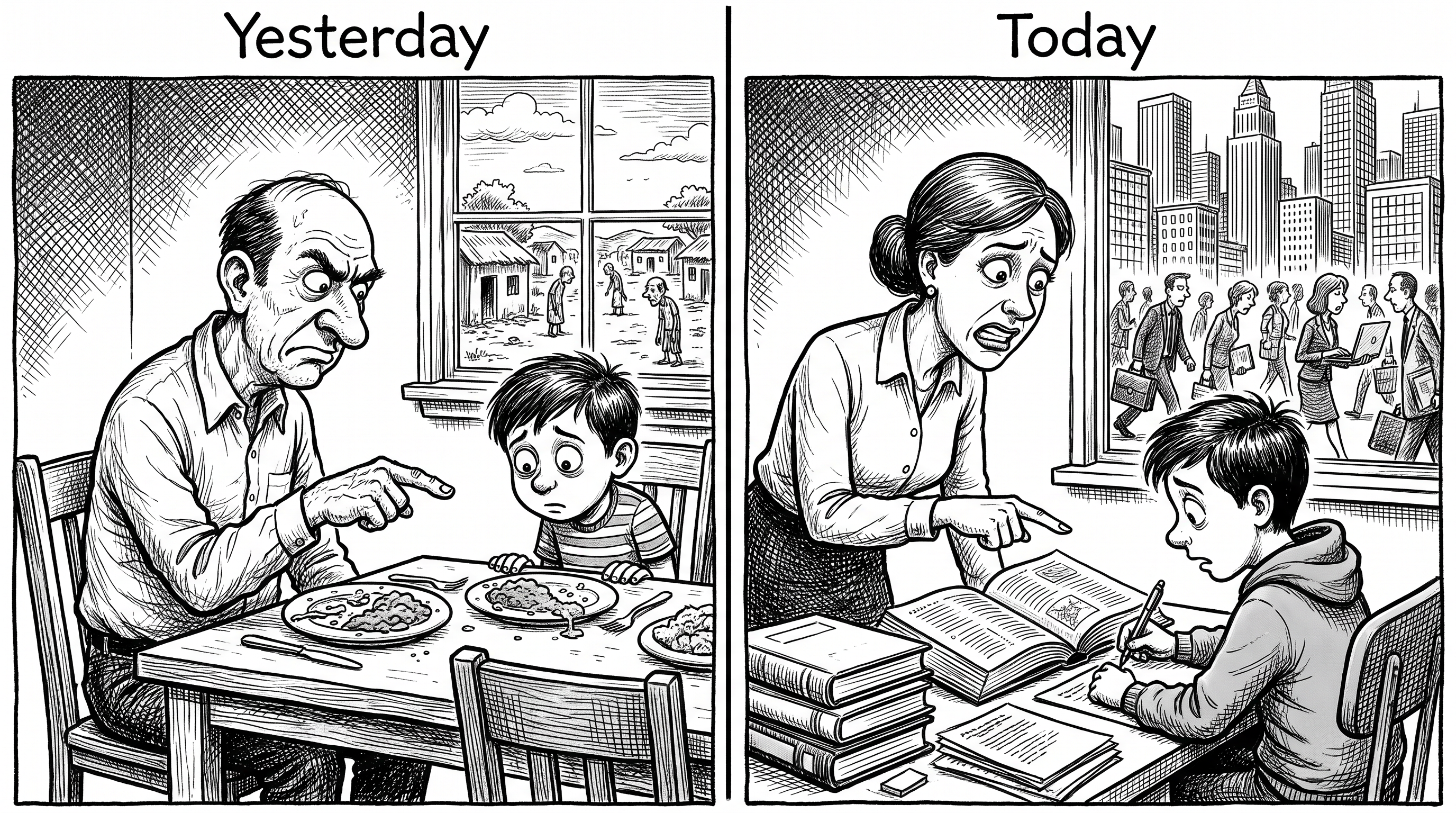
Fig. 7.4 – Changing anxieties about global jobs. Inspiration: Milt Priggee, Cagle Cartoons Inc.
The cartoon compresses a whole argument into one substitution. The same two countries appear in both panels, but they have changed roles — from objects of pity to sources of fear. What the American child was once told to be grateful for, he is now told to compete against. The cartoonist is drawing an anxiety about jobs moving out of rich countries.
Now the limit. This is one cartoonist’s joke about how a fear is expressed in an American home; it is evidence of an anxiety, not evidence that the anxiety is correct. It cannot tell us how many jobs actually moved, who in China or India got them, on what wages, or whether other jobs were created in their place. A cartoon can show you what people are afraid of. It cannot tell you whether they are right to be.
The Same Policy, Different Results
In thinking about the consequences of globalisation, it is necessary to keep in mind that the same set of policies does not lead to the same results everywhere.
Governments in different parts of the world have adopted similar economic policies. This has generated vastly different outcomes in different parts of the world. A policy that lifted incomes in one country left another poorer.
It is therefore crucial, once again, to pay attention to the specific context rather than make simple generalisations. The person who tells you that de-regulation always works, and the person who tells you it never does, are making the same mistake in opposite directions.
Test this on something you can actually see. Make a list of the products of multinational companies that are used by you or your family — the food, the phone, the soap, the software. Then ask, for each one, who made it, where, and what it replaced in your home. The list is the beginning of an argument, not the end of one.
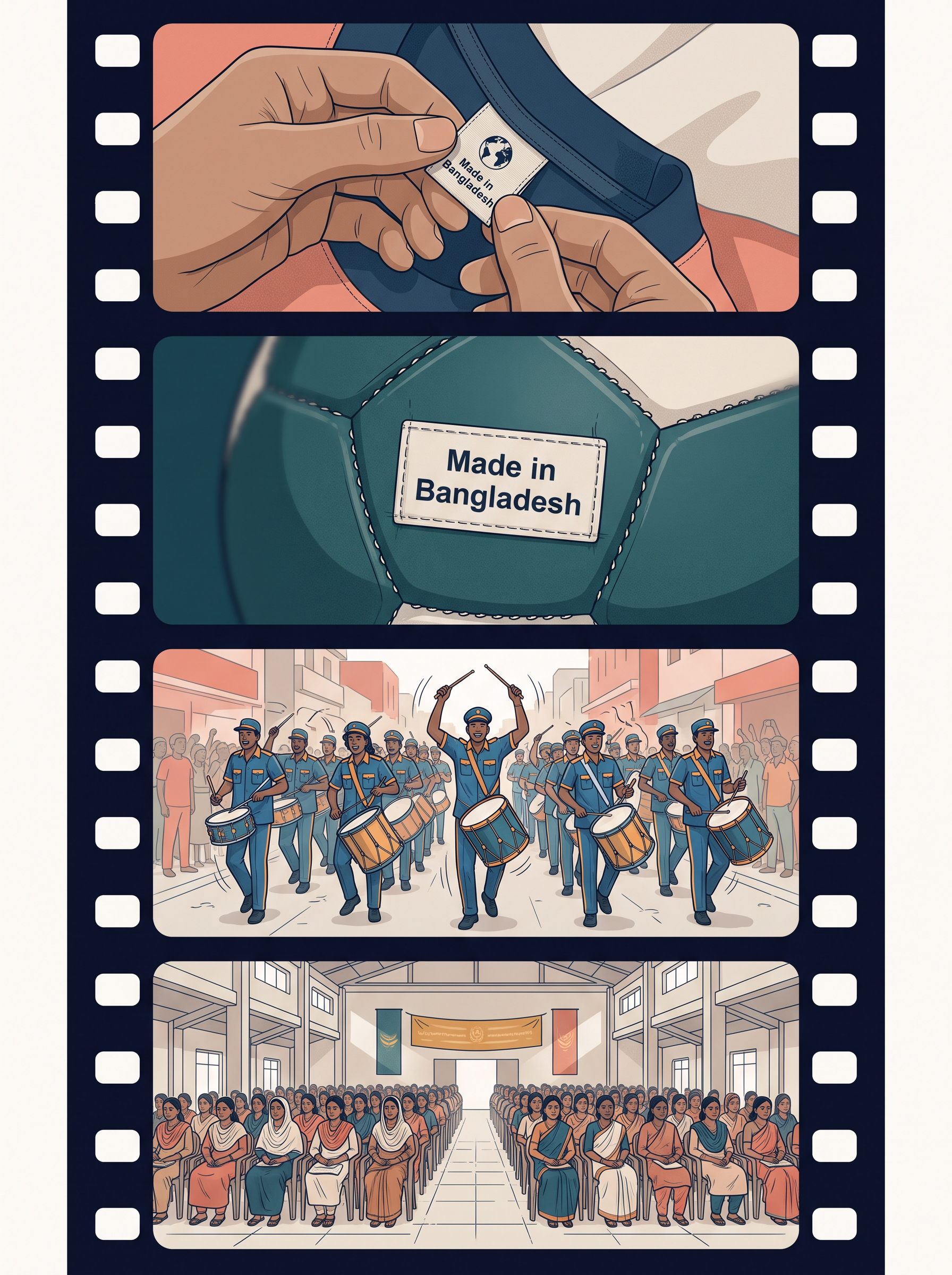
Fig. 7.5 – Economic flows in everyday commodities.
The Division Of Opinion
Economic globalisation has created an intense division of opinion all over the world.
Those who are concerned about social justice — the fair distribution of a society’s benefits and burdens — are worried about the extent of state withdrawal caused by the processes of economic globalisation. They point out that it is likely to benefit only a small section of the population, while impoverishing those who were dependent on the government for jobs and welfare, such as education, health and sanitation.
They have emphasised the need to ensure institutional safeguards, or to create ‘social safety nets’ to minimise the negative effects of globalisation on those who are economically weak. A social safety net is a scheme that catches those the market leaves behind — a pension, a subsidy, a guarantee of work.
There is a sharp observation buried in the phrase itself, and it is worth stating plainly. If we are building a net, we are expecting people to fall. The metaphor concedes that some will be hurt; it only promises that they will not be destroyed.
Many movements all over the world feel that safety nets are insufficient or unworkable. They have called for a halt to forced economic globalisation, arguing that its results would lead to economic ruin for the weaker countries, and especially for the poor within these countries. Some economists have described economic globalisation as re-colonisation of the world — a return to the old relationship of the coloniser and the colonised, now conducted through capital rather than conquest.
Advocates of economic globalisation argue the opposite case. They hold that it generates greater economic growth and well-being for larger sections of the population when there is de-regulation — the removal of government restrictions on what businesses may do.
Greater trade among countries, they argue, allows each economy to do what it does best, and this would benefit the whole world. They also argue that economic globalisation is inevitable, and that it is not wise to resist the march of history.
More moderate supporters of globalisation say something more careful. Globalisation provides a challenge that can be responded to intelligently, without accepting it uncritically. Notice that this position accepts neither the halt demanded by the critics nor the inevitability claimed by the enthusiasts.
Now hold the two camps side by side.
What, however, cannot be denied is the increased momentum towards inter-dependence and integration between governments, businesses and ordinary people in different parts of the world as a result of globalisation. The camps disagree about whether this is good. They do not disagree that it is happening.
7.5 Cultural Consequences
The consequences of globalisation are not confined only to the sphere of politics and economy. Globalisation affects us in our home — in what we eat, drink and wear, and indeed in what we think.
That last item is the most unsettling. It shapes what we think are our preferences. The choice feels entirely our own at the moment we make it, which is precisely why cultural influence is so hard to argue about.
The Fear Of A Uniform World
The cultural effect of globalisation leads to the fear that this process poses a threat to cultures in the world. It does so because globalisation leads to the rise of a uniform culture, or what is called cultural homogenisation — the process by which many different ways of living come to resemble a single one.
Read the next sentence slowly, because the whole argument hangs on it. The rise of a uniform culture is not the emergence of a global culture. A genuinely global culture would be made by everyone; this one is not.
What we have in the name of a global culture is the imposition of Western culture on the rest of the world. This phenomenon is known as the soft power of US hegemony — hegemony being the dominance of one power over others, and soft power being the kind of dominance that works through attraction rather than force. Nobody is ordered to want the thing; they simply come to want it.
The popularity of a burger or of blue jeans, some argue, has a lot to do with the powerful influence of the American way of life. Thus the culture of the politically and economically dominant society leaves its imprint on a less powerful society, and the world begins to look more like the dominant power wishes it to be.
Those who make this argument often draw attention to the ‘McDonaldisation’ of the world, with cultures seeking to buy into the dominant American dream. Their warning is not only about poor countries. It is dangerous for the whole of humanity, they say, because it leads to the shrinking of the rich cultural heritage of the entire globe. A world with one menu is a poorer world for everyone eating from it.
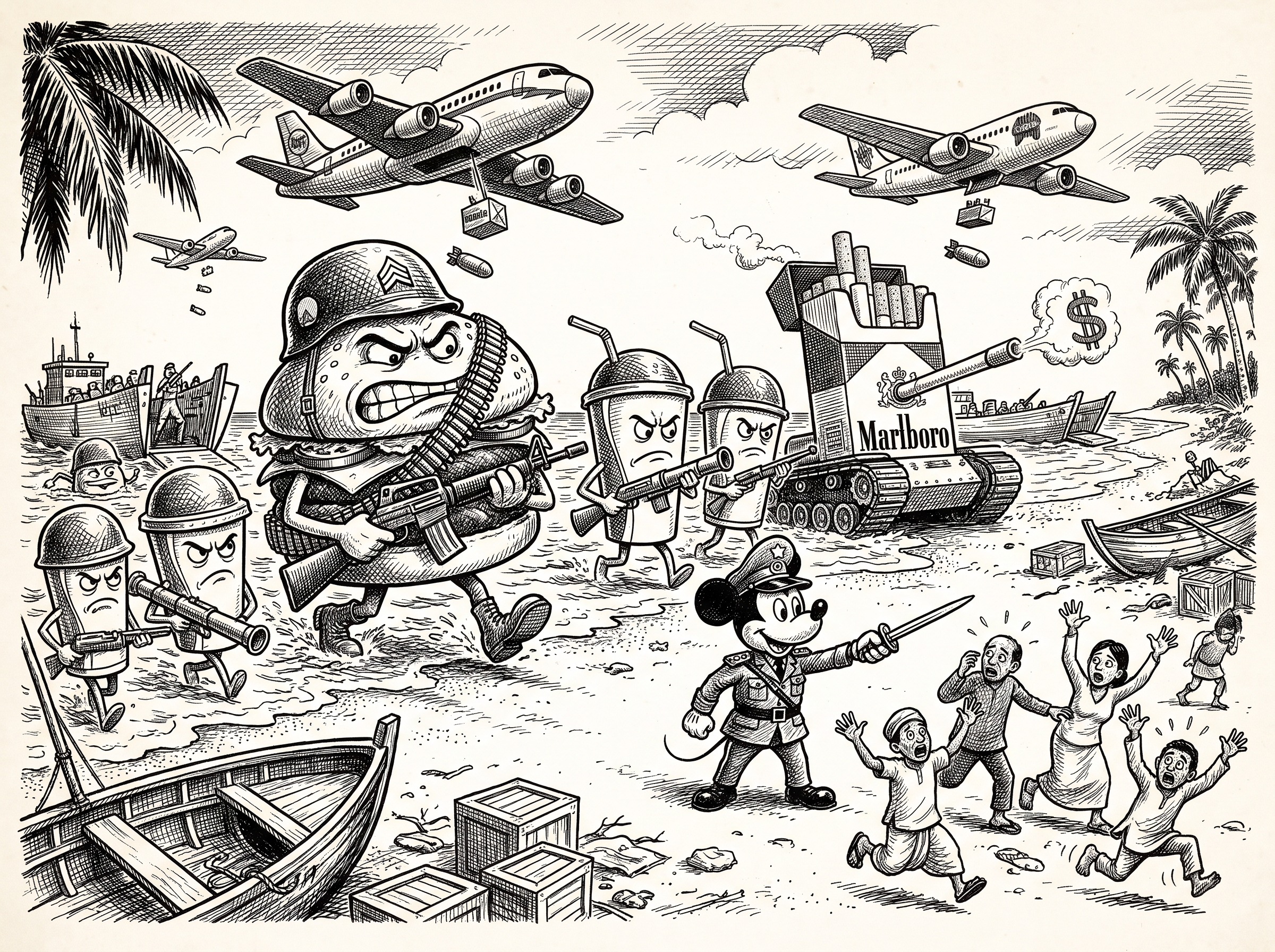
Fig. 7.6 – Invading new markets. Inspiration: Andy Singer, Cagle Cartoons Inc.
The cartoonist has taken a familiar image of military invasion and swapped out the soldiers for products. That single substitution is the whole argument: what arrives on the beach is not an army but a market, and the effect on the people fleeing is drawn as though it were the same thing.
Now state the limit. The cartoon asserts that the arrival of foreign goods is a form of conquest; it does not demonstrate it. It cannot show us a single person who bought a burger and lost a language, and it gives the local population no agency at all — everyone in the frame is a victim, nobody is a customer. The next part of this section is, in effect, the reply the cartoon does not draw.
Cultures Are Not Static
At the same time, it would be a mistake to assume that the cultural consequences of globalisation are only negative. Cultures are not static things. All cultures accept outside influences all the time — including the cultures that now fear being changed.
Some external influences are negative, because they reduce our choices. But sometimes external influences simply enlarge our choices. And sometimes they modify our culture without overwhelming the traditional.
The chapter’s own test is a good one. The burger is no substitute for a masala dosa, and therefore it does not pose any real challenge. It is simply added on to our food choices. Nobody ate one less dosa because a burger existed.
Blue jeans, on the other hand, can go well with a homespun khadi kurta. Here the outcome of outside influence is a new combination that is unique — a khadi kurta worn over jeans. Interestingly, this clothing combination has been exported back to the country that gave us blue jeans, so that it is now possible to see young Americans wearing a kurta and jeans.
Notice what that last sentence does to the argument about one-way imposition. The flow reversed. The dominant society ended up wearing something the less powerful one made out of its own influence.
This suggests a way of answering the anxious question people often ask — why are we so scared of Western culture, and are we not confident of our own? The chapter’s reply is that a culture confident enough to absorb, adapt and re-export is not being erased. Fear is warranted where choices shrink, not where they multiply.
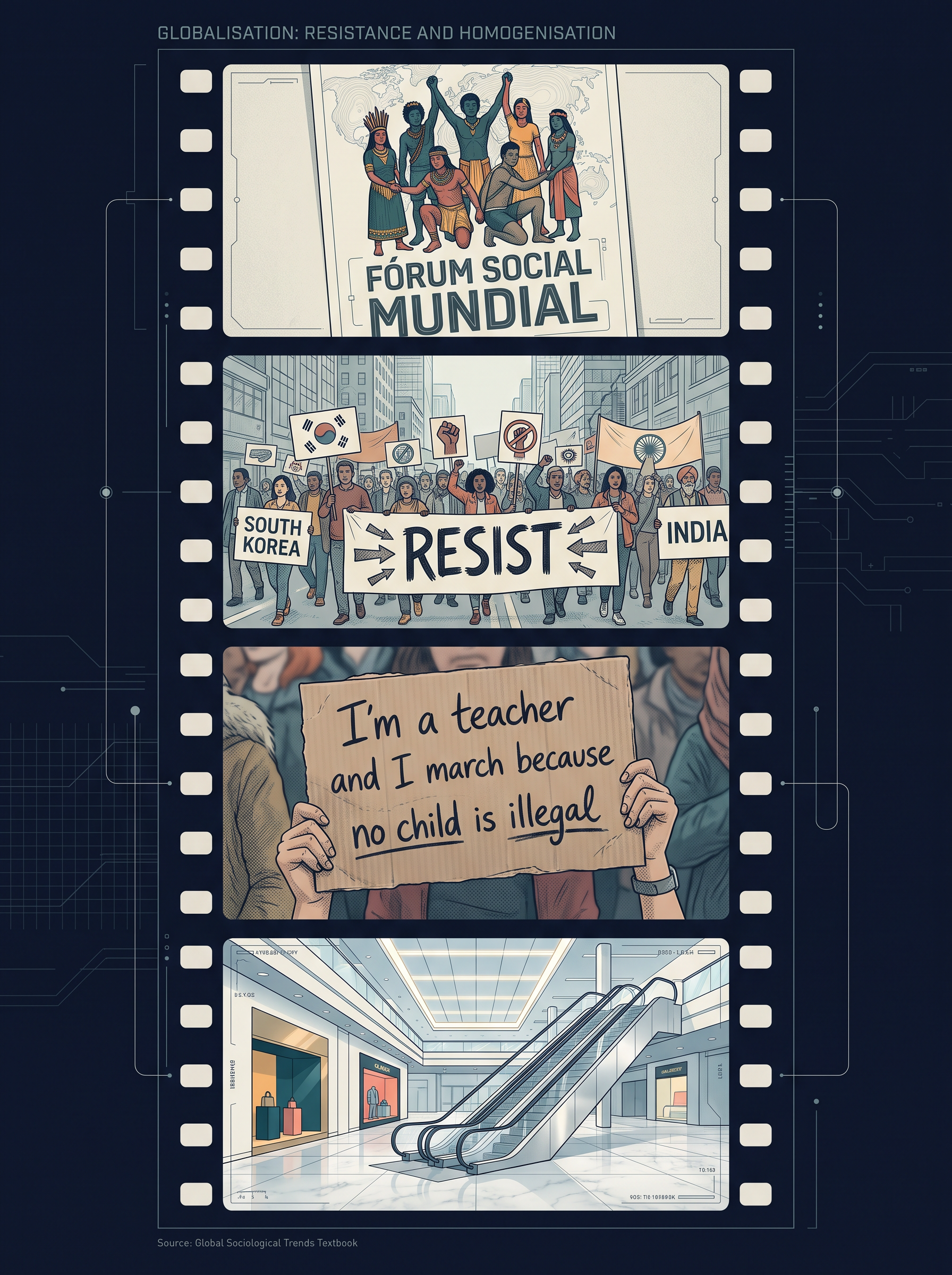
Fig. 7.7 – The cultural politics of globalisation.
The four images will not sit still in one argument, and that is why they are printed together. The mall is homogenisation; the protest banners naming several countries at once are also a kind of global flow; the poster puts indigenous peoples at the centre of a world forum. Culture is being flattened and defended and reinvented in the same set of photographs.
Homogenisation And Heterogenisation
While cultural homogenisation is an aspect of globalisation, the same process also generates precisely the opposite effect. It leads to each culture becoming more different and distinctive. This phenomenon is called cultural heterogenisation.
This is not to deny that there remain differences in power when cultures interact. The person who exports a film and the person who exports a dish are not equally placed, and the chapter does not pretend otherwise.
It is, more fundamentally, to suggest something else: that cultural exchange is rarely one way. Even in an unequal exchange, both sides are changed.
You can test this at home rather than in theory. Make a list of all the known ‘dialects’ of your language, consulting people of your grandparents’ generation. Then ask how many people speak those dialects today. If the number has fallen, you have found homogenisation in your own family. If new words, new mixtures and new registers have appeared instead, you have found heterogenisation. Most families will find both — which is exactly the chapter’s point.
A Voice From The Call Centre
The chapter closes its account of culture with a first-hand report by a call centre worker — the same kind of job Janardhan holds. It is worth reading as evidence of what cultural contact actually feels like from the Indian end of the telephone line.
Read what the writer actually claims. Cultural contact runs in both directions, and it is not only hostile: the worker says the job is enlightening, and reports finding Americans livelier and more honest than expected. That is heterogenisation happening inside a headset — an Indian employee revising an idea of America while an American revises an idea of India.
But the report also records the cost. The abuse is not about culture at all; it is about jobs, and it lands on the worker who answered the phone. The economic anxiety drawn in Fig. 7.4 is here spoken aloud to a real person, who must find a reply within seconds and stay polite.
Now the limit, and it matters. This is one worker’s testimony, written for a newspaper, and it tells us what that worker experienced and chose to make public. It cannot tell us how common irate calls are, how most callers behave, or what the workers who left the industry would have said. A single voice is evidence that something happens. It is not evidence of how often.
7.6 India And Globalisation
We said earlier that globalisation has occurred in earlier periods in history, in different parts of the world. India is a good place to test that claim. Flows pertaining to the movement of capital, commodities, ideas and people go back several centuries in Indian history — the four flows are not a visitor who arrived in the 1990s.
What Colonial Trade Did
During the colonial period, as a consequence of Britain’s imperial ambitions, India became an exporter of primary goods and raw materials and a consumer of finished goods.
Read that sentence as a description of a position in a trading system, not merely of a set of exports. Primary goods are things taken from the land — cotton, jute, tea, minerals — sold cheap and unworked. Finished goods are what somebody else made out of them, and sold back at a higher price. The profit sat at the manufacturing end, and the manufacturing end was not in India.
So India entered independence already knowing what an unequal flow feels like from the losing side. Every argument India would later have about globalisation was shaped by that memory.
The Choice To Turn Inward
After independence, because of this experience with the British, we decided to make things ourselves rather than relying on others. We also decided not to allow others to export to us, so that our own producers could learn to make things.
This is what is meant by protectionism — a government protecting its own producers by keeping foreign goods out, so that domestic industry has the time and the market in which to grow. The logic is not foolish. A new industry cannot survive its first years against a competitor who has been making the same thing for a century.
But this ‘protectionism’ generated its own problems. While some advances were made in certain arenas, critical sectors such as health, housing and primary education did not receive the attention they deserved. And India had a fairly sluggish rate of economic growth.
Notice the shape of that verdict. The chapter does not say protectionism failed because it was protectionism. It says the strategy produced advances in some places, neglect in others, and slow growth overall — a mixed record, which is what most policies actually leave behind.
The Turn Of 1991
In 1991, responding to a financial crisis and to the desire for higher rates of economic growth, India embarked on a programme of economic reforms. These reforms have sought increasingly to de-regulate various sectors, including trade and foreign investment — that is, the money that foreign firms and individuals put into businesses inside India.
Two things brought about the turn, and it matters that the chapter names both. There was a crisis, which forced a decision. And there was a desire for faster growth, which shaped what the decision was. A policy chosen under pressure is still a policy chosen.
While it may be too early to say how good this has been for India, the chapter is firm about how the question must be judged. The ultimate test is not high growth rates. It is making sure that the benefits of growth are shared, so that everyone is better off.
That standard should be held on to, because it is a political judgement and not an economic measurement. A country can grow quickly and still leave most of its people where they were. Asking who gained is the same question this chapter asked of economic globalisation everywhere — now asked at home.
7.7 Resistance To Globalisation
We have already noted that globalisation is a very contentious subject, and that it has invited strong criticism all over the globe. What is less often noticed is that the criticism does not come from one direction. Critics of globalisation make a variety of arguments, and some of them cannot be held by the same person at the same time.
The Criticism From The Left
Those on the left argue that contemporary globalisation represents a particular phase of global capitalism — one that makes the rich richer, and fewer, and the poor poorer.
The two words in that phrase, ‘and fewer’, are worth pausing on. The claim is not merely that inequality grows. It is that wealth concentrates in fewer and fewer hands as it grows.
For this criticism, the weakening of the state is the mechanism of the damage. Weakening of the state leads to a reduction in the capacity of the state to protect the interest of its poor. The state was the only institution obliged to defend those who have no market power, and it is precisely that institution which is being asked to step back.
The Criticism From The Right
Critics of globalisation from the political right express anxiety over the political, economic and cultural effects of the process. Their objections run across all three dimensions this chapter has taught you to distinguish.
In political terms, they also fear the weakening of the state — the same fear as the left, arrived at from a different starting point. Economically, they want a return to self-reliance, that is, to producing at home rather than depending on imports, and to protectionism, at least in certain areas of the economy.
Culturally, they are worried that traditional culture will be harmed, and that people will lose their age-old values and ways. This is the homogenisation argument of the previous section, now turned into a political demand.
Culture is where this argument becomes hardest to settle, because it reaches into ordinary pleasures. It is true that many of us like the new songs, and that people have always liked to dance. Does it really matter if the music is influenced by western music? The critic from the right says yes — that small borrowings accumulate into a lost way of life. The reply of the previous section says that a borrowing which adds to our choices has taken nothing away. Neither side can win this by assertion; it turns on whether anything was displaced.

Fig. 7.8 – Global brands adapting to local markets.
The last of these images makes the chapter’s own point against a simple story of imposition. The company is American; the meal is a kofta wrap, priced in local currency and advertised in Arabic. Something was imposed, and something was also adapted, in the same photograph.
Movements That Are Themselves Global
It is important to note here that anti-globalisation movements too participate in global networks, allying with those who feel like them in other countries. There is an irony in this, and it is not a criticism — it is a clue to what these movements actually want.
Many anti-globalisation movements are not opposed to the idea of globalisation per se — that is, to the thing in itself — so much as they are opposed to a specific programme of globalisation, which they see as a form of imperialism. Now the question raised at the very start of this chapter returns with a sharper edge. The objection is not to the world being connected. It is to who set the terms of the connection.
Testing It On Your Own Shelf
The chapter asks you to bring all of this home, and the exercise is a serious one. List the products you and your classmates are familiar with — food products, white goods such as refrigerators and washing machines, and luxuries. Write down your favourite television programmes. Pool the lists for the whole class.
Then divide into groups and find out who actually makes what you use, and who makes or sponsors the programmes you watch. Sort every name into three categories: exclusively foreign companies, exclusively Indian companies, and companies working in collaboration.
The third pile is the one to argue about. It is easy to talk about globalisation as foreign goods arriving and local industries closing, and that does happen — as we use more foreign goods, small-scale industries can lose their customers and shut down. But a list that ends with a large collaboration pile is telling you that the neat categories of ‘ours’ and ‘theirs’ have already stopped describing the shelf in your own home. Hold that finding against the debates in this chapter about what globalisation has done to developing and developed countries alike.
7.8 India And Resistance To Globalisation
What has been India’s experience in resisting globalisation?
The answer begins with social movements — organised collective efforts by ordinary people to change something in the society they live in. Social movements play a role in helping people make sense of the world around them, and in finding ways to deal with matters that trouble them. Before a movement can act on a grievance, it has to give the grievance a name.
Resistance to globalisation in India has come from different quarters. As in the rest of the world, it has come from the left and from the right, and the two have objected to different things.
Resistance From The Left
There have been left-wing protests to economic liberalisation — the reduction of government controls over the economy, which is what the reforms begun in 1991 set out to do. These protests have been voiced through political parties, as well as through forums such as the Indian Social Forum.
Trade unions of the industrial workforce, as well as those representing farmer interests, have organised protests against the entry of multinationals. A trade union is an association of workers formed to defend their wages and working conditions. Both kinds of union are speaking for people whose livelihoods are decided by what a distant firm chooses to do.
The patenting of certain plants, such as Neem, by American and European firms has also generated considerable opposition.
Resistance From The Right
Resistance to globalisation in India has also come from the political right. This has taken the form of objecting particularly to various cultural influences.
The objections the chapter records include the availability of foreign television channels provided by cable networks, the celebration of Valentine’s Day, and the westernisation of the dress tastes of girl students in schools and colleges. The threat issued against college girls who wear western clothes, which you met among the examples at the very start of this chapter, belongs to exactly this quarter of the resistance.
Set the two quarters side by side, and the shape of Indian resistance becomes clear. The left objects to what globalisation does to livelihoods and to the state’s power to protect them. The right objects to what globalisation does to culture and to inherited ways. They are not the same objection, and a country can face both at once.
One last observation is worth carrying into the summary. India has been, in this chapter, both an object of globalisation and an agent of it — a country whose farmers protest against multinationals, and a country whose companies buy firms in Europe; a country that fears the imposition of Western culture, and a country whose kurta is now worn over jeans in the United States. Neither half of that sentence cancels the other.
7.9 Summary
What Globalisation Is
- Globalisation is about flows: ideas, capital, commodities and people moving from one part of the world to another.
- The crucial element is the worldwide interconnectedness that these constant flows create and sustain.
- It is a multi-dimensional concept, with political, economic and cultural manifestations that must be distinguished from one another.
- Its impact is vastly uneven — on some societies more than others, and on some parts of a society more than others — so general conclusions drawn without attention to context are unsafe.
- Globalisation need not always be positive, and the direction of influence is not always from rich countries to poor ones.
Why It Happens
- The four flows have run through much of human history; those who call today’s globalisation distinctive point to the scale and speed of the flows.
- Globalisation is not caused by any single factor, but technology — the telegraph, the telephone, the microchip — is a critical element.
- Capital and commodities move faster and more widely than people do.
- Improved communication is not enough. Globalisation also requires that people recognise their interconnection with the rest of the world.
What It Does
- Politically, globalisation erodes state capacity: the welfare state gives way to a more minimalist state, and the market becomes the prime determinant of priorities.
- Yet the state remains the unchallenged basis of political community, and new technology, by letting the state collect information about citizens, makes it better able to rule.
- Economically, restrictions on the movement of commodities and capital have been reduced, while developed countries guard their borders against the movement of people.
- Opinion is intensely divided: critics fear a small section benefits while those dependent on the state are impoverished; advocates argue de-regulation raises growth and that the process is inevitable.
- Culturally, globalisation produces homogenisation — the imposition of Western culture, described as the soft power of US hegemony — and, at the same time, heterogenisation, as cultures absorb influences and make new combinations.
India, And The Resistance
- Colonial trade left India exporting primary goods and importing finished goods; after independence India chose protectionism, which brought some advances but neglected health, housing and primary education, and left growth sluggish.
- In 1991, a financial crisis and the desire for growth produced a programme of economic reforms de-regulating trade and foreign investment; the ultimate test of these is not growth but whether its benefits are shared.
- Critics on the left see a phase of global capitalism that makes the rich richer and fewer; critics on the right fear a weakened state, the end of self-reliance, and the loss of traditional culture.
- Anti-globalisation movements themselves work through global networks, and many oppose a specific programme of globalisation rather than the idea itself.
- In India, resistance has come from political parties, trade unions, farmers’ organisations and the opposition to plant patenting, and also from the political right, objecting to cultural influences.
7.10 NCERT Questions
Which of the statements are TRUE about globalisation?
- Globalisation is purely an economic phenomenon.
- Globalisation began in 1991.
- Globalisation is the same thing as westernisation.
- Globalisation is a multi-dimensional phenomenon.
Which of the statements are TRUE about the impact of globalisation?
- Globalisation has been uneven in its impact on states and societies.
- Globalisation has had a uniform impact on all states and societies.
- The impact of globalisation has been confined to the political sphere.
- Globalisation inevitably results in cultural homogeneity.
Which of the statements are TRUE about the causes of globalisation?
- Technology is an important cause of globalisation.
- Globalisation is caused by a particular community of people.
- Globalisation originated in the US.
- Economic interdependence alone causes globalisation.
Which of the statements are TRUE about globalisation?
- Globalisation is only about movement of commodities.
- Globalisation does not involve a conflict of values.
- Services are an insignificant part of globalisation.
- Globalisation is about worldwide interconnectedness.
Which of the statements are FALSE about globalisation?
- Advocates of globalisation argue that it will result in greater economic growth.
- Critics of globalisation argue that it will result in greater economic disparity.
- Advocates of globalisation argue that it will result in cultural homogenisation.
- Critics of globalisation argue that it will result in cultural homogenisation.
What is worldwide interconnectedness? What are its components?
How has technology contributed to globalisation?
Critically evaluate the impact of the changing role of the state in the developing countries in the light of globalisation.
What are the economic implications of globalisation? How has globalisation impacted on India with regard to this particular dimension?
Do you agree with the argument that globalisation leads to cultural heterogeneity?
How has globalisation impacted on India and how is India in turn impacting on globalisation?
7.11 Check Your Concepts
Look again at Fig. 7.4. What has changed between the two panels, and what fear is the cartoonist drawing? State one thing the cartoon cannot tell you about whether that fear is justified.
Read Source 7.1 once more. Identify one line in it that records cultural exchange, and one that records economic anxiety. Why is a single worker’s report weak evidence about how common such calls are?
Explain why the movement of capital and commodities across the world has grown faster than the movement of people. Whose decisions produced that difference?
Critics of globalisation come from both the left and the political right. Set out what each objects to, and name the one thing on which the two agree.
Reconstruct the chain that carried India from its position in colonial trade to the economic reforms of 1991. Name at least three links in the chain.
Anti-globalisation movements ally with sympathisers in other countries and meet on global platforms. Is this a contradiction? Answer using the distinction between opposing globalisation per se and opposing a specific programme of globalisation.
Fig. 7.6 presents the arrival of foreign goods as an invasion. Using the chapter’s discussion of the masala dosa and the khadi kurta, state the strongest objection to the cartoon’s claim — and say what would have to be true for the cartoon to be right after all.
The chapter says the ultimate test of India’s reforms is not high growth rates. What test does it propose instead, and what evidence would you need in order to apply that test?