Chapter 1: Variations in Psychological Attributes
In 1884, London hosted the International Health Exhibition, and among the stalls was one that visitors found very odd. It was a small laboratory set up by the English scientist Francis Galton, and for a modest fee anyone could walk in and be measured. Galton’s assistants recorded a visitor’s height and weight, the strength of the grip, how sharply the person could hear a high note, how quickly the hand moved once a signal was given, how finely two weights could be told apart. Thousands of ordinary people — clerks, students, soldiers, shopkeepers — passed through and walked out with a card carrying their own numbers.
Galton was not merely collecting curiosities. He wanted to show that human beings could be measured the way objects are measured, and that the differences between them could be counted, compared and studied. Most of what he chose to measure turned out to be a poor guide to how well a person actually thinks, and his own belief that such differences were largely inherited led him to support eugenics — a view later generations have rightly rejected. Yet the questions he forced open would not close again. How do people differ? Can those differences be measured? And once measured, what should anyone be allowed to do with the numbers?
This chapter is about those questions.
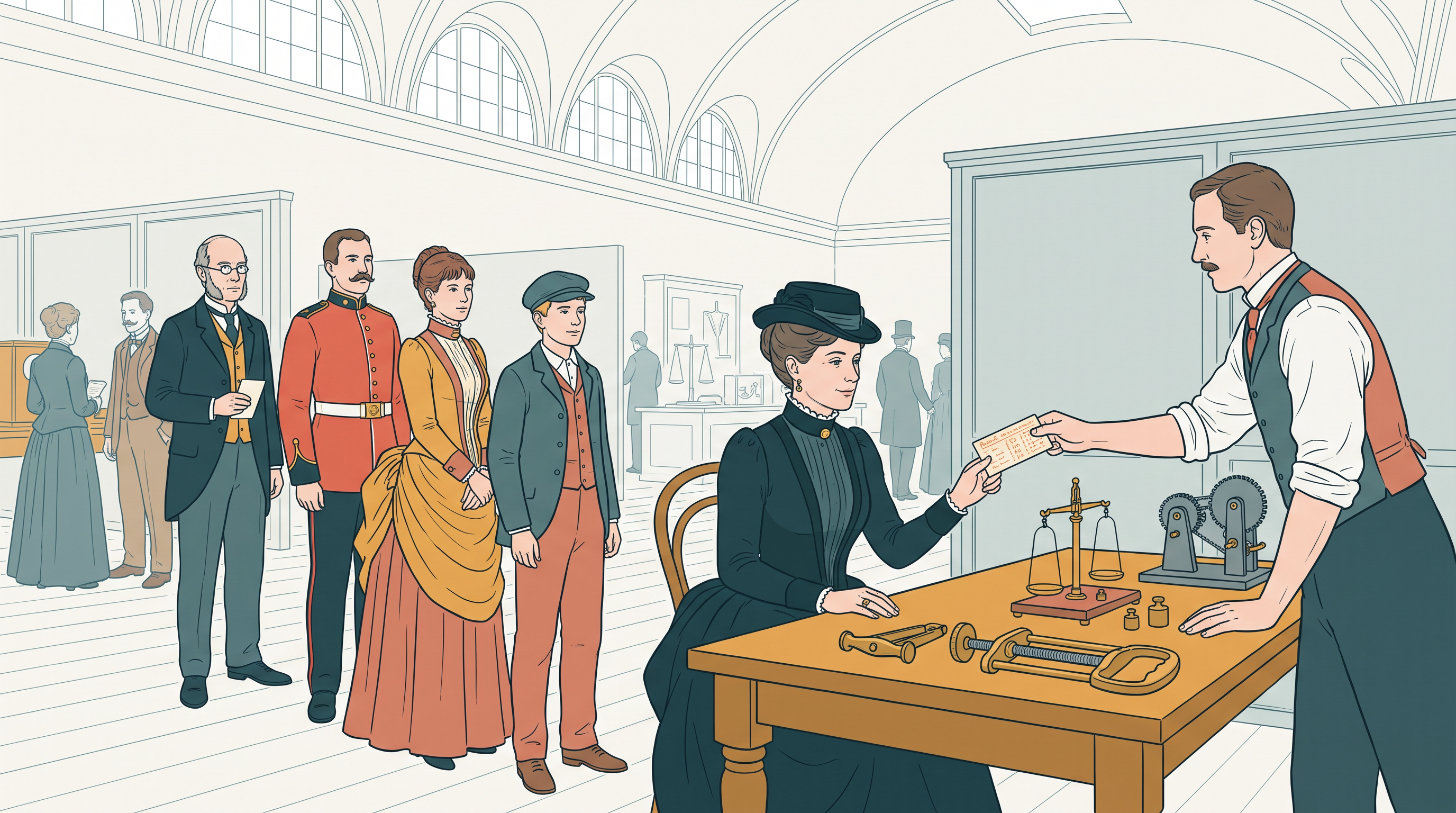
Fig. 1.4 – Galton’s anthropometric laboratory.
You cannot answer these questions yet. By the end of this chapter, you will be able to answer all five.
1.1 Introduction
Look around your classroom for a moment. Some of your classmates grasp a new idea almost as soon as the teacher states it, while others need to hear it twice and then explain it better than anyone else. Some notice details you completely missed. Some stay calm in a crisis; some do not. The same lesson, the same room, the same teacher — and yet no two students take away exactly the same thing from it.
Differences of this kind are not confined to a classroom. You will find them among friends, cousins, neighbours and colleagues: in how people perceive, learn and think, and in how well they perform on different tasks. That people differ is obvious. What is not obvious is how they differ, why they differ, and how those differences can be measured. These questions are the subject matter of the study of individual differences — the distinctiveness and variation found among people’s characteristics and behaviour patterns.
In Class XI you studied psychological principles that help us understand human behaviour in general. This chapter turns to the other half of the picture: not what human beings have in common, but where and why they part company. The study of individual differences has been one of the central concerns of modern psychology from the time of Galton onwards, and this chapter will introduce you to its fundamentals.
The attribute this chapter follows most closely
Of all the psychological attributes on which people vary, the one that has drawn the most attention — and the most argument — is intelligence. People differ in their ability to understand complex ideas, adapt to their environment, learn from experience, reason in various ways, and overcome obstacles. Every one of those abilities is hard to pin down, and psychologists have spent more than a century disagreeing about how to do it.
So this chapter will ask what intelligence is, how definitions of it have changed, how it is measured and what those measurements can and cannot tell us. It will look at how differently cultures — including our own — understand intelligent behaviour, at the full range of intellectual competence from intellectual disability to giftedness, and finally at those special abilities we call aptitudes, and at creativity.
1.2 Individual Differences in Human Functioning
Variation is not an accident of nature; it is the ordinary condition of it. Within any species and across species, no two members are identical. Imagine, for a moment, a world in which every object were the same colour — every wall, leaf, cloth and flower a single flat blue. It would still be a world, but it would not be a beautiful one, and almost no one would choose to live in it. Difference is what makes the world worth looking at.
People are no exception to this rule. We differ in physical characteristics such as height, weight, strength and hair colour. We differ just as clearly along psychological dimensions: one person is quick and another slow to learn, one dominant and another submissive, one strikingly creative and another far less so, one outgoing and another withdrawn. The list has no natural end.
Why each person is unique
Notice that these characteristics are not simply present or absent. Each trait exists in a person to some degree, and every person carries a different combination of degrees. Two students may both be sociable and both be careful, and still be quite unlike each other because one is a little more sociable and much more careful than the other. It is this particular combination — not any single trait — that makes each of us unique.
The obvious question follows: how, and why, do people differ? That question is the subject matter of the study of individual differences.
Do traits explain behaviour, or do situations?
Many psychologists explain behaviour by looking inward, at a person’s own enduring traits: if Meera helps a stranger, it is because Meera is a helpful person. Other psychologists are unconvinced. They point out that the same person behaves very differently depending on where she is and who she is with, and they hold that behaviour is shaped far more by the circumstances than by the personality. This second view is called situationism.
Think of an employee who is generally aggressive — quick to argue, unwilling to back down. Put him in a room with his top boss and he may turn quiet, agreeable, almost meek. The trait did not disappear; the situation overrode it. Sometimes situational pressure is so strong that people with quite different personalities all respond in nearly the same way — as in a crowded examination hall, where nervous and confident students alike fall silent when the papers are handed out.
1.3 Assessment of Psychological Attributes
Psychological attributes come in an extraordinary range of sizes. At one end sits something as narrow and precise as reaction time — the fraction of a second a person takes to respond to a stimulus. At the other end sits something as broad and slippery as happiness. Between these two lie thousands of attributes on which human beings can be compared, and no one has ever managed to count them all.
Whatever the attribute, the first step in understanding it is always the same: it has to be assessed. Assessment is what turns a vague impression into something that can be examined, compared and checked.
Notice the strictness of the psychological position here. An attribute is said to exist in a person only if it can be measured using scientific procedures. When we say “Harish is dominant”, we are not reporting a fact of nature that everyone can see; we are stating the degree of dominance we believe Harish possesses, and that statement rests entirely on our own assessment of him.
Formal and informal assessment
Our assessment of Harish may be informal or formal, and the difference matters a great deal. An informal assessment is the one we all make constantly — a judgement formed from what we happen to have noticed. It changes from case to case and from one assessor to another, which leaves it open to subjective interpretation. Two teachers watching the same boy may confidently reach opposite conclusions.
A formal assessment is objective, standardised and organised: the same procedure, the same conditions and the same yardstick are used for everyone. Psychologists are trained precisely in making formal assessments of psychological attributes, and it is this training that separates a psychological judgement from an ordinary opinion.
Why we assess at all
Assessment is not carried out for its own sake. Once we have assessed Harish, we can use that information to predict how he is likely to behave in future — for instance, that if he is given charge of a team, he will probably lead in an authoritarian way. And if the predicted consequence is not one we want, we can intervene to bring about a change in his behaviour.
This is why the attribute we choose to assess depends entirely on our purpose. To help a weak student do better in examinations, we would assess her intellectual strengths and weaknesses. If a person cannot get along with members of her family and neighbourhood, we would think of assessing her personality characteristics. For someone who seems poorly motivated, we would assess her interests and preferences.
1.3.1 Some Domains of Psychological Attributes
Psychological attributes are not linear or unidimensional; they are complex, and they are expressed in terms of dimensions. A useful comparison is with geometry. A point occupies no space at all. A line is only an aggregate of points, and can be described by a single measurement. But think of a box: it occupies space, and it cannot be described unless you give all three of its dimensions — length, width and height, as shown in Fig. 1.5.
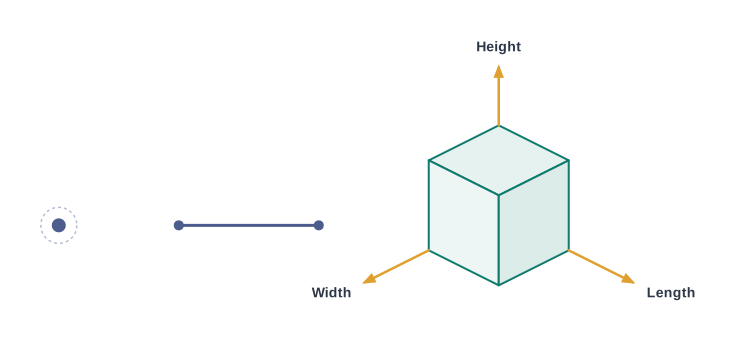
Fig. 1.5 – Dimensions of psychological attributes.
Psychological attributes are like the box. They are usually multi-dimensional, and a complete assessment of a person therefore requires us to see how she functions across several domains or areas — cognitive, emotional, social, and so on. Judging a person on one dimension alone is like describing a box by its length.
The attributes discussed below are the ones psychologists have found most useful. They are grouped in this way largely because of the varieties of tests that have grown up around them in the psychological literature.
Intelligence is the global capacity to understand the world, think rationally, and use available resources effectively when faced with challenges. Intelligence tests provide a global measure of a person’s general cognitive competence, including the ability to profit from schooling. Students with low intelligence are, in general, not likely to do very well in school examinations — but note the careful limit on that claim. Success in life is not associated only with intelligence test scores.
Aptitude refers to an individual’s underlying potential for acquiring skills. Aptitude tests are used to predict what a person will be able to do if given the proper environment and training. A person with high mechanical aptitude can profit from suitable training and do well as an engineer; a person with high language aptitude can be trained to become a good writer. Aptitude, in other words, is about the future rather than the present.
Interest is an individual’s preference for engaging in one or more specific activities relative to others. Assessing the interests of students helps decide which subjects or courses they can pursue comfortably and with pleasure. Knowing our interests helps us make choices that promote both satisfaction in life and performance on the job.
Personality refers to the relatively enduring characteristics of a person that make her or him distinct from others. Personality tests try to assess these unique characteristics — whether a person is dominant or submissive, outgoing or withdrawn, moody or emotionally stable. Such assessment helps us explain why an individual behaved as she did, and predict how she will behave in future.
Values are enduring beliefs about an ideal mode of behaviour. A person who holds a value uses it as a standard both for guiding her own actions and for judging others. In value assessment, we try to determine which values dominate in a person — political, religious, social or economic.
1.3.2 Assessment Methods
Several methods are used for psychological assessment, and you met some of them in Class XI. It is worth recalling their key features, because each has a characteristic strength and a characteristic weakness.
A psychological test is an objective and standardised measure of an individual’s mental and/or behavioural characteristics. Objective tests have been developed to measure all the dimensions of psychological attributes described above — intelligence, aptitude, and the rest. Such tests are widely used for clinical diagnosis, guidance, personnel selection, placement and training. Besides objective tests, psychologists have also developed certain projective tests, especially for assessing personality; you will study them in Chapter 2.
An interview involves seeking information from a person on a one-to-one basis. You have seen it in use more often than you may realise: a counsellor talking with a client, a salesperson conducting a door-to-door survey about a product, an employer selecting employees for an organisation, or a journalist questioning an important public figure on a matter of national or international importance.
A case study is an in-depth study of an individual in terms of her psychological attributes and psychological history, seen in the context of her psychosocial and physical environment. Case studies are widely used by clinical psychologists. Case analyses of the lives of great people can also be highly illuminating for anyone willing to learn from their experiences. A case study is not itself a single technique; it is built from data generated by several methods together — interview, observation, questionnaire, psychological tests, and so on.
The observational method involves employing systematic, organised and objective procedures to record behavioural phenomena as they occur naturally, in real time. Some phenomena lend themselves to it particularly well — mother-child interactions, for example, are best studied as they actually unfold. But the method carries two well-known problems. The observer has little control over the situation, and the reports may suffer from the observer’s own subjective interpretations of what was seen.
A self-report is a method in which a person provides factual information about herself, and/or the opinions and beliefs she holds. Such information may be obtained through an interview schedule or a questionnaire, a psychological test, or a personal diary. Its strength is direct access to what only the person can know; its weakness is that people do not always report themselves accurately.
1.4 Intelligence
Of all the attributes on which people differ, intelligence is the one psychologists return to most often. It is the key construct used to understand how individuals differ from one another, and it also tells us something no other single attribute does: how people adapt their behaviour to the environment they live in. A person who does not adapt at all is not managing life; a person who adapts well is doing what intelligence, in almost every account of it, is for.
Everyday intelligence and psychological intelligence
The psychological notion of intelligence is quite different from the common-sense notion. In everyday speech, calling someone intelligent is largely a compliment, and it is offered on the strength of a general impression. Watch the person we tend to call intelligent, and you will notice a cluster of qualities: mental alertness, ready wit, quickness in learning, and the ability to understand relationships between things.
These same qualities are what the early theorists worked with. The Oxford Dictionary explains intelligence as the power of perceiving, learning, understanding and knowing — four words that are still recognisable in every definition that followed.
How psychologists have defined it
Alfred Binet was one of the first psychologists to work seriously on intelligence, and he tried to state it in terms of what the mind actually does.
Wechsler, whose intelligence tests are the most widely used in the world, took a different route. He was less interested in listing mental powers than in asking what those powers are good for — in other words, in the functionality of intelligence, its value for adaptation to the environment.
Read the two definitions side by side and you can see the shift. Binet describes what happens inside the head. Wechsler describes what the person manages to do in the world. The word “aggregate” in Wechsler’s definition matters too: he treats intelligence as a total, a sum of capacities working together rather than one narrow skill.
Later psychologists, among them Gardner and Sternberg, pushed the idea one step further. An intelligent individual, they argue, does not merely adapt to the environment she finds; she also actively modifies or shapes it. A farmer who changes her sowing calendar because the rains have shifted is adapting. A farmer who redesigns the field’s drainage so that the shifted rains no longer matter is shaping. Both are being intelligent, but not in the same way — and no test that measures only school-type reasoning will notice the difference.
1.5 Theories of Intelligence
Psychologists have proposed a great many theories of intelligence, and at first sight the list can look like a crowd of rival opinions. It is easier to follow if you notice that the theories fall into two broad families, distinguished by the question each family is trying to answer.
The psychometric approach — sometimes called the structural approach — asks what intelligence is made of. It considers intelligence to be an aggregate of abilities, and it expresses an individual’s performance in terms of a single index of cognitive abilities, of which IQ is the most familiar example. Its method is to test large numbers of people and study the pattern in their scores.
The information-processing approach asks a different question: how does an intelligent person go about it? Rather than mapping the structure of intelligence or its underlying dimensions, this approach describes the processes people actually use in intellectual reasoning and problem solving. Its focus is on how an intelligent person acts, and it emphasises studying the cognitive functions that underlie intelligent behaviour.
The psychometric theories
Alfred Binet, whom you met in the previous section, was the first psychologist who tried to formalise the concept of intelligence in terms of mental operations. Before him, intelligence had been described only in general ways, in philosophical writings belonging to many different cultural traditions.
Binet’s own theory was rather simple, because it grew out of a practical interest: he wanted to tell more intelligent individuals apart from less intelligent ones. He therefore treated intelligence as consisting of one similar set of abilities, which a person could use to solve any or every problem in her environment. This is known as the uni-factor theory, or one-factor theory, of intelligence.
The theory came to be disputed for an interesting reason. When psychologists began analysing the data collected from individuals using Binet’s own test, the pattern of scores did not behave as a single ability should. A person could do well on one kind of item and poorly on another. Something more complicated was going on.
Spearman: one general factor and many specific ones
In 1927, Charles Spearman proposed a two-factor theory of intelligence, using a statistical method called factor analysis. Factor analysis looks at how a large set of test scores rise and fall together, and works out how few underlying abilities would be needed to account for that pattern.
What Spearman found was that intelligence consists of a general factor, the g-factor, and a number of specific factors, the s-factors. The g-factor includes mental operations that are primary and common to all performances — whatever the task, some of the same underlying capacity is being drawn upon. In addition to it, Spearman said, there are many specific abilities, contained in what he called the s-factor.
The combination explains something the uni-factor theory could not. Excellent singers, architects, scientists and athletes may all be high on the g-factor; but each of them also possesses specific abilities that allow her to excel in her own particular domain. A brilliant scientist is not automatically a brilliant singer, and the s-factors are why.
Thurstone: seven primary mental abilities
Louis Thurstone took up precisely that objection. He proposed the theory of primary mental abilities, which states that intelligence consists of seven primary abilities, each of them relatively independent of the others. In his account there is no single general ability sitting above them; there are seven, and a person may be strong in some and weak in others.
The seven primary abilities are:
- Verbal Comprehension — grasping the meaning of words, concepts and ideas.
- Numerical Abilities — speed and accuracy in numerical and computational skills.
- Spatial Relations — visualising patterns and forms.
- Perceptual Speed — speed in perceiving details.
- Word Fluency — using words fluently and flexibly.
- Memory — accuracy in recalling information.
- Inductive Reasoning — deriving general rules from presented facts.
You can recognise these in an ordinary classroom. The student who spots the pattern in a series of numbers before anyone else is high on inductive reasoning; the one who finds the single spelling error on a printed page is high on perceptual speed. They need not be the same student.
Jensen: a hierarchy of two levels
Arthur Jensen proposed a hierarchical model of intelligence, in which abilities operate at two levels, called Level I and Level II.
Level I is associative learning, in which the output is more or less similar to the input. Learning a list of dates, or repeating a phone number you have just heard, is Level I work: the material comes out much as it went in.
Level II, called cognitive competence, involves higher-order skills, because here the input is transformed to produce an effective output. Reading three accounts of an event and writing a fair summary of what probably happened is Level II work. Nothing you produce is a copy of anything you were given.
Guilford: the structure-of-intellect model
J.P. Guilford went in the opposite direction — not two levels, but a classification fine enough to cover every intellectual trait he could identify. His structure-of-intellect model classifies intellectual traits along three dimensions: operations, contents and products. As Fig. 1.6 shows, the model can be pictured as a cube, with one dimension along each edge.
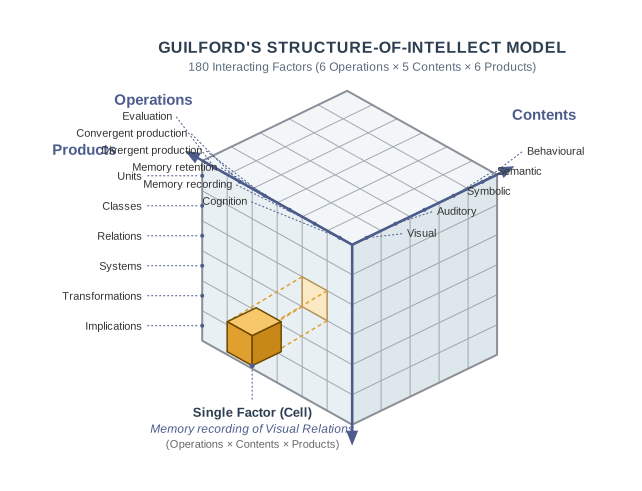
Fig. 1.6 – Guilford’s structure-of-intellect model.
Operations are what the respondent does. These include cognition, memory recording, memory retention, divergent production, convergent production, and evaluation.
Contents refer to the nature of the materials or information on which the intellectual operations are performed. These include visual, auditory, symbolic (for example, letters and numbers), semantic (for example, words) and behavioural (for example, information about people’s behaviour, attitudes and needs).
Products refer to the form in which information is processed by the respondent. Products are classified into units, classes, relations, systems, transformations and implications.
Now count. Since this classification (Guilford, 1988) includes \(6 \times 5 \times 6\) categories, the model has 180 cells. Each cell is expected to have at least one factor or ability, and some cells may have more than one. Every factor, in this scheme, is described in terms of all three dimensions at once — an ability is not simply “memory”, but memory of a particular kind of content in a particular form.
The five theories you have just read — Binet’s, Spearman’s, Thurstone’s, Jensen’s and Guilford’s — are all representations of the psychometric approach to understanding intelligent behaviour. Each answers the question “what is intelligence made of?” The theories that follow change the question.
1.5.1 Theory of Multiple Intelligences
Howard Gardner proposed the theory of multiple intelligences. According to him, intelligence is not a single entity at all; rather, distinct types of intelligences exist, and each of these is independent of the others.
Read that word “independent” carefully, because it carries the whole weight of the theory. It means that if a person exhibits one type of intelligence, this does not necessarily indicate that she is high or low on any of the others. A student who is poor at mathematics is not, on Gardner’s view, “less intelligent”; she is low on one intelligence, and may be exceptional on another. At the same time, Gardner also put forth that the different types of intelligences interact and work together to find a solution to a problem. A surgeon needs more than one of them at once.
Gardner arrived at his list by studying extremely talented persons, who had shown exceptional abilities in their respective areas, and he described eight types of intelligence.
Linguistic intelligence is the ability to produce and use language. It is the capacity to use language fluently and flexibly to express one’s thinking and to understand others. Persons high on this intelligence are ‘word-smart’: they are sensitive to different shades of word meaning, they are articulate, and they can create linguistic images in their minds. Poets and writers are very strong in this component.
Logical–Mathematical intelligence is the ability to think logically and critically, and to solve problems. Persons high on this type of intelligence engage in abstract reasoning, and can manipulate symbols to solve mathematical problems. Scientists and Nobel Prize winners are likely to be strong in this component.
Spatial intelligence is the ability to form visual images and patterns. It refers to the abilities involved in forming, using and transforming mental images. A person high on this intelligence can easily represent the spatial world in her mind. Pilots, sailors, sculptors, painters, architects, interior decorators and surgeons are likely to have highly developed spatial intelligence.
Musical intelligence is the ability to produce and manipulate musical rhythms and patterns. It is the capacity to produce, create and manipulate musical patterns. Persons high on this intelligence are very sensitive to sounds and vibrations, and to the creation of new patterns of sound.
Bodily–Kinaesthetic intelligence is the ability to use the whole body, or portions of it, flexibly and creatively. It consists of using the body for display, for the construction of products, and for problem solving. Athletes, dancers, actors, sportspersons, gymnasts and surgeons are likely to have this kind of intelligence.
Interpersonal intelligence is the ability to understand the subtle aspects of others’ behaviour. It is the ability to understand the motives, feelings and behaviours of other people, so as to bond into a comfortable relationship with them. Psychologists, counsellors, politicians, social workers and religious leaders are likely to possess high interpersonal intelligence.
Intrapersonal intelligence is the ability to understand one’s own feelings, motives and desires. It refers to the knowledge of one’s internal strengths and limitations, and the use of that knowledge to relate effectively to others. Persons high on this ability have finer sensibilities regarding their identity, human existence and the meaning of life. Philosophers and spiritual leaders present examples of this type of intelligence.
Naturalistic intelligence is the ability to identify the features of the natural world. It involves a complete awareness of our relationship with the natural world, and it is useful in recognising the beauty of different species of flora and fauna, and in making subtle discriminations in the natural world. Hunters, farmers, tourists, botanists, zoologists and bird watchers possess more of naturalistic intelligence.
1.5.2 Triarchic Theory of Intelligence
Robert Sternberg (1985) proposed the triarchic theory of intelligence. Sternberg views intelligence as “the ability to adapt, to shape and select environment to accomplish one’s goals and those of one’s society and culture”. According to this theory, there are three basic types of intelligence: componential, experiential and contextual. The elements of the theory are shown in Fig. 1.1.
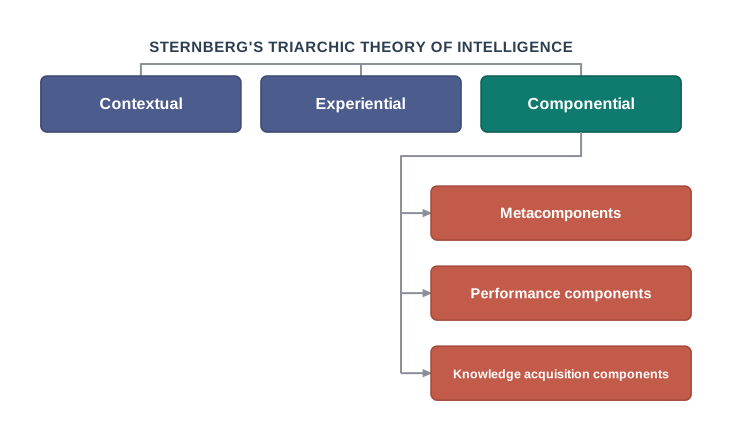
Fig. 1.1 – Elements of the triarchic theory of intelligence.
Componential intelligence, also called analytical intelligence, is the analysis of information to solve problems. Persons high on this ability think analytically and critically, and they succeed in schools — which is unsurprising, since school work is largely built out of exactly this kind of task.
This intelligence has three components, each serving a different function. First is the knowledge acquisition component, which is responsible for learning and acquiring the ways of doing things. Second is the meta, or higher-order, component, which involves planning concerning what to do and how to do it. Third is the performance component, which involves actually doing things. Notice the division of labour: one part learns the method, one part decides on the strategy, one part carries it out.
Experiential intelligence, or creative intelligence, is involved in using past experiences creatively to solve novel problems. It is reflected in creative performance. Persons high on this aspect integrate different experiences in an original way to make new discoveries and inventions, and they quickly find out which information is crucial in a given situation.
Contextual intelligence, or practical intelligence, involves the ability to deal with environmental demands encountered on a daily basis. It may be called ‘street smartness’ or ‘business sense’. Persons high on this aspect easily adapt to their present environment, or select a more favourable environment than the existing one, or modify the environment to fit their needs. Because of this, they tend to turn out successful in life.
Sternberg’s triarchic theory represents the information-processing approach to understanding intelligence. Its question is not what abilities a person owns, but what she does with a problem when it arrives.
1.5.3 Planning, Attention-arousal, and Simultaneous-successive (PASS) Model of Intelligence
This model was developed by J.P. Das, Jack Naglieri and Kirby (1994). According to it, intellectual activity involves the interdependent functioning of three neurological systems, called the functional units of the brain. These units are responsible for arousal/attention, coding or processing, and planning respectively, as shown in Fig. 1.7.
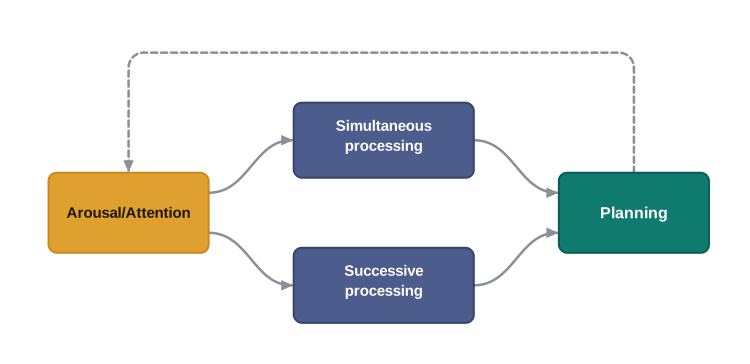
Fig. 1.7 – The PASS model of intelligence.
Arousal/Attention. A state of arousal is basic to any behaviour, because it is what helps us attend to stimuli in the first place. Arousal and attention together enable a person to process information. An optimal level of arousal focuses our attention on the relevant aspects of a problem; too much or too little arousal would interfere with attention. Think of what happens when your teacher announces a test she plans to hold. The announcement arouses you, and that arousal forces you to focus your attention on reading, learning and revising the contents of the specific chapters.
Simultaneous and Successive Processing. Once you are attending, you can integrate the information into your knowledge system in either of two ways.
Simultaneous processing takes place when you perceive the relations among various concepts and integrate them into a meaningful pattern for comprehension. In Raven’s Progressive Matrices (RPM) Test, for example, a design is presented from which a part has been removed, and you have to choose one of six options that best completes the design. Simultaneous processing helps you grasp the meaning and the relationship between the given abstract figures — you must see the whole pattern at once.
Successive processing takes place when you remember all the information serially, so that the recall of one item leads to the recall of the next. Learning digits, the letters of the alphabet, or multiplication tables are examples of successive processing. Here the order is the meaning; disturb the order and the material collapses.
Planning. This is an essential feature of intelligence. After information has been attended to and processed, planning is activated. It allows us to think of possible courses of action, implement them to reach a target, and evaluate their effectiveness. If a plan does not work, it is modified to suit the requirements of the task or the situation.
Return to the test your teacher announced. To do well in it, you would have to set goals, plan a time schedule of study, and get clarifications where you face problems. And if you find you cannot manage the chapters assigned for the test, you may have to think of other ways — giving more time, or studying with a friend — to meet your goals. That revision of the plan is itself an act of intelligence.
These PASS processes operate on a knowledge base, which is developed either formally, by reading, writing and experimenting, or informally, from the environment. The processes are interactive and dynamic in nature, and yet each has its own distinctive function. None of them works alone: attention without planning wanders, and planning without processing has nothing to plan with.
Das and Naglieri have also developed a battery of tests known as the Cognitive Assessment System (CAS). It consists of verbal as well as non-verbal tasks that measure basic cognitive functions presumed to be independent of schooling, and it is meant for individuals between 5 and 18 years of age. Its usefulness is practical as well as theoretical: the results of the assessment can be used to remedy the cognitive deficits of children with learning problems. A child who is failing at reading for want of successive processing needs different help from one who is failing for want of planning, and the CAS is designed to tell the two apart.
Like Sternberg’s theory, the PASS model represents the information-processing approach to intelligence.
1.6 Individual Differences in Intelligence
Why are some people more intelligent than others? Is it because of their heredity, or because of the environment they grew up in? You met these two forces in Class XI, when you studied how an individual develops. Here we ask what they have to do with intelligence in particular — and then, having decided what intelligence is, we ask how psychologists actually measure it and what the range of measured intelligence looks like in a population.
1.6.1 Intelligence: Interplay of Nature and Nurture
The evidence for heredity
The evidence for hereditary influences on intelligence comes mainly from studies of twins and of adopted children. The logic of a twin study is simple. Identical twins share all their genes; fraternal twins and ordinary siblings share, on average, half. If genes matter, the more genes two people share, the more alike their intelligence should be.
That is roughly what the correlations show. The intelligence of identical twins reared together correlates almost 0.90 — about as high as a correlation between two people ever gets. Even twins separated early in childhood show considerable similarity in their intellectual, personality and behavioural characteristics: the intelligence of identical twins reared in different environments correlates 0.72. Below that come fraternal twins reared together, at almost 0.60; brothers and sisters reared together, at about 0.50; and siblings reared apart, at about 0.25.
A second line of evidence comes from studies of adopted children, which show that children’s intelligence is more similar to that of their biological parents than to that of their adoptive parents.
The evidence for environment
Now read the same numbers the other way. Identical twins reared apart correlate 0.72, not 0.90 — the drop from one figure to the other is the work of the environment. And siblings reared apart correlate only 0.25, against 0.50 for those reared together.
Studies of adopted children point the same way. As adopted children grow older, their intelligence level tends to move closer to that of their adoptive parents. Children from disadvantaged homes who are adopted into families of higher socio-economic status show a large increase in their intelligence scores. More broadly, there is evidence that environmental deprivation lowers intelligence, while rich nutrition, a good family background and quality schooling increase it.
The settled view
There is a general consensus among psychologists that intelligence is the product of a complex interaction of heredity (nature) and environment (nurture). The most useful way to hold the two together is this: heredity can best be viewed as something that sets a range within which an individual’s development takes place, while the actual point reached within that range is shaped by the support and opportunities the environment provides.
1.6.2 Assessment of Intelligence
Mental age and chronological age
In 1905, Alfred Binet and Theodore Simon made the first successful attempt to formally measure intelligence. In 1908, when the scale was revised, they gave psychology one of its most useful ideas: mental age (MA).
A mental age of 5 means that a child’s performance on an intelligence test equals the average performance level of a group of five-year-olds — whatever the child’s actual age happens to be. That actual age has a name of its own: chronological age (CA) is the biological age counted from birth.
Put the two side by side and the comparison becomes informative. A bright child’s MA is more than her CA; for a dull child, MA is below CA. Retardation was defined by Binet and Simon as being two mental age years below the chronological age.
The intelligence quotient
In 1912, the German psychologist William Stern turned that comparison into a single number: the intelligence quotient (IQ).
\[IQ = \frac{MA}{CA} \times 100\]
Here MA is the mental age and CA is the chronological age, both measured in years. The number 100 is used simply as a multiplier, to avoid a decimal point in the answer.
Notice what the formula does. When MA equals CA, the IQ equals 100. If MA is more than CA, IQ is more than 100. IQ becomes less than 100 when MA is less than CA. And because the child’s own age sits in the denominator, the average IQ in the population is 100 irrespective of age — a ten-year-old and a fifteen-year-old of average ability both score 100.
How IQ scores are spread in a population
IQ scores are distributed in the population in a very particular way: the scores of most people tend to fall in the middle range of the distribution, and only a few people have either very high or very low scores. The frequency distribution of IQ scores therefore tends to approximate a bell-shaped curve, called the normal curve. Such a distribution is symmetrical around its central value, the mean, as Fig. 1.2 shows.
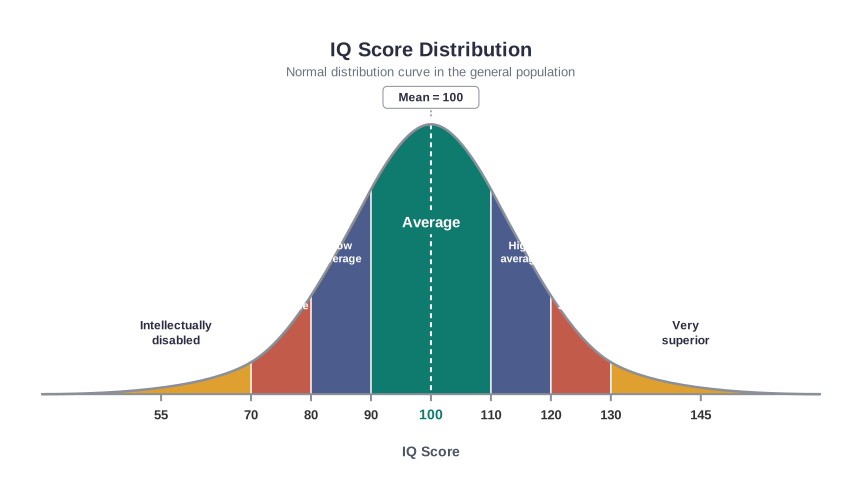
Fig. 1.2 – Distribution of IQ scores in the population.
The mean IQ score in a population is 100. People with IQ scores in the range of 90–110 have normal intelligence. Those with IQ below 70 are suspected to have intellectual disability, while persons with IQ above 130 are considered to have exceptional talents. The score of any individual can be interpreted by referring to Table 1.1.
Table 1.1: Classification of people on the basis of IQ
| IQ Range | Descriptive Label | Per cent in the Population |
|---|---|---|
| Above 130 | Very superior | 2.2 |
| 120 – 130 | Superior | 6.7 |
| 110 – 119 | High average | 16.1 |
| 90 – 109 | Average | 50.0 |
| 80 – 89 | Low average | 16.1 |
| 70 – 79 | Borderline | 6.7 |
| Below 70 | Intellectually disabled | 2.2 |
Read the last column carefully, because it contains the whole logic of the normal curve. Half the population sits in the average band. The bands on either side shrink steadily as you move outwards, until you reach the two extremes, each holding about 2 per cent.
All persons do not have the same intellectual capacity; some are exceptionally bright and some are below average. One practical use of an intelligence test is precisely to identify persons at these extremes of intellectual functioning. About 2 per cent of the population have IQ above 130, and a similar percentage have IQ below 70. Persons in the first group are described as intellectually gifted; those in the second are described as having intellectual disability. Both groups deviate considerably from the rest of the population in their cognitive, emotional and motivational characteristics — and both, for that reason, need something different from what an ordinary classroom offers.
1.6.3 Variations of Intelligence
Intellectual deficiency
On one side of the distribution are the gifted and creative persons just mentioned. On the other are children who face enormous difficulty in learning even very simple skills. Children who show intellectual deficiency are described as having intellectual disability.
As a group, persons with intellectual disability vary widely among themselves — the category covers a very large range, and treating it as one uniform condition is the first mistake to avoid. The American Association on Mental Deficiency (AAMD) offers the definition that most classifications rest on.
The definition points to three basic features, and all three must be present.
First, the person must show significantly sub-average intellectual functioning. Persons having IQs below 70 are judged to have sub-average intelligence.
Second, there must be deficits in adaptive behaviour. Adaptive behaviour refers to a person’s capacity to be independent and to deal effectively with her environment — dressing, travelling, handling money, holding a conversation, managing a job. This is why a low test score alone settles nothing: a person who scores below 70 but manages her daily life competently does not meet the definition.
Third, the deficits must be observed during the developmental period, that is, between 0 and 18 years of age.
The levels of intellectual disability
Individuals categorised as having intellectual disability show significant variation in their abilities, ranging from those who can be taught to work and function with special attention, to those who cannot be trained and require institutional care throughout their lives. Because the mean IQ score in the population is 100, the figures below are used to mark out the categories.
The different levels of intellectual disability are: mild (IQs 55 to approximately 70), moderate (IQs 35–40 to approximately 50–55), severe (IQs 20–25 to approximately 35–40), and profound (IQs below 20–25).
Although the development of people with mild disability is typically slower than that of their peers, they can function quite independently, hold jobs and have families. As the level of disability increases, the difficulties are strongly marked. People with moderate disability lag behind their peers in language and motor skills; they can be trained in self-care skills and in simple social and communication skills, and they need a moderate degree of supervision in everyday tasks. Individuals with severe and profound disability are not able to manage life on their own and need constant care for their entire lives. You will read more about the characteristics of persons with intellectual disability in Chapter 4.
Intellectual giftedness
At the other extreme are intellectually gifted individuals, who show higher performance because of their outstanding potentialities.
The systematic study of gifted individuals began in 1925, when Lewis Terman followed the lives of about 1500 children with IQs of 130 and above, to examine how intelligence was related to occupational success and life adjustment. It was one of the first attempts to ask what actually becomes of a high scorer.
Two words are often used interchangeably here, and they should not be. Giftedness is exceptional general ability, shown in superior performance across a wide variety of areas. Talent is a narrower term, and refers to remarkable ability in a specific field — spiritual, social, aesthetic, and so on. The highly talented are sometimes called ‘prodigies’.
Psychologists have suggested that giftedness, from the teachers’ point of view, depends on a combination of three things: high ability, high creativity, and high commitment. Ability alone is not enough; the child who can and the child who does are not always the same child.
Gifted children show early signs of intellectual superiority. Even during infancy and early childhood, they show a larger attention span, good recognition memory, a preference for novelty, sensitivity to environmental changes, and an early appearance of language skills.
It is not correct, however, to equate giftedness with brilliant academic performance. Athletes who show superior psychomotor ability are also gifted. Each gifted student possesses different strengths, personalities and characteristics.
Some important characteristics of gifted children are:
- advanced logical thinking, questioning and problem solving behaviour;
- high speed in processing information;
- superior generalisation and discrimination ability;
- an advanced level of original and creative thinking;
- a high level of intrinsic motivation and self-esteem;
- independent and non-conformist thinking;
- a preference for solitary academic activities for long periods.
Performance on intelligence tests is not the only measure for identifying the gifted. Many other sources of information — teachers’ judgement, school achievement records, parents’ interviews, peer ratings and self-ratings — can be used in combination with intellectual assessment.
To reach their full potential, gifted children require special attention and educational programmes beyond those provided to other children in regular classrooms. These may include life enrichment programmes that sharpen children’s skills in productive thinking, planning, decision-making and communication. A gifted child left unchallenged does not simply stay where she is; she often becomes bored, restless and difficult, and the school then treats as a discipline problem what is really a curriculum problem.
1.6.4 Types of Intelligence Tests
Intelligence tests come in several types. On the basis of their administration procedure, they can be categorised as individual or group tests. On the basis of the nature of the items used, they can be classified as verbal, non-verbal or performance tests. And depending on the extent to which a test favours one culture over another, it can be judged as either culture-fair or culture-biased. Which test you choose depends on the purpose for which you are testing.
Individual or group tests
An individual intelligence test is one which can be administered to only one person at a time. A group intelligence test can be administered to several persons simultaneously.
The difference is not merely one of convenience. Individual tests require the test administrator to establish a rapport with the person being tested, and to remain sensitive to her feelings, moods and expressions during the testing session — information that may explain a poor performance and prevent a wrong conclusion. Group tests do not allow any such opportunity to become familiar with the subject’s feelings.
Individual tests also allow people to answer orally, or in a written form, or by manipulating objects as per the tester’s instructions. Group tests generally seek written answers, usually in a multiple-choice format.
Verbal, non-verbal, or performance tests
An intelligence test may be fully verbal, fully non-verbal, or fully performance-based — or it may consist of a mixture of items from each category.
Verbal tests require the person to give verbal responses, either orally or in a written form. This carries an obvious restriction: verbal tests can be administered only to literate people.
Non-verbal tests use pictures or illustrations as test items. Raven’s Progressive Matrices (RPM) Test is an example of a non-verbal test. In it, the person examines an incomplete pattern and chooses the figure, from among the alternatives given, that will complete the pattern. A specimen item from RPM is shown in Fig. 1.3.
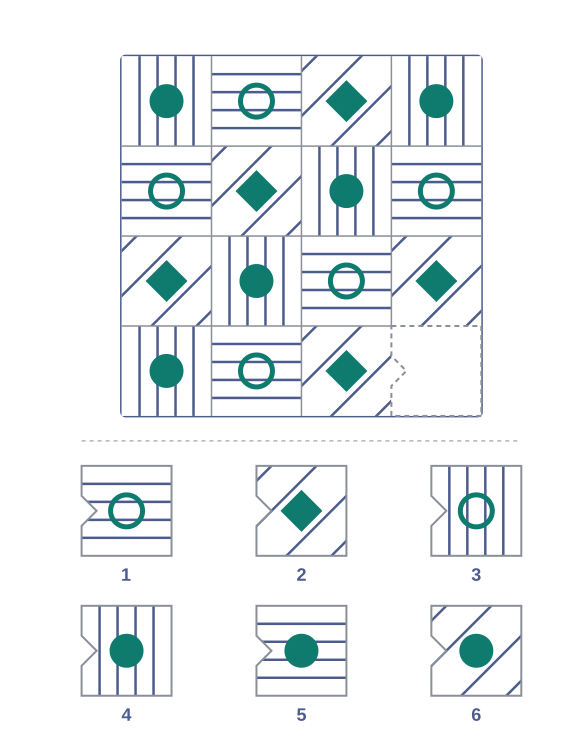
Fig. 1.3 – An item from Raven’s Progressive Matrices Test.
Performance tests require the person to manipulate objects and other materials to perform a task; written language is not necessary for answering the items. For example, Kohs’ Block Design Test contains a number of wooden blocks, and the person is asked to arrange the blocks within a time period to produce a given design. A major advantage of performance tests is that they can be easily administered to persons from different cultures.
Culture-fair or culture-biased tests
Many intelligence tests show a bias towards the culture in which they are developed. Tests developed in America and Europe represent an urban and middle-class cultural ethos, and educated middle-class white subjects generally perform well on them. The items do not respect the cultural perspectives of Asia and Africa, and the norms for these tests are also drawn from western cultural groups. (You met the concept of norms in Class XI: a norm is the standard of comparison against which an individual’s score is read.)
The consequence is easy to miss but serious. If a test asks a child to identify objects she has never encountered, or to reason about situations that do not occur in her world, then a low score records her unfamiliarity, not her intelligence.
It is nearly impossible to design a test that can be applied equally meaningfully in all cultures. Psychologists have nevertheless tried to develop tests that are culture-fair, or culturally appropriate — that is, tests which do not discriminate against individuals belonging to different cultures. In such tests, items are constructed so that they assess experiences common to all cultures, or so that language usage is not required at all. Non-verbal and performance tests help reduce the cultural bias usually associated with verbal tests.
Intelligence testing in India
Indian psychologists began adapting and constructing intelligence tests early. S.M. Mohsin made a pioneering attempt in constructing an intelligence test in Hindi in the 1930s. C.H. Rice attempted to standardise Binet’s test in Urdu and Punjabi, and at about the same time Mahalanobis attempted to standardise Binet’s test in Bengali.
Attempts were also made by Indian researchers to develop Indian norms for some western tests, including RPM, WAIS, Alexander’s Passalong, Cube Construction, and Kohs’ Block Design. Long and Mehta prepared a Mental Measurement Handbook listing 103 tests of intelligence available in India in various languages. Since then, a number of tests have either been developed here or adapted from western cultures.
The National Library of Educational and Psychological Tests (NLEPT), at the National Council of Educational Research and Training (NCERT), has documented Indian tests, and critical reviews of Indian tests are published in the form of handbooks. NLEPT has brought out handbooks in the areas of intelligence, aptitude, personality, attitudes and interests. Table 1.2 lists some of the tests developed in India; among these, Bhatia’s Battery of Performance Tests is quite popular.
Table 1.2: Some tests developed in India
| Verbal | Performance |
|---|---|
| CIE Verbal Group Test of Intelligence by Uday Shankar | CIE Non-verbal Group Test of Intelligence |
| Group Test of General Mental Ability by S. Jalota | Bhatia’s Battery of Performance Tests |
| Group Test of Intelligence by Prayag Mehta | Draw-a-Man Test by Pramila Pathak |
| The Bihar Test of Intelligence by S.M. Mohsin | Adaptation of Wechsler Adult Performance Intelligence Scale by R. Ramalingaswamy |
| Group Test of Intelligence by Bureau of Psychology, Allahabad | |
| Indian Adaptation of Stanford-Binet Test (Third Edition) by S.K. Kulshrestha | |
| Test of General Mental Ability (Hindi) by M.C. Joshi |
1.7 Culture and Intelligence
A major characteristic of intelligence, as you have seen in every definition so far, is that it helps individuals to adapt to their environment. But an environment is never merely physical. It is also cultural, and the cultural environment provides the context in which intelligence develops.
Vygotsky, a Russian psychologist, argued that culture provides the social context in which people live, grow and understand the world around them. That context decides which abilities are worth having. In less technologically developed societies, social and emotional skills in relating to people are valued highly; in technologically advanced societies, personal achievement founded on the abilities of reasoning and judgement is taken to represent intelligence. Neither society is confused about what intelligence is. They are answering different questions about what a competent human life requires.
What culture does to intelligence
From your earlier reading you know that culture is a collective system of customs, beliefs, attitudes, and achievements in art and literature. A person’s intelligence is likely to be tuned by these cultural parameters — sharpened in the directions the culture rewards, left undeveloped in the directions it ignores.
For a long time, this was not how theorists thought. Many regarded intelligence as a set of attributes belonging to the person alone, with no regard to her cultural background. The unique features of culture now find some representation in theories of intelligence. Sternberg’s notion of contextual or practical intelligence, which you met earlier, implies that intelligence is a product of culture: what counts as ‘street smartness’ in one place is useless in another.
Vygotsky went further. He believed that cultures, like individuals, have a life of their own; they grow and change, and in the process they specify what will count as the end-product of successful intellectual development. According to him, while elementary mental functions — crying, attending to the mother’s voice, sensitivity to smells, walking, running — are universal, the manner in which higher mental functions such as problem solving and thinking operate is largely culture-produced.
Technological intelligence
Technologically advanced societies adopt child-rearing practices that foster particular skills in children: generalisation and abstraction, speed, minimal moves, and mental manipulation. Watch a child in such a society being praised, and you will find she is praised for arriving at the answer quickly, by the shortest route, in her head.
Societies of this kind promote a type of behaviour that can be called technological intelligence. Persons here are well-versed in the skills of attention, observation, analysis, performance, speed, and achievement orientation. And intelligence tests developed in western cultures look precisely for these skills in an individual — which is one reason a “culture-fair” test is so difficult to build. The test is not simply written in a culture; it is written about one.
Technological intelligence is not so highly valued in many Asian and African societies. The qualities and skills regarded as intelligent actions in non-western cultures are sharply different, though the boundaries are gradually vanishing under the influence of western cultures. In addition to cognitive competence, which is very specific to the individual, non-western cultures look for the skills needed to relate to others in society. Some non-western societies value self-reflection and a collectivistic orientation, as against personal achievement and an individualistic orientation.
1.7.1 Intelligence in the Indian Tradition
Contrary to technological intelligence, intelligence in the Indian tradition can be termed integral intelligence, which gives emphasis to connectivity with the social and world environment. Indian thinkers view intelligence from a holistic perspective, in which equal attention is paid to cognitive and non-cognitive processes — and, just as importantly, to their integration. A person who reasons brilliantly but cannot govern her own temper is not, on this view, fully intelligent.
The Sanskrit word buddhi (intellect, or wisdom), which is often used to represent intelligence, is far more pervasive in scope than the western concept. Buddhi, according to J.P. Das, includes such skills as mental effort, determined action, feelings, and opinions, along with cognitive competence such as knowledge, discrimination and understanding. Among other things, buddhi is the knowledge of one’s own self, based on conscience, will and desire. The notion therefore has affective and motivational components besides a strong cognitive one.
Unlike the western views, which primarily focus on cognitive parameters, the Indian tradition identifies the four competencies shown in Fig. 1.8 as facets of intelligence:
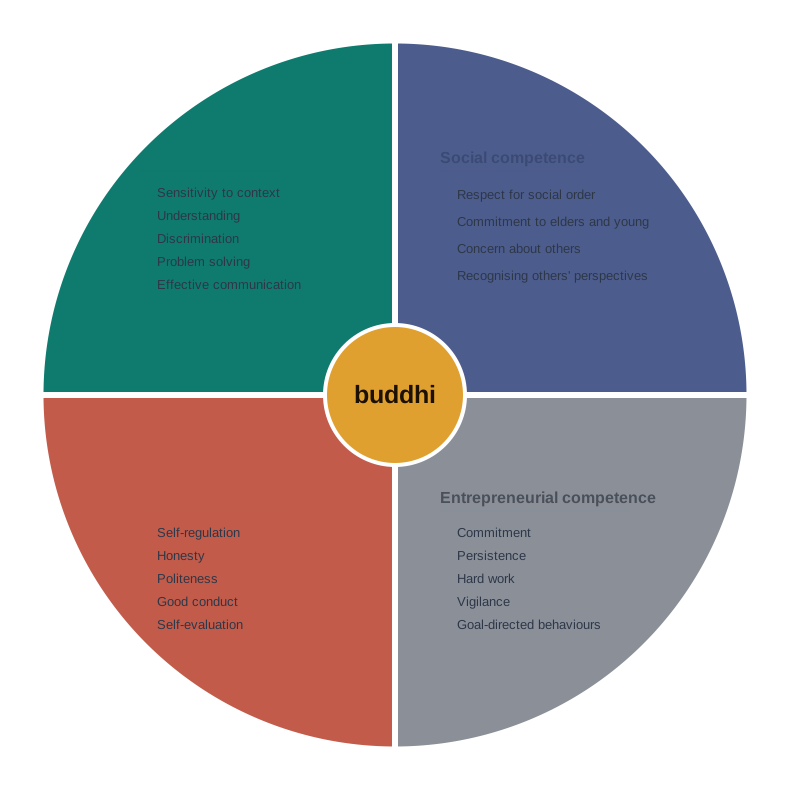
Fig. 1.8 – Facets of intelligence in the Indian tradition.
- Cognitive capacity — sensitivity to context, understanding, discrimination, problem solving, and effective communication.
- Social competence — respect for social order, commitment to elders, the young and the needy, concern about others, and recognising others’ perspectives.
- Emotional competence — self-regulation and self-monitoring of emotions, honesty, politeness, good conduct, and self-evaluation.
- Entrepreneurial competence — commitment, persistence, patience, hard work, vigilance, and goal-directed behaviours.
Notice how much of that list an ordinary intelligence test would never see. Three of the four facets concern how a person handles other people and herself, and only the first concerns the kind of reasoning a test paper can capture.
1.8 Emotional Intelligence
The notion of emotional intelligence broadens the concept of intelligence beyond the intellectual sphere altogether, and holds that intelligence includes emotions. You may notice that this is not a new departure so much as a return: it builds on the concept of intelligence in the Indian tradition, which you have just read, where emotional competence is a facet of intelligence rather than a separate quality.
Emotional intelligence is a set of skills that underlie the accurate appraisal, expression and regulation of emotions. It is, in short, the feeling side of intelligence.
Why a good IQ is not enough
A good IQ and a strong scholastic record are not enough to be successful in life. You will find many people who are academically talented and yet unsuccessful in their own lives — people who experience persistent problems in the family, at the workplace, and in their relationships with others.
What do they lack? Some psychologists believe that the source of their difficulty may be a lack of emotional intelligence. A person may be able to solve a difficult problem and still be unable to notice that his colleague is upset, or to say what he feels without wounding someone, or to hold his temper when it would cost him dearly to lose it. None of these failures shows up on an intelligence test.
The concept was first introduced by Salovey and Mayer.
Look closely at the three parts of that definition, because they form a sequence. First you must notice an emotion — your own or another person’s. Then you must tell it apart from neighbouring emotions, which is harder than it sounds: irritation is not anger, disappointment is not grief, nervousness is not fear. Only then can you use that information to decide what to think and what to do. Someone who cannot complete the first two steps has nothing to act on.
The Emotional Quotient (EQ) is used to express emotional intelligence in the same way as IQ is used to express intelligence. In simple terms, emotional intelligence refers to the ability to process emotional information accurately and efficiently.
Emotional intelligence in education
Emotional intelligence is receiving increasing attention from educators, who deal every day with students affected by the stresses and challenges of the outside world. Programmes aimed at improving students’ emotional intelligence have beneficial effects on their academic achievement — a student who can manage anxiety and frustration studies better than one who cannot. Such programmes also encourage cooperative behaviour and reduce antisocial activities. They are very useful in preparing students to face the challenges of life outside the classroom.
1.9 Special Abilities
Everything you have read so far has been about general ability — intelligence as a broad capacity, measured by tests that give a single overall picture of how a person thinks. But no one lives on general ability alone. People also possess special abilities, sharply focused on one field of activity, and it is these that decide much of what a person actually ends up doing with her life.
1.9.1 Aptitude: Nature and Measurement
You will recall that intelligence tests assess a general mental ability. Aptitude is different. It refers to special abilities in a particular field of activity.
Two words in that definition carry the weight. Capacity to acquire tells you that aptitude is about potential, not present performance — a person with high musical aptitude who has never touched an instrument cannot yet play a note. After training tells you that this potential means nothing until something is done with it. Aptitude is assessed with the help of selected tests, and the knowledge of a person’s aptitude helps us predict her future performance.
Why general intelligence is not the whole story
While assessing intelligence, psychologists often found something that puzzled them: people with very similar intelligence differed widely in how easily they acquired particular kinds of knowledge and skill. The same discovery is available in any classroom.
You may observe in your own class that there are certain areas in which some intelligent students simply do not do well. When you have a problem in mathematics, you may turn to Aman for help; with a difficulty in literature you may consult Avinash. You may request Shabnam to sing at the annual function, and turn to John when something goes wrong with your bike. These specific skills and abilities are called aptitudes — and with proper training, they can be considerably enhanced.
Aptitude and interest
To be successful in a particular field, a person must have both aptitude and interest. The two are easily confused, and the difference is worth stating plainly. Interest is a preference for a particular activity. Aptitude is the potentiality to perform that activity.
The two do not always travel together, and when they come apart, the result is disappointing either way. A person may be deeply interested in a job or activity but may not have the aptitude for it — she will work hard and still fall short. Another person may have the potentiality for performing a job but no interest in doing it — she will do it competently and hate every hour of it. In both cases, the outcome will not be satisfactory. It is the student with high mechanical aptitude and a strong interest in engineering who is more likely to become a successful mechanical engineer.
Measuring aptitude
Aptitude tests are available in two forms: independent (specialised) aptitude tests, and multiple (generalised) aptitude tests.
Independent aptitude tests measure one aptitude at a time. Clerical Aptitude, Mechanical Aptitude, Numerical Aptitude and Typing Aptitude tests are examples. If you want to know only whether a candidate can be trained to type accurately at speed, this is what you use.
Multiple Aptitude Tests exist in the form of test batteries, which measure aptitude in several separate but homogeneous areas at once. A battery gives you a profile rather than a single score — a picture of where a person’s potential is high and where it is not, which is exactly what a student choosing a career needs. The Differential Aptitude Tests (DAT), the General Aptitude Tests Battery (GATB), and the Armed Services Vocational Aptitude Battery (ASVAB) are well-known aptitude test batteries.
Among these, DAT is the most commonly used in educational settings. It consists of 8 independent subtests:
- Verbal Reasoning
- Numerical Reasoning
- Abstract Reasoning
- Clerical Speed and Accuracy
- Mechanical Reasoning
- Space Relations
- Spelling
- Language Usage
J.M. Ojha has developed an Indian adaptation of the DAT. Several other aptitude tests have been developed in India as well, for measuring scientific, scholastic, literary, clerical and teaching aptitudes.
1.10 Creativity
In the sections before this one, you have read that people vary in psychological attributes such as intelligence, aptitude, personality and so on. Creativity is one more attribute on which people differ — both in how much potential for it they possess, and in the manner in which they express it.
Some people are highly creative and others are not so creative. And creativity does not choose one field: some express it in writing, others in dance, music, poetry or science. Its manifestations are correspondingly varied — a novel solution to a problem, an invention, the composition of a poem, a painting, a new chemical process, an innovation in law, a breakthrough in preventing a disease. Despite all these differences, one element is common to every item on that list: the production of something new and unique.
Read the three conditions carefully. Novel is not enough by itself — an answer can be original and simply wrong. It must also be appropriate to the problem, and useful in some way. This is what separates creativity from mere oddity.
Creativity is not only for the famous
We generally think of creativity in terms of creative persons — Tagore, Einstein, C.V. Raman, Ramanujan — people who have made outstanding contributions in different spheres. In recent years, our understanding of creativity has broadened considerably.
Creativity is not limited to a selected few: the artist, the scientist, the poet, the inventor. An ordinary individual engaged in a simple occupation such as pottery, carpentry or cooking can also be creative. The potter who works out a new way of shaping a rim, and the cook who invents a dish out of what is left in the kitchen, are doing what creativity means.
It has been said, however, that they are not working at the same level of creativity as an eminent scientist or a writer. So the honest statement is this: individuals vary both in the level of creativity they show and in the areas in which they show it, and all are not operating at the same level.
Einstein’s theory of relativity is an example of the highest level of creativity, which implies bringing out altogether new ideas, facts, theories, or products. Another level of creativity is working on what has already been established — modifying it, putting things in a new perspective, or putting them to a new use. Both are creative. They are not equally rare.
How creativity develops
Research literature suggests that children begin to develop their imagination during the early years of childhood, but that they express creativity mostly through physical activities and in non-verbal ways — in play, in drawing, in how they use whatever comes to hand.
Once language and intellectual functions are fully developed, and a store of knowledge is adequately available, creativity comes to be expressed through verbal modes as well. Those who are outstanding in their creativity may give an indication of the direction in which their creativity lies through the activities they choose for themselves. In some cases, however, opportunities need to be provided before children can manifest their hidden potential for creativity at all — a child who has never been given clay cannot discover that she is good with it.
Heredity, environment, and creative potential
How do we explain variations in the potential for creativity? As in the case of other mental and physical characteristics, such variations can be attributed to the complex interaction of heredity and environment. There is no disagreement that creativity is determined by both.
The division of labour between them is worth stating precisely. The limits of creative potential are set by heredity; environmental factors stimulate the development of creativity. How much of that potential is actually realised — and when, and in what specific form and direction — is largely determined by environmental factors such as motivation, commitment, family support, peer influences and training opportunities.
This leads to a conclusion that is realistic without being discouraging. No amount of training can transform an average person into a Tagore or a Shakespeare. But it is equally true that every individual can raise her own level of creative potential beyond its present level. In Class XI you have already read about strategies to enhance creativity; the point here is simply that those strategies are worth using, because the ceiling is not where most people assume it is.
1.10.1 Creativity and Intelligence
One important debate in understanding variations in creativity concerns its relationship with intelligence. Are the intelligent also the creative?
What the research shows
Terman’s long-term study of gifted children, which you met earlier in this chapter, was among the first to test the assumption directly. Working in the 1920s, he found that persons with high IQ were not necessarily creative. At the same time, creative ideas could come from persons who did not have a very high IQ. Later research added a still more striking finding: of those identified as gifted and followed up throughout their adult lives, not even one had become well known for creativity in some field.
Researchers have also found that both high and low levels of creativity can be found in highly intelligent children, and equally in children of average intelligence. The same person, then, can be both creative and intelligent — but it is not necessary that intelligent people, in the conventional sense, must be creative. Intelligence, by itself, does not ensure creativity.
That said, the relationship between creativity and intelligence is positive. All creative acts require some minimum ability to acquire knowledge, and the capacity to comprehend, retain and retrieve it. Creative writers need facility in dealing with language. The artist must understand the effect that a particular technique of painting will produce. The scientist must be able to reason. Hence a certain level of intelligence is required for creativity — but beyond that level, intelligence does not correlate well with creativity.
The conclusion is that creativity can take many forms and blends. Some people have more of the intellectual attributes; others have more of the attributes associated with creativity.
Creativity tests
Creativity tests came into existence to assess variations in the potential for creativity, in contrast to intelligence.
A general feature of most creativity tests is that they are open-ended. They permit the person to think of different answers to the questions or problems, drawing on whatever her experiences have been, and they help the individual to go in different directions. There are no specified answers in a creativity test, so there is freedom to use one’s imagination and to express it in original ways.
Creativity tests involve divergent thinking. They assess such abilities as the ability to produce a variety of ideas — ideas that are off the beaten track — the ability to see new relationships between seemingly unrelated things, the ability to guess causes and consequences, and the ability to put things in a new context.
This is contrary to tests of intelligence, which mostly involve convergent thinking. In a test of intelligence, the person has to think of the right solution to the problem, and the focus is on assessing abilities such as memory, logical reasoning, accuracy, perceptual ability and clear thinking. There is little scope for the expression of spontaneity, originality and imagination.
Because the expressions of creativity are so varied, tests have been developed using different stimuli — words, figures, action, and sounds. These tests measure general creative thinking abilities: the ability to think of a variety of ideas on a given topic or situation, to find alternative ways of looking at things, problems or situations, to guess causes and consequences, to think of unusual ideas for improving and using common objects, and to ask unusual questions.
A few investigators have also developed tests of creativity in specific areas, such as literary creativity, scientific creativity and mathematical creativity. Among the psychologists who have developed creativity tests are Guilford, Torrance, Khatena, Wallach and Kogan, Paramesh, Baqer Mehdi, and Passi.
Each such test has a standardised procedure, a complete manual, and an interpretation guide, and each can be used only after extensive training in administration and in the interpretation of test scores. An open-ended test is not, as it might appear, an easy test to score; it is the hardest of all to score fairly, which is exactly why the training matters.
1.11 Summary
Individuals differ. People vary in their physical and psychological characteristics. Individual differences refer to the distinctiveness and variations found in people’s characteristics and behaviour patterns. Some psychologists explain behaviour through a person’s own traits; situationism holds that behaviour is shaped relatively more by the situations a person is placed in.
A wide range of attributes can be assessed. Intelligence, aptitude, interest, personality and values are all open to assessment. Psychologists assess them using psychological tests, interviews, case studies, observation and self-reports — usually in combination, because each method covers a weakness in the others. Formal assessment is objective, standardised and organised; informal assessment varies from assessor to assessor.
What intelligence means. Intelligence is an individual’s capacity to understand the world, think rationally, and use resources effectively to meet the demands of life. Intellectual development is the product of a complex interplay between hereditary factors (nature) and environmental conditions (nurture): heredity sets a range, and environment decides where within that range a person actually develops.
Two families of theories. The psychometric approaches study intelligence as a constellation of abilities, expressed in quantitative terms such as IQ — from Binet’s uni-factor theory, through Spearman’s g and s factors, Thurstone’s seven primary mental abilities and Jensen’s two levels, to Guilford’s 180-cell structure-of-intellect model. The more recent information-processing approaches — Sternberg’s triarchic theory and Das’s PASS model — describe the processes that underlie intelligent behaviour. Howard Gardner suggests that there are eight different kinds of intelligence.
Intelligence is measured by tests, and tests have limits. Intelligence tests may be verbal, non-verbal or performance-based; they may be administered individually or in groups; and they may be culturally biased or culturally fair. IQ is mental age divided by chronological age, multiplied by 100, and IQ scores are distributed in the population along a normal curve with a mean of 100. At the two extremes of the distribution lie persons with intellectual disability and the intellectually gifted. Used carelessly, an intelligence test can stigmatise a child and underestimate her; it should be administered and interpreted only by trained psychologists.
Culture shapes what counts as intelligent. Culture provides the context for intellectual development. Western culture promotes ‘technological intelligence’, based on skills of analysis, performance, speed and achievement orientation. Non-western cultures value self-reflection and social and emotional competence as signs of intelligent behaviour. Indian culture promotes ‘integral intelligence’, which emphasises connectivity with people and with the larger social world, and is captured in the wider notion of buddhi.
Emotional intelligence. Emotional intelligence involves the ability to perceive and manage one’s own and others’ feelings and emotions, to motivate oneself and restrain one’s impulses, and to handle interpersonal relationships effectively. It is expressed as EQ, in the same way that intelligence is expressed as IQ.
Aptitude. Aptitude refers to an individual’s potential for acquiring some specific skill. Aptitude tests predict what a person will be able to do given proper training and environment. Success in a field requires both aptitude and interest: potential without preference, or preference without potential, leads to an unsatisfactory outcome.
Creativity. Creativity is the ability to produce ideas, objects or solutions to problems that are novel, appropriate and useful. A certain level of intelligence is necessary to be creative, but a high level of intelligence does not ensure that a person will be creative. Creativity tests are open-ended and assess divergent thinking, whereas intelligence tests mostly assess convergent thinking.
1.12 Key Terms
Aptitude — An individual’s underlying potential for acquiring a specific knowledge or skill after training.
Aptitude tests — Tests that measure special abilities in a particular field, in order to predict what a person will be able to do if given proper training; they may be independent (specialised) or multiple (generalised) batteries such as the DAT.
Case study — An in-depth study of an individual’s psychological attributes and psychological history, in the context of her or his psychosocial and physical environment.
Cognitive assessment system (CAS) — A battery of verbal and non-verbal tests developed by Das and Naglieri, for individuals aged 5 to 18 years, which measures the basic cognitive processes of the PASS model.
Componential intelligence — In Sternberg’s triarchic theory, analytical intelligence: the analysis of information to solve problems, made up of the knowledge acquisition, meta and performance components.
Contextual intelligence — In Sternberg’s triarchic theory, practical intelligence: the ability to deal with everyday environmental demands, often called ‘street smartness’.
Creativity — The ability to produce ideas, objects or solutions to problems that are novel, appropriate and useful.
Culture-fair test — A test constructed so that it does not favour any one culture, by assessing experiences common to all cultures or by removing the need for language.
Emotional intelligence — A set of skills that underlie the accurate appraisal, expression and regulation of emotions in oneself and in others.
Experiential intelligence — In Sternberg’s triarchic theory, creative intelligence: the use of past experiences in original ways to solve novel problems.
g-factor — Spearman’s general factor of intelligence: the mental operations that are primary and common to all performances.
Individual differences — The distinctiveness and variations found among people’s characteristics and behaviour patterns.
Intellectual disability — Significantly sub-average general intellectual functioning (IQ below 70), existing together with deficits in adaptive behaviour, and manifested during the developmental period (0 to 18 years).
Intellectual giftedness — Exceptional general ability, shown in superior performance across a wide variety of areas, generally associated with an IQ above 130.
Intelligence — The global capacity to understand the world, think rationally, and use available resources effectively when faced with challenges.
Intelligence quotient (IQ) — Mental age divided by chronological age and multiplied by 100; the population mean is 100.
Intelligence tests — Standardised tests that provide a global measure of a person’s general cognitive competence; they may be individual or group, and verbal, non-verbal or performance-based.
Interest — An individual’s preference for engaging in one or more specific activities relative to others.
Interview — A method of assessment in which information is sought from a person on a one-to-one basis.
Mental age (MA) — A measure of a person’s intellectual development relative to others of her or his own age group.
Observational method — The use of systematic, organised and objective procedures to record behavioural phenomena as they occur naturally, in real time.
Planning — In the PASS model, the process by which a person frames possible courses of action, carries them out to reach a target, evaluates their effectiveness, and modifies them if they fail.
Psychological test — An objective and standardised measure of an individual’s mental and/or behavioural characteristics.
Simultaneous processing — In the PASS model, integrating information by perceiving the relations among concepts and grasping them together as a meaningful pattern.
Situationism — The view that behaviour is influenced relatively more by the situations and circumstances in which a person is placed than by her or his personal traits.
Successive processing — In the PASS model, remembering information serially, so that the recall of one item leads to the recall of the next.
Values — Enduring beliefs about an ideal mode of behaviour, which serve as standards for guiding one’s own actions and for judging others.
1.13 Points to Ponder
If a psychological attribute exists only when it can be measured, what happens to the attributes we have not yet learnt to measure well — wisdom, for instance, or courage? Are they outside psychology, or only outside its present reach?
Theories of intelligence have grown from one factor to two, then to seven, then to 180 cells, and then to eight independent intelligences. Is this a sign that the discipline is advancing towards the truth, or a sign that “intelligence” may not be a single thing to be counted at all?
Heredity is said to set the range within which environment shapes development. If that is true, what should a school do about a child who arrives with a low IQ score — and what should it never do?
An intelligence test carries the culture of the people who wrote it. Would it be possible to build a genuinely culture-fair test in India, given the range of languages, schooling and life experience within a single city? What would its items look like?
Observe five people you know well, and consider them against the four facets of intelligence in the Indian tradition — cognitive, social, emotional and entrepreneurial competence. Would the person you privately consider “the most intelligent” still come first?
Select five vocations and think about the psychological attributes each one demands. If a person had the aptitude for a job but no interest in it, would you still advise her to take it? What would you weigh, and why?
Intelligence tests reward the single right answer; creativity tests reward many possible answers. Which of the two does your own schooling train you to produce — and what would a school look like if it took both seriously?
1.14 NCERT Questions
How do psychologists characterise and define intelligence?
To what extent is our intelligence the result of heredity (nature) and of environment (nurture)? Discuss.
Explain briefly the multiple intelligences identified by Gardner.
How does the triarchic theory help us to understand intelligence?
“Any intellectual activity involves the independent functioning of three neurological systems.” Explain this statement with reference to the PASS model.
Are there cultural differences in the way intelligence is conceptualised?
What is IQ? How do psychologists classify people on the basis of their IQ scores?
How can you differentiate between verbal and performance tests of intelligence?
All persons do not have the same intellectual capacity. How do individuals vary in their intellectual ability? Explain.
Which of the two, IQ or EQ, do you think would be more closely related to success in life, and why?
How is ‘aptitude’ different from ‘interest’ and from ‘intelligence’? How is aptitude measured?
How is creativity related to intelligence?
1.15 Objective Questions
- The view that behaviour is influenced relatively more by the situations and circumstances in which a person is placed is known as:
- trait approach
- situationism
- psychometric approach
- information-processing approach [1 mark]
- Which of the following is an example of formal assessment?
- Concluding after a week that a classmate is arrogant
- A teacher’s impression of a student’s honesty
- A standardised intelligence test administered by a trained psychologist
- A parent’s judgement of a child’s laziness [1 mark]
- Spearman’s two-factor theory of intelligence proposes:
- seven primary mental abilities
- a general factor and specific factors
- 180 independent cells
- eight independent intelligences [1 mark]
- The number of cells in Guilford’s structure-of-intellect model is:
- 120
- 150
- 180
- 210 [1 mark]
- In Sternberg’s triarchic theory, ‘street smartness’ or ‘business sense’ corresponds to:
- componential intelligence
- experiential intelligence
- contextual intelligence
- naturalistic intelligence [1 mark]
- Remembering the multiplication tables, in which the recall of one item leads to the recall of the next, is an example of:
- simultaneous processing
- successive processing
- planning
- arousal [1 mark]
- According to Table 1.1, the percentage of people in the population falling in the ‘average’ IQ range of 90–109 is:
- 16.1
- 34.0
- 50.0
- 68.2 [1 mark]
- Creativity tests mainly assess:
- convergent thinking
- divergent thinking
- rote memory
- perceptual speed [1 mark]
Fill in the blank: The Sanskrit word ____________ , used in the Indian tradition to represent intelligence, includes mental effort, determined action, feelings and opinions along with cognitive competence. [1 mark]
Fill in the blank: The concept of the intelligence quotient was devised in 1912 by the German psychologist ____________ . [1 mark]
True or false: Aptitude and interest always occur together in the same person, and therefore only one of them needs to be assessed before a career decision. [1 mark]
True or false: A person with a very high IQ is necessarily creative. [1 mark]
Match the theorist in Column A with the theory or contribution in Column B.
| Column A | Column B |
|---|---|
| a. Louis Thurstone | i. Theory of multiple intelligences |
| b. Howard Gardner | ii. PASS model of intelligence |
| c. J.P. Das, Naglieri and Kirby | iii. Theory of primary mental abilities |
| d. Arthur Jensen | iv. Hierarchical model with Level I and Level II |
[1 mark]
- Match the term in Column A with its description in Column B.
| Column A | Column B |
|---|---|
| a. Mental age | i. The biological age counted from birth |
| b. Chronological age | ii. Exceptional general ability across a wide variety of areas |
| c. Giftedness | iii. Remarkable ability in one specific field |
| d. Talent | iv. Intellectual development relative to one’s own age group |
[1 mark]
- Assertion (A): Non-verbal and performance tests reduce the cultural bias usually associated with verbal tests. Reason (R): Performance tests do not require the use of written language and can therefore be administered easily to persons from different cultures.
- Both A and R are true, and R is the correct explanation of A.
- Both A and R are true, but R is not the correct explanation of A.
- A is true, but R is false.
- A is false, but R is true. [1 mark]
- Assertion (A): The intelligence of identical twins reared in different environments correlates lower than that of identical twins reared together. Reason (R): Heredity has no role in determining intelligence.
- Both A and R are true, and R is the correct explanation of A.
- Both A and R are true, but R is not the correct explanation of A.
- A is true, but R is false.
- A is false, but R is true. [1 mark]
- Assertion (A): An intelligence test should be administered and interpreted only by a trained psychologist. Reason (R): In untrained hands, a test score can stigmatise a child and invite discriminatory treatment.
- Both A and R are true, and R is the correct explanation of A.
- Both A and R are true, but R is not the correct explanation of A.
- A is true, but R is false.
- A is false, but R is true. [1 mark]
1.16 Check Your Concepts
Define individual differences and give one example from everyday life. [2 marks]
What is situationism? State one example of situational influence on behaviour. [2 marks]
Define mental age and chronological age. [2 marks]
List any four characteristics of gifted children. [2 marks]
What is emotional intelligence? Name any two characteristics of an emotionally intelligent person. [2 marks]
Name the seven primary mental abilities identified by Thurstone. [2 marks]
Differentiate between formal and informal assessment. [3 marks]
Distinguish between simultaneous processing and successive processing, with one example of each. [3 marks]
Distinguish between giftedness and talent. [3 marks]
Explain the difference between an individual intelligence test and a group intelligence test. State one advantage of each. [3 marks]
Why is it said that a certain minimum level of intelligence is necessary for creativity, and yet intelligence does not ensure creativity? Give reasons. [3 marks]
Explain the three dimensions of Guilford’s structure-of-intellect model, and state how the model arrives at 180 cells. [4 marks]
Explain the three features contained in the AAMD definition of intellectual disability, and state why a low IQ score alone is not sufficient for the identification of intellectual disability. [4 marks]
“Heredity sets a range within which development takes place; the environment decides where within that range a person actually develops.” Evaluate this claim using the evidence from twin and adoption studies. [4 marks]
Describe the five domains of psychological attributes that psychologists commonly assess, with one example of the use of each. [4 marks]
What would happen if an intelligence test standardised on urban, middle-class, English-speaking children were administered to a child from a rural, non-English-speaking background? Explain the concept of culture-fair testing in your answer. [4 marks]
Describe Sternberg’s triarchic theory of intelligence in full — its definition of intelligence, its three components, the evidence in its favour, and one limitation. [6 marks]
Describe the PASS model of intelligence. Explain each of its processes, state what the Cognitive Assessment System is used for, and give one limitation of the model. [6 marks]
Compare the psychometric approach and the information-processing approach to intelligence, using one theory from each as an illustration. Which approach do you find more useful, and why? [6 marks]
Discuss the notion of intelligence in the Indian tradition. How does ‘integral intelligence’ differ from ‘technological intelligence’, and what does an ordinary intelligence test fail to capture as a result? [6 marks]
Explain Gardner’s theory of multiple intelligences. How would a school that accepted this theory organise its teaching and assessment differently from one that did not? [6 marks]
1.17 Case-Based Questions
- Rehan is the quietest boy in his Class 12 section and rarely scores above average in written tests. Yet when the school’s annual function was in danger of collapsing — the sound system had failed, two performers had dropped out and the audience was already seated — it was Rehan who reorganised the programme, persuaded the electrician to lend a spare amplifier, and got the show running within twenty minutes. His class teacher remarked afterwards that she had “never realised he was intelligent”.
- Which type of intelligence in Sternberg’s triarchic theory is Rehan displaying? Justify your answer.
- Why did the school’s written tests fail to detect this ability?
- State one way in which the Indian conception of intelligence would rate Rehan differently from a standard intelligence test. [6 marks]
- A private coaching centre in a small town advertises a “free IQ test” and offers to tell parents, on the basis of a twenty-minute group test conducted in a hall of eighty children, which of their children are “gifted” and which are “slow learners”. Several parents report afterwards that they have begun treating their children differently at home.
- Identify two things that are psychologically and ethically wrong with what the coaching centre is doing.
- Referring to what you have read about the misuse of intelligence tests, explain the likely effect on a child labelled a “slow learner”.
- What should the parents have been advised to do instead? [6 marks]
- Meher has a strong record in mathematics and scores very high on a test of numerical and abstract reasoning. Her parents want her to take up a career in data analysis. Meher, however, spends every free hour at a pottery wheel, and says she cannot imagine a working life spent with spreadsheets.
- What is the relationship between aptitude and interest, and how does Meher’s case illustrate it?
- Predict the likely outcome if Meher enters data analysis purely on the strength of her aptitude scores. Give a reason.
- Name the type of aptitude test that would give Meher a fuller picture of her potential, and explain why. [4 marks]
- In a Class 11 batch, Latika consistently tops the class. She takes careful notes, follows every instruction, and reproduces the textbook accurately. Devika, who scores in the middle of the class, is the member who suggested using discarded plastic bottles for the school’s drip-irrigation project, and who found a way of storing the water so that the plants survived the summer break.
- Which attribute does each girl chiefly display? Give one reason for each answer.
- What kind of thinking do intelligence tests assess, and what kind do creativity tests assess?
- Would it be fair to conclude that Latika is not creative and Devika is not intelligent? Explain. [6 marks]
1.18 Practice With Data
A 12-year-old child has a mental age of 15. Calculate the child’s IQ, and state the descriptive label in which the score falls according to Table 1.1. [2 marks]
A child’s IQ is 80 and her chronological age is 10 years. Calculate her mental age, and state whether her mental age is above or below her chronological age. [2 marks]
Using Table 1.1, calculate the total percentage of the population that lies at or above the ‘high average’ band. What percentage lies below the ‘average’ band? What does the symmetry of these two figures tell you about the shape of the distribution of IQ scores? [3 marks]
The intelligence of identical twins reared together correlates almost 0.90, while identical twins reared in different environments correlate 0.72. Siblings reared together correlate about 0.50, and siblings reared apart about 0.25. What does each of these two comparisons tell you — one about heredity and one about environment? [4 marks]
A student scores an IQ of 132 on a standardised test. A newspaper reports that she is therefore “in the top 2 per cent of the country”. Using Table 1.1 and what you have read about the normal curve and about the limits of intelligence testing, examine how far this claim can be supported, and what it cannot tell us about her. [4 marks]