Chapter 4: Psychological Disorders
A man sits alone in a crowded local train, moving his lips steadily, eyes half closed, speaking to someone no one else can see. The passenger beside him glances up, then goes back to her phone. Nothing here is unusual — he is saying his morning prayers, and half the compartment has seen the same thing a hundred times.
Now change one detail. The train is the same, the man is the same, the lips move in the same way — but he is not praying. He is answering a voice that no one else can hear, a voice he believes is threatening him, and he has been doing this for weeks. He has stopped going to work. He has stopped eating with his family. The passenger beside him now moves two seats away.
The behaviour looks almost identical. What has changed is everything around it: the meaning, the context, the distress, the cost to his life.
This is the problem at the heart of this chapter. Human beings have puzzled over it for more than 2,500 years — in every culture, in every century, people have tried to decide which behaviours are simply different and which signal that something has gone wrong. The answers they gave have ranged from evil spirits to bodily fluids to faulty genes, and each answer changed how those people were treated.
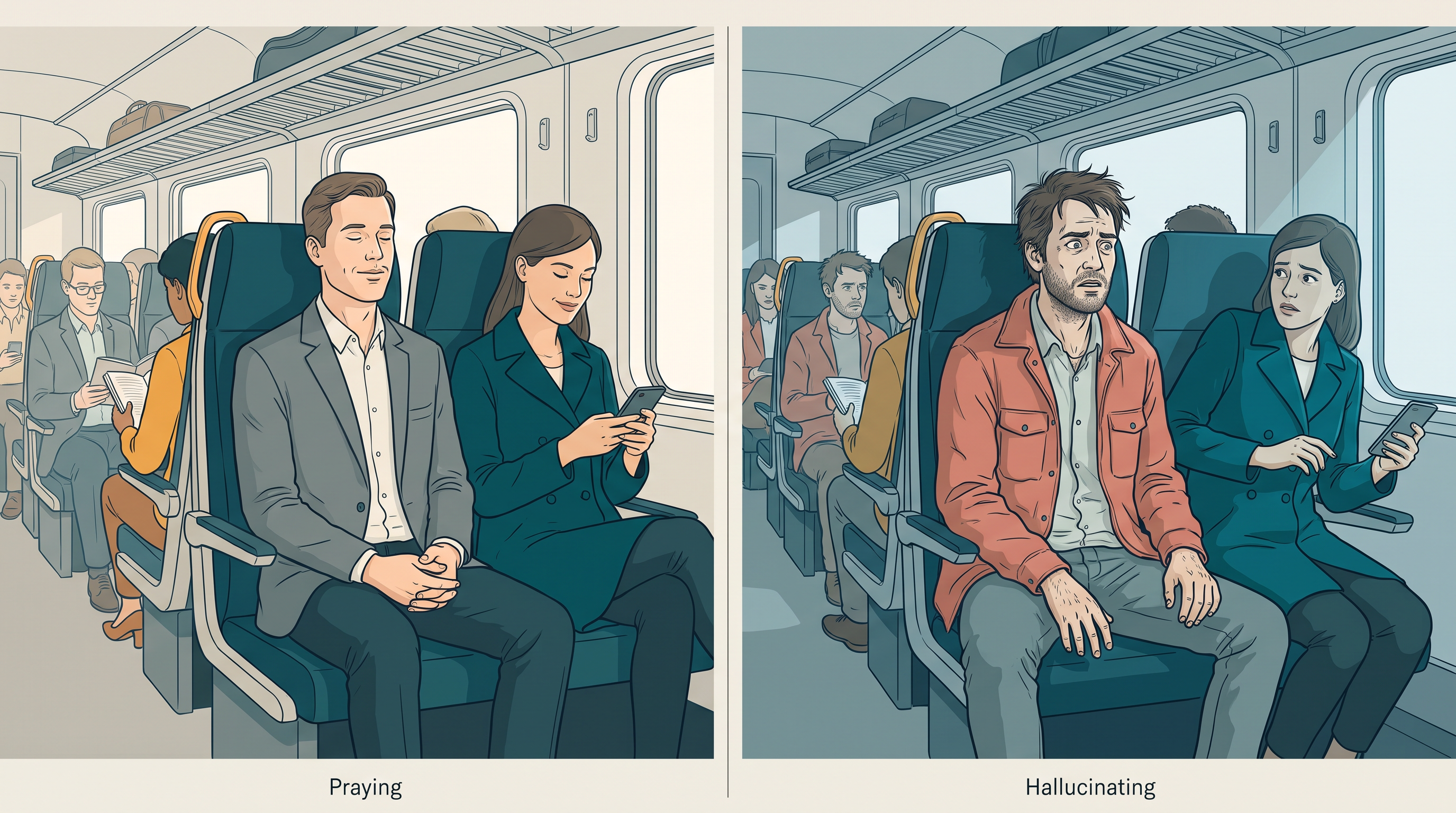
Fig. 4.1 – What makes a behaviour abnormal?
By the end of this chapter, you will be able to answer each of these questions.
4.1 Introduction
You have almost certainly met people who seem unhappy, troubled and dissatisfied with their lives. Their minds are filled with sorrow, unrest and tension. They feel unable to move forward, and life begins to look like a painful, uphill struggle — at times, one that hardly seems worth the effort.
The analytical psychologist Carl Jung made a remark that is worth pausing over. He asked how a person could be substantial without casting a shadow: to be whole, he suggested, a human being must have a dark side too, and in becoming conscious of that shadow, one remembers that one is a human being like any other. Jung’s point was not that everyone is disturbed. It was that difficulty, conflict and darkness are part of ordinary human experience, not something alien to it.
Ordinary distress and extreme reactions
Think about your own life. Some of you may have felt nervous before an important examination, tense about a career decision, or anxious when someone close to you was unwell. Every one of us faces serious problems at some point.
The difference lies in the reaction. Most people are shaken by a difficult event and then, over time, recover and adjust. Some people, however, react to the problems and stresses of life in a way that is extreme, prolonged, and damaging to their ability to live. It is that second pattern which this chapter examines.
We will ask three questions about it. What goes wrong when a person develops a psychological problem? What causes and factors lead to abnormal behaviour? And what are the signs and symptoms associated with different types of psychological disorders?
An old question, asked by every culture
The study of psychological disorders has intrigued and mystified human cultures for more than 2,500 years. Psychological disorders — or mental disorders, as they are commonly called — are unusual, and like anything unusual they can make us uncomfortable and even a little frightened. That discomfort is worth noticing in yourself as you read, because it is the root of a great deal of misunderstanding.
Unhappiness, discomfort, anxiety, and unrealised potential are found all over the world. They are not the property of any one country, class, or community. These failures in living arise mainly from failures in adaptation to life’s challenges.
You have met the idea of adaptation in earlier chapters. It refers to a person’s ability to modify her or his behaviour in response to changing environmental requirements. A student who moves to a new school and slowly builds a new circle of friends is adapting; so is an employee who learns a new skill when the job changes.
When behaviour cannot be modified to meet the needs of the situation, it is said to be maladaptive. The behaviour no longer serves the person; it works against her or him. Notice that maladaptiveness is judged by consequences, not by strangeness — the question is whether the behaviour is helping the person meet the demands of life, or obstructing that.
What abnormal psychology studies
This gives us the field we are entering. Abnormal psychology is the area within psychology that focuses on maladaptive behaviour — its causes, its consequences, and its treatment.
Each of those three concerns matters. Studying causes tells us why a disorder develops in one person and not another. Studying consequences tells us what it costs — to the person, to the family, and to society. Studying treatment tells us what can actually be done, and it is the reason abnormal psychology is a helping science and not merely a catalogue of unusual behaviour.
4.2 Concepts of Abnormality and Psychological Disorders
Many definitions of abnormality have been offered over the years, and none has won universal acceptance. This is not a small admission. It means that psychology, unlike medicine with its thermometers and blood tests, has no single agreed measuring rod for deciding when behaviour has crossed a line.
What we do have is a set of features that most definitions share. They are often called the ‘four Ds’: deviance, distress, dysfunction and danger. Psychological disorders, on this view, are:
- deviant — different, extreme, unusual, even bizarre;
- distressing — unpleasant and upsetting to the person and to those around her or him;
- dysfunctional — interfering with the person’s ability to carry out daily activities in a constructive way; and
- possibly dangerous — to the person herself or himself, or to others.
Each ‘D’ does a different job, as Fig. 4.2 shows. Deviance points to how far the behaviour departs from what is usual. Distress points to suffering. Dysfunction points to the cost in everyday living — work, study, relationships. Danger points to risk of harm. Together they give us a starting point, not a formula.
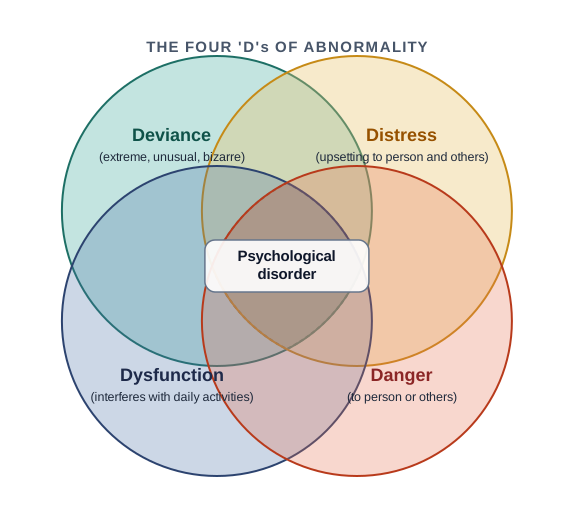
Fig. 4.2 – The four Ds of abnormality.
Away from the normal — but away from what?
The word ‘abnormal’ literally means “away from the normal”. It therefore implies a deviation from some clearly defined norm or standard. And that is exactly where the difficulty begins.
In psychology we have no ‘ideal model’ of human behaviour, and not even a ‘normal model’, that can serve as a base for comparison. There is no single blueprint of the correctly functioning human being against which a given person can be held up. Different approaches have therefore been used to distinguish normal from abnormal behaviour, and from these approaches two basic — and conflicting — views emerge.
The second view: abnormality as maladaptive behaviour
The second approach views abnormal behaviour as maladaptive. Many psychologists believe that the best criterion for judging the normality of a behaviour is not whether society accepts it, but whether it fosters the well-being of the individual and, eventually, of the group to which she or he belongs.
Well-being here means more than mere maintenance and survival. It also includes growth and fulfilment — the actualisation of potential, an idea you have already met in Maslow’s need hierarchy theory. A person can be surviving, causing no trouble to anyone, and still be far from well.
This criterion produces a striking consequence: even conforming behaviour can be abnormal if it is maladaptive — that is, if it interferes with optimal functioning and growth. Take a student who sits silently in class although she has questions in her mind. She breaks no norm. She disturbs no one. Yet the behaviour blocks her own learning and confidence, and in that sense works against her.
To describe a behaviour as maladaptive is to say that a problem exists. It also suggests where the problem may lie: in a vulnerability within the individual, in an inability to cope, or in exceptional stress in the environment — any of which may have led to problems in living.
Stigma and the reluctance to seek help
Talk to people around you and you will find that most of them hold vague ideas about psychological disorders — ideas shaped by superstition, ignorance and fear. A common belief is that having a psychological disorder is something to be ashamed of.
This is the stigma attached to mental illness, and it does real damage. Because of it, people hesitate to consult a doctor or a psychologist. They fear being talked about, being thought weak, or being written off as ‘mad’. So they wait, and hide the problem, and the problem grows.
The correction is simple and worth stating plainly. A psychological disorder indicates a failure in adaptation. It should be viewed like any other illness — as a condition that has causes, that can be understood, and that can be treated.
4.2.1 Historical Background
To understand psychological disorders as they are studied today, it helps to know how they have been viewed over the ages. When you look at the history of abnormal psychology, one thing stands out immediately: certain explanations appear, disappear, and then return, again and again. Three of them, in particular, keep coming back.
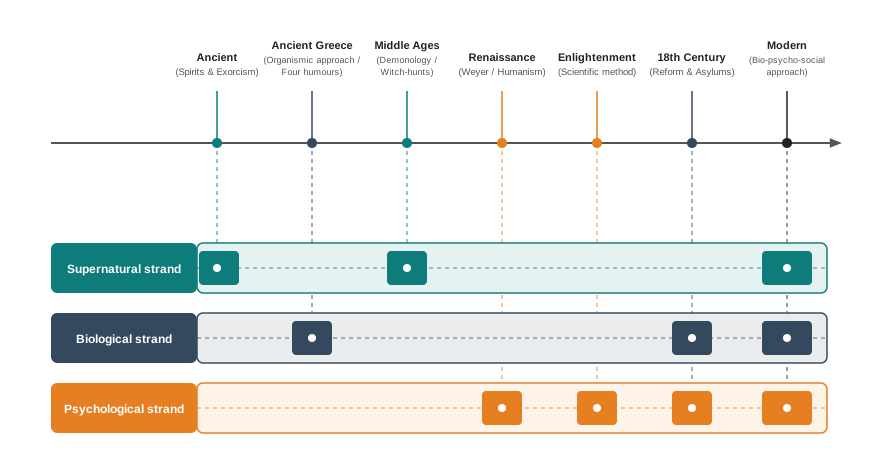
Fig. 4.3 – Historical views on abnormal behaviour.
The supernatural explanation
One ancient theory, still encountered today, holds that abnormal behaviour is caused by the operation of supernatural and magical forces — evil spirits (bhoot-pret), or the devil (shaitan). If a spirit has entered a person, the cure must be to drive it out.
That is the logic of exorcism: removing the evil that is believed to reside in the individual through countermagic and prayer. It is not a museum piece; it remains commonly practised. In many societies the shaman, or medicine man (ojha), is a person believed to be in contact with supernatural forces and to serve as the medium through which spirits communicate with human beings. Through the shaman, an afflicted person can learn which spirits are held responsible for her or his problems, and what must be done to appease them.
The biological or organic explanation
A second theme recurs throughout the history of abnormal psychology: the belief that individuals behave strangely because their bodies and their brains are not working properly. This is the biological or organic approach.
In the modern era there is real evidence behind it. Body and brain processes have been linked to many types of maladaptive behaviour, and for certain types of disorders, correcting the defective biological process results in improved functioning. This is the strongest argument the approach has: it works, at least some of the time.
The psychological explanation
A third approach is the psychological approach. On this view, psychological problems are caused by inadequacies in the way an individual thinks, feels, or perceives the world. The trouble lies not in a spirit and not in a chemical, but in the person’s own mental processes.
The three views across Western history
All three perspectives — supernatural, biological or organic, and psychological — have recurred throughout the history of Western civilisation.
In the ancient Western world, it was the philosopher-physicians of ancient Greece — Hippocrates, Socrates, and in particular Plato — who developed the organismic approach, viewing disturbed behaviour as arising out of conflicts between emotion and reason. The idea that a person can be at war with herself, and that this war produces disturbance, is thus very old.
Galen elaborated on the role of the four humours in personal character and temperament. According to him, the material world was made up of four elements — earth, air, fire, and water — which combined to form four essential body fluids: blood, black bile, yellow bile, and phlegm. Each of these fluids was seen as responsible for a different temperament, and imbalances among the humours were believed to cause various disorders.
In the Middle Ages, demonology and superstition regained importance in the explanation of abnormal behaviour. Demonology rested on the belief that people with mental problems were evil, and the period contains numerous instances of ‘witch-hunts’. It is worth being clear about what this meant in practice: people who were unwell were persecuted rather than treated.
The picture was not uniformly dark. During the early Middle Ages, the Christian spirit of charity prevailed, and St. Augustine wrote extensively about feelings, mental anguish and conflict. His writings laid the groundwork for what would much later become the modern psychodynamic theories of abnormal behaviour.
The Renaissance Period was marked by increased humanism and by curiosity about behaviour. Johann Weyer emphasised psychological conflict and disturbed interpersonal relationships as causes of psychological disorders. He also insisted that ‘witches’ were mentally disturbed people who required medical, not theological, treatment — a claim that took courage to make in his time, and one that moved the whole question from the church to the clinic.
The seventeenth and eighteenth centuries are known as the Age of Reason and Enlightenment, because the scientific method replaced faith and dogma as the way of understanding abnormal behaviour. Observation and evidence, rather than doctrine, became the tests of an explanation.
The growth of this scientific attitude in the eighteenth century contributed to the Reform Movement and to increased compassion for people who suffered from psychological disorders. Reforms of asylums were initiated in both Europe and America. One aspect of the reform movement was a new inclination for deinstitutionalisation, which placed emphasis on providing community care for recovered mentally ill individuals rather than keeping them confined.
4.3 Classification of Psychological Disorders
Before we can understand psychological disorders, we have to be able to sort them. A classification of psychological disorders is a list of categories of specific disorders, grouped into various classes on the basis of some shared characteristics.
The logic is the same one you use whenever you organise anything complicated. If every case of distress were treated as entirely unique, nothing learned from one person could ever be applied to another, and the field would have no accumulated knowledge at all. Grouping cases that share features is what makes such knowledge possible.
Why classification matters
Classifications are useful for three connected reasons.
First, they allow users — psychologists, psychiatrists, social workers — to communicate with one another about a disorder. When a clinician in Jaipur records a diagnosis and a clinician in Chennai reads it, both must mean the same thing by the term, or the record is worthless.
Second, they help in understanding the causes of psychological disorders. Once cases with similar features are grouped, researchers can look for what those cases have in common — in biology, in life history, in circumstances.
Third, they help in understanding the processes involved in the development and maintenance of disorders — how a condition begins, and what keeps it going once it has begun. That second question matters enormously for treatment, because a disorder is often maintained by factors quite different from the ones that started it.
The two classification systems
Two systems are in use, and you should know both by name.
The American Psychiatric Association (APA) has published an official manual describing and classifying various kinds of psychological disorders. Its current version is the Diagnostic and Statistical Manual of Mental Disorders, 5th Edition (DSM-5). The DSM-5 presents discrete clinical criteria which indicate the presence or absence of disorders. ‘Discrete’ is the key word: the criteria are stated definitely enough that a clinician can say whether they are met or not met.
The classification scheme officially used in India and elsewhere is the tenth revision of the International Classification of Diseases (ICD-10), known as the ICD-10 Classification of Behavioural and Mental Disorders. It was prepared by the World Health Organisation (WHO). For each disorder, this scheme provides a description of the main clinical features or symptoms, and of other associated features, including diagnostic guidelines.
4.4 Factors Underlying Abnormal Behaviour
Abnormal behaviour is complicated, and no single lens brings all of it into focus. Psychologists therefore work with several different approaches. Each approach in use today emphasises a different aspect of human behaviour, and explains — and treats — abnormality in line with that aspect.
These approaches also stress different kinds of causal factors: biological factors, psychological and interpersonal factors, and socio-cultural factors. In this section we examine the approaches currently used to explain abnormal behaviour. Read them not as rivals to be scored against one another, but as partial answers, each of which captures something the others miss.
Biological factors
Biological factors influence all aspects of our behaviour. A wide range of them — faulty genes, endocrine imbalances, malnutrition, injuries, and other conditions — may interfere with the normal development and functioning of the human body, and may therefore become potential causes of abnormal behaviour.
You have already met the biological model. According to it, abnormal behaviour has a biochemical or physiological basis. Something in the machinery of the body, and particularly of the brain, is not working as it should.
Messages across the synapse
Biological researchers have found that psychological disorders are often related to problems in the transmission of messages from one neuron to another. You studied in Class XI that a tiny gap, called the synapse, separates one neuron from the next, and that the message must somehow cross that gap.
Here is how the crossing happens, as shown in Fig. 4.4. When an electrical impulse travels down a neuron and reaches its ending, the nerve ending is stimulated to release a chemical called a neuro-transmitter. This chemical carries the message across the synapse to the next neuron. Communication in the nervous system is therefore not purely electrical — at every junction it becomes chemical.
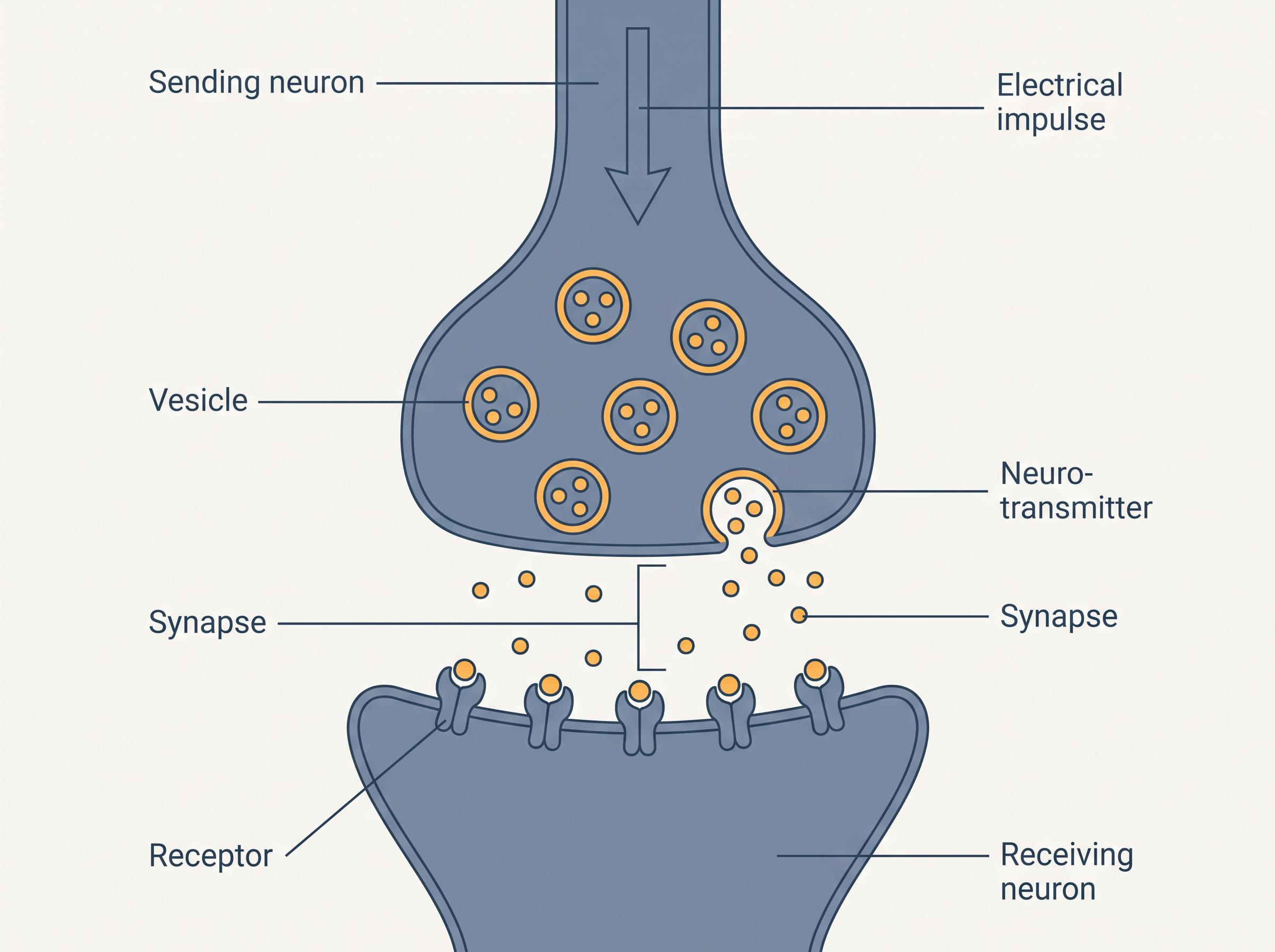
Fig. 4.4 – Transmission across the synapse.
This chemical step is where things can go wrong. Studies indicate that abnormal activity by certain neuro-transmitters can lead to specific psychological disorders. Anxiety disorders have been linked to low activity of the neurotransmitter gamma aminobutyric acid (GABA); schizophrenia to excess activity of dopamine; and depression to low activity of serotonin.
Genetic factors
Genetic factors have been linked to bipolar and related disorders, schizophrenia, intellectual disability, and other psychological disorders. Families and twin studies have made the family resemblance hard to deny.
But researchers have not been able to identify the specific genes that are the culprits, and this is not a temporary gap in knowledge. It appears that in most cases no single gene is responsible for a particular behaviour or a psychological disorder. Many genes combine to bring about our various behaviours and emotional reactions, both functional and dysfunctional.
So there is sound evidence that genetic and biochemical factors are involved in disorders as diverse as schizophrenia, depression and anxiety. Yet biology alone cannot account for most mental disorders — a conclusion the biological approach itself has been honest enough to reach.
Psychological models
Several psychological models provide a psychological explanation of mental disorders. They maintain that psychological and interpersonal factors have a significant role to play in abnormal behaviour.
The factors they point to include maternal deprivation (separation from the mother, or lack of warmth and stimulation during the early years of life), faulty parent-child relationships (rejection, overprotection, over-permissiveness, faulty discipline, and so on), maladaptive family structures (an inadequate or disturbed family), and severe stress.
The psychological models are four: the psychodynamic, the behavioural, the cognitive, and the humanistic-existential.
The psychodynamic model
The psychodynamic model is the oldest and most famous of the modern psychological models, and you have already read about it in Chapter 2 on Self and Personality.
Psychodynamic theorists believe that behaviour — whether normal or abnormal — is determined by psychological forces within the person of which she or he is not consciously aware. These internal forces are considered dynamic, meaning that they interact with one another, and it is their interaction that gives shape to behaviour, thoughts and emotions. Abnormal symptoms, on this view, are the result of conflicts between these forces.
The model was first formulated by Freud, who held that three central forces shape personality: instinctual needs, drives and impulses (id), rational thinking (ego), and moral standards (superego). Freud stated that abnormal behaviour is a symbolic expression of unconscious mental conflicts, which can generally be traced back to early childhood or infancy.
The word ‘symbolic’ is doing important work in that sentence. The symptom, on this account, is not the problem itself; it is a disguised expression of a buried conflict. That is why the psychodynamic clinician looks past the symptom to what it might stand for.
The behavioural model
The behavioural model shifts attention from the invisible inside to the observable outside. It states that both normal and abnormal behaviours are learned, and that psychological disorders are the result of learning maladaptive ways of behaving.
The model concentrates on behaviours learned through conditioning, and proposes something quietly hopeful: what has been learned can be unlearned. If a fear was acquired, it can be unacquired — and that proposal is the foundation of behaviour therapy.
Learning can take place in three ways. In classical conditioning, two events that repeatedly occur close together in time come to be associated — a temporal association. In operant conditioning, a behaviour is followed by a reward, and therefore becomes more likely. In social learning, a person learns by imitating the behaviour of others. These three types of conditioning account for behaviour, whether adaptive or maladaptive.
The cognitive model
Psychological factors are also emphasised by the cognitive model, which states that abnormal functioning can result from cognitive problems — that is, from problems in the way a person thinks.
People may hold assumptions and attitudes about themselves that are irrational and inaccurate. They may also repeatedly think in illogical ways and make overgeneralisations: drawing broad, negative conclusions on the basis of a single insignificant event.
You can see the shape of this in ordinary life. A student does badly in one class test and concludes, “I am hopeless at everything, and I always will be.” The event is small; the conclusion is total. On the cognitive account, it is that habit of thinking — not the test — that does the damage.
The humanistic-existential model
The humanistic-existential model takes a wider view, focusing on broader aspects of human existence rather than on symptoms alone.
Humanists believe that human beings are born with a natural tendency to be friendly, cooperative and constructive, and are driven to self-actualise — that is, to fulfil this potential for goodness and growth. When circumstances block that drive, the person cannot become what she is capable of becoming, and difficulty follows.
Existentialists begin elsewhere. They believe that from birth we have total freedom either to give meaning to our existence or to avoid that responsibility. Those who shirk the responsibility, they argue, live empty, inauthentic and dysfunctional lives. Notice that this makes disorder less a matter of illness and more a matter of how a person meets the fact of her own freedom.
Socio-cultural factors
Beyond the biological and the psychosocial lie the socio-cultural factors: war and violence, group prejudice and discrimination, economic and employment problems, and rapid social change. These press on most of us, and in some individuals they lead to psychological problems.
According to the socio-cultural model, abnormal behaviour is best understood in the light of the social and cultural forces that influence an individual. Since behaviour is shaped by societal forces, factors such as family structure and communication, social networks, societal conditions, and societal labels and roles become central.
Family structure
Certain family systems are likely to produce abnormal functioning in individual members. Some families have an enmeshed structure, in which members are overinvolved in each other’s activities, thoughts and feelings. Closeness of this kind can look like warmth from the outside, but children from such families may have difficulty becoming independent in life, because they have never been allowed the separateness that independence requires.
Labels and roles
Socio-cultural theorists also believe that abnormal functioning is influenced by the societal labels and roles assigned to troubled people. When people break the norms of their society, they are called deviant and ‘mentally ill’.
Such labels tend to stick. The person may come to be viewed as ‘crazy’ and, subtly or openly, encouraged to act sick. Gradually she learns to accept and play the sick role, and begins to function in a disturbed manner. The label, in other words, does not merely describe the person; it helps to produce the very behaviour it names.
The diathesis-stress model
One of the most widely accepted explanations of abnormal behaviour is the diathesis-stress model. It states that psychological disorders develop when a diathesis — a biological predisposition to the disorder — is set off by a stressful situation.
The model has three components, and it is worth separating them carefully, as Fig. 4.5 does.
The first is the diathesis itself: the presence of some biological aberration, which may be inherited. The second is that the diathesis may carry a vulnerability to develop a psychological disorder — meaning that the person is ‘at risk’ or ‘predisposed’. The third is the presence of pathogenic stressors, that is, factors or stressors that may lead to psychopathology.
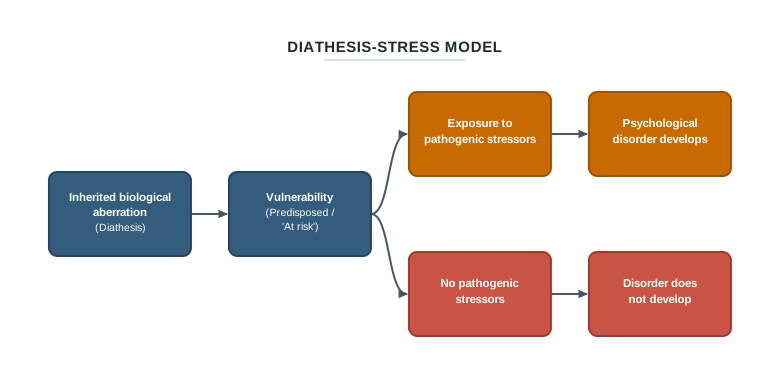
Fig. 4.5 – The diathesis-stress model.
Put the three together and the prediction is clear. If such “at risk” persons are exposed to these stressors, their predisposition may actually evolve into a disorder. If they are not so exposed, the predisposition may remain just that — a predisposition, and nothing more. This model has been applied to several disorders, including anxiety, depression, and schizophrenia.
4.5 Major Psychological Disorders
We now turn from explanations to the disorders themselves. What follows is a survey of the major categories recognised by the classification systems you met earlier, described in terms of the signs and symptoms that clinicians look for.
Two habits of mind will help you as you read. First, keep the four Ds in view: in every disorder below, ask which of them is present and how strongly. Second, remember that a symptom in a list is not a diagnosis in a person. Almost every symptom described here — worry, low mood, restlessness, a repeated habit — occurs in mild form in ordinary life. What converts a symptom into a disorder is its intensity, its persistence, and the extent to which it disables the person’s functioning; and that judgement belongs to a trained professional, not to a reader.
4.5.1 Anxiety Disorders
You experience anxiety when you are waiting to take an examination, or to visit a dentist, or to give a solo performance. This is normal and expected. In moderate amounts, anxiety even motivates you to do the task well — it sharpens attention and mobilises effort.
The picture changes when levels of anxiety become high enough to be distressing and to interfere with effective functioning. That indicates the presence of an anxiety disorder — the most common category of psychological disorders.
What anxiety is
Everyone has worries and fears. The term anxiety is usually defined as a diffuse, vague, very unpleasant feeling of fear and apprehension. The word ‘diffuse’ is important: unlike fear of a particular object, anxiety often has no clear target that the person can point to.
The anxious individual also shows combinations of the following symptoms: rapid heart rate, shortness of breath, diarrhoea, loss of appetite, fainting, dizziness, sweating, sleeplessness, frequent urination, and tremors. Notice how bodily this list is. Anxiety is not merely a state of mind; the body is fully involved in it.
There are many types of anxiety disorders, summarised in Table 4.1 and shown in Fig. 4.6.
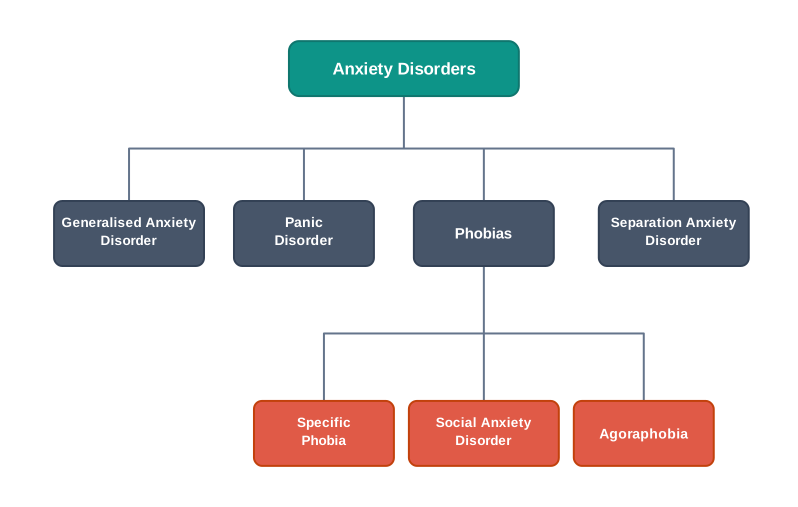
Fig. 4.6 – Major anxiety disorders.
Generalised anxiety disorder
Generalised anxiety disorder consists of prolonged, vague, unexplained and intense fears that are not attached to any particular object. The person is afraid, but cannot say of what.
Its symptoms include worry and apprehensive feelings about the future, and hypervigilance — constantly scanning the environment for dangers, so that the person is never quite off duty. It is also marked by motor tension: the person is unable to relax, is restless, and appears visibly shaky and tense.
Panic disorder
Another type of anxiety disorder is panic disorder, which consists of recurrent anxiety attacks in which the person experiences intense terror.
A panic attack denotes an abrupt surge of intense anxiety, rising to a peak when thoughts of a particular stimulus are present. Such thoughts occur in an unpredictable manner, and that unpredictability is itself part of the torment — the person cannot know when the next attack will come.
The clinical features include shortness of breath, dizziness, trembling, palpitations, choking, nausea, chest pain or discomfort, and a fear of going mad, of losing control, or of dying. Because these bodily symptoms so closely resemble those of a heart attack, many people first arrive at a physician’s clinic rather than a psychologist’s.
Phobias
You might have met or heard of someone who was afraid to travel in a lift, or to climb to the tenth floor of a building, or who refused to enter a room after seeing a lizard in it. You may have felt something of this yourself, or seen a friend unable to speak a word of a well-memorised and rehearsed speech in front of an audience.
These kinds of fears are termed phobias. People who have phobias have irrational fears related to specific objects, people, or situations. ‘Irrational’ here does not mean that the person is foolish; it means that the fear is out of proportion to any actual danger, and that the person often knows this and is still unable to shake it off.
Phobias often develop gradually, or begin with a generalised anxiety disorder. They can be grouped into three main types: specific phobias, social phobias, and agoraphobia.
Specific phobias are the most commonly occurring type. This group includes irrational fears such as an intense fear of a certain type of animal, or of being in an enclosed space.
Intense and incapacitating fear and embarrassment when dealing with others characterises social anxiety disorder (social phobia). The person is not afraid of people as such; she is afraid of being watched, judged, and found wanting.
Agoraphobia is the term used when people develop a fear of entering unfamiliar situations. Many people with agoraphobia are afraid of leaving their home, and so their ability to carry out normal life activities becomes severely limited.
Separation anxiety disorder
Separation anxiety disorder (SAD) is another type of anxiety disorder. Individuals with SAD are fearful and anxious about separation from attachment figures to an extent that is developmentally not appropriate. Every small child protests at being left; the difference lies in the intensity of the fear and in its persistence well past the age at which it would be expected.
Children with SAD may have difficulty being in a room by themselves or going to school alone. They are fearful of entering new situations, and they cling to and shadow their parents’ every move. To avoid separation, children with SAD may fuss, scream, throw severe tantrums, or make gestures suggesting they might harm themselves — behaviour that must always be taken seriously and referred to a qualified professional.
Table 4.1: Major Anxiety Disorders and their Symptoms
| Disorder | Main features | |
|---|---|---|
| 1. | Generalised Anxiety Disorder | Prolonged, vague, unexplained and intense fears that have no object, accompanied by hypervigilance and motor tension. |
| 2. | Panic Disorder | Frequent anxiety attacks characterised by feelings of intense terror and dread; unpredictable ‘panic attacks’ along with physiological symptoms such as breathlessness, palpitations, trembling and dizziness, and a sense of losing control or even dying. |
| 3. | Specific Phobia | Irrational fears related to specific objects, interactions with others, and unfamiliar situations. |
| 4. | Separation Anxiety Disorder | Extreme distress when expecting or going through separation from home, or from other significant people to whom the individual is immensely attached. |
| 5. | Others | Other disorders included under this category are Selective Mutism, Substance/Medication-Induced Anxiety Disorder, Anxiety Disorder Due to Another Medical Condition, and so on. |
4.5.5 Dissociative Disorders
Dissociation can be viewed as a severance of the connections between ideas and emotions. Ordinarily, your memories, your sense of identity, your feelings and your awareness of the world hold together as one experience. In dissociation, that unity comes apart.
Dissociation involves feelings of unreality, estrangement, depersonalisation, and sometimes a loss or shift of identity. Sudden temporary alterations of consciousness that blot out painful experiences are a defining characteristic of dissociative disorders. Notice the function implied here: what is blotted out is precisely what is painful.
The conditions included in this category are Dissociative Amnesia, Dissociative Identity Disorder, and Depersonalisation/Derealisation Disorder.
Dissociative amnesia
Dissociative amnesia is characterised by extensive but selective memory loss that has no known organic cause — that is, no head injury or other physical damage accounts for it.
Some people cannot remember anything about their past. Others can no longer recall specific events, people, places, or objects, while their memory for other events remains intact. The selectivity is the striking feature: memory has not failed as a system, but particular contents have become unavailable.
A part of dissociative amnesia is dissociative fugue. Its essential feature is an unexpected travel away from home and workplace, the assumption of a new identity, and the inability to recall the previous identity. The fugue usually ends when the person suddenly ‘wakes up’, with no memory of the events that occurred during it. This disorder is often associated with an overwhelming stress.
Dissociative identity disorder
Dissociative identity disorder, often referred to as multiple personality, is the most dramatic of the dissociative disorders — and, partly for that reason, the most misrepresented in films and television.
It is often associated with traumatic experiences in childhood. In this disorder, the person assumes alternate personalities that may or may not be aware of each other.
Depersonalisation/derealisation disorder
Depersonalisation/derealisation disorder involves a dreamlike state in which the person has a sense of being separated both from the self and from reality. In depersonalisation there is a change of self-perception, and the person’s sense of reality is temporarily lost or changed. People describe it as watching themselves from the outside, or as though a pane of glass had come between them and the world.
4.5.6 Depressive Disorders
One of the most widely prevalent and recognised of all mental disorders is depression. Depression covers a variety of negative moods and behavioural changes.
The word is used in two quite different ways, and confusing them causes a great deal of trouble. Depression can refer to a symptom or to a disorder. In day-to-day life, we often use the term to refer to normal feelings after a significant loss — the break-up of a relationship, or the failure to attain an important goal. That is depression as a symptom, and it is part of ordinary human experience.
Major depressive disorder
Major depressive disorder is defined as a period of depressed mood and/or loss of interest or pleasure in most activities, together with other symptoms.
These other symptoms may include change in body weight, constant sleep problems, tiredness, inability to think clearly, agitation, greatly slowed behaviour, and thoughts of death and suicide. Excessive guilt or feelings of worthlessness are also common.
Read the definition again and notice how much of it is not about sadness. Sleep, weight, energy, concentration, movement — depression reaches into the whole functioning of the person. This is one reason it is so disabling, and one reason it is treatable: there are many points at which help can take hold.
Factors predisposing towards depression
Genetic make-up, or heredity, is an important risk factor for major depression and other depressive disorders.
Age is also a risk factor. Women are particularly at risk during young adulthood, while for men the risk is highest in early middle age.
Gender plays a considerable role in this differential risk as well: women, in comparison to men, are more likely to report a depressive disorder. Other risk factors are experiencing negative life events, and lack of social support.
A risk factor is not a cause, and it certainly is not a destiny. It raises the probability that a disorder will develop — which is exactly the shape of the diathesis-stress account you met in the previous section.
4.5.8 Schizophrenia Spectrum and Other Psychotic Disorders
Schizophrenia is the descriptive term for a group of psychotic disorders in which personal, social and occupational functioning deteriorate as a result of disturbed thought processes, strange perceptions, unusual emotional states, and motor abnormalities.
It is a debilitating disorder. The social and psychological costs of schizophrenia are tremendous — to the people who have it, and to their families and society. It is also, for the same reason, the disorder most burdened by stigma and by careless portrayal; almost everything the average person “knows” about it comes from films, and most of that is wrong.
Symptoms of schizophrenia
The symptoms of schizophrenia can be grouped into three categories, as Fig. 4.7 shows: positive symptoms (excesses of thought, emotion and behaviour), negative symptoms (deficits of thought, emotion and behaviour), and psychomotor symptoms.
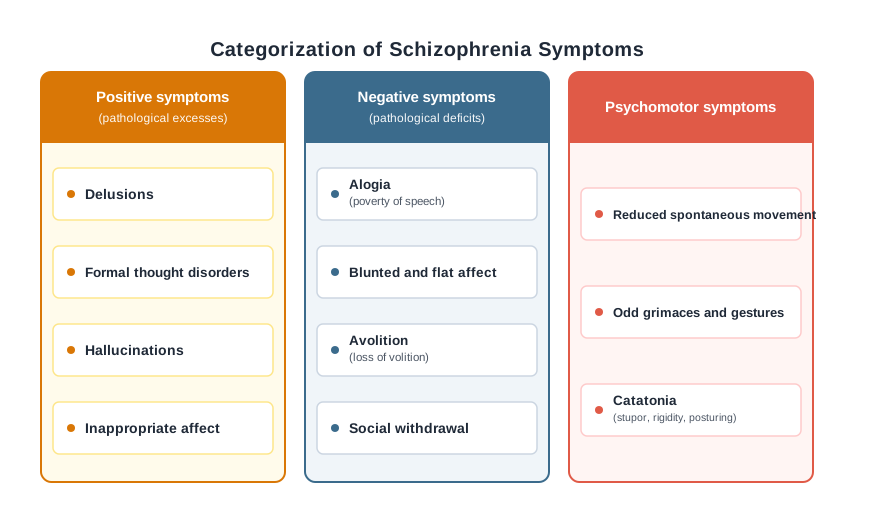
Fig. 4.7 – Symptoms of schizophrenia.
Positive symptoms
Positive symptoms are ‘pathological excesses’ or ‘bizarre additions’ to a person’s behaviour. Delusions, disorganised thinking and speech, heightened perception and hallucinations, and inappropriate affect are the ones most often found in schizophrenia.
Many people with schizophrenia develop delusions. A delusion is a false belief that is firmly held on inadequate grounds. It is not affected by rational argument, and it has no basis in reality. That resistance to argument is the diagnostic point — you cannot talk a person out of a delusion by producing evidence, because the belief was not formed on evidence in the first place.
Delusions of persecution are the most common in schizophrenia. People with this delusion believe that they are being plotted against, spied on, slandered, threatened, attacked, or deliberately victimised.
People with schizophrenia may also experience delusions of reference, in which they attach special and personal meaning to the actions of others, or to objects and events — a news headline, or a stranger’s cough, is taken to be a message meant for them.
In delusions of grandeur, people believe themselves to be specially empowered persons. In delusions of control, they believe that their feelings, thoughts and actions are being controlled by others.
People with schizophrenia may not be able to think logically, and may speak in peculiar ways. These formal thought disorders can make communication extremely difficult.
They include rapidly shifting from one topic to another, so that the normal structure of thinking becomes muddled and illogical (loosening of associations, derailment); inventing new words or phrases (neologisms); and persistent, inappropriate repetition of the same thoughts (perseveration).
People with schizophrenia may also have hallucinations — perceptions that occur in the absence of external stimuli. The person is not imagining the voice or the sight; she is perceiving it, with the full force of a real perception.
Auditory hallucinations are the most common in schizophrenia. Patients hear sounds or voices that speak words, phrases and sentences directly to the patient (second-person hallucination), or that talk to one another, referring to the patient as ‘he’ or ‘she’ (third-person hallucination).
Hallucinations can also involve the other senses. These include tactile hallucinations (forms of tingling or burning), somatic hallucinations (the sense of something happening inside the body, such as a snake crawling inside one’s stomach), visual hallucinations (vague perceptions of colour, or distinct visions of people or objects), gustatory hallucinations (food or drink tasting strange), and olfactory hallucinations (smelling poison or smoke).
People with schizophrenia also show inappropriate affect — emotions that are unsuited to the situation, such as smiling at sad news.
Negative symptoms
Negative symptoms are ‘pathological deficits’. They include poverty of speech, blunted and flat affect, loss of volition, and social withdrawal. These are less dramatic than the positive symptoms, and for that very reason they are often overlooked — yet they are frequently the more disabling of the two, because they strip away the person’s capacity to act and to connect.
People with schizophrenia show alogia, or poverty of speech — a reduction in speech and in speech content.
Many show less anger, sadness, joy and other feelings than most people do: they have blunted affect. Some show no emotions at all, a condition known as flat affect.
Patients with schizophrenia also experience avolition — apathy, and an inability to start or complete a course of action. People with this disorder may withdraw socially and become totally focused on their own ideas and fantasies.
Psychomotor symptoms
People with schizophrenia also show psychomotor symptoms. They move less spontaneously, or make odd grimaces and gestures.
These symptoms may take extreme forms known as catatonia. People in a catatonic stupor remain motionless and silent for long stretches of time. Some show catatonic rigidity — maintaining a rigid, upright posture for hours. Others exhibit catatonic posturing, assuming awkward, bizarre positions for long periods of time.
4.5.9 Neurodevelopmental Disorders
A common feature of the neurodevelopmental disorders is that they manifest in the early stage of development. Often the symptoms appear before the child enters school, or during the early stage of schooling.
These disorders result in hampering personal, social, academic and occupational functioning. They are characterised as deficits or excesses in a particular behaviour, or as delays in achieving a particular age-appropriate behaviour.
We will discuss several disorders in this group: Attention-Deficit/Hyperactivity Disorder (ADHD), Autism Spectrum Disorder, Intellectual Disability, and Specific Learning Disorder. These disorders, if not attended to, can lead to more serious and chronic disorders as the child moves into adulthood — which is the strongest argument there is for early identification.
Attention-Deficit/Hyperactivity Disorder
The two main features of ADHD are inattention and hyperactivity-impulsivity.
Children who are inattentive find it difficult to sustain mental effort during work or play. They have a hard time keeping their minds on any one thing, or following instructions. Common complaints are that the child does not listen, cannot concentrate, does not follow instructions, is disorganised, is easily distracted, is forgetful, does not finish assignments, and is quick to lose interest in boring activities.
Children who are impulsive seem unable to control their immediate reactions, or to think before they act. They find it difficult to wait or to take turns, and they have difficulty resisting immediate temptations or delaying gratification. Minor mishaps, such as knocking things over, are common, and more serious accidents and injuries can also occur.
Hyperactivity also takes many forms. Children with ADHD are in constant motion. Sitting still through a lesson is impossible for them. The child may fidget, squirm, climb, and run around the room aimlessly. Parents and teachers describe such children as ‘driven by a motor’, always on the go, and talking incessantly.
Autism Spectrum Disorder
Autism Spectrum Disorder is characterised by widespread impairments in social interaction and communication skills, and by stereotyped patterns of behaviours, interests and activities.
Children with autism spectrum disorder have marked difficulties in social interaction and communication across different contexts, a restricted range of interests, and a strong desire for routine. About 70 per cent of children with autism spectrum disorder have intellectual disabilities.
Children with autism spectrum disorder experience profound difficulties in relating to other people. They are unable to initiate social behaviour and seem unresponsive to other people’s feelings. They are unable to share experiences or emotions with others.
They also show serious abnormalities in communication and language that persist over time. Many of them never develop speech, and those who do have repetitive and deviant speech patterns.
Such children often show narrow patterns of interests, and repetitive behaviours such as lining up objects, or stereotyped body movements such as rocking. These motor movements may be self-stimulatory, such as hand flapping, or self-injurious, such as banging the head against a wall.
Because of the nature of these difficulties in verbal and non-verbal communication, individuals with autism spectrum disorder tend to experience difficulties in starting, maintaining, and even understanding relationships.
Intellectual Disability
You have already read about variations in intelligence in Chapter 1. Intellectual disability refers to below-average intellectual functioning — with an IQ of approximately 70 or below — together with deficits or impairments in adaptive behaviour (that is, in areas such as communication, self-care, home living, social and interpersonal skills, functional academic skills, and work), which are manifested before the age of 18 years.
Note that both conditions must be met. A low IQ score alone does not establish intellectual disability; what matters equally is how the person manages the practical demands of everyday living. Table 4.2 describes the characteristics of persons with different levels of intellectual disability.
Table 4.2: Characteristics of Individuals with Different Levels of Intellectual Disability
| Area of Functioning | Mild (IQ range = 55 to approximately 70) | Moderate (IQ range = 35–40 to approximately 50–55) | Severe (IQ range = 20–25 to approximately 35–40) and Profound (IQ = below 20–25) |
|---|---|---|---|
| Self-help Skills | Feeds and dresses self and cares for own toilet needs | Has difficulties and requires training, but can learn adequate self-help skills | No skills to partial skills, but some can care for personal needs on a limited basis |
| Speech and Communication | Receptive and expressive language is adequate; understands communication | Receptive and expressive language is adequate; has speech problems | Receptive language is limited; expressive language is poor |
| Academics | Optimal learning environment; third to sixth grade | Very few academic skills; first or second grade is maximal | No academic skills |
| Social Skills | Has friends; can learn to adjust quickly | Capable of making friends, but has difficulty in many social situations | Not capable of having real friends; no social interactions |
| Vocational Adjustment | Can hold a job; competitive to semi-competitive; primarily unskilled work | Sheltered work environment; usually needs consistent supervision | Generally no employment; usually needs constant care |
| Adult Living | Usually marries, has children; needs help during stress | Usually does not marry or have children; dependent | No marriage or children; always dependent on others |
Specific Learning Disorder
In the case of specific learning disorder, the individual experiences difficulty in perceiving or processing information efficiently and accurately.
These difficulties are manifested during the early school years, and the individual encounters problems in basic skills in reading, writing, and/or mathematics. The affected child tends to perform below average for her or his age.
However — and this is the point most often missed — individuals may be able to reach acceptable performance levels with additional inputs and efforts. Specific learning disorder is likely to impair functioning and performance in activities and occupations that depend on the related skills, but it is not a statement about the person’s intelligence.
4.5.10 Disruptive, Impulse-Control and Conduct Disorders
The disorders included under this category are Oppositional Defiant Disorder, Conduct Disorder, and others.
Oppositional Defiant Disorder
Children with Oppositional Defiant Disorder (ODD) display age-inappropriate amounts of stubbornness. They are irritable, defiant, disobedient, and behave in a hostile manner.
Individuals with ODD do not see themselves as angry, oppositional, or defiant, and they often justify their behaviour as a reaction to circumstances or demands placed on them. As a result, the symptoms of the disorder become entangled with the person’s problematic interactions with others — each provoking the other, so that it becomes difficult to say where the trouble begins.
4.5.11 Feeding and Eating Disorders
Another group of disorders of special interest to young people are eating disorders. These include anorexia nervosa, bulimia nervosa, and binge eating.
In anorexia nervosa, the individual has a distorted body image, which leads her or him to see herself or himself as overweight even when this is plainly not so. The person often refuses to eat, exercises compulsively, and develops unusual habits, such as refusing to eat in front of others. She may lose large amounts of weight, and in serious cases may starve to the point of death.
In bulimia nervosa, the individual may eat excessive amounts of food and then purge the food from the body, for instance by vomiting or by using medicines such as laxatives or diuretics. The person often feels disgusted and ashamed when she binges, and feels relieved of tension and negative emotions after purging — which is what makes the cycle so difficult to break.
In binge eating, there are frequent episodes of out-of-control eating. The individual tends to eat at a higher speed than normal and continues eating until she feels uncomfortably full. In fact, a large amount of food may be eaten even when the individual is not feeling hungry.
4.6 Summary
Abnormal behaviour is behaviour that is deviant, distressing, dysfunctional, and possibly dangerous — the ‘four Ds’. Two conflicting criteria are used to identify it: behaviour may be judged abnormal because it deviates from social norms, or because it is maladaptive, that is, because it interferes with the person’s optimal functioning and growth.
Across history, three perspectives on abnormal behaviour recur: the supernatural, the biological or organic, and the psychological. The modern interactional, or bio-psycho-social, approach holds that all three sets of factors — biological, psychological and social — play important roles in psychological disorders.
Psychological disorders are classified by two systems: the ICD-10 Classification of Behavioural and Mental Disorders, prepared by the World Health Organisation (WHO) and used officially in India, and the Diagnostic and Statistical Manual of Mental Disorders, 5th Edition (DSM-5), published by the American Psychiatric Association.
A variety of models have been used to explain abnormal behaviour: the biological, psychodynamic, behavioural, cognitive, humanistic-existential, diathesis-stress, and socio-cultural approaches. Each emphasises different causes, and each therefore points to a different kind of treatment.
The major psychological disorders include anxiety disorders; obsessive-compulsive and related disorders; trauma- and stressor-related disorders; somatic symptom and related disorders; dissociative disorders; depressive disorders; bipolar and related disorders; schizophrenia spectrum and other psychotic disorders; neurodevelopmental disorders; disruptive, impulse-control and conduct disorders; feeding and eating disorders; and substance-related and addictive disorders.
Throughout, a single caution holds: symptoms described in a textbook cannot be used to diagnose anyone. Diagnosis requires a trained professional, and stigma — not the disorder — is often what keeps people from getting the help that works.
4.7 Key Terms
Abnormal psychology — The branch of psychology that studies maladaptive behaviour: its causes, its consequences, and its treatment.
Antisocial behaviour — Age-inappropriate actions and attitudes that violate family expectations, societal norms, and the personal or property rights of others.
Anxiety — A diffuse, vague and very unpleasant feeling of fear and apprehension, accompanied by bodily symptoms such as rapid heart rate, sweating and tremors.
Autism spectrum disorder — A neurodevelopmental disorder marked by widespread impairments in social interaction and communication, along with stereotyped patterns of behaviour, interests and activities.
Bipolar and related disorders — Disorders in which mania and depression are alternately present, sometimes interrupted by periods of normal mood; they include Bipolar I Disorder, Bipolar II Disorder and Cyclothymic Disorder.
Deinstitutionalisation — The practice, arising from the Reform Movement, of moving recovered mentally ill individuals out of asylums and providing care for them within the community.
Delusions — False beliefs that are firmly held on inadequate grounds, are unaffected by rational argument, and have no basis in reality (for example, delusions of persecution, reference, grandeur and control).
Depressive disorders — Disorders whose core feature is a sustained depressed mood and/or loss of interest or pleasure in most activities, together with other symptoms such as sleep and weight changes, tiredness and feelings of worthlessness.
Diathesis-stress model — The explanation that a psychological disorder develops when a diathesis (an inherited biological predisposition that makes a person vulnerable) is set off by exposure to pathogenic stressors.
Feeding and eating disorders — Disorders of eating behaviour and body image, including anorexia nervosa, bulimia nervosa and binge eating.
Genetics — The study of inheritance; in abnormal psychology, the many genes that combine to influence vulnerability to disorders such as schizophrenia, bipolar disorders and intellectual disability.
Hallucinations — Perceptions that occur in the absence of any external stimulus; they may be auditory, tactile, somatic, visual, gustatory or olfactory.
Hyperactivity — A feature of ADHD in which the child is in constant motion — fidgeting, squirming, climbing, running about aimlessly, and talking incessantly.
Intellectual disability — Below-average intellectual functioning (an IQ of approximately 70 or below) together with deficits in adaptive behaviour, manifested before the age of 18 years.
Neurodevelopmental disorders — Disorders that manifest early in development, hampering personal, social, academic and occupational functioning; they include ADHD, autism spectrum disorder, intellectual disability and specific learning disorder.
Neurotransmitters — Chemicals released at a nerve ending that carry the message across the synapse to the next neuron; abnormal activity of particular neurotransmitters (GABA, dopamine, serotonin) is linked to specific disorders.
Norms — The stated or unstated rules of a society that prescribe proper conduct; behaviour that breaks them is often labelled abnormal.
Obsessive-compulsive disorders — Disorders in which the person cannot control a preoccupation with specific ideas (obsessions) or cannot prevent the repeated performance of certain acts (compulsions).
Phobias — Irrational fears related to specific objects, people or situations, grouped into specific phobias, social phobia and agoraphobia.
Schizophrenia — A group of psychotic disorders in which personal, social and occupational functioning deteriorate because of disturbed thought processes, strange perceptions, unusual emotional states and motor abnormalities.
Somatic symptom and related disorders — Conditions in which the person has distressing physical symptoms, or a preoccupation with illness, for which no adequate biological cause is found.
Substance related and addictive disorders — Disorders arising from maladaptive behaviour that results from the regular and consistent use of substances such as alcohol, cocaine, tobacco and opioids, which alter how people think, feel and behave.
4.8 Points to Ponder
If a society’s norms decide what counts as abnormal, then a person who refuses to conform to an unjust norm could be labelled abnormal. How, then, should psychology protect itself against being used to enforce conformity?
The maladaptiveness criterion says that behaviour is abnormal when it blocks a person’s growth and fulfilment. But who decides what a person’s “optimal functioning” would have looked like — the person, the family, or the clinician?
Classification lets professionals communicate, study causes, and plan treatment. It also produces labels, and labels stick. Is a diagnosis worth its cost to the person who carries it, and what would reduce that cost?
Several models in this chapter explain the same disorder in different ways, and each has evidence behind it. Does the bio-psycho-social approach genuinely combine them, or does it simply avoid choosing between them?
Think about the psychological disorders you have seen portrayed in films, television and on social media. Which portrayals match what you have studied, and which ones sensationalise, mock, or misrepresent the condition? What effect do such portrayals have on a person who actually has that disorder?
Standards of physical attractiveness are shaped by fashion, cinema and advertising, and studies link them to eating disorders. If a culture’s images of the ideal body are themselves distorted, is a distorted body image really an individual’s disturbance — or the individual’s accurate reading of a disturbed culture?
Stigma keeps people from seeking help that works. What would actually reduce stigma around mental illness in your own school or neighbourhood — more information, more contact with people who have recovered, or something else entirely?
4.9 NCERT Questions
Identify the symptoms associated with depression and mania.
Describe the characteristics of children with hyperactivity.
What are the consequences of alcohol substance addiction?
Can a distorted body image lead to eating disorders? Classify the various forms of eating disorders.
“Physicians make a diagnosis by looking at a person’s physical symptoms.” How, then, are psychological disorders diagnosed?
Distinguish between obsessions and compulsions.
Can a long-standing pattern of deviant behaviour be considered abnormal? Elaborate.
While speaking in public, a patient changes topics frequently. Is this a positive or a negative symptom of schizophrenia? Describe the other symptoms of schizophrenia.
What do you understand by the term ‘dissociation’? Discuss its various forms.
What are phobias? If someone had an intense fear of snakes, could this specific phobia be the result of faulty learning? Analyse how this phobia could have developed.
Anxiety has been called the “butterflies in the stomach feeling”. At what stage does anxiety become a disorder? Discuss its types.
4.10 Objective Questions
- Which of the following is NOT one of the ‘four Ds’ used to identify abnormality?
- Deviance
- Distress
- Dysfunction
- Dependence [1 mark]
- The classification scheme officially used in India is:
- DSM-5, prepared by the American Psychiatric Association
- ICD-10, prepared by the World Health Organisation
- The four humours scheme of Galen
- The diathesis-stress classification [1 mark]
- Schizophrenia has been linked to the excess activity of which neurotransmitter?
- Serotonin
- GABA
- Dopamine
- Acetylcholine [1 mark]
- Alogia, flat affect and avolition are examples of:
- Positive symptoms of schizophrenia
- Negative symptoms of schizophrenia
- Psychomotor symptoms of schizophrenia
- Formal thought disorders [1 mark]
- A person believes that the police are conspiring to trap her in a false case. This is an example of:
- Delusion of grandeur
- Delusion of reference
- Delusion of persecution
- Delusion of control [1 mark]
- According to the psychodynamic model, abnormal behaviour is:
- A learned response that can be unlearned
- The result of illogical thinking and overgeneralisation
- A symbolic expression of unconscious mental conflicts
- The outcome of societal labels attached to a person [1 mark]
- Intellectual disability is defined as below-average intellectual functioning, with deficits in adaptive behaviour, manifested before the age of:
- 12 years
- 15 years
- 18 years
- 21 years [1 mark]
- Assertion (A): A person may inherit a vulnerability to a psychological disorder and yet never develop it. Reason (R): According to the diathesis-stress model, a disorder develops only when a predisposition is set off by pathogenic stressors.
- Both A and R are true, and R is the correct explanation of A.
- Both A and R are true, but R is not the correct explanation of A.
- A is true, but R is false.
- A is false, but R is true. [1 mark]
- Assertion (A): Conforming behaviour can never be regarded as abnormal. Reason (R): The maladaptiveness criterion judges behaviour by whether it fosters the well-being and growth of the individual.
- Both A and R are true, and R is the correct explanation of A.
- Both A and R are true, but R is not the correct explanation of A.
- A is true, but R is false.
- A is false, but R is true. [1 mark]
- Assertion (A): A person with somatic symptom disorder should be told that the symptoms are imaginary. Reason (R): In somatic symptom disorder, physical symptoms occur in the absence of any adequate biological cause.
- Both A and R are true, and R is the correct explanation of A.
- Both A and R are true, but R is not the correct explanation of A.
- A is true, but R is false.
- A is false, but R is true. [1 mark]
- Match the model in Column I with the idea in Column II.
| Column I | Column II |
|---|---|
| a. Behavioural model | i. Abnormal behaviour arises from irrational assumptions and overgeneralisation |
| b. Cognitive model | ii. Disorders are best understood in the light of social forces, labels and roles |
| c. Socio-cultural model | iii. Disorders are learned through conditioning, and what is learned can be unlearned |
| d. Humanistic-existential model | iv. People are driven to self-actualise, and shirking responsibility produces inauthentic living |
[1 mark]
- Match the term in Column I with its meaning in Column II.
| Column I | Column II |
|---|---|
| a. Neologism | i. Assuming an awkward, bizarre posture for long periods |
| b. Perseveration | ii. Inventing new words or phrases |
| c. Catatonic posturing | iii. Emotions that are unsuited to the situation |
| d. Inappropriate affect | iv. Persistent, inappropriate repetition of the same thoughts |
[1 mark]
Fill in the blank: The severance of the connections between ideas and emotions, involving feelings of unreality and sometimes a shift of identity, is called ____________. [1 mark]
Fill in the blank: The chemical released at a nerve ending, which carries a message across the synapse to the next neuron, is called a ____________. [1 mark]
Fill in the blank: The reform-movement practice of caring for recovered mentally ill individuals within the community rather than in asylums is known as ____________. [1 mark]
True or False: Agoraphobia refers to an intense fear of a single specific object, such as an animal. [1 mark]
True or False: A previous suicide attempt is the strongest risk factor for suicide. [1 mark]
True or False: According to NCERT, about 70 per cent of children with autism spectrum disorder have intellectual disabilities. [1 mark]
4.11 Check Your Concepts
State the ‘four Ds’ of abnormality, and give one example of each. [2 marks]
Define maladaptive behaviour, and give one example of conforming behaviour that could still be called maladaptive. [2 marks]
What is a delusion? Name any two types of delusions found in schizophrenia. [2 marks]
List any four symptoms that a person with generalised anxiety disorder is likely to show. [2 marks]
What is meant by the term ‘diathesis’? State the three components of the diathesis-stress model. [2 marks]
Name the three main types of phobia, and give one example of each. [3 marks]
Differentiate between somatic symptom disorder and illness anxiety disorder. [3 marks]
Distinguish between positive and negative symptoms of schizophrenia, giving two examples of each. [3 marks]
Give reasons: why can a psychological disorder not be diagnosed from a list of symptoms in a textbook? [3 marks]
Explain why stigma is described as an obstacle to treatment, and suggest two ways in which it can be reduced. [3 marks]
Why is it said that a society’s judgement of what is ‘abnormal’ can change over time? Support your answer with an example. [3 marks]
Explain, with an example, how the behavioural model accounts for the development of a phobia, and what this implies for its treatment. [4 marks]
Describe the three categories into which the symptoms of schizophrenia are grouped, giving two examples from each category. [4 marks]
What would happen to a person who is genetically predisposed to depression but who is never exposed to pathogenic stressors? Answer with reference to the diathesis-stress model. [4 marks]
Describe the main features of the neurodevelopmental disorders, and explain why early identification of these disorders matters. [4 marks]
Evaluate the claim that “abnormal behaviour is simply behaviour that deviates from social norms.” [4 marks]
Arrange the following historical developments in the order in which they occurred, and describe each briefly: the Reform Movement; the Renaissance and the work of Johann Weyer; the demonology of the Middle Ages; the organismic approach of ancient Greece; the Age of Reason and Enlightenment. [4 marks]
Describe the psychodynamic model of abnormal behaviour in full — its core idea, the forces it identifies, the evidence in its favour, and its main limitation. [6 marks]
Compare the biological and the socio-cultural models of abnormal behaviour. Which factors does each emphasise, what evidence supports each, and where does each fall short? [6 marks]
Discuss the dissociative disorders in detail, describing each form and the feature that unites them. [6 marks]
Describe the anxiety disorders, distinguishing clearly between generalised anxiety disorder, panic disorder, phobias and separation anxiety disorder, and explain what turns ordinary anxiety into a disorder. [6 marks]
“Suicides are preventable.” Discuss the risk factors associated with suicide, the measures suggested by the WHO for its prevention, and the signs by which a student in distress might be identified. [6 marks]
Describe the feeding and eating disorders, and discuss the role that socio-cultural standards of physical attractiveness may play in their development. [6 marks]
4.12 Case-Based Questions
Ritu, a Class 11 student in Kanpur, has always been a quiet child. Since joining a new school, she has begun to dread every situation in which she might be observed — answering a question, eating in the canteen, walking into the classroom late. She is convinced that others are watching and silently judging her, and the thought makes her hands shake and her voice fail. She has started skipping school on days when she has to give a presentation, and her attendance has fallen sharply.
- Which disorder does Ritu’s difficulty most closely resemble, and to which broad category does it belong?
- Identify two features in the description that support your answer.
- Explain why a teacher who calls Ritu “simply shy” may be underestimating the problem. [4 marks]
Mohan, aged 34, was in a serious bus accident on a highway two years ago. He escaped with minor injuries, but since then he has been unable to travel by road without dread. He wakes from repeated dreams of the crash, and the sound of screeching brakes can throw him back into the scene as though it were happening again. He has grown distant from his family and says he “feels nothing” most of the time. He has begun refusing work that requires travel.
- Identify the disorder Mohan is most likely experiencing, and the category to which it belongs.
- Name and explain two symptoms in the passage that support your identification.
- Using the diathesis-stress model, explain why another passenger in the same accident might have recovered without developing this disorder. [6 marks]
Eight-year-old Ishaan is a source of despair to his class teacher. He cannot stay in his seat through a lesson, blurts out answers before questions are finished, loses his books, and forgets instructions given a minute earlier. He is quick to lose interest in anything that bores him, and he has knocked over furniture more than once while moving about the room. His teacher writes in his diary that he is “careless and badly behaved”. His parents, who are worried, say he has been like this since nursery, at home as well as at school.
- Which disorder does Ishaan’s behaviour suggest, and what are its two main features?
- Explain why the teacher’s description of Ishaan as “careless and badly behaved” is inappropriate.
- To which broader category of disorders does this belong, and why does the chapter stress early identification in this category? [6 marks]
For the last few months, Kavita has begun to withdraw from her family. She rarely speaks, and when she does, her replies are brief and empty of content. She shows almost no emotion — neither joy at good news nor distress at bad. She has stopped bathing regularly and no longer starts or finishes any task she sets herself. Her family assume she has become lazy and self-absorbed, and they scold her for it.
- Which category of symptoms is Kavita showing, and to which disorder do these symptoms belong?
- Name three specific symptoms from the passage and give the technical term for each.
- Explain why symptoms of this kind are so often mistaken for laziness, and what the family should do instead of scolding her. [6 marks]
Rakesh, a 45-year-old shopkeeper, has for years relied on alcohol to help him get through difficult days. Over time he has found that he needs to drink far more than he once did to feel any effect, and on the days he tries to stop, he feels physically ill and unable to work. His business is suffering, his relationships at home have deteriorated, and his teenage son has begun missing school and appears constantly anxious.
- Which category of disorder is described here, and which two processes explain why Rakesh finds it so difficult to stop?
- Explain, using the chapter, why Rakesh’s son is at higher risk of psychological problems.
- Apply the bio-psycho-social approach to Rakesh’s situation, naming one factor of each of the three kinds that could be involved. [6 marks]
Social networks
The broader social networks in which people operate include their social and professional relationships. Studies have shown that people who are isolated, and who lack social support — that is, strong and fulfilling interpersonal relationships in their lives — are likely to become more depressed, and to remain depressed longer, than those who have good friendships.
This has a practical implication worth holding on to. Friendship is not merely pleasant; it is protective.