Chapter 3: Meeting Life Challenges
In the 1930s, a young medical researcher named Hans Selye was working in a laboratory at McGill University in Montreal. He was not studying stress at all. He was injecting rats with extracts from animal glands, hoping to discover a new hormone.
The experiment failed — but the failure turned out to be more interesting than the success he was hunting for. When Selye examined the rats, he found the same three changes in almost all of them: enlarged adrenal glands, shrunken immune tissue, and bleeding ulcers in the stomach. Puzzled, he checked his control animals, the ones injected with a harmless fluid. They showed exactly the same pattern.
Something was wrong with his hypothesis. And then he noticed something about himself: he was a clumsy laboratory worker. He dropped the rats, chased them around the room, handled them roughly. The rats were not reacting to any chemical at all. They were reacting to the ordeal.
Selye went on to test this idea deliberately — exposing animals to cold, to heat, to injury, to exhausting exercise. The trigger kept changing. The bodily response did not. He borrowed a word that engineers used for the load a metal beam can bear before it bends, and applied it to living beings.
That word was stress.
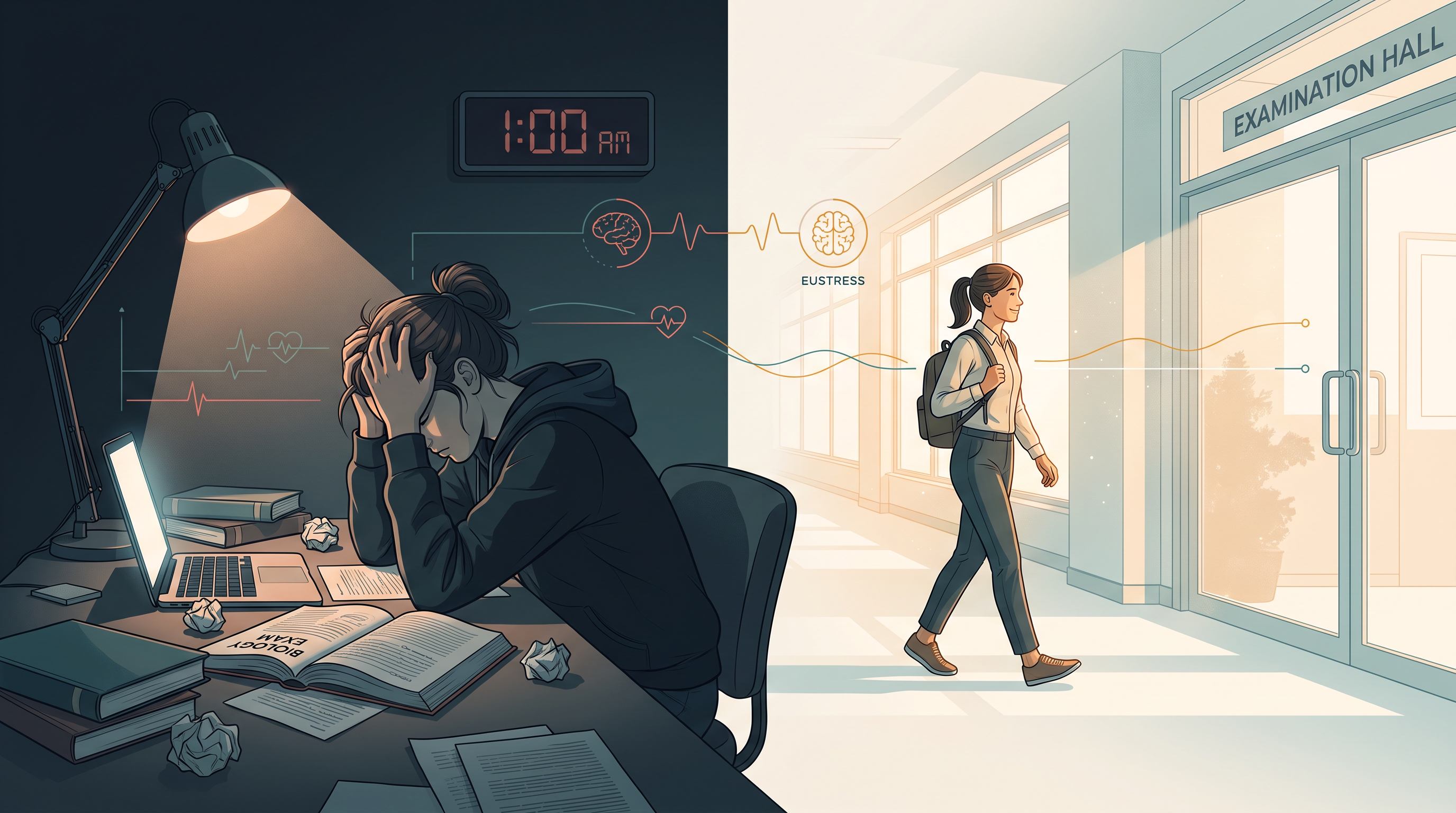
Fig. 3.5 – The same event, two responses.
This chapter will answer each of these questions.
3.1 Introduction
A Night Before the Examination
Consider Raj. His final examination is tomorrow morning, and he has been studying until one in the night. By then he can no longer concentrate, so he sets an alarm for six and tries to sleep.
Sleep does not come. He is tense, and he keeps tossing and turning in bed. Images flash through his mind of not scoring the marks he needs to take the subjects he wants. He blames himself for having spent time with his friends instead of preparing thoroughly.
In the morning he wakes with a heavy head, misses breakfast, and barely reaches school in time. He opens the question paper. His heart is pounding, his hands are clammy with sweat — and then he feels his mind has gone completely blank.
Some of you may have lived through something close to Raj’s night. The challenge posed by examinations is common to every student, and you are perhaps already thinking about the career that will follow. What if you were denied that choice? Would you give up?
Life Poses Challenges All the Time
Raj’s situation is only one example, and not the hardest one. Life sets challenges constantly, and many of them are far heavier than an examination.
Think of a child who loses her parents at a young age, with no one left to take care of her. Think of a young woman whose husband dies in a car accident. Think of parents bringing up a child with a physical or intellectual disability, or of young people who work long night shifts in call centres and then try to catch up on sleep in the daytime.
Look around you and you will find that life is, in a real sense, a big challenge. Each of us tries to meet these challenges in our own way. Some of us succeed. Others succumb to such life stresses, and are worn down by them.
The obvious question is why the outcomes differ so sharply. If the same event can leave one person shaken and another strengthened, then the event by itself cannot be the whole story.
The Same Event, Different Meanings
Here is the key idea that the rest of this chapter builds on: life challenges are not necessarily stressful. Much depends on how a challenge is viewed.
Take a cricket match. A number 11 batsman facing a fast bowler’s delivery will view that delivery very differently from an opening batsman, who may actually look forward to the contest. The ball is travelling at the same speed for both. What differs is what the delivery means to each of them — a danger to be survived, or an opportunity to be seized.
This is why it is often said that one’s best comes out when one is challenged. A demand that stretches you, without overwhelming you, can pull out abilities you did not know you had. A demand that overwhelms you does the opposite.
What This Chapter Will Do
Two questions therefore run through the chapter.
The first is how a life condition turns into a challenge for one person and into a cause of stress for another — that is, what the process is by which an event outside us becomes an experience inside us.
The second is what happens after that: how people actually respond to life challenges and stressful situations, in body, thought, feeling and behaviour, and what they can do to respond better.
3.2 Nature, Types and Sources of Stress
Stress Is Not Always the Enemy
Picture yourself waiting to cross a busy road on a Monday morning. Your heart beats a little faster, your eyes sweep left and right, your body is tightened and ready. You are, for those few seconds, stressed.
Notice, though, what that state does for you. Because you are alert, vigilant and aware of the danger, you cross the road safely. Faced with any challenge, we put in additional effort, mobilise all our resources, and draw on the support available to us in order to meet the demand.
All the challenges, problems and difficult circumstances of life put us to stress. Handled properly, stress therefore increases the probability of one’s survival rather than reducing it.
It helps to think of stress as being like electricity. Electricity gives energy, raises arousal and improves the performance of a machine. But if the current is too high, it fuses bulbs and damages appliances. Too much stress works the same way: it produces unpleasant effects and causes our performance to deteriorate. Too little stress, on the other hand, leaves a person listless and low on motivation, working slowly and inefficiently.
So it is important to remember that not all stress is inherently bad or destructive. The word ‘eustress’ is used for the level of stress that is good for you. Eustress is one of a person’s best assets for achieving peak performance and for managing a minor crisis — the alertness of the batsman who wants the fast ball, or of the student whose nervousness sharpens her concentration on the morning of a paper.
Eustress, however, has the potential of turning into ‘distress’. It is this second manifestation of stress that causes the body’s wear and tear. Stress can therefore be described in terms of what the organism does when a demand becomes too much for it.
Read that definition slowly, because two conditions are doing all the work in it. The event must disturb the equilibrium of the person, and it must exceed her ability to cope. An examination that stretches you but stays within what you can manage disturbs your equilibrium without exceeding your resources — and that is eustress, not distress.
3.2.1 Nature of Stress
Where the Word Comes From
The word stress has its origin in the Latin words strictus, meaning tight or narrow, and stringere, the verb meaning to tighten. Those root words are surprisingly accurate. They reflect exactly the internal feelings of tightness and constriction of the muscles and of breathing that people under stress so often report.
Stress is often explained in terms of characteristics of the environment that are disruptive to the individual. Stressors are events that cause our body to give the stress response — noise, crowding, a bad relationship, or the daily commute to school or office. The reaction to such external stressors is called ‘strain’, as shown in Fig. 3.1.
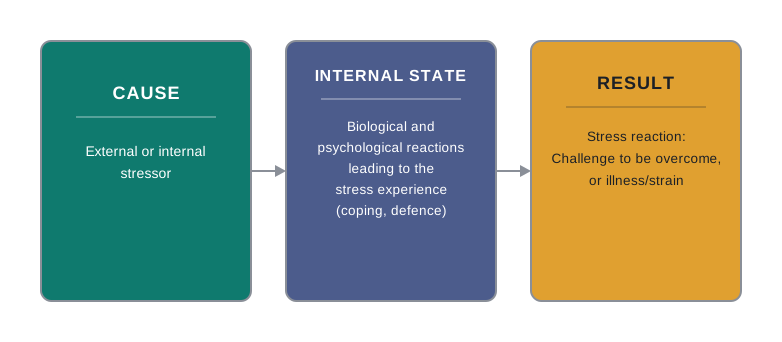
Fig. 3.1 – Psychological meaning of stress.
Fig. 3.1 is worth pausing over, because it makes a distinction that everyday speech blurs. The cause sits on the left, the person’s internal reaction in the middle, and the result on the right. We casually use the one word “stress” for all three.
Selye’s Definition — and Why It Was Questioned
Because stress has come to be associated with both the causes and the effects, the word can cause real confusion. Hans Selye, the father of modern stress research, cut through it with a definition of his own.
The claim packed into the word “non-specific” is a strong one. It says that the body does not really care what is bearing down on it: heat, injury, an insult, an examination, all set off one common bodily pattern.
Many researchers do not agree. They feel that the stress response is not nearly as general and non-specific as Selye suggests. Different stressors may produce somewhat different patterns of stress reaction, and different individuals may have different characteristic modes of response.
You may recall the opening batsman from the introduction. Each one of us sees a situation through our own eyes, and it is our perception of the demands, and of our ability to meet them, that determines whether we feel ‘stressed’ or not.
Stress as a Transaction, Not a Thing
This leads to the modern view. Stress is not a factor that resides in the individual, and it is not a factor that resides in the environment either. It is embedded in an ongoing process in which individuals transact with their social and cultural environments, make appraisals of those encounters, and attempt to cope with the issues that arise.
Stress, in other words, is a dynamic mental or cognitive state. It is a disruption in homeostasis — the body’s steady internal balance — an imbalance that creates a requirement that the balance be restored.
The Cognitive Theory of Stress: Appraisal
The perception of stress depends on the individual’s cognitive appraisal of events and on the resources available to deal with them. The stress process, based on the cognitive theory of stress propounded by Lazarus and his colleagues, is set out in Fig. 3.2. An individual’s response to a stressful situation depends largely on the perceived events and on how they are interpreted or appraised.
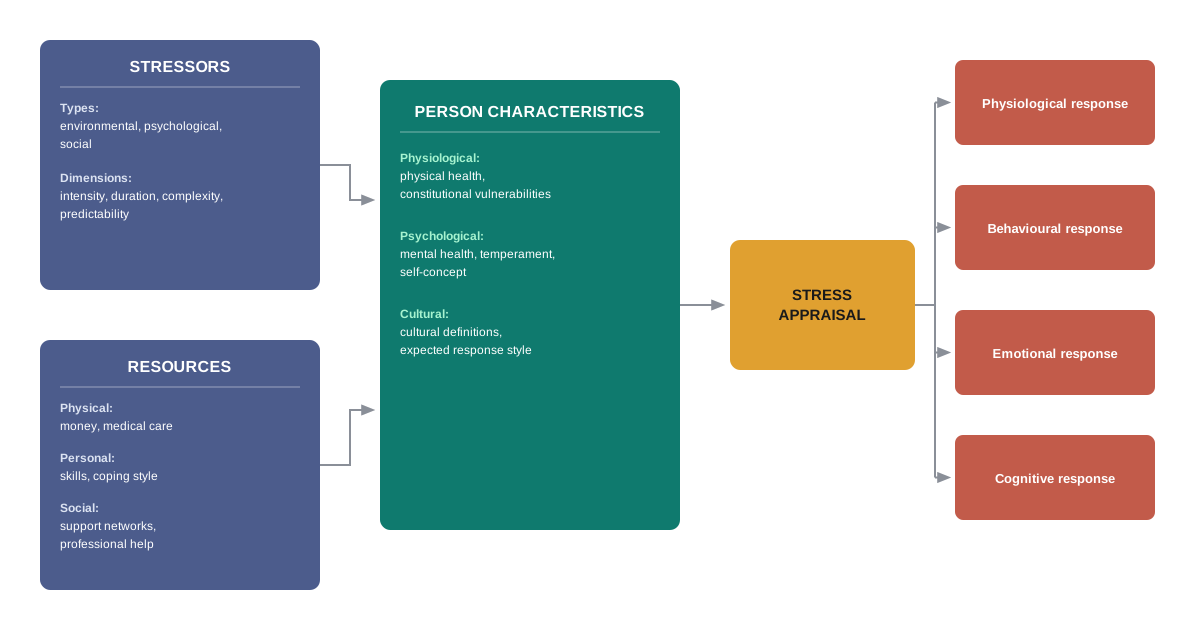
Fig. 3.2 – General model of the stress process.
Lazarus distinguished between two types of appraisal, primary and secondary.
Primary appraisal is the perception of a new or changing environment as positive, neutral or negative in its consequences. If the event is appraised as negative, it is then further appraised for its possible harm, threat or challenge. Harm is the assessment of the damage that has already been done by an event. Threat is the assessment of possible future damage that the event may bring about. Challenge appraisals are different in flavour: they are associated with more confident expectations of one’s ability to cope with the event, and with the potential to overcome it and even to profit from it.
When we perceive an event as stressful, we are likely to make a secondary appraisal. This is the assessment of one’s own coping abilities and resources, and of whether they will be sufficient to meet the harm, threat or challenge posed by the event. The resources may be mental, physical, personal or social. A person who believes she has a positive attitude, good health, the necessary skills and the support of others will feel less stressed by the same crisis.
This two-level appraisal process is powerful. It determines not only our cognitive and behavioural responses, but also our emotional and physiological responses to external events.
What Makes Appraisals Differ
These appraisals are highly subjective, and depend on several factors.
One is past experience of dealing with a similar stressful condition. If a person has handled such situations successfully before, they will be less threatening now.
Another is whether the stressful event is perceived as controllable — that is, whether one has mastery or control over the situation. A person who believes she can control the onset of a negative situation, or at least its adverse consequences, will experience less stress than someone with no such sense of personal control. A sense of self-confidence or efficacy, for instance, can decide whether a person appraises a situation as a threat or as a challenge.
The experience and outcome of a stressor may therefore vary a great deal from individual to individual. Stress includes all those environmental and personal events that challenge or threaten the well-being of a person. These stressors may be external — environmental, such as noise or air pollution, or social, such as a break-up with a friend or loneliness — or psychological, such as conflict and frustration, arising within the individual.
The Four Kinds of Stress Reaction
Very often these stressors result in a variety of stress reactions, which may be physiological, behavioural, emotional and cognitive. Fig. 3.2 shows all four emerging from the same appraisal.
At the physiological level, arousal plays a key role in stress-related behaviours. The hypothalamus initiates action along two pathways.
The first pathway involves the autonomic nervous system. The adrenal gland releases large amounts of catecholamines — epinephrine and norepinephrine — into the blood stream. This produces the physiological changes seen in the fight-or-flight response.
The second pathway involves the pituitary gland, which secretes the corticosteroid cortisol. Cortisol provides energy, which is why stress can keep a person going long past the point of ordinary tiredness.
The emotional reactions to the experience of stress include negative emotions such as fear, anxiety, embarrassment, anger and depression, or even denial.
The behavioural responses are virtually limitless, since they depend on the nature of the stressful event. Broadly, though, they fall into two categories: confrontative action against the stressor, which is fight, and withdrawal from the threatening event, which is flight.
The cognitive responses include beliefs about the harm or threat an event poses, and beliefs about its causes or its controllability. Under stress these can take the form of an inability to concentrate, and of intrusive, repetitive or morbid thoughts.
The Dimensions Along Which Stresses Vary
As Fig. 3.2 indicates, the stresses people experience also vary along four dimensions: intensity (low intensity versus high intensity), duration (short-term versus long-term), complexity (less complex versus more complex) and predictability (unexpected versus predictable).
The outcome of stress depends on where a particular stressful experience falls along these dimensions. Usually, stresses that are more intense, prolonged or chronic, more complex and unanticipated have more negative consequences than stresses that are less intense, short-term, less complex and expected.
An individual’s experience of stress also depends on her physiological strength. Individuals with poor physical health and a weak constitution are more vulnerable than those who enjoy good health and a strong constitution.
Psychological characteristics such as mental health, temperament and self-concept are equally relevant to the experience of stress. So is the cultural context in which we live: it determines the meaning of any event, and defines the nature of the response that is expected under various conditions.
Finally, the stress experience is shaped by the resources of the person — money, social skills, coping style, support networks, and so on. All these factors together determine the appraisal of a given stressful situation.
3.2.2 Signs and Symptoms of Stress
The way we respond to stress varies according to our personality, our early upbringing and our life experiences. Everyone has their own pattern of stress response, so the warning signs vary, as does their intensity.
Some of us know our own pattern well enough to gauge the depth of a problem from the nature and severity of our symptoms, or from changes in our behaviour. These symptoms of stress can be physical, emotional and behavioural.
Any of these symptoms can indicate a degree of stress which, if it is left unresolved, might have serious implications later. That is the reason for learning to read them early — not to worry about every headache, but to notice a pattern that is building.
3.2.3 Types of Stress
Fig. 3.2 lists three major types of stress: physical and environmental, psychological, and social. Before we take them one at a time, it is important to understand that all these types are interrelated — a physical stress such as chronic lack of sleep will worsen how you handle a social one, and a social stress will show up in your body.
Physical and Environmental Stress
Physical stresses are demands that change the state of our body. We feel strained when we overexert ourselves physically, lack a nutritious diet, suffer an injury, or fail to get enough sleep.
Environmental stresses are aspects of our surroundings that are often unavoidable — air pollution, crowding, noise, the heat of the summer, the cold of winter. Another group of environmental stresses are catastrophic events or disasters, such as fire, earthquake and floods.
Psychological Stress
These are the stresses we generate ourselves, in our own minds. They are personal and unique to the person experiencing them, and they are internal sources of stress.
We worry about problems, feel anxiety, or become depressed. Note the double role these states play: they are not only symptoms of stress, they also cause further stress for us — worry about a problem becomes, in time, a problem to worry about.
Some of the important sources of psychological stress are frustration, conflicts, and internal and social pressures.
Frustration results from the blocking of needs and motives by something or someone that hinders us from achieving a desired goal. There can be many causes of frustration — social discrimination, interpersonal hurt, low grades in school.
Conflicts may occur between two or more incompatible needs or motives: whether to study dance or psychology, whether to continue studies or take up a job. There may also be a conflict of values, when you are pressurised to take an action that goes against the values you hold.
Internal pressures stem from beliefs based upon the expectations we place on ourselves from inside — ‘I must do everything perfectly’. Such expectations can only lead to disappointment. Many of us drive ourselves ruthlessly towards unrealistically high standards.
Social pressures may be brought about by people who make excessive demands on us. This causes even greater pressure when we have to keep working with those same people. There are also people with whom we face interpersonal difficulties — a ‘personality clash’ of sorts.
3.2.4 Sources of Stress
A wide range of events and conditions can generate stress. Among the most important of these are major stressful life events, such as the death of a loved one or a personal injury; the frequent, annoying hassles of everyday life; and traumatic events that affect our lives.
Life Events
Changes, both big and small, sudden and gradual, affect our life from the moment we are born. We learn to cope with the small, everyday changes without much difficulty.
Major life events are harder, because they disturb our routine and cause upheaval. Some are planned, such as moving into a new house; others are unpredicted, such as the break-up of a long-term relationship.
The real danger lies in their crowding together. If several such life events occur within a short period of time, we find it difficult to cope with them, and become more prone to the symptoms of stress.
Hassles
These are the personal stresses we endure as individuals because of the happenings of daily life — noisy surroundings, commuting, quarrelsome neighbours, electricity and water shortages, traffic snarls, and so on. Attending to a stream of small emergencies is the daily hassle of a housewife’s day, and there are jobs in which daily hassles are very frequent.
Daily hassles look trivial, one at a time, and that is precisely what makes them dangerous. They may sometimes have devastating consequences for the individual, who is often coping with them alone, since outsiders may not even be aware of them.
The finding is a clear one: the more stress people report as a result of daily hassles, the poorer is their psychological well-being.
Traumatic Events
These include being involved in extreme events such as a fire, a train or road accident, a robbery, an earthquake or a tsunami.
Their effects are distinctive in one important respect: they may appear only after some lapse of time, and they sometimes persist as symptoms of anxiety, flashbacks, dreams and intrusive thoughts. Severe trauma can also strain relationships.
Where such symptoms persist for many months after the event is over, professional help will be needed to cope with them. This is not a sign of weakness on the part of the person affected. It is the appropriate response to an event that has overwhelmed ordinary coping, in the same way that a fracture calls for a doctor rather than for willpower.
3.3 Effects of Stress on Psychological Functioning and Health
What are the effects of stress? Many of them are physiological in nature, which is why stress is so often discussed as a bodily matter. But other changes also occur inside stressed individuals, and they are not always visible from outside.
There are four major effects associated with the stressed state: emotional, physiological, cognitive and behavioural. It is worth noticing, as you read them, how each one feeds the others — an emotional effect produces a behavioural one, which then worsens the physiological effect.
Emotional Effects
Those who suffer from stress are far more likely to experience mood swings, and to show erratic behaviour that may alienate them from family and friends.
In some cases this can begin a vicious circle. The behaviour drives people away; the loss of support lowers confidence; the fall in confidence leads to more serious emotional problems, which in turn make the behaviour harder to control.
Common examples are feelings of anxiety and depression, increased physical tension, increased psychological tension, and mood swings.
Physiological Effects
When the human body is placed under physical or psychological stress, it increases the production of certain hormones, such as adrenaline and cortisol.
These hormones produce marked changes in heart rate, blood pressure levels, metabolism and physical activity. Under pressure for short periods, this physical reaction helps us to function more effectively. Over the long term, it can be extremely damaging to the body.
Examples of these physiological effects are the release of epinephrine and nor-epinephrine, the slowing down of the digestive system, the expansion of air passages in the lungs, an increased heart rate, and the constriction of blood vessels.
Cognitive Effects
If pressures due to stress continue, a person may suffer from mental overload. Suffering from a high level of stress can rapidly cause individuals to lose their ability to make sound decisions.
Faulty decisions made at home, in one’s career or at the workplace may lead to arguments, failure, financial loss, or even loss of a job.
The cognitive effects of stress are poor concentration and reduced short-term memory capacity. This is the reason Raj, in the introduction, opened his paper and found his mind blank — a well-prepared student can be let down not by what he does not know, but by a memory system that stress has narrowed.
Behavioural Effects
Stress affects our behaviour in the form of eating less nutritional food, and increasing the intake of stimulants such as caffeine, as well as the excessive consumption of cigarettes, alcohol, and other drugs such as tranquillisers.
Tranquillisers can be addictive and have side effects such as loss of concentration, poor coordination and dizziness. What begins as an attempt to feel better therefore adds a fresh set of difficulties to the original problem.
Some of the typical behavioural effects of stress are disrupted sleep patterns, increased absenteeism, and reduced work performance.
3.3.1 Stress and Health
You must often have observed that many of your friends — possibly including yourself — fall sick during examination time. They suffer from stomach upsets, body aches, nausea, diarrhoea and fever. You may also have noticed that people who are unhappy in their personal lives fall sick more often than those who are happy and enjoy life.
Part of the reason is simple. Chronic daily stress diverts an individual’s attention away from caring for herself or himself; when a person is preoccupied, sleep, food and rest are the first things to go.
But the effect goes deeper than neglect. When stress is prolonged, it affects physical health and impairs psychological functioning. People experience exhaustion and attitudinal problems when the demands from the environment and the constraints upon them are too high, and little support is available from family and friends.
The physical exhaustion is seen in the signs of chronic fatigue, weakness and low energy. The mental exhaustion appears in the form of irritability, anxiety, and feelings of helplessness and hopelessness.
There is also convincing evidence that stress can produce changes in the immune system, and so increase the chances of someone becoming ill. Stress has been implicated in the development of cardiovascular disorders and high blood pressure, as well as psychosomatic disorders including ulcers, asthma, allergies and headaches.
Researchers estimate that stress plays an important role in fifty to seventy per cent of all physical illnesses. Studies also reveal that sixty per cent of medical visits are primarily for stress-related symptoms.
3.3.2 General Adaptation Syndrome
What happens to the body when stress is prolonged? This was the question Selye set out to answer.
He studied the issue by subjecting animals to a variety of stressors — high temperature, X-rays, insulin injections — in the laboratory over a long period of time. He also observed patients in hospitals with various injuries and illnesses. Across all of them, whatever the stressor, Selye noticed a similar pattern of bodily response.
He called this pattern the General Adaptation Syndrome (GAS). According to him, GAS involves three stages: alarm reaction, resistance, and exhaustion, as shown in Fig. 3.3.
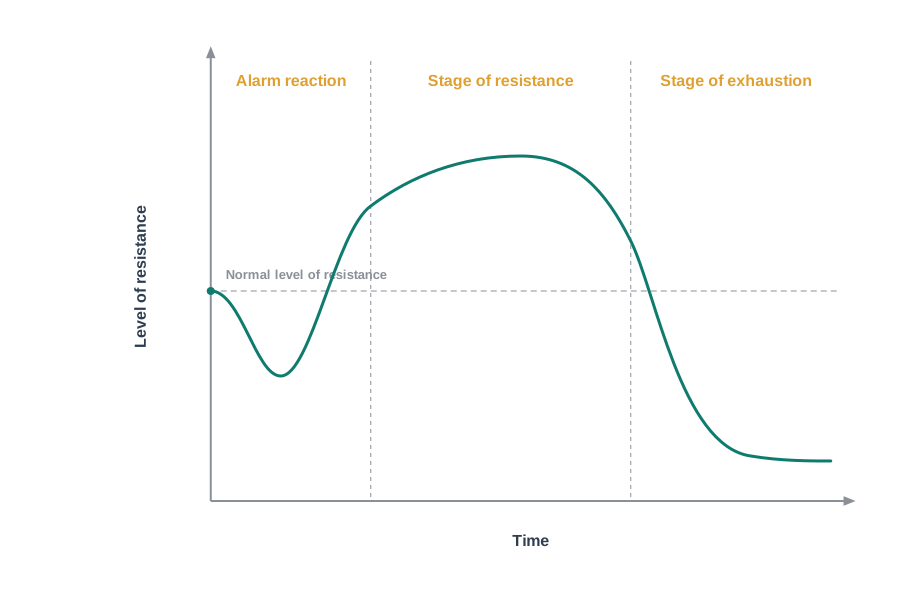
Fig. 3.3 – The General Adaptation Syndrome.
- Alarm reaction stage: The presence of a noxious stimulus or stressor leads to activation of the adrenal-pituitary-cortex system. This triggers the release of hormones producing the stress response. The individual is now ready for fight or flight.
- Resistance stage: If stress is prolonged, the resistance stage begins. The parasympathetic nervous system calls for a more cautious use of the body’s resources. The organism makes efforts to cope with the threat, as through confrontation.
- Exhaustion stage: Continued exposure to the same stressor, or to additional stressors, drains the body of memories and resources and leads to the third stage, exhaustion. The physiological systems involved in alarm reaction and resistance become ineffective, and susceptibility to stress-related diseases such as high blood pressure becomes more likely.
Notice in Fig. 3.3 that resistance in the second stage rises above the level of normal resistance. This is what makes the model so useful: the person in the resistance stage may look as though she is managing perfectly well. The cost of that management is not visible until the resources run out.
3.3.3 Stress and the Immune System
Stress can cause illness by impairing the workings of the immune system, which guards the body against attackers from both within and outside.
The field that studies this is psychoneuroimmunology, which focuses on the links between the mind, the brain and the immune system, and examines the effects of stress upon immune functioning.
How the Immune System Works
The white blood cells, called leucocytes, within the immune system identify and destroy foreign bodies known as antigens, such as viruses. This process also leads to the production of antibodies.
There are several kinds of leucocytes, including T cells, B cells and natural killer cells. T cells destroy invaders, and T-helper cells increase immunological activity. It is these T-helper cells that are attacked by the Human Immuno Deficiency Virus (HIV), the virus causing Acquired Immuno Deficiency Syndrome (AIDS). B cells produce antibodies. Natural killer cells are involved in the fight against both viruses and tumours.
Where Stress Enters
Stress can affect natural killer cell cytotoxicity — the capacity of these cells to destroy what they attack — which is of major importance in the defence against various infections and against cancer.
Reduced levels of natural killer cell cytotoxicity have been found in people who are highly stressed: among them students facing important examinations, bereaved persons, and those who are severely depressed.
Two further findings matter for what you can do about it. Studies reveal that immune functioning is better in individuals receiving social support. And changes in the immune system have more effect on health among those whose immune systems are already weakened — so the same stress does not carry the same risk for everyone.
Fig. 3.4 sets out the sequence that ties these findings together.
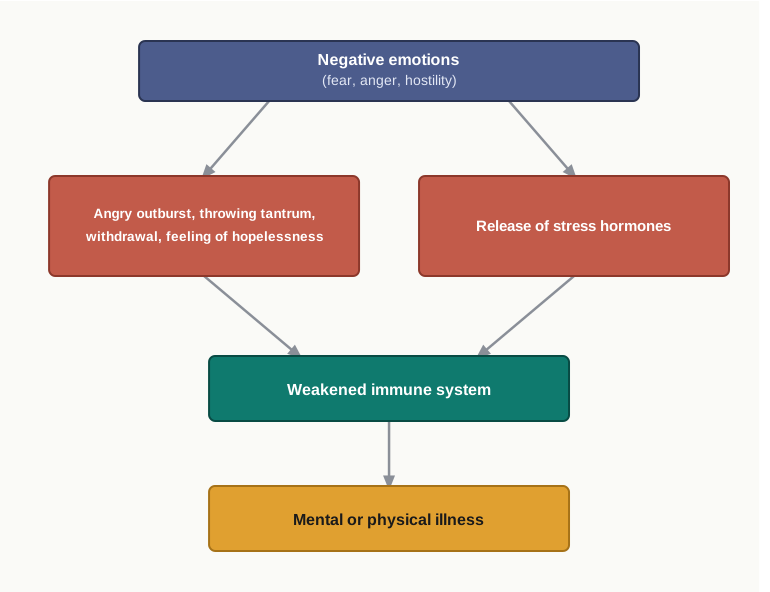
Fig. 3.4 – Relation of stress with illness.
Negative Emotions and Health
Psychological stress is accompanied by negative emotions and the behaviours that go with them, including depression, hostility, anger and aggression. These negative emotional states are of particular concern in the study of stress and health.
The incidence of psychological disorders, such as panic attacks and obsessive behaviour, increases with the build-up of long-term stress. Worries can reach such a level that they surface as a frightening, painful physical sensation, which can be mistaken for a heart attack.
People under prolonged stress are more prone to irrational fears, mood swings and phobias, and may experience fits of depression, anger and irritability. These negative emotions appear to be related to the functioning of the immune system.
Our ability to interpret our world, and to invest that interpretation with personal meaning and emotion, has a powerful and direct effect on the body. Negative moods have been associated with poorer health outcomes. Feelings of hopelessness, in particular, are related to the worsening of disease and to an increased risk of injury and of death from various causes.
None of this means that a person can think an illness away, or that a patient who becomes ill has failed to be positive enough. It means that mind and body are one system, and that what happens in one shows up in the other.
3.3.4 Lifestyle
Stress can lead to an unhealthy lifestyle, or to health-damaging behaviour. Lifestyle is the overall pattern of decisions and behaviours that determine a person’s health and quality of life.
Stressed individuals may be more likely to expose themselves to pathogens, which are the agents that cause physical illness. People who are stressed have poor nutritional habits, sleep less, and are likely to engage in other health-risking behaviours such as smoking and alcohol abuse.
Such health-impairing behaviours have a characteristic shape. They develop gradually, and they are accompanied by pleasant experiences in the short run. Their damaging effects, meanwhile, are long-term and invisible — so we tend to ignore them, and to underestimate the risk they pose to our lives.
The opposite pattern is equally well documented. Studies have revealed that health-promoting behaviour — a balanced diet, regular exercise, family support — plays an important role in good health. Adhering to a lifestyle that includes a balanced low-fat diet, regular exercise and continued activity, along with positive thinking, enhances health and longevity.
The modern lifestyle of excess in eating and drinking, and the so-called fast-paced good life, has led some of us to violate the basic principles of health — in what we eat, in what we think, and in what we do with our lives.
3.4 Coping with Stress
In recent years the conviction has grown that it is not the stress a person experiences that decides her psychological well-being, social functioning and health — it is how she copes with it. Two people may face the same retrenchment, the same illness in the family, the same board examination; what separates them afterwards is what they did with it.
Coping is a dynamic, situation-specific reaction to stress. It is a set of concrete responses to stressful situations or events that are intended to resolve the problem and reduce the stress.
Notice the words “dynamic” and “situation-specific”. Coping is not a fixed quality that a person either possesses or lacks. It changes with the situation, and it can change within one situation as it unfolds.
Why Coping Is Hard to Change
The way we cope with stress often depends on rigid, deep-seated beliefs formed out of experience. When we are caught in a traffic jam, for instance, we feel angry — and the anger comes not from the jam itself but from the belief that the traffic ‘should’ move faster.
That is why coping cannot be improved simply by deciding to be calmer. To manage stress, we often need to reassess the way we think, and to learn coping strategies deliberately.
The stakes are not only psychological. People who cope poorly with stress have an impaired immune response and diminished activity of natural killer cells — the same immune machinery discussed in the previous section. Poor coping does not merely feel worse; it measurably weakens the body’s defence.
The Three Coping Strategies of Endler and Parker
Individuals show consistent differences in the coping strategies they use to handle stressful situations, and these can include both overt and covert activities. Endler and Parker identified three.
Task-oriented Strategy: This involves obtaining information about the stressful situation and about alternative courses of action and their probable outcomes. It also involves deciding priorities and acting so as to deal directly with the stressful situation. Examples are scheduling one’s time better, or thinking about how one has solved similar problems in the past.
Emotion-oriented Strategy: This can involve efforts to maintain hope and to control one’s emotions. It can also involve venting feelings of anger and frustration, or deciding that nothing can be done to change things. Examples are telling oneself that it is not really happening to me, or worrying about what one is going to do.
Avoidance-oriented Strategy: This involves denying or minimising the seriousness of the situation. It also involves the conscious suppression of stressful thoughts and their replacement by self-protective thoughts. Examples are watching television, phoning up a friend, or trying to be with other people.
Lazarus and Folkman: Coping as a Process
Lazarus and Folkman conceptualised coping as a dynamic process rather than as an individual trait. On their account, coping refers to constantly changing cognitive and behavioural efforts to master, reduce or tolerate the internal or external demands created by the stressful transaction.
Coping, they argued, does two jobs at once. It allows the individual to manage or alter the problem, and it regulates the emotional response to that problem. According to them, coping responses can be divided into two types: problem-focused and emotion-focused.
Problem-focused strategies attack the problem itself. They consist of behaviours designed to gain information, to alter the event, and to alter one’s beliefs and commitments. They increase a person’s awareness, level of knowledge, and range of behavioural and cognitive coping options, and in doing so they can act to reduce the threat value of the event. A typical report of such coping is: “I made a plan of action and followed it.”
Emotion-focused strategies call for psychological changes designed primarily to limit the degree of emotional disruption caused by an event, with minimal effort to alter the event itself. A typical report of such coping is: “I did some things to let it out of my system.”
Both problem-focused and emotion-focused coping are necessary when facing stressful situations. Research nevertheless suggests that people generally tend to use the former more often than the latter.
3.4.1 Stress Management Techniques
Stress is a silent killer. It is estimated to play a significant role in physical illness and disease: hypertension, heart disease, ulcers, diabetes and even cancer are linked to stress. Because of changes in lifestyle, stress is on the increase.
For this reason schools, other institutions, offices and communities are now concerned with knowing techniques by which stress can be managed. Some of these techniques are described below.
Relaxation Techniques: Relaxation is an active skill that reduces the symptoms of stress and decreases the incidence of illnesses such as high blood pressure and heart disease. Usually relaxation starts from the lower part of the body and progresses upwards to the facial muscles, in such a way that the whole body is relaxed. Deep breathing is used along with muscle relaxation to calm the mind and relax the body.
Meditation Procedures: The yogic method of meditation consists of a sequence of learned techniques for the refocusing of attention that brings about an altered state of consciousness. It involves concentration so thorough that the meditator becomes unaware of any outside stimulation and reaches a different state of consciousness.
Biofeedback: This is a procedure to monitor and reduce the physiological aspects of stress by providing feedback about current physiological activity, and it is often accompanied by relaxation training. Biofeedback training involves three stages: developing an awareness of the particular physiological response, for example heart rate; learning ways of controlling that physiological response in quiet conditions; and then transferring that control into the conditions of everyday life.
Creative Visualisation: This is an effective technique for dealing with stress. Creative visualisation is a subjective experience that uses imagery and imagination. Before visualising, one must set oneself a realistic goal, as this helps build confidence. It is easier to visualise if the mind is quiet, the body relaxed and the eyes closed; this reduces the risk of interference from unbidden thoughts and provides the creative energy needed for turning an imagined scene into reality.
Cognitive Behavioural Techniques: These techniques aim to inoculate people against stress. Stress inoculation training is one effective method, developed by Meichenbaum. The essence of the approach is to replace negative and irrational thoughts with positive and rational ones. There are three main phases in it: assessment, stress reduction techniques, and application and follow-through. Assessment involves discussing the nature of the problem and seeing it from the viewpoint of the person or client. Stress reduction involves learning techniques of reducing stress, such as relaxation and self-instruction.
Exercise: Exercise can provide an active outlet for the physiological arousal experienced in response to stress. Regular exercise improves the efficiency of the heart, enhances the function of the lungs, maintains good circulation, lowers blood pressure, reduces fat in the blood, and improves the body’s immune system. Swimming, walking, running, cycling and skipping all help to reduce stress. One must practise these exercises at least four times a week for 30 minutes at a time, and each session must have a warm-up phase, an exercise phase and a cool-down phase.
3.5 Promoting Positive Health and Well-being
It is unlikely that any of us will go through life without some experience of personal crisis causing acute pressure for a while. The question is not whether such a period will come, but what a person is left with once it has passed.
Many people sail through and rebuild their lives very positively. They are likely to have constructive attitudes, and to have a good deal of emotional and social support of various kinds available to them.
When we find ways of managing these pressures, and can use the energy released to create something positive out of the situation, we have learned to survive healthily. That learning leaves us more stress-fit for future crises. It is like being immunised against the dangers of unhealthy stress: having met a smaller dose and coped, we meet the next one better prepared.
The Stress-Resistant Personality
Studies by Kobasa have shown that people with high levels of stress but low levels of illness share three characteristics. These are referred to as the personality traits of hardiness.
Hardiness consists of ‘the three Cs’ — commitment, control and challenge. It is best understood as a set of beliefs about oneself, about the world, and about how the two interact. It takes shape as a sense of personal commitment to what you are doing, a sense of control over your life, and a feeling of challenge, as shown in Fig. 3.6.
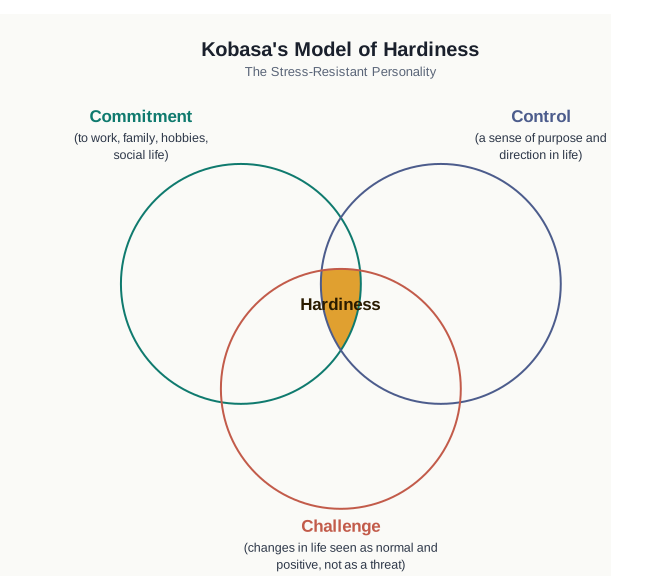
Fig. 3.6 – Hardiness: the stress-resistant personality.
Stress-resistant personalities have control, which is a sense of purpose and direction in life; commitment to work, family, hobbies and social life; and challenge, meaning that they see changes in life as normal and positive rather than as a threat.
Everyone does not possess these characteristics. Many of us have to relearn specific life skills — in areas such as rational thinking and assertiveness — in order to equip ourselves better to cope with the demands of everyday life.
3.5.1 Life Skills
Life skills are abilities for adaptive and positive behaviour that enable individuals to deal effectively with the demands and challenges of everyday life.
Our ability to cope depends on how well prepared we are to deal with and counterbalance everyday demands, and to keep equilibrium in our lives. The crucial point is that these life skills can be learned, and even improved upon. Nobody is born with them.
Assertiveness, time management, rational thinking, improving relationships, self-care, and overcoming unhelpful habits such as perfectionism and procrastination are some of the life skills that will help to meet the challenges of life.
Assertiveness
Assertiveness is a behaviour or skill that helps us to communicate our feelings, needs, wants and thoughts clearly and confidently.
It is the ability to say no to a request, to state an opinion without being self-conscious, and to express emotions such as love or anger openly. If you are assertive, you feel confident, and you have high self-esteem and a solid sense of your own identity.
Time Management
The way you spend your time determines the quality of your life. Learning how to plan time and how to delegate can help to relieve the pressure.
The major way to reduce time stress is to change one’s perception of time. The central principle of time management is to spend your time doing the things that you value, or that help you to achieve your goals. It depends on being realistic about what you know and must do within a certain period, on knowing what you want to do, and on organising your life so as to achieve a balance between the two.
Rational Thinking
Many stress-related problems occur as a result of distorted thinking. The way you think and the way you feel are closely connected.
When we are stressed, we have an inbuilt selective bias to attend to negative thoughts and images from the past, and these affect our perception of the present and of the future. One poor test result begins to look like proof of a permanent inability.
Some of the principles of rational thinking are: challenging your distorted thinking and irrational beliefs; driving out potentially intrusive, negative, anxiety-provoking thoughts; and making positive statements.
Improving Relationships
The key to a sound, lasting relationship is communication. This consists of three essential skills: listening to what the other person is saying; expressing how you feel and what you think; and accepting the other person’s opinions and feelings, even when they differ from your own.
It also requires us to avoid misplaced jealousy and sulking behaviour — both of which damage a relationship at precisely the moment when it is most needed as a source of support.
Self-care
If we keep ourselves healthy, fit and relaxed, we are better prepared physically and emotionally to tackle the stresses of everyday life.
Our breathing patterns reflect our state of mind and our emotions. When we are stressed or anxious, we tend towards rapid and shallow breathing, high in the chest, with frequent sighs. The most relaxed breathing is slow, stomach-centred breathing from the diaphragm — the dome-like muscle between the chest and the abdominal cavity.
Environmental stresses such as noise, pollution, space, light and colour can all exert an influence on our mood. These have a noticeable effect on our ability to cope with stress, and on our well-being. That is why self-care includes attention to the surroundings we can actually control.
Overcoming Unhelpful Habits
Unhelpful habits such as perfectionism, avoidance and procrastination are strategies that help a person to cope in the short term, but which make her more vulnerable to stress in the long run.
Perfectionists are persons who have to get everything just right. They have difficulty in varying their standards according to factors such as the time available, the consequences of not being able to stop work, and the effort needed. They are more likely to feel tense and to find it difficult to relax, are critical of themselves and of others, and may become inclined to avoid challenges altogether.
Avoidance is putting the issue under the carpet and refusing to accept or face it.
Procrastination means putting off what we know we need to do. We are all guilty of saying “I will do it later”. People who procrastinate are, in fact, deliberately avoiding a confrontation with their own fears of failure or rejection — which is why simply telling a procrastinator to be more disciplined so rarely works.
3.5.2 Positive Health and Its Buffers
Various factors have been identified which facilitate the development of positive health. The starting point is a definition of health considerably broader than the everyday one.
Positive health comprises the following constructs: “a healthy body; high quality of personal relationships; a sense of purpose in life; self-regard, mastery of life’s tasks; and resilience to stress, trauma, and change”.
Read that list again and notice what it does not say. Not one item on it is satisfied by simply not being ill. A person may be free of disease and still lack purpose, relationships, self-regard, or the capacity to bounce back — and would not, on this definition, be in positive health.
Specifically, the factors that act as stress buffers and facilitate positive health are diet, exercise, positive attitude, positive thinking, and social support. Fig. 3.7 shows where they sit — between the stressor and the illness that might otherwise follow it.
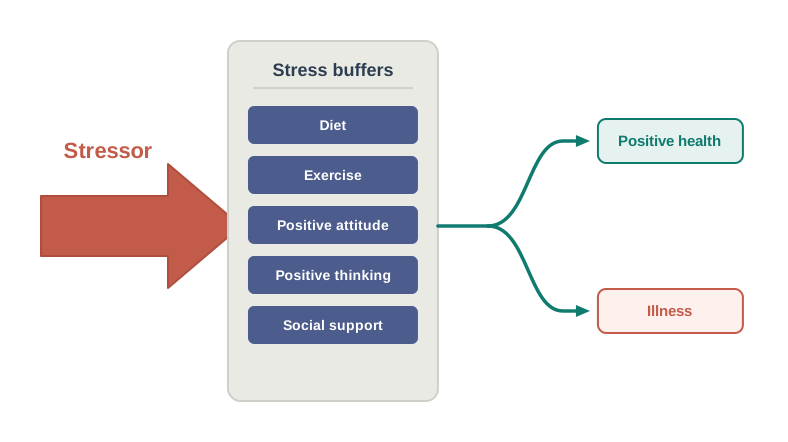
Fig. 3.7 – Stress buffers and positive health.
Diet
A balanced diet can lift one’s mood, give more energy, feed muscles, improve circulation, prevent illness, strengthen the immune system, and make one feel better able to cope with the stresses of life.
The key to healthy living is to eat three main meals a day, and to eat a varied, well-balanced diet. How much nutrition one needs depends on one’s activity level, genetic make-up, climate and health history.
What people eat, and how much they weigh, involve behavioural processes. Some people are able to maintain a healthy diet and weight while others become obese. And when we are stressed, we seek ‘comfort foods’ which are high in fats, salt and sugar — so the diet tends to turn worst at exactly the moment when the body most needs it to be good.
Exercise
A large number of studies confirm a consistently positive relationship between physical fitness and health. Of all the measures an individual can take to improve health, exercise is the lifestyle change with the widest popular approval.
Regular exercise plays an important role in managing weight and stress, and is shown to have a positive effect in reducing tension, anxiety and depression.
The physical exercises essential for good health are of two kinds. Stretching exercises, such as yogic asanas — postures held steadily to stretch and settle the body — and aerobic exercises, such as jogging, swimming and cycling. The two work in opposite directions, and both are useful: stretching exercises have a calming effect, whereas aerobic exercises increase the arousal level of the body.
The health benefits of exercise work as a stress buffer. Studies suggest that fitness permits individuals to maintain general mental and physical well-being even in the face of negative life events.
Positive Attitude
Positive health and well-being can be realised by having a positive attitude.
Some of the factors leading to a positive attitude are: having a fairly accurate perception of reality; a sense of purpose in life and of responsibility; acceptance and tolerance for the different viewpoints of others; and taking credit for success while accepting blame for failure.
Finally, being open to new ideas, and having a sense of humour with the ability to laugh at oneself, help us to remain centred and to see things in proper perspective. Notice that the first item on that list is an accurate perception of reality. A positive attitude is not the same thing as a rosy one.
Positive Thinking
The power of positive thinking has been increasingly recognised in reducing and coping with stress. Optimism, which is the inclination to expect favourable life outcomes, has been linked to psychological and physical well-being.
People differ in the manner in which they cope. Optimists tend to assume that adversity can be handled successfully, whereas pessimists anticipate disasters.
Optimists use more problem-focused coping strategies, and seek advice and help from others. Pessimists ignore the problem or the source of stress, and use strategies such as giving up the goal with which the stress is interfering, or denying that the stress exists at all.
3.6 Summary
- Stress is a part of life. It is neither a stimulus nor a response, but an ongoing transactional process between the individual and the environment. Stress is the pattern of responses an organism makes to a stimulus event that disturbs the equilibrium and exceeds the person’s ability to cope.
- Not all stress is harmful. Eustress is stress at a level that energises a person and improves performance; distress is stress that has gone past that level and causes the body’s wear and tear.
- Whether an event becomes stressful depends on cognitive appraisal. In primary appraisal a person judges the event as positive, neutral or negative, and a negative event as harm, threat or challenge. In secondary appraisal she judges whether her own resources are sufficient to meet it. Past experience and a sense of control make a decisive difference to both judgements.
- There are three major types of stress: physical and environmental, psychological, and social. The main sources of stress are life events, everyday hassles, and traumatic events. Stresses also vary in intensity, duration, complexity and predictability.
- The response to stress is emotional, physiological, cognitive and behavioural. Prolonged stress leads to burnout, weakens the immune system, and is implicated in cardiovascular and psychosomatic disorders.
- Selye’s General Adaptation Syndrome describes the body’s response to prolonged stress in three stages — alarm reaction, resistance and exhaustion. Its main criticism is that it gives too small a role to psychological factors such as appraisal.
- Psychoneuroimmunology studies the links between the mind, the brain and the immune system. Highly stressed people show reduced natural killer cell cytotoxicity, and immune functioning is better in those who receive social support.
- Coping is a dynamic, situation-specific individual reaction to stress. Endler and Parker describe three types: task-oriented, emotion-oriented and avoidance-oriented coping.
- Lazarus and Folkman divide coping responses into problem-focused and emotion-focused. Problem-focused coping acts on the event itself and reduces its threat value. Emotion-focused coping aims to limit the degree of emotional disruption the event causes.
- Stress can be managed by learned techniques: relaxation, meditation, biofeedback, creative visualisation, cognitive behavioural techniques such as stress inoculation training, and regular exercise.
- People high in hardiness — the three Cs of commitment, control and challenge — carry heavy stress with little illness, because these beliefs shift appraisal from threat towards challenge.
- A healthy lifestyle is essential for handling stress and coping effectively. Assertiveness, time management, rational thinking, improving relationships, self-care, and overcoming unhelpful habits such as perfectionism and procrastination are life skills that help us meet life’s challenges, and all of them can be learned.
- Positive health and well-being come through a balanced diet, exercise, a positive attitude, positive optimistic thinking, and social support — the quality of which matters far more than its quantity. There is also a need for overall harmonious conditions in society.
- We must avoid the unhealthy escape routes of smoking, alcohol, drugs and other harmful behaviours, whose benefits are immediate and whose costs arrive later.
3.7 Key Terms
- Alarm reaction — The first stage of the General Adaptation Syndrome, in which a stressor activates the adrenal-pituitary-cortex system and hormones are released, readying the body for fight or flight.
- Appraisal — The person’s evaluation of an event: whether it is harmful, threatening or challenging (primary appraisal), and whether her own resources are sufficient to meet it (secondary appraisal).
- Coping — A dynamic, situation-specific reaction to stress; a set of concrete responses intended to resolve the problem and reduce the stress.
- Exhaustion — The third stage of the General Adaptation Syndrome, in which continued stress drains the body’s resources, the earlier defences stop working effectively, and stress-related disease becomes more likely.
- General adaptation syndrome — Selye’s model of the body’s response to prolonged stress, passing through three stages: alarm reaction, resistance and exhaustion.
- Hardiness — A set of beliefs about oneself, the world and their interaction — commitment, control and challenge — found in people who bear high stress with little illness.
- Homeostasis — The body’s steady internal balance, whose disturbance creates the requirement that the balance be restored.
- Life skills — Abilities for adaptive and positive behaviour that enable a person to deal effectively with the demands and challenges of everyday life, and which can be learned and improved.
- Optimism — The inclination to expect favourable life outcomes; it is linked to problem-focused coping and to better psychological and physical well-being.
- Positive health — Health understood as more than the absence of disease: a healthy body, good personal relationships, a sense of purpose, self-regard and mastery, and resilience to stress, trauma and change.
- Psychoneuroimmunology — The field that studies the links between the mind, the brain and the immune system, including the effects of stress on immune functioning.
- Resilience — The capacity to ‘bounce back’ — a dynamic developmental process of maintaining positive adjustment under challenging life conditions.
- Social support — The existence and availability of people we can rely on, who let us know that they care about us, value us and love us; it may be tangible, informational or emotional.
- Stress — The pattern of responses an organism makes to a stimulus event that disturbs the equilibrium and exceeds the person’s ability to cope.
- Stressors — The events or conditions that cause the body to give the stress response, such as noise, crowding, a bad relationship, or a daily commute.
3.8 Points to Ponder
- Selye argued that the body’s response to stress is non-specific — the same, whatever the demand. Lazarus argued that everything depends on how the person appraises the demand. Can both be right at once? What would have to be true for them to be describing different parts of the same process?
- If stress is not in the event and not in the person, but in the transaction between them, then who is responsible for a person’s stress — the environment that makes the demand, or the individual who appraises it? What follows for a school, or an employer, that tells people to “manage their stress better”?
- Daily hassles predict poor psychological well-being at least as strongly as major life events do, yet nobody would call a traffic jam a tragedy. Why should small, repeated demands do so much damage, and what does this suggest about which stresses are worth working on first?
- Hardiness protects people who already hold the three beliefs of commitment, control and challenge. But beliefs of that kind are usually built out of past success. Can a person who has mostly met with failure realistically acquire them — and if so, how?
- Record, over a week, the stresses reported by five to ten teenagers you know. Are the stressors, or the coping strategies, different for girls and for boys? If they differ, is the difference in the demands they face, in the resources available to them, or in what they have been taught it is acceptable to say?
- Talk to your parents and grandparents about the stressors that were characteristic of their lives at your age, and about how they coped. What has genuinely become harder for your generation, what has become easier, and what has only changed its name?
- We know that certain lifestyle factors damage health, and we know it well before the damage is done. Why does knowing so often fail to change behaviour — and what does the chapter’s account of health-impairing behaviours suggest about what would work better than more information?
3.9 NCERT Questions
- Explain the concept of stress. Give examples from daily life.
- State the symptoms and the sources of stress.
- Describe the General Adaptation Syndrome (GAS) model, and show the relevance of this model with the help of an example.
- Enumerate the different ways of coping with stress.
- Explain the effect of stress on psychological functioning.
- Describe how life skills can help a person meet life’s challenges.
- Discuss the factors that lead to positive health and well-being.
- How does stress affect the immune system?
- Give an example of a life event that is likely to be stressful. Suggest reasons why the same event is likely to cause different degrees of stress in different people.
- Given what you know about coping strategies, what suggestions would you give to your friends to reduce stress in their everyday lives?
- Reflect on the environmental factors that have (a) a positive impact on well-being, and (b) a negative effect on it.
- We know that certain lifestyle factors can cause stress and may lead to diseases such as cancer and coronary heart disease, and yet we are unable to change our behaviour. Explain why.
3.10 Objective Questions
- The level of stress that is good for a person and helps her achieve peak performance is called:
- distress
- eustress
- strain
- burnout [1 mark]
- In Lazarus’s theory, the assessment of one’s own coping abilities and resources is called:
- primary appraisal
- harm appraisal
- secondary appraisal
- challenge appraisal [1 mark]
- Which of the following is NOT one of the three stages of the General Adaptation Syndrome?
- Alarm reaction
- Resistance
- Appraisal
- Exhaustion [1 mark]
- The hormone secreted by the pituitary gland during the stress response, which provides energy, is:
- epinephrine
- cortisol
- norepinephrine
- adrenaline [1 mark]
- Reduced natural killer cell cytotoxicity has been found in all of the following groups EXCEPT:
- students facing important examinations
- bereaved persons
- severely depressed persons
- persons receiving strong social support [1 mark]
- “I made a plan of action and followed it” is an example of:
- emotion-focused coping
- avoidance-oriented coping
- problem-focused coping
- denial [1 mark]
- Assertion (A): The number 11 batsman and the opening batsman may feel very different levels of stress while facing the same fast bowler. Reason (R): Stress does not reside in the event alone, but in the person’s appraisal of the demands and of her ability to meet them.
- Both A and R are true, and R is the correct explanation of A.
- Both A and R are true, but R is not the correct explanation of A.
- A is true, but R is false.
- A is false, but R is true. [1 mark]
- Assertion (A): Selye’s model of stress has been criticised by later researchers. Reason (R): Selye’s model assigns a very limited role to psychological factors such as the appraisal of events.
- Both A and R are true, and R is the correct explanation of A.
- Both A and R are true, but R is not the correct explanation of A.
- A is true, but R is false.
- A is false, but R is true. [1 mark]
- Assertion (A): A person with a very large number of contacts is protected against stress. Reason (R): The quality of social support, and not its quantity, is positively related to health and well-being.
- Both A and R are true, and R is the correct explanation of A.
- Both A and R are true, but R is not the correct explanation of A.
- A is true, but R is false.
- A is false, but R is true. [1 mark]
- Match the following:
| Column A | Column B |
|---|---|
| a. Selye | i. Hardiness and the three Cs |
| b. Lazarus and Folkman | ii. General Adaptation Syndrome |
| c. Kobasa | iii. Stress inoculation training |
| d. Meichenbaum | iv. Problem-focused and emotion-focused coping |
| [1 mark] |
- Match the term with its meaning:
| Column A | Column B |
|---|---|
| a. Stressor | i. Physical, emotional and psychological exhaustion |
| b. Strain | ii. The event that makes the demand |
| c. Burnout | iii. The body’s steady internal balance |
| d. Homeostasis | iv. The person’s reaction to the demand |
| [1 mark] |
- Fill in the blank: The word ‘stress’ has its origin in the Latin words strictus, meaning tight or narrow, and __________, the verb meaning to tighten. [1 mark]
- Fill in the blank: The field that studies the links between the mind, the brain and the immune system is called __________. [1 mark]
- Fill in the blank: The three Cs of hardiness are commitment, control and __________. [1 mark]
- True or False: Emotion-oriented coping and emotion-focused coping belong to the same classification of coping strategies. [1 mark]
- True or False: Researchers estimate that stress plays an important role in fifty to seventy per cent of all physical illnesses. [1 mark]
- True or False: In the resistance stage of the General Adaptation Syndrome, the body’s resistance falls below its normal level. [1 mark]
3.11 Check Your Concepts
- Define stress, and state the two conditions contained in the definition. [2 marks]
- List the four dimensions along which stressful experiences vary. [2 marks]
- What is burnout? Give one sign of physical exhaustion and one sign of mental exhaustion associated with it. [2 marks]
- Name the three types of social support, and give one example of each. [2 marks]
- State any two life skills, and explain in one line each how they help a person cope. [2 marks]
- Differentiate between a stressor and strain, giving one example of each. [3 marks]
- Differentiate between eustress and distress. Why is it inaccurate to say that all stress should be eliminated? [3 marks]
- Distinguish between primary appraisal and secondary appraisal, and explain why an event appraised as a challenge produces less stress than one appraised as a threat. [3 marks]
- Give reasons: daily hassles look trivial one at a time, yet the more hassles people report, the poorer their psychological well-being. [3 marks]
- Distinguish between perceived support and social network. Which of the two is positively related to health, and why? [3 marks]
- Explain the three coping strategies described by Endler and Parker, with one example of each drawn from a student’s life. [4 marks]
- Describe the two physiological pathways along which the hypothalamus initiates action during stress, and explain why a response so useful in the short term becomes damaging over months. [4 marks]
- Explain, with an example, how stress affects the immune system. Why does the same stress not carry the same risk of illness for everyone? [4 marks]
- Arrange the three stages of the General Adaptation Syndrome in order, and explain what happens to the body’s level of resistance in each. Why might a person in the second stage appear to be coping well? [4 marks]
- Evaluate the claim that “life events cause illness”, using what you know about the Presumptive Stressful Life Events Scale and the correlations reported for it. [4 marks]
- Describe Selye’s General Adaptation Syndrome in full — the evidence on which it was built, its three stages, and the main criticism made of it. Illustrate the model with one example from a student’s life. [6 marks]
- Compare Selye’s account of stress with the cognitive theory of stress proposed by Lazarus. What does each explain well, and what does each leave out? [6 marks]
- “Coping is a skill, not a personality trait.” Discuss this statement with reference to Lazarus and Folkman’s process model of coping and to the stress management techniques described in the chapter. [6 marks]
- Discuss the factors that act as stress buffers and facilitate positive health. Which of them would be easiest for a school to strengthen, and why? [6 marks]
- What is hardiness? Describe its three components, explain how they protect a person under high stress, and state one limitation of the concept. [6 marks]
3.12 Case-Based Questions
- Ananya and Faiz are in the same Class 12 section, and both have been told that their pre-board papers will begin a week earlier than expected. Ananya spends the evening rewriting her revision timetable and messages a teacher to ask which chapters carry the most weight. Faiz tells his friends at length how unfair the change is, feels better afterwards, but does not alter his plan. A third classmate, Divya, decides the change makes no real difference, and does not open the subject’s notes for a fortnight.
- Identify the coping strategy used by each of the three students, using Endler and Parker’s classification. [3 marks]
- Which of these strategies is most likely to reduce the threat value of the event, and why? [2 marks]
- Is Divya’s strategy always the wrong one? Justify your answer with reference to the situation. [1 mark] [6 marks]
- Mr Menon works in a busy office. His journey to work takes ninety minutes each way in crowded traffic, the water in his building comes for two fixed hours a day, and his phone rings through the evening. Nothing dramatic has happened to him in the past year. Over the last few months, however, he has been getting frequent headaches, sleeps badly, snaps at his family, and has stopped going for the walks he once enjoyed.
- What source of stress best accounts for Mr Menon’s condition, even though he has experienced no major life event? [2 marks]
- Identify the emotional, behavioural and physiological effects of stress visible in this description. [3 marks]
- Suggest one life skill and one stress management technique that would be appropriate for him, and say why each fits his situation. [2 marks] [7 marks]
- Two colleagues, Sunita and Rehana, are given the same difficult project at short notice. Sunita has handled a similar project before, believes she can decide how the work will be done, and describes the project as “a chance to show what our team can do”. Rehana has not done such work before, feels the deadlines have been imposed on her, and expects it to go badly. Within a month, Sunita is working long hours but sleeping well, while Rehana has fallen ill twice.
- Using Lazarus’s theory, explain how the appraisals made by the two colleagues differ. [3 marks]
- Which of Kobasa’s three Cs does Sunita appear to possess? Explain how each of them is protecting her. [3 marks]
- Explain, in terms of the immune system, why Rehana may be falling ill more often. [2 marks] [8 marks]
- A school counsellor notices that several students in Class 12 report the same pattern before examinations: tension that begins days earlier, difficulty concentrating while studying, and a mind that goes blank on reading the paper, even when preparation has been thorough. One student says she does not want to speak to anyone about it, because “people will think there is something wrong with me”.
- Name and explain the phenomenon these students are describing. [2 marks]
- Explain, using the cognitive effects of stress, why a well-prepared student’s mind may still go blank. [2 marks]
- What would you say to the student who is reluctant to talk to anyone, and why does the chapter treat seeking help as a strength rather than a weakness? [2 marks] [6 marks]
3.13 Practice With Data
- Using the sample items of the Presumptive Stressful Life Events Scale given in the chapter, calculate the stress score of a respondent who, in the past one year, has checked: illness of a family member, break-up with friend, and change in eating habits. Show your working, and state what the score does — and does not — allow you to conclude about this person’s health. [4 marks]
- The mean number of stressful life events experienced over one year without producing overt physical or mental illness is approximately two. Explain what this figure means, and why it does not imply that a third life event will make a person ill. [3 marks]
- The correlation between life events and susceptibility to any particular illness is reported to be low. (a) What does a low correlation tell us about the strength of the association? (b) It has been argued whether life events cause stress-related illness, or whether stress caused the life events and the illness. Explain the difficulty this raises. (c) Name any two factors that must be studied before linking a life event to a later illness episode. [4 marks]
- Researchers estimate that stress plays an important role in fifty to seventy per cent of all physical illnesses, and that sixty per cent of medical visits are primarily for stress-related symptoms. Read these two figures carefully. Do they say the same thing? Explain the difference between them, and state one reason why estimates of this kind are given as a range rather than as a single number. [4 marks]
- Study the graph of the General Adaptation Syndrome (Fig. 3.3), in which resistance is plotted against time and a horizontal line marks the level of normal resistance. (a) In which stage does the curve fall below the line for the first time, and why? (b) In which stage does it rise above the line, and what is the body doing there? (c) A person is observed at a point where the curve is well above the normal line. Why would it be a mistake to conclude that this person is not at risk? [4 marks]
Social Stress
These are induced externally, and result from our interaction with other people. Social events such as death or illness in the family, strained relationships, or trouble with neighbours are examples of social stresses.
Social stresses vary widely from person to person, and the variation is instructive. Attending a party may be stressful for a person who prefers quiet evenings at home, while an outgoing person may find staying at home in the evenings stressful. The event is the same; the person is not.