Chapter 6: Attitude and Social Cognition
In 1995 India launched the Pulse Polio programme. On National Immunisation Days, lakhs of health workers set up booths in schools, bus stands and street corners, and two drops of vaccine were offered free to every child under five. The medicine worked. The difficulty lay elsewhere.
In some neighbourhoods, families quietly refused the drops. The reasons were rarely medical. Some households distrusted the government team that arrived at the door; some had heard rumours passed on by neighbours; some simply did not see why a healthy child needed a medicine at all. Posters and radio announcements, however widely broadcast, did not shift these views.
What eventually worked was different. Health workers went back to the same lanes with people the families already trusted — local doctors, teachers, respected elders and religious leaders — who spoke to parents face to face, in their own language, and often had the drops given to their own grandchildren first. Refusals fell. India recorded its last case of wild poliovirus in 2011 and was certified polio-free in 2014.
The vaccine was a problem of medicine. The refusal was a problem of psychology — of how people think about an issue, how they feel about it, and whether that thinking and feeling ever turns into action.
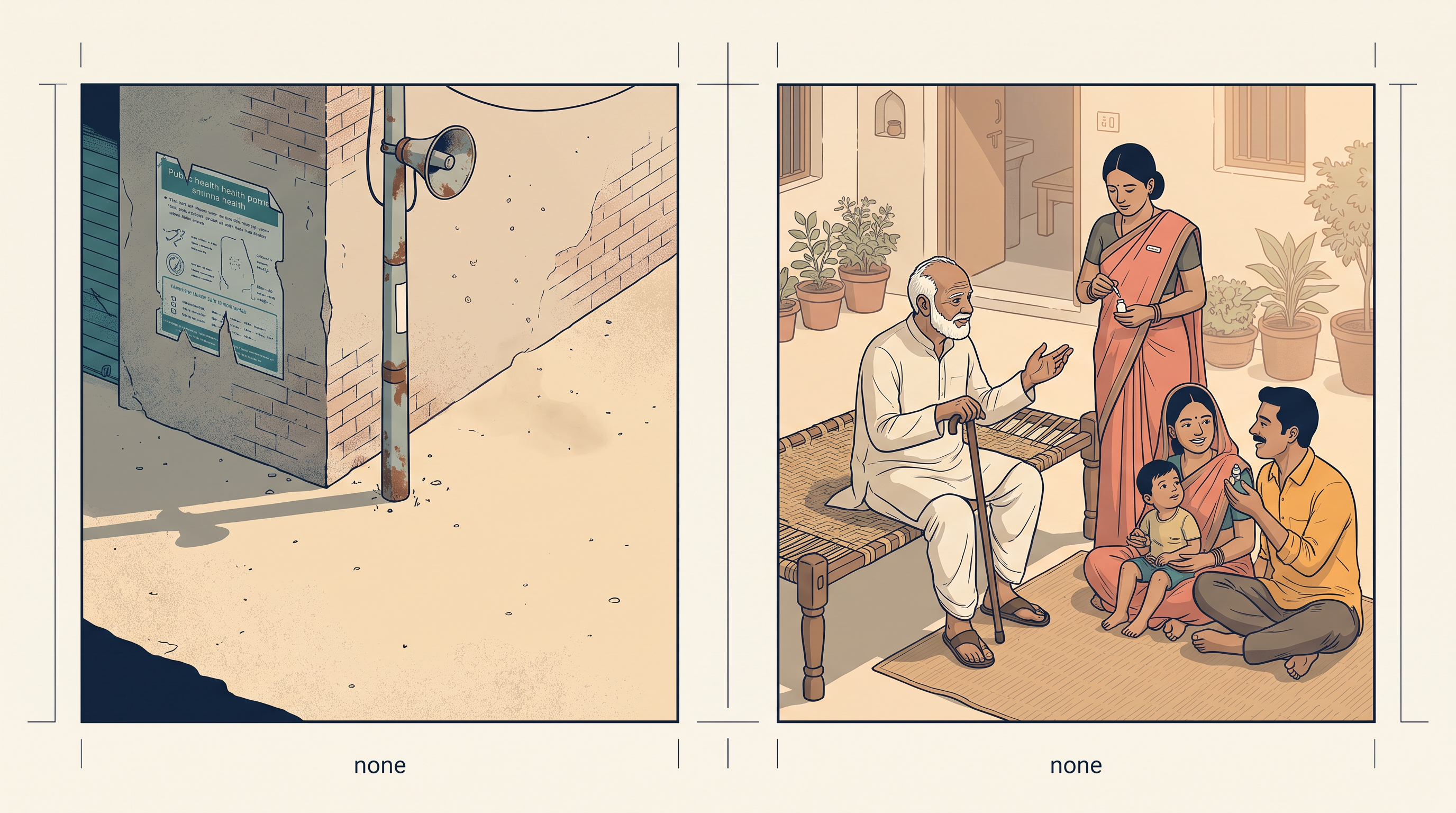
Fig. 6.4 – Impersonal broadcast versus face-to-face persuasion.
Keep these five questions in mind as you read. This chapter answers each of them, and you will find the answers marked at the exact point where the explanation is complete.
6.1 Introduction
Psychology studies the individual, but no individual lives alone. What you wear, what you eat, whom you trust, which political view you defend in a family argument — all of these are shaped, at least in part, by the people around you. The branch of psychology that studies this shaping is social psychology.
All of us form attitudes — settled ways of thinking and feeling about particular topics, objects and people, which also incline us to act in certain ways. You have attitudes towards examinations, towards a political party, towards the food sold outside your school gate.
Much of this seems obvious. A person likes something, so she buys it; a person dislikes a group, so he avoids it. But the moment you ask why the liking arose, whether it will actually show up in behaviour, and what it would take to change it, the simplicity disappears. Explaining the processes that lie behind ordinary social behaviour is a complex matter, and this chapter sets out the basic ideas that social psychologists have developed to do it.
6.3 Nature and Components of Attitudes
Begin with a small exercise. For a few minutes, sit quietly and count how many times today you told yourself something that began, “In my opinion…” or “Others may say so and so, but I feel…”. Most people are surprised by the number.
From Opinions to Attitudes
What you fill into those blanks are called opinions. Now push the exercise one step further and ask: how important are these opinions to you? Some of them are only moderately important. They are simply ways of thinking, and it does not matter much to you whether others agree or disagree. Which team should have batted first, whether a particular film was worth the ticket — you can drop the point and move on.
Other topics are quite different. If someone opposes or challenges your views on these, you get emotional. You may also find that you have made these views part of your behaviour — you sign the petition, you refuse the plastic bag, you attend the meeting. In other words, when your views are not merely thoughts but also carry emotional and action components, they are more than opinions. They are examples of attitudes.
Psychologists have defined attitudes in many ways, but all the definitions agree on the essentials. An attitude is a state of the mind, a set of views or thoughts about some topic — the topic is called the attitude object — and these views carry an evaluative feature, that is, a positive, negative or neutral quality. Along with the thoughts there is an emotional response, and a tendency to act in a particular way towards the attitude object.
The A-B-C Components
Each of the three parts named in that definition has a technical name. The thought component is the cognitive aspect. The emotional component is the affective aspect. The tendency to act is the behavioural, or conative, aspect. Taken together, these three are referred to as the A-B-C components of an attitude — Affective, Behavioural and Cognitive. Notice, as shown in Fig. 6.5, that no one of the three is the attitude by itself; the attitude is the whole.
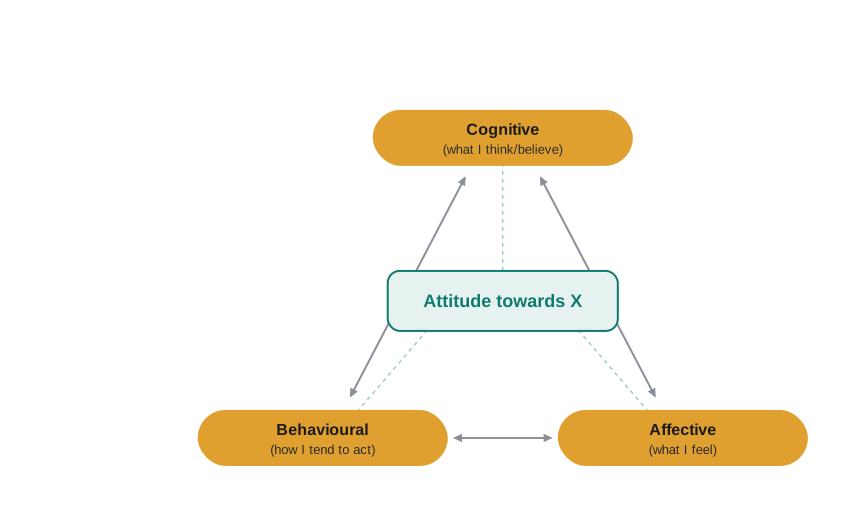
Fig. 6.5 – The A-B-C components of an attitude.
One point here is easy to misread, and it matters for everything that follows in this chapter. Attitudes are not themselves behaviour. They represent a tendency to behave or act in certain ways. They are part of cognition, along with an emotional component, and they cannot be observed from outside. Nobody can see your attitude towards examinations; they can only see what you do, and then infer.
Attitudes, Beliefs and Values
Attitudes have to be distinguished from two closely related concepts: beliefs and values.
Beliefs refer to the cognitive component of attitudes. They form the ground on which attitudes stand — belief in God, for instance, or belief in democracy as a political ideology. A belief states what a person holds to be the case.
Values are attitudes or beliefs that contain a ‘should’ or an ‘ought’ aspect, such as moral or ethical values. The idea that one should work hard, or that one should always be honest because honesty is the best policy, is a value. Values are formed when a particular belief or attitude becomes an inseparable part of a person’s outlook on life. Because it has been absorbed into the person’s sense of who they are, a value is consequently very difficult to change.
What an Attitude Does for Us
What purpose is served by holding an attitude at all? Attitudes provide a background that makes it easier for a person to decide how to act in new situations. You cannot work out every social situation from scratch; an attitude supplies a ready starting position.
Our attitude towards foreigners, for example, indirectly provides a mental ‘layout’ or ‘blueprint’ for how we should behave whenever we meet one. This is genuinely useful, since it saves effort. It is also the reason attitudes can be costly when they are inaccurate, because the blueprint is applied before the individual person in front of us has been given a chance to disconfirm it. That link between a ready-made blueprint and unfair treatment is taken up later in this chapter.
Four Features of an Attitude
Besides the affective, cognitive and behavioural components, attitudes also have other properties. Four significant features are valence, extremeness, simplicity or complexity, and centrality.
Valence (positivity or negativity) tells us whether an attitude is positive or negative towards the attitude object. Suppose an attitude — say, towards nuclear research — has to be expressed on a 5-point scale ranging from 1 (Very bad), 2 (Bad), 3 (Neutral — neither good nor bad) and 4 (Good), to 5 (Very good). If an individual rates her or his view towards nuclear research as 4 or 5, this is clearly a positive attitude: the person likes the idea of nuclear research and thinks it is something good. If the rating is 1 or 2, the attitude is negative — the person dislikes the idea and thinks it is something bad. We also allow for neutral attitudes. In this example, a neutral attitude towards nuclear research would be shown by a rating of 3 on the same scale. A neutral attitude has neither positive nor negative valence.
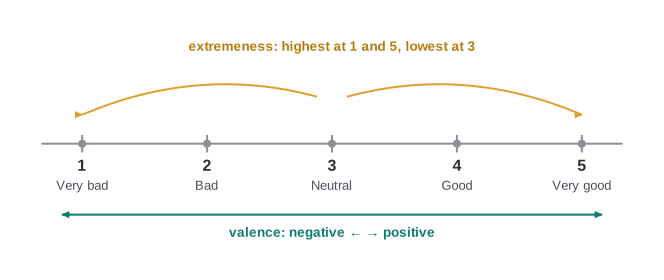
Fig. 6.6 – Valence and extremeness of an attitude.
Extremeness indicates how positive or negative an attitude is. Take the same nuclear research example. A rating of 1 is as extreme as a rating of 5; the two are only in opposite directions, which is a matter of valence, not of extremeness. Ratings of 2 and 4 are less extreme. A neutral attitude, of course, is lowest on extremeness. Notice in Fig. 6.6 how valence and extremeness are read off the same scale in two different ways — one along its length, the other from its middle outwards.
Simplicity or complexity (multiplexity) refers to how many attitudes there are within a broader attitude. Think of an attitude as a family containing several ‘member’ attitudes. On topics such as health or world peace, people hold many attitudes rather than a single one. An attitude system is said to be ‘simple’ if it contains only one or a few attitudes, and ‘complex’ if it is made up of many.
Consider the attitude towards health and well-being. This system is likely to consist of several member attitudes — one’s concept of physical and mental health, views about happiness and well-being, and beliefs about how health and happiness ought to be achieved. By contrast, the attitude towards a particular person is likely to consist of mainly one attitude.
Centrality refers to the role of a particular attitude within the attitude system. An attitude with greater centrality influences the other attitudes in the system much more than non-central, or peripheral, attitudes do. In the attitude towards world peace, for example, a negative attitude towards high military expenditure may be present as a core or central attitude that influences all the other attitudes in that multiple attitude system.
Go back now to the list you made at the start of this section. The items you marked “a great deal” are the ones most likely to be attitudes rather than opinions, and the one that keeps turning up as a reason for the others is probably central.
6.4 Attitude Formation and Change
6.4.1 Attitude Formation
One important question that psychologists are interested in answering is this: how are attitudes formed? Like many other thoughts and concepts that develop and become part of our cognitive system, attitudes towards different topics, things and people are formed as we interact with others. But interaction alone is too broad an answer, and there are specific conditions that lead to the formation of specific attitudes.
In general, attitudes are learned, through one’s own experiences and through interaction with others. There are a few research studies suggesting some sort of inborn aspect of attitudes, but such genetic factors influence attitudes only indirectly, along with learning. For this reason, most social psychologists have focused on the conditions which lead to the learning of attitudes.
That focus has a practical pay-off. If an attitude is learned, the conditions that produced it can in principle be identified, and something can be done about the ones that produce harmful attitudes. An attitude that was simply inherited would leave far less room for education, campaigning or reform.
Process of Attitude Formation
The processes and conditions of learning may be different, and this is one reason why people who grow up in similar surroundings still end up with very different attitudes.
Learning attitudes by association: You might have seen that students often develop a liking for a particular subject because of the teacher. They see many positive qualities in that teacher; these positive qualities get linked to the subject that she or he teaches, and ultimately get expressed in the form of liking for the subject. In other words, a positive attitude towards the subject is learned through the positive association between a teacher and a student. Notice that nothing has been said to the student about the subject itself — the good feeling has simply travelled from one object to another that was regularly paired with it.
Learning attitudes by being rewarded or punished: If an individual is praised for showing a particular attitude, chances are high that she or he will develop that attitude further. For example, if a teenager does yogasanas regularly and gets the honour of being ‘Miss Good Health’ in her school, she may develop a positive attitude towards yoga and health in general. Similarly, if a child constantly falls ill because she or he eats junk food instead of proper meals, then the child is likely to develop a negative attitude towards junk food, and also a positive attitude towards eating healthy food.
Learning attitudes through modelling (observing others): Often it is not through association, or through reward and punishment, that we learn attitudes. Instead, we learn them by observing others being rewarded or punished for expressing thoughts, or for showing behaviour of a particular kind, towards the attitude object. For example, children may form a respectful attitude towards elders by observing that their parents show respect for elders, and are appreciated for it.
Learning attitudes through group or cultural norms: Very often, we learn attitudes through the norms of our group or culture.
Over time, these norms may become part of our social cognition in the form of attitudes. Learning attitudes through group or cultural norms may actually be an example of all three forms of learning described above — learning through association, through reward or punishment, and through modelling. For example, offering money, sweets, fruit and flowers in a place of worship is a normative behaviour in some religions. When individuals see that such behaviour is shown by others, is expected, and is socially approved, they may ultimately develop a positive attitude towards such behaviour and towards the associated feelings of devotion.
Learning through exposure to information: Many attitudes are learned in a social context, but not necessarily in the physical presence of others. Today, with the huge amount of information provided through various media, both positive and negative attitudes are being formed. By reading the biographies of self-actualised persons, an individual may develop a positive attitude towards hard work and other aspects as the means of achieving success in life.
Factors that Influence Attitude Formation
The processes just described tell us how attitudes are learned. The factors below tell us where: they provide the context within which that learning takes place, as Fig. 6.7 shows.
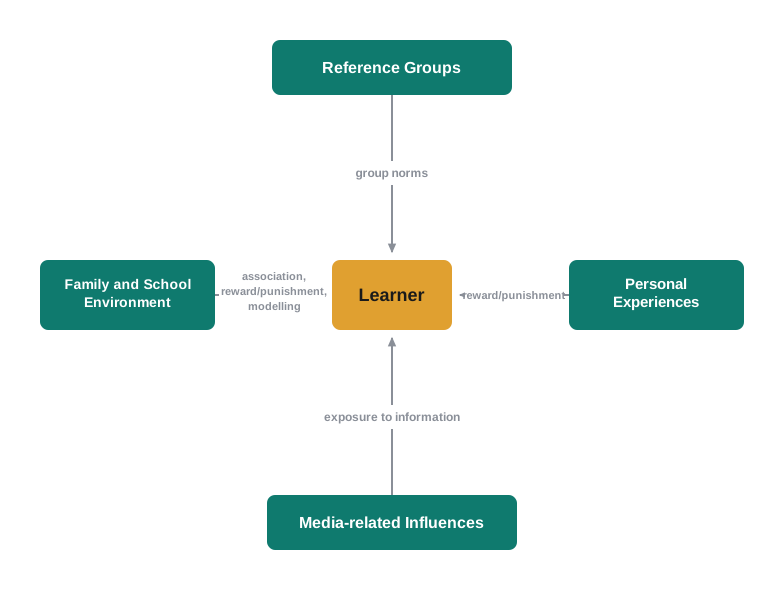
Fig. 6.7 – Factors influencing attitude formation.
Family and School Environment: Particularly in the early years of life, parents and other family members play a significant role in shaping attitude formation. Later, the school environment becomes an important background for attitude formation. Learning of attitudes within the family and school usually takes place by association, through rewards and punishments, and through modelling.
Reference Groups: Reference groups indicate to an individual the norms regarding acceptable behaviour and ways of thinking. They therefore reflect learning of attitudes through group or cultural norms. Attitudes towards various topics — political, religious and social groups, occupations, national and other issues — are often developed through reference groups. Their influence is noticeable especially at the beginning of adolescence, at which time it is important for the individual to feel that she or he belongs to a group. The role of reference groups in attitude formation may therefore also be a case of learning through reward and punishment, since acceptance by the group is itself a powerful reward.
Personal Experiences: Many attitudes are formed neither in the family environment nor through reference groups, but through direct personal experiences that bring about a drastic change in our attitude towards other people and towards our own life. Here is a real-life example. A driver in the army went through a personal experience that transformed his life. On one mission he narrowly escaped death although all his companions were killed. Wondering about the purpose of his own life, he gave up his job in the army, returned to his native village in Maharashtra, and worked actively as a community leader. Through a purely personal experience this individual evolved a strong positive attitude towards community upliftment, and his efforts completely changed the face of his village.
Media-related Influences: Technological advances in recent times have made audio-visual media and the Internet very powerful sources of information that lead to attitude formation and change. In addition, school-level textbooks also influence attitude formation. These sources first strengthen the cognitive and affective components of attitudes, and subsequently may also affect the behavioural component.
The media can exert both good and bad influences on attitudes. On one hand, the media and the Internet make people better informed than other modes of communication do. On the other hand, there may be no check on the nature of the information being gathered, and therefore no control over the attitudes that are being formed, or over the direction of change in existing attitudes. The media can be used to create consumerist attitudes where none existed, and can equally be harnessed to create positive attitudes that facilitate social harmony.
6.4.2 Attitude Change
During the process of attitude formation, and also after this process is over, attitudes may be changed and modified through various influences. Some attitudes change much more readily than others do.
Attitudes that are still in the formative stage, and are more like opinions, are far more likely to change than attitudes that have become firmly established and have become part of the individual’s values. This follows from what you have already read. A value is inseparable from a person’s outlook on life, so asking someone to give one up is, in effect, asking them to become a slightly different person.
From a practical point of view, bringing about a change in people’s attitudes is of interest to community leaders, politicians, producers of consumer goods, advertisers and others. Unless we find out how attitudes change, and what conditions account for such change, it would not be possible to take any steps to bring about attitude change at all.
Process of Attitude Change
Three major concepts draw attention to some important processes in attitude change.
- The concept of balance, proposed by Fritz Heider, is sometimes described in the form of the ‘P-O-X’ triangle, which represents the relationships between three aspects or components of the attitude. P is the person whose attitude is being studied, O is another person, and X is the topic towards which the attitude is being studied, that is, the attitude object. It is also possible that all three are persons.
The basic idea is that an attitude changes if there is a state of imbalance between the P-O attitude, the O-X attitude and the P-X attitude. This is because imbalance is logically uncomfortable. The attitude therefore changes in the direction of balance.
Imbalance is found when (i) all three sides of the P-O-X triangle are negative, or (ii) two sides are positive and one side is negative. Balance is found when (i) all three sides are positive, or (ii) two sides are negative and one side is positive. Fig. 6.8 sets these arrangements out side by side.
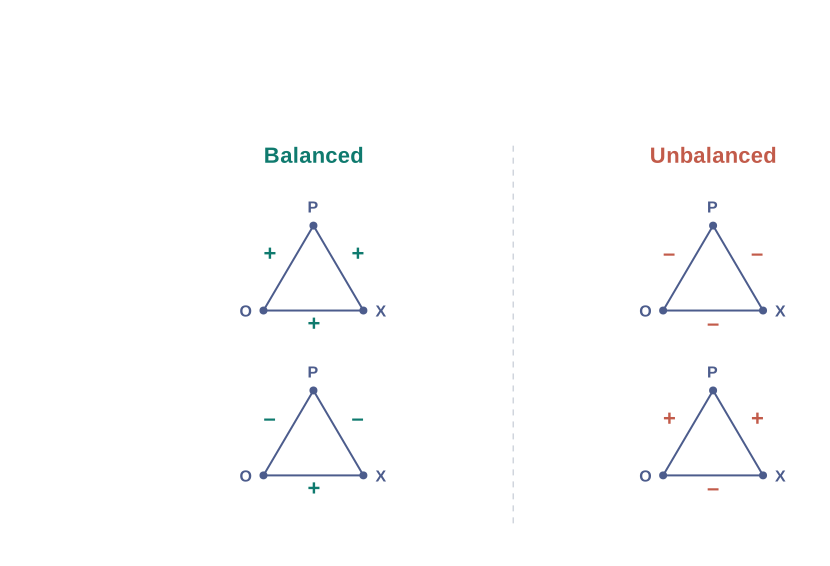
Fig. 6.8 – Balanced and unbalanced states in the P-O-X triangle.
Consider the example of dowry as an attitude topic (X). Suppose a person (P) has a positive attitude towards dowry, so P-X is positive. P is planning to get his son married to the daughter of some person (O), who has a negative attitude towards dowry, so O-X is negative. What would be the nature of the P-O attitude, and how would it determine balance or imbalance in this situation?
If O initially has a positive attitude towards P, the situation is unbalanced. P-X is positive, O-P is positive, but O-X is negative. That is, there are two positives and one negative in the triangle, which is a situation of imbalance. One of the three attitudes will therefore have to change.
This change could take place in the P-X relationship, if P starts disliking dowry as a custom; or in the O-X relationship, if O starts liking dowry as a custom; or in the O-P relationship, if O starts disliking P. In short, an attitude change will have to take place so that there will be three positive relationships, or two negative and one positive relationship, in the triangle.
- The concept of cognitive dissonance was proposed by Leon Festinger. It emphasises the cognitive component. The basic idea here is that the cognitive components of an attitude must be ‘consonant’, the opposite of ‘dissonant’ — that is, they should be logically in line with each other. If an individual finds that two cognitions in an attitude are dissonant, then one of them will be changed in the direction of consonance.
For example, think about the following two ideas, or ‘cognitions’:
Cognition I: Pan masala causes mouth cancer, which is fatal. Cognition II: I eat pan masala.
Holding these two cognitions together will make any individual feel that something is ‘out of tune’, or dissonant, in the attitude towards pan masala. One of these ideas will therefore have to be changed, so that consonance can be attained. In the example given above, in order to remove or reduce the dissonance, I will stop eating pan masala, that is, I will change Cognition II. This would be the healthy, logical and sensible way of reducing the dissonance.
It is worth noticing that it is not the only way. The dissonance could equally be reduced by weakening Cognition I — by telling oneself that the evidence has been exaggerated, or that a relative who chewed pan masala for years stayed perfectly well. The uncomfortable feeling disappears in both cases. Only one of the two routes protects the person’s health.
Festinger and Carlsmith, two social psychologists, conducted an experiment that showed how cognitive dissonance works.
Both balance and cognitive dissonance are examples of cognitive consistency.
If this does not happen, the person experiences a kind of mental discomfort, that is, the sense that ‘something is not quite right’ in the attitude system. In such a state, some aspect of the attitude system changes in the direction of consistency, because our cognitive system requires logical consistency.
- The two-step concept was proposed by S.M. Mohsin, an Indian psychologist. According to him, attitude change takes place in the form of two steps.
In the first step, the target of change identifies with the source. The ‘target’ is the person whose attitude is to be changed; the ‘source’ is the person through whose influence the change is to take place. Identification means that the target has liking and regard for the source. She or he puts herself or himself in the place of the source, and tries to feel like her or him. The source must also have a positive attitude towards the target, so that the regard and attraction become mutual.
In the second step, the source herself or himself shows an attitude change, by actually changing her or his behaviour towards the attitude object. Observing the source’s changed attitude and behaviour, the target also shows an attitude change through behaviour. This is a kind of imitation, or observational learning.
Consider the following example of two-step attitude change. Preeti reads in the newspapers that a particular soft drink that she enjoys is extremely harmful. But Preeti sees that her favourite sportsperson has been advertising the same soft drink. She has identified herself with the sportsperson, and would like to imitate her or him.
Now suppose the sportsperson wishes to change people’s attitude towards this soft drink from positive to negative. The sportsperson must first show positive feelings for her or his fans, and then actually change her or his own habit of consuming that soft drink — perhaps by substituting it with a health drink. This is Step I. If the sportsperson actually changes her or his behaviour, it is very likely that Preeti will now also change her attitude and behaviour, and stop consuming the harmful soft drink. This is Step II.
Factors that Influence Attitude Change
Whether attitudes will change, and if so to what extent, is a question that puzzles many psychologists. However, most of them agree upon the following major factors that influence attitude change.
Characteristics of the existing attitude: All four properties of attitudes mentioned earlier — valence, extremeness, simplicity or complexity, and centrality or significance of the attitude — determine attitude change. In general, positive attitudes are easier to change than negative attitudes are. Extreme attitudes and central attitudes are more difficult to change than less extreme and peripheral, that is, less significant, attitudes are. Simple attitudes are easier to change than multiple attitudes are.
In addition, one must also consider the direction and the extent of attitude change. An attitude change may be congruent — it may change in the same direction as the existing attitude, so that a positive attitude becomes more positive, or a negative attitude becomes more negative. For instance, suppose a person has a somewhat positive attitude towards the empowerment of women. Reading about a successful woman may make this attitude more positive. This would be a congruent change.
On the other hand, an attitude change may be incongruent — it may change in a direction opposite to the existing attitude, so that a positive attitude becomes less positive or even negative, or a negative attitude becomes less negative or positive. In the example just given, after reading about successful women a person may think instead that women might soon become too powerful and neglect their family responsibilities. This may make the person’s existing positive attitude towards the empowerment of women less positive, or even negative. If this happens, then it would be a case of incongruent change. It has been found that, in general, congruent changes are easier to bring about than incongruent changes in attitudes are.
Moreover, an attitude may change in the direction of the information that is presented, or in a direction opposite to that of the information presented. Posters describing the importance of brushing one’s teeth would strengthen a positive attitude towards dental care. But if people are shown frightening pictures of dental cavities, they may not believe the pictures, and may become less positive about dental care. Research has found that fear sometimes works well in convincing people, but that if a message generates too much fear, it turns off the receiver and has little persuasive effect.
Source characteristics: Source credibility and attractiveness are two features that affect attitude change. Attitudes are more likely to change when the message comes from a highly credible source rather than from a low-credible source.
For example, adults who are planning to buy a laptop are more convinced by a computer engineer who points out the special features of a particular brand of laptop, than they would be by a schoolchild who might give the same information. But if the buyers are themselves schoolchildren, they may be convinced more by another schoolchild advertising a laptop than they would be by a professional giving the same information, as Fig. 6.1 illustrates. In the case of some products such as cars, sales may increase if they are publicised not necessarily by experts, but by popular public figures.
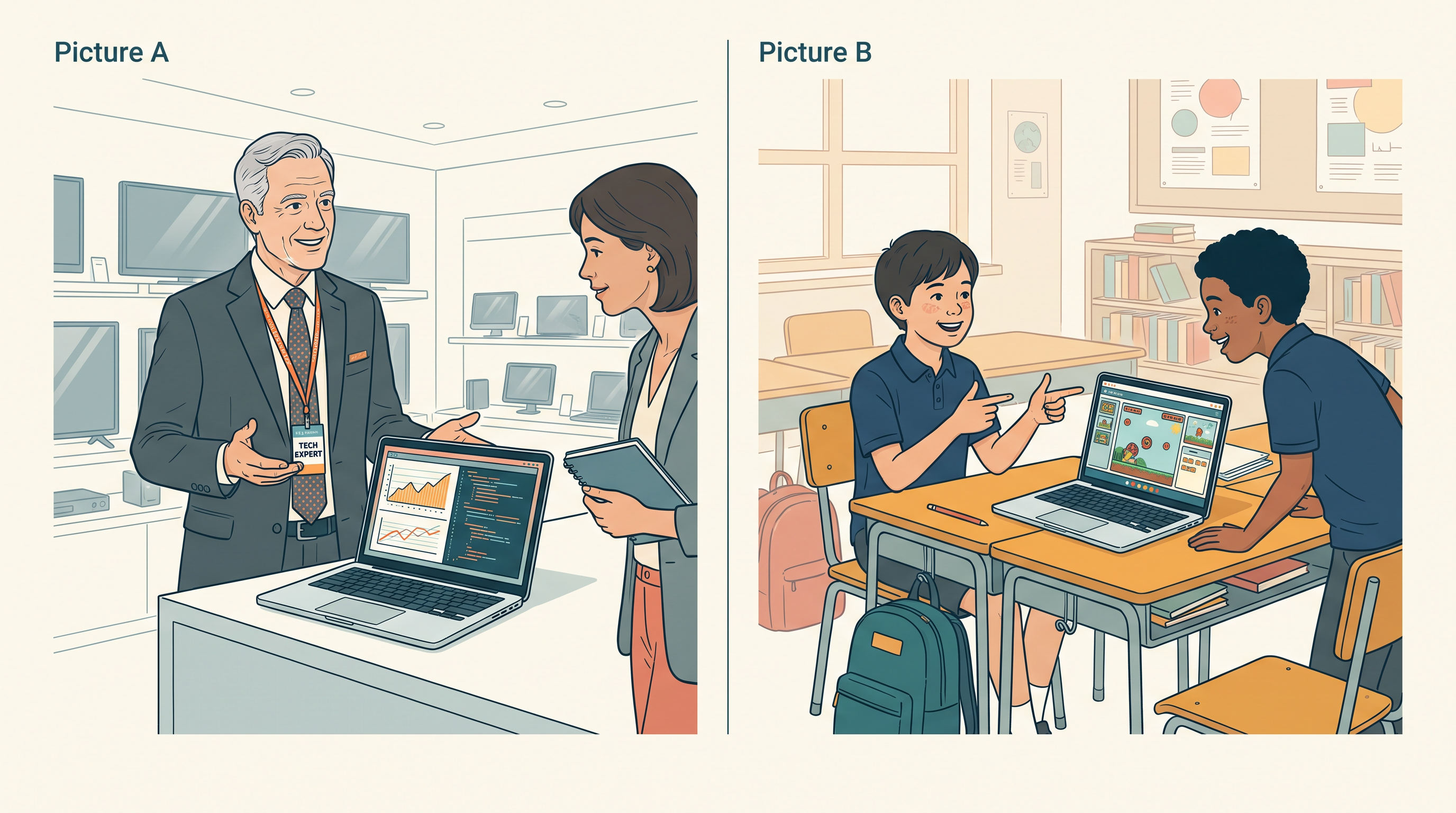
Fig. 6.1 – Source credibility and target audience.
Credibility and attractiveness do not always pull in the same direction. A source may be highly credible but unattractive to a particular audience, or extremely attractive while having no expertise on the topic at all. This is the psychological reason why the same product is advertised very differently to different audiences.
Message characteristics: The message is the information that is presented in order to bring about an attitude change. Attitudes will change when the amount of information that is given about the topic is just enough, neither too much nor too little.
Whether the message contains a rational or an emotional appeal also makes a difference. For example, an advertisement for cooking food in a pressure cooker may point out that this saves fuel such as cooking gas (LPG) and is economical, which is a rational appeal. Alternatively, the advertisement may say that pressure-cooking preserves nutrition, and that if one cares for the family, nutrition would be a major concern, which is an emotional appeal, as shown in Fig. 6.2.
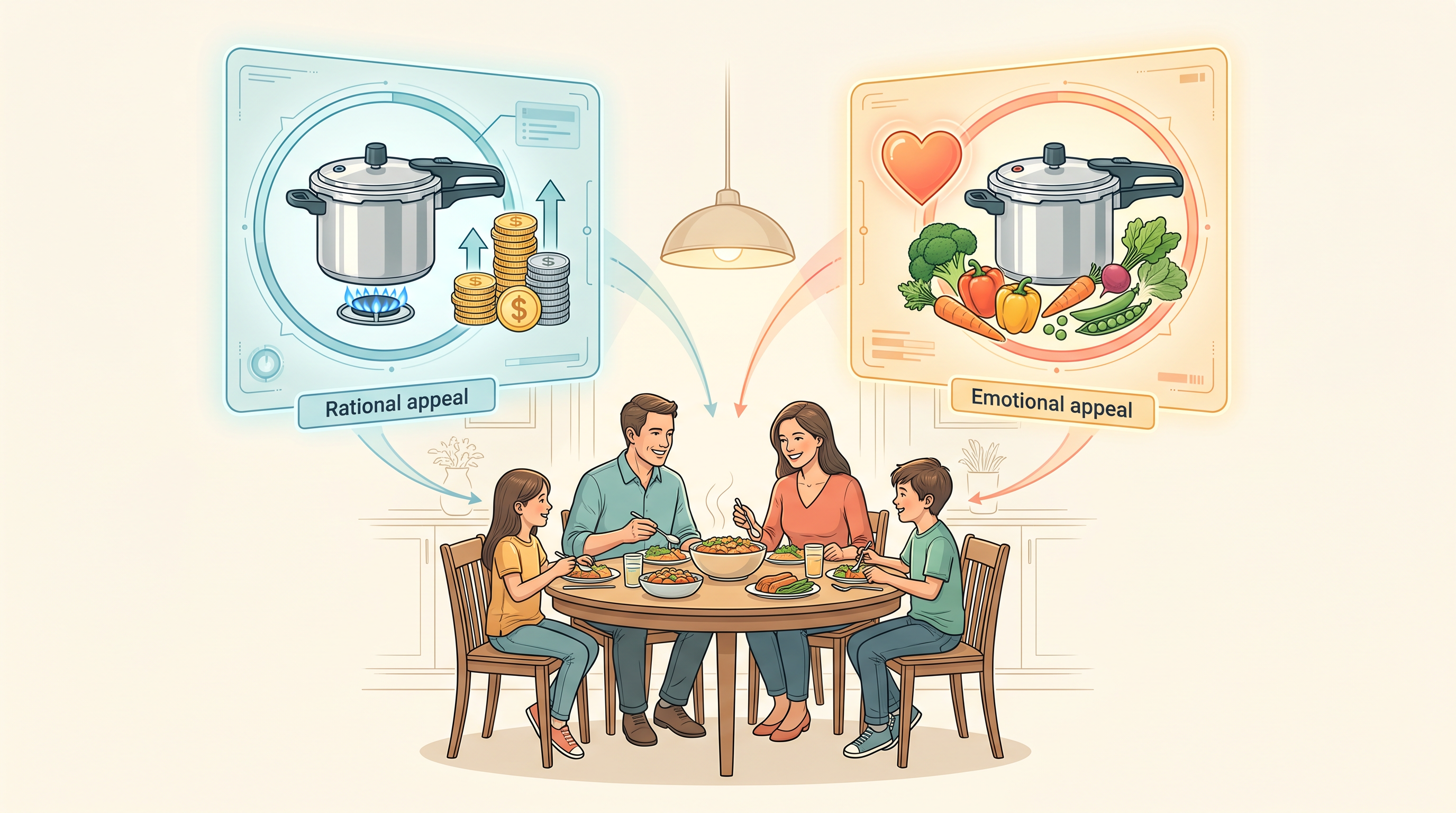
Fig. 6.2 – Rational and emotional appeals in advertising.
The motives activated by the message also determine attitude change. For example, drinking milk may be said to make a person healthy and good-looking, or more energetic and more successful at one’s job. The product is the same in both cases; what differs is the motive being addressed.
Finally, the mode of spreading the message plays a significant role. Face-to-face transmission of the message is usually more effective than indirect transmission, as for instance through letters and pamphlets, or even through mass media.
For example, a positive attitude towards Oral Rehydration Salts (ORS) for young children is more effectively created if community social workers and doctors spread the message by talking to people directly, than by only describing the benefits of ORS on the radio, as Fig. 6.3 contrasts. These days, transmission through visual media such as television and the Internet is similar to face-to-face interaction, but is not a substitute for the latter.
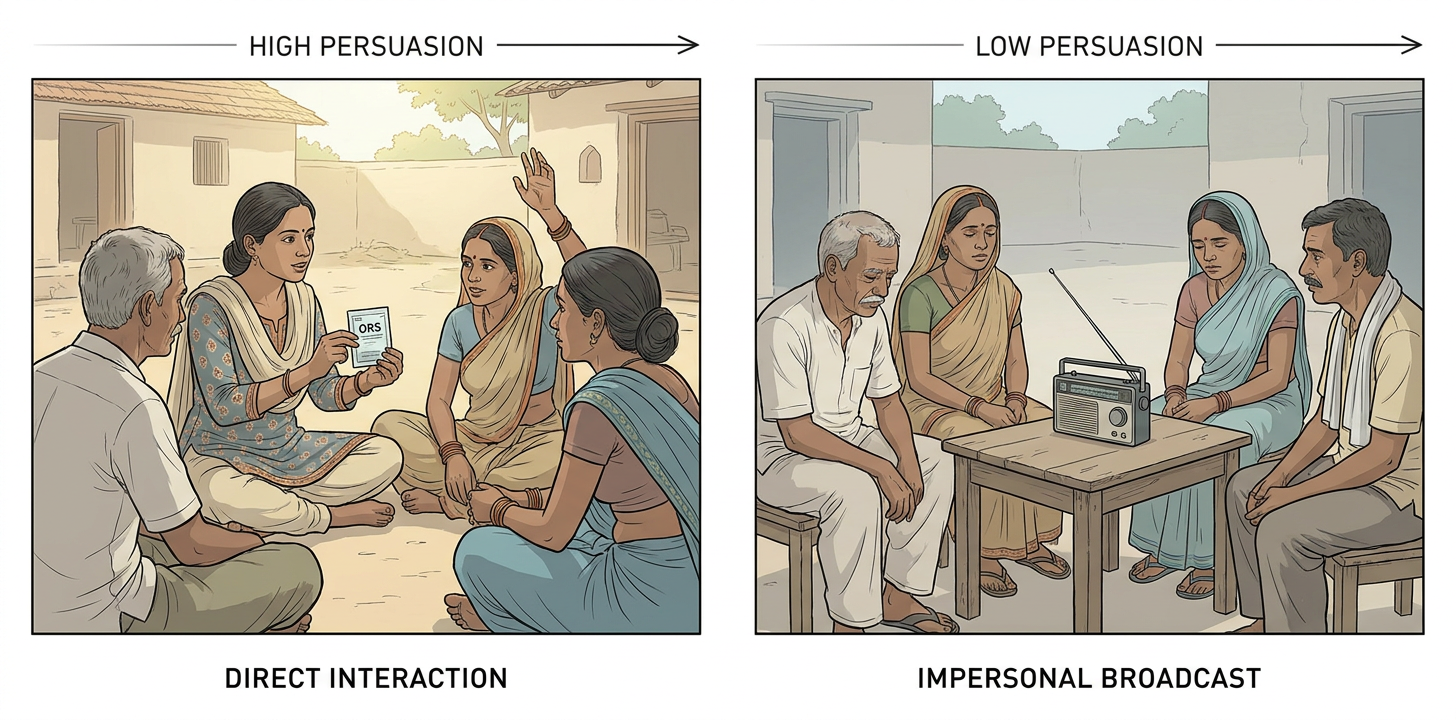
Fig. 6.3 – Face-to-face versus media transmission.
Target characteristics: Qualities of the target, such as persuasibility, strong prejudices, self-esteem and intelligence, influence the likelihood and the extent of attitude change. People who have a more open and flexible personality change more easily, and advertisers benefit most from such people. People with strong prejudices are less prone to any attitude change than those who do not hold strong prejudices.
Persons who have a low self-esteem, and do not have sufficient confidence in themselves, change their attitudes more easily than those who are high on self-esteem. More intelligent people may change their attitudes less easily than those with lower intelligence. However, sometimes more intelligent persons change their attitudes more willingly than less intelligent ones, because they base their attitude on more information and thinking.
That last point deserves a second reading, because it shows that intelligence does not simply make a person harder to persuade. It makes a person harder to persuade by a weak argument, and easier to persuade by a strong one.
6.4.3 Attitude-Behaviour Relationship
We usually expect behaviour to follow logically from attitudes. However, an individual’s attitudes may not always be exhibited through behaviour. Likewise, one’s actual behaviour may be contrary to one’s attitude towards a particular topic.
Psychologists have found that there would be consistency between attitudes and behaviour when:
- the attitude is strong, and occupies a central place in the attitude system,
- the person is aware of her or his attitude,
- there is very little or no external pressure for the person to behave in a particular way — for example, when there is no group pressure to follow a particular norm,
- the person’s behaviour is not being watched or evaluated by others, and
- the person thinks that the behaviour would have a positive consequence, and therefore intends to engage in that behaviour.
Read that list once more and notice what it implies. Attitudes predict behaviour best when the situation is weak — when nobody is pushing, watching or judging. When the situation is strong, it can override the attitude altogether.
Sometimes it is behaviour that decides the attitude. In the experiment by Festinger and Carlsmith, students who got only one dollar for telling others that the experiment was interesting discovered that they liked the experiment. That is, on the basis of their behaviour — telling others that the experiment was interesting, for only a small amount of money — they concluded that their attitude towards the experiment was positive: “I would not have told a lie for this small amount of money, which means that the experiment was actually interesting.”
6.5 Prejudice and Discrimination
Everything you have read so far about attitudes applies to attitudes towards groups as well as towards objects and issues. Prejudices are examples of attitudes towards a particular group. They are usually negative, and in many cases they may be based on stereotypes about that group.
A stereotype is a cluster of ideas regarding the characteristics of a specific group, and all members belonging to that group are assumed to possess these characteristics. The stereotype is the cognitive component of the prejudice — the thought part, the ready-made blueprint mentioned earlier in this chapter. Often, stereotypes consist of undesirable characteristics about the target group, and they lead to negative attitudes, that is, prejudices, towards members of that group.
The cognitive component of prejudice is frequently accompanied by dislike or hatred, which is the affective component. Prejudice may also get translated into discrimination, the behavioural component, whereby people behave in a less positive way towards a particular target group compared to another group which they favour.
You will recognise the pattern. Prejudice has exactly the A-B-C structure of any other attitude — a stereotype for its cognitive component, dislike for its affective component, and discrimination as the behaviour to which it tends. Fig. 6.9 sets this out.
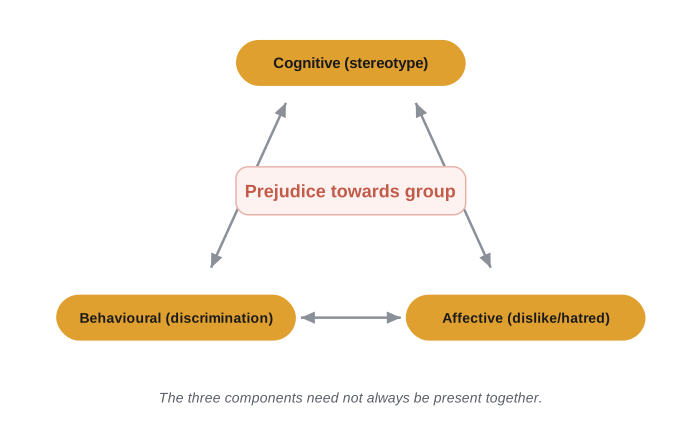
Fig. 6.9 – The A-B-C components of prejudice.
When the Three Components Come Apart
History contains numerous examples of discrimination based on race and on social class or caste. The genocide committed by the Nazis in Germany against Jewish people is an extreme example of how prejudice can lead to hatred, discrimination and the mass killing of innocent people.
Prejudices can exist without being shown in the form of discrimination. A person may hold a strong negative view about a group and still, out of law or courtesy or fear of disapproval, treat its members correctly. Similarly, discrimination can be shown without prejudice — a person may exclude someone simply because a rule, a custom or an employer requires it, without holding any hostile view at all.
Yet the two go together very often. Wherever prejudice and discrimination exist, conflicts are very likely to arise between groups within the same society. Our own society has witnessed many deplorable instances of discrimination, with and without prejudice, based on gender, religion, community, caste, disability, and health conditions such as HIV/AIDS.
In many cases, discriminatory behaviour can be curbed by law. This is a real achievement, and it should not be underrated: a law that stops the behaviour protects people today, whatever remains in anyone’s mind. But the cognitive and emotional components of prejudice are more difficult to change, and this is why legal remedies alone have never been sufficient.
Sources of Prejudice
Social psychologists have shown that prejudice has one or more of the following sources.
Learning: Like other attitudes, prejudices can also be learned through association, reward and punishment, observing others, group or cultural norms, and exposure to information that encourages prejudice. The family, reference groups, personal experiences and the media may all play a role in the learning of prejudices, exactly as they do in the learning of any other attitude. People who learn prejudiced attitudes may develop a ‘prejudiced personality’, showing low adjusting capacity, anxiety, and feelings of hostility against the outgroup.
A strong social identity and ingroup bias: Individuals who have a strong sense of social identity, and a very positive attitude towards their own group, boost this attitude by holding negative attitudes towards other groups. These negative attitudes are shown as prejudices. Notice that nothing needs to have gone wrong between the two groups; a very positive view of ‘us’ is by itself enough to begin devaluing ‘them’.
Scapegoating: Scapegoating is a phenomenon by which the majority group places the blame on a minority outgroup for its own social, economic or political problems. The minority is too weak or too small in number to defend itself against such accusations. Scapegoating is a group-based way of expressing frustration, and it often results in negative attitudes or prejudice against the weaker group.
Kernel of truth concept: Sometimes people may continue to hold stereotypes because they think that, after all, there must be some truth — some kernel of truth — in what everyone says about the other group. Even a few examples are sufficient to support the ‘kernel of truth’ idea. The reasoning is faulty, but it feels convincing from the inside, because the few confirming instances are noticed and remembered while the many exceptions are not.
Self-fulfilling prophecy: In some cases, the group that is the target of prejudice is itself responsible for continuing the prejudice. The target group may behave in ways that justify the prejudice, that is, confirm the negative expectations. For example, if the target group is described as ‘dependent’ and therefore unable to make progress, the members of this target group may actually behave in a way that proves this description to be true. In this way, they strengthen the existing prejudice. This process is called a self-fulfilling prophecy.
Read the five sources again and notice that they suggest their own remedies. If prejudice is learned, the conditions of learning can be altered; if it grows out of a narrow social identity, that identity can be widened; if it survives on a self-fulfilling prophecy, the prophecy can be broken. The next section takes up exactly these strategies.
6.6 Strategies for Handling Prejudice
Knowing about the causes or sources of prejudice would be the first step in handling it. A strategy that does not match the source it is meant to counter is unlikely to achieve much, however well-intentioned it may be.
What the Strategies Must Aim At
The strategies for handling prejudice would be effective if they aim at:
- minimising opportunities for learning prejudices,
- changing such attitudes,
- de-emphasising a narrow social identity based on the ingroup, and
- discouraging the tendency towards self-fulfilling prophecy among the victims of prejudice.
Each of these four goals answers directly to one of the sources discussed in the previous section, as Fig. 6.10 shows. The last one deserves particular attention, because it addresses the position of those who are on the receiving end of prejudice, and not only the attitudes of those who hold it.
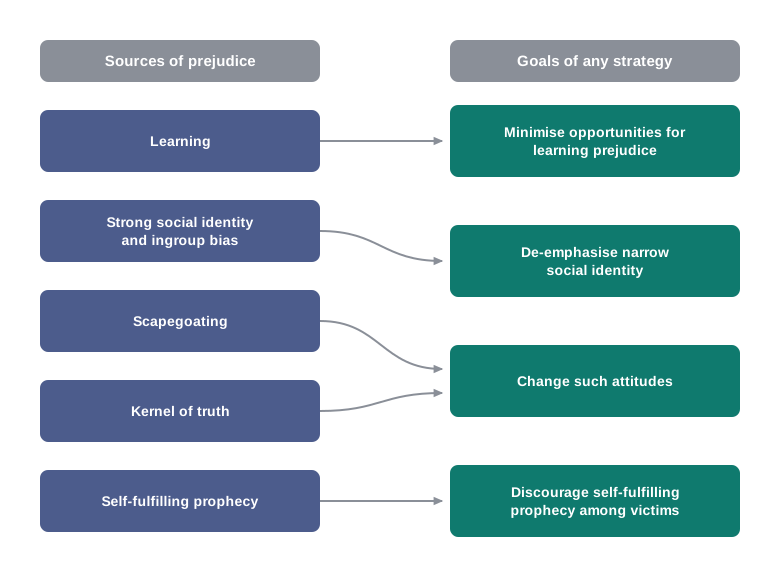
Fig. 6.10 – Sources of prejudice and corresponding strategy goals.
How These Goals Can Be Achieved
These goals can be accomplished through the following measures.
Education and information dissemination, for correcting stereotypes related to specific target groups, and for tackling the problem of a strong ingroup bias. Since a stereotype is a cognitive structure, accurate information is a direct attack on it — provided the information reaches people before the stereotype has hardened into a value.
Increasing intergroup contact allows for direct communication, removal of mistrust between the groups, and even the discovery of positive qualities in the outgroup. However, such strategies are successful only if:
- the two groups meet in a cooperative rather than a competitive context,
- close interactions between the groups help them to know each other better, and
- the two groups are not different in power or status.
These three conditions are not decorative. Contact between groups that meet as rivals, or that meet only in passing, or that meet as employer and employee, can leave prejudice exactly where it was, or even strengthen it — because each side then reads the encounter as confirmation of what it already believed.
Highlighting individual identity rather than group identity, thus weakening the importance of the group — both the ingroup and the outgroup — as a basis for evaluating the other person. Once someone is known as a particular person with a particular history rather than as a specimen of a category, the stereotype has much less to work with. More details about social identity and intergroup conflict have been presented in the next chapter, on Social Influence and Group Processes.
6.7 Summary
Human beings have a need to interact with and relate to others, and to explain their own behaviour as well as the behaviour of other people. Social psychology studies how the individual is affected by others and by the social environment, and shows that common sense and folk wisdom are not reliable guides to why people behave as they do.
An attitude is a state of mind about an attitude object, carrying an evaluation that may be positive, negative or neutral, together with an emotional response and a tendency to act. It is not behaviour itself and cannot be observed from outside.
Every attitude has three components — the affective (feeling), the behavioural or conative (tendency to act) and the cognitive (thought). These are together called the A-B-C components, and they need not always be equally strong or point in the same direction.
Attitudes are distinct from beliefs, which supply their cognitive ground, and from values, which carry a ‘should’ or ‘ought’ quality and are therefore very difficult to change.
Attitudes can be described in terms of four properties: valence, extremeness, simplicity or complexity (multiplexity), and centrality. These same four properties later help to predict how easily an attitude will change.
Attitudes are largely learned — through association, through reward and punishment, through modelling, through group or cultural norms, and through exposure to information. The family and school environment, reference groups, personal experiences and the media provide the contexts in which this learning happens.
Attitude change is explained by three concepts: the balance concept of Fritz Heider, described through the P-O-X triangle; cognitive dissonance, proposed by Leon Festinger; and the two-step concept of S.M. Mohsin, in which the target first identifies with the source and then imitates the source’s changed behaviour. Balance and dissonance are both examples of cognitive consistency.
Whether an attitude changes depends on the characteristics of the existing attitude, of the source, of the message, and of the target. Change may be congruent, moving further in the existing direction, or incongruent, moving towards the opposite pole; congruent change is generally easier to bring about.
Attitudes do not always show up in behaviour. Consistency is greatest when the attitude is strong and central, the person is aware of it, external pressure and observation are absent, and a positive consequence is expected. Sometimes the order reverses and behaviour decides the attitude.
Prejudice is a negative attitude towards a group. Its cognitive component is the stereotype, its affective component is dislike or hatred, and its behavioural component is discrimination. Prejudice can exist without discrimination and discrimination without prejudice, though the two often occur together and generate conflict within a society.
Prejudice arises from learning, from a strong social identity and ingroup bias, from scapegoating, from the kernel of truth idea, and from the self-fulfilling prophecy.
Practical strategies for handling prejudice include education and information dissemination, increasing intergroup contact — effective only when the contact is cooperative, close, and between groups equal in power and status — and highlighting individual identity rather than group identity.
6.8 Key Terms
Attitudes — States of mind about an attitude object, carrying an evaluation (positive, negative or neutral), an emotional response, and a tendency to act in a particular way.
Balance — Heider’s idea that the three relationships in the P-O-X triangle tend towards logical consistency, and that imbalance pushes one of the attitudes to change.
Beliefs — The cognitive content of an attitude; what a person holds to be true, and the ground on which an attitude stands.
Centrality of attitude — The extent to which a particular attitude occupies a core position in an attitude system and influences the other attitudes within it.
Cognitive consistency — The requirement that the elements of an attitude or attitude system fall logically in line with one another and point in the same direction.
Cognitive dissonance — Festinger’s concept of the mental discomfort felt when two cognitions within an attitude do not fit together, leading one of them to change towards consonance.
Congruent attitude change — Change that moves an attitude further in the direction it already had, making a positive attitude more positive or a negative one more negative.
Discrimination — The behavioural component of prejudice; treating members of a target group less favourably than members of a favoured group.
Extremeness of attitude — How strongly positive or negative an attitude is, measured outwards from the neutral point in either direction.
Identification — In the two-step concept, the target’s liking and regard for the source, together with the wish to feel and be like her or him.
Incongruent attitude change — Change that moves an attitude towards the opposite pole, making a positive attitude less positive or negative, or a negative attitude less negative or positive.
Kernel of truth — The belief that a stereotype must contain at least some truth because so many people repeat it, with a few confirming examples treated as sufficient proof.
Persuasibility — A quality of the target; the readiness with which a person’s attitudes can be changed by a message.
Prejudice — A negative attitude held towards members of a group because of their membership of that group rather than because of anything known about them individually.
Scapegoating — Blaming a minority outgroup, too weak to defend itself, for the social, economic or political problems of the majority group.
Self-fulfilling prophecy — The process by which a group’s expectations about another group lead that group to behave in ways that confirm the original expectation.
Simplicity or complexity (multiplexity) of attitude — The number of member attitudes contained within a broader attitude system; simple systems hold one or a few, complex systems hold many.
Valence of attitude — Whether an attitude towards the attitude object is positive, negative or neutral.
Values — Attitudes or beliefs carrying a ‘should’ or ‘ought’ quality, absorbed into a person’s outlook on life and therefore very difficult to change.
6.9 Points to Ponder
Surveys of household waste in Indian cities regularly find that people who say all the right things about a clean environment still do not separate their own rubbish. Which part of the A-B-C structure is missing in such cases, and can a campaign supply it — or does something else have to change first?
Ask a close friend to rate you on qualities such as sincerity, tenseness and openness to new ideas, and rate yourself on the same qualities. Where the two ratings differ, whose rating is the better evidence about your attitudes, and on what grounds would you decide?
Advertisers use nearly every factor described in this chapter — source credibility, emotional appeal, the choice of a well-liked face, the mode of transmission — quite deliberately. If a technique works, does it matter whether the person being persuaded knows that it is being used on them?
The law can curb discriminatory behaviour but cannot reach the stereotype or the dislike behind it. Is a society in which people behave fairly while still holding prejudice better, worse, or simply different from one in which people think generously but act unfairly?
Cognitive dissonance is removed whichever of the two cognitions gives way. If psychology alone cannot tell us which one will change, what does — habit, cost, conscience, or the company one keeps?
If attitudes are learned from family, reference groups, personal experience and the media, how much of what you call ‘my own view’ on a contested issue is genuinely your own? Is there any way to find out from the inside?
6.10 NCERT Questions
Define attitude. Discuss the components of an attitude.
Are attitudes learnt? Explain how.
What are the factors that influence the formation of an attitude?
Is behaviour always a reflection of one’s attitude? Explain with a relevant example.
Differentiate between prejudice and stereotype.
Prejudice can exist without discrimination, and discrimination without prejudice. Comment.
Your friend eats too much junk food. How would you be able to bring about a change in her or his attitude towards food?
6.11 Objective Questions
- The topic or object towards which an attitude is held is called the:
- attitude system
- attitude object
- reference group
- attitude norm [1 mark]
- The tendency to act in a particular way towards an attitude object is known as the:
- cognitive aspect
- affective aspect
- behavioural or conative aspect
- evaluative aspect [1 mark]
- On a 5-point scale from 1 (Very bad) to 5 (Very good), a rating of 3 indicates an attitude that is:
- highest on extremeness
- negative in valence
- neutral, with neither positive nor negative valence
- complex in structure [1 mark]
- Attitudes or beliefs that contain a ‘should’ or ‘ought’ aspect are called:
- opinions
- norms
- stereotypes
- values [1 mark]
- The ‘P-O-X’ triangle is associated with the concept of:
- cognitive dissonance
- balance
- the two-step concept
- the self-fulfilling prophecy [1 mark]
- In the two-step concept of attitude change, the first step is:
- the source changing her or his own behaviour
- the target identifying with the source
- the target imitating the source
- the target receiving new information [1 mark]
- A person who holds a somewhat positive attitude towards an issue becomes even more positive after reading about it. This is an example of:
- incongruent change
- congruent change
- dissonance reduction
- scapegoating [1 mark]
- Blaming a small and weak minority group for the economic problems of the majority group is known as:
- the kernel of truth concept
- ingroup bias
- scapegoating
- discrimination [1 mark]
- Which of the following is the behavioural component of prejudice?
- Stereotype
- Dislike or hatred
- Discrimination
- Social identity [1 mark]
- Assertion (A): Values are much harder to change than opinions are. Reason (R): A value has become an inseparable part of a person’s outlook on life.
- Both A and R are true, and R is the correct explanation of A.
- Both A and R are true, but R is not the correct explanation of A.
- A is true, but R is false.
- A is false, but R is true. [1 mark]
- Assertion (A): In the Festinger and Carlsmith experiment, the students paid $20 did not change their attitude towards the boring task. Reason (R): A large payment is by itself a sufficient reason for telling a lie, so no dissonance is experienced.
- Both A and R are true, and R is the correct explanation of A.
- Both A and R are true, but R is not the correct explanation of A.
- A is true, but R is false.
- A is false, but R is true. [1 mark]
- Assertion (A): Bringing two groups into contact with each other always reduces prejudice between them. Reason (R): Intergroup contact removes mistrust and allows the discovery of positive qualities in the outgroup.
- Both A and R are true, and R is the correct explanation of A.
- Both A and R are true, but R is not the correct explanation of A.
- A is false, but R is true.
- Both A and R are false. [1 mark]
- Match the following:
| Column I | Column II |
|---|---|
| a. Fritz Heider | i. Two-step concept |
| b. Leon Festinger | ii. Study of a Chinese couple travelling across the United States |
| c. S.M. Mohsin | iii. Balance and the P-O-X triangle |
| d. Richard LaPiere | iv. Cognitive dissonance |
[1 mark]
- Match the following:
| Column I | Column II |
|---|---|
| a. Valence | i. How many member attitudes an attitude system contains |
| b. Extremeness | ii. Whether the attitude is positive, negative or neutral |
| c. Multiplexity | iii. How far the attitude influences other attitudes in the system |
| d. Centrality | iv. How strongly positive or negative the attitude is |
[1 mark]
Fill in the blank: Unwritten rules about behaviour that everyone is supposed to show under specific circumstances are called __________. [1 mark]
Fill in the blank: The idea that there must be at least some truth in what everyone says about another group is called the __________ concept. [1 mark]
Fill in the blank: Both balance and cognitive dissonance are examples of __________. [1 mark]
True or false: An attitude can be directly observed from outside, in the same way as behaviour can. [1 mark]
True or false: A person may show discrimination towards a group without holding any prejudice against it. [1 mark]
True or false: The more fear a persuasive message generates, the more effective it becomes. [1 mark]
6.12 Check Your Concepts
Define an attitude object and give one example of your own. [2 marks]
State what is meant by the valence of an attitude, and give one example each of a positive and a negative valence. [2 marks]
List the four properties of an attitude described in this chapter. [2 marks]
What is meant by cognitive consistency? [2 marks]
Define persuasibility and state how it affects attitude change. [2 marks]
State any two conditions under which intergroup contact successfully reduces prejudice. [2 marks]
Differentiate between beliefs and values, with one example of each. [3 marks]
Differentiate between congruent and incongruent attitude change, using the same attitude for both examples. [3 marks]
Explain briefly, with an example, how attitudes are learned through group or cultural norms. [3 marks]
Give reasons why extreme and central attitudes are harder to change than peripheral ones. [3 marks]
Distinguish between identification and imitation as they are used in the two-step concept. [3 marks]
Why is it said that a stereotype is the cognitive component of prejudice? Explain with an example. [3 marks]
Explain, with an example, how an attitude may be learned through modelling, and state how this differs from learning through reward and punishment. [4 marks]
Describe the process by which cognitive dissonance leads to attitude change, using an example of your own. [4 marks]
A person holds a positive attitude towards a custom, while a close relative holds a negative attitude towards the same custom, and the two like each other. Using the P-O-X triangle, explain why this situation is unbalanced and describe the ways in which balance could be restored. [4 marks]
Evaluate the claim that a law banning discriminatory behaviour is enough to remove prejudice from a society. [4 marks]
What would happen to a persuasive health campaign that relied entirely on frightening images? Explain your answer using what the chapter says about message characteristics. [4 marks]
Describe the A-B-C components of an attitude in full, using a single attitude as your example, and explain why the three components need not always be consistent with each other. [6 marks]
Describe the processes through which attitudes are formed, and explain the four factors that provide the context for this learning. [6 marks]
Compare the balance concept, cognitive dissonance and the two-step concept as explanations of attitude change. Which of the three, in your view, best explains the success of celebrity advertising, and why? [6 marks]
Discuss the sources of prejudice, and explain how each of the strategies for handling prejudice addresses one or more of those sources. [6 marks]
Explain the conditions under which attitudes and behaviour are consistent with each other. Illustrate your answer with LaPiere’s study, and state one criticism of that study. [6 marks]
6.13 Case-Based Questions
- A residents’ association in a colony puts up a large notice board asking families to keep dry and wet waste in separate bins. Most residents say in conversation that segregating waste is necessary and that the colony looks better for it. Six months later, the collection staff report that nearly every household still hands over a single mixed bag. One resident explains that the collector arrives without warning, that everyone else hands over one bag, and that a second bin would take up space in a small kitchen.
- Identify the psychological issue illustrated here and name the component of the attitude that is weakest.
- Using the conditions for attitude-behaviour consistency, explain why the notice board has had so little effect.
- Suggest one change the association could make, and justify it using the chapter’s account of attitude change. [6 marks]
- Ravi has enjoyed a particular packaged snack since childhood and buys it almost daily. In a school health session he learns that the snack contains far more salt than is good for him. He feels uneasy for a few days. He then tells his friends that his grandfather ate the same snack for forty years and stayed perfectly fit, and he continues buying it.
- Name the process Ravi is experiencing and state the two cognitions involved.
- Explain how Ravi has reduced his discomfort, and identify the alternative route he did not take.
- What does this case show about the ability of this concept to predict the direction of attitude change? [4 marks]
- A company wants to encourage its employees to use the stairs instead of the lift. It first puts up printed posters in the lobby listing the health benefits, with little result. It then asks a senior manager, who is well liked in the office and known for taking an interest in her team, to stop using the lift herself. Within a few weeks, several employees on her floor begin using the stairs.
- Which explanation of attitude change does the second approach illustrate? Name its two steps.
- Explain the role of source characteristics in the success of the second approach.
- Why did the poster campaign fail where the second approach succeeded? [6 marks]
- Two neighbouring localities in a town have long distrusted each other, and each speaks of the other in familiar, unflattering terms. The municipal council decides to bring the two together. Its first plan is an inter-locality cricket tournament with a trophy. A social worker on the council objects, and proposes instead that mixed teams from both localities jointly repair and repaint the shared community hall, with no supervisor drawn from either locality.
- Name the strategy for handling prejudice that both plans attempt to use.
- Explain, using the chapter’s three conditions, why the social worker’s proposal is more likely to succeed.
- Which source of prejudice does the joint repair work address most directly? Give a reason for your answer. [6 marks]