Chapter 1: Emergence Of The Colonial Economy
On the afternoon of 16 April 1853, a crowd packed the ground at Bori Bunder, on the eastern edge of Bombay. The day had been declared a holiday. A band played, guns fired a salute, and three locomotives pulled a train of fourteen carriages out of the yard carrying several hundred invited guests. The line ran twenty-one miles north-east to Thane. It was the first passenger railway to run in India, built by the Great Indian Peninsula Railway Company.
Almost everything we know about that afternoon comes from three kinds of paper: the company’s own records, the government’s notices, and the reports printed in the Bombay newspapers the next morning. All three were written by people who wanted the day to be remembered as a triumph. They name the officials on the platform. They describe the speeches and the salute.
They do not name the thousands of labourers who cut the embankments, laid the sleepers and died of fever doing it. They do not record what the cultivators whose fields the line crossed thought of the engines. That silence is not an accident. It is a fact about who kept records in colonial India, and it shapes almost every question in this chapter.
Within a single lifetime, this one short line grew into a network that reached nearly every district of the subcontinent — and changed how Indians farmed, wove, ate and moved.
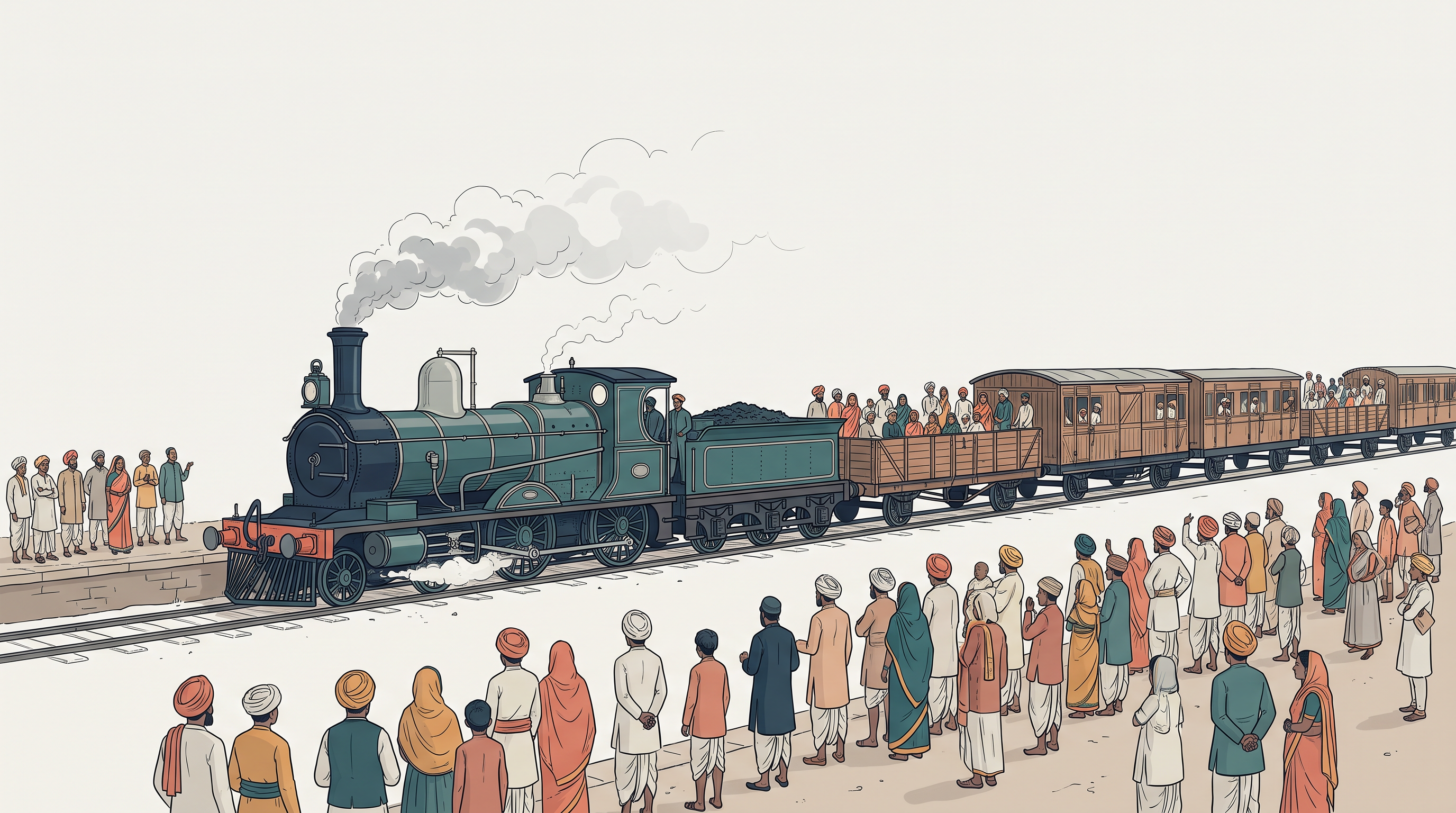
Fig. 1.0 – The first passenger train from Bori Bunder, 1853.
1.1 The Means Of Transport And Communication
Before the middle of the nineteenth century, almost everything in India moved at walking pace. Goods travelled by bullock cart, by pack bullock and camel, on human heads, and above all by boat. People travelled the same way, and news travelled with them.
This was not a system without skill. Merchants knew which river routes carried grain cheaply, which passes were open in which season, and which banking houses would honour a note of credit at the other end of the journey. But it was slow, and it was seasonal. Unsurfaced roads turned to mud in the monsoon and were impassable for weeks.
Distance therefore cost money. Over long overland journeys, the expense of carting a bulky, low-value commodity such as grain could rise until it approached the value of the grain itself. That single fact shaped the old economy. Most villages ate what was grown nearby, because moving food far was rarely worth it.
Why The Company Wanted To Move Faster
After its victories at Plassey in 1757 and Buxar in 1764, the East India Company had turned from a trading concern into the ruling power over large parts of eastern India. A ruler has needs a trader does not.
An army has to be moved and supplied. Revenue has to be collected and orders sent to distant districts. And by the 1830s, British industry needed something further: a cheap way to bring Indian raw cotton down to the ports, and to push machine-made British cloth back up into the interior.
Roads, posts, telegraphs, steamers and eventually railways were all built to serve those three needs — army, administration and trade. Understanding that order of priorities explains a great deal about where the lines ran and where they did not.
1.1.1 Roads And The Public Works Department
A trunk road is a main road built to carry long-distance traffic, with smaller local roads branching off it. India already had one great trunk road when the British arrived: the highway running from Bengal across the Gangetic plain to the north-west, laid out in the sixteenth century under Sher Shah Suri and maintained under the Mughal emperors who followed him.
By the early nineteenth century that road had decayed. Nobody was repairing the surface, the bridges or the resting places along it. Political fragmentation after the decline of Mughal authority meant no single power took responsibility for its whole length.
Rebuilding The Great Road
From the 1830s the Company began setting aside regular funds for road building. Under William Bentinck, Governor-General from 1828 to 1835 and so the Company’s most senior official in India, the aim was fixed: link Calcutta, the seat of government, with the north-western frontier.
Work on a properly surfaced road from Calcutta to Delhi began in 1839. It was later carried on through Lahore to Peshawar, and this whole route came to be known as the Grand Trunk Road. Other roads were pushed out from Bombay and Madras towards their hinterlands, and bridges were built where ferries had been.
Look at Map 1.1 and notice the pattern. The important roads ran from the three Presidency ports inland, and along the line the army would need to march. They did not connect Indian towns to each other for the convenience of Indian traders; that happened only where it coincided with British purposes.
Map
Map 1.1 Caption: The main road routes of British India around 1850, with the Grand Trunk Road running from Calcutta towards Peshawar. Brief: Political map showing India around 1850; mark Calcutta, Delhi, Lahore, Peshawar, Bombay, Madras; show the Grand Trunk Road as a bold line and other principal roads as thinner lines; shade British-administered territory distinctly from princely states; state clearly in the key that these are boundaries of 1850 and not present-day boundaries; the map must show the full extent of India as officially defined.
A Department To Build Them
Road building on this scale needed permanent expertise, not one-off orders. In 1854 Lord Dalhousie, then Governor-General, established a separate Public Works Department, the branch of government that surveyed routes, designed roads and bridges, awarded contracts and supervised construction. A chief engineer stood at its head, with executive engineers in the districts.
This mattered more than it sounds. A department outlives the individual official who founded it, keeps records, and applies the same standards across provinces. From this point, building infrastructure became a routine function of the colonial state rather than an occasional project.
1.1.2 The Post And The Telegraph
Moving orders mattered as much as moving men. The older system of official mail was the dak — a relay of runners and horsemen who carried letters stage by stage between appointed posts. It worked, but it served the government far more than the public.
Charges were awkward. The person receiving a letter usually paid for it, and the amount depended on how far it had come. A trader in Madras therefore could not predict what corresponding with a partner in Calcutta would cost him.
The Half-Anna Letter
Dalhousie changed the whole arrangement. The Indian Post Office Act came into force in 1854, creating a single all-India department under a Director General, and with it came adhesive postage stamps, bought by the sender and stuck on the letter.
The rate was set at half an anna for an inland letter, whatever the distance it travelled. An anna was one-sixteenth of a rupee, so this was a small sum, and the same small sum whether the letter went twenty miles or a thousand.
Uniform cheap postage did something the government had not fully intended. It put regular written communication within reach of clerks, schoolteachers, small traders and, in time, political associations spread across provinces. A network built for administrative convenience became usable by Indians for their own purposes.
Wires Across A Subcontinent
The telegraph moved faster still. A telegraph sends coded electrical signals along a wire, so a message can cross hundreds of miles in minutes rather than the weeks a runner needed.
An experimental line was laid near Calcutta in 1851, and from 1853 the government began building a general network. The line between Calcutta and Agra was in operation by 1854, and lines soon joined Calcutta, Bombay, Madras and Peshawar. From 1855 the public could send messages too.
Merchants used the wires for prices and consignments, because a telegram is short and a short message is a cheap one. The government used them for orders. During the revolt of 1857, warnings ran along the wires faster than the rebels could march, and British officials afterwards said openly that the telegraph had helped them hold northern India.
1.1.3 Rivers, Steamships And Canals
Water carried the heavy things. The Ganga, the Brahmaputra, the Indus and their tributaries were the cheapest highways in the subcontinent, and country boats moved grain, salt, sugar, oilseeds and timber along them for very long distances.
The British recognised this at once and tried to improve it. From the 1830s, steamers ran on the Ganga between Calcutta and Allahabad, and steam vessels appeared on other rivers and along the coast. A steamer could work against the current and keep a timetable, which sail and oar could not.
Canals were dug as well, though mainly for irrigation rather than traffic. The Ganges Canal, opened in 1854, was designed above all to water the fields of the upper Doab, with navigation as a secondary use.
Why The Rivers Lost
Water transport did not keep its advantage for long. Once railway lines were open, freight moved to them, because a train ran in every season, kept to a schedule, and reached places no river went. River ports that had been busy for centuries grew quiet, and the boatmen and porters who worked them lost their livelihood.
This is worth pausing on. The colonial state did not simply add new transport to old; the new drew traffic away from the old and left whole occupations stranded. Fig. 1.1 sets out the sequence of change in the years before the railway network spread.
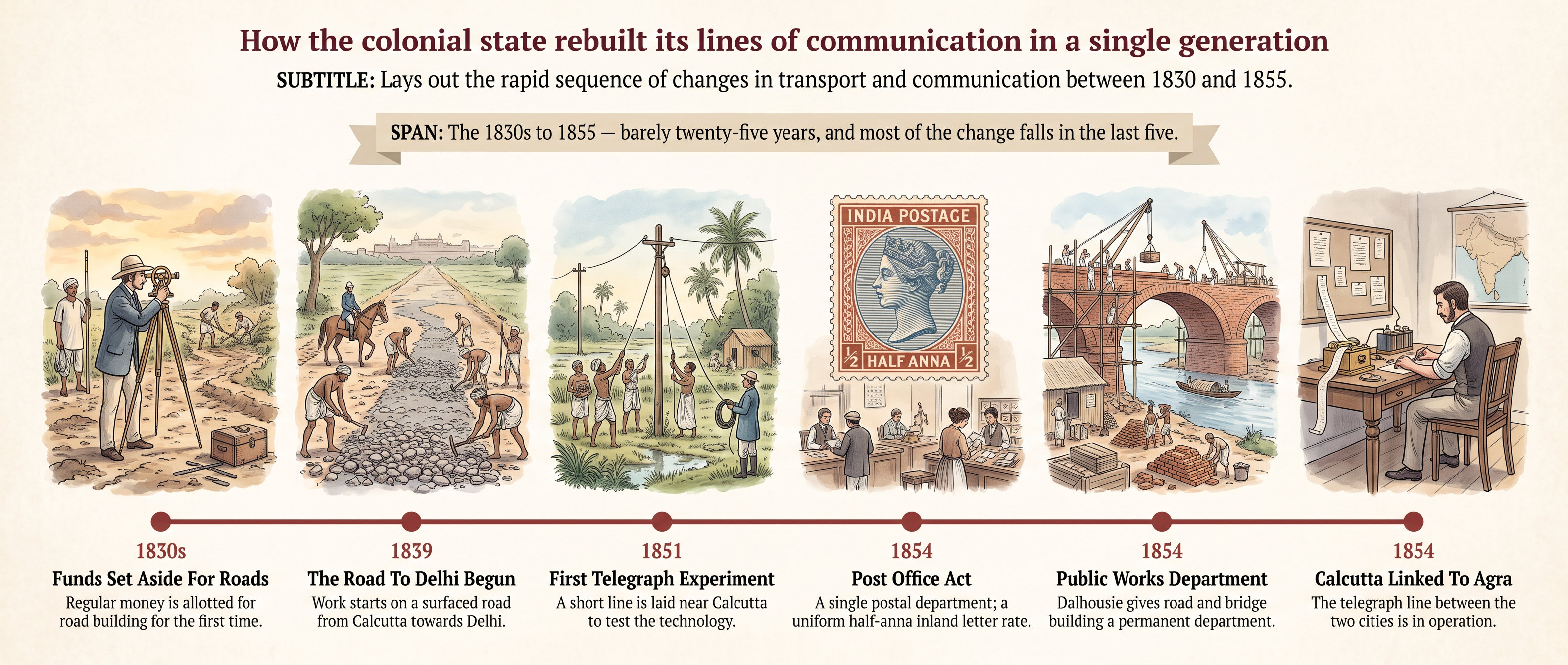
Fig. 1.1 – Moving goods and news before the railway age.
By the middle of the 1850s, then, the government of India could move an order, a soldier and a bale of cotton faster than any power in the subcontinent had ever done. The instrument that would multiply that advantage many times over was already being surveyed, and it is the subject of the next section.
1.2 The Development Of The Railways
The idea of Indian railways arrived from Britain, where the first passenger lines had already proved that steam could move goods and people at speeds nothing else matched. The question in India was never whether the technology worked. It was who would pay for it, and what it was for.
Formal proposals reached the East India Company in 1844 from Rowland Macdonald Stephenson, a railway engineer and promoter working in British India. He approached the government of Bengal directly, arguing that the administration’s own difficulties — a vast territory, slow communications, expensive troop movements — made railways urgent. Surveys were carried out in 1844 and 1845.
In 1849 the Company concluded its first agreements with two promoting companies: the East Indian Railway Company, which would build inland from Calcutta, and the Great Indian Peninsula Railway Company, which would build inland from Bombay. Each was to construct a short experimental line first, so that costs and difficulties could be judged before more capital was committed.
1.2.1 The Motives Behind Railway Construction
Railways were not built for the welfare of the Indian people, and the officials who ordered them did not pretend otherwise. Their reasons were written down, debated and printed, which is why we can reconstruct them so precisely.
The Commercial Motive
The strongest motive was economic. Industrial Britain needed two things from India: raw materials for its factories, above all raw cotton, and markets for the finished goods those factories poured out.
Neither was possible while cotton took weeks to reach a port and Manchester cloth could not be carried cheaply inland. A railway network solved both problems at once, and it solved them in one direction — from the interior to the coast, and from the coast back to the interior.
There was a second commercial interest, this time in Britain itself. British iron and steel makers, locomotive builders and engineering firms expected to supply the rails, engines, wagons and machinery. A railway in India was an order book in England.
The Administrative And Military Motives
The British also wanted political control over a subcontinent, and control requires the ability to arrive. Railways allowed troops, officials and orders to reach a distant district in days.
The revolt of 1857 sharpened this thinking enormously. The uprising spread across large parts of northern India, and afterwards the government treated the ability to move soldiers quickly and cheaply as a first principle of security rather than a convenience.
Officials also argued that railways would carry relief grain into districts hit by famine, and that construction itself would provide employment. Both claims were made seriously. Whether either worked as promised is a separate question, and section 1.2.4 returns to it.
1.2.2 The Guarantee System And State Construction
Building a railway network across a subcontinent cost far more than the Company government could raise. The capital had to come from private investors in Britain, and those investors regarded India as risky. They wanted the risk removed.
How The Guarantee Worked
The arrangement they obtained is known as the Guarantee System: the government promised a fixed return on the money invested, whatever the railway actually earned. Its main terms were these.
Companies received land free of charge on long leases of ninety-nine years. The government guaranteed an annual interest of five per cent on the capital invested, and made good the difference itself if earnings fell short. Surplus profits above that were shared between company and government.
The government kept powers of supervision and control over construction, working, rates and fares, and reserved the right to purchase the lines after twenty-five years. A company that wished to withdraw could surrender its line at six months’ notice and recover the capital it had actually spent.
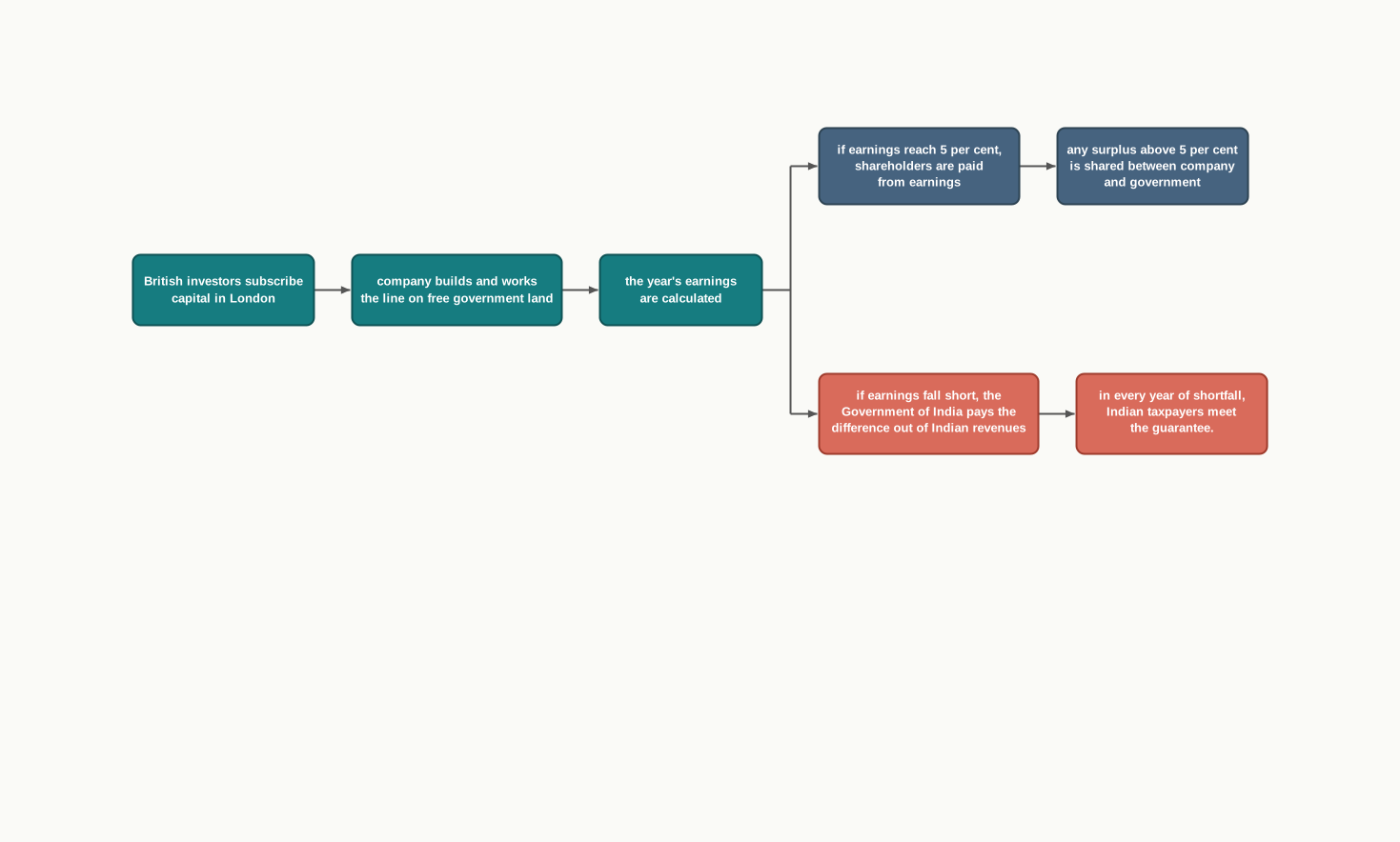
Fig. 1.2 – How the Guarantee System paid a company.
Read Fig. 1.2 slowly, because its logic explains much of what follows. Under this system a company could not lose. If the line was profitable, its shareholders were paid; if the line was unprofitable, its shareholders were still paid, out of taxes raised in India.
That removed the ordinary discipline of business. Companies had little reason to control costs or to choose routes carefully, because the return did not depend on the result. Critics at the time complained of extravagance and mismanagement, and the government’s own share of profits stayed small.
The First Lines And Their Spread
The first passenger line, from Bombay to Thane, opened in April 1853 under the Great Indian Peninsula Railway. In eastern India the East Indian Railway opened its first stretch from Howrah in 1854 and reached the Raniganj coalfield, about 121 miles from Calcutta, in 1855. In the south the Madras Railway ran its first line, roughly sixty-five miles from Madras to Arcot, in 1856.
The pattern is worth noticing. Bombay’s line pushed towards the cotton-growing interior; Calcutta’s line ran to coal; Madras’s ran inland from its port. Each served an export economy before it served anything else.
The State Takes Over, And Hands Back
By 1869 the defects of the Guarantee System were plain enough that the government decided to build lines itself, through state agency, and to keep direct control over construction. Between 1869 and 1880, state lines were laid in the Indus valley, Punjab, northern Rajputana, Malwa and north Bengal.
The trunk connections date from these years. Bombay was joined to Calcutta through Jubbulpore in 1870 and to Madras in 1871, and by 1875 most major centres were linked by rail.
State building did not last. Private companies, having lost profitable business, pressed Parliament to make the government withdraw. More decisive was money: a terrible famine in the late 1870s and the war with Afghanistan from 1878 drained the treasury, and the government could no longer fund construction itself.
So in 1882 a New Guarantee System brought private companies back on cheaper terms. The guaranteed interest was reduced to about three and a half per cent, the government retained a larger share of surplus profits, and company lines were treated as the property of the Secretary of State for India, who could end the contracts at fixed intervals.
Construction under the new terms was rapid, and the companies did well out of it. Between 1882 and 1900 several hundred miles of new line were opened every year, and by 1905 the network covered roughly 28,000 miles.
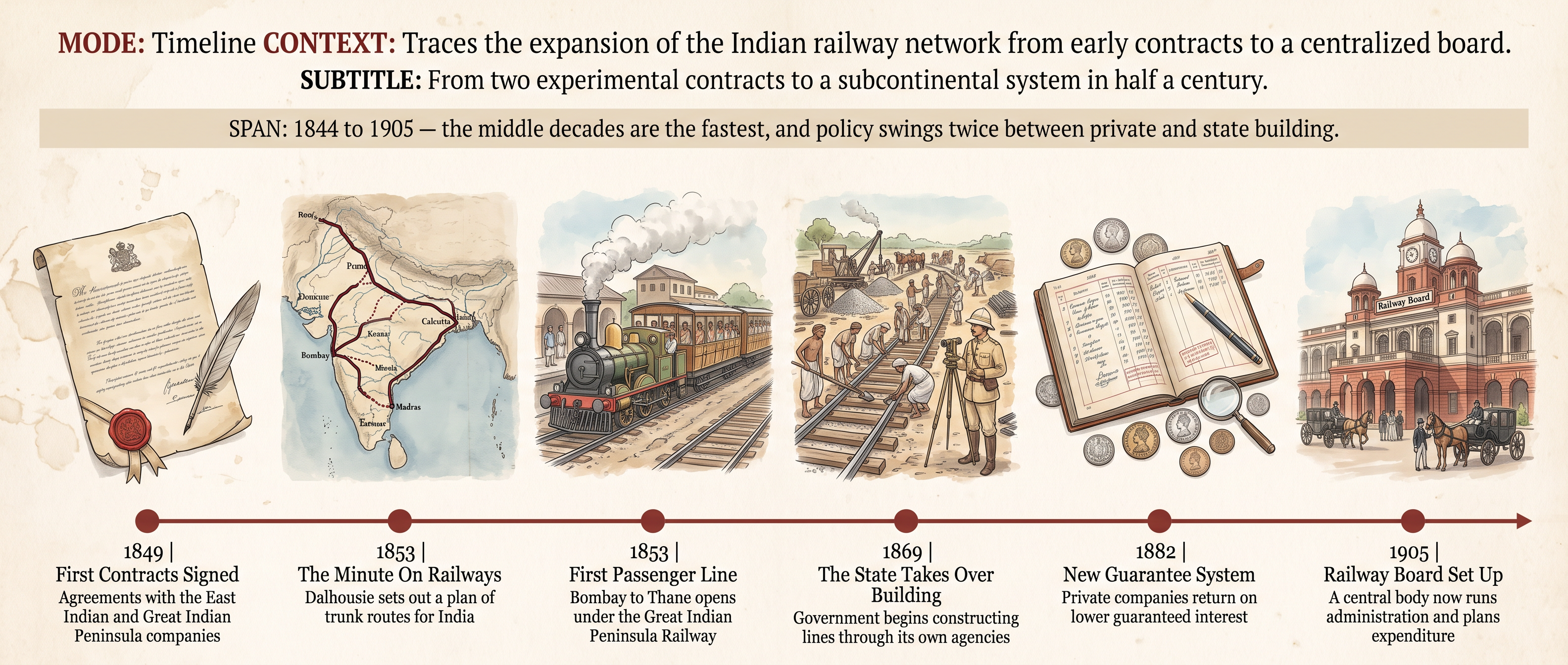
Fig. 1.3 – Building the network.
1.2.3 The Network In The Twentieth Century
By the start of the twentieth century the railway was the largest single enterprise in India, and its management had become a public question. The Railway Board was established in 1905 to make administration more efficient and to draw up the programme of expenditure on development.
In 1908 the government appointed the Mackay Committee to examine railway finance and administration. It recommended that a fixed sum be allotted every year for construction and development, and in the years that followed capital spending rose and mileage with it: by 1913–14 about 34,656 miles of line were open.
Table 1.1 sets that growth out. Read down the second column and the shape of the story appears at once — slow beginnings in the 1850s, then two long bursts of construction under the guarantee arrangements.
War And Its Consequences
The First World War, from 1914 to 1918, halted progress sharply. Machinery, rails and locomotives could not be imported from Britain, which needed them itself, and Indian railways came out of the war worn out and short of equipment.
Complaints multiplied. Nationalist leaders had long objected that private company management drained wealth from India to England, and passengers objected that the service was inadequate. In 1920 the Secretary of State appointed a committee under Sir William Acworth to enquire into the administration and working of Indian railways.
The Acworth Committee reported in 1921. It recommended that the finance department should cease to control the internal finances of the railways, that railways should have a separate budget of their own, and that the state should undertake direct management.
These recommendations were largely acted on. From 1924–25 the railway budget was presented separately from the general budget, and in 1925 the government took over the working of the East Indian Railway and the Great Indian Peninsula Railway. The Railway Board was reconstituted.
The later decades were harder. The 1920s brought further expansion, with some 66,000 kilometres of line in service, but the Great Depression that began in 1929 cut traffic and earnings badly. During the Second World War rolling stock, including locomotives and coaches, was shipped out of India for use elsewhere and track was lifted for war needs, leaving the system exhausted by 1946.
1.2.4 What The Railways Changed
Historians agree that the railway transformed India. They do not agree about what the transformation was worth, and a student of this period has to hold both sides of the account at once.
What The Railways Made Possible
Transport became faster, cheaper and possible in every season. Goods that could never have travelled far now moved from one end of the subcontinent to the other, and trade between Indian regions grew alongside trade with the outside world.
Agriculture changed direction. A cultivator who had grown food for his own village could now grow wheat, cotton, jute or oilseeds for a market hundreds of miles away, and prices in his district began to move with prices in Liverpool. Section 1.5.2 examines what that dependence did to the village economy.
Railways also created work. Millions of landless labourers were employed in construction, and further employment grew around workshops, stations and ports. And travel put Indians from different regions in contact on a scale never possible before — pilgrims, students, traders and, in time, political leaders addressing meetings a thousand miles apart. The national movement of the twentieth century was carried, quite literally, on colonial rails.
What The Railways Cost
Against this stands a heavy reckoning. The network was financed on guaranteed returns paid, when necessary, out of Indian taxes, so Indians were taxed to secure the profits of British investors. Engines, rails and machinery were bought in Britain, so spending that might have built an engineering industry in India built one in another country.
The lines themselves pointed outwards. They carried raw materials to the ports and manufactured goods inland, which fixed India’s position as a supplier of raw materials rather than a producer of finished goods, and helped destroy the handicraft industries discussed in section 1.5.
Employment came with a bar on it. Indians worked in enormous numbers on the track and in the workshops, but qualified and experienced Indians were kept out of the senior posts, which in practice were reserved for Europeans.
There were costs elsewhere too. Money poured into railways while irrigation and river navigation were neglected; river beds silted and old water routes decayed. And the same network that could rush grain into a starving district could rush grain out of it, towards a port where the price was higher.
Map 1.2 shows the network at the height of colonial rule. Trace the lines with a finger from the interior to Calcutta, Bombay and Madras, and the shape of the colonial economy is drawn for you on the page.
Map
Map 1.2 Caption: The main railway routes of India around 1900, converging on the three Presidency ports. Brief: Map of India around 1900 showing principal trunk railway routes; mark Calcutta, Bombay, Madras, Delhi, Lahore, Jubbulpore, Raniganj and Nagpur; emphasise by line weight the convergence of routes on the three Presidency ports; state in the key that boundaries and place names are those of about 1900 and not present-day ones; the map must show the full extent of India as officially defined.
1.3 The British Revenue Policy
Land revenue was the foundation of the colonial state’s income. Most Indians farmed, and a government that could take a share of what the fields produced had a source of money larger and steadier than any tax on trade.
Indian rulers before the British had taken such a share too. What changed under Company rule was not the existence of land revenue but its scale, its rigidity and its purpose. The demand rose, it had to be paid in cash on a fixed date whatever the harvest, and the money raised served the needs of a distant power.
Behind this lay a plain calculation. Britain’s industrial economy needed raw materials and markets; the Company’s wars of expansion needed financing; and the administration of a conquered territory had to be paid for. As agriculture was the occupation of the overwhelming majority of Indians, maximising land revenue was the obvious route to maximising profit.
The result was a long series of experiments. Between the 1760s and the 1820s the British tried several ways of deciding who should pay, how much, and for how long — and the different answers they reached in different provinces shaped the lives of millions of cultivators for the next century and a half.
1.3.1 The First Experiments In Bengal
The story begins in 1765, when the Company obtained the diwani — the right to collect the revenue of Bengal, Bihar and Orissa — from the Mughal emperor after its victories at Plassey and Buxar. From that moment the Company was not merely trading in Bengal. It was living off Bengal.
Clive And Revenue Farming
Under Robert Clive the Company had no revenue system of its own and few officials who understood the existing one. It settled instead for revenue farming: the right to collect the revenue of an area was auctioned annually, and whoever offered the government the largest sum got it.
The logic is easy to see and its consequences are easy to predict. A man who had promised a large sum to the Company, and who held the right for one year only, had every reason to squeeze the cultivators as hard as he could and no reason at all to invest in the land.
The Five-Year Settlement
Warren Hastings, appointed Governor of Bengal in 1772, tried to put the system on a firmer footing. He introduced a Five-Year Settlement, also called the Quinquennial Settlement, in which revenue was again auctioned to the highest bidder, but for five years rather than one.
He also created a new figure in the countryside: the District Collector, a European official responsible for revenue in a district. The Collector outlasted every settlement described in this chapter and became the central figure of British district administration.
The Five-Year Settlement failed badly. Many successful bidders were speculators who knew nothing about managing land. Having promised more than the land could yield, they resorted to oppression to recover their money; assessments proved impossible to meet; revenue farmers fell into debt and cultivators abandoned their fields and moved away.
Hastings therefore returned to annual settlements by open auction, and later concentrated supervision of collection in a Committee of Revenue at Calcutta. These arrangements failed too, for the same underlying reason. The demand was set by what a bidder would promise, not by what the land could actually bear.
1.3.2 The Permanent Settlement
By the time Lord Cornwallis arrived as Governor-General in 1786, the Company’s government was under severe financial pressure and its revenue arrangements had failed three times over. It wanted a system that was predictable — one that told it in advance exactly what would come in each year.
Who Owned The Land?
Before such a system could be designed, an argument had to be settled: who, in Bengal, actually owned the land?
Sir John Shore, a senior Company official who had spent years on Bengal revenue questions, held that the zamindars — the hereditary revenue collectors of Bengal, men with rights over large estates and long-established claims on the cultivators’ produce — were the true proprietors, and that the state was entitled only to a customary share from them. James Grant, a records official, held the opposite: the state owned all the land, and could make its settlement with whomever it chose, the zamindar or the cultivator.
Cornwallis accepted Shore’s view. That decision, taken by two Englishmen arguing about a country neither had been born in, shaped rural Bengal for a century.
The Terms Of The Settlement
The settlement was made with the zamindars for a period of ten years, and by a regulation of 22 March 1793 it was declared permanent. It applied to Bengal, Bihar and Orissa, and later to the Benaras division and the northern Carnatic — roughly a fifth of the territory of British India.
Its terms can be stated in four points.
The zamindars became permanent, hereditary owners of their estates, and could sell, mortgage or gift their rights. The revenue payable to the government was fixed once and for all, and would never be raised however much the estate came to yield; of the rental collected from the cultivators, about ten-elevenths went to the government and one-eleventh remained with the zamindar.
Payment had to be made by sunset on a stated day, a rule remembered as the Sunset Law. And a zamindar who failed to clear his arrears by that moment lost his estate: the land was confiscated and sold at public auction.
What The Settlement Did
For the government, the arrangement worked as intended at first. Revenue became steady and predictable, collection became cheap and simple, and the annual quarrel over how much each estate should pay disappeared. Officials also believed that owners with secure hereditary rights would improve their land, and that wealthy men would put capital into agriculture.
Very little of that last expectation was realised. What happened instead was harsher and more interesting.
The Sunset Law was applied strictly, and many old zamindar families, unable to meet a fixed demand in a bad year, lost estates their ancestors had held for generations. Those estates were bought at auction by merchants, officials and moneylenders from Calcutta and other towns — men who had never seen the villages they now owned.
These new proprietors treated zamindari as an investment rather than a responsibility. Many became absentee landlords, living in the cities on rents collected by agents, with no interest in irrigation, seed or the condition of the soil. They raised the rents of the cultivators, who had been given no rights whatever in the settlement and now became rent-paying tenants at the landlord’s mercy.
The government’s cleverness also rebounded on it. Because the revenue was fixed for ever, the state could not share in the rising value of land or in the growth of cultivation over the next century. To meet increasing expenditure it turned instead to taxing other classes and other activities.
One political consequence outlasted all the others. A class of landholders had been created whose property depended entirely on British authority, and who therefore had every reason to support that authority. The Permanent Settlement bought the colonial state a loyal ally in the countryside.
1.3.3 The Ryotwari Settlement
In southern and western India the British answered the same question differently. There they settled the revenue not with a landlord but with the cultivator himself.
The Ryotwari Settlement — from ryot, the peasant cultivator — was introduced by Captain Alexander Read in territory newly acquired in the south, and developed by Thomas Munro, who carried it much further after becoming Governor of Madras in 1820. With local modifications it spread across the Madras and Bombay Presidencies and was applied in Berar, Assam and Coorg.
How It Worked
Each cultivator held his land directly from the government and paid his revenue directly to it. There was no zamindar in between, and officials regarded the removal of that intermediary as the system’s chief virtue.
Land was surveyed and classified according to its productivity, and the demand was assessed on land actually cultivated rather than on land merely held. Settlements ran for a fixed term, usually twenty to thirty years, after which the assessment could be revised — so unlike Bengal, the state could raise its demand over time.
A ryot who paid his revenue could not be evicted, and enjoyed full rights of use in his holding. In principle, remissions were allowed when the crop failed wholly or in part, and English officials dealing with cultivators directly were expected to know the countryside better than a distant landlord would.
Where It Failed
The system’s defenders described a partnership between the state and the peasant. The cultivators experienced something closer to a landlord with unlimited power.
The demand was set very high — in many districts approaching half the produce — and it was fixed in money, with no connection to the price the crop actually fetched or to the yield of a particular year. A ryot who could not pay had his property, cattle and belongings seized and sold at auction, and lost the land he had been promised he could keep.
Because revenue was payable in cash, the peasant had to sell his crop whether or not the price was good, and often had to borrow to make up the difference. Nor was there real respite in flood, drought or famine; remissions were granted grudgingly and slowly, and the moneylender filled the gap.
Removing the intermediary, then, did not remove exploitation. It changed who carried it out. Instead of many landlords, the cultivator now faced one very large one — the government itself — with the police, the courts and the Collector behind it.
Two Settlements, One Purpose
It is worth holding the two systems side by side, because it is easy to reduce them to a list of differences and miss what they shared.
They differed in three important ways. The Permanent Settlement made the zamindar the proprietor and the cultivator his tenant, while the Ryotwari Settlement recognised the cultivator himself. The Bengal demand was fixed for ever, while the ryotwari demand was revised every twenty or thirty years. And Bengal’s arrangement gave the state a fixed income and a loyal landed class, while ryotwari gave it a rising income and direct dealings with millions of individual taxpayers.
What they shared matters more. In both, the demand was high, payable in cash, and payable on a fixed date regardless of the harvest. In both, failure to pay meant losing the land. And in both, the cultivator who fell short went to a moneylender. Section 1.4 follows him there.
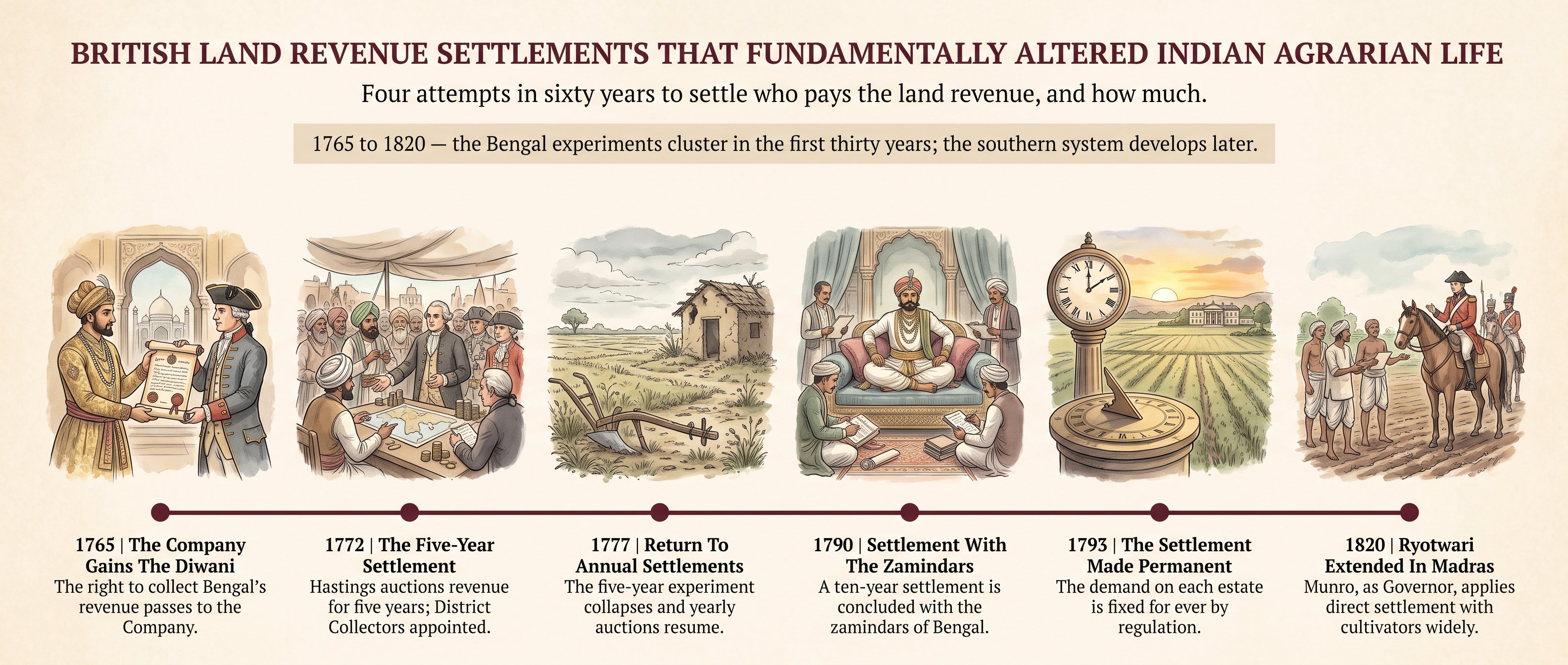
Fig. 1.4 – Experiments in revenue, 1765 to 1820.
Map 1.3 shows where each system applied. Notice how much of the subcontinent lies outside both, and remember that these boundaries were drawn by conquest, not by the nature of the land.
Map
Map 1.3 Caption: The principal land revenue systems of British India in the middle of the nineteenth century. Brief: Map of India around 1850 with distinct shading for areas under the Permanent Settlement (Bengal, Bihar, Orissa, Benaras division, northern Carnatic) and for ryotwari areas (Madras and Bombay Presidencies, Berar, Assam, Coorg); leave princely states unshaded and say so in the key; state that boundaries are those of about 1850 and not present-day boundaries; the map must show the full extent of India as officially defined.
1.4 The Impact Of Revenue Policy On Peasants
Every settlement described in the last section was designed in an office, argued over by officials, and written down in a regulation. At the end of it stood a cultivator with a plot of land, a family to feed and a fixed sum to find by a fixed day.
This section follows what the revenue systems did to him. It is the heart of the chapter, because the impoverishment of the Indian peasantry was not a side effect of colonial economic policy. It was the policy working as designed.
The Weight Of The Demand
The pressure began early. In the first years of Company rule in Bengal, under Robert Clive and then Warren Hastings, the aim was to extract the maximum possible land revenue as quickly as possible, and the countryside was stripped in the process.
The devastation was severe enough that Cornwallis himself, arriving two decades later, observed in 1789 that a third of the Company’s territory in Bengal had been reduced to jungle inhabited only by wild beasts. That judgement comes not from a nationalist critic but from the Governor-General.
Under the later settlements the demand remained heavy, and — this is the point that matters most — it remained inflexible. A cultivator in a good year paid; a cultivator in a bad year owed exactly the same amount, and had to find it from a smaller crop.
1.4.1 Rent, Debt And The Loss Of Land
Rents And Illegal Exactions
In the permanently settled districts the government’s revenue was fixed, but the rent a zamindar could demand from his tenants was not. Rents were raised repeatedly, often to the highest level a tenant could possibly bear, and the cultivator had no legal protection against the increase.
On top of rent came exactions with no legal basis at all. Tenants were made to pay illegal cesses at marriages and festivals, and were required to perform begar — unpaid forced labour for the landlord. Since the courts and the police protected property and its owners, complaint was rarely worth the attempt.
The Moneylender
The rigidity of the system created the debt, and the debt did the rest.
A peasant who could not meet the demand had only one place to turn. The village moneylender advanced what was needed at a high rate of interest, taking the standing crop or the land itself as security. In a poor year the loan was not repaid, so interest accumulated on interest.
Moneylenders were not merely charging heavily. Many kept accounts the borrower could not read and could not check, and in disputes the illiteracy of the peasant told against him in court. The law itself, with its written contracts and formal procedures, was an instrument the lender understood and the borrower did not.
The Triple Burden
By the end of the nineteenth century a pattern had settled over large parts of rural India. The state took its revenue, the landlord took his rent, and the moneylender took his interest. After all three had taken their share, little was left for the family that had done the work.
Land also began to change hands on a large scale. Because the system demanded cash and the courts enforced debts, moneylenders and richer peasants steadily acquired the holdings of the poor. A cultivating peasantry was being converted into a class of tenants and landless labourers.
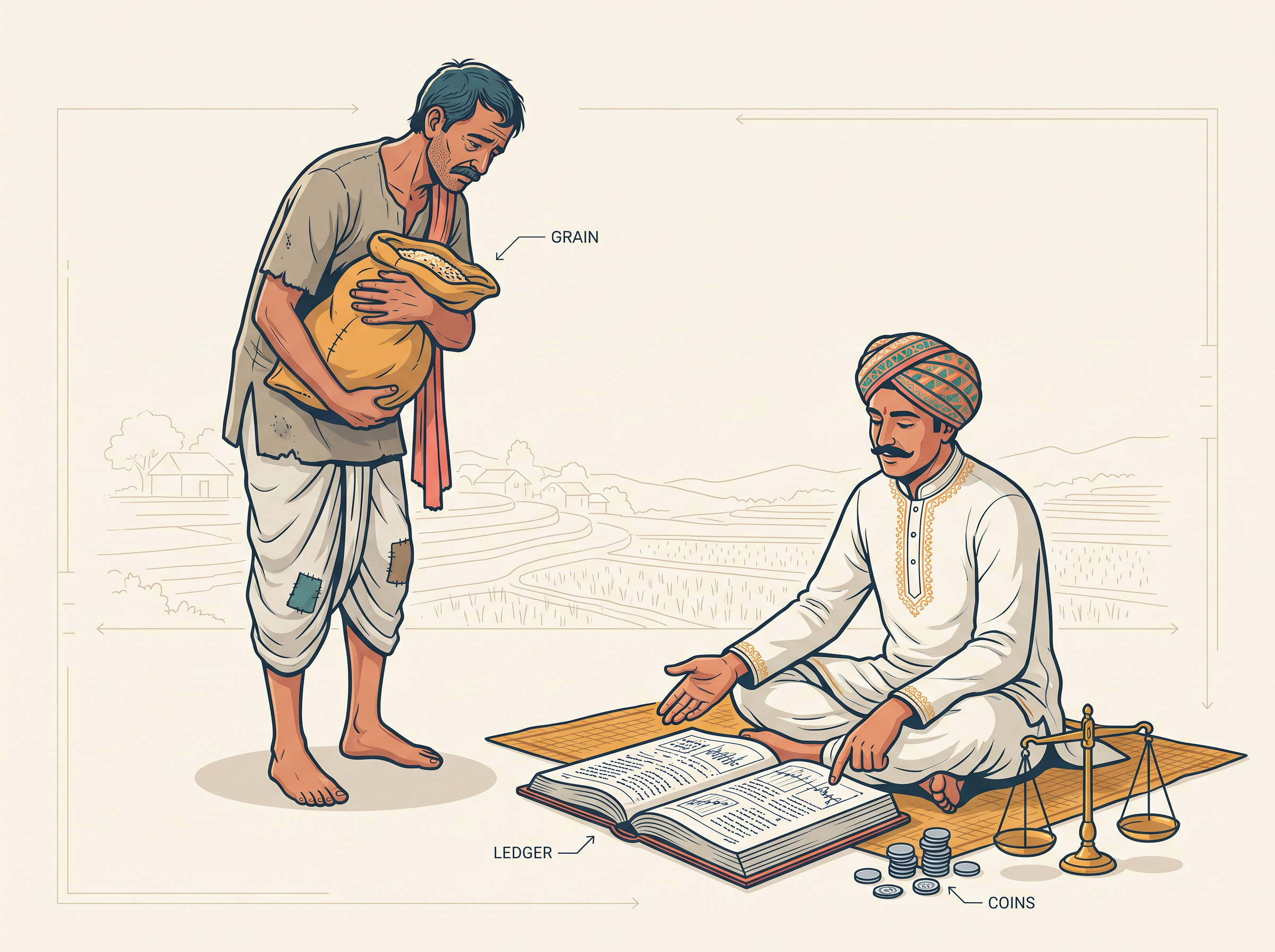
Fig. 1.5 – The cultivator and the moneylender.
1.4.2 Famine And The Colonial State
A peasantry with no reserves is a peasantry that cannot survive a failed monsoon. What had once been hardship became catastrophe, and famine ran through the colonial period from its earliest years.
The Famine Of 1770
The first great famine under Company rule struck Bengal in 1769 and 1770. In Bengali it is remembered as the Chhiyattarer Mannantar, the famine of the year 1176 of the Bengali calendar.
The consequences reached the Company itself. Revenue collection fell as land went out of cultivation, and disorder spread through the northern and western districts of Bengal, where dispossessed peasants joined the Sannyasi and Fakir bands moving through the region.
Why Famine Kept Returning
Famines did not end with the eighteenth century. They recurred through the nineteenth, and the reasons were built into the economy this chapter has been describing.
Cultivators had been drawn into growing crops for distant markets rather than food for their own villages, so a village’s survival now depended on prices it could not influence. Peasants had no savings, because rent, revenue and interest had taken them. And railways, as section 1.2.4 noted, could carry grain away from a starving district towards a port where the price was higher.
The state’s own priorities made matters worse. Money went into railways while irrigation works were neglected, and relief came late and grudgingly, in the belief that generous relief would make the poor dependent on it.
The State Begins To Respond
Pressure eventually produced policy. After the great famine of the later 1870s a Famine Commission was appointed under Richard Strachey, and its recommendations led to standing rules on how relief works should be organised, together with a regular provision in the budget to meet famine expenditure.
This was a real change and should not be dismissed. But it treated famine as an emergency to be managed rather than as a consequence of the revenue demand, the debt and the export orientation that had made rural India so fragile. The underlying pressure on the peasant was never lifted.
1.5 Artisans And The Disruption Of The Traditional Economy
In the middle of the eighteenth century, India was one of the world’s great manufacturing regions. Its cotton and silk cloth, sugar, indigo and spices were carried to Europe, West Asia and South-East Asia, and European trading companies competed hard with one another for access to them.
That trade rested on a particular arrangement of village life. Cultivation and craft production went on side by side, often within the same household — the family that grew grain also spun thread, and the village supported weavers, potters, oil pressers, smiths and carpenters who were paid in grain or in a share of the harvest.
The nineteenth-century critic of capitalism Karl Marx, writing about Indian village communities in 1867, fixed on exactly this feature.
The phrase is useful because it names the thing that broke. What happened in the nineteenth century was not simply that craftsmen grew poorer. The two halves of the rural economy came apart, and the household that had once produced both its food and its cloth was left producing only a crop, and selling it for money.
1.5.1 The Decline Of The Handicraft Industries
The destruction of Indian handicrafts is often explained in one line — machines beat handlooms. That is part of the truth. It is not the whole of it, and the other parts came first.
The Company As A Buyer
After Plassey, the Company was no longer one merchant among many in Bengal; it was the government. It used that position in its dealings with the weavers who supplied its export trade.
Prices were set by the Company rather than settled by bargaining, and they were set low. Weavers were bound by advances to work for the Company and forbidden to sell to other buyers, and those who resisted faced the pressure of officials who now had the state behind them.
This alone did not destroy the industry, but it stripped the producer of any margin. A weaver working for a fixed low price has nothing to reinvest and nothing to fall back on when the market turns.
Duties, Machines And Imported Yarn
Then came the terms of trade. Indian cotton cloth entering Britain met heavy import duties, while British cloth entering India paid very little — an asymmetry that no Indian government had chosen and none could alter.
At the same time British industry was transformed by mechanised spinning and weaving driven by steam power. Machine production made cloth in quantities and at prices no hand producer could approach, and that cloth had a market waiting for it in India.
The first blow fell not on weavers but on spinners. Hand spinning was overwhelmingly women’s work, done at home between other tasks, and it was cheap imported machine yarn that took it away. A great many households lost an income before a single weaver lost a customer, and because that income belonged to women it left almost no trace in official records.
Weavers followed. Some survived by weaving with imported yarn, some moved to the coarse cloth that machines did not yet make well, and many gave up altogether. Section 1.2.4 has already shown how the railway carried imported cloth into interior markets that distance had once protected.
The Courts That Vanished
There was a third cause, and it had nothing to do with machines. The finest Indian handicrafts had been made for rulers, nobles and their households, and that demand disappeared with the states that generated it.
As the British annexed or subordinated Indian states, the courts that had bought brocade, fine muslin, jewellery, weapons and metalwork ceased to exist or lost their revenues. Craft centres such as Dacca, Murshidabad, Surat and Agra had grown up around that patronage, and wars and conquest damaged them further, driving artisans out of towns that were no longer safe.
Nowhere Else To Go
In Britain, workers displaced from hand production were absorbed, painfully and over decades, by the factories that had displaced them. In India that did not happen, because the Company took no steps to establish modern industry in place of the crafts it was undermining.
Artisans therefore fell back on the only resource left: land. They became cultivators or agricultural labourers, on holdings already carrying the revenue demand described in section 1.4.
The result was a countryside doing more agriculture and less of everything else. Historians call this deindustrialisation — a fall in the share of a population employed in manufacturing — and it is the reverse of what was happening in Britain in the same years.
1.5.2 The Commercialisation Of Agriculture
The second half of the disruption came from the revenue system itself. When the state demands payment in cash on a fixed date, a cultivator can no longer grow only what his family eats.
Something must be sold. Either part of the food crop goes to market, or the cultivator plants a crop grown specifically for sale. Commercialisation of agriculture means exactly this shift: from growing for use to growing for the market.
What The Fields Grew Instead
Cash crops spread — indigo, cotton, jute, oilseeds, sugarcane and opium — because they fetched a higher price than grain and because traders offered advances against them. The railways, once they came, made it possible to grow such crops far from a port and still sell them profitably abroad.
In one sense this was a modernisation. Indian agriculture was now connected to a world market, and produce from a district in the Deccan or eastern Bengal could reach a European factory in weeks.
In another sense it was a trap. Prices in a world market rise and fall for reasons no cultivator in India can see or influence, and a family that has planted cotton cannot eat cotton if the price collapses.
What Commercialisation Did Not Bring
The change came without the things that would have made it safe. There was no significant investment in irrigation on ordinary holdings, no improvement in tools or seed, and no source of cheap credit to carry a family through a bad season.
So the higher value of what the land produced did not stay with the person who produced it. It went to the trader who bought the crop at harvest prices, to the moneylender who had financed the sowing, and to the state that took the revenue.
Meanwhile the village lost its old self-sufficiency in both directions. It sold its crop outside and it bought its cloth and utensils from outside, so a household now depended on market prices for what it earned and for what it spent.
Put the two halves of this section together and the shape of the change is clear. The craft side of the rural economy was hollowed out by cheap imports, lost patronage and a Company that bought at its own price. The agricultural side was pushed into the market by a cash revenue demand and left there without support.
That is what is meant by the disruption of the traditional economy. It was not the replacement of an old system by a new and better one, but the dismantling of an old system without the construction of anything to take its place. The one place where machine industry did strike root under Indian ownership is the subject of the next section.
1.6 Large-Scale Machine-Based Industry In Western India
The previous section ended with a countryside pushed out of manufacturing. This one deals with the exception, and it is a significant one. In the second half of the nineteenth century, large machine-based industry did take root in India — in the west, in cotton, and largely under Indian ownership.
That combination needs explaining. British economic policy in India was directed at supplying British industry with raw materials and selling it finished goods, which is the opposite of encouraging Indian factories. Raw cotton and jute left the country in bulk; heavy duties met Indian textiles in Britain; and the machinery for any factory had to be bought abroad.
So the mills of Bombay and Ahmedabad did not grow because policy favoured them. They grew in a gap that policy had left open, and understanding that gap is the whole point of this section.
1.6.1 The First Cotton Mills
The pioneer was Cowasjee Nanabhoy Davar, a Parsi merchant of Bombay. In 1854 he founded the Bombay Spinning and Weaving Company, and the mill began production in 1856 under British engineers and skilled cotton operatives brought out for the purpose.
It was India’s first steam-powered textile mill, and it worked. That single demonstration mattered more than its output, because it showed other merchants in the city that a mill in India could be financed, staffed and run at a profit.
Ahmedabad And After
Ahmedabad followed in 1859, when Ranchhodlal Chhotalal formed the Ahmedabad Spinning and Weaving Company Limited; the mill began working in the early 1860s. He built a second mill in 1877, and other Ahmedabad merchants followed him until the city became one of the great textile centres of the subcontinent.
The industry spread outwards from these two cities to Sholapur, Nagpur, Surat and elsewhere. By the early 1860s roughly a dozen mills were working in Bombay and Gujarat, and over the following three decades the number multiplied several times over.
The two centres specialised differently. Bombay’s mills spun a great deal of coarse yarn and wove coarse cloth, much of the yarn going by sea to China, while Ahmedabad’s mills moved towards the finer varieties of cloth. Both drew their raw cotton from Berar, the Central Provinces and the Deccan, and both bought their machinery from Britain.
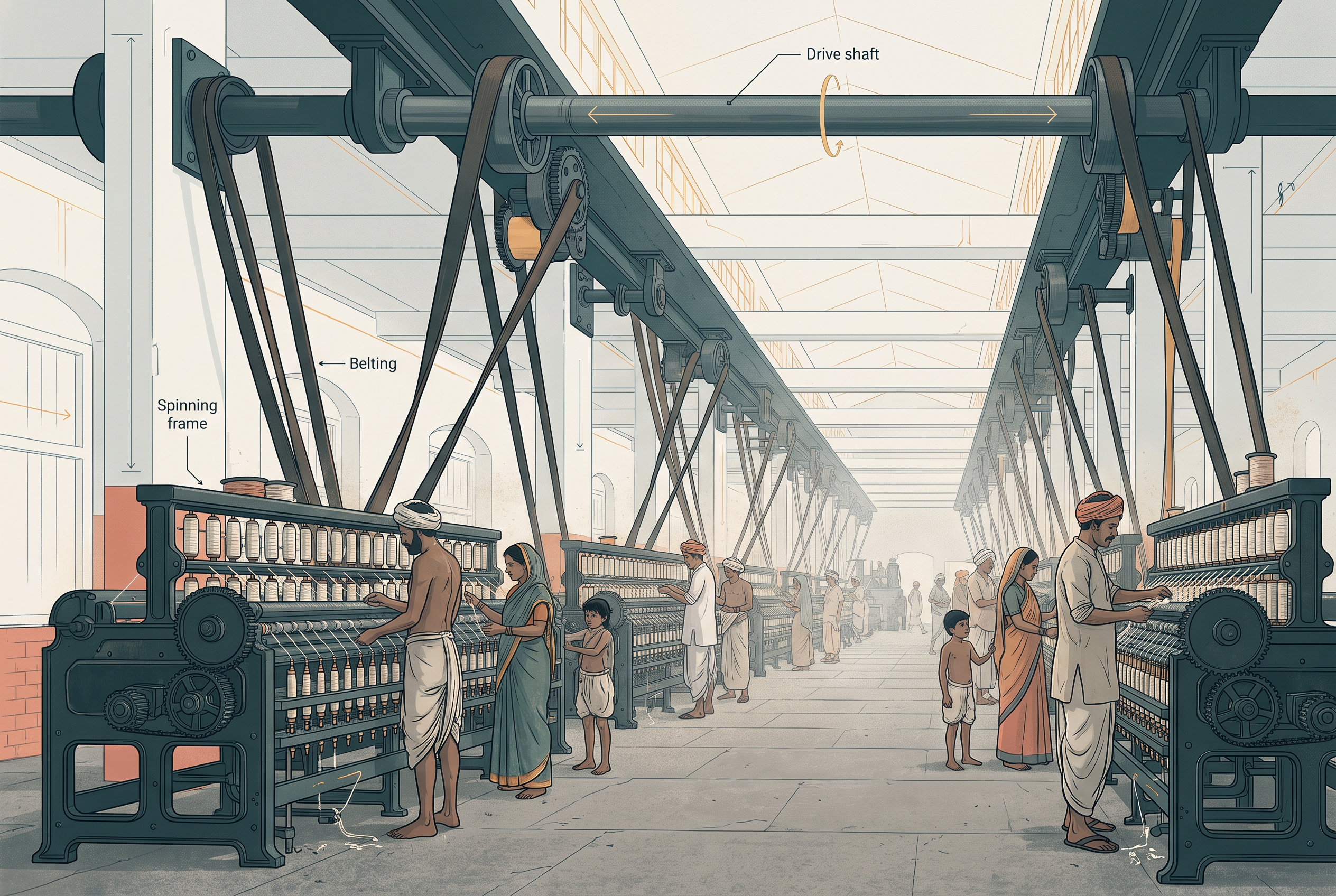
Fig. 1.6 – A spinning shed in a Bombay cotton mill.
War, Boycott And Boom
The industry’s growth was not steady; it came in surges, and the surges tell you what it depended on.
Political movements helped it. When foreign cloth was boycotted after 1905 during the Swadeshi movement, and again during the Non-Cooperation movement from 1920, Indian mill cloth found a large domestic market that had not been available before, and mill owners responded by producing finer qualities to meet it.
Wars helped it more. During the First World War imports from Britain dried up, and Indian mills supplied cloth to a market they had never had to themselves. The Second World War repeated the pattern on a larger scale, as Japanese competition was removed from South-East Asian and African markets and Bombay and Ahmedabad exported into the gap at high profit.
1.6.2 Why Western India
Why here, and not in Bengal, which was richer, more populous and the seat of government? Three conditions came together in the west, and none of them existed together anywhere else.
Merchant Capital Looking For A Use
The first was money in Indian hands. Bombay’s Parsi and Gujarati merchant families had built up substantial capital through long-distance trade with China and East Asia, and that capital was liquid, mobile and looking for investment.
Capital of that kind is not easily assembled. A cotton mill needed a sum that no single family could risk, so it needed a merchant community used to pooling money in joint ventures and trusting one another’s accounts — which is precisely what Bombay had.
The Commodity Was Cotton
The second was the crop. Western India’s hinterland grew raw cotton on the black soils of the Deccan and Berar, and the railway brought it to Bombay cheaply, as Trace It in section 1.2.4 described.
This mattered because of where British capital chose to go. European investment in India concentrated on the trades Europeans already dominated — jute, tea and coal, all of them in the east and north-east. Cotton in the west was handled by Indian merchants at every stage, so when a factory was built there, it was built with Indian money.
A Port And A Market
The third was Bombay itself: a deep harbour, shipping links to China and East Africa, insurance and banking, and a labour supply arriving from a countryside under exactly the pressures described in sections 1.4 and 1.5.
Put the three together and the pattern is not mysterious at all. Industry grew where Indians had capital, where the raw material was in Indian hands, and where Europeans were not already established.
1.6.3 The Economic Impact Of The New Industry
The syllabus asks what this growth did to the Indian economy, and the honest answer has two halves that must be held together.
What It Built
Machine production made cloth in quantities and at costs that hand production could not match, and cheaper cloth was a real gain for ordinary buyers. Some of the market that imports had captured was won back by Indian mills.
It created industrial employment on a new scale. Mills needed thousands of skilled and semi-skilled workers, and around them grew engineering shops, presses, transport and trade, so that Bombay and Ahmedabad developed into industrial cities of a kind India had not had before.
It also proved something politically significant. Indians could own, finance and manage modern industry, and the profits stayed in the country instead of being remitted abroad. When Indian nationalists later argued that the country’s poverty was a policy outcome rather than a natural condition, the mills of western India were part of their evidence.
What It Cost, And What It Left Undone
The mills also completed what imports had begun. Machine-spun yarn and mill cloth undercut the surviving handloom and cottage producers in the domestic market, and that displacement was now caused by Indian factories as well as British ones.
The workforce those factories drew on came from a countryside in distress. Villagers migrated to the cities looking for work, and because displaced artisans and landless labourers arrived faster than mills could absorb them, labour was abundant and therefore cheap. Wages stayed low, hours were long, and the industrial districts that grew up around the mills were crowded and unhealthy.
Two new classes emerged from this. A capitalist class of Parsi, Gujarati and Marwari owners stood at one end, and at the other a growing industrial working class with no land to return to.
Finally, the limits of the achievement must be stated plainly. Machinery went on being imported from Britain throughout, so no Indian machine-building industry developed behind the mills. The whole modern sector employed only a small fraction of the working population, and India remained an overwhelmingly agricultural country whose exports were still, above all, raw materials.
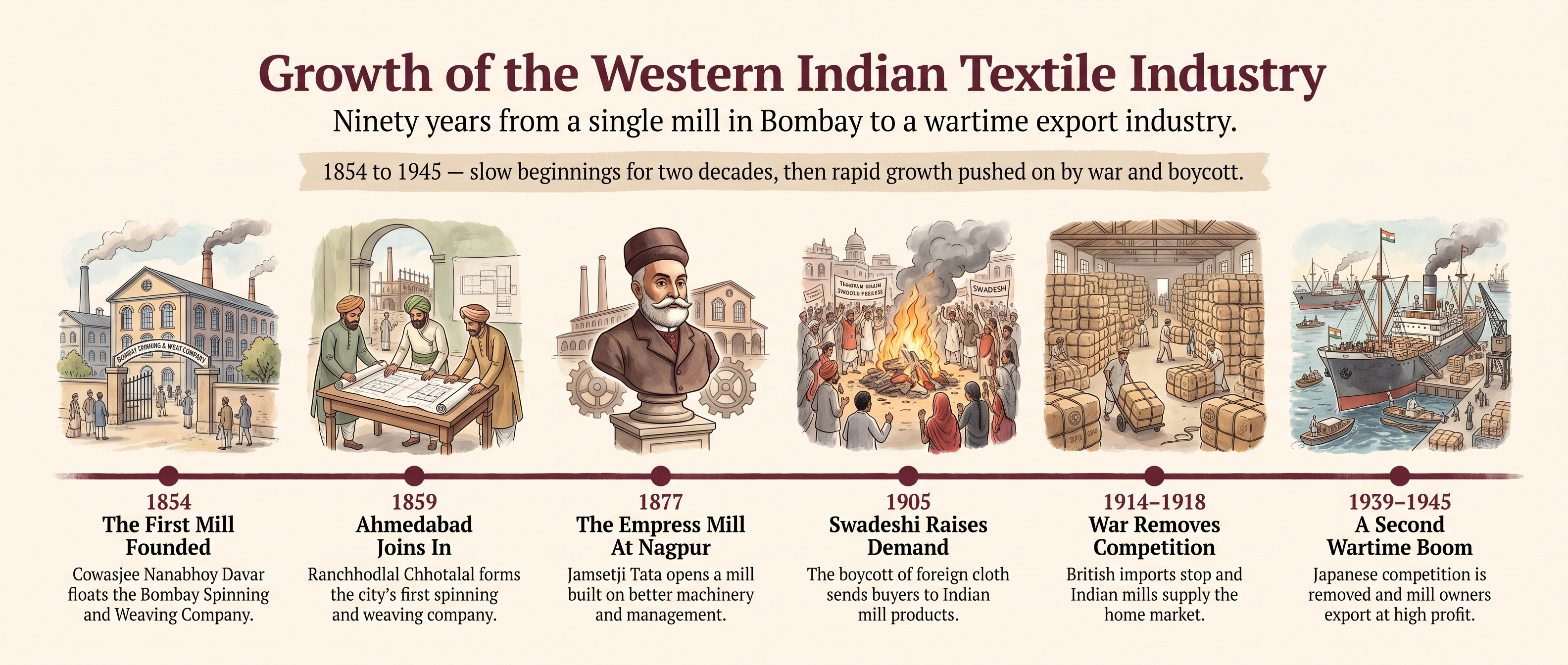
Fig. 1.7 – The rise of the western Indian cotton mills.
1.7 The Colonial Forest Policy
Every part of the colonial economy described so far needed something from the forest. Railway lines needed sleepers, locomotives and steamers burned wood, ships were built of teak, and expanding cultivation meant clearing land that had been under trees.
Yet the forest was not empty land waiting to be used. It supported communities who had lived in and from it for generations, and the collision between those two facts is what forest policy in the nineteenth century was about.
1.7.1 Forests Before Colonial Rule
Forests covered a great part of the subcontinent — the Western Ghats, the belt across central India, the sub-Himalayan tracts and the hills of the north-east. The people who lived in and around them included many communities we would now call adivasi or tribal, along with pastoralists and cultivating villages at the forest edge.
For these communities the forest was not scenery and not a resource in the modern sense. It was a household economy. It supplied firewood, fodder and grazing for cattle, timber and bamboo for houses and tools, roots, fruit, honey and game for food, and leaves, gums and medicinal plants that could be sold or exchanged.
Some practised shifting cultivation — clearing and burning a patch of forest, cropping it for two or three seasons and then moving on while it regenerated. Known by different names in different regions, including jhum in the north-east, it was well suited to thin forest soils and to a landscape with more land than people.
Rights Without Papers
These uses were governed by custom, not by written title. A family knew which tracts its village grazed and gathered in, and the arrangement had held for so long that nobody thought of recording it.
Earlier rulers had taken an interest in forests — for elephants, for timber, for hunting reserves — but they had rarely tried to control everyday village access across whole regions. That is the change the colonial state introduced, and the absence of written rights is what made it possible.
1.7.2 The Indian Forest Act, 1865
The trigger was timber, and above all railway timber. A single mile of track required a great many sleepers, and by the 1850s track was being laid across the subcontinent at a pace no forest could casually supply.
Contractors were cutting hard and cutting fast, in whatever tract was nearest a line, with no obligation to replant. Officials began to fear that the forests would be exhausted within a generation and that the railways would run out of the wood they depended on.
Building A Department
Dalhousie had already circulated a memorandum on forest conservation in 1855, arguing that timber was a state asset and had to be managed as one. Nine years later, in 1864, the Imperial Forest Department was founded.
Its first Inspector General of Forests was Dietrich Brandis, a German botanist with training in scientific forestry, appointed in 1864. Under his guidance the department began surveying forests, estimating what they held, and drawing up plans for what could be cut each year — and he helped to frame the legislation that followed.
The Indian Forest Act of 1865 was the first attempt at forest legislation in India. It empowered the government to declare any land covered with trees, brushwood or jungle to be government forest, and to make rules for managing it.
What The Act Did
Its provisions all pointed one way. Valuable timber such as teak was declared state property and trade in it restricted. Villagers could be excluded from designated areas without prior permission, and restrictions were placed on collecting forest produce, on cutting trees and on grazing.
Shifting cultivation and hunting were prohibited under the forest laws, and hunting was made a punishable offence. It is worth noticing who this applied to. Villagers hunting for food became criminals, while sport hunting by British officials and by the ruling families they dealt with continued as a recognised pleasure.
The Act was found insufficient almost immediately. Proposals for amendment were submitted as early as 1868, and a far more thorough law, the Indian Forest Act of 1878, replaced it.
The 1878 Act And The Three Categories
The 1878 Act mattered more than its predecessor because it sorted forests into categories with sharply different consequences for the people using them.
Reserved forests were the best timber tracts, and villagers had no rights in them at all. Protected forests allowed certain customary uses to continue, but those uses were recorded as concessions the state permitted rather than rights the community held, and what is permitted can be withdrawn. Village forests were left for local use.
That distinction between a right and a concession is the heart of the matter. Before 1865 a village grazed in the forest because it always had. After 1878 it grazed there because the forest department currently allowed it to.
Map
Map 1.4 Caption: The principal forest tracts of India brought under state control in the later nineteenth century. Brief: Map of India shading the main forest belts — the Western Ghats, the central Indian tract, the sub-Himalayan forests and the forests of the north-east; overlay the main railway trunk routes as thin lines to show the link between track and timber; key must state that the shading shows forest tracts of the later nineteenth century, not present-day forest cover, and that boundaries are those of the period; the map must show the full extent of India as officially defined.
1.7.3 The Forest Policy Of 1894
By the 1890s the government had thirty years of forest administration behind it and a growing argument about what forests were for. In 1893 Dr John Augustus Voelcker published a report on the improvement of Indian agriculture which pressed the claims of cultivation over forestry.
The government responded with a general statement of principle. India adopted its first forest policy on 19 October 1894, issued as a resolution of the Government of India — one of the earliest such policies anywhere.
What It Said
The policy declared that state forests were to be managed for the public benefit and general welfare, and then set out the order in which competing claims would be settled.
Permanent cultivation was to come first. Forest land suitable for farming could be released for it, because the colonial administration regarded forest as unproductive and a field under crops as productive land that paid revenue. The needs of local communities were to be met next, at nominal rates or free. Once those conditions had been satisfied, the realisation of maximum revenue was to be the guiding factor.
The policy also classified forests into four kinds: forests whose preservation was essential on climatic and physical grounds; forests that supplied valuable timber; minor forests; and pasture lands. The first two were to be reserved. Minor forests and pasture lands, with extensive rights, were to be managed mainly in the interests of the local community and declared protected.
Reading The Policy Honestly
At first glance the 1894 policy looks generous, and its second condition — meeting local needs at nominal rates — is a real concession that the Act of 1865 never made.
Look at the sequence again, though. Cultivation ranks above forestry, local needs rank below cultivation, and revenue is the guiding consideration once both have been dealt with. A village’s claim is third in a queue, and it is expressed as a need to be supplied rather than a right to be respected.
The difference between a reserved and a protected forest is worth holding on to for the next section. In a reserved forest, everything not expressly permitted was an offence. In a protected forest, everything not expressly prohibited was allowed. Whole ways of life turned on which side of that line a family’s forest fell.
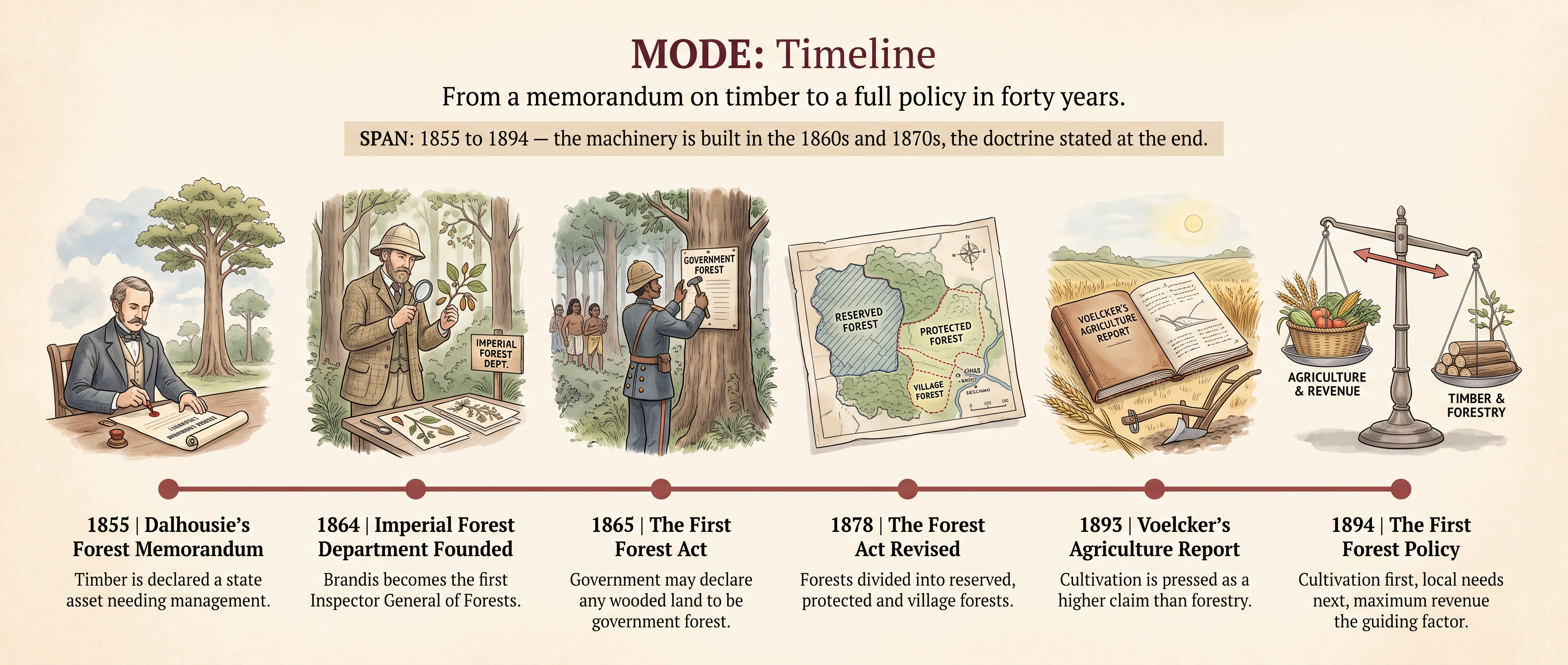
Fig. 1.8 – The making of colonial forest policy.
The policy of 1894 continued long after the government that made it. It was revised only in 1952, in an independent India, which is a measure of how deeply the colonial framework of forest administration had been built into the state.
1.8 The Impact Of Forest Policy On Local Communities
A law that changes the legal status of land changes the daily life of everyone standing on it. The forest legislation described in the previous section did not move a single tree, but for millions of people it altered what could be done on ground their families had used for centuries.
The syllabus asks for two kinds of impact, economic and political, and it is worth separating them. The economic impact is what people lost from their household budgets. The political impact is what they lost from their standing — the shift from being a community that governed its own use of a forest to being a population supervised by a department.

Fig. 1.9 – Boundary pillar marking a reserved forest.
1.8.1 The Economic Impact
For a household at the forest edge, the forest was not a luxury. It supplied a steady flow of things that never appeared in any account book precisely because they cost nothing.
The Loss Of A Free Supply
Firewood for cooking, leaves and grass for fodder, bamboo and timber for a house or a plough, fruit, roots, honey and game for the pot, gums and medicinal plants that could be sold in a weekly market — all of this came from the forest, and all of it now required permission.
Take that supply away and the household must buy what it used to gather, or do without. A family that had been poor but self-provisioning became a family that needed cash, at exactly the moment when cash was hardest to come by.
Grazing was hit as hard. Cattle had grazed freely in forest and scrub, and reserved forests either closed that grazing or charged fees and issued permits for it. Herds shrank, and for communities whose wealth was measured in cattle, that was a direct loss of capital as well as of milk, manure and draught power.
Cultivation Made Illegal
Shifting cultivation suffered the most complete blow. The forest department regarded it as wasteful and destructive of good timber, and restricted or banned it across large tracts.
For the communities who practised it, this was not a change of method but the end of their agriculture. They were pushed either onto small permanent plots of thin soil, where yields fell year after year, or off cultivation altogether.
Some were offered a bargain. Under arrangements of the taungya type, villagers were permitted to raise their crops between the rows of young trees the department had planted, on condition that they tended the saplings. It gave them land to farm and gave the department cheap labour, and it left the villagers as licensees on land that had once been theirs to use.
Working For Wages Somewhere Else
Households that could no longer live from the forest had to find income elsewhere, and the labour they supplied went into the expanding parts of the colonial economy.
Some worked as forest labour, felling and hauling for the contractors who had bought the right to cut. Others left altogether — to the tea plantations of Assam, to coal mines, to construction works and to towns, often recruited by agents on terms they had no power to negotiate.
Meanwhile the revenue side worked as designed. Timber sales filled the department’s accounts, contractors and traders took their profits, and none of it returned to the villages whose access had been withdrawn to make it possible.
1.8.2 The Political Impact
Behind every economic loss listed above stands a political fact: the state had asserted ownership of a resource that had been open, and had made itself the authority over its use.
The Department In The Village
The forest laws put a uniformed official between a villager and his firewood. The forest guard could stop, question, fine and prosecute, and because the rules were detailed and written, almost any customary act could be shown to breach one of them.
That created two things at once. It created a large body of offences committed by people who did not believe they had done anything wrong, and it created constant opportunity for petty extortion, since a guard who could prosecute could also agree not to.
Community authority weakened as a result. Rules about who might graze where, and when a tract should be left alone, had been made and enforced within the village. Now they were made in an office, and the village’s own arrangements counted for nothing.
Grievance And Resistance
The result was widespread and lasting hostility towards the forest department, and it took two forms.
Most of it was everyday. People went on grazing, gathering and cutting where they were forbidden to, quietly and continuously, in numbers that no department could police — which is why the same offences appear in the registers year after year.
Some of it was open. Accumulated anger over forest restrictions fed into wider protest by tribal communities against colonial rule, and those movements are studied in a later chapter of this book. What matters here is the source of the anger: forest policy touched daily life more directly than almost any other colonial measure, and it did so in the one part of the country where the state had previously been distant.
What The Records Do Not Say
One caution should be carried out of this section. Almost everything historians know about forest communities in this period comes from the department that displaced them — its working plans, its returns, its prosecution registers.
Those documents record forest use as offence and forest people as obstacles to management. They very rarely record what a family in a forest village thought was happening to it, and where oral testimony survives, it was collected long afterwards.
The picture we have is therefore accurate about the state’s actions and thin about their reception. Knowing which parts of an account rest on which kind of evidence is a large part of what studying this period well means.
1.9 Summary
Transport And Communication
- Before the nineteenth century, goods and news in India moved at walking pace by bullock cart, pack animal and boat, and distance made long-haul trade in bulky goods barely worth the cost.
- The Company built roads, posts and telegraphs to serve three needs in this order: moving its army, running its administration, and carrying trade between the ports and the interior.
- The Grand Trunk route from Calcutta towards Peshawar was rebuilt from 1839, and Dalhousie gave construction a permanent home in the Public Works Department in 1854.
- The Post Office Act of 1854 created one all-India department, adhesive stamps and a uniform half-anna inland letter; cheap uniform postage was later used by Indians for their own purposes.
- Telegraph lines linked the Presidency cities by the mid-1850s and gave the state a speed of command it had never had, as the revolt of 1857 demonstrated.
- Steamers and canals improved river transport, then lost their traffic to the railways, taking the livelihoods of boatmen and river ports with them.
The Railways
- Railways were planned from Stephenson’s proposals of 1844, contracted in 1849 and given a national shape by Dalhousie’s Minute on Railways of 1853, which set trunk lines running from the interior to the ports.
- The motives were economic, military and administrative: cheap movement of raw cotton and grain out, of British cloth in, of troops to any rising, and of orders across a subcontinent.
- Under the Guarantee System, private British companies built the lines on free land with a guaranteed five per cent interest, and any shortfall was met from Indian revenues — so profit was private and risk was public.
- State construction from 1869 joined the Presidencies, but famine and the Afghan war exhausted the treasury, and cheaper terms brought companies back under the New Guarantee System of 1882.
- Twentieth-century reform followed complaint: a Railway Board in 1905, the Acworth Committee of 1920–21, a separate railway budget from 1924–25, and state management of the largest lines from 1925.
- The railways integrated markets, created employment and moved people and ideas across provinces; they also served the ports rather than Indian regions, carried imports that ruined craft producers, and were paid for by Indian taxpayers.
Revenue And The Peasant
- Land revenue was the colonial state’s largest income, and every settlement asked the same three questions: who pays, how much, and for how long.
- Bengal’s early experiments — auctioning collection for five years from 1772, then annually from 1777 — failed because nobody with a short interest in land will invest in it.
- The Permanent Settlement of 1793 made zamindars proprietors and froze the revenue demand for ever, on Shore’s argument that they owned the soil; cultivators’ rights were not recorded at all.
- The Sunset Law meant one missed deadline cost an estate, so many old zamindars were sold up and a new absentee landholding class of townsmen bought in and raised rents.
- The Ryotwari Settlement, begun by Read and standardised by Munro from 1820, settled directly with the cultivator, revised the demand every twenty to thirty years, and pitched it very high.
- The two systems differed over who paid and whether the demand could rise; they shared a heavy fixed cash demand, payable on a date whatever the season had brought.
- Rent, cesses and begar took what the revenue did not, debt took the rest, and courts enforcing written bonds transferred land steadily from cultivators to moneylenders.
- The famine of 1769–70 in Bengal showed the pattern that would recur: a failed monsoon, a revenue demand pressed regardless, hoarding, no relief machinery, and mortality on a scale nobody could count.
Artisans And The Village Economy
- The old rural economy blended agriculture and handicraft in the same household, and India was one of the world’s great exporters of cloth, silk and sugar in the mid-eighteenth century.
- Handicrafts declined for four connected reasons: the Company dictating prices to weavers after Plassey, tariffs that penalised Indian cloth in Britain, mechanised British production, and the disappearance of Indian courts that had bought the finest work.
- The first and largest displacement fell on hand spinners, who were mostly women, and it left almost no trace in the records because their income had never been recorded.
- Displaced artisans had nowhere to go but the land, because no modern industry was created to absorb them — a reversal of what was happening in Britain, and one whose extent historians still debate.
- A cash revenue demand forced cultivators to grow for the market, so cash crops spread without irrigation, credit or protection against a fall in world prices.
- The disruption was not the replacement of an old system by a better one; it was the dismantling of the old with nothing built in its place.
Industry In Western India
- Cotton mills grew in Bombay and Ahmedabad from 1854, financed mainly by Parsi and Gujarati merchant capital, beginning with Cowasjee Nanabhoy Davar’s Bombay Spinning and Weaving Company.
- Western India had the three necessary conditions together: Indian merchant capital from the China trade, raw cotton in Indian hands, and a port city; European capital had gone east into jute, tea and coal.
- Growth came in surges driven by boycott and war — Swadeshi from 1905, the two World Wars, and the Non-Cooperation years — whenever imports were cut off or refused.
- The mills produced cheaper cloth, built industrial cities, kept profits in India and proved that Indians could run modern industry; they also finished off surviving handloom producers.
- Two new classes emerged: a capitalist class of Parsi, Gujarati and Marwari owners, and an industrial working class drawn from a countryside in distress and paid accordingly.
- The limits were real: machinery was still imported, the modern sector employed a small fraction of workers, and India remained an agricultural exporter of raw materials.
Forests And Forest Communities
- Forest communities held customary rights, not written ones, and lived from firewood, fodder, grazing, forest produce and shifting cultivation.
- Railway sleepers, fuel and shipbuilding turned timber into a strategic supply, and revenue turned forests into a state asset to be managed.
- The Imperial Forest Department was founded in 1864 under Brandis, the Forest Act of 1865 allowed government to declare wooded land its own, and the Act of 1878 created reserved, protected and village forests and curtailed customary use.
- The Forest Policy of 1894 ranked claims in a revealing order: permanent cultivation first, local needs second at nominal rates, and maximum revenue as the guiding factor thereafter.
- Economically, communities lost a free supply they had to replace with cash, lost grazing and shifting cultivation, and supplied labour to plantations, mines and towns instead.
- Politically, an open resource became state property policed by a department, community regulation counted for nothing, and everyday use became a punishable offence — a grievance that fed lasting hostility and later protest.
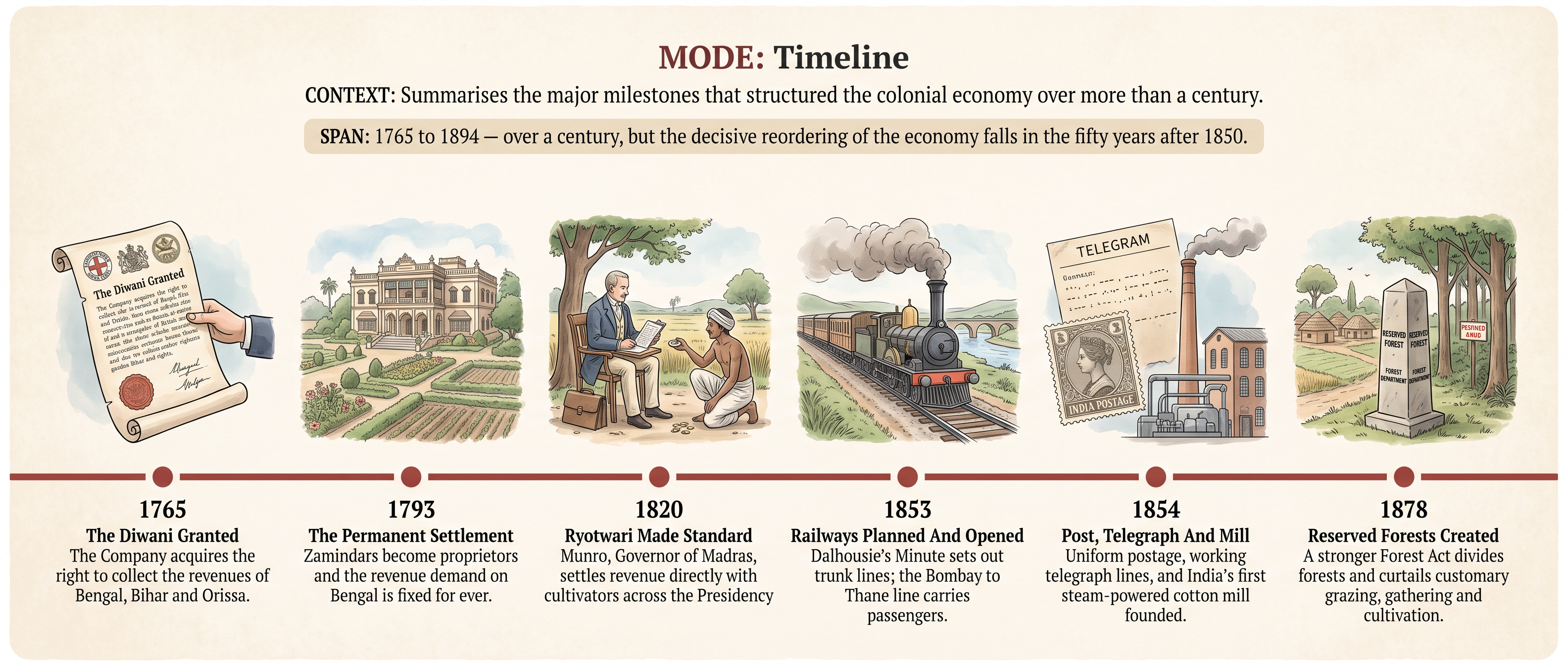
Fig. 1.10 – The making of a colonial economy.
What The Evidence Cannot Tell Us
Almost every source used in this chapter was made by the colonial state or by the companies it dealt with — revenue registers, forest returns, railway accounts, official minutes. They are precise about what was collected, felled, laid and earned, and nearly silent about what any of it felt like to the people it was done to.
So the weaver who stopped weaving, the woman whose spinning income vanished, the ryot whose bond was enforced and the village that found a boundary pillar at the edge of its grazing ground are known to us mainly as numbers in someone else’s ledger. Where their own voices survive at all, it is usually because they were prosecuted, petitioned or rebelled.
That silence is not a gap to be apologised for and moved past. It is itself a finding about colonial rule — that the people most affected by it were the people it least troubled to record.
1.10 Understanding The Systems
State the main terms on which British companies agreed to build Indian railways from 1849. Using Fig. 1.2, explain how a loss made by one of those companies ended up being paid for by an Indian cultivator.
The Permanent Settlement of 1793 was designed to give zamindars security. Explain what the settlement promised them, and then explain how the Sunset Law came to destroy so many of the families it was meant to protect.
Look at Map 1.3. Name the regions brought under the Permanent Settlement and those brought under the Ryotwari Settlement, and explain what each arrangement meant for the person who actually held the plough.
1.11 Tracing Causes And Comparing
Set out, step by step, the chain that led from a revenue demand fixed in cash on a fixed date to a cultivating family losing its holding altogether. Show clearly what follows from what.
Hold the Permanent Settlement and the Ryotwari Settlement side by side. Identify three ways in which they differed, and then explain what they had in common from the cultivator’s point of view.
Using Case 1.3 and the discussion around it, explain why large-scale cotton mills grew in western India rather than in Bengal. Your answer should set out three conditions that came together there.
1.12 Working With Evidence
Read Source 1.1. What does Cornwallis’s statement establish about the condition of Bengal, and what should make a historian cautious about accepting his estimate of one-third as a measurement?
This chapter argues that the earliest and largest loss of livelihood in the textile trade fell on hand spinners, and that it left almost no trace in the records. Explain why the records are silent, and say what evidence a historian would need in order to measure that loss.
1.13 Weighing The Arguments
Explain how the spread of railway construction and the passing of forest legislation were connected. Then examine the order in which the Forest Policy of 1894 ranked cultivation, the needs of local communities and revenue, and say what that order reveals about the government’s priorities.
‘The railways developed India.’ Using the arguments set out in this chapter, present the case for and the case against this claim, and then state which you find stronger, giving your reasons.