Chapter 3: Protest Movements Against Colonial Rule
In July 1861 a Christian missionary stood in the dock of the Supreme Court at Calcutta. James Long had not written a word of the book that had put him there. He had only arranged for it to be printed in English, and for copies to be sent to officials across Bengal.
The book was a play, Nil Darpan — ‘The Indigo Mirror’ — written the year before by Dinabandhu Mitra, an official of the postal department who had travelled through the indigo districts of eastern Bengal. It showed an ordinary peasant family destroyed by the demand that it sow indigo: land seized, a woman assaulted, a household ruined. Mitra published it without his name on it.
The indigo planters of Bengal sued for libel. They did not argue that the play was badly written. They argued that it was a lie about them, and the court agreed. Long was sentenced to a month in prison and a fine of one thousand rupees. A young Calcutta zamindar, Kaliprasanna Singha, paid the fine in the courtroom.
Now consider what the trial reveals. A play about villagers, printed in a city, alarmed a group of European businessmen enough that they went to law to silence it. Two years earlier those same villagers had refused, in their tens of thousands, to sow indigo at all. Something had shifted in the Bengal countryside, and the planters knew it before the government did.

Fig. 3.0 – The 1861 English edition of Nil Darpan.
3.1 The Indigo Rebellion, 1859
Indigo is a shrub whose leaves yield a deep blue dye. Before chemists learned to make that colour in a laboratory, indigo was the only reliable blue available to the world’s dyers, and the best of it came from India.
As Britain’s cotton mills multiplied in the early nineteenth century, so did the demand for something to colour their cloth. Blue cloth needed blue dye, and blue dye meant indigo. A crop grown in the villages of eastern Bengal was therefore tied directly to the machinery of Lancashire.
That connection sounds like an opportunity. For the cultivators who actually grew the plant it became a trap, and in 1859 they walked out of it. To understand why, we must first look at how indigo was produced.
3.1.1 Indigo And The Planters’ System
How Planters Got Their Land
For most of the East India Company’s early rule, Europeans were not permitted to buy land in the countryside away from the port cities. That restriction was lifted in 1837, when a change in the law allowed Europeans to hold land in the interior.
European planters — private businessmen who organised the growing and processing of a single crop for export — now moved into the indigo districts of Bengal in large numbers. They bought or leased estates, built factories and dealt directly with the villages around them.
An indigo factory was not a single building. It was an estate: a house for the planter, storehouses, brick vats for processing the leaf, and land. In Bengal such an establishment was called a neel kuthi, from neel, meaning blue.
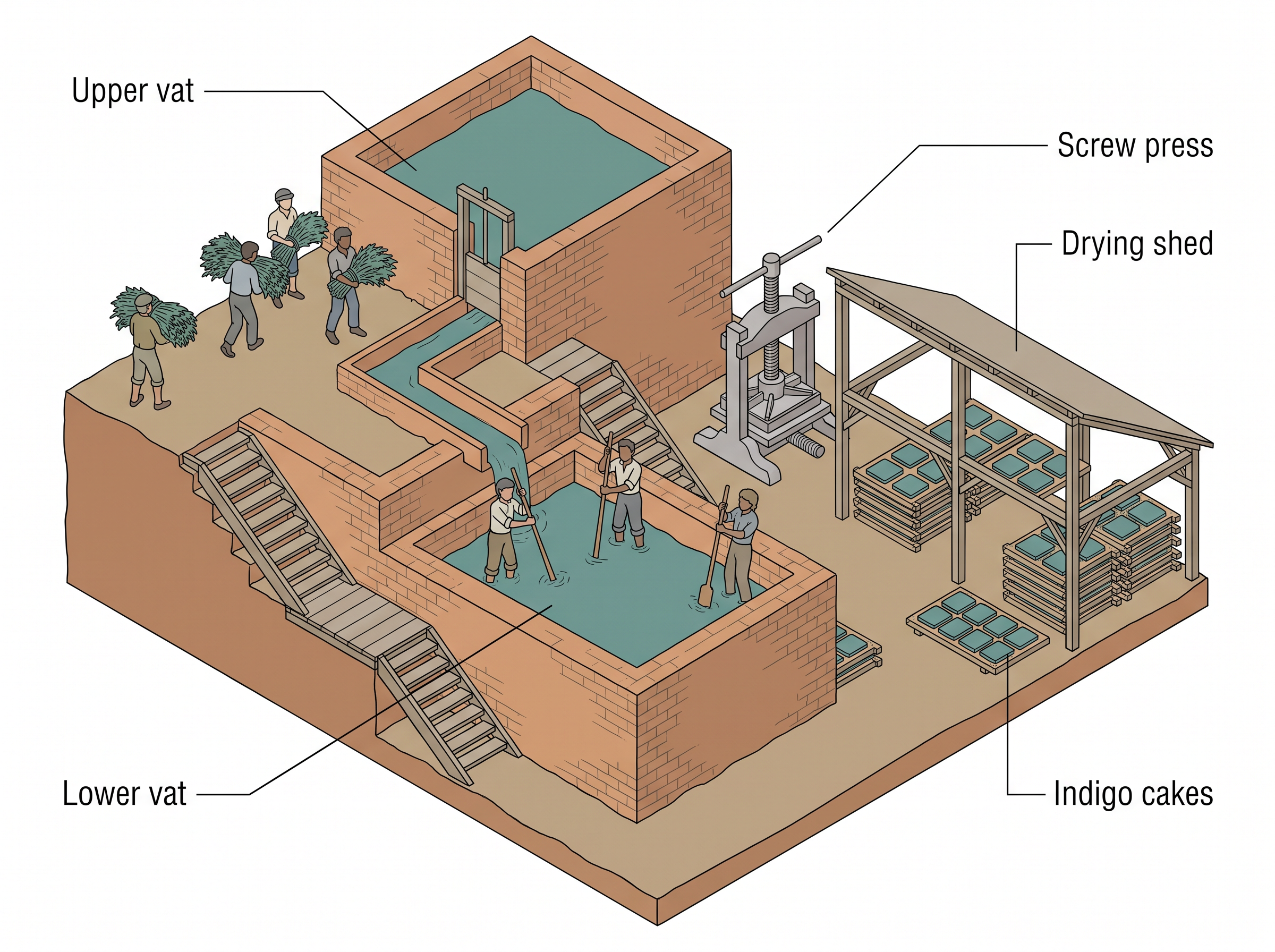
Fig. 3.1 – Processing indigo at a neel kuthi.
Two Ways Of Growing Indigo
Planters obtained their indigo in two quite different ways, and the difference matters. Under one arrangement, the planter grew the crop on land he himself controlled, using hired labourers. This was called nij cultivation, from a word meaning ‘one’s own’.
The second arrangement was called ryoti cultivation. Here the crop was grown on the peasant’s own holding, by the peasant’s own family and bullocks, under a written contract with the planter. The ryot — the peasant cultivator who held land and paid revenue on it — supplied everything except the contract.
Nij cultivation was expensive. It required the planter to command large blocks of land, plough teams and a labour force at exactly the season when villagers were busy on their own fields. Most indigo in Bengal was therefore grown the second way, on the ryots’ land.
This is the single most important fact about the system. The planter did not have to own the fields, feed the bullocks or bear the risk of a bad season. He had only to secure a contract — and, once he had it, the ryot’s own land worked for him.
The Advance
The contract was secured through a cash advance called dadan. A ryot who accepted the advance undertook to sow a fixed portion of his holding with indigo and to deliver the crop to the factory at a price the planter had already fixed.
That price was low — low enough that the value of the delivered crop rarely covered the advance and the cultivation costs together. The shortfall was carried forward. A fresh advance opened the next season, and the debt was never cleared.
The contract was also written, and most ryots could not read it. What a cultivator understood as a loan the planter could produce in court as a binding agreement, with terms and amounts the borrower had never heard read aloud.
The chain that ran from a Bengal field to a London warehouse can be followed step by step.
3.1.2 The Circumstances Of Revolt
Indigo Against Rice
Indigo did not sit quietly beside the crops a village already grew. It competed with them for the same land at the same time.
The planters wanted indigo on the fertile land near the homestead, which was exactly the land a family relied on for rice. Sowing and cutting also fell close to the rice calendar, so the labour of the household was pulled away in the weeks it could least spare.
A ryot who planted rice, or pulses, or jute, kept the produce and sold it at whatever the market offered. A ryot who planted indigo delivered his crop at a price fixed against him. Every season on indigo was a season of food not grown and money not made.
Force Behind The Contract
A contract that a man loses by keeping needs enforcement, and the planters supplied it. They employed gangs of armed clubmen known as lathials, from lathi, a heavy stick.
Where a village refused, the lathials answered. Cattle were driven off, standing crops and fruit trees destroyed, houses burned, and cultivators seized and held at the factory until they agreed to sow. Women of the household were not spared. These were not stray incidents; they were how the season’s acreage was obtained.
Where Was The Law?
The ryots did not begin with violence. They began, for years, with paper. They sent petitions to magistrates and to the Lieutenant-Governor of Bengal, John Peter Grant, and they crowded the riverbanks when he travelled through the districts.
They also went to court, which is the part most easily overlooked. Going to court cost money the ryots did not have, and the courts themselves were staffed by Englishmen who moved in the same society as the planters. Judgments went the planters’ way, and the rare official who ruled otherwise was liable to be moved elsewhere.
By 1859 the position was clear to every cultivator in the indigo tracts. The contract was enforceable against them and unenforceable by them. The state that collected their revenue would not protect their land.
3.1.3 The Rebellion Spreads
A Notice At Barasat
In 1859 Ashley Eden, a magistrate at Barasat near Calcutta, issued a public notice stating plainly what the law had always technically held: a ryot was a free agent and could not be compelled to grow indigo.
Eden had not changed the law. But the notice was official, it was written, and it could be carried home. Copies were sought out and read aloud in villages across Nadia and Jessore, and cultivators concluded that the government had at last taken their side.
The Refusal
Later that year the cultivators of a group of villages in Nadia district simply declined to sow. It was not a riot. It was a strike, and its weapon was the one thing the whole system depended on — the ryots’ own labour on the ryots’ own land.
The refusal spread through the eastern districts across 1859 and 1860: Jessore, Khulna, Pabna, Rajshahi, Faridpur, Dacca, Malda and Dinajpur, and outward from there. Most of this country lies in present-day Bangladesh.
Map
Map 3.1 Caption: The districts of eastern Bengal affected by the indigo disturbances, 1859–1862. Brief: Regional map of the Bengal Presidency c. 1860 showing districts Nadia, Jessore, Khulna, 24 Parganas, Pabna, Rajshahi, Faridpur, Dacca, Malda and Dinajpur shaded, with Calcutta and Barasat marked and the Ganga–Padma river system drawn; state the period in the caption, mark present-day international boundaries as a broken line only, and where any inset of India is used it must show the full extent of India as officially defined.
How The Ryots Fought
The methods varied from district to district, and it is worth seeing how wide the range was. In many places the ryots refused to sow and left it there. In others they imposed a complete social boycott, so that no barber, washerman or shopkeeper would serve a planter or his agents.
Villages bound themselves by oath, and Hindu and Muslim cultivators took the oath together — a fact contemporaries noticed and remarked on. Money was collected village by village to pay for lawsuits, so that the courts which had failed individuals might be worked collectively.
Where the lathials came, the ryots met them. Villages sent women and children away, hired armed men of their own, and answered attacks with bows and tangis, the light axe of the Bengal countryside. Factory buildings were burned in several districts.
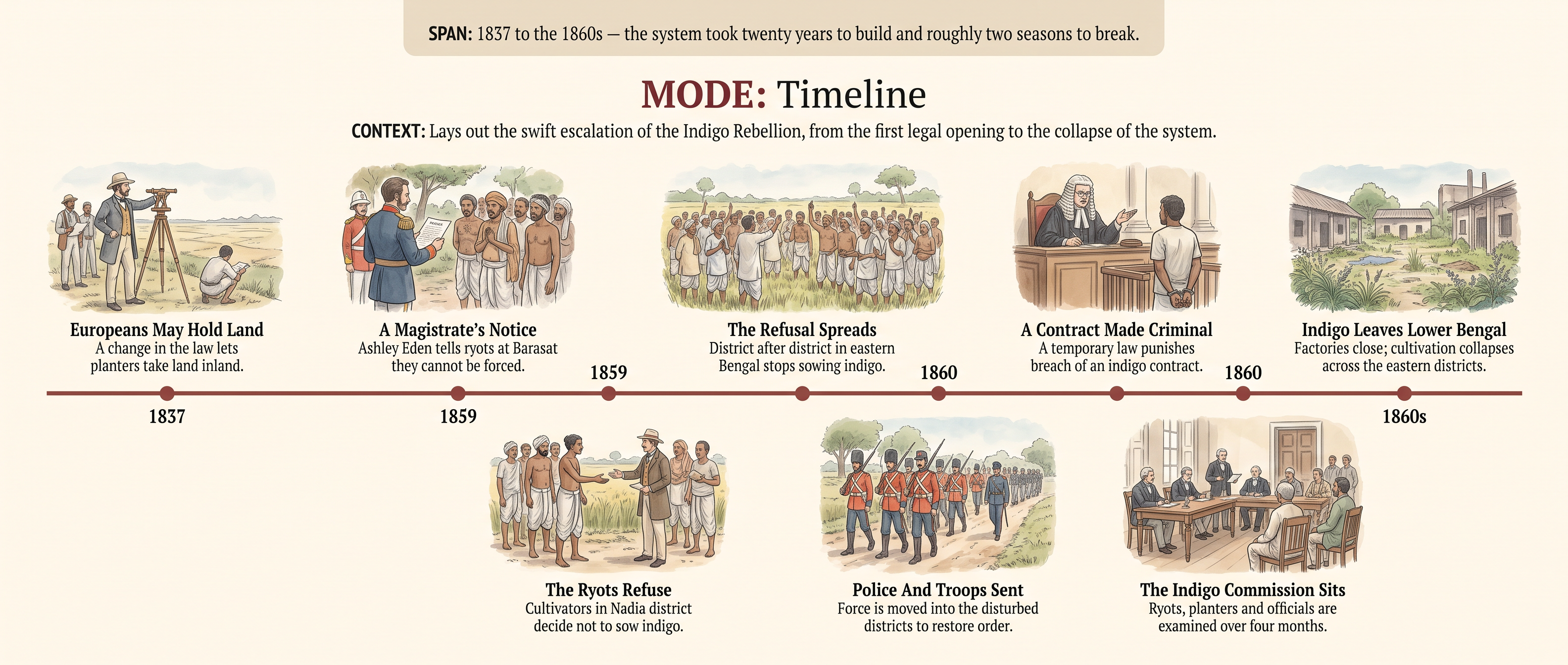
Fig. 3.2 – From the advance to the empty vats.
3.1.4 Leaders And Middle-Class Support
Leadership From Inside The System
The best-known leaders of the refusal in Nadia were two brothers, Digambar Biswas and Bishnu Charan Biswas. They were not outsiders to the indigo business; they had worked as agents for a planter and had seen the accounts from within.
They left that employment, persuaded the cultivators of their locality to stop sowing, and organised the defence of the villages when the planters retaliated. Elsewhere the lead was taken by village headmen, by well-off ryots and by local men of standing.
Some zamindars — landholders who collected revenue from villages and paid a fixed sum to the state — also joined, and their reasons were their own. A planter established in a village was a rival authority who dealt directly with the ryots and reduced the zamindar’s hold over them.
This mixture matters. The Indigo Rebellion was made by cultivators, but it drew in richer peasants, headmen and landholders, and it held Hindus and Muslims together. That breadth is unusual, and it is one reason the movement was so difficult to break.
The Calcutta Press
The rebellion also reached print. Harish Chandra Mukherjee, editor of the Calcutta newspaper the Hindoo Patriot, published a steady stream of reports on the planters’ conduct and on the progress of the refusal.
Mukherjee did more than report. He advised the ryots’ organisers, who came to his door, and he pressed the government week after week in his editorials. In 1860, at the height of the refusal, he wrote of what the peasantry had achieved.
Read that carefully and two things stand out. Mukherjee is praising the ryots, but he is also insisting that they lacked leadership, knowledge and wealth — the very things his own class possessed. The compliment carries an assumption about who ought normally to lead.
The extract also tells us nothing about what the ryots themselves thought they were doing. It is an educated Calcutta reader’s verdict on a village movement he did not belong to, written to change the minds of officials who read English.
Among those who worked with him was Sisir Kumar Ghosh, then a young man in the Jessore district, who gathered the cultivators’ grievances and helped organise their pledges. He would later found the Amrita Bazar Patrika, and it was from that paper, years afterwards, that he wrote about the indigo years as the moment when Bengal first learned the value of combined action.
Christian missionaries in the districts also took the ryots’ side, publishing what they saw and drawing on it the anger of the planters — as the trial described at the opening of this chapter shows.
3.1.5 Repression And The Indigo Commission
Force First
The government’s first response was force. Police were sent into the affected districts and troops were stationed across Bengal. Cultivators were arrested in large numbers, and the leaders of local resistance were prosecuted.
Repression, however, did not restore the crop. Soldiers could break up a gathering; they could not make a household sow a field. By the middle of 1860 the government faced an administrative fact rather than a military one — the indigo districts were not going to plant.
That season the government also passed a temporary law making breach of an indigo contract a criminal offence, so that a ryot who took an advance and did not sow could be punished. It was in force for a single season, and it was not renewed.
The Commission
In 1860 the government appointed the Indigo Commission to enquire into the whole system of indigo production. Its members were drawn from the interests in dispute: officials of the government, a representative of the planters, a Christian missionary and a representative of the zamindars.
The Commission sat through the summer of 1860 and examined 134 witnesses — government servants, missionaries, planters, zamindars and, most importantly, 77 ryots. For four months the men whose evidence had never been asked for gave it on oath, and it was written down.
What The Commission Found
The Commission’s findings largely confirmed what the ryots had been saying for a generation. It accepted that cultivation was in practice forced, that ryots were paid less than the crop was worth, and that advances and contracts were used to bind them.
It further accepted that the police and the magistracy had sided with the planters, and that lathials had been used to burn houses, seize cattle and drive cultivation onto the best land. An official body had put the ryots’ case on the record in the government’s own words.
Its recommendations followed from this. Cultivators should be free to plant indigo or not as they chose, and factory owners should not compel them. Honest police and honest magistrates should be appointed so that the ryots could obtain justice.
3.1.6 The Impact On Colonial Policy
The End Of Indigo In Lower Bengal
The Commission’s report settled the central question. Indigo cultivation was to be voluntary, and the temporary law of 1860 that had criminalised breach of contract was allowed to lapse rather than being renewed.
Once compulsion was withdrawn, the economics of the system collapsed, because compulsion was the system. Ryots who were free to choose did not choose indigo at the planters’ price. Through the 1860s factory after factory in the eastern districts closed, and indigo largely disappeared from lower Bengal.
The dye itself survived elsewhere for another generation, until chemists in Europe learned to manufacture the blue synthetically at the end of the century and the natural trade lost its market altogether. But in the districts that had risen in 1859, indigo was finished within a few years of the rising.
The Alarm In Government
The rebellion also changed how the government thought. It had come barely two years after the Revolt of 1857, and officials read it against that memory. The Governor-General, Lord Canning, recorded his alarm in a note in 1860.
‘The days of Delhi’ means the fighting of 1857, when the rebel forces held the Mughal capital. Canning is measuring a peasant refusal to sow a crop against the gravest crisis British rule in India had faced — which tells us a great deal about how the disturbance looked from Calcutta.
From this point the colonial government treated the countryside as a possible source of danger rather than merely a source of revenue. Grievances that could produce a rising on this scale were worth enquiring into before they produced one — and enquiry, as later sections will show, became the standard response.
3.2 The Deccan Riots, 1875
Sixteen years after the indigo ryots of Bengal refused to sow, peasants a thousand kilometres to the south-west rose against a different opponent. There was no European planter in the villages of the Deccan, and no crop anyone was forced to grow.
The Deccan is the high plateau of peninsular India. The districts that concern us here — Poona, today Pune, and Ahmednagar — lie in its western part, in what was then the Bombay Presidency, a dry country of black soil and uncertain rain.
What the peasants of these villages attacked in 1875 was not a person but a piece of paper. They wanted the bonds, the account books and the mortgage deeds held by the village moneylender, and they wanted them destroyed. Understanding why requires us to look first at how the land was taxed.
3.2.1 The Ryotwari System And The Revenue Demand
A Direct Bargain With The State
In the Deccan the British collected land revenue under the ryotwari system — a settlement made directly with each individual cultivator, who was recognised as the holder of his field and was personally liable for the tax on it.
There was no intermediary. The peasant did not pay a landholder who paid the state; he paid the state. That is the whole meaning of the term, and it was presented at the time as a reform that freed the cultivator from the landlord.
The cultivators of these villages were largely Kunbis, the principal peasant community of the Deccan. Among them were a few substantial households and a great many families farming small, dry holdings that produced a surplus only in a good year.
What The Settlement Actually Demanded
The revenue was fixed for a term of years and then revised. It was assessed on the land, not on the harvest, which meant it fell due whether or not the season had been good.
Remissions in years of drought or failure existed on paper. In practice they were granted grudgingly and rarely, and the demand was collected as though every year were an average one. Collection in the village rested with the patel, the hereditary headman, who was answerable to the government for the whole village’s dues.
At the revision settlements of the later 1860s the demand was raised again, in many talukas very sharply. A taluka is an administrative subdivision of a district, containing perhaps a hundred villages.
The ryot had no say in this. He was not consulted about the assessment, he could not appeal against it in a court, and his only alternatives were to pay or to give up the land. A system described as a direct relationship between state and cultivator gave the cultivator no voice at all.
3.2.2 Cotton, Debt And The Sowcars
The Cotton Boom And Its Collapse
The Deccan ryots’ one dependable source of cash was cotton, the region’s principal commercial crop. In the early 1860s the price of that cotton rose extraordinarily, for reasons that had nothing to do with India.
The American Civil War, fought between 1861 and 1865, cut off the supply of raw cotton from the southern United States to the mills of Britain. Buyers turned to India, prices climbed, and money flowed into the cotton districts of the Deccan.
Ryots planted more cotton, borrowed against the expected return, and took on obligations sized to boom prices. When the war ended in 1865 American cotton came back onto the market, and within a year or two Deccan prices had fallen back.
The debts did not fall with them. Poor seasons in the years that followed made matters worse, and the revenue revision arrived in the middle of it. A household now owed the state more, earned less from its cotton, and had already pledged what it might earn next year.
The Sowcar And The Bond
The lender was the sowcar, the village moneylender. Many in these districts were Marwari or Gujarati, families who had come from outside and who often did not belong to the village community they served.
Their lending machinery rested on two things: interest and paper. Interest was compounded, so that unpaid interest joined the principal and itself earned interest. Each year a fresh bond was written for the new total.
The paper mattered even more than the rate. The cultivator was usually unable to read, and he signed or thumb-marked a document whose figures he had to take on trust. Sums lent in grain and seed were entered at inflated values, and amounts were altered without his knowledge.
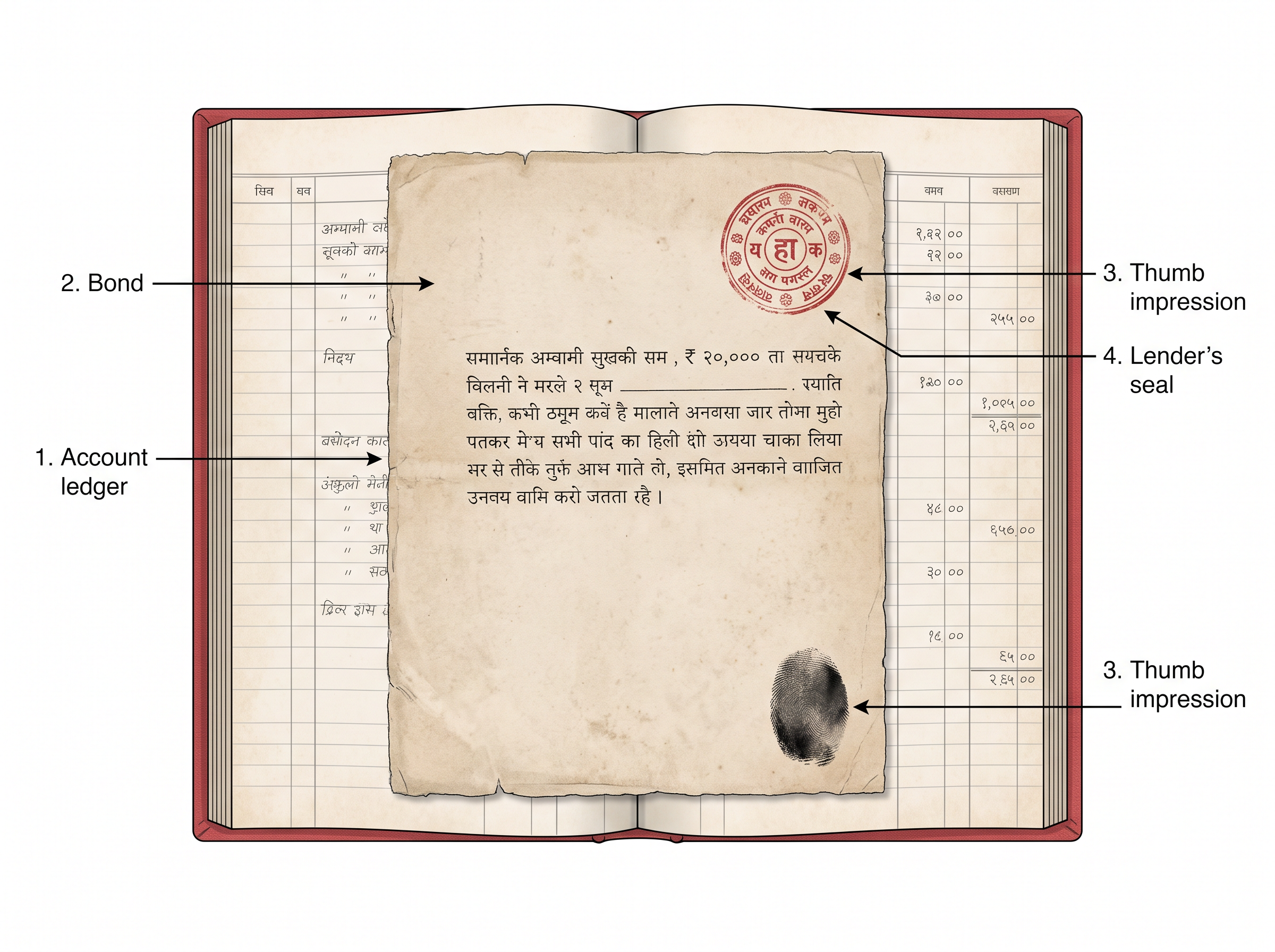
Fig. 3.3 – A creditor’s bond and account ledger.
Why The Paper Was Powerful
Here lies the crucial difference from earlier centuries, and it is easy to miss. Village moneylending was old; what was new was the legal system standing behind it.
Under British law the bond was an enforceable contract, and the civil court would enforce it. A creditor who produced the document could obtain a decree, and on that decree the ryot’s land could be attached and sold. Land had become a thing that could be taken for debt.
The result was a trap with no exit. If the ryot paid the sowcar and defaulted on the revenue, the government sold his land to recover the tax — and the buyer was very often the same sowcar. If he paid the revenue and defaulted on the bond, the court transferred the land to the sowcar directly.
Land now moved steadily into the hands of men who did not farm it and often did not live in the village. The cultivator frequently stayed on the same fields, but as a tenant of his creditor rather than as their holder.
3.2.3 The Course Of The Riots
Kardeh, December 1874
The immediate trigger was a single eviction. In December 1874, at the village of Kardeh in Poona district, a moneylender named Kalooram enforced a debt of a hundred and fifty rupees against a peasant, Baba Saheb Deshmukh, and pulled down his house.
The sum was small and the act was lawful. That combination is precisely what enraged the village. A man’s house could be taken apart over a debt most households in the district could have owed, and nothing in the law stood in the way.
The Boycott
The villagers’ first answer was not violence but exclusion. Across Poona and Ahmednagar districts, peasants declared a social and economic boycott of the moneylenders.
Nobody would work for them or sell to them. Barbers would not cut their hair, washermen would not take their clothes, shopkeepers would not supply them, and labourers would not till their fields. Any villager who broke the boycott was boycotted in turn.
This was organised action of a high order, spreading village by village without newspapers or a political organisation to carry it. In several places the moneylenders left rather than live under it.
Supa, May 1875
Where the boycott failed, the ryots moved from exclusion to attack. On 12 May 1875, at Supa in the Bhimthadi taluka of Poona district, a crowd attacked the shops and houses of the moneylenders.
The object of the attack tells us what the movement was about. The rioters went for the bonds, the decrees and the account books, seized them and burned them. Property was looted and buildings were fired, and moneylenders were assaulted, but the documents were the target.
The Spread
From Supa the disturbances spread through the villages of Poona and Ahmednagar, into the Indapur, Purandar, Shrigonda, Parner and Karjat talukas. Landless labourers and village craftsmen joined the cultivators.
The peasants were not entirely without allies among the educated. In 1873 and 1874 the Poona Sarvajanik Sabha, an association of the city’s professional men in which Mahadev Govind Ranade was prominent, had campaigned against the raised revenue demand and petitioned the government on the ryots’ behalf. That agitation had already put the assessment in question when the riots broke out.
Map
Map 3.2 Caption: The talukas of Poona and Ahmednagar districts affected by the Deccan riots, 1875. Brief: Regional map of the western Deccan in the Bombay Presidency c. 1875, shading the affected talukas and marking Poona, Ahmednagar, Supa, Kardeh, Indapur, Purandar, Shrigonda, Parner and Karjat, with the Bhima river drawn; state the period in the caption and note that district boundaries shown are those of the period; where any inset of India is used it must show the full extent of India as officially defined.
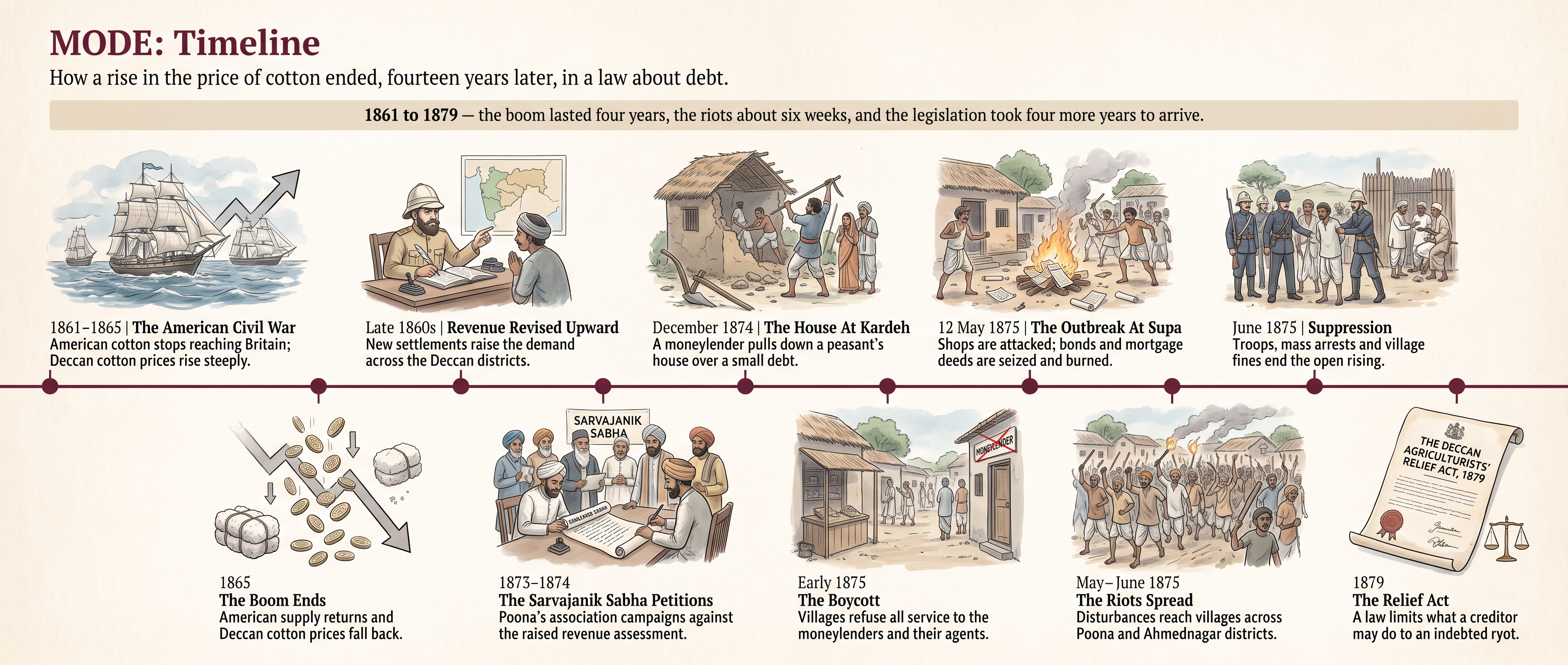
Fig. 3.4 – From the cotton boom to the Relief Act.
3.2.4 Repression And The Deccan Riots Commission
Force And Fines
The government moved quickly. Police were deployed, and when they could not contain the disturbances troops were sent to Supa, Shrigonda and other centres, with camps established in the villages.
Hundreds of peasants were arrested across the two districts and many were convicted. To recover the cost of the operation, fines were levied on villages as a whole — a punishment that fell on households whether or not anyone in them had rioted.
By the end of June 1875 the open rising was over. It had lasted about six weeks. Sporadic incidents continued afterwards, and in many villages the boycott of the moneylenders quietly outlived the riots.
The Commission Of Enquiry
Later in 1875 the government appointed the Deccan Riots Commission to enquire into the causes of the outbreak. As in Bengal fifteen years earlier, the state’s response to an agrarian rising was to hold an investigation.
The Commission accepted that the peasants’ indebtedness was real and that the revenue demand was beyond what many of them could pay. It examined the working of the bond, the account book and the civil court, and reported on how these had operated together against the cultivator.
That the enquiry was held at all is significant. The government could have treated the riots purely as a law-and-order problem, as it had begun by doing, and stopped once order was restored. Instead it asked why the villages had risen.
3.2.5 The Impact On Colonial Policy
The Deccan Agriculturists’ Relief Act, 1879
The Commission’s work led, four years after the riots, to the Deccan Agriculturists’ Relief Act of 1879. Its purpose was to relieve the cultivators of these districts from indebtedness and to check the frauds by which creditors enlarged their claims.
Its central provision struck at the authority of the document itself. A court was now empowered to go behind the bond — to examine the whole history of a transaction, reopen the accounts and determine what had actually been lent and repaid, rather than simply enforcing the sum written on the paper.
The Act also protected the debtor’s person and his land. An agriculturist could no longer be imprisoned for a debt, and restrictions were placed on the attachment and sale of his holding to satisfy a decree. Mortgage deeds and contracts had to be registered with government offices, which made silent alteration far harder.
What The Act Did Not Do
The limits of the law are as instructive as its provisions. It applied to a handful of districts, not to the Presidency or to India. It regulated how a creditor might recover a debt; it did not reduce the debts already owed.
Above all, it left the revenue demand untouched. The assessment that had helped drive the ryots to the sowcar in the first place was not lowered, and the state’s own claim on the harvest was not reopened. The government had legislated about the moneylender and said nothing about itself.
The wider effect was on official thinking rather than on any single statute. From the Deccan riots onwards, peasant indebtedness and the transfer of land away from cultivators were treated as problems of government, to be watched, enquired into and legislated upon.
3.3 The Munda Uprising, 1899–1900
At the close of the century the last of our three movements broke out in country very different from the indigo tracts of Bengal or the black-soil villages of the Deccan. It happened on the Chotanagpur plateau, the forested upland lying west of the Ganga plain in what is now Jharkhand.
The Mundas lived in the region around Ranchi, in Singhbhum and towards Palamau. They are an Adivasi people — one of the communities that describe themselves as the original inhabitants of a region, holding land, worship and authority through their own institutions rather than through those of the surrounding society.
Their rising of 1899 and 1900 is known by the name they gave it: Ulgulan, the Great Tumult. Its aims were larger than either earlier movement. The Mundas did not seek a fairer contract or a gentler creditor. They intended to drive out the outsiders and rule themselves.
3.3.1 The Mundas And The Khuntkatti Land System
Land Belonging To The Clearers
A Munda village began with an act of clearing. A group of kin cut back the forest, broke the soil and founded a settlement, and the land so cleared belonged to the descendants of those founders as a body.
This was the khuntkatti system. The land was not the property of an individual who might sell it, nor of a landlord who might rent it out. It was held collectively by the founding lineage, and rights in it came from descent and from the original labour of clearing.
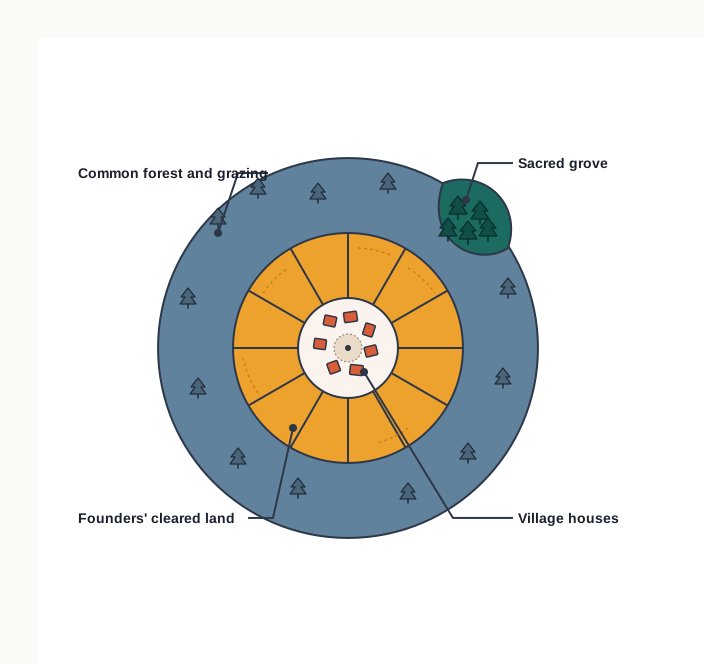
Fig. 3.5 – Spatial layout of a khuntkatti village.
Authority worked the same way. Village affairs were settled by the panchayat, the assembly of village elders, and by the headman drawn from the founding families. Land, worship and government were parts of a single arrangement, not separate departments of life.
What Colonial Law Did To It
British administration did not set out to abolish khuntkatti. It did something more damaging: it did not recognise it. Revenue was to be collected through landholders, and where the government looked for a landlord it found or created one.
Grants of villages were made to thikadars and jagirdars — men holding a village or a group of villages on a lease or a grant, entitled to collect rent from those who farmed it. Under this arrangement the Munda cultivator became a tenant on land his ancestors had cleared.
Rent, moreover, was now to be paid in cash and on time. A household that could not pay could be evicted, and the land passed to someone else. Rights that had rested on descent and clearing were replaced by rights resting on payment and on paper.
3.3.2 Dikus, Debt And Forced Labour
The Outsiders
With the new arrangements came new people. Contractors, moneylenders, traders and landholders moved into the Chotanagpur region from outside, and the Mundas called them dikus — outsiders, strangers who did not belong to the community.
The dikus acquired land, lent money at interest and took holdings when debts went unpaid. As they established themselves, the village panchayat lost its authority, and disputes that had once been settled by Munda elders were settled by an outsider or by a distant court.
Labour Without Wages
The thikadars and jagirdars also demanded work. Mundas were required to labour on the landholder’s fields and at his house without payment, an exaction known as beth begari.
Forced labour of this kind cut deeper than a rent. A rent takes part of the harvest; unpaid compulsory labour takes the working days on which the household’s own harvest depends, and it takes them at the landholder’s convenience.
Many left. Labour recruiters known as arkattis moved through the Chotanagpur villages engaging men and women for the tea gardens of Assam, and those who went found conditions on the plantations harsh and departure difficult.
Religion And Custom
Christian missions had been working in the region for decades, and a substantial number of Mundas had become Christians. The missions ran schools, and it was in a mission school that Birsa Munda received his own education.
The missions also had a second role that shaped what followed. They had encouraged and assisted the Mundas in taking their land grievances to the courts, and for many Mundas the failure of that legal route was bound up with the missionaries who had urged it.
3.3.3 From Petitions To Ulgulan
Thirty Years Of Paper
The Ulgulan was not the Mundas’ first response. For roughly three decades before it, they had pursued their claim by every lawful means available.
They engaged lawyers and fought cases. They sent petitions to officials, to the higher authorities of the province and to the Crown itself, asserting that the land was theirs by right of clearing and that they had been unlawfully dispossessed. Money was raised in village after village to pay for this litigation.
The result was almost nothing. Some cases were lost, some were abandoned for want of funds, and some lawyers took the Mundas’ money and gave little in return. By the 1890s a generation had spent itself on the courts and the land had continued to pass to the dikus.
Birsa
Into that exhaustion came a young man from the Munda country who had studied at a mission school. In about 1895 Birsa Munda began to preach: a single God, an end to drink and to certain sacrifices, and a return to a purified way of living. He was said to heal the sick, and people came to him in thousands.
The colonial administration read the gatherings as a threat to order. Birsa was arrested in 1895 and imprisoned at Hazaribagh, and was released two years later.
The Great Tumult
What emerged after his release was different in kind. The message was now political as well as religious: the dikus and the British were to be driven out, and Munda Raj — the rule of the Mundas over their own country — established in their place.
Two aims were joined in this. The first was to recover the land and end the exactions. The second was to hold together a society that thirty years of dispossession, migration and conversion had begun to pull apart. This is why the movement attacked churches as well as police posts: both stood, in the eyes of Birsa’s followers, for the world the dikus had brought.
3.3.4 The Rebellion And Its Suppression
Christmas 1899
The rising began at Christmas 1899 with coordinated attacks across the Munda country on churches and on the symbols of the new order. In the first days of January 1900 it spread, and two constables were killed at Etkedih.
A band of Mundas some three hundred strong, armed with bows, battle axes and spears, attacked the police station at Khunti, where a constable was killed. Rumours ran that Ranchi itself would be the next target, and the administration in the district town prepared for it.
Dombari Hill
The government’s response was immediate and overwhelming. Troops were moved up for the protection of Ranchi, and the Deputy Commissioner went out to the disturbed area to disperse the gathering.
On 9 January 1900 the Mundas assembled on Sail Rakab hill, near Dombari. Surrounded there, they were fired upon. Large numbers were killed, among them women and children, and the survivors were scattered. Property in the Munda villages was seized in the weeks that followed.
Bows and axes against modern rifles on an open hillside could end only one way, and it did. The military phase of the Ulgulan was over within about a fortnight of its beginning.
Capture And Trials
Birsa escaped from the hill but was hunted through the forests. In early February 1900 he was taken while asleep in the Jamkopai forest near Chakradharpur, and was brought to Ranchi.
He died in Ranchi jail in June 1900, in custody and before any trial of his own was concluded. The official cause given was cholera, and his death within months of his capture has been questioned ever since.
Hundreds of his followers were put on trial. Some were sentenced to transportation for life, others to long terms of imprisonment, and a few were hanged. Measured by its own aims, the Ulgulan had failed completely.
Map
Map 3.3 Caption: The Munda country of the Chotanagpur plateau, showing the centres of the uprising of 1899–1900. Brief: Regional map of the Chotanagpur plateau c. 1900 marking Ranchi, Khunti, Etkedih, Dombari and Sail Rakab hill, Chakradharpur and the Jamkopai forest, with Singhbhum and Palamau labelled and forest and upland shading; state the period in the caption, mark present-day state boundaries as a broken line only, and where any inset of India is used it must show the full extent of India as officially defined.
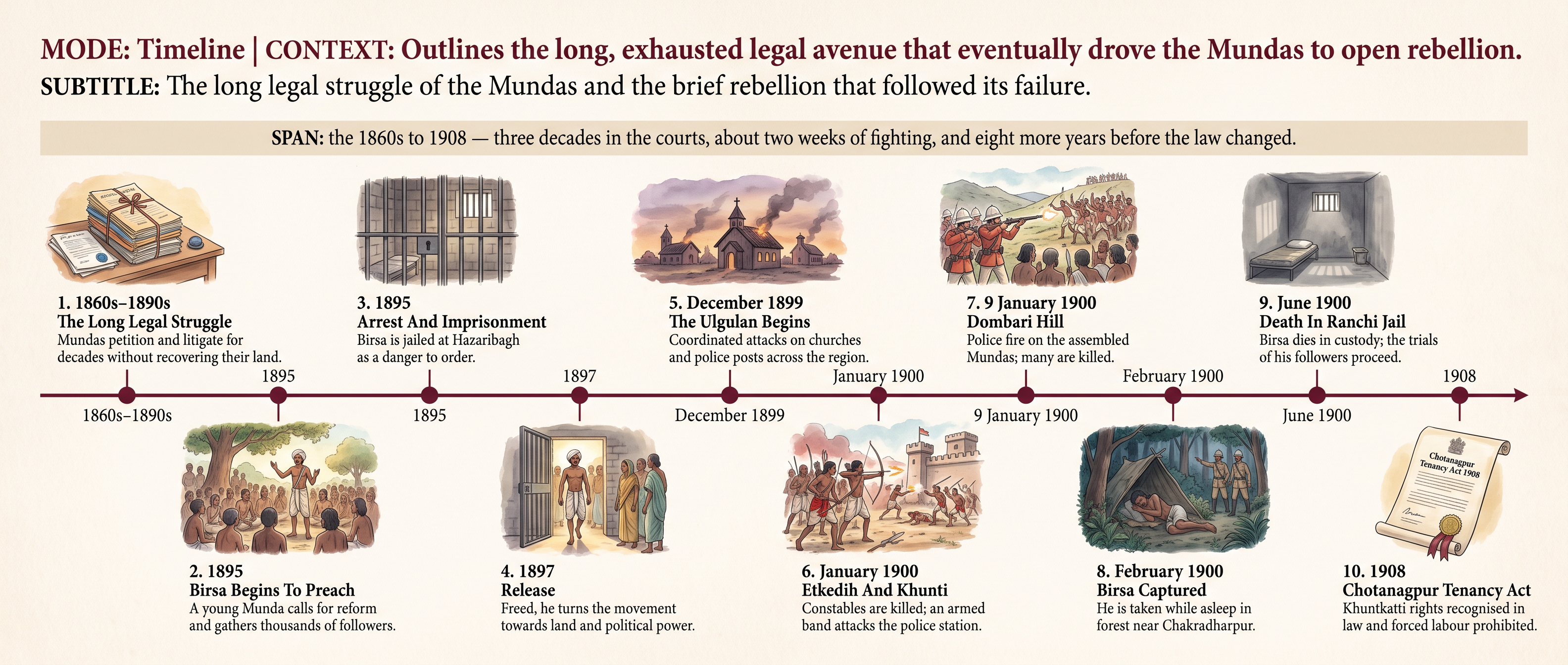
Fig. 3.6 – Thirty years of petitions, a fortnight of rising.
3.3.5 The Impact On Colonial Policy
Attention, Then Legislation
The administration’s first move after the suppression was administrative rather than legal. Officers were stationed in the Munda villages so that grievances could be heard locally instead of travelling to a distant court, and the government set about learning what the rising had been about.
Eight years later came the substantial change. The Chotanagpur Tenancy Act of 1908 gave legal recognition to khuntkatti rights, protected the customary land rights of the Mundas in their villages, and prohibited beth begari.
Read against what the Mundas had been demanding, this is remarkable. A community defeated on a hillside, whose leader had died in jail and whose followers had been transported, obtained in law a version of the very claim thirty years of petitions had failed to win.
What The Act Did Not Undo
The limits were real. The Act came eight years after the killing, and it protected what the Mundas still held rather than restoring what had already gone to the dikus. Nor did it remove the outsiders, the debts or the poverty of the region.
The historian Sumit Sarkar has drawn the balance sharply, describing the recognition as very belated but noting that the tribals of Chotanagpur won legal protection for their lands a full generation before the mass of the Bihar peasantry — and concluding from this that violent movements do not always fail.
3.4 Protest And The Reshaping Of Colonial Policy
Three movements, forty years apart at their extremes, in three regions with different crops, different languages and different opponents. It is worth asking what, if anything, holds them together.
The answer is not that Indian peasants were generally discontented. Peasants have grievances in every society and in every century. What has to be explained is why these particular grievances produced organised, sustained action in these particular decades — and why the colonial state answered each of them in almost the same way.
3.4.1 What The Three Movements Had In Common
Different Enemies, One Structure
At first sight the three have little in common. The Bengal ryot faced a European planter, the Deccan cultivator a village moneylender, the Munda a landholder and an outsider settled on his clan’s land. One was a foreigner, one a fellow-Indian from another region, one a stranger of any origin.
Look at what stood behind each of them and the picture changes. The planter’s advantage was the enforceable contract and the magistrate who upheld it. The sowcar’s advantage was the registered bond and the civil court that gave him a decree. The thikadar’s advantage was a grant that the administration recognised and the Munda’s clan right that it did not.
In every case the immediate oppressor was strong because colonial law made him strong. That is the common structure, and it is why peasants who never met one another arrived at strikingly similar conclusions about where their trouble came from.
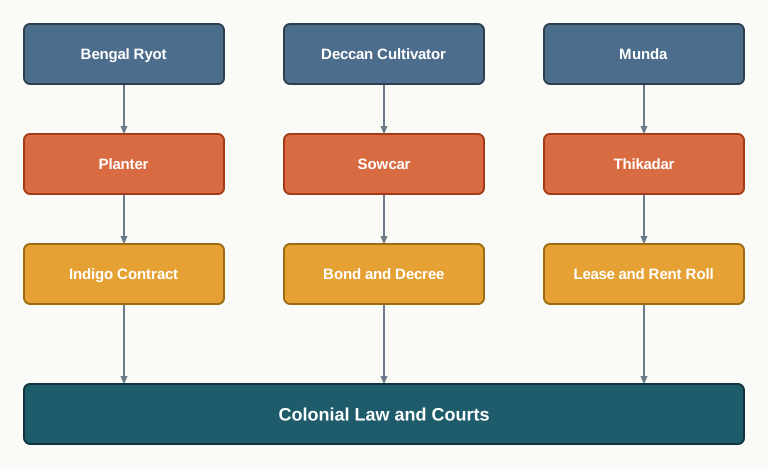
Fig. 3.7 – The shared legal structure of agrarian opponents.
Money, Paper And Land
Three particular pressures recur. The first is the demand for cash, fixed in advance and due whether or not the season delivered — the planter’s price, the state’s revenue, the landholder’s rent in coin rather than in labour or grain.
The second is the written document held by someone the cultivator could not check. Most peasants in this chapter could not read the paper that bound them, and its terms could be, and were, written against them.
The third is what the law had made of land itself. Land could now be attached, decreed away and sold — in the Deccan for a debt, in Chotanagpur through a grant to a stranger. A holding that a family had regarded as permanent had become something a court could transfer.
Law First, Force Afterwards
This is the pattern most often missed. None of the three movements began with violence.
The indigo ryots petitioned for years and funded lawsuits before they refused to sow. The Deccan villagers began with a social boycott, and turned to burning bonds only when exclusion did not work. The Mundas spent three decades in the courts before the Ulgulan.
Force came when the lawful route had been tried and had failed. A colonial official could then describe a rising as a sudden outbreak of savagery, because the years of petitioning had left no mark on him — but they had left a very deep mark on the villages.
How Far Did They Aim?
The movements also differed, and the difference matters. The indigo ryots wanted to stop growing indigo. The Deccan peasants wanted the bonds destroyed and the creditors driven out. Neither set out to end British rule; both aimed at the man in front of them.
The Ulgulan went further. Birsa’s followers aimed at Munda Raj — the removal of the dikus and of British authority together, and self-rule for the Munda country. That is a political programme of a different order, and it is one reason the state’s response there was so severe.
3.4.2 What The Colonial State Learned
Force, Enquiry, Statute
Set the three government responses side by side and a sequence appears. In each case the state first used force, then appointed an enquiry, then passed a law confined to the districts where the trouble had occurred.
Bengal received the Indigo Commission and the withdrawal of compulsion. The Deccan received the Deccan Riots Commission and the Relief Act of 1879. Chotanagpur received an administrative presence in the villages and the Tenancy Act of 1908. The interval between rising and statute grew longer each time, but the shape did not change.
Why Enquire At All?
A government that has just suppressed a rising is under no obligation to ask why it happened. The colonial state asked, repeatedly, and the reasons are worth setting out.
The first was fear. The indigo disturbances came two years after 1857, and officials measured them against that memory, as Lord Canning’s own note shows. A countryside that could rise once could rise again, and troops were expensive.
The second was revenue. The land tax was the foundation of colonial finance, and it was paid by cultivators. A peasantry driven off its holdings by planters or creditors was a peasantry that could not pay. Protecting the ryot was, from a certain angle, protecting the treasury.
The third was information. Enquiry gave the government what force could not: a written account of what was actually happening in villages it did not otherwise see. This is why so much of what we know about these movements survives in the records of the very state that crushed them.
The Shape Of The Concession
Notice, finally, what each law did and did not touch. Compulsion in indigo ended, but the rents and revenue of Bengal were not reopened. The Deccan creditor’s methods were restricted, but the revenue assessment that had sent the ryot to him was not reduced. Khuntkatti rights were recognised, but land already lost was not returned.
Each statute conceded the grievance that had produced the rising and stopped there. The state gave up what it could afford to give up, and kept what it could not.
That is not the same as saying the movements achieved nothing. Compulsion in indigo ended because the ryots ended it. The Deccan cultivator could no longer be jailed for debt because the Deccan villages had made the question impossible to ignore. The Mundas’ claim entered the statute book because the Ulgulan had put it there.
From the second half of the nineteenth century, therefore, the condition of the peasantry became a permanent item of colonial administration — surveyed, reported on and legislated for. That change was not a gift of policy. It was the mark left on the government by people who, in each of these three regions, had refused.
3.5 Summary
The Indigo Rebellion, 1859
- Indigo yielded the only reliable blue dye available to the world’s dyers, and Britain’s expanding cotton industry created a large demand for it.
- After the law changed in 1837, European planters took land in the Bengal countryside and built neel kuthis to process the crop.
- Most Bengal indigo was grown by ryots on their own land under contract, not by planters on their own estates — so the planter used the ryot’s land, bullocks and labour, and bore none of the risk.
- The contract was secured by a cash advance, the dadan, at a price fixed below what the crop cost to raise; the shortfall became a debt that was never cleared.
- Indigo took the best land at the rice season, so every indigo season was food not grown and money not earned.
- Compulsion was enforced by armed lathials, and the courts and magistracy sided with the planters.
- In 1859, after Ashley Eden’s notice at Barasat, the ryots of Nadia refused to sow; the refusal spread across eastern Bengal and used boycott, oaths sworn by Hindus and Muslims together, collective litigation and armed defence.
- Leadership came from within the system, from men like the Biswas brothers, and drew in headmen, rich ryots and zamindars; the Calcutta press, above all Harish Chandra Mukherjee’s Hindoo Patriot, carried the ryots’ case to an English-reading public.
- The Indigo Commission of 1860 recorded the evidence of ryots, planters and officials, and confirmed that cultivation was forced and underpaid.
- Compulsion was withdrawn, the temporary contract law lapsed, and indigo cultivation collapsed in lower Bengal within a few years — because compulsion had been the system.
The Deccan Riots, 1875
- In the Deccan the state settled revenue directly with each cultivator under the ryotwari system, so the peasant’s landlord was in effect the government.
- The demand was assessed on the land rather than the harvest, remissions were rare in practice, and the revision settlements of the later 1860s raised it sharply.
- The American Civil War raised cotton prices in the early 1860s; when the war ended the prices fell, but the debts contracted during the boom did not.
- The sowcar lent at compound interest on written bonds that the borrower could not read, and inflated the sums entered in them.
- What was new was not moneylending but the law behind it: a bond was enforceable, a decree could be obtained, and land could be attached and sold — so the ryot lost his land whether he defaulted on the creditor or on the revenue.
- The eviction at Kardeh in December 1874 was lawful, which is exactly why it enraged the district.
- The villages answered first with a complete social boycott of the moneylenders, and only afterwards with attack.
- At Supa on 12 May 1875 and in village after village thereafter, the rioters seized and burned the bonds, decrees and account books — striking at the instrument rather than at the institution that enforced it.
- The rising was suppressed within about six weeks by troops, mass arrests and fines levied on whole villages.
- The Deccan Riots Commission led to the Deccan Agriculturists’ Relief Act of 1879, which let a court go behind the bond into the history of a transaction, ended imprisonment of agriculturist debtors and restricted the sale of their land — but left the revenue demand untouched.
The Munda Uprising, 1899–1900
- Munda villages were founded by clearing forest, and the land belonged collectively to the descendants of the clearers under the khuntkatti system, with authority resting in the village panchayat.
- Colonial administration did not abolish khuntkatti; it failed to recognise it, granting villages to thikadars and jagirdars and turning the Munda cultivator into a rent-paying tenant on land his ancestors had cleared.
- Dikus — outsider traders, moneylenders and landholders — acquired land and displaced the authority of the village; beth begari, unpaid forced labour, took the working days on which a household’s own harvest depended.
- For roughly three decades the Mundas pursued the claim through lawyers, petitions and appeals, and lost.
- From about 1895 Birsa Munda preached religious reform and was imprisoned; after his release in 1897 the movement’s aim became Munda Raj — the removal of the dikus and of British authority.
- The Ulgulan began at Christmas 1899 and was broken on 9 January 1900 at Dombari, where police fire killed many, including women and children.
- Birsa was captured in February 1900 and died in Ranchi jail in June; hundreds of his followers were tried, transported or imprisoned.
- The Chotanagpur Tenancy Act of 1908 recognised khuntkatti rights and prohibited beth begari — a claim won in law eight years after it had been defeated in the field, though land already lost was not restored.
Protest And Colonial Policy
- The three movements faced different opponents, but each opponent’s strength rested on a document the colonial courts would enforce.
- Three pressures recur: a cash demand that ignored the harvest, a written contract the cultivator could not read, and a legal system that had made land transferable by decree.
- None of the three began with violence; force followed years of petitioning and litigation that had failed.
- The indigo ryots and the Deccan peasants aimed at the man in front of them; the Ulgulan alone aimed at ending British authority itself.
- The state’s response followed one shape each time — force, then a commission of enquiry, then a law confined to the affected districts.
- The government enquired because it feared another 1857, because its revenue depended on cultivators surviving, and because enquiry produced information that force did not.
- Each statute conceded the grievance that had caused the rising and left the state’s own demand alone; from this period onwards the condition of the peasantry became a permanent subject of colonial administration.
The Chapter In Order
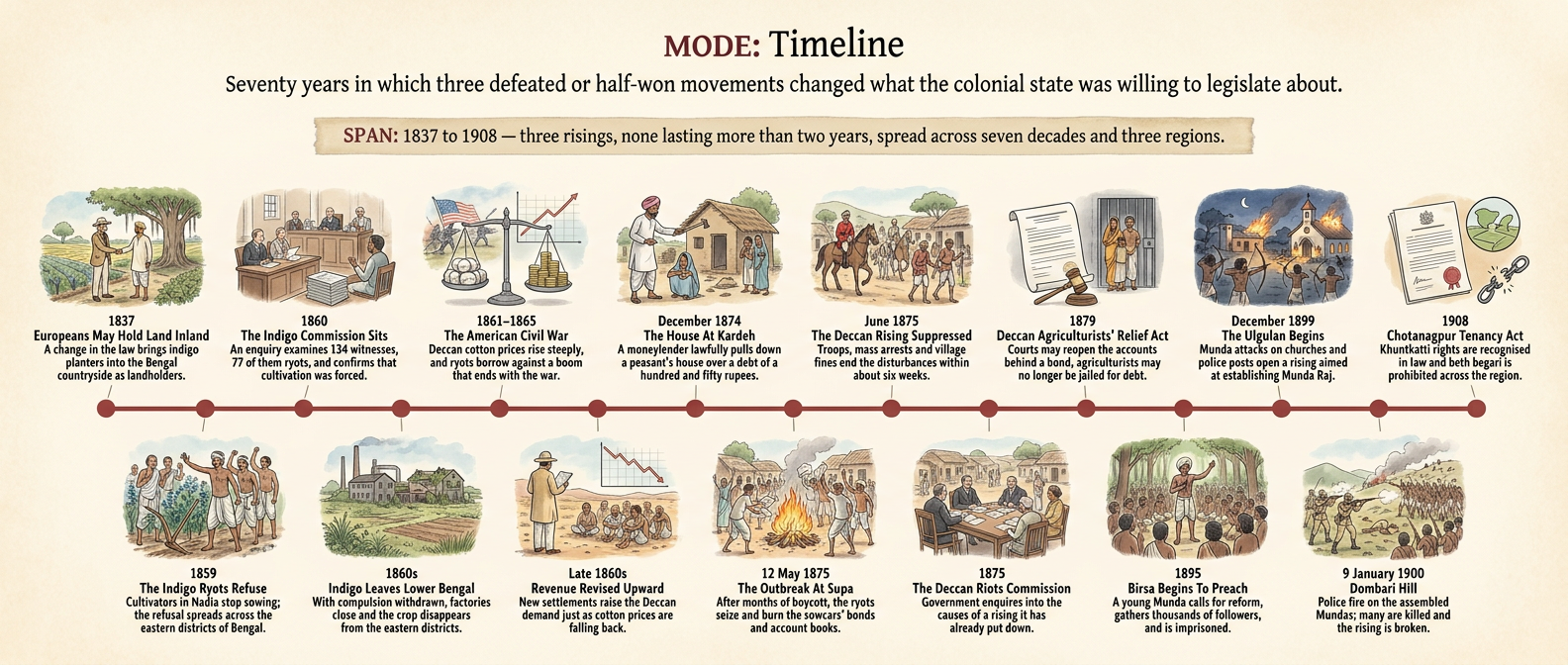
Fig. 3.8 – Agrarian protest and colonial response, 1837–1908.
What The Evidence Cannot Tell Us
Not one of the peasants in this chapter left a written account of it. Everything we know about them comes through documents made by other people and for other purposes: enquiry depositions, court and police files, revenue records, missionary reports, newspapers and a play.
That shapes what can be known. We can trace what a planter paid, what a bond said and what a decree transferred, because those things were written down by the people who benefited from writing them down. What a household decided at night before refusing to sow, and why one village joined while its neighbour did not, is almost entirely lost.
The silences fall unevenly. Women appear in these records chiefly as victims of violence and almost never as participants, though they were present in every one of these movements; and those who never came before a commission, a court or a magistrate — the poorest, the landless, the migrants who left for the tea gardens — are the hardest of all to see.
3.6 Check Your Memory
Explain what the dadan was, and describe how a single advance could keep a ryot bound to indigo season after season.
What was the khuntkatti system? Explain, in your own words, why the arrangements the colonial administration introduced in Chotanagpur were incompatible with it.
The chapter says that most indigo in Bengal was grown under ryoti rather than nij cultivation. Explain what the difference was, and why that difference worked so strongly in the planter’s favour.
Look again at Fig. 3.3 and at what the chapter says about the sowcar’s bond. Why was the written document a more powerful instrument in the 1870s than village moneylending had been in earlier centuries?
Study Map 3.2. Name three of the affected talukas, and using the chapter’s account of cotton, revenue and debt, explain why the disturbances of 1875 were concentrated in this part of the Deccan.
Read Source 3.1 again. What does Harish Chandra Mukherjee’s language tell you about how the educated middle class of Calcutta viewed the peasantry? State one important thing the extract cannot tell you.
Read Source 3.2. Why did Lord Canning measure the indigo disturbances against ‘the days of Delhi’, and what does the comparison reveal about how the government understood agrarian protest?
Using Case 3.1 and Fig. 3.4, reconstruct the chain of events and pressures that led from the American Civil War to the burning of the bonds at Supa in May 1875.
The indigo ryots and the Munda rebels both took up struggle after years of petitions and court cases had failed. Hold their aims side by side: what did each movement actually want, and how did those aims differ?
The chapter sets out two readings of why colonial policy changed after these movements: that peasant protest forced the change, or that the state acted to protect order and its own revenue. Argue for either reading, using evidence from at least two of the three movements.