Chapter 12: Rise Of Militarism In Japan (1919–37)
On the morning of 14 November 1930, the Prime Minister of Japan walked onto a platform at Tokyo Station. Hamaguchi Osachi was travelling west to attend army manoeuvres. The platform was crowded, as it always was. A young man pushed close to him and shot him in the stomach.
Hamaguchi did not die that day. He was carried to hospital, recovered enough to appear once more before parliament, and then weakened again. He resigned in April 1931 and died in August of that year.
The man who shot him did not run, and did not deny what he had done. He belonged to an ultranationalist society, and he told the court his reason: the government had signed a treaty limiting the size of Japan’s navy, and had forced it through over the objections of the navy’s own commanders. In his eyes an elected cabinet had betrayed the armed forces, and through them the Emperor.
Almost everything we know about that morning comes from the next day’s newspapers, from hospital bulletins, and from the record of the trial. Those sources tell us what was done and what the assailant said he intended. They cannot tell us how many other Japanese quietly agreed with him — and that silence is the harder question.
Within eighteen months another Prime Minister would be killed, and no cabinet after that would risk a quarrel with the army.
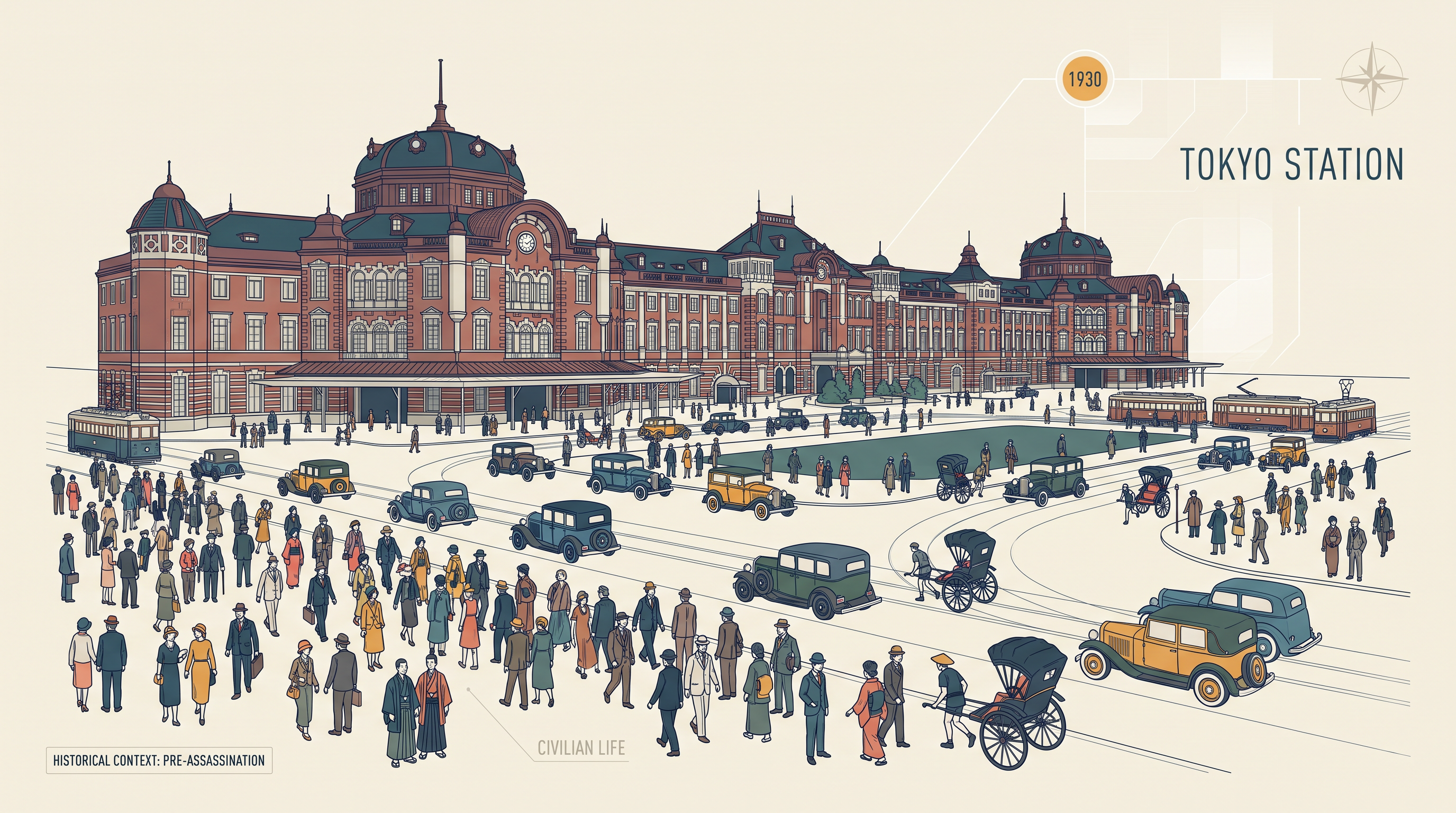
Fig. 12.0 – Tokyo Station in 1930.
12.1 What Militarism Meant In Japan
Between 1919 and 1937, Japan moved from being governed by elected cabinets to being governed, in effect, by its generals and admirals. No revolution announced the change. There was no seizure of the capital and no new constitution.
To understand how that happened, two things must be settled first. What exactly is militarism? And where did the Japanese army come from, that it was able to take such a hold on the state?
12.1.1 The Idea Of Militarism
Militarism is a condition of political life in which the armed forces and their values sit at the centre of the state, so that soldiers shape or make national policy and force is treated as the normal way to pursue the country’s aims.
Every state keeps an army. That by itself is not militarism. The word describes something narrower: the point at which the army stops being an instrument that the government uses, and becomes a power the government cannot control.
Three marks usually appear together. Soldiers begin to decide questions that belong to ministers, such as war and peace. Military virtues — obedience, discipline, sacrifice, readiness to die — are taught as the highest virtues of the whole nation, not only of the barracks. And expansion by force comes to be seen as legitimate, even necessary.
Each of these marks can be tested against the evidence, and each of them appears in Japan across the years this chapter covers. What has to be explained is not one decision but a slow shift of weight, from the elected side of the state to the armed side.
12.1.2 From Shogun’s Retainers To A Conscript Army
Japan’s warrior class took shape from about the tenth century. Its members, the samurai, held land or drew a stipend from a lord and owed him armed service in return. Warrior status was hereditary, and by law nobody else carried the long sword.
From the late twelfth century the country was governed by a shogun — not merely a senior officer, but the actual ruler of Japan, who governed in the Emperor’s name. The Emperor remained in Kyoto, honoured and largely powerless. The last of these warrior governments, the Tokugawa shogunate, held power from 1603 until 1868.
The Restoration And The New Army
In 1868 a group of young samurai from outlying domains overthrew the shogunate and restored the Emperor to the centre of government. This is the Meiji Restoration, named after the reign title of the young Emperor in whose name it was carried out. Its leaders had watched European powers force treaties on Qing China, and were determined that Japan would not be treated the same way.
A hereditary warrior class could not supply the army they wanted. In 1873 the new government ordered conscription: military service was required of ordinary men, drawn from farming and town families, and no longer confined to those born into warrior households. Within a few years samurai status itself had been abolished as a legal order, along with the stipends that went with it.
The new forces were built on foreign models. The army studied French and then German methods; the navy was trained on British lines. Officers were promoted for training and performance rather than birth, which made the services a rare route by which a farmer’s son could rise.
In 1882 an imperial rescript was issued to soldiers and sailors in the Emperor’s name. It told them that loyalty was their first duty, and it warned them explicitly to keep out of politics. Both halves of that instruction mattered later, though not in the way its authors intended.
Japan’s illustrators and photographers recorded the new army carefully, and those images are themselves evidence — of a kind that has to be read with care. Fig. 12.1 is one such photograph.
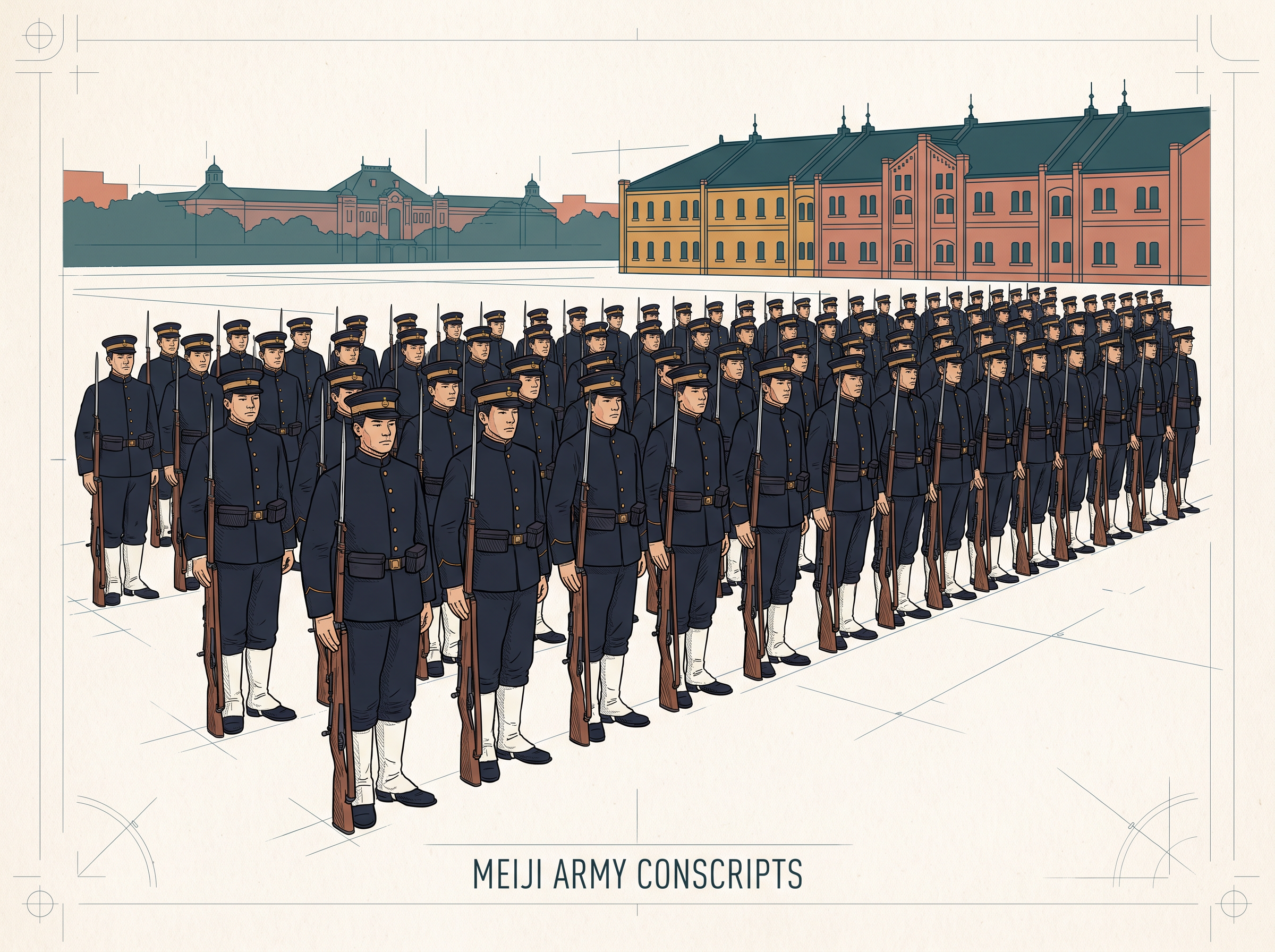
Fig. 12.1 – Conscripts of the new imperial army.
12.1.3 Victories That Bred Confidence
Within a generation the new army was tested twice, and won twice.
The first Sino-Japanese War of 1894–1895 was fought against Qing China over influence in Korea. Japan won decisively. By the Treaty of Shimonoseki in 1895 it took Taiwan and gained a foothold on the Asian mainland.
That gain was immediately cut back. Russia, France and Germany pressed Japan to return the Liaodong Peninsula, in southern Manchuria, and Japan gave way. The lesson many Japanese drew was blunt: European powers respected only strength, and Japan did not yet have enough of it.
The War With Russia
The Russo-Japanese War of 1904–1905 followed from that unfinished quarrel. Japan defeated Russia on land and at sea, and the Treaty of Portsmouth in 1905 gave it the southern half of Sakhalin, the leased territory in southern Manchuria that had been taken from it a decade earlier, and control of the railway running north through southern Manchuria — together with the right to keep troops there to guard the line.
This was the first time in the modern age that an Asian state had defeated a European great power in a full war. Japanese prestige abroad rose sharply. So did the standing of the army and navy at home.
The Lesson Drawn From Victory
Japan is a chain of islands with little iron ore, no oil worth speaking of, and limited farmland for a population that was growing fast. Raw materials had to be bought abroad, and manufactured goods had to be sold abroad.
Out of two victories came a conclusion that would matter enormously in the 1930s: that territory taken by force could supply what Japan lacked, and that expansion was therefore not an adventure but a solution. Fig. 12.2 sets out the stages by which the army reached that position.
It is worth being precise here. That conclusion was a reading of events, not a fact contained in them. Other conclusions were available — that trade could supply raw materials more cheaply than conquest, or that seized territory would have to be held against its own people at permanent cost. Which reading prevailed depended on Japan’s politics, and it is to those politics that the chapter now turns.
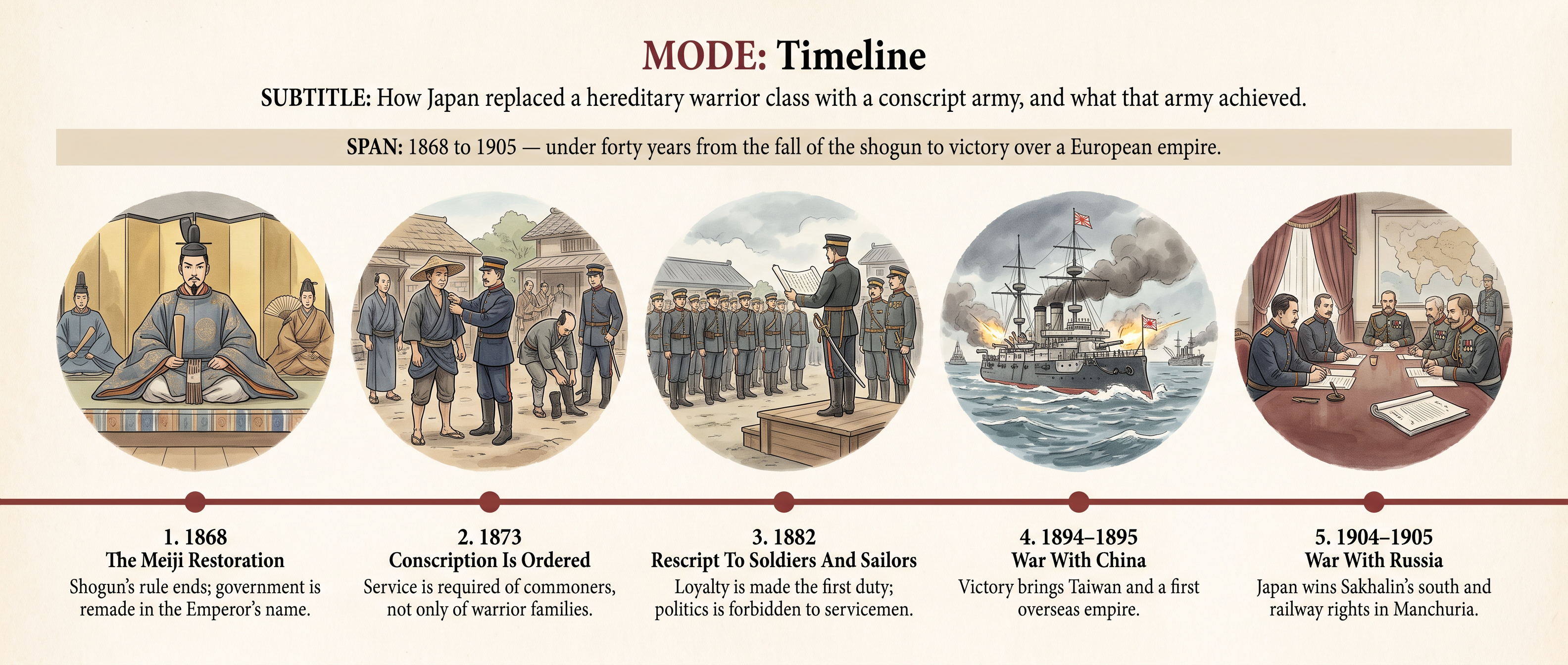
Fig. 12.2 – Building the army that later ruled.
12.2 Democracy In Question
Japan in 1919 had a written constitution, an elected chamber, political parties, newspapers and elections. On paper it looked like a European parliamentary state, and its leaders wanted it to look that way.
Yet within fifteen years the elected side of that state had lost its authority almost entirely. Part of the explanation lies in the constitution itself, and in what it quietly did not say.
12.2.1 The Constitution And The Place Of The Emperor
Demands for a representative assembly had grown through the 1870s and 1880s. The Meiji leaders answered them on their own terms. A constitution was drafted under close government control, studied against European models, and promulgated on 11 February 1889. The first general election was held in 1890, and the new parliament met later that year.
The Meiji Constitution created four bodies. The Diet was the parliament, made up of an elected House of Representatives and an appointed House of Peers drawn from the nobility and from imperial nominees. The cabinet of ministers ran the departments of state. The Privy Council, a small body of senior figures appointed for life, advised the Emperor on constitutional questions.
Above all of them stood the Emperor. The constitution described him in terms that placed him outside ordinary politics altogether, and it is worth reading its own words rather than a summary of them.
The Gap At The Centre
Article 11 is the crucial one. Command of the army and navy rested with the Emperor alone, and the services took their orders from him directly. This was the right of supreme command, and it meant the fighting services were not answerable to the cabinet in the way that, say, the finance ministry was.
The Emperor, in practice, did not draft military plans. Officers did, and then presented them as the Emperor’s will. A minister who objected was not merely disagreeing with a colleague; he could be accused of interfering with something sacred.
The services held a second lever. The army and navy ministers were in practice always generals and admirals, and a service that disliked a cabinet could refuse to supply one. Without those ministers a cabinet could not be formed, or could not survive.
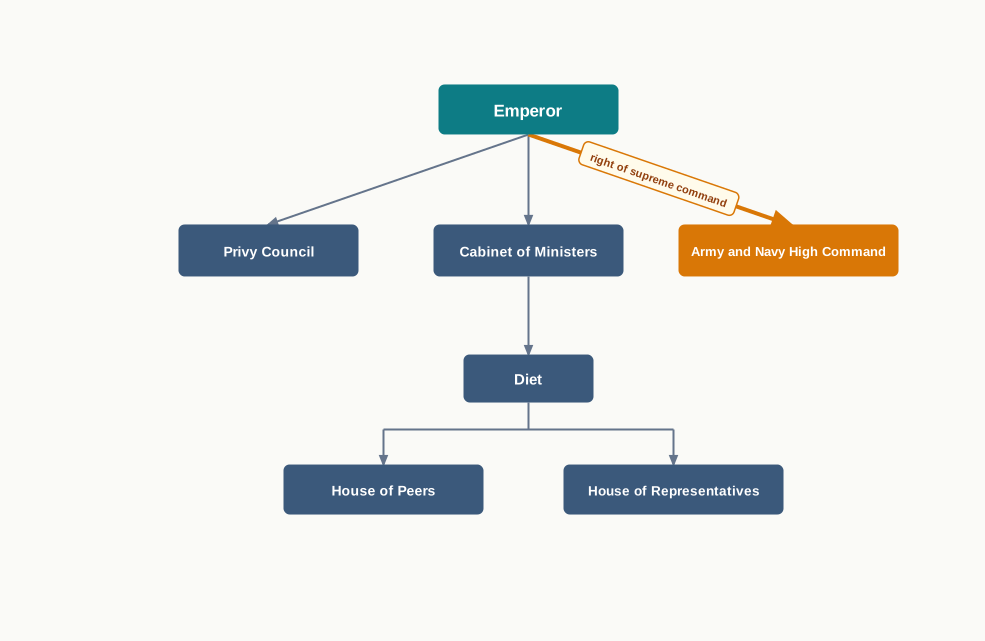
Fig. 12.3 – The Emperor’s right of supreme command.
12.2.2 Elite Support Withdrawn After The First World War
For its first thirty years the arrangement suited Japan’s ruling groups well. The Diet could be managed, elections were fought on a narrow franchise, and the men who had made the Restoration still guided the state from behind the scenes.
The First World War changed the balance. From 1918 the leader of the largest party in the House of Representatives began to be appointed Prime Minister, and between 1924 and 1932 party cabinets were treated as the normal way of governing. In 1925 the vote was extended to all men over twenty-five, multiplying the electorate several times over.
Why The Old Elite Turned Critical
Mass politics alarmed the conservative side of the state. Trade unions grew, tenant farmers organised against landlords, and socialist ideas circulated in the cities and universities. In the same year that the franchise was widened, the government passed a law allowing severe punishment for organising against the existing political order — an admission of how frightened it was.
The House of Peers, the Privy Council, the senior bureaucracy and the officer corps had never been elected, and now saw an elected chamber claiming to speak for the nation. From the 1920s they used every opportunity to discredit party government: every scandal, every failed policy, every concession made abroad.
Nor was the criticism only verbal. In 1921 Prime Minister Hara Takashi, the first party leader to head a cabinet, was stabbed to death by a young right-wing assailant. Political violence against elected leaders began early, and it went on.
12.2.3 Soldiers And Party Politicians Pull Apart
By the late 1920s the army and the elected cabinets no longer wanted the same things abroad, and the disagreement was fundamental rather than technical.
Party governments, and particularly the foreign minister Shidehara Kijūrō, held that Japan’s prosperity depended on trade, on good relations with Britain and the United States, and on negotiating with China rather than seizing from it. This was cheaper than war, and it kept open the markets Japanese industry needed.
Senior officers rejected the whole approach. To them, a Japan that depended on the goodwill of other powers for its iron, oil and markets was a Japan that could be strangled whenever those powers chose. Security, in their view, meant holding the resources directly.
The Army Gains The Argument
Manchuria, the large region of north-eastern China where Japan already held railway and leasing rights, became the test case. The army pressed for outright control of its coal, iron and farmland. Cabinets refused to authorise it.
The argument was not settled in the Diet, because the army had a public as well as a chamber to appeal to. Officers who spoke of national strength and quick solutions were heard sympathetically by people who could see little strength and no solutions coming from their politicians.
That sympathy is the hinge of this chapter. A constitution that left the forces outside cabinet control was dangerous only if the forces chose to act on it — and popularity was what made the choice look safe.
12.3 Politicians And Corruption
A constitution can leave a gap. It takes something else to make people willing to see that gap filled by soldiers.
In Japan through the 1920s and early 1930s, that something else was contempt for the politicians. Whether the contempt was deserved in full is a separate question, and a good one to keep open while reading this section.
12.3.1 Scandal And Faction Inside The Diet
Party politics in Japan was expensive. Elections had to be fought, local supporters kept loyal, and newspapers kept friendly, and the money for all of it had to come from somewhere.
Much of it came from the zaibatsu — the great family-controlled business combines, each spanning banking, mining, shipping and manufacture, which dominated the Japanese economy. The connections were open enough to be common knowledge, with particular houses widely understood to fund particular parties.
What flowed back was equally visible: government contracts, licences, appointments, favourable decisions. Charges of bribery and favouritism were made in the House of Representatives, denied, and answered with counter-charges. Debates were disorderly and occasionally violent, and the newspapers reported every scene of it.
Rivalry Inside The Parties
Factional rivalry made the picture worse. Parties were not disciplined blocs but coalitions of groups around individual leaders, and a change of faction could bring down a cabinet as easily as a defeat in an election.
To a public watching from outside, the parties therefore looked absorbed in their own affairs at a time of falling prices, lost jobs and shuttered mills. The charge that stuck was not simply that politicians were dishonest, but that they were dishonest while the country suffered.
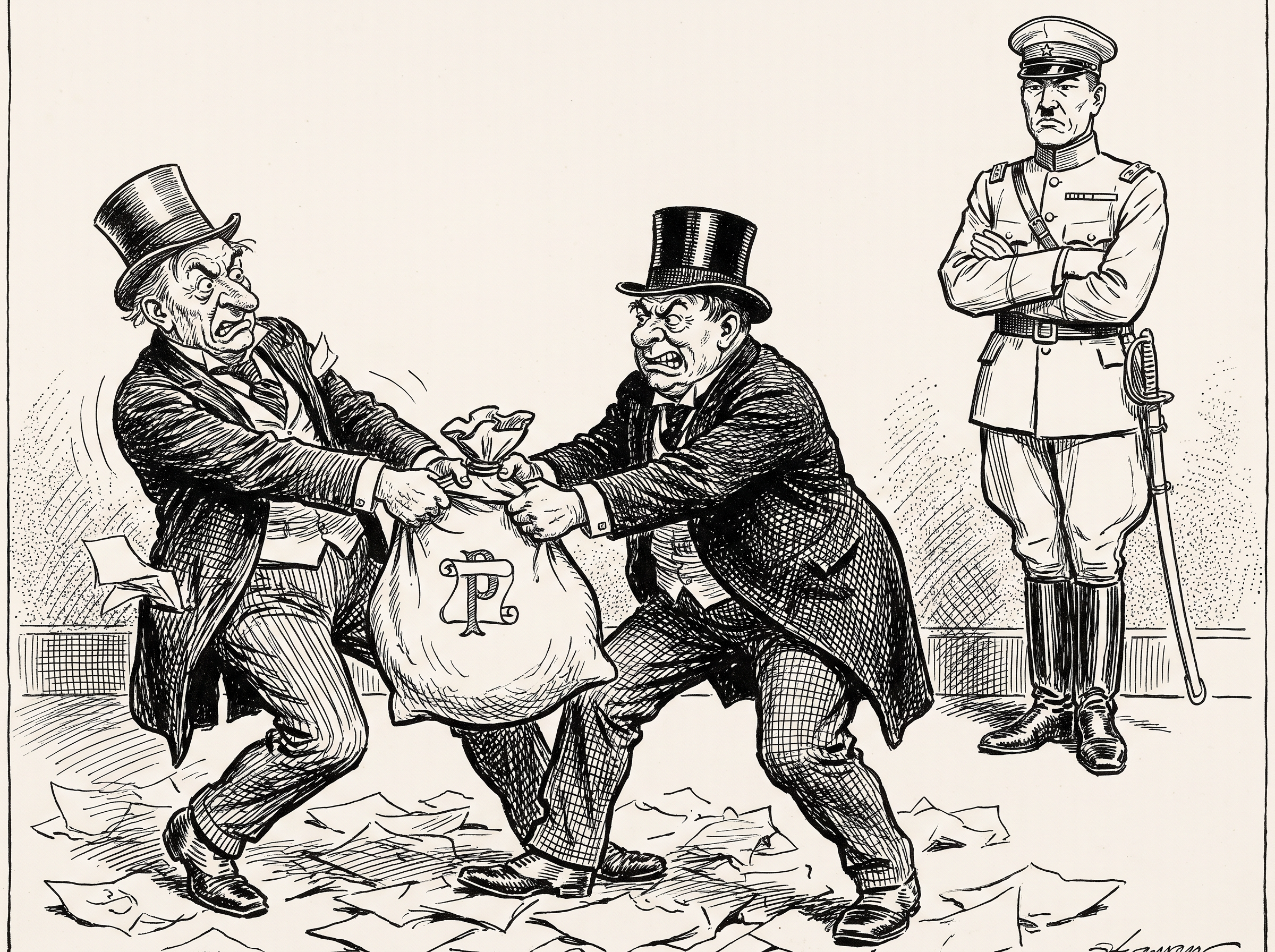
Fig. 12.4 – Politicians arguing over money while the army waits.
The Affair That Fixed The Image
One episode did more than any other to fix the impression of politics as a racket run at the nation’s expense.
Not every charge of corruption was proved, and this matters for how a historian reads the period. In 1934 a stock dealing scandal involving the Teijin company brought down a cabinet, and ministers and officials were arrested. When the trial finally ended in 1937, every defendant was acquitted.
12.3.2 A Cabinet That Could Not Restrain The Army
Contempt for politicians would have mattered less if cabinets had been able to enforce their authority over officers. They could not, and one episode showed it plainly.
Japanese forces guarding the railway in southern Manchuria had long dealt with Zhang Zuolin, the warlord who controlled the region. In June 1928 his train was blown up near Mukden and he was killed. The explosion had been arranged by officers of the Japanese garrison in Manchuria, acting entirely on their own initiative.
Prime Minister Tanaka Giichi undertook that those responsible would be identified and punished. The army resisted any public court martial, on the grounds that it would humiliate the service. The matter was closed with an internal disciplinary measure and no public trial, and Tanaka’s cabinet resigned in 1929.
The Lesson Officers Drew
The episode taught two lessons at once, and both were dangerous.
To junior and middle-ranking officers, it showed that unauthorised action on the continent could succeed and go unpunished. Japanese has a word for a subordinate overturning a superior — gekokujō — and contemporaries used it for exactly this pattern of officers making policy by presenting their government with an accomplished fact.
To the cabinet, it showed the limits of its own power. A Prime Minister who pressed the point lost his office, and his successors took the warning.
What grew in the space between a discredited Diet and an unpunished officer corps did not stay empty. The army offered itself as the one body still serving the nation rather than itself, and a great many Japanese, by the early 1930s, were ready to believe it.
12.4 The Economic Profile
Neither a gap in the constitution nor a discredited Diet is enough on its own to hand a country to its army. Millions of ordinary people had to become willing to see it happen, and what made them willing was hardship.
Japan’s economy between 1919 and 1937 was not simply poor. It rose and fell violently, and each fall reached further down into the villages.
12.4.1 From Wartime Boom To Post-War Slump
The First World War was extraordinarily good for Japanese business. The European powers turned their factories to war production and withdrew from Asian markets, and Japanese exporters moved into the space they left. Shipping, shipbuilding, textiles and chemicals all expanded, and Japan ended the war as a creditor nation rather than a debtor.
The boom ended almost as soon as the war did. European producers returned to the markets they had abandoned, prices of goods and shares collapsed in 1920, and firms that had expanded on wartime profits found themselves with capacity they could not use.
A Decade Of Shocks
The 1920s never fully recovered. In September 1923 a great earthquake destroyed much of Tokyo and Yokohama, killing very large numbers of people and wrecking factories, warehouses and the port. Banks were left holding loans against property and stock that no longer existed.
Those bad debts helped bring on a financial panic in 1927, in which banks failed and depositors queued to withdraw what they could. Agriculture had its own version of the same trouble: a run of good harvests pushed rice prices down, which sounds like good news until you remember that the farmer’s income is the price of rice.
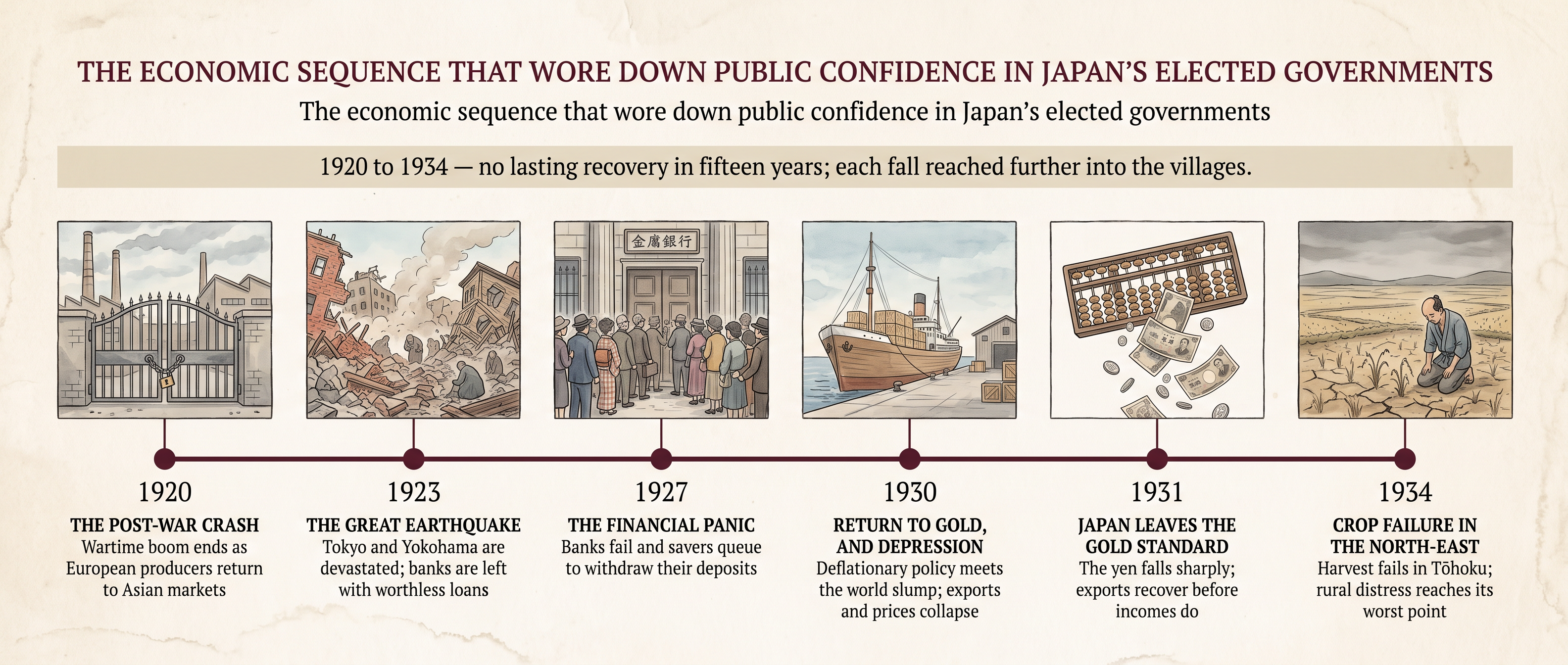
Fig. 12.5 – A decade and a half of economic shocks.
12.4.2 Too Many People, Too Little Land
Behind the shocks sat a slower problem. Japan’s population grew from roughly 56 million in 1920 to roughly 64 million by 1930, on a mountainous chain of islands where only a small share of the land can be farmed.
Farms were small, and were divided further between sons. Many families held too little land to live on and rented the rest, paying a large share of the crop to a landlord. Disputes between tenants and landlords rose steadily through the 1920s.
Those who could not live in the village went to the cities, where industry could not absorb them all. Unemployment rose, wages were low, and the cities grew crowded and unhealthy.
The Closed Doors
Emigration had once relieved some of this pressure. That door was closing: the United States legislated in 1924 to bar Japanese immigration altogether, a measure widely felt in Japan as a public insult as well as an economic loss.
The country also had to buy abroad most of what its industries consumed — iron ore, oil, raw cotton — and even part of its food. To buy, it had to export. This is the point on which the whole economic story turns, and the next subsection follows the single commodity that carried it.
12.4.3 The Slump Of 1929 And The Collapse Of Silk
Japan’s greatest single export was raw silk, and its overwhelming buyer was the United States, where the silk went into stockings and dress fabric. Silk was reeled from cocoons raised by farming families, so the American market reached directly into the Japanese village.
In January 1930 the government returned the yen to the gold standard at its old value. The intention was to restore confidence and force inefficient firms to become competitive. The effect, arriving exactly as the world slump deepened, was to make Japanese goods dearer abroad and to drive prices down at home.
Then American demand for silk collapsed. Incomes in the United States were falling, luxury spending stopped first, and artificial fibres were beginning to take part of the market in any case. Silk prices fell by more than half within about two years. Other markets offered no escape, because governments across the world were raising tariffs to protect their own producers.
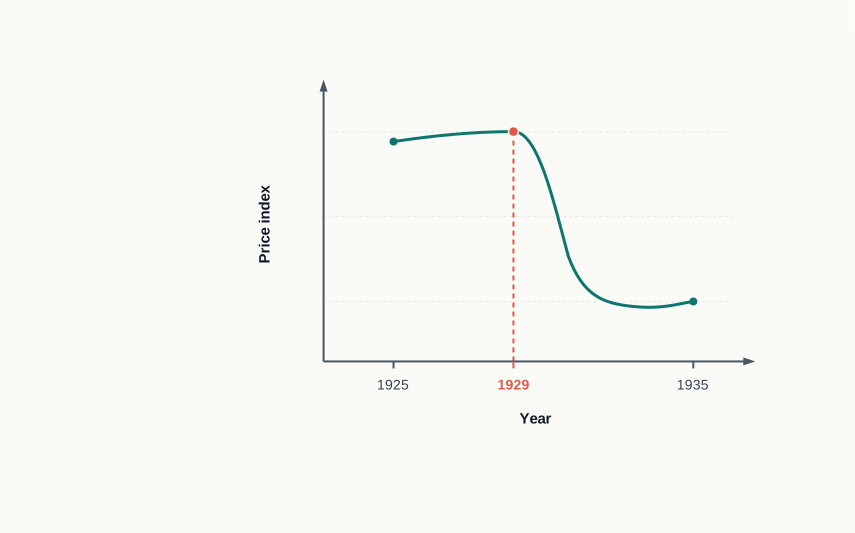
Fig. 12.6 – Raw silk export prices, 1925–1935.
Japan abandoned the gold standard in December 1931. The yen fell, Japanese exports became cheap abroad, and manufacturing recovered faster than most economies in the world. But recovery of factory output is not the same as recovery in the countryside, and the villages were still in distress when the crop failed in the north-east in 1934. There were verified reports that year of families in debt sending daughters away to work in mills and brothels.
12.4.4 The Village, The Barracks And The Loss Of Faith
Farmers and industrial workers did try to act politically. Tenant unions, labour unions and left-wing parties grew through the 1920s, seeking rent reductions, wages and relief.
The state answered them with the police. Mass arrests of communists were carried out in 1928, organisations were broken up, and meetings were watched and dispersed. A government that called itself constitutional was seen shutting down the very people its policies had ruined.
Why The Distress Reached The Army
This is where economics turns into militarism. Conscription drew soldiers from precisely those farming families, and a large share of junior officers came from rural districts too. Letters from home told them what was happening in the villages while they served.
Officers therefore did not need to be told that the countryside was suffering; they had the evidence in their own families. Many concluded that a corrupt and helpless civilian order was destroying rural Japan, and that only the army stood outside the corruption.
The economic argument for expansion now became an argument about rescue. If Japan controlled land and resources on the continent, officers argued, its people would not be at the mercy of foreign buyers and foreign tariffs. That case was not proved, but after 1930 it did not need to be. It only needed to sound better than what people could already see.
12.5 The Nationalist Ideology
Hardship explains anger. It does not explain the particular direction the anger took.
Japanese in the early 1930s might have turned to the left, to the unions and parties that promised rent reductions and relief. Some did, and were suppressed. Far more turned instead to a set of ideas that made the army the true representative of the nation and expansion the cure for the nation’s troubles. Those ideas had been taught, printed and repeated for decades before the slump gave them their opening.
12.5.1 The Emperor, Kokutai And The Bushido Inheritance
At the centre of this outlook stood the Emperor. Hirohito came to the throne in 1926, and his position was not that of a European monarch. He was held to be the living head of an imperial line descended from the sun goddess, and therefore not one institution among others but the source of the nation’s identity itself.
The word for this belief was kokutai, usually translated as national polity or national essence. It taught that Japan was not simply a country but a single family, unbroken since its divine beginnings, with the Emperor as its head and every subject as a member.
Why That Idea Was Politically Useful
Kokutai was not a neutral piece of national pride. It made obedience a family duty rather than a political choice, and it made criticism of the state look like disloyalty to a father.
It was also, crucially, available for use. Because the Emperor rarely spoke publicly on policy, others could claim to speak for him. An officer who acted against a cabinet could present himself not as a rebel but as a loyal servant removing bad advisers from around the throne.
The Warrior Inheritance
Alongside kokutai ran bushido, the ‘way of the warrior’ — a code of loyalty to one’s lord, personal honour, and indifference to death. Nationalist writers presented it as the ancient soul of Japan, inherited from the samurai and now belonging to the whole people.
Historians have looked hard at that claim, because the evidence for a single continuous code is thinner than the confident language suggests.
12.5.2 Asia For The Asians
The second strand of the ideology looked outward. Japan, its advocates argued, was the one Asian country that had modernised on its own terms and defeated a European empire in war. From this came a claimed mission: to lead Asia and to free it from Western domination.
The slogan was ‘Asia for the Asians’, and its appeal was real. Across colonised Asia there were people who admired Japan for precisely the reason it gave.
But there was a contradiction inside the argument, and it should be stated plainly. Japan itself ruled Taiwan and Korea, and its aims on the Chinese mainland were aims of control. Liberation from Western empires, in practice, meant substitution of a Japanese one.
The strength of this idea was that it turned an economic demand into a duty. Seizing resources sounded like theft; leading Asia sounded like service. The same policy could be described in either language, and after 1930 the second description was the one the newspapers used.
12.5.3 The Resented Naval Treaties
Nothing sharpened nationalist feeling more effectively than the naval treaties, which nationalists read as proof that the Western powers meant to keep Japan permanently second-rate.
The Washington Naval Treaty of 1922 was signed by Britain, the United States, Japan, France and Italy. It limited the largest warships each could keep, and it set the limits in a fixed proportion: for every five capital ships allowed to Britain and to the United States, Japan was allowed three.
Japanese negotiators had accepted this because the treaty also ended a costly building race that Japan could not have won. Naval officers and nationalist societies saw only the ratio, and read it as a formal statement that Japan was two-fifths less than a Western power.
The London Naval Treaty of 1930 extended limits to smaller warships. Japan secured better proportions than at Washington in most classes, but less than its naval staff had demanded in heavy cruisers.
The Quarrel Over Who Decides
The London treaty produced a constitutional storm as much as a naval one. Critics argued that by accepting limits against the naval staff’s advice, the cabinet had trespassed on the Emperor’s right of supreme command — a matter, they said, in which ministers had no authority at all.
That argument mattered far beyond the ships. It asserted that on any question touching the forces, an elected government could be overruled by appeal to the Emperor’s prerogative.
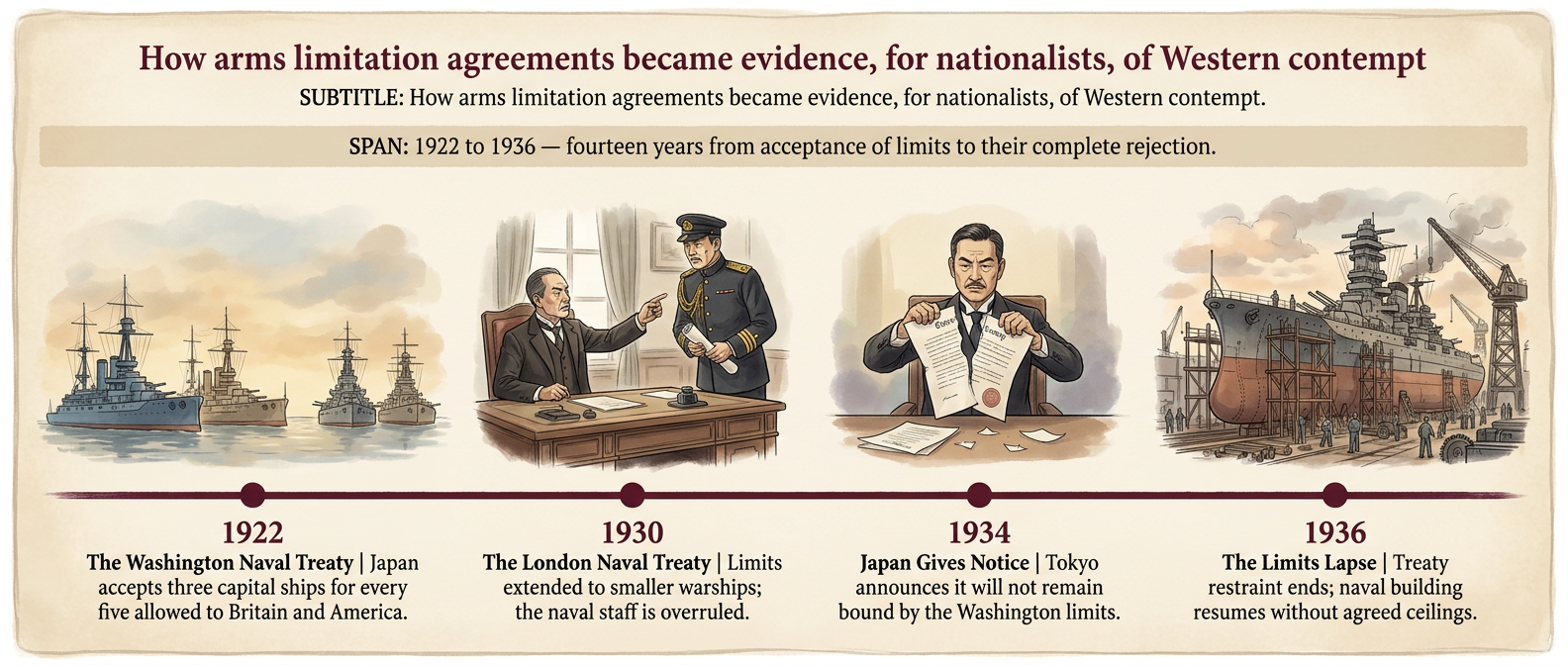
Fig. 12.7 – Japan and the naval treaties.
12.5.4 Schools, Press And The Making Of Loyalty
These ideas did not float free. They were taught systematically, from the first years of school, to every child in the country.
The instrument was the Imperial Rescript on Education, issued in the Emperor’s name in 1890 and still central to Japanese schooling forty years later. It was read aloud at school ceremonies, in the presence of the Emperor’s portrait, while pupils bowed their heads.
The moral instruction lessons that followed the rescript taught duty to parents, to teachers, to the state and to the Emperor as one continuous chain. From 1925 serving army officers were attached to secondary schools to conduct military training, so that drill and discipline became part of an ordinary education.
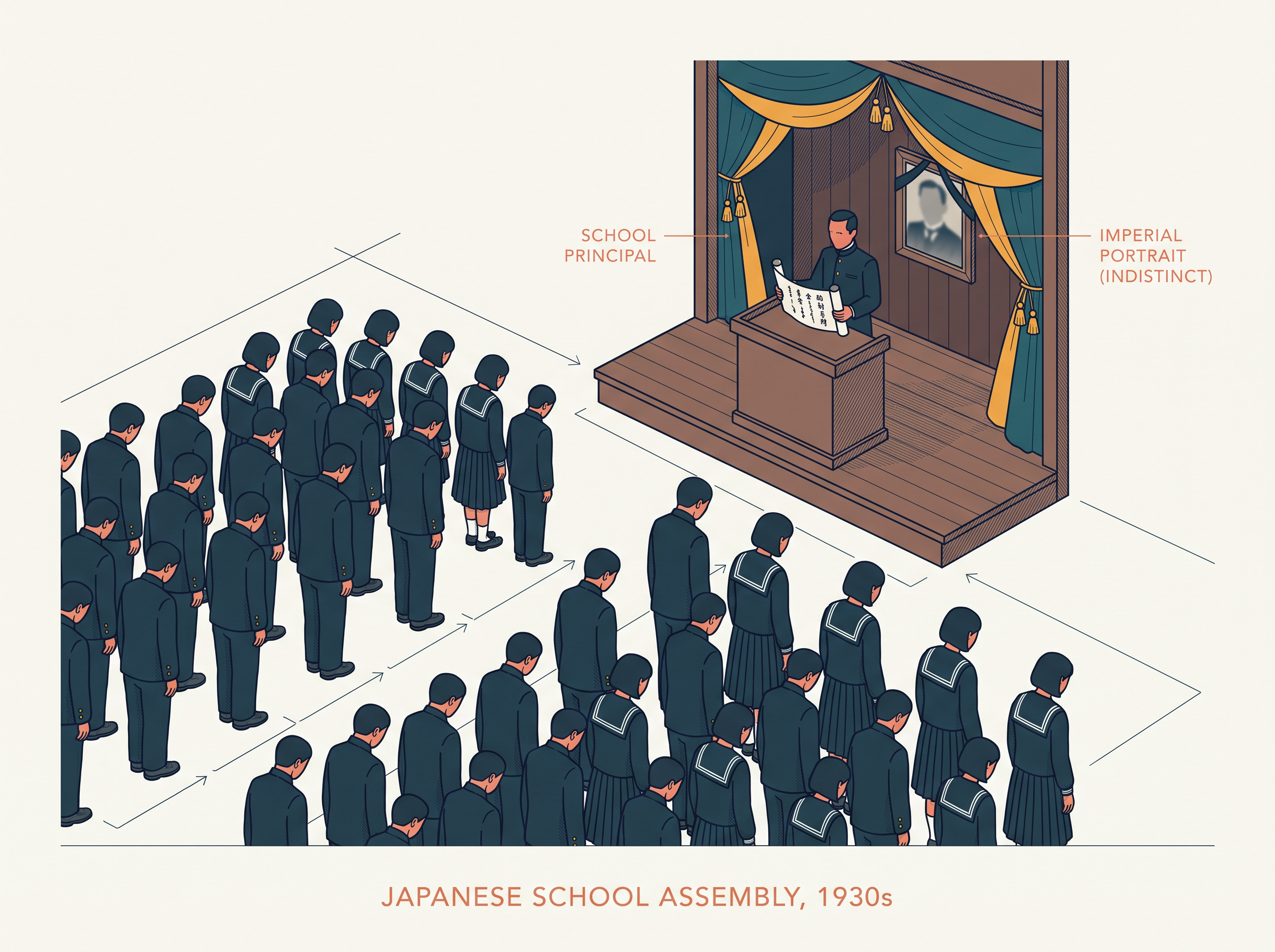
Fig. 12.8 – School ceremony and the Emperor’s portrait.
The press completed the work. Newspapers competed for circulation with photographs of soldiers, accounts of heroism and reporting that presented the army’s actions abroad as national achievements. Editors who criticised the forces lost readers and risked worse.
By 1931, therefore, an argument for military action did not have to be won from the beginning. A public trained for a generation in duty, sacrifice and imperial loyalty, and now impoverished, was already inclined to accept it. What that public would accept was tested in Manchuria, and the test is the subject of the next section.
12.6 The Turning Point In Manchuria
Everything set out so far — a constitution that left the forces outside cabinet control, a discredited Diet, an impoverished countryside, an ideology of loyalty and mission — describes a country in which a military seizure of policy was possible.
What made it actual was a single night in September 1931, and the response to it over the following eighteen months.
12.6.1 The Mukden Incident, September 1931
Manchuria was the north-eastern region of China, roughly three times the size of Japan itself, rich in coal, iron and soya beans, and thinly settled compared with the Chinese provinces to the south. Under the 1905 settlement Japan held a leased territory there, the railway running north through it, and the right to station troops to guard the line.
Those troops were the Kwantung Army, and by 1931 they had become something more than a railway garrison. Their officers held strong views about Japan’s future on the continent, and they had already shown, in 1928, that they would act without orders.
Fig. 12.9 shows what they were guarding and how close it lay to Japan’s existing empire.
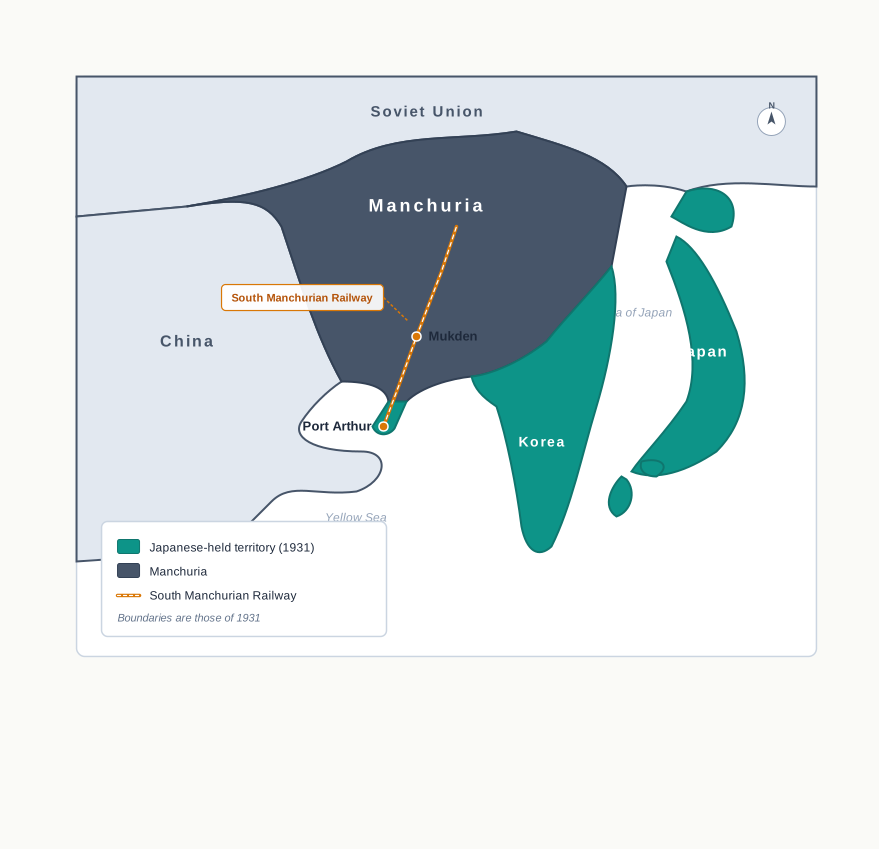
Fig. 12.9 – Manchuria and the South Manchurian Railway, 1931.
The Night Of 18 September
On the night of 18 September 1931 a small explosive charge went off beside the railway track near Mukden. The damage was slight; a scheduled train passed over the line shortly afterwards without difficulty.
The Kwantung Army announced that Chinese troops had sabotaged the railway, and moved at once against the Chinese garrison at Mukden. Within hours it held the city. Within months it held the whole of Manchuria, in fighting that killed many Chinese soldiers and civilians and displaced far more.
The explosion had been staged by Japanese officers themselves as a pretext for the invasion they had already planned.
The government in Tokyo had not authorised any of it. The cabinet announced a policy of non-expansion; the Kwantung Army expanded anyway, and the cabinet, having learned in 1928 what came of confronting the service, did not stop it. Ministers ended by defending in public an action they had opposed in private.
12.6.2 Manchukuo And The Applause At Home
Japan did not annex Manchuria. It did something less open and more useful: in March 1932 it proclaimed a new state there, called Manchukuo, formally independent of China.
Its nominal head was Puyi, who had been the last Qing emperor of China as a small child and had lived in retirement since. He was given a court, a title and no power. Japanese officials ran the administration, and the Kwantung Army ran the officials. Japan formally recognised Manchukuo in September 1932.
The Reception In Japan
The reaction at home is the part of this story that matters most for the chapter’s question, and it was overwhelmingly favourable.
Newspapers that had competed to criticise politicians now competed to celebrate the army. Films, songs and public subscriptions followed. To a public that had watched cabinets fail to protect village incomes for a decade, here at last was action that appeared decisive, cheap and successful.
The army’s argument seemed proved by events. It had promised resources, security and national standing, and had delivered visible results within months, without asking permission from anyone.
12.6.3 Assassination, The League And The Army In Command
Two events in the following year closed off the alternatives, one at home and one abroad.
At home, Prime Minister Inukai Tsuyoshi had criticised the army’s insubordination and resisted recognising Manchukuo. On 15 May 1932 a group of young naval officers entered his official residence and shot him dead.
Their trial became a demonstration in their favour. Petitions for leniency arrived in enormous numbers, the accused were allowed to explain their patriotic motives in open court, and the sentences were light. No leader of a political party formed a government again in pre-war Japan. Cabinets after 1932 were headed by admirals, generals and senior officials, and every one of them understood what confronting the forces might cost.
The Verdict Of The League
Abroad, China had appealed to the League of Nations, the body set up after the First World War to settle disputes between states peacefully. The League sent a commission of enquiry under Lord Lytton, which travelled to Manchuria and reported in October 1932.
The League Assembly adopted the report in February 1933 by an overwhelming majority. The Japanese delegation walked out of the chamber, and Japan gave formal notice of its withdrawal from the League the following month.
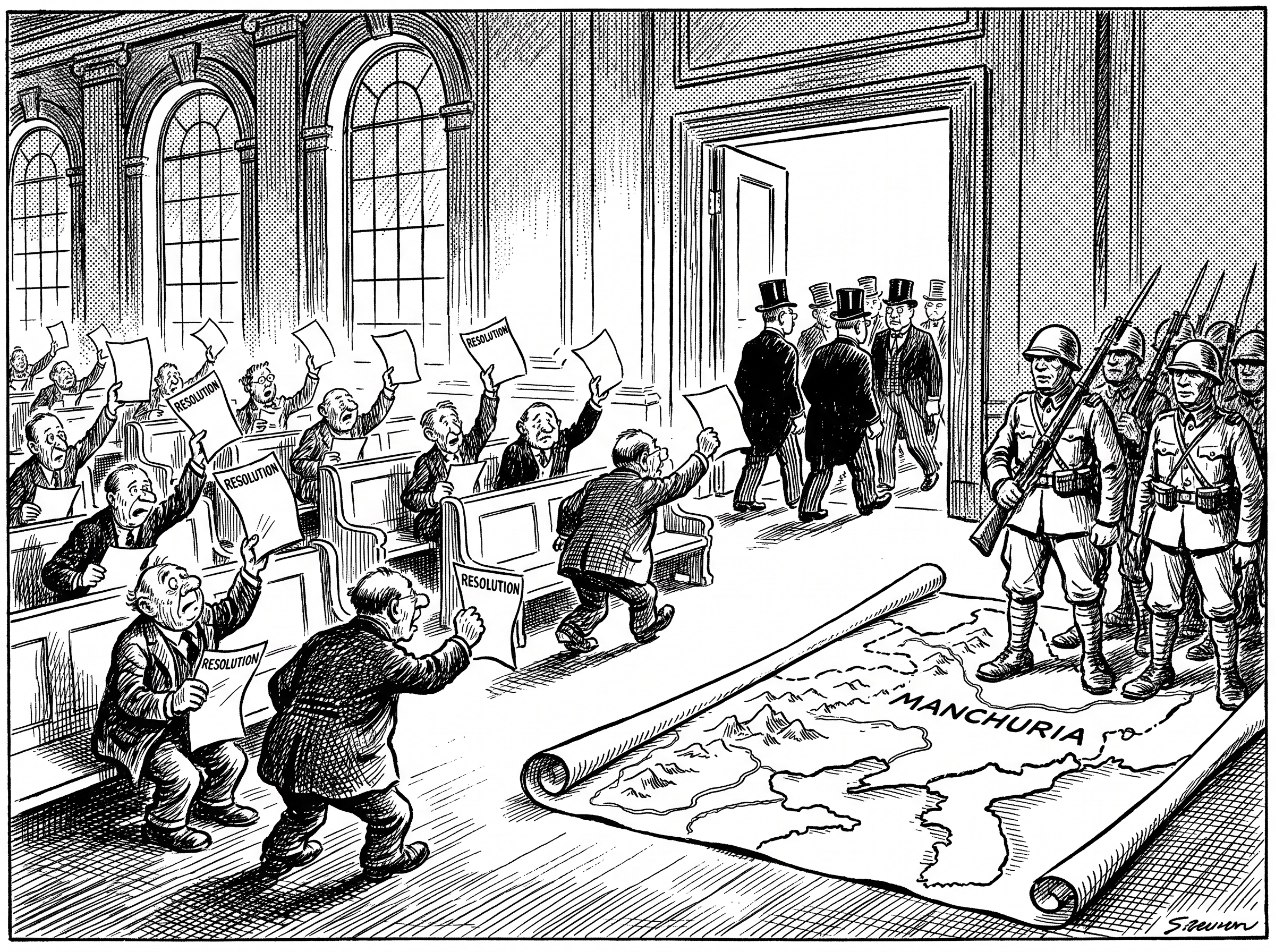
Fig. 12.10 – The League of Nations passes a resolution.
What the withdrawal demonstrated inside Japan was that defiance carried no cost. No sanctions followed, no force was used, and the militarists could point to a world that condemned Japan and did nothing about it. Their case for self-reliance through armed strength now looked like plain common sense.
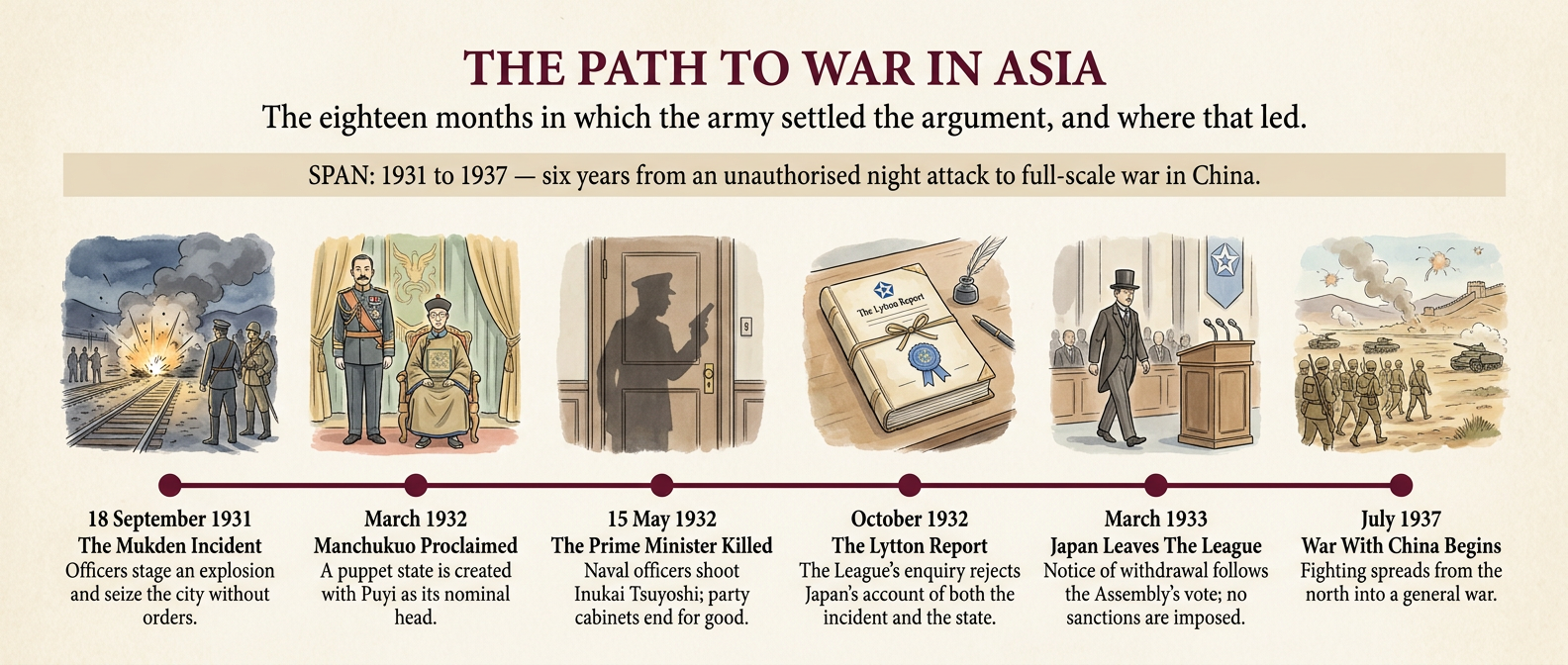
Fig. 12.11 – From the Mukden incident to war in China.
What The Turning Point Turned
It is worth being exact about what changed in these months, because the change was not a coup.
The constitution stayed in force. The Diet continued to meet, elections continued to be held, and the Emperor continued to reign. What ended was the ability of elected ministers to say no to the army — and once that had gone, the outward forms of the constitution mattered very little.
By 1937 the pattern set at Mukden had been repeated on a larger scale, and Japan was at full-scale war in China. The reasons for the rise of militarism in the 1930s are all present in the six years covered by Fig. 12.11, and every one of them was in place before the first charge was laid beside the railway.
12.7 Summary
What Militarism Was
- Militarism is the condition in which the armed forces and their values move to the centre of the state: soldiers decide questions belonging to ministers, military virtues are taught as national virtues, and expansion by force is treated as normal.
- Japan’s modern army was created deliberately after 1868. Conscription in 1873 replaced a hereditary warrior class with a force drawn from the whole population, built on European models.
- Victories over China in 1894–1895 and over Russia in 1904–1905 gave the services enormous prestige, and produced a conclusion that shaped the next thirty years: that territory taken by force could supply the raw materials and markets Japan lacked. That was a reading of events, not a fact contained in them.
The Constitutional Gap
- The Meiji Constitution of 1889 created an elected Diet, an appointed House of Peers, a cabinet and a Privy Council — but placed command of the army and navy with the Emperor personally.
- This right of supreme command meant officers were not answerable to the cabinet. A minister who objected to a military plan could be accused of interfering with the Emperor’s prerogative.
- Because the Emperor rarely spoke on policy, others could claim to act in his name. This is what made the constitutional gap usable.
- Party cabinets became normal between 1918 and 1932 and the vote was widened in 1925, but the unelected parts of the state — Peers, Privy Council, bureaucracy, officer corps — grew hostile as mass politics grew.
Why Ordinary People Turned Away
- Japan’s economy fell repeatedly: the post-war crash of 1920, the earthquake of 1923, the bank panic of 1927, and then the world slump.
- A growing population on limited farmland, small rented holdings and closed emigration left the countryside with no margin.
- Raw silk was the village’s cash income and the United States its buyer. When American demand collapsed after 1929 and the government returned to gold at the old parity, village income disappeared.
- Tenant and labour organisations that might have carried the anger leftwards were broken up by the police, while conscripts and many junior officers came from precisely the districts that were suffering.
Why The Anger Took A Military Direction
- Kokutai taught that Japan was a single family headed by a divine imperial line, making obedience a duty and criticism disloyalty.
- Bushido was presented as the ancient soul of the nation, though historians dispute how far it was a continuous code and how far a modern reconstruction.
- ‘Asia for the Asians’ turned a demand for resources into a claimed mission of liberation — while Japan itself ruled Taiwan and Korea.
- The naval treaties of 1922 and 1930 were read as formal statements of Japanese inferiority, and the London treaty produced the argument that ministers had no authority over anything touching the forces.
- Schools taught this outlook systematically through the Imperial Rescript on Education, moral instruction and, from 1925, military training under serving officers. The press amplified it.
The Turning Point
- On 18 September 1931 officers of the Kwantung Army staged an explosion on the South Manchurian Railway near Mukden and used it as a pretext to seize Manchuria, without the cabinet’s authority.
- Japan created the puppet state of Manchukuo in 1932 under Puyi. The action was celebrated at home as decisive, cheap and successful.
- Prime Minister Inukai Tsuyoshi was killed in May 1932, and no party leader headed a government again before the war. The assassins’ trial became a demonstration in their favour.
- The Lytton Report rejected Japan’s account, the League Assembly adopted it, and Japan withdrew in 1933 — with no sanctions and no consequences, which proved to militarists that defiance was safe.
- Nothing was formally overthrown. The constitution, the Diet and elections all remained. What ended was the capacity of elected ministers to refuse the army.
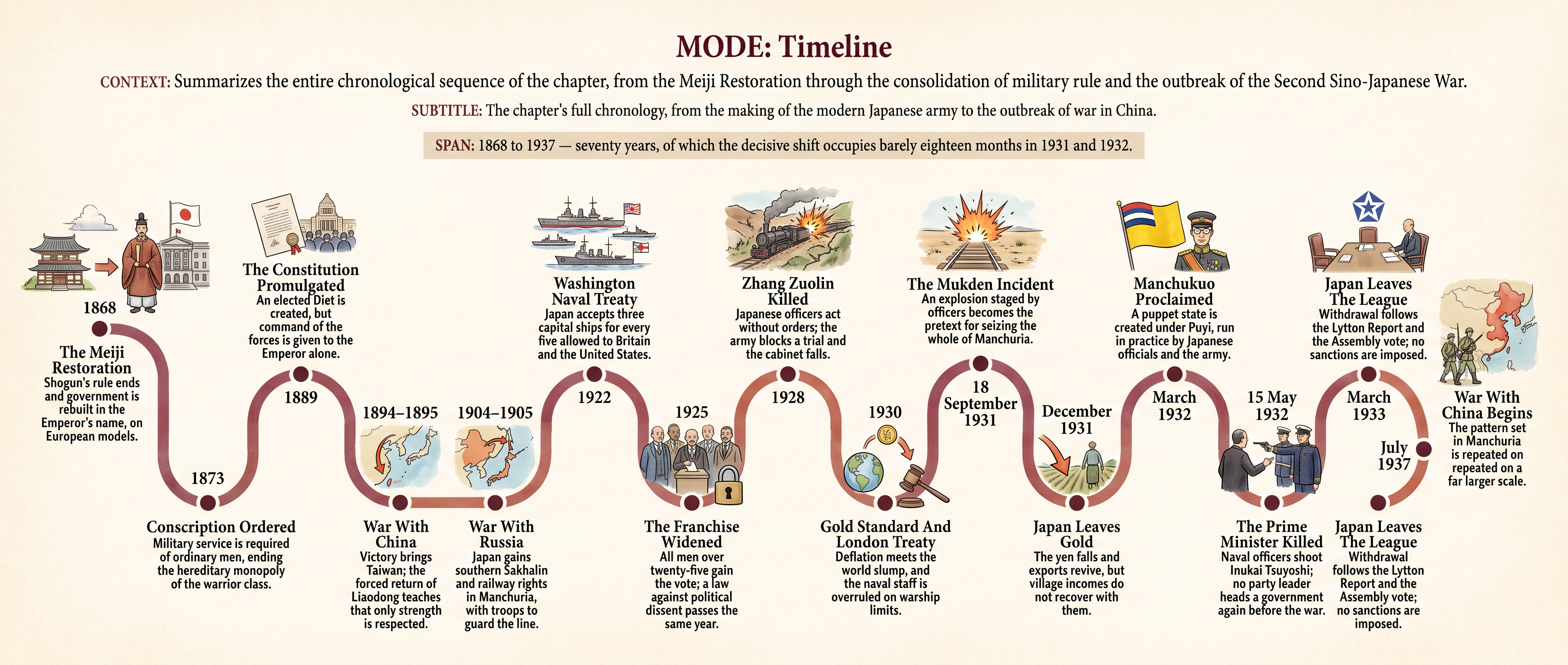
Fig. 12.12 – The road to military rule.
What The Evidence Cannot Tell Us
The people best recorded in this chapter are those who wrote: officials, officers, editors and politicians. The farming families whose silk income vanished after 1929 left few written accounts of their own, and much of what we know about them comes from officials counting them.
The Chinese inhabitants of Manchuria are recorded chiefly through Japanese administration and through an international commission that visited for a few months. Their own view of what happened to them after 1931 sits largely outside these sources.
And the sources are almost silent on the question that matters most. We can show what people were taught, what they read and what they cheered. We cannot show how many genuinely believed it, and how many stayed quiet because, by 1932, the cost of saying otherwise had been demonstrated in public.
12.8 Understanding The Chapter
Explain what militarism means, and set out the three marks by which this chapter identifies it. Show how one of those marks appeared in Japan between 1931 and 1937.
Why did the right of supreme command matter more to the fate of Japanese democracy than the powers held by the Diet? Answer with reference to what the constitution of 1889 did and did not give elected ministers.
Trace the chain of causes by which the collapse of American demand for raw silk after 1929 reached first the Japanese village and then the officer corps. Set out each step in order.
The chapter sets out two positions on what Japan should do about Manchuria — that of senior army officers, and that of the party cabinets and their foreign minister. Explain what each side wanted, the reasoning behind it, and the one thing both sides accepted.
12.9 Working With The Evidence
Read Source 12.1 again. What do its articles establish about where authority over the army and navy lay? What does the text not tell you about who actually exercised that authority?
Using Source 12.2, explain how Japanese schooling prepared a population to accept military action in the 1930s. Then explain what a document of this kind cannot tell a historian about what children actually came to believe.
Using Fig. 12.9, locate Mukden and the South Manchurian Railway. Explain why Japanese troops were stationed along that railway before 1931, and why their position there mattered on the night of 18 September.
The chapter states that the explosion near Mukden was staged by Japanese officers themselves. Set out the evidence on which that conclusion rests, and explain the limits of that evidence.
12.10 Weighing The Question
The chapter argues that we can show what Japanese people were taught and what they cheered, but not how many genuinely believed it. Explain why the surviving evidence cannot settle that question, and what a historian would need in order to answer it.
Historians disagree about Japan’s party government of the 1920s. One view holds that a working parliamentary democracy was destroyed by depression and army pressure; another holds that it never controlled the armed half of the state and so was never whole. Argue each case using evidence from this chapter, and state which you find stronger and why.