Chapter 4: Growth Of Nationalism
In December 1904 a note moved quietly through the offices of the Government of India. It was not a speech or a proclamation. It was a minute — an internal comment written on an official file, meant to be read only by other officials.
Its author was H. H. Risley, Home Secretary to the Government of India. The file concerned a proposal to divide the province of Bengal into two. In public, the government explained the plan as a question of administration: Bengal was simply too large to be governed well. Risley, writing where no newspaper could reach him, put it differently. A united Bengal, he observed, was a power; a divided Bengal would pull in several different directions. The Congress leaders feared exactly that — and their fear, he added, was one of the great merits of the scheme.
Risley never meant that sentence to be read in Bengal. It survives because governments keep their paper. Files were bound, stored, and in time opened to historians. A private calculation of 1904 became evidence a hundred years later.
Within a year Bengal was divided. Within weeks of the division, cloth shops stood empty, students walked out of their colleges, and a word few had used politically outside Bengal — swadeshi — was being spoken in Pune, the Punjab and Madras.
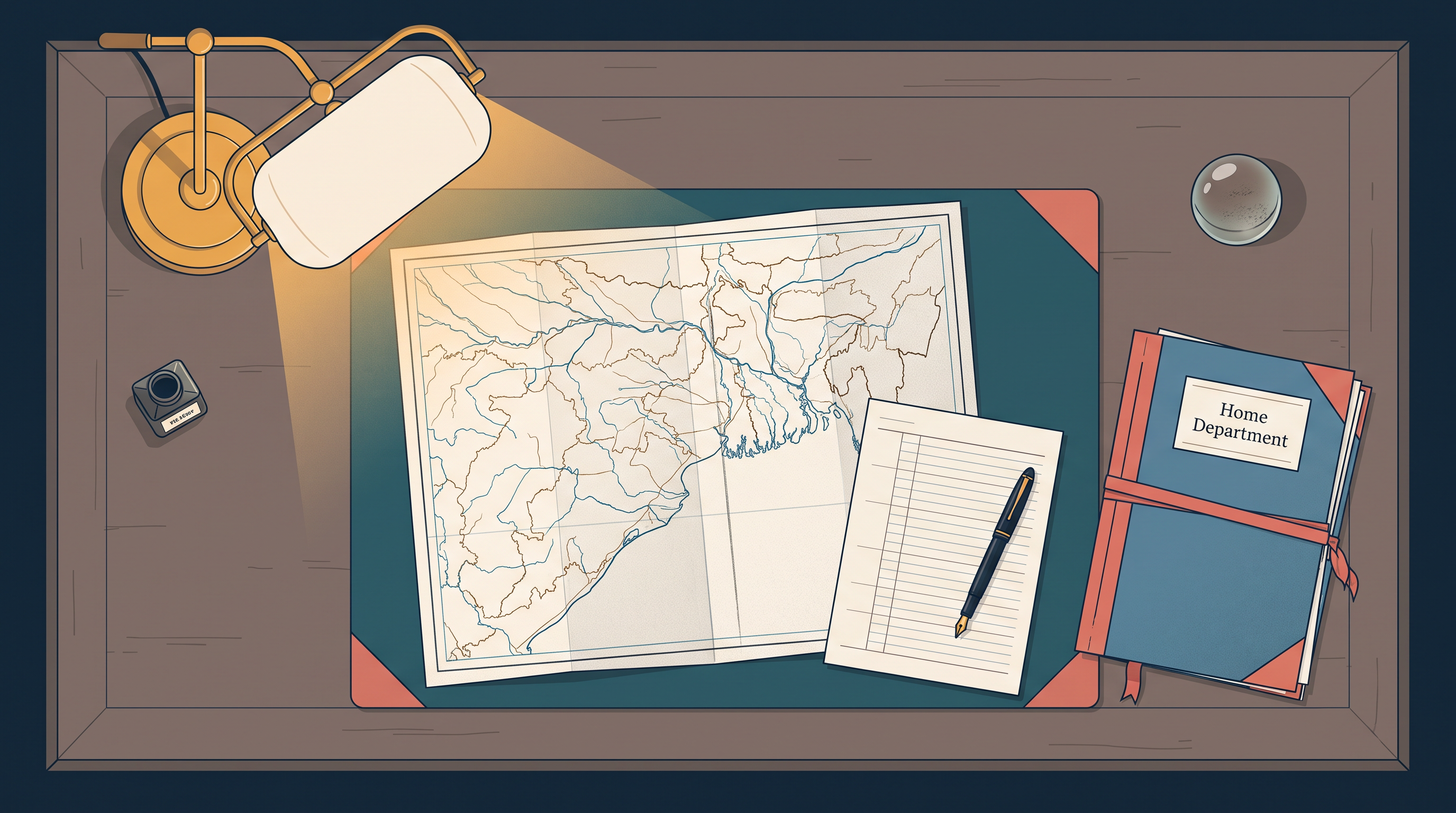
Fig. 4.0 – The partition of Bengal planned on paper.
4.1 The Partition Of Bengal
Nationalism is the belief that the people of a country form a nation with a right to govern themselves. In India this belief hardened slowly through the nineteenth century, in newspapers, classrooms, law courts and public meetings. What turned it, after 1905, into a movement of the streets was a single administrative order.
The order divided the province of Bengal in two. A partition, in this sense, is simply the splitting of one administrative unit into two — a line drawn on a map by government decision. But no line of this kind is only a line. It decided which district was governed from which capital, which language dominated which legislature, and which community formed a majority where.
The Viceroy who carried it through was Lord Curzon, who took charge in January 1899. He arrived with a reputation for efficiency and a low opinion of Indian political opinion. Two of his earlier measures had already angered educated Bengal: the Calcutta Municipal Corporation Act of 1899, which cut the number of elected Indian members in the city’s corporation, and the Indian Universities Act of 1904, which tightened government control over the universities. When the partition scheme appeared, it was read against that record.
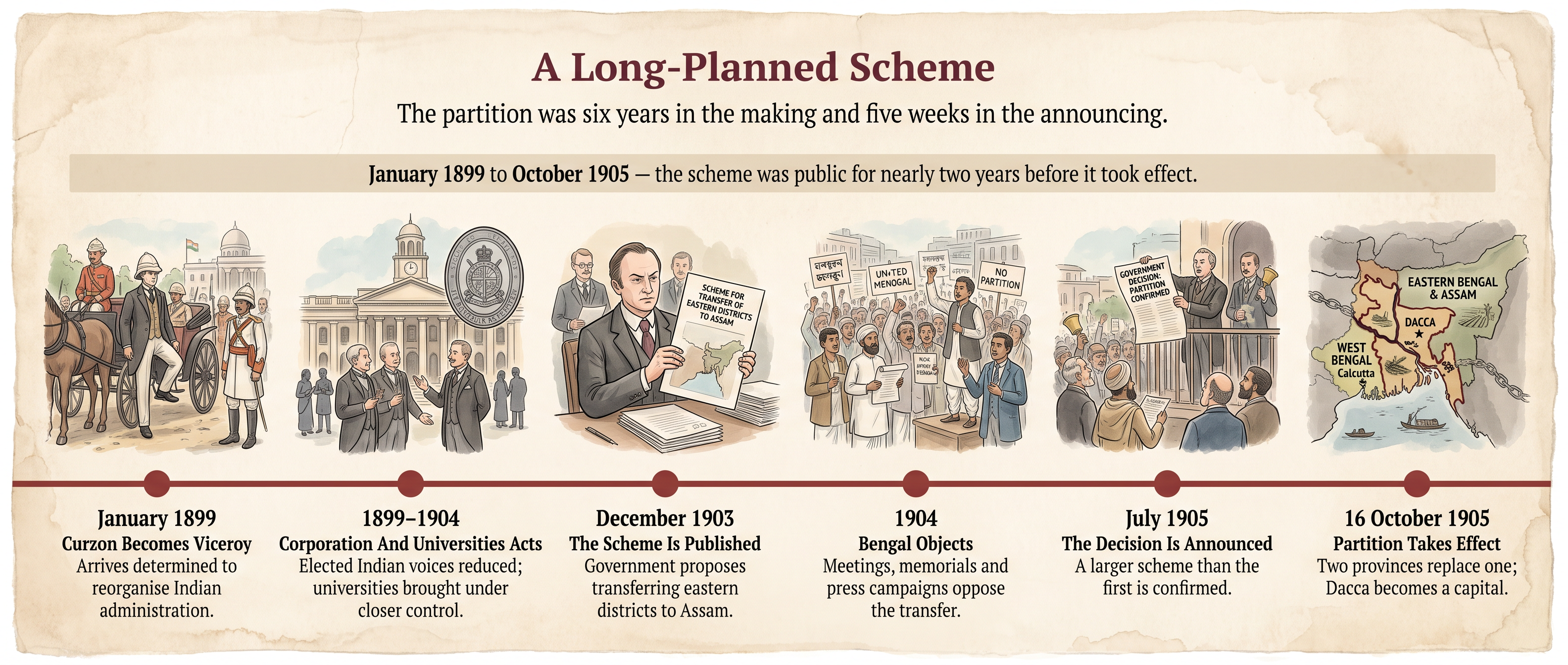
Fig. 4.1 – Curzon And The Bengal Scheme.
4.1.1 Bengal Before 1905
One Province, Many Peoples
A presidency was one of the three great administrative divisions with which British rule in India began — Bengal, Madras and Bombay. By 1905 the Bengal Presidency stretched from the Himalayan foothills to the Bay of Bengal, and from the Odia-speaking coast in the south-west to the Chittagong hills in the east. It contained Bengal proper, Bihar and Orissa.
Its scale was extraordinary. The census of 1901 counted roughly 78 million people in it — close to double the population of the United Kingdom at that date, and more than in any other province of British India. All of it was administered by one Lieutenant-Governor, the senior official who ran a large province on the Viceroy’s behalf, working from Calcutta.
Calcutta was not only the provincial capital. Until 1911 it was also the capital of British India. The Viceroy, the Bengal government, the High Court, the university, the newspaper offices and the biggest commercial houses sat within a few miles of one another. Whoever governed Bengal governed from the centre of everything.
A Province That Was Not One Nation
It is worth being clear about what the province was not. It was not a single language community. Bengali was spoken across its eastern and central districts; Bihar spoke Hindi, Maithili and Bhojpuri; Orissa spoke Odia. Bihari and Odia leaders had their own complaints about being ruled from a Bengali-dominated Calcutta.
This matters for judging what happened next. A government genuinely worried about size and language had obvious lines available to it — separating Bihar, or Orissa, or both. The line the government eventually drew did none of these things. It ran instead through the middle of the Bengali-speaking population.
4.1.2 The Official Case For Partition
The government’s scheme became public in December 1903, when it proposed transferring the Chittagong and Dacca divisions to Assam. Bengal protested for eighteen months. In July 1905 the government announced its decision — and the version it confirmed was larger than the one it had first proposed.
Five arguments were offered in public. First, administrative convenience: a province of 78 million could not be governed efficiently from a single desk. Second, distance: the eastern districts lay far from Calcutta, across a delta of rivers, and their affairs reached the capital slowly if at all.
Third, neglect: the government argued that eastern Bengal was under-administered and under-served, and that a capital of its own would bring it schools, roads and employment. Fourth, communal opportunity: it was claimed that the Muslims of eastern Bengal, who formed the majority of that region’s population, were held back in education and government service by the dominance of the western districts. Fifth, capacity: two Lieutenant-Governors, it was said, would simply do more work than one.
Not all of this was invented. Eastern Bengal was poorer, wetter, harder to reach and worse provided with schools and offices than the west. The difficulty with the official case is not that its facts were false. It is that the facts did not require the particular line that was drawn.
4.1.3 The Political Motive
What Bengal’s Leaders Believed
Bengal’s political class read the scheme as an attack on themselves, and said so from the beginning. Calcutta was the headquarters of the Indian National Congress’s most active province. Bengali lawyers, teachers, journalists and clerks had built the country’s densest network of associations and newspapers.
Divide them, and each half would be a minority in its own province. In the west, Bengali-speakers would be outnumbered by Hindi- and Odia-speakers. In the east, the new province would have a Muslim majority, and the government hoped that its Muslim leadership would look to the administration rather than to Congress. Neither half would be able to speak with the voice that undivided Bengal had used.
There was a second charge, and it proved the more lasting one. By drawing the line so that religion decided the majority on each side, the government made community, rather than province or language, the unit of politics. Indian leaders argued that this was the point of the exercise. Whatever the intention, it was certainly the effect.
The first of these readings is associated with historians who stress the ordinary workings of the colonial bureaucracy; the second with nationalist historians, who point to what officials wrote to one another rather than what they announced. The two are not entirely exclusive. A measure can be administratively convenient and politically calculated at the same time, and the surviving record supports both descriptions.
4.1.4 The Two New Provinces
The partition took effect on 16 October 1905. What replaced the old presidency were two units of very different character, shown in Map 4.1.
Map
Map 4.1 Caption: Bengal before and after 16 October 1905, showing the line of partition and the two new capitals. Brief: Two panels of eastern India — left, the undivided Bengal Presidency with Bengal, Bihar and Orissa and Assam shown separately; right, the position after October 1905, with Eastern Bengal and Assam shaded and its capital Dacca marked, and the reduced province of Bengal with Calcutta marked; label the Ganga, Brahmaputra and Bay of Bengal; inset locator map showing the full extent of India as officially defined; do not show present-day international or state boundaries on the main panels.
The new province of Eastern Bengal and Assam joined the eastern districts of Bengal — the Dacca, Chittagong and Rajshahi divisions — to Assam, which had been governed separately since 1874. Its capital was Dacca. Assam was therefore not carved out of Bengal in 1905; it was attached to a part of it.
The reduced province of Bengal kept Calcutta, the western districts, and the whole of Bihar and Orissa. On paper it lost territory. In practice it kept the capital, the courts, the university and the commercial houses.
Read the second row carefully, because its most important figure is not printed in it. Of the 54 million people left in the western province, only about 17 million spoke Bengali. The remaining 37 million or so spoke Hindi or Odia. The Bengalis of the west had become a linguistic minority in the province that still carried their name.
That was the arithmetic of the partition, and Bengal understood it within days. The next section turns to what the province did about it.
4.2 The Anti-Partition Movement
The government expected complaint. Complaint was normal, and it had always been possible to outlast it. What followed the announcement of July 1905 was different in scale and in kind, and officials in Calcutta admitted as much within a few months.
4.2.1 Why Bengal Resisted The Plan
Three Fears
The objections raised in Bengal came down to three, and it is worth separating them, because they were not the same objection.
The first was that the measure was aimed at a people, not at a problem of files. Bengalis had come, over half a century, to think of themselves as a single public — reading the same newspapers, arguing in the same associations, educated in the same colleges. The partition cut that public in two. Leaders described it as a deliberate blow at a solidarity that had taken decades to build.
The second fear was communal. Bengal’s Hindus and Muslims had their own long histories of difference, but they had not until then been organised as opposed political blocs. A province drawn so that one community held the majority on each side of the line invited exactly that organisation. The fear was not that Muslims would gain, but that both communities would be taught to count themselves separately.
The third was constitutional, and the most far-reaching. If the government could redraw a province over the stated objection of everyone who lived in it, then Indian opinion had no weight in Indian government at all. Bengali leaders argued that if this partition stood, no political progress anywhere in India was secure.
Paper And Signatures
The first response was the response Bengal knew. Public meetings were held across the province. Memorials — mass petitions — were prepared and sent to the Governor-General, some running to thousands of pages, carrying signatures and, from those who could not write, thumb impressions. The scale of the signature-gathering was itself new.
4.2.2 The Day Of Mourning, 16 October 1905
A Province Without Fires
The leaders of the agitation decided that the day the partition took effect would be observed as a day of national mourning across Bengal. On 16 October 1905 shops closed, offices emptied, and processions moved barefoot through the streets of Calcutta and the district towns, singing.
In many households, women observed arandhan — a day on which no cooking fire was lit and no cooked meal was eaten. It was a form of mourning drawn from custom, turned to a political purpose. It also had the effect of carrying the movement into rooms where no public meeting could reach.
One of the clearest accounts of that reach comes not from a newspaper but from a memoir written many years afterwards by a woman recalling her childhood in a Calcutta household.
What makes this passage useful is precisely that its author was not a participant. A child of that age had no politics. She noticed a household routine that had broken, asked why, and was told. The movement is visible here in its effect on ordinary time — meals, fires, the ordinary silence of a kitchen — which is the level at which political action becomes something a whole population does rather than something its leaders announce.
Rakhi And The Federation Hall
The same day carried a second symbolism. Rabindranath Tagore proposed that Bengalis tie rakhi — the thread ordinarily tied by a sister on a brother’s wrist — on one another’s wrists, across the lines of religion, as a public declaration that the province would not be divided in feeling whatever was done to it on the map. Hindus and Muslims tied the thread on each other in the streets of Calcutta.
Later that day a foundation stone was laid in Calcutta for a Federation Hall, a building meant to stand for the continued unity of Bengal. Tagore’s songs of that year, written for the agitation, were sung by the processions, and one of them has outlived every other thing produced by the movement.
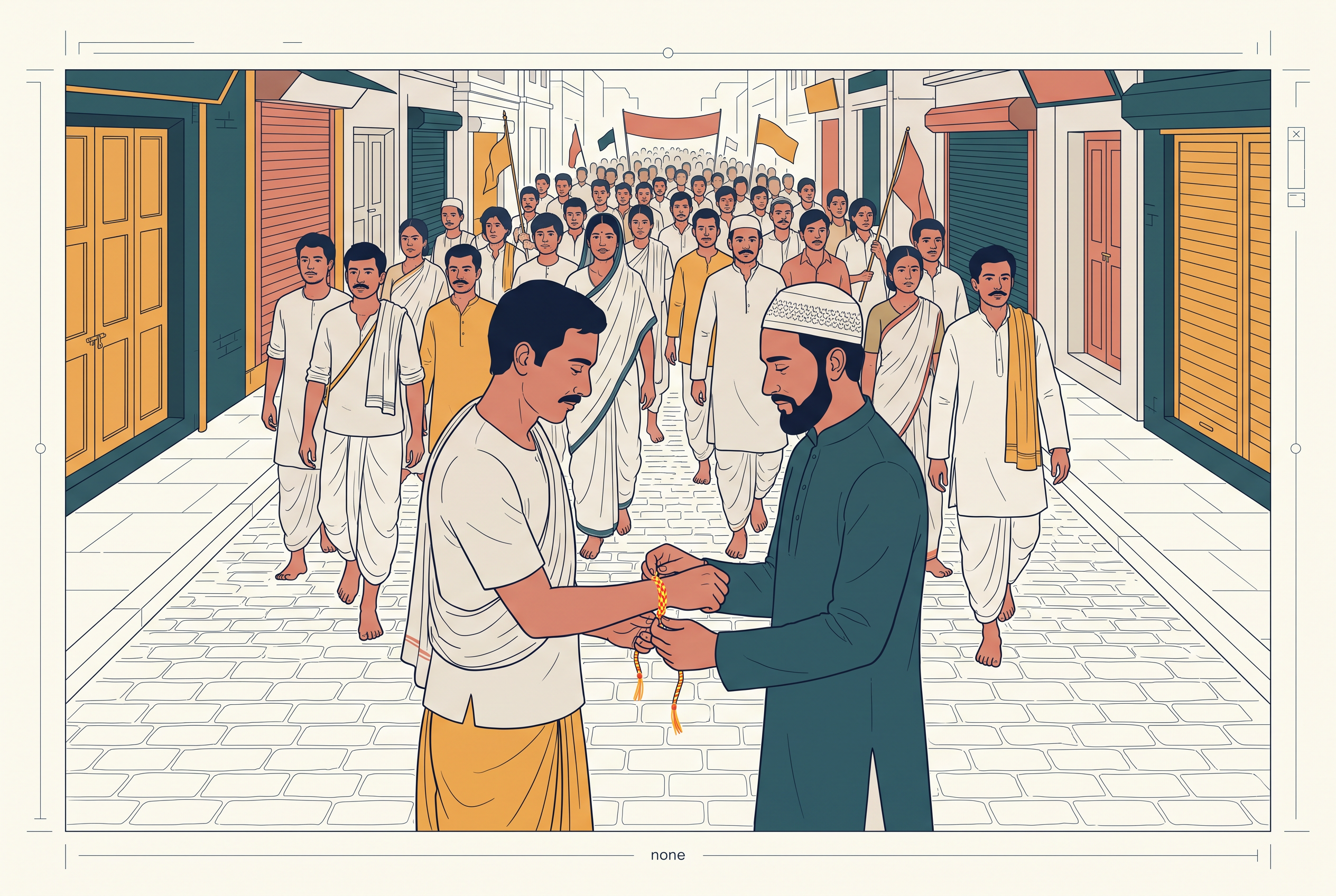
Fig. 4.2 – Hindus and Muslims tying rakhi in Calcutta, 1905.
4.2.3 Who Took Part
Students, Teachers And Women
Students were the movement’s most visible body. They left classes to join processions, and many students and teachers walked to school barefoot on the day of mourning. Their involvement mattered later, because it brought the government’s disciplinary power down on schools and colleges, which in turn pushed the demand for a separate national education.
Women’s participation was, by the standards of Bengali public life in 1905, remarkable. Most of it happened without a platform: observing arandhan, giving up imported cloth in the household, giving ornaments and money to the movement’s funds. This was not yet women speaking in public. It was women deciding, household by household, what a household would buy and consume — which in a movement built on consumption turned out to be decisive.
Muslim Participation And Its Limits
Muslims took part in the anti-partition agitation from the beginning, and the fact is often forgotten because of what happened afterwards. Leaders such as Liaqat Hussain, Abdul Rasul and Abdul Halim Ghaznavi worked openly against the partition. In Barisal, Mymensingh and elsewhere, prayers were organised in mosques to voice the protest.
But this participation was uneven, and it thinned as the movement went on. Section 4.7 examines why. What should be noted here is that the communal division which the partition is remembered for was not present at the start of the resistance to it.
The Press
Newspapers made the agitation national. Surendranath Banerjea, the movement’s best-known platform speaker, ran the Bengalee; the Amrita Bazar Patrika, founded by Sisir Kumar Ghosh, and Satish Chandra Mukherjee’s Dawn carried the argument to readers well beyond Bengal. English-language and Bengali papers together did what memorials could not: they made a provincial administrative order into a subject of discussion in Bombay, Madras and Lahore.
By the end of 1905, then, Bengal had held its meetings, sent its memorials, mourned its day and printed its case. The partition stood. What that failure produced is the subject of the next section.
4.3 Causes Of The Boycott And Swadeshi Movements
A movement does not choose its methods in the abstract. It chooses them after other methods have been tried. The boycott of British goods, and the swadeshi programme that grew out of it, were adopted in 1905 because the older way of doing Indian politics had just been tested to destruction in public.
4.3.1 When Petition Failed
The Method That Had Always Been Used
The Indian National Congress, founded in 1885, had worked for twenty years by argument. Its instruments were the memorandum, the resolution, the speech, the deputation and the newspaper campaign. Behind them lay an assumption: that British rule contained within itself a sense of justice which could be appealed to, if only the case were put clearly enough and by respectable enough men.
Politicians who held that assumption came to be called the Moderates — leaders who believed in constitutional agitation, gradual reform and cooperation with British institutions. Against them stood the Extremists, who argued that petitioning a government which was not accountable to Indians could never produce anything but delay, and that pressure had to be applied instead.
In 1903, 1904 and the first half of 1905, Bengal used the Moderate method thoroughly. It held meetings, it published, it petitioned, it sent its memorials. The method received a complete and public answer. The government did not modify the scheme in response to the protest; it enlarged it, and announced it in July 1905.
What The Failure Taught
The lesson drawn was not that the leaders had argued badly. It was that argument was not the currency in which the government dealt. If reasoned objection carried no weight, then something the government did feel would have to be found — and what a trading empire felt was trade.
The suggestion of a boycott of British goods was in print before the partition took effect. The Bengali weekly Sanjivani, edited by Krishna Kumar Mitra, urged it in July 1905, in the days immediately after the decision was announced. It spread quickly through the Bengali press and the district meetings.
On 7 August 1905 a very large meeting at the Calcutta Town Hall formally proclaimed the boycott. That date is usually taken as the beginning of the Swadeshi Movement proper — nine weeks before the partition it was protesting against had even come into force.
4.3.2 Why Boycott Needed Swadeshi
A Refusal Creates A Gap
Boycott is a refusal, and a refusal has an immediate practical consequence. A family that stops buying imported cloth still needs cloth. A student who leaves a government college still needs to be taught. A merchant who stops stocking Manchester goods still has a shop to run and a living to make.
This is the reason the two ideas belong together and are always named together. Boycott was the negative half of the programme — what was to be given up. Swadeshi, meaning ‘of one’s own country’, was the positive half — what was to be made and used instead. Neither half could stand alone. Boycott without swadeshi was hardship with no future in it; swadeshi without boycott was a hobby.
More Than An Economic Calculation
There was a second reason, and the movement’s leaders thought it the more important one. Boycott could be justified purely as pressure. Swadeshi was justified as attachment — to Indian goods, Indian schools, Indian language, Indian science, Indian art.
That widened the programme far beyond cloth. If a country’s own products were to be preferred, then so were its own institutions of learning, its own courts of arbitration, its own charitable funds. Within two years, a protest against a boundary had turned into a programme for building a parallel national life. What that programme actually contained is the subject of the next section.
4.4 The Boycott And Swadeshi Programme
Between August 1905 and about 1908, Bengal ran an experiment that had no precedent in Indian politics. It tried to make a government change a decision by withdrawing cooperation from it — economically first, and then in nearly every other department of life. The programme is easiest to understand if the two halves are taken separately.
4.4.1 What Boycott Covered
From Cloth To Institutions
Boycott began with goods. The instruction was plain: do not buy British-made articles. Cloth was the centre of it, because imported cotton piece-goods were the largest single item Britain sold in India, and because everybody buys cloth. Salt, sugar, cigarettes, glassware and shoes followed.
It did not stay with goods for long. Within a year the boycott had been extended to institutions. Students were urged to leave government schools and colleges, and to abandon the courses of study prescribed by them. Lawyers and litigants were urged to keep disputes out of British-run law courts and settle them before Indian arbitration boards instead. Elected Indian members were urged to withdraw from municipalities and district boards, the local bodies through which the administration collected rates and ran schools, roads and sanitation.
How It Was Enforced
Enforcement was a matter of persuasion, pressure and, at the edges, coercion. Volunteers picketed shops that sold foreign goods and asked customers not to enter. Bonfires of imported cloth were lit in public. In some places priests declined to officiate at ceremonies where foreign articles were used, and washermen and barbers refused their services to households that continued to buy them.
This last kind of pressure deserves an honest word. Social boycott of one’s own neighbours is not the same thing as refusing to buy from a foreign mill, and it fell hardest on people with the least room to resist it — poor traders, and buyers for whom the cheaper imported cloth was the only affordable cloth. The movement’s own leaders argued about this at the time.
4.4.2 What Swadeshi Covered
Making, Not Only Refusing
The constructive half of the programme had four strands, and they were pursued together.
The first was manufacture. Swadeshi mills, weaving concerns, soap and match factories, potteries, chemical works, banks and insurance companies were floated, many of them with capital raised by public subscription from people who had never bought a share before. Swadeshi stores opened in Calcutta and the district towns to sell what they made.
The second was the improvement of village life. Volunteer associations took up arbitration of local disputes, flood and famine relief, sanitation and the organisation of village markets. The reasoning was that a country which wanted to run itself should demonstrate that it could run a village.
The third was education. National schools were opened to teach students who had walked out of government institutions, and a national system of education was planned to sustain them. Section 4.6 follows what came of this.
The fourth was cultural. Swadeshi songs, swadeshi painting, swadeshi literature and swadeshi science were all pressed into the same argument: that Indian effort in every field was worth more than an imitation of Britain.
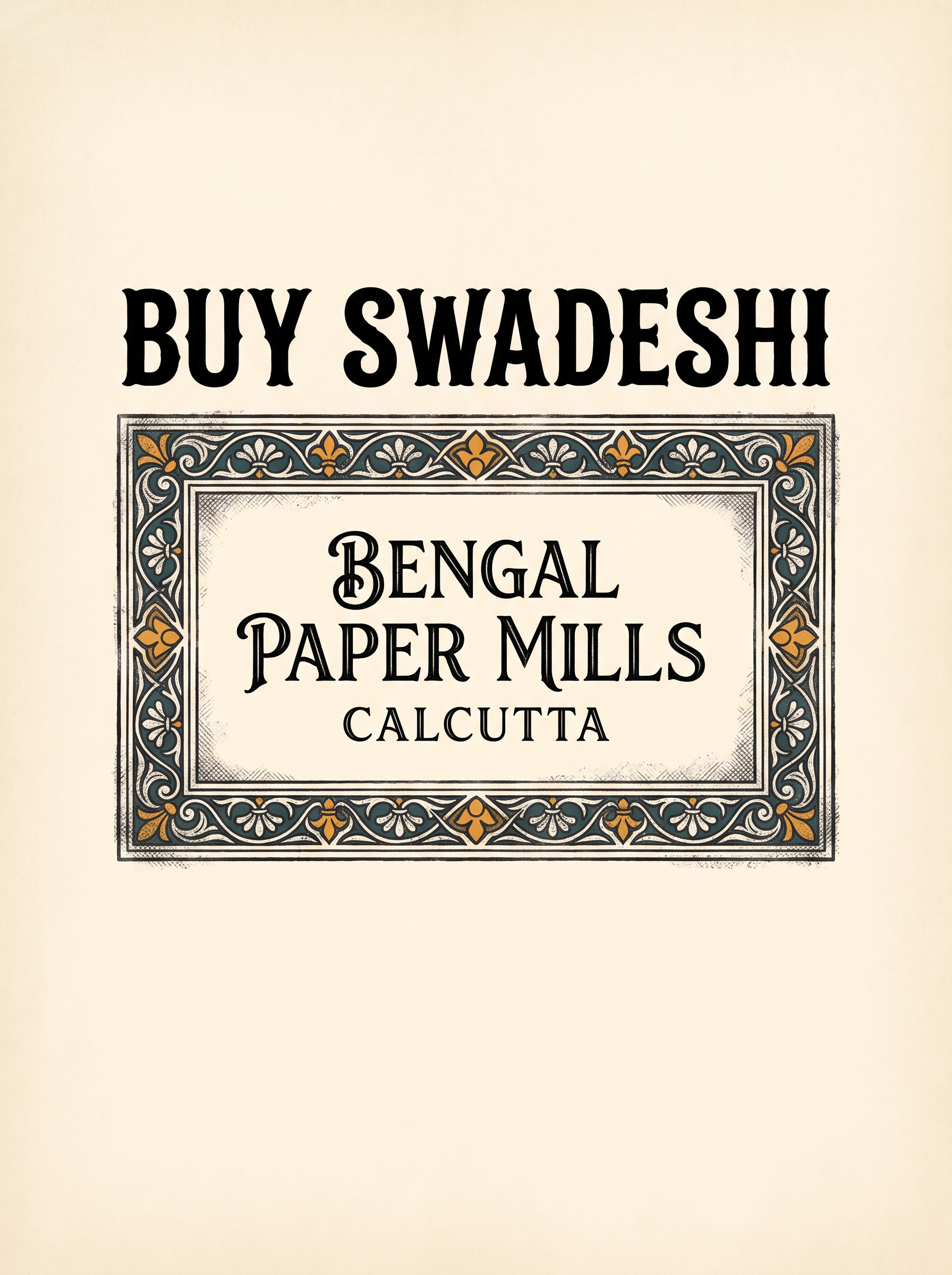
Fig. 4.3 – A swadeshi paper advertisement, 1905–07.
4.4.3 Features Of The Movement
A Change In The Kind Of Politics
The first feature is the one contemporaries noticed at once. The movement shifted Indian politics from petition to direct action. Before 1905 the characteristic political act was a resolution addressed to the government. After 1905 it was something done without the government’s permission and against its wishes: a shop picketed, a class emptied, a subscription raised, a school founded.
The second feature is that the movement recruited beyond the professional class that had run Congress politics. Students joined in very large numbers. Women acted from within the household. Some zamindars — landholders who collected revenue from peasants and paid a fixed sum to the state — lent money and prestige. Industrial workers in Calcutta and its suburbs struck work in printing presses, jute mills and on the railways, sometimes with nationalist activists helping to organise them.
The Limit Of The Movement’s Reach
It is important not to overstate this. The Swadeshi Movement was broader than anything before it, but it was not yet a movement of the whole country’s population. Its strength lay in the towns, the schools and the professional and trading classes.
The peasantry, which was the overwhelming majority of Bengal’s people, was largely outside the boycott. For a cultivating family, boycott meant paying more for cloth, and no argument about national dignity changed that arithmetic. Where peasants were reached at all, it was through meetings and through the relief and arbitration work of the volunteer samitis — the associations of young volunteers that carried the programme into the districts.
From Boycott To Non-Cooperation
The third feature is a change of aim over time. In August 1905 the boycott was a lever: apply economic pressure, get the partition cancelled. By 1907 many of its participants no longer described it that way.
The programme had become a general refusal to cooperate with British rule in any department — goods, schools, courts, local bodies, titles — and its stated object had moved beyond the reversal of one administrative order to self-government itself. That shift, more than any of the movement’s practical successes, is what carried it out of Bengal and into the rest of India.
4.5 The Movement Beyond Bengal
An administrative order concerning one province had no obvious claim on the attention of Maharashtra or the Tamil districts. Yet within two years boycott and swadeshi were being practised in Pune, Bombay, Lahore, Delhi and the ports of the far south. Understanding how that happened matters more than listing where it happened.
Why It Travelled
Three things carried it. The first was the press. Bengali and English-language newspapers reached readers all over India, and the partition was reported everywhere as a test case: if a province could be dismembered over the unanimous objection of its people, no province was safe.
The second was that boycott needed no permission and no organisation. It was a decision that could be taken by any shopkeeper, student or household anywhere. A method that portable will travel faster than a method that requires a committee.
The third was that leaders outside Bengal had been waiting for exactly this. In Maharashtra, Bal Gangadhar Tilak had argued for years that petitioning was useless and that only pressure would move the government. The Bengal agitation gave that argument a working demonstration and a national audience.
Map
Map 4.2 Caption: The principal centres where boycott and swadeshi were taken up between 1905 and 1908. Brief: Map of India showing the full extent of India as officially defined, with Calcutta and eastern Bengal shaded as the origin, and marked centres at Pune, Bombay, Lahore, Delhi, Madras and Tuticorin; use period place-names with modern names in brackets; caption the map as showing the position between 1905 and 1908 and note that provincial boundaries shown are those of British India, not present-day state boundaries.
The Centres
In Pune and Bombay the movement was led by Tilak, who pressed boycott of foreign goods and national education, and who wanted the programme widened into a general refusal of cooperation rather than kept as a lever for the reversal of the partition.
In the Punjab, Lala Lajpat Rai and Ajit Singh took up the swadeshi argument and joined it to an agrarian discontent already running in the province over land and water rates. The government’s response measured how seriously it took the spread: both men were deported without trial in 1907.
In Delhi the movement was carried by Syed Haider Raza. In the Madras Presidency its most striking figure was V. O. Chidambaram Pillai, who turned swadeshi from a slogan about cloth into a direct commercial challenge.
Calcutta, December 1906
The clearest sign that the movement had become national came at the Congress session held in Calcutta in December 1906, with Dadabhai Naoroji in the chair. The session adopted swadeshi, boycott and national education as Congress programmes, and named swaraj — self-rule — as the goal of Indian politics.
Each of those four words had been a Bengali response to a Bengali grievance eighteen months earlier. They were now the declared objects of the national organisation. Whatever else the Swadeshi Movement achieved, it changed what the Congress was asking for.
How Far It Really Reached
A caution is needed before leaving this section. Outside Bengal the movement was real but thinner. It was strongest in the cities, among students, traders and the professional classes, and it did not everywhere command the intensity that eastern and western Bengal saw in 1905 and 1906.
Nor did it last long anywhere in that form. By 1908 arrests, deportations and the exhaustion of the boycott had taken most of the momentum out of it. But the ideas had been distributed across the country, and they did not go back into the box.
4.6 Impact Of The Movement
Judged by its own first object, the movement failed for six years and then succeeded. The partition stood until 1911. But a movement is not only its stated object, and almost everything that made the next thirty years of Indian politics possible was tried out, for the first time, between 1905 and 1908.
4.6.1 Indigenous Industry And Enterprise
What Was Founded
The boycott created a demand that Indian producers rushed to meet. Swadeshi textile mills and weaving concerns were floated, along with soap and match factories, potteries, tanneries, banks and insurance companies. Handloom weaving, which had been in retreat for decades before cheap mill cloth, found buyers again.
Some of these ventures had begun before 1905 and were carried forward by the movement. The Bengal Chemical and Pharmaceutical Works, built up by the chemist Prafulla Chandra Ray, had been established in 1901; the swadeshi years gave it a market and a public reputation. Rabindranath Tagore lent his name and his effort to a swadeshi store in Calcutta.
The most durable consequence lay in how money was raised. The Tata Iron and Steel Company was registered in 1907, and its capital came overwhelmingly from Indian investors — thousands of them, subscribing in a matter of weeks. Jamsetji Tata, who had planned the works, had died in 1904; it was his successors who founded the company, in a climate the movement had created.
What Did Not Last
Honesty requires the other half of the picture. Most swadeshi enterprises were small, thinly capitalised and technically behind their competitors. Indian cloth was often coarser and dearer than the imported cloth it was meant to replace, and buyers who had paid a patriotic premium in 1906 stopped paying it when enthusiasm cooled.
When the movement ebbed after 1908, a great many of these firms closed. What survived was not usually the individual factory but the demonstrated fact that Indians could raise capital from Indians for a large industrial undertaking.
4.6.2 Literature, Art And Song
A Cultural Reawakening
The movement gave Bengali writers, painters and composers a subject and an audience at the same moment. Bengali literature turned toward folk tradition and the province’s own past, and the theatre of Girish Chandra Ghosh drew large audiences to historical themes.
Songs did more than any pamphlet. Rabindranath Tagore, Rajanikanta Sen, Dwijendralal Ray and Atul Prasad Sen wrote for the processions, and the folk singer Mukunda Das carried the same songs into villages where nobody read a newspaper. A song written by Tagore for the agitation of 1905, Amar Sonar Bangla, would be adopted in 1971 as the national anthem of Bangladesh. Bande Mataram, taken from Bankim Chandra Chatterjee’s novel Anandamath of 1882, became the cry of the whole movement, and the government eventually made shouting it in public an offence.
Painting A Country
In painting, Abanindranath Tagore and his student Nandalal Bose turned deliberately away from the European academic style taught in the government art schools, drawing instead on Mughal and Rajput miniature painting and on Japanese technique. The style they founded came to be called the Bengal School.
Abanindranath’s small watercolour of a four-armed woman in a saffron robe, painted in the swadeshi years and titled Bharat Mata, is the clearest surviving example of what the movement did to art. It gave the abstract idea of a country a human figure.
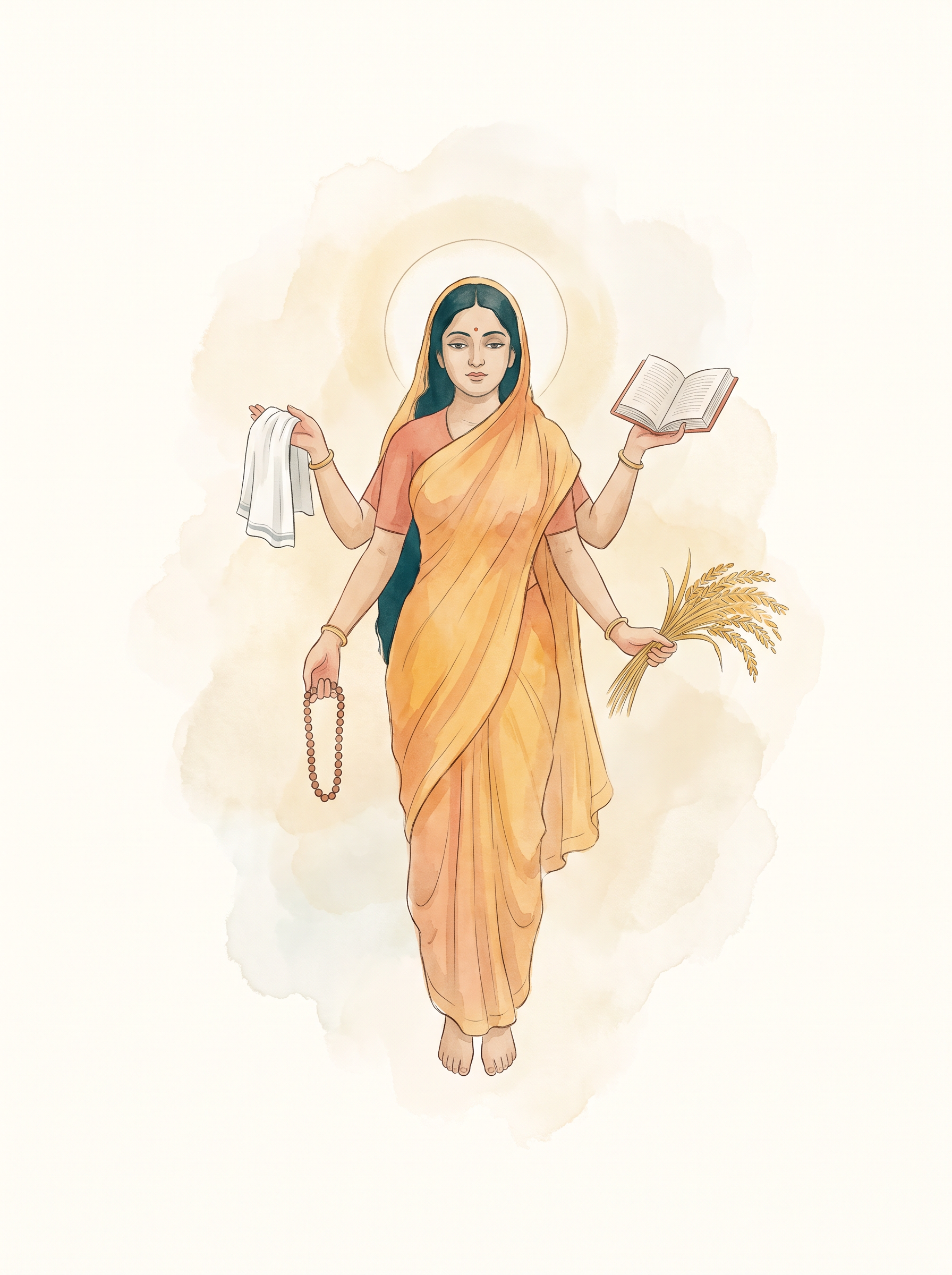
Fig. 4.4 – Abanindranath Tagore’s Bharat Mata, c. 1905.
4.6.3 National Education
Building A Parallel System
Boycott of government schools created an obligation. Students who walked out had to be taught somewhere, and the movement set about providing it. The National Council of Education was formed in 1906 to organise a system of instruction free of government control, in which Indian languages, Indian history and Indian conditions had a central place.
Its most visible creation was the Bengal National College in Calcutta, whose first principal was Aurobindo Ghose. A parallel effort produced the Bengal Technical Institute in the same year, on the argument that a country intending to manufacture its own goods must first train its own engineers.
The results were mixed and should not be exaggerated. National schools could not award the degrees that led to government employment, and many students drifted back to institutions that could. But the schools that survived proved the point that Indians could design and run higher education themselves.
The school Rabindranath Tagore had opened at Santiniketan in 1901 was already working on similar lines before the movement began, and it drew strength from the same current of thought.
4.6.4 Women And Students In Public Life
A Generation Politicised
The most important effect on students was not that they left college. It was that the government made them a political category. In October 1905 the Bengal government issued what became known as the Carlyle Circular, which threatened schools and colleges with the loss of grants and recognition if their students took part in political activity, and threatened the students themselves with expulsion.
The circular produced exactly what it was designed to prevent. Students formed an organisation to resist it, and thousands who had been vaguely sympathetic discovered that they were now, officially, opponents of the government. Many of the leaders of the next three decades of Indian politics were schoolboys and college students in 1905.
Women And The Public World
For women, the change was slower and harder to measure, but it was real. The movement had asked women to act, and having acted once inside the household, some moved outside it — attending meetings, forming associations, collecting funds and, in a few cases, writing and speaking in public.
This did not overturn the rules of Bengali domestic life, and it would be wrong to suggest it did. What it established was a precedent. When later movements called on women in far larger numbers, they were not calling on a population that had never been asked before.
4.6.5 Repression, Annulment And The Turn To Revolutionary Nationalism
The Government Answers
From 1907 the administration stopped treating the agitation as an irritation. Public meetings were restricted under the Seditious Meetings Act of 1907. Newspapers were prosecuted and, under legislation of 1908 and 1910, could be required to give securities that were forfeited if they printed matter the government judged seditious. Leaders were deported without trial, processions were broken up, and students were beaten and prosecuted.
The Turn To Violence
A section of the movement’s younger members concluded that a government which would not yield to petitions or to boycott would yield only to force. Secret societies such as the Anushilan Samiti and the Jugantar group trained members in arms and planned attacks on officials.
This turn should be understood, not admired. Its violence killed and maimed, including people who had no part in the quarrel, and it gave the administration grounds for laws that were then used against everyone. It also removed some of the movement’s ablest young people from the open political work that eventually proved more effective.
Annulment, 1911
At the Delhi Durbar in December 1911, King George V announced that the partition of Bengal would be reversed. The same announcement moved the capital of British India from Calcutta to Delhi — away from the province that had proved so difficult to govern.
The reunification took effect the following year, and it was done on the principle the movement had argued for all along: Bengal was reunited as a Bengali-speaking province, while Bihar and Orissa were formed into a separate province and Assam was again administered on its own. The government never conceded that it had yielded to agitation. It did not need to; everyone could see it.
4.6.6 Moderates And Extremists Divided
The Same Grievance, Two Politics
The movement forced a question the Congress had avoided for twenty years: how far may a political movement go? The Moderates supported swadeshi wholeheartedly and accepted boycott in Bengal as an exceptional response to an exceptional wrong. They would not extend it across India, they distrusted mass agitation they could not control, and they continued to believe that reform would come through constitutional pressure.
The Extremists held that boycott was not an emergency measure but the method itself, that it should be extended to every department of government, and that the object was not reform but swaraj. They were willing to accept disorder as the price, and they were prepared to appeal past the educated classes to a wider public.
What the two groups shared is easily forgotten. Both opposed the partition. Both wanted Indian industry and Indian education. Both worked inside the same organisation and had been colleagues for years. The disagreement was about method and pace, and about how much risk was tolerable — which is why it was so bitter.
By the Congress session of December 1907 the disagreement had become a breach, and the two groups separated. The movement that had briefly united Indian politics also split its principal organisation, and the split took nearly a decade to heal.
4.7 Circumstances Leading To The Foundation Of The Muslim League
The All-India Muslim League was founded in December 1906, fourteen months after the partition of Bengal took effect and two months after a deputation of Muslim leaders met the Viceroy at Simla. Its formation is usually explained in one of two ways: as the natural organisation of a community’s political interests, or as the fruit of a government policy of division. Neither explanation on its own accounts for what happened. The circumstances are best taken in order.
4.7.1 The Muslim Response To The Swadeshi Movement
A Movement Speaking In One Idiom
Muslims took part in the anti-partition agitation from its first weeks, as Section 4.2 described. What changed over the following two years was not that they were driven out, but that fewer and fewer found the movement theirs.
Part of the reason was the language the movement used. Its great cry, Bande Mataram, came from a novel steeped in Hindu devotional imagery. Its ceremonies of unity were drawn from Hindu practice; its meetings often opened with the recitation of Hindu scripture, and days of protest were marked with ritual bathing in the Ganga and worship at Kalighat. In western India, the Extremist leadership had for years built political mobilisation around the Ganapati and Shivaji festivals.
None of this was designed to exclude anyone. Political movements reach for the symbols their organisers already possess, and the organisers here were overwhelmingly Hindu. But symbolism does not stay innocent when it is used to define a nation. A Muslim volunteer in Dacca could support the reunification of Bengal and still find that the movement asking for it did not speak in an idiom he shared.
Who Paid For The Boycott
The deeper reason was economic, and it is the one most often left out. In eastern Bengal the majority of cultivators were Muslim, while a large proportion of the landholders, moneylenders and cloth traders were Hindu. Boycott made cloth dearer. For a cultivating family already short of cash, patriotism was being purchased at their expense.
Worse, the boycott was often enforced on them by young men from precisely the class that collected their rent. A picket outside a village shop looks different depending on who is standing in it. In parts of eastern Bengal this estrangement hardened into open communal violence in 1906 and 1907.
4.7.2 The Partition And The Promise Of A New Province
What Was Offered
The partition had given eastern Bengal something it had never had: a capital, a Lieutenant-Governor, a secretariat, and the schools, colleges and government appointments that follow an administrative headquarters. In a region where Muslims were the majority and were markedly under-represented in government service and higher education, that was not an abstraction.
The government made sure the point was understood. During his tour of eastern Bengal in February 1904, Curzon spoke at Dacca and assured Muslim leaders that the proposed province would give them a unity and an importance they had not enjoyed for a very long time. Nawab Salimullah of Dacca, the region’s leading Muslim landholder, became the scheme’s most prominent supporter, and received a large government loan on easy terms.
Reading The Sequence Honestly
Two things are true here at once, and a student should hold both. The advantages of the new province to eastern Bengal’s Muslims were real, not imaginary, and leaders who defended the partition had substantial reasons for doing so. At the same time, the administration was actively cultivating that support, and did so in the knowledge that it divided the opposition to its own measure.
4.7.3 The Simla Deputation, 1906
Why 1906
By 1906 the government had begun preparing a scheme of constitutional reform that would enlarge the legislative councils and admit more elected Indian members. Any such scheme raised an immediate question for a minority: in an elected body, would Muslims simply be outvoted everywhere?
On 1 October 1906 a deputation of Muslim leaders led by the Aga Khan met the Viceroy, Lord Minto, at Simla, the government’s summer capital. The demands they presented were designed to answer that question.
What Was Asked
They asked that Muslim representation on municipal and district boards and in the provincial and central legislative councils be guaranteed, and that it reflect not merely their numbers but what they described as their political importance. They asked for a larger Muslim share of appointments in the civil administration and the army, and for some senior posts to be filled without open competitive examination. They asked for a Muslim university.
The central demand, and the one with the longest consequences, was for separate electorates — an arrangement in which Muslim voters would vote on a separate roll to elect Muslim members, instead of voting alongside everyone else in a common constituency.
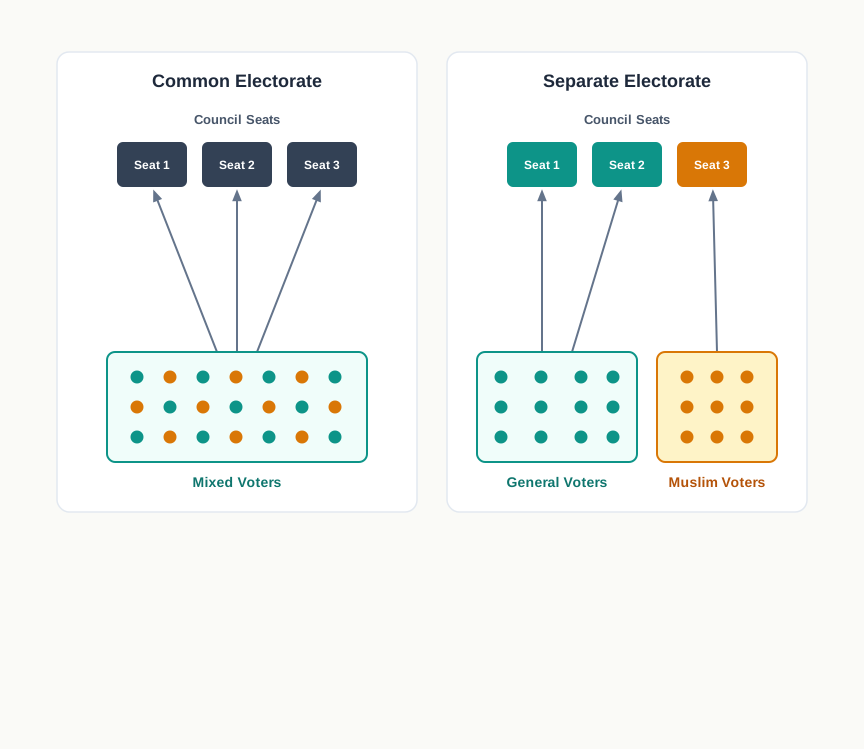
Fig. 4.5 – Common versus separate electorates.
Minto received the deputation warmly and accepted the principle that Muslim interests required specific protection. That reply was the deputation’s real achievement. Once the principle of representation by community was conceded, the question was no longer whether Indians would be counted separately, but how.
4.7.4 Dacca, December 1906
The Founding
The Simla deputation had produced a concession but not an organisation. Its members had gone as individuals; there was no body to hold the government to its answer or to speak for Muslim opinion between one deputation and the next.
That gap was filled at the end of the year. The All-India Muhammadan Educational Conference held its annual session at Dacca in December 1906. On 30 December, at a meeting of its delegates, Nawab Salimullah moved the formation of a political organisation, and the All-India Muslim League was founded. The Aga Khan became its first president.
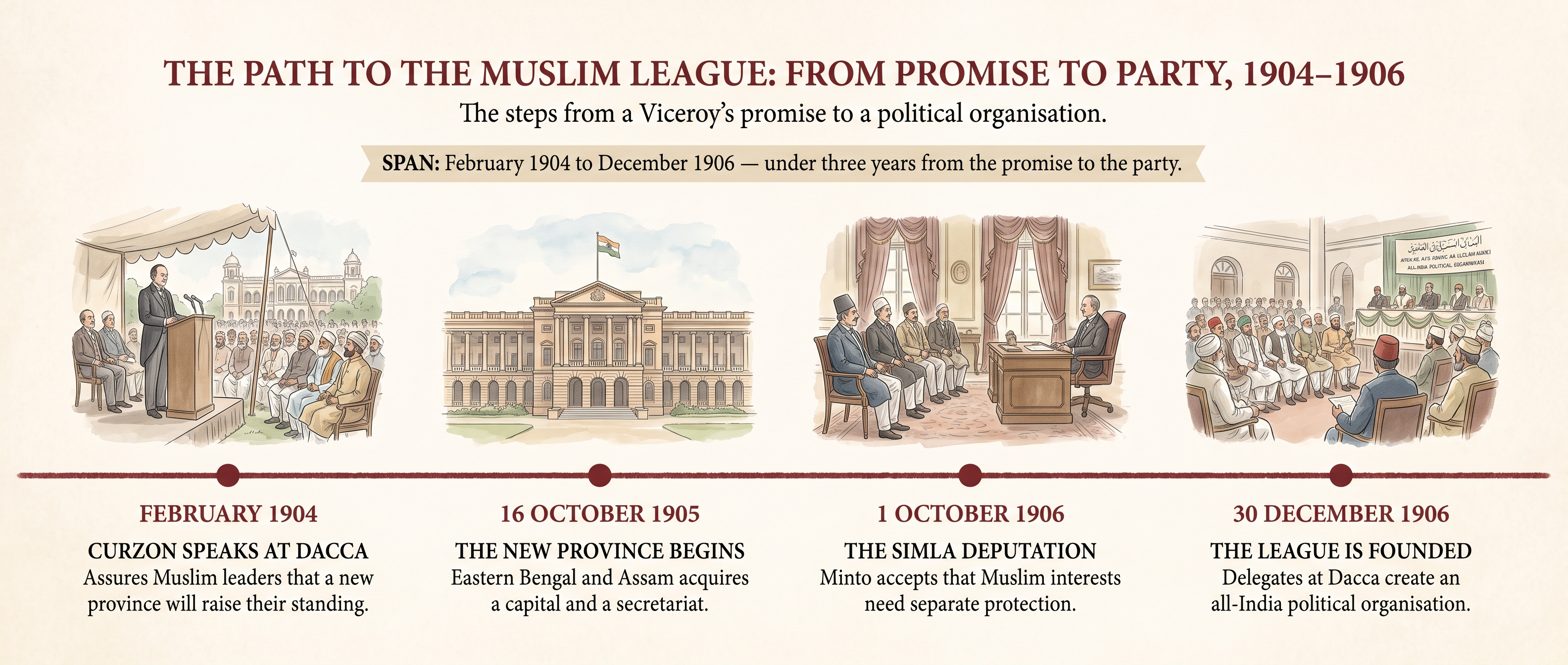
Fig. 4.6 – From Dacca To Dacca.
What The Sequence Shows
It is worth noticing what the founding was not. It was not a response to the Swadeshi Movement alone, and it was not simply manufactured in a government office. It came out of a real anxiety about the coming reforms, a real regional gain from the partition, a real distance from a movement whose idiom and economics excluded many, and a government that saw its advantage in all three.
The League’s own statement of purpose, adopted at its foundation, sets out what its founders believed they were doing. That statement is the subject of the next section.
4.8 Objectives Of The Muslim League
A political organisation announces what it is for at the moment of its founding, and that announcement is evidence of a particular kind. It records what its founders were willing to say in public about their purposes. Three objects were adopted at Dacca on 30 December 1906.
Loyalty As The First Object
The order is not accidental. Loyalty comes first, before the community’s own rights, and it is stated without conditions.
The reason is practical. Everything the League wanted in 1906 — guaranteed seats, appointments, separate electorates, a university — could be granted only by the government. A body asking a government for concessions had first to establish that it was not a threat to that government. Loyalty was the price of access, and the League paid it openly.
The second half of the first object is easy to skim past and worth pausing on. Removing misconceptions about the government’s intentions means explaining the administration to the community — a task the government itself would ordinarily perform. The League offered to do it.
Rights, And How They Were To Be Secured
The second object is the substantive one. It commits the League to protecting and advancing the political rights and interests of Indian Muslims, and it names the method in a single word: respectfully to represent. There is no mention of agitation, boycott, mass meetings or pressure of any kind.
Set beside the Congress programme adopted in Calcutta the same month — swadeshi, boycott, national education and swaraj — the contrast is complete. One organisation had just declared that it would extract change by withdrawing cooperation. The other declared that it would obtain change by asking for it.
What the object does not spell out is what these rights were. In practice they were the demands already presented at Simla three months earlier, and above all the principle of separate electorates. The League was founded, in part, to make sure that concession was not quietly forgotten.
The Third Object And Its Qualification
The third object commits the League to preventing hostility towards other communities. It is a significant undertaking, and it should be read as seriously as the other two.
It is also qualified. The clause ‘without prejudice to the other aforementioned objects’ places it below the first two in priority. Communal peace was an object of the League, but not one that could override the protection of Muslim interests or the profession of loyalty. Organisations that rank their purposes are telling you which one gives way when two of them collide.
What The Founding Established
Three consequences followed from these objects, and they matter more than the wording.
First, Indian politics now had two all-India organisations with different methods and different constituencies. Second, one of those organisations was defined by community rather than by territory or class, which meant that political claims could now be made in the name of a religious community across the whole of India. Third, the demand for separate electorates had an organisation behind it, and would be pressed until it was granted.
These were the objects of 1906, adopted by a particular set of men in particular circumstances. The League revised its aims later, as organisations do. But the framework set at Dacca — a community organised as a political unit, seeking guaranteed representation — outlasted every one of the men who wrote it.
4.9 Summary
The Partition
- Nationalism is the belief that a people forms a nation entitled to govern itself. In India that belief existed before 1905; what the partition of Bengal supplied was a grievance concrete enough to act on.
- The Bengal Presidency of 1905 held about 78 million people and three major language regions, and was governed by one Lieutenant-Governor from Calcutta, which was also the capital of British India.
- The government’s public case rested on size, distance, the neglect of the eastern districts, opportunity for the Muslim majority of the east, and the capacity of two Lieutenant-Governors instead of one. Much of it was factually true.
- The line actually drawn did not follow the province’s language divisions. It cut through the Bengali-speaking population, leaving Bengalis a minority in the west and creating a Muslim-majority province in the east.
- Historians divide over whether this was administrative logic or political calculation. The surviving record supports both readings; what officials wrote to one another is not what they announced.
The Movement
- Bengal first answered with the methods it knew: meetings, memorials and press campaigns. The government confirmed the scheme unchanged and larger. That public failure of petition is the direct cause of the boycott.
- The boycott was proclaimed at the Calcutta Town Hall on 7 August 1905, nine weeks before the partition took effect. The day of partition itself was observed as national mourning.
- Boycott was the negative half of the programme, swadeshi the positive half. Refusal created a gap in supply that only Indian production could fill, which is why the two were always named together.
- Boycott began with cloth and spread to government schools, law courts and local bodies. Its enforcement included social pressure that fell hardest on the poorest buyers.
- Swadeshi meant manufacture, village improvement, national education and a cultural programme. The volunteer samitis carried it into the districts and did constructive work that made the boycott effective where they were strong.
- The movement shifted Indian politics from petition to direct action and drew in students, women, some zamindars and urban workers. Its base remained urban; the peasantry stayed largely outside it.
- It travelled beyond Bengal because the press carried it, because boycott needed no organisation, and because leaders elsewhere had already concluded that petitioning was useless. In December 1906 the Congress adopted swadeshi, boycott, national education and swaraj.
The Impact
- Indian industry gained a market and, more lastingly, proof that Indians would finance large Indian undertakings. Most small swadeshi firms did not survive the movement’s decline.
- Bengali song, literature and painting were transformed, and the Bengal School gave the idea of the nation a visual form.
- The National Council of Education, the Bengal National College and the Bengal Technical Institute built a parallel education system outside government control.
- Government repression — the Carlyle Circular, deportations, bans on associations, press prosecutions — politicised a generation of students and pushed a minority of participants into secret societies and violence.
- The partition was annulled at the Delhi Durbar in December 1911 and the provinces redrawn on linguistic lines in 1912. The government never admitted that agitation had caused it.
- The movement also split the Congress. Moderates and Extremists shared the grievance but disagreed on method, pace and risk, and broke apart in 1907.
The League
- Muslim participation in the agitation thinned as the movement’s Hindu idiom hardened and as the boycott raised prices for the mainly Muslim cultivators of eastern Bengal.
- The new eastern province offered real gains — a capital, offices, schools — and the administration cultivated the leaders who welcomed them.
- The Simla deputation of 1 October 1906 asked for guaranteed representation, appointments and, above all, separate electorates. Minto conceded the principle that Muslim interests needed separate protection.
- The All-India Muslim League was founded at Dacca on 30 December 1906 with three objects: loyalty to the government, protection of Muslim political rights by respectful representation, and the prevention of hostility to other communities, the last expressly subordinate to the first two.
- From 1906 Indian politics had two all-India organisations, one defined by territory and one by community, using opposite methods to pursue different ends.
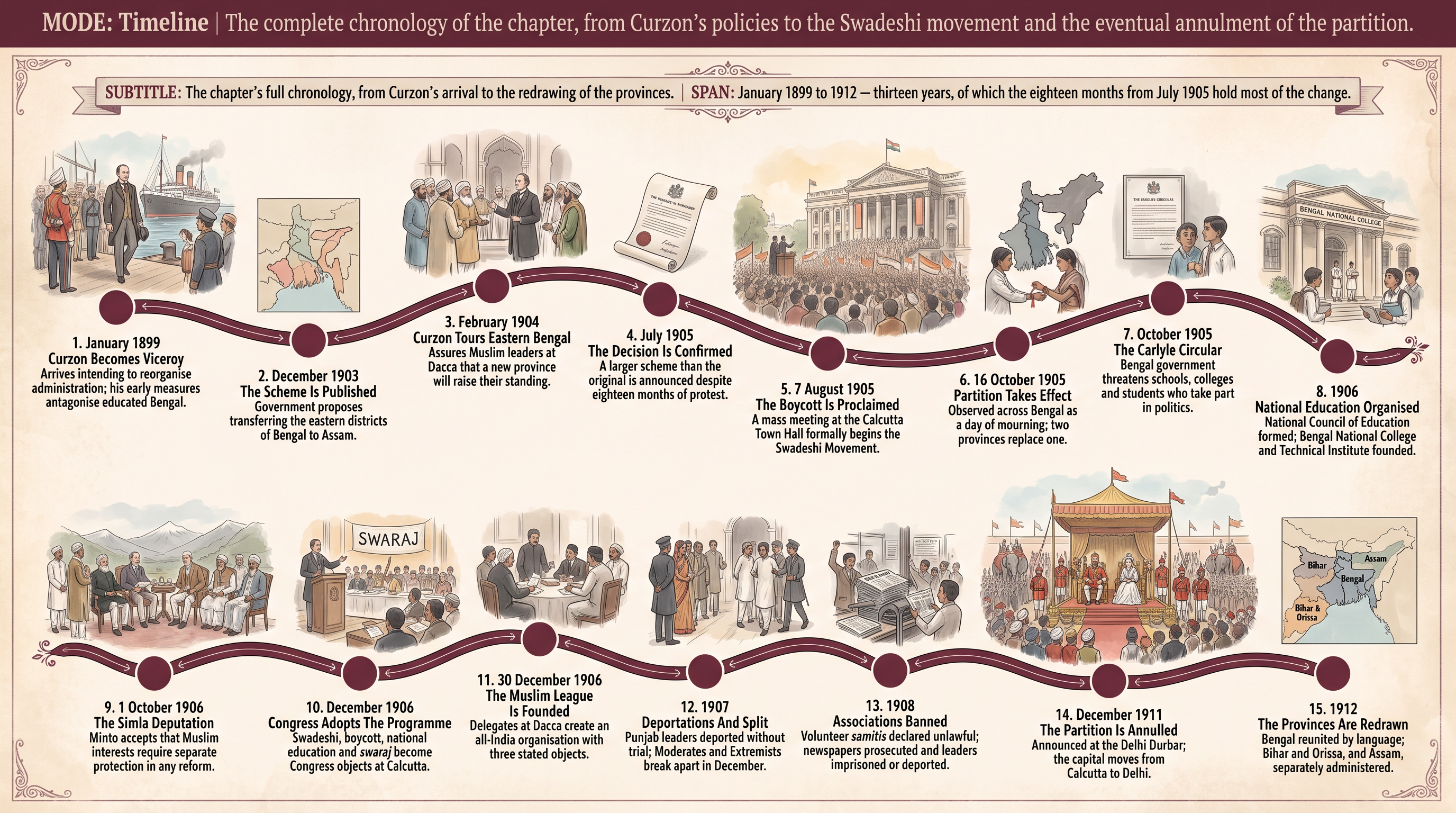
Fig. 4.7 – Growth Of Nationalism, 1899 To 1912.
What The Evidence Cannot Tell Us
Almost everything we have about this movement was written by the people who organised it — educated, urban, literate, and convinced. We can read what the volunteer thought he was doing at the village shop. We have very little written by the cultivator he was talking to, and nothing at all in his own words about whether he agreed.
Women’s part in the movement survives mostly in memoirs composed decades afterwards, by women of comfortable households, remembering their girlhoods. The government’s own records count what the state could see and measure — imports through a customs line, populations sorted into the state’s own categories of religion — and they were never designed to record what anyone believed.
So the chapter can establish what was done, and by whom, with reasonable confidence. It cannot tell you what the majority of Bengal’s people made of any of it, because the majority of Bengal’s people left no record for us to read.
4.10 Check Your Memory
Using Table 4.1, name the two provinces created in October 1905 and their capitals. Then explain why the single most important consequence of the partition for Bengali-speakers does not appear anywhere in the table.
Explain what boycott meant and what swadeshi meant, and show why neither half of the programme could have worked without the other.
Set out, step by step, the chain that led from the memorials and meetings of 1904 to the proclamation of the boycott at the Calcutta Town Hall on 7 August 1905. At which point in that chain did the leaders conclude that a different method was needed, and why?
The Moderates and the Extremists opposed the same partition. Explain what the two groups shared, where they differed on method and on aim, and why the Swadeshi Movement made the difference between them impossible to contain.
Read Source 4.1 again. What does this passage show about how far the movement reached into ordinary life? Name one thing it cannot tell you about Bengal in 1905, and explain why the nature of the document creates that limit.
Using Map 4.2, identify the principal centres outside Bengal where boycott and swadeshi were taken up between 1905 and 1908. Explain the three reasons the chapter gives for the movement travelling so far so quickly.
Reconstruct the sequence from Curzon’s speech at Dacca in February 1904 to the founding of the All-India Muslim League on 30 December 1906. For each step, explain why it made the next step more likely.
The chapter offers two explanations for the growing distance between the Swadeshi Movement and many Muslims of eastern Bengal: one about symbols and one about prices. Explain both. Which of the two does the chapter treat as the deeper explanation, and on what grounds?
Historians disagree about why Bengal was divided in 1905. Set out both readings and the evidence each rests on. What would a historian need to be able to show in order to settle the question, and why is that evidence hard to come by?
The partition was annulled in 1911, and most swadeshi firms had closed by then. Using the impact section, argue the case that the movement was nevertheless a turning point in Indian politics. Then state the strongest objection to that case.