Chapter 6: Gandhian Nationalism (1927–1937)
On the morning of 21 May 1930, an American reporter stood at the edge of a salt marsh on the coast of Gujarat and began taking notes. Webb Miller wrote for the United Press agency. He had come to the Dharasana Salt Works, a government depot ringed with barbed wire and guarded by armed police, because he had heard that unarmed volunteers intended to walk into it and take the salt as their own.
They came forward in columns, in white homespun caps. They did not run, and they did not lift their hands to shield their heads. Police struck them down with steel-tipped lathis. The columns behind picked up the fallen, closed the gap and walked forward again. Stretcher parties carried the injured to a makeshift hospital in the shade of a tree. Miller walked over and counted them.
Nothing about the day was hidden, and that is the point. Miller’s despatch was cabled out of India and printed in newspapers across Britain and the United States. A quarrel over a tax on salt had become a story the world was reading over breakfast.
Everything in this chapter led towards that morning: a commission nobody would meet, a report nobody would honour, a resolution taken at midnight on a riverbank, a march to the sea. So did a question the government could not answer. What do you do with people who break your law, and then stand still and wait?
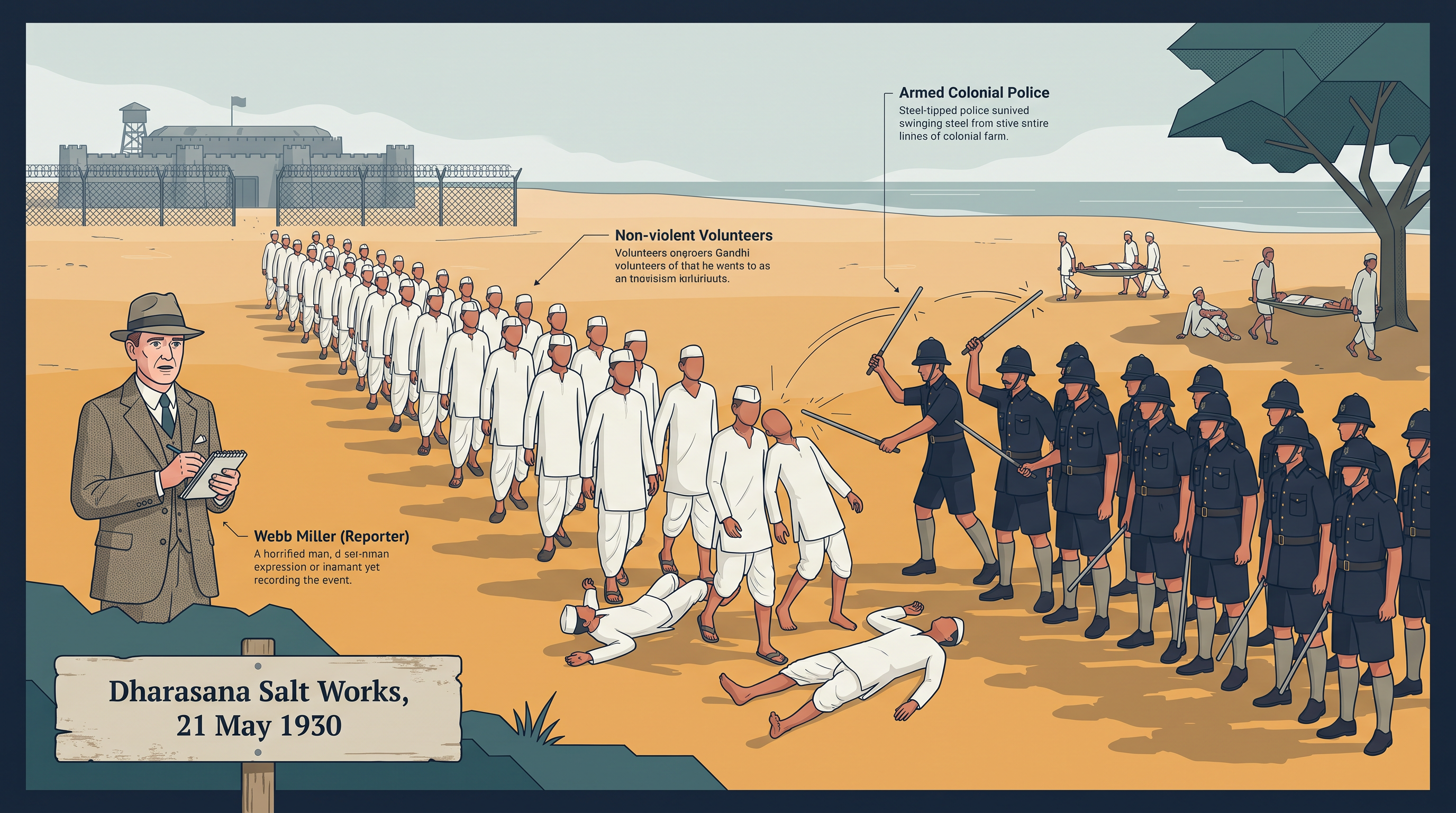
Fig. 6.0 – The Dharasana Salt Works raid, 1930.
6.1 The Simon Commission
In the closing months of 1927 the British government announced a commission of enquiry into how India was governed. Within weeks, parties that agreed on almost nothing else had agreed to have nothing to do with it.
That is a striking thing to happen in politics. To understand why it happened, we have to look at what the commission was for, who was put on it, and what Indian politicians had been promised ten years earlier.
6.1.1 Why A Commission Was Sent
The Ten-Year Clause
The Indian Councils Act of 1909, usually called the Morley-Minto reforms, had widened the councils that advised British officials in India, but had left real power untouched. It satisfied nobody for long. The Government of India Act of 1919, which grew out of the Montagu-Chelmsford proposals, went further and gave elected Indian ministers charge of a few provincial departments.
That Act carried a promise inside it. Under Section 84, a statutory commission — a body of enquiry set up by the Act itself, rather than by a minister’s decision — was to be appointed at the end of ten years to examine how the reforms had worked and to say what the next stage should be. Ten years from 1919 meant 1929.
The commission was appointed in November 1927, two years early. That timing is the first thing to explain, and it tells us more about British politics than about Indian needs.
The Government’s Reasons
A Conservative government under Stanley Baldwin was then in office in London, and a general election was due in Britain in 1929. Conservative ministers believed the Labour Party might well win it, and they did not want a Labour government choosing the men who would settle India’s constitution. Appointing the commission early put the question in safe hands.
There were other reasons. Officials wanted a fresh survey of a political situation that had changed since 1919, and they wanted the relationship between British India and the princely states examined at the same time. Some in the government also thought that a careful record of the communal riots of those years would be useful, because it would let them argue that Indians could not agree among themselves and therefore could not be trusted with power.
Finally, the government had noticed the younger nationalists. A vigorous youth movement was gathering around Jawaharlal Nehru and Subhas Chandra Bose, and it was not asking politely.
6.1.2 Who Sat On It
The commission was headed by Sir John Allsebrook Simon, a Liberal member of Parliament and one of the best-known lawyers in Britain, and it took its popular name from him. Six others served with him: Lord Burnham, Lord Strathcona, Edward Cadogan, George Lane-Fox, Vernon Hartshorn and Clement Attlee, who would himself be Britain’s Prime Minister at the moment of Indian independence twenty years later.
All seven were members of the British Parliament, drawn from the Conservative, Liberal and Labour parties. The government presented this as balance: every shade of British opinion would be represented.
Not one member was Indian. The Secretary of State for India — the minister in London answerable to Parliament for the government of India, at that time Lord Birkenhead — defended the choice on the ground that a commission reporting to Parliament should be composed of parliamentarians. To Indian ears the argument was worse than the decision. It meant that the future of India was a matter for British politicians to settle among themselves.
6.1.3 Reasons For The Boycott
An Enquiry Without The Country It Was Enquiring Into
The central grievance was the composition of the commission. A body sent to decide how three hundred million people would be governed contained none of them. Indians would be permitted to give evidence, in the way a witness gives evidence, but they would not sit in the room where the conclusions were reached.
This was felt as an insult, and it was also read as a statement of principle: that the right to frame a constitution belonged to the rulers and not to the people who would live under it. Once the question was put that way, cooperation became impossible for any leader who wanted to be taken seriously at home.
Lord Irwin, the Viceroy — the Crown’s chief representative in India — tried to soften the position. He announced that a committee of members of the central and provincial legislatures would be allowed to place its views before the commission, and that after the report was submitted, Indian legislators could send a delegation to a joint committee of both Houses of Parliament in London. Indian leaders were unimpressed. Every one of these arrangements left Indians outside the drafting and inside the witness box.
A Rare Agreement
At its Madras session in December 1927, presided over by M. A. Ansari, the Indian National Congress resolved to boycott the commission ‘at every stage and in every form’. A boycott is a deliberate, organised refusal to deal with a person, a body or a class of goods, used as a political weapon rather than as an expression of private dislike. The Congress was not merely declining an invitation. It was setting out to make the commission’s work impossible.
What made the decision powerful was that the Congress was not alone. The Hindu Mahasabha, the Liberal Federation and the Communist Party of India all opposed the commission. So did the section of the Muslim League led by Muhammad Ali Jinnah, though a rival section under Sir Muhammad Shafi favoured cooperation, and that split is worth remembering when we come to the failure of the Nehru Report. A few groups did agree to appear, among them the Justice Party in Madras, which was suspicious of a Congress it saw as dominated by upper castes.
6.1.4 The Country Answers: ‘Simon Go Back’
The Plan Of Protest
The Congress did not leave the boycott to sentiment. It proposed a practical programme: demonstrations across the country on the day the commission set foot in India, further demonstrations in each city on the day of its visit there, a refusal by legislators to help the members with their enquiry, and a social boycott of the members themselves. In early December 1927 a women’s meeting in Bombay, presided over by Sarojini Naidu, called for the boycott. In February 1928 the Central Legislative Assembly — the elected central chamber created by the 1919 Act — passed a resolution against the commission, carried on a motion moved by Lala Lajpat Rai and greeted with cries of ‘Bande Mataram’.
The sequence that followed is set out in Fig. 6.1.
On The Streets
The commission landed at Bombay on 3 February 1928 and was met by an all-India hartal. Shops stayed shut, crowds filled the streets, black flags went up, and a slogan of three words followed the members everywhere they went: ‘Simon Go Back’. Calcutta shut down on the same day, with the working class prominent in the demonstrations and student associations calling on schools and colleges to stay empty.
The commission travelled to Lucknow, Lahore, Vijayawada and Pune, and the reception did not improve. At Vijayawada the municipality passed a resolution asking the members to leave, and a sealed envelope handed to Simon during the visit was found to contain a slip of paper with the same three words on it. In London, the Workers’ Welfare League of India and the London branch of the Congress marched from Trafalgar Square to Victoria Station in protest.
Where the crowds were large, the police response was violent. At Lucknow in November 1928 a black-flag demonstration was broken up with lathis, and Jawaharlal Nehru and Govind Ballabh Pant were among those beaten.
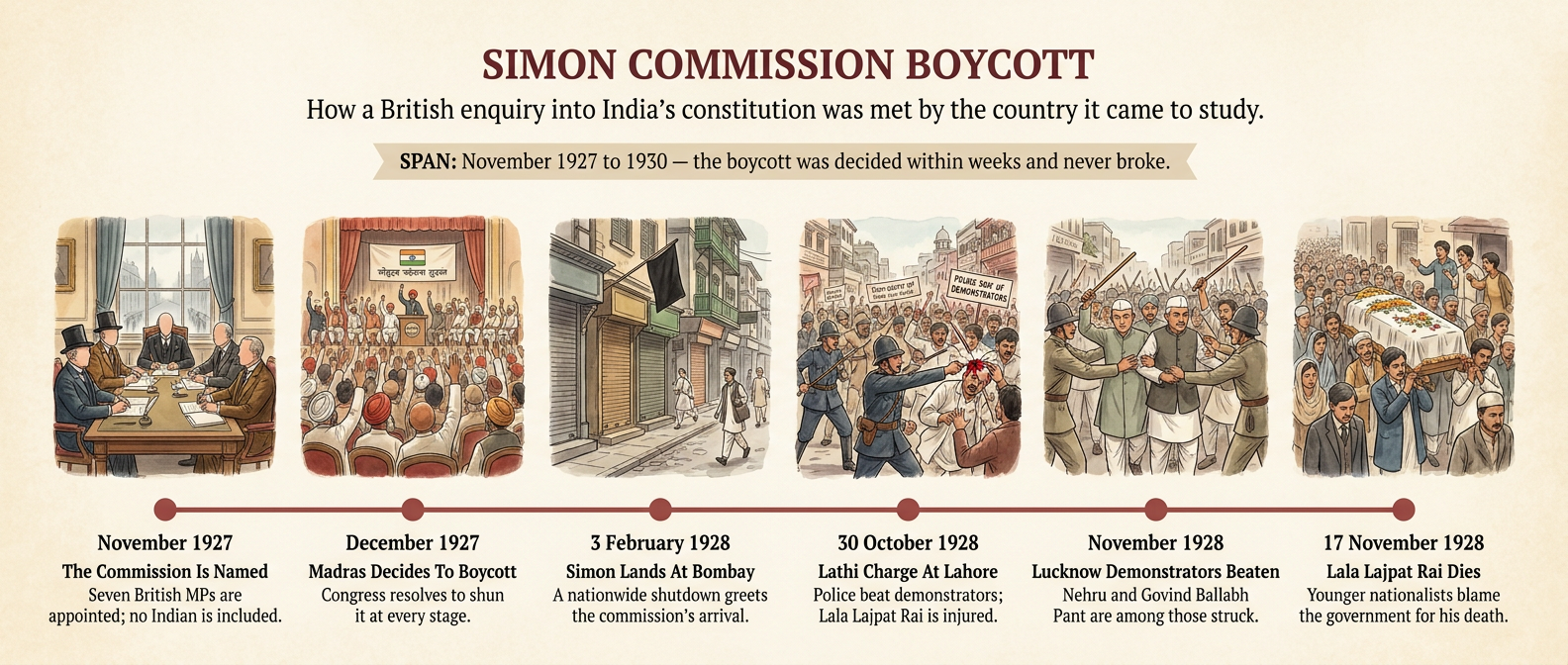
Fig. 6.1 – The commission and its reception.
Lahore, October 1928
The most consequential of these encounters took place at Lahore railway station on 30 October 1928. Thousands had gathered to show black flags to the commission, and Lala Lajpat Rai, the veteran Punjab leader, was at the head of the demonstration. The police, under the superintendent James Scott, drove the crowd back with lathis, and Lajpat Rai was struck.
He died on 17 November 1928. Across the country the death was understood as a killing, and it changed the temper of the younger nationalists more than any speech had done.
6.1.5 What The Boycott Left Behind
The commission finished its work and published its report in 1930. By then it had almost no audience in India, and its proposals were overtaken by events. The Round Table Conferences and, in time, the Government of India Act of 1935 drew on it, but no Indian party treated the report as the settlement it had been meant to be.
The boycott itself mattered far more than the enquiry. It gave the Congress a cause on which the Hindu Mahasabha, the Liberal Federation, the Communists and much of the Muslim League could stand together, and it showed that such unity could still be produced. It also carried a new generation into the front line. The young men and women who shouted at railway stations in 1928 were the volunteers of 1930, and their leaders — Nehru and Bose above all — wanted more than an amended constitution. They wanted social and economic change on socialist lines, and they were impatient with elders who negotiated.
Above all, the boycott produced a challenge that would occupy Indian politics for the next year. If Indians would not accept a British-drafted constitution, said Lord Birkenhead, let them produce one of their own on which all Indian parties could agree. He did not expect them to succeed. The attempt to prove him wrong is the subject of the next section.
6.2 The Nehru Report And The Demand For Dominion Status
6.2.1 Birkenhead’s Challenge
Lord Birkenhead had defended an all-British commission by saying that Indians could not be trusted to agree among themselves. He then turned that defence into a taunt. If Indian politicians disliked a constitution written in London, let them produce one of their own — one on which all parties and all communities in India would agree.
He made the challenge more than once, and he did not expect it to be met. British officials had watched Hindu-Muslim tension rise through the middle of the decade, and they believed the differences were too deep to bridge. The argument was convenient as well as sincere: if Indians could not agree, Britain must go on deciding for them.
Indian leaders understood exactly what was being said, and took the challenge up. The attempt shaped the next two years of politics, and its partial failure did as much to push the Congress towards confrontation as any act of the government.
6.2.2 The All Parties Conference And Its Committee
An All Parties Conference met at Delhi in February 1928 and again later that year, bringing together the Congress, the Muslim League, the Hindu Mahasabha, the Liberals, the Sikh League, trade unionists and others. In May 1928 it appointed a committee to draft the constitution.
The chairman was Motilal Nehru, a Congress leader and one of the leading lawyers of Allahabad, and the document has been known ever since as the Nehru Report. Serving with him were Sir Ali Imam, Tej Bahadur Sapru, Subhas Chandra Bose, M. S. Aney, Sardar Mangal Singh, Shuaib Qureshi and N. M. Joshi — a deliberate mixture of Congressmen, Liberals, a Muslim member, a Sikh member and a representative of organised labour.
The draft was completed in August 1928 and placed before the All Parties Conference at Lucknow from 28 to 31 August. It was the first serious attempt by Indians to write a full constitution for India, and much of what it proposed reappeared, twenty years later, in the Constitution of India.
6.2.3 The Main Recommendations
The Central Demand
The report asked for dominion status: full self-government within the British Empire, of the kind Canada and Australia already possessed. A dominion ran its own affairs, made its own laws and controlled its own finances, while the Crown remained its formal head. It was not independence, because the link with Britain stayed; but it was not subordination either, because a dominion took no orders from London.
This was a compromise, and everyone in the room knew it. Older leaders regarded dominion status as achievable and therefore worth demanding. Younger ones regarded it as a demand that assumed the Empire would last.
The Machinery Of Government
India was to be a federation. Provinces would have their own governments, and a central government would handle matters common to all, with residuary powers — authority over any subject the constitution had forgotten to assign — resting with the centre rather than the provinces. That single technical choice was among the most contested in the whole report.
The central legislature would be bicameral, meaning it would have two chambers: a Senate of two hundred members elected for seven years, and a House of Representatives of five hundred members elected for five years. The Governor-General would become a constitutional head, holding the same position as the Crown in Britain — that is, acting on the advice of ministers rather than above them. A Supreme Court was to be created, and the judiciary was to be independent of the executive.
The report also listed fundamental rights to be written into the constitution and enforceable in the courts — among them equality before the law, freedom of religion, the right to property and the right to free primary education. Provinces were to be redrawn on the basis of language, Sindh was to be separated from Bombay as a province of its own, the North-West Frontier Province was to receive the same reforms as the rest of British India, the state was to have no religion, and men and women were to have equal rights as citizens. Hindustani, written in either the Devanagari or the Urdu script, was to be the common language of the union, with the use of English permitted alongside it.
The Question Of Electorates
The hardest section dealt with representation. Since 1909, Muslims had voted in separate electorates: constituencies in which only Muslims could vote, returning only Muslim members. The Nehru Report proposed to abolish them, arguing that a system which made a candidate answerable to one community alone would keep communal feeling alive permanently.
In their place it proposed joint electorates — everyone voting together — with seats reserved for minorities in proportion to their numbers, so that a community could not be left unrepresented. Seats were to be reserved for Muslims at the centre and in provinces where they were a minority, but not in Punjab and Bengal, where they formed a majority of the population.
6.2.4 Why The Report Failed To Hold
The Agreement That Came Apart
The report was a real achievement, but the agreement behind it did not survive the year. When the All Parties Conference met again at Calcutta in December 1928, Muhammad Ali Jinnah pressed amendments on behalf of the Muslim League: a fixed one-third of the seats in the central legislature for Muslims, residuary powers to be left with the provinces rather than the centre, and reservation of seats in Punjab and Bengal in proportion to population. The amendments were rejected.
That rejection mattered more than the individual clauses. Birkenhead had said Indians would not agree, and on the central question of how a minority is protected in a majority-rule system, they had not.
The One-Year Deadline
Meanwhile the report was under attack from the other direction. Jawaharlal Nehru and Subhas Chandra Bose refused to accept dominion status as the goal at all, and formed the Independence for India League to press for complete independence.
At the Calcutta session of the Congress in December 1928 the two positions were held together by a compromise, largely of Gandhiji’s making. The Congress adopted the Nehru Report — but gave the British government until the end of 1929 to accept it. If dominion status had not been granted by 31 December 1929, the Congress would demand complete independence and launch a movement of non-violent non-cooperation to get it.
The demand for dominion status by 1929 was therefore an ultimatum with a date attached, and the date is why it matters. Everything in the next section follows from what the government did, and did not do, before the clock ran out.
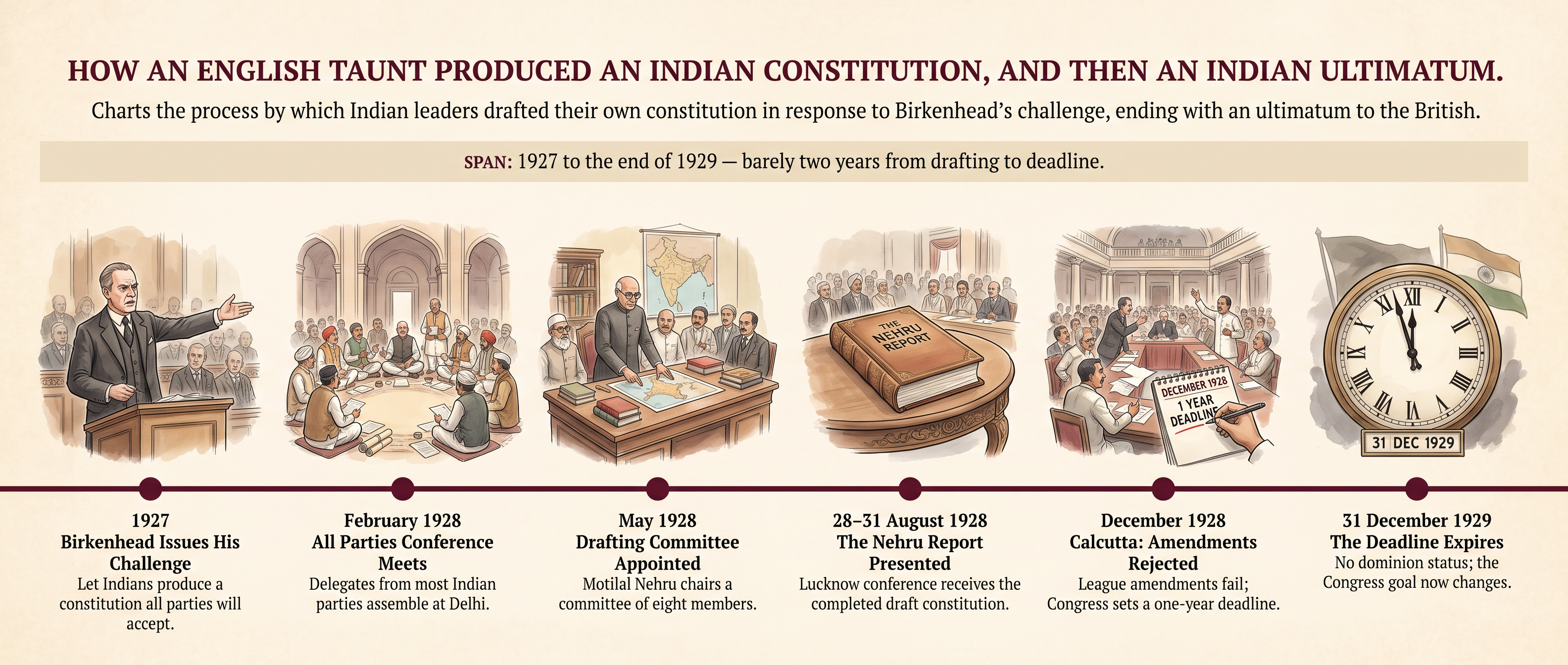
Fig. 6.2 – From a challenge to a deadline.
6.3 The Lahore Session And ‘Poorna Swaraj’
6.3.1 From Dominion Status To Complete Independence
The Viceroy’s Offer
The Congress deadline of 31 December 1929 was public, and the government knew what would follow if it passed in silence. On 31 October 1929 Lord Irwin issued a declaration. The natural conclusion of India’s constitutional progress, he said, was dominion status; and once the Simon Commission had reported, a Round Table Conference would be held in London at which Indians and British would discuss the next stage together.
Read one way, this was a real advance. For the first time a Viceroy had used the words dominion status about India in an official announcement. Read another way, it promised very little. Irwin named no date, offered no draft, and left it open whether the conference would frame a constitution or merely talk about one.
Indian leaders replied within days. In the Delhi Manifesto of 2 November 1929, Gandhiji, Motilal Nehru and others said they would attend a conference only on conditions: that its business would be to frame a dominion constitution for India rather than to debate when dominion status might arrive, that the Congress should have the largest share of the Indian representation, and that political prisoners should be released as a gesture of goodwill.
The Meeting Of 23 December
The two sides met at Delhi on 23 December 1929, with the deadline eight days away. Gandhiji, Motilal Nehru, Muhammad Ali Jinnah and Tej Bahadur Sapru put the one question that mattered: was the coming conference to draw up a dominion constitution?
Irwin could not say yes. He had no authority from London to give that assurance, and without it the conference would be a discussion whose outcome the British government reserved to itself. The meeting ended without agreement, and the Congress went to Lahore knowing that its ultimatum had failed.
Lahore, December 1929
The session met in the last days of December 1929 on the banks of the Ravi at Lahore, under the presidency of Jawaharlal Nehru, then forty years old. The choice of president was itself a signal: the man who had refused to accept dominion status the year before was now in the chair.
The Congress declared that the word swaraj in its constitution would from now on mean complete independence. It authorised its Working Committee to launch a programme of civil disobedience, including the non-payment of taxes, and it called on its members to resign from the legislatures rather than sit in them. At midnight on 31 December 1929 the tricolour was raised on the riverbank, and the crowd greeted it as the flag of a country that had stopped asking.
6.3.2 The Main Points Of The ‘Poorna Swaraj’ Resolution
Two Documents, Not One
Two documents belong together here, and it is worth keeping them apart. At Lahore the Congress passed a short resolution changing its goal and sanctioning civil disobedience. Then the Working Committee drew up a longer statement, the Declaration of Independence, to be read aloud at public meetings across India on 26 January 1930.
When people speak of the main points of the ‘Poorna Swaraj’ resolution, it is usually this declaration they mean, because it is there that the Congress explained itself at length. The declaration opens by grounding the claim in a right rather than in a grievance.
Notice the order of the argument. The right to freedom is asserted first, as belonging to Indians because they are a people, and not because of anything the British had done. Only afterwards does the declaration turn to the record of British rule, and that record becomes the reason for exercising the right rather than the source of it.
The Charge Against British Rule
The declaration then set out four kinds of ruin. Economically, it said, British policy had destroyed Indian handicrafts and fostered British industry, taking away raw materials cheaply and draining India’s wealth for over a century; the result was poverty, unemployment, heavy taxation and recurring famine among a population of whom more than four-fifths lived by agriculture.
Politically, India was under foreign rule and denied freedom of association, of speech and of the press. Culturally and spiritually, an alien system of education had been imposed and Indian traditions degraded, producing a loss of identity. From this the declaration drew its conclusion: that it was wrong to submit any longer to such a rule, and that India must sever the British connection and attain ‘Poorna Swaraj’.
The Method And The Pledge
The last section is the one that governed the next four years. The most effective way of gaining freedom, the declaration said, was not violence. Indians would withdraw, so far as they could, all voluntary association with the British government, and would prepare for civil disobedience, including the non-payment of taxes. If cooperation could be withdrawn, the government could be brought to a standstill.
It closed with an instruction. On 26 January 1930 the people of India would observe Poorna Swaraj Day and take a solemn pledge to work for complete independence.
6.3.3 26 January 1930
The date was kept. On 26 January 1930, in villages and towns across the country, meetings assembled, the tricolour was hoisted, the declaration was read out, and those present repeated the pledge together. There were no mass arrests, because nothing done that day broke any law; it was a demonstration of numbers, not a breach.
Its importance lay in showing that the Congress could reach the whole country on a single day with a single text. That was exactly what a movement of civil disobedience would require. The Congress now had six weeks in which to decide which law, of all the laws of British India, its followers would break first.
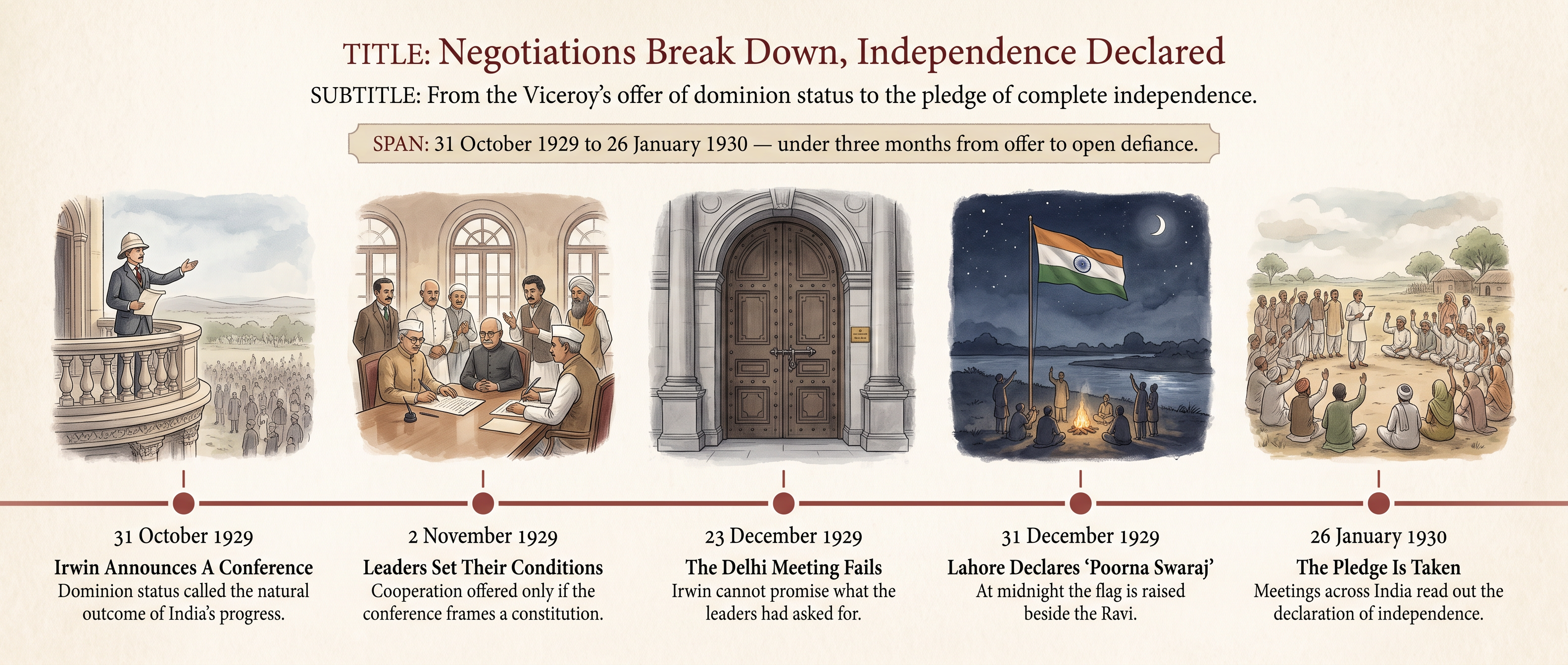
Fig. 6.3 – The last ten weeks of the deadline.
6.4 The Civil Disobedience Movement Begins
6.4.1 What Civil Disobedience Meant
Breaking A Law On Purpose
Civil disobedience is the deliberate, open and non-violent breaking of a particular law, by people who accept the punishment that follows. Each word carries weight. The breach is deliberate, so it is not an accident; it is open, so it is not crime; it is non-violent, so it cannot be answered as rebellion; and the penalty is accepted, so the law-breaker still recognises the idea of law itself.
This is different from the non-cooperation of 1920 to 1922, which asked Indians to withdraw from British institutions — to leave the schools, the courts, the councils and the titles. Non-cooperation was a refusal to take part. Civil disobedience was a refusal to obey.
Satyagraha, Gandhiji’s word for this kind of struggle, means holding firmly to truth, and the person who offers it is a satyagrahi. Its methods in 1930 were boycott, picketing — standing outside a shop or an office to persuade people not to enter it — and the non-payment of taxes. Its aim, as the Congress had adopted it at Lahore, was to bring the government to a standstill without a single blow being struck.
Why 1930 Was The Moment
The Congress had declared ‘Poorna Swaraj’ in a country already under strain. The economic depression that began in 1929 pushed down the prices farmers received for their crops, while the land revenue demanded by the government and the rent demanded by landlords stayed where they were. A peasant who had once sold a certain quantity of grain to meet his revenue now had to sell far more of it to raise the same number of rupees.
Industry was contracting too. Mills shortened hours and cut wages, unemployment rose in the cities, and workers influenced by socialist and communist ideas were organising strikes and taking up the slogan ‘Poorna Swaraj’ as their own.
Alongside this ran a current of revolutionary activity in Bengal and Punjab, and a sharpening anger among the young. Jatindranath Das, a revolutionary held in Lahore jail, died in September 1929 after a hunger strike lasting more than two months, and he was mourned across the country. Gandhiji’s argument to the Congress was that this energy would find a violent outlet unless it were given a disciplined and non-violent one.
6.4.2 The Eleven Point Demands
The List
Before launching anything, Gandhiji made an offer. At the end of January 1930 he set out eleven demands and told Lord Irwin that if they were granted there would be no need for a movement at all.
The eleven were: total prohibition of intoxicating drinks and drugs; the release of political prisoners; reduction of military expenditure and of the salaries of the highest civil servants; the issue of licences to citizens to keep firearms for self-defence; reform of the Criminal Investigation Department, the police branch that watched political activity; a lowering of the rupee-sterling exchange ratio; a protective tariff on imported cloth; the reservation of coastal shipping for Indian companies; a fifty per cent reduction in land revenue; abolition of the tax on salt; and abolition of the government’s monopoly over salt.
Reading The List
The list looks miscellaneous until you ask who each demand was for. Then its design becomes clear.
Three were addressed to the country as a whole, or to the Congress’s own moral programme: prohibition, the release of political prisoners, and the curbing of the political police. Three were the standing demands of Indian industrialists and merchants — a tariff against imported cloth, coastal shipping reserved for Indian ships, and an exchange rate that did not make Indian exports dear. One, the halving of land revenue, was the demand of every peasant in a year of falling prices. And two concerned salt, which no household in India could do without.
The design was deliberate. A movement that asked only for a change in the constitution would have belonged to lawyers and politicians. A movement built on these eleven points offered nearly every class in Indian society something of its own to fight for — and the two salt demands offered all of them the same thing.
Irwin rejected them. He treated the list as a political manoeuvre rather than an offer, and negotiated on none of it. The Congress Working Committee met at the Sabarmati Ashram from 14 to 16 February 1930, resolved on civil disobedience, and left the choice of the first law to be broken to Gandhiji himself.
6.4.3 The Salt Satyagraha And The Dandi March
Why Salt
Under the salt law, nobody in India could manufacture salt except the government and those it licensed, and a tax was levied on the salt that was sold. On a coast where sea water evaporates in the sun and leaves salt lying on the sand, a villager who scraped up that salt was committing an offence.
To Gandhiji this made salt the perfect point of attack. Salt is not a luxury. In a hot country where people work outdoors and lose salt in sweat, it is a necessity of life, and the poorest household must buy it, so a tax on it falls hardest on those with least. Breaking the salt law needed no weapon, no money and no education. It could be done by anyone standing near the sea or beside a salt pan.
The March
On 2 March 1930 Gandhiji wrote to Lord Irwin, setting out his objections to British rule and telling him plainly that unless the demands were met he would break the salt law. The letter was itself an act of satyagraha: the opponent was warned, in writing, before anything was done. Irwin’s reply expressed regret that Gandhiji intended to break the law.
On 12 March 1930 Gandhiji left the Sabarmati Ashram at Ahmedabad on foot with seventy-eight chosen followers, walking south towards Dandi, a small village on the coast of Gujarat. The route is shown in Map 6.1.
The column covered roughly 240 miles in twenty-four days, halting at villages along the way. At each halt Gandhiji spoke, volunteers enrolled, and village officials were asked to give up their posts. Crowds gathered to watch the marchers pass, and Indian and foreign journalists walked with the column and filed reports every day. What had been announced as a technical breach of a tax law was becoming, day by day, the best-reported procession in the country.
The marchers reached Dandi on 5 April. On the morning of 6 April 1930 Gandhiji went down to the shore and picked up a lump of natural salt, and the salt law of British India was broken.
Map
Map 6.1 Caption: The route of the Dandi March, from the Sabarmati Ashram at Ahmedabad to the coastal village of Dandi, 12 March to 5 April 1930. Brief: Map of southern Gujarat showing the marked walking route from Sabarmati Ashram to Dandi with the principal halting places and the coastline, with a scale bar in kilometres, and an inset locator map showing the full extent of India as officially defined with the mapped area boxed; label the period as 1930 and show no present-day district boundaries.
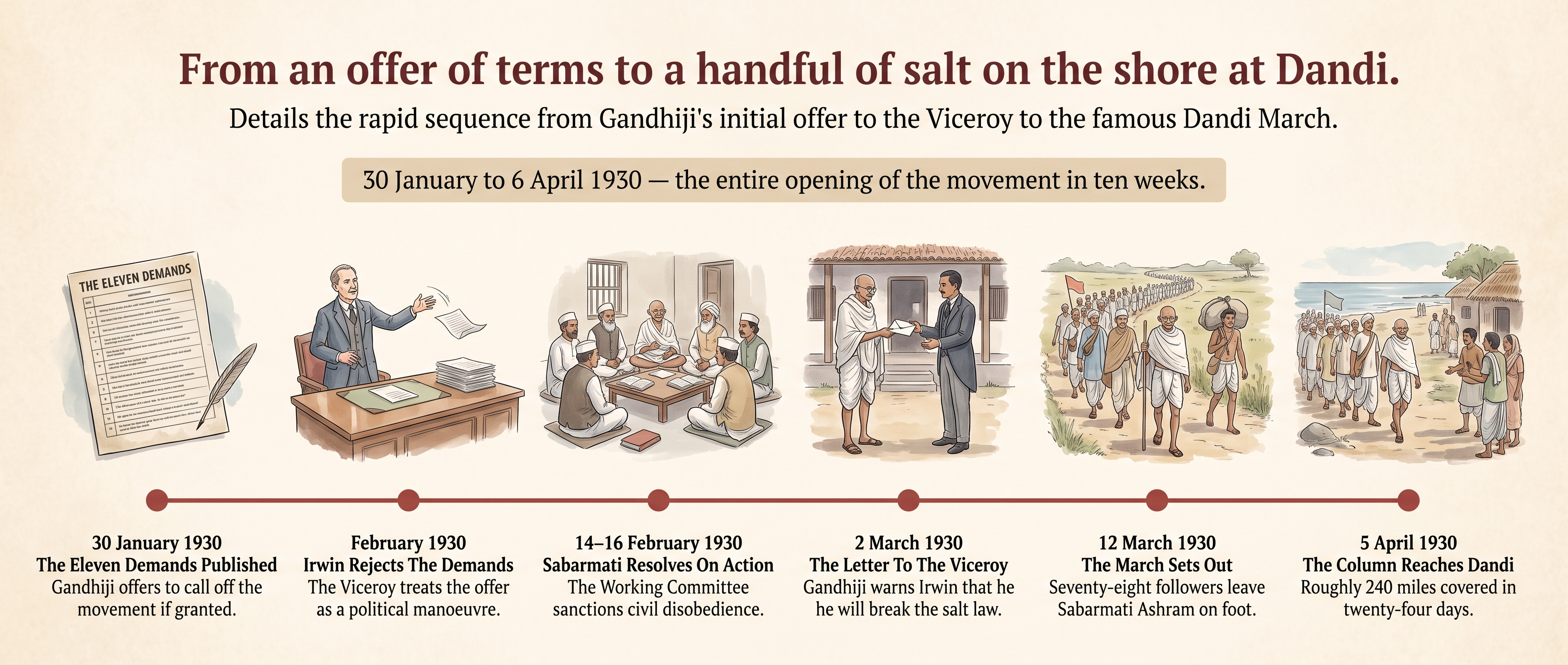
Fig. 6.4 – Ten weeks to the first breach of the law.
6.4.4 The Programme Of The Movement
Dandi was a signal, not a plan. What turned one man’s gesture into a national movement was a programme the Congress circulated, so that people anywhere could take part without waiting for instructions.
The programme had eight strands. The salt law was to be broken wherever it could be broken. Taxes were not to be paid to the government. Foreign goods and the British courts were to be boycotted. Students were to leave government schools and colleges, and government servants were to resign their posts. Meetings and processions were to be held in defiance of Section 144 of the Indian Penal Code, the provision under which a magistrate could forbid an assembly. Liquor shops were to be picketed.
The eighth strand was the widest: people were to refuse to do anything they held to be against their conscience. That single line explains a great deal of what followed. It gave a peasant refusing a rent, a forest-dweller cutting grass on reserved land and a student walking out of a lecture hall the same standing in the movement as a satyagrahi on the shore at Dandi.
Whether the country would take up such a programme, and what the government would do when it did, is the subject of the next section.
6.5 The Spread Of The Movement, 1930–1931
6.5.1 Where The Movement Reached
Salt On Two Coasts
Within weeks of Dandi the salt law was being broken wherever there was a shore. In Tamil Nadu, C. Rajagopalachari led a column of volunteers on foot from Tiruchirappalli to Vedaranyam and made salt there. On the Malabar coast K. Kelappan led a similar march to Payyanur. In Orissa the coastal districts of Balasore, Cuttack and Puri became centres of salt manufacture, and in the Bengal districts of Midnapore and the 24 Parganas volunteers made salt openly at Kanthi, Tamluk and Diamond Harbour in defiance of government orders.
The movement spread across Bengal, Bihar, Delhi, Bombay, Madras, Punjab, the United Provinces, Gujarat, Andhra, Orissa, Karnataka and the North-West Frontier Province. It is worth pausing on that list. A movement that had been declared by a Congress session in Punjab, and begun by a march in Gujarat, was being carried on within a year by people who had never met either.
Where There Was No Sea
Inland, the salt law was of little use, and the programme took other forms. Volunteers picketed liquor shops and the shops selling imported cloth, and stood outside foreign trading houses, government offices, courts, schools and colleges. In Bombay the business community, including mill owners who stood to gain from a boycott of imported cloth, gave the campaign open support.
In the forest tracts the target was the forest law rather than the salt law. Adivasi and hill communities — the Gonds of the Central Provinces, the Kolis of Maharashtra, the Santhals of Bihar, the hill people of Kangra in Punjab — went into the reserved forests to cut grass and take wood, acts that had been offences since the colonial forest settlements of the previous century.
Prohibited books were read aloud in public. Jatindra Mohan Sengupta, then Mayor of Calcutta, broke the law by reading banned political writing at an open meeting.
6.5.2 Peasants, Workers And Students
The Peasants
For the peasantry the movement arrived as an answer to the depression. Refusal to pay land revenue to the government, and the chowkidari tax that paid the village watchman, spread through Bihar and Bengal, while in Gujarat the Patidar cultivators of the Kheda and Bardoli tracts, veterans of earlier no-tax campaigns, took up the same weapon. The Jats of the United Provinces were prominent as well.
But the peasant’s quarrel was not only with the government. Poorer tenants wanted the rent owed to zamindars — landholders who collected rent from cultivators and paid revenue to the state — remitted as well, and they stopped paying both. In Bihar, Swami Sahajanand Saraswati was building a Kisan Sabha, a peasants’ association, to press tenants’ rights against landlords.
This double target is the most important thing to notice about peasant participation. The Congress leadership wanted a campaign against the government; many of the peasants who joined it were fighting the landlord too, and often followed socialist and communist organisers rather than Congress ones.
Workers And Students
The working class came into the political movement in its own way. Workers adopted parts of the Gandhian programme, particularly the boycott of foreign goods, and attached it to their own demands about wages and hours. Strikes multiplied in the mill towns of Maharashtra and Bengal and in Madras and Assam, and railwaymen struck in support of the breach of the salt law.
The sharpest instance was Sholapur in Maharashtra. After Gandhiji’s arrest in May 1930 the textile workers of the town came out, government authority collapsed for several days, and order was restored only after martial law was imposed.
Students were among the readiest volunteers. They left classes to picket, and paid for it with arrests; in the Tamluk and Kanthi areas of Midnapore, girls stayed away from schools and colleges for about six months. A public meeting of students in Calcutta, held under the chairmanship of the mayor, drew several hundred to declare the day of the Dandi March a day of their own.
6.5.3 Women In The Movement
Out Of The House And Into The Street
The most visible change of 1930 was the appearance of large numbers of women in public political action. They marched, made salt, sold prohibited literature and picketed the shops that sold liquor and foreign cloth, and thousands were arrested. For most of them this was the first time they had taken part in anything of the kind, and it happened with the encouragement of a leadership that had actively sought them out.
In Bengal, where women’s organisation was already strong, leaders such as Basanti Debi, Urmila Debi, Lila Nag and Sarala Debi took a prominent part, and bodies formed for the purpose — the Nari Satyagraha Samiti among them — organised women’s picketing and processions. Matangini Hazra, then in her fifties, joined the salt satyagraha and walked from village to village carrying the message of non-violent resistance.
In the United Provinces, Kamala Nehru organised processions and led the picketing of liquor and cloth shops, and played a considerable part in the no-tax campaign before her arrest. In Assam, the Assam Mahila Samiti encouraged women to picket shops selling foreign goods and to hold meetings in defiance of government orders. Research on eastern Bengal has shown that in towns such as Comilla and Noakhali, Muslim women from conservative and well-off households courted arrest, occupied official buildings and took charge of picketing — a fact that neither the government’s picture of a Hindu movement nor the later politics of the region would have led anyone to expect.
6.5.4 The North-West Frontier Province
In the North-West Frontier Province, the province of the Pashtun districts on India’s western edge, the movement took a form of its own under Khan Abdul Ghaffar Khan, called Badshah Khan by his followers and the ‘Frontier Gandhi’ by the press.
He had built a volunteer organisation, the Khudai Khidmatgars or Servants of God, whose members wore a brick-red uniform and were known as the Red Shirts. They were drilled, disciplined and sworn to non-violence — in a region where the British administration had spent a century treating armed feuding as the natural condition of the Pashtun. Ghaffar Khan persuaded very large numbers of men to give up their arms and to accept non-violent methods, and his movement gave the campaign in the province an organisation the Congress could not have supplied.
6.5.5 Repression By The Government
The Machinery
The government did not accept the movement’s own description of itself as non-violent and therefore harmless. It set out to break it, and it used the whole apparatus of colonial law.
Ordinances — laws issued by the executive without any legislature — gave officials the power to arrest on suspicion, without warrant or evidence. The Congress was declared an illegal organisation, its offices sealed and its funds and property confiscated. Meetings, processions and picketing were banned. The press ordinance of 1910 was brought back into use, allowing the government to demand a security deposit from any newspaper, forfeit it and cancel the paper’s registration; scores of newspapers and printing presses closed rather than submit. Even hoisting the national flag became a punishable offence.
Arrests ran into the tens of thousands. Vallabhbhai Patel was taken in March 1930, before the march had reached the sea, for defying a prohibitory order. Gandhiji himself was arrested on 5 May 1930, before he could lead the raid on the Dharasana salt works described at the opening of this chapter. Jawaharlal Nehru, Subhas Chandra Bose and most of the front rank followed him into jail.
On The Ground
For those without famous names, the repression was harsher and less recorded. The police resorted to lathi charges and to firing on unarmed crowds. The lands and property of satyagrahis were confiscated in many districts, and villages suspected of supporting the movement were made to feel it: in parts of Midnapore in Bengal, houses were burned and property seized.
There is a hard question buried in all this, and it is worth stating plainly rather than resolving. Non-violent resistance depends on the opponent’s restraint becoming visible when it fails. The movement’s leaders knew that beatings and firings would be reported and would cost the government its reputation abroad. That does not make the beatings less real for the people who took them, and it is one of the things a student weighing this movement has to hold in mind.
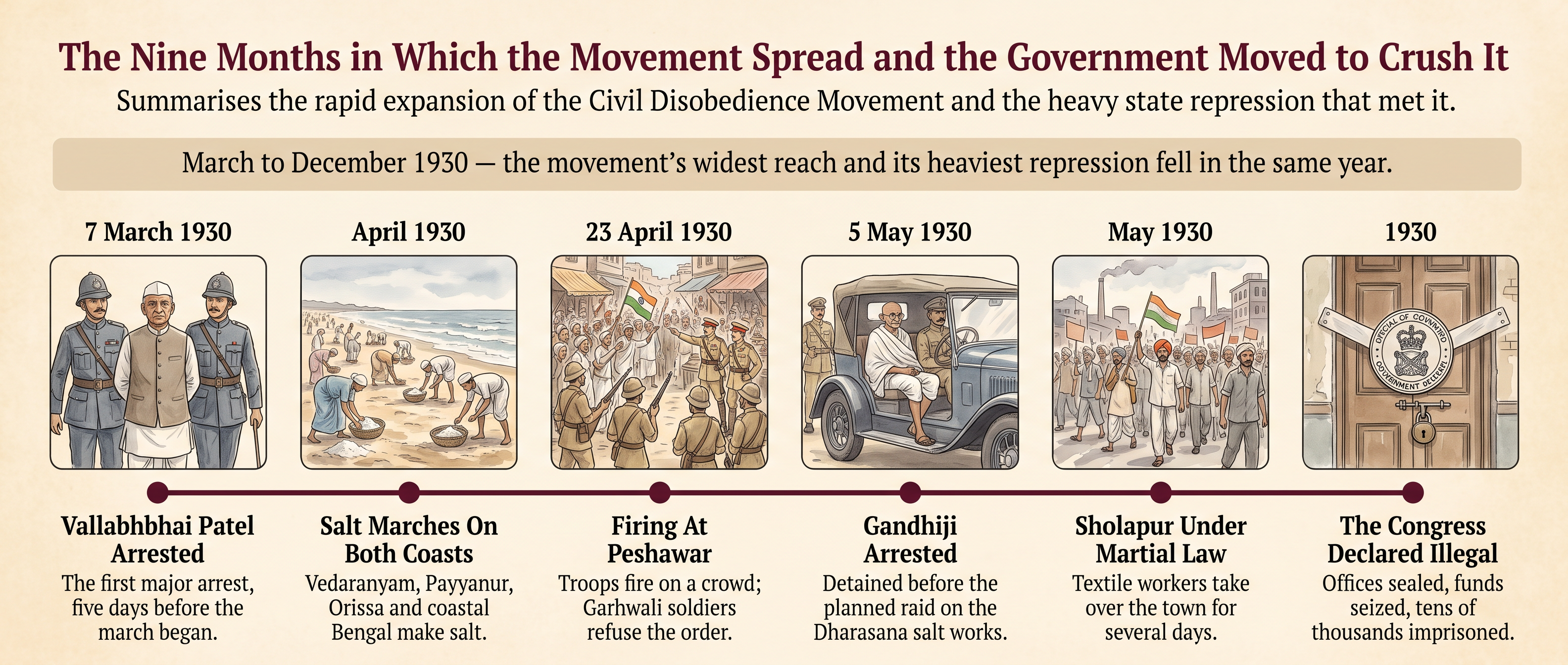
Fig. 6.5 – The first phase on the ground.
6.6 Conference, Pact And Conference Again
6.6.1 The First Round Table Conference
A Conference Without The Congress
The Round Table Conference that Lord Irwin had promised in October 1929 finally met in London on 12 November 1930. It was inaugurated by King George V in the Royal Gallery of the House of Lords, and its sessions were chaired by the British Prime Minister, Ramsay MacDonald.
Everything about the setting announced that this was a serious negotiation. One thing was missing. The Indian National Congress was not there, because most of its leaders were in prison for civil disobedience and the Congress had refused to attend on the government’s terms. Many of the leading Indian businessmen stayed away as well.
The delegates who did come covered a wide range of Indian opinion: the Muslim League, with the Aga Khan, Muhammad Ali Jinnah, Maulana Muhammad Ali Jauhar, Fazlul Haq and Sir Muhammad Shafi; the Hindu Mahasabha, with B. S. Moonje and M. R. Jayakar; the Liberals, led by Sir Tej Bahadur Sapru; Sikh representatives; spokesmen of the Depressed Classes, among them B. R. Ambedkar; and the rulers and dewans — chief ministers — of several princely states.
What Was Settled, And What Was Not
Eight sub-committees were appointed, on the federal structure, provincial constitutions, the franchise, the North-West Frontier Province and Sindh, defence, minorities and other questions. Some real progress was made. It was broadly accepted that British India and the princely states should come together in a federation, and that the executive at the centre should be a cabinet responsible to a legislature.
The communal question wrecked the rest. Ambedkar argued that the Depressed Classes must be recognised as a separate community with representation of their own. The Muslim League pressed for guarantees for Muslims. No formula satisfied everyone, and none of these questions could be settled by delegates who could not deliver the country.
By the time the conference adjourned on 19 January 1931, nearly every delegate had reached the same conclusion, and it was one the government could not ignore. A constitutional settlement negotiated without the Congress would not be worth the paper it was drafted on.
6.6.2 The Main Terms Of The Gandhi-Irwin Pact
Two Sides With Reasons To Talk
By early 1931 both sides had grounds for wanting an agreement. The government had discovered that repression on a large scale had not ended the movement, and had cost it heavily in reputation abroad; a conference without the Congress had proved futile. The Congress had discovered how much a long campaign takes out of ordinary people, with thousands in jail, property confiscated and the enthusiasm of 1930 harder to sustain into a second year.
Prohibitions on the Congress were lifted and its leaders, Gandhiji among them, were released in January 1931. Under the authority of the Working Committee, then presided over by Vallabhbhai Patel, Gandhiji was empowered to negotiate. He and Lord Irwin met eight times in Delhi, and on 5 March 1931 they signed what is known as the Gandhi-Irwin Pact.
What Each Side Agreed
The government undertook to withdraw the ordinances and other repressive measures issued against the movement; to release political prisoners who had not been convicted of violence; to remit fines not yet collected; and to restore confiscated property that had not already been sold to third parties. It agreed that people living near the coast might make salt for their own use, though not for sale — a small concession that nevertheless conceded the point at issue at Dandi. It also allowed peaceful picketing to continue.
The Congress, for its part, agreed to suspend the Civil Disobedience Movement, to withdraw the boycott of British goods, and to take part in the Second Round Table Conference.
Two things Gandhiji asked for and did not get, and both mattered. There was to be no public enquiry into police conduct during the movement, and property already sold could not be recovered by those who had lost it. On these points the Viceroy did not yield, and Gandhiji accepted the pact without them.
6.6.3 How The Pact Divided The Congress
The Case Against
Inside the Congress, the younger and more left-wing members were dismayed. The pact, they pointed out, had won no major nationalist demand: not independence, not dominion status, not even a promise about what the coming conference would decide. A movement that had been launched to make British rule unworkable had been suspended in return for the release of prisoners it had itself filled the jails with.
The refusal of an enquiry into police excesses caused particular anger in Gujarat, where the peasants who had lost land under the no-tax campaign had been told that the confiscated holdings would be returned, and now found that those already sold would not be.
Then, on 23 March 1931, Bhagat Singh, Rajguru and Sukhdev were executed at Lahore for their part in the killing of a police officer and the bombing of the Central Legislative Assembly. Gandhiji had appealed to the Viceroy for the commutation of the sentences and had failed. When the Congress met at Karachi at the end of that month, he was met with black flags by young men who believed the pact should have been used to save the three lives.
The Karachi session nevertheless ratified the pact and authorised Gandhiji to represent the Congress alone at the Second Round Table Conference.
The Case For
The argument on the other side was about status rather than terms. For the first time, a Viceroy had negotiated with an Indian political organisation as one party to an agreement negotiates with another. The Congress was not petitioning; it was signing. The government had, in practice, acknowledged that no settlement was possible without it, and the release of thousands of workers to public welcome across the country was itself a demonstration of how far political feeling had spread since 1929.
6.6.4 The Second Round Table Conference
One Delegate For The Congress
Gandhiji sailed for London and attended the Second Round Table Conference, held from September to December 1931, as the sole representative of the Congress. Sarojini Naidu attended as a representative of Indian women, and among the other delegates were Madan Mohan Malaviya, G. D. Birla, Muhammad Iqbal, Sir Mirza Ismail, the Diwan of Mysore, S. K. Datta and Sir Syed Ali Imam.
The two main subjects were the federal form of government and the question of separate electorates.
On the first, Gandhiji demanded the immediate establishment of responsible government — that is, government by ministers answerable to an elected legislature — at the centre as well as in the provinces, with those ministers, not the Governor-General, exercising real power. On the second, he took the position that the making of a constitution came first, and that communal representation could afterwards be settled, if necessary by a tribunal of judges.
The Deadlock
He could not carry the conference on either point. His claim that the Congress spoke for the whole of India was contested by almost every other Indian delegate present, each of whom had come to speak for somebody in particular. Muslims, the Depressed Classes, Anglo-Indians, Indian Christians, the backward classes and European business interests all asked for separate electorates of their own, and the Sikhs and most Hindu delegates opposed the demand.
The political ground in Britain had also shifted. The Labour government that had summoned the first conference had fallen in August 1931, and the National Government that replaced it was dominated by Conservatives, who were far less sympathetic to Indian claims.
The conference broke down on the communal question and ended on 1 December 1931. Gandhiji came home with nothing. Before the delegates dispersed, Ramsay MacDonald gave notice of what would follow: if Indians could not agree among themselves on minority representation, the British government would settle the question for them.
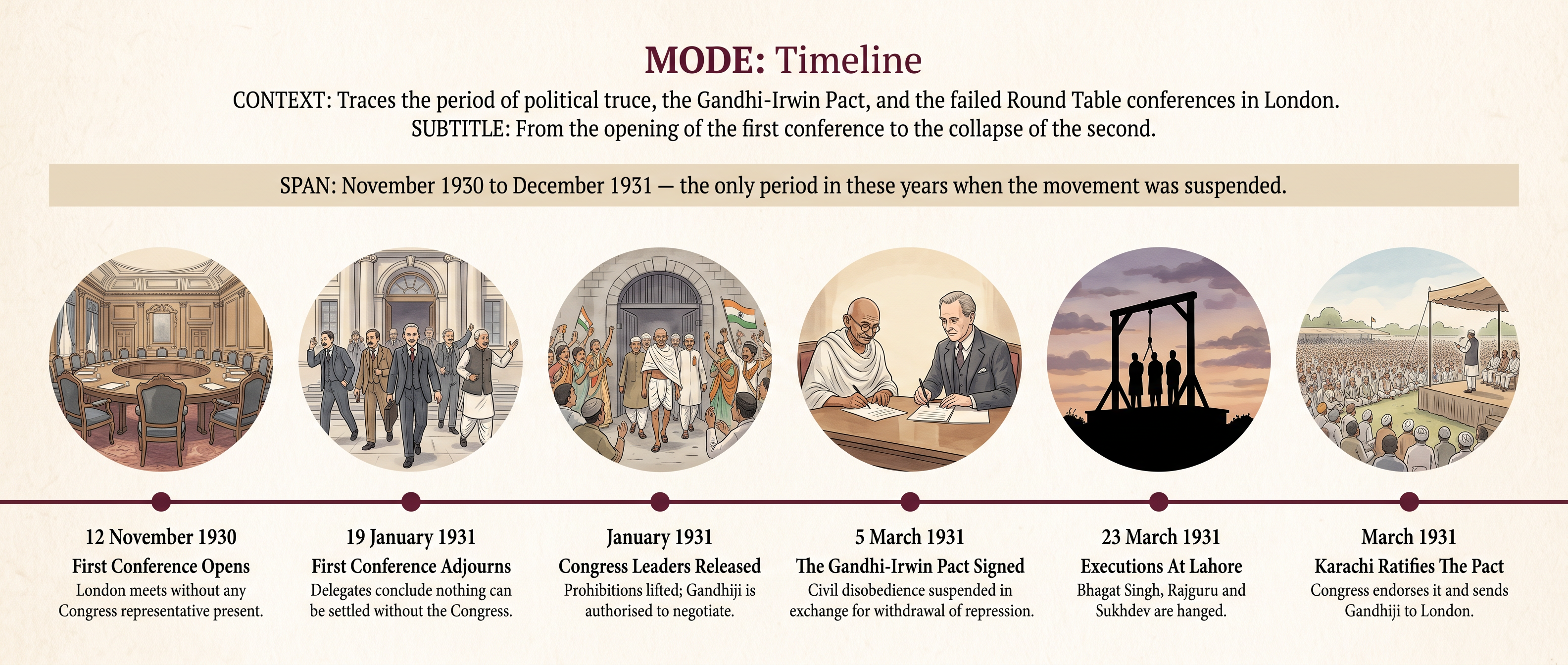
Fig. 6.6 – Thirteen months of negotiation.
6.7 Resumption, The Poona Pact And Withdrawal
6.7.1 The Movement Resumes, 1932
What Gandhiji Came Back To
Gandhiji landed in Bombay on 28 December 1931 with nothing to show from London. He also came back to a different government at Delhi. Lord Irwin, who had signed the pact, had gone; Lord Willingdon was now Viceroy, and he had no interest in the personal understanding on which the truce had rested.
During the three months Gandhiji had been away, the terms of the pact had been steadily disregarded. In the United Provinces, where peasants hit by falling prices had revived a no-tax campaign, Jawaharlal Nehru and Purushottam Das Tandon were arrested for encouraging it. In the North-West Frontier Province, Khan Abdul Ghaffar Khan and his brother Dr Khan Sahib were imprisoned and the Khudai Khidmatgar organisation was declared illegal. Ordinances were in force in Bengal as well.
Gandhiji protested to the Viceroy and offered to continue cooperating if the ordinances were withdrawn and the Congress allowed to campaign peacefully for ‘Poorna Swaraj’. Willingdon refused to discuss the matter. With that refusal the truce was over, and the Working Committee resumed civil disobedience at the beginning of January 1932.
The Second Phase
The government moved first and moved fast. Gandhiji was arrested within days, and Vallabhbhai Patel, Subhas Chandra Bose and the other leaders followed. Fresh ordinances gave the executive still wider powers of arrest, search and confiscation. The Congress was declared illegal once more, its offices sealed and its funds seized, and tens of thousands went to prison in the first months of the year.
The second phase never regained the organisation or the discipline of the first, because the men and women who would have organised it were in jail before it began. It was nevertheless widespread and stubborn. Salt was still made, banned bulletins were still circulated, the flag was still hoisted in public, meetings were still held in defiance of prohibitory orders, and volunteers reoccupied the Congress offices the police had seized. The Congress even held its annual session in Delhi in the teeth of a government ban.
The no-tax campaign was the strongest element. It was pressed in the United Provinces — where Rafi Ahmed Kidwai worked through the district committees to persuade cultivators to withhold rent and revenue — and in Gujarat, the Bombay Presidency, the North-West Frontier Province and parts of Bengal. Women again picketed, marched and courted arrest in large numbers.
6.7.2 The Communal Award And The Poona Pact
The Award
Ramsay MacDonald had warned at the end of the Second Round Table Conference that if Indians could not agree on minority representation, the British government would decide for them. On 16 August 1932 he announced the Communal Award.
The Award kept separate electorates for Muslims, Sikhs, Indian Christians, Anglo-Indians and Europeans, and extended them to the Depressed Classes — the term used at the time for the communities subjected to untouchability, who are recognised today as the Scheduled Castes. Under the Award, their voters would elect their own representatives in constituencies of their own, and would also retain a vote in the general constituencies.
The Fast
Gandhiji, then imprisoned in Yerawada jail at Pune, announced that he would fast to the death against this last provision. His objection was not to representation for the Depressed Classes; he had accepted reserved seats for them. It was to separate electorates, which he believed would fix untouchability into the constitution, divide Hindu society permanently, and leave a scattered and impoverished community isolated in politics as it was already isolated socially.
B. R. Ambedkar, who had argued the case for separate electorates at the Round Table Conference, took the opposite view. Where representatives depended on the votes of the majority, he held, they would be men acceptable to the majority rather than men chosen by the Depressed Classes themselves; only a separate electorate could produce leaders who owed nothing to those who had excluded them.
Gandhiji began the fast on 20 September 1932. Ambedkar was now under enormous pressure, since Gandhiji’s death in jail would have been laid at his door and would have brought reprisals on the very people he represented. He negotiated, and he negotiated hard.
The Terms Of The Poona Pact
The agreement reached on 24 September 1932 is known as the Poona Pact. It was signed by Ambedkar and B. R. Srinivasan for the Depressed Classes and by Madan Mohan Malaviya, Rajendra Prasad and others on the Hindu side, and its main terms were these.
Separate electorates for the Depressed Classes were given up, and a joint electorate accepted in their place. In exchange, the number of seats reserved for them was raised sharply: 148 seats in the provincial legislatures, against the 71 the Communal Award had offered, and 18 per cent of the seats allotted to the general electorate in the central legislature. To ensure that the reserved seats were filled by candidates the community itself wanted, a system of primary election was devised — voters of the Depressed Classes would first choose a panel of four candidates for each reserved seat, and the general electorate would then elect one of the four. This arrangement was to end after ten years unless terminated sooner by agreement. The pact also provided for adequate educational facilities and fair representation in the public services.
The British government accepted the pact in place of the relevant clause of its own Award, and Gandhiji broke his fast.
After the fast, Gandhiji turned much of his own effort to campaigning against untouchability — work he conducted under the name ‘Harijan’, a term the communities concerned have since rejected and which is no longer used. Whatever its effect on caste practice, it drew energy away from the political movement at a moment when the movement badly needed direction.
6.7.3 Withdrawal, 1933–1934
By 1933 the second phase was visibly failing. Repression had removed the leadership, mass arrests had exhausted the volunteers, the ordinances had made ordinary organisation impossible, and the depression had left people with less to spare for a long struggle. Enthusiasm at the pitch of 1930 could not be maintained for four years.
Support was also draining away at the edges. Urban traders, who had backed the boycott of imported cloth while it suited them, began selling imported goods again; Bombay millowners complained that repeated hartals were disrupting industry and trade. Muslims, as a body, had stayed largely aloof from the movement throughout, so it had never secured the support of a major part of the population.
Mass civil disobedience was suspended in May 1933, and individual civil disobedience — offered by chosen volunteers rather than by crowds — continued for another year before the movement was formally withdrawn in May 1934. Gandhiji resigned his membership of the Congress later that year.
He gave his reasons plainly. He considered it his duty to spare ordinary people, and the satyagrahis in particular, further brutal repression when the movement could no longer protect them. He was unwilling to give the government further opportunities to widen communal divisions, as he believed the Communal Award had been designed to do, and he thought national unity mattered more at that moment than continuing the struggle. He judged that the masses had not absorbed the full discipline of satyagraha. And he saw no prospect of concessions from a Conservative-dominated government in Britain that was opposed to Indian independence.
6.7.4 Weighing The Movement
What It Did Not Achieve
The Civil Disobedience Movement did not win independence, or dominion status, or a single one of the eleven demands of January 1930 in full. It ended with its leader out of the Congress and its organisation shaken. Judged by the goal declared at Lahore, it failed.
It also left the communal question worse than it found it. The Muslim League had stood aside; the Communal Award had put separate electorates into the coming constitution; and the negotiations of 1930 to 1932 had taught every community that its claims had to be pressed as a community’s claims.
What It Did Achieve
Judged by what it changed, the accounting looks different. The movement carried the national struggle into villages, coastal districts, forest tracts and mill towns that the politics of the 1920s had barely touched. It brought women into public political action in numbers never seen before, and it brought peasants in as participants with demands of their own rather than as an audience. Imports of British cloth fell sharply and the use of khadi — handspun, handwoven cloth — spread with them.
It established the Congress, in British eyes as much as Indian ones, as the organisation without which India could not be governed or negotiated with; the Gandhi-Irwin Pact and the invitation to London had already conceded as much. It made the Indian question a matter of world attention, reported in the newspapers of Britain and the United States. And it left behind a generation of workers, in every province, who had been to jail once and were not afraid to go again.
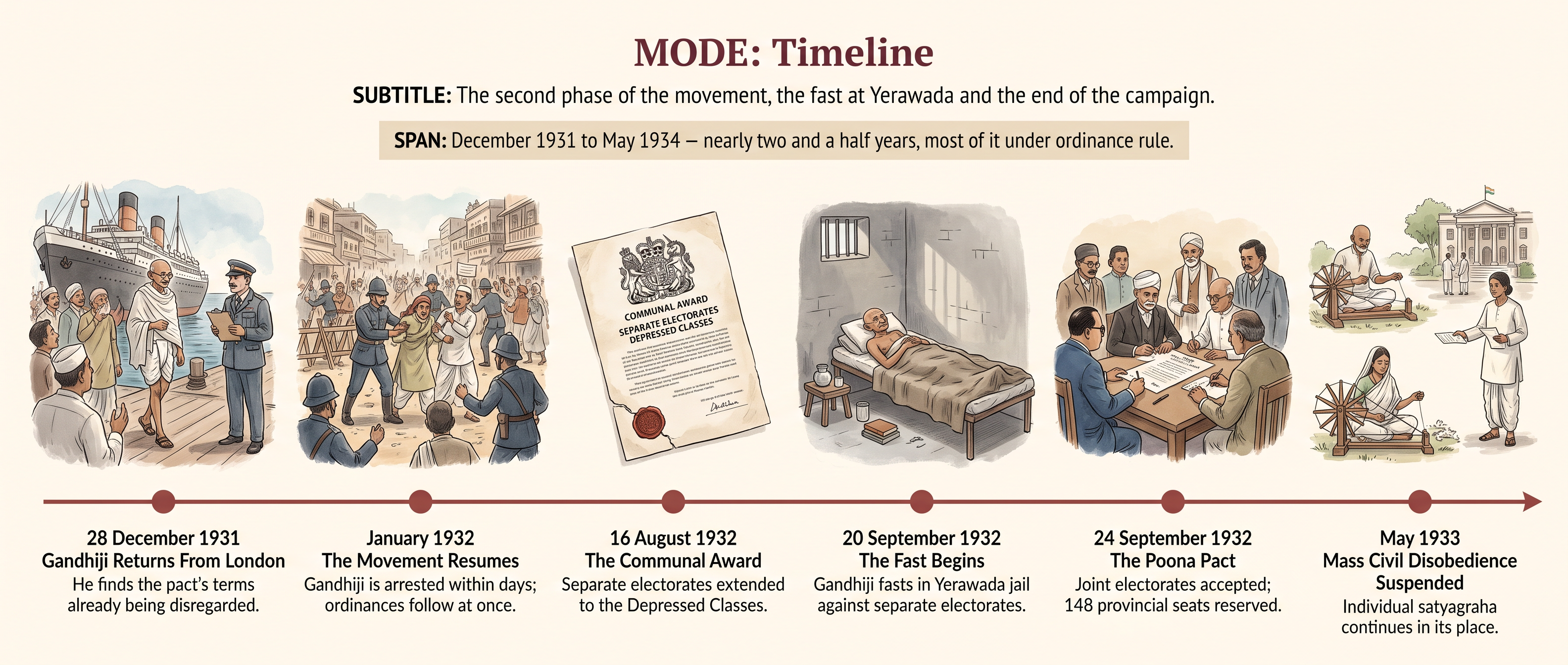
Fig. 6.7 – From the broken truce to withdrawal.
6.8 The Government of India Act, 1935
Two things had become clear to the British government by 1933. The Round Table Conferences had failed to produce an agreed settlement, and India could not be governed indefinitely under a constitution the whole nationalist movement had rejected. The government therefore did what it had said it would do about the communal question: it settled the matter itself and legislated.
The Government of India Act, 1935 drew on the report of the Simon Commission, on the discussions at the Round Table Conferences and on the enquiries that followed them. It was the longest Act the British Parliament had passed up to that time, and it remained the framework of Indian government until 1947. Substantial parts of it were carried into the Constitution of India after independence.
Its structure is best understood by taking the two halves separately, because only one of them ever came into force.
6.8.1 The Federal Scheme
The Act proposed an All-India Federation joining the provinces of British India with the princely states — the territories ruled by Indian princes under British paramountcy, covering roughly a third of the subcontinent.
Powers were divided between the federation and the provinces by three lists. A Federal List covered subjects for the centre, such as defence, external affairs, currency and railways; a Provincial List covered subjects for the provinces, such as police, education, public health and local government; and a Concurrent List covered subjects on which either could legislate. Residuary powers — over any subject the lists had failed to mention — were given neither to the centre nor to the provinces but to the Governor-General, to allot as he thought fit.
At the centre the Act introduced dyarchy, a division of the executive into two parts. Defence, external affairs, ecclesiastical affairs and the tribal areas were ‘reserved’ subjects, administered by the Governor-General with counsellors he appointed and answerable to nobody in India. The remaining subjects were ‘transferred’ to ministers answerable to a federal legislature of two chambers. Dyarchy at the centre was thus introduced in 1935 at exactly the moment it was abolished in the provinces, where it had been tried since 1919 and had satisfied no one.
The federation was to come into being only when rulers representing a stated share of the states’ population agreed to join. Not enough of them did. The federal half of the Act never came into force, the centre continued to be governed under the Act of 1919, and the elaborate scheme remained on paper.
6.8.2 Provincial Autonomy
The provincial half of the Act did come into force, in April 1937, and it was a real change.
Dyarchy in the provinces was abolished. The whole provincial administration was placed in the hands of a Council of Ministers drawn from and answerable to an elected provincial legislature, and a ministry governed only so long as it kept the legislature’s support. Provinces were made autonomous units deriving their authority directly from the Crown rather than acting as agents of the Government of India. Six of the eleven provinces were given legislatures of two chambers.
The number of provinces changed too. Sindh was separated from Bombay and Orissa was constituted as a province of its own; Burma was separated from India altogether. Elections would now be held in eleven provinces.
The franchise was widened considerably. Roughly one adult in six could now vote, where the proportion had been about one in twenty under the 1919 Act. That is a large increase and a small figure at the same time, and both halves matter. The qualification still depended on property, the payment of taxes or education, so the vote went to those who owned land, paid rent above a certain level or had been to school, and five adults in six — the landless, most tenants, most workers and the great majority of women — remained outside the electorate altogether.
Separate electorates were retained, and extended in the form the Communal Award had laid down, modified for the Depressed Classes by the Poona Pact.
6.8.3 The Special Powers Of The Governors
Provincial autonomy was granted with one hand and qualified with the other, and the qualification is the reason the Act was condemned.
The executive authority of a province was still vested in the Governor, who was appointed by the Crown and represented it. He appointed the ministers, and they held office during his pleasure. Alongside his duty to act on their advice, he was given ‘special responsibilities’ — for peace and tranquillity, for the rights of minorities, for the interests of the services, for the princely states — and in discharging them he could act at his own discretion, without consulting his ministers and against their advice.
He could also refuse assent to legislation, issue ordinances himself, and take over the whole administration of the province if he judged that constitutional government had broken down.
In ordinary times these powers were expected to stay in the background, and the central government had no general authority to interfere in provincial matters. The point is that they existed, and that whether they were used was for the Governor to decide. A ministry could be answerable to an elected legislature for everything it did, and still find that on the questions that mattered most it was not the government at all.
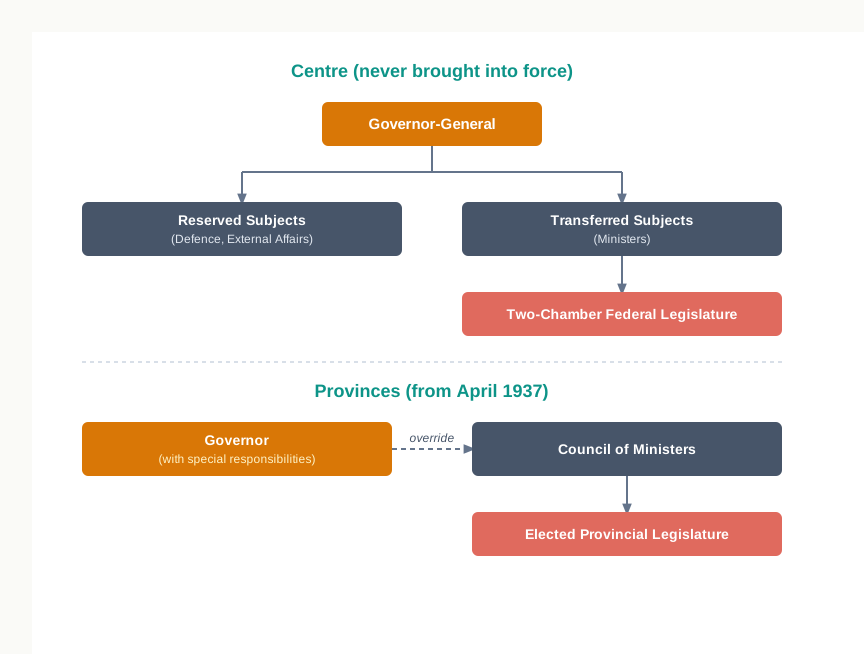
Fig. 6.8 – Structure of government under the 1935 Act.
6.8.4 Why The Act Satisfied Nobody
The Act offered no dominion status, no promise of independence and no date. It transferred no effective power at the centre, since the federal half never came into force, and at the provincial level it transferred power hedged by safeguards. The Congress president of the time objected that the Act contained no provision by which self-government could grow of itself: it changed the structure of government without changing who ultimately governed. Jawaharlal Nehru dismissed it as a new charter of slavery.
The criticism came from every direction. The Congress condemned it as a denial of the national demand. The Muslim League condemned it too, holding that its safeguards for minorities were inadequate. The princes declined to join the federation it was built around. Very few in India defended it, and the men who had drafted it in London did not claim that it satisfied Indian opinion; they claimed only that it was a step.
And yet the Congress and the League both fought the elections held under it in 1937. That decision needs explaining, and it is where this chapter turns next.
6.9 The Election Of 1937 And The Ministries
6.9.1 Who Could Vote
Elections to the eleven provincial legislatures were held in the winter of 1936–37, and the results were declared in February 1937. Before reading them, it is worth being clear about what kind of election it was, because the shape of the electorate decided a good deal of the outcome.
Voters did not all vote in the same kind of constituency. Alongside the general constituencies, in which most Hindus and others voted, there were separate constituencies for Muslims, Sikhs, Indian Christians, Anglo-Indians and Europeans, in which only members of that community could vote and only members of that community could stand. Further seats were set aside for landholders, for commerce and industry, for labour and for women.
Within the general constituencies, seats were reserved for the Depressed Classes on the arrangement worked out in the Poona Pact — the seat was reserved for a candidate of the community, but the whole general electorate voted to fill it.
Two consequences follow, and both matter for what happened next. First, no party could win a majority of the seats in a province by winning a majority of the votes, because most seats were closed to it by definition. A Congress candidate could not contest a Muslim seat, and a Muslim League candidate could not contest a general one. Second, the parties were pushed to organise along the lines the constituencies drew.
6.9.2 The Results
The Congress had contested chiefly the general constituencies, and there it won handsomely. It secured absolute majorities in Madras, the United Provinces, the Central Provinces, Bihar and Orissa, and emerged as the largest single party in Bombay, Bengal, Assam and the North-West Frontier Province. Only in Punjab and Sindh did it do poorly.
The scale of the win surprised the government and the Congress alike. An organisation declared illegal five years earlier, whose leaders had spent much of that time in jail, had just become the largest political force in most of British India through the ballot box.
The All-India Muslim League’s result was very different, and its shape mattered more than its size. The League won only about a quarter of the seats reserved for Muslims across India, and it did worst precisely where Muslims were most numerous. In Punjab it won a mere handful of the Muslim seats, which went overwhelmingly to the Unionist Party; in Sindh and the North-West Frontier Province it was equally weak; in Bengal it was the largest Muslim party but nowhere near a majority. In 1937 the League could not plausibly claim to speak for the Muslims of India, and it knew it.
Taking Office
Winning was not the same as governing, and the Congress hesitated for five months. The Act allowed a Governor to override his ministers under his special responsibilities, and the Congress announced that its members would take office only if the Governors gave an assurance that these powers would not be used against a ministry’s ordinary work.
The government would not amend the Act, and for a time no ministries could be formed at all. The deadlock was broken in the middle of 1937, when the Viceroy, Lord Linlithgow, made a public statement about how the special powers were intended to be used and the Governors gave informal assurances of restraint. The Congress accepted office on that footing.
Ministries took charge in Madras, Bombay, the Central Provinces, the United Provinces, Bihar and Orissa. A Congress ministry followed in the North-West Frontier Province later in 1937 when the first ministry there lost its majority, and in Assam in 1938. By then the Congress governed eight of the eleven provinces.
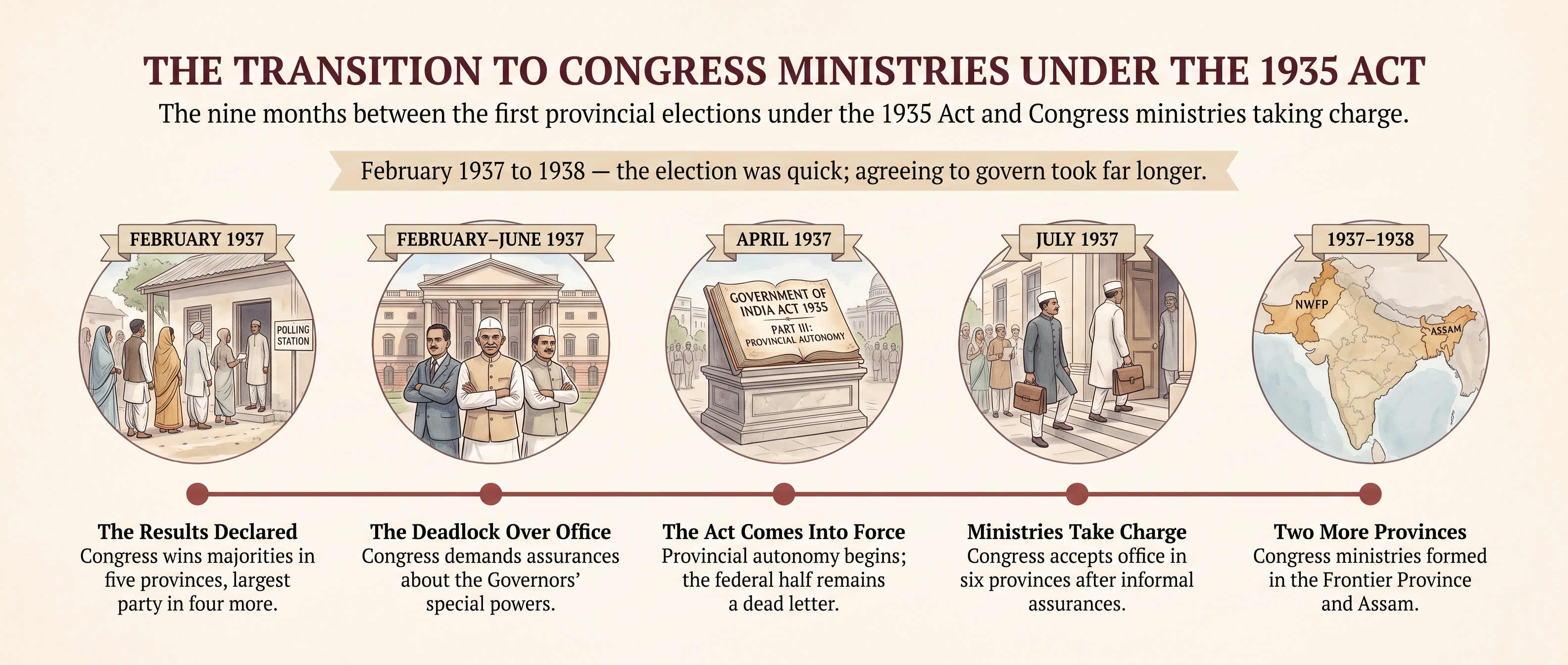
Fig. 6.9 – From ballot to office.
6.9.3 The Congress Ministries At Work
The Congress had spent seventeen years telling Indians that British rule was the obstacle to reform. Now, in eight provinces, it had to demonstrate what Indians would do with the part of the machinery they had been handed.
Its first acts were political. Political prisoners were released, bans on organisations and on books and newspapers were lifted, and confiscated lands and property were restored where that was still possible. Ministers took modest salaries — a fraction of what the office had paid before — as a deliberate signal about what public office was now for.
The most substantial legislation was agrarian, which was to be expected in provinces where the Congress had built its strength on the no-tax campaigns of the previous decade. Tenancy laws were passed or amended to give tenants greater security against eviction and to bring down rents, and debt relief measures were introduced to ease the burden left by the depression years.
There was work in other fields too: an expansion of primary education, including a scheme of basic education built around a craft; encouragement of khadi and village industries; and prohibition introduced in selected districts, funded by cuts elsewhere since excise on liquor had been a major source of provincial revenue.
The record has a harder side, and a critical account has to include it. Ministries responsible for law and order found themselves facing peasant movements demanding more than they were willing to give, and strikes in the mill towns. On several occasions Congress governments used the police, and the powers of the colonial state, against agitations led by socialists, communists and Kisan Sabha organisers who had been their own allies in 1930.
6.9.4 The Non-Congress Ministries
Three provinces were governed by others, and they were governed on quite different principles.
In Punjab, the Unionist Party under Sir Sikandar Hyat Khan formed the ministry. The Unionists were a coalition of landholding interests that cut across religion, drawing Muslim, Hindu and Sikh rural notables into a single party built on the interests of the countryside rather than of a community. Their programme was agrarian — debt relief and protection for indebted cultivators against moneylenders — and they held the province firmly.
In Bengal, A. K. Fazlul Haq of the Krishak Praja Party, whose appeal was to Muslim peasants and whose platform included the abolition of the zamindari system, formed a coalition ministry after failing to reach an arrangement with the Congress. It included the Muslim League. That coalition mattered a great deal for what followed, because it gave the League a share of power in a major province at the moment when it had just been humiliated at the polls.
In Sindh, a succession of ministries was formed by shifting groups of landholding politicians without a stable party base.
Two conclusions can be drawn. Where the Congress was weak, provincial politics was dominated by parties organised around land and locality rather than around the national question. And in the Muslim-majority provinces, it was regional parties, not the All-India Muslim League, that Muslim voters had actually chosen.
6.9.5 A Critical Account Of The Election
The election was a genuine achievement for the Congress and a genuine trap. It proved that the organisation which had led the Civil Disobedience Movement could also win votes, and it forced the British government to deal with ministers it had recently imprisoned. It gave a generation of Congress workers experience of administration, and it produced tenancy and debt laws that mattered to millions of cultivators.
But it was an election held under an Act the Congress had denounced, on a franchise that excluded five adults in six, into offices whose powers a Governor could suspend. Ministries could legislate on tenancy; they could not touch defence, foreign policy, or the terms on which India was ruled. Some in the Congress, Subhas Chandra Bose among them, argued that office would domesticate the party and blunt the movement.
The most serious consequence was one nobody planned. The Congress, confident after its victory, declined to form coalition ministries with the Muslim League in provinces where it had a majority of its own, holding that a party with a majority does not need partners and that League members were free to join the Congress individually. The League read this as a demonstration that a Congress majority meant permanent exclusion, and it began to say so publicly, alleging that Muslims were being disregarded in the Congress provinces. The Congress denied the charges, and independent evidence about most of them is thin.
What is not in doubt is the political effect. A party that had won barely a quarter of the Muslim seats in 1937 set about rebuilding itself as the sole representative of Muslim India, and it found an audience it had not had before. The election that made the Congress the government of most of India also gave the Muslim League the argument it would use for the next ten years.
6.10 Summary
The Commission And The Report
- The Government of India Act of 1919 required a statutory commission after ten years. The Simon Commission was appointed two years early, in November 1927, chiefly because a Conservative ministry in Britain expected to lose the coming election and wanted the choice of members made before it did.
- Every member was a British parliamentarian and none was Indian. The objection was not to the men but to the principle: it meant that a constitution for India was a matter for British politicians to settle, with Indians appearing only as witnesses.
- The boycott was decided by the Congress at Madras in December 1927 and joined by almost every other party. Its importance lay less in obstructing the commission than in producing a rare unity and in bringing a younger, more impatient generation into the front line.
- Challenged by Lord Birkenhead to produce a constitution of their own, Indian leaders did so. The Nehru Report of August 1928 asked for dominion status, a federation with residuary powers at the centre, a bicameral legislature, an independent judiciary and enforceable fundamental rights.
- The report proposed to abolish separate electorates and replace them with joint electorates and reserved seats. This was the clause the agreement broke on: at Calcutta in December 1928 the Muslim League’s amendments were rejected, and Birkenhead’s prediction that Indians would not agree was partly borne out.
- At the same session the Congress adopted the report but attached a deadline. If dominion status were not granted by 31 December 1929, the goal would become complete independence.
The Turn To ‘Poorna Swaraj’
- Lord Irwin’s declaration of October 1929 named dominion status as India’s eventual goal but fixed no date and would not promise that the coming conference would frame a constitution. The Delhi meeting of 23 December 1929 failed on exactly that point.
- At Lahore the Congress redefined swaraj as complete independence, sanctioned civil disobedience including the non-payment of taxes, and raised the flag on the banks of the Ravi at midnight on 31 December 1929.
- The Declaration of Independence, read at meetings across India on 26 January 1930, grounded the claim in an inalienable right belonging to any people, and only then set out the economic, political and cultural charges against British rule.
- The change of goal changed the method. Dominion status had to be granted and therefore negotiated; independence was declared, and therefore had to be built into a movement.
The Civil Disobedience Movement
- Civil disobedience is the deliberate, open, non-violent breach of a law by people who accept the penalty. It differs from non-cooperation, which was a withdrawal from British institutions rather than a refusal to obey.
- The Eleven Point Demands of January 1930 were framed so that nearly every class had a stake in them — prohibition and prisoners for the movement’s own conscience, tariffs and shipping for industrialists, a halving of land revenue for peasants, and salt for everyone.
- Salt was chosen because the government’s monopoly and tax fell on a necessity that the poorest household had to buy, and because the law could be broken by anyone at the water’s edge, without money, weapons or education.
- The march from Sabarmati to Dandi covered roughly 240 miles in twenty-four days and was reported daily. On 6 April 1930 Gandhiji picked up natural salt and the law was broken in front of witnesses.
- The movement then went far beyond salt: no-tax and no-rent campaigns, picketing of liquor and foreign cloth shops, breaches of the forest laws, student boycotts and strikes. Peasants and workers often brought demands of their own against landlords and mill owners.
- Women entered public political action in unprecedented numbers, and in the North-West Frontier Province the Khudai Khidmatgars built a disciplined non-violent movement among the Pashtuns.
- The government answered with ordinance rule: the Congress banned, property confiscated, the press silenced, firing at Peshawar and elsewhere, and tens of thousands imprisoned.
Negotiation And Its Limits
- The First Round Table Conference met without the Congress and reached one conclusion that mattered: no settlement was possible without it.
- The Gandhi-Irwin Pact of 5 March 1931 withdrew the ordinances, released prisoners and allowed coastal households to make salt for their own use, in return for suspension of the movement. Gandhiji did not obtain an enquiry into police conduct or the return of property already sold.
- Critics within the Congress held that a movement at its height had been stopped for concessions the government could withdraw at will. Defenders held that the Congress had been recognised as a party to an agreement rather than a petitioner.
- The Second Round Table Conference broke down on the communal question in December 1931, and Ramsay MacDonald gave notice that Britain would settle it if Indians could not.
- The Communal Award of August 1932 extended separate electorates to the Depressed Classes. Gandhiji fasted against that provision; Ambedkar held that only separate electorates could produce representatives the community itself had chosen.
- The Poona Pact of 24 September 1932 replaced separate electorates with joint electorates and 148 reserved seats in the provincial legislatures, more than twice what the Award had offered.
- Mass civil disobedience was suspended in May 1933 and withdrawn in May 1934. It won no constitutional concession, but it carried the national movement into villages, forests and mill towns and established the Congress as the body without which India could not be governed.
The Act And The Ministries
- The Government of India Act, 1935 proposed an All-India Federation and divided powers into Federal, Provincial and Concurrent Lists, with residuary powers given to the Governor-General. Too few princes acceded, so the federal half never came into force.
- Provincial autonomy did come into force in April 1937. Dyarchy in the provinces was abolished and ministers became answerable to elected legislatures, but Governors kept special responsibilities on which they could act at their own discretion.
- The franchise was widened to roughly one adult in six, which left five in six without a vote, and separate electorates were retained in the form the Communal Award and the Poona Pact had settled.
- In the elections of February 1937 the Congress won absolute majorities in five provinces and was the largest party in four more. It took office only after informal assurances about the Governors’ special powers, and by 1938 governed eight of eleven provinces.
- Congress ministries released prisoners, lifted bans, cut ministerial salaries, and passed tenancy and debt relief legislation — while also using the police against the peasant and labour agitations of their former allies.
- Punjab, Bengal and Sindh were governed by parties organised around land and locality. The Muslim League had won only about a quarter of the Muslim seats, and worst of all in the Muslim-majority provinces.
- Refused coalitions in the Congress-majority provinces, the League began to argue that a Congress majority meant permanent exclusion, and set about rebuilding itself as the sole representative of Muslim India.
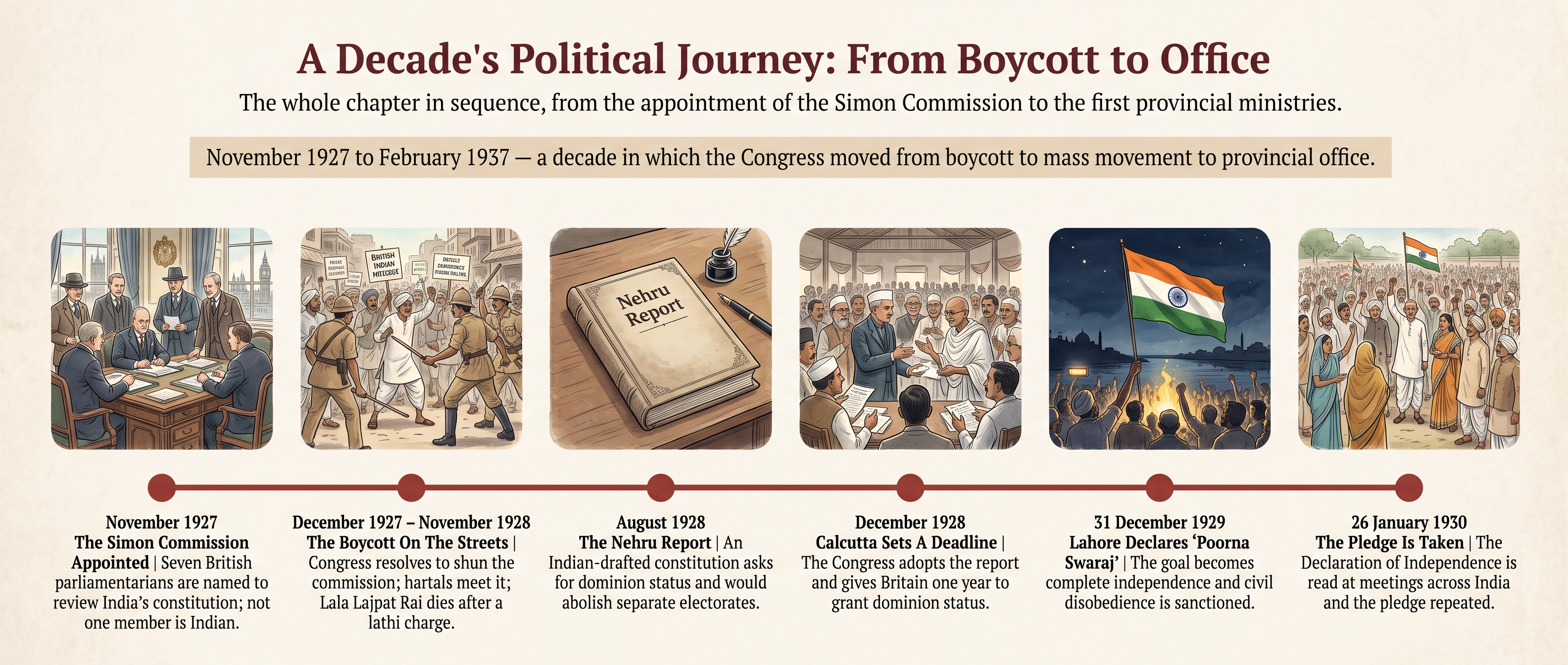
Fig. 6.10 – The decade at a glance.
What The Evidence Cannot Tell Us
Almost everything we know about this decade was written down by people with an interest in how it would be remembered — colonial officials filing intelligence reports, Congress leaders writing for publication, newspapers with proprietors and politics of their own. The state’s records count what the state could see: arrests, prosecutions, confiscations, firings. They do not count a tenant who quietly stopped paying rent, or a household that decided the movement was not worth another year.
The silences fall in a pattern. We can name the leaders on every platform and very few of the volunteers who filled the jails, and least of all the women and the non-literate participants, whose part is often known only from a line in someone else’s memoir. Even the plainest facts can be beyond recovery: nobody can now say how many people died at Peshawar in April 1930, because the two counts that survive were made by parties with reason to differ.
This is worth carrying into the next chapter. A movement of millions has left us the papers of a few thousand, and the historian’s task is to work out what can honestly be said from that.
6.11 Check Your Memory
Give the reasons for which the British government appointed the Simon Commission two years before it was due, and state the single grievance on which almost every Indian political party agreed in refusing to meet it.
Explain why the salt law, rather than any other law of British India, was chosen as the point at which civil disobedience would begin. Your answer should refer both to what salt was to an ordinary household and to what breaking the law required of a volunteer.
The Nehru Report asked for dominion status; the Lahore session declared ‘Poorna Swaraj’. Explain the difference between the two goals, and then explain what practical difference the change made to the way the Congress had to pursue its aim.
Set out, step by step, the chain that connects the collapse of world prices for farm produce after 1929 to the demand for a fifty per cent reduction in land revenue becoming the most popular of Gandhiji’s eleven demands.
Read Source 6.1 again. On what kind of claim does the declaration rest the demand for freedom, and how does that differ from resting it on the record of British rule? Identify one thing the source cannot tell you about the people who repeated its pledge.
Using Map 6.1, locate the Sabarmati Ashram and Dandi and describe the direction and rough length of the route between them. Then explain why the march was made on foot over twenty-four days rather than by a faster means of travel.
Using Fig. 6.8, explain the position of a provincial Governor in relation to his ministers under the Government of India Act, 1935. Use your answer to explain why the Congress hesitated for five months before accepting office in 1937.
State the main terms of the Gandhi-Irwin Pact. Then argue, first, that the pact was a gain for the Congress, and second, that it was a retreat. Do not decide between the two; set out the strongest form of each case.
Explain the disagreement between Gandhiji and Dr Ambedkar over separate electorates for the Depressed Classes, giving the reasoning on each side. State what the Poona Pact settled, and what it left unsettled.
This chapter states that almost everything known about who took part in the Civil Disobedience Movement comes from records kept by people who were not the participants. Choose one group — women, peasants, or the forest communities — and explain what the surviving records do show about their part in the movement, and what those records were never designed to record.