Chapter 11: Rise Of Nazism Under Hitler In Germany (1933-39)
In 1933, a professor in Dresden began writing things down that could have cost him his life.
Victor Klemperer taught Romance languages at the technical university in Dresden, a city in eastern Germany. He had served Germany in the First World War, and he thought of himself as a German first and a Jew second. In 1935 the state dismissed him from his post. Over the next ten years it took nearly everything else — his house, his telephone, his books, the right to sit in a park, the right to shop where he chose.
Through all of it he kept a diary. He wrote almost every day, in small handwriting: what a shopkeeper said, what a neighbour stopped saying, what a new regulation actually did to an ordinary afternoon. He also collected the language the regime used — the slogans on the radio, the phrases in the newspapers — and studied how those words did their work.
This was dangerous paper. Had the secret police found it, he would have been sent to a camp. So a friend, a doctor in the nearby town of Pirna, carried the finished pages out of the city and hid them.
Klemperer lived to see the war end. His diaries were published decades later and historians still read them. Much of what we know about how this state felt from underneath comes from paper that was never meant to survive.
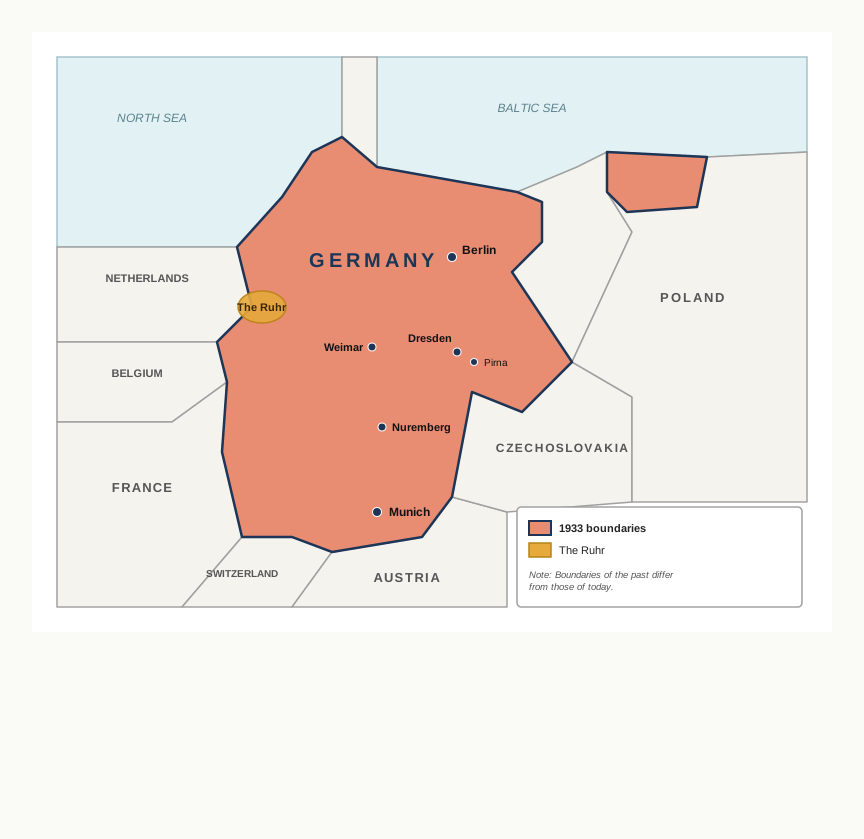
Fig. 11.0 – Germany in 1933.
11.1 The Weimar Republic And Its Weaknesses
A Republic Born In Defeat
For nearly fifty years Germany had been an empire. Created in 1871, it was ruled by a Kaiser — an emperor — and its chancellors answered to him rather than to the elected parliament, the Reichstag. In November 1918, with the First World War lost and revolution spreading through German cities, Kaiser Wilhelm II gave up his throne and left the country.
What replaced him was a republic: a state whose head is chosen by election rather than by birth. Friedrich Ebert, leader of the Social Democratic Party, took charge of the new government. In January 1919 Germans elected a national assembly to write a constitution, and Ebert became the first President of the new state.
The assembly did not meet in Berlin, where street fighting made the capital unsafe. It met instead in Weimar, a quiet town in central Germany known for its writers and its music. The constitution drafted there gave the state the name history has kept for it — the Weimar Republic.
It was, on paper, one of the most democratic constitutions in Europe. Every man and woman over twenty could vote, which was more than most European states allowed in 1919. Yet within fourteen years the republic was gone. Understanding why is the whole business of this section, because the weaknesses of the republic are the ground on which Nazism grew.
The Treaty That Would Not Be Forgiven
In June 1919 German representatives signed the Treaty of Versailles. Germany lost territory in the east and west, was stripped of its colonies, and had its army cut to 100,000 men with no air force and no submarines. Article 231 of the treaty placed responsibility for the war on Germany and its allies, and on that basis Germany was required to pay reparations — payments demanded from a defeated state to cover the damage its enemies had suffered.
Germans across the political spectrum called the settlement a Diktat, a dictated peace, because their delegation had not been allowed to negotiate its terms. The men who accepted it were branded the ‘November criminals’, a phrase that fixed the blame on politicians rather than on generals. From its first year, the republic carried the humiliation of the treaty as its own.
11.1.1 Inherent Weaknesses Of The New Republic
Some of the republic’s difficulties came from outside it. Others were built into it from the start, and it is these that historians mean by its inherent weaknesses.
A Legend About The Lost War
Germany’s defeat was never fully accepted by those who had led its armies. Instead a story spread that the army had been unbeaten in the field and had been betrayed by civilians at home — by socialists, republicans and Jews who signed the armistice. This is the ‘stab-in-the-back’ myth, and its power lay in what it offered: an explanation of defeat that left the army’s honour untouched.
The myth was false. Germany’s western front was collapsing in the autumn of 1918, and it was the army command itself that told the Kaiser the war could not be won. But the legend was endorsed by respected generals, repeated in the nationalist press, and believed by millions. It meant that the republic’s founding act — ending the war — was remembered as treason.
A State Its Own Servants Did Not Want
The republic changed the constitution, but it did not change the people who ran the country. Judges, senior civil servants, university professors and army officers had been appointed under the empire and mostly kept their posts. Many of them preferred the old order and regarded parliamentary politics as squabbling.
This mattered most in the courts. When men of the right killed political opponents, judges frequently handed down mild sentences; when men of the left rebelled, punishment was severe. A state whose own officials do not defend it is fragile long before anyone attacks it.
Fair Elections, Unstable Governments
The Weimar constitution elected the Reichstag by proportional representation, a system in which a party wins seats in the same proportion as the votes it receives. A party polling ten per cent of the vote received roughly ten per cent of the seats.
The system was fair, and it had a cost. With many parties in the Reichstag, no single one could win an overall majority. Every government had to be a coalition government — a cabinet formed by two or more parties that agree to govern together. German parties had no experience of such bargaining, because before 1919 chancellors had not depended on the Reichstag at all. Coalitions formed, quarrelled and fell, and few lasted long enough to carry a policy through.
The Emergency Article
The constitution also gave the President a power that would matter enormously later. Under Article 48, if public order was seriously threatened, the President could issue decrees that had the force of law without the Reichstag’s consent, and could suspend basic civil rights while doing so.
The article was written for genuine emergencies. But it created a legal route by which Germany could be governed without its parliament — and after 1930 that route was used routinely. The instrument that would be turned against the republic was written into the republic’s own constitution.
11.1.2 Violence And Attempts To Overthrow The Republic
The Weimar Republic was attacked from both directions almost from birth. Its first five years contained a communist rising, an army revolt, political murders and a Nazi attempt at seizing power. The sequence is set out in Fig. 11.1.
Attack From The Left, January 1919
In January 1919 communists, inspired by the Bolshevik revolution in Russia two years earlier, launched a rising in Berlin. Thousands of left-wing workers occupied newspaper offices and public buildings, hoping to sweep away the new republic and set up a government of workers’ councils. Their best-known leaders were Rosa Luxemburg and Karl Liebknecht.
Ebert’s government did not have a reliable army with which to answer. It turned instead to the Freikorps, volunteer units of demobilised soldiers who hated communism and were not under proper civilian control. The Freikorps crushed the rising within days. Luxemburg and Liebknecht were taken into custody and killed by Freikorps soldiers, without trial.
Two things followed. The republic survived — but it survived by borrowing force from men who despised it, and the German left never forgave the Social Democrats for the killings. The two parties of the left, Social Democrats and Communists, would remain bitter enemies at exactly the moment when their unity mattered most.
Attack From The Right, March 1920
When the government tried to disband the Freikorps the following year, some of them marched on Berlin. Wolfgang Kapp, a nationalist official, was proclaimed Chancellor, and the government fled the capital. The regular army, the Reichswehr, refused to fire on the rebels; its commanders would not shoot men they regarded as fellow soldiers.
What defeated the putsch was not the state but the trade unions. A general strike stopped transport, power and water in Berlin, and within four days Kapp’s government could not function. The rebels were treated far more gently than the communists of 1919 had been.
Murder As Politics
Beyond the great risings ran a steady current of political killing. Parties built their own uniformed private armies, and street fights between them became ordinary. In June 1922 Walther Rathenau, the Foreign Minister, was shot in Berlin by young men of the extreme right. Rathenau was Jewish, and his murder joined antisemitism to the campaign against the republic.
Convictions in such cases were common; heavy sentences were not. The message that reached every extremist group was that violence against the republic carried a small price.
Munich, November 1923
In November 1923, with the currency collapsing, Adolf Hitler and his young National Socialist party attempted their own seizure of power. Hitler and his supporters burst into a Munich beer hall where the leaders of the Bavarian government were speaking. Backed by General Erich Ludendorff, one of Germany’s most famous wartime commanders, Hitler announced that he would take over Bavaria and then march on Berlin.
The next morning the marchers were met by police fire in the centre of Munich. Around a dozen Nazis and several policemen were killed, the march broke up, and Hitler was arrested within days. He was sentenced to five years’ imprisonment and served about nine months.
The putsch failed completely, and it taught Hitler a lesson he acted on for the next decade: power in Germany would have to be reached through elections and legal offices, not by marching on a capital. The trial also gave him something he had not had before — a national audience.
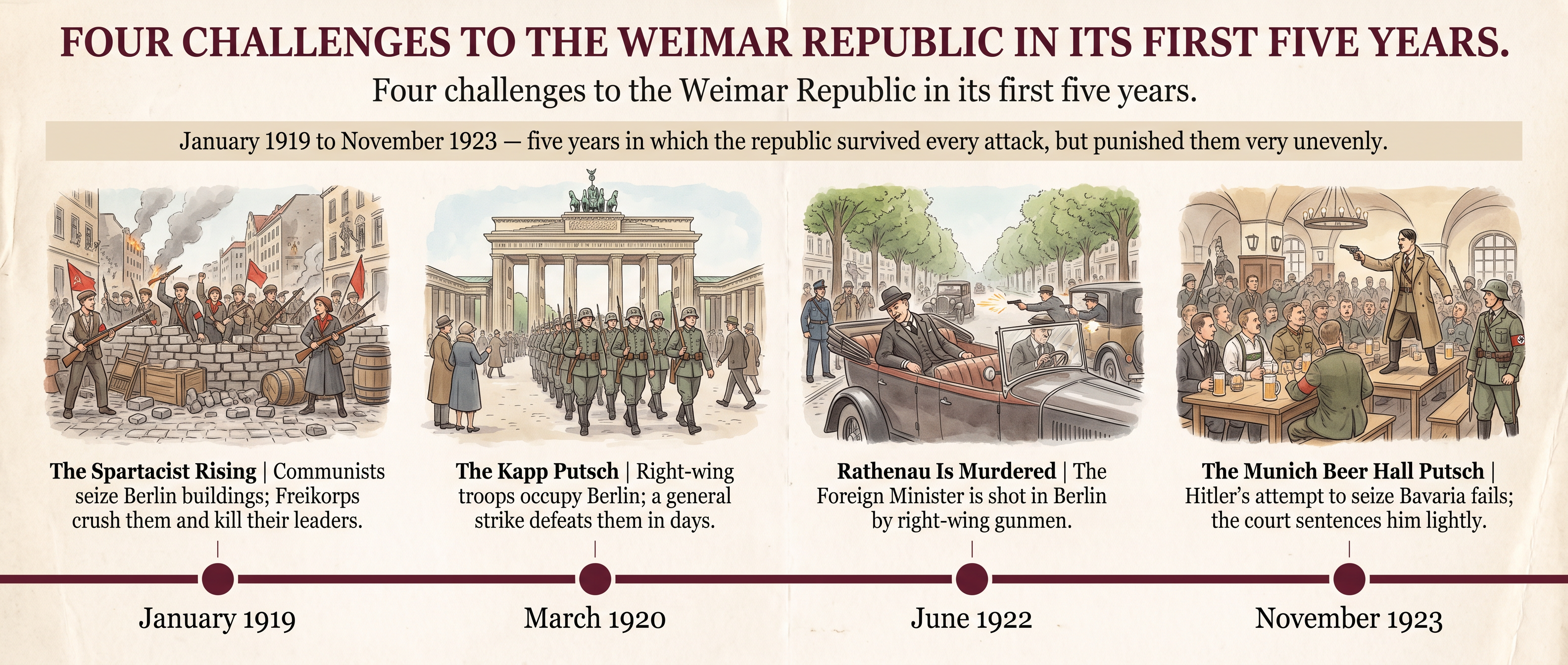
Fig. 11.1 – Attacks on the republic, 1919 to 1923.
11.1.3 The Economy In Question
No account of the republic’s failure works without its economic history. Twice within ten years, German families watched their security disappear, and both times the republic was in office when it happened.
Paying For A Lost War
Germany had financed the First World War largely by borrowing, expecting to repay the debt from territory and payments taken from the defeated enemy. Defeat left the debt and removed the means of paying it. On top of that came reparations, fixed by the Allied Reparations Commission in 1921 at 132 billion gold marks.
Germany asked for its payments to be suspended until the economy recovered. France, which had been invaded twice within fifty years and had its northern industry wrecked, refused. In 1922 Germany fell behind on its deliveries.
The Ruhr And The Runaway Mark
In January 1923 French and Belgian troops occupied the Ruhr, the coal and steel region on Germany’s western edge, intending to take payment in goods directly from its mines and factories. The German government called on Ruhr workers to offer passive resistance — to refuse to work for the occupiers — and undertook to pay their wages.
It paid them with newly printed money. Prices, already rising, now moved beyond anything ordinary arithmetic could follow. This is hyperinflation: a rise in prices so rapid that money loses its value faster than people can spend it. Table 11.1 gives a measure of the collapse.
Read the rows against each other. Between 1914 and January 1923 the mark had already lost most of its value — bad enough. But the last two rows cover ten months of 1923 alone, and in them the currency ceased to work at all. Wages paid in the morning bought less by evening.
Hyperinflation did not hurt everyone equally, and that is the point most worth holding on to. People with debts saw them vanish, and those who owned land, buildings or goods came through. Those who had done what careful people were told to do — save money, buy government bonds, live on a pension or a fixed salary — lost everything they had put by. A schoolteacher’s savings of a lifetime would not buy a meal.
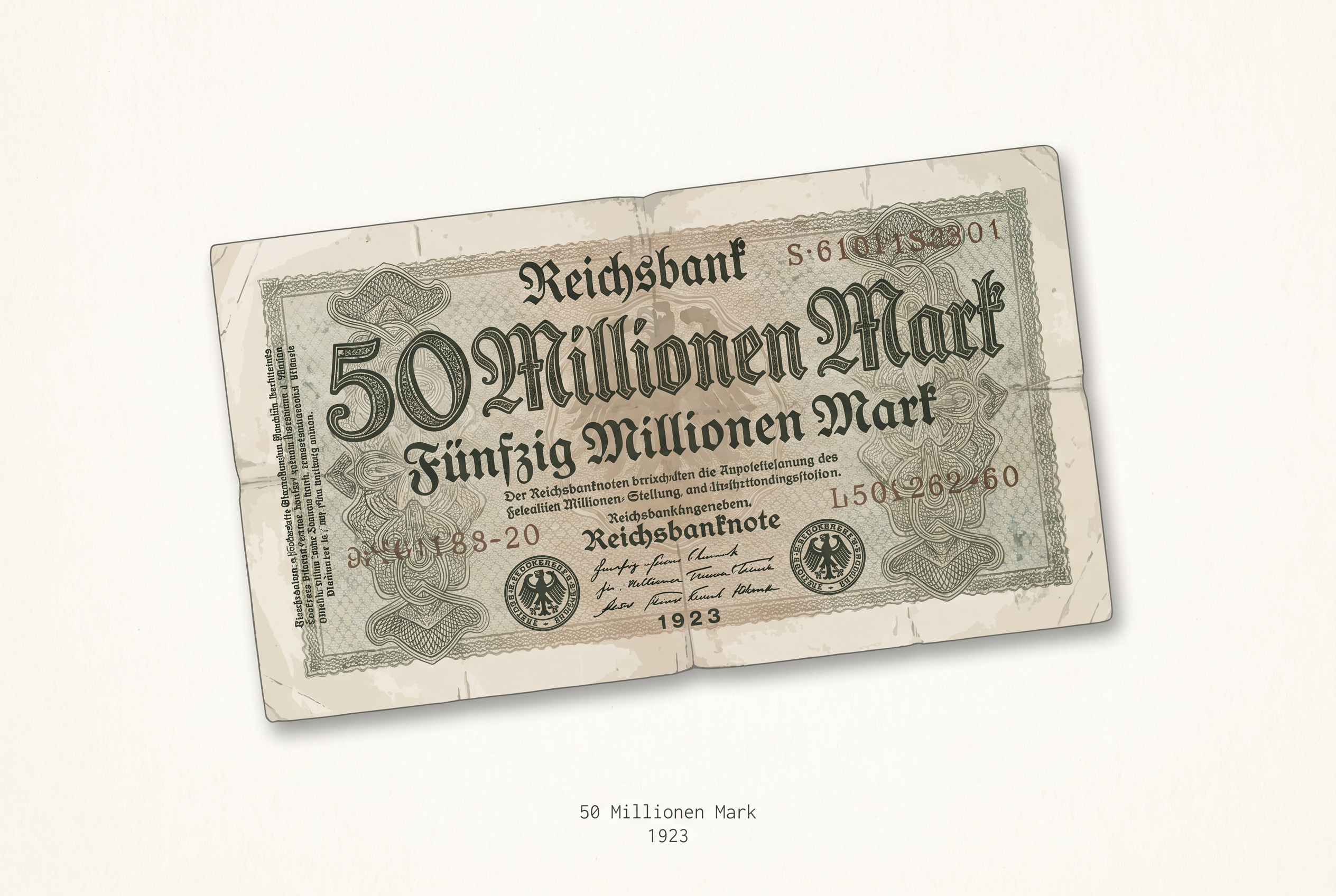
Fig. 11.2 – 1923 German hyperinflation banknote.
A Recovery Built On Borrowed Money
The currency was rescued at the end of 1923 by the introduction of a new one, the Rentenmark, issued under the government of Gustav Stresemann. Stresemann held the chancellorship for only a few months, but he then served as Foreign Minister until his death in 1929, and the recovery of these years is usually associated with him.
In 1924 the Dawes Plan, drawn up by a committee under the American banker Charles Dawes, reorganised reparations. Annual payments were reduced to a level Germany could manage and were set to rise as the economy improved, and a large American loan started the machinery turning again. Industry revived, unemployment fell and the later 1920s brought a period of prosperity and cultural energy often called the ‘golden twenties’.
The foundation, however, was foreign credit. German industry, and German local governments building schools and swimming baths, borrowed heavily from American lenders — often on short-term loans that could be called back at short notice. A second agreement, the Young Plan of 1929, cut the total reparations bill to about 112 billion gold marks and stretched payment across fifty-nine years. Nationalists, Hitler among them, campaigned furiously against it, because accepting any payment schedule at all meant accepting the Versailles settlement.
The Slump And The Rule By Decree
In October 1929 share prices collapsed on the New York stock exchange. American lenders called in their short-term loans and stopped making new ones, and the German recovery, which had been built on those loans, came apart within months.
Factories closed, exports fell and unemployment climbed from about 1.9 million in 1929 to roughly 6 million by early 1932 — close to one in three of the workforce. Behind that figure lay families without income in a state whose insurance funds were running dry.
The government of Chancellor Heinrich Brüning, appointed in 1930, responded by cutting: salaries, pensions, unemployment benefit and public spending were all reduced, in the belief that a balanced budget would restore confidence. The cuts deepened the slump and cost the government the support of the working class.
Brüning could not command a Reichstag majority for these measures, so he governed instead by presidential decree under Article 48. Between 1930 and 1932 the Reichstag met less and less often and passed less and less. Parliamentary government in Germany had effectively stopped working before Hitler was anywhere near power — and millions of voters could see it.
11.2 Events From 1932 To The Chancellorship
By 1932 the Weimar Republic was a parliamentary state that had almost stopped using its parliament. Governments ruled by presidential decree, unemployment stood at around six million, and the two parties that had never accepted the republic — the Communists and the National Socialists — were both growing fast.
What follows is a story of votes, but not only of votes. Hitler did not seize power by marching on Berlin, and he was not carried into office by a majority of Germans. He was appointed, in a private arrangement, by men who thought they could use him.
11.2.1 The Elections Of 1932
The Rise Of A Small Party
Until the slump, the National Socialist German Workers’ Party was a minor force. In the Reichstag election of 1928 it won twelve seats. Two years later, with unemployment climbing, it won 107 and became the second largest party in Germany. Table 11.2 sets out what happened next.
Two things stand out. The first is the size of the surge between 1928 and July 1932, which tracks the rise in unemployment almost exactly. The second is the drop in November 1932, and it is easy to read past it. The Nazi vote fell by about two million in four months, and party officials were openly worried that the wave had broken.
The Presidency And The Deadlock
In the spring of 1932 Hitler challenged Paul von Hindenburg for the presidency. Hindenburg was eighty-four, a field marshal from the war, and a monarchist who had no affection for the republic he headed. The contest went to a second round, and Hindenburg won comfortably; Hitler took roughly a third of the vote.
He had lost, and he had still been supported by about thirteen million Germans. After the July election made his party the largest in the Reichstag, Hitler demanded the chancellorship. Hindenburg refused. He distrusted the man he is said to have thought of as a mere agitator, and he offered him only the vice-chancellorship, which Hitler rejected outright.
The result was deadlock. No cabinet could win a Reichstag majority, because the Nazis and the Communists together held enough seats to vote down anything and would never combine on anything else. Franz von Papen governed for months without support, then General Kurt von Schleicher tried and failed in his turn.
11.2.2 The Backstage Deal And January 1933
The arrangement that made Hitler Chancellor was not made in the Reichstag. It was made in January 1933 by a small circle of conservative politicians, army men and businessmen, working through Papen, who had been removed from office in December and wanted his way back.
Their calculation was straightforward. The Nazis had votes but were losing them; the conservatives had Hindenburg’s ear but no popular following. Put Hitler in the chancellorship, surround him with a cabinet in which his party held only a handful of posts, and make Papen Vice-Chancellor, and the conservatives would have mass support without surrendering control. Papen believed he had hired Hitler rather than empowered him.
Hindenburg was persuaded. On 30 January 1933 Hitler was appointed Chancellor — the head of the German government — at the head of a coalition of National Socialists and Nationalists. Of the eleven cabinet posts, the Nazis held three.
Hitler was not satisfied with a share of a cabinet. Within a day he had persuaded Hindenburg to dissolve the Reichstag and call fresh elections for 5 March, expecting that the machinery of government would now deliver him the majority the ballot box had denied him.
11.2.3 From Chancellor To Dictator, 1933
Eight weeks separate Hitler’s appointment from the law that ended parliamentary government in Germany. Fig. 11.3 sets out the sequence; what follows explains how each step made the next one possible.
An Election Fought With The State’s Resources
The campaign of February 1933 was not a contest between equals. Nazi ministers now controlled the police in Prussia, by far the largest German state, and Hermann Göring, its Minister of the Interior, enrolled thousands of SA men as auxiliary police.
The consequence was that the party’s private army could now break up opposition meetings, intimidate voters and arrest opponents while wearing the authority of the state. Government control of radio gave Nazi speakers an audience their rivals could not match.
The Fire And The Decree
On the night of 27 February the Reichstag building burned. A young Dutch communist, Marinus van der Lubbe, was arrested at the scene. The Nazis announced at once that the fire was the opening move of a communist rising.
The following day Hindenburg signed the Decree for the Protection of People and State, usually called the Reichstag Fire Decree. It suspended freedom of speech, of the press, of assembly and of association, and the protection against arrest without trial. It was issued under Article 48 — the emergency article of the republic’s own constitution, used now to dismantle the rights that constitution guaranteed.
Thousands of Communists, Social Democrats and trade unionists were arrested in the following days. The decree was never lifted. For the next twelve years, Germany was governed in a permanent state of emergency.
The Last Election And The Enabling Act
Even with its opponents in cells and its own men policing the streets, the party did not win an absolute majority on 5 March. It took 288 of 647 seats. Only with the fifty-two seats of its Nationalist partners did the government command a majority at all.
That was not enough for what Hitler wanted next. The Enabling Act would allow his cabinet to make laws — including laws that broke the constitution — without the Reichstag and without the President, for four years. Because it altered the constitution, it needed a two-thirds majority of those voting.
He obtained it. The Communist deputies, whose votes might have blocked it, were in prison or in hiding and their seats were treated as void. The Catholic Centre Party was promised protection for the Church and voted in favour. Only the Social Democrats voted against, and they did so knowing what it would cost them.
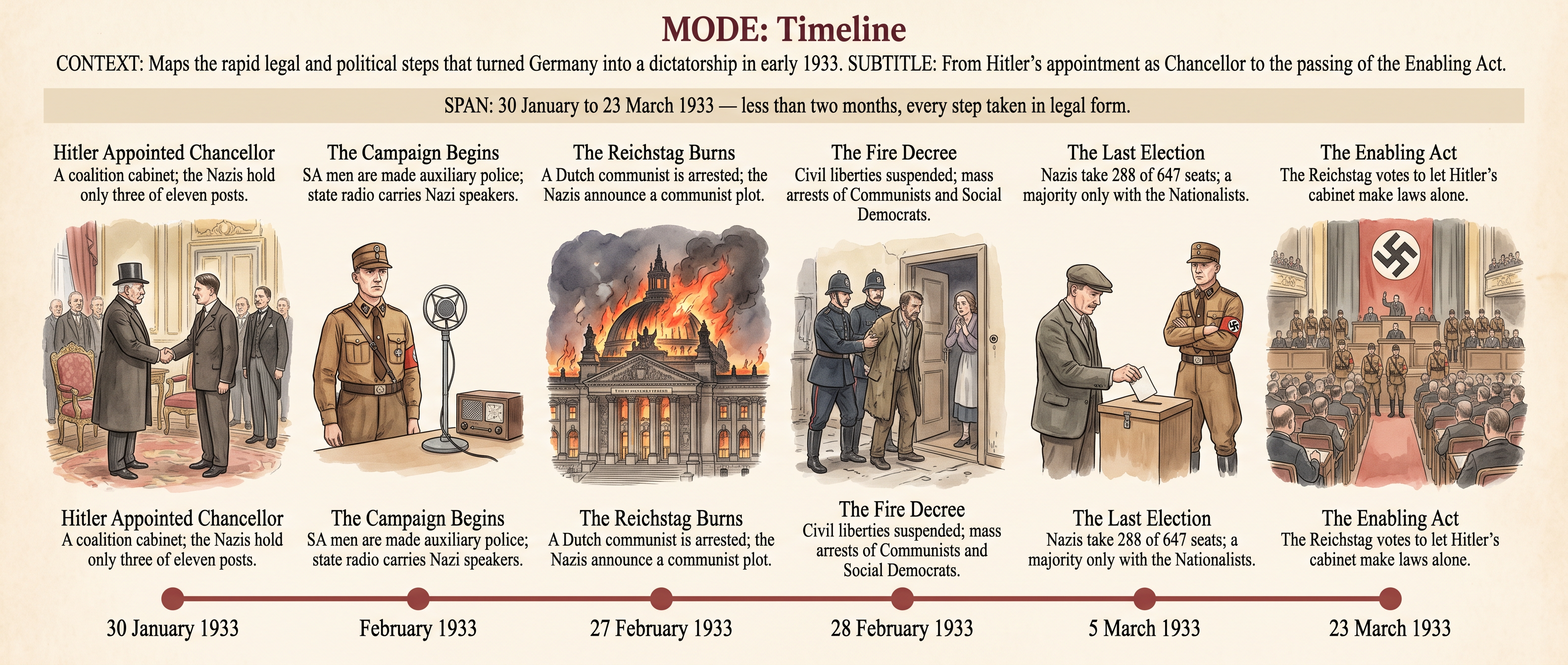
Fig. 11.3 – Eight weeks to dictatorship.
Legality As A Weapon
It is worth pausing on what this sequence shows. There was no coup. Each step — the appointment, the dissolution, the decree, the election, the Act — was carried out through an office or a procedure the constitution provided.
That is precisely why the republic’s weaknesses mattered so much. A constitution that allowed government by emergency decree, a president willing to sign such decrees, courts that had never defended the republic, and a parliament that had already stopped legislating together made a lawful road to dictatorship. After 23 March 1933 the Reichstag met rarely and decided nothing.
11.3 Why The Nazis Won Support
A party with twelve seats in 1928 held 230 four years later. Numbers like these need explaining, and the explanation is not a single cause. Different Germans came to the Nazis for different reasons, and some Germans never came at all.
Something For Everyone
The first thing to notice about Nazi campaigning is how little of it was detailed policy. The party promised work, recovery and national renewal, and it kept the promises broad enough to fit almost any listener.
To the unemployed — around six million of them by early 1932 — it promised jobs. To farmers hurt by falling agricultural prices it promised protection and fair returns. To shopkeepers, craftsmen and small traders, the Mittelstand, it promised rescue from the big stores and the banks. To industrialists it promised an end to strong trade unions, and to army officers it promised a real army again.
Several of these promises contradicted each other. Job security for workers and freedom from unions for employers cannot both be delivered in full. But each audience mostly heard what was meant for it, and a party out of office is not yet required to reconcile anything.
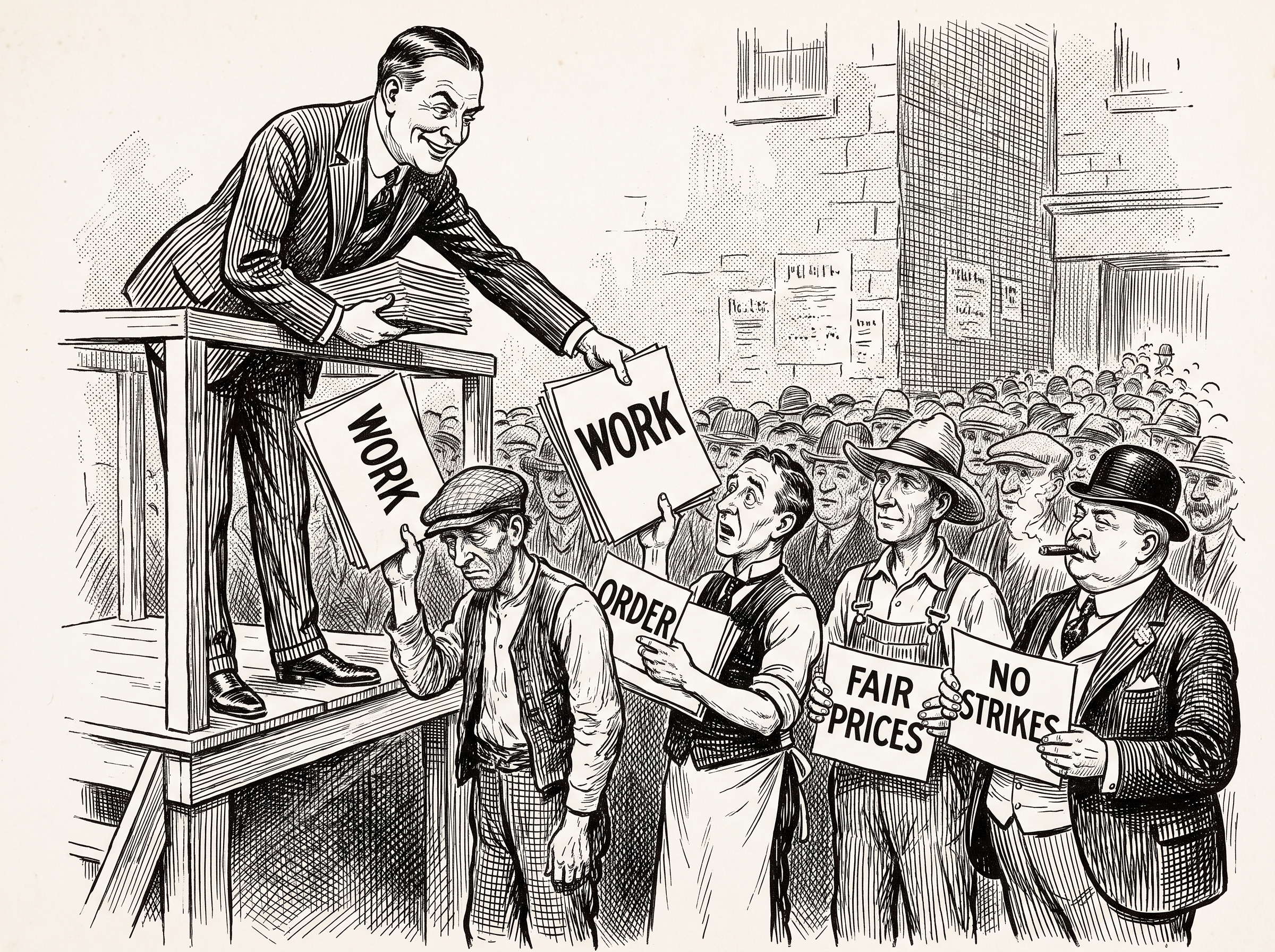
Fig. 11.4 – The party offered a different promise to each audience. Inspiration: Original textbook concept.
The Wound Of Versailles
Nationalism ran through everything the party said. The Nazis promised to tear up the Treaty of Versailles, rebuild the armed forces and recover what Germany had lost in 1919.
This message reached far beyond party members. Millions of Germans who disliked the Nazis still believed the treaty was an injustice, and a party that attacked it loudly was speaking their language. The campaign against the Young Plan in 1929 had already given Hitler a national platform alongside respectable conservatives, and it made him look less like a street agitator and more like a politician.
Fear Of Revolution
Fear worked as powerfully as hope. The Communist Party was also growing through the slump, and in November 1932 it won a hundred seats in the Reichstag. Its own posters promised a workers’ revolution on the Soviet model.
For anyone who owned something — a farm, a shop, a factory, a house — that prospect was frightening. The Nazis presented themselves as the only force strong and ruthless enough to stop it. Industrialists and landowners who found Nazi economic talk alarming could still prefer it to the alternative they imagined, and some funded the party accordingly.
There was a circularity in this that is easy to miss. Much of the street violence people wanted stopped was being caused by the SA itself. The party helped create the disorder it then offered to end.
The Machinery Of Persuasion
Propaganda is the organised use of information, images and argument to shape what a population believes and feels. The Nazis did not invent it, but they used it more systematically than their rivals.
Joseph Goebbels, who ran the party’s propaganda, worked on a few plain principles: keep the message simple, repeat it constantly, aim at feeling rather than argument, and vary it by audience. Posters, mass rallies, party newspapers, films of marching columns and torchlit processions all carried the same few ideas.
In the elections of 1932 Hitler campaigned by aeroplane, speaking in several cities in a single day — a novelty that itself made news. He was an effective public speaker, and the effect was built rather than accidental: rallies were staged for maximum spectacle, with lighting, music, banners and long delays before he appeared.
Out of this came the presentation of Hitler as a saviour figure, a leader who stood above ordinary politics and embodied the nation’s will. That image was manufactured, and for many Germans it worked.
Uniforms, Wages And Belonging
For young men in particular, the party offered something more concrete than a slogan. The SA gave a jobless nineteen-year-old a uniform, a place to sleep in some towns, meals, a little money and the company of others in the same position.
Belonging to a movement that seemed to be going somewhere was itself an attraction in a country where a third of the workforce had nowhere to go each morning. It also drew young men into violence, since that was the work the SA existed to do.
Antisemitism In The Message
Antisemitism — hostility towards Jews as a group — was central to Nazi ideology and constant in Nazi speech. Jews made up well under one per cent of Germany’s population, but Nazi propaganda held them responsible at once for the defeat of 1918, the Treaty of Versailles, communism, and the banking crisis of the slump.
These charges contradict one another: the same people cannot be the authors of both communism and international finance. The contradiction did not weaken the message, because its function was not to explain anything. It was to supply a single visible enemy for every misfortune Germans had suffered since 1914.
How far antisemitism won the Nazis votes is disputed. Some Germans were drawn to the party because of it; many others voted for jobs and order and treated the racial rhetoric as noise. What is not disputed is that voting for the party meant accepting a movement that said these things openly and acted on them from the first weeks in office.
Where The Party Was Weak
It is worth resisting the phrase ‘the Germans supported Hitler’. Even in March 1933, with the opposition in prison, the Nazi share of the vote was about forty-four per cent.
Support was uneven in a pattern historians have studied closely. The Nazi vote rose highest in Protestant rural districts and small towns, and among the middle classes. It stayed comparatively low in Catholic regions, where the Centre Party held its voters, and in the big industrial cities, where organised workers stayed with the Social Democrats or the Communists.
Why Nobody Stopped Them
The last reason belongs not to the Nazis but to their opponents. The two great parties of the German left, the Social Democrats and the Communists, together polled more votes than the Nazis in both 1932 elections. They never combined, because the Communists regarded the Social Democrats as traitors to the working class and treated them as the main enemy.
The republic’s own defenders, meanwhile, were tired and discredited. Voters had watched coalitions collapse, then watched government by decree, then watched their savings and jobs disappear. When a party said that the whole system was rotten and offered to replace it, a great many Germans were prepared to believe the first half of that sentence, and to gamble on the second.
11.4 The Nazi State: Changes In Government
The Enabling Act gave Hitler’s cabinet the power to make law. What that power was used for, in the eighteen months that followed, was the rebuilding of the German state itself.
The Nazis had a word for it: Gleichschaltung, usually translated as co-ordination. It meant bringing every institution in Germany — parliaments, parties, unions, offices, associations, clubs — into line with the party, so that no organised body existed outside its control. The programme ran from 1933 into 1934 and touched almost everything.
One Party And No Others
The parties of the left went first. Their leaders were already in custody under the Fire Decree; in May the offices and funds of the Social Democratic Party were seized, and in June the party was banned outright. The Communist Party had been destroyed in the arrests of February and March.
The other parties were not banned so much as squeezed. Faced with the choice of dissolving themselves or being broken up, and with their members losing jobs and facing threats, the Nationalists, the liberals and the Catholic Centre Party each announced their own dissolution in the summer of 1933.
On 14 July 1933 a law declared the National Socialist party the only political party in Germany and made the formation of any other a criminal offence. Elections did not stop. They became votes on a single list of approved candidates, and voting itself became a public act that neighbours noticed.
The States Brought Under Berlin
Germany was a federation. Power was shared between the central government and the Länder — the states, such as Prussia, Bavaria and Saxony, each with its own parliament, government and police.
That structure was dismantled in stages. In the spring of 1933 the government appointed Reich governors, drawn from senior party men, to take charge of each state. In January 1934 the state parliaments were abolished altogether and their powers transferred to the central government.
Federalism had been one of the few remaining checks on Berlin. Its removal meant that the police forces of every German state — the largest instrument the state possessed — now answered upwards to the same men.
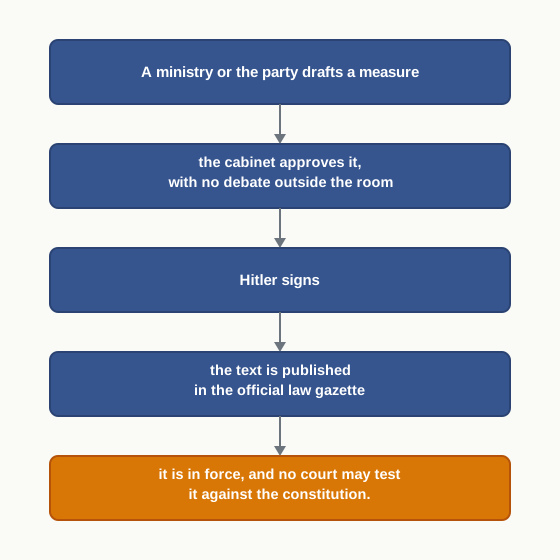
Fig. 11.5 – How a law was made after March 1933.
Compare that with the procedure it replaced. Before 1933 a bill was introduced in the Reichstag, debated in public by deputies elected in a genuine contest, amended, voted on, and then signed by a President who was himself elected. Each of those stages gave someone outside the government a chance to say no. After March 1933 no such stage was left.
The Civil Service Purged
A state is run by its officials, and in April 1933 a law allowed the government to remove officials it did not want. Jews and known political opponents were dismissed from ministries, local government, schools and universities.
The effect went well beyond those actually sacked. Every remaining official now understood that a career depended on political reliability, and party membership among civil servants rose sharply in the following months. The professional civil service that had served the empire and then the republic did not resist the new regime; most of it adapted to it.
Unions Replaced
On 2 May 1933, the day after a public holiday staged in honour of German labour, police and SA units occupied trade union offices across the country. Union funds were seized and union leaders arrested.
In their place the regime created a single organisation, the German Labour Front, to which employers and workers both belonged. It did not bargain over wages and it could not call a strike, because strikes were now illegal. Wage levels were set by officials appointed by the state.
Workers thus lost the one instrument that had given them leverage over their employers. This is worth holding on to, because it also explains a good deal about the loyalty of industrialists to the new state.
The Police State
Alongside the ordinary police grew a second apparatus that answered to the party. In Prussia, Göring created a secret political police force, the Gestapo, in the spring of 1933. Within two years the political police of all the German states had been gathered under Heinrich Himmler, who also commanded the SS.
Two features made this machinery different from ordinary policing. The first was protective custody: a person could be arrested by police order and held without charge, without trial and without a fixed date of release. The second was the concentration camp, the place where such prisoners were held. The first of them, at Dachau near Munich, opened in March 1933, and its early inmates were communists, social democrats and trade unionists.
These camps stood outside the legal system entirely. No court supervised them and no defence lawyer entered them. In the first years they held political opponents; the categories of people sent to them would widen steadily through the decade.
Rule Without Rules
By the summer of 1934 the machinery of the German state had been rebuilt around one man. On 2 August 1934 President Hindenburg died. Rather than hold an election for a successor, Hitler combined the presidency with his own office, taking the title of Führer — leader — and holding the powers of head of state, head of government and commander of the armed forces together.
What replaced parliamentary government was not a tidy new system. Party organisations and state ministries often did the same work in parallel and competed with each other, and Hitler rarely settled their disputes. Officials learned to guess what he wanted and to act on the guess, which tended to push policy in whichever direction seemed boldest.
The result was a state with enormous power over its citizens and remarkably little order in its own workings — a combination that mattered greatly once that machinery was turned on the people it had declared enemies.
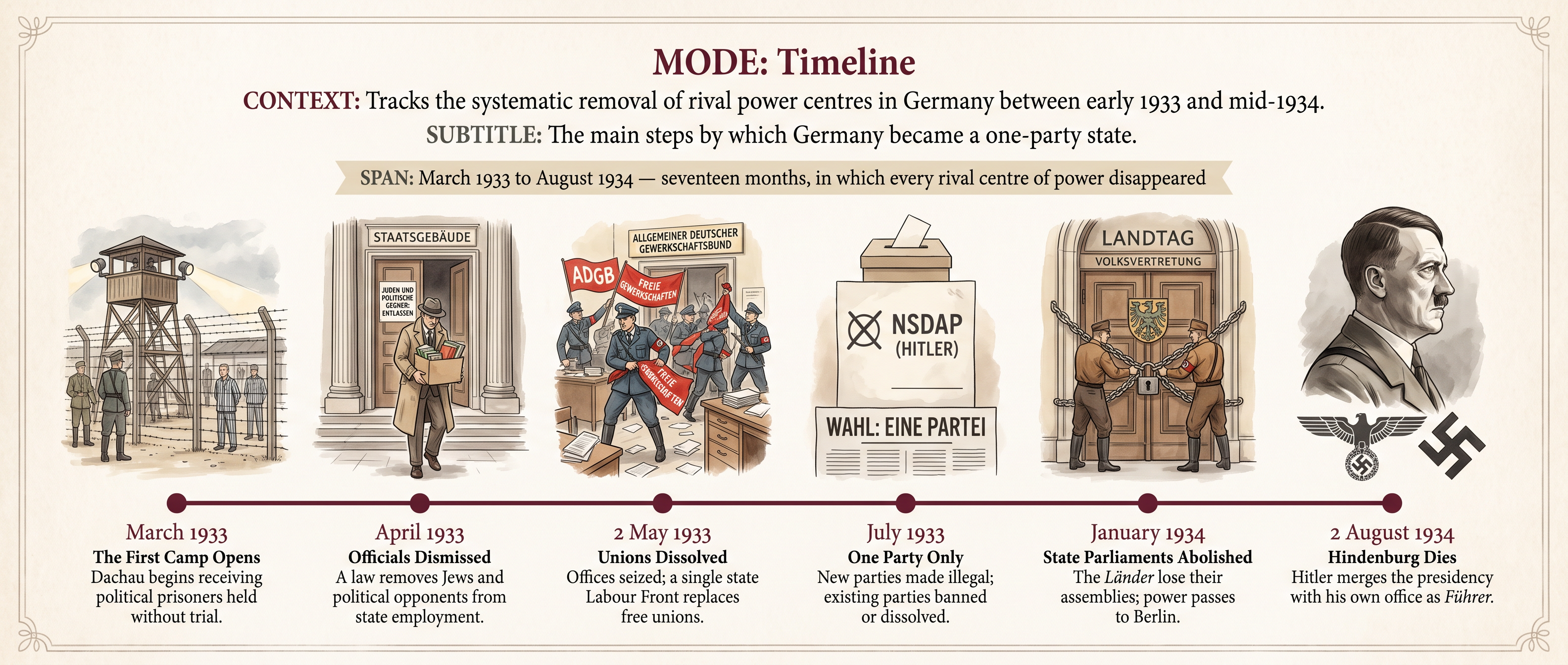
Fig. 11.6 – Co-ordinating Germany, 1933 to 1934.
11.5 Cultural Life And Education
A dictatorship can be built out of laws, police and camps, and by the end of 1934 Germany had all three. But the Nazi state wanted more than obedience. It wanted a population that thought as the party thought, and it set out to reach people where opinions are actually formed — in newspapers and cinemas, on the radio, in classrooms, and in the evenings and weekends of the young.
11.5.1 Culture, Media And Propaganda
The Ministry And The Chamber
In March 1933 a new ministry was created for propaganda and public enlightenment, with Joseph Goebbels at its head. It is unusual for a state to admit in the title of a department that shaping opinion is government business, and the frankness tells us something about how the regime understood its task.
Later that year a Reich Chamber of Culture was set up, with separate chambers for writers, musicians, painters, actors, journalists and film-makers. Anyone who wished to work in these fields had to belong to the relevant chamber, and the chamber could refuse admission or expel a member.
This was a quieter instrument than a ban, and a more effective one. No censor had to read every manuscript, because a writer who could not obtain a card could not be published at all. Jewish artists and known opponents were excluded at once; the rest were left to work out for themselves what would be acceptable.
What Was Removed
The regime’s view of art was that it should be German, comprehensible and heroic. The idea that art belonged to the world rather than to a nation was rejected outright.
Modern movements — abstract painting, experimental music, much of what German artists had produced in the 1920s — were condemned as degenerate. Thousands of works were removed from public museums, and in 1937 a selection was put on show in Munich in an exhibition designed to hold them up to ridicule. Many artists left Germany; others stopped exhibiting.
Radio In Every Home
The regime’s most valuable tool was the newest one. Broadcasting was placed under the ministry, and a cheap receiver, the ‘people’s radio’, was mass produced and sold at a price ordinary families could reach. Loudspeakers were installed in factories, cafés and public squares so that major speeches could not easily be missed.
The cheap set had a short range, which suited the ministry: it picked up German stations easily and foreign ones with difficulty. By the later 1930s Germany had one of the highest rates of radio ownership in Europe, and what those radios carried was decided in one building in Berlin.
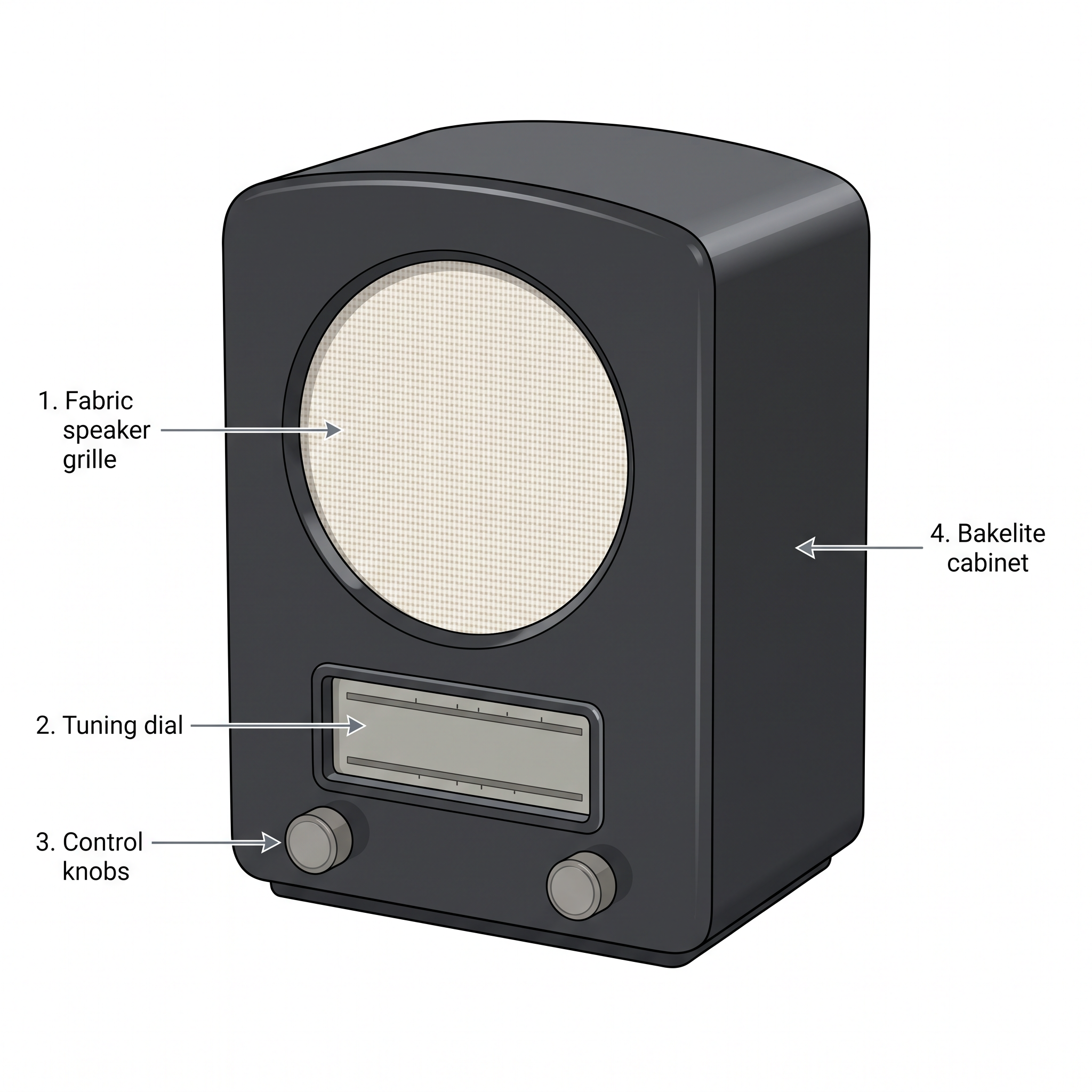
Fig. 11.7 – The mass-produced ‘people’s radio’ receiver.
The Press And The Screen
Newspapers were not all closed down, which is why the German press of these years can look deceptively normal. Opposition papers were seized in 1933, but many familiar titles continued to appear.
What changed was who decided their contents. Editors were called to daily briefings at which officials told them what to print, what to leave out and what emphasis to give. A newspaper still carried sport, weather and advertisements; its politics arrived ready-made.
Cinema worked the same way. Most films made in Nazi Germany were comedies, romances and adventures rather than political pieces, but every programme opened with a newsreel prepared under the ministry’s direction. A family that went to the pictures to be entertained watched the government’s version of the week’s events first.
Did It Work?
It is tempting to assume that people believed all of it. The evidence suggests something more mixed. Germans complained about wages, prices and shortages, mocked local officials in private, and grumbled about compulsory collections and meetings.
What propaganda achieved was narrower and still very powerful. It removed the alternative accounts, so that criticism stayed private and personal and never became an argument the public could hear. And it built one belief unusually deep — that Hitler himself stood above the failings of the party and its local bosses.
11.5.2 Schools, Teachers And Youth
An Education With A Different Purpose
Nazi education did not aim at academic excellence or independent judgement. It aimed at producing loyal, obedient and physically fit citizens, and it said so.
The word for this is indoctrination: teaching a set of beliefs in a way designed to be accepted without question. It shaped the timetable as much as the textbooks. Physical training was expanded, sometimes at the expense of other subjects, because the boys were understood to be future soldiers and the girls future mothers.
Teachers Under Pressure
Teachers were expected to join the National Socialist Teachers’ League, and the great majority did. Jewish teachers were dismissed under the law of April 1933, and teachers known for socialist or liberal views were removed or transferred.
Those who remained were watched — by inspectors, by party officials and by their own pupils. Children were taught that their first loyalty was to the Führer, and were encouraged to report what adults said, including at home. A teacher could not know which child in the room would repeat the day’s lesson, or the day’s hesitation.
What Was Taught
Textbooks were rewritten. History became a story of German greatness, betrayal in 1918 and rescue in 1933. Geography emphasised the territory Germany had lost and the space it was said to need.
Biology carried the heaviest load, because it was used to present racial doctrine as though it were science. Pupils were taught that humanity was divided into ranked races, that Germans belonged to a superior ‘Aryan’ race, and that Jews were a danger to it. Children measured skulls and sorted photographs by hair and nose.
This was not science. It was a political doctrine dressed in scientific clothing, and it has no standing in biology. Its importance lies in what it did: it taught a generation of children to see their Jewish classmates as a different and lesser kind of person, and it prepared them to accept what came next.
Alongside the ordinary schools, the regime founded elite institutions that selected boys for future leadership, with hard physical training and military discipline, from which the party expected its officers and officials.
The Rest Of The Day
School occupied the mornings; the movement claimed much of what was left. Boys joined the junior organisation at ten and the Hitler Youth at fourteen; girls joined the League of German Girls. Membership grew rapidly through the 1930s and was in practice made compulsory before the decade ended.
Meetings involved camping, sport, marching, singing, competitions and uniforms, mixed with lectures on race and loyalty. For many children this was genuinely enjoyable, and that is exactly why it worked: the ideology arrived attached to friendship, adventure and status.
It also loosened the hold of the family and the church on the young, which was intended. A boy who spent his weekends with the movement heard less from his parents and his priest, and knew that the movement outranked them both.
Not every child took to it. Some resented the endless drill, some families kept their children away as long as the law allowed, and small groups of young people later formed circles of their own outside the official organisations. But a child who turned ten in 1933 reached eighteen in 1941 having been taught by no one else.
11.6 The Army And The Night Of The Long Knives
By the middle of 1934 the party had co-ordinated the parliaments, the states, the unions, the press and the schools. One institution stood outside all of it: the army.
The One Institution Not Yet Co-ordinated
The Reichswehr was small — the Treaty of Versailles had capped it at 100,000 men — but it was the most respected body in Germany, and it had kept its own officer corps, its own traditions and its own command. Many of its senior officers were conservatives and monarchists who regarded the Nazis as vulgar upstarts, even while welcoming the promise of rearmament.
Hitler needed them. Rearmament was impossible without professional soldiers, and, more urgently, Hindenburg was old and visibly failing. When the President died, the army’s attitude would decide whether Hitler could take his powers.
The SA And The Second Revolution
The obstacle was inside the movement. The SA had grown enormously — from a few hundred thousand men before 1933 to some millions by 1934 — and its leader, Ernst Röhm, had ambitions for it.
Many SA men felt cheated. They had done the street fighting, and after January 1933 they watched Hitler make his peace with industrialists, generals and civil servants. They began to talk of a ‘second revolution’ that would sweep away the old elites the first one had spared.
Röhm’s own demand was more specific and more dangerous. He wanted the SA merged with the army to form a single people’s militia, under his command. For the officer corps this was intolerable: it would have placed Germany’s defence in the hands of an untrained street organisation and destroyed the professional army altogether.
Here it is worth separating two bodies that are easy to confuse. The SA was the party’s mass private army — hundreds of thousands of men in brown shirts, loosely disciplined, built for street politics. The SS began as a much smaller formation inside the SA, black-uniformed, selected and disciplined, originally Hitler’s personal guard, and by 1934 it was commanded by Heinrich Himmler. Both were party organisations, but the SA was a crowd and the SS was an instrument.
The Purge, June 1934
Himmler and Göring, who had their own reasons for wanting the SA cut down, pressed Hitler with reports of a plot. On 30 June 1934 he acted.
SS units arrested Röhm and the senior SA leadership, and over the following two days they were shot without trial. The killing was not confined to the SA. Old enemies and inconvenient men were dealt with in the same operation: General Kurt von Schleicher, the former Chancellor, was shot at his home along with his wife; Gregor Strasser, once a leading Nazi who had broken with Hitler, was killed; associates of Vice-Chancellor Papen were murdered and Papen himself placed under house arrest.
At least eighty-five deaths are documented, and the real number was probably higher, since no complete record was kept. The episode is known as the Night of the Long Knives, or the Röhm purge.
What followed is as revealing as the killings. On 3 July the cabinet passed a law declaring that the shootings had been lawful emergency measures taken to defend the state. Murder was not concealed; it was legalised after the event. A fortnight later Hitler told the Reichstag that in that hour he had been the supreme judge of the German people.
The Oath
Hindenburg died on 2 August 1934, five weeks after the purge. That same day every officer and soldier in the German armed forces swore a new oath.
The change in its wording was small and enormous. Soldiers had sworn loyalty to the constitution and to the nation; now they swore unconditional obedience to Adolf Hitler personally, by name, as Führer of the German Reich and commander of the armed forces.
An oath to a constitution can be invoked against a government that breaks it. An oath to a man cannot. Officers who later had doubts about where Hitler was leading Germany found themselves bound by a promise they took extremely seriously, and many said so.
The SA survived as a marching organisation and never again mattered politically. The SS was released from its control, expanded under Himmler, absorbed the political police and became the chief instrument of repression in Nazi Germany.
Rearmament And Command
The bargain was kept on both sides. In March 1935 Hitler publicly repudiated the arms limits of the Treaty of Versailles, reintroduced conscription and announced an army many times the permitted size. The renamed armed forces, the Wehrmacht, expanded rapidly, and expansion meant promotion, equipment and prestige for the officer corps.
Rearmament also shaped the economy, since an army of that size had to be paid for, armed and fed — a point taken up in the next section.
Control tightened at the end. In February 1938, after the War Minister was forced out over a personal scandal and the army’s commander-in-chief was removed on charges later shown to be false, Hitler abolished the War Ministry, created a new high command answering directly to himself, and took supreme command of the armed forces in person. The generals who had welcomed him in 1934 as protection against the SA ended the decade taking orders from him.
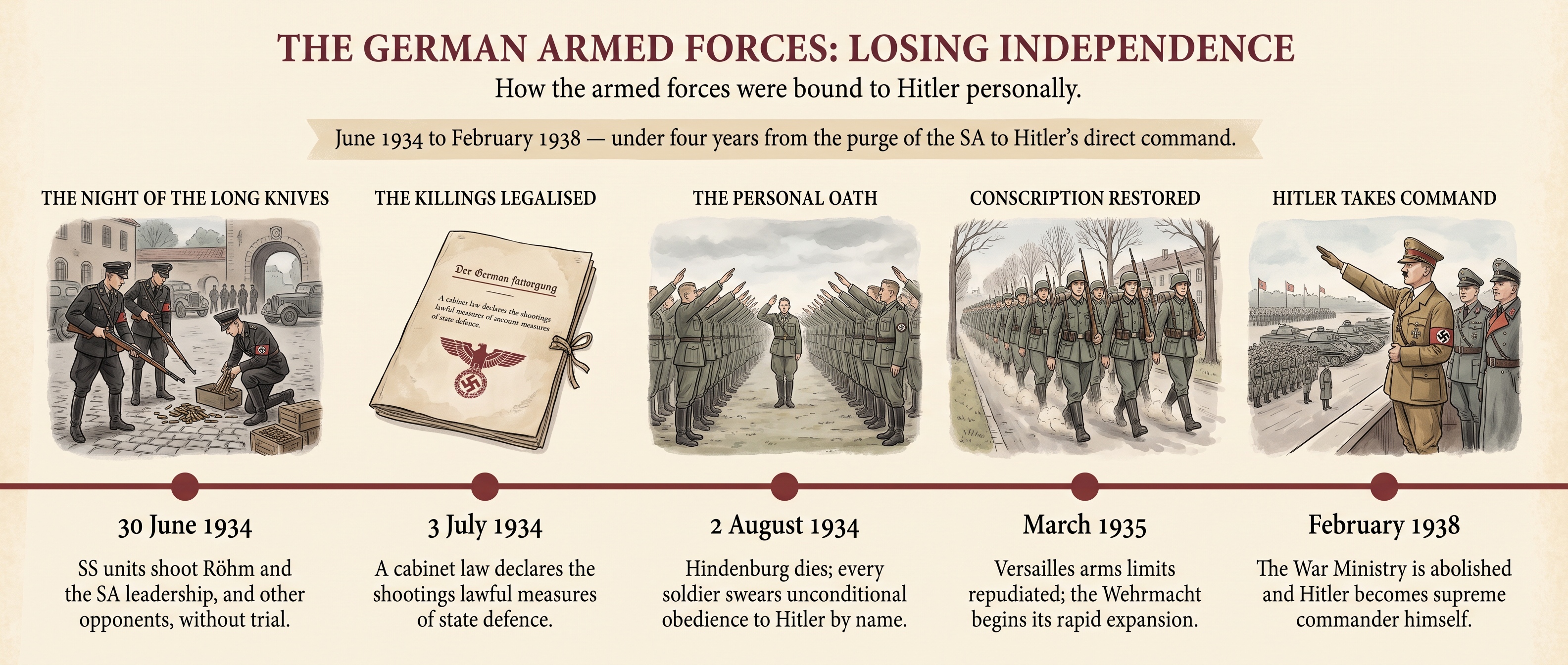
Fig. 11.8 – The army and the party, 1934 to 1938.
11.7 The Economy Of The Nazi State
Hitler came to office in the fourth winter of the slump, and the promise that had won the party most of its votes was work. Within six years registered unemployment in Germany had effectively disappeared. Understanding how, and at what cost, is one of the harder tasks in this chapter, because the achievement was real and the picture behind it is not simple.
Three Aims At Once
Nazi economic policy pursued three goals together. The first was to end mass unemployment. The second was autarky — self-sufficiency, so that Germany could feed itself and supply its own raw materials without depending on trade. The third was rearmament.
The three were connected. A state that expects to fight cannot afford to have its supplies cut off by a naval blockade, as Germany’s had been in the First World War. And building an army creates jobs. From about 1935 onwards, rearmament was the main engine of German employment.
Putting Men Back To Work
The first measures were public works. Money went into road building — the Autobahnen, the new motorway network — and into bridges, public buildings, land drainage, forestry and housing repair. Government orders were placed with private firms, which then took on labour.
Alongside this ran the Reich Labour Service. From 1935 young men were required to give six months to it, working in uniform on drainage, farm and construction projects for pocket money and keep. The service removed them from the labour market, taught habits of discipline, and prepared them for the army.
Conscription, reintroduced in the same year, then took them out of civilian employment altogether, while the factories that armed them took on workers of their own.
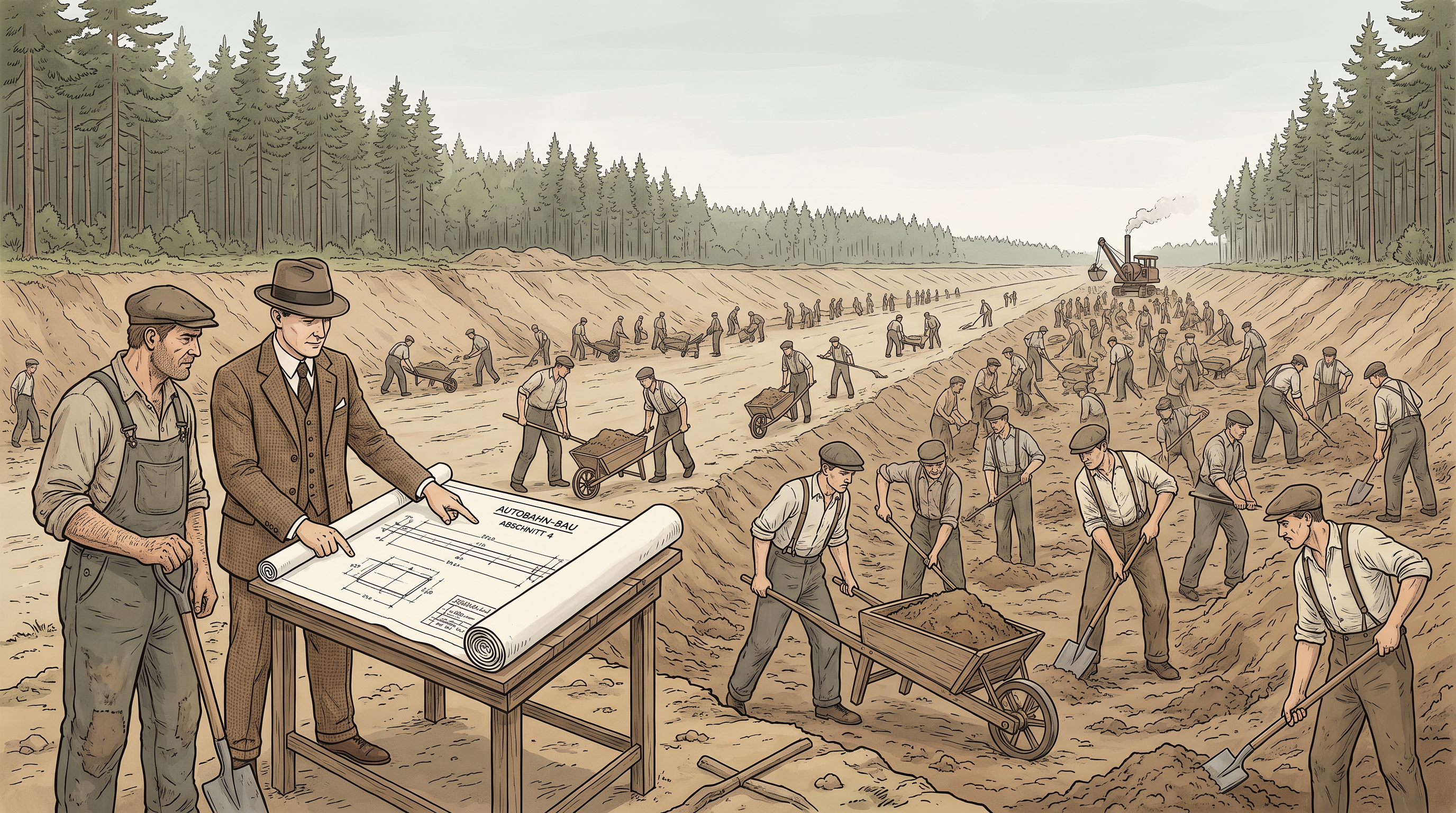
Fig. 11.9 – Motorway construction in the mid-1930s.
Read the column downwards and the fall is dramatic — from more than five million to under half a million in six years. Read it more carefully and two questions arise. Who counts as unemployed? And what were the people no longer counted actually doing?
The answers matter. Men in the Labour Service and in the armed forces were not unemployed, but they were not in ordinary jobs either. Jews driven out of professions and businesses were removed from the register rather than added to it. Women were pushed out of some occupations and encouraged into the home, and a woman who left work was not counted as looking for it.
None of this means the recovery was invented. Millions genuinely returned to work, and families who had lived on shrinking benefits since 1930 could feel the difference. It does mean that the official figure was flattering, and that a student should ask what a statistic counts before treating it as a fact.
The New Plan And Foreign Trade
Recovery ran into a problem quickly. Germany had to import food, oil, rubber and ores, and imports had to be paid for in foreign currency the country did not have.
Hjalmar Schacht, who headed the central bank and then the economics ministry, answered with strict controls. Imports were licensed, so that raw materials for armaments came first and consumer goods last. Trade agreements were struck with countries in south-eastern Europe and Latin America under which they supplied Germany with food and materials and were paid in credits usable only for German goods. Foreigners could not freely take money out of German banks.
Rearmament itself was partly financed through credit notes issued against government-backed companies, which kept the true scale of military spending out of the published budget. The arrangement worked for a few years and left the state with a debt it had no obvious way to repay.
The Four-Year Plan, 1936
In 1936 the drive for self-sufficiency was formalised. A Four-Year Plan was placed under Göring, with the declared aim of making the German economy and army fit for war within four years.
Its instruments were direct. Scarce materials were allocated by officials rather than by price. Factories were told what to produce. Farmers were pressed to raise output. Food prices and foreign exchange rates were controlled to hold inflation down. And large investment went into ersatz — substitute — products: synthetic rubber and synthetic fuel made from Germany’s own coal, at a cost far above the world price of the natural article.
Autarky was never achieved. Germany still could not feed itself, and still imported much of its oil and iron ore in 1939. What the plan did achieve was an economy in which the state, not the market, decided what was made.
Farmers, Workers And Consumers
Farmers were treated as a favoured group, at least in words. Prices for major crops were fixed, which protected farmers from the collapse that had ruined them after 1929, and a law of 1933 declared medium-sized farms hereditary estates that could not be sold, divided or seized for debt.
The protection had a price. A farm that could not be mortgaged could not raise capital to improve itself, only one heir could inherit, and farmers found themselves working within quotas and deliveries set by officials. Meanwhile the pull of well-paid factory work drew labourers off the land, leaving farms short of hands.
Workers gained job security and lost almost everything else. Wages rose slowly and stayed close to the levels of the early 1930s, while working hours lengthened. Consumer goods stayed scarce, because materials went to armaments; butter, fats and textiles were periodically short. And with unions gone and strikes illegal, there was no lawful way to press for more.
11.8 Religious Life Under Nazi Rule
After the parties, the unions and the states had been co-ordinated, two great institutions still stood outside the party’s control. One was the army. The other was the Church — in fact two churches, since roughly two-thirds of Germans were Protestant and most of the rest Catholic.
Churches were a problem of a particular kind. They had millions of members who attended every week, their own schools, youth groups, newspapers and charities, and, in the Catholic case, a head of authority outside Germany altogether. A regime that demanded first loyalty for the Führer could not be comfortable with an institution that claimed a higher loyalty still.
The Agreement With Rome
The Catholic Church moved first, and it moved to protect itself. In July 1933 an agreement — a concordat — was signed between the Vatican and the German government. The Church was promised freedom to run its schools, its youth organisations and its religious life. In return, Catholic clergy undertook to stay out of politics.
For the Church the bargain looked like security. For Hitler it was a considerable gain. The Catholic Centre Party, which had dissolved itself only days earlier, was now formally out of the way, Catholic voters were released from political opposition, and a new government less than six months old had been recognised by a state of great international standing.
The undertakings were broken within a couple of years. Catholic youth organisations were dissolved, and their members were expected to join the Hitler Youth instead. Catholic schools were pressed and then closed. The Catholic press was censored. Priests, monks and nuns were put on trial on currency and morality charges, and the cases were reported loudly in the newspapers to discredit the Church in public.
In March 1937 Pope Pius XI issued an encyclical — a formal letter to the whole Church — which was smuggled into Germany and read from Catholic pulpits on the same Sunday. It protested at the breaking of the concordat and rejected the worship of race and state as a form of idolatry. The regime’s response was to seize the presses that had printed it and to step up prosecutions of clergy.
The Struggle Inside The Protestant Churches
German Protestantism was not one church but a set of regional churches, and here the regime tried a different method: capture rather than containment.
A movement within the churches, calling itself the German Christians, wanted Protestantism reshaped along Nazi lines. Its supporters proposed a single national Reich Church under a Reich Bishop, the exclusion of clergy of Jewish descent, and even the removal of the Old Testament from Christian teaching on the grounds that it was a Jewish book. With the regime’s backing, a Reich Bishop was installed in 1933.
Many pastors refused to accept this. In 1934 those who objected formed what became known as the Confessing Church, holding that the Church’s teaching was answerable to scripture and not to the state or to any race doctrine. It was not a political opposition and did not set out to overthrow the regime, but on this one point it would not yield.
The state answered with arrests, bans on preaching, and the closing of the Confessing Church’s own training colleges. Several hundred pastors were arrested in the later 1930s, and clergy who continued to preach against state control were sent to concentration camps.
Squeezing Rather Than Banning
Across both churches the regime’s method was the same: leave the building open and take away everything around it.
Religious instruction in schools was cut back and then, in many places, ended. Church youth groups were dissolved and their members absorbed into the party’s organisations. Church charities and welfare work were taken over by the party’s own welfare body. Clergy were watched by the Gestapo, and sermons were reported on. Some Nazi leaders promoted festivals and ceremonies drawn from a supposed old Germanic faith, intended to occupy the place that Christian rites held in family life.
The pressure was real, and so were its limits. When an order in one north-German region required crucifixes to be taken out of school classrooms in the later 1930s, the protests from parents and congregations were loud enough that the order was withdrawn. This is worth noticing, because it shows something the rest of this chapter rarely shows: on a matter people cared about intensely and were willing to be seen protesting about, the regime could be made to retreat.
What Was Left
By 1939 the churches still stood, still held services, and still had large congregations. They had not been abolished, and in that narrow sense they had survived where the parties and unions had not.
But they had been pushed out of education, out of youth work, out of charity and out of public argument. Most clergy of both churches did not resist. Those who did protested chiefly when the state interfered in the Church’s own affairs, and far less often when it acted against Jews and political opponents.
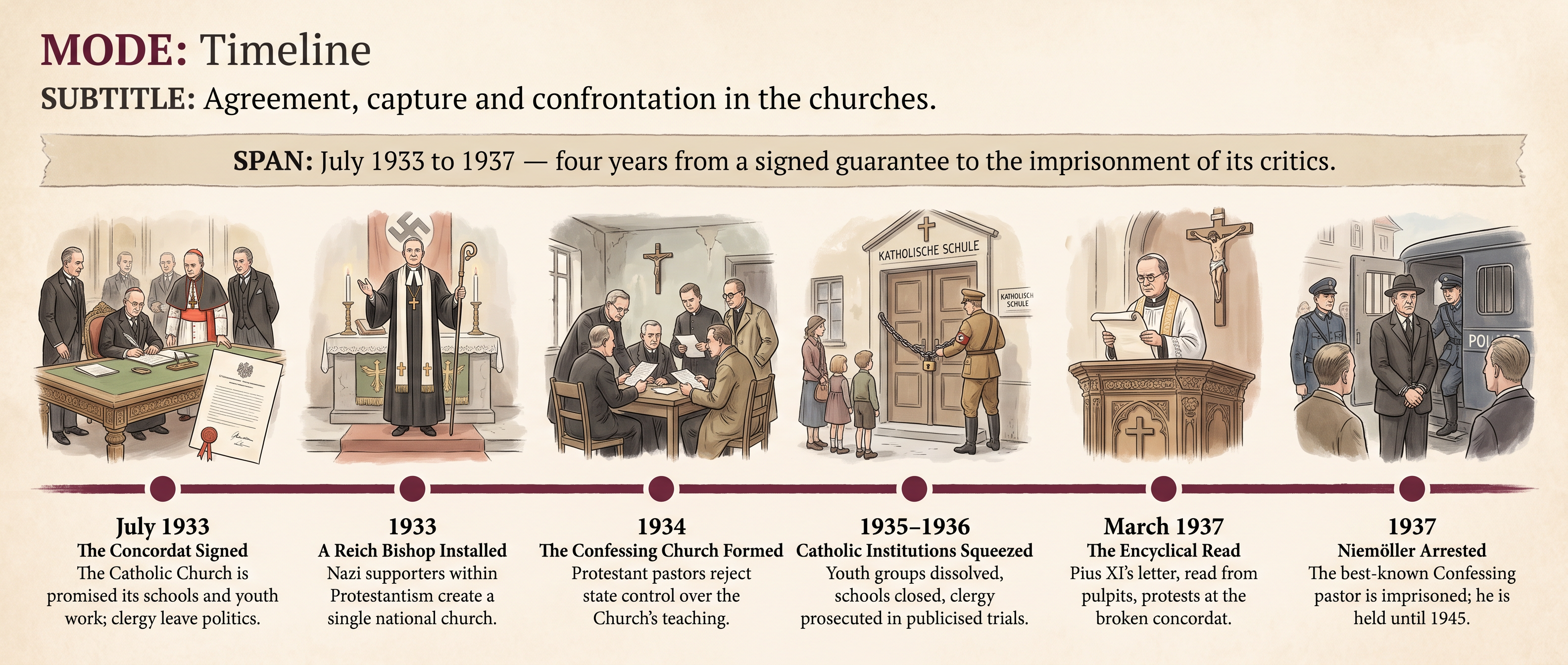
Fig. 11.10 – The churches and the state, 1933 to 1937.
11.9 The Campaign Against The Jews
At the start of 1933 about half a million Jews lived in Germany, rather less than one per cent of the population. Most families had been German for generations. They were shopkeepers, doctors, lawyers, teachers, factory workers, journalists and civil servants; roughly a hundred thousand German Jews had fought for Germany in the First World War, and thousands had died doing so.
This matters at the outset, because the campaign described in this section was not directed at outsiders. It was directed by a German government against German citizens, in the towns where they had always lived, by neighbours, officials, teachers and policemen who had known them for years.
The campaign did not begin with murder. It began with law, and it escalated in steps over twelve years. Following those steps is the only way to understand how the last of them became possible.
11.9.1 Legal Discrimination And Exclusion (1933-1938)
Boycott And Dismissal
The first national action came within weeks of the Enabling Act. On 1 April 1933 the party organised a boycott of Jewish shops, businesses, doctors and lawyers across Germany. SA men stood at doorways with placards, turning customers away and photographing those who went in.
The boycott was officially a single day, and public enthusiasm for it was patchy — many Germans shopped as usual. What followed was less visible and far more effective. The civil service law of April 1933 required the dismissal of officials of Jewish descent, and similar exclusions spread quickly to law, medicine, journalism, teaching and the universities. At Hindenburg’s insistence, men who had fought in the war were at first exempted; that exemption was removed after his death.
Jewish children remained in state schools but under quotas, and in classrooms where the biology lesson now taught that they were a danger to the nation.
The Nuremberg Laws, 1935
In September 1935 two laws were announced at the party rally in Nuremberg, and they changed the legal standing of German Jews completely.
The first stripped Jews of German citizenship. They became subjects of the state rather than citizens of it, without the vote and without the political rights citizenship carries. The second forbade marriage, and sexual relations, between Jews and other Germans, and made breaking the ban a criminal offence.
The laws immediately created a practical difficulty for their own authors: who counted as a Jew? Nazi doctrine claimed that Jewishness was a matter of blood and race. But blood cannot be inspected, and there is no biological test of the kind the doctrine assumed. So the decrees that followed defined a Jew by the religion of a person’s grandparents, using birth, marriage and synagogue records kept by churches and registry offices.
Look closely at what that means. A racial law had to be enforced through religious paperwork, because the race it claimed to identify did not exist as a biological category. People who had never practised Judaism, and some who were practising Christians, were classified as Jews on the strength of a grandparent’s entry in a register.
Squeezed Out Of Ordinary Life
Between 1936 and 1938 exclusion widened into daily life. Jews were barred from parks, swimming pools, cinemas and many shops; benches were marked; villages put up signs saying Jews were unwelcome.
There was one striking pause. When Berlin hosted the Olympic Games in the summer of 1936, the anti-Jewish signs came down and the newspapers moderated their language for the duration, because tens of thousands of foreign visitors and journalists were in the city. Once the games ended, the signs went back up. The regime knew exactly how its treatment of Jews looked from outside, and cared enough to hide it for a fortnight.
From 1937 came the seizure of property, usually called Aryanisation: Jewish businesses were pressured into selling to non-Jewish buyers at a fraction of their worth. In 1938 Jewish property had to be registered, Jews were required to carry identity cards, men and women were made to add the names Israel and Sara to their own, and passports were stamped with a red ‘J’.
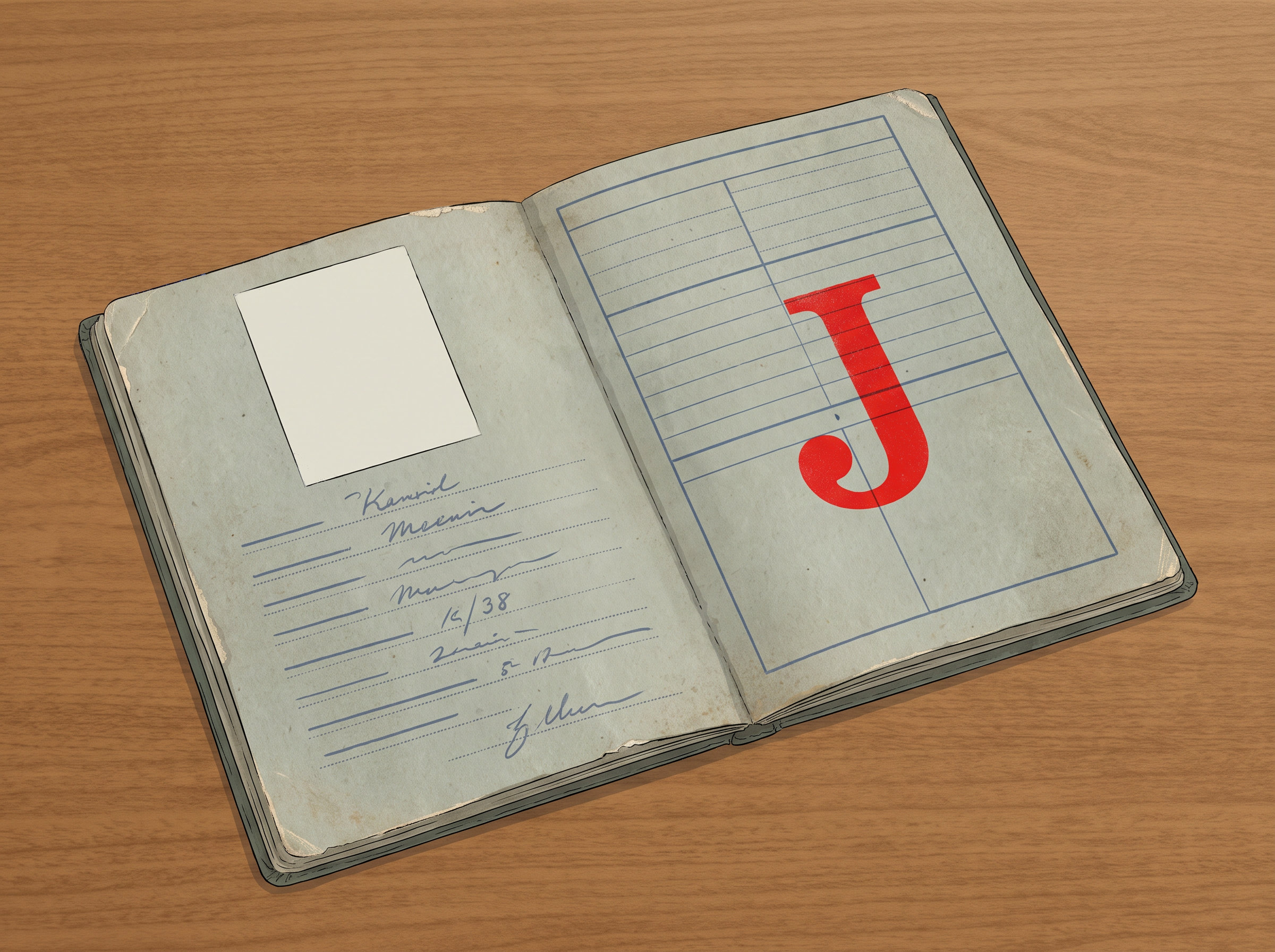
Fig. 11.11 – German passport with the red ‘J’ stamp.
The Closing Door
Emigration was the obvious escape, and about half of Germany’s Jews had left by 1939. Leaving was made difficult from both ends. The German state stripped emigrants of most of their money through taxes and currency rules, so families arrived abroad with nothing. And other countries, still in the Depression and unwilling to take large numbers of refugees, kept their quotas low. At an international conference in 1938 called to discuss the refugees, almost every government present explained why it could not take more.
11.9.2 Organised Violence (1938-1941)
The November Pogrom
On 7 November 1938 Ernst vom Rath, a German diplomat in Paris, was shot by Herschel Grynszpan, a seventeen-year-old Polish Jew whose family had just been expelled from Germany. Vom Rath died two days later.
The party leadership used the killing as a pretext. On the night of 9 November, after a speech by Goebbels, orders went out through party channels for ‘spontaneous’ demonstrations. SA men and party members in civilian clothes attacked Jewish property across Germany and Austria while police were instructed not to interfere except to protect neighbouring buildings.
Synagogues were burned — modern research counts more than a thousand synagogues and prayer rooms destroyed or damaged. Some seven and a half thousand Jewish businesses were wrecked, and shop windows were smashed in such quantity that the night acquired the name Kristallnacht, the night of broken glass. At least ninety-one Jews were killed. Around thirty thousand Jewish men were arrested and sent to concentration camps, from which most were released over the following months on condition that they emigrate.
The state then presented the victims with the bill. The Jewish community was fined a billion Reichsmarks, and insurance money owed for the damage was confiscated by the government. Jewish children were expelled from state schools, remaining Jewish businesses were transferred to non-Jewish owners, and Jews were banned from most public places.
The pogrom marks a turning point. Until 1938 persecution had worked mainly through statutes, dismissals and confiscations. After it, open violence and imprisonment became normal instruments of policy — and the September 1939 invasion of Poland removed the last restraints.
Ghettos And Mass Shootings
The war changed the scale of everything. When Germany occupied Poland in 1939, about two million Polish Jews came under German control; the invasion of the Soviet Union in June 1941 brought millions more.
In occupied Poland, Jews were driven from their homes into sealed ghettos in cities such as Warsaw and Łódź, at a density that made disease inevitable and on rations that made starvation certain. Tens of thousands died in the ghettos of hunger and typhus.
Behind the armies invading the Soviet Union came special SS units, the Einsatzgruppen, whose task was mass shooting. Whole Jewish communities were taken out of their towns and killed at pits outside them. At Babi Yar, a ravine near Kyiv, more than thirty thousand people were shot over two days in September 1941.
11.9.3 The ‘Final Solution’
From Killing To System
By the end of 1941 the regime had moved from persecution to extermination as declared policy. In January 1942 senior officials met at Wannsee, outside Berlin, to co-ordinate what they called the final solution of the Jewish question in Europe: the murder of every Jew on the continent, organised across ministries, railways and police forces.
The method had been developed earlier. From 1939 the regime had secretly killed disabled patients in German hospitals with gas, and the personnel and techniques of that programme were transferred to the new task.
Camps were built in occupied Poland — Chełmno, Bełżec, Sobibór, Treblinka — whose purpose was killing rather than imprisonment. At Auschwitz-Birkenau, a labour and extermination camp together, arriving trainloads were divided between those to be worked and those to be killed at once.
People were transported to these places by railway from every country Germany controlled, on timetables arranged by ordinary transport officials, with the cost of tickets charged to the deporting authorities. The word Holocaust is used for this destruction; many historians and survivors prefer the Hebrew word Shoah, meaning catastrophe.
About six million Jews were murdered — roughly two out of every three Jews then living in Europe. Whole communities that had existed for centuries ceased to exist. The Nazi state also murdered Roma and Sinti, disabled Germans, Soviet prisoners of war, Polish civilians, political prisoners, homosexual men and Jehovah’s Witnesses, each group for its own reasons, and the total of its victims runs into many millions more.
Why The Steps Matter
Read as a whole, the sequence in this section is the most important thing a student takes from this chapter. Nobody in 1933 was told that a boycott would end at Treblinka.
Each step was small enough to be absorbed. A boycott lasted a day. A dismissal affected one family in a street. A law about citizenship changed nothing visible in the morning. And each step made the next one easier, because it moved a group of people a little further outside the protection of ordinary life, and because those who might have objected had learned by then what objecting cost.
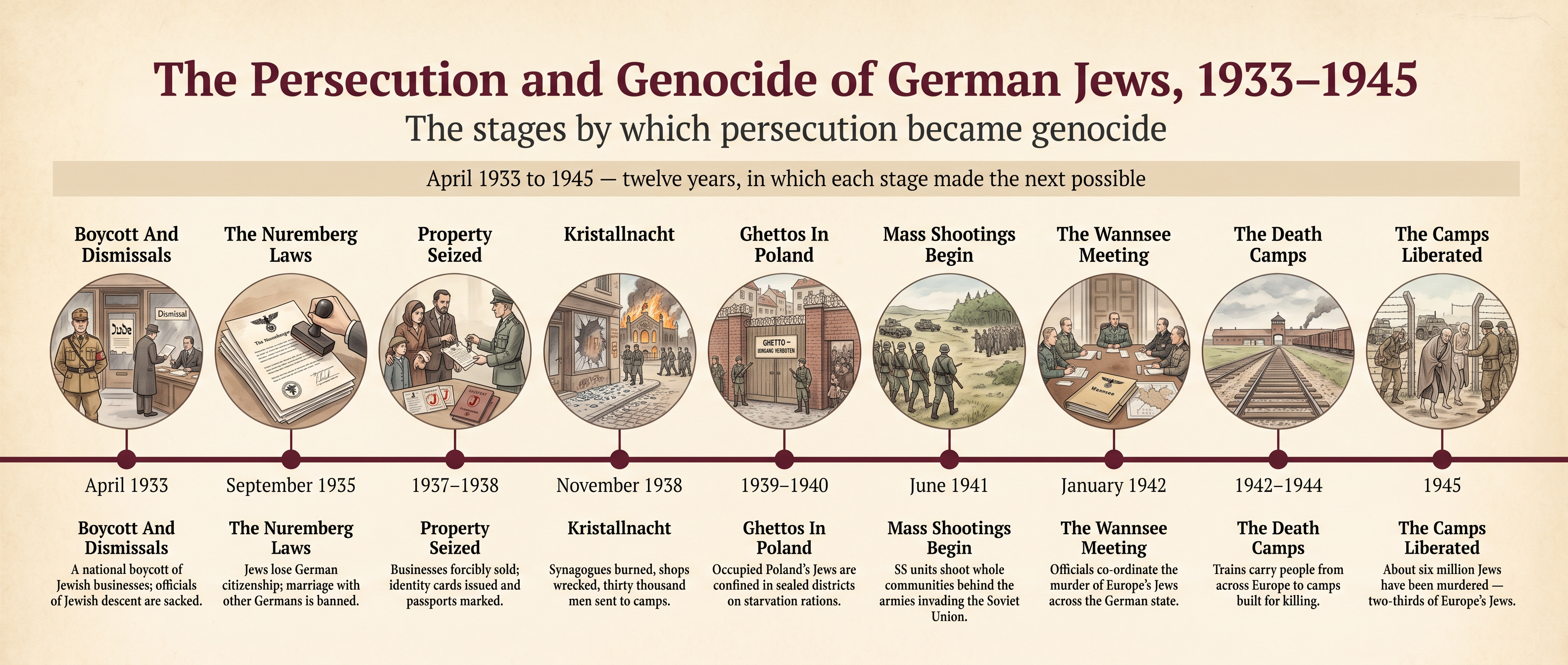
Fig. 11.12 – Escalation, 1933 to 1945.
11.10 Why Different Groups Accepted Hitler’s Policies
Section 11.3 asked why Germans voted for the Nazis before 1933. This section asks a different and harder question: why, once the dictatorship existed and its character was plain, so many Germans went along with it.
‘Went along with’ is deliberately loose, because acceptance came in very different strengths. Some Germans were enthusiasts. Many more were satisfied with parts of the regime and silent about the rest. Others hated it and did nothing, because doing something had become extremely dangerous. All three look similar in a photograph of a cheering crowd, and it is worth keeping them apart.
What People Were Given
Work And The Things That Came With It
For a family that had been out of work since 1930, the single most important fact about the new regime was a wage packet. That is not a small thing, and no honest account of these years can pass over it.
Around the wage the regime built visible benefits. The Strength Through Joy organisation offered subsidised holidays, hikes, concerts, theatre tickets, sports facilities and, for a few, sea cruises — leisure of a kind that industrial workers in Germany had never had access to before. A companion body pressed employers to improve canteens, lighting and washrooms in factories.
The scale was real and the distribution was uneven: cruises went to a small minority, while day trips and cheap tickets reached millions. What mattered as much as the holiday was the message it carried, that the state had noticed the ordinary worker.
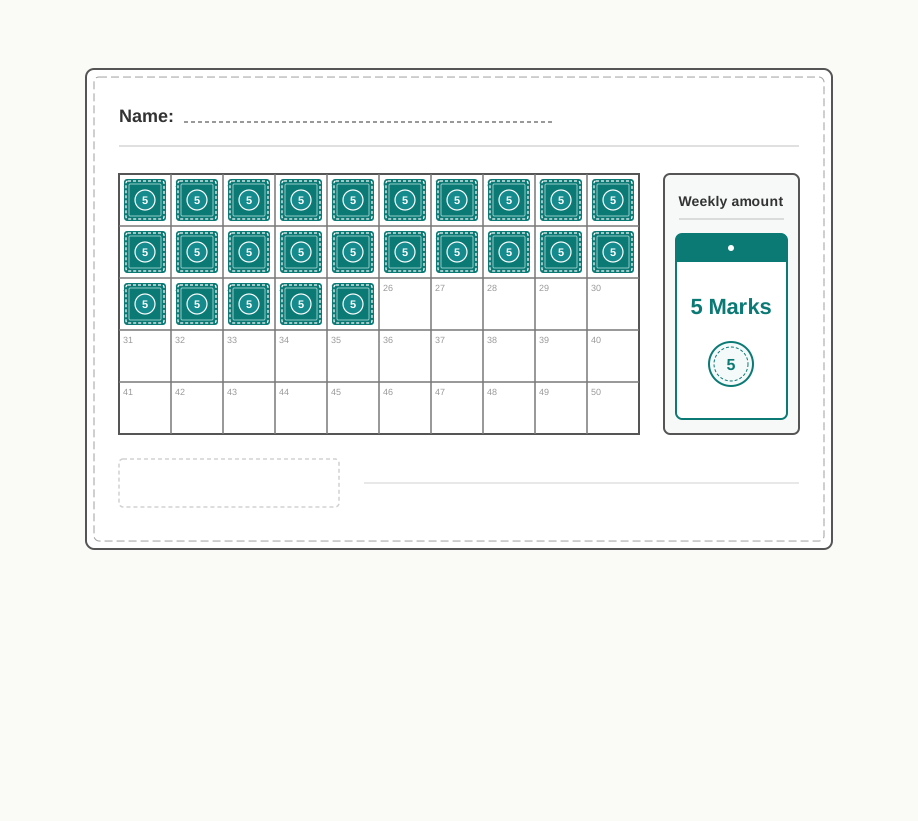
Fig. 11.13 – Savings stamp card for the state car scheme.
Order, Status And The Family
For the middle class, the attraction was less material. Street fighting had stopped, communism appeared finished, and the regime spoke the language of order, discipline and respectability that many shopkeepers and professionals had missed since 1918.
Policy on the family worked in the same direction. Newly married couples could obtain state loans, part of which was cancelled with the birth of each child; large families received tax relief, and mothers of several children were awarded medals in public ceremonies. Women were encouraged to leave paid work for the home, and were told this was a service to the nation rather than a retreat from it.
This was a policy with a hard edge, and the edge belonged to the same racial doctrine as the rest. Honours and loans went to families the state classed as fit and ‘Aryan’; from 1933 a law allowed the compulsory sterilisation of people judged to carry hereditary illness, and many thousands were sterilised against their will.
Contracts, Prices And Promotion
Three groups gained in ways that were easy to calculate.
Industrialists received rearmament orders, a workforce that could not strike, and the removal of the unions that had troubled them since 1918. They paid for it by losing control over what they produced, since the Four-Year Plan allocated materials and set priorities.
Farmers received guaranteed prices and protection from foreclosure, and were told that they were the racial and moral core of the nation. They paid for it in quotas, deliveries and a labour shortage.
The officer corps received conscription, rearmament, promotion and the destruction of the SA. It paid for it with an oath to one man, and, by 1938, with a supreme commander who was that man.
What People Were Not Given
Set against this is what acceptance cost, and much of it was invisible in a photograph.
Germans lost the vote in any meaningful sense, the right to organise, a free press, an independent judiciary and the protection of the law against arrest. Wages were fixed and hours grew longer. Consumer goods stayed short. Anyone who wanted to argue about any of it had nowhere to argue.
For those the regime had defined as enemies — Jews, Roma, communists, socialists, Jehovah’s Witnesses, disabled people, homosexual men — there were no benefits at all, only the sequence described in the previous sections.
The Part Fear Played
Acceptance was also manufactured by fear, and the fear was well founded. The camps existed from 1933 and were not secret; newspapers reported that opponents had been taken into protective custody, and released prisoners returned to their towns visibly changed and unwilling to speak.
The Gestapo was not, in fact, an enormous force. It was thin on the ground in most places, and its power rested heavily on information supplied by the public. Many of its cases began with a letter or a word from a neighbour, a colleague or a relative — sometimes from conviction, often from spite or self-interest over a debt, a job or a quarrel.
The effect of that arrangement is worth thinking about. A state that relies on denunciation does not need to watch everyone, because everyone learns to watch themselves. People stopped saying things in shops, on trams and eventually at their own tables.
The Leader Above The Government
One belief did more than any other to hold the arrangement together. Germans complained constantly about local party bosses, petty officials, shortages and corruption — and very often exempted Hitler from the complaint, assuming that he did not know what was done in his name.
This was an image built deliberately by propaganda, and it was extremely useful. It meant that failures attached to the system while successes attached to the leader, so that discontent never became opposition to the regime itself.
Benefiting From Someone Else’s Loss
There is one more mechanism, and it is the least comfortable. Exclusion created vacancies.
When Jewish and politically unreliable officials, doctors, lawyers, teachers and academics were dismissed, other Germans took their posts. When Jewish businesses were forcibly sold, other Germans bought them at a fraction of their value, and neighbours acquired furniture, stock and premises. A person who has gained a job, a shop or a flat by another’s exclusion has an interest in not asking too closely what happened to them.
This does not make the German population as a whole guilty of the crimes described in Section 11.9, and historians are careful here. What it does explain is the silence — how a persecution conducted in public, in ordinary streets, could proceed without protest from most of those who watched it.
11.11 Summary
The Republic That Failed
- Germany became a republic in 1918 only after losing a war. Its birth was tied to defeat, and its first act — accepting the armistice and then the Treaty of Versailles — was remembered by its enemies as treason rather than as necessity.
- The ‘stab-in-the-back’ myth was false, but it was believed. It allowed millions of Germans to reject the republic’s legitimacy without rejecting the army that had actually lost the war.
- The republic’s weaknesses were structural, not accidental: proportional representation produced coalitions that could not last; judges, officials and officers appointed under the empire never became its defenders; and Article 48 allowed a President to govern by decree.
- Violence came from both directions — the Spartacist rising, the Kapp putsch, political murders and the Munich beer hall putsch — and the courts punished the left far more severely than the right. Extremists learned that attacking the republic was cheap.
- Economic disaster struck twice. In 1923 the occupation of the Ruhr and the printing of money destroyed savings and fixed incomes; after 1929 the withdrawal of American credit produced six million unemployed.
- Between 1930 and 1932 Brüning cut spending during a slump and governed by decree because he had no majority. Parliamentary government stopped working before Hitler held any office.
The Road To Power
- The Nazi vote rose with unemployment, from twelve seats in 1928 to 230 in July 1932 — and then fell in November 1932. The party was past its peak at the moment it entered government.
- Hitler was appointed, not elected. In January 1933 conservative politicians around Papen persuaded Hindenburg to make him Chancellor of a cabinet in which Nazis held three posts of eleven, believing they could control him.
- Nazi support was built on a promise made differently to each audience: work for the unemployed, prices for farmers, order for the middle class, no strikes for employers, an army for the officers, and the tearing-up of Versailles for everyone.
- Propaganda did not create discontent; it organised it, removed rival accounts, and presented Hitler as a saviour standing above ordinary politics. Antisemitism supplied a single enemy for every misfortune.
- Support was never universal. Even in March 1933, with opponents in prison, the party polled about forty-four per cent, and it remained weak in Catholic regions and among organised industrial workers.
- The eight weeks from 30 January to 23 March 1933 destroyed the republic using its own machinery: the Fire Decree suspended civil rights under Article 48, arrests removed the opposition, and the Reichstag then voted its own lawmaking power away.
The Nazi State
- Gleichschaltung brought every organisation into line. Parties were banned or dissolved, the states lost their parliaments, unions were replaced by a single Labour Front, and officials were purged for descent or opinion.
- Terror was institutional from the start. Protective custody allowed imprisonment without charge or trial, and the first concentration camp opened in March 1933 to hold political opponents.
- Culture and information were managed rather than merely censored: chambers controlled who could work in the arts, editors were told daily what to print, cheap radios carried the ministry’s broadcasts, and books were burned in public.
- Education was redesigned for obedience rather than judgement. Racial doctrine was taught as biology, teachers were watched by their pupils, and the Hitler Youth and League of German Girls claimed the rest of a child’s time.
- The Night of the Long Knives in June 1934 destroyed the SA leadership, was declared lawful by a cabinet law after the event, and bought the army’s loyalty. After Hindenburg’s death every soldier swore obedience to Hitler personally.
- The economy pursued jobs, autarky and rearmament together. Unemployment fell from about 5.6 million to under half a million, but the register was flattered, wages stagnated, consumer goods were short, and rearmament rested on hidden debt.
- The churches were the one institution never fully co-ordinated. The 1933 concordat was broken within two years, the Confessing Church resisted state control of doctrine, and pressure squeezed the churches out of schools, youth work and charity without abolishing them.
The Campaign Against The Jews
- Persecution escalated in stages over twelve years: boycott and dismissal in 1933, loss of citizenship under the Nuremberg Laws in 1935, seizure of property and marked documents in 1938.
- The 1935 laws exposed the emptiness of their own doctrine. Jewishness had to be defined by the religion of grandparents, recorded in parish and registry files, because the racial category the law assumed does not exist.
- Kristallnacht in November 1938 turned policy from law to open violence: synagogues burned, businesses wrecked, thirty thousand men sent to camps, and the victims fined a billion marks for the damage done to them.
- Escape depended on somewhere being willing to admit refugees, and most states kept their doors nearly shut.
- War made mass murder possible. Ghettos in occupied Poland, mass shootings behind the armies in the Soviet Union and, from 1942, camps built for killing, produced the murder of about six million Jews — two out of every three in Europe.
- No step announced the next one. Each was small enough to absorb, and each moved a group of people further outside the protection of ordinary life.
Why It Was Accepted
- Germans gained concrete things: jobs, order, subsidised leisure, arms contracts, guaranteed farm prices, promotion in an expanding army — and surrendered the vote, the union, the free press and the protection of law.
- Fear did much of the work. Camps were public knowledge, and the Gestapo depended heavily on denunciations from ordinary citizens, which taught everyone to police themselves.
- Propaganda separated the leader from his government, so that discontent fastened on local officials while Hitler kept his standing.
- Exclusion created vacancies — jobs, businesses and homes — and those who gained from another’s ruin had a reason not to ask questions.
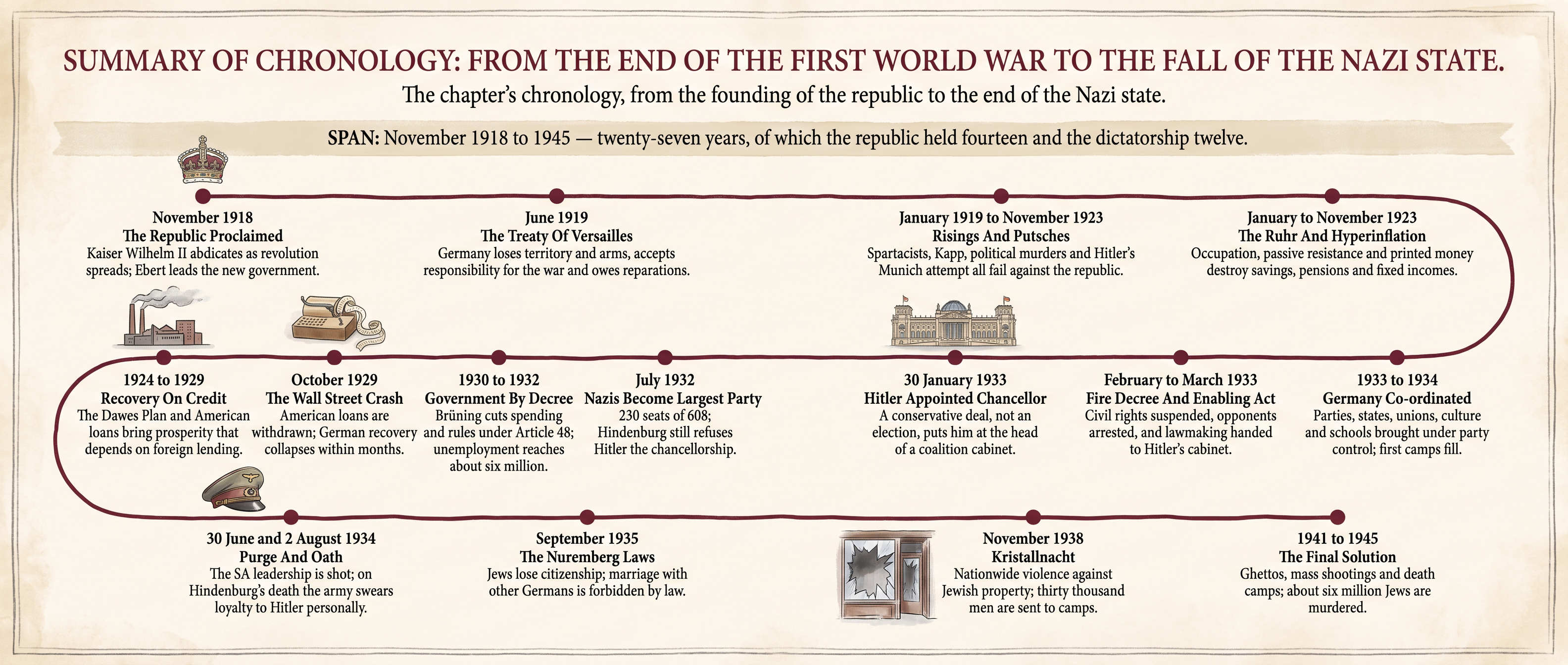
Fig. 11.14 – Germany, 1918 to 1945.
What The Evidence Cannot Tell Us
The Nazi state left extraordinary quantities of paper — laws, decrees, press instructions, police files, camp registers, transport lists — and almost all of it was written by the people doing the persecuting. It records what officials decided and reported, not what those on the receiving end experienced, and much of it was destroyed as the war ended.
The silences are therefore specific. We can count arrests but not fear; we can read press directives but not what a reader believed; we can trace a deportation train but not the life it ended. What we know of that side comes from diaries hidden at risk, letters that happened to survive, and the testimony of the small number of people who lived to give it.
And no source will ever tell us reliably what most Germans thought. In a state where saying the wrong thing could cost a job or a liberty, silence proves nothing about agreement — which is exactly why the question of terror or consent remains open.
11.12 Check Your Memory
State what the ‘stab-in-the-back’ myth claimed about Germany’s defeat in 1918, and explain why it damaged the Weimar Republic even though the claim was false.
Explain what Gleichschaltung meant, and describe three separate ways in which it was carried out in Germany between 1933 and 1934.
Using Fig. 11.0, locate Berlin, Munich, Weimar and the Ruhr, and explain the importance of each one in the events described in this chapter.
Distinguish between the SA and the SS as they stood in 1934, and explain how the Night of the Long Knives altered the standing of each.
Using Fig. 11.3, reconstruct the steps that took Hitler from Chancellor of a coalition on 30 January 1933 to ruling without the Reichstag by 23 March 1933. For each step, explain how it made the next one possible.
Study Table 11.3. Describe what the figures show about unemployment between 1932 and 1938, and give two reasons why the fall in the register overstates the scale of the recovery.
Look at Fig. 11.11. Explain what the marking of passports achieved for the Nazi state, and state one important thing that such a document cannot tell a historian.
This chapter notes that most surviving records of the period were written by the officials carrying out persecution. Explain what this means for what historians can and cannot establish about the opinions of ordinary Germans.
Using the stages set out in Section 11.9, explain how a campaign that began with a one-day boycott in 1933 reached the murder of about six million people. In your answer, say what made each stage easier to accept than the one before it.
‘Nazi rule rested on terror.’ ‘Nazi rule rested on consent.’ Set out the evidence in this chapter for each of these positions, and explain which you find the stronger, giving your reasons.