Chapter 5: Geomorphic Processes
Picture a bare granite hill standing over a dry plain, its top smooth and rounded like the back of a whale. No river crosses it. No one strikes it with a hammer. Yet climb it, and you find thin curved sheets of rock lifting away from the surface, like the skin peeling off a giant onion — some flakes as thin as a fingernail, some as thick as a mattress.
Where do they come from? By day the sun heats the outer rock and it swells a little. By night the rock cools and shrinks. Day after day, season after season, the outer shell works loose. Rainwater trickles into the hairline cracks, dissolves a trace of the minerals binding the grains, and prises them apart. Piece by piece the hill sheds its skin and grows rounder. This shedding has a name — exfoliation — and here is the strange part: the hill has not moved an inch. The rock has simply broken where it stands.
This quiet breaking is weathering, and given enough time it can reduce a mountain to a plain. It works against a very different set of forces, deep inside the Earth, that heave the land upward. Every surface you have ever stood on is caught between the two — forces that build the land up, and forces that patiently wear it down. This chapter follows the wearing-down team, and asks what each of its members does.
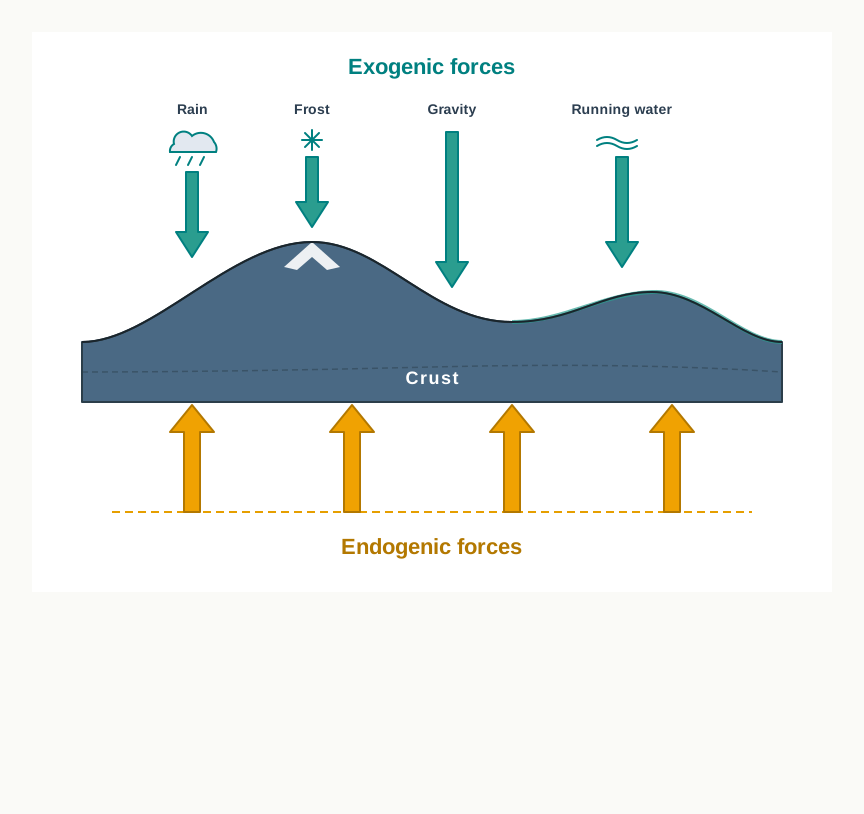
Fig. 5.0 – Endogenic and exogenic forces acting on the crust.
Read on — this chapter gives you the answer to each of these.
5.1 Geomorphic Processes
You have already learned how the Earth was born, how it built its crust and inner layers, how its plates move, and how earthquakes, volcanoes and rocks come about. Now we turn to the surface we actually live on — the thin skin of land beneath our feet. The best way in is to start with a single, simple question.
The answer begins with one fact: the Earth’s crust is never still.
The Restless Crust
The ground feels solid and permanent to us, but over long stretches of time it rises, sinks and shifts. The crust is dynamic. It has moved, and still moves, both up and down and sideways — though it shifted faster in the distant past than it does now. The differences in the internal forces working within the Earth are what built the crust, and those same forces are the reason its outer surface is so varied. Even now, while forces from outside work on the surface, the internal forces stay active, only at different intensities.
So the surface is worked on from two directions at once. Exogenic forces are the external forces that act on the surface, drawing their energy ultimately from sunlight and the atmosphere. Endogenic forces are the internal forces that rise from within the Earth. The two are always at work together, pulling the land in opposite directions.
The exogenic forces do two opposite things. They wear down raised land, which is called degradation, and they fill up low basins and depressions, which is called aggradation. The general wearing down of the surface’s relief through erosion has its own name — gradation.
The endogenic forces do the reverse: they elevate and build up parts of the surface. Because they keep lifting the land, the exogenic processes never manage to even the relief out completely. In plain terms, the endogenic forces are mainly land-building forces, and the exogenic forces are mainly land-wearing forces. As long as these two opposing actions continue — and they have never stopped — the differences in the surface remain. That is why the surface of the Earth is uneven.
Living On A Sensitive Surface
This surface is sensitive, and we depend on it completely for our food, water and shelter. Humans have used it heavily, and over the ages we have also damaged it badly by overusing its resources. Most of the surface took hundreds and thousands of years to reach its present shape, yet its potential is now being drained fast through both use and misuse.
We cannot stop using the land — we must use it. But we have to leave it healthy enough to support life in the future. The way to do that is to understand the processes that shaped, and are still shaping, the surface, and to understand the materials it is made of. Once we grasp them, we can take precautions, cut down the harm our use causes, and hand the surface on in good condition to those who come after us.
What Geomorphic Processes Are
We can now name the forces at work. Geomorphic processes are the endogenic and exogenic forces that put physical stresses on earth materials and drive chemical reactions within them, and so change the shape and arrangement of the Earth’s surface. The name itself is a plain description: ‘geo’ means earth and ‘morph’ means form, so geomorphic processes are the earth-shaping processes.
The two endogenic processes are diastrophism and volcanism, both of which were dealt with in brief in the earlier unit; these are the land-building side. The exogenic processes are weathering, mass wasting, erosion and deposition — the land-wearing side. It is these four wearing-down processes that this chapter follows in detail. The whole cast of processes sorts neatly into two families, shown in Fig. 5.1.
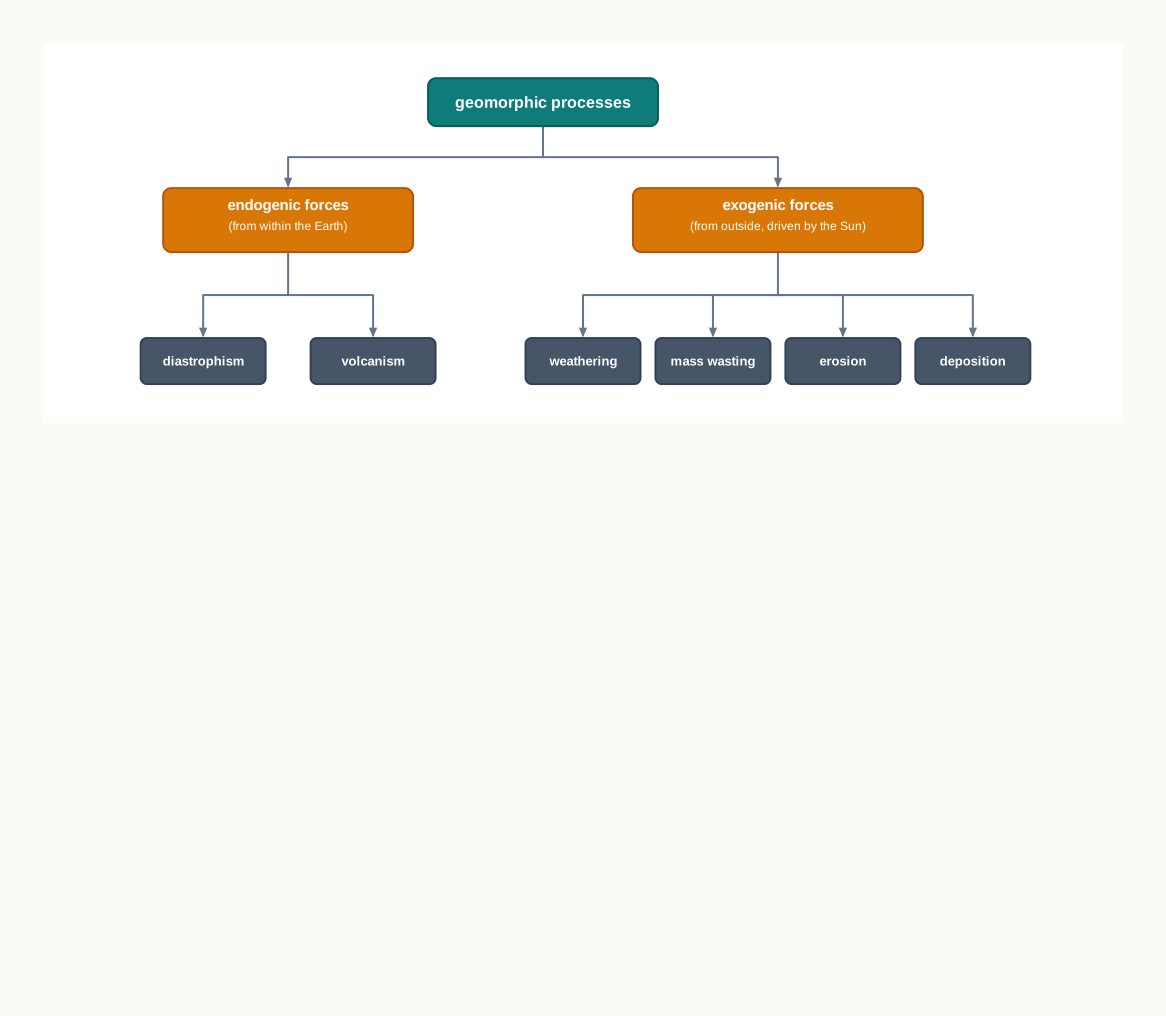
Fig. 5.1 – The two families of geomorphic processes.
Processes And Agents
There is a second word we need to keep separate from ‘process’. A geomorphic agent is any mobile natural medium — running water, moving ice, wind, waves or currents — that picks up earth material, carries it across slopes, and drops it lower down. When elements of nature such as water, ice or wind become mobile because of a gradient, they remove material from one place and deposit it at another; that movement is what makes them agents.
The difference between the two words is worth holding on to. A process is a force applied to earth material — a push, a pull or a chemical attack acting on the rock. An agent is the moving carrier that then removes, transports and deposits that material. Think of a stream running brown after heavy rain: it is an agent lifting soil and carrying it away, and where it slows on flatter ground and lays that soil down as a fresh layer, the same agent is depositing. Running water, groundwater, glaciers, wind, waves and currents are all geomorphic agents. On the exogenic side, geomorphic processes and geomorphic agents usually mean the same thing, unless the two are being deliberately separated.
Why Gravity Matters
Behind every one of these downslope movements sits gravity. Gravity is a directional force: it constantly pulls matter down the slope, and in doing so it sets up stresses inside the Earth’s materials. It is at work even indirectly — the currents, tides and winds that shift material at the surface are ultimately driven by gravitational pull.
Take gravity and gradients away, and nothing would move at all. There would be no mobility, and therefore no erosion, no transport and no deposition — the whole wearing-down machine would come to a halt. This makes gravity as important as any other geomorphic process. It is the force that keeps us pressed to the surface, and it is the same force that switches on the movement of every loose grain on Earth.
In fact, every movement, whether deep inside the Earth or across its surface, happens for the same reason: a gradient. A gradient is simply a run from a higher level to a lower one, or from high pressure to low. It is the everyday rule you already know — water always finds its way downhill and a marble rolls to the lowest point of the floor — and it is exactly this rule that carries rock debris from the heights down to the plains.
5.2 Endogenic Processes
The land-building team runs on energy from inside the Earth. That internal energy is the main force behind the endogenic processes. It comes from three sources working together: radioactivity, the heat released as unstable elements deep in the Earth slowly break down; rotational and tidal friction, the heat from the drag of the Moon’s and Sun’s pull on a spinning Earth; and primordial heat, the warmth left over from the Earth’s fiery birth.
This heat does not spread evenly. It travels outward through geothermal gradients — the rate at which temperature rises as you go deeper — and through the flow of heat from within, and it drives both diastrophism and volcanism in the lithosphere, the rigid outer shell of the Earth. Because the geothermal gradient, the heat flow, and the thickness and strength of the crust all vary from place to place, the endogenic forces do not act uniformly. The crust they shape is therefore uneven from the very start, before any external force has touched it.
5.2.1 Diastrophism
Diastrophism is the name for all the processes that move, elevate or build up portions of the Earth’s crust. It is not a single action but a family of four.
The first is orogenic processes, or orogeny — mountain building through severe folding, which affects long, narrow belts of the crust. The second is epeirogenic processes, or epeirogeny — the uplift or gentle warping of large parts of the crust. The third is earthquakes, which involve local and relatively minor movements. The fourth is plate tectonics, the slow horizontal movement of the crustal plates, studied in the earlier unit.
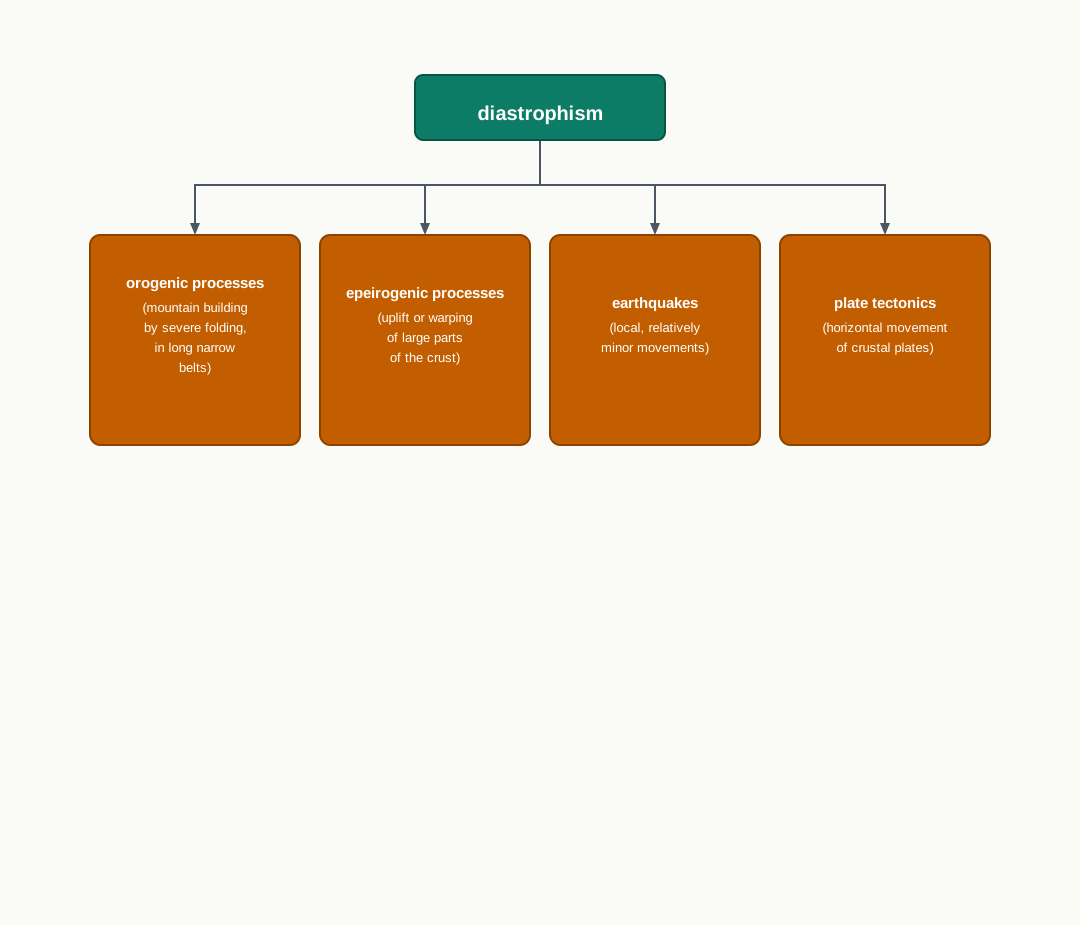
Fig. 5.2 – The four processes of diastrophism.
It is worth holding orogeny and epeirogeny side by side, because they are easily confused. In orogeny the crust is severely deformed and thrown into folds; it is a mountain-building process that works on narrow belts. In epeirogeny the deformation is far simpler, and the movement lifts or warps broad areas; it is a continental-building process. One raises mountain ranges; the other lifts whole continents.
All four processes leave their mark on the rock. Through orogeny, epeirogeny, earthquakes and plate tectonics, the crust can be faulted and fractured. These disturbances change the pressure, volume and temperature — the PVT conditions — acting on the buried rock, and those changes in turn bring about metamorphism, the reshaping of existing rock by heat and pressure into a new form without melting.
5.2.2 Volcanism
Volcanism is the movement of molten rock, or magma, onto or toward the Earth’s surface. It also includes the forming of many volcanic shapes — intrusive forms, which set within the crust, and extrusive forms, which are built from material erupted onto the surface. Many aspects of volcanism were already dealt with in detail under volcanoes in an earlier unit, and under igneous rocks in the preceding chapter, so they are not repeated here.
5.3 Exogenic Processes
The wearing-down team draws its energy from two places. Most of it comes from the atmosphere, and behind the atmosphere stands the ultimate source of all weather — the Sun. The rest comes from the gradients, the slopes, that tectonic factors have already built into the surface.
This second source is worth pausing on. Tectonic forces are endogenic; by raising some parts of the crust and leaving others low, they create height differences across the land. A height difference is a gradient, and a gradient is a slope. Without such slopes, gravity would have nothing to pull material down, and the Sun’s energy alone could move very little. So the exogenic team borrows its stage — the slopes — from the endogenic team, and takes its power from the Sun.
Stress: The Force That Breaks Rock
Wherever the surface slopes, gravity pulls on the material and tries to move it downhill. When a force like this acts on rock, we measure it as force spread over an area. Stress is force applied per unit area, and it is set up in a solid whenever the solid is pushed or pulled. Stress makes the rock deform. At first the deformation may be gentle — the rock bends or shifts a little — but where the stress grows large enough, the rock does not merely bend; it fails and breaks.
Some stresses act along the faces of the rock and try to slide one part past another. These separating forces are shear stresses, and it is shear stress that actually breaks rocks apart, producing a slippage or a shift of one block against another. So gravity does not only pull material down a slope; it also builds the stresses that crack the rock in the first place.
Gravity is not the only source of stress. Rock is also worked on by molecular stresses — tiny internal forces set up by changes within the material itself. The commonest causes are temperature changes, the growth of crystals, and melting. Chemical processes add to the attack: they loosen the bonds between grains, dissolve soluble minerals, and eat away the natural cement that holds a rock together. Put all this together and one plain fact emerges — the basic reason that weathering, mass movement and erosion happen at all is the build-up of stresses inside the body of the rock.
Denudation And Its Driving Forces
Of all the things that shape these stresses, two climatic elements matter most — temperature and precipitation. They govern how strongly the different processes act.
All the exogenic processes are gathered under one general term, denudation. The word ‘denude’ means to strip off or to uncover, and that is exactly what these processes do to the land. You can see denudation wherever a hillside has been stripped down towards bare rock, its soil and loose debris carried away. Denudation covers weathering, mass wasting, erosion and transportation together — but each of these is driven by its own distinct force, as Fig. 5.3 sets out.
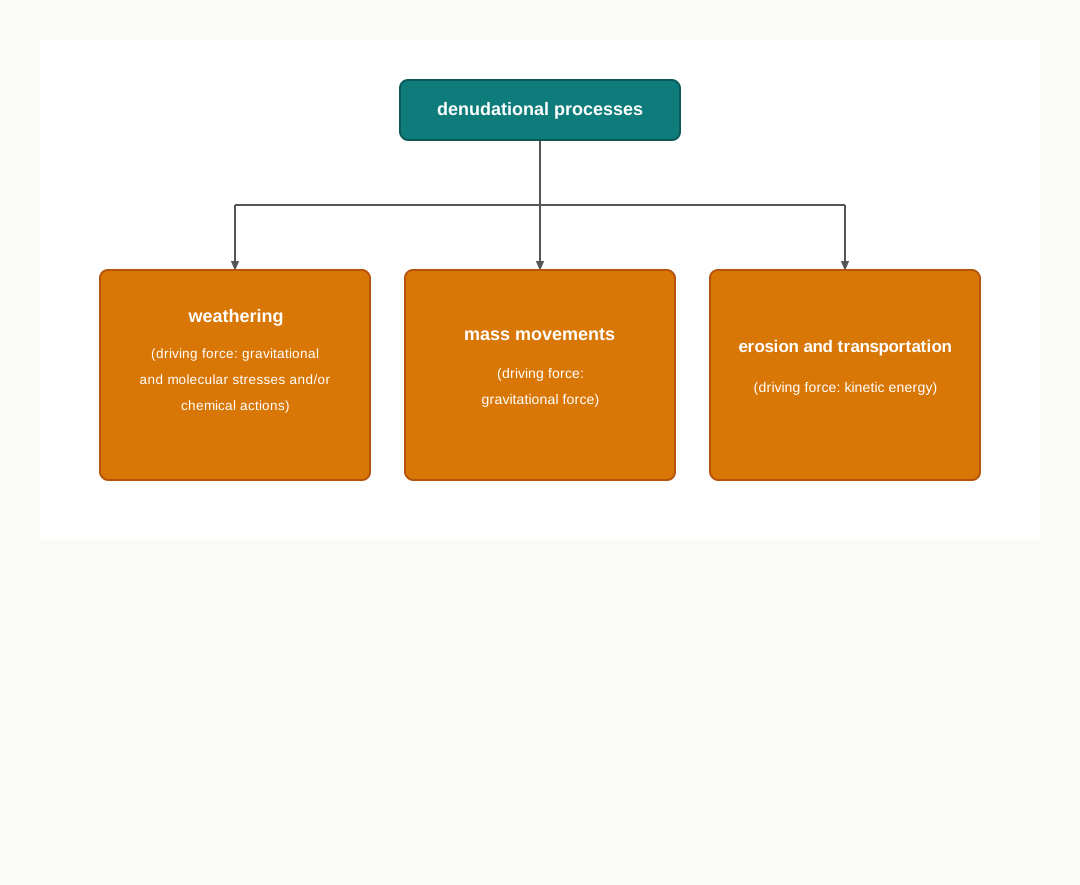
Fig. 5.3 – Denudational processes and their driving forces.
The chart makes an important point clear: there is no single engine behind denudation. Weathering is driven by gravitational and molecular stresses and by chemical action; mass movement is driven by gravitational force; and erosion and transportation are driven by kinetic energy — the energy of moving water, ice, wind or waves. For every process there is a distinct driving force.
Why Processes Vary From Place To Place
Because the world is divided into different climatic regions — a result of differences in heating by latitude, by season, and by the spread of land and water — the exogenic processes act with different strengths in different places. Vegetation adds to this. The density, type and spread of plant cover depend heavily on precipitation and temperature, and vegetation in turn quietly influences how the exogenic processes work.
The variation does not stop at the regional scale. Even inside one climatic region, conditions shift from slope to slope. Altitude changes things. So does aspect — the compass direction a slope faces — because it decides how much insolation, the incoming solar radiation reaching the surface, a slope receives. A slope facing the sun is heated far more than one facing away, and north- and south-facing slopes differ from east- and west-facing ones, as Fig. 5.4 shows.
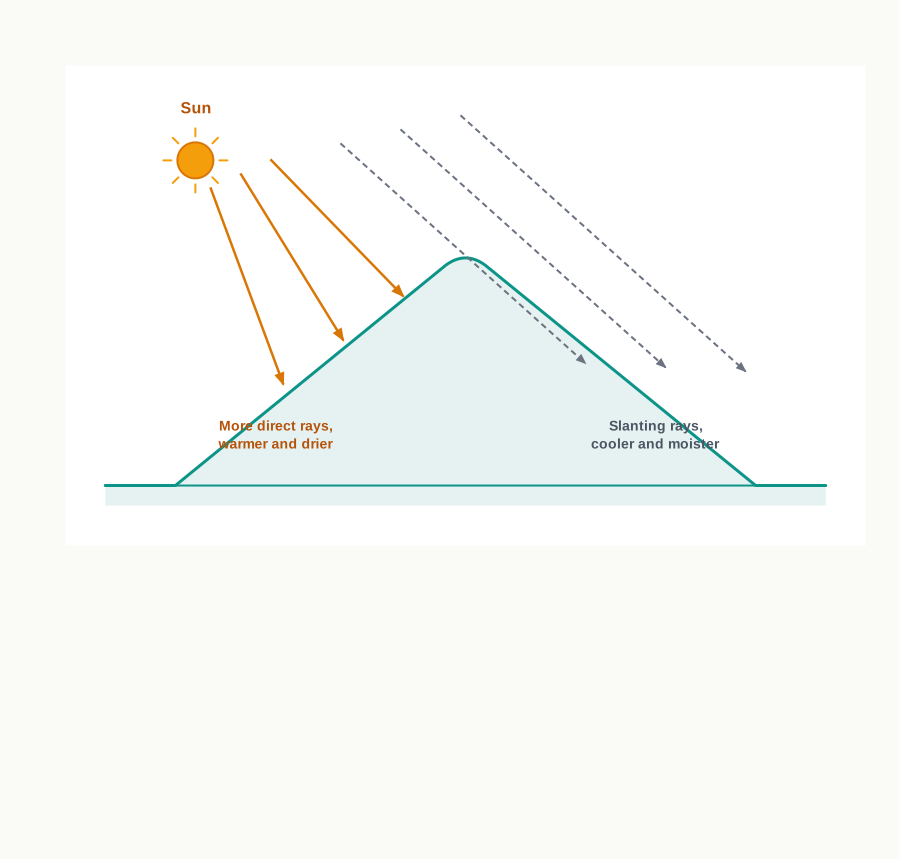
Fig. 5.4 – Insolation on sun-facing versus shaded slopes.
Beyond aspect, the processes also vary with wind speed and direction, with the amount, kind and intensity of precipitation, with the balance between rainfall and evaporation, with the daily range of temperature, with how often the ground freezes and thaws, and with how deep the frost reaches. Each of these can push the local rate of denudation up or down.
Rock Type And Structure
Suppose the climate were exactly the same everywhere. Even then, the exogenic processes would not act equally, because they meet different rocks. Their intensity depends on the type and structure of the rock they attack.
Here ‘structure’ means a great deal: whether the rock is folded or faulted, how its beds are oriented and tilted, whether joints and bedding planes are present or absent, how hard or soft its minerals are, how easily those minerals react chemically, and whether the rock lets water pass through it or blocks it. Different rocks, with different structures, put up different resistance. A single rock may stand firm against one process yet crumble under another. And the same rock may resist strongly in one climate and weakly in another. This is why, in the same landscape, one band of rock can stand out boldly while the band beside it has been worn back — the two simply resist at different speeds.
Because of this, the processes work at different rates on different rocks, and those different rates are slowly carved into the topography — the overall shape of the land. Most of the time the effect is small and slow, too gentle to notice in a year or even a lifetime. But rock suffers fatigue: the endless repetition of tiny stresses wears it down severely in the long run.
So the story closes where it began. The differences on the Earth’s surface were first set up by crustal evolution, but they go on existing, and changing, because of three things working together: differences in the type and structure of the earth materials, differences in the geomorphic processes acting on them, and differences in the rates at which those processes work. Some of these exogenic processes are now examined in detail.
5.4 Weathering
Weathering is the action of the elements of weather and climate on earth materials. Within it sits a whole set of processes that work — sometimes alone, sometimes together — to reduce rock to a fragmental state, a mass of loose fragments. Put formally, weathering is the mechanical disintegration and chemical decomposition of rocks brought about by the various elements of weather and climate.
Because very little or no movement of material takes place during weathering, it is an in-situ, or on-site, process — the rock is broken where it stands, and not carried away. That in-place quality is what sets weathering apart from the processes that come after it.
Weathering is shaped by many factors working together — geological, climatic, topographic and vegetative. Of these, climate matters most. Climate decides not only which weathering processes dominate but also how deep the weathered layer runs. This layer of broken and decomposed material is the weathering mantle, and its depth changes sharply from one climate to another, as Fig. 5.5 shows.
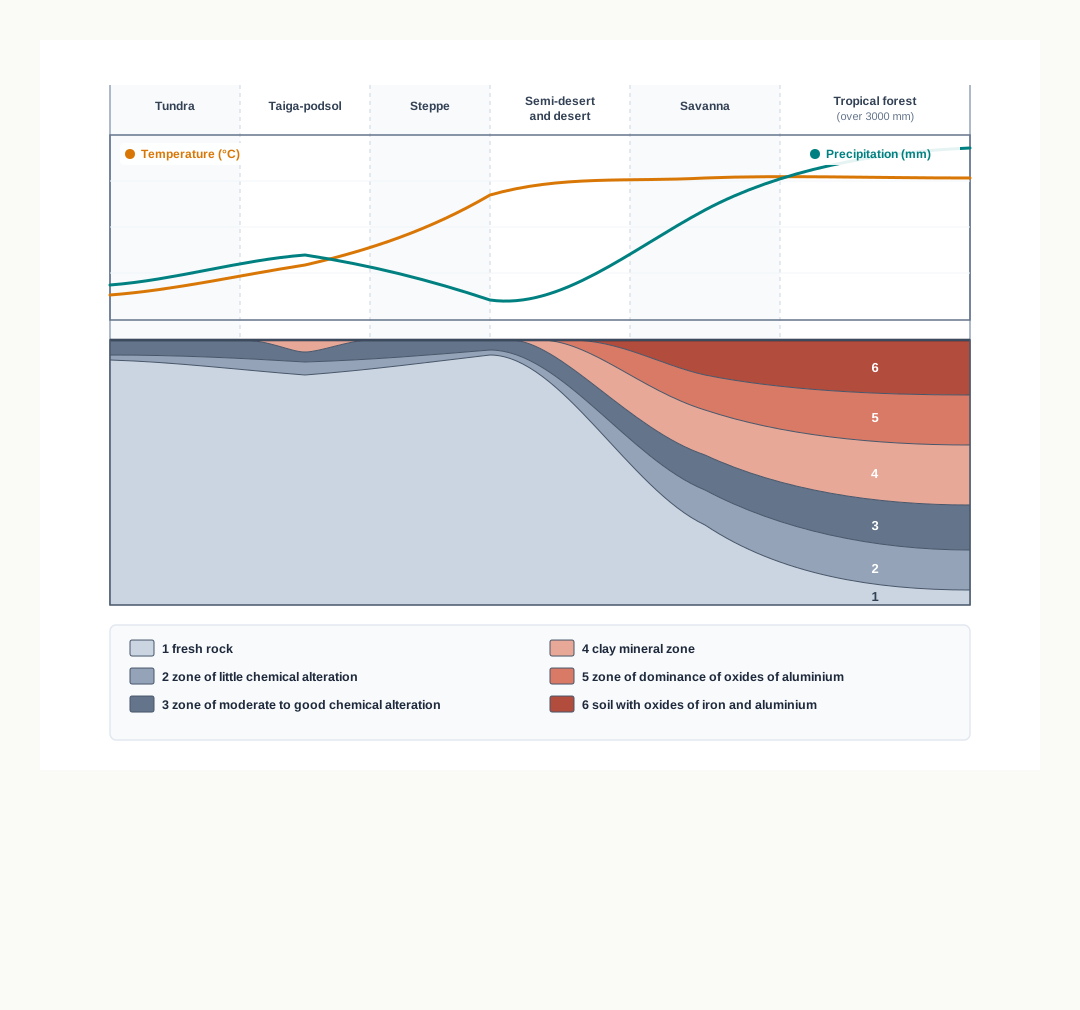
Fig. 5.5 – Climatic regimes and depth of the weathering mantle.
As a small exercise, try marking on Fig. 5.5 the rough latitude belts where each climatic regime lies, then compare how the depth of weathering shifts as you move from the cold poles towards the warm, wet equator.
Weathering is usually sorted into three major groups: chemical, physical (or mechanical), and biological. In nature these rarely act entirely alone — most of the time all three are at work together, though one often dominates. Fig. 5.6 lays out the family.
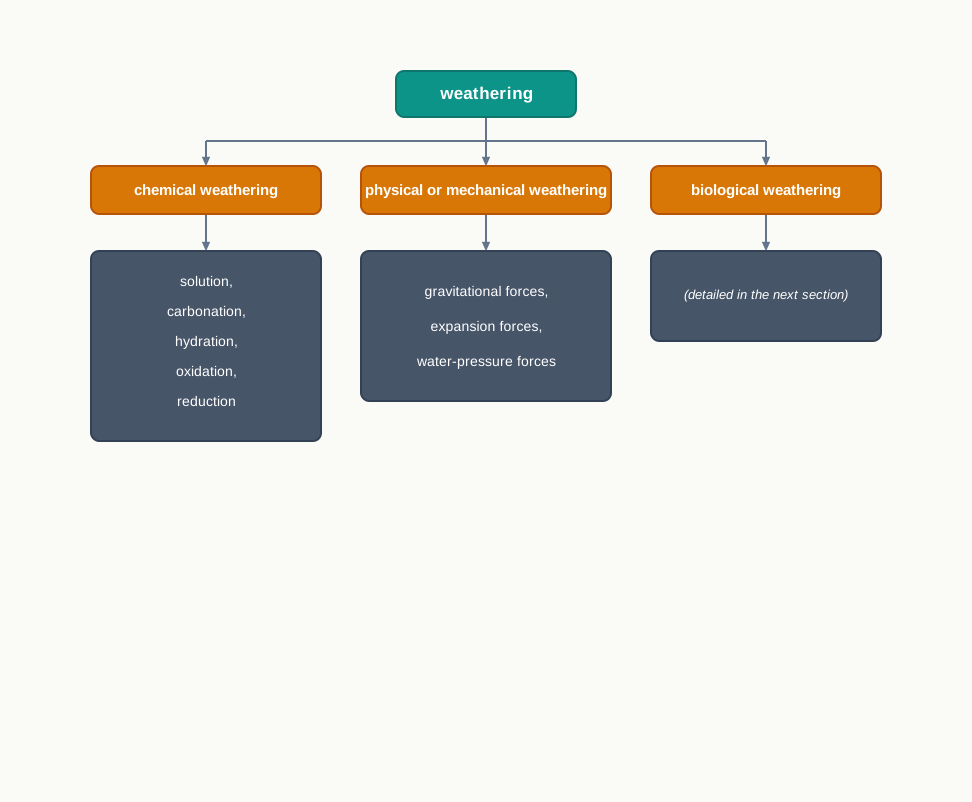
Fig. 5.6 – Chemical, physical and biological weathering routes.
5.4.1 Chemical Weathering Processes
Chemical weathering attacks the minerals inside a rock and changes them, decomposing, dissolving or reducing the rock to a fine clastic state — a state of tiny broken fragments. It works through a group of chemical processes. In solution, minerals simply dissolve into water. In carbonation, carbon dioxide dissolved in water forms a weak acid that eats into certain minerals. In hydration, minerals take up water and swell. In oxidation, minerals combine with oxygen, much as iron combines with oxygen to rust. And in reduction, the reverse happens — oxygen is removed, in the airless, waterlogged conditions where it cannot reach.
For any of this to happen, water and air must be present, especially the oxygen and carbon dioxide in the air, and heat is needed to speed the reactions up. There is plenty of carbon dioxide beyond what the air holds: as plants and animals decay, they release still more of it underground, feeding the reactions. In fact, these reactions on rock minerals are very much like the chemical reactions you carry out in a school laboratory — the same chemistry, only slower and out in the open.
5.4.2 Physical Weathering Processes
Physical, or mechanical, weathering does not change the chemistry of the rock; it simply breaks it apart, and it depends on some applied force. Three kinds of force do the work. The first is gravitational force — the overburden pressure and load of overlying rock, and the shearing stress this sets up. The second is expansion force, which comes from temperature changes, from crystals growing inside cracks — salts, for instance, crystallising in a crevice can prise the rock apart — and even from the activity of animals. The third is water pressure, driven by the repeated cycles of wetting and drying that the rock goes through.
These forces act both at the surface and deep within the rock, and their end result is the same: fracture. Most physical weathering, though, comes down to two causes above all — thermal expansion, the swelling and shrinking of rock as it heats by day and cools by night, and pressure release, the expansion of rock when the weight of material above it is stripped away. Each single act is tiny and slow. But rock suffers fatigue: heated and cooled, expanded and contracted, over and over again, it is at last damaged severely — much as a wire snaps after being bent back and forth many times.
5.5 Biological Activity And Weathering
The third group of weathering processes is carried out by living things. Biological weathering is the contribution or removal of minerals and the ions — the charged particles — released from them by organisms, together with the physical changes that organisms cause as they grow and move. It has two sides, then: a chemical side and a physical one, and often the same living thing works on both at once.
Take the physical side first. Animals such as earthworms, termites and rodents burrow through the ground and wedge apart the material, and in doing so they open up fresh rock surfaces to chemical attack and let moisture and air work their way in. Humans do much the same on a larger scale: by clearing vegetation, ploughing and cultivating the soil, we mix the material and create new contacts between air, water and minerals. Plant roots add a direct mechanical force, pushing into cracks and exerting a tremendous pressure that levers the rock apart — the same thing you see when a tree root buckles and cracks a concrete pavement.
Now the chemical side. As plants and animals die and decay, they produce humic, carbonic and other acids. These acids seep through the ground and speed up the decay of the rock, dissolving some of its elements and carrying them away.
5.6 Special Effects Of Weathering
Weathering does not always leave a rough, broken mess. Sometimes it leaves a clean, distinctive shape on the rock, and one such shape is worth singling out.
5.6.1 Exfoliation
Exfoliation is the flaking away of more or less curved sheets, or shells, from the surface of a rock or bedrock, leaving behind a smooth, rounded surface (Fig. 5.7). The processes behind it are ones we have already met under physical weathering — unloading, the thermal contraction and expansion of rock, and salt weathering.
One point matters above all: exfoliation is a result, not a process. The processes are the unloading, the heating and cooling, and the salt action; exfoliation is simply what those processes leave behind. It is easy, and wrong, to speak of exfoliation as though it were a force in its own right.
The immediate cause of most flaking is temperature change. As the outer layer of rock is heated and then cooled, it expands and contracts, and in time the curved outer shells crack free and peel away. Two familiar results record this. Exfoliation domes — large, smooth, rounded masses of bare rock — form mainly through unloading, the same pressure release we met earlier, where the stripping away of overlying weight lets the rock expand and shed its shells. Tors, which are exposed masses of rock, result instead from thermal expansion.
Fig. 5.7 captures this flaking, and beside it, granular disintegration — the crumbling of rock grain by grain into loose sand.
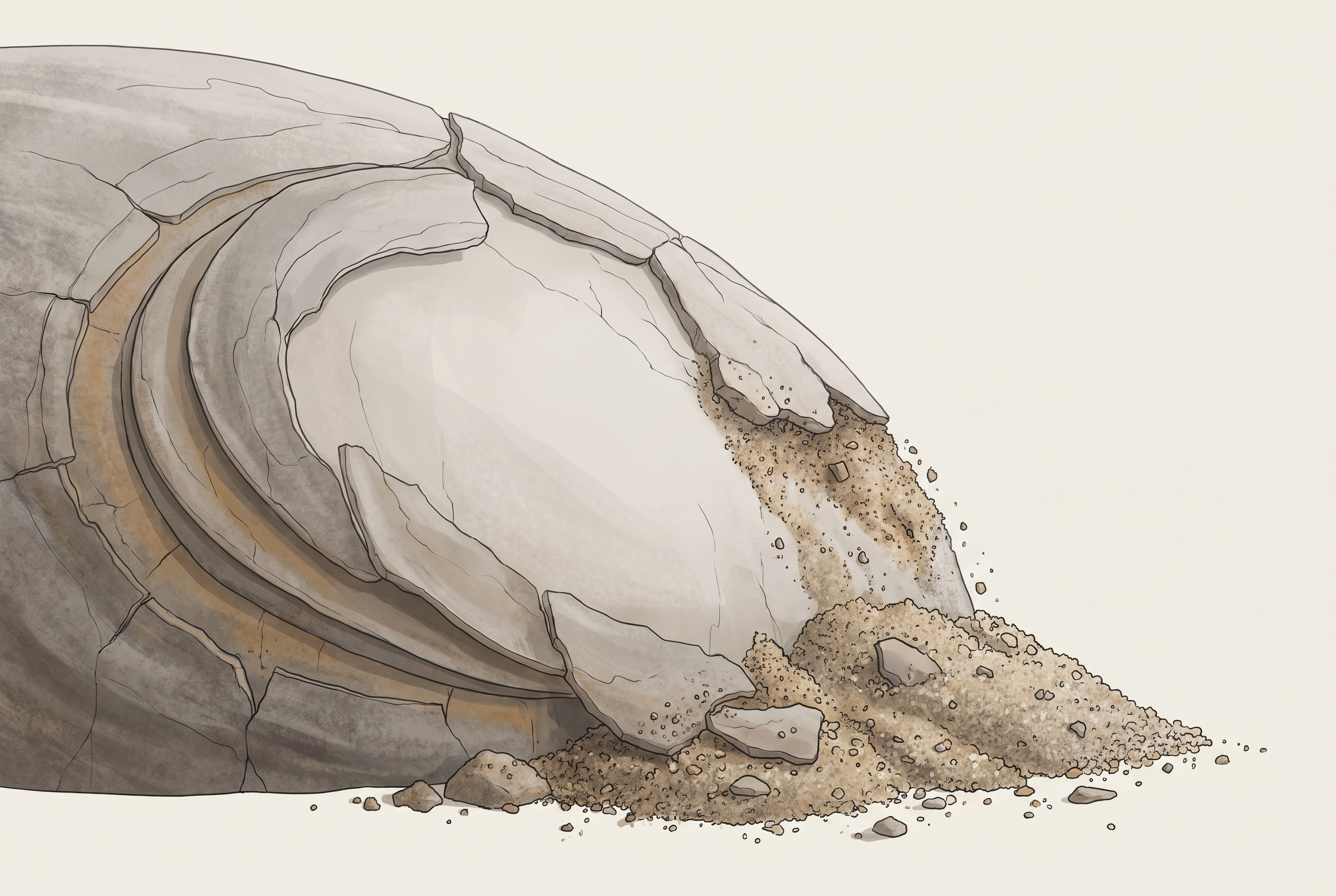
Fig. 5.7 – Exfoliation and granular disintegration.
5.7 Significance Of Weathering
Weathering is where a great deal of the surface’s story begins. By breaking rock down into smaller and smaller fragments, it prepares the way for much of what follows. It builds the regolith — the layer of loose, broken rock and mineral fragments that lies over solid bedrock — and from that the soils grow. It also readies the ground for erosion and mass movement, which need loose material to work on. Fig. 5.8 gathers together the many things weathering makes possible.
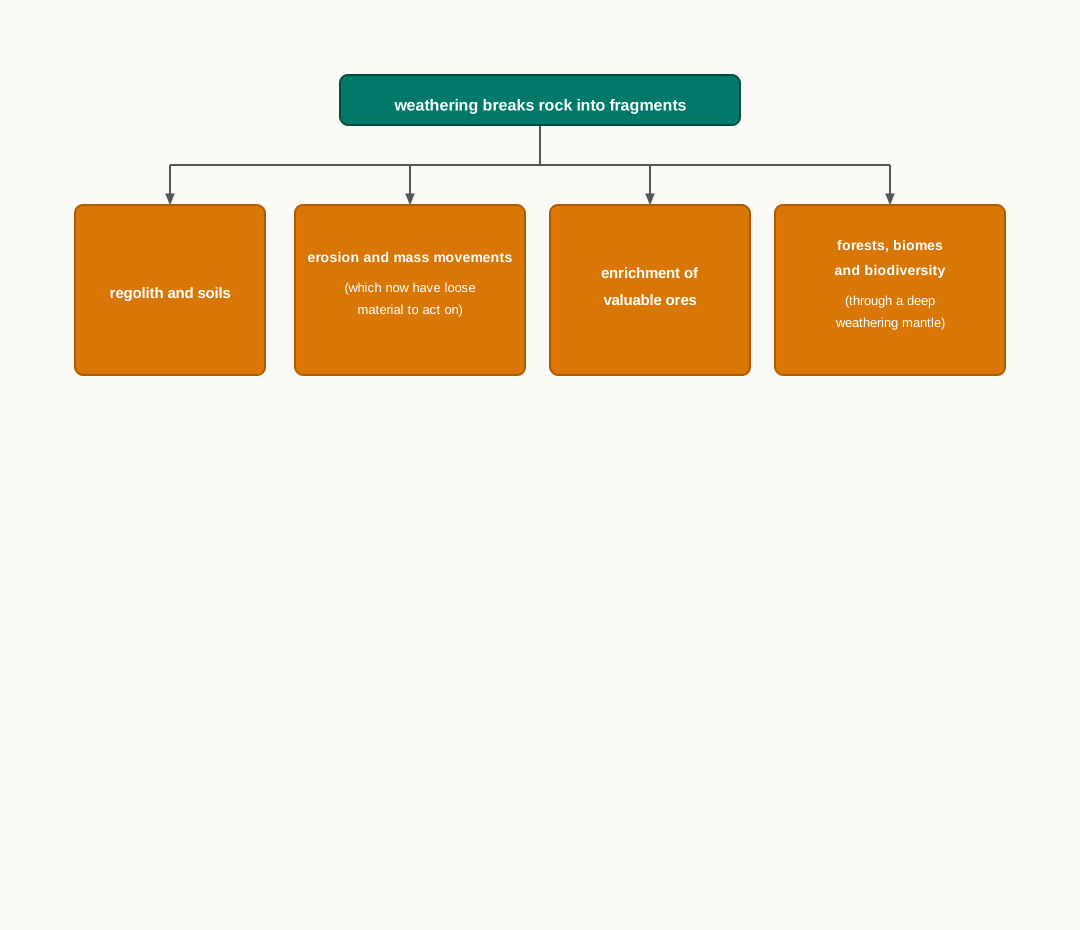
Fig. 5.8 – The consequences of weathering.
The link to erosion is especially close. Erosion cannot amount to much if the rocks have not first been weathered; on fresh, unbroken rock there is little for the erosional agents to pick up. In this sense weathering aids mass wasting and erosion, and since the wearing down of relief and the reshaping of landforms are consequences of erosion, weathering stands quietly behind those changes too.
Weathering reaches into the living world as well. The forests that carry so much of the Earth’s biomes and biodiversity depend on the depth of the weathering mantle, because it is the weathered layer that holds the soil and moisture a forest needs. Deep weathering supports rich forests; thin weathering leaves only sparse cover. Here a biome is simply a large community of plants and animals suited to a particular climate.
There is an economic side too. As rock and its deposits weather, some materials are washed out by leaching — the removal of soluble matter by water, especially groundwater, passing through the rock. When the less valuable material is carried away, the valuable material left behind grows more concentrated. This increase in concentration is called enrichment. It matters greatly: without it, valuable ores of iron, manganese, aluminium and copper might be spread too thinly to be worth mining, processing and refining at all, and it is enrichment that lifts them to a grade the national economy can actually use.
Finally, weathering is central to the making of soil — so central that soil formation is taken up on its own a little further on.
5.8 Mass Movements
What Mass Movement Is
Mass movements transfer a mass of rock debris down a slope under the direct pull of gravity, and nothing else. This is the point to hold on to: in a mass movement, air, water or ice do not carry the debris along. If anything, it is the debris that carries some air, water or ice down with it. The mover is gravity acting straight on the material, not a flowing agent bearing it away.
These movements range widely. They can be slow or rapid, and they can affect a shallow skin of material or a deep column of it. The range is often described as creep, flow, slide and fall — creep so slow it cannot be seen from one day to the next, a fall so sudden it is over in seconds. Gravity, of course, acts on all matter alike, on solid bedrock as much as on the loose products of weathering.
This raises a question about weathering. Weathering is not a pre-requisite for mass movement — gravity can move unbroken rock too — but weathering does aid it, and mass movements are far more active over weathered slopes than over fresh, unweathered ones. Broken material simply gives way more easily.
Why It Is Not Erosion
Because mass movements are driven by gravity alone, and no geomorphic agent — no running water, glacier, wind, wave or current — takes part, they are not classed as erosion. There is certainly a shift of material from one place to another, but without an agent doing the carrying, it does not count as erosion in the strict sense.
What holds a slope in place is its own strength. The material on a slope resists the forces trying to disturb it, and it yields only when the disturbing force grows greater than the shearing resistance — the internal strength with which the material holds together. Certain conditions lower that resistance or raise the force, and so favour mass movement: weak, unconsolidated materials; thinly bedded rocks; faults and steeply dipping beds; vertical cliffs and steep slopes; abundant precipitation and torrential rain; and a scarcity of vegetation to bind the ground.
What Sets A Slope Moving
A mass movement is usually set off by one or more activating causes, and they fall into a few families. Some change the shape of the slope — support is removed from beneath the material above, whether naturally or by digging; the slope is made steeper or higher; or load is stripped from the original slope surface. Some add weight — material is piled on, naturally or by artificial filling, or heavy rainfall soaks the slope until it saturates and the wet material lubricates and slides. Some shake it loose — earthquakes, explosions or the vibration of machinery. Some are water problems — excessive natural seepage, or a heavy drawdown of water from lakes, reservoirs and rivers that makes water drain slowly out from under the slopes and banks. And one is simply the indiscriminate removal of the natural vegetation that once held the slope together.
Broadly, three forms of movement are recognised: heave — the heaving up of soils caused by frost growth and other forces — together with flow and slide.
5.8.1 Landslides
Landslides are the relatively rapid, plainly visible mass movements, and the material caught up in them is relatively dry. The size and shape of the block that breaks away depend on three things: the nature of the discontinuities — the joints, cracks and bedding — in the rock, the degree to which the rock has weathered, and the steepness of the slope. Depending on how the material moves, several distinct types are recognised, set out in Fig. 5.9.
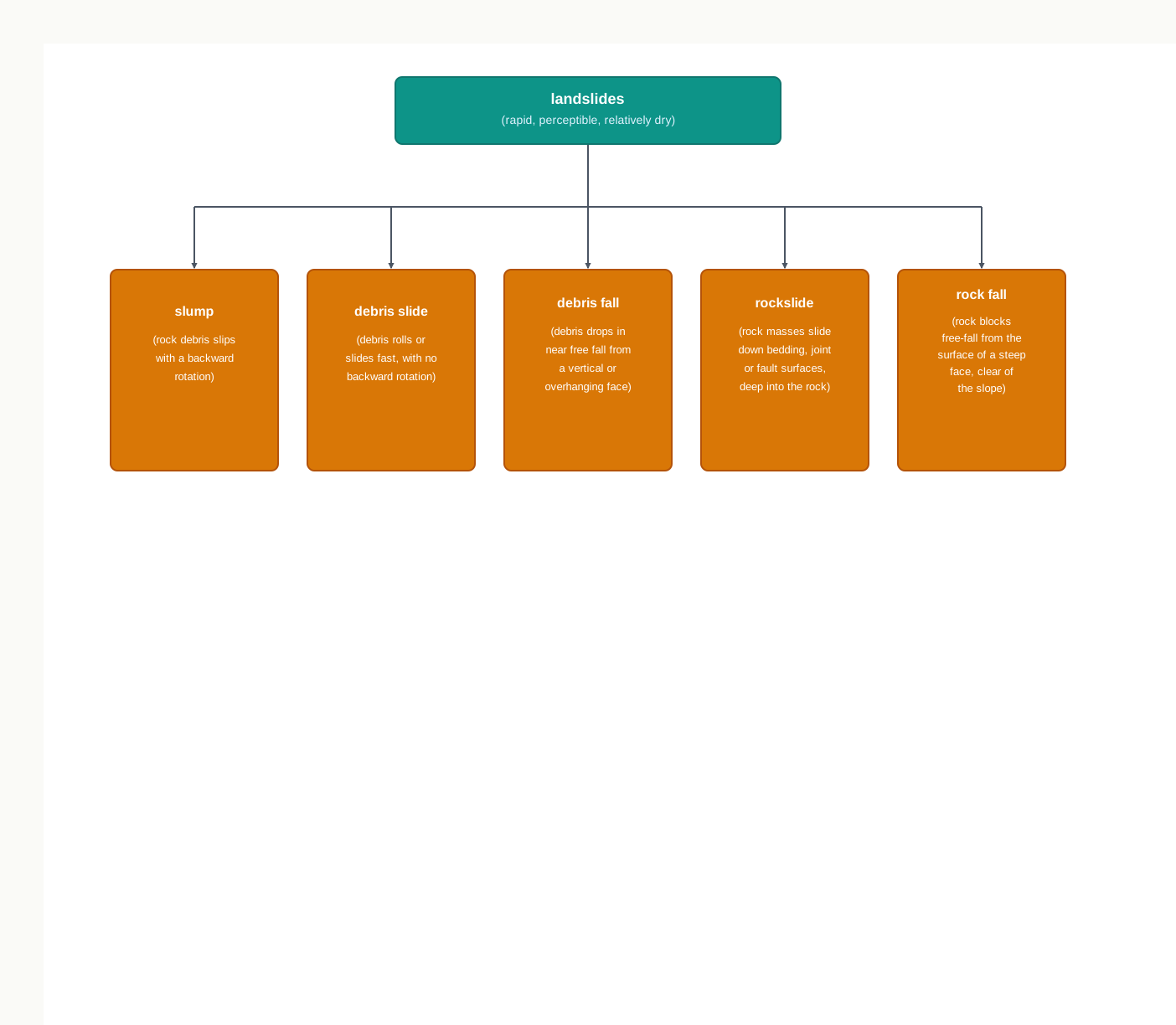
Fig. 5.9 – Five types of landslide.
A slump is the slipping of one or several units of rock debris that rotate backward against the slope as they move (Fig. 5.10).
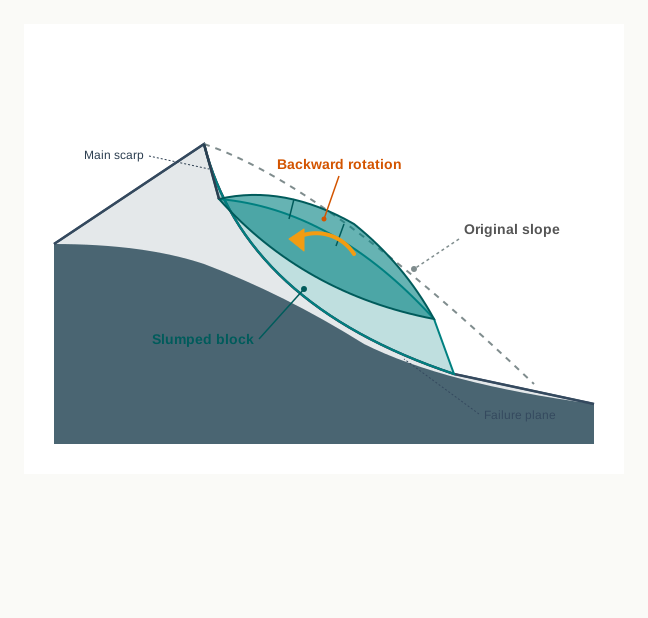
Fig. 5.10 – Slumping of debris with backward rotation.
A debris slide is the rapid rolling or sliding of earth debris down a slope, but without that backward rotation. A debris fall is close to a free fall of earth debris from a vertical or overhanging face. A rockslide is the sliding of individual rock masses down bedding, joint or fault surfaces; over steep slopes it is very fast and very destructive, and it cuts deep, affecting the rock to a substantial depth. The pale landslide scars in Fig. 5.11 were left by movements like these on steep slopes; such slides fail along planar surfaces — discontinuities such as steeply dipping bedding planes.
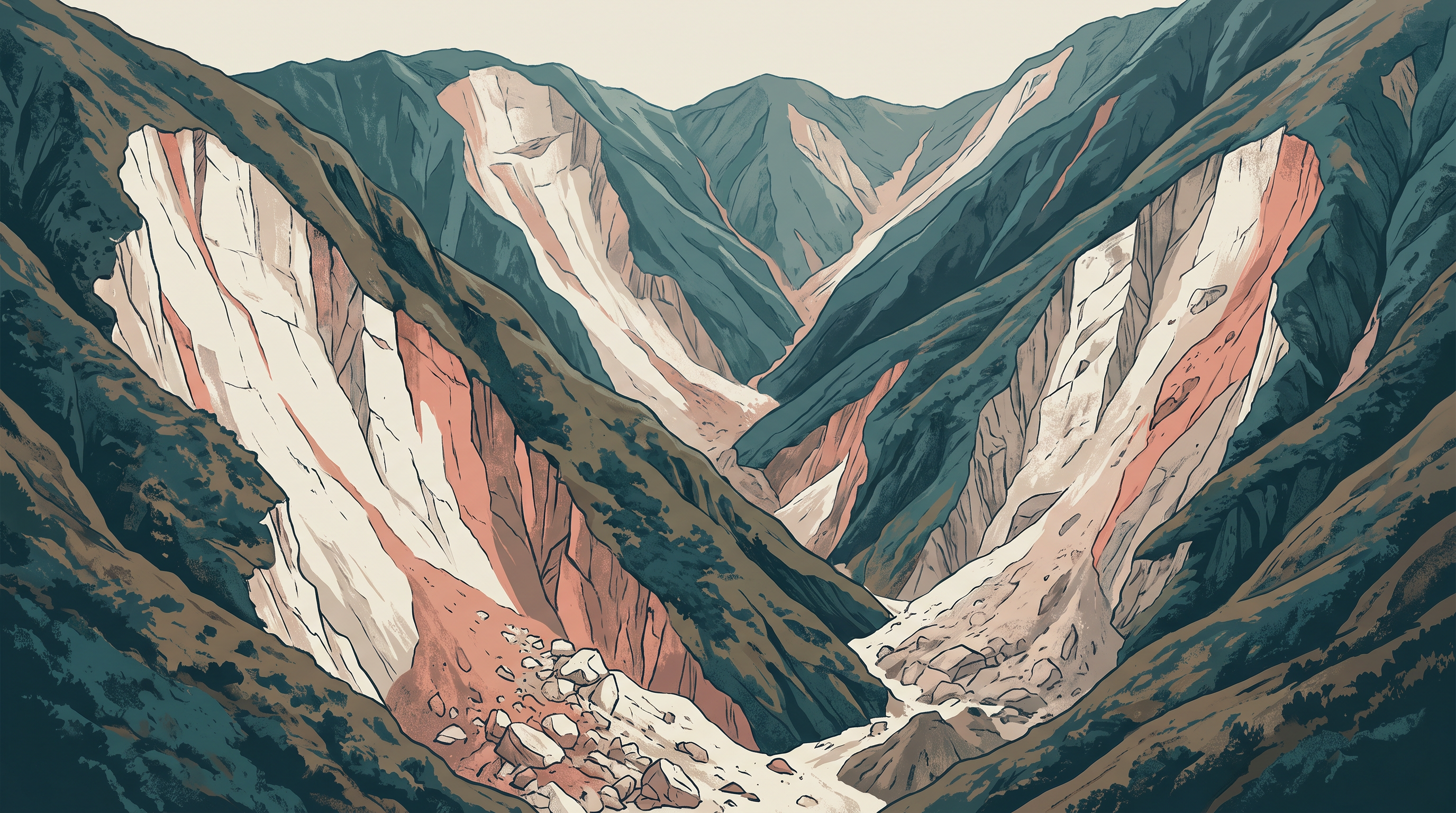
Fig. 5.11 – Landslide scars in the Shiwalik Himalayas.
Finally, a rock fall is the free fall of rock blocks from a steep face, the blocks dropping clear of the slope. Rock falls come only from the superficial, outermost layers of the rock face, and that is what tells them apart from a rockslide, which reaches deep into the rock.
India’s own hills show all this vividly. In the Himalayas, debris avalanches — very rapid, tumbling flows of loose rock debris — and landslides happen very often. The reasons stack up: the Himalayas, the young mountain wall across India’s north, are tectonically active; they are built largely of sedimentary rocks and of unconsolidated and semi-consolidated deposits that hold together poorly; and their slopes are very steep. The Nilgiris — the hills in the south where Tamil Nadu, Karnataka and Kerala meet — and the Western Ghats along the west coast make an instructive contrast. They are relatively stable tectonically and made mostly of very hard rock, yet debris avalanches and landslides still strike there, if less often. Why? Many of their slopes are even steeper, with almost vertical cliffs and escarpments; mechanical weathering from sharp temperature changes and wide ranges is pronounced; and they receive heavy rainfall over short spells. The result is frequent, almost direct rock fall, along with landslides and debris avalanches.
5.9 Erosion And Deposition
Erosion: Wearing The Land Down
Erosion is the acquisition and transportation of rock debris — the picking up of loose material and the carrying of it away. Once weathering and other processes have broken massive rock into smaller fragments, the erosional agents — running water, groundwater, glaciers, wind and waves — remove that material and transport it elsewhere, each according to its own dynamics. A fast river, a heavy glacier and a gusting wind each pick up and move different amounts and sizes of material. As they carry their load, the debris itself does further work: abrasion, the grinding and scouring of rock by the fragments an agent drags across it, adds greatly to the erosion.
The result of all this is that relief degrades — the landscape is steadily worn down. Here it is worth pausing on a point from the last section. Weathering aids erosion, but it is not a pre-condition for it; erosion can act on unweathered rock too, only less easily. And erosion differs from mass movement in one clear way: erosion needs an agent to carry the debris off, whereas mass movement was gravity acting alone, with no agent at all.
Weathering, mass-wasting and erosion are all degradational processes — all of them wear the land down. Of the three, it is erosion that is largely responsible for the continuous changes the Earth’s surface is always undergoing. As Fig. 5.3 showed, erosion and transportation are driven by kinetic energy, the energy of the moving agent.
The Five Agents Of Erosion
Five agents carry out erosion and transportation: wind, running water, glaciers, waves and groundwater. They do not all answer to the same master. The first three — wind, running water and glaciers — are controlled by climate, and between them they happen to represent the three states of matter: wind is gaseous, running water liquid, and a glacier solid. Fig. 5.12 sorts the agents by what controls each.
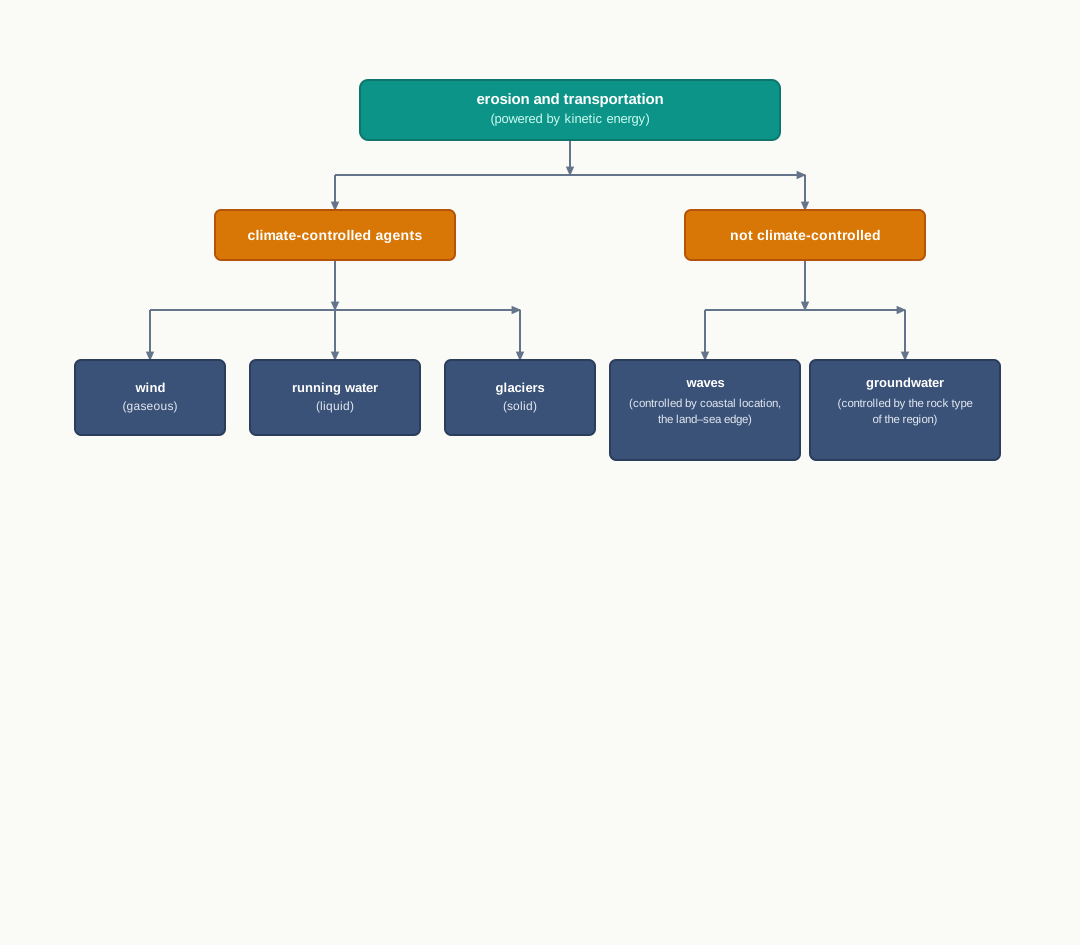
Fig. 5.12 – The five agents of erosion.
The other two agents are not controlled by climate at all. For waves, it is location that matters — waves do their work only along the coast, the narrow interface where the lithosphere (the land) meets the hydrosphere (the sea). For groundwater, it is the rock that matters: its work depends on the lithological character, the rock type, of the region. Only where the rocks are permeable and soluble, and water is available, does karst topography develop — the distinctive landscape carved where groundwater dissolves soluble rock. The landforms that each of these five agents produces are the subject of the next chapter.
Deposition: Building The Land Up
Deposition is the consequence of erosion. As the erosional agents reach gentler slopes, they lose velocity, and with it energy, and the materials they have been carrying begin to settle. Strictly speaking, then, deposition is not really the work of any agent — it is what happens when an agent can no longer hold its load. As the agent slows in stages, the coarser, heavier material it can no longer support is dropped first, then the finer material later, much as a river spreads its sand and then its silt where it slackens. By this settling, depressions in the surface are gradually filled up. The very same agents that erode — running water, glaciers, wind, waves and groundwater — thus serve as aggradational, or depositional, agents too. What all this erosion and deposition does to the shape of the surface is taken up in detail in the next chapter, on landforms and their evolution.
5.10 Soil Formation
You meet soil every day — you walk on it, plants grow in it, and it clings to your clothes when you play. But soil is far more than dirt. Soil is a dynamic, living medium, a changing and developing body in which chemical, physical and biological activities go on all the time. It is at once a result of decay and the medium for new growth.
Its character shifts with the seasons. It may be cold at one time and warm at another, dry and then moist. When it grows too cold or too dry, the biological activity within it slows or stops altogether. And its store of organic matter rises each time leaves fall or grasses die and rot into it.
5.10.1 Process Of Soil Formation
Soil formation, or pedogenesis, depends first of all on weathering. The weathering mantle — the depth of weathered material lying over the bedrock — is the basic raw input from which a soil can begin to form. (The science of soil is pedology, and a soil scientist is a pedologist.)
The building of a soil runs through a sequence of stages. First, the weathered material, or the transported deposits, are colonised by bacteria and by simple plant bodies such as mosses and lichens, while various small organisms shelter within the mantle. As these live and die, their dead remains gather as humus — the finely divided organic matter of the soil. Minor grasses and ferns take root; later, bushes and trees grow from seeds carried in by birds and the wind. Roots push down and burrowing animals bring particles up, and slowly the mass becomes porous and sponge-like, able to hold water and let air pass through. At the end of this long process a mature soil forms — a complex mixture of mineral and organic products. Fig. 5.13 traces the sequence.
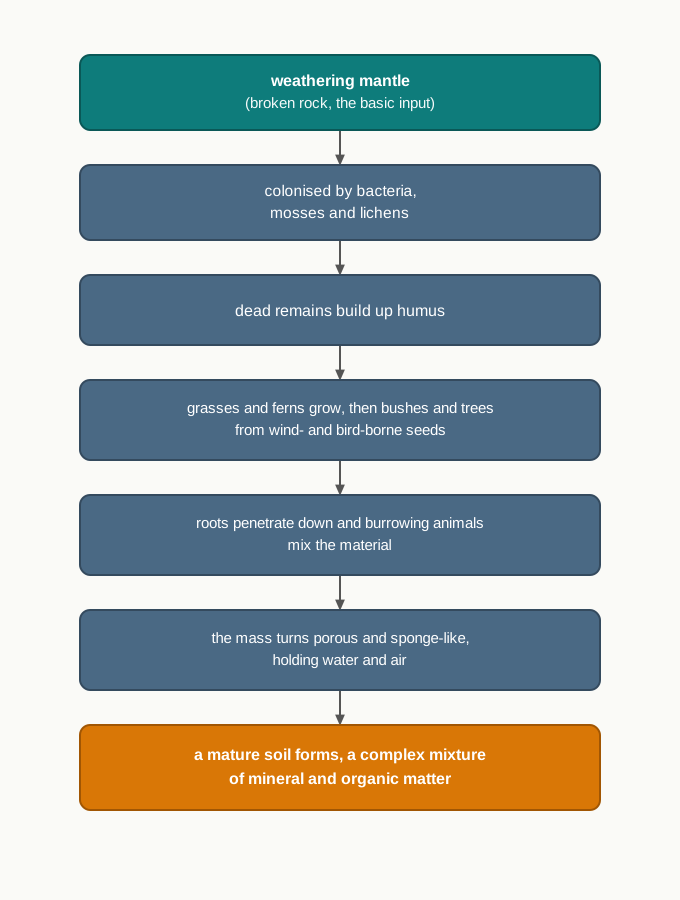
Fig. 5.13 – The sequence of soil formation.
5.10.2 Soil-Forming Factors
Weathering starts the process, but it does not act alone. Five basic factors control how a soil forms: parent material, topography, climate, biological activity and time. These never work in isolation; they act in union, each affecting the others. Two of them are active, doing the driving; three are passive, setting the stage on which the others work. Fig. 5.14 groups them.
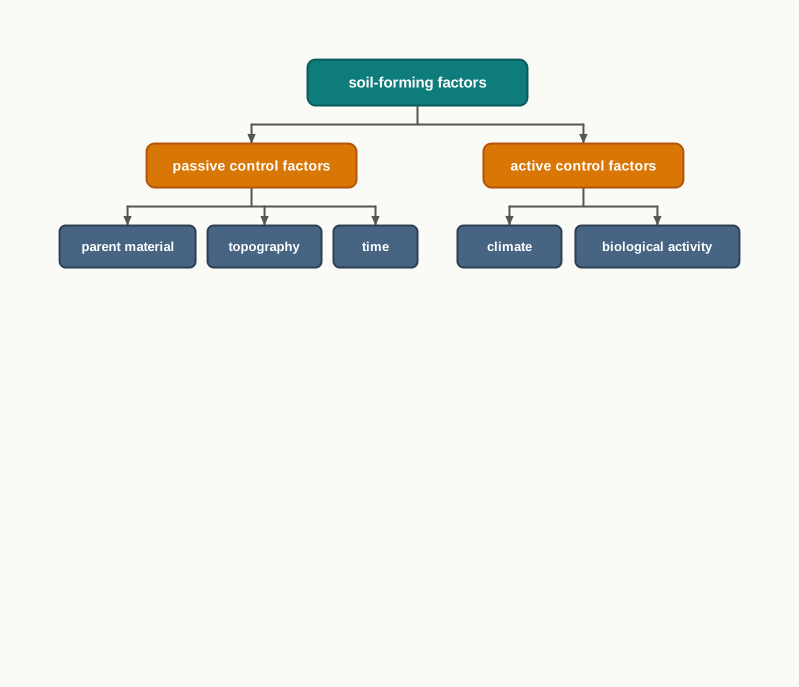
Fig. 5.14 – Active and passive factors in soil formation.
5.10.2.1 Parent Material
Parent material is a passive control factor — it does not drive soil formation, but it sets the raw material to be worked on. It can be either in-situ weathered rock debris, which gives residual soils, or transported deposits carried in from elsewhere, which give transported soils. What kind of soil forms depends on the parent material’s texture — the sizes of the debris — its structure — the way the individual grains are arranged — and its mineral and chemical make-up.
The nature and rate of weathering, and the depth of the weathering mantle, all matter here too. The link between rock and soil is not simple: the same bedrock can give rise to different soils, and quite different bedrocks can carry similar soils above them. The tie is closest when soils are young and not yet matured — then they still show strong links to the parent rock. It is closest of all in some limestone areas, where the weathering is so particular that the soil clearly reflects the rock beneath.
5.10.2.2 Topography
Topography, like parent material, is a passive control factor. Its influence works in two ways: through how much the parent material is exposed to sunlight, and through how water drains over the surface and through the ground. The effect on soil depth is direct. Soils are thin on steep slopes, where loose material is washed off almost as fast as it forms, and thick over flat upland areas, where it stays put. This is why a steep hillside carries only a skin of soil while a flat river plain carries metres of it. On gentle slopes, where erosion is slow and water soaks in well, soil formation is very favourable. On flat land, soils may build up a thick layer of clay rich in organic matter, which gives them a dark colour.
5.10.2.3 Climate
Climate is the first of the two active factors, and one of the most important influences of all. It acts through two elements: moisture — the intensity, frequency and duration of precipitation set against evaporation, together with humidity — and temperature, in its seasonal and daily swings.
Moisture is what makes the chemistry and biology of the soil possible in the first place. Where water is plentiful, it also carries soil components downward through the soil, a washing-down called eluviation, and lays them down again lower in the profile, a process called illuviation. In wet equatorial regions of very high rainfall, the water strips out not only bases such as calcium, sodium, magnesium and potassium but even much of the silica; this removal of silica is called desilication.
Dry climates do the opposite. Because high temperature makes evaporation exceed rainfall, groundwater is drawn upward to the surface by capillary action — the rising of water through the fine pores of the soil — and as it evaporates there, it leaves its dissolved salts behind. These salts harden into a crust in the soil called a hardpan. In tropical climates, and in areas of in-between rainfall, the soil instead forms nodules of calcium carbonate known as kanker.
Temperature works in two directions, speeding chemical and biological activity up or slowing it down. Warmth increases chemical activity; cooler conditions reduce it — carbonation is the one exception — and freezing halts it. This is why the warm tropics develop deep soil profiles, while in the frozen tundra the soil is made up largely of mechanically broken material that has barely been altered by chemistry.
5.10.2.4 Biological Activity
Biological activity is the second active factor. The plant cover and the organisms living in the parent material, from the very start and at every later stage, add organic matter, help hold moisture, and supply nitrogen. Dead plants give the soil its humus, and some of the organic acids formed during humification — the turning of dead matter into humus — help break down the minerals of the parent material.
How fast the tiny organisms work depends sharply on climate, and this shows up in the humus. In cold climates, bacteria act slowly, so dead matter is left undecomposed and humus piles up — in the sub-arctic and tundra it builds into layers of peat, a mass of part-rotted plant remains. In humid tropical and equatorial climates the opposite happens: bacteria are so active that dead vegetation is rapidly oxidised away, leaving the soil with very little humus.
Organisms also feed the soil with nitrogen. Bacteria and other soil organisms take gaseous nitrogen from the air and convert it into a chemical form plants can use, a process called nitrogen fixation. One such bacterium, Rhizobium, lives in the root nodules of leguminous plants — the pulses and beans — and fixes nitrogen that benefits its host. Larger animals help mechanically: ants, termites, earthworms and rodents rework the soil, turning it over from top to bottom. As an earthworm feeds on soil, even the texture and chemistry of what passes out of its body are changed.
5.10.2.5 Time
Time is the third of the passive controls, and it decides how far the others get. The longer the soil-forming processes act, the more the soil matures and the better its profile develops. A soil is mature only when all the soil-forming processes have worked together for long enough to build a full profile — a set of distinct layers, called horizons. Soils forming on recently deposited alluvium, the fresh sediment left by rivers, or on glacial till, the material dropped by a glacier, are young: they show no horizons, or only poorly developed ones. Time is called a passive factor because it does not itself act on the soil — it only allows the active factors to act for longer. And no fixed length of time, in years, can be set for a soil to develop and mature; it depends on everything else.
5.11 Summary
- The Earth’s surface is uneven because two opposing forces act on it and neither ever wins — endogenic forces build it up from within, while exogenic forces wear it down from outside.
- These forces at work are the geomorphic processes; their mobile carriers — running water, glaciers, wind, waves and groundwater — are the geomorphic agents. Gravity and gradients drive every movement.
- Endogenic processes run on the Earth’s internal heat. Diastrophism, in its four forms — orogeny, epeirogeny, earthquakes and plate tectonics — and volcanism build and deform the crust.
- Exogenic processes draw their energy from the Sun and act down the slopes that tectonic uplift creates. The build-up of stress inside rock is the basic cause of weathering, mass movement and erosion, all gathered under the term denudation.
- Weathering is the in-situ breakdown of rock by the elements of weather and climate. It works in three ways — chemical, physical and biological — and climate decides how deep the weathering mantle runs.
- Weathering leaves special forms such as exfoliation, and it matters far beyond that: it builds regolith and soil, prepares rock for erosion, enriches valuable ores, and sustains forests and biodiversity.
- Mass movements slide rock debris down slopes under gravity alone, with no agent taking part. Landslides are the rapid kind — slump, debris slide, debris fall, rockslide and rock fall.
- Erosion is the picking up and carrying away of debris by five agents; deposition is simply what those same agents do when they slow on gentler slopes and drop their load.
- Soil forms from the weathering mantle through a long sequence in which life colonises and enriches the broken rock. Five factors control it — parent material, topography, climate, biological activity and time — some passive, some active.
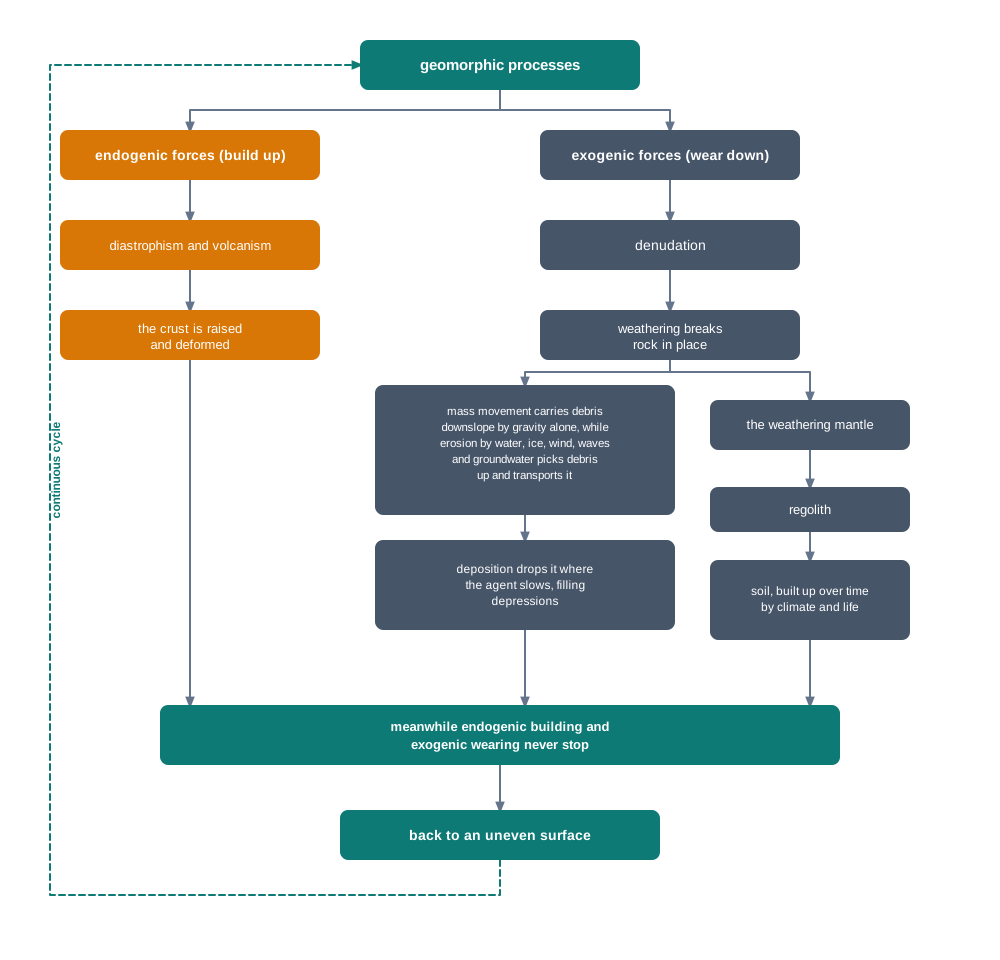
Fig. 5.15 – Summary of geomorphic processes and landform evolution.
What This Chapter Cannot Tell You
This chapter names the processes but not the actual landforms they carve — those wait for the next chapter. It gives no rates or timescales: it cannot say how fast a given slope weathers, when a hillside will fail, or how many years a soil needs to mature. And its broad statements — deep tropical soils, thin tundra soils, frequent Himalayan landslides — are averages that hide wide differences from one slope, aspect and rock to the next.
5.12 NCERT Questions
Which one of the following processes is a gradational process?
- Deposition
- Diastrophism
- Volcanism
- Erosion
Which one of the following materials is affected by the hydration process?
- Granite
- Clay
- Quartz
- Salts
Debris avalanche can be included in the category of:
- Landslides
- Slow flow mass movements
- Rapid flow mass movements
- Subsidence
It is weathering that is responsible for bio-diversity on the Earth. How? (30 words)
What are the mass movements that are real rapid and perceptible? List them. (30 words)
What are the various mobile and mighty exogenic geomorphic agents, and what is the prime job they perform? (30 words)
Is weathering essential as a pre-requisite in the formation of soils? Why? (30 words)
‘Our earth is a playfield for two opposing groups of geomorphic processes.’ Discuss. (150 words)
Exogenic geomorphic processes derive their ultimate energy from the Sun’s heat. Explain. (150 words)
Are physical and chemical weathering processes independent of each other? If not, why? Explain with examples. (150 words)
How do you distinguish between the process of soil formation and the soil-forming factors? What is the role of climate and biological activity as two important control factors in the formation of soils? (150 words)
5.13 Check Your Concepts
Using Fig. 5.3, name the driving force behind each denudation process, and explain why a single driving force cannot be given for all of denudation.
Read Fig. 5.5. As you move from the cold, dry zones towards the warm, wet ones, what happens to the depth of the weathering mantle, and why does climate produce this pattern?
Reconstruct, in the correct order, the stages by which a bare weathering mantle becomes a mature soil.
Both mass movement and erosion shift material from one place to another, yet only erosion is a form of denudation by an agent. What single difference decides this, and why does it place mass movement outside erosion?
The same running water can both wear the land down and build it up. Explain how one agent does two opposite jobs, and say what decides which it does at a given spot.
Distinguish between a rockslide and a rock fall, using the depth of rock each affects and the way the material moves.
Explain why parent material, topography and time are called passive control factors in soil formation, while climate and biological activity are called active.
In a dry climate, trace the chain of steps by which a hardpan forms in the soil, and contrast this with what happens to the bases and silica of a soil in a wet equatorial climate.