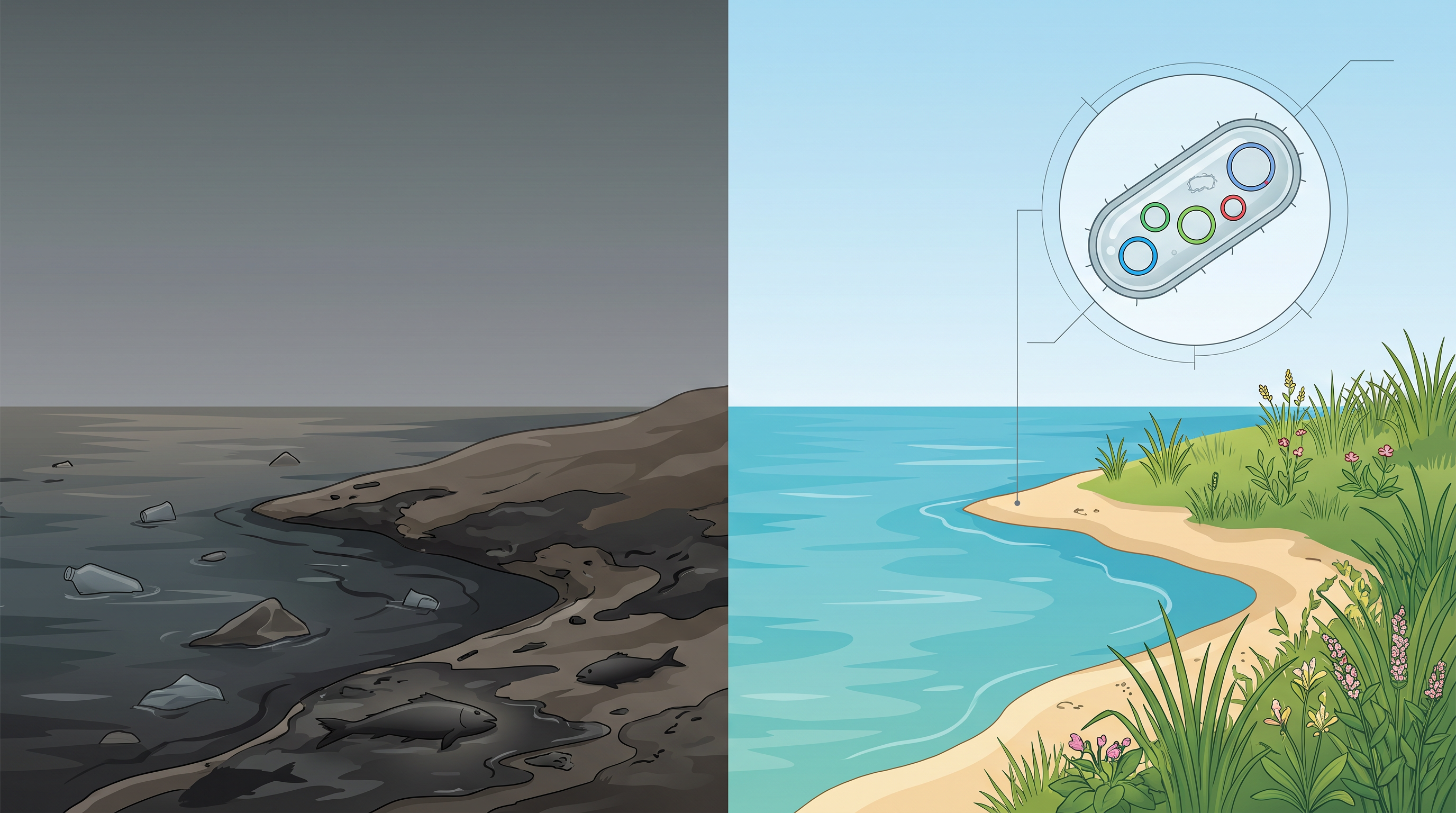
In the late 1960s, a young microbiologist from Kolkata was working in a laboratory in the United States on a problem that seemed hopeless. Crude oil spilled into soil and seawater refused to disappear. It coated shorelines, killed fish and birds, and no chemical could clean it up cheaply or safely.
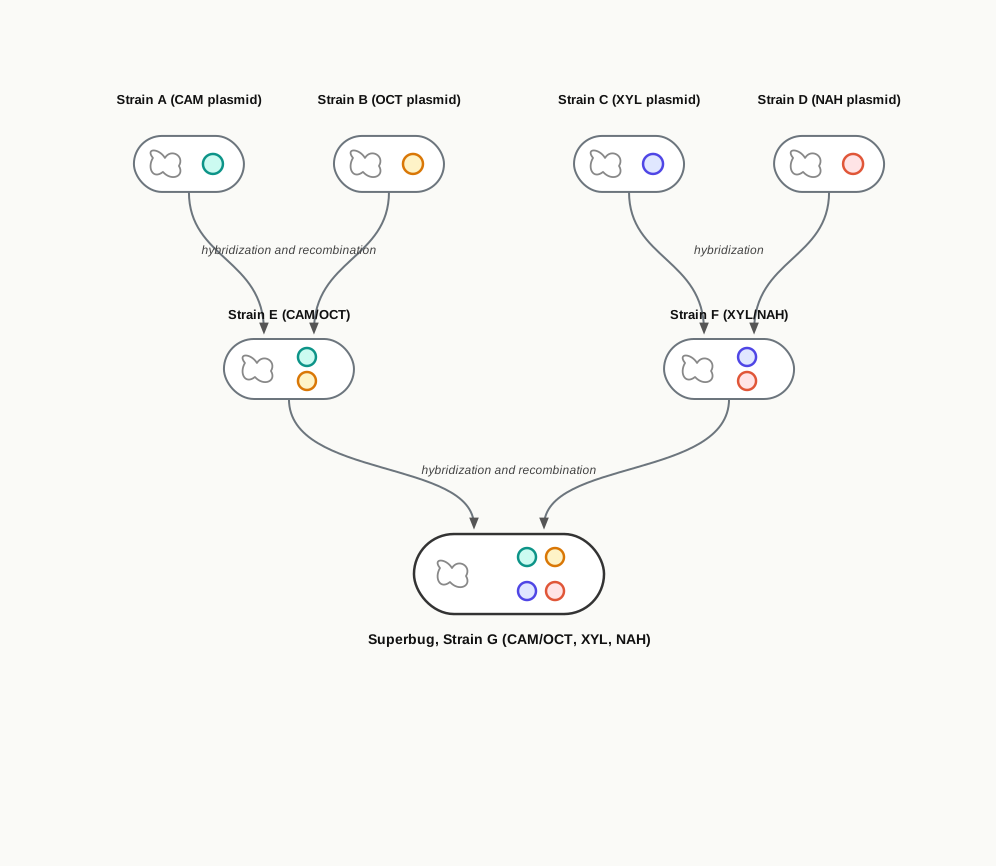
Ananda Mohan Chakrabarty, who had earned his Ph.D. from the University of Calcutta in 1965 before moving to the University of Illinois, noticed something interesting about the soil bacterium Pseudomonas. Different strains carried different plasmids, and each plasmid gave its strain the ability to break down one particular component of oil — camphor, octane, xylol or naphthalene. No single strain could handle them all.
So he combined them. In 1971 he brought these plasmids together in one bacterium — a “multi-plasmid hydrocarbon-degrading Pseudomonas” that could digest most of the hydrocarbons found in an oil spill. Newspapers called it a superbug.
What followed was almost as remarkable as the science. Nobody had ever patented a living organism before, and the question travelled all the way to the United States Supreme Court. The 1980 judgment in Diamond v. Chakrabarty made it possible to patent engineered microbes. In 2007, the Government of India honoured him with the Padma Shri.
His central idea runs through this whole chapter: the cheapest and cleanest way to remove a pollutant is often to let a living thing eat it.
Keep these five questions in mind as you read. Every one of them is answered somewhere in this chapter, and you will find each answer marked for you as it arrives.
11.1 Waste Water Treatment
Why Pollutants Must Be Removed
Human activity at three levels — domestic, agricultural and industrial — pushes an enormous load of pollutants into air, water and soil. In many parts of the world this has now reached an alarming level.
A large share of these pollutants is never treated before release. Untreated chemical toxicants, along with the excess fertilisers and pesticides applied to farmland, drain into rivers, lakes and ponds. There they threaten the whole ecosystem and its flora and fauna, human beings included.
It is therefore highly desirable that such pollutants be eliminated from the ecosystem. The encouraging news is that a good number of microorganisms have recently been reported to be capable of modifying and degrading synthetic agrochemicals.
This chapter looks at the management of wastes and pollutants in two ways: by the conventional engineering approach, and by using microorganisms and plants. Because living organisms (bios) are employed to remediate, or repair, the damage caused by chemical toxicants, the process is called bioremediation.
Bioremediation is the use of living organisms — mainly microorganisms and plants — to remove, degrade or convert pollutants in the environment into less harmful or harmless substances.
What Sewage Is
Waste water from a home, a community or an industry is collectively called sewage. It is not simply dirty water; it is a chemically complicated mixture, and that is exactly what makes it hard to handle.
Such wastes are very difficult to treat for two reasons. First, they contain antiseptics and chemicals, and antiseptics are designed to kill microorganisms — the very organisms a treatment plant depends on. Second, sewage has a high oxygen demand, meaning the microbes decomposing it will strip oxygen out of any water body they reach.
Almost all industries produce their own characteristic sewage. Dairy, tannery, cannery, distillery, oil refinery, textile, coal and coke, synthetic rubber and steel units each discharge a different mixture. Some of these are readily treated, while others are practically unamendable through biological treatment — that is, no microbial community can break them down at a useful rate.
The scale of the problem is easy to underestimate. An average individual in India produces 0.8 kg waste per day. Multiply that by the population of a single city and you begin to see why treatment plants must be built before, and not after, a settlement grows.
11.1.1 Composition of Sewage
Sewage is made up of human excreta, wash waters, industrial waste, agricultural wastes, and wastes from livestock — that is, poultry, cattle, horse and so on.
By mass, bulk municipal sewage consists of approximately 99 percent water and 1% inorganic and organic matter, present in both suspended and soluble forms. That 1% is small in quantity but it is the entire problem.
The two forms behave differently, and treatment plants exploit that difference. Lignocellulose, cellulose, proteins, fats and various inorganic particulate matter exist in the suspended state, so they can be made to settle out physically. Sugars, fatty acids, alcohols, amino acids and inorganic ions constitute the soluble forms, which cannot be settled and must instead be consumed by microbes.
Measuring the Organic Load
The organic content of sewage is measured in terms of its oxygen equivalence, by means of the biochemical or biological oxygen demand (BOD) test. Instead of trying to identify each compound present, we simply ask a practical question: how much oxygen will microbes use up while breaking this sample down?
BOD is the quantity of oxygen required during the stabilisation of decomposable organic matter and oxidisable inorganic matter by aerobic (oxidative) biological action.
Because a single number stands in for the whole organic load, BOD becomes the yardstick for the plant itself. The efficiency of mechanical, chemical and biological treatment of sewage is based on the amount of BOD reduction achieved. Table 11.1 shows the composition of an untreated and a treated domestic sewage, and the BOD row is the one an engineer looks at first.
Table 11.1: Composition of untreated and treated domestic sewage
| Suspended Solids (SS) |
100–750 |
Upto 35 |
| Total Nitrogen |
20–80 |
Upto 15 |
| Total Phosphorus |
05–20 |
Upto 5 |
| Chlorides |
230–2700 |
<250 |
| Grease and oil |
50–100 |
<10 |
| Biochemical oxygen demand (BOD) |
100–300 |
Upto 25 |
| Chemical oxygen demand (COD) |
600–900 |
75–100 |
| pH |
05–7.5 |
6.5–8.5 |
| Total coliform |
10⁷–10⁹ |
Not detectable |
Read the table as a before-and-after record of the whole plant. Every constituent falls sharply, and the last row is the most telling: total coliform drops from tens of millions per unit volume to “not detectable”, which is the difference between water that spreads disease and water that does not.
Strong Sewage and Weak Sewage
Biochemical Oxygen Demand signifies the amount of oxygen dissolved in water that is required by the different microorganisms present in it. In this way, BOD is a measurement of the oxidisable organic matter present in the sewage.
A higher BOD value signifies a higher amount of oxidisable organic matter, and such a sewage is called strong sewage. Weak sewage has comparatively less oxidisable matter.
The consequence of releasing strong sewage into a lake or river follows in a chain. Entry of strong sewage leads to quick consumption of the dissolved oxygen. Fishes and other aquatic fauna then die because the level of dissolved oxygen is too low to support them. Those dead bodies decompose in turn, raising the organic matter level further, and the water finally becomes unsuitable for recreational purposes and unfit for drinking.
Biochemical Oxygen Demand (BOD) test Principle: The oxygen consumed by microorganisms while they oxidise the organic matter of a sample, over a fixed time at a fixed temperature, is proportional to the amount of decomposable organic matter present. Steps: Take a measured amount of sewage → dilute it with water already saturated with oxygen → incubate the sewage–water mixture at 20°C alongside a control of diluted water → after five days of incubation, measure the residual oxygen in both the sewage sample and the control → the difference in oxygen level expresses the capacity of the sewage to consume oxygen, and is reported in parts per million (ppm). Used for: Grading sewage as strong or weak, and judging how efficiently a treatment plant is working — an Indian municipal plant, for instance, must bring its outgoing BOD down close to the “upto 25 mg/L” figure of Table 11.1 before discharge.
Why Dilution Is Necessary
In many real samples the organic load is so high, and the dissolved oxygen consequently so low, that there is simply not enough oxygen left to measure at the end. To handle this, the sample is diluted with double distilled water.
The dilution water itself must be prepared carefully. One litre of BOD-free water (double distilled water) in a bottle is aerated for one hour using an aerator, and the pH is then adjusted to 7.0 using buffer. Aeration guarantees that the water starts fully saturated with oxygen, and neutral pH ensures the microbes are not inhibited by acidity or alkalinity.
BOD is then calculated as follows:
\[\text{BOD (O}_2\ \text{mg/L)} = \frac{(D_1 - D_2) \times 100}{\%\ \text{dilution}} \qquad \text{or} \qquad (D_1 - D_2) \times \text{Dilution factor}\]
Here \(D_1\) is the dissolved oxygen (DO) of the sample before incubation and \(D_2\) is the dissolved oxygen of the sample after incubation, both measured in mg/L. The difference \((D_1 - D_2)\) is the oxygen actually consumed in the bottle; multiplying by the dilution factor scales that figure back up to the undiluted sewage.
Calculation of Dilution factor
| 1 |
1000 |
NIL |
1 |
| 2 |
500 |
500 |
2 |
| 3 |
200 |
800 |
5 |
| 4 |
100 |
900 |
10 |
| 5 |
50 |
950 |
20 |
| 6 |
20 |
980 |
50 |
Notice the pattern in this table. The total volume is always 1000 mL, and the dilution factor is simply that total divided by the volume of sample taken. Taking 20 mL of sewage in 1000 mL gives a factor of 50, so a strong sewage is spread thin enough for its oxygen use to be measurable.
A 50 mL sewage sample is made up to 1000 mL with aerated dilution water. The dissolved oxygen of the mixture before incubation is 8.2 mg/L, and after five days at 20°C it falls to 2.4 mg/L. Calculate the dilution factor and the BOD of the sewage in mg/L.
Q1. Waste water leaving our homes looks dirty — but how does a scientist actually measure how polluted it is, and put a number on it?
A. By running a BOD test. A measured sample is diluted with oxygen-saturated water, sealed and incubated at 20°C for five days, and the dissolved oxygen is measured before and after. The oxygen that disappeared was used by microbes to break down the organic matter, so that drop — scaled up by the dilution factor — becomes a single number in mg/L that tells us how heavily polluted the water is.
Industrial Contributions to Sewage
Wastes disposed from industries consist of detergents, antibiotics, paints, biocides and similar substances. The pulp and paper industries discharge cellulosic and inorganic chemicals.
Sewage composition therefore differs with the type of industrial effluent discharged into a sewage system. Two cities of the same population can send very different mixtures to their plants, which is why treatment plants are designed for a local waste profile rather than to a single universal recipe.
11.1.2 Waste Water Disposal Plant
Treatment of sewage water is essential before its disposal, and the reasons are worth spelling out one by one.
If raw domestic or sanitary sewage is discharged directly into water bodies without biological and/or chemical treatment, the water itself becomes a vector of diseases. The available oxygen and other hydrogen acceptors in the water are soon used up by the microorganisms living in the sewage. Once oxygen is gone, foul smelling anaerobic processes begin and create a nuisance.
The damage does not stop at smell. Survival of fishes and other forms of higher aquatic life is negatively affected, which leads to real economic losses for fishing communities. Further, the water that receives the sewage becomes unfit for drinking or recreation purposes.
Sewage treatment is therefore designed around a set of clear objectives: to kill pathogenic microorganisms, to prevent anoxia (a complete lack of oxygen in the water), to raise the pH to the alkaline side, to increase the photosynthetic rate, and to reduce organic content.
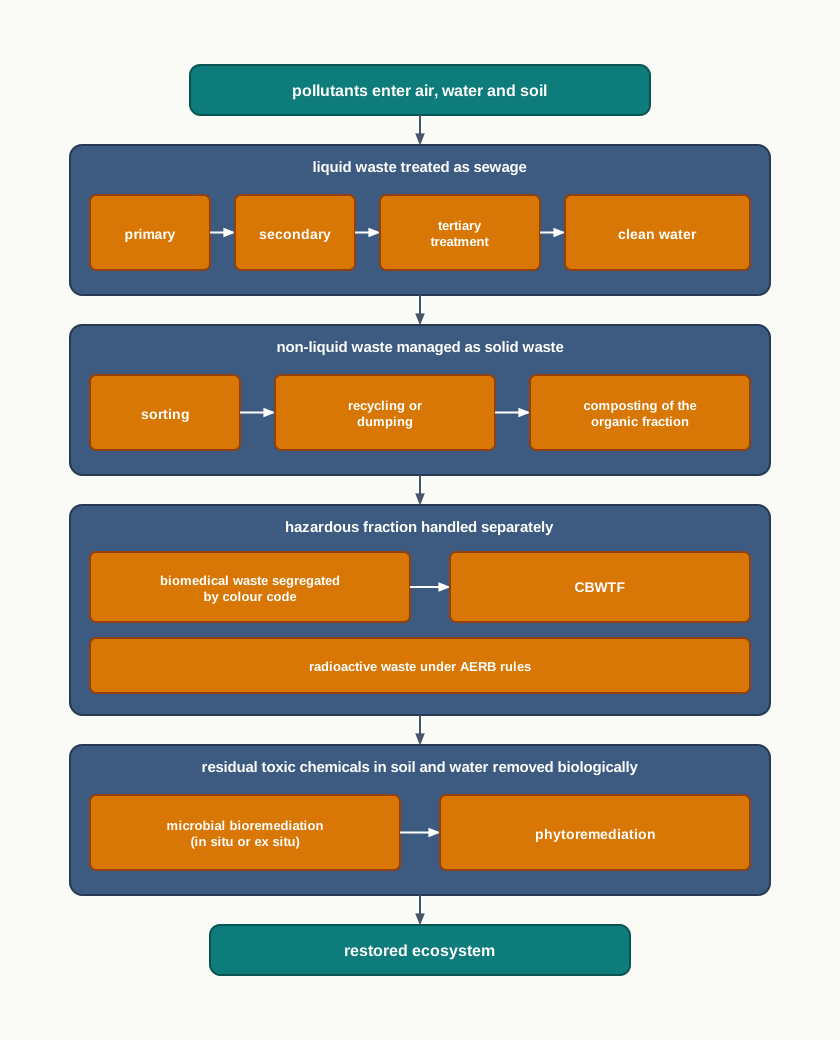
To achieve this, waste water is first routed to sewage disposal plants for treatment before it is discharged into water bodies. The wastewater treatment plants are designed to carry out various steps, namely primary (physical or mechanical) treatment, secondary (biological) treatment, and tertiary (advanced) treatment. The steps involved in all types of treatment are shown in Fig. 11.1.
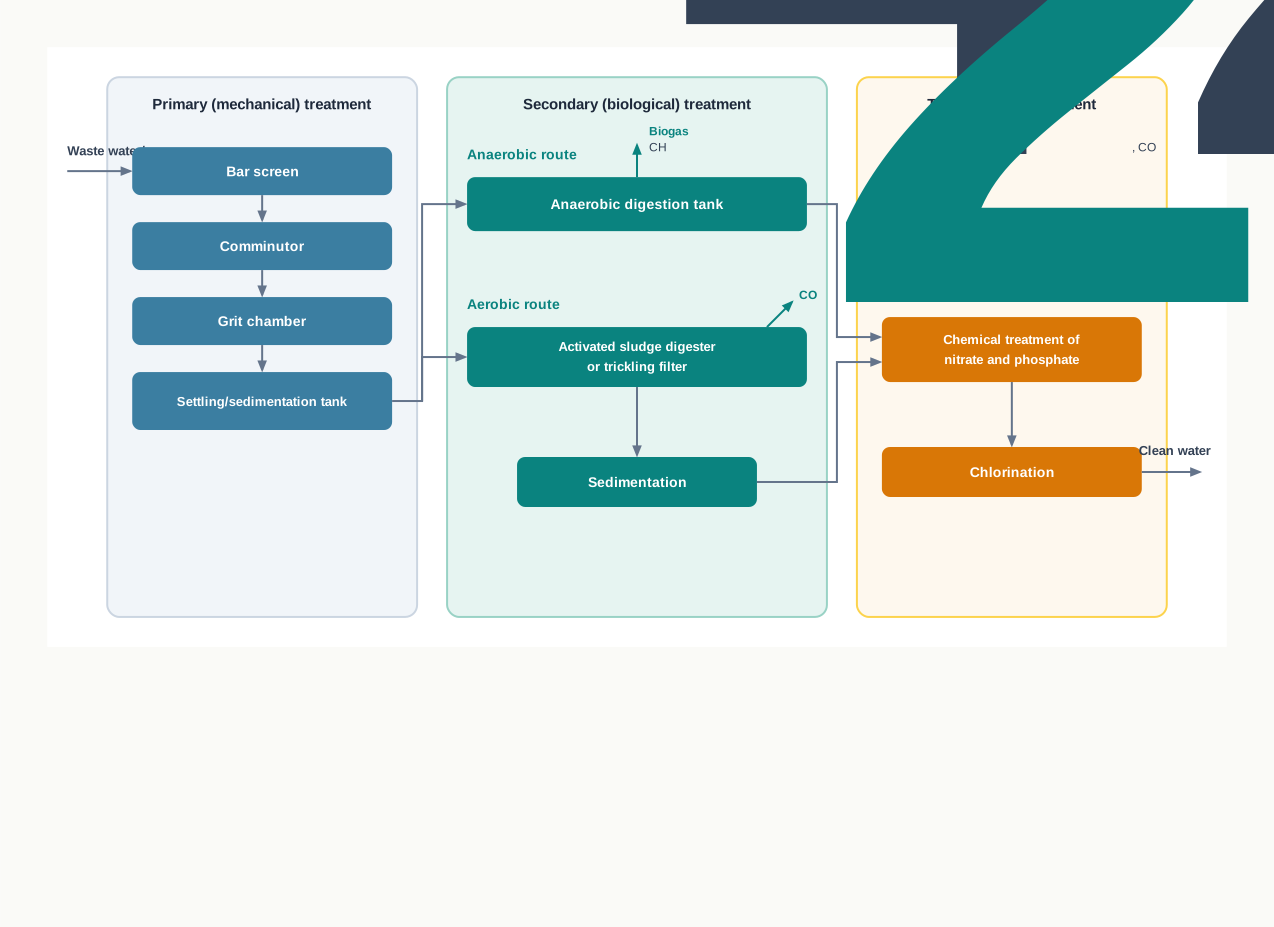
The order of these three stages is not arbitrary. Each stage removes what the next stage cannot handle: coarse solids are taken out physically because microbes cannot digest a plastic bottle, dissolved organics are then removed biologically because no filter can strain out sugars, and the dissolved salts left over are finally removed chemically because no microbe will consume them fast enough. The complete route is summarised in Fig. 11.2.
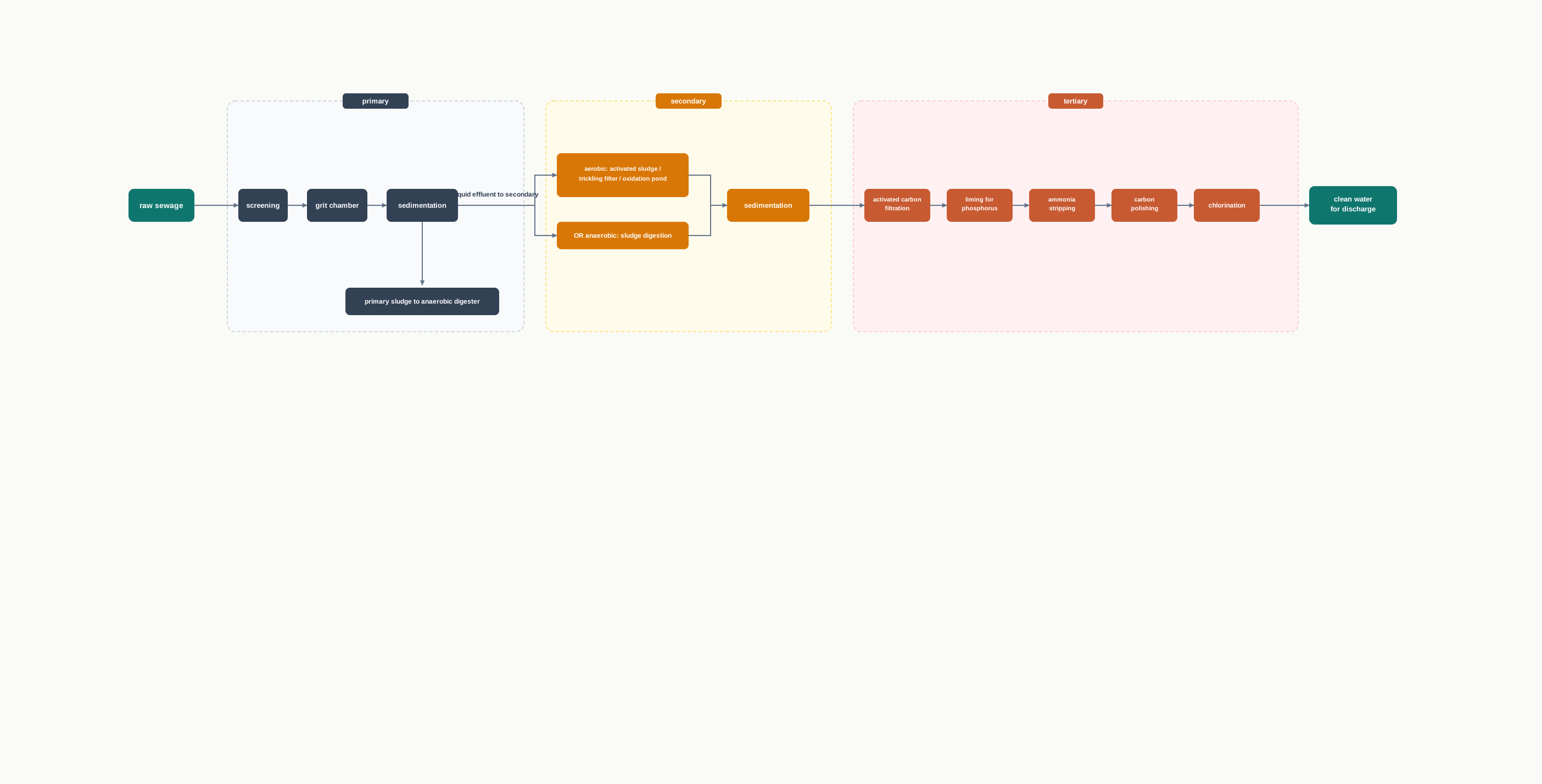
Primary vs Secondary vs Tertiary treatment | Feature | Primary treatment | Secondary treatment | Tertiary treatment | |—|—|—|—| | Nature of process | Physical or mechanical | Biological | Chemical and physical (advanced) | | What it removes | Coarse and suspended solids, floating matter, grit | Dissolved and suspended organic matter | Non-biodegradable organics, nitrogen and phosphorus salts, pathogens | | Chief agents | Screens, grit chamber, sedimentation tanks | Aerobic and anaerobic microorganisms | Activated carbon, lime, aeration towers, chlorine | | BOD removal | 30 to 40 percent | Up to 90 percent along with primary treatment | Residual polishing | | Output | Primary sludge and liquid effluent | Clear-looking effluent still rich in nitrate and phosphate | Clean water, still not drinking water |
11.1.3 Primary or Physical Treatment
In primary treatment, sewage is first subjected to physical (or mechanical) methods — screening, passage of the wastewater into a grit chamber, and sedimentation — to remove its coarse solid materials.
In screening, bulky foreign matter such as bottles, paper and wooden boxes is removed. This step protects everything downstream; a wooden box entering a pump or an aeration tank would damage equipment and serve no purpose in the biological stage.
The sewage is then passed through a grit chamber having filters of graded openings, and is then allowed to flow through sedimentation tanks or sedimentation basins. Graded openings mean that progressively finer material is caught at each stage instead of clogging a single fine screen immediately.
The sewage is held in these tanks usually from 2 to 10 hours. This holding time matters: if the sewage moved through too quickly, the suspended particles would not have time to settle under gravity, and the load passed to secondary treatment would be far heavier than the microbes can process.
Coarse solid materials are concentrated in these tanks and collected from them. The particulate materials are now collectively called primary sludge, which is removed for further processing.
At this point, treatment efficiency ranges from 30 to 40 percent BOD removal. In other words, roughly a third of the oxygen-demanding load has been removed without a single microbe having been deliberately employed.
Following sedimentation, the sludge and the liquid effluent are processed separately during secondary treatment. The sludge is thick, solid and best suited to anaerobic digestion; the liquid effluent is dilute and best suited to aerobic processes. Splitting the two streams is what allows each to be treated by the method that suits it.
11.1.4 Secondary or Biological Treatment
The main function of secondary treatment is to remove much of the suspended organic material that remains in the effluent after primary treatment.
All biological waste treatment depends on microbiological degradation activities — hydrolysis, oxidation and reduction — acting on the decomposable nutrients in sewage. Hydrolysis splits large molecules such as proteins and fats using water; oxidation and reduction then extract energy from the fragments.
Decomposition and stabilisation of wastes may be accomplished either anaerobically or aerobically, depending on the choice of the engineer. Both methods depend on the characteristics and amount of waste being treated.
The aerobic secondary treatment includes the activated sludge process, aerobic digestion of sludge by various filters (for example, trickling filters), and oxidation ponds. Anaerobic secondary treatment is represented by anaerobic digestion of sludge. Regardless of the process being used, waste stabilisation occurs in a series of more or less discrete stages.
During the activated sludge process, a large volume of compressed air is passed through the sewage to maintain the aerobic condition. Aerobic microbes then break down the organic carbon, nitrogen and phosphorus into minerals.
In the aerobic phase, all of the complex, decomposable and organic matter in sewage is eventually changed largely into oxidised inorganic materials such as sulphates, phosphates, nitrates, \(\mathrm{CO_2}\) and \(\mathrm{H_2O}\) — that is, they are mineralised. Mineralisation is the endpoint of aerobic digestion: carbon leaves as gas, and the rest is left as simple salts.
Aerobic vs Anaerobic secondary treatment | Feature | Aerobic treatment | Anaerobic treatment | |—|—|—| | Oxygen requirement | Free oxygen must be supplied continuously | Carried out in the absence of oxygen | | Typical unit | Activated sludge digester, trickling filter, oxidation pond | Anaerobic digestion tank | | Stream treated | Liquid effluent | Solid sludge | | Main end products | CO₂ and H₂O, plus sulphates, phosphates and nitrates | CH₄, CO₂, H₂S, small amounts of H₂ and N₂ | | Useful by-product | Activated sludge that can be recycled | Gas mixture usable as biogas or fuel; digested sludge usable as fertiliser | | Time required | Hours | 30 to 40 days for complete digestion |
Activated Sludge Process
Figure 11.3 explains the sludge process, in which there is an aeration tank and a settling tank.
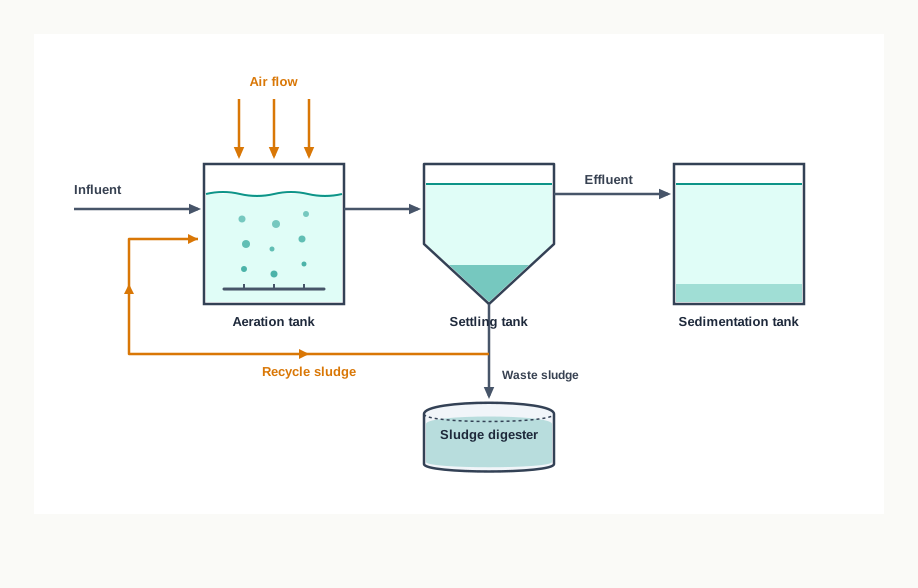
The sludge that settles at the bottom of the second settling tank is called activated sludge, because it bears a high density of bacteria that have become conditioned to the unique environment of the system. “Conditioned” is the key word — these are not random bacteria but a community already adapted to this particular sewage.
That is why the sludge is not simply discarded. A part of the activated sludge is piped to the sludge digester. The remaining part is recycled back to the aeration tank and subsequently to the settling tank, where it in turn activates the inflowing deactivated effluent, as shown in Fig. 11.3.
In this process, plenty of oxygen is pumped into the sewage tank, and the oxidation of the sewage effluent is brought about by aerobic microorganisms, which break down organic matter to \(\mathrm{CO_2}\) and \(\mathrm{H_2O}\).
The effluent is now passed through a sedimentation tank. Though about 90 percent of the organic matter of the effluent is digested via this process, the effluent still contains a considerable amount of nitrate and phosphate.
It is therefore not safe to discharge the effluent at this stage into water bodies, as both nitrate and phosphate can cause eutrophication. The effluent, which looks clear at this stage, is subjected to tertiary (final) treatment for further purification. A student should note carefully that clear water is not clean water — this distinction is a favourite of assertion–reason questions.
Activated sludge process Principle: A dense, pre-conditioned population of aerobic bacteria will oxidise dissolved organic matter to CO₂ and H₂O provided oxygen is supplied continuously; recycling the settled bacterial mass keeps that population high. Steps: Primary effluent enters the aeration tank → compressed air is pumped in continuously → aerobic microbes oxidise organic carbon, nitrogen and phosphorus → mixture flows to the settling tank → bacteria settle out as activated sludge → part of the sludge goes to the sludge digester, part is recycled to the aeration tank → clarified effluent passes to the sedimentation tank. Used for: Removing about 90 percent of the organic matter from municipal sewage; it is the standard secondary process in most Indian city sewage treatment plants.
Q2. Who does the real cleaning inside a sewage treatment plant, and why is so much air pumped into the tanks?
A. Aerobic bacteria and other microorganisms do the cleaning. They feed on the dissolved and suspended organic matter and oxidise it into CO₂, H₂O and simple mineral salts. Because this oxidation consumes oxygen — that is exactly what BOD measures — the oxygen in the tank would be exhausted within minutes if it were not replaced. Compressed air is pumped in continuously so that the microbes stay aerobic, work fast, and do not switch to foul-smelling anaerobic decay.
Trickling Filter
Another form of secondary treatment is the trickling filter process. Here the sewage, after primary treatment, is sprayed by the arms of a rotating sprinkler into a filter bed made of a graded mixture of crushed stones, gravel, clinker and slag, as shown in Fig. 11.4.
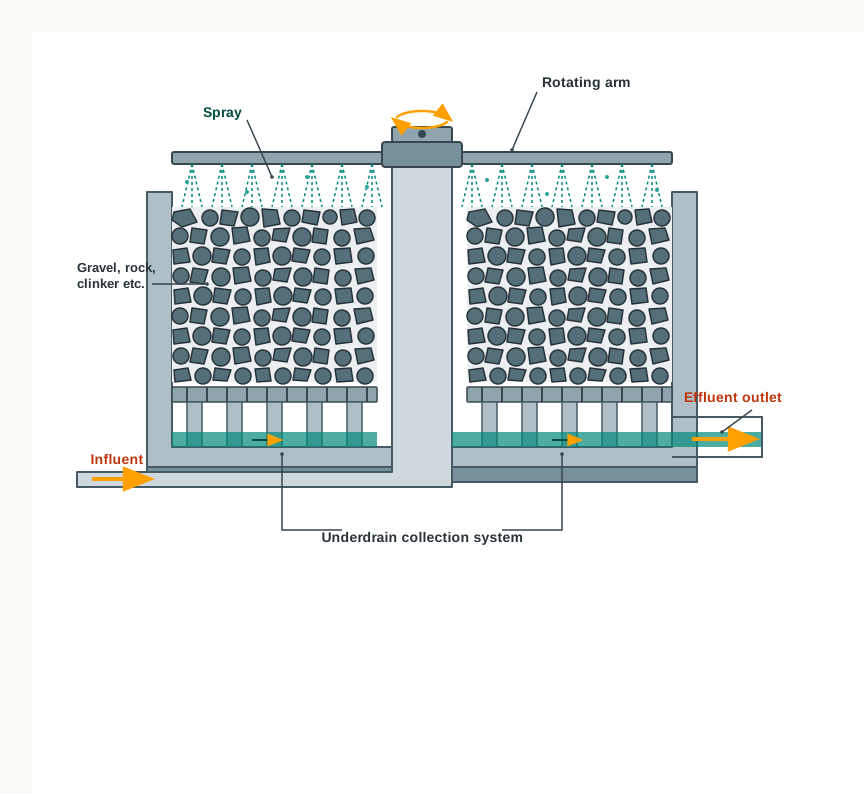
Spraying is not just a way of distributing the liquid; it saturates the effluent with oxygen as the droplets fall through air. This is the trickling filter’s substitute for the compressed air of the activated sludge process.
The bed surface and stones are coated with a slimy film of microbes — bacteria, fungi, protozoa and algae — that has accumulated during the operation of the filter. This biofilm is the working part of the unit; the stones themselves only provide surface area for it to grow on.
As the effluent seeps over this film, the aerobic microbes degrade the organic matter. The treated effluent collected at the bottom of the tank is passed to a sedimentation tank and, as in the activated sludge process, the effluent is subjected to tertiary treatment.
Primary treatment combined with secondary treatment can reduce BOD upto 90 percent, total nitrogen to about 50 per cent, total phosphorus to 30 percent, and suspended matter to 90 percent. Read those four figures together and the need for a third stage becomes obvious: organic matter and solids are dealt with well, but most of the phosphorus is still in the water.
Trickling filter Principle: A fixed film of aerobic microbes growing on a bed of stones will degrade organic matter from sewage that trickles over it, while spraying keeps the liquid saturated with oxygen. Steps: Primary-treated sewage is fed to a rotating sprinkler arm → sprayed over a graded bed of crushed stones, gravel, clinker and slag → the spray oxygenates the liquid → the effluent seeps over the microbial slime layer, which degrades the organic matter → treated effluent is collected by the underdrain system at the base → passed to a sedimentation tank and then to tertiary treatment. Used for: Secondary treatment of municipal sewage, particularly where continuous mechanical aeration would be expensive to run.
Activated sludge process vs Trickling filter | Feature | Activated sludge process | Trickling filter | |—|—|—| | Form of microbial growth | Suspended flocs mixed through the liquid | Fixed slimy film coating stones | | How oxygen is supplied | Compressed air pumped through the tank | Spraying of the effluent through air | | Key equipment | Aeration tank and settling tank | Rotating sprinkler arms, stone bed, underdrain collection system | | Sludge recycling | Activated sludge is recycled to the aeration tank | No sludge recycling | | Microbes involved | Mainly aerobic bacteria | Bacteria, fungi, protozoa and algae |
Eutrophication. Excessive nutrients, including nitrogenous and phosphorous compounds, enter water bodies through sewage or run-off from agricultural fields and favour the growth of photosynthetic microorganisms, especially algae and phytoplankton. A rapid growth of algae in water bodies is called an algal bloom, and such a phenomenon of excessive growth of photosynthetic microorganisms is referred to as eutrophication.
Eutrophication may occur either naturally or by artificial means. Artificial or anthropogenic eutrophication is caused by human activities such as the discharge of nitrate- or phosphate-containing industrial wastes, detergents, fertilisers or sewage into water bodies. The excessive growth of photosynthetic microorganisms on the water surface prevents the entry of light, and the submerged plants ultimately die. The algal population also releases toxins that are harmful for the aquatic flora. When nutrients are exhausted and toxic substances accumulate, algal growth is drastically stunted, and the algal biomass is decomposed by heterotrophic microbes. Dissolved oxygen also gets depleted, leading to the death of aquatic fauna including fishes.
Natural eutrophication, on the contrary, refers to the excessive enrichment of water bodies as a result of the merging of nitrogen- and phosphorus-rich streams into a lake. Organic debris and silt gradually pile up, making the lake shallower and warmer. The warm-water organisms suppress the growth of those that thrive in a cooler environment. The shallower lake basin is overgrown by marshy plants, followed by the crowding of large masses of floating plants. Finally, the lake may convert into land. The natural eutrophication process is very slow, whereas eutrophication due to anthropogenic activities is faster.
Sewage Oxidation Ponds or Lagoons. Oxidation ponds, or lagoons, are shallow ponds up to 5 feet deep, designed to allow direct wind action and algal growth on the sewage effluent. The lagoon treatment process is usually recommended only for small communities in rural areas where large acreages of land are available.
Oxygenation of the wastewater is accomplished by natural means — for example, wind action and the photosynthetic action of algae — or by mechanical aeration. Efficient and properly operated lagoons are capable of reducing BOD by 75 to 95 percent or greater. The oxygen supplied from air and produced as a result of algal photosynthesis fulfils the BOD of the sewage effluent and thus helps in maintaining aerobic conditions in it. In such a condition, the aerobic microbes grow rapidly and digest organic matter. In view of the conservation of ground water for domestic, industrial, irrigation and recreational purposes, oxidation ponds are receiving considerable attention in many arid areas.
Anaerobic Sludge Digestion
Anaerobic waste treatment represents the use of anaerobic microorganisms to process waste material in the absence of oxygen. These microorganisms digest the complex organic material in order to grow and reproduce.
The sludge collected after primary treatment of sewage is subjected to anaerobic digestion in a separate tank designed especially for the purpose. Since anaerobic conditions prevail in this tank, the anaerobic microbes digest the organic matter by degrading it to soluble substances and gaseous products.
The gases produced are methane (60–70%), \(\mathrm{CO_2}\) (20–30%), \(\mathrm{H_2S}\), and small amounts of \(\mathrm{H_2}\) and \(\mathrm{N_2}\). This gas mixture can be used for operating power for the sewage plant, or as a fuel. A treatment plant can therefore generate a part of its own energy from the waste it is treating.
Anaerobic sludge digestion requires 30 to 40 days for complete digestion. This is far slower than aerobic treatment, which is acceptable because sludge is being held in a closed tank rather than flowing through the plant.
The remaining sludge, after digestion, undergoes dewatering before final disposal. Dewatering is done by air-drying on sand filter sludge beds, vacuum filtration, centrifugation and wet air oxidation.
After dewatering, the sludge is pulverized, incinerated or sold as a fertiliser. The heating involved kills all pathogens, which is what makes it safe to handle and to apply to fields. Milorganite is a good example of such a fertiliser. Its important constituents are various soluble compounds of nitrogen, phosphorus and potassium — all essential for plant growth.
Anaerobic sludge digestion Principle: In the complete absence of oxygen, anaerobic microorganisms break complex organic matter down into soluble substances and gases, using the organic matter itself as their energy source. Steps: Primary sludge is transferred to a sealed anaerobic digestion tank → anaerobic microbes degrade the organic matter over 30 to 40 days → gas mixture of CH₄ (60–70%), CO₂ (20–30%), H₂S, H₂ and N₂ is collected → digested sludge is dewatered by air-drying on sand filter beds, vacuum filtration, centrifugation and wet air oxidation → the dried sludge is pulverized, incinerated or sold as fertiliser. Used for: Stabilising sewage sludge while recovering biogas; the dried product is marketed as a nitrogen–phosphorus–potassium fertiliser, Milorganite being a well-known example.
11.1.5 Tertiary or Advanced Treatment
The sewage effluent treated during the secondary treatment process still contains non-biodegradable organic pollutants — if the sewage contains industrial wastes — and mineral nutrients, particularly nitrogen and phosphorus salts. It is therefore subjected to tertiary, or final, treatment for their removal.
If this is not done, sewage effluents containing nitrogen and phosphorus salts can cause serious eutrophication in aquatic ecosystems. The whole point of the third stage is to remove exactly those substances that microbes could not.
Non-biodegradable organic pollutants are normally removed by using activated carbon filters, whereas phosphorus and nitrogen salts are removed by chemical treatment.
Removing Phosphorus by Liming
Phosphorus salts are precipitated by liming. Lime reacts with the phosphorus inorganic compounds in the effluent to form insoluble calcium phosphate, \(\mathrm{Ca_3(PO_4)_2}\), which then settles to the bottom of the settling tank and is removed.
The principle here is a simple one from chemistry: convert a dissolved substance into an insoluble one, and gravity will do the rest of the work.
Removing Nitrogen by Volatilisation
Nitrogen is present mainly as ammonia, and it is removed by volatilisation — vigorous aeration at elevated temperature — at high pH. High pH matters because it converts ammonium ions in solution into free ammonia gas, which can then leave the water.
Ammonia-containing waste water is directed into a metal tower. As this water slowly flows downwards over a series of small plastic baffle plates, air is forced upwards through the effluent and removes the ammonia gas from the water, as shown in Fig. 11.5.
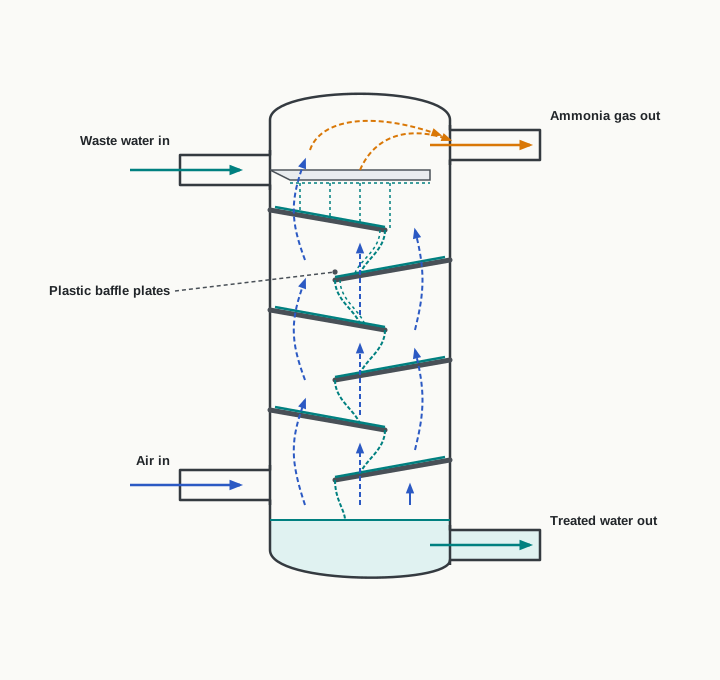
The baffle plates are there for a reason worth noticing. They break the falling water into thin films spread over a large surface, so that the rising air can contact as much of the liquid as possible and carry away more ammonia.
Carbon Polishing
Carbon absorption is done to remove the dissolved organic compounds from the effluent. This is done by passing water through a tower packed with small particles of carbon.
Dissolved organic matter sticks to the carbon particles, and this process is called carbon polishing. The name is apt: it is the last fine-cleaning step, removing traces rather than bulk.
Disinfection and the Final Product
These treatments result in a high-quality effluent that does not cause eutrophication.
The final step of tertiary treatment is chlorination, using either sodium or calcium hypochlorite — \(\mathrm{NaOCl}\) or \(\mathrm{CaOCl_2}\) respectively — or chlorine, to disinfect the effluent. Chlorination is placed last deliberately: adding a disinfectant earlier would harm the very microbial communities that secondary treatment depends on.
The effluent is now clean water, but still it cannot be used as drinking water. It is fit to be returned to a river or lake without harming the ecosystem, and that is the standard a sewage treatment plant is built to meet.
Should treated sewage effluent be reused? Many Indian cities face severe water shortages while simultaneously discharging large volumes of treated effluent into rivers. Supporters of reuse point out that this water has already met a defined quality standard, that using it for irrigation, gardens, construction or industrial cooling frees up freshwater for drinking, and that the nitrogen and phosphorus it carries can be an asset in a field even though it is a pollutant in a lake. Those who urge caution note that treatment plants may run below their design efficiency during power failures or heavy rain, that the effluent is explicitly not of drinking quality, and that residues of pharmaceuticals, heavy metals and industrial chemicals are not fully removed by conventional treatment. Regulatory safeguards address this by prescribing different quality standards for different end uses, requiring continuous monitoring of the outgoing effluent, and prohibiting the use of such water where it could enter the drinking water supply.
11.2 Solid Waste Management
All non-liquid waste materials generated from households, streets, industrial, commercial and agricultural activities are called solid wastes.
Notice how wide that definition is. Sewage was defined by its liquid nature and treated in flowing streams; solid waste is defined by everything that is left over, and it has to be picked up, carried and put somewhere.
Solid wastes are all non-liquid waste materials generated from households, streets, industrial, commercial and agricultural activities.
Sources and Types of Solid Wastes
Major sources of solid waste are households, agricultural fields, industries and mining, hotels and catering, roads and railways, hospitals and educational institutions, cultural centres, and places of recreation and tourism. Table 11.2 sets these out along with the kind of waste each typically produces.
Table 11.2: Major sources and types of solid wastes
| Residential |
Single and multifamily dwellings |
Food waste, paper, cardboard, plastics, glass, leather, yard waste, wood, glass, metals, ashes, special waste (e.g., bulky items, consumer electronics, white good, batteries, oil, tires and household hazardous waste) |
| Industrial |
Light and heavy manufacturing, fabrication, construction sites, power and chemical plants |
Housekeeping waste, packaging, food waste, construction and demolition materials, hazardous waste, ashes, special waste |
| Commercial |
Stores, hotels, restaurants, markets, office, buildings, etc. |
Paper, cardboard, plastics, wood, food waste, glass, metals, special waste, hazardous waste |
| Industrial |
School, hospital, prisons, government offices |
Same as commercial |
| Construction and demolition |
New construction site, road repair, renovation site, demolition of buildings |
Wood, steel, concrete, dirt, etc. |
| Municipal services |
Street cleaning, landscaping, parks, beaches, other recreational areas, water and waste water treatment plant |
Street sweeping landscape and tree trimming, general wastes from park, beaches and other recreational areas, sludge. |
| Process (manufacturing etc.) |
Heavy and light manufacturing refineries, chemical plants, power plants, mineral extraction and processing |
Industrial process wastes, scrap materials, off specification products, slay, tailings |
| Agriculture |
Crop, orchards, vineyards, dairies, food lots, farm |
Spoiled food wastes, agricultural waste, hazardous wastes (e.g., pesticides) |
Reading down the last column, one distinction runs through the whole table and decides how each item must be handled. Solid wastes can be categorised into two groups: biodegradable waste and non-biodegradable waste. Biodegradable waste — food scraps, fallen leaves, paper, animal dung — can be broken down by microorganisms and returned to the soil. Non-biodegradable waste — plastics, glass, metals, batteries — cannot, and must instead be recovered and recycled or safely contained.
Biodegradable vs Non-biodegradable solid waste | Feature | Biodegradable waste | Non-biodegradable waste | |—|—|—| | Nature | Organic matter that microorganisms can decompose | Materials that microorganisms cannot break down | | Examples | Food waste, fruit and vegetable peel, animal dung, fallen leaves, paper | Plastics, glass, metals, batteries, tyres | | Fate if left in the open | Decomposed within weeks to months; may attract flies and rodents meanwhile | Persists for years; accumulates in dumps and water bodies | | Best route of management | Composting, which converts it into fertiliser | Sorting at source and recycling in industry |
11.2.1 Risks of solid waste
Solid waste provides breeding sites for mosquitoes and flies, which are carriers of many life-threatening diseases. A heap of refuse holds moisture, traps rainwater in tins and tyres, and gives insects both food and shelter.
Different mosquito genera bring different diseases. Mosquitoes of the Aedes genus spread dengue and yellow fever; the Anopheles genus of mosquitoes transmits malaria; and mosquitoes of the Culex genus transmit microfilariasis.
Burning some of these solid wastes produces carcinogens and other toxins. Burning may look like a quick solution to a growing heap, but incomplete combustion of mixed waste — especially plastics — releases compounds far more dangerous than the original rubbish.
Poor management of the collection and disposal of solid waste may lead to leachate pollution of surface and ground water. Leachate is the liquid that forms as rainwater percolates through a waste heap, dissolving substances out of it on the way down.
This may cause a significant problem if the waste contains toxic substances and is disposed of near the source of drinking supplies. An unhygienic and polluted environment affects the health of people living around it.
Two Indian episodes show how directly waste handling connects to public health. The spread of the plague episode in Surat, Gujarat, in the 1990s has been associated with the mishandling of solid waste disposal at city level — waste left uncollected after flooding supported a surge in the rodent and flea populations that carry the disease. Separately, the spread of dengue fever in Delhi has been linked with widespread stagnant water in different forms: water coolers, open sewage and badly kept drains. In both cases the pathogen was not new; what changed was the amount of standing water and rotting waste available to its carrier.
11.2.2 Solid waste management
Solid waste management refers to collecting, treating, and disposing of solid material that is discarded or is no longer useful.
It is an important aspect of urban area management. Improper disposal of municipal solid waste can create unsanitary conditions, which can lead to environmental pollution and the outbreak of vector-borne diseases — exactly the risks described above.
Formally, it is the discipline associated with the control of generation, collection, storage, transfer and transport, processing and disposal of solid wastes, in a manner that is in accord with the best principles of public health, economics, engineering, conservation, aesthetics and other environmental considerations.
Solid waste management is the discipline concerned with the control of the generation, collection, storage, transfer and transport, processing and disposal of solid wastes, in a way that satisfies the principles of public health, economics, engineering, conservation, aesthetics and other environmental considerations.
The task of solid waste management presents complex technical challenges. It also poses various economic, administrative and social problems, which need urgent attention. A city can buy machinery, but it must also decide who pays, who collects, and where the waste finally goes — and those are not engineering questions.
Strategies for solid waste management
Strategies for solid waste management can be presented broadly as shown in Fig. 11.6.
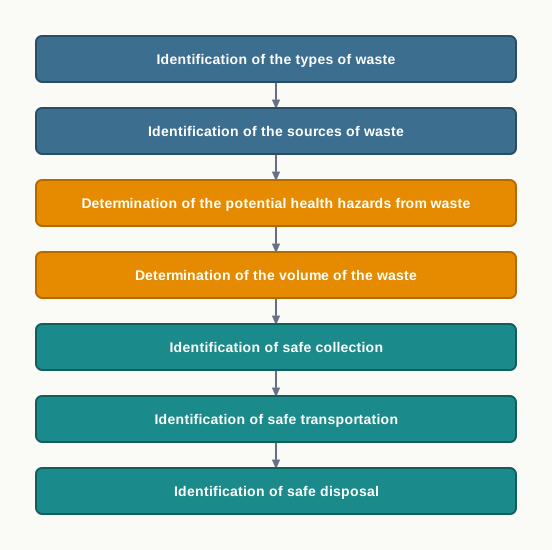
The handling and managing of solid waste involves two approaches: dumping the waste and recycling the waste. These two steps are of significance in managing the overall burden of solid waste. Dumping deals with what cannot be used again; recycling reduces how much reaches the dump in the first place.
In order to establish effective solid waste management in an affected area, the process shown in Fig. 11.6 should be followed in order: identification of the types of waste, identification of the sources of waste, determination of the potential health hazards from the waste, determination of the volume of the waste, identification of safe collection, identification of safe transportation, and identification of safe disposal.
The order is deliberate and worth thinking about. Until you know what the waste is and where it comes from, you cannot judge its hazard; until you know its hazard and its volume, you cannot decide what kind of vehicles, containers and disposal site are needed. Skipping straight to disposal is how cities end up with dumps that leak into ground water.
Sorting and management of solid waste
To maximise the role of recycling of solid wastes, it is essential to sort the waste at the waste generating point into different categories, so as to make the recycling practice easy. Once dry paper has been soaked in wet food waste, it is far harder to recover — which is why sorting at source, rather than at the dump, is the step that decides everything else.
Recycling of solid waste can be achieved under the following heads.
Organic waste can be recycled through the process of composting. Fruit and vegetable waste, animal dung, and fallen leaves from plants form an excellent soil conditioner and fertiliser, called compost. Making compost at home can be achieved by using a suitable container, and the contents of the container after a few weeks can be used as fertiliser.
Vegetable waste and dried weeds can be chopped and compressed into small bricks and sun dried. Like dried cow dung, they can be used to replace charcoal or wood as cooking fuel.
Glass and plastic waste can be reused in the plastic and glass industries to reproduce wares for reuse. The task of collecting these waste items under different heads makes the recycling task more efficient and convenient.
Construction debris and other waste building material can also be reused. Often the construction of a new house or building involves razing old structures, and the debris produced in this manner can be very effectively used as filling material under floors.
Used tyres can be recycled by establishing appropriate recycling units. In the absence of this facility, it is advisable to bury them, to avoid the collection of water during the rainy season, which encourages mosquito breeding. Burning of tyres has to be compulsorily avoided, as the process leads to the emission of toxic fumes.
Managing special solid wastes
Some solid waste needs expert handling, using special equipment to protect the handler. Solid waste under this class falls in the following categories.
Medical solid waste
Healthcare solid waste is generated both at medical facilities and during some routine activities at home and in hospitals. The waste often contains infectious pathogens, so the danger here is biological rather than chemical.
The use of medical solid wastes — masks, gloves, PPE kits, syringes and needles — increases significantly during a pandemic or epidemic. Therefore, high-risk medical solid wastes must be separated as per guidelines and incinerated. Incineration is chosen because heat destroys pathogens completely, leaving nothing infectious behind.
The handler of the waste needs to take all precautions, wearing a mask and gloves, while handling it. In the absence of an incinerator — such as at home — the waste should be treated with a strong disinfectant.
Sharp needles and glassware used at a health facility should be disinfected. Used needles should be destroyed to prevent their reuse, since a discarded needle that finds its way back into circulation can transmit blood-borne infection directly from one person to another.
Slaughterhouse waste
Slaughterhouse waste consists of decaying animal carcasses, blood, faecal matter, hair and bones. This material decomposes rapidly and supports very heavy microbial growth, which is why it cannot be left with ordinary refuse.
Collection of such wastes should be handled by trained staff at specific sites meant to handle this kind of waste. The functioning and maintenance of the facility should comply with health standards, and the community should ensure regular inspection of the sites by the authorities concerned, for proper disposal.
Industrial solid waste
Industrial solid waste can be of different kinds, and the main concern associated with it is the proper disposal of chemical, biological and toxic metals.
In general, the processing of waste from industrial units is handled by the respective industry itself, as per the environmental rules and regulations. The reasoning is that only the producing industry knows exactly what is in its waste stream and how it must be neutralised.
Disposal of toxic chemicals
Disposal of toxic chemicals should be done according to the manufacturer’s guidance. In case of doubt as to how to dispose of a specific toxic chemical, local health and environment officials should be contacted.
Who carries the risk of our waste? Much of India’s recyclable material is recovered by informal waste pickers who sort mixed refuse by hand, often without gloves, masks or vaccination, and frequently including discarded needles and contaminated dressings that were never separated at source. Those who defend the present arrangement note that these workers recover enormous quantities of plastic, glass and metal at almost no cost to municipalities, that the work is a livelihood for very poor households, and that banning it abruptly would remove income without removing waste. Those who object argue that the burden of a hazard falls on the people least able to refuse it, that the generator of the waste — the hospital, the household, the factory — is the one who created the risk, and that no economic benefit justifies an avoidable infection. The safeguards that address this include mandatory segregation at the point of generation, colour-coded containers, disinfection of sharps before disposal, and the formal registration, training and protective equipping of waste handlers.
Composting, vermiculture and methane production
Composting is the most powerful biological, chemical and physical activity available in the natural environment, where organisms under suitable conditions carry out biological degradation of material considered waste from the human point of view.
Organisms, including microorganisms, break down organic waste and produce carbon dioxide, water, heat and humus. Humus is the dark, stable organic matter that gives finished compost its value in soil.
The process stands out as the most powerful environmental tool by which a large variety of complex molecules, after degradation, can be recycled and reutilised. The composting concept has been successfully exploited by humans to degrade the toxic and persistent compounds present in water and soil — an idea that returns in a later section, where contaminated soil itself is composted.
Mechanism and procedure of composting
After proper sorting of the degradable material and grinding, the waste material is mixed with water and with sewage sludge containing organisms. Grinding increases the surface area available to microbes, and the sludge supplies the microbial population that will do the work.
To maintain efficient digestion of the waste material, a suitable environment is needed for the optimum growth and activity of the organisms — for instance, an optimum moisture content of 45–65%. Too little moisture and the microbes cannot function; too much and the spaces between particles fill with water, cutting off air.
Composting methods are either aerobic or anaerobic. The aerobic process requires enough oxygen availability within the compost heap or compost pit. The design and size of the composting pit ensure the maximum efficiency of degradation, because they determine how far air can penetrate into the heap.
Under optimal conditions, composting proceeds through three phases: the mesophilic, or moderate-temperature phase, which lasts for a couple of days; the thermophilic, or high-temperature phase, which can last from a few days to several months; and finally a several-months cooling and maturation phase, as shown in Fig. 11.7. The whole sequence is summarised in Fig. 11.8.
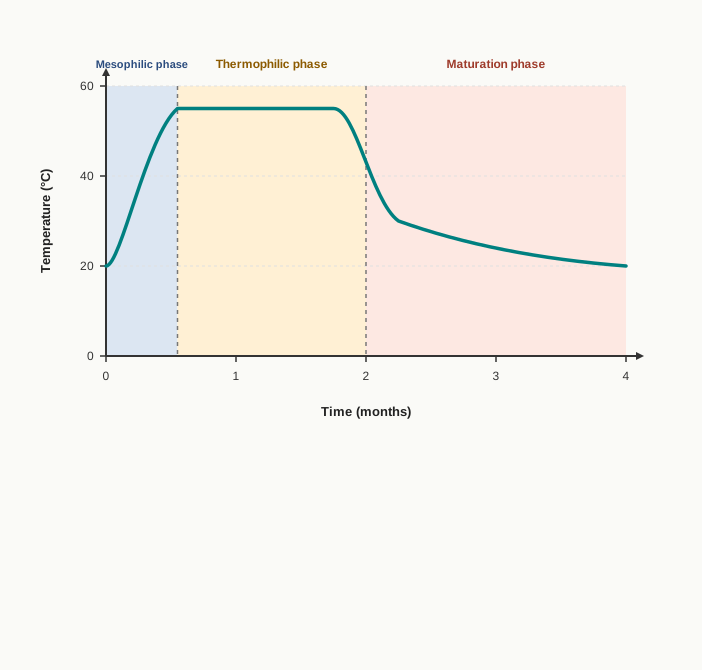
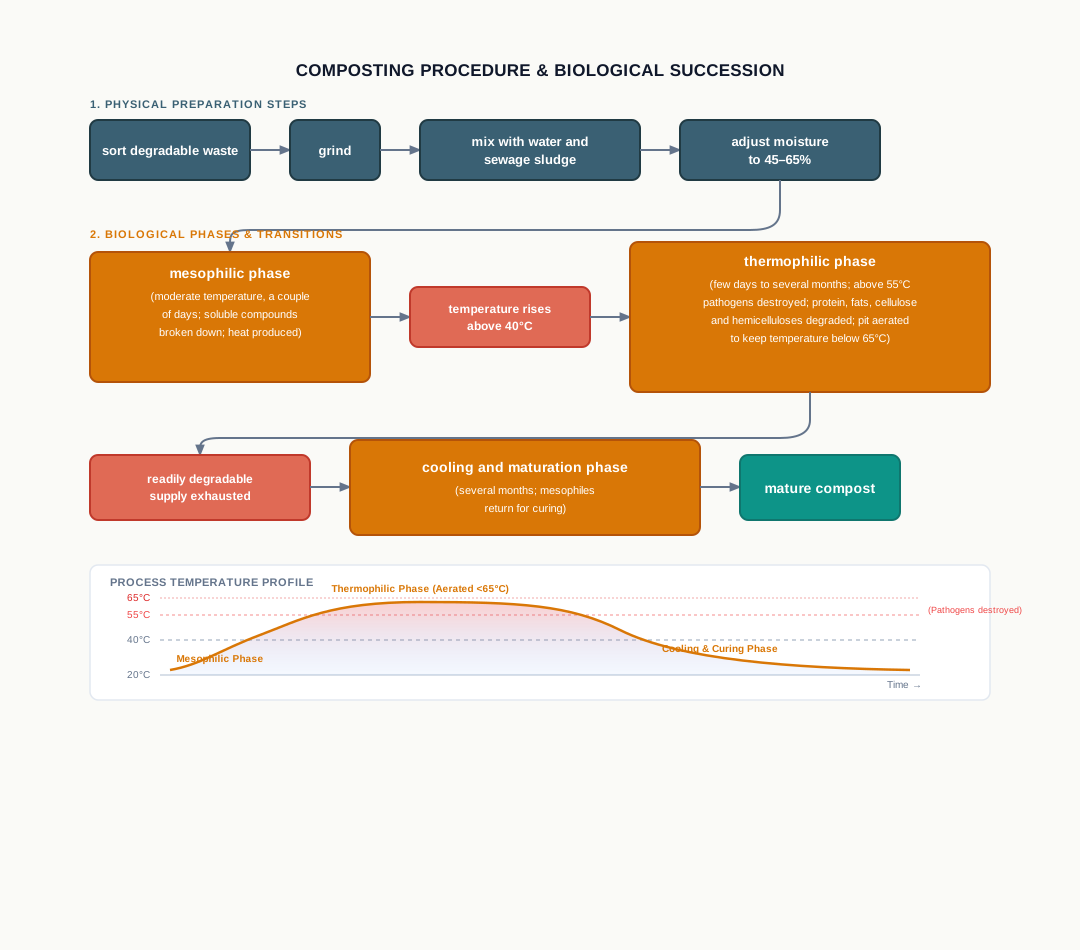
Read Fig. 11.7 as a record of who is working inside the heap at each moment. The x-axis is time in months and the y-axis is the temperature at the centre of the compost. The steep early rise, the long high plateau, and the slow final decline are not caused by anything outside the heap — every degree of that temperature comes from the metabolism of the organisms themselves.
As composting proceeds, temperature changes correspond to the dominance of specific communities of microorganisms at work.
The mesophilic phase involves the rapid breakdown of the soluble, readily degradable compounds by the mesophilic class of microorganisms. This degradation activity is accompanied by heat production and a rapid rise in the compost temperature.
As the temperature rises above 40ºC, the mesophilic microorganisms are competed out by the thermophilic class of microorganisms, which are able to withstand higher temperature. The heap has effectively made its own environment unsuitable for the organisms that created it, and a new community takes over.
At a temperature of 55ºC and above, many pathogenic microorganisms are destroyed, and this limits the rate of decomposition. This is the point at which composting becomes a sanitation process as well as a recycling process — but it also means that some useful decomposers are lost along with the pathogens.
To ensure aeration and a lower temperature, below 65ºC, the compost pit is designed to allow the passage of air, which mixes the compost intermittently. Above about 65ºC even the thermophiles would begin to die and the process would stall, so aeration acts as a natural brake.
During the thermophilic phase, high temperature accelerates the degradation of protein, fats and complex carbohydrates such as cellulose and hemicelluloses — the major structural components of plants. These are precisely the tough molecules that do not break down at ordinary temperatures.
Once the supply of these compounds gets exhausted, the compost temperature gradually decreases, and the mesophilic phase again takes over for the final phase of ‘curing’ or maturation of the remaining organic matter.
Composting Principle: Under moist, aerated conditions, a succession of microbial communities oxidises organic waste to carbon dioxide, water, heat and humus, with the heat they generate itself driving the succession from mesophiles to thermophiles and back. Steps: Sort degradable material → grind → mix with water and sewage sludge containing organisms → maintain moisture at 45–65% → allow the mesophilic phase (a couple of days) → the thermophilic phase follows above 40°C, with aeration to hold the temperature below 65°C → cooling and maturation over several months → harvest mature compost. Used for: Converting fruit and vegetable waste, animal dung and fallen leaves into a soil conditioner and fertiliser at household, community and municipal scale, and — as later sections show — for degrading toxic and persistent compounds in contaminated soil.
Mesophilic vs Thermophilic phase of composting | Feature | Mesophilic phase | Thermophilic phase | |—|—|—| | Temperature range | Moderate; below about 40°C | Above 40°C, commonly held near 55°C and kept below 65°C | | Duration | A couple of days at the start, and again during curing | A few days to several months | | Organisms dominant | Mesophilic microorganisms | Thermophilic microorganisms, including bacteria of the genus Thermus | | Compounds degraded | Soluble, readily degradable compounds | Protein, fats and complex carbohydrates such as cellulose and hemicelluloses | | Additional effect | Generates the heat that triggers the next phase | Destroys many pathogenic microorganisms |
Q3. Why does a heap of kitchen waste and dry leaves become hot enough in the middle to kill germs?
A. The heat is produced by the microorganisms themselves. As mesophilic microbes rapidly break down the soluble compounds in the waste, their metabolism releases heat, and because the centre of a heap is insulated by the material around it, that heat cannot escape. The temperature climbs past 40ºC, thermophilic organisms take over, and the heap settles at 55ºC and above — hot enough to destroy many pathogenic microorganisms, which is why finished compost is safe to spread on a field.
A community composting pit is loaded with 300 kg of sorted degradable waste whose moisture content is 20% by mass. Calculate the mass of water that must be added to bring the moisture content of the mixture to 50%, which lies within the optimum range of 45–65%.
Organisms involved in composting process
Diverse communities of microorganisms, both unicellular and multicellular, play their role at different stages of composting. Constant change in the microenvironment around the community provides a selective advantage to those organisms that can survive best at a given time — which is exactly what the temperature curve of Fig. 11.7 records.
Bacteria make up 80–90% of the billions of microorganisms found in a gram of compost. At the highest compost temperatures, bacteria of the genus Thermus are isolated. Their enzymes remain stable and active at temperatures that would destroy the proteins of most other organisms.
Actinomycetes are a filamentous type of bacteria and play an important role in degrading lignin, cellulose, chitin and proteins. A special class of enzymes present in these bacteria is capable of degrading debris such as woody stems, bark, newspaper and cardboard boxes. Without them, the woody fraction of a compost heap would remain largely untouched.
Fungi represent a class of organisms that also consists of moulds and yeast. They can decompose many complex polymer waste materials present in the soil or compost. Most fungi live in the outer layer of the compost and are present during all phases of temperature change during the process of composting — the outer layer being cooler and better aerated than the core.
Protozoans are single-celled microscopic organisms found in the water droplets trapped in the compost matrix. Their role in composting is that of a secondary consumer: they sustain themselves on organic material, bacteria and fungi, and in doing so keep the microbial populations turning over.
In addition to these, compost also contains a large variety of insects, mites, snow bugs, ants, earthworms and other types of worms. Vermiculture and methane emission are a part of the process of composting.
The presence of worms in compost or soil is an indication of the fertility of the soil, in terms of the availability of nutrients essential for the growth of plants. Worms cannot thrive where there is nothing to eat, so their presence is a convenient field indicator that a farmer can read without any laboratory test.
Composting, in essence, represents a natural way of regenerating soil fertility by utilising the waste produced in the environment by humans.
11.3 Management and Disposal of Biomedical Waste
Biomedical waste can be defined as any waste generated during the diagnosis, treatment or immunisation of human beings or animals, or during research activities pertaining thereto, or in the production or testing of biologicals, or in health camps.
Read that definition carefully, because it is broader than it first appears. It covers not only the obvious hospital ward but also the diagnostic laboratory, the research bench, the vaccine manufacturing unit and the temporary camp set up in a village for a single afternoon.
Biomedical waste is any waste generated during the diagnosis, treatment or immunisation of human beings or animals, during research activities pertaining thereto, during the production or testing of biologicals, or in health camps.
What makes this category different from ordinary solid waste is that its hazard is often invisible. A used syringe weighs almost nothing and looks harmless, yet it can transmit infection directly into the bloodstream of a person handling it.
Colour-Coded Segregation
The Government has made guidelines for handling biomedical waste, which are provided under the Biomedical Waste Management Rules (BMWM), 2016.
The Biomedical Waste Management Rules, 2016 categorise biomedical waste into four major categories, based on the segregation pathway and the standard colour code assigned to the containers in which these are to be segregated. These are yellow, red, white and blue, as set out in Table 11.3.
The logic behind colour coding is worth grasping before memorising the table. Every category has a different final treatment — incineration, recycling after disinfection, sharps disposal, or recovery of glass and metal — and once wastes are mixed, the whole mixture must be treated by the most stringent method available. Colour coding keeps each stream separate from the moment it is discarded, so that each can take the route that suits it.
Table 11.3: Details of colour code and types of waste
| 1. |
Yellow |
(a) Anatomical Waste — human tissues, body parts and fetus below the viability period; animal carcasses, tissues, organs, body parts, animal houses. (b) Soiled waste, items contaminated with body fluids, blood, cotton swabs, discarded old and blood components. (c) Discarded or expired medicines like antibiotics, cytotoxic drugs along with glass or plastic ampoules, vials, etc. (d) Chemical waste like disinfectants, chemical used in the production of biologicals, insecticides, discarded solvents and reagents used for laboratory preparations, heavy metals (broken thermometer), batteries, etc. (e) Beddings contaminated with blood or body fluids, discarded linen, mattresses, mask and gown. (f) Microbiology, biotechnology and other clinical laboratory waste, like blood bags, specimens, human and animal cultures used in research, residual toxins, dishes and devices used for culture. |
| 2. |
Red |
Contaminated plastic waste: waste generated from disposable items like intravenous tubes, bottles, catheters, syringes without needles, fixed needle syringes with their needles cut, urine bags, vaccutainers and gloves. |
| 3. |
White |
Sharps including metals; used, discarded and contaminated metal sharps, needles, syringes with fixed needles, needles from needle tip cutter, blades, scalpels or any other contaminated sharp object that may cause puncture and cuts. |
| 4. |
Blue |
Metallic body implants, broken or discarded and contaminated glass; medicine vials ampoules |
Colour codes for biomedical waste containers | Colour | What goes in | Why this stream is kept separate | |—|—|—| | Yellow | Anatomical waste, soiled waste, expired medicines, chemical waste, contaminated bedding, microbiology and biotechnology laboratory waste | Highly infectious or chemically hazardous; must be destroyed rather than recovered | | Red | Contaminated plastic waste such as tubes, catheters, needle-free syringes, urine bags, gloves | Plastic can be recovered after disinfection instead of being burnt | | White | Sharps — needles, fixed-needle syringes, blades, scalpels | Physical injury risk; requires puncture-proof handling | | Blue | Metallic body implants, broken or contaminated glass, vials and ampoules | Glass and metal are non-combustible and recoverable |
Q4. Why are hospital wastes dropped into yellow, red, white and blue bins instead of one common dustbin?
A. Because each of the four streams needs a different fate. Yellow waste is infectious or chemically hazardous and must be destroyed; red waste is plastic that can be recovered after disinfection; white waste is sharps that can pierce a handler’s skin and needs puncture-proof containers; blue waste is glass and metal that is neither burnt nor infectious. If they all went into one bin, they would have to be treated as though they were all the most dangerous category, recycling would become impossible, and a person emptying the bin could be cut by a needle hidden in soft waste. Segregating by colour at the moment of discarding is what keeps each route open and each handler safe.
Classification by risk group. Biomedical wastes are also classified on the basis of the risk factors involved, as per WHO guidelines. These are:
| Risk Group 1 |
No or low |
No or low |
For example, a microorganism that is unlikely to cause human or animal disease. |
| Risk Group 2 |
Moderate |
Low |
A pathogen that causes human or animal disease and is likely to be a serious hazard to laboratory workers, the community, livestock or the environment. Laboratory exposures may cause serious infection, but effective treatment and preventive measures are available and the risk of spread of infection is limited. |
| Risk Group 3 |
High |
Low |
A pathogen that usually causes serious human or animal disease but does not ordinarily spread from one infected individual to another. Effective treatment and preventive measures are available. |
| Risk Group 4 |
High |
High |
The risk is due to pathogens that usually cause serious human or animal disease and that can be readily transmitted from one individual to another, directly or indirectly. Effective treatment and preventive measures are not usually available. |
Notice that the risk group system asks two separate questions — how dangerous is this organism to the person who meets it, and how easily can it move on to other people. A pathogen can be severe for an individual yet score low on community risk if it does not transmit from person to person. This two-part judgement is what separates Risk Group 3 from Risk Group 4, and it is a common point of confusion in examination questions.
Where Biomedical Waste Comes From
Biomedical wastes are generated in healthcare facilities, diagnostic laboratories, biotechnology laboratories and institutions, medical research centres, veterinary institutes, mortuary and autopsy centres, and blood banks.
These wastes are produced in large amounts and are highly infectious to human health, animals, other living organisms and the environment. The combination of large volume and high infectivity is what makes systematic management essential rather than optional.
It is the responsibility of the healthcare provider to segregate these biomedical wastes appropriately.
Segregation at the Point of Generation
It is important to segregate waste at the point of its generation, from the handling point of view. Once a sharp needle has been dropped into a bag of soft waste, no later sorting can find it safely — the person who reaches into that bag will find it instead.
For this to be possible, containers, bins, bags and sharp boxes should be available in each health care facility, laboratory, medical store and similar unit. Segregation cannot happen if the right container is not within arm’s reach at the moment of discarding.
Trained staff is needed to segregate the waste. General information, posters and proper instructions regarding the proper disposal of waste must be placed near dustbins, bags and containers, so that the correct choice is obvious to anyone using them.
A symbol indicating ‘Biohazard’ should be placed on all colour coding and labels, so that the nature of the contents is recognisable at a glance and in any language.
Once collected, the waste does not stay at the hospital. A Common Biomedical Waste Treatment Facility (CBWTF) is available within 75 km of travelling distance of a health care facility. A shared facility is used because incinerators and autoclaves are expensive to build and run, and a single well-monitored plant serving many hospitals is both cheaper and easier to regulate than hundreds of small ones. The complete route is summarised in Fig. 11.9.
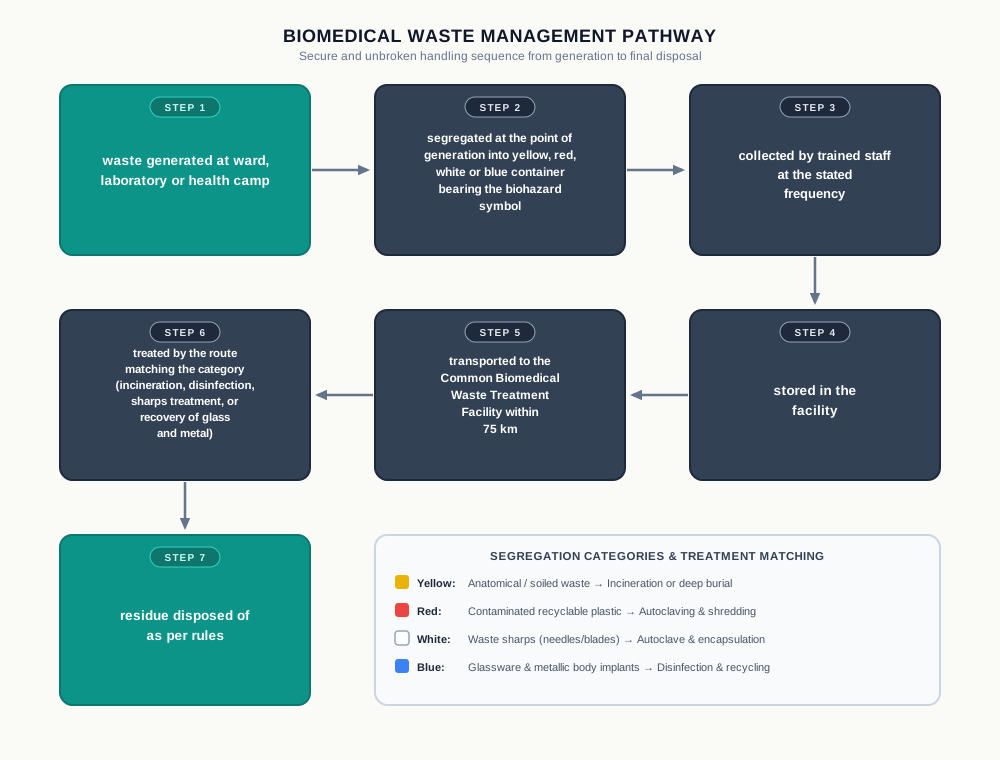
Colour-coded segregation of biomedical waste Principle: Wastes with different hazards need different final treatments, and mixing them forces every part of the mixture to be treated as the most hazardous component; therefore each stream is separated at the instant it is generated. Steps: Place colour-coded containers bearing the biohazard symbol at every point of waste generation → discard each item directly into the container matching its category (yellow, red, white or blue) → cut needles and disinfect sharps and glassware before disposal → collect at the frequency prescribed for that category → transport to the Common Biomedical Waste Treatment Facility → treat by the route assigned to that colour. Used for: Ensuring that infectious hospital waste is destroyed, that recoverable plastic, glass and metal are recycled safely, and that no handler between the ward and the treatment facility is exposed to a hidden sharp or an infectious material.
WHO recommended segregation and collection scheme
| Infectious waste |
Yellow with biohazard symbol; highly infectious waste should be additionally marked ‘HIGHLY INFECTIOUS’ |
Leak-proof strong non-chlorinated plastic bag placed in a container (bags for highly infectious waste should be capable of being autoclaved) |
When three-quarters filled or at least once a day. |
| Sharp waste |
Yellow, marked SHARPS with biohazard symbol. |
Puncture-proof container |
When filled to the line or three-quarters filled. |
| Pathological waste |
Yellow with biohazard symbol. |
Leak-proof strong plastic bag placed in a container. |
When three-quarters filled or at least once a day. |
| Chemical and pharmaceutical waste |
Brown, labeled with an appropriate hazard symbol |
Plastic bag or rigid container |
On demand |
| Radioactive waste |
Labeled with radiation symbol |
Lead box |
On demand |
| General health care waste |
Black |
Plastic bag inside a container or container which is disinfected after use. |
When three-quarters filled or at least once a day. |
Management and Disposal of Radioactive Waste
The Mayapuri radiological accident. In April 2010, the scrap market of the Mayapuri area in Delhi was affected by a serious radiological accident in which public radiation exposure was reported. The source was a radioactive unit containing a gamma unit with Cobalt-60 pencils, which had been sold at auction to a scrap metal dealer in Mayapuri in February 2010. It was dismantled by workers who did not know what they were handling, and the cobalt-60 source was cut into eleven pieces. Eight people were hospitalised in AIIMS as a result of radiation exposure, and one of them later died. Nothing in this sequence involved a laboratory failure or a technical malfunction — it happened because a radioactive source left a regulated institution and entered the ordinary scrap trade with no label, no shielding and no warning.
Radioactive waste is therefore handled under a separate legal authority rather than under the general biomedical waste rules.
The Atomic Energy Regulatory Board (AERB) has been mandated by the Government of India to be the competent authority as per the Atomic Energy (safe Disposal of Radioactive Wastes) Rules, 1987. Radioactive waste should be disposed of according to the guidelines issued under the provisions of the said rules.
The relevant documents are:
- Atomic Energy (safe Disposal of Radioactive Wastes) Rules, 1987: https://www.aerb.gov.in/images/PDF/AE(SDRW)Rules%201987.pdf
- Radiation protection rule: https://dae.nic.in/writereaddata/RPR2004.pdf
Who is responsible when hazardous equipment is retired? The Mayapuri episode raises a question that goes beyond any single institution: when an organisation disposes of equipment containing a hazardous source, where does its responsibility end? One view holds that an institution discharges its duty once it follows the sale or auction procedure laid down for surplus assets, and that the buyer, the scrap dealer and the regulator must then take over. The opposing view is that only the original holder knows what the equipment contains, that a scrap dealer cannot reasonably be expected to identify a sealed radioactive source, and that responsibility should follow the hazard rather than the paperwork — a principle sometimes described as cradle-to-grave accountability. The safeguards that address this include mandatory registration of every radioactive source with the AERB, prohibition on the transfer or sale of such sources except to authorised parties, decommissioning and return of sources to the supplier at end of life, and radiation labelling and lead-box containment for all radioactive waste.
11.4 Bioremediation of Pesticides
Pesticides are categories of diverse chemicals that are used either for protecting the standing crop or for protecting stored food grains from different types of pests — insects, rodents, weeds, bacteria, larvae of worms and even fungi.
Note that “pesticide” is not one chemical but a purpose. Anything that kills a pest qualifies, which is why the group includes compounds as different from one another as a chlorinated hydrocarbon and a metal salt.
Broadly, chemical pesticides can be categorised into organochlorine, organophosphorus, organometallic, synthetic pyrethroids, carbamates and others, which vary in their properties.
Pesticides are chemicals applied to protect standing crops or stored food grains from pests such as insects, rodents, weeds, bacteria, worm larvae and fungi.
Comparing the Major Pesticide Groups
The property that matters most for this chapter is persistency — how long a pesticide survives in soil and water after it has done its job. A compound that breaks down in days poses a very different problem from one that lasts for decades.
Various types of pesticides along with their properties
| Organochlorine |
Organic compound with chlorine atom, Lipid soluble |
Nervous system disrupter, Toxic |
DDT, Lindane, Endosulfan, Aldrin, Dialdrin, Atrazine (herbicide) |
Very long |
| Organophosphate |
Organic compound with phosphate group as basic structure |
Nervous system disrupter (inhibits cholinesterase activity), highly toxic |
Parathion, Malathion, Dimecron, Diazinon |
Less persistent |
| Carbamates |
Derivate of Carbamic acid |
Nervous system disrupter (inhibits cholinesterase activity), highly toxic |
Carbaryl, Carbofuran, IPC |
Less persistent |
| Pyrethroids |
Synthetic analogues of pyrethrum plant |
Nervous system disrupter |
Cypermethrin, Deltamethrin |
Usually degraded by sunlight in a few days. Less persistent in soil (few days) |
| Organometallic |
Synthetic organic compound with heavy metal |
Can be absorbed through skin, GI tract and through respiration, toxic |
Methylmercury |
Very long |
| Inorganic Pesticides |
Metal or non-metal and its compound |
Coagulation of protein, affect the central nervous system and functioning of enzyme |
Arsenic, Mercury, Cadmium, Sulphur |
Very long |
Reading down the last column reveals the pattern that governs everything in this section. The compounds that contain chlorine or a heavy metal are the ones marked “very long”, while those built around a phosphate group, a carbamic acid derivative or a plant-derived structure break down quickly. The chemical skeleton decides the environmental lifetime, and the environmental lifetime decides whether bioremediation is needed at all.
Representative structures of four of these classes are shown in Fig. 11.10.
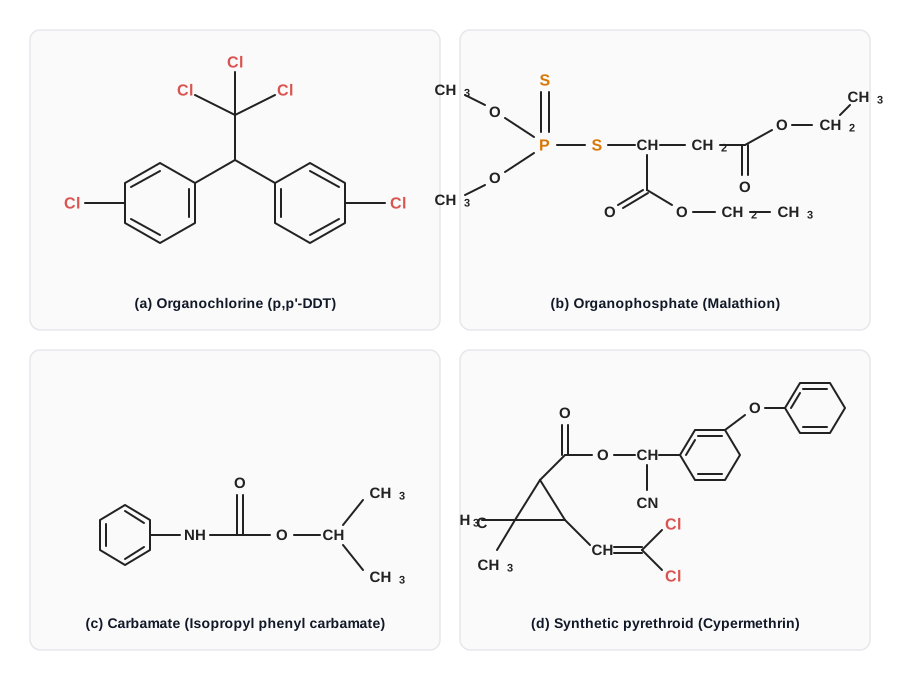
Comparing panels (a) and (b) makes the persistency difference visible. The DDT molecule is essentially a hydrocarbon frame studded with chlorine atoms, with no bond that an ordinary hydrolytic enzyme can attack. Malathion, by contrast, carries ester linkages, and an ester bond is exactly the kind of bond that a common esterase enzyme can split with water.
The use of these agrochemicals was also one of the key contributors to the success of the green revolution during the late sixties, which made our country self-sufficient for food. Any honest discussion of pesticide pollution has to begin there — these chemicals were adopted because they solved a genuine and urgent problem.
The Story of DDT
Let us briefly understand the nature of the different types of pesticides, beginning with the one that started it all.
DDT, an organochlorinous pesticide, was initially found to be a miraculous solution to the spread of malaria, as it proved to be highly effective and useful in the control of the Anopheles mosquito. For a while it appeared that a single chemical had solved one of humanity’s oldest public health problems.
Two things went wrong. Later, resistance to DDT pesticides was noted among the target organisms, rendering them ineffective on the one side; and on the other, their use was found to be harmful to non-target species. Resistance arises because a few individuals in any large insect population happen to carry a variation that lets them survive, and repeated spraying selects for exactly those individuals.
Owing to their hydrophobic nature and lipid solubility, these chlorinated organic compounds have also been found to be non-biodegradable. Being hydrophobic, they do not dissolve in water and so are not washed away; being lipid soluble, they dissolve readily in the fat of any organism that takes them in.
The first pesticide. Dichlorodiphenyltrichloroethane (DDT) was the first ever pesticide synthesized in the laboratory, and it is an organochlorine compound. Considering its efficacy in killing insects, including mosquitos, it was considered initially as a solution to the problem of insects and other categories of pests. Subsequently, a large number of other chemicals having the potential to kill insects and other pests quite efficiently were synthesized, and their usage in agricultural practices became quite prevalent.
Organophosphates, Carbamates and Pyrethroids
Organophosphate pesticides have a phosphate group and are acutely toxic, because of their ability to inhibit cholinesterase.
To see why that is so dangerous, recall how a nerve signal is passed on. When an impulse reaches a synapse, the neurotransmitter acetylcholine is released and stimulates the next cell; the enzyme cholinesterase then destroys the acetylcholine so that the signal stops. If cholinesterase is inhibited, this results in the accumulation of the neurotransmitter acetylcholine across the synapse during neuronal transmission, and the nerve fires continuously instead of stopping.
There is a further complication. Excess organophosphates in their residual forms may turn out to be more harmful than the original compound, and therefore their excessive usage may be harmful in the long run. A breakdown product is not automatically a safer product.
Carbamate and synthetic pyrethroid pesticides get easily hydrolysed and degraded. Their bonds can be split by water, with or without the help of enzymes, so they do not accumulate.
Organochlorine and organometallic pesticides may persist long in the environment, and owing to their solubility in lipid, they may also remain present even in the body of non-target organisms — that is, organisms other than insects and pests, including human beings.
Organochlorine vs Organophosphate pesticides | Feature | Organochlorine | Organophosphate | |—|—|—| | Basic chemical structure | Organic compound carrying chlorine atoms | Organic compound with a phosphate group as basic structure | | Solubility | Lipid soluble, hydrophobic | More readily hydrolysed in water | | Mode of toxicity | Nervous system disrupter, toxic | Nervous system disrupter that inhibits cholinesterase, causing acetylcholine to accumulate at the synapse | | Persistency | Very long; effectively non-biodegradable | Less persistent | | Fate in non-target organisms | Stored in body fat and passed up the food chain | Broken down relatively quickly, but residues may be more harmful than the parent compound | | Examples | DDT, Lindane, Endosulfan, Aldrin, Dialdrin, Atrazine | Parathion, Malathion, Dimecron, Diazinon |
Biomagnification
These excessive agrochemicals, either in their original or metabolised forms, may also enter into plants and ultimately into different organisms of the trophic levels, including human beings, by the process called biomagnification.
The mechanism follows directly from lipid solubility. A fat-soluble pesticide taken in with food is stored in body fat rather than excreted. A small fish eats many contaminated organisms and keeps the pesticide from all of them; a large fish eats many small fish; and so the concentration multiplies at each step up the food chain, as shown in Fig. 11.11.
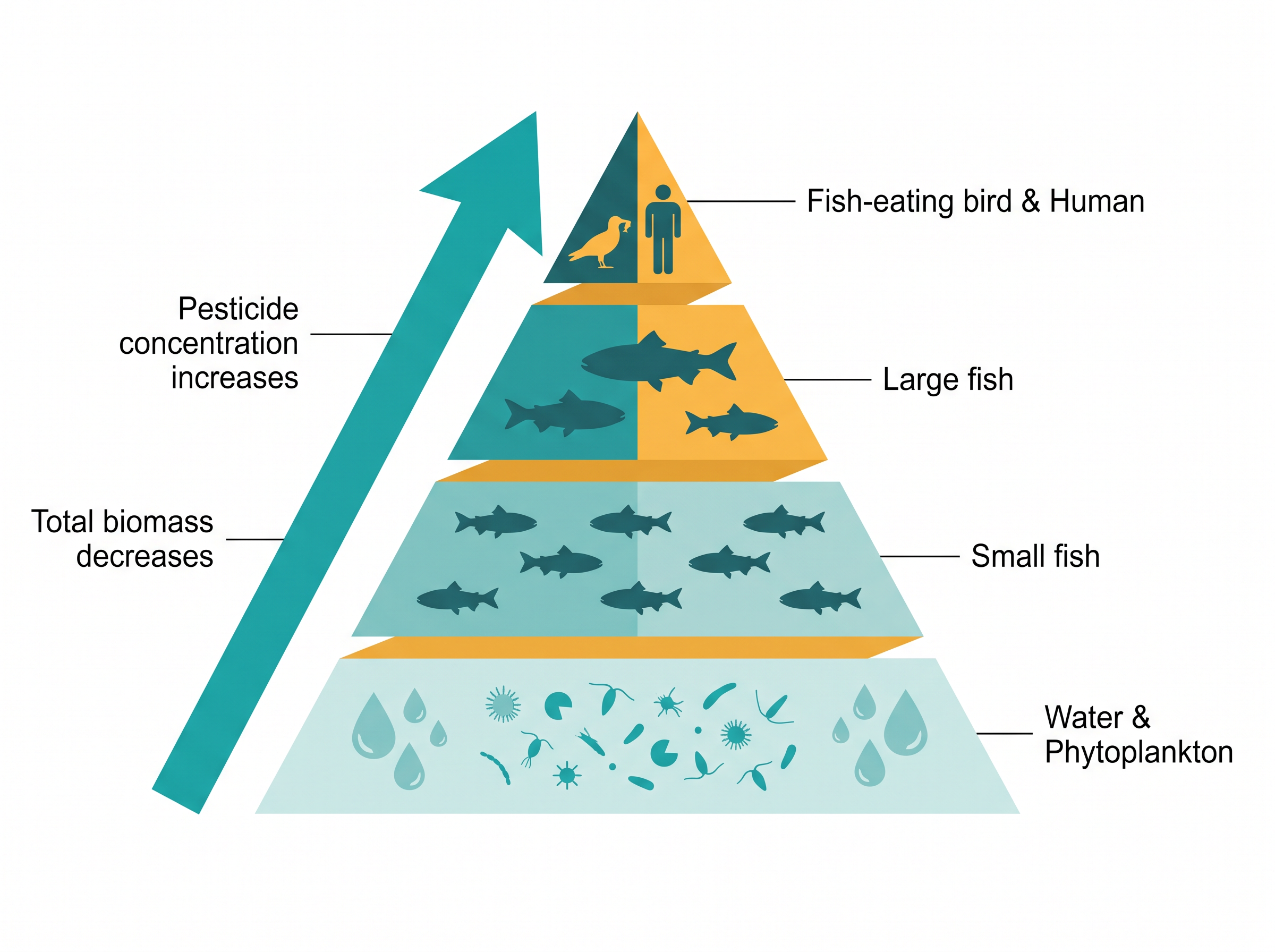
Biomagnification is the progressive increase in the concentration of a persistent toxic substance in the tissues of organisms at successively higher trophic levels of a food chain.
Quite significant levels of such agrochemicals have been found to be present in the tissues of many organisms, besides being accumulated in soil and water.
Therefore, the removal of such long-lasting toxic compounds from soil and water bodies is extremely crucial for the ecosystem and for the health of non-target organisms, including human beings, even if the compounds are present only in residual amounts.
In a lake, water contains a persistent organochlorine pesticide at 0.00005 ppm. Plankton are found to contain 0.04 ppm, small fish 0.5 ppm, large fish 2.0 ppm, and a fish-eating bird 25 ppm. Calculate the biomagnification factor from water to plankton, and from water to the fish-eating bird.
Bioremediation of pesticides using microorganisms
Considering the persistency of pesticides or their residues, either the removal or the altering of their toxic nature is extremely crucial and essential in minimising their adverse effects on humans, other non-target organisms and the ecosystem.
Bioremediation is thus a process through which such toxic pesticides can be removed completely, or their chemical nature can be altered, so as to have no or less adverse impact on the environment. Notice that there are two distinct outcomes here — complete removal and mere alteration — and this distinction matters when answering assertion–reason questions, because bioremediation does not always achieve complete removal.
In the process of bioremediation, the ability of microorganisms to degrade or alter the toxic nature of chemical pesticides into non-toxic substances is exploited.
There are quite a good number of microorganisms capable of wide spectrum metabolism. These may be bacteria, fungi, algae and other microbial strains. “Wide spectrum metabolism” means the organism is not restricted to a few natural nutrients but can attack an unusual range of chemical structures.
Many microorganisms are known to utilise chemicals to derive energy on one hand, and to possess enzymes capable of degrading such pesticides on the other. This is the key to the whole approach: the pesticide is not simply destroyed, it is eaten. The microbe gains energy or carbon from a molecule that we regard purely as poison.
The enzymatic reactions that are important from the perspective of degrading pesticides or other toxic chemicals are mainly catalysed by cytochrome P450, esterases, oxidases, peroxidases and transferases. Their roles are set out in Table 11.5.
Table 11.5: Enzymes and their role in Pesticide Bioremediation
| Cytochrome P450 |
Oxidation and reduction reaction |
Oxidative breakdown of the pesticide or any xenobiotic (synthetic) compound |
| Esterase |
Hydrolysis reaction |
Hydrolytic breakdown of organophosphate or carbamate pesticide |
| Oxidase |
Redox reactions |
Oxidation reduction reaction |
| Peroxidase |
Redox reaction |
Oxidative degradation of organometallic compounds |
| Transferase |
Transfer of glutathione group, hydrolytic and redox reaction |
Transfer of glutathione to some electrophilic pesticides and also its oxidative degradation |
Match this table against the structures in Fig. 11.10 and the logic becomes clear. Esterases appear opposite organophosphates and carbamates because both classes contain ester or ester-like bonds; peroxidases appear opposite organometallic compounds because a metal-carbon bond needs a strongly oxidising attack rather than simple hydrolysis.
A xenobiotic is a synthetic chemical compound that is foreign to natural biological systems and is therefore not readily broken down by them.
The process of transformation or degradation of pesticides is complex and may involve enzymatic reactions such as oxidation, reduction, hydrolysis, transfer of groups, and the formation of a conjugate with sugar or amino acid, making the compound less toxic and water soluble.
That last point deserves attention. Making a compound water soluble is itself a form of detoxification, because a water-soluble molecule can be excreted and washed away instead of being stored in body fat — which is precisely how biomagnification is prevented.
A number of microorganisms have been identified with the potential to bioremediate a number of toxic substances — for example, Pseudomonas, Aerobactor, Acinetobacter, Plesiomonas, Neisseria, Sphingomonas and Flavobacterium.
The whole process of bioremediation of any persistent chemical present in a system also depends on the physicochemical conditions of the environment — such as pH, temperature, water, and the availability of oxygen and substrate — on the one hand, and on the varieties of soil and water microflora present on the other.
Simultaneous use of a conglomerate of such microorganisms for biodegradation or bioremediation of toxic chemicals has also been observed to yield a better result. Different species carry different enzymes, so a mixed consortium can carry a molecule further along a degradation pathway than any single species could on its own.
Degradation of Atrazine by Pseudomonas
A few microorganisms have been found to possess genes whose products are capable of degrading pesticides. A series of Atz genes, namely Atz A to Atz F, have been identified in Pseudomonas, which help it in utilising the herbicide Atrazine as its carbon source for energy and in completely degrading the pesticide.
This is bioremediation in its most complete form. The bacterium is not merely tolerating atrazine or altering it slightly — it is dismantling the molecule step by step and living on the carbon it releases. The full pathway is set out in Fig. 11.12.
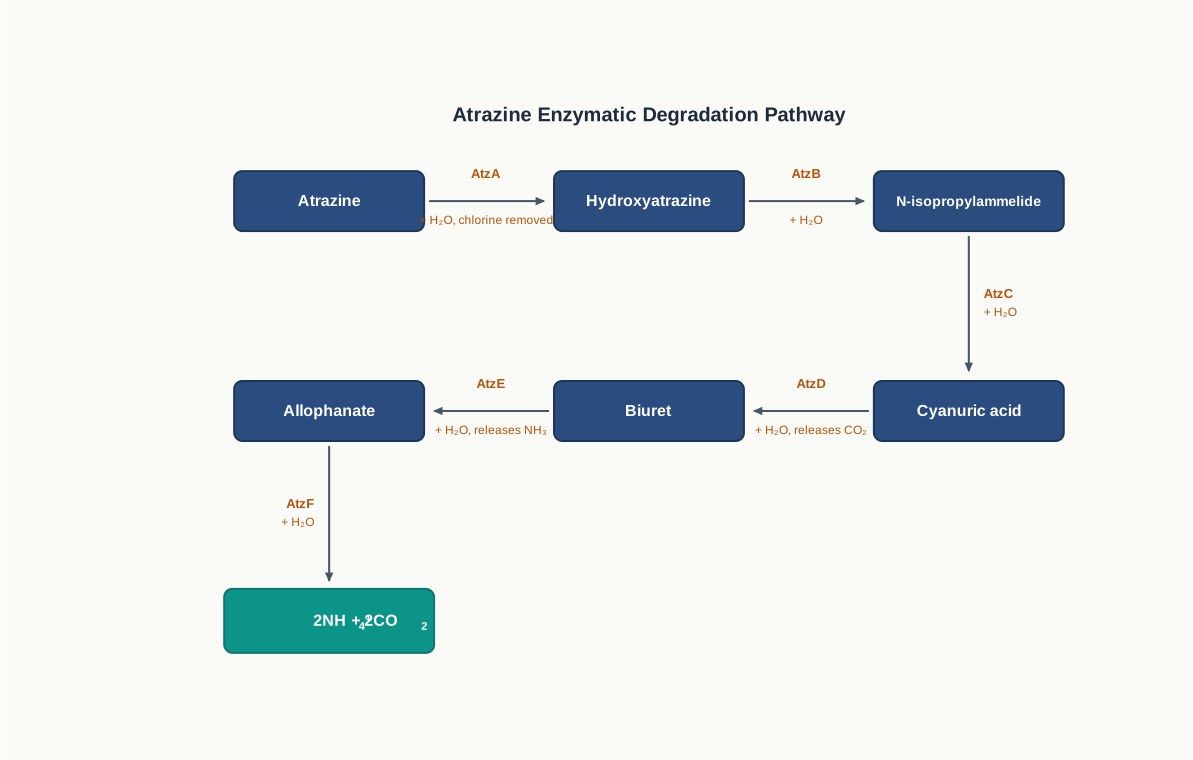
Follow the chain and notice what is happening chemically at each stage. The first enzyme strips off the chlorine atom — the very feature that made the ring resistant — and replaces it with a hydroxyl group. The next enzymes remove the side chains one by one, until only the ring itself remains as cyanuric acid. The final steps open the ring and release its nitrogen and carbon as ammonium ions and carbon dioxide:
\[\text{Allophanate} \xrightarrow{\;\text{AtzF},\ \mathrm{H_2O}\;} 2\,\mathrm{NH_4^+} + 2\,\mathrm{CO_2}\]
Nothing toxic is left at the end. The nitrogen has become a plant nutrient and the carbon has become a gas, which is exactly what “complete degradation” means.
Ex situ Strategies
For the purpose of bioremediation, another technique can also be adopted, in which the contaminated soil is physically taken out and treated separately for the removal or biodegradation of the toxicants present in it. This is normally done for very heavily contaminated soil, where leaving the toxicant in place for a slow natural process would be unacceptable.
Various strategies are adopted for the purpose, as described below.
Slurry bioreactors: In such bioreactors, the contaminated solid or soil is agitated vigorously in the presence of water and nutrients capable of enhancing the ability of the microbes present in the soil to degrade the toxicant under optimum conditions. Vigorous agitation matters because it brings every soil particle into contact with water, nutrients and air, which never happens in undisturbed ground. Mobile slurry bioreactors are also available, so that the bioremediation of contaminated soil can be done very close to the contaminated site.
Land Farming: In land farming, nutrient, moisture and other conditions for optimal microbial growth are applied to the bed of the land farming site to facilitate the bioremediation process.
Composting: In this process, the contaminated soil is mixed with agricultural wastes of organic substances, like straw or corncobs, to enable an optimal supply of air and water for the bioremediation process. The bulky organic material keeps the soil loose and porous, and it also feeds the microbial population. Excavation and transport of contaminated soil for composting is a challenge from the point of view of exposure of contaminants to labourers.
Biopiles: This is a process in which the contaminated soil is excavated and mixed with leachate materials capable of degrading and draining out the toxic substances present in it.
In situ vs Ex situ bioremediation | Feature | In situ bioremediation | Ex situ bioremediation | |—|—|—| | Location of treatment | The contaminated site itself | Soil is excavated and treated separately | | Disruption of the site | Very little | Considerable; the soil must be dug out and transported | | Exposure risk | Low public exposure | Labourers may be exposed to contaminants during excavation and transport | | Cost | Cost effective | Higher, because of excavation, transport and equipment | | Speed and completeness | Slower; complete bioremediation may not be achieved by the intrinsic form | Faster and more controllable, since conditions can be optimised | | Typical forms | Intrinsic and engineered in situ bioremediation | Slurry bioreactors, land farming, composting, biopiles | | Best suited to | Moderately contaminated large areas, petroleum spillage, mined land | Very heavily contaminated soil |
Oilzapper: An Indian Application
Oil spill incidents are a global phenomenon posing a serious threat to the ecosystem and its flora and fauna. Exploration, production, transportation, storage and refining processes of petroleum may accidentally lead to oil spills in soil or water bodies, causing hydrocarbon pollution.
The conventional answers are unsatisfactory. Physical methods — storing oil sludge and drill cuttings in secured pits — and chemical methods of remediation are expensive as well as non-environment friendly, because they move the problem rather than removing it.
The Energy and Resources Institute (TERI), with the support of the Department of Biotechnology, Government of India, came out with an invention called ‘Oilzapper’, which can zap spilled petroleum oil using a consortium of five non-pathogenic bacterial strains. These bacteria can biodegrade different fractions of oil, such as the aliphatic, aromatic and asphalting compounds of oil sludge or crude oil. Five strains are used rather than one for the same reason the superbug needed four plasmids: no single organism handles every fraction of crude oil well.
In this cost-effective technology, Oilzapper is immobilised onto a carrier material, which is powdered corncob, for its application in an oil-contaminated environment. Immobilisation on a carrier keeps the bacteria concentrated where they are applied, protects them during storage and transport, and gives them a solid surface to grow on in the field.
TERI has developed fermentation facilities of different capacities, ranging from 15000 litres, 1500 litres and 300 litres down to 20 and 10 litres, for the large-scale production of Oilzapper. The wide range of vessel sizes reflects the way a microbial product is scaled up — a culture grown in a small flask is used to seed the next larger vessel, and so on up to the production scale.
‘Oilzapper’ has been successfully used by various oil companies across India as well as abroad. Considering its wide-scale implication, TERI and ONGC (Oil and Natural Gas Company) developed a joint venture, namely ONGC TERI Biotech Limited (OTBL), which takes care of its implementation. Till date, ‘Oilzapper’ has cleaned more than 750000 metric tonnes of oil sludge and oil-contaminated soil in India and in a few Middle-East countries.
Q5. DDT once seemed like a miracle chemical against malaria. Why is it a problem today, and can microbes be used to clean it up?
A. DDT is an organochlorine compound: hydrophobic, lipid soluble and effectively non-biodegradable. It is not washed away, and it dissolves in the body fat of every organism that takes it in, so it climbs through food chains by biomagnification and reaches harmful concentrations in non-target species, including human beings. Meanwhile the target mosquitoes developed resistance, so the benefit shrank while the residue remained. Bioremediation offers a way out: microorganisms such as Pseudomonas, Sphingomonas and Flavobacterium carry enzymes — cytochrome P450, esterases, oxidases, peroxidases and transferases — that oxidise, hydrolyse or conjugate such compounds into less toxic, water-soluble products that can be excreted and broken down instead of accumulating. The Atz pathway of Pseudomonas, which dismantles the herbicide atrazine all the way to ammonium ions and carbon dioxide, shows how complete such degradation can be.
Pesticides, food security and the cost of the residue Agrochemicals were central to the Green Revolution and helped make India self-sufficient in food, which is not a small achievement to weigh against their costs. Those who defend continued use argue that pest losses in stored grain and standing crops can be devastating, that alternatives are often costlier or less reliable, and that the problem lies in overuse and misuse rather than in the chemicals themselves. Those who urge sharp restriction point to resistance in target pests, harm to non-target species, biomagnification through food chains, and residues that outlast the crop by decades — and note that the farmer who applies the chemical is usually the person most exposed to it. Between these positions sit the safeguards actually in use: regulation of which compounds may be sold, prescribed doses and pre-harvest waiting periods, monitoring of residues in food and water, a shift towards less persistent classes such as carbamates and synthetic pyrethroids, and bioremediation programmes to clean up what has already accumulated.
The role of diazotrophs
The role of nitrogen-fixing bacteria, also known as diazotrophs, in increasing soil fertility is well known. They can convert atmospheric nitrogen into compounds — ammonia and urea — that plants can easily take up.
Diazotrophs matter to phytoremediation for a practical reason. Contaminated soil is usually poor soil, and a plant that cannot grow well cannot extract much of anything from it. A bacterium that supplies nitrogen allows the plant to build the root system and biomass that remediation depends on.
Some common examples of microbes involved in the process of phytoremediation are given in Table 11.4.
Table 11.4: Microbes in Phytoremediation
| Azotobacter chroococcum |
Maize, Mustard |
Reducing soil pH, production of plant hormones, remediation of heavy metals like lead, zinc |
| Rhizobium leguminosarum |
Maize |
Reducing soil pH, production of plant hormones, remediation of heavy metals like lead, zinc |
| Rhizobium sp. |
Pea, Lentil |
Production of siderophore, release of hormones, remediation of nickel and zinc |
Notice the first column of effects. Reducing the soil pH is not incidental — a lower pH changes the solubility of metal ions, and a metal that has become soluble can be taken up by a root instead of remaining locked in the soil.
These diazotrophs also facilitate the production of a few plant hormones, like indole acetic acid (IAA) and gibberellins, that facilitate crop plant growth besides the remediation of toxicants containing lead, zinc, nickel and so on.
There are also a few aquatic plants, like Hydrila verticilliata and Nymphaea alba, which help in the reduction of chromium in polluted water and are therefore used in phytoremediation. Aquatic species are valuable because contaminated water cannot be excavated and treated the way soil can.
Phytoremediation Principle: Plants take up, accumulate or chemically alter toxic substances from soil and water, while the microorganisms of their rhizosphere change the bioavailability of those toxicants through chelation, methylation, pH change and altered redox reactions. Steps: Select a plant species known to tolerate and accumulate the particular toxicant → grow it on the contaminated soil or water, if necessary with diazotrophs and other rhizosphere microbes to support growth → allow the roots and rhizosphere microorganisms to mobilise and take up the toxicant → allow accumulation in the plant tissues over the growing period → harvest and dispose of the biomass safely, removing the toxicant with it. Used for: Removing heavy metals from contaminated land — Brassica napus and Helianthus annus for mercury and lead — and from polluted water, where Hydrila verticilliata and Nymphaea alba reduce chromium.