Chapter 13: Entrepreneurship
In 1978, a young Indian woman came home from Australia with an unusual qualification. She had trained as a brewmaster — a specialist in the science of fermentation — and she wanted to work in that field in India. Brewery after brewery turned her down. The job, she was told, was not one for a woman.
Instead of giving up on the science she had learned, Kiran Mazumdar-Shaw decided to build a business around it. She started Biocon in a rented garage in Bangalore with a tiny amount of capital and almost no equipment. Her first product was not a medicine at all — it was papain, an enzyme obtained from papaya, sold to food and brewing industries.
The early years were difficult in ways that had nothing to do with biology. Banks hesitated to lend money to a business they did not understand, run by a founder with no assets to offer as security. Skilled staff were hard to find. Every batch carried scientific risk as well as financial risk.
That small enzyme unit grew into one of India’s largest biopharmaceutical companies, later making insulin and other complex biological medicines for patients across the world. A laboratory skill had been turned into an enterprise — and that turning is what this chapter is about.
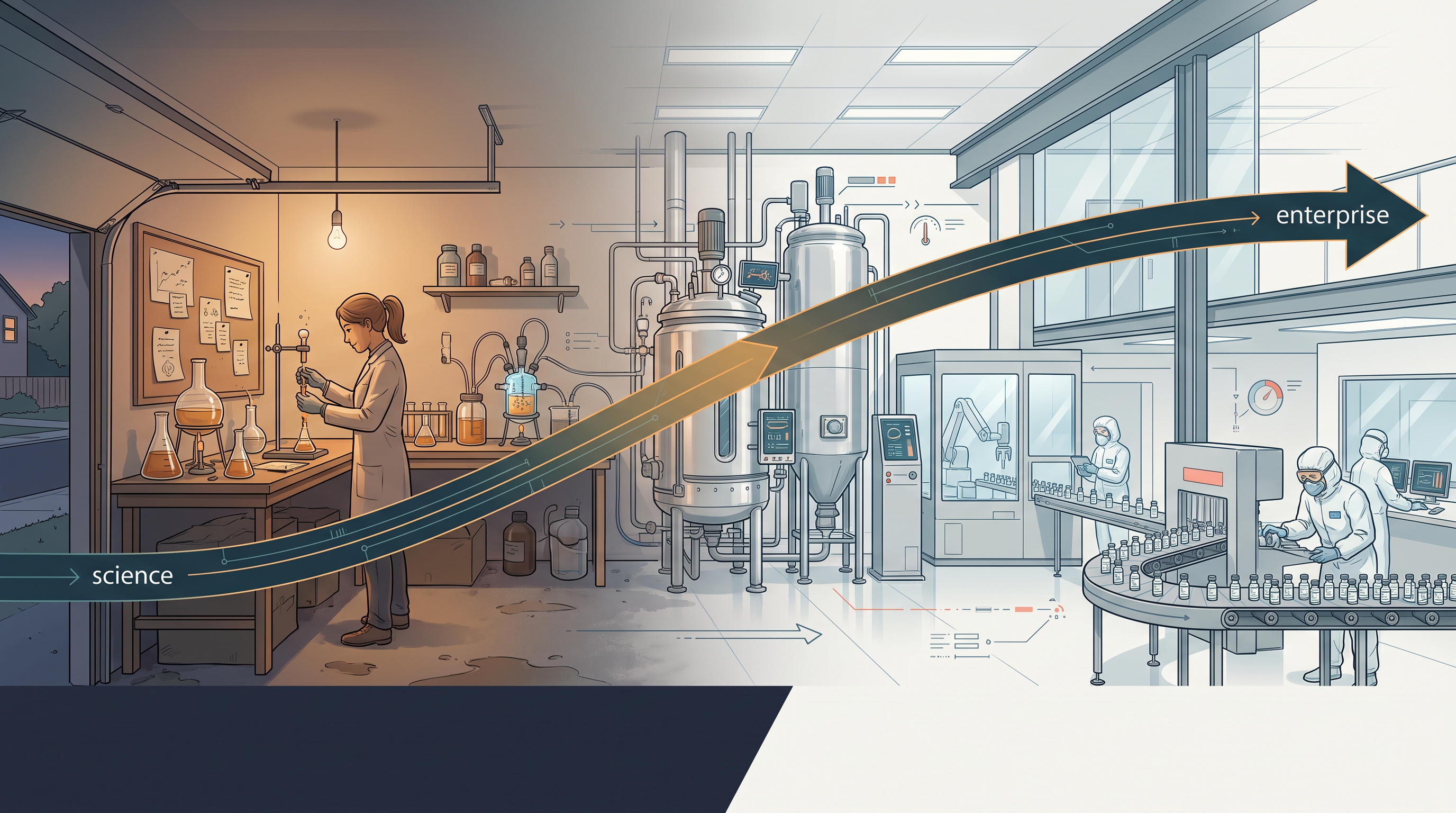
Fig. 13.0 – Science to enterprise: the growth of a biotech venture.
By the end of this chapter you will be able to answer each of these questions for yourself.
13.1 Concept of Entrepreneurship
Entrepreneurs are often described as the harbingers of a prosperous society. An entrepreneur does not merely earn a living; the enterprise created also gives employment to others and adds to the economic development of the country.
As scientific temperament has spread in society, the number of people who build enterprises directly out of scientific discoveries has grown steadily. Biotechnology is one such field, where a laboratory result can become a medicine, a seed, an enzyme or a diagnostic kit sold in the market.
This chapter looks at the role and relevance of entrepreneurs in general, and of biotech entrepreneurs in particular. It also carries real cases of people who carved out a niche for themselves by launching biotechnology-based enterprises, and it discusses the present-day legislation that governs such enterprises.
Where the Word Comes From
The root of the term ‘entrepreneur’ is the French word enterprendre, which means ‘to undertake’. The word itself, therefore, carries the idea of taking something up — stepping forward to do a job that nobody has yet done.
An entrepreneur is thus an individual who undertakes an activity after foreseeing a business opportunity. Two further things follow from this. The entrepreneur organises all the resources needed to start the enterprise, and the entrepreneur bears the risk involved in the process.
Notice that these three elements — foresight, organisation and risk — are not optional extras. If a person spots an opportunity but never organises resources, nothing gets built; and if someone else carries all the risk, that person, not the observer, is the true entrepreneur.
The Three Roles an Entrepreneur Fulfils
From the definition, three prominent roles emerge — the entrepreneur is an innovator, an organiser and a risk bearer. These three roles are shown together in Fig. 13.1.
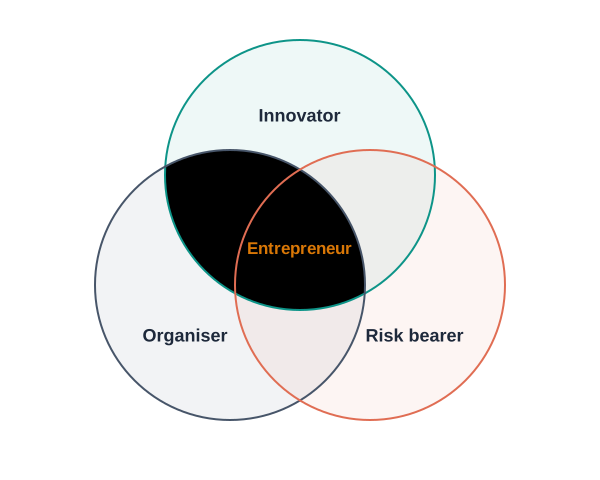
Fig. 13.1 – The three roles of an entrepreneur.
While performing these three roles, an entrepreneur does significant tasks both for the self and for society. As an innovator, an entrepreneur is the person who brings new products into the market.
As an organiser, he or she arranges the factors of production — land, labour, capital and enterprise — in order to take advantage of an opportunity that exists in the market. Bringing these factors together at the right time and in the right proportion is itself a skill.
Finally, as a risk bearer, he or she shoulders all the uncertainties associated with the venture. If the product fails to sell, or a batch is rejected, or a competitor arrives first, the loss falls on the entrepreneur.
13.1.1 Importance of entrepreneurship
Entrepreneurship is widely regarded as the best way to augment the growth of an economy. Entrepreneurs have played a significant role in developing some of the finest economies of the world, such as those of the USA and Japan.
India, too, has had several communities who have played a significant role as entrepreneurs in the economic development of the nation. Entrepreneurs are the prime movers of innovation and the introducers of new products into the market, and therefore play a key role in improving the lives of our societies.
Enumerating the importance of entrepreneurship, we see that entrepreneurs:
help in capital creation by bringing together the resources of the people. Money that would otherwise lie idle in scattered savings is pooled and put to productive use.
are employment creators, and their role here is pivotal. By creating employment opportunities, the standard of living of people increases and the purchasing power of the people also augments. Higher purchasing power in turn creates fresh demand, which supports still more enterprises.
help in developing the total community. If employment is diversified among small entrepreneurial units, it promotes an overall standard of living, leading to stability and a higher quality of community life. A region that depends on many small units is also less shaken when any one of them fails.
Entrepreneurship is regarded as the panacea for the unemployed in an economy. Self-employment empowers an individual and helps in bringing about the social change needed for community development.
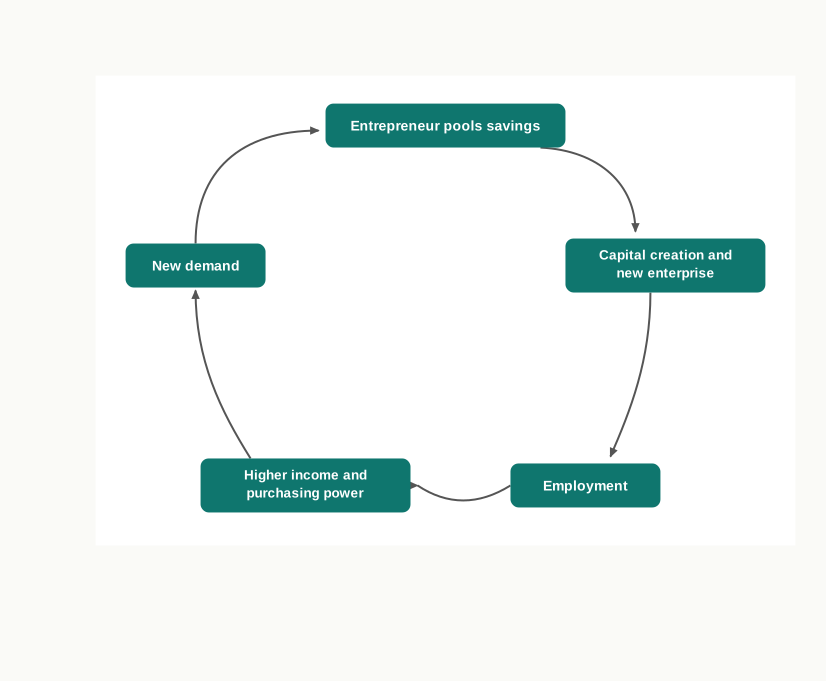
Fig. 13.2 – Economic impact cycle of entrepreneurship.
13.1.2 Qualities of a successful entrepreneur
India has had some of the finest entrepreneurs in history, people who laid the foundation of the Indian economy. Looking at them together, we can see that they all possess certain distinct qualities, some of which are summarised below.
Initiative: Being an innovator is a significant characteristic of an entrepreneur. The entrepreneur takes initiative at the right time to launch a venture, enduring all the struggles that come with the initiation of anything new.
Knowledge and skill: An entrepreneur is a skilled individual who possesses the relevant knowledge relating to the industry, the economy, consumer choices, technology and so on, along with a sense of the prospects of growth for these in the future.
Risk taker: An entrepreneur is ready to take the uncertainties associated with the enterprise. An entrepreneur has the foresight to accept the long-term prospect of success for the enterprise, and in doing so is ready to withstand the short-term risks associated with the venture.
Adaptability: An entrepreneur is adaptable to the changing business environment. As the business starts and grows, they constantly monitor the business environment and adapt themselves to the changes taking place in it.
Self-confidence: An entrepreneur is confident of the decisions they take. This self-belief is a key factor that makes entrepreneurs successful, and it acts as a catalyst in making them take up risks.
Wealth creators: Entrepreneurs are wealth creators who translate great ideas into commercial success. Those who succeed after taking these risks turn out to be wealth creators for themselves and for the nation they belong to, by providing valuable employment opportunities to the people. It is seen, therefore, that every successful and economically developed nation has nurtured and promoted the entrepreneurial spirit among its people.
Reading the Qualities Together
These six qualities are not a checklist to be memorised in isolation; they support one another. Knowledge and skill make risk-taking a calculated decision rather than a gamble, and self-confidence is what converts that calculation into action.
Adaptability then keeps the venture alive after launch, because the market a founder studied in year one is rarely the market of year five. Wealth creation is the outcome when the first five qualities hold together long enough.
As students, we sometimes ask ourselves, “Why am I learning this? Will I ever use it in real life?” If your goals resemble those of Dr Krishna M. Ella — to create large positive changes through scientific innovation — then you very well might. Dr Ella is the Chairman and Managing Director of Bharat Biotech International Limited (BBIL), which he co-founded with his wife in 1996 in Hyderabad, Telangana. He came from a rural background, born in the village of Nemili in Tamil Nadu, and began his early education in the same village. He completed his higher schooling and an intermediate course in Life Sciences from Madras, followed by higher degrees in Agriculture from Maharashtra and later from Karnataka. To gain marketing experience, he also worked with the Agricultural Division of a pharmaceutical company in India. On a scholarship, he pursued a Master of Science degree specialising in Plant Pathology at the University of Hawaii, and then a doctoral programme at the University of Wisconsin, Madison. After his Ph.D. in 1993, he joined the Medical University of South Carolina, Charleston, where he shifted from plant pathology to human and yeast molecular biology. While carrying out his regular research, he began thinking of innovative ideas for the development and production of a recombinant Hepatitis B vaccine. In 1996, Dr Ella returned to India and, encouraged by his wife and his mother, set up a small laboratory in Hyderabad. Their prime objective was to innovate in the development of affordable vaccines and biotherapeutics. As they wanted India to be known as a country that innovated, the name ‘Bharat Biotech International Ltd.’ was chosen. BBIL was established in 1997 in Hyderabad with funds and assistance from angel investors. Since its inception, BBIL has produced over 4 billion doses of various human vaccines against diseases such as Hepatitis B, rabies, diphtheria, rotavirus and coronavirus, most of them for the Universal Immunisation Programme of India and for more than 120 developing countries, safeguarding global public health. COVAXIN® is Bharat Biotech’s 17th vaccine and the first COVID-19 vaccine made in India. Dr Ella and his team developed COVAXIN®, an inactivated whole-virus adjuvanted vaccine, in a record time of just eight months. It has been in use as a life-saving vaccine against the COVID-19 pandemic since December 2020, across India and in many other developing countries, and the WHO has also approved COVAXIN for emergency use against COVID-19. Dr Ella once said that solving today’s problem is not innovation; innovation is the ability to predict the future problem and find solutions to something that matters to public health. He believes strongly in the potential of the coming generation of students to shape the future of India, and reminds them that focusing on academic performance today can yield a better life for themselves and for everyone around them. Many years from now, a new generation of science students will read about a different entrepreneur in their textbook — and it could be you. (Courtesy: Bharat Biotech International Limited (BBIL))
13.1.3 Difference between Entrepreneur and Intrapreneur
Entrepreneur and intrapreneur share similar values — those of innovation and creativity — and the two words are often used interchangeably. However, they have distinctive differences that are worth keeping clear.
An entrepreneur is a person who takes risks to start a business venture in order to earn profit. Such a person foresees the opportunities for products and services and coordinates the factors of production to establish an enterprise.
An intrapreneur, on the contrary, is an employee of an organisation who promotes innovation among the employees of the organisation. Intrapreneurs are hired to bring about success in a business venture that already exists.
13.1.4 Planning and Resourcing an Enterprise
Planning and resourcing an enterprise are the critical steps in transforming a business idea into a sustainable venture. An idea by itself does not become a company; it has to be given a shape and then given the means to run.
Planning involves setting clear objectives, defining the business model, analysing the market, and outlining strategies for operations, marketing and growth. It also includes identifying potential risks and devising contingency plans to address them, so that a predictable setback does not become a fatal one.
Resourcing focuses on securing the necessary inputs to support the business — financial capital, skilled personnel, technology, raw materials and infrastructure. In a biotechnology venture these inputs are unusually specific: a particular cell line, a particular grade of reagent, a trained microbiologist, a sterile facility.
This process requires evaluating resource availability, working out sourcing strategies, and checking cost-effectiveness, all while ensuring alignment with the enterprise’s goals. Effective planning and resourcing together ensure that the enterprise is well prepared to navigate challenges, leverage opportunities and achieve long-term success. The overall sequence is summarised in Fig. 13.3.
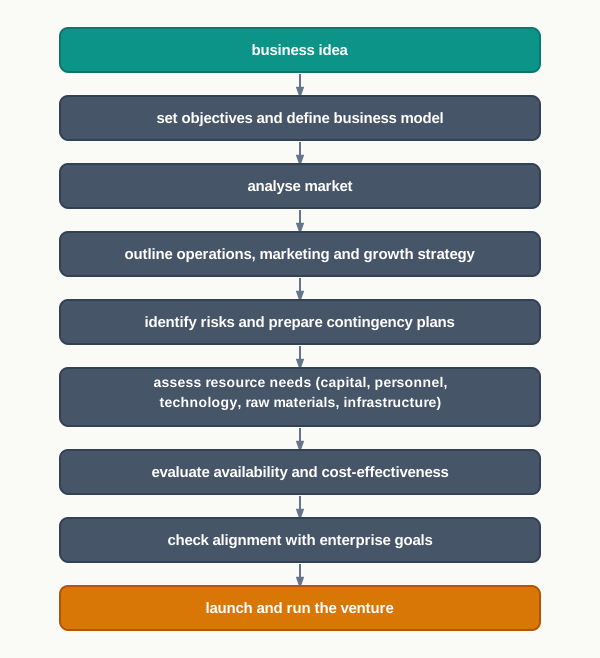
Fig. 13.3 – From idea to sustainable venture.
13.2 Sources of Funds
An idea, a team and a plan still leave one question unanswered: who pays for the first two years, when money goes out and nothing comes in? For a biotechnology venture this question is sharper than usual, because equipment, reagents and trials all cost money long before a single unit is sold.
What Counts as a ‘Start-up’
In entrepreneurial terminology, the term ‘Start-up’ has become a popular word. It is not merely a fashionable name for any new business — in India it has a precise legal meaning, because certain benefits and support are attached to it.
Under the Startup India Action Plan, startups that meet the definition prescribed under G.S.R. notification 127 (E) dated 16 January, 2019 are eligible to apply for recognition under the programme. The startups have to provide supporting documents at the time of application.
Eligibility criteria for startup recognition:
The startup should be incorporated as a private limited company, or registered as a partnership firm or a limited liability partnership. An unregistered venture, however innovative, cannot apply.
Turnover should be less than INR 100 crores in any of the previous financial years. Once a business grows beyond this size, it is no longer treated as a startup needing special support.
An entity shall be considered a startup up to 10 years from the date of incorporation. This relatively long window matters greatly in biotechnology, where a product can take several years to reach the market.
The startup should be working towards innovation or improvement of existing products, services and processes, and should have the potential to generate employment and create wealth. An entity formed by splitting up or reconstruction of an existing business shall not be considered a ‘Startup’.
Read condition (d) carefully, because it is the one most often missed in examinations. The last sentence exists to prevent a large company from breaking itself into pieces and claiming startup benefits for each piece.
Six Sources of Financing a New Venture
Money for a new venture can come from six recognised sources, shown together in Fig. 13.4. Each source suits a different stage and carries a different cost.
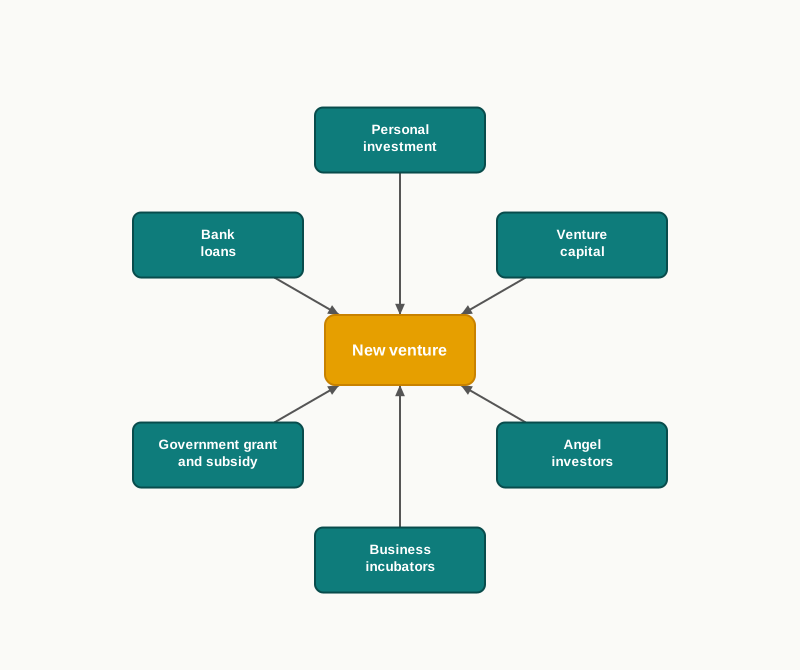
Fig. 13.4 – Six sources of financing a new venture.
1. Personal investment. The first investor in a business is the entrepreneur himself or herself. By putting in his or her own money, the entrepreneur proves to bankers and to other investors a long-term commitment to the venture. Outsiders reason, quite fairly, that a founder unwilling to risk personal money cannot expect others to risk theirs.
2. Venture capital. Venture capitalists are investors who look for technology-driven enterprises and companies that have a high growth potential. Some of the high growth potential sectors are Information Technology, Biotechnology, and the like. The venture capitalists take an equity position in the company in order to help in developing a high-risk venture. Taking an equity position means they become part-owners rather than lenders. They look for a high return on investment once the business is developed, after which they may exit.
3. Angel investors. Angel investors are generally wealthy individuals who invest in promising startups. These investors are very often leaders in their own fields, and they invest money, ideas and experience in promising ventures. They tend to finance the early stages of a business — the stage at which a bank would usually see nothing worth lending against. Bharat Biotech, described in the previous section, was established with funds and assistance from angel investors.
4. Business incubators. Business incubators, also called accelerators, are investors who support the high-tech sector by giving support at various stages of development. There are incubation centres in academic institutions and in industrial cooperatives as well. The incubation phase generally lasts for two years only. For a biotech founder, an incubator often supplies something more valuable than money — laboratory space, instruments and mentoring that would otherwise be unaffordable.
5. Government grant and subsidy. Government agencies provide financing such as grants and subsidies in order to promote business. Unlike equity investment, a grant usually does not have to be repaid and does not take away ownership, which makes it particularly attractive in the early research stage.
6. Bank loans. These are the most commonly used source of funding business ventures. To be eligible for a bank loan, a good idea by itself is not enough; it should be complemented by an appealing business plan. Loans for start-ups typically require a personal guarantee from the entrepreneur.
Ownership Money and Borrowed Money
The six sources fall into two families, and telling them apart is the key to the whole section. Angel investors and venture capitalists supply equity — they buy a share of ownership and are repaid only if the company becomes valuable. Banks supply debt — they lend a fixed sum that must be repaid with interest whether the venture succeeds or not.
This distinction explains why a young biotech firm leans so heavily on equity in its early years. A bank needs repayment to begin soon; an equity investor is willing to wait for years, because the reward is a share in a much larger future value.
A typical funding journey is summarised in Fig. 13.5. The order is not a rule, and many ventures skip stages, but the general direction is from the founder’s own pocket towards larger and more formal sources as the risk falls.
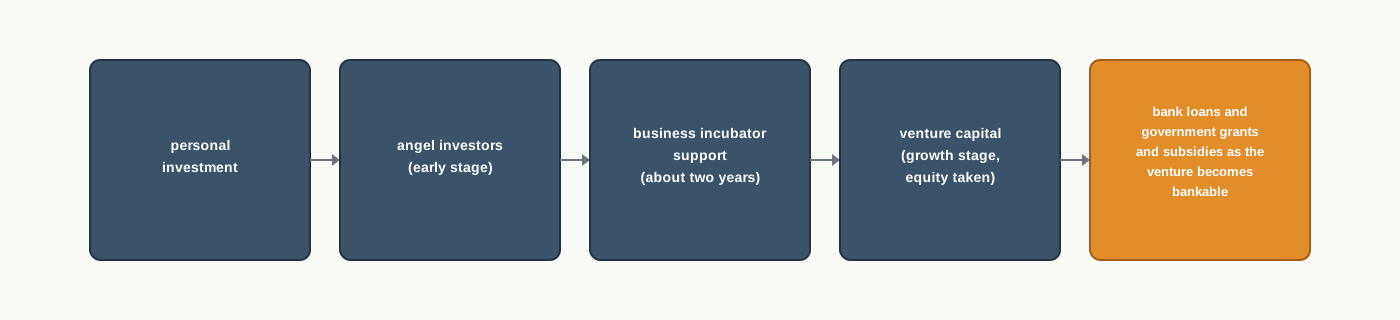
Fig. 13.5 – Typical funding journey of a new venture.
13.3 Entrepreneurship in Biotechnology
13.3.1 Significance of Biotechnology Entrepreneur
Biotechnology entrepreneurship consists of all the activities that an entrepreneur does to build and sustain an enterprise based on biotechnological innovation. It is an enterprise built by the amalgamation of science and business.
The word amalgamation is worth pausing on. The science does not simply supply raw material to the business; the two have to be merged, so that a laboratory decision and a commercial decision are taken with each other in mind.
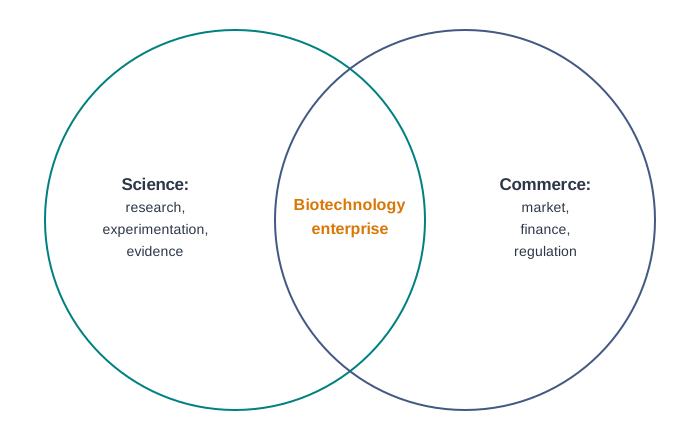
Fig. 13.6 – Amalgamation of science and commerce.
How Experts Have Defined It
Some definitions of Biotechnology Entrepreneurship given by experts are as under.
Damian Hine and John Kapeleris (2006) begin from the science itself. By accepted definition, ‘Biotechnology’ involves the use of living organisms, or parts of living organisms, through biological processing, to develop new products or to provide new methods of production.
A.D. Meyers (2008) elaborated the concept of bio-entrepreneurship as the process of creating value from life science innovation. He noted that it goes by several names — bioscience entrepreneurship, life science entrepreneurship or bioscience enterprise — but that whatever the descriptor, the fundamental notion is about moving a life science discovery or invention from the research phase, through development, to a commercial market.
Notice the three-stage journey hidden in that definition: research → development → market. A discovery that stops at the first stage may be excellent science, but it is not yet bio-entrepreneurship.
Why Biotech Entrepreneurs Start Companies
Biotech entrepreneurs are the backbone of the biotech industry. They are the innovators with a vision that their idea will impact the life of the masses for the better. Biotech entrepreneurs start companies for the reasons given as under:
Biotech entrepreneurs believe that their ideas can solve a real-life problem of people around the world.
Biotech entrepreneurs are found to be altruistic in nature while starting their enterprise, that is, they are motivated by the good their product can do for others.
Financial rewards are also motivators, to prove to the world that their discoveries can be commercial successes.
13.3.2 Assimilation of two distinctly different disciplines
Biotechnology is pure science, which, when it takes the form of an enterprise, becomes commerce — a distinctly different discipline altogether. This intertwining of two disciplines can be a challenge for first-time entrepreneurs.
Scientific research requires academic skill in the subject, while setting up a biotechnology enterprise demands knowledge of economic conditions, decision-making ability and risk-taking ability. A founder trained only in the laboratory has to acquire the second set of skills, or find partners who already have them.
A comparison between a General entrepreneur and a Biotech entrepreneur is given in Table 13.1.
Reading the Table Carefully
The first three rows are identical for both. A competitive idea, an experienced team and perseverance in the face of risk are demanded of every entrepreneur, whatever the field. This is worth remembering, because examination questions often ask for the similarities as well as the differences.
The remaining five rows are where biotechnology stands apart, and each difference has a scientific reason behind it. The gestation period — the waiting time between starting work and earning revenue — is high because a biological product must be developed, tested, and cleared before it can be sold.
The degree of uncertainty is doubled. An ordinary business faces market uncertainty; a biotech venture faces market uncertainty plus scientific uncertainty, because an experiment can fail for reasons no business plan could have predicted.
Capital requirement is high for the same reason. Sterile facilities, bioreactors, cold storage, reagents and trained staff all have to be paid for through the long gestation period, while nothing is being sold.
The relevance of academic qualification is very high because the product cannot be understood, improved or defended without deep subject knowledge. Finally, the regulatory framework is stringent because the product acts on living systems — human patients, crops, or the environment — where a mistake can cause real harm.
13.3.3 Process of starting a Biotech enterprise
Starting an enterprise requires intense planning and does not happen without a proper roadmap in place. The element of ‘chance’ should be avoided, and a rationale should be present for every action taken while starting an enterprise.
As the words of Louis Pasteur go, “chance only favors the prepared mind”. An entrepreneur must be prepared for the outcome of his actions. This is true for all enterprises, and also for biotech entrepreneurs. The following six steps are critical to starting a biotech enterprise, and their order is summarised in Fig. 13.7.
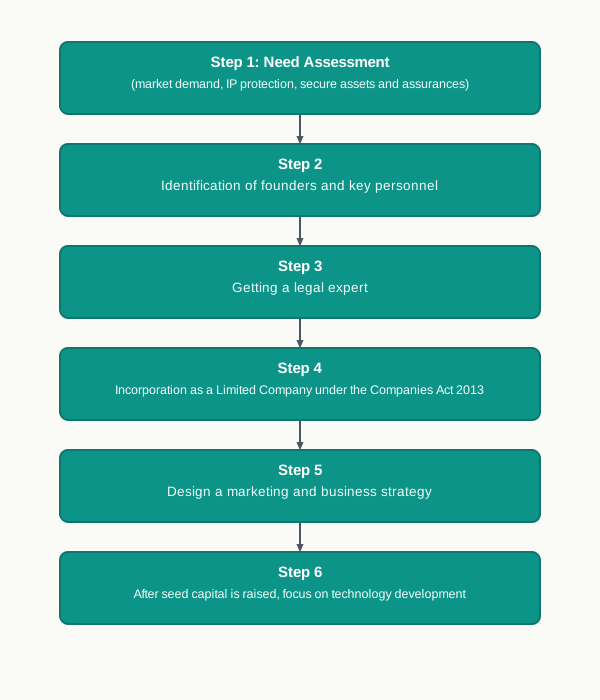
Fig. 13.7 – Six steps to starting a biotech enterprise.
Step 1: Need assessment
The entrepreneur should conduct a thorough assessment of the market demand for the product. The entrepreneur must be absolutely sure that there is a real market need for the product to be offered.
Also, one has to be sure that the technology of interest is protected by intellectual property (IP) — the legal rights that allow the creator of an invention to stop others from copying it, discussed in detail in the next section. Without this protection, a competitor with more money could simply reproduce the product.
Finally, the entrepreneur needs to secure the assets, the IP rights and assurances from the inventors and key personnel, in case the promoter is not the only one involved in the business. Doing this at the start prevents disputes later about who owns what.
Step 2: Identification of founders and key personnel
A new entrepreneur must look for like-minded individuals who can join the team and bring the idea into reality. Generally, we see that a new entrepreneur works collectively with a team of people with expertise in diverse disciplines.
This diversity is not accidental. A biotech venture needs research skill, production skill, regulatory understanding and financial sense together, and no single person carries all four. Selecting this key group of people is a challenge, yet this group is indispensable to the success of an entrepreneurial idea.
Step 3: Getting a legal expert
This individual is a key partner. A legal advisor will be the individual the promoter will go to for advice and guidance.
The legal expert will help the promoter move through the corporate and business issues during all the stages of establishing and growing the company — from registration and contracts to IP filings and regulatory compliance.
Step 4: Incorporation as a Limited Company
It is advisable for the entrepreneurs of biotechnology-based start-ups to register their companies as Private Limited Companies under the provisions of the Companies Act 2013.
The reason lies in the nature of the business, which demands high capital investment and an above-average gestation period. A Limited enterprise would be the best fit for a biotechnology start-up, because this structure makes it possible to raise money from investors while limiting how much any one owner can lose.
Step 5: Design a marketing and business strategy
A well-designed business and marketing strategy are the next requirements. It will not be possible to raise money unless the strategy clearly describes the market problem and the need for the product, how the new product will solve that need, how much money the new product will generate, how the fund generated will be utilised, and the expected return on investment.
Each of these five points answers a question an investor is certain to ask. A strategy that leaves any one of them vague is, in practice, a strategy that does not get funded.
Step 6: After the seed capital is raised, the technology development should be the focus
Once the seed capital — the initial money that carries the venture from idea to working product — has been raised, attention must shift to the science.
It is important to highlight the key product development milestones in biotechnology ventures. The product is the pivot in a biotech enterprise, and hence innovation in it must be consistent, in order to keep market sentiments positive so that the enterprise can establish itself and grow.
13.4 Concept of IPR
The proprietary aspect is the key feature of biotechnology of modern times. ‘Proprietary’ simply means owned — the idea that a particular invention belongs to a particular person or company, who may decide who else can use it.
In the past, innovations in biotechnology came out only of publicly funded laboratories, where the results were shared openly. In present times, biotech innovations are well protected within the legal framework of Intellectual Property Rights (IPR).
The change matters commercially. A biotech venture that has spent years and crores of rupees developing a product has almost nothing physical to protect — the value lies in knowledge, which can be copied in a day unless the law prevents it.
The International Framework
With the Trade Related Aspects of Intellectual Property Rights (TRIPS) Agreement of the World Trade Organisation (WTO), Intellectual Property Rights attained the authority to enforce the law internationally.
This was a significant shift. Before it, protection stopped at a country’s border, so an invention protected in one country could be freely copied in another. According to TRIPS, the intellectual property rights are as listed below, and their range is shown in Fig. 13.8.
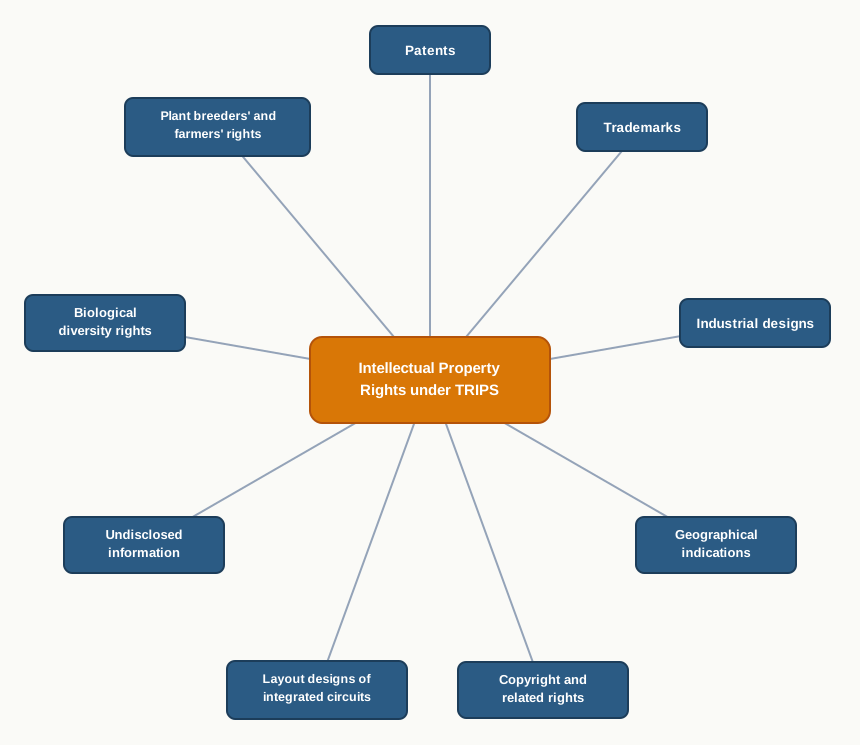
Fig. 13.8 – Intellectual Property Rights under the TRIPS Agreement.
Rights of artists, painters, musicians, sculptors, photographers and authors for copyright in their works.
Rights of computer programmes, whether in source or object code, for a copyright in their programmes and compilation of data.
Rights of performers, producers of phonograms and broadcasting organisations in respect of fixation on their programmes for copyright in their work.
Right of traders in their trademarks.
Right of manufacturers and producers on geographical indication in relation to such products and produce.
Right of designers for their distinctive design striking to the eye.
Right of the inventor for patent of his or her invention.
Rights of plant breeders and farmers.
Rights of biological diversity.
Right of computer technologists for their layout design of integrated circuits.
Right of businessmen for protection of their undisclosed information on technology and management.
13.4.1 The aspects of IPR involved in Biotechnology
Of the eleven categories above, five matter most to a biotechnology enterprise: patents, plant breeders’ and farmers’ rights, trademarks, copyright and trade secrets. Each is taken up below.
(a) Patent
The Patents Act 1970, along with the Patents Rules 1972, came into force on 20th April 1972, replacing the Indian Patents and Designs Act 1911.
The Patents Act was largely based on the recommendations of the Ayyangar Committee Report, headed by Justice N. Rajagopala Ayyangar. One of the recommendations was the allowance of only process patents with regard to inventions relating to drugs, medicines, food and chemicals.
The distinction is important. A process patent protects only the particular method of making a substance, so another company may make the same substance by a different route. A product patent protects the substance itself, whoever makes it and however.
Later, India became a signatory to many international arrangements with the objective of strengthening its patent law and coming in league with the modern world. One of the significant steps towards achieving this objective was becoming a member of the TRIPS system.
Being a signatory to TRIPS, India was under a contractual obligation to amend its Patents Act to comply with its provisions. India had to meet the first set of requirements on 1 January 1995, to give a pipeline protection till the country started granting product patents.
Section 5, an important section of the Indian Patent Act, 1970, was deleted by the 2005 Amendment Act to allow product patents in the area of biotechnology, chemicals and pharmaceuticals. From that point, an Indian biotech company could protect the molecule itself, not merely one way of making it.
The three criteria and the negative list
The basic criteria for a patent to be granted are novelty, non-obviousness (inventive step) and utility. Novelty means the invention must be new; non-obviousness means it must not be an obvious next step for a skilled person in that field; utility means it must be useful in practice.
For a patent to be granted in India, the invention should also not be covered in the negative list in Section 3, which provides an extensive list of what are not considered as inventions under the Indian Patents Act. In addition, inventions related to DNA molecules or sequences must not be contrary to public order and morality. The whole test is summarised in Fig. 13.9.
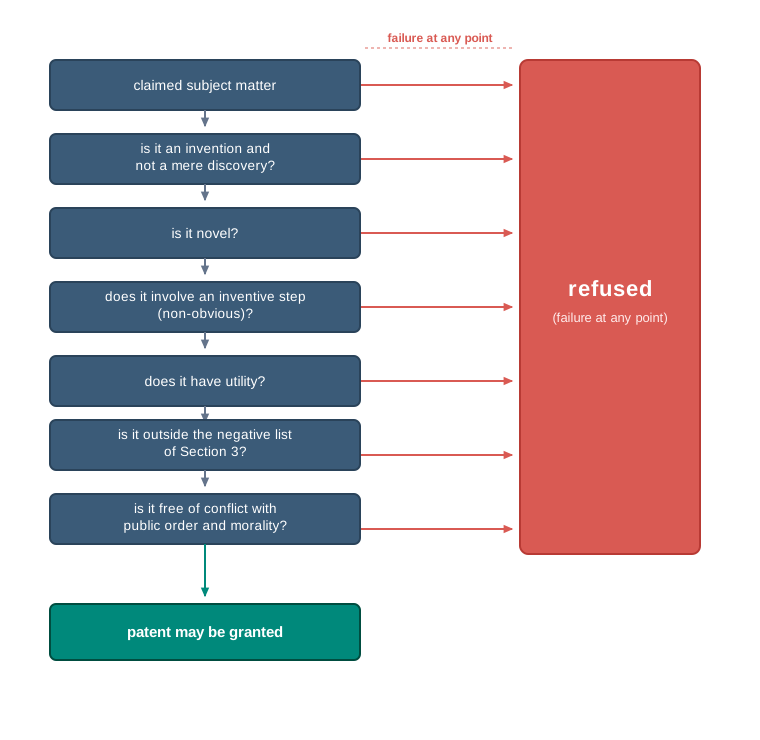
Fig. 13.9 – Testing an invention for an Indian patent.
Why obviousness is a hard test in biotechnology
The biotechnology industry is devoted to the development of commercially valuable therapeutic, biochemical and pharmaceutical products and processes, among others. Many of these products and processes revolve around the manipulation of DNA molecules and the proteins they encode.
In the last thirty years, great strides have been made in the field of biotechnology, and particularly in recombinant DNA research. However, with this progress has come a degree of uncertainty regarding the obviousness of certain biotechnological inventions.
For example, procedures for cloning genes and transporting them between organisms have become commonplace. The accessibility of these methods, together with the central doctrine of molecular biology — that DNA is transcribed into RNA, which in turn is translated into functional or structural protein molecules — has created a somewhat disarrayed legal structure.
The difficulty is this: once the sequence of a gene is known and the central dogma is understood, the protein it encodes follows predictably. A court then has to decide whether obtaining that protein was a genuine inventive step, or merely an obvious application of what every trained molecular biologist already knows.
Inventions and discoveries are not the same
In India, only inventions are patentable, while discoveries are not. There is a clear distinction between the two, as the law specifies that only inventions create patentable subject matter.
Indian patent law provides for a demonstrative list where it has mentioned the subjects that are not patentable. Any subject matter which does not fall within the domains of that demonstrated list does establish a patentable subject matter. The list has been updated and altered to comply with the provisions of TRIPS.
(b) Plant Breeder’s Rights and Farmer’s Variety Act
Plant breeder’s rights (PBRs) are used to protect new varieties of plants by giving exclusive commercial rights, for about 20–25 years, to market a new variety or its reproductive material.
To qualify, the variety must be novel, distinct, uniform and stable. Each condition has a practical purpose: novelty ensures it is genuinely new, distinctness ensures it can be told apart from existing varieties, uniformity ensures the plants of the variety are alike, and stability ensures those characters are retained generation after generation.
This protection stops anyone from growing or selling the variety without the permission of the owner. Exceptions may be made, however, for both research and the use of seed saved by a farmer for replanting.
The second exception deserves attention. It preserves the traditional practice of saving seed from one harvest for the next, so that protection of the breeder does not come at the cost of the farmer’s long-established right.
(c) Trademark
A trademark is what allows a buyer to know whose product is in the packet. For a biotech company, the brand name on a vaccine vial or a seed bag carries the reputation built over years, and the law protects it separately from the invention inside.
The Trademark Act, 1999, under Section 2 (zb), defines a ‘trade mark’ as a mark that can be represented graphically and that is capable of distinguishing the goods or services of one person from those of others, and which may include the shape of goods, their packaging and a combination of colours.
Besides this, the Act also provides the definition of ‘mark’ under Section 2(m), which enumerates a mark to include a device, brand, heading, label, ticket, name, signature, word, letter, numeral, shape of goods, packaging or combination of colours, or any combination thereof.
Two essential ingredients for Trademark registration
The mark is capable of being represented graphically.
It is capable of distinguishing the goods and services of one person from those of others.
(d) Copyright
Copyright is a right given by the law to the creator of literary, dramatic, musical and artistic work, and to the producers of cinematograph films and sound recordings.
In fact, it is a bundle of rights including, inter alia, rights of reproduction, communication to the public, adaptation and translation of the work. There could be slight distinctions in the alignment of these rights depending on the work concerned.
In a biotechnology enterprise, copyright covers such things as the software written for laboratory instruments or data analysis, technical manuals and training material — not the biological invention itself.
Some of the exclusions are the uses of the work —
for the purpose of research or private study
for criticism or review
for reporting current events
for judicial proceeding
for performance by an amateur club or society, if the performance is given to a non-paying audience
for the making of sound recordings of literary, dramatic or musical works under certain conditions
(e) Trade Secrets
In India, trade secrets refer to confidential business information — such as formulas, processes, designs or methods — that provides a competitive advantage and is kept secret by a company.
Unlike patents or trademarks, trade secrets are not registered. Their protection depends on the company’s ability to maintain confidentiality through internal measures, like non-disclosure agreements (NDAs) and secure information practices.
Although India does not have a specific law dedicated to the protection of trade secrets, they are safeguarded under Indian contract law (such as through NDAs and confidentiality clauses) and tort law, which allows for remedies in cases of unauthorised use or disclosure.
The TRIPS Agreement, to which India is a signatory, mandates member countries to protect undisclosed information that has commercial value, as long as reasonable steps are taken to maintain its secrecy. The condition in that last clause is important: a company that is careless with its own secret cannot later ask the law to treat it as one.
In India, the legal protection for trade secrets is primarily enforced through civil suits for breach of contract or misappropriation, with remedies such as damages or injunctions. India’s legal framework is also aligned with international standards under TRIPS, although trade secret protection in India is more reliant on contract law than on dedicated trade secret legislation.
13.5 Biopiracy
The previous section showed how intellectual property rights reward an inventor. This section looks at what happens when those same rights are claimed over something that was never invented by the claimant at all.
When there is commercial exploitation of biochemicals or genetic materials which occur naturally, it is known as biopiracy. The word joins ‘bio’ with ‘piracy’ precisely because something of value is being taken from those to whom it belongs.
Traditional Knowledge and Why It Is Vulnerable
Generally, indigenous people have a traditional understanding of the biological features and genetic diversity of the natural environment, passed on from one generation to another. This knowledge is usually held in common, taught by practice rather than by publication.
Few of the traditional knowledge areas relevant to global survival have the elements listed below:
Farming or agriculture
Medicinal plants
Varieties of food crops
The vulnerability comes from the very way this knowledge is held. Patent law asks whether an invention is new, and it looks for the answer in written records. Knowledge carried in oral tradition and daily practice for centuries may therefore appear, to a patent examiner in another country, to be new.
Cases of Infringement
There have been cases of infringement of rights towards traditional materials in recent times. Three of them are described below, and their sequence is shown in Fig. 13.10.
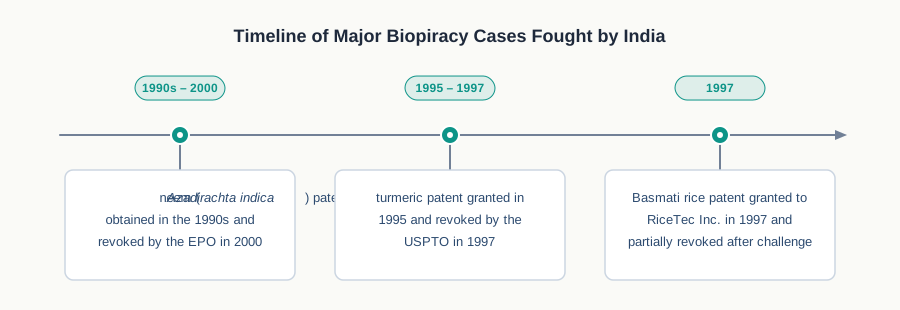
Fig. 13.10 – Timeline of three major biopiracy cases.
The neem case
The biopiracy case of the neem tree (Azadirachta indica) highlights how multinational corporations exploited traditional knowledge. Native to India, neem has been used for centuries in traditional medicine and agriculture for its antimicrobial and pesticidal properties.
In the 1990s, W.R. Grace and Co. and the United States Department of Agriculture obtained a patent for neem oil extraction and its use as a pesticide, claiming it as a novel invention despite its well-documented traditional use.
In 2000, the EPO revoked the patent. This marked a victory for indigenous knowledge and set a global precedent against biopiracy, while emphasising the need to protect biodiversity and the rights of local communities.
The turmeric case
The biopiracy case of turmeric involved the patenting of its traditional use in wound healing, a practice well known in Indian culture for centuries.
In 1995, two researchers from the University of Mississippi Medical Center were granted a U.S. patent for using turmeric powder to heal wounds, claiming novelty in their application. This sparked outrage, as turmeric’s medicinal properties were part of India’s ancient Ayurvedic knowledge.
The Indian Council of Scientific and Industrial Research (CSIR) challenged the patent, presenting documented evidence from ancient texts and publications showing that turmeric’s wound-healing properties were already well established. In 1997, the U.S. Patent and Trademark Office (USPTO) revoked the patent, recognising the lack of novelty.
This case became a landmark victory in the fight against biopiracy, emphasising the need to safeguard traditional knowledge and prevent its unjust appropriation by corporations. Note carefully what won the case: not outrage, but documentation.
The Basmati rice case
The biopiracy case of Basmati rice involved the U.S.-based company RiceTec Inc., which, in 1997, was granted a patent by the United States Patent and Trademark Office (USPTO) for certain strains of Basmati rice and methods of breeding them.
Basmati, a variety of aromatic long-grain rice, is traditionally grown in the Indian subcontinent and is deeply tied to the cultural heritage and agricultural practices of India and Pakistan.
The patent allowed RiceTec to label their rice as “Basmati” in international markets, threatening the livelihood of Indian farmers and undermining the unique geographic identity of traditional Basmati.
The Indian government and advocacy groups strongly opposed the patent, arguing that Basmati rice and its qualities were a product of traditional agricultural knowledge and not an invention. After a widespread international campaign, several claims in the patent were successfully challenged, leading to a partial revocation of the patent.
This case underscored the need for international mechanisms like Geographical Indications (GIs) to protect traditional products, and highlighted the importance of combating biopiracy to preserve the rights of local farmers and communities.
Preventing Biopiracy: The TKDL
All three cases share a pattern, summarised in Fig. 13.11. In each, a patent was granted abroad, challenged with documented proof of prior use, and then revoked wholly or partly. Every one of those challenges was slow and expensive.
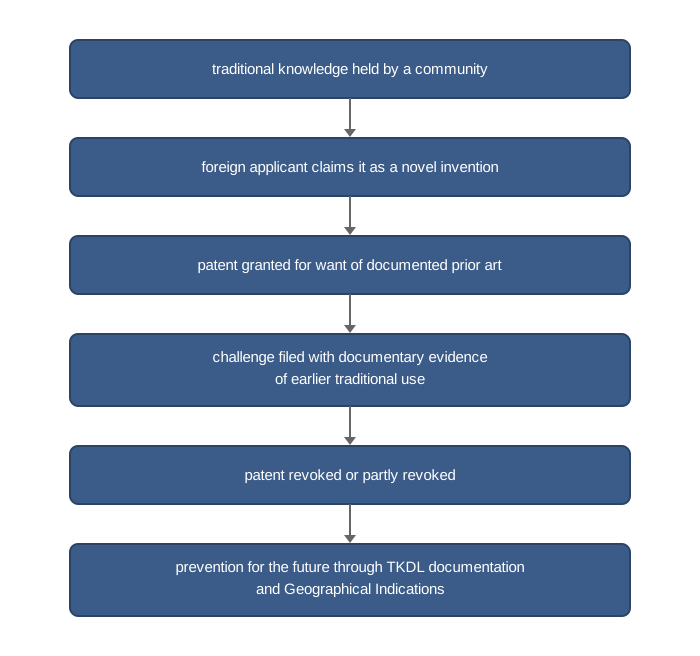
Fig. 13.11 – How a biopiracy case unfolds.
In order to curb the biopiracy of traditional medicines, the Traditional Knowledge Digital Library (TKDL) has been set up. It is a pioneering initiative of India to prevent the misappropriation of the country’s traditional medicinal knowledge at International Patent Offices.
Its beginning dates back to the Indian effort on revocation of the patent on the wound-healing properties of turmeric at the USPTO. The lesson of that fight was turned into a system: instead of contesting each wrong patent after it is granted, put the evidence of prior art where examiners can find it before granting one.
13.6 Summary
An entrepreneur is an individual who undertakes an activity after foreseeing a business opportunity. He or she organises the resources needed for starting the enterprise and also bears the risk involved in the process. The three prominent roles are those of an innovator, an organiser and a risk bearer.
Entrepreneurship is widely regarded as the best way to augment the growth of an economy. Entrepreneurs have played a significant role in developing some of the best economies of the world, such as those of the USA and Japan. In India also, several communities have played a significant role as entrepreneurs in the economic development of the nation.
Entrepreneurs help in capital creation, are pivotal creators of employment, and help in developing the whole community; entrepreneurship is therefore regarded as the panacea for the unemployed.
Entrepreneurs are seen to display certain inherent qualities: initiative, knowledge and skill, risk-taking, adaptability, self-confidence, and the ability to create wealth.
The two terms — entrepreneur and intrapreneur — are often used interchangeably, but each has a distinctive definition. An entrepreneur is a person who takes risks to start a business venture in order to earn profit. An intrapreneur, on the contrary, is an employee of an organisation who promotes innovation among the employees of that organisation.
Planning and resourcing turn a business idea into a sustainable venture. Planning sets objectives, defines the business model, analyses the market and prepares for risks; resourcing secures capital, skilled personnel, technology, raw materials and infrastructure.
In entrepreneurial terminology, the term ‘Startup’ has become a popular word. A startup should be working towards innovation or improvement of existing products, services and processes, and should have the potential to generate employment and to create wealth. An entity formed by splitting up or reconstruction of an existing business shall not be considered a ‘Startup’.
The sources of financing a new venture are six in number: Personal Investment, Venture Capital, Angel Investors, Business Incubators, Government Grant and Subsidy, and Bank Loans.
Biotechnology entrepreneurship consists of all the activities that an entrepreneur does to build and sustain an enterprise based on biotechnological innovation. It is an enterprise built by the amalgamation of science and business.
A general entrepreneur and a biotech entrepreneur are alike in needing a competitive idea, an experienced team and perseverance in the face of risk. They differ in that the biotech venture has a high gestation period, high capital requirement, a stringent regulatory framework, very high relevance of academic qualification, and scientific uncertainty in addition to ordinary business uncertainty.
There are six steps that are critical to starting a biotech enterprise: need assessment; identification of founders and key personnel; getting a legal expert; incorporating the company as a Limited Company; designing a marketing and business strategy; and focusing on technology development once seed capital is raised.
The proprietary aspect is the key feature of biotechnology in modern times. In the past, innovations in biotechnology came out only of publicly funded laboratories; in present times, biotech innovations are well protected within the legal framework of Intellectual Property Rights (IPR). The aspects of IPR involved in biotechnology are Patent, Plant Breeder’s Rights and Farmer’s Variety Act, Trademark, Copyright and Trade Secrets.
A patent is granted on the criteria of novelty, non-obviousness (inventive step) and utility. In India only inventions are patentable, while discoveries are not.
Biopiracy is a major issue in efforts to commercialise biotechnological knowledge. When there is commercial exploitation of biochemicals or genetic materials which occur naturally, it is known as biopiracy. Generally, indigenous people have a traditional understanding of biological features and genetic diversity of the natural environment, passed on from one generation to another.
There have been cases of infringement of rights towards traditional materials in recent times. A case of biopiracy by multinational corporations is that of the neem tree of India. Another case was when a patent was granted to researchers for the use of turmeric in wound healing, which was revoked later. Yet another case was when rice similar to Basmati was granted a patent in the USA, which was also revoked later.
In order to curb the biopiracy of traditional medicines, the Traditional Knowledge Digital Library (TKDL) has been set up, a pioneering initiative of India to prevent misappropriation of the country’s traditional medicinal knowledge at International Patent Offices.
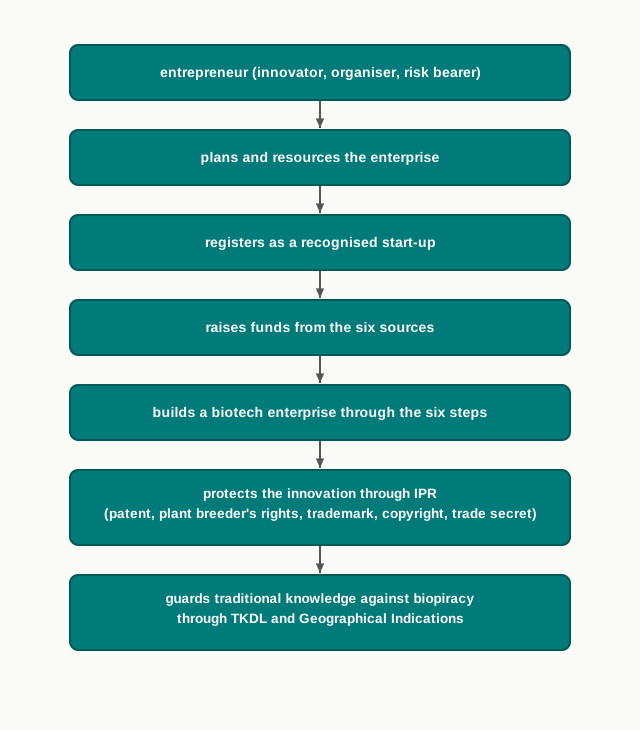
Fig. 13.12 – Entrepreneurship chapter at a glance.
13.7 Key Terms
Entrepreneur — An individual who undertakes an activity after foreseeing a business opportunity, organises the resources needed to start the enterprise, and bears the risk involved.
Entrepreneurship — The process by which individuals pursue opportunities without regard to the resources they currently control.
Innovator — The role in which an entrepreneur brings new products into the market.
Organiser — The role in which an entrepreneur arranges the factors of production to take advantage of a market opportunity.
Risk bearer — The role in which an entrepreneur shoulders all the uncertainties associated with the venture.
Factors of production — The inputs an entrepreneur brings together to run an enterprise, namely land, labour, capital and enterprise.
Capital creation — The pooling of scattered savings and resources of people so that they can be put to productive use in an enterprise.
Self-employment — Working in an enterprise of one’s own rather than for an employer, regarded as a remedy for unemployment.
Intrapreneur — An employee of an organisation who is hired to promote innovation among its employees, without personally bearing the risk of ownership.
Planning — Setting objectives, defining the business model, analysing the market, outlining strategy, and preparing contingency plans for identified risks.
Resourcing — Securing the inputs a business needs, such as financial capital, skilled personnel, technology, raw materials and infrastructure.
Start-up — An entity recognised under the Startup India Action Plan that is within ten years of incorporation, has turnover below INR 100 crores, and works towards innovation or improvement with the potential to generate employment and create wealth.
Startup India Action Plan — The Government of India programme under which eligible startups may apply for official recognition and its associated benefits.
Personal investment — The founder’s own money put into the venture, which demonstrates long-term commitment to bankers and other investors.
Venture capital — Investment made by financiers who take an equity position in high-growth, technology-driven enterprises and seek a high return before exiting.
Equity — A share of ownership in a company, given to an investor in place of fixed repayment.
Angel investor — A wealthy individual, often a leader in their own field, who invests money, ideas and experience in the early stages of a promising startup.
Business incubator — Also called an accelerator, an organisation that supports high-tech ventures with facilities and guidance during a phase that generally lasts about two years.
Government grant and subsidy — Financing provided by government agencies to promote business, usually without a requirement of repayment.
Bank loan — The most commonly used source of business funding, requiring an appealing business plan and typically a personal guarantee from the entrepreneur.
Debt funding — Borrowed money that must be repaid with interest whether or not the venture succeeds.
Seed capital — The initial money that carries a venture from an idea to a working product.
Biotechnology — The use of living organisms or parts of living organisms, through biological processing, to develop new products or provide methods of production.
Biotechnology entrepreneurship — All the activities an entrepreneur undertakes to build and sustain an enterprise based on biotechnological innovation, formed by the amalgamation of science and business.
Bio-entrepreneurship — The process of creating value from life science innovation by moving a discovery from the research phase, through development, to a commercial market.
Gestation period — The waiting time between starting work on a venture and earning revenue from it, which is high in biotechnology.
Regulatory framework — The system of official approvals and controls a product must pass through, which is stringent for biotechnology because its products act on living systems.
Need assessment — The first step in starting a biotech enterprise, in which real market demand is verified and the technology’s intellectual property protection is confirmed.
Private Limited Company — The company form advised for biotechnology start-ups under the Companies Act 2013, suited to high capital investment and long gestation.
Intellectual Property Rights (IPR) — Legal rights over creations of the mind that allow the owner to control who may use them, for a defined period and under defined conditions.
TRIPS — The Trade Related Aspects of Intellectual Property Rights Agreement of the World Trade Organisation, which gave intellectual property rights the authority to be enforced internationally.
Patent — A right granted to an inventor over an invention that satisfies novelty, non-obviousness and utility, and is not excluded by law.
Process patent — A patent that protects only a particular method of making a substance, leaving others free to make it by a different route.
Product patent — A patent that protects the substance itself, however and by whomever it is made.
Novelty — The requirement that a claimed invention must be new.
Non-obviousness (inventive step) — The requirement that an invention must not be an obvious next step to a person skilled in that field.
Utility — The requirement that an invention must be useful in practice.
Invention — Something new created by human effort, which alone can form patentable subject matter in India.
Discovery — Something already existing in nature that has now been found or described, and which is not patentable in India.
Plant breeder’s rights (PBRs) — Exclusive commercial rights, for about 20–25 years, over a new plant variety that is novel, distinct, uniform and stable.
Trademark — A mark capable of being represented graphically and of distinguishing the goods or services of one person from those of others.
Copyright — The bundle of rights given by law to the creator of literary, dramatic, musical and artistic works and to producers of films and sound recordings, covering reproduction, communication to the public, adaptation and translation.
Trade secret — Confidential business information, such as a formula, process, design or method, that gives a competitive advantage and is protected only so long as secrecy is maintained.
Non-disclosure agreement (NDA) — A contract used to keep confidential information secret, and the main practical means of protecting trade secrets in India.
Biopiracy — The commercial exploitation of naturally occurring biochemicals or genetic materials, and of associated traditional knowledge, without the consent of or benefit to the source community.
Traditional knowledge — Understanding of biological features and genetic diversity of the natural environment, held by indigenous people and passed from one generation to another.
Prior art — Documented evidence that a claimed invention was already known, which is what a patent office needs in order to refuse or revoke a patent.
Geographical Indication (GI) — A right identifying a product as originating from a particular place, whose quality or reputation is essentially due to that origin.
Traditional Knowledge Digital Library (TKDL) — A pioneering Indian initiative that documents traditional medicinal knowledge so that International Patent Offices can find the prior art and refuse wrongful patents.
13.8 Points to Ponder
An entrepreneur is described as innovator, organiser and risk bearer. If a person fulfils two of these roles but not the third, in what sense is the venture still theirs?
Entrepreneurship is called a panacea for the unemployed. Think about whether encouraging self-employment can, by itself, solve unemployment, or whether other conditions must be present for it to work.
Six qualities of a successful entrepreneur have been listed. Are these qualities something a person is born with, or can a school or college deliberately build them? What would such teaching look like?
An intrapreneur innovates without owning the risk. Consider what an organisation must offer to make a talented person choose that role rather than starting out on their own.
Biotechnology ventures carry scientific uncertainty in addition to business uncertainty. Reflect on how a founder should decide when to abandon a line of research that has consumed years of investment.
The high capital requirement of biotech enterprises means that early money usually comes from equity rather than loans. Consider what a founder gives up in exchange, and whether that exchange is always worth making.
A patent requires that an invention be disclosed publicly, while a trade secret requires that it be concealed. Both are legal ways to protect the same work. What does a company gain, and lose, by choosing each path?
Indian law holds that discoveries are not patentable but inventions are. In modern molecular biology, where does one honestly end and the other begin?
Plant breeder’s rights allow a farmer to save seed for replanting. Think about why this exception exists, and what would change for Indian agriculture if it were removed.
Patent protection is defended on the ground that without it nobody would fund expensive research. Consider whether the same argument holds for a medicine that is needed most by people least able to pay for it.
Traditional knowledge was vulnerable to biopiracy largely because it was undocumented. Now that the TKDL records it, consider what new questions arise about who controls that documented knowledge.
The neem, turmeric and Basmati patents were all challenged successfully, but only after they had been granted. Reflect on why prevention proved so much harder to achieve than reversal.
Dr Krishna Ella described innovation as predicting the future problem rather than solving today’s. Identify one health or agricultural problem you expect India to face twenty years from now, and consider what a biotech enterprise could begin doing about it today.
13.9 NCERT Questions
Define the term ‘entrepreneurship’. Describe its importance.
What are the qualities of an entrepreneur?
Differentiate between entrepreneur and intrapreneur.
What are the steps of preparing a feasibility report?
Define a ‘start-up’. What are the sources of funds for a new venture?
Elaborate the significance of a Biotechnology Entrepreneur.
Identify the similarities and differences between General Entrepreneur and Biotechnology Entrepreneur.
Explain the process of starting a Biotech Enterprise.
Explain the concept of IPR and aspect of IPR in Biotechnology.
Explain the role of IPR in Biotechnology Enterprise.
What are the three central criteria for grant of Patents of any scientific inventions?
‘Angel’ usually provide what type of financing?
- Debt
- Equity
- Stock Sales
- None of the above
- A patent is granted for a specified amount of time because of the assumption:
- That during this time, the firm will cover its development costs
- That firm will earn a sufficient profit during this period
- To limit the monopoly of the firm
- That it will stimulate the idea and development of a better product
- A short-term, internal source of funds can be obtained by reducing all of the following EXCEPT ______________.
- short-term assets
- cash
- fixed assets
- Inventory
- A typical researcher entrepreneur usually ___________.
- is highly creative and enjoys the process of research
- does not encourage change
- is not willing to take risk
- dislikes change
- Which of the following elements is NOT an important element of the financial data and projections section of a business plan?
- SWOT analysis
- Projected income statements
- Break-even analysis
- Cost controls
- Which of the following cannot be covered under the copyright protection?
- Computer software
- Computer hardware
- Poems and songs
- Models and sculpture
- Which of the following is false?
- A business plan is often prepared by an existing company to ensure that growth is properly managed.
- A business plan is usually not required when obtaining finance for a startup.
- If a business plan is completed for a start-up, it may help the entrepreneur avoid costly mistakes.
- All of the above.
- Which of the statements is/are true with respect to entrepreneurship?
- Entrepreneur is an individual who undertakes an activity foreseeing business opportunity.
- He/She organises resources needed for starting the enterprise and also bears the risk involved in the process.
- There are three prominent roles that an entrepreneur fulfils, that of an innovator, organiser and a risk bearer. Options:
- Only (i)
- Only (i) and (ii)
- Only (i) and (iii)
- (i), (ii) and (iii) are true
- Seed capital assistance is ______________________.
- a long-term assistance.
- initial assistance
- a help for the purchase of seeds.
- a short-term assistance.
- Which one of the following is a pioneering initiative of India to prevent misappropriation of country’s traditional medicinal knowledge at International Patent Offices?
- Traditional Knowledge Digital Library (TKDL)
- National Digital Library of India (NDLI)
- Digital Library of Open Access Books (DOAB)
- Universal Digital Library
13.10 Objective Questions
- The word ‘entrepreneur’ comes from the French word enterprendre, which means
- to invest
- to undertake
- to organise
- to innovate
- Which of the following is NOT one of the three prominent roles of an entrepreneur?
- Innovator
- Organiser
- Risk bearer
- Regulator
- Entrepreneurship was described as the pursuit of opportunity without regard to the resources currently controlled. This definition is attributed to
- Howard Stevenson
- A.D. Meyers
- Damian Hine
- John Kapeleris
- A person who is employed by an organisation and is hired to promote innovation among its employees is called
- an entrepreneur
- an intrapreneur
- an angel investor
- a venture capitalist
- Under the Startup India Action Plan, an entity shall be considered a startup up to
- 5 years from the date of incorporation
- 7 years from the date of incorporation
- 10 years from the date of incorporation
- 15 years from the date of incorporation
- For recognition as a startup, the turnover should be less than
- INR 10 crores in any of the previous financial years
- INR 50 crores in any of the previous financial years
- INR 100 crores in any of the previous financial years
- INR 500 crores in any of the previous financial years
- Which of the following entities can NOT be recognised as a ‘Startup’?
- A private limited company working on an improved diagnostic method
- A limited liability partnership developing a new enzyme formulation
- A partnership firm improving an existing food-processing service
- A unit formed by splitting up an existing business
- Business incubators, also called accelerators, generally support a venture for a phase lasting about
- six months
- one year
- two years
- five years
- Which source of funds requires the entrepreneur to demonstrate long-term commitment to bankers and other investors by risking his or her own money first?
- Venture capital
- Personal investment
- Government subsidy
- Business incubation
- Which of the following pairs is correctly matched?
- Venture capitalist — lends money at a fixed rate of interest
- Angel investor — finances the early stages of a business
- Bank loan — gives the lender part-ownership of the company
- Government grant — must always be repaid with interest
- According to Table 13.1, which of the following is the SAME for a general entrepreneur and a biotech entrepreneur?
- Capital requirement
- Gestation period
- Team work
- Relevance of academic qualification
- The definition of bio-entrepreneurship as the process of creating value from life science innovation was elaborated by
- Howard Stevenson (1983)
- A.D. Meyers (2008)
- Damian Hine and John Kapeleris (2006)
- Bruce Bachenheimer
- Which of the following is the correct order of the first three steps in starting a biotech enterprise?
- Need assessment → identification of founders and key personnel → getting a legal expert
- Identification of founders → need assessment → incorporation as a Limited Company
- Getting a legal expert → need assessment → designing a marketing strategy
- Need assessment → incorporation as a Limited Company → identification of founders
- It is advisable for a biotechnology start-up to be registered as a Private Limited Company under the provisions of the
- Companies Act 2013
- Patents Act 1970
- Trademark Act 1999
- Startup India Action Plan
- The Patents Act 1970, along with the Patents Rules 1972, came into force on
- 1 January 1995
- 20th April 1972
- 16 January 2019
- 20th April 2005
- Section 5 of the Indian Patent Act, 1970 was deleted by the 2005 Amendment Act in order to
- remove the requirement of novelty
- allow product patents in biotechnology, chemicals and pharmaceuticals
- allow only process patents for drugs and medicines
- end India’s obligations under TRIPS
- The three basic criteria for the grant of a patent are
- novelty, uniformity and stability
- novelty, non-obviousness and utility
- distinctness, uniformity and utility
- novelty, secrecy and commercial value
- A new plant variety can be protected by plant breeder’s rights only if it is
- novel, distinct, uniform and stable
- novel, non-obvious and useful
- distinct, secret and commercially valuable
- uniform, stable and capable of graphic representation
- Which of the following is NOT one of the two essential ingredients for trademark registration?
- The mark is capable of being represented graphically
- The mark is capable of distinguishing the goods or services of one person from those of others
- The mark includes a combination of colours
- Both (a) and (b) are essential
- Which form of intellectual property is NOT registered in India and depends entirely on the owner maintaining confidentiality?
- Patent
- Trademark
- Copyright
- Trade secret
- The patent granted on the wound-healing use of turmeric was revoked in 1997 by
- the EPO
- the USPTO
- the WTO
- the CSIR
- The neem patent obtained by W.R. Grace and Co. and the United States Department of Agriculture was revoked in the year
- 1995
- 1997
- 2000
- 2005
- The Basmati rice case highlighted the need for which international mechanism to protect traditional products?
- Trade secrets
- Geographical Indications
- Process patents
- Copyright
Assertion (A): An entrepreneur is described as a risk bearer. Reason (R): The entrepreneur shoulders all the uncertainties associated with the venture, including the possibility that the product may fail in the market.
Assertion (A): An intrapreneur is not the same as an entrepreneur, even though both value innovation. Reason (R): An intrapreneur is an employee of an organisation and does not personally bear the risk of ownership.
Assertion (A): A biotechnology venture usually has a higher capital requirement than an ordinary new business. Reason (R): Specialised facilities, reagents and qualified staff must be paid for throughout a long gestation period during which nothing is sold.
Assertion (A): An entity formed by splitting up an existing business cannot be recognised as a startup. Reason (R): The recognition is meant to encourage genuinely new innovation rather than the rearrangement of existing businesses.
Assertion (A): In India, a naturally occurring gene sequence by itself cannot be patented. Reason (R): Indian patent law specifies that only inventions create patentable subject matter, while discoveries do not.
Assertion (A): A company may choose to keep a purification process as a trade secret rather than patent it. Reason (R): A patent requires public disclosure of the invention and lasts only for a fixed term, while a trade secret lasts as long as secrecy is maintained.
Assertion (A): Traditional knowledge has been particularly vulnerable to biopiracy. Reason (R): Patent offices refuse a claim only when documented prior art is available, and traditional knowledge is often passed on orally rather than in writing.
Assertion (A): The Traditional Knowledge Digital Library was set up by India. Reason (R): It prevents misappropriation of the country’s traditional medicinal knowledge at International Patent Offices by making documented prior art available to examiners.
13.11 Check Your Concepts
A researcher publishes a new method of purifying an enzyme and it is widely praised. She neither raises money nor sets up production. Explain why she is not yet an entrepreneur, using the three roles of an entrepreneur in your answer.
Why is capital creation described as a benefit of entrepreneurship to the whole economy and not just to the entrepreneur?
Explain how the creation of employment by entrepreneurs leads to a further increase in demand in the economy. Present your answer as a cycle.
It is said that diversifying employment among many small entrepreneurial units gives a community greater stability. Explain the reasoning behind this statement.
Of the six qualities of a successful entrepreneur, explain how ‘knowledge and skill’ changes the nature of ‘risk taking’. What would risk taking become without it?
Compare and contrast an entrepreneur and an intrapreneur on the basis of position, risk, resources and purpose.
What would go wrong in a new venture if planning were carried out thoroughly but resourcing were neglected? Give two specific consequences.
A firm was incorporated eight years ago, is registered as a limited liability partnership, has a turnover of INR 90 crores, and is developing an improved vaccine storage system. Examine each condition for startup recognition and state whether the firm qualifies, giving your reason for each condition.
A large pharmaceutical company separates its research division into a new entity and applies for startup recognition for it. Will the application succeed? Justify your answer.
Arrange the following funding sources in the order in which a typical new venture would approach them, and justify your ordering: venture capital, personal investment, bank loan, angel investment.
Why is an angel investor willing to fund a venture at a stage when a bank would almost certainly refuse? Answer in terms of what each expects in return.
A biotech founder is offered either a bank loan or an equal amount of venture capital. State two advantages and two disadvantages of accepting the venture capital.
Explain why a business incubator can be more valuable to a biotechnology start-up than a cash grant of the same value.
Why is the degree of uncertainty said to be higher for a biotech entrepreneur than for a general entrepreneur, even when both face the same market conditions?
Table 13.1 shows that ‘idea’, ‘team work’ and ‘risk’ are the same for both types of entrepreneur, while five other bases differ. Explain why the first three are the same, and pick any two of the differing bases to explain the scientific reason behind the difference.
Why is the relevance of academic qualification described as ‘very high’ for a biotech entrepreneur but ‘moderate to negligible’ for a general entrepreneur?
Arrange the six steps of starting a biotech enterprise in the correct order, and state what each step delivers that the next step depends on.
A founder builds a team, registers the company and raises money, and only afterwards discovers that a competitor already holds a patent covering the technology. Identify the step that was skipped or done badly, and explain the damage caused.
Why is a legal expert described as a ‘key partner’ rather than merely a service provider, in a biotechnology venture?
Explain why a Private Limited Company is considered the best fit for a biotechnology start-up, linking your answer to gestation period and capital requirement.
A business strategy states the market problem and how the product solves it, but says nothing about how the funds raised will be used or the expected return. Explain why investors are likely to reject it.
Distinguish between a process patent and a product patent. Why was the deletion of Section 5 by the 2005 Amendment Act important for Indian biotechnology companies?
Apply the three criteria for patentability to the following claim: ‘the use of a well-known bacterial enzyme, by a standard published method, to break down starch’. State for each criterion whether it is likely to be satisfied, and give your reasoning.
Why has the central dogma of molecular biology made the test of non-obviousness particularly difficult to apply to biotechnological inventions?
Identifying a naturally occurring gene is not patentable in India, but a new process for producing the protein it encodes may be. Explain the principle that separates these two cases.
Plant breeder’s rights require a variety to be novel, distinct, uniform and stable. Explain the practical purpose of each of these four conditions, and state what would go wrong if ‘stable’ were dropped.
Why does the law allow exceptions to plant breeder’s rights for research and for seed saved by a farmer for replanting? Discuss what each exception protects.
A company’s brand name appears on its seed packets, and its seed variety is separately protected. Name the form of IPR applicable to each, and explain why one form cannot do the work of the other.
Match the following:
| Column A | Column B |
|---|---|
| a. Software written to run a laboratory instrument | i. Patent |
| b. A new drought-tolerant wheat variety | ii. Trademark |
| c. The logo on a vaccine carton | iii. Copyright |
| d. An unpublished fermentation medium composition | iv. Trade secret |
| e. A novel process for producing a therapeutic protein | v. Plant breeder’s rights |
Compare a patent and a trade secret on the basis of registration, disclosure, duration and what happens if a competitor independently discovers the same thing.
A company keeps its manufacturing method secret but circulates the details freely among staff without any confidentiality agreement. Explain the risk this creates for its legal protection, and suggest what should be done instead.
Define biopiracy. Explain why traditional knowledge held orally is more vulnerable to it than knowledge published in a scientific journal.
The turmeric patent was overturned by producing evidence from ancient texts and publications. Explain what this tells you about how patent offices decide questions of novelty.
Why was a Geographical Indication, rather than a patent, the appropriate protection for Basmati rice? Answer with reference to who created the value in each case.
Explain how the TKDL changes the strategy against biopiracy from correction to prevention. What is the practical advantage of this change for India?
A student writes: ‘Since neem has been used in India for centuries, no patent on any neem-based product can ever be granted anywhere.’ Correct this statement, explaining what can and cannot be patented in such a case.
Study Fig. 13.1 and label the three roles of an entrepreneur. For each role, write one sentence describing a task the entrepreneur performs in that role.
Redraw Fig. 13.9 as a flow diagram, labelling each decision point that an invention must pass in order to be granted a patent in India, and mark what happens if it fails at any one of them.
13.12 Case-Based Questions
- Meera completed her postgraduate degree in microbiology and developed, during her project work, a low-cost kit that detects bacterial contamination in drinking water within four hours. Two water-testing laboratories have told her they would buy such a kit. She has savings of INR 2 lakh, no laboratory of her own, and no idea how to register a business. A senior scientist advises her to first confirm that no similar kit is already protected by someone else, and then to find two colleagues — one with production experience and one who understands regulatory approvals.
- Identify the step of starting a biotech enterprise that the senior scientist is describing in each half of the advice.
- Explain why Meera’s own savings, though small, matter to any future investor.
- Name two sources of funds she should approach at this stage, and give one reason for each choice.
- State one consequence she would face if she ignored the advice about checking for existing protection.
- A firm called Vanaspati Biolabs was incorporated as a private limited company nine years ago. Its turnover in the last financial year was INR 85 crores. It is currently developing an improved method of producing an industrial enzyme, and expects the work to create about forty new jobs. A rival firm, incorporated four years ago, was created when a large chemical company split off one of its existing divisions; that rival also applies for startup recognition.
- Examine each eligibility condition and state whether Vanaspati Biolabs qualifies for startup recognition.
- State, with reason, whether the rival firm qualifies.
- Explain the purpose of the condition that excludes entities formed by splitting up an existing business.
- Two founders start ventures in the same month with the same amount of capital. Ravi opens a packaged snack-food unit; Anjali begins developing a monoclonal antibody-based diagnostic. Within eight months Ravi’s unit is selling in local markets. Three years later Anjali’s product is still undergoing testing and approvals, and she has raised money twice more, giving away a share of ownership each time.
- Using Table 13.1, identify three bases on which the two ventures differ, and explain the reason behind each difference.
- Identify one basis on which both founders face exactly the same demand.
- Explain why Anjali’s investors were willing to wait three years without any revenue.
- Was giving away a share of ownership a failure on Anjali’s part? Justify your answer.
- A start-up develops a modified bacterial strain that degrades a common industrial pollutant, along with a fermentation medium whose exact composition gives unusually high yields. The founders must decide how to protect each. Their legal advisor points out that a patent application will publish the details for competitors to read, while secrecy offers no remedy if a rival independently arrives at the same medium.
- Recommend a form of protection for the modified strain and for the medium composition, giving a reason for each.
- State the three criteria the patent claim would have to satisfy.
- Explain what the company must do internally if it chooses to rely on trade secret protection.
- Comment on why relying on secrecy alone is risky for a company that must publish research to attract investors.
- A foreign company applies for a patent on the use of an extract from a plant traditionally used by a community in central India to treat skin infections. The application describes a purified extract, a standardised dose and clinical test results. The community has used a crude paste of the same plant for generations, but nothing about it has ever been written down. An Indian research body opposes the application.
- Explain how such an application could reach the stage of being granted despite centuries of prior use.
- State what evidence the Indian research body would need to produce, and what such evidence is called.
- Explain how the TKDL is designed to prevent this situation from arising in the first place.
- Present one argument each for and against treating the purified, tested extract as a genuine invention.
- A district in India is known for a variety of aromatic rice whose fragrance is attributed to the local soil and climate. A company in another country begins selling ordinary long-grain rice under the same regional name in international markets. Farmers of the district find their prices falling and approach the government for help.
- Identify the form of protection best suited to this situation, and define it.
- Explain why a patent would not be the appropriate remedy here.
- State which of the biopiracy cases in this chapter followed a similar pattern, and describe how it was resolved.
- Sameer works as a research scientist in a large biotechnology company. He proposes a new production process, forms a small internal team, and takes the idea from bench to plant over two years. The company funds all of it, and Sameer receives a bonus and a promotion. His college friend Nikhil left a similar job to found his own company, mortgaged his house for the initial money, and is still waiting for his first product approval.
- Identify what Sameer is, and what Nikhil is, and define each term.
- Compare the two on the basis of risk, resources and ownership.
- Explain why an organisation would deliberately encourage people like Sameer.
- Which of the six qualities of a successful entrepreneur is most clearly visible in Nikhil’s decision? Justify your choice.
- A start-up developing a genetically modified crop for saline soils has a working product after four years. Regulatory approval will take another three years and consume most of its remaining funds. Investors are pressing for a faster launch, some farmer groups are eager to obtain the seed immediately, and an environmental organisation has raised concerns about the crop spreading beyond the trial fields.
- Explain why the regulatory framework for biotechnology is described as stringent, and what it is meant to prevent.
- Present the argument of those who want a faster approval process, and the argument of those who oppose it.
- Explain how the long approval timeline affects the venture’s gestation period and its capital requirement.
- Suggest one source of funds that would suit this venture during the approval period, and justify your suggestion.