Chapter 2: Kings, Farmers And Towns
In the 1810s, an officer of the East India Company began collecting writing that nobody in the world could read.
His name was Colin Mackenzie. Travelling through south India, he and his Indian assistants copied and gathered inscriptions wherever they found them — cut into temple walls, into boulders, into slabs lying half-buried in fields. By the time he was done, he had over 8,000 of them, in Sanskrit and in Dravidian languages.
Think about what that means. Eight thousand pieces of writing. Kings who had ordered messages to be carved in stone so that they would last forever. Ordinary women and men who had paid for a few lines to be cut, recording a gift they had made to a shrine. Every one of them meant to be read.
And not one of them could be read. The scripts were dead. The letters had drifted away from their meanings over more than a thousand years, and the chain of people who knew how to sound them out had broken somewhere along the way. Mackenzie was gathering voices without knowing what any of them said.
It would take another generation of painstaking work before those letters spoke again. When they finally did, they did not describe battles or dynasties first. They named a king who never gave his name — and, slowly, they gave historians a way into the world of farmers, traders and towns that lay beneath the kings.
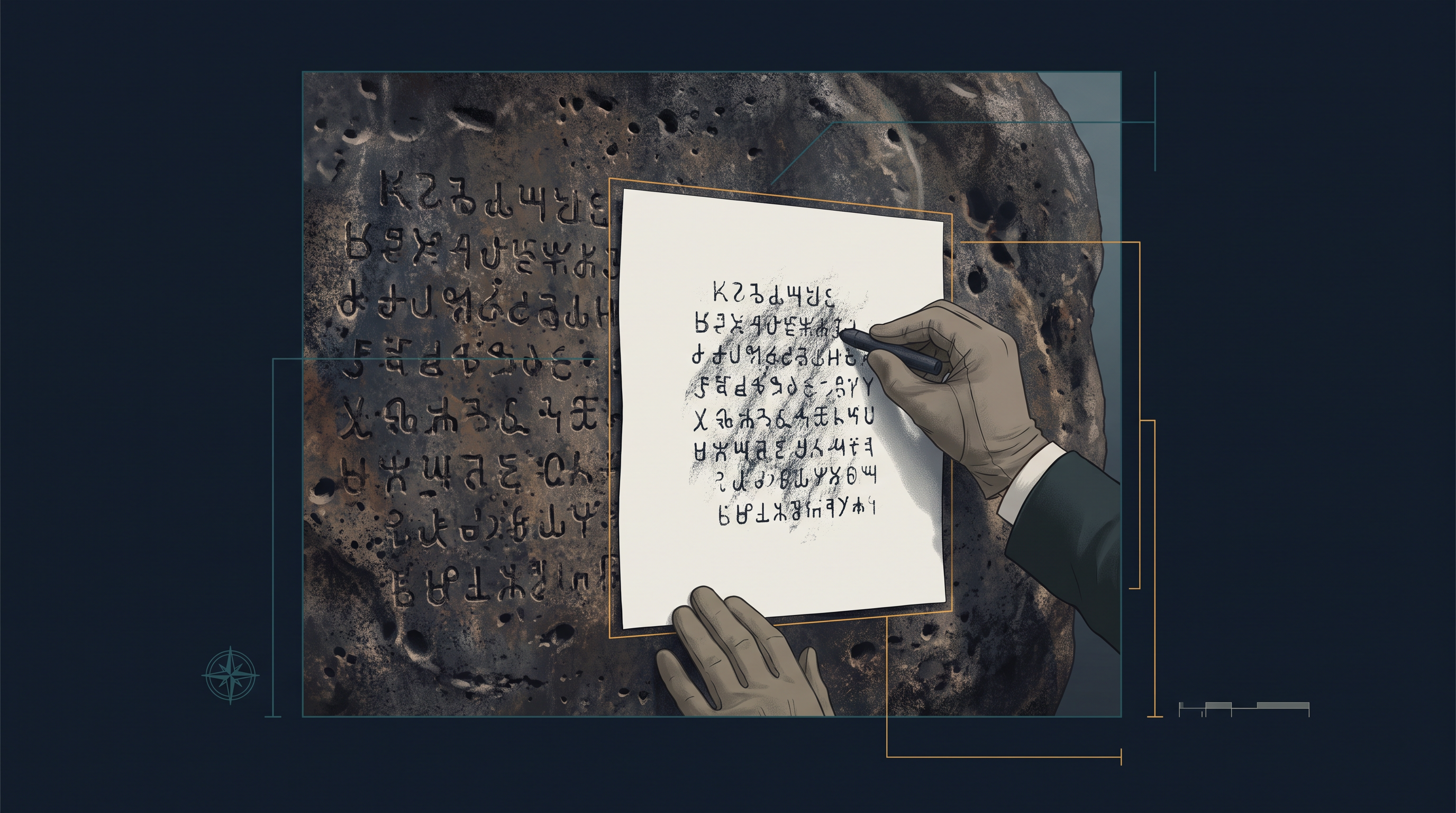
Fig. 2.0 – Taking a rubbing of an early Brahmi inscription.
2.1 Prinsep And Piyadassi
The Fifteen Hundred Years After The Harappans
The Harappan cities did not fall silent and leave the subcontinent empty. In the long span of 1,500 years that followed the end of the Harappan civilisation, developments were under way in many different parts of the subcontinent, and they were not all of the same kind.
This was also the period in which the Rigveda was composed, by people living along the Indus and its tributaries. Agricultural settlements emerged in many parts of the subcontinent — in north India, on the Deccan Plateau, and in parts of Karnataka. Alongside them, in the Deccan and further south, there is evidence of pastoral populations, people who lived by herding animals rather than by growing crops.
The dead were also treated in new ways. From the first millennium BCE, in central and south India, people began building elaborate stone structures over burials, known as megaliths. In many cases the dead were buried with a rich range of iron tools and weapons — objects that survive in the ground long after the bodies and the wood and the cloth have gone.
The Turn Of The Sixth Century BCE
From c. sixth century BCE, the evidence points to other trends as well. The most visible of them was the emergence of early states, empires and kingdoms. This is where our chapter begins, and the date is worth holding on to: it is roughly a thousand years after the last Harappan cities were abandoned.
Underneath these political processes were changes of another kind. The ways in which agricultural production was organised were shifting, and at the same time new towns appeared almost throughout the subcontinent. Kings, farmers and towns are the three threads of this chapter, and they are tied together.
Historians try to understand these developments by drawing on a range of sources — inscriptions, texts, coins and visual material such as sculpture and coins’ images. As you will see, this is a complex process. You will also notice something more uncomfortable: these sources do not tell the entire story, and a great deal of what happened has left no record at all.
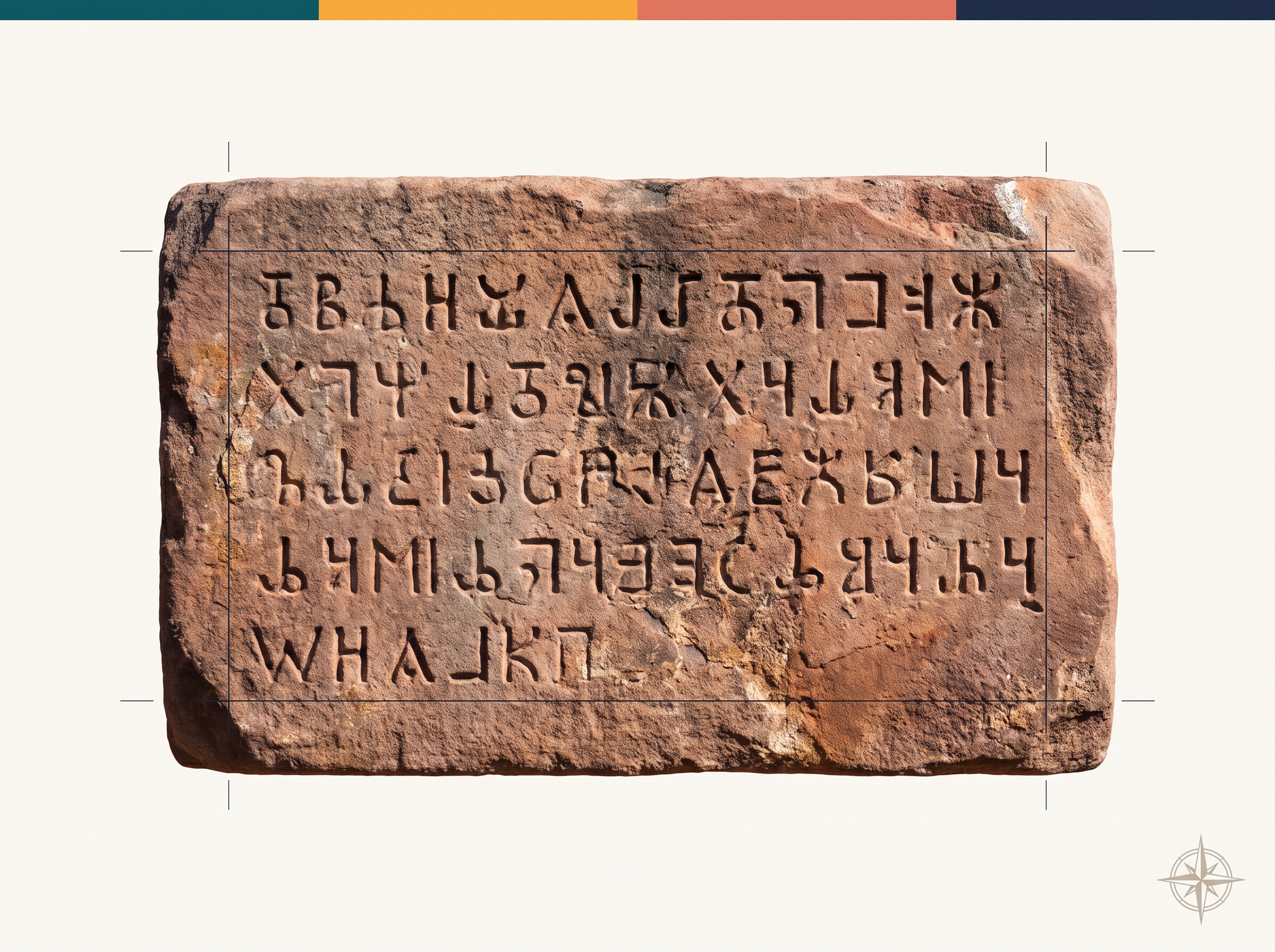
Fig. 2.1 – An inscription at Sanchi, c. second century BCE.
A King With No Name
Some of the most momentous developments in Indian epigraphy — the study of inscriptions — took place in the 1830s. This was when James Prinsep, an officer in the mint of the East India Company, deciphered Brahmi and Kharosthi, the two scripts used in the earliest inscriptions and coins.
What he found was strange. Most of these inscriptions mentioned a king, but the king was referred to as Piyadassi, meaning ‘pleasant to behold’. That is a title, not a name. There were, however, a few inscriptions that also referred to the king as Asoka — one of the most famous rulers known from Buddhist texts.
So a title carved on stone could now be matched to a name remembered in literature. A ruler who had been a figure in Buddhist tradition suddenly had a physical, datable trace in the ground.
What An Inscription Actually Is
Since the whole of this chapter leans on inscriptions, it is worth being precise about what they are. Inscriptions are writings engraved on hard surfaces — stone, metal or pottery. They usually record the achievements, activities or ideas of the people who commissioned them.
That means they include the exploits of kings. But they also include donations made by women and men to religious institutions, which is how ordinary people occasionally enter the record at all.
Because they are cut into hard material, inscriptions are virtually permanent records, and some of them carry dates. Others carry no date, and have to be dated on the basis of palaeography — the study of styles of writing, and of how letter shapes changed over time. This can be done with a fair amount of precision. For instance, in c. 250 BCE the letter ‘a’ was written in one particular shape; by c. 500 CE it was being written in a noticeably different one. Line up the shapes in order, and an undated inscription can be placed within a century or so.
Which Languages, And Whose?
The earliest inscriptions were in Prakrit, which is not one language but a name for languages used by ordinary people. This is why the names of rulers such as Ajatasattu and Asoka are spelt in their Prakrit forms throughout this chapter — those are the forms the inscriptions themselves use.
You will also meet terms in Pali, Tamil and Sanskrit in the pages that follow, since these languages too were used to write inscriptions and texts. And here is the silence to notice: it is entirely possible that people spoke in other languages as well, languages that were never used for writing. Those tongues have left nothing behind, and we have no way of hearing them.
From Dynasties To Contexts
Prinsep’s decipherment gave a new direction to investigations into early Indian political history. European and Indian scholars now used inscriptions and texts composed in a variety of languages to reconstruct the lineages of the major dynasties that had ruled the subcontinent. Working steadily at this, they had the broad contours of political history in place by the early decades of the twentieth century.
Once the outline of who ruled when was reasonably clear, scholars began asking a different question. They shifted their focus to the context of political history: were there connections between political changes and economic and social developments? Did new states appear because farming and trade were changing, or the other way round?
It was soon realised that while there were links, these were not always simple or direct. A king does not rise simply because a plough improves. The rest of this chapter is an attempt to hold both halves together — the kings, and the farmers and towns whose surplus paid for them.
2.2 The Earliest States
2.2.1 The Sixteen Mahajanapadas
The sixth century BCE is often regarded as a major turning point in early Indian history. It is an era associated with early states, with cities, with the growing use of iron, and with the development of coinage. Several things are changing at once, and they are connected.
It also witnessed the growth of diverse systems of thought, including Buddhism and Jainism. New ways of organising power and new ways of thinking about the world appeared in the same centuries and often in the same regions.
Early Buddhist and Jaina texts mention, amongst other things, sixteen states known as mahajanapadas — literally the great janapadas, the large territories in which a people had settled. Although the lists in the different texts vary, some names occur again and again: Vajji, Magadha, Koshala, Kuru, Panchala, Gandhara and Avanti. Clearly, these were amongst the most important mahajanapadas.
Notice how we know even this much. The sixteen are not counted for us in an inscription; they come from religious texts, and the texts do not agree with one another. Where the lists overlap, historians feel reasonably confident. Where they differ, they cannot be sure.
Kings, And States Without Kings
Most mahajanapadas were ruled by kings. But some were not. These were known as ganas or sanghas, and they were oligarchies — states where power was shared by a number of men, who were often collectively called rajas. There was no single ruler at the top; there was a group.
This was not a marginal arrangement. Both Mahavira and the Buddha belonged to such ganas. In some instances, as in the case of the Vajji sangha, the rajas probably controlled resources such as land collectively, rather than as private owners.
Their histories are often difficult to reconstruct, because the sources are so few. And yet some of these states lasted for nearly a thousand years. That is a striking combination: a form of government that endured for a millennium, about which we know very little.
Capitals, Armies And The Cost Of A State
Each mahajanapada had a capital city, and that capital was often fortified. Fortifications are expensive. So are the beginnings of a standing army, and so is even a small body of officials.
Maintaining fortified cities, and providing for incipient armies and bureaucracies, therefore required resources. A state, once it exists, has to be paid for — every year, whether or not it fights a war. Where was the money to come from?
From c. sixth century BCE onwards, Brahmanas began composing Sanskrit texts known as the Dharmasutras. These laid down norms for rulers, as well as for other social categories. Rulers, according to these texts, were ideally expected to be Kshatriyas — the varna whose prescribed occupation was to rule and to fight.
Rulers were advised to collect taxes and tribute from cultivators, traders and artisans. These are the settled, visible people: those with fields, shops and workshops that an official can find and count.
Were resources also procured from pastoralists and forest peoples, who moved with their herds or lived off the forest? We do not really know. They are much harder for a state to see, and they left almost no record. This is a genuine gap in our knowledge, not a detail waiting to be filled in.
What we do know is that raids on neighbouring states were recognised as a legitimate means of acquiring wealth. Taking someone else’s grain and cattle was not a crime against custom; it was an accepted way for a ruler to enrich himself.
Gradually, some states acquired standing armies — soldiers kept and paid all year round — and maintained regular bureaucracies. Others continued to depend on militia, recruited, more often than not, from the peasantry. The same men ploughed and fought, and were sent home when the fighting stopped.
Look now at Map 1, which shows the early states and their capitals.
Map
Map 1 Caption: Early states and their capitals. Brief: Redraw NCERT’s Map 1 as a sketch map, not to scale, of the northern subcontinent, marking the mahajanapadas named on it — Kamboja, Gandhara, Kuru, Panchala, Shurasena, Matsya, Chedi, Avanti, Ashmaka, Vatsa, Kashi, Koshala, Malla, Vajji (Vrijji), Magadha, Anga, Vanga — with the capitals Pushkalavati, Taxila, Indraprastha, Ahichchhatra, Mathura, Shravasti, Kaushambi, Varanasi, Vaishali, Kusinagara, Rajgir, Champa, Ujjayini; show the full extent of India as officially defined; label ‘Sketch map not to scale’; these are boundaries of the sixth century BCE, not of today.
2.2.2 First Amongst The Sixteen: Magadha
Between the sixth and the fourth centuries BCE, Magadha — in present-day Bihar, in the middle Ganga valley — became the most powerful mahajanapada. Why that one, and not another?
What Modern Historians Say
Modern historians explain this development in a variety of ways, and none of them rests on a single cause.
Magadha was a region where agriculture was especially productive, so it could feed a large population and yield a surplus to tax. Besides, iron mines in present-day Jharkhand, just to the south, were accessible, and provided resources for tools and weapons — the same metal serving the plough and the army.
Elephants, an important component of the army, were found in the forests of the region. And the Ganga and its tributaries provided a means of cheap and convenient communication, which mattered enormously in a world where moving goods and soldiers by land was slow and costly.
What Early Writers Said
Early Buddhist and Jaina writers who wrote about Magadha explained its power quite differently. They attributed it to the policies of individuals: ruthlessly ambitious kings, of whom Bimbisara, Ajatasattu and Mahapadma Nanda are the best known, and their ministers, who helped implement their policies.
So we have two explanations of the same rise. One looks at soil, iron, elephants and rivers. The other looks at the will and the cunning of particular men.
Two Capitals
Initially, Rajagaha — the Prakrit name for present-day Rajgir in Bihar — was the capital of Magadha. Interestingly, the old name means ‘house of the king’. Rajagaha was a fortified settlement, located amongst hills, and the hills themselves were part of its defence.
Later, in the fourth century BCE, the capital was shifted to Pataliputra, present-day Patna. Pataliputra sat where it could command the routes of communication along the Ganga. The move tells you what the rulers of Magadha had come to value: not a stronghold that was hard to attack, but a place from which the traffic of an entire river valley could be watched and taxed.
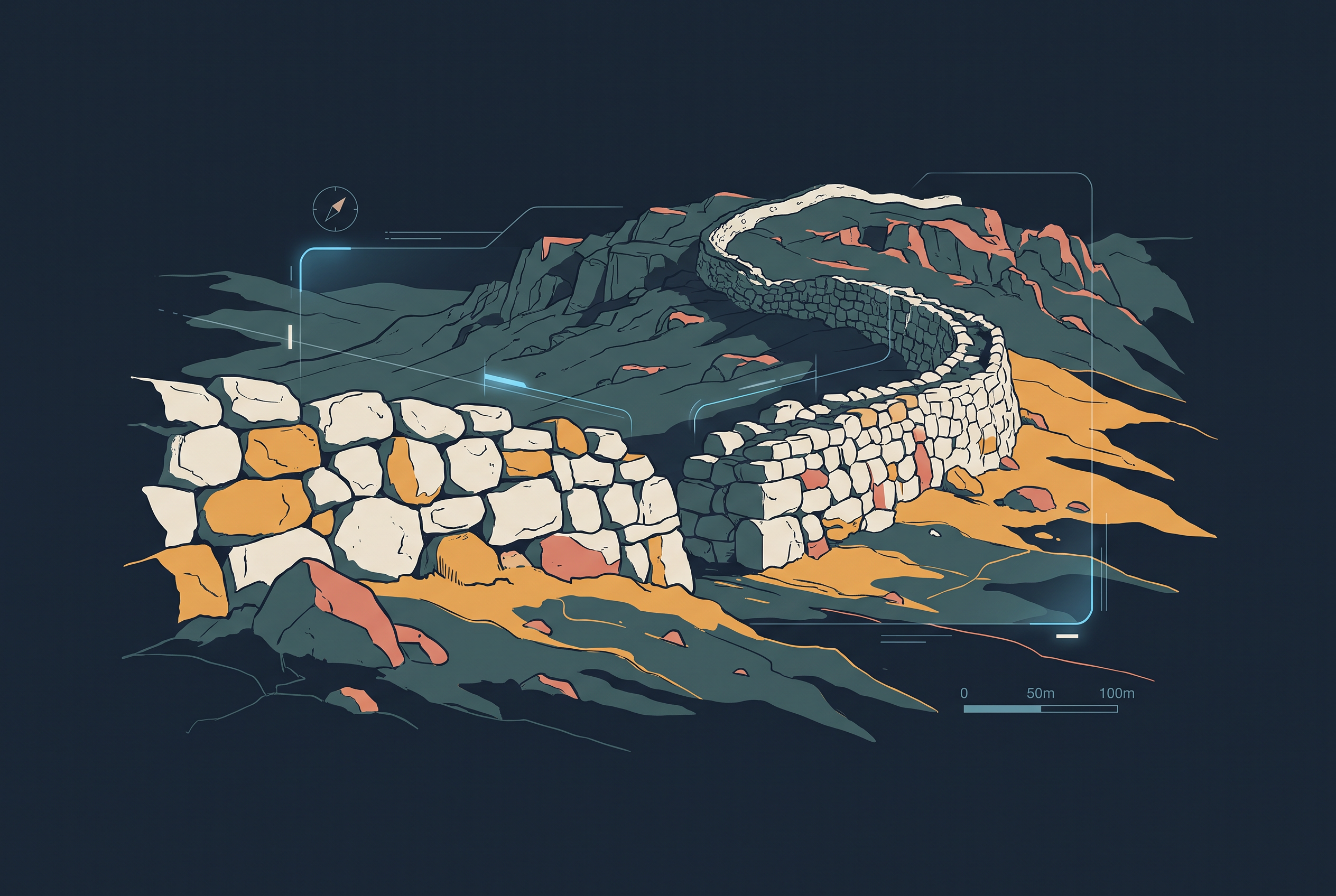
Fig. 2.2 – Fortification walls at Rajgir.
2.3 An Early Empire
The growth of Magadha culminated in the emergence of the Mauryan Empire. An empire is a state that rules over other peoples and territories, usually acquired by conquest, and governed from a centre.
Chandragupta Maurya, who founded the empire (c. 321 BCE), extended control as far northwest as Afghanistan and Baluchistan — that is, well beyond the Ganga valley where Magadha began. His grandson Asoka, arguably the most famous ruler of early India, conquered Kalinga, present-day coastal Orissa.
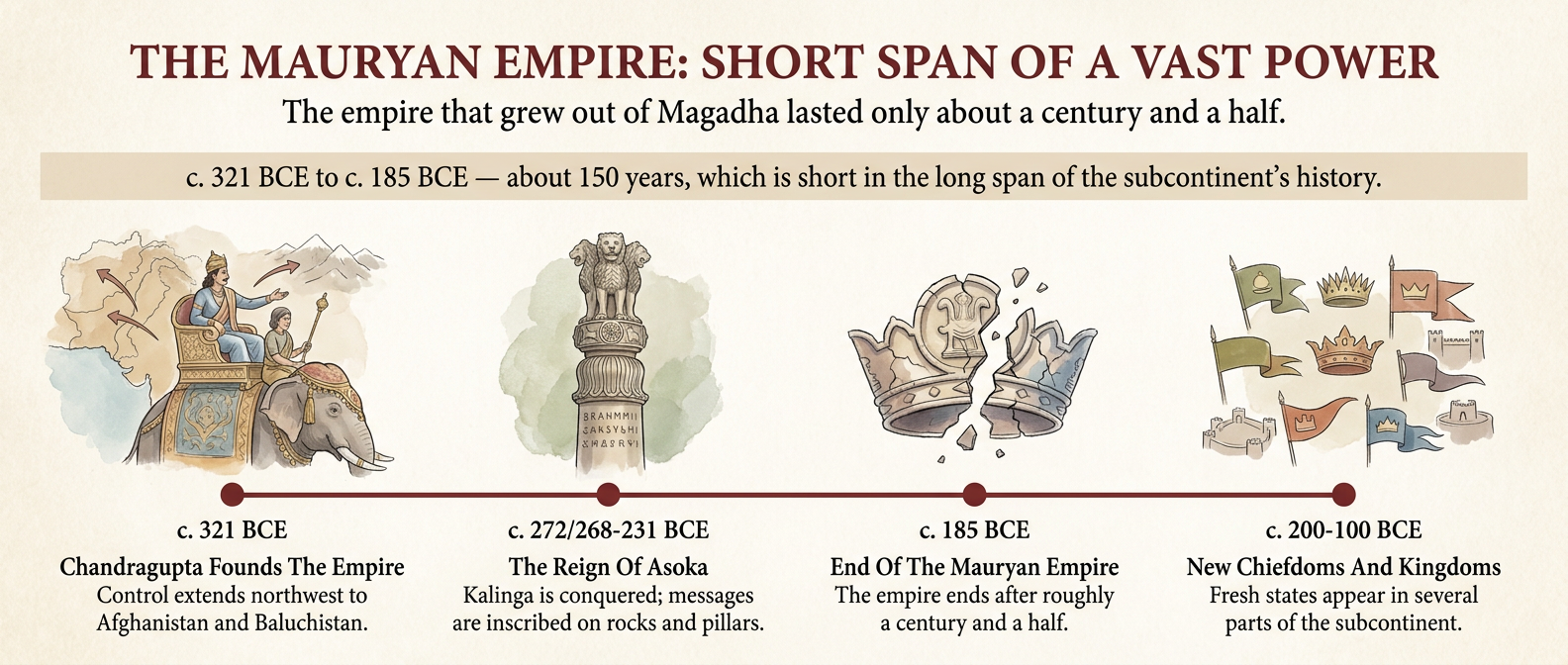
Fig. 2.3 – The Mauryan Empire.
2.3.1 Finding Out About The Mauryas
Historians have used a variety of sources to reconstruct the history of the Mauryan Empire, and each of them has a different weakness.
There are archaeological finds, especially sculpture. There are contemporary works, such as the account of Megasthenes, a Greek ambassador sent to the court of Chandragupta Maurya — but his account survives only in fragments, quoted by later writers, so we do not have the book he actually wrote.
Another source that is often used is the Arthashastra, parts of which were probably composed by Kautilya or Chanakya, traditionally believed to be the minister of Chandragupta. Notice the caution in that sentence: parts, probably, traditionally believed. The text is a manual of statecraft, and it tells us what an author thought a state should do — which is not the same as what a state did do.
Besides these, the Mauryas are mentioned in later Buddhist, Jaina and Puranic literature, as well as in Sanskrit literary works. These were written down after the event, by people with their own purposes.
While all of these are useful, the inscriptions of Asoka (c. 272/268-231 BCE) on rocks and pillars are often regarded as amongst the most valuable sources. They are the only ones in this list that come to us in the words of the Mauryan state itself, cut into stone at the time.
A King Who Spoke To His Subjects
Asoka was the first ruler who inscribed his messages to his subjects and officials on stone surfaces — natural rocks, as well as polished pillars. That is a genuinely new thing. Before him, kings had ruled; Asoka set out to explain himself, permanently, in public.
He used the inscriptions to proclaim what he understood to be dhamma. This included respect towards elders, generosity towards Brahmanas and towards those who renounced worldly life, treating slaves and servants kindly, and respect for religions and traditions other than one’s own.
These principles were simple and could apply to almost anybody in the empire, whatever they believed. That was probably the point.
The Languages Of An Empire
The inscriptions were not all in one language, and this in itself tells you something about the empire’s reach. Most Asokan inscriptions were in Prakrit, while those in the northwest of the subcontinent were in Aramaic and Greek — languages that people there could actually read.
Most Prakrit inscriptions were written in the Brahmi script; however, some, in the northwest, were written in Kharosthi. The Aramaic and Greek scripts were used for inscriptions in Afghanistan. A state that translates itself into the language of its distant provinces is a state that knows those provinces are not like the centre.
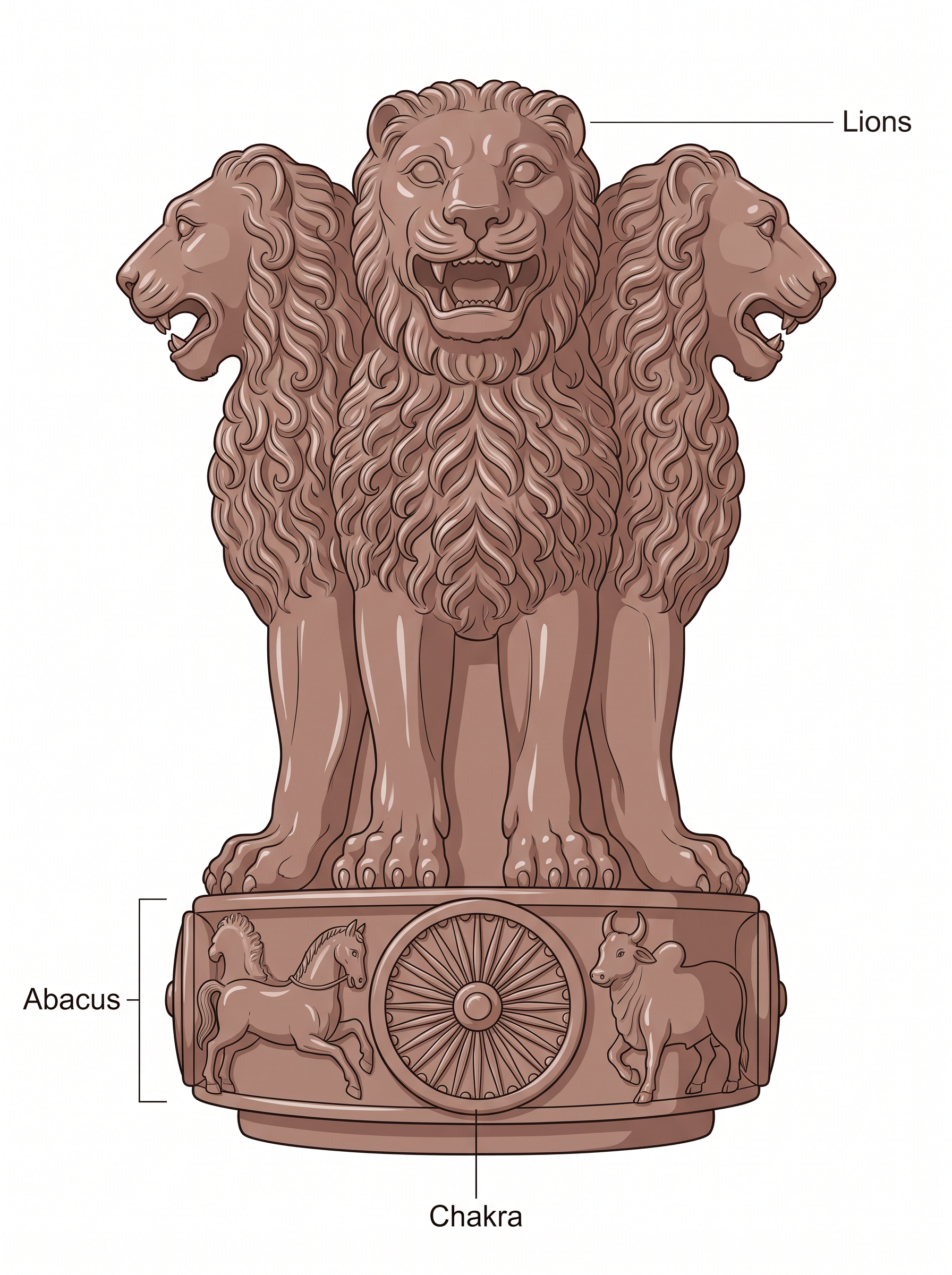
Fig. 2.4 – The Asokan lion capital.
2.3.2 Administering The Empire
There were five major political centres in the empire — the capital Pataliputra, and the provincial centres of Taxila, Ujjayini, Tosali and Suvarnagiri. All five are mentioned in Asokan inscriptions.
If we examine the content of these inscriptions, we find virtually the same message engraved everywhere — from the present-day North West Frontier Provinces of Pakistan, to Andhra Pradesh, Orissa and Uttarakhand in India. The distance between those places is enormous.
Could this vast empire have had a uniform administrative system, run in the same way from end to end? Historians have increasingly come to realise that this is unlikely. The regions included within the empire were just too diverse. Imagine the contrast between the hilly terrain of Afghanistan and the coast of Orissa: different crops, different rainfall, different ways of living, different languages.
It is likely, then, that administrative control was strongest in the areas around the capital and the provincial centres, and thinner as you moved away from them. An empire on a map looks like a solid block of colour. On the ground it was more like a set of strong points, with a great deal of loosely held country in between.
These centres were carefully chosen. Both Taxila and Ujjayini were situated on important long-distance trade routes, so whoever held them could tax and protect the traffic passing through. Suvarnagiri — literally, the golden mountain — was possibly important for tapping the gold mines of Karnataka. Political centres, in other words, sat where the wealth was.
Map 2 shows where Asokan inscriptions have actually been found. Compare it with what you have just read about the five centres.
Map
Map 2 Caption: Distribution of Asokan inscriptions. Brief: Redraw NCERT’s Map 2 as a sketch map, not to scale, showing the full extent of India as officially defined, with three symbols keyed in a legend — major rock edicts, minor rock edicts and pillar inscriptions — at the sites NCERT marks, including Kandahar, Mansehra, Shahbazgarhi, Taxila, Kalsi, Topra, Meerut, Bahapur, Bairat, Bhabru, Gujarra, Kaushambi, Ahraura, Sarnath, Sahasram, Pataliputra, Nigalisagar, Rummindei, Rampurwa, Lauriya Nandangarh, Lauriya Araraj, Sanchi, Ujjayini, Girnar, Sopara, Sannati, Maski, Gavimath, Palkigundu, Jatinga Rameshwar, Siddapur, Brahmagiri, Nittur, Udegolam, Rajula Mandagiri, Shishupalgarh and Jaugada, with Kalinga, the Cholas, Keralaputras and Pandyas labelled; mark ‘Sketch map not to scale’; these are third-century BCE findspots, not modern boundaries.
Moving An Army, Feeding An Army
Communication along both land and riverine routes was vital for the existence of the empire. Journeys from the centre to the provinces could have taken weeks, if not months. This meant arranging for provisions as well as protection for those who were on the move — nobody travelled that far without food, and nobody carried treasure or orders without a guard.
It is obvious that the army was an important means of ensuring that protection. Megasthenes mentions a committee with six subcommittees for coordinating military activity. One looked after the navy; the second managed transport and provisions; the third was responsible for foot-soldiers; the fourth for horses; the fifth for chariots; and the sixth for elephants.
The activities of the second subcommittee were rather varied. It arranged for bullock carts to carry equipment, procured food for soldiers and fodder for animals, and recruited servants and artisans to look after the soldiers. An army, seen from the inside, is largely a problem of carts, grain and hay.
Here is Megasthenes himself — or rather, what survives of him — on the officials of the Mauryan state. He was a foreigner at the court, describing a system he had not grown up in, to readers back in the Greek world who had never seen it.
Read what these officials are doing. They measure land, control the flow of water in canals, collect taxes, and oversee woodcutters, carpenters, blacksmiths and miners — the very trades that supply timber, tools, weapons and metal. A state that wants an army has to keep its hand on all of them.
Notice too what Megasthenes does not give us. He compares the irrigation system to Egypt’s, which tells us he is explaining India to Greeks by way of something they already knew. He does not say which region he saw, or whether officials like these existed anywhere beyond the places he visited.
The Arthashastra describes the same world from the inside, and in extraordinary detail. Here is what it lays down about capturing elephants for the army.
Count the kinds of people in that one sentence: forest guards, elephant keepers, men who chain the legs, boundary guards, forest dwellers, elephant nurses. A single wild elephant required an organised body of specialists to catch it — and elephants were only one of six branches of the army.
According to Greek sources, the Mauryan ruler had a standing army of 600,000 foot-soldiers, 30,000 cavalry and 9,000 elephants. Some historians consider these accounts to be exaggerated, and it is worth asking why a visitor might inflate such numbers, and why an audience at home might believe them.
Holding It Together With Dhamma
Asoka also tried to hold his empire together by propagating dhamma, the principles of which, as we have seen, were simple and virtually universally applicable. This, according to him, would ensure the well-being of people in this world and the next.
Special officers, known as the dhamma mahamatta, were appointed to spread the message of dhamma. So the state did not only send tax collectors and soldiers into the provinces; it sent men whose job was persuasion.
2.3.3 How Important Was The Empire?
When historians began reconstructing early Indian history in the nineteenth century, the emergence of the Mauryan Empire was regarded as a major landmark. To understand why, you have to remember when they were writing.
India was then under colonial rule, and was part of the British empire. Nineteenth and early twentieth century Indian historians found the possibility that there had been an empire in early India both challenging and exciting. A people told they had always been ruled by others could point to an empire of their own.
Also, some of the archaeological finds associated with the Mauryas, including stone sculpture, were considered to be examples of the spectacular art typical of empires.
Many of these historians found the message on Asokan inscriptions very different from that of most other rulers. It suggested that Asoka was more powerful and industrious, and also more humble, than later rulers who adopted grandiose titles. So it is not surprising that nationalist leaders in the twentieth century regarded him as an inspiring figure.
Now Ask The Question Again
Yet, how important was the Mauryan Empire, really?
It lasted for about 150 years, which is not a very long time in the vast span of the history of the subcontinent. Besides, if you look at Map 2, you will notice that the empire did not encompass the entire subcontinent — large regions lies outside it altogether.
And even within the frontiers of the empire, control was not uniform, as we have already seen. By the second century BCE, new chiefdoms and kingdoms emerged in several parts of the subcontinent. The empire was one episode, not the whole story.
2.4 New Notions Of Kingship
2.4.1 Chiefs And Kings In The South
The new kingdoms that emerged in the Deccan and further south proved to be stable and prosperous. Among them were the chiefdoms of the Cholas, Cheras and Pandyas in Tamilakam — the name of the ancient Tamil country, which included parts of present-day Andhra Pradesh and Kerala, in addition to Tamil Nadu.
Note the word used for them: chiefdoms, not kingdoms. It is not a casual choice, and the difference matters.
What A Chief Was, And Was Not
A chief is a powerful man whose position may or may not be hereditary — his son does not automatically succeed him. He derives his support from his kinfolk, the people he is related to, rather than from a body of paid officials.
His functions may include performing special rituals, leadership in warfare, and arbitrating disputes when his people quarrel. He receives gifts from his subordinates, and often distributes these amongst his supporters.
That is the crucial contrast with a king. A king usually collects taxes: a fixed, expected, regular claim, backed by officials who can measure and enforce it. A chief receives gifts, which are given rather than assessed, and he gives much of what he receives away again, because his standing depends on his generosity. Generally, there are no regular armies and no officials in chiefdoms. Power here runs through kinship and reputation, not through a bureaucracy.
How We Know About Them
We know about these states from a variety of sources. For instance, the early Tamil Sangam texts contain poems describing chiefs and the ways in which they acquired and distributed resources — which is exactly the process just described, set down by poets who lived close to it.
Here is one such description, from the Silappadikaram, an epic written in Tamil. Read it as a list, and count what is actually being carried.
Almost everything in that list is a forest product. There is no grain, no coin, no measured share of a harvest. These are not taxes assessed on cultivated fields; they are gifts brought by hill and forest people to a powerful man.
Notice also the poet’s own comparison: the givers behave ‘just as the defeated show respect to the victorious king’. A gift, in this world, is also a statement about who stands above whom. And several of these items — ivory, sandalwood, pepper, cardamom — were exactly the goods that fetched high prices in long-distance trade. A chief who received them could redistribute them to his followers, or send them on to a port.
Wealth From Trade, Status From Claims
Many chiefs and kings derived revenues from long-distance trade. Among them were the Satavahanas, who ruled over parts of western and central India (c. second century BCE-second century CE), and the Shakas, a people of Central Asian origin who established kingdoms in the north-western and western parts of the subcontinent.
Their social origins were often obscure — we do not know what families they came from, or how they first rose. But once they acquired power, they attempted to claim social status in a variety of ways, as you will see in the case of the Satavahanas in Chapter 3.
That last sentence is worth pausing on. If your origins are obscure, wealth alone does not make you respectable. Status has to be claimed, and claiming it takes work: rituals, titles, patronage, inscriptions. The next subsection is about the boldest claim of all.
2.4.2 Divine Kings
One means of claiming high status was to identify with a variety of deities — to place yourself, as a ruler, alongside the gods.
This strategy is best exemplified by the Kushanas (c. first century BCE-first century CE), who ruled over a vast kingdom extending from Central Asia to northwest India. Their history has been reconstructed from inscriptions and textual traditions. But the notions of kingship they wished to project are perhaps best evidenced in their coins and their sculpture — objects, not words.
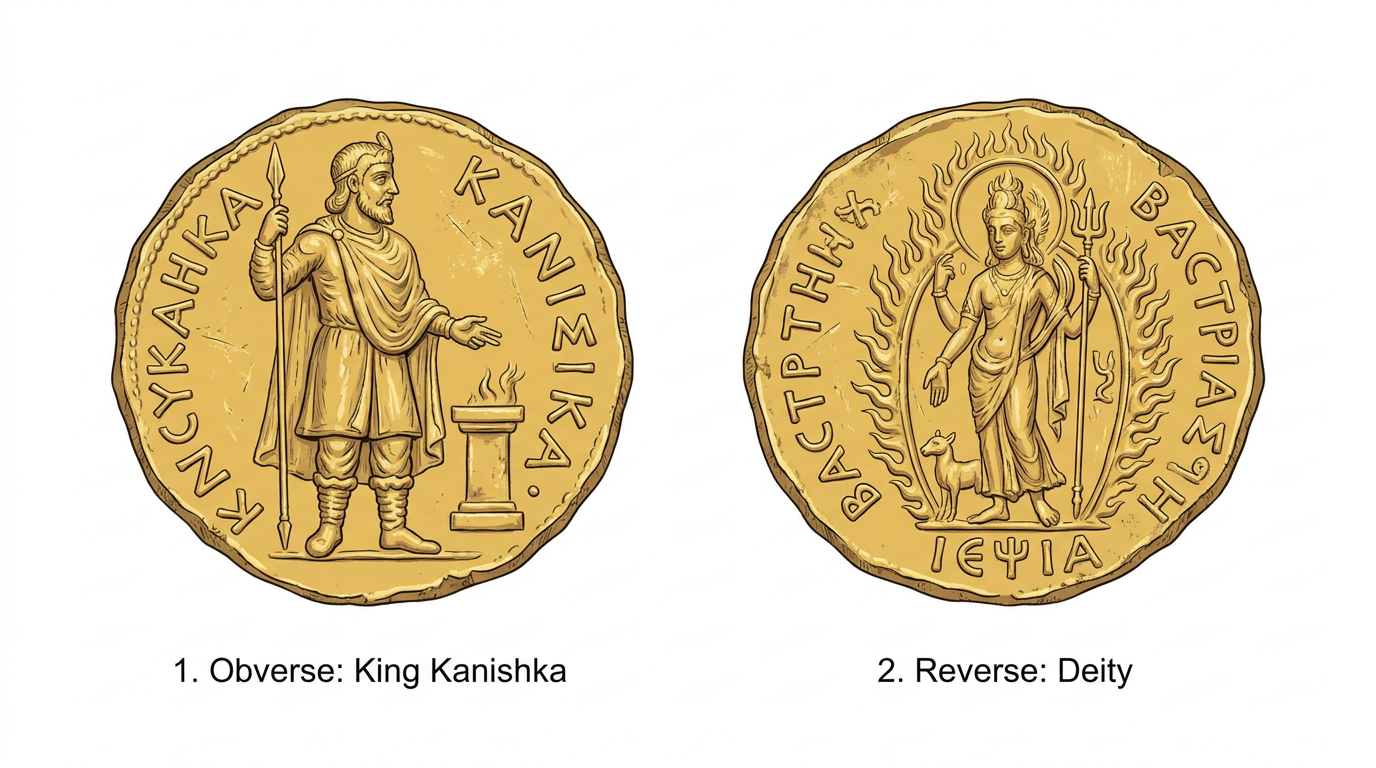
Fig. 2.5 – A Kushana gold coin.
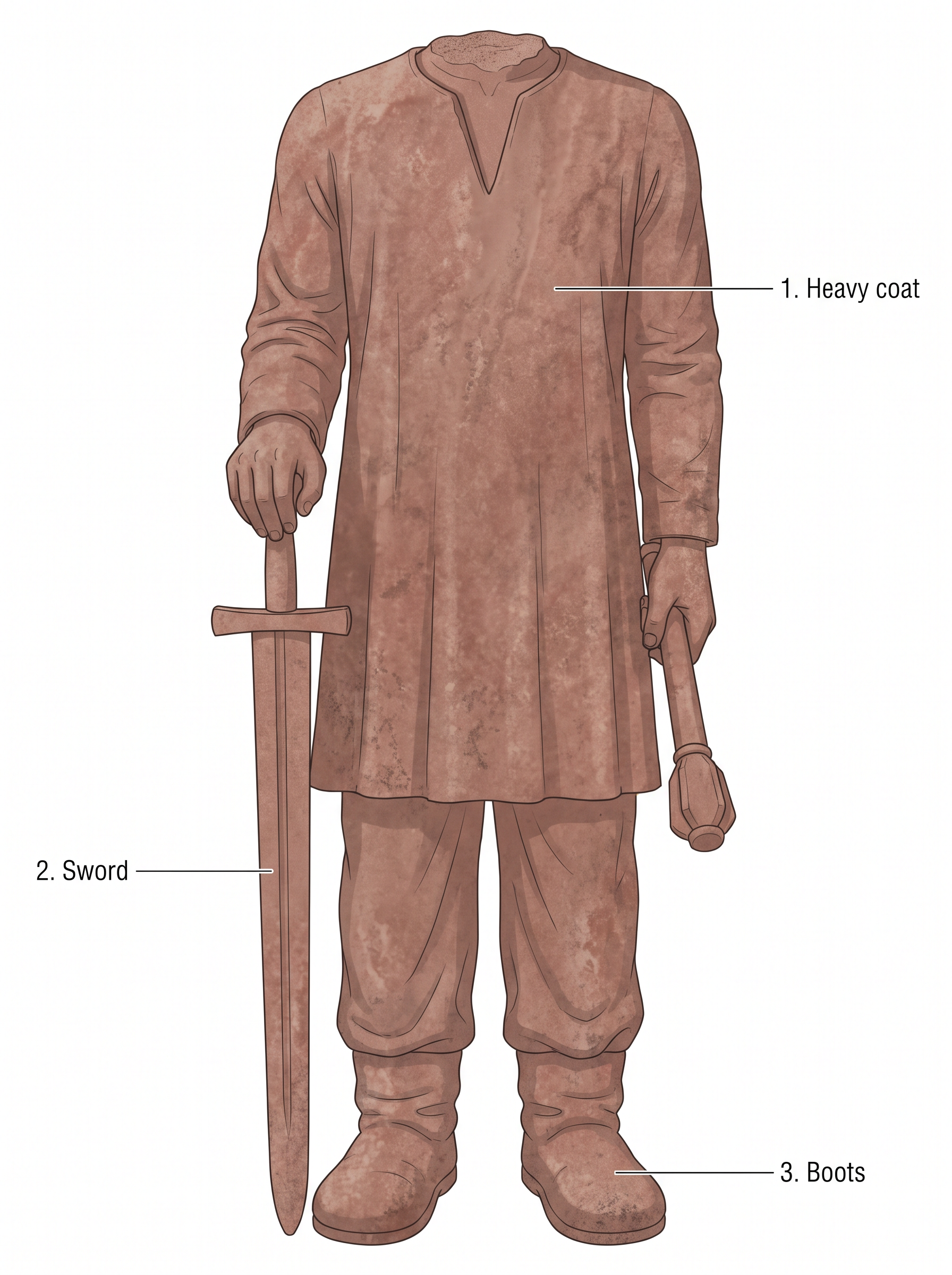
Fig. 2.6 – Sandstone sculpture of a Kushana king.
Kings Who Depended On Others
By the fourth century there is evidence of larger states, including the Gupta Empire. Many of these depended on samantas — men who maintained themselves through local resources, including control over land. They were not paid officials; they had their own base.
Samantas offered homage to the ruler and provided him with military support. In return, they were left in possession of what they held. It was an arrangement built on strength, and strength can shift. Powerful samantas could become kings. Conversely, weak rulers might find themselves being reduced to positions of subordination — a king in one generation, somebody else’s samanta in the next.
Praise As Evidence
Histories of the Gupta rulers have been reconstructed from literature, coins and inscriptions, including prashastis. A prashasti is a composition in praise — of kings in particular, and of patrons in general — written by poets.
Historians often attempt to draw factual information from such compositions. But those who composed and read them often treasured them as works of poetry rather than as accounts that were literally true. The poet’s aim was to move and impress, not to record.
The Prayaga Prashasti, also known as the Allahabad Pillar Inscription, is a case in point. It was composed in Sanskrit by Harishena, the court poet of Samudragupta, arguably the most powerful of the Gupta rulers (c. fourth century CE). Harishena was paid by, and dependent on, the man he was describing. Keep that in mind as you read.
Look at what the poet actually claims. Samudragupta has no rival anywhere on earth. He is Purusha, the Supreme Being. He is beyond understanding. He is the equal of four named gods at once — of wealth, of the ocean, of rain and of death.
None of this can be checked. There is no way to verify that a king had ‘no antagonist on earth’, and the statement is not really meant to be checked. What the inscription does tell us, reliably, is how Samudragupta wished to be seen, and what qualities a fourth-century audience was expected to admire in a ruler: victory, generosity, compassion, and a nearness to the gods.
That is not nothing. A historian who reads a prashasti for facts about battles will be misled. A historian who reads it for the idea of kingship it is selling will learn a great deal.
2.5 A Changing Countryside
2.5.1 Popular Perceptions Of Kings
What did subjects think about their rulers? It is an obvious question, and a very hard one.
Inscriptions do not provide the answers, because inscriptions were commissioned by the powerful. In fact, ordinary people rarely left accounts of their thoughts and experiences at all. They did not write, and if they spoke, nobody wrote it down.
Nevertheless, historians have tried to solve this problem by examining stories contained in anthologies such as the Jatakas and the Panchatantra. Many of these stories probably originated as popular oral tales, told and retold among ordinary people, and were only later committed to writing. The Jatakas were written in Pali around the middle of the first millennium CE.
A King Who Went Out In Disguise
One story known as the Gandatindu Jataka describes the plight of the subjects of a wicked king. These subjects included elderly women and men, cultivators, herders, village boys — and even animals.
When the king went in disguise to find out what his subjects thought about him, each one of them cursed him for their miseries. They complained that they were attacked by robbers at night, and by tax collectors during the day. The story sets the two side by side quite deliberately.
To escape from this situation, the people abandoned their village and went to live in the forest. Notice that this is presented as an escape, not a punishment. Leaving your fields and your house behind was better than staying.
As this story indicates, the relationship between a king and his subjects — especially the rural population — could often be strained. Kings frequently tried to fill their coffers by demanding high taxes, and peasants particularly found such demands oppressive. Escaping into the forest remained an option, as the Jataka story reflects.
Meanwhile, kings had another way of meeting their need for revenue. Instead of squeezing more from the same fields, production itself could be increased — and other strategies aimed at doing exactly that came to be adopted.
2.5.2 Strategies For Increasing Production
The Plough And The Paddy Field
One such strategy was the shift to plough agriculture, which spread in fertile alluvial river valleys such as those of the Ganga and the Kaveri from c. sixth century BCE. Alluvial soil is the fine, fertile soil deposited by a river over long ages, and it rewards deep turning.
The iron-tipped ploughshare was used to turn this alluvial soil in areas which had high rainfall. Iron is hard enough to cut into heavy, damp earth that a wooden point would not break.
Moreover, in some parts of the Ganga valley, the production of paddy was dramatically increased by the introduction of transplantation. Higher yields, though, came at a cost that is easy to skip over: transplantation meant back-breaking work for the producer, bent double in waterlogged fields, moving seedling after seedling by hand.
Why The Plough Did Not Spread Everywhere
While the iron ploughshare led to a growth in agricultural productivity, its use was restricted to certain parts of the subcontinent. A tool is only useful where the land suits it.
Cultivators in semi-arid areas, such as parts of Punjab and Rajasthan, did not adopt it till the twentieth century. And those living in hilly tracts in the north-eastern and central parts of the subcontinent practised hoe agriculture, which was much better suited to their terrain — you cannot drag a plough across a thin, stony hillside.
So agricultural change in this period was real, but it was patchy. Any statement that begins ‘in this period, Indian agriculture…’ is already too broad.
Water
Another strategy adopted to increase agricultural production was the use of irrigation, through wells and tanks, and less commonly, canals.
Communities as well as individuals organised the construction of irrigation works. The individuals were usually powerful men, including kings, and they often recorded such activities in inscriptions — which is precisely why we know about their irrigation works and not about the wells dug by villages that left no record.
One rock in Gujarat carries an unusually informative example.
Three rulers, across several centuries, on one rock. The lake was built under the Mauryas, repaired by a Shaka ruler after a storm, and repaired again under a Gupta ruler. Each inscription is a claim to have done something for the countryside.
Read Rudradaman’s claim carefully. He says he paid for the repair himself and did not tax his subjects for it. That is exactly the kind of statement a ruler would want carved in stone — and there is no independent record to test it against.
2.5.3 Differences In Rural Society
While these technologies often led to an increase in production, the benefits were very uneven. More grain in a village does not mean more grain for everyone in it.
What is evident is that there was a growing differentiation amongst people engaged in agriculture. Stories, especially within the Buddhist tradition, refer to landless agricultural labourers, to small peasants, and to large landholders — three quite different positions in the same field.
The term gahapati was often used in Pali texts to designate the second and third categories, that is, the small peasants and the large landholders. A gahapati was the owner, master or head of a household, who exercised control over the women, children, slaves and workers who shared a common residence. He was also the owner of the resources — land, animals and other things — that belonged to the household. Sometimes the term was used as a marker of status for men belonging to the urban elite, including wealthy merchants.
So the word describes a position of command inside a household, not merely the ownership of a field. The people under that command included those who could not leave.
The large landholders, as well as the village headman — whose position was often hereditary, passing from father to son — emerged as powerful figures, and often exercised control over other cultivators. Power in the village did not wait for the king; it was already there.
The Same Village, In Tamil
Early Tamil literature, the Sangam texts, also mentions different categories of people living in the villages: large landowners or vellalar, ploughmen or uzhavar, and slaves or adimai.
Two different literary traditions, in two different languages, describe villages divided in much the same way. It is likely that these differences were based on differential access to land, to labour, and to some of the new technologies — an iron ploughshare, after all, has to be bought, and irrigation has to be paid for.
In such a situation, questions of control over land must have become crucial. And that is exactly what we find being discussed in legal texts.
Here is one of them on the marking of boundaries — a small, practical matter that reveals how sharp the disputes over land had become.
Why bury the markers rather than set them up in plain sight? Because a visible stone can be moved by night. Something buried at the corner of a field can be dug up later to prove where the corner really was — provided somebody still remembers where to dig.
That the text goes into such detail tells us that quarrels over the edges of fields were common enough to need a rule. Land had become worth fighting over.
2.5.4 Land Grants And New Rural Elites
From the early centuries of the Common Era, we find grants of land being made, many of which were recorded in inscriptions.
Some of these inscriptions were on stone, but most were on copper plates (Fig. 2.15), which were probably given as a record of the transaction to those who received the land — a document the recipient could keep and produce later. The records that have survived are generally about grants to religious institutions or to Brahmanas.
Most such inscriptions were in Sanskrit. In some cases, and especially from the seventh century onwards, part of the inscription was in Sanskrit while the rest was in a local language such as Tamil or Telugu. Two audiences, then: the learned, and the people of the district who had to comply.
Let us look at one such inscription more closely.
A Queen Who Gave Away A Village
Prabhavati Gupta was the daughter of one of the most important rulers in early Indian history, Chandragupta II (c. 375-415 CE). She was married into another important ruling family, that of the Vakatakas, who were powerful in the Deccan (see Map 3).
According to Sanskrit legal texts, women were not supposed to have independent access to resources such as land. However, this inscription indicates that Prabhavati had access to land, which she then granted away.
How can both be true? Historians offer two possibilities. This may have been because she was a queen — one of the few known from early Indian history — so that her situation was exceptional. It is also possible that the provisions of legal texts were not uniformly implemented, and that the rules laid down in Sanskrit did not describe what actually happened in every household.
Read the list of exemptions backwards, and it becomes a list of what the state normally took. Grass, hides, charcoal, flowers, milk, salt, the produce of mines and of khadira trees, major and minor taxes — all of this was ordinarily owed to the king or his touring officers. The grant simply hands the whole set of claims to somebody else.
The inscription also gives us an idea about rural populations. These included Brahmanas and peasants, as well as others who were expected to provide a range of produce to the king or his representatives. And according to the inscription, they would now have to obey the new lord of the village, and perhaps pay him all these dues.
Notice who is not consulted. The villagers are addressed, commanded and transferred. Nobody asks them anything.
Why Did Kings Give Land Away?
Land grants such as this one have been found in several parts of the country. There were regional variations in the sizes of land donated, ranging from small plots to vast stretches of uncultivated land, and in the rights given to donees — the recipients of the grant.
The impact of land grants is a subject of heated debate among historians, and the disagreement is worth understanding, because the same evidence supports two opposite conclusions.
Some feel that land grants were part of a strategy adopted by ruling lineages to extend agriculture to new areas. Give a Brahmana a stretch of uncultivated land, and he has every reason to get it cleared and ploughed; the kingdom gains a productive village where there was scrub before.
Others suggest that land grants were indicative of weakening political power. As kings were losing control over their samantas, they tried to win allies by making grants of land. On this reading, giving land away is not a policy of expansion but a sign of weakness — you buy support when you can no longer command it.
Those historians add a further point that reaches back to the previous section. Kings tried to project themselves as supermen because they were losing control: they wanted to present at least a façade of power. The godlike statue and the extravagant prashasti, on this view, are not the marks of a strong king but the compensations of a weakening one.
The Village That Was Written Down, And The People Who Were Not
Land grants provide some insight into the relationship between cultivators and the state. But that insight has a hard edge to it.
There were people who were often beyond the reach of officials or samantas: pastoralists, fisherfolk and hunter-gatherers, mobile or semi-sedentary artisans, and shifting cultivators. Generally, such groups did not keep detailed records of their lives and transactions.
They were not marginal in number. They were marginal to the record. A state records what it can tax, and it taxes what it can find — and a herder who moves with his animals is hard to find.
Even the settled countryside enters our sources only rarely, and usually by accident. The Harshacharita, a biography of Harshavardhana, ruler of Kanauj (see Map 3), composed in Sanskrit by his court poet Banabhatta (c. seventh century CE), contains one such passage. It is an extremely rare representation of life in a settlement on the outskirts of a forest in the Vindhyas — and it survives only because a court poet happened to describe the countryside his royal patron was passing through.
Look at what this village lives on. The fields are scattered and the black soil is stiff, so people use the spade rather than the plough — the same lesson about terrain that you met earlier, seen from ground level. Much of the wealth here is gathered rather than grown: bark, flowers, flax, hemp, honey, feathers, wax, logs, grass, forest fruits.
And look at who is carrying it. Village wives, walking to neighbouring villages with baskets on their heads, intent on selling. Women appear here as traders in a small way — a glimpse we get almost nowhere else, and only because a poet was describing the scenery.
2.6 Towns And Trade
2.6.1 New Cities
Let us retrace our steps back to the urban centres that emerged in several parts of the subcontinent from c. sixth century BCE — the same century in which the mahajanapadas appear. As we have seen, many of these towns were capitals of mahajanapadas.
Virtually all major towns were located along routes of communication, and this is not an accident. A town needs to be fed and supplied by somewhere else, and it grows where goods and people already pass.
Some, such as Pataliputra, were on riverine routes, standing where boats moved along the Ganga. Others, such as Ujjayini, were along land routes, where caravans came through. And yet others, such as Puhar on the Tamil coast, were near the sea, from where sea routes began. Many cities like Mathura were bustling centres of commercial, cultural and political activity all at once — a market, a place of worship and a seat of power in the same walls.
2.6.2 Urban Populations: Elites And Craftspersons
We have seen that kings and ruling elites lived in fortified cities. What was life in them like? Here archaeology runs into an obstacle that has nothing to do with the ancient world.
It is difficult to conduct extensive excavations at most of these sites, because people live in these areas even today — unlike the Harappan cities, which were abandoned and lay empty. You cannot dig a trench through a living neighbourhood. So our picture of these towns is built from whatever could be reached.
Even so, a wide range of artefacts has been recovered. These include fine pottery bowls and dishes with a glossy finish, known as Northern Black Polished Ware, probably used by rich people. There are also ornaments, tools, weapons, vessels and figurines, made of a wide range of materials — gold, silver, copper, bronze, ivory, glass, shell and terracotta.
The Townspeople Name Themselves
By the second century BCE, we find short votive inscriptions in a number of cities. These mention the name of the donor, and sometimes specify his or her occupation as well.
This is a rare thing. For once, the record is not about kings. It tells us about the people who lived in towns: washing folk, weavers, scribes, carpenters, potters, goldsmiths, blacksmiths, officials, religious teachers, merchants — and kings, who appear here simply as one kind of donor among many.
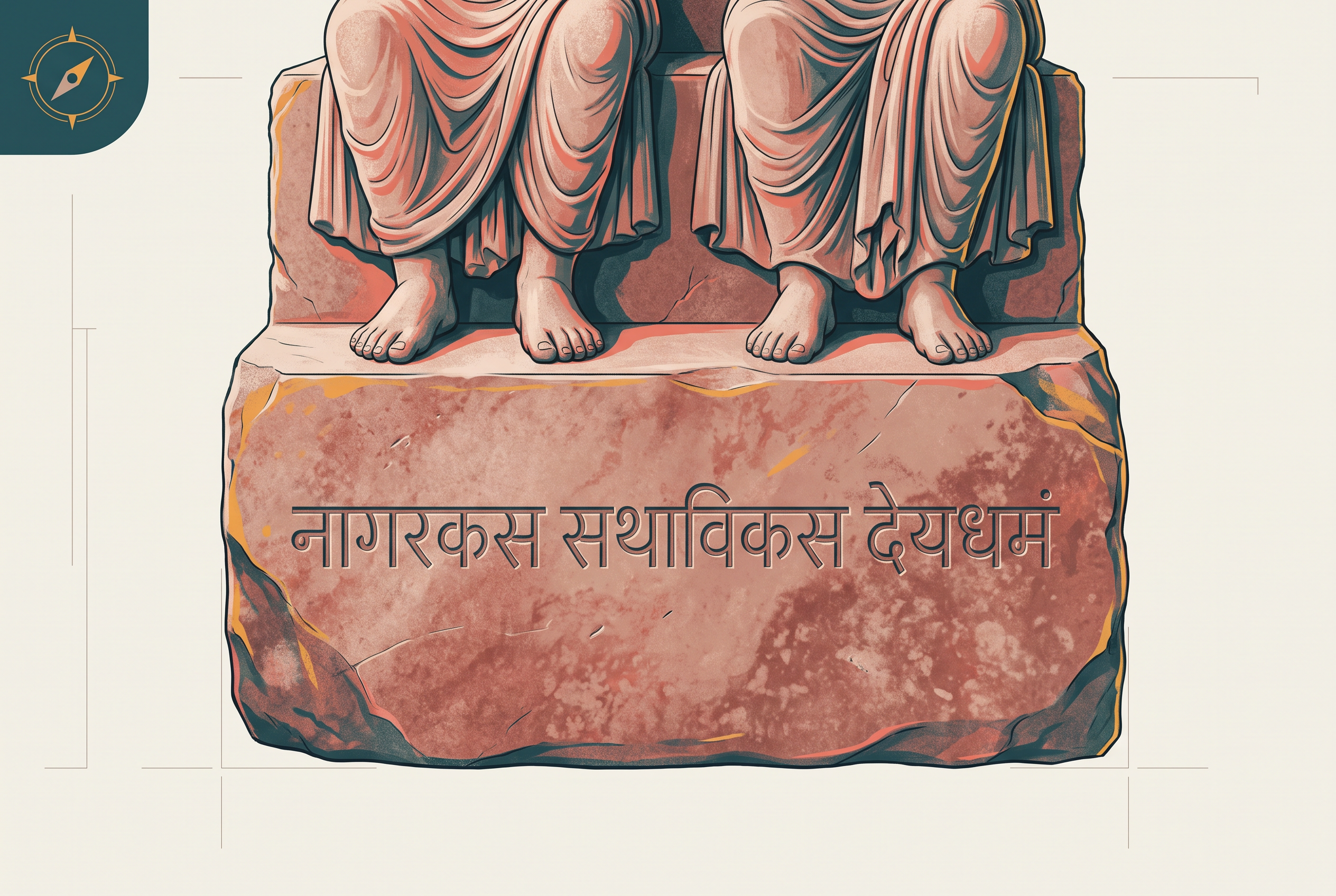
Fig. 2.7 – Pedestal inscription of Nagapiya’s gift at Mathura.
Guilds
Sometimes, guilds or shrenis are mentioned as well. A guild was an organisation of craft producers and merchants working in the same line of business.
These guilds probably procured raw materials, regulated production, and marketed the finished product. That is a considerable amount of authority for a body that is not the state: it decided what was made, and how, and where it was sold.
It is likely that craftspersons used a range of iron tools to meet the growing demands of urban elites. The city and the countryside are linked here — the same metal that turned the alluvial soil also shaped the ornaments and vessels that the rich in the towns wanted.
Map 3 shows some of the important kingdoms and towns of this period. Find Mathura, Ujjayini, Pataliputra and Puhar on it, and see how they sit on the routes.
Map
Map 3 Caption: Some important kingdoms and towns. Brief: Redraw NCERT’s Map 3 as a sketch map, not to scale, showing the full extent of India as officially defined, marking the Kushanas, Shakas, Guptas, Vakatakas, Satavahanas, Cholas, Cheras and Pandyas, and the towns Taxila, Mathura, Kanauj, Shravasti, Vaishali, Varanasi, Kaushambi, Pataliputra, Rajgir, Mahasthan, Chandraketugarh, Vidisha, Ujjayini, Bharukachchha, Sopara, Paithan, Dhanyakataka, Shishupalgarh, Kodumanal and Puhar; mark ‘Sketch map not to scale’; these are the kingdoms of roughly the first to sixth centuries CE, not modern boundaries.
2.6.3 Trade In The Subcontinent And Beyond
From the sixth century BCE, land and river routes criss-crossed the subcontinent, and extended in various directions. Overland, they ran into Central Asia and beyond. Overseas, they began from ports that dotted the coastline — extending across the Arabian Sea to East and North Africa and West Asia, and through the Bay of Bengal to Southeast Asia and China.
Rulers often attempted to control these routes, possibly by offering protection for a price. That phrase repays attention. A ruler who guards a road can also tax it, and a merchant who refuses the protection may not travel safely.
Those who traversed these routes were not all of one kind. There were peddlers, who probably travelled on foot with whatever they could carry. There were merchants who travelled with caravans of bullock carts and pack-animals. And there were seafarers, whose ventures were risky but highly profitable — a ship that came home made a fortune, and a ship that did not made a ruin.
Successful merchants — designated masattuvan in Tamil, and setthis and satthavahas in Prakrit — could become enormously rich. A wide range of goods was carried from one place to another: salt, grain, cloth, metal ores and finished products, stone, timber and medicinal plants, to name only a few.
Spices, especially pepper, were in high demand in the Roman Empire, as were textiles and medicinal plants. All of these were transported across the Arabian Sea to the Mediterranean. Pepper grown on the wet hills of the south Indian coast was being eaten at the other end of the known world.
Here is a Greek sailor’s description of the same coast, written down as a practical guide for people who intended to sail there and buy.
Notice the first import on the list: coin. Foreign traders arrived with money as well as with goods, and that money had to go somewhere — which is one reason hoards of Roman coins turn up in south India.
Notice also what is being exported: pepper, pearls, ivory, silk cloth, precious stones, diamonds, sapphires, tortoise shell. Archaeological evidence of a bead-making industry, using precious and semi-precious stones, has been found at Kodumanal in Tamil Nadu. It is likely that local traders brought stones from sites such as these to the coastal ports, where the Periplus records them being loaded.
So the sailor’s list and the excavated workshop confirm one another. Neither alone would be enough; together they let us follow a stone from an inland workshop to a ship.
2.6.4 Coins And Kings
To some extent, these exchanges were facilitated by the introduction of coinage. A coin is a piece of metal whose weight and purity somebody has guaranteed, so that it can be handed over without being weighed and tested each time.
Punch-marked coins, made of silver and copper (c. sixth century BCE onwards), were amongst the earliest to be minted and used. They are called punch-marked because the symbols were punched or stamped onto the metal surface. These coins have been recovered from excavations at a number of sites throughout the subcontinent.
Numismatists have studied these and other coins to reconstruct possible commercial networks — where coins were made, where they travelled, and therefore who was trading with whom.
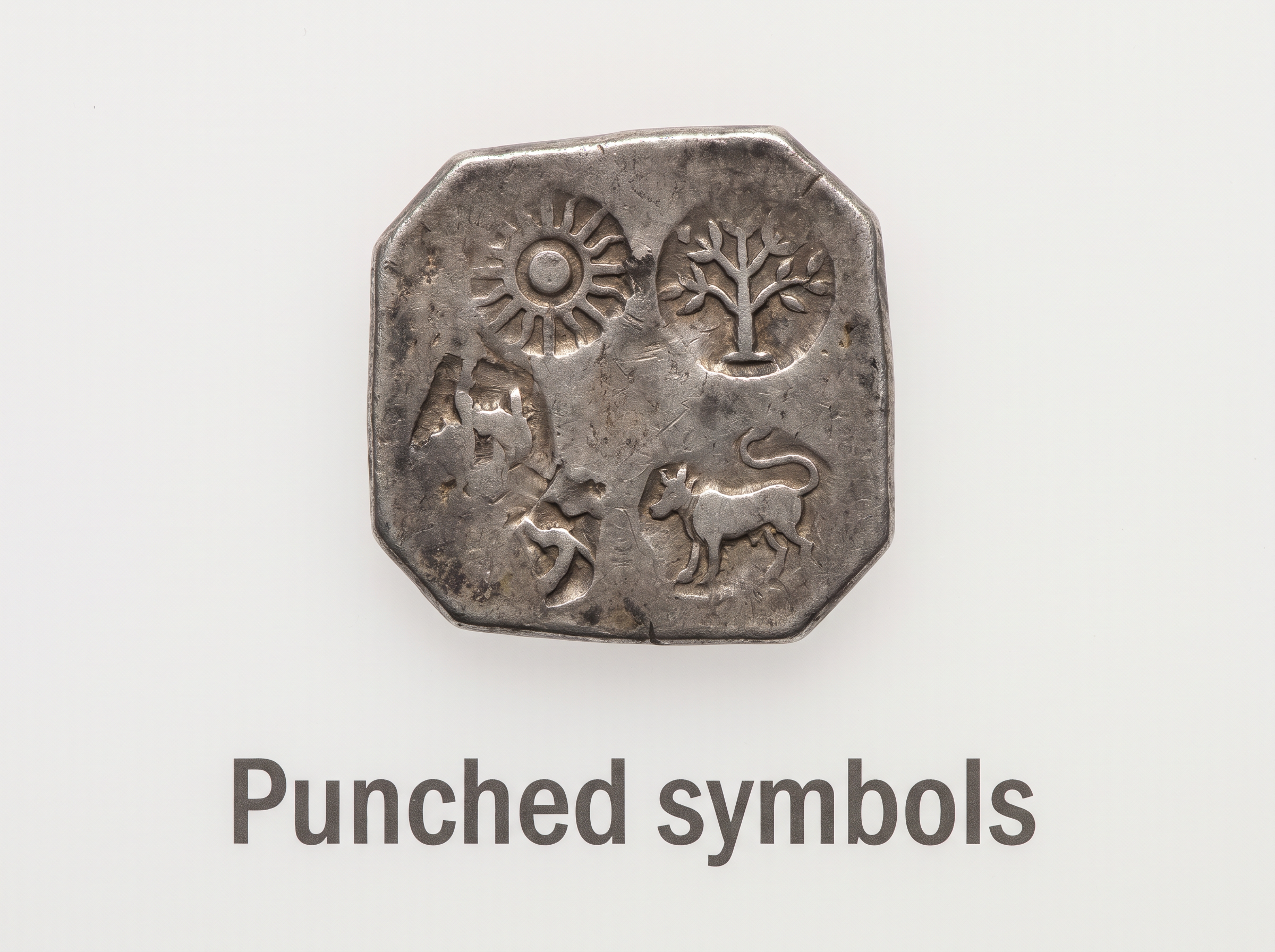
Fig. 2.8 – An early silver punch-marked coin.
Who Issued The Coins?
Attempts made to identify the symbols on punch-marked coins with specific ruling dynasties, including the Mauryas, suggest that these were issued by kings. But that is not the whole answer. It is also likely that merchants, bankers and townspeople issued some of these coins.
The first coins to bear the names and images of rulers were issued by the Indo-Greeks, who established control over the north-western part of the subcontinent c. second century BCE. A king’s face on a coin is a small thing that says a great deal: every transaction now carries his name into somebody’s hand.
The Kushanas, however, issued the largest hoards of gold coins — their first gold coins date to c. first century CE. These were virtually identical in weight with those issued by contemporary Roman emperors and by the Parthian rulers of Iran, and they have been found at several sites in north India and Central Asia.
That identical weight is not a coincidence. It is what merchants moving between these worlds would need. The widespread use of gold coins indicates the enormous value of the transactions that were taking place.
It is obvious, then, that networks of trade were not confined within political boundaries. South India was not part of the Roman Empire, yet there were close connections through trade. Money crossed frontiers that armies never did.
Coins were also issued by tribal republics, such as that of the Yaudheyas of Punjab and Haryana (c. first century CE). Archaeologists have unearthed several thousand copper coins issued by the Yaudheyas, pointing to that community’s interest and participation in economic exchanges. Copper, not gold — these were coins for everyday use, and there were thousands of them.
Some of the most spectacular gold coins were issued by the Gupta rulers. The earliest issues are remarkable for their purity — the metal is very nearly all gold. These coins facilitated long-distance transactions, from which kings also benefited, since a ruler who mints the money takes his share of the trade that uses it.
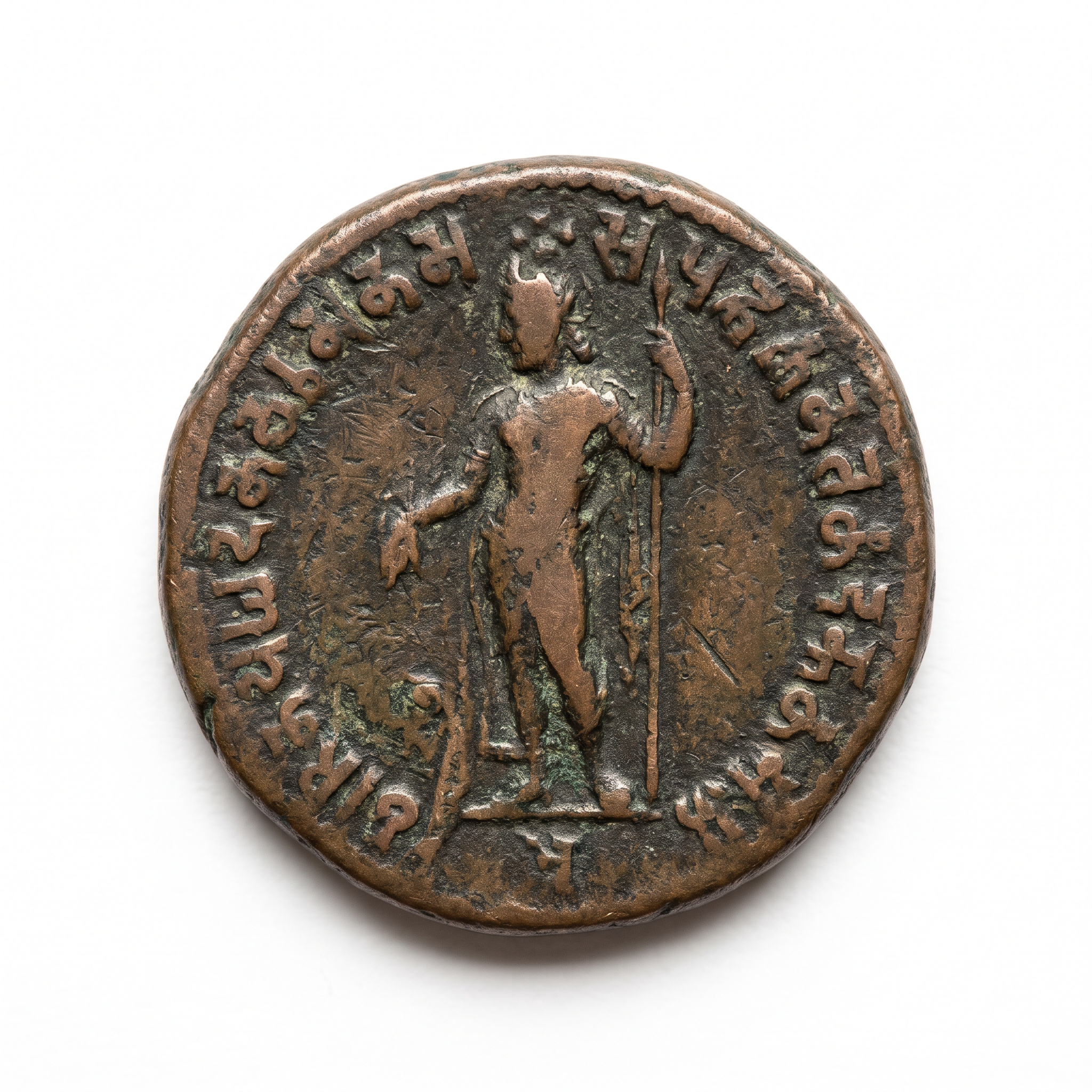
Fig. 2.9 – A copper Yaudheya coin.
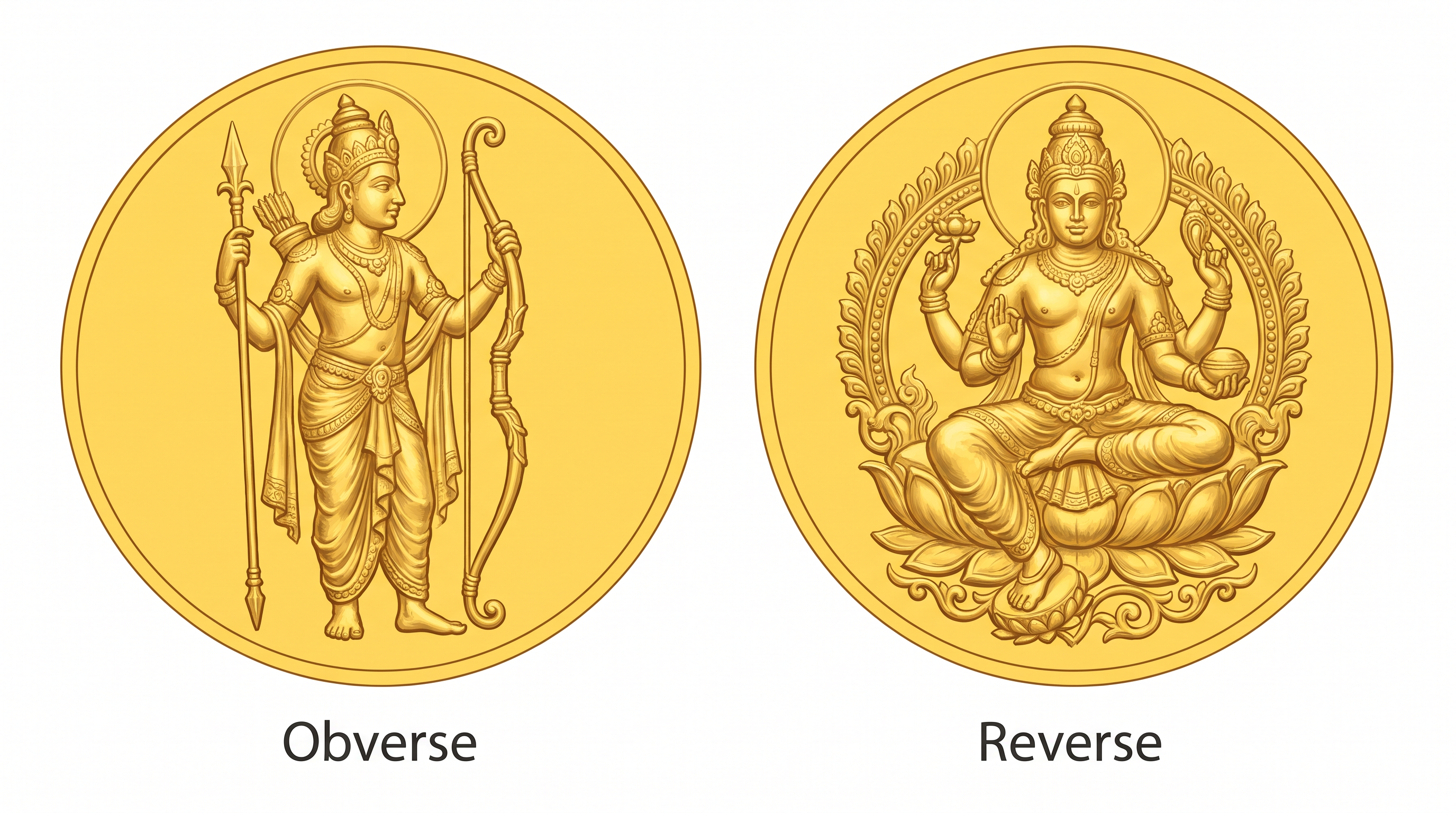
Fig. 2.10 – A Gupta gold coin.
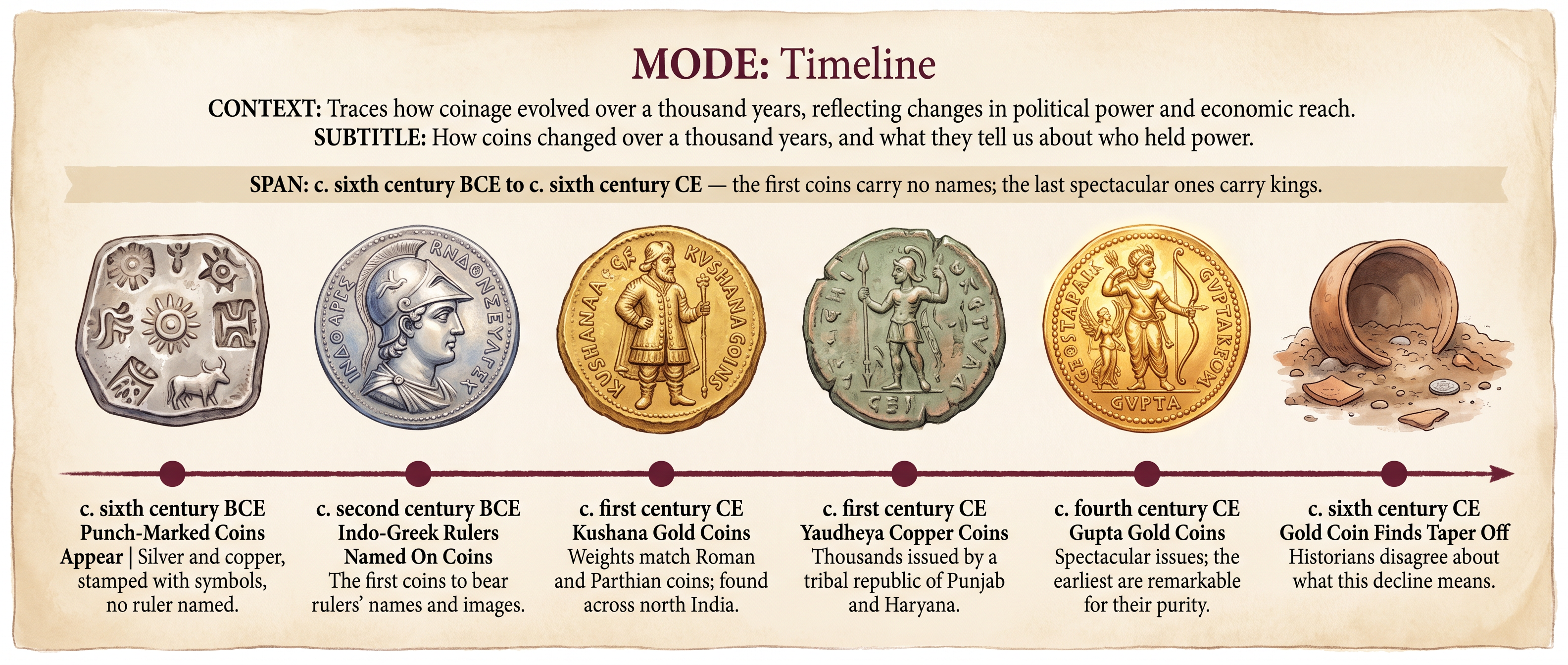
Fig. 2.11 – The Coming Of Coinage.
When The Gold Coins Stop
From c. sixth century CE onwards, finds of gold coins taper off. Does this indicate that there was some kind of an economic crisis?
Historians are divided on this issue, and it is worth watching how each side argues.
Some suggest that with the collapse of the Western Roman Empire, long-distance trade declined, and this affected the prosperity of the states, communities and regions that had benefited from it. Fewer coins, on this reading, means less wealth.
Others argue that new towns and networks of trade started emerging around this time — so the economy was changing, not collapsing. They also point out that though finds of coins of that period are fewer, coins continue to be mentioned in inscriptions and in texts. Could it be that there are fewer finds simply because coins were in circulation rather than being hoarded?
That last question deserves a moment. Most ancient coins we possess were buried — hidden in a pot, in a wall, in the ground — and never recovered by the person who hid them. A hoard is a sign that somebody was frightened, or unlucky. Coins that stay in people’s hands, passing from buyer to seller, do not end up in the archaeologist’s trench at all.
2.7 Back To Basics: How Are Inscriptions Deciphered?
So far, we have been studying excerpts from inscriptions, amongst other things. We have taken it for granted that we can read them.
But how do historians find out what is written on them? Nobody handed down a key. The scripts had been dead for centuries, and the languages had changed beyond recognition. Everything in this chapter — the dhamma, the officials, the anguish over Kalinga — depends on a puzzle being solved first.
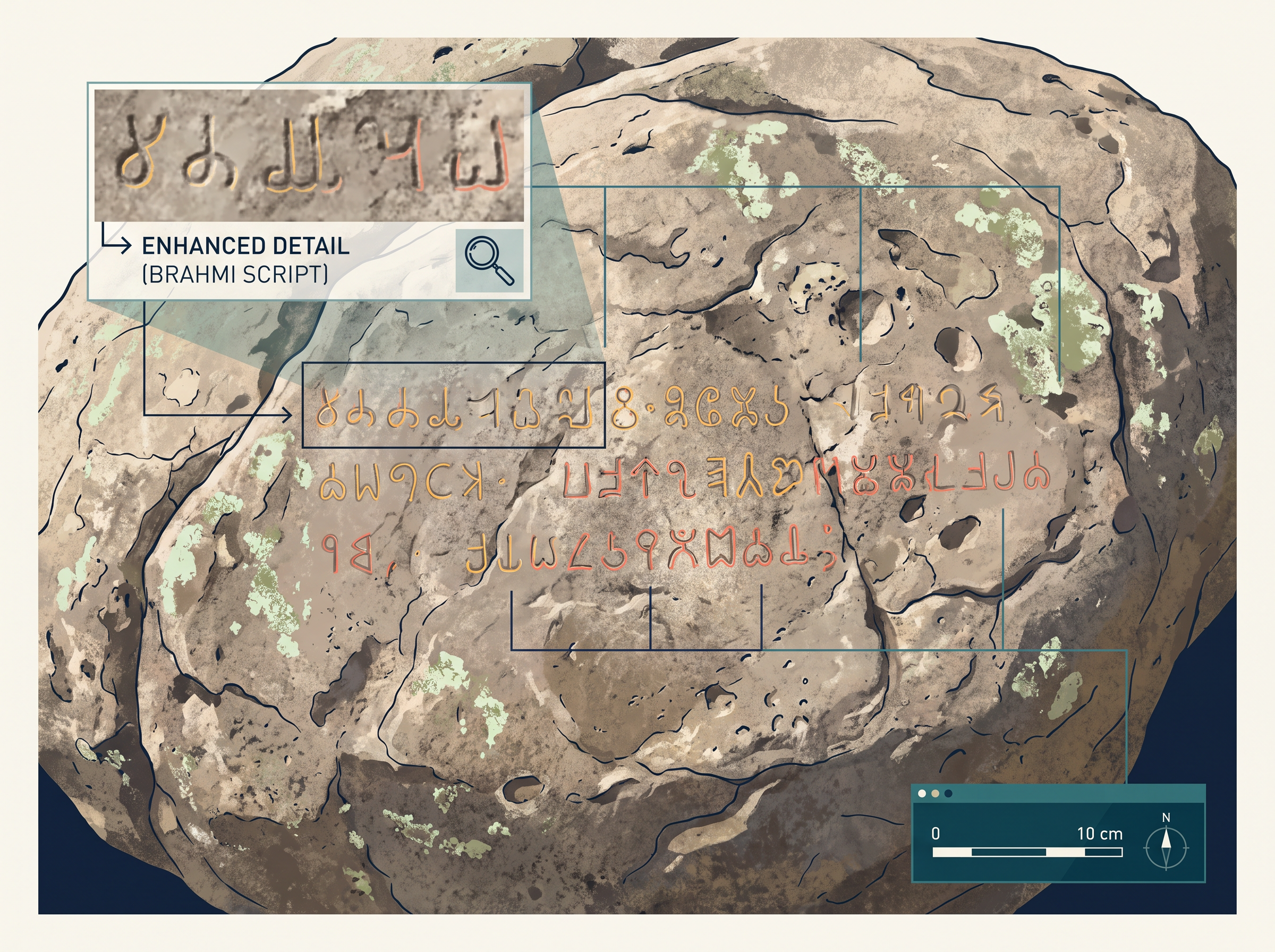
Fig. 2.12 – An Asokan rock inscription.
2.7.1 Deciphering Brahmi
Start with a piece of luck. Most scripts used to write modern Indian languages are derived from Brahmi, the script used in most Asokan inscriptions. The letters have changed, but they have changed in a line of descent — which means the modern shapes are distant relatives of the ancient ones.
From the late eighteenth century, European scholars, aided by Indian pandits who knew the older manuscript traditions, worked backwards from contemporary Bengali and Devanagari manuscripts — Devanagari being the script used to write Hindi. They compared the letters in these manuscripts with older and older specimens, moving back a step at a time.
It was slow, and it went wrong. Scholars who studied early inscriptions sometimes assumed these were in Sanskrit — a natural guess, since Sanskrit was the language of learning they knew. But the earliest inscriptions were, in fact, in Prakrit. If you try to read a Prakrit text as though it were Sanskrit, you will not get very far.
It was only after decades of painstaking investigation by several epigraphists that James Prinsep was able to decipher Asokan Brahmi in 1838. Notice the plural. This was not one man’s flash of insight; it was the end of a long chain of work by many people, most of whose names we no longer repeat.
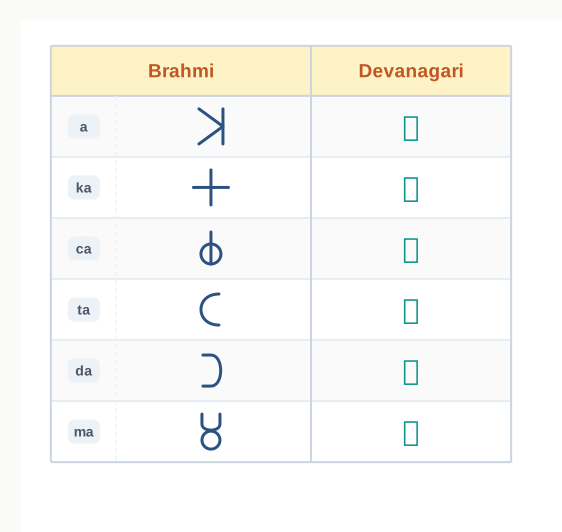
Fig. 2.13 – Brahmi letters and their Devanagari equivalents.
2.7.2 How Kharosthi Was Read
The story of the decipherment of Kharosthi, the script used in inscriptions in the northwest, is different. Here the way in was through coins.
Finds of coins of the Indo-Greek kings who ruled over the area (c. second-first centuries BCE) facilitated matters. These coins contain the names of kings written in both Greek and Kharosthi scripts — the same name, twice, in two systems of writing.
European scholars could already read Greek. So they could read one half of the coin, and then look across at the other half, knowing what it must say. For instance, the symbol for ‘a’ could be found in both scripts, in the writing of names such as Apollodotus. Match the sound to the sign, and you have one letter. Do it again, and you have another.
With Prinsep identifying the language of the Kharosthi inscriptions as Prakrit — not Greek, and not Sanskrit — it became possible to read longer inscriptions as well.
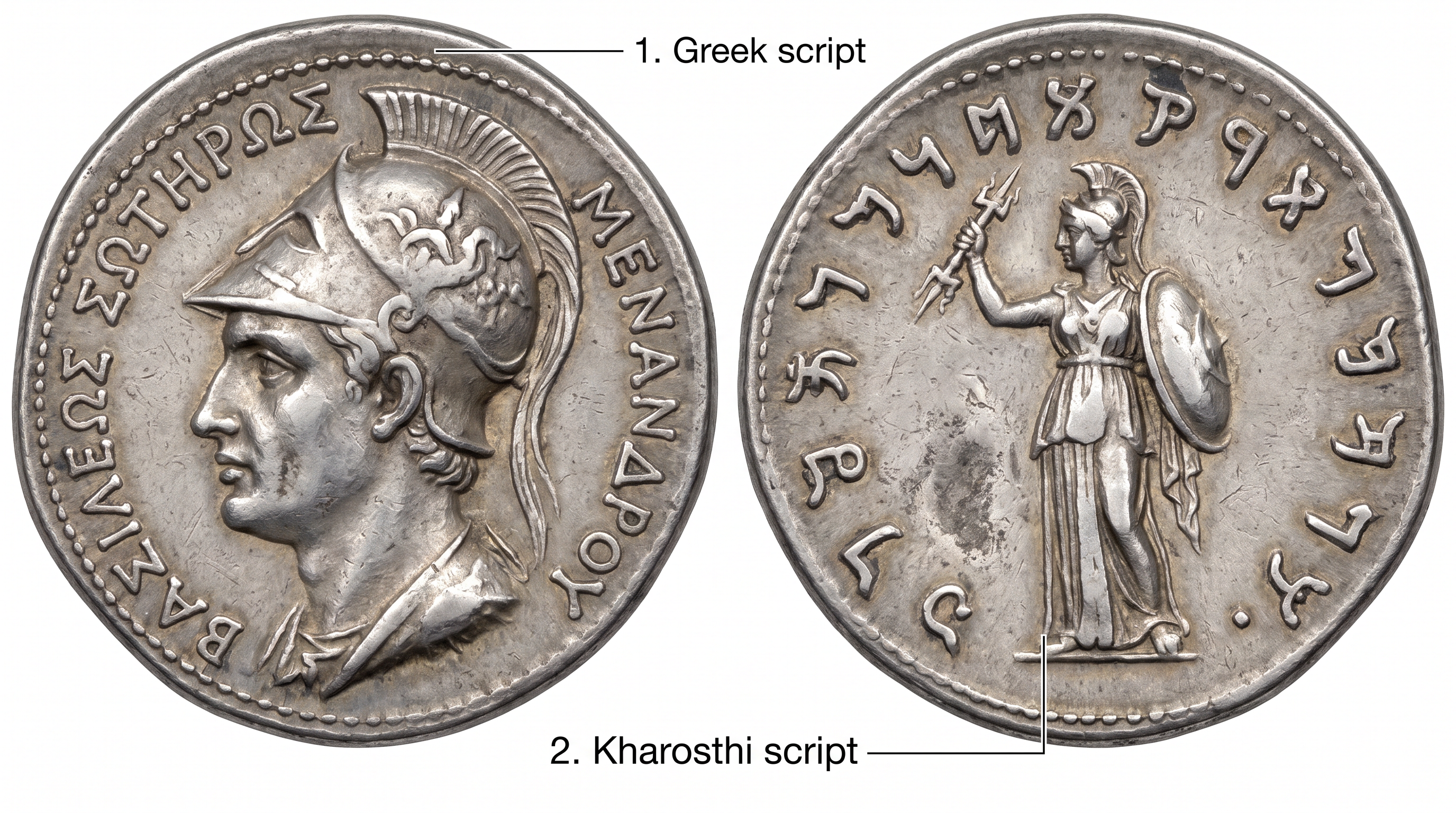
Fig. 2.14 – A bilingual coin of the Indo-Greek king Menander.
2.7.3 Historical Evidence From Inscriptions
To find out how epigraphists and historians actually work, let us look at two Asokan inscriptions more closely. Deciphering the letters, it turns out, is only the beginning of the problem.
Read the first one. Notice, before anything else, that the ruler does not give his name.
Whose Inscription Is It?
Note that the name of the ruler, Asoka, is not mentioned in this inscription at all. What is used instead are titles adopted by the ruler — devanampiya, often translated as ‘beloved of the gods’, and piyadassi, or ‘pleasant to behold’.
So how do we know this is Asoka? The name Asoka is mentioned in some other inscriptions, which also contain these same titles. After examining all these inscriptions, and finding that they match in terms of content, style, language and palaeography, epigraphists have concluded that they were issued by the same ruler.
That is a chain of reasoning, not a fact lying on the surface of the stone. It is the kind of chain you should now expect to find underneath every confident sentence in a history book.
Is The King Telling The Truth?
Look again at what Asoka claims: that earlier rulers had no arrangements to receive reports. If you consider the political history of the subcontinent prior to Asoka — the mahajanapadas, Magadha, the officials Megasthenes describes — do you think this statement is true?
Historians have to constantly assess statements made in inscriptions, and judge whether they are true, plausible, or exaggerations. A king announcing that he is the first to do something is a king making a claim about himself.
Did you also notice that there are words within brackets in the extract — ‘possibly in a palanquin’, for instance? Epigraphists sometimes add these to make the meaning of sentences clear. This has to be done very carefully, to ensure that the intended meaning of the author is not changed. Every bracket is a modern scholar reaching into an ancient sentence, and each one is a small risk.
Who Was Reading These Rocks?
Historians have to make other assessments as well. If a king’s orders were inscribed on natural rocks near cities or important routes of communication, would passers-by have stopped to read them?
Most people were probably not literate. And even a literate traveller from far away faced another problem: did everybody throughout the subcontinent understand the Prakrit used in Pataliputra? Would the orders of the king have been followed at all?
Answers to such questions are not always easy to find. But the questions themselves are the historian’s work. An inscription proves that a message was sent. It does not prove that it arrived.
The Anguish Of The King
Some of these problems become sharply visible if we look at another Asokan inscription. It has often been interpreted as reflecting the anguish of the ruler, and as marking a change in his attitude towards warfare.
Read the numbers first, and do not read past them. A hundred and fifty thousand people were driven from their homes. A hundred thousand were killed. Many more died — of hunger, of wounds, of the destruction of everything that had kept them alive. These are the figures the conqueror himself chose to record.
The inscription then turns to the king’s own state of mind: his repentance, his devotion to dhamma, his finding of the slaughter painful and deplorable. It is an extraordinary document, and it is also, note, entirely about him. The people of Kalinga appear in it as a count of the dead and the deported. Not one of them speaks.
The Inscription That Is Not There
Now here is the difficulty, and the situation becomes more complex once we move beyond reading the inscription at face value.
While Asokan inscriptions have been found in present-day Orissa, the one depicting his anguish is missing. In other words, this inscription has not been found in the region that was actually conquered. It was set up elsewhere, for other people to read.
What are we to make of that? Is it that the anguish of the recent conquest was too painful in that region, and therefore the ruler was unable to address the issue there? The remorse was published where nobody had lost a family — and withheld where everybody had.
2.8 The Limitations Of Inscriptional Evidence
By now it is probably evident that there are limits to what epigraphy can reveal. We have leaned on inscriptions all through this chapter. It is time to be honest about how much weight they can carry.
Problems Of The Stone Itself
Sometimes the limitations are simply technical. Letters are very faintly engraved, worn down by centuries of rain and wind, and so reconstructions are uncertain — a scholar has to decide what a half-vanished stroke once was.
Inscriptions may also be damaged, with letters missing altogether. A sentence with a hole in it can often be completed in more than one way, and the different completions may not mean the same thing.
Besides, it is not always easy to be sure about the exact meaning of the words used in inscriptions. Some of them may be specific to a particular place or a particular time, and their sense has not survived with them. If you go through an epigraphical journal — some are listed in Fig. 2.17, at the end of this chapter — you will realise that scholars are constantly debating and discussing alternative ways of reading inscriptions. The reading of a single word can change the meaning of a royal order.
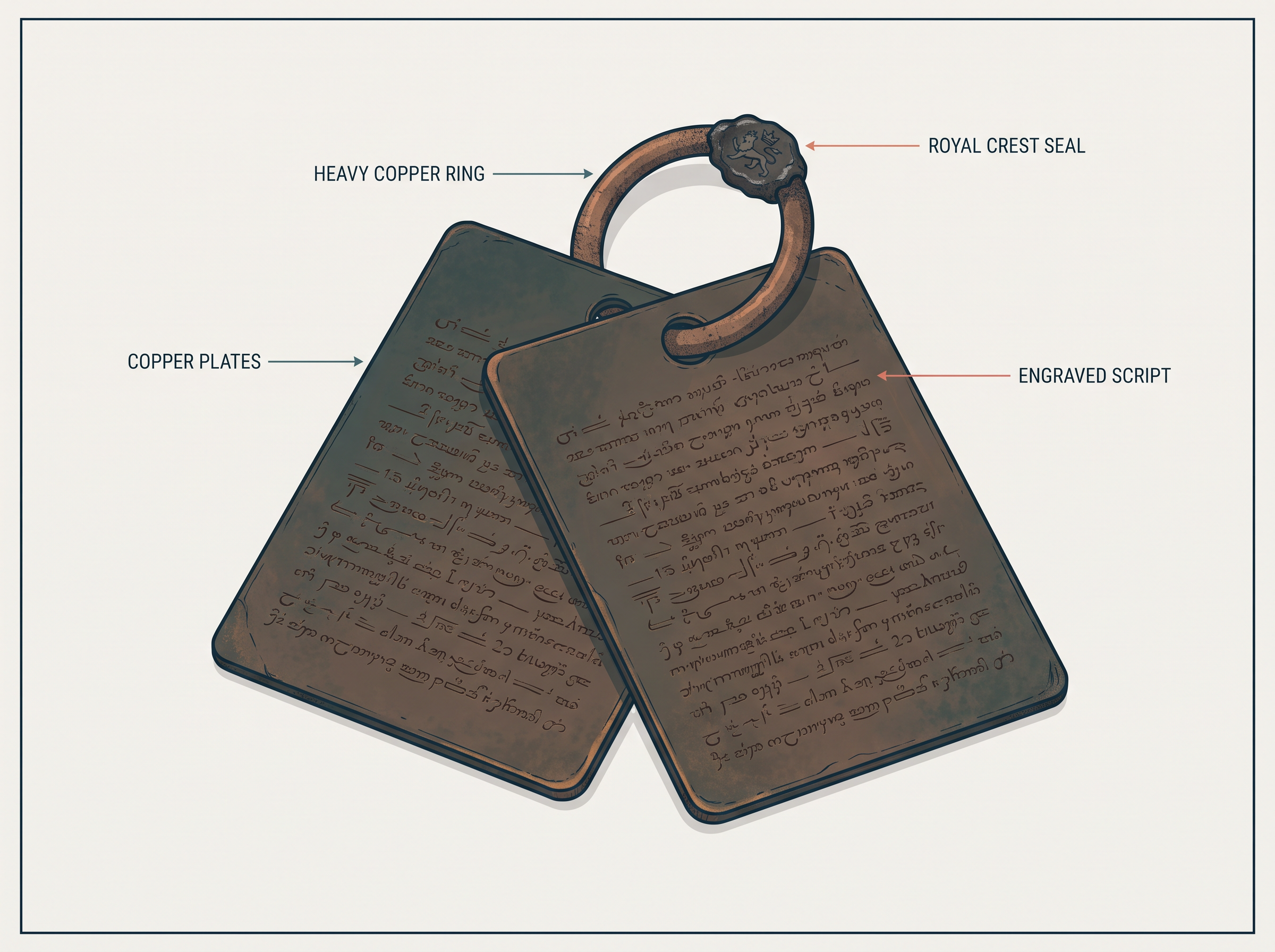
Fig. 2.15 – A copperplate inscription from Karnataka, c. sixth century CE.
Problems Of Survival
Although several thousand inscriptions have been discovered, not all of them have been deciphered, published and translated. Work that has not been done is work whose findings we do not have.
More seriously, many more inscriptions must have existed, which have not survived the ravages of time. Stone is broken up and reused. Copper is melted down. Whole sites are built over. So what is available at present is probably only a fraction of what was inscribed — and there is no way to know what fraction.
Think about what that does to any conclusion drawn from a distribution map. A region with no surviving inscriptions may have been outside the reach of a state, or it may simply have had bad luck.
The Deeper Problem: What Was Never Written
There is another, and perhaps more fundamental, problem. Not everything that we may consider politically or economically significant was necessarily recorded in inscriptions at all.
Consider what is missing. Routine agricultural practices — the ordinary work that fed the entire subcontinent — find no mention. Neither do the joys and sorrows of daily existence. Inscriptions focus, more often than not, on grand, unique events: a conquest, a gift, a great reservoir repaired. Nobody carves the ordinary into rock.
And there is the question of whose voice we are hearing. The content of inscriptions almost invariably projects the perspective of the person or persons who commissioned them. A king’s inscription tells you what a king wanted remembered. A donor’s inscription tells you what a donor wished to be known for.
As such, inscriptions need to be juxtaposed with other perspectives — with texts, coins, sculpture, archaeological finds — so as to arrive at a better understanding of the past. No single kind of evidence is allowed the last word.
Whose History Gets Written
Thus epigraphy alone does not provide a full understanding of political and economic history. And historians do not settle the matter once and for all; they often question both old and new evidence.
The questions asked have themselves changed over time. Scholars in the late nineteenth and early twentieth centuries were primarily interested in the histories of kings — who ruled, when, and over what territory. That is the kind of history the inscriptions were most willing to give.
From the mid-twentieth century onwards, issues such as economic change, and the ways in which different social groups emerged, assumed far more importance. Historians began asking about ploughs, taxes, guilds and land grants, and had to learn to read the old sources sideways to get at them.
Recent decades have seen a much greater preoccupation with the histories of marginalised groups — the people who left no inscriptions of their own: labourers, pastoralists, forest peoples, women, those held as slaves. This will probably lead to fresh investigations of old sources, and to the development of new strategies of analysis.
That is worth holding on to. The evidence has not changed. The questions have. And a source that seemed exhausted a century ago may still answer a question that nobody had yet thought to ask it.
2.9 Summary
How We Know Any Of This
- In the 1830s James Prinsep, an officer in the mint of the East India Company, deciphered Brahmi and Kharosthi, and found a king called Piyadassi, who was also named Asoka in a few inscriptions.
- Inscriptions are writings engraved on hard surfaces such as stone, metal or pottery. They record what those who commissioned them wished remembered — the exploits of kings, and gifts made to religious institutions.
- Undated inscriptions can be placed in time by palaeography, the study of how letter shapes changed.
- The earliest inscriptions were in Prakrit; Pali, Tamil and Sanskrit were also used. Languages that were never written down have left no trace at all.
- Historians first used inscriptions and texts to reconstruct dynasties. Later they asked how political change was linked to economic and social change, and found the links real but never simple.
The Earliest States
- The sixth century BCE was a turning point: early states, cities, growing use of iron, coinage, and new systems of thought including Buddhism and Jainism.
- Early Buddhist and Jaina texts mention sixteen mahajanapadas. The lists vary, but Vajji, Magadha, Koshala, Kuru, Panchala, Gandhara and Avanti recur.
- Most were ruled by kings; some, the ganas or sanghas, were oligarchies where power was shared among men called rajas. Both Mahavira and the Buddha belonged to such ganas.
- Fortified capitals, armies and officials cost money. The Dharmasutras advised rulers, ideally Kshatriyas, to collect taxes and tribute from cultivators, traders and artisans. Raiding neighbours was an accepted way of getting wealth.
- Magadha became the most powerful mahajanapada between the sixth and fourth centuries BCE. Modern historians point to fertile land, iron, elephants and the Ganga; early Buddhist and Jaina writers credited ambitious kings such as Bimbisara, Ajatasattu and Mahapadma Nanda.
- The capital moved from Rajagaha, fortified among hills, to Pataliputra, which commanded the routes along the Ganga.
The Mauryan Empire
- Chandragupta Maurya founded the empire (c. 321 BCE) and extended it to Afghanistan and Baluchistan; his grandson Asoka conquered Kalinga.
- Historians use sculpture, the fragments of Megasthenes, the Arthashastra, later Buddhist, Jaina and Puranic literature — and above all Asoka’s inscriptions (c. 272/268-231 BCE).
- Asoka was the first ruler to inscribe messages to his subjects on rocks and pillars, proclaiming dhamma: respect for elders, generosity, kindness to slaves and servants, and respect for other religions and traditions.
- There were five political centres — Pataliputra, Taxila, Ujjayini, Tosali and Suvarnagiri. The regions were far too diverse for uniform administration; control was strongest near these centres.
- The army was organised in six branches, and dhamma mahamattas were appointed to spread the king’s message.
- Nineteenth and early twentieth century historians, writing under colonial rule, saw the empire as a landmark. Yet it lasted only about 150 years, never covered the whole subcontinent, and governed unevenly.
New Notions Of Kingship
- New kingdoms and chiefdoms — the Cholas, Cheras and Pandyas in Tamilakam — proved stable and prosperous. A chief received gifts from his kinfolk and supporters; a king collected taxes through officials.
- The Satavahanas and the Shakas drew revenue from long-distance trade. Their social origins were often obscure, so they claimed status once they had power.
- The Kushanas identified themselves with deities: colossal statues in shrines at Mat and in Afghanistan, and the title devaputra, ‘son of god’.
- Gupta rulers depended on samantas, who lived off local resources and offered homage and troops. Strong samantas could become kings; weak kings could sink into subordination.
- Prashastis, such as Harishena’s Prayaga Prashasti for Samudragupta, praise kings as gods. Their composers valued them as poetry, not as literal record.
A Changing Countryside
- Ordinary people rarely left accounts of themselves. Historians use stories such as the Gandatindu Jataka, in which subjects curse a king and abandon their village for the forest.
- To meet the demand for taxes, production was raised: plough agriculture with an iron-tipped share in the alluvial valleys, transplantation of paddy, and irrigation by wells, tanks and canals.
- The plough did not suit everywhere — semi-arid Punjab and Rajasthan, and the hoe-farming hill tracts, are proof that technology follows terrain.
- Benefits were uneven. Buddhist stories name landless labourers, small peasants and large landholders; Sangam texts name vellalar, uzhavar and adimai. The gahapati and the village headman grew powerful.
- From the early centuries CE, land was granted away, mostly to Brahmanas and religious institutions, recorded on copper plates. Prabhavati Gupta’s charter for Danguna shows a queen granting land despite what legal texts prescribed.
- Historians disagree about what land grants mean: a way of extending agriculture into new areas, or a sign of kings losing control and buying allies.
- Pastoralists, fisherfolk, hunter-gatherers, shifting cultivators and mobile artisans lay beyond the state’s reach, and kept no records.
Towns And Trade
- Towns grew from c. sixth century BCE along routes of communication — Pataliputra on the river, Ujjayini on land routes, Puhar by the sea.
- Excavation is hard because people still live on these sites. What survives includes Northern Black Polished Ware and objects of gold, silver, copper, bronze, ivory, glass, shell and terracotta.
- Votive inscriptions name townspeople and their trades — weavers, scribes, potters, goldsmiths, blacksmiths, merchants. Guilds, or shrenis, procured raw materials, regulated production and marketed goods.
- Routes ran overland to Central Asia and overseas to Africa, West Asia, Southeast Asia and China. Pepper, textiles and medicinal plants went to the Roman Empire.
- Coinage spread: punch-marked silver and copper coins, Indo-Greek coins bearing rulers’ names, Kushana gold matching Roman weights, thousands of Yaudheya copper coins, and pure Gupta gold.
- Gold coin finds taper off after c. sixth century CE. Historians differ on whether this shows decline, or only that coins were circulating rather than being hoarded.
The Limits Of The Evidence
- Letters weather, plates are melted, sites are built over. What survives is a fraction of what was inscribed, and we cannot say how large a fraction.
- Inscriptions record grand, unique events, not routine farming or daily life, and they carry the perspective of whoever paid for them.
- Epigraphy alone cannot give a full account. It must be set beside texts, coins, sculpture and excavation.
- The questions have changed: from the histories of kings, to economic change, to the histories of marginalised groups — and old sources are being read again with new questions.
The Chronology Of The Chapter
NCERT prints its own chronology at the end of this chapter, and its note deserves attention. It is difficult to date economic developments precisely, and there are enormous subcontinental variations which the timeline does not show. Only the earliest dates for specific developments have been given. The date of Kanishka’s accession is not certain, and is therefore marked with a question mark.
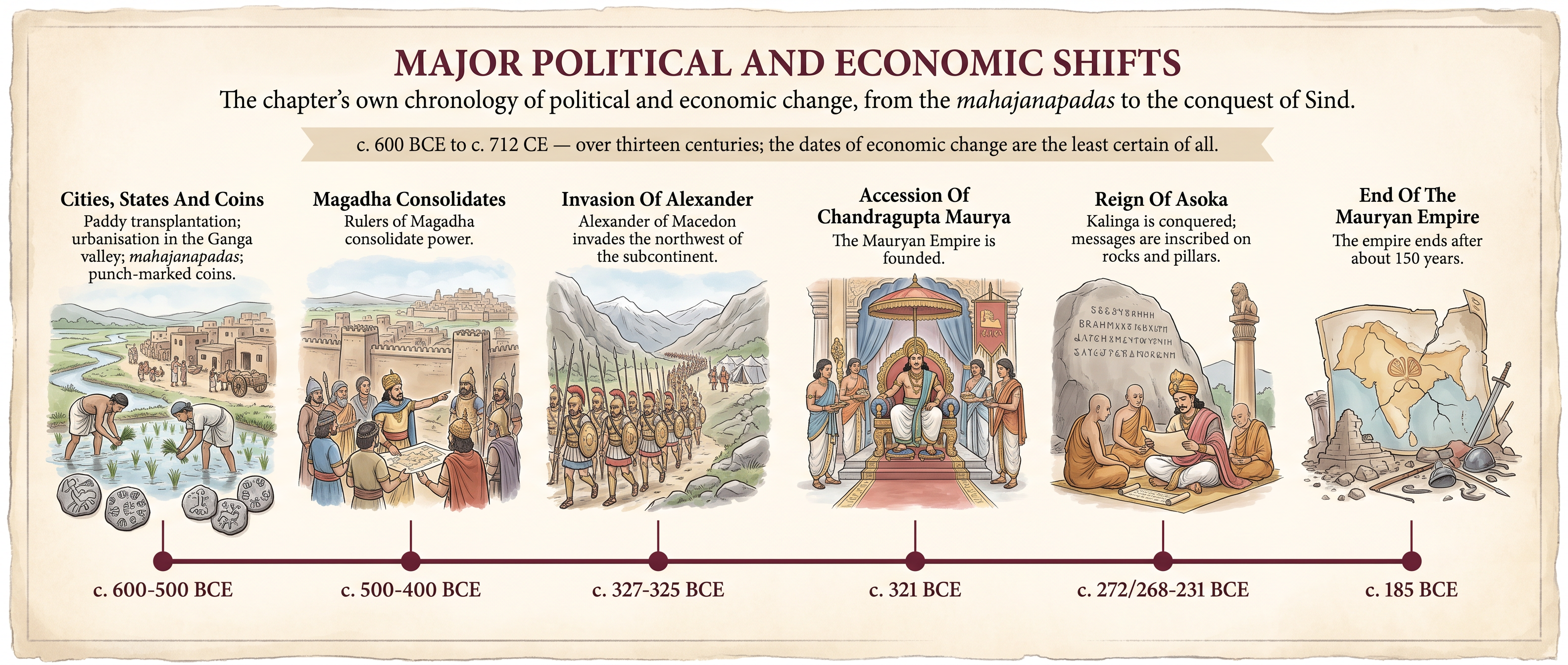
Fig. 2.16 – Major Political And Economic Developments.
Advances In Epigraphy
The second chronology the chapter prints is not about kings at all. It is about the scholars who slowly made the inscriptions readable — the eighteenth-century founding of the Asiatic Society, the nineteenth-century decipherments and journals, and the twentieth-century reference works that epigraphists still use.
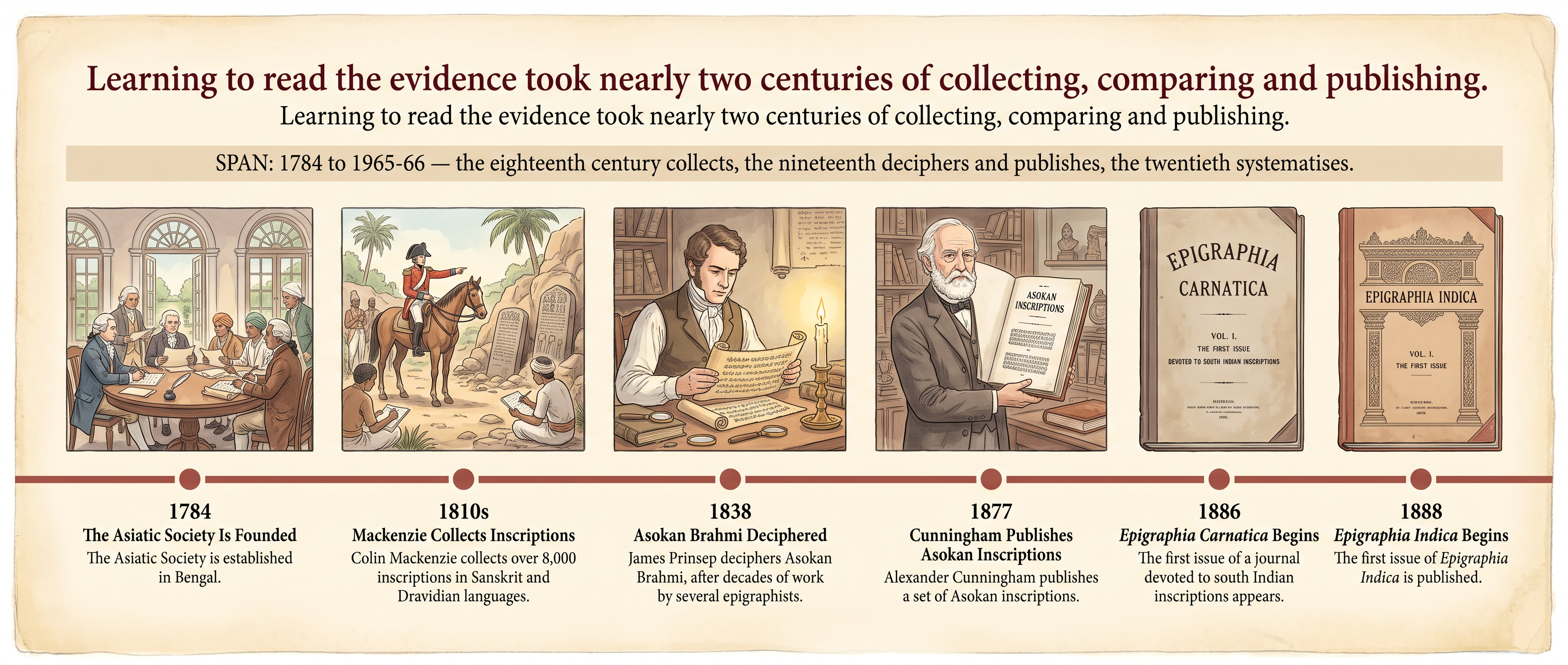
Fig. 2.17 – Major Advances In Epigraphy.
What The Evidence Cannot Tell Us
We have a king’s repentance over Kalinga, but not one word from anybody who was deported or bereaved there. We have a queen’s charter granting away a village, but nothing from the peasants of Danguna who woke up with a new lord.
The pastoralists, the fisherfolk, the shifting cultivators, the labourers and the enslaved appear in this chapter only when somebody else counted them, taxed them or wrote a poem about them. Their absence is not a gap in the record. It is the record — of who could afford to have their words cut into stone, and who could not.
2.10 NCERT Questions
Discuss the evidence of craft production in Early Historic cities. In what ways is this different from the evidence from Harappan cities? (in about 100-150 words)
Describe the salient features of mahajanapadas. (in about 100-150 words)
How do historians reconstruct the lives of ordinary people? (in about 100-150 words)
Compare and contrast the list of things given to the Pandyan chief (Source 3) with those produced in the village of Danguna (Source 8). Do you notice any similarities or differences? (in about 100-150 words)
List some of the problems faced by epigraphists. (in about 100-150 words)
Discuss the main features of Mauryan administration. Which of these elements are evident in the Asokan inscriptions that you have studied? (in about 500 words)
This is a statement made by one of the best-known epigraphists of the twentieth century, D.C. Sircar: ‘There is no aspect of life, culture and activities of the Indians that is not reflected in inscriptions.’ Discuss. (in about 500 words)
Discuss the notions of kingship that developed in the post-Mauryan period. (in about 500 words)
To what extent were agricultural practices transformed in the period under consideration? (in about 500 words)
Compare Maps 1 and 2, and list the mahajanapadas that might have been included in the Mauryan Empire. Are any Asokan inscriptions found in these areas?
2.11 Check Your Concepts
A chief receives gifts; a king collects taxes. Using Source 3, explain why this difference matters for the kind of state each of them could build.
Source 5 describes one rock at Girnar carrying the records of a Shaka ruler and, centuries later, of a Gupta ruler, both about the same lake. What does Rudradaman want his subjects to believe about him, and what does the inscription not allow us to check?
The Manusmrti (Source 6) advises the king to bury markers that will not decay at the intersection of boundaries. What does this advice suggest about rural society in this period?
Punch-marked coins (Fig. 2.8) carry symbols but no names. The coin of Menander (Fig. 2.14) carries a ruler’s name and image. What does this change tell us about how kings wished to be seen?
The name Asoka does not appear in Source 10. Set out, step by step, how epigraphists nevertheless conclude that these inscriptions were issued by one ruler — and state what would overturn that conclusion.
The inscription recording the king’s anguish over Kalinga has not been found in Kalinga itself. What has been suggested about this absence, and why must historians be careful when they argue from something that is missing?
Historians explain land grants in two different ways. Which explanation does the charter of Prabhavati Gupta (Source 8) appear to support, and why is a single charter not enough to settle the question?
Finds of gold coins taper off from c. sixth century CE. Give the two explanations historians offer for this, and explain what kind of evidence would help you decide between them.