Chapter 3: Kinship, Caste And Class
Suppose you are handed a task. Reconstruct family life, work and status in the Indian subcontinent as it stood two thousand years ago. There is no census, no photograph, no diary, no voice recording. What exactly would you work with?
You would have texts. Some of them tell you what people were supposed to do — whom a daughter should marry, what a Brahmana should study, what a Shudra should be allowed to own. Others tell stories: two sets of cousins quarrelling over a kingdom, a forest-dweller who taught himself archery, a chief so generous that poets walked for days to reach him. You would have inscriptions cut into stone, carrying the names of kings and the gifts of guilds. You would have sculpture, where a chief stands twice the height of the man beside him.
Now the difficulty. Almost every one of these was made by someone with a position to defend. A code of conduct written by Brahmanas records what Brahmanas wanted; it does not record what a village actually did. An epic may preserve the memory of a war, or may simply be a magnificent story. A stone inscription praises; it does not confess.
This chapter is about exactly that gap — between the rule and the practice, between what a text prescribes and what people did.
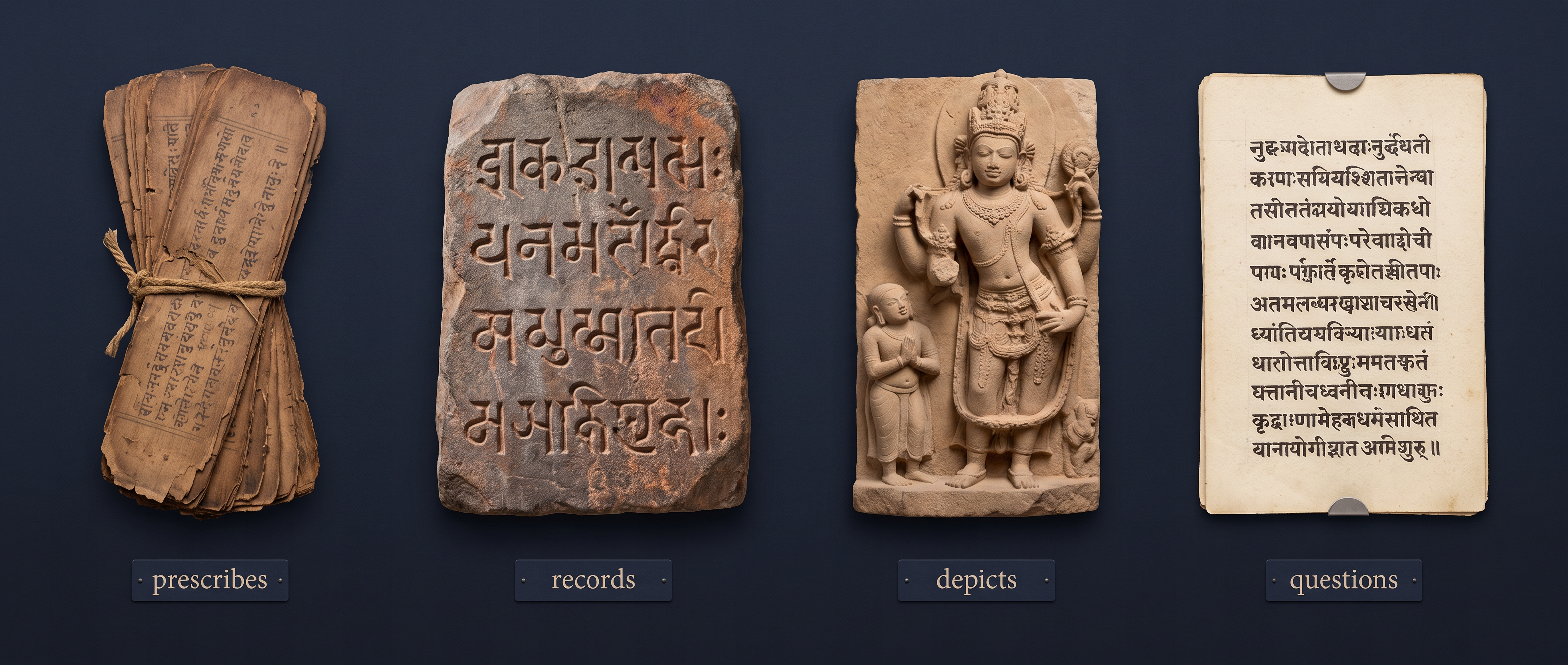
Fig. 3.0 – Kinds of evidence used by historians.
3.1 The Critical Edition Of The Mahabharata
What Was Changing Between 600 BCE And 600 CE
In the previous chapter we saw that economic and political life changed in several ways between c. 600 BCE and 600 CE. Those changes did not stop at the boundaries of politics and trade. They reached into how people lived, worked and thought of one another.
Three examples show how. Agriculture spread into forested areas, and this transformed the lives of forest dwellers, who had until then lived by hunting and gathering. Craft specialists — potters, weavers, smiths — often emerged as distinct social groups, marked off by the work they did. And wealth was distributed unequally, which sharpened the differences between people who already lived side by side.
None of this is recorded in a register we can simply open and read. It has to be reconstructed, and the material for the reconstruction is mostly written.
Reading Texts As Evidence
Historians often use textual traditions to understand these processes. Some texts lay down norms of social behaviour — that is, they prescribe how people ought to act, rather than describing how they actually acted. Other texts describe a wide range of social situations and practices, and occasionally comment on them.
Inscriptions help too. Writing cut into stone or metal lets us catch a glimpse of some social actors — a king, a merchant, a guild — who might otherwise be invisible.
But there is a catch, and it runs through this entire chapter. Each text, and each inscription, was written from the perspective of a specific social category. So we have to keep asking three questions of every document: who composed it, what exactly did they compose, and for whom? We also need to consider the language it used, and the ways in which it circulated — a Sanskrit verse chanted by a priest and a Pali story retold in a marketplace do not reach the same people. Used carefully, texts allow us to piece together the attitudes and practices that shaped social histories.
The Mahabharata: A Text Of A Thousand Years
For much of this chapter we focus on the Mahabharata, a colossal epic which, in its present form, runs to over 100,000 verses. It depicts a very wide range of social categories and situations, which makes it one of the richest texts of the subcontinent for a social historian.
Its scale in time matters as much as its scale in length. The Mahabharata was composed over a period of about 1,000 years, from c. 500 BCE onwards, and some of the stories it contains may have been in circulation even earlier. No single generation made it. It grew.
Its central story is about two sets of warring cousins. Alongside that story, the text also contains sections laying down norms of behaviour for various social groups. Occasionally — though not always — the principal characters seem to follow these norms. That gap is the historian’s opening. What does conformity with norms signify, and what do deviations from them signify? Keep the question open as you read.
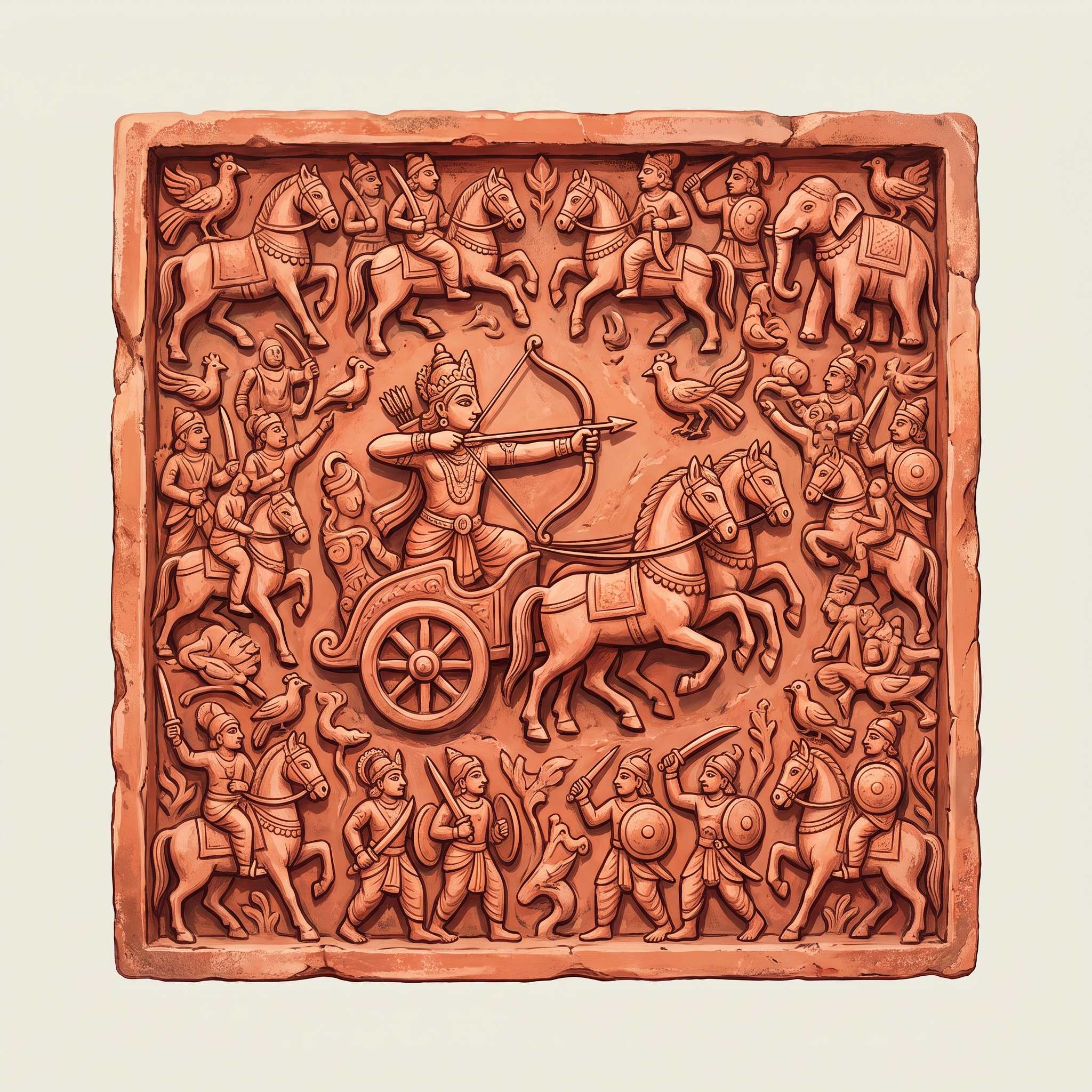
Fig. 3.1 – Terracotta sculpture of a Mahabharata scene.
A Project Begun In 1919
The Mahabharata does not survive as one book. It survives as manuscripts — hand-copied versions, made in different centuries, in different regions, by different scribes.
One of the most ambitious projects of scholarship began in 1919, under the leadership of a noted Indian Sanskritist, V.S. Sukthankar. A team comprising dozens of scholars set out to prepare a critical edition of the Mahabharata — an edition that establishes, as far as the evidence allows, what the text most probably contained, by comparing every version that can be found.
What did this actually involve? Initially, it meant collecting Sanskrit manuscripts of the text, written in a variety of scripts, from different parts of the country. The same verses could look entirely unlike one another on the page, because scripts differed from region to region.
The team then worked out a method of comparing verses from each manuscript. Ultimately, they selected the verses that appeared common to most versions, and published these in several volumes, running into over 13,000 pages. The project took 47 years to complete.
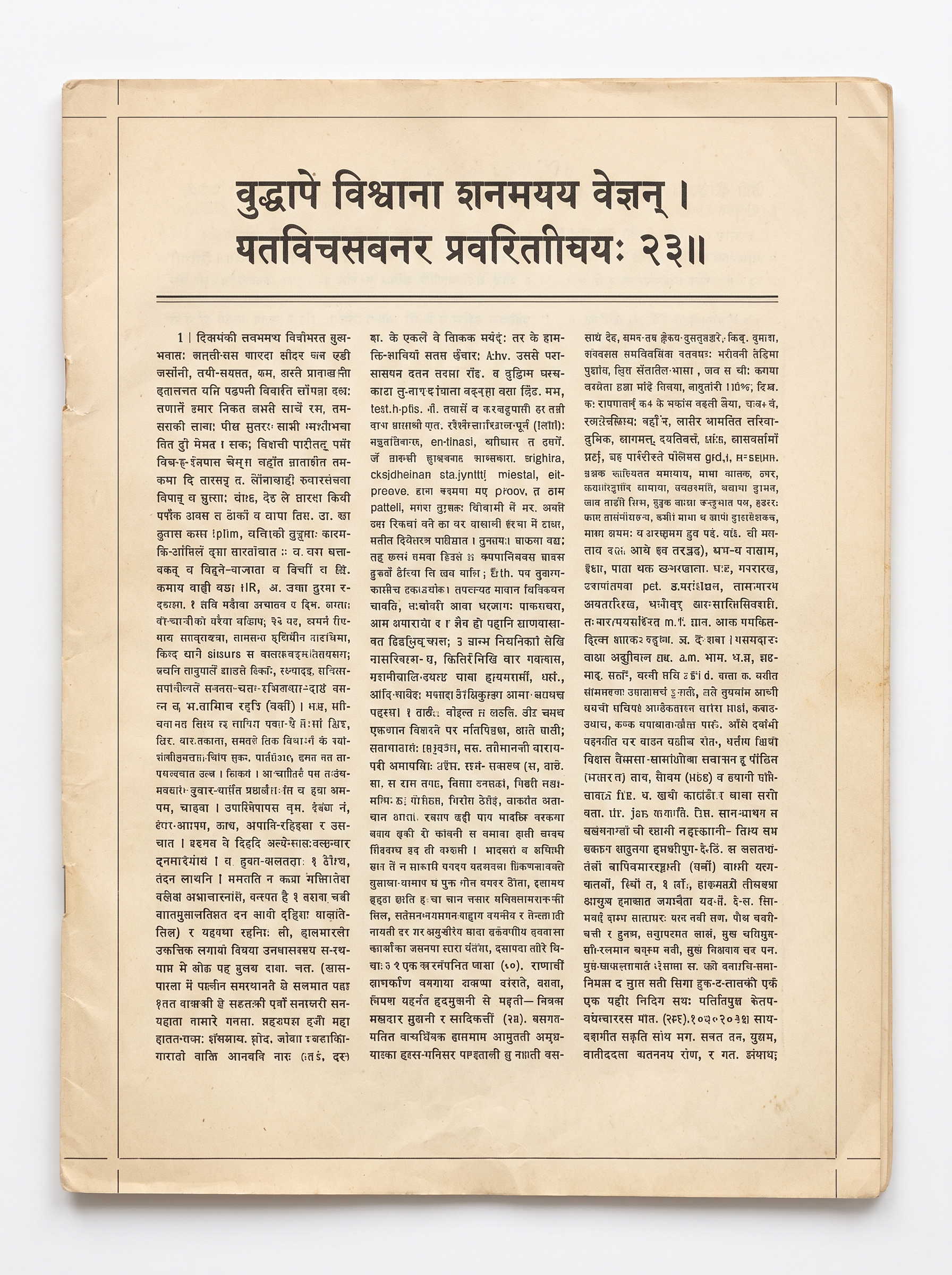
Fig. 3.2 – A page from the Critical Edition.
What The Footnotes Showed
Two things became apparent from this labour. First, there were several common elements in the Sanskrit versions of the story. These were evident in manuscripts found all over the subcontinent — from Kashmir and Nepal in the north to Kerala and Tamil Nadu in the south. A shared story travelled a very long way.
Second, and just as striking, there were enormous regional variations in the ways in which the text had been transmitted over the centuries. These variations were documented in footnotes and appendices to the main text. Taken together, more than half of the 13,000 pages are devoted to these variations.
Pause on that figure. The disagreements between manuscripts occupy more space than the agreed text itself. What was meant to be an apparatus of footnotes turned out to be a historical record in its own right.
In a sense, these variations are reflective of the complex processes that shaped early — and later — social histories. Those processes worked through dialogues between dominant traditions and resilient local ideas and practices. Local practice did not simply vanish when a dominant tradition arrived; it argued back, and sometimes it won. These dialogues are characterised by moments of conflict as well as moments of consensus.
Whose Texts, Whose History?
There is one more caution to carry forward. Our understanding of these processes is derived primarily from texts written in Sanskrit, by and for Brahmanas. That is the voice we hear most loudly, simply because it is the voice that was written down most often and preserved most carefully.
When issues of social history were explored for the first time by historians in the nineteenth and twentieth centuries, they tended to take these texts at face value. They believed that everything laid down in these texts was actually practised — that the rule and reality were the same thing.
Subsequently, scholars began studying other traditions, drawing on works in Pali, Prakrit and Tamil. These studies indicated something more complicated. The ideas contained in normative Sanskrit texts — the texts that prescribe rules — were on the whole recognised as authoritative. But they were also questioned, and occasionally even rejected.
Hold on to that finding. It is the thread that ties together everything that follows about kinship, caste and class.
3.2 Kinship And Marriage: Many Rules And Varied Practices
3.2.1 Finding Out About Families
We often take family life for granted. However, you may have noticed that not all families are identical. They vary in the number of members they have, in how those members are related to one another, and in the kinds of activities they share.
Often, people belonging to the same family share food and other resources. They live together, work together and perform rituals together. Families are usually parts of larger networks of people defined as relatives — or, to use a more technical term, kinfolk, the whole circle of people counted as kin.
Here is where a familiar idea needs unsettling. Familial ties are often regarded as ‘natural’ and based on blood. In fact they are defined in many different ways, and different societies draw the line in different places. Some societies regard cousins as blood relations; others do not. Who counts as family is a decision a society makes, not a fact biology hands over.
Whose Families Can We Actually See?
For early societies, historians can retrieve information about elite families fairly easily. Kings, chiefs and wealthy donors had their names cut into stone and written into texts. It is far more difficult to reconstruct the familial relationships of ordinary people, who left no such record.
Historians also investigate and analyse attitudes towards family and kinship — what people believed a family should be. These are important, because they provide an insight into people’s thinking. It is likely that some of these ideas would have shaped their actions, just as actions may have led to changes in attitudes. Belief and behaviour push against each other in both directions.
3.2.2 The Ideal Of Patriliny
Can we identify points when kinship relations changed? At one level, the Mahabharata is a story about exactly this.
It describes a feud over land and power between two groups of cousins, the Kauravas and the Pandavas. Both belonged to a single ruling family, that of the Kurus — a lineage dominating one of the janapadas, the territories into which the northern subcontinent was then divided. Ultimately, the conflict ended in a battle, in which the Pandavas emerged victorious. After that, patrilineal succession was proclaimed.
Patriliny had existed well before the epic was composed. What the central story of the Mahabharata did was to reinforce the idea that it was valuable. Under patriliny, sons could claim the resources of their fathers when the latter died — including, in the case of kings, the throne itself.
The lands where this story is set can be located. Map 1 shows the Kuru-Panchala region and the areas around it, including Hastinapura and Indraprastha, both of which appear in the epic.
Map
Map 1 Caption: The Kuru Panchala region and neighbouring areas. Brief: Sketch map, not to scale, of the mid-Ganga and upper Ganga-Yamuna region. Show the rivers Ganga and Yamuna. Label the regions KURU, SHURASENA, MATSYA, VATSA, KOSHALA, MALLA, SAKYA, AVANTI. Label the settlements Hastinapura, Indraprastha, Mathura, Virata, Ujjayini, Kaushambi, Shravasti, Ayodhya, Sarnath, Varanasi, Bodh Gaya, Kushinagara, Lumbini, Kapilavastu, Pava, Vaishali, Pataliputra. Show no modern national or state boundaries; these are regions of the first millennium BCE, not of today.
The Ideal And Its Exceptions
Most ruling dynasties, from c. sixth century BCE onwards, claimed to follow this system. Claiming is not the same as doing, and in practice there were variations.
Sometimes there were no sons at all. In some situations brothers succeeded one another. Sometimes other kinsmen claimed the throne. And, in very exceptional circumstances, women such as Prabhavati Gupta — the queen you met in the previous chapter — exercised power themselves.
So patriliny was an ideal that dynasties announced, and then adjusted whenever the ideal failed to produce a suitable heir.
The concern with patriliny was not unique to ruling families. It is evident in mantras in ritual texts such as the Rigveda. It is possible that these attitudes were shared by wealthy men and by those who claimed high status. Source 1 is one such mantra — a verse chanted by a priest at the moment a marriage was being performed.
Two explanations help. Indra was one of the principal deities, a god of valour, warfare and rain. And the words ‘here’ and ‘there’ are not vague: ‘here’ refers to the father’s house, and ‘there’ to the husband’s house.
Read the mantra again with that in mind. The bride is released from one household and bound firmly into another. Nothing equivalent is said about the groom, who is not moved anywhere. The verse also states plainly what the marriage is expected to produce — sons.
A Quarrel About Succession
If patriliny mattered so much, then a disputed succession was not a family squabble. It was a crisis about who owned the future. Source 2, from the Adi Parvan — literally, the first section — of the Sanskrit Mahabharata, explains why the conflict between the Kauravas and the Pandavas arose at all.
Notice how many different claims to the throne are jostling inside one short passage. Seniority of birth. Physical fitness to rule. The preference of the citizens. Capability and virtue. And, running underneath all of them, Duryodhana’s real fear — that once a line of succession is fixed, it is fixed for his son and his son’s son too.
Passages such as these may not have been literally true. Duryodhana’s speech was not taken down by a stenographer. But they give us an idea about what those who wrote the text thought, and — as in this case — they sometimes contain conflicting ideas sitting side by side, unresolved.
3.2.3 Rules Of Marriage
While sons were important for the continuity of the patrilineage, daughters were viewed rather differently within this framework. A son stayed and inherited; a daughter was expected to leave.
At the same time, marrying daughters into families outside the kin was considered desirable. This system, called exogamy — literally, marrying outside — meant that the lives of young girls and women belonging to families that claimed high status were often carefully regulated. The regulation had a purpose: to ensure that they were married at the ‘right’ time and to the ‘right’ person. This gave rise to the belief that kanyadana, or the gift of a daughter in marriage, was an important religious duty of the father.
Put the two ideas together and the logic is visible. If a family’s standing depends on whom its daughters marry, then a daughter’s life must be controlled long before the wedding day.
New Towns, New Doubts, New Codes
With the emergence of new towns, social life became more complex. People from near and far met in the urban milieu to buy and sell their products, and to share ideas. A town throws strangers together, and strangers ask awkward questions. This may well have led to a questioning of earlier beliefs and practices.
Faced with this challenge, the Brahmanas responded by laying down codes of social behaviour in great detail. These were meant to be followed by Brahmanas in particular and by the rest of society in general. From c. 500 BCE, these norms were compiled in Sanskrit texts known as the Dharmasutras and Dharmashastras, the works that set out dharma — the proper duty and conduct of each social group. The most important of such works, the Manusmriti, was compiled between c. 200 BCE and 200 CE.
The authors of these texts claimed that their point of view had universal validity, and that what they prescribed had to be obeyed by everybody. It is likely that real social relations were more complicated than that. Besides, given the regional diversity within the subcontinent and the difficulties of communication, the influence of Brahmanas was by no means all-pervasive. A rule written in one region did not automatically travel to a village a month’s journey away.
Eight Forms Of Marriage
What is interesting is that the Dharmasutras and Dharmashastras recognised as many as eight forms of marriage. They did not pretend that only one kind existed. Of these eight, the first four were considered as ‘good’, while the remaining were condemned.
That condemnation is itself evidence. A practice has to exist before anyone bothers to forbid it. It is possible that the condemned forms were practised by those who did not accept Brahmanical norms. Source 3 gives four of the eight, as the Manusmriti describes them.
Work through the four slowly, because the differences are the whole point. In the first and the fourth, the father gives the daughter away, and the language is the language of a gift. In the fifth, wealth changes hands and the bridegroom’s will decides. Only in the sixth does the woman’s own desire appear — and the sixth is not among the four that the text calls ‘good’.
3.2.4 The Gotra Of Women
One Brahmanical practice, evident from c. 1000 BCE onwards, was to classify people — especially Brahmanas — in terms of gotras. Each gotra was named after a Vedic seer, and all those who belonged to the same gotra were regarded as his descendants. A gotra, then, is a claimed line of descent from a sage, not a household.
Two rules about gotra were particularly important. First, women were expected to give up their father’s gotra and adopt that of their husband on marriage. Second, members of the same gotra could not marry. The two rules together push marriage outward, away from the kin group — they are exogamy, stated as ritual law.
Testing The Rule Against Names
How would you find out whether a rule of this kind was actually followed? You would need names, from real people, in a datable record — and you would need enough of them to see a pattern.
Such names are available for powerful ruling lineages such as the Satavahanas, who ruled over parts of western India and the Deccan from c. second century BCE to second century CE. Several of their inscriptions have been recovered, which allow historians to trace family ties, including marriages.
Count them, name by name, before reading on. The exercise is not arithmetic for its own sake — a repeated metronymic across generations is exactly the kind of pattern that turns a list of names into historical evidence.
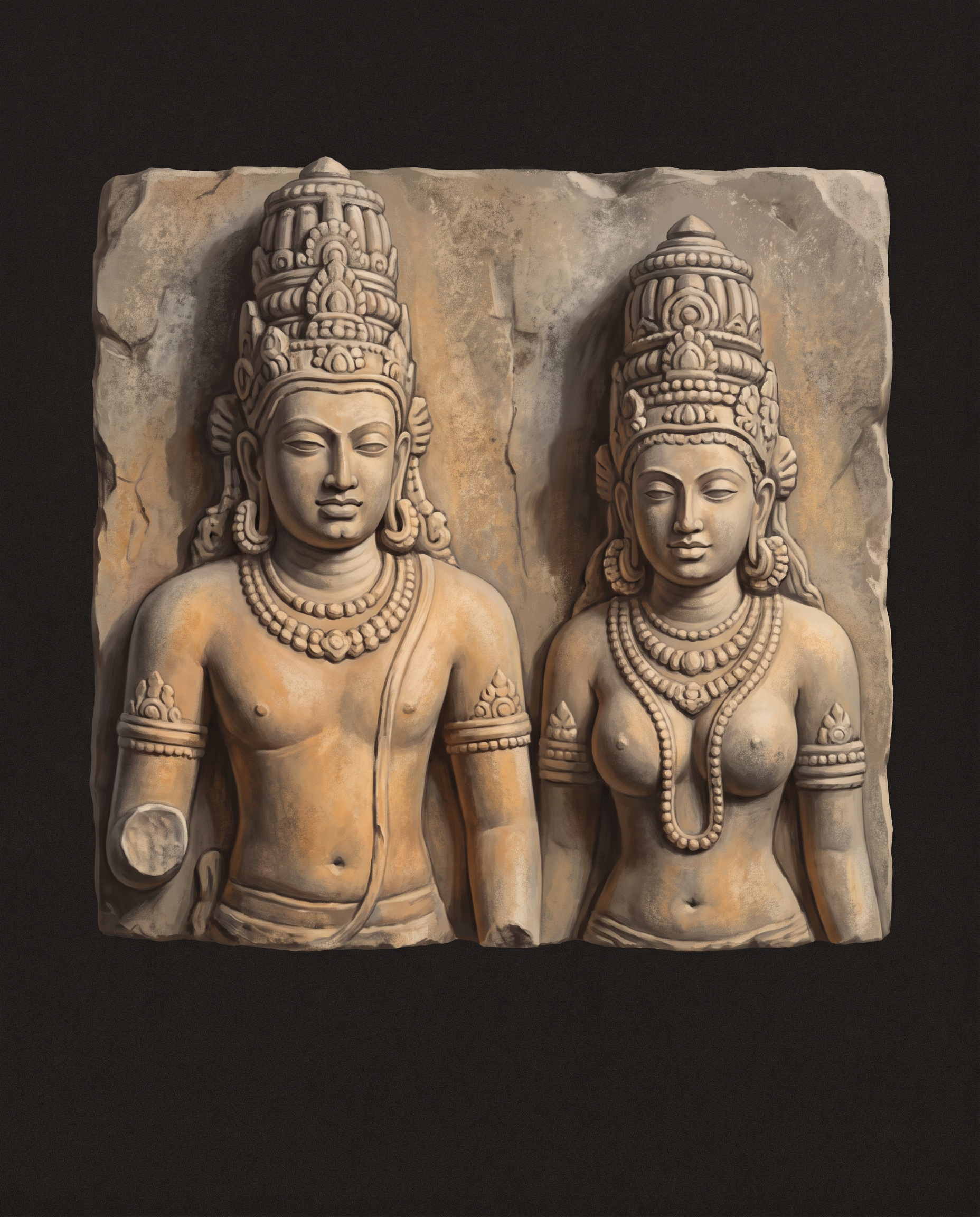
Fig. 3.3 – A Satavahana ruler and his queen.
What The Names Actually Reveal
Some of the Satavahana rulers were polygynous — that is, they had more than one wife. An examination of the names of the women who married Satavahana rulers shows something the Brahmanical texts did not expect. Many of them had names derived from gotras such as Gotama and Vasistha — their father’s gotras.
In other words, they evidently retained these names, instead of adopting names derived from their husband’s gotra, as the Brahmanical rules required. The first rule about gotra was simply not being followed at the highest level of society in the Deccan.
What is also apparent is that some of these women belonged to the same gotra. As is obvious, this ran counter to the ideal of exogamy recommended in the Brahmanical texts. In fact, it exemplified an alternative practice — endogamy, or marriage within the kin group, which was, and is, prevalent amongst several communities in south India. Such marriages amongst kinfolk, such as cousins, ensured a close-knit community, with property and alliances kept inside the family.
It is likely that there were variations in other parts of the subcontinent as well. But as yet it has not been possible to reconstruct specific details, because the inscriptions that would let us do so have not survived.
3.2.5 Were Mothers Important?
We have seen that Satavahana rulers were identified through metronymics, names derived from that of the mother. Although this may suggest that mothers were important, we need to be cautious before we arrive at any conclusion.
Here is the reason for caution. In the case of the Satavahanas, we know that succession to the throne was generally patrilineal. The name came down the mother’s line; the throne did not. A naming custom is not the same thing as a rule of inheritance, and the evidence for one cannot be used to prove the other.
Source 5 lets us test the question from another direction. It is not an inscription but an epic scene: Gandhari, mother of the Kauravas, appealing to her eldest son on the eve of a war she cannot stop.
Duryodhana did not listen to this advice. He fought, and he lost the war.
Weigh the scene carefully, because it cuts both ways. Gandhari is given the wisest political argument in the passage — she speaks of dharma and artha, of self-control and of the ruin that greed brings. She is treated as someone whose counsel a king ought to want. And yet she has no power to enforce any of it. The mother advises; the son decides.
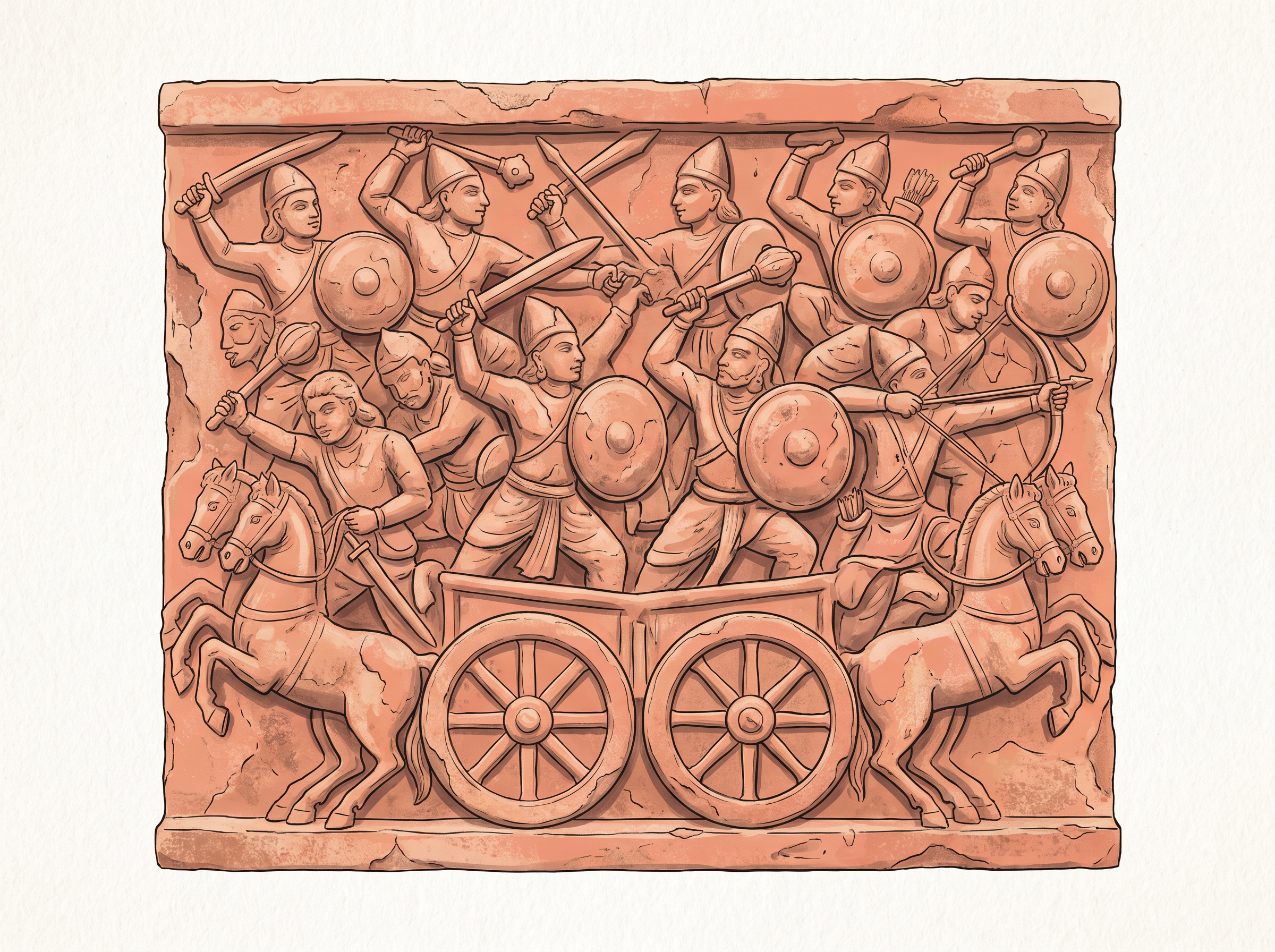
Fig. 3.4 – Terracotta battle scene from Ahichchhatra.
3.4 Beyond Birth: Resources And Status
If you recall the economic relations discussed in the previous chapter, you will realise how many kinds of people had emerged as social actors in different parts of the subcontinent. Slaves and landless agricultural labourers. Hunters, fisherfolk and pastoralists. Peasants and village headmen. Craftspersons, merchants and kings.
Their social positions were often shaped by their access to economic resources — what they could own, inherit, earn or be denied. Birth, as we have seen, was one axis of difference. Wealth was another, and it did not always run in the same direction.
Here we examine the social implications of access to resources in certain specific situations.
3.4.1 Gendered Access To Property
Consider first a critical episode in the Mahabharata.
During the course of the long-drawn rivalry between the Kauravas and the Pandavas, Duryodhana invited Yudhisthira to a game of dice. Yudhisthira, who was deceived by his rival, staked one thing after another and lost each in turn: his gold, his elephants, his chariots, his slaves, his army, his treasury, his kingdom, the property of his subjects, his brothers, and finally himself.
Read that list once more, slowly. It moves without a break from objects to people — from gold to slaves to brothers to the man himself. Then he staked their common wife Draupadi, and lost her too.
The matter remained unresolved. Ultimately, Dhritarashtra restored to the Pandavas and to Draupadi their personal freedom.
Notice what the argument is and is not about. Nobody in the hall asks whether a wife may be staked at all. The dispute is only over whether this particular man, having already lost himself, still had the standing to stake her. Even the opinion that saves Draupadi saves her on a technicality.
What The Law-Books Said About Inheritance
Issues of ownership, foregrounded in stories such as this one, also figure in the Dharmasutras and Dharmashastras. The smriti tradition — the body of remembered, authoritative rules — laid down how property was to pass between generations.
According to it, the paternal property was to be divided equally amongst the children after the death of the parents, with a special share for the eldest. Women were also allowed to retain the gifts they received on the occasion of marriage, as stridhana, literally a woman’s wealth. This could be inherited by her children, and the husband had no claim on it.
So a woman was not without property in the texts. But look at the scale of what she was allowed to hold. Stridhana was made up of gifts. It was not land, and it was not a share of the herd.
You have already met a wealthy woman with real resources — the Vakataka queen Prabhavati Gupta. She is exceptional, and exceptions are not the pattern. Cumulative evidence, both epigraphic and textual, suggests that while upper-class women may have had access to resources, land, cattle and money were generally controlled by men.
In other words, social differences between men and women were sharpened because of the differences in access to resources. Being born into a wealthy family did not give a daughter the same command over that wealth as it gave a son.
Set the two lists side by side. The difference is not in the number — seven against six — but in the kind. A man’s list contains ways of getting wealth by his own action: purchase, conquest, investment, work. A woman’s list contains, almost entirely, wealth that somebody else decides to hand her.
3.4.2 Varna And Access To Property
According to the Brahmanical texts, another criterion apart from gender regulated access to wealth. That criterion was varna.
As we saw earlier, the only ‘occupation’ prescribed for Shudras was servitude, while a variety of occupations were listed for men of the first three varnas. If these provisions were actually implemented, the wealthiest men would have been the Brahmanas and the Kshatriyas — the two groups permitted to receive gifts, rule and collect what rulers collect.
Did the texts match reality? To some extent they did, and we can see this in descriptions of priests and kings in other textual traditions. Kings are almost invariably depicted as wealthy. Priests too are generally shown to be rich, though there are occasional depictions of the poor Brahmana — an exception the texts themselves admit.
The Buddhist Critique
At another level, even as the Brahmanical view of society was being codified in the Dharmasutras and Dharmashastras, other traditions were developing critiques of the varna order.
Some of the best-known of these were developed within early Buddhism, from c. sixth century BCE onwards. The Buddhists recognised that there were differences in society — they did not pretend that everyone was equal in fact. What they denied was the explanation. They did not regard these differences as natural or inflexible, and they rejected the idea of claims to status on the basis of birth.
Source 13 shows how that argument was made, in a dialogue that begins with the Brahmanical claim and then tests it with a single question about money.
The argument works by putting two claims in collision. Avantiputta’s opening statement says that rank comes from birth — from being born of Brahma’s mouth. His own answer, a few lines later, says that a wealthy Shudra can have a Brahmana as his obedient servant. He has conceded that people obey wealth, whatever the texts say about birth.
3.4.3 An Alternative Social Scenario: Sharing Wealth
So far we have been examining situations where people either claimed status on the basis of their wealth, or were assigned it. Wealth as the ladder, in other words.
However, there were other possibilities as well. There were situations where men who were generous were respected, while those who were miserly, or who simply accumulated wealth for themselves, were despised. In such a setting, holding on to riches lowered a man; giving them away raised him.
One area where these values were cherished was ancient Tamilakam, the far south of the subcontinent, where — as we saw earlier — there were several chiefdoms around 2,000 years ago. Amongst other things, the chiefs were patrons of bards and poets who sang their praise.
Poems included in the Tamil Sangam anthologies often illuminate social and economic relationships. They suggest that while there were differences between rich and poor, those who controlled resources were also expected to share them.
Follow the chain of events the poem takes for granted. The bards arrive hungry. The chief has nothing stored to give. So he goes to the blacksmith, has a spear made, and goes to war — and only then is there wealth to share. Generosity here is funded by raiding, not by a treasury.
Notice also how the bard applies pressure. He does not beg; he praises. He tells other poets that this chief is generous, and he displays the ribs of the hungry as an argument. Praise, in this society, was a resource in its own right, and the possibility of withholding it was real.
Look now at Fig. 3.7, a stone sculpture from Amaravati. How has the sculptor shown the difference between the chief and his follower? Look at the height of each figure, at the ornaments, at the posture, and at who is bearing the weight of whom.
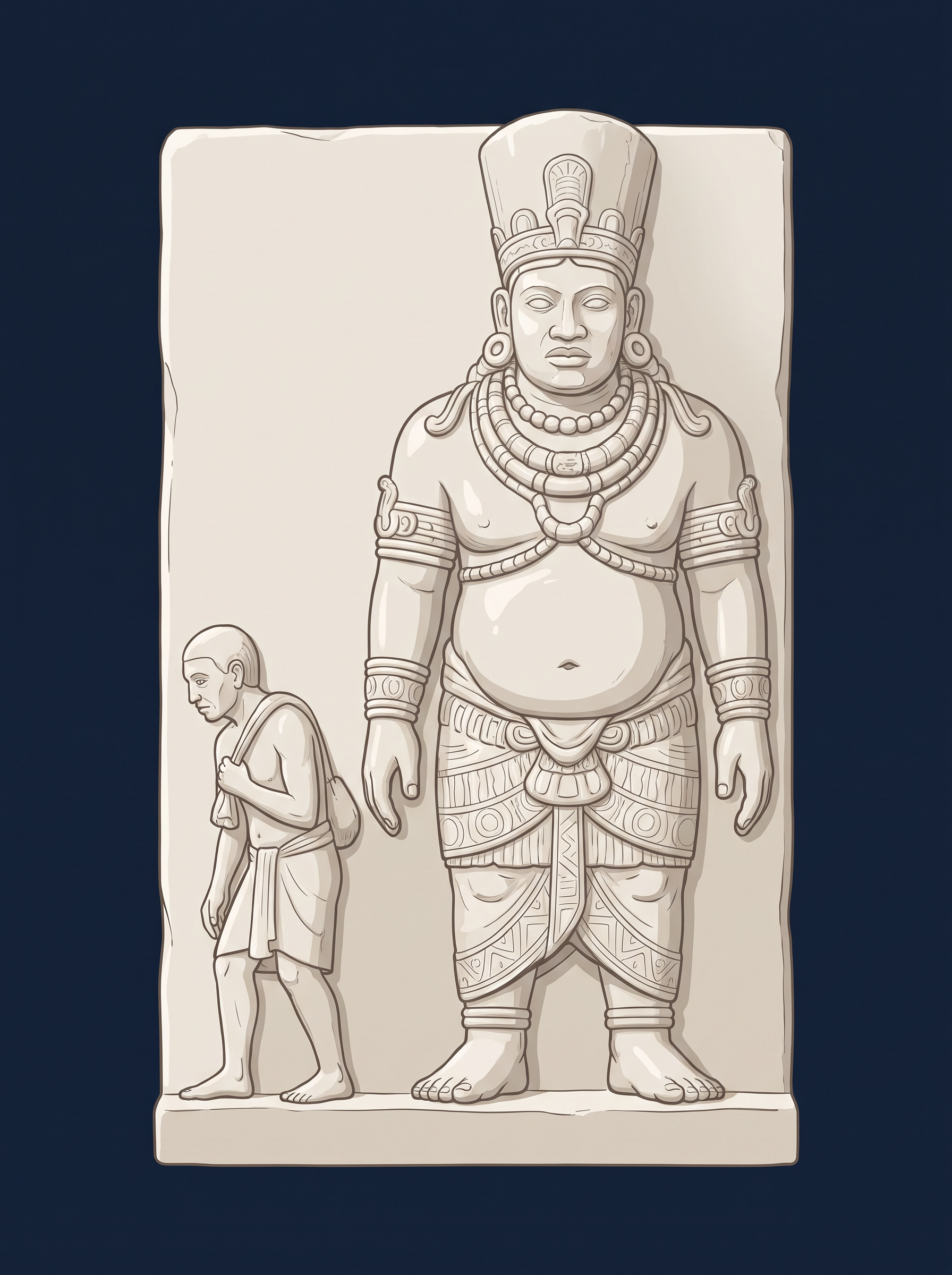
Fig. 3.7 – A chief and his follower from Amaravati.
3.6 Handling Texts: Historians And The Mahabharata
If you look through the sources cited in this chapter once more, you will notice that historians consider several elements when they analyse texts. They never simply read a text and believe it.
They examine the language. Was the work written in Prakrit, Pali or Tamil — languages that were probably used by ordinary people — or in Sanskrit, a language meant almost exclusively for priests and elites? A text’s language tells you who could reach it.
They also consider the kinds of text. Were these mantras, learnt and chanted by ritual specialists? Or were they stories that people could have read, or heard, and then retold if they found them interesting? A mantra and a story do not circulate in the same way, and they do not do the same work.
Besides this, historians try to find out about the author(s) whose perspectives and ideas shaped the text, as well as the intended audience — because very often, authors keep the interests of their audience in mind while composing their work. And they try to ascertain the possible date of the composition or compilation of the texts, as well as the place where they may have been composed.
Only after making all these assessments do they draw on the content of texts to arrive at an understanding of their historical significance. As you can imagine, this is a particularly difficult task for a text as complex as the Mahabharata.
3.6.1 Language And Content
Let us begin with the language of the text. The version of the Mahabharata we have been considering is in Sanskrit, although there are versions in other languages as well.
However — and this matters — the Sanskrit used in the Mahabharata is far simpler than that of the Vedas, or of the prashastis, the eulogies you met in the previous chapter. As such, it was probably widely understood. A simpler Sanskrit means a wider audience, and a wider audience means a text that could shape how ordinary people thought.
Historians usually classify the contents of the present text under two broad heads. Sections that contain stories are designated as the narrative. Sections that contain prescriptions about social norms are designated as didactic.
This division is by no means watertight. The didactic sections include stories, and the narrative often contains a social message — as you saw in the story of Ekalavya, which is a tale that teaches. However, historians generally agree that the Mahabharata was meant to be a dramatic, moving story, and that the didactic portions were probably added later.
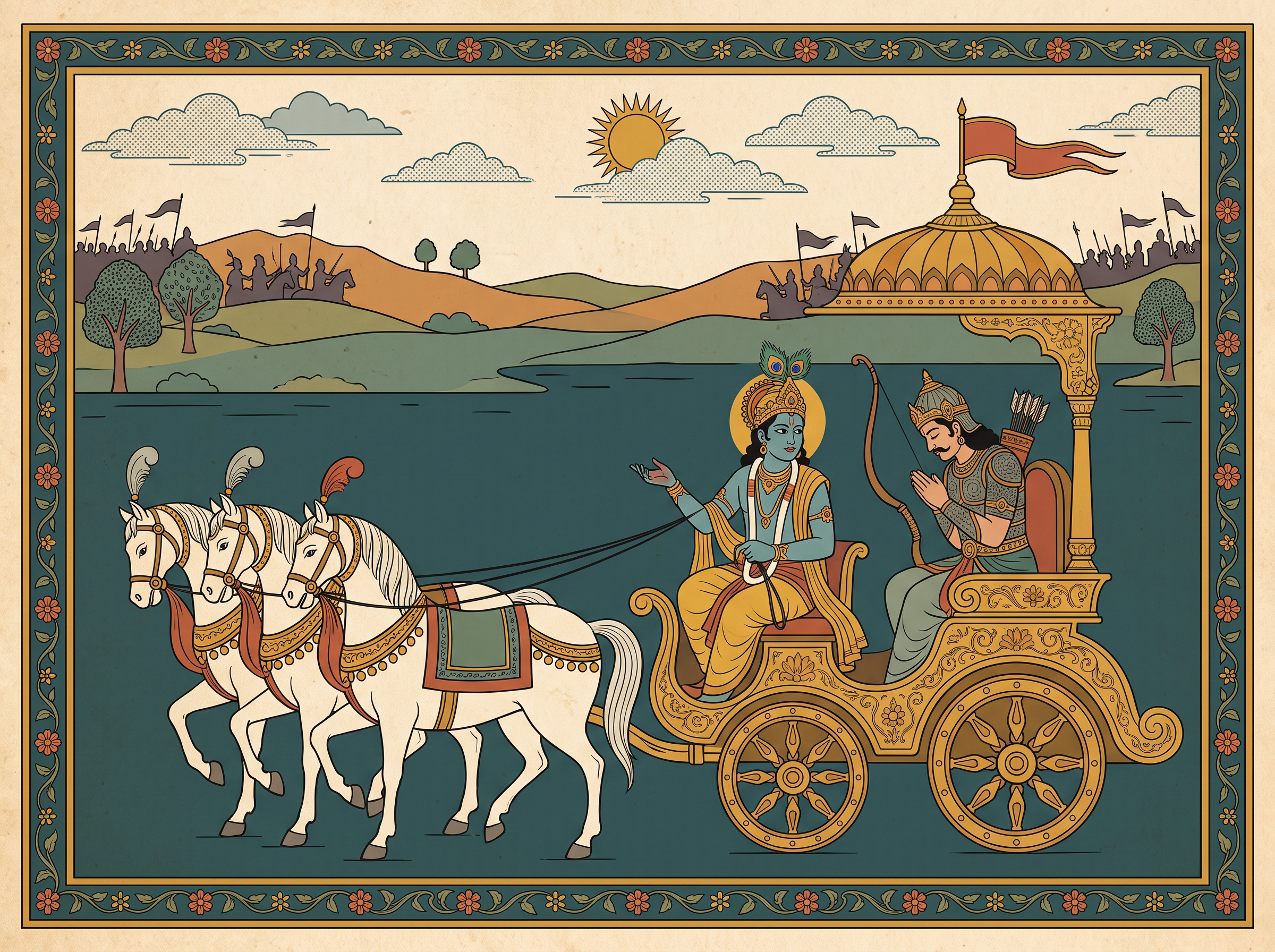
Fig. 3.8 – Krishna advises Arjuna on the battlefield.
Was There A Real War?
Interestingly, the text is described as an itihasa within early Sanskrit tradition. The literal meaning of the term is ‘thus it was’, which is why it is generally translated as ‘history’.
So the tradition itself claimed the epic was an account of what happened. Was there a real war that was remembered in the epic? We are not sure — and being clear about the not knowing is part of the discipline.
3.6.2 Author(s) And Dates
Who wrote the text? This is a question to which there are several answers, and all of them are partly right.
The original story was probably composed by charioteer-bards known as sutas. These bards generally accompanied Kshatriya warriors to the battlefield and composed poems celebrating their victories and other achievements. These compositions circulated orally — sung and recited, not read.
Then, from the fifth century BCE, Brahmanas took over the story and began to commit it to writing. This was the time when chiefdoms such as those of the Kurus and the Panchalas, around whom the story of the epic revolves, were gradually becoming kingdoms.
Ask why the timing lines up like that. Did the new kings want their itihasa to be recorded and preserved more systematically? A kingdom that is consolidating power has a use for a written account of its own past. It is also possible that the upheavals which often accompanied the establishment of these states — where old social values were often replaced by new norms — are reflected in some parts of the story.
The Text Keeps Growing
We notice another phase in the composition of the text between c. 200 BCE and 200 CE. This was the period when the worship of Vishnu was growing in importance, and Krishna, one of the important figures of the epic, was coming to be identified with Vishnu. A character in a story was becoming a god — and the text absorbed the change.
Subsequently, between c. 200 and 400 CE, large didactic sections resembling the Manusmriti were added. The prescriptive material you met earlier in this chapter entered the epic at this stage.
With these additions, a text which initially perhaps had less than 10,000 verses grew to comprise about 100,000 verses. That is a tenfold growth, achieved by many hands across many centuries. This enormous composition is traditionally attributed to a sage named Vyasa.
The growth is set out in Fig. 3.9.
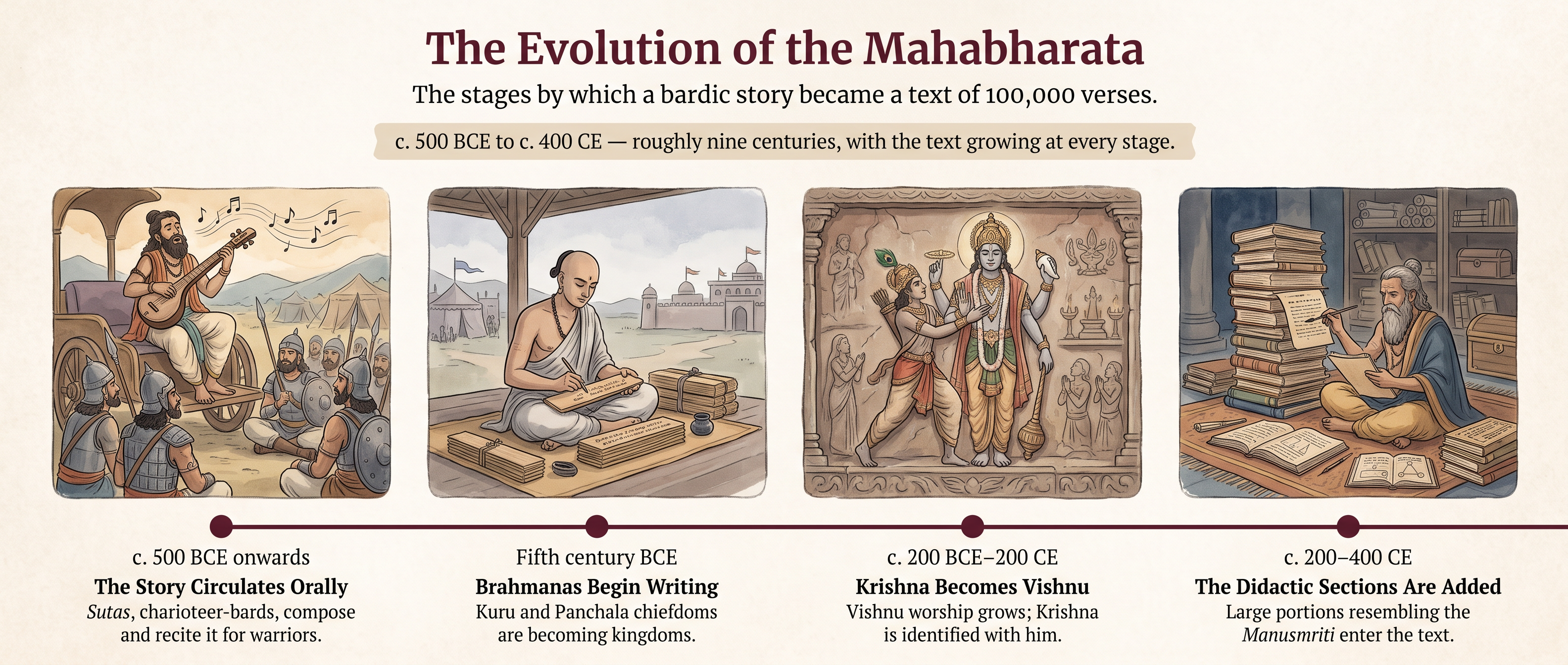
Fig. 3.9 – How The Mahabharata Grew.
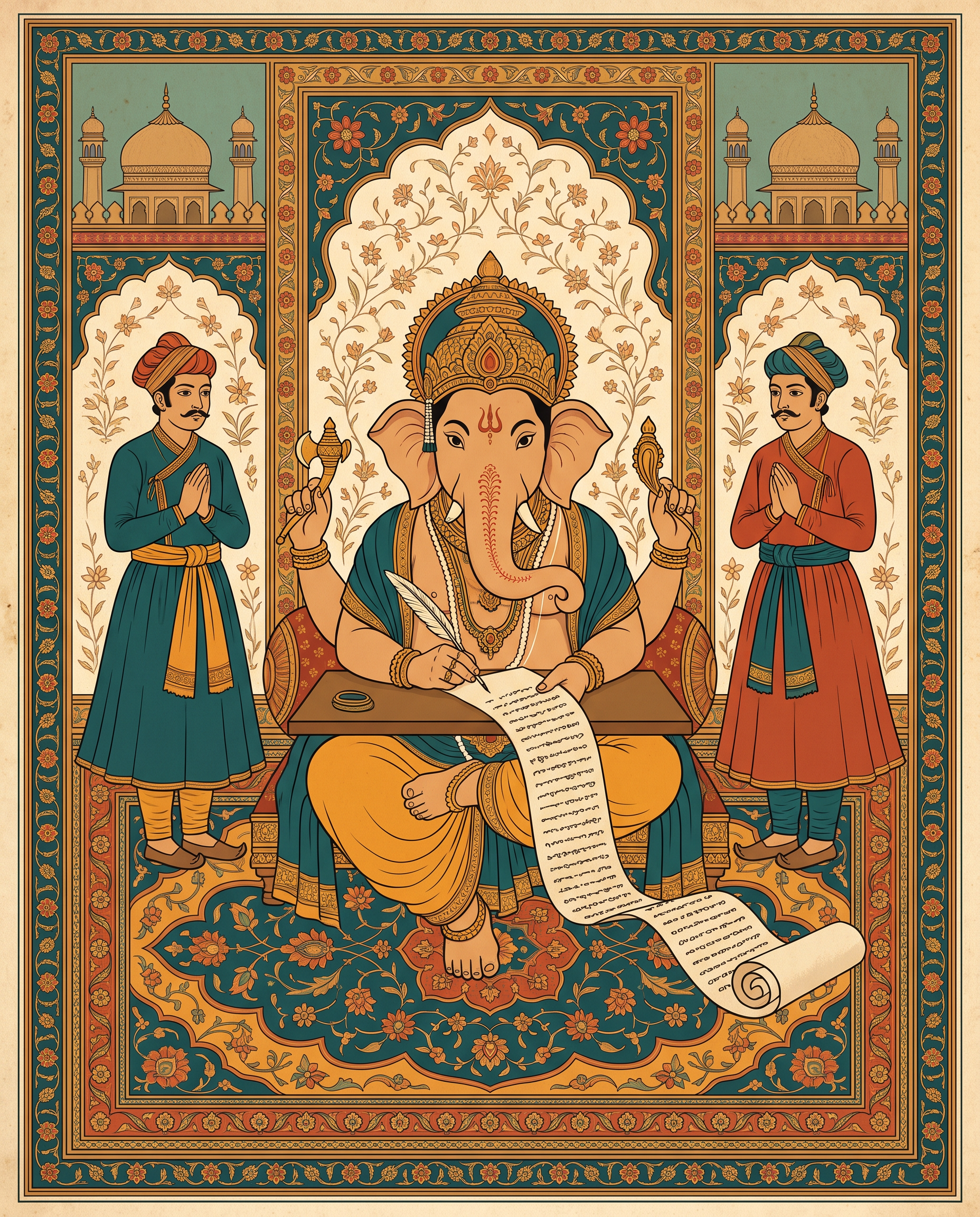
Fig. 3.10 – Lord Ganesha scribing the Mahabharata.
3.6.3 The Search For Convergence
The Mahabharata, like any major epic, contains vivid descriptions of battles, forests, palaces and settlements. That raises an obvious question: can any of it be matched against what is buried in the ground?
In 1951-52, the archaeologist B.B. Lal excavated at a village named Hastinapura, in Meerut, Uttar Pradesh. Was this the Hastinapura of the epic?
The similarity in names could be coincidental — villages are named after epics all the time. But the location of the site in the Upper Ganga doab, the fertile land between the Ganga and the Yamuna where the Kuru kingdom was situated, suggests that it may have been the capital of the Kurus mentioned in the text.
What Lal Found In The Ground
Lal found evidence of five occupational levels — five successive periods of settlement, stacked one above another, the earliest at the bottom. Of these, the second and the third are of interest to us.
This is what Lal noted about the houses in the second phase, which he dated to c. twelfth–seventh centuries BCE: ‘Within the limited area excavated, no definite plans of houses were obtained, but walls of mud and mud-bricks were duly encountered. The discovery of mud-plaster with prominent reed-marks suggested that some of the houses had reed walls plastered over with mud.’
For the third phase, c. sixth–third centuries BCE, he noted: ‘Houses of this period were built of mud-brick as well as burnt bricks. Soakage jars and brick drains were used for draining out refuse water, while terracotta ring-wells may have been used both as wells and drainage pits.’
Between the two phases, then, something changes on the ground: reed and mud give way to burnt brick, and the settlement acquires drains and ring-wells. Now set that beside how the epic describes the same city.
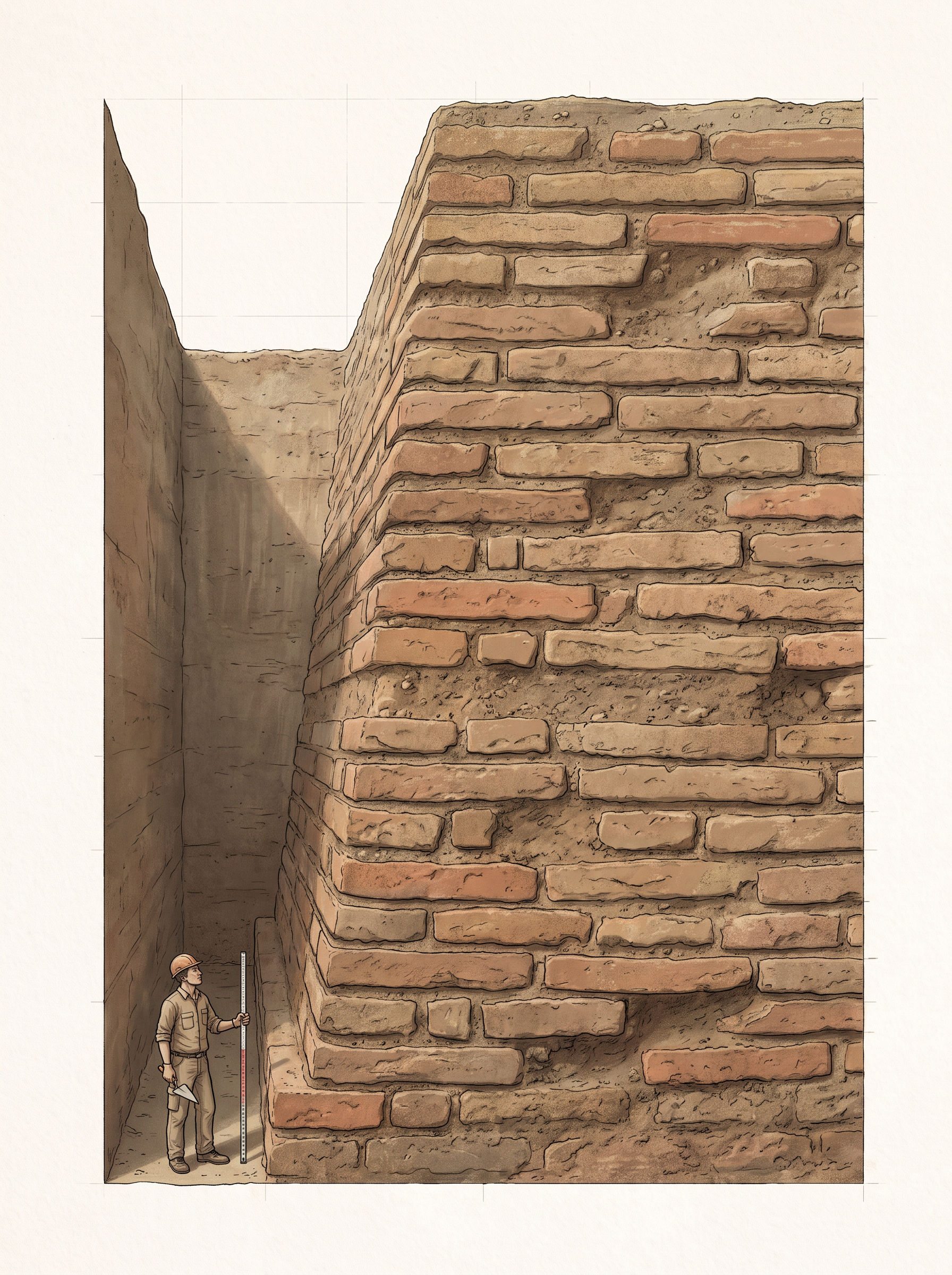
Fig. 3.11 – Excavated brick wall at Hastinapura.
Hold the two accounts together. The epic gives us hundreds of mansions, gateways, arches and turrets, likened to the city of a god. The excavation gives us reed walls plastered with mud, and later, burnt brick and drains. These are not the same place — not as described.
So we are left with two possibilities, and the chapter does not choose between them. Was the description of the city in the epic added after the main narrative had been composed — that is, after the sixth century BCE, when urban centres flourished in the region? Or was it simply a flight of poetic fancy, which cannot always be verified by comparisons with other kinds of evidence?
Draupadi’s Marriage: One Episode, Three Explanations
Consider another instance where text and evidence pull against each other. One of the most challenging episodes in the Mahabharata is Draupadi’s marriage with the Pandavas — an instance of polyandry that is central to the narrative.
If we examine the section of the epic that describes this event, something odd becomes visible. The author or authors do not tell it once and move on. They attempt to explain it in a variety of ways.
Count the explanations. First, a mother’s command that could not be violated. Second, a destiny fixed in a previous birth. Third, a prayer said five times over. Any one of them would have been enough for a story. Three of them, stacked one on another, look less like storytelling and more like a text working hard to justify something.
What Historians Make Of It
Present-day historians suggest that the fact that the author or authors describe a polyandrous union indicates that polyandry may have been prevalent amongst ruling elites. A composer does not invent a marriage form out of nothing.
At the same time, the fact that so many different explanations are offered for the episode suggests that polyandry gradually fell into disfavour amongst the people. Explanations are demanded of practices that have come to seem strange.
Beyond that, historians disagree.
Some early sources suggest that polyandry was not the only, or even the most prevalent, form of marriage. Why then did the author or authors choose to associate this practice with the central characters of the Mahabharata?
Here the honest answer is a warning. We need to remember that creative literature often has its own narrative requirements, and does not always literally reflect social realities. A story may need an unusual marriage to hold five brothers together. That need belongs to the story, not necessarily to the society.
3.7 A Dynamic Text
The growth of the Mahabharata did not stop with the Sanskrit version. A text that had already taken nine centuries to reach 100,000 verses did not then settle down.
Over the centuries, versions of the epic were written in a variety of languages. This happened through an ongoing process of dialogue — between peoples, between communities, and between those who wrote the texts. Several stories that originated in specific regions, or circulated amongst certain people, found their way into the epic. Traffic ran in both directions: the epic took in local stories, and local traditions took the epic and made it their own.
At the same time, the central story of the epic was often retold in different ways. Episodes were depicted in sculpture and in painting — you have already seen two such depictions in this chapter, carved centuries apart. And the epic provided themes for a wide range of performing arts: plays, dance and other kinds of narration.
This is what it means to call a text dynamic. It is not a finished object handed down intact. It is a story that every generation has been able to re-enter.
Retelling As Argument
Most retellings or re-enactments of the epic draw on the main narrative in creative ways. A retelling can do more than decorate the story. It can ask the story a question it never asked itself.
Let us look at one example: an episode from the Mahabharata that has been transformed by Mahashweta Devi, a contemporary Bengali writer known for raising her voice against all forms of exploitation and oppression. In this particular instance, she works out alternative possibilities from the main story of the Mahabharata, and draws attention to questions on which the Sanskrit text is silent.
To follow what she does, you first need the episode as the Sanskrit text tells it.
The House Of Lac
The Sanskrit text describes how Duryodhana plotted to kill the Pandavas. He invited them to stay in a specially prepared house of lac — a house built of a highly inflammable substance — which he planned to set on fire.
The Pandavas were forewarned. They dug a tunnel to ensure their escape. Then Kunti, their mother, arranged for a feast. While most of the invitees were Brahmanas, a nishada woman came with her five sons.
When the guests were satiated with drink and fell off to sleep, the Pandavas escaped, setting fire to the house. When the bodies of the woman and her sons were discovered, people thought that the Pandavas were dead.
Read that last sentence again, slowly. Six people burned to death, and the Sanskrit text records the event for one reason only: it made the Pandavas’ escape convincing. The dead are a device. They are not mourned, and they are not named.
Kunti O Nishadi
In her short story titled ‘Kunti O Nishadi’, Mahashweta Devi takes up the narrative from where the Mahabharata ends it.
She sets the story in a forest, where Kunti retires after the war. Kunti now has time to reflect on her past. She often confesses to what she regards as her failings, talking with the earth, the symbol of nature. Every day she sees the nishadas, who come to collect wood, honey, tubers and roots. One nishadi — a nishada woman — often listens to Kunti when she talks with the earth.
One day, there was something in the air; the animals were fleeing the forest. Kunti noticed that the nishadi was watching her, and was startled when the woman spoke to her, and asked if she remembered the house of lac.
Yes, Kunti said, she did.
Did she remember a certain elderly nishadi and her five young sons? And that she had served them wine till they were senseless, while she escaped with her own sons? That nishadi …
‘Not you!’ Kunti exclaimed.
The nishadi replied that the woman who was killed had been her mother-in-law. She added that while Kunti had been reflecting on her past, not once did she remember the six innocent lives that were lost — lost because she had wanted to save herself and her sons.
As they spoke, the flames drew nearer. The nishadi escaped to safety. Kunti remained where she was.
What The Retelling Does
Nothing in the plot has been contradicted. Mahashweta Devi does not deny the house of lac, or the tunnel, or the escape. She adds one thing only: a person who was counted as scenery is allowed to speak.
And once that happens, the moral weight of the episode shifts entirely. In the Sanskrit text, the deaths are a clever cover for a heroic escape. In the retelling, they are six killings that the heroine has never once thought about — and her long, sincere confession to the earth is exposed as incomplete, because it left out the people she did not consider worth remembering.
This is what a dynamic text makes possible. The epic could be retold by a twentieth-century writer to raise exactly the question its Brahmana composers never raised: what happened to the nishadas?
3.8 Summary
Texts As Evidence
- Between c. 600 BCE and 600 CE, agriculture spread into forests, craft specialists emerged as distinct groups, and unequal wealth sharpened social differences.
- Historians reconstruct these changes mainly from texts and inscriptions, each written from the perspective of a particular social category.
- Every document must be asked three questions: who composed it, what did they compose, and for whom.
- Our picture rests largely on Sanskrit texts written by and for Brahmanas; works in Pali, Prakrit and Tamil show their ideas being questioned and sometimes rejected.
- The Critical Edition of the Mahabharata, begun in 1919 under V.S. Sukthankar, took 47 years and ran to over 13,000 pages; more than half of it records regional variations between manuscripts.
Kinship And Marriage
- Patriliny — descent traced from father to son — was the ideal claimed by most ruling dynasties from c. sixth century BCE, though brothers, other kinsmen and, rarely, women also came to power.
- The Mahabharata’s central story of the Kauravas and the Pandavas reinforced the value of patrilineal succession.
- Daughters were married outside the kin group (exogamy), and kanyadana — the gift of a daughter — was held to be a father’s religious duty.
- From c. 500 BCE the Brahmanas compiled the Dharmasutras and Dharmashastras; the Manusmriti, compiled between c. 200 BCE and 200 CE, recognised eight forms of marriage, condemning four of them.
- Brahmanical rules required a woman to take her husband’s gotra and forbade marriage within the gotra; Satavahana queens did neither, and practised endogamy instead.
- Satavahana kings used metronymics, but succession remained patrilineal — a naming custom is not a rule of inheritance.
Caste, Varna And Jati
- The Dharmasutras assigned occupations to the four varnas, giving Shudras only the duty of serving the other three.
- The Bhagvad Gita and Buddhist traditions explained the fourfold order by guna and karma rather than by birth.
- In practice, kingship was open to anyone who could muster support and resources: the Mauryas’ origins were disputed, the Shungas and Kanvas were Brahmanas, and the Shaka ruler Rudradaman used Sanskrit inscriptions.
- Varna was fixed at four; jatis were unlimited in number, grew with new occupations, and organised themselves into shrenis, or guilds.
- The Mandasor inscription shows a guild of silk weavers migrating from Lata, taking up other occupations, and building a temple to the sun god.
- People outside the Brahmanical framework — forest-dwellers, nomadic pastoralists, speakers of non-Sanskritic languages — were labelled nishadas, rakshasas or mlechchhas, yet ideas and marriages crossed the boundary.
- Notions of purity and pollution pushed chandalas to the very bottom; the Manusmriti prescribed their degradation, and Fa Xian and Xuan Zang recorded it. The Matanga Jataka shows the claim being answered back.
Resources And Status
- Social position depended on access to resources as well as on birth.
- Women could keep stridhana, their marriage gifts, but land, cattle and money were generally controlled by men — and the Manusmriti listed a man’s wealth as earned and a woman’s as given.
- Buddhists argued that a wealthy Shudra would be obeyed by men of every varna, so rank could not rest on birth.
- In ancient Tamilakam, chiefs won status by giving wealth away; Sangam poems praise the generous and despise the miserly.
- In a myth in the Sutta Pitaka, kingship is a human choice and taxes are payment for services — so an order made by people could be changed by people.
Handling The Text
- Historians weigh a text’s language, kind, author, audience, date and place before drawing on its content.
- The Mahabharata divides broadly into narrative and didactic portions; the didactic sections were probably added later.
- Composed first by sutas, written down by Brahmanas from the fifth century BCE, and enlarged until c. 400 CE, it grew from under 10,000 verses to about 100,000.
- B.B. Lal’s excavation at Hastinapura in 1951-52 found mud and brick houses that match nothing in the epic’s description of a city of mansions and turrets.
- Draupadi’s polyandrous marriage is explained three times over, which suggests the practice had come to need explaining.
- The epic never stopped growing: retold in many languages, carved, painted and performed, and reopened in our own time by Mahashweta Devi to speak for the nishadas the Sanskrit text left unnamed.
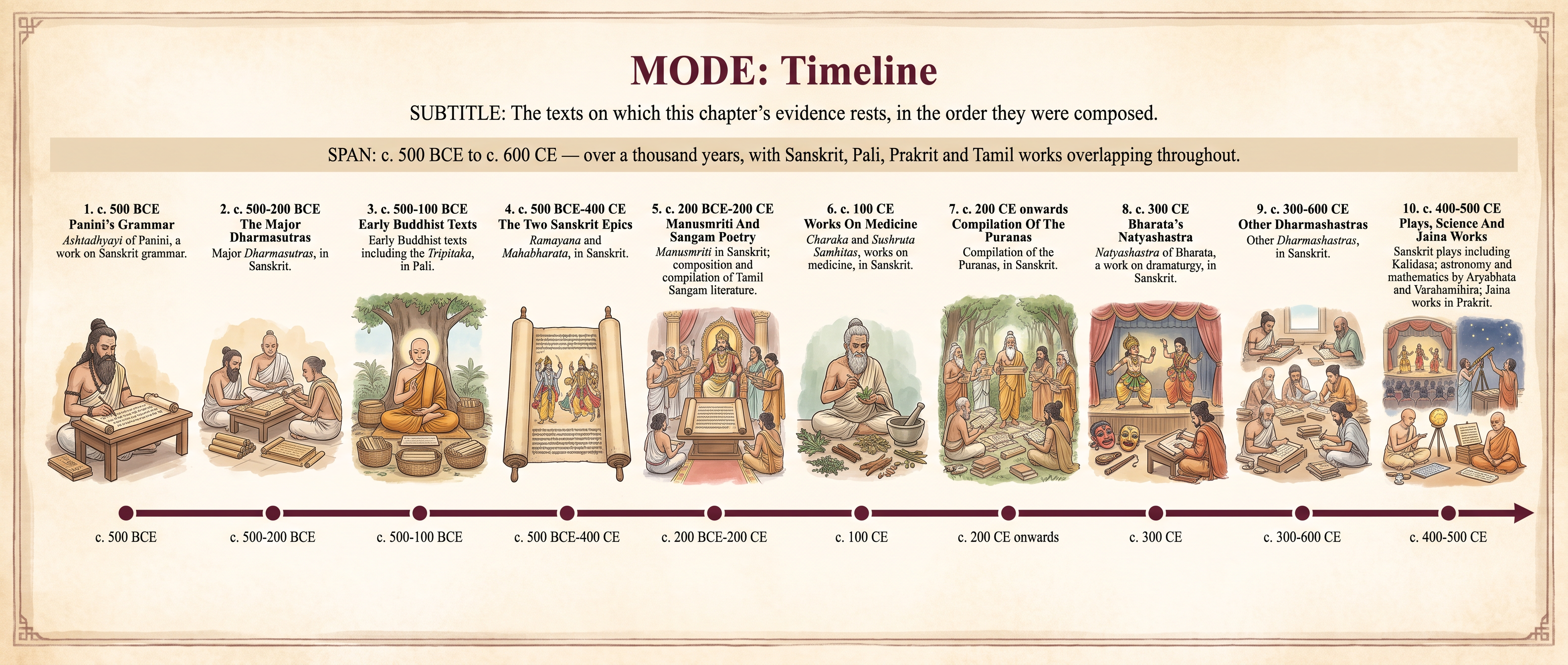
Fig. 3.12 – Major Textual Traditions.
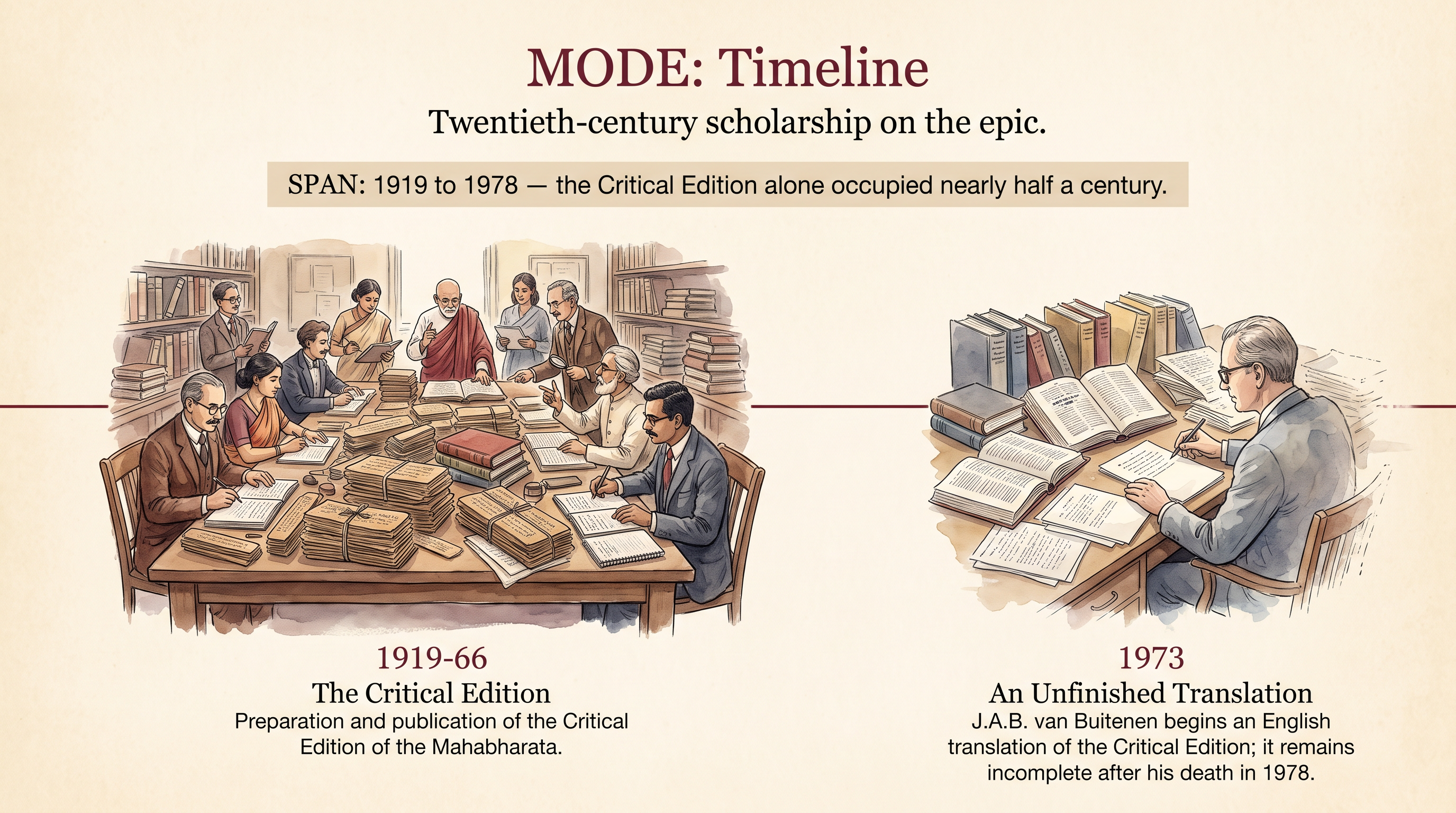
Fig. 3.13 – Landmarks in the study of the Mahabharata.
What The Evidence Cannot Tell Us
Almost everything in this chapter comes from people who could command writing — Brahmana authors, kings who paid for inscriptions, guilds wealthy enough to buy a stone. The families of ordinary peasants, labourers and slaves left no record of whom they married, what they owned, or what they thought of the rules laid down for them.
The texts tell us what ought to have happened, and only rarely what did. We can see that Satavahana queens broke the gotra rules; we cannot see whether a village in the Deccan followed them. We can read what the Manusmriti demanded of chandalas; we cannot hear a single chandala speaking in his own voice.
That silence is not a gap to be filled by guessing. It is itself a historical fact — evidence of who held the power to be remembered.
3.9 NCERT Questions
Explain why patriliny may have been particularly important among elite families. (in about 100-150 words)
Discuss whether kings in early states were invariably Kshatriyas. (in about 100-150 words)
Compare and contrast the dharma or norms mentioned in the stories of Drona, Hidimba and Matanga. (in about 100-150 words)
In what ways was the Buddhist theory of a social contract different from the Brahmanical view of society derived from the Purusha sukta? (in about 100-150 words)
The following is an excerpt from the Mahabharata, in which Yudhisthira, the eldest Pandava, speaks to Sanjaya, a messenger:
Sanjaya, convey my respectful greetings to all the Brahmanas and the chief priest of the house of Dhritarashtra. I bow respectfully to teacher Drona … I hold the feet of our preceptor Kripa … (and) the chief of the Kurus, the great Bhishma. I bow respectfully to the old king (Dhritarashtra). I greet and ask after the health of his son Duryodhana and his younger brother … Also greet all the young Kuru warriors who are our brothers, sons and grandsons … Greet above all him, who is to us like father and mother, the wise Vidura (born of a slave woman) … I bow to the elderly ladies who are known as our mothers. To those who are our wives you say this, ‘I hope they are well-protected’… Our daughters-in-law born of good families and mothers of children greet on my behalf. Embrace for me those who are our daughters … The beautiful, fragrant, well-dressed courtesans of ours you should also greet. Greet the slave women and their children, greet the aged, the maimed (and) the helpless …
Try and identify the criteria used to make this list — in terms of age, gender, kinship ties. Are there any other criteria? For each category, explain why they are placed in a particular position in the list. (in about 100-150 words)
This is what a famous historian of Indian literature, Maurice Winternitz, wrote about the Mahabharata: ‘just because the Mahabharata represents more of an entire literature … and contains so much and so many kinds of things, … (it) gives(s) us an insight into the most profound depths of the soul of the Indian folk.’ Discuss. (in about 500 words)
Discuss whether the Mahabharata could have been the work of a single author. (in about 500 words)
How important were gender differences in early societies? Give reasons for your answer. (in about 500 words)
Discuss the evidence that suggests that Brahmanical prescriptions about kinship and marriage were not universally followed. (in about 500 words)
Compare the map in this chapter with Map 1 in Chapter 2. List the mahajanapadas and cities located near the Kuru-Panchala lands.
Find out about retellings of the Mahabharata in other languages. Discuss how they handle any two of the episodes of the text described in this chapter, explaining any similarities or differences that you notice.
Imagine that you are an author and rewrite the story of Ekalavya from a perspective of your choice.
3.10 Check Your Concepts
The number of varnas was fixed at four, but the number of jatis kept increasing. Explain why the two behaved so differently, and what a shreni was.
Set out, step by step, the chain that runs from the emergence of new towns to the compilation of the Dharmasutras and Dharmashastras from c. 500 BCE.
Look again at Fig. 3.2, the page from the Critical Edition. Why do the small-print variant readings — more than half of the 13,000 pages — count as historical evidence, rather than as mere scholarly detail?
Source 4 lists the names of Satavahana kings. State exactly what these names allow a historian to establish, and one important thing they cannot establish.
Using Source 14 and Fig. 3.7, explain how status was won and displayed in the chiefdoms of Tamilakam. How does this differ from the way the Dharmasutras linked wealth to varna?
In Source 13, Kachchana never denies that Brahmanas claim to be superior. Explain the argument he uses instead, and say what the passage does not prove.
The chapter says historians can retrieve information about elite families fairly easily, but find it far more difficult to reconstruct the families of ordinary people. What does this silence do to our picture of kinship in early India?
Historians disagree about whether the Mahabharata preserves the memory of a real war. Set out both positions, using B.B. Lal’s findings at Hastinapura and Source 15, and state what kind of evidence would be needed to settle the question.
3.3 Social Differences: Within And Beyond The Framework Of Caste
You may be familiar with the term caste, which refers to a set of hierarchically ordered social categories — groups ranked one above another, rather than merely placed side by side. The order was laid down in the Dharmasutras and Dharmashastras.
In these texts, varnas were defined by their qualifications, their occupations and their professions, as per their abilities and interests. The word varna names the fourfold division itself; what follows is the content the texts poured into it.
3.3.1 The ‘Right’ Occupation
The Dharmasutras and Dharmashastras contained rules about the occupations of the four categories, or varnas.
Brahmanas were primarily supposed to study and teach the Vedas and the scriptures, perform sacrifices, get sacrifices performed, and give and receive gifts (dana). Kshatriyas were primarily supposed to engage in warfare, protect people and administer justice, study the Vedas and the scriptures, get sacrifices performed, make dana, and maintain the social order.
Similarly, the Vaishyas were expected to engage in agriculture, pastoralism and trade, along with studying the Vedas and other scriptures, performing sacrifices, getting sacrifices performed and making dana. Shudras were expected to assist the three varnas in the proper functioning of the society.
Read the four lists next to one another and a pattern appears. The first three varnas share a bundle of ritual and scholarly activities; each adds a distinct kind of work. The fourth is given no work of its own at all — only the duty of assisting the others.
Was The Order Fixed By Birth?
Not according to every tradition. Other textual sources, such as the Bhagvad Gita — a pan-Indian authority across traditions — also suggest that the four-fold order was based on guna (qualities) and karma (actions). On this view it was not a rigid social order determined by birth. Similar references are also available in Buddhist traditions.
So even within the surviving texts there is no single voice. One set of works ranks people and assigns them work; another explains the same order by what a person is like and what a person does.
Source 6 — Flexibility With The Social Order From: A note on early Vedic society, drawing on the Rigvedic hymns. “In the early Vedic society, there appears to have been flexibility and mobility in occupational roles. Rigvedic hymns also often cited as evidence for flexibility in social roles. In one such hymn, the speaker, while referring to the occupational diversity within his own family, notes that he is a poet, his father a physician, and his mother a grinder of corn/grain.”
Look closely at what the hymn actually contains. Three members of one household, three completely different kinds of work. If occupation had already been fixed by birth into a single group, a family like this could not exist.
Source 6 A hymn composed within a ritual tradition, speaking casually about a poet’s own household. It shows that occupations could differ within one family. It does not tell you how widespread such mobility was, or how long it lasted.
The Story Of Ekalavya
The Mahabharata contains a story that shows what the norm looked like when it was enforced. Source 7 is from the Adi Parvan. Read it as a story that had work to do — it teaches somebody something — and then ask who it was teaching, and what.
Source 7 — ‘Proper’ Social Roles From: A story from the Adi Parvan of the Mahabharata. “Once Drona, a Brahmana who taught archery to the Kuru princes, was approached by Ekalavya, a forest-dwelling nishada (a hunting community). When Drona, who knew the dharma, refused to have him as his pupil, Ekalavya returned to the forest, prepared an image of Drona out of clay, and treating it as his teacher, began to practise on his own. In due course, he acquired great skill in archery. One day, the Kuru princes went hunting and their dog, wandering in the woods, came upon Ekalavya. When the dog smelt the dark nishada wrapped in black deer skin, his body caked with dirt, it began to bark. Annoyed, Ekalavya shot seven arrows into its mouth. When the dog returned to the Pandavas, they were amazed at this superb display of archery. They tracked down Ekalavya, who introduced himself as a pupil of Drona. Drona had once told his favourite student Arjuna, that he would be unrivalled amongst his pupils. Arjuna now reminded Drona about this. Drona approached Ekalavya, who immediately acknowledged and honoured him as his teacher. When Drona demanded his right thumb as his fee, Ekalavya unhesitatingly cut it off and offered it. But thereafter, when he shot with his remaining fingers, he was no longer as fast as he had been before. Thus, Drona kept his word: no one was better than Arjuna.” Discuss: What message do you think this story was meant to convey to the nishadas? What message would it convey to Kshatriyas? Do you think that Drona, as a Brahmana, was acting according to the Dharmasutras when he was teaching archery?
Take the last question seriously before moving on. The Dharmasutras assigned warfare to Kshatriyas, not to Brahmanas — and Drona, a Brahmana, is a teacher of archery. The story that punishes a forest-dweller for stepping outside his place is narrated by a text whose own hero has stepped outside his.
Notice too how the text describes Ekalavya’s body: dark, dirt-caked, wrapped in deer skin. That is not neutral reporting. It is the language of authors who regarded forest-dwellers as beneath them, and it tells us about the composers’ prejudice rather than about the nishadas.
Source 7 An epic composed by Brahmanas, telling a story in which a Brahmana’s word must be kept and a forest-dweller’s skill must be broken. It shows what the composers wanted accepted. It does not show that any nishada accepted it.
3.3.2 Non-Kshatriya Kings
According to the Shastras, only Kshatriyas could be kings. History did not oblige.
Several important ruling lineages probably had different origins. The social background of the Mauryas, who ruled over a large empire, has been hotly debated. Later Buddhist texts suggested that they were Kshatriyas; Brahmanical texts described them as being of ‘low’ origin. The Shungas and the Kanvas, the immediate successors of the Mauryas, were Brahmanas.
The conclusion is blunt. Political power was effectively open to anyone who could muster support and resources, and it rarely depended on birth as a Kshatriya.
What Was The Social Origin Of The Mauryas? One reading: Later Buddhist texts describe the Mauryas as Kshatriyas. Another reading: Brahmanical texts describe them as of ‘low’ origin. What turns on it: Whether birth actually decided who could rule — or whether texts assigned birth after the fact, to suit their own view of the world.
Q2. If the Shastras said only Kshatriyas could be kings, how did others come to rule?
A. By mustering support and resources. The Shungas and Kanvas were Brahmanas, the Mauryas’ origin was disputed, and the Shakas came from Central Asia. Power followed armies and wealth, not the rulebook.
Outsiders Who Became Insiders
Other rulers, such as the Shakas, came from Central Asia. The Brahmanas regarded them as mlechchhas — barbarians or outsiders, people outside the pale of proper society.
Yet one of the earliest inscriptions in Sanskrit describes how Rudradaman, the best-known Shaka ruler (c. second century CE), rebuilt the Sudarshana lake, the reservoir you read about in the previous chapter. An inscription is a deliberate, expensive, public act. That a Shaka ruler chose Sanskrit for it suggests that powerful mlechchhas were familiar with Sanskritic traditions — and wanted to be seen to be.
Fig. 3.5 – Silver coin of a Shaka ruler.
Fig. 3.5 A coin is a state’s advertisement, small enough to travel. The portrait and the legend show how a Shaka ruler wished to be recognised across his territory. A coin cannot tell you whether his subjects accepted that claim.
A King Who Claimed Everything At Once
It is also interesting that the best-known ruler of the Satavahana dynasty, Gotami-puta Siri-Satakani, claimed to be both a unique Brahmana (eka bamhana) and a destroyer of the pride of Kshatriyas. He also claimed to have ensured that there was no intermarriage amongst members of the four varnas. At the same time, he entered into a marriage alliance with the kin of Rudradaman.
As you can see from this example, integration within the framework of caste was often a complicated process. The Satavahanas claimed to be Brahmanas, whereas according to the Brahmanas, kings ought to have been Kshatriyas. They claimed to uphold the fourfold varna order, but entered into marriage alliances with people who were supposed to be excluded from the system. And, as we have seen, they practised endogamy instead of the exogamous system recommended in the Brahmanical texts.
Every one of those claims was made in public, in inscriptions. The contradictions did not embarrass the dynasty. They tell us that the varna order was something rulers invoked when it was useful, not a cage that held them.
3.3.3 Jatis And Social Mobility
These complexities are reflected in another term used in texts to refer to social categories — jati.
The two terms are not interchangeable, and the difference matters. While the number of varnas was fixed at four, there was no restriction on the number of jatis. In fact, the number of jatis kept on increasing, as society encountered new social groups and new occupations. A fourfold scheme cannot absorb a subcontinent; an open-ended list can keep adding to itself indefinitely.
Jatis which shared a common occupation or profession were sometimes organised into shrenis, or guilds — associations of people practising the same craft or trade.
Varna vs Jati Varna is the fourfold scheme of the Brahmanical texts — always four, and fixed. Jati is the working social group on the ground, defined by occupation, and unlimited in number.
An Inscription That Records A Migration
We seldom come across documents that record the histories of these groups. Guilds did not keep archives for historians. But there are exceptions.
One interesting stone inscription (c. fifth century CE), found in Mandasor in Madhya Pradesh, records the history of a guild of silk weavers. They originally lived in Lata, in Gujarat, from where they migrated to Mandasor, then known as Dashapura. The inscription states that they undertook the difficult journey along with their children and kinfolk, because they had heard about the greatness of the local king and wanted to settle in his kingdom.
The inscription provides a fascinating glimpse of complex social processes, and offers insights into the nature of guilds, or shrenis. Although membership was based on a shared craft specialisation, some members adopted other occupations. It also indicates that the members shared more than a common profession: they collectively decided to invest their wealth, earned through their craft, to construct a splendid temple in honour of the sun god.
Case 3.A1 — The Silk Weavers Of Dashapura A guild of silk weavers left Lata, in Gujarat, and travelled to Mandasor — then called Dashapura — in the fifth century CE. They did not go as individuals. They went with their children and their kinfolk, having heard that the local king was a great man, and they meant to settle.
Once there, they behaved like a community rather than a trade association. Some members took up other occupations altogether. And the guild pooled the wealth its craft had earned to build a splendid temple to the sun god — an act of collective status-making, permanently recorded in stone.
The inscription matters because it lets a shreni speak for itself. A guild is usually a word in someone else’s text. Here it is a group of weavers describing its own journey, its own money and its own temple.
Source 8 — What The Silk Weavers Did From: The Mandasor inscription, which is in Sanskrit. “Some are intensely attached to music (so) pleasing to the ear; others, being proud of (the authorship of) a hundred excellent biographies, are conversant with wonderful tales; (others), filled with humility, are absorbed in excellent religious discourses; … some excel in their own religious rites; likewise by others, who were self-possessed, the science of (Vedic) astronomy was mastered; and others, valorous in battle, even today forcibly cause harm to the enemies.” Discuss: Do you think the silk weavers were following the occupation laid down for them in the Shastras?
Go through the list of activities the weavers claim: music, biography, religious discourse, ritual, Vedic astronomy, warfare. Weaving silk is not among them. These are the pursuits the Shastras assign to other varnas altogether — and a guild of craftspersons is announcing them proudly, in Sanskrit, on stone.
Source 8 A guild paying for its own inscription, in the language of the learned. It shows how weavers wished to be seen — as cultured, pious and brave. It does not tell you what their working day looked like, or who among them was poor.
The Case Of The Merchants Sanskrit texts and inscriptions used the term vanik to designate merchants. Trade was defined as an occupation for Vaishyas in the Shastras, but the situation on the ground was more complex. In plays such as the Mrichchhakatika, written by Shudraka (c. fourth century CE), the hero Charudatta is described as both a Brahmana and a sarthavaha, or merchant. And a fifth-century inscription describes two brothers who made a donation for the construction of a temple as kshatriya-vaniks — Kshatriya merchants. The categories are being combined, not obeyed.
3.3.4 Beyond The Four Varnas: Integration
Given the diversity of the subcontinent, there were — and always have been — populations whose social practices were not influenced by Brahmanical ideas at all.
When such people figure in Sanskrit texts, they are often described as odd, uncivilised, or even animal-like. That description is a judgement passed by outsiders, and it says more about the authors than about the people described. In some instances, these included forest-dwellers, for whom hunting and gathering remained an important means of subsistence. Categories such as the nishada, to which Ekalavya is supposed to have belonged, are examples of this.
Others who were viewed with suspicion included populations such as nomadic pastoralists, who could not easily be accommodated within the framework of settled agriculturists. A people who move with their herds cannot be assigned a village, a field or a fixed place in an order built for farmers. Sometimes those who spoke non-Sanskritic languages were labelled as mlechchhas and looked down upon.
There was nonetheless also a sharing of ideas and beliefs between these people. Contempt and contact went together. The nature of relations is evident in some stories in the Mahabharata, including Source 9.
Source 9 — A Tiger-Like Husband From: A summary of a story from the Adi Parvan of the Mahabharata. “The Pandavas had fled into the forest. They were tired and fell asleep; only Bhima, the second Pandava, renowned for his prowess, was keeping watch. A man-eating rakshasa caught the scent of the Pandavas and sent his sister Hidimba to capture them. She fell in love with Bhima, transformed herself into a lovely maiden and proposed to him. He refused. Meanwhile, the rakshasa arrived and challenged Bhima to a wrestling match. Bhima accepted the challenge and killed him. The others woke up hearing the noise. Hidimba introduced herself, and declared her love for Bhima. She told Kunti:”I have forsaken my friends, my dharma and my kin; and good lady, chosen your tiger-like son for my man … whether you think me a fool, or your devoted servant, let me join you, great lady, with your son as my husband.” Ultimately, Yudhisthira agreed to the marriage on condition that they would spend the day together but that Bhima would return every night. The couple roamed all over the world during the day. In due course Hidimba gave birth to a rakshasa boy named Ghatotkacha. Then the mother and son left the Pandavas. Ghatotkacha promised to return to the Pandavas whenever they needed him.” Discuss: Identify the practices described in this passage which seem non-Brahmanical.
Some historians suggest that the term rakshasa is used to describe people whose practices differed from those laid down in Brahmanical texts. Read the story with that suggestion in hand, and it changes shape. A woman proposes marriage herself. She chooses her own husband, across a boundary the texts would forbid. The couple set their own terms for how they will live. Not one of these steps follows the rules laid down in the Dharmasutras.
And yet the marriage happens, and its son is welcomed as an ally. The text disapproves of the group and absorbs the marriage — which is exactly what integration looked like.
3.3.5 Beyond The Four Varnas: Subordination And Conflict
Some people were also considered as being outside the system altogether. This might have brought in a further social divide, by classifying certain social categories as ‘untouchables’.
This rested on a notion that certain activities, especially those connected with the performance of rituals, were sacred and by extension ‘pure’. Those who considered themselves pure avoided taking food from those they designated as ‘untouchable’. In sharp contrast to the purity aspect, some activities were regarded as particularly ‘polluting’. These included handling corpses and dead animals.
Those who performed such tasks were designated as chandalas, and were placed at the very bottom of the hierarchy. Their touch — and, in some cases, even the sight of them — was regarded as ‘polluting’ by those who claimed to be at the top of the social order. It is worth being exact about what is happening here: this is not a description of chandalas, but a set of degrading claims made about them by people who benefited from the claim.
The Duties The Texts Laid Down
The Manusmriti laid down the ‘duties’ of the chandalas, and they amount to a life of enforced exclusion. They had to live outside the village. They had to use discarded utensils, and wear the clothes of the dead and ornaments of iron. They could not walk about in villages and cities at night. They had to dispose of the bodies of those who had no relatives, and to serve as executioners.
Much later, the Chinese Buddhist monk Fa Xian (c. fifth century CE) wrote that ‘untouchables’ had to sound a clapper in the streets, so that people could avoid seeing them. Another Chinese pilgrim, Xuan Zang (c. seventh century), observed that executioners and scavengers were forced to live outside the city.
These two travellers matter as evidence for a specific reason. They were outsiders, writing for readers in China, with no stake in defending the Brahmanical order. When their observations line up with what the Manusmriti prescribes, it becomes harder to argue that the rules existed only on the page.
Fig. 3.6 – Gandharan stone sculpture of a mendicant.
Did The Chandalas Accept Any Of This?
By examining non-Brahmanical texts which depict the lives of chandalas, historians have tried to find out whether chandalas accepted the life of degradation prescribed in the Shastras. Sometimes these depictions correspond with those in the Brahmanical texts. But occasionally, there are hints of different social realities.
Source 10 is one such hint. It comes from the Matanga Jataka, a Pali text — and the language itself is part of the evidence, because Pali was not the language of the Brahmanical elite.
Source 10 — A Story Of Bodhisattva From The Matanga Jataka From: The Matanga Jataka, a Pali text, where the Bodhisattva (the Buddha in a previous birth) is identified as a chandala. Did chandalas resist the attempts to push them to the bottom of the social order? Read this story. “Once, the Bodhisattva was born outside the city of Banaras as a chandala’s son and named Matanga. One day, when he had gone to the city on some work, he encountered Dittha Mangalika, the daughter of a merchant. When she saw him, she exclaimed”I have seen something inauspicious” and washed her eyes. The angry hangers-on then beat him up. In protest, he went and lay down at the door of her father’s house. On the seventh day they brought out the girl and gave her to him. She carried the starving Matanga back to the chandala settlement. Once he returned home, he decided to renounce the world. After attaining spiritual powers, he returned to Banaras and married her. A son named Mandavya Kumara was born to them. He learnt the three Vedas as he grew up and began to provide food to 16,000 Brahmanas every day. One day, Matanga, dressed in rags, with a clay alms bowl in his hand, arrived at his son’s doorstep and begged for food. Mandavya replied that he looked like an outcaste and was unworthy of alms; the food was meant for the Brahmanas. Matanga said: “Those who are proud of their birth and are ignorant do not deserve gifts. On the contrary, those who are free from vices are worthy of offerings.” Mandavya lost his temper and asked his servants to throw the man out. Matanga rose in the air and disappeared. When Dittha Mangalika learnt about the incident, she followed Matanga and begged his forgiveness. He asked her to take a bit of the leftover from his bowl and give it to Mandavya and the Brahmanas …” Discuss: Identify elements in the story that suggest that it was written from the perspective of Matanga.
Compare this with Source 7. In the epic, the forest-dweller loses his thumb and the Brahmana’s word stands. Here, the chandala wins the argument, rises into the air, and the proud son is left begging for the leftovers in his father’s bowl. The moral is turned inside out: worth comes from freedom from vices, not from birth.
Who Deserves A Gift? The Brahmanical texts: gifts and food should pass between the pure; chandalas live outside the village and outside the exchange. The Matanga Jataka: those proud of their birth and ignorant deserve nothing; the virtuous deserve offerings, whatever their birth. Both agree: birth was being used, every day, to decide who could eat with whom.
Source 10 A Pali Buddhist story, told for people outside the Brahmanical elite. It shows that the ranking by birth was challenged, and by whom. It cannot tell you whether any actual chandala was able to answer back in this way.
ITQ-2. Which of the sources mentioned in this section suggest that people followed the occupations laid down by Brahmanas? Which sources suggest other possibilities?