Chapter 6: Bhakti-Sufi Traditions
Stand in front of a bronze cast in the twelfth century. The figure is slender, upright on a lotus base, one hand lifted as though he has stopped mid-sentence. This is Manikkavachakar, a devotee of Shiva, and what he is remembered for is not a battle or a building. He is remembered for songs — devotional songs in Tamil, sung so long and so widely that a community of devotees cast his likeness in metal and worshipped it.
Now ask the awkward question. How do we know what he sang?
He did not write his songs down. Most poet-saints of this period composed orally, in the regional languages that ordinary people actually spoke, and their compositions were set to music and carried in the memory of those who loved them. Disciples compiled them — but generally only after the poet-saint had died. And each generation that inherited a song was free to elaborate on it, and sometimes to quietly drop an idea that had become awkward.
So the historian who opens such a compilation is not hearing the poet. She is hearing what devotees, decades or centuries later, chose to keep. The lives of these saints reach us the same way — through hagiographies, biographies written by their own followers, which are not always literally accurate.
That is the difficulty. It is also the opportunity, and this chapter is about both.
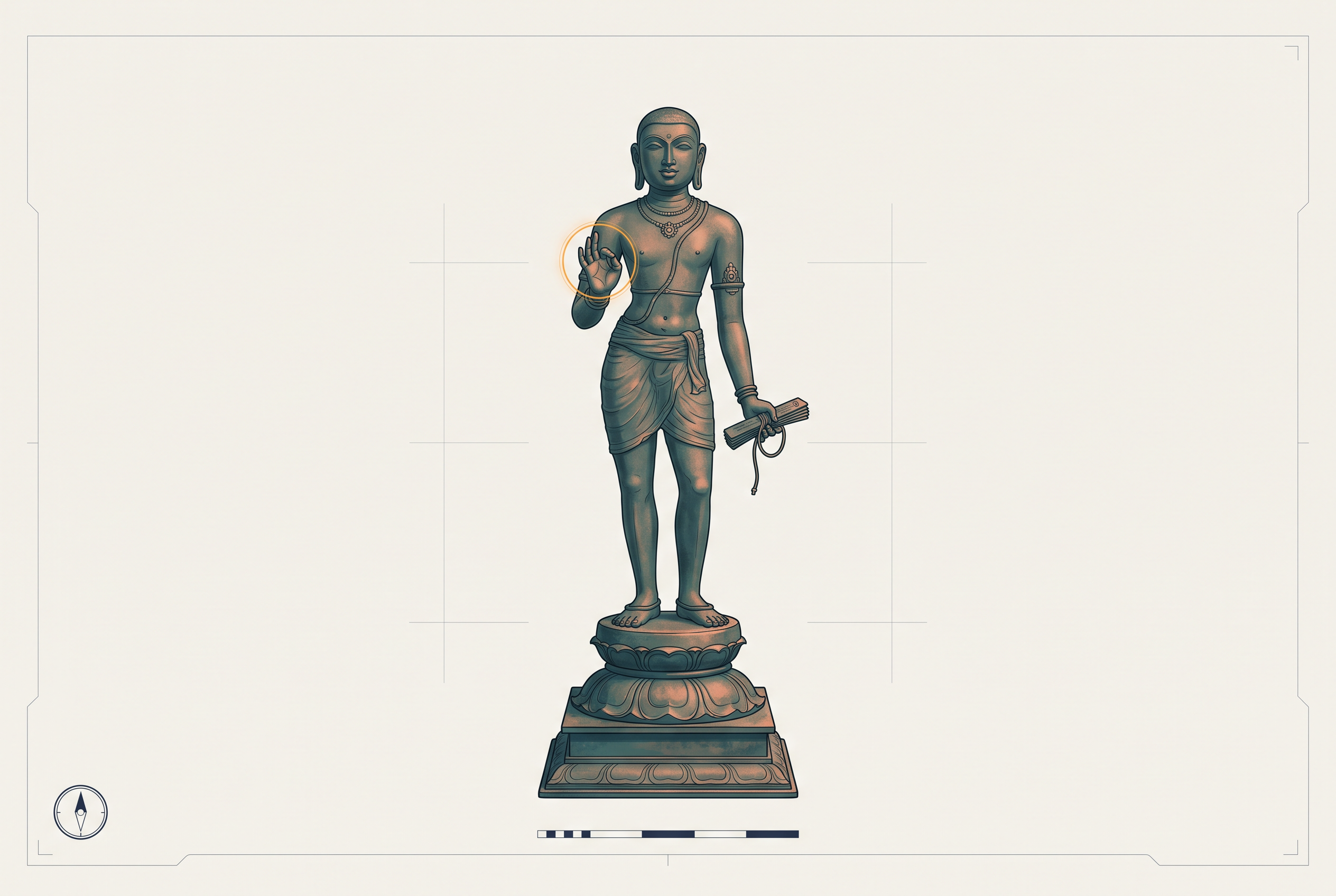
Fig. 6.0 – Twelfth-century bronze sculpture of Manikkavachakar.
6.1 A Mosaic Of Religious Beliefs And Practices
What Survives From This Period
We saw in Chapter 4 that by the mid-first millennium CE the landscape of the subcontinent was dotted with a variety of religious structures — stupas, monasteries, temples. These buildings typified certain religious beliefs and practices, and they can still be visited and studied. But a building only tells us about the beliefs that could afford stone.
Other beliefs have been reconstructed from textual traditions. Among these are the Puranas, a body of Sanskrit texts telling the stories of gods and goddesses, many of which received their present shape around the same time. And yet other beliefs remain only faintly visible in textual and visual records — glimpsed, never described.
New textual sources become available from this period. They include compositions attributed to poet-saints, most of whom expressed themselves orally, in the regional languages used by ordinary people rather than in Sanskrit. These compositions were often set to music. They were compiled by disciples or devotees, generally after the death of the poet-saint.
This matters more than it may seem. These traditions were fluid. Generations of devotees tended to elaborate on the original message, and occasionally modified or even abandoned ideas that had come to appear problematic or irrelevant in a different political, social or cultural context. Using such sources therefore poses a challenge to historians.
Historians also draw on hagiographies of saints, written by their followers or by members of their religious sect. These may not be literally accurate. But they allow a glimpse into the ways in which devotees perceived the lives of these path-breaking women and men.
Together, these sources open up a scenario characterised by dynamism and diversity. Let us look at some elements of it more closely.
Gods Multiplying, In Stone And In Text
Perhaps the most striking feature of this phase is the increasing visibility of a wide range of gods and goddesses, in sculpture as well as in texts. Sculptors carved them; poets named them; texts told their stories. Divinity, quite simply, became more crowded.
At one level this indicates the continued and even extended worship of the major deities — Vishnu, Shiva and the goddess. Each of them was visualised in a variety of forms. The same god could look, and be worshipped, quite differently in two regions of the subcontinent.
6.1.1 The Integration Of Cults
Historians who have tried to understand these developments suggest that there were at least two processes at work. Neither happened on its own, and the two were pulling in opposite directions.
Two Processes At Once
One was a process of disseminating Brahmanical ideas. It is exemplified by the composition, compilation and preservation of Puranic texts in simple Sanskrit verse. These were explicitly meant to be accessible to women and to Shudras — the lowest ranked of the four varnas — who were generally excluded from Vedic learning.
Notice what this means. The gate was not thrown open; the material was carried out through it, in a simpler form, to those who could not come in. That is dissemination, downward and outward.
At the same time a second process was at work, running the other way. The Brahmanas were themselves accepting and reworking the beliefs and practices of these and other social categories. Ideas travelled up as well as down.
In fact, many beliefs and practices were shaped through a continuous dialogue between what sociologists have described as ‘great’ Sanskritic Puranic traditions and ‘little’ traditions throughout the land.
The Words ‘Great’ And ‘Little’
Those two words are borrowed, and they need handling with care. They were coined by a sociologist named Robert Redfield in the twentieth century, to describe the cultural practices of peasant societies.
Redfield found that peasants observed rituals and customs that came down to them from dominant social categories, including priests and rulers. These he classified as part of a great tradition. At the same time, peasants also followed local practices that did not necessarily correspond with those of the great tradition. These he placed within the category of little tradition. He also noticed that both changed over time, through a process of interaction.
Scholars accept that these categories and processes are significant. They are often uncomfortable, however, with the hierarchy suggested by the words great and little — the suggestion that one is bigger, better or more real than the other. Putting ‘great’ and ‘little’ inside quotation marks is one way of indicating that discomfort.
Jagannatha At Puri
One of the most striking examples of this process is evident at Puri, in Orissa, on the eastern coast. Here the principal deity was identified, by the twelfth century, as Jagannatha — literally, the lord of the world — a form of Vishnu.
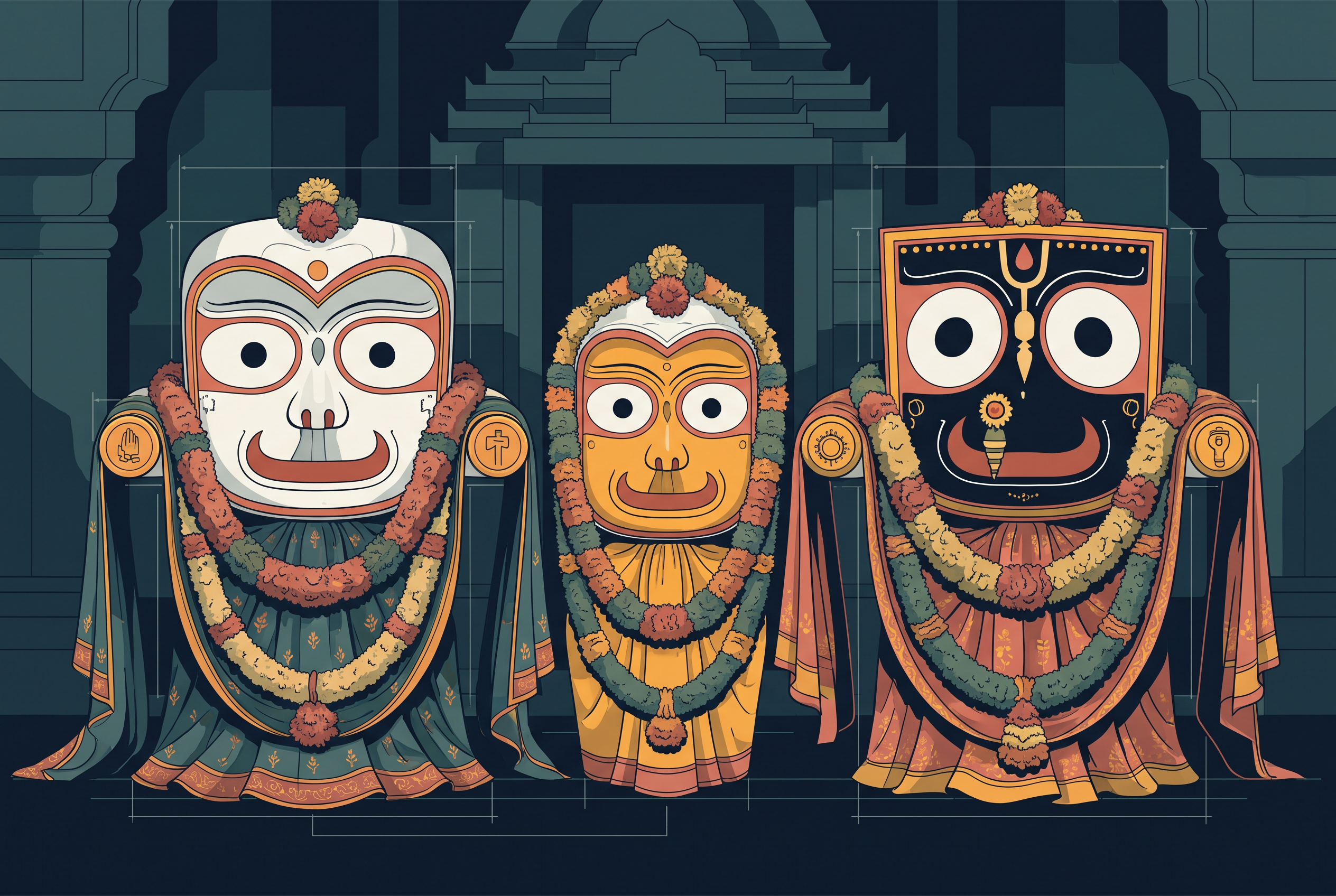
Fig. 6.1 – Jagannatha, Subhadra and Balarama in wood.
If you compare Fig. 6.1 with Fig. 4.26 in Chapter 4, you will notice that the deity is represented in a very different way. The images look like nothing else you have met in this book. In this instance, a local deity — whose image was, and continues to be, made of wood by local tribal specialists — was recognised as a form of Vishnu.
Read that sentence slowly, because both halves are true at once. Vishnu was accepted into a local shrine. And Vishnu was visualised here in a way that was very different from that in other parts of the country.
The Goddess Absorbed
Such instances of integration are evident amongst goddess cults as well. Worship of the goddess, often simply in the form of a stone smeared with ochre, was evidently widespread. A stone and some red earth: no temple, no priest, no text.
These local deities were often incorporated within the Puranic framework by being given an identity as the wife of one of the principal male deities. Sometimes they were equated with Lakshmi, the wife of Vishnu. In other instances they were equated with Parvati, the wife of Shiva.
That is integration, and it has a price. The goddess of the ochre-smeared stone entered the great tradition — but she entered it as somebody’s wife.
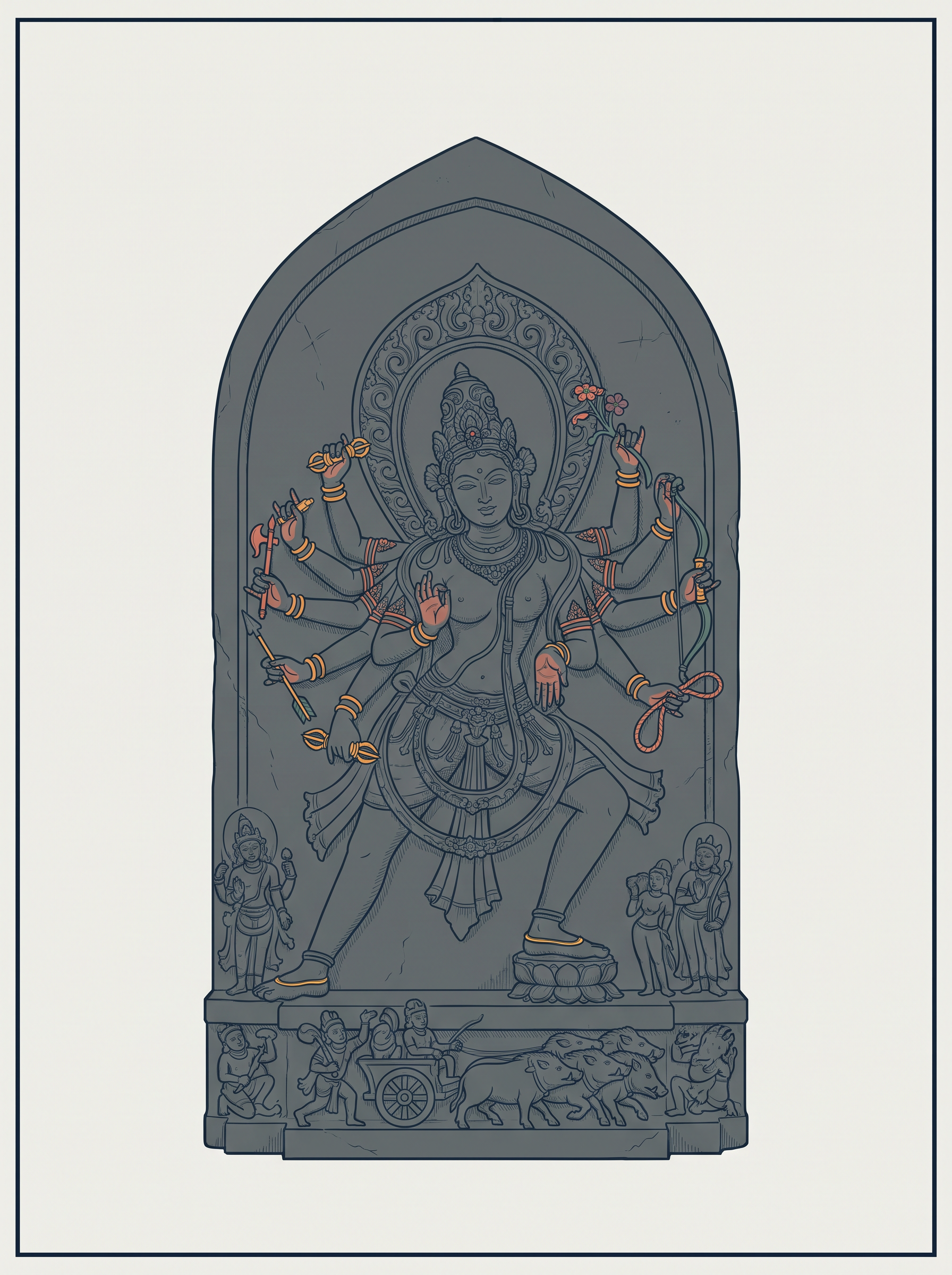
Fig. 6.2 – Stone sculpture of the Buddhist goddess Marichi.
6.1.2 Difference And Conflict
Tantric Practice
Often associated with the goddess were forms of worship that were classified as Tantric — ritual practices aimed at direct, powerful contact with the divine. Tantric practices were widespread in several parts of the subcontinent. They were open to women and men, and practitioners often ignored differences of caste and class within the ritual context.
That last point is worth pausing on. Inside the ritual, the ordinary rules of social rank were suspended. Many of these ideas influenced Shaivism as well as Buddhism, especially in the eastern, northern and southern parts of the subcontinent.
Many Traditions, One Name
All of these somewhat divergent and even disparate beliefs and practices would come to be classified as Hindu over the course of the next millennium. One word was eventually laid over a great many different things.
The divergence is perhaps most stark if we compare Vedic and Puranic traditions. The principal deities of the Vedic pantheon — Agni, Indra and Soma — become marginal figures, rarely visible in textual or visual representations. Meanwhile Vishnu, Shiva and the goddess, of whom we catch only a glimpse in Vedic mantras, fill the Puranic world.
The two do not match. What the Vedic mantras say about these deities has little in common with the elaborate Puranic mythologies built around them. And yet, in spite of these obvious discrepancies, the Vedas continued to be revered as authoritative. A tradition may hold a text sacred long after it has stopped living by it.
Where The Lines Hardened
Not surprisingly, there were sometimes conflicts as well. Those who valued the Vedic tradition often condemned practices that went beyond the closely regulated contact with the divine — contact permitted through the performance of sacrifices, or through precisely chanted mantras.
On the other hand, those engaged in Tantric practices frequently ignored the authority of the Vedas altogether. Devotees also tended to project their chosen deity, either Vishnu or Shiva, as supreme — which is a claim that leaves little room for anyone else’s god.
Relations with other traditions, such as Buddhism or Jainism, were also often fraught with tension, if not open conflict. Diversity, in short, was not the same thing as harmony.
Devotion Before The Bhakti Movements
The traditions of devotion, or bhakti, need to be located within this context. Bhakti means devotion to a chosen deity — a direct, personal bond, without an intermediary standing between the worshipper and the god.
Devotional worship was not new in this period. It had a long history of almost a thousand years before the period we are considering. Whatever else the poet-saints of this chapter did, they did not invent devotion.
During this long stretch, expressions of devotion ranged widely. At one end was the routine worship of deities within temples. At the other was ecstatic adoration, in which devotees attained a trance-like state.
The singing and chanting of devotional compositions was often a part of such modes of worship. This was particularly true of the Vaishnava and Shaiva sects — those centred on Vishnu and on Shiva. Song, that is, was already inside worship, waiting for the poet-saints to pick it up.
6.2 Poems Of Prayer: Early Traditions Of Bhakti
Leaders Without Offices
In the course of the evolution of these forms of worship, poet-saints emerged, in many instances, as leaders. Around each of them there developed a community of devotees. They held no office and commanded no army; what they had was a voice and a following.
Brahmanas remained important intermediaries between gods and devotees in several forms of bhakti. The older channel was not closed. But these traditions also accommodated and acknowledged women and the ‘lower castes’ — categories considered ineligible for liberation within the orthodox Brahmanical framework.
That is a considerable shift. People who could not, in principle, be saved were now singing, and being listened to. What also characterised traditions of bhakti was a remarkable diversity: no single doctrine, no single god, no single language.
Two Ways Of Imagining God
At a different level, historians of religion often classify bhakti traditions into two broad categories. These are saguna, meaning with attributes, and nirguna, meaning without attributes.
Saguna traditions focused on the worship of specific deities — Shiva, Vishnu and his avatars or incarnations, and forms of the goddess or Devi. These were often conceptualised in anthropomorphic forms, that is, imagined in human shape, with a face, a body and a story.
Nirguna bhakti, on the other hand, was the worship of an abstract form of god. There is no image to garland and no face to picture. The distinction runs right through this chapter, so it is worth fixing now.
6.2.1 The Alvars And Nayanars Of Tamil Nadu
Some of the earliest bhakti movements, from about the sixth century, were led by the Alvars and the Nayanars. The Alvars were, literally, those who are ‘immersed’ in devotion to Vishnu. The Nayanars were, literally, leaders who were devotees of Shiva.
They travelled from place to place, singing hymns in Tamil in praise of their gods. Tamil, not Sanskrit: the language people spoke in the street and the field, not the language of Vedic learning.
During their travels the Alvars and Nayanars identified certain shrines as the abodes of their chosen deities. This is how a devotional journey leaves a mark on the map.
Very often large temples were later built at these sacred places, and these developed as centres of pilgrimage. Singing the compositions of these poet-saints became part of temple rituals in these shrines. So did the worship of the images of the saints themselves.
6.2.2 Attitudes Towards Caste
Some historians suggest that the Alvars and Nayanars initiated a movement of protest against the caste system and the dominance of the Brahmanas. Others put it more cautiously — that they at least attempted to reform the system.
To some extent this is corroborated by the social composition of the movement. Bhaktas hailed from diverse backgrounds, ranging from Brahmanas to artisans and cultivators, and even from castes considered ‘untouchable’.
Reading Two Poets On Caste
Our first source was composed by an Alvar named Tondaradippodi, who was himself a Brahmana. He is speaking to Vishnu about the kind of devotee Vishnu prefers — and, in doing so, he ranks people.
Look carefully at what the verse does and does not say. A devotee born an outcaste stands higher, in Vishnu’s eyes, than a Brahmana learned in the four Vedas but empty of love. Birth is beaten by devotion.
Yet the poet has not abolished the ladder. He has left it standing and rearranged who climbs it. That is why the Discuss question above is a real question, and not a trick.
Our second source is by Appar, a Nayanar saint. He is blunter, and he is not addressing the god at all — he is addressing men who quote the law books.
The gotra and the kula are the descent lines by which Brahmanical society reckoned who a person was and whom they might marry. Appar sweeps both aside as useless. Devotion to Shiva is the only refuge he will allow.
Put the two verses side by side, as the Discuss question asks. Tondaradippodi, a Brahmana, tells Vishnu that the outcaste devotee is dearer than the learned man. Appar tells the learned men themselves that their pedigree is worth nothing. The claim is close; the tone, and the target, are not.
As Important As The Vedas
The importance of these traditions was sometimes indicated by a striking claim — that their compositions were as important as the Vedas themselves.
By the tenth century the compositions of the twelve Alvars had been compiled in an anthology known as the Nalayira Divyaprabandham, meaning ‘Four Thousand Sacred Compositions’. This anthology was frequently described as the Tamil Veda.
The phrase is a deliberate claim. It asserts that a text in Tamil, sung by poet-saints, was as significant as the four Vedas in Sanskrit that were cherished by the Brahmanas.
The Shaiva side was gathered in the same century. The poems of Appar, Sambandar and Sundarar form the Tevaram, a collection compiled and classified in the tenth century on the basis of the music of the songs — arranged, that is, by how they were to be sung.
6.2.3 Women Devotees
Perhaps one of the most striking features of these traditions was the presence of women. The compositions of Andal, a woman Alvar, were widely sung — and continue to be sung to this day.
Andal saw herself as the beloved of Vishnu. Her verses express her love for the deity in exactly those terms, and no husband stands anywhere in the picture.
Another woman, Karaikkal Ammaiyar, was a devotee of Shiva. She adopted the path of extreme asceticism in order to attain her goal, and her compositions were preserved within the Nayanar tradition.
Consider what these women did, and what they did not do. They renounced their social obligations — the duties of daughter, wife, mother. But they did not join an alternative order and they did not become nuns. There was no institution waiting to receive them.
Their very existence, and their compositions, posed a challenge to patriarchal norms. The challenge lay in the fact that they had stepped out of the only roles available and had still not disappeared.
In the poem below, Karaikkal Ammaiyar describes herself. Read it knowing that the woman being described is the poet.
Every detail here is chosen to violate what a woman was supposed to look like. The veins bulge, the stomach is shrunken, the teeth jut, the hair is red and wild. She shouts and wails, and she does it in a forest, not a household.
And then the poem turns. That forest is Alankatu, the home of Shiva, who dances there. She has made herself hideous by every ordinary measure — and placed herself exactly where her god is.
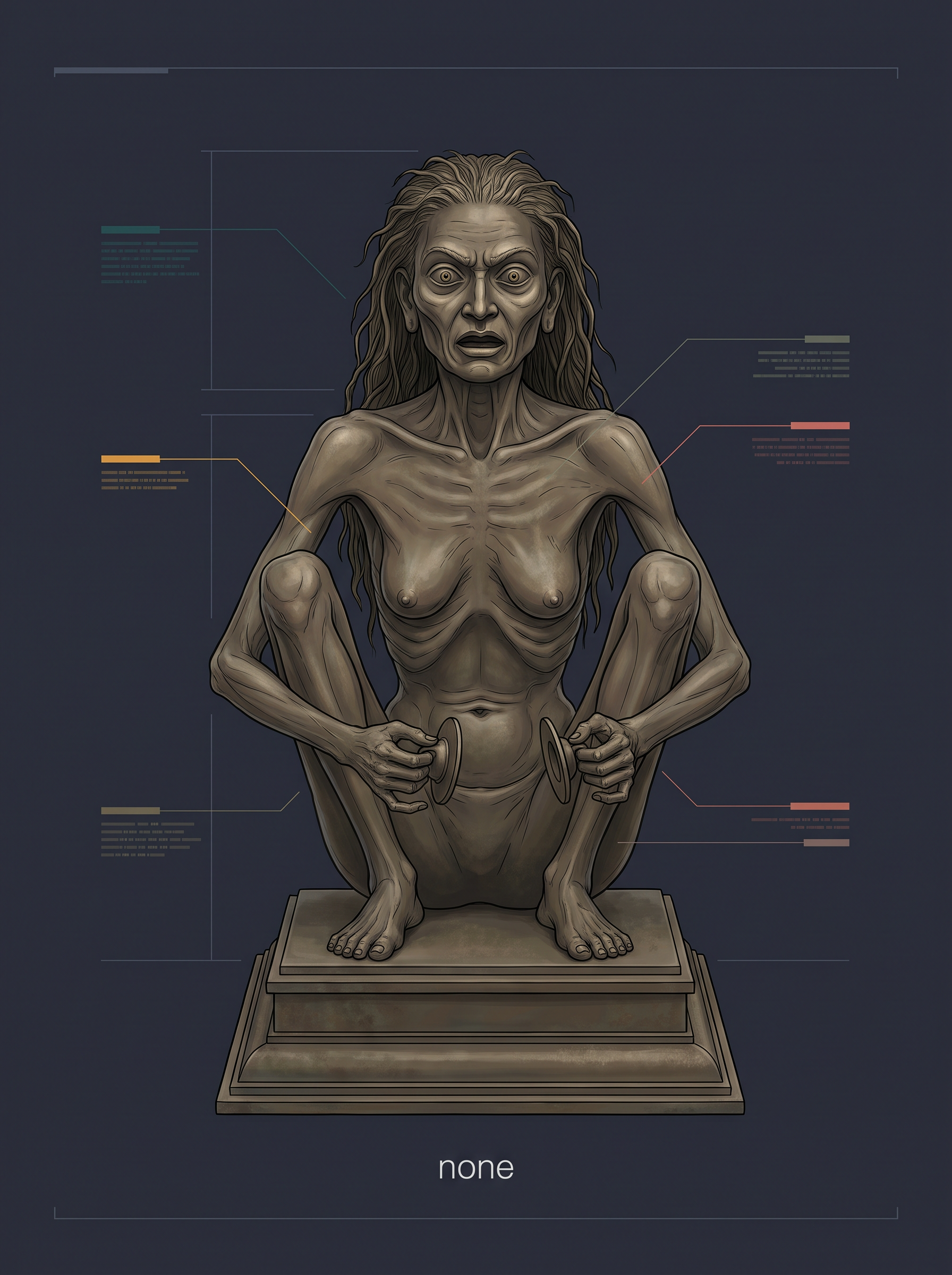
Fig. 6.3 – Twelfth-century bronze image of Karaikkal Ammaiyar.
The bronze is worth a second look. It was cast centuries after she lived, by devotees who chose to show her exactly as her poem does — gaunt, not beautiful. Her self-portrait, in other words, was accepted as her likeness.
6.2.4 Relations With The State
Kingdoms In The Tamil Region
We saw in Chapter 2 that there were several important chiefdoms in the Tamil region in the early first millennium CE. From the second half of the first millennium there is evidence for states, including those of the Pallavas and the Pandyas, from about the sixth to the ninth centuries CE.
Buddhism and Jainism had been prevalent in this region for several centuries. They drew support from merchant and artisan communities, and these religious traditions received occasional royal patronage — that is, gifts, land and protection from rulers.
Why The Hymns Attack The Jainas And Buddhists
Interestingly, one of the major themes in Tamil bhakti hymns is the poets’ opposition to Buddhism and Jainism. This is particularly marked in the compositions of the Nayanars.
Historians have attempted to explain this hostility. They suggest that it was due to competition between members of different religious traditions for royal patronage. The prize was the ruler’s favour, and there was only so much of it.
What The Cholas Built
What is evident is that the powerful Chola rulers, from the ninth to the thirteenth centuries, supported Brahmanical and bhakti traditions. They did so in the most concrete ways available to a state: by making land grants, and by constructing temples for Vishnu and Shiva.
In fact some of the most magnificent Shiva temples were constructed under the patronage of Chola rulers, including those at Chidambaram, Thanjavur and Gangaikondacholapuram. This was also the period when some of the most spectacular representations of Shiva in bronze sculpture were produced.
The link is direct. The Nayanars sang of Shiva dancing; the sculptors cast Shiva dancing. Clearly, the visions of the Nayanars inspired artists.
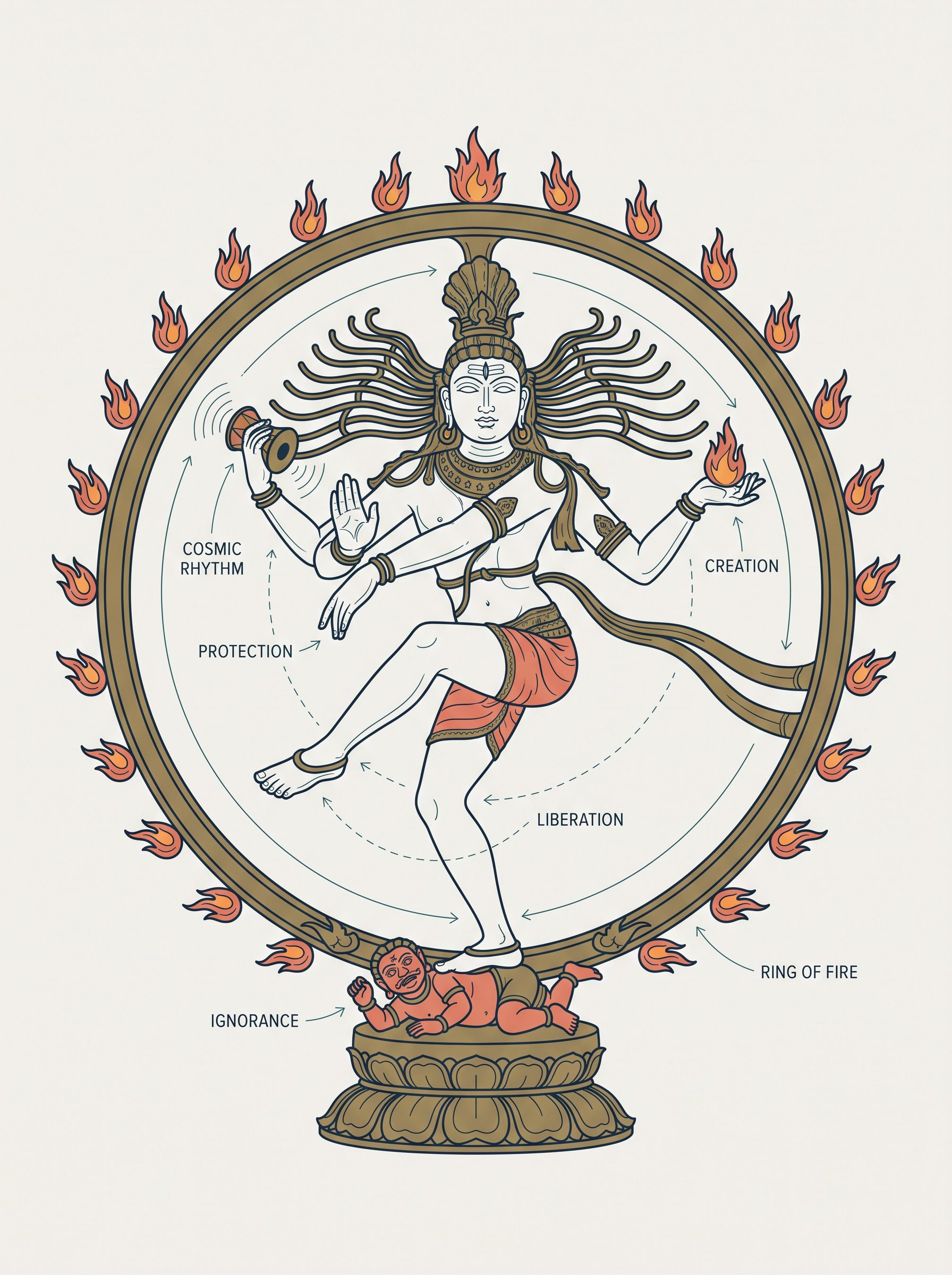
Fig. 6.4 – Bronze image of Shiva as Nataraja.
Both Nayanars and Alvars were revered by the Vellala peasants, the cultivators who worked the land of the region. Not surprisingly, rulers tried to win their support as well.
The Chola kings often attempted to claim divine support and to proclaim their own power and status. They did it by building splendid temples, adorned with stone and metal sculpture, which recreated the visions of these popular saints who sang in the language of the people.
These kings also introduced the singing of Tamil Shaiva hymns in the temples under royal patronage. They took the initiative to collect and organise the hymns into a text — the Tevaram. The state, in other words, took charge of the songs.
One Inscription, One Ceremony
Further, inscriptional evidence from around 945 suggests that the Chola ruler Parantaka I had consecrated metal images of Appar, Sambandar and Sundarar in a Shiva temple. These images were carried in processions during the festivals of these saints.
Think about what a king is doing when he installs the images of three poets inside his temple, and then parades them through the streets. He is placing himself beside the saints the peasants revere — and being seen to do it.
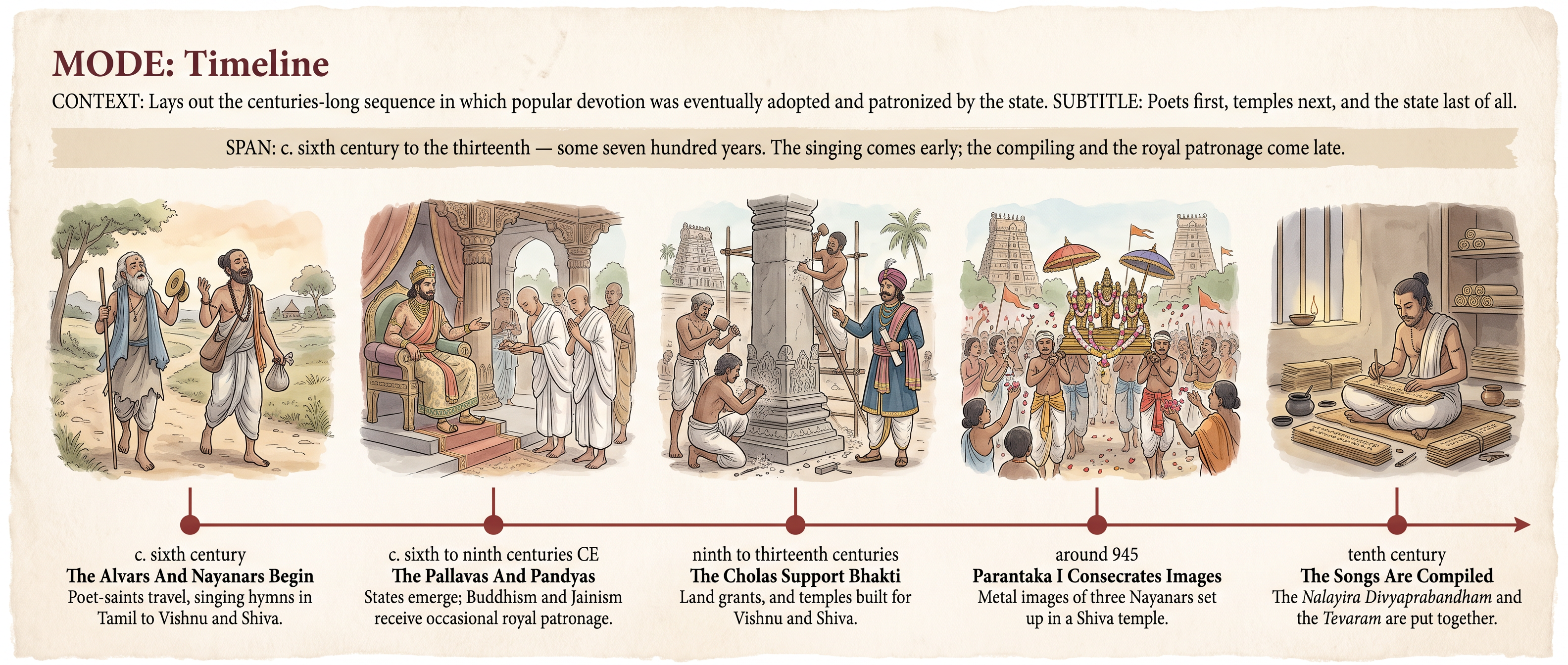
Fig. 6.5 – Bhakti and kings in the Tamil region.
6.3 The Virashaiva Tradition In Karnataka
A Minister Who Turned On The Rituals
The twelfth century witnessed the emergence of a new movement in Karnataka. It was led by a Brahmana named Basavanna, who lived from 1106 to 1168 and served as a minister in the court of a Kalachuri ruler, one of the ruling houses of the region.
Hold on to that detail. The man who launched this challenge was not an outsider to power or to Brahmanical learning. He was a Brahmana and a minister of state, and he turned on the ritual order from inside it.
His followers were known as Virashaivas, meaning heroes of Shiva, or as Lingayats, meaning wearers of the linga — the emblem in which Shiva is worshipped. This is roughly the same century in which, far away on the eastern coast, the deity at Puri was being identified as Jagannatha.
What A Lingayat Wears, And Why
Lingayats continue to be an important community in the region to date. They worship Shiva in his manifestation as a linga, and men usually wear a small linga in a silver case, on a loop strung over the left shoulder.
The god, in other words, is carried on the body. He does not have to be visited in a temple, and no priest need stand between the worshipper and him. Those who are revered among the Lingayats include the jangama, or wandering monks.
Burial, Not Cremation
Lingayats believe that on death the devotee will be united with Shiva and will not return to this world. There is no next birth to prepare for and no cycle to escape.
That belief has a practical consequence, and it is a startling one. They do not practise funerary rites such as cremation, which are prescribed in the Dharmashastras — the Sanskrit texts that laid down the rules of proper conduct. Instead, they ceremonially bury their dead.
Sayings In Kannada
Our understanding of the Virashaiva tradition is derived from vachanas, literally sayings, composed in Kannada by the women and men who joined the movement. Not Sanskrit, and not scripture: the everyday speech of the region, spoken by the participants themselves.
Here is one of them, by Basavanna. He is describing what people do, and inviting you to notice that it makes no sense.
Notice the method. Basavanna does not quote a scripture and he does not appeal to authority. He simply sets two everyday scenes side by side and lets the contradiction do the work.
The carved snake is fed; the living snake is killed. The living servant of the god is turned away hungry; the stone image, which cannot eat, is offered dishes of food. Devotion has been given to the thing that cannot receive it, and refused to the person who can.
Two Developments Alongside
This period also witnessed two major developments elsewhere, and they run alongside everything in this section.
On the one hand, many ideas of the Tamil bhaktas — especially the Vaishnavas, the devotees of Vishnu — were incorporated within the Sanskritic tradition. This process culminated in the composition of one of the best-known Puranas, the Bhagavata Purana.
That is the first process of Section 6.1 at work again. The ‘little’ tradition was not simply tolerated; it was absorbed, and it changed the ‘great’ tradition in the act of being absorbed.
Second, we find the development of traditions of bhakti in Maharashtra in the thirteenth century. Karnataka in the twelfth century, Maharashtra in the thirteenth: the movement was travelling north.
6.4 Religious Ferment In North India
A Silence That Needs Explaining
During the same period, in north India, deities such as Vishnu and Shiva were worshipped in temples. These temples were often built with the support of rulers, exactly as they were in the south.
But something is missing. Historians have not found evidence of anything resembling the compositions of the Alvars and Nayanars in north India until the fourteenth century. The temples are there; the poet-saints singing in the language of the people are not.
That is a gap of several hundred years between the two halves of the subcontinent. How do we account for this difference? The question is worth taking seriously, because an absence in the record is one of the hardest things a historian has to handle.
Brahmanas Secure In The Rajput States
Some historians point out that this was the period when several Rajput states emerged in north India — kingdoms ruled by Rajput lineages.
In most of these states the Brahmanas occupied positions of importance. They performed a range of functions, both secular and ritual: they were not only priests, but administrators and advisers as well.
Their position, in other words, was anchored in the state itself. There seems to have been little or no attempt to challenge it directly. Where the challenger has nothing to gain and everything to lose, the challenge may simply not be made.
Teachers Outside The Framework
At the same time, other religious leaders were gaining ground. These leaders did not function within the orthodox Brahmanical framework at all, and they included the Naths, the Jogis and the Siddhas — teachers and ascetics who worked outside the Brahmanical order.
Where did they come from? Many of them came from artisanal groups, including weavers. This matters more than it sounds.
Weavers and other craftsmen were becoming increasingly important with the development of organised craft production. Demand for such production grew with the emergence of new urban centres, and with long-distance trade with Central Asia and West Asia.
So the chain runs like this. Trade and new towns raised the demand for cloth and other crafts; craft groups grew in numbers and in importance; and it was from these groups that a new kind of religious leader emerged.
Popular, But Without Patrons
Many of these new religious leaders questioned the authority of the Vedas. They also expressed themselves in the languages spoken by ordinary people — languages that developed, over centuries, into the ones used today.
That is the same combination we met in the Tamil country: rejection of Vedic authority, delivered in everyday speech. But here the outcome was different.
In spite of their popularity, these religious leaders were not in a position to win the support of the ruling elites. Popularity and patronage are not the same thing. The Nayanars got both; the Naths, Jogis and Siddhas got only the first.
The Turks Arrive
A new element then entered this situation: the coming of the Turks, which culminated in the establishment of the Delhi Sultanate in the thirteenth century — a state ruled from Delhi by Turkish and Afghan rulers.
This undermined the power of many of the Rajput states, and with them the Brahmanas who were associated with these kingdoms. The pillar that had made the Brahmanical position so secure was itself knocked out.
This was accompanied by marked changes in the realm of culture and religion. The coming of the sufis, which we take up in Section 6.6, was a significant part of these developments.
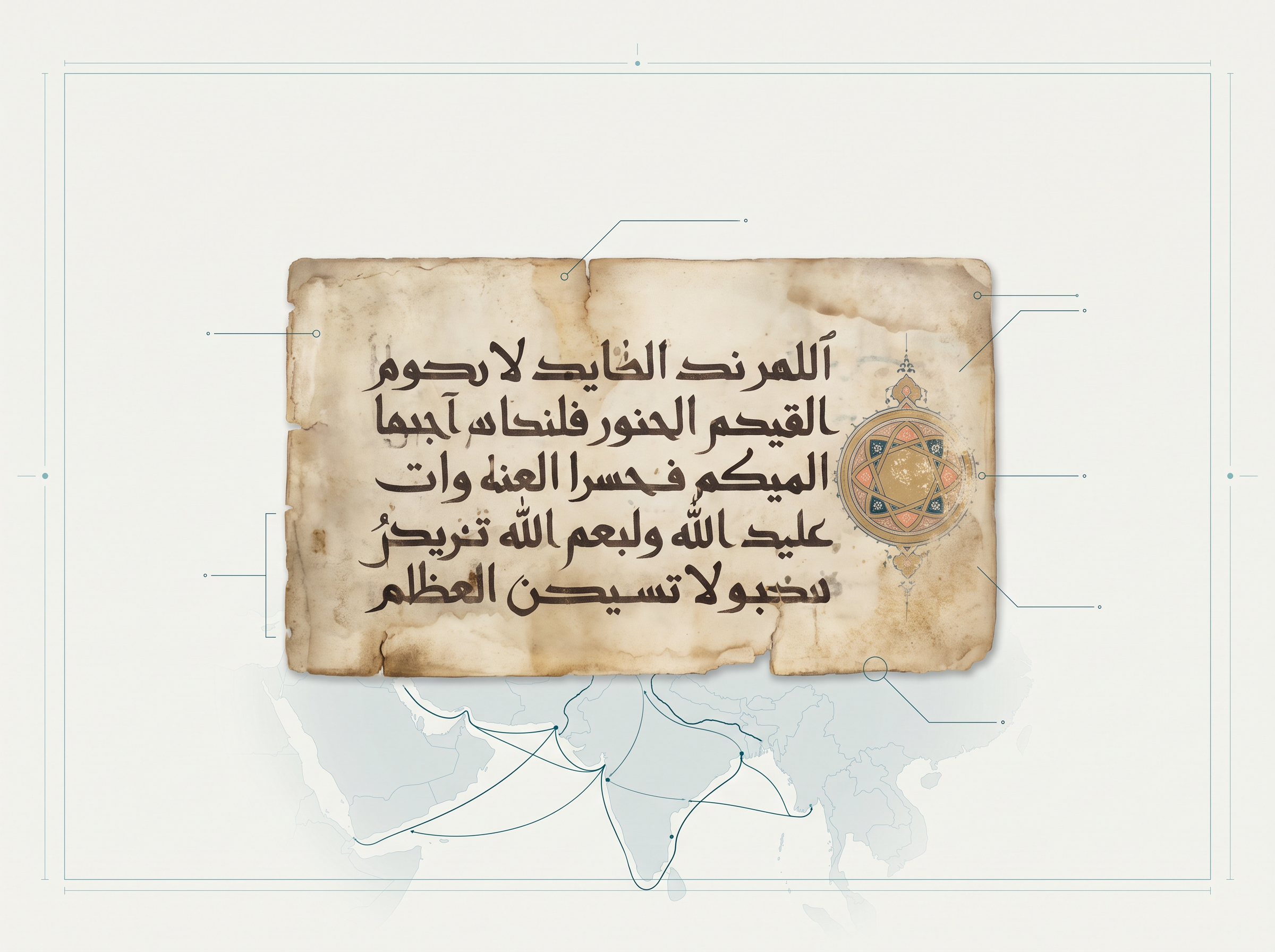
Fig. 6.6 – Eighth- or ninth-century Qur’an manuscript fragment.
6.5 New Strands In The Fabric: Islamic Traditions
The Subcontinent Was Never Sealed
Just as the regions within the subcontinent were not isolated from one another, so too, contact with lands beyond the seas and the mountains had existed for millennia. Ideas, goods and people had always moved.
Arab merchants, for instance, frequented ports along the western coast in the first millennium CE. In the same period, Central Asian people settled in the north-western parts of the subcontinent.
From the seventh century, with the advent of Islam, these regions became part of what is often termed the Islamic world. Note what this does and does not mean. It describes a wide zone connected by faith, trade and travel — not a single state, and not a single way of being Muslim.
6.5.1 Faiths Of Rulers And Subjects
Islam As The Religion Of Rulers
One axis of understanding these connections, and it is the one most frequently adopted, is to focus on the religions of the ruling elites — that is, to ask what faith the people at the top professed.
In 711 an Arab general named Muhammad Qasim conquered Sind, in the north-west. Sind became part of the domain of the Caliph, who headed the Muslim community and its state.
Later, in about the thirteenth century, the Turks and Afghans established the Delhi Sultanate. This was followed by the formation of Sultanates in the Deccan and in other parts of the subcontinent. Islam was now an acknowledged religion of rulers in several areas.
The pattern continued with the establishment of the Mughal Empire in the sixteenth century, and with many of the regional states that emerged in the eighteenth century.
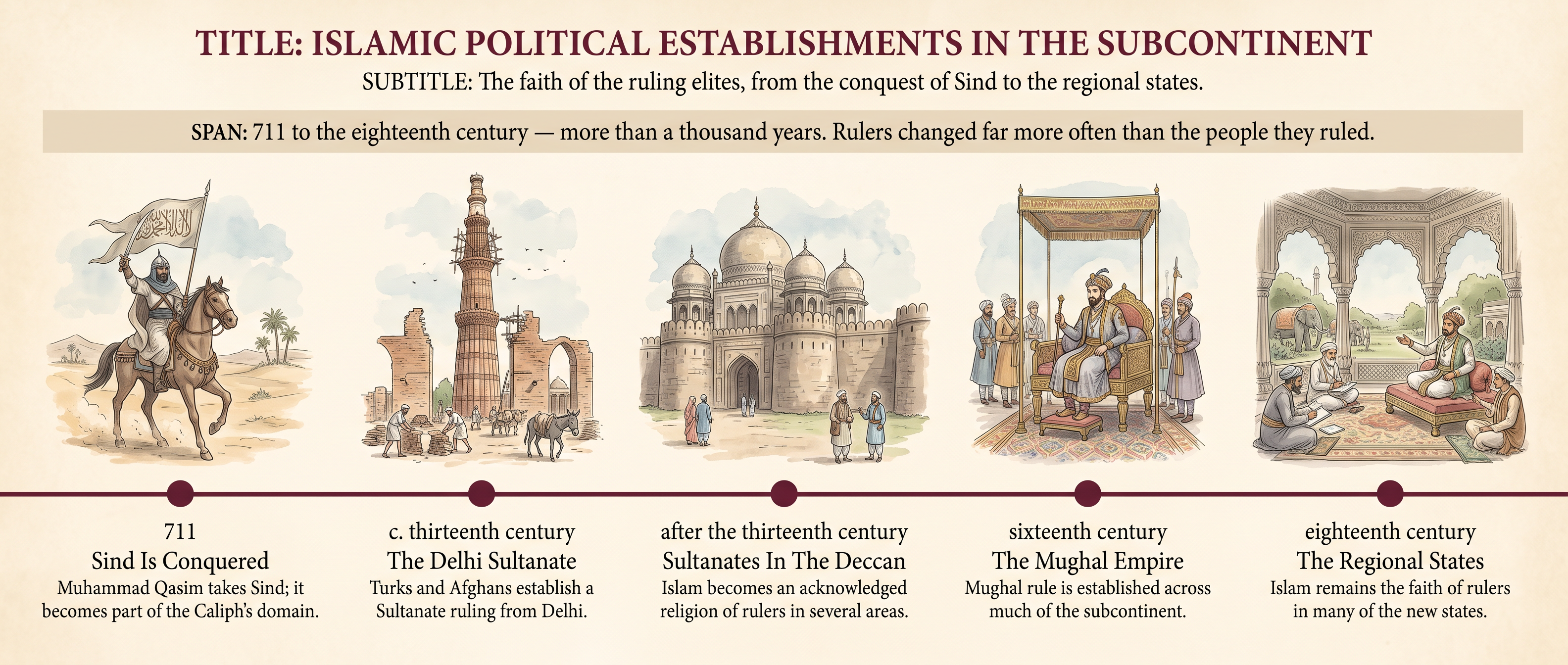
Fig. 6.7 – Islam and the rulers of the subcontinent.
Rulers, The Ulama And The Shari’a
Theoretically, Muslim rulers were to be guided by the ulama. The ulama were expected to ensure that rulers governed according to the shari’a.
The shari’a is the law governing the Muslim community. It is based on the Qur’an and on the hadis — the traditions of the Prophet, including a record of his remembered words and deeds.
But law has to work in the world it finds. With the expansion of Islamic rule outside Arabia, in areas where customs and traditions were different, two further sources of legislation were recognised. These were qiyas, reasoning by analogy, and ijma, the consensus of the community. The shari’a thus evolved from the Qur’an, the hadis, qiyas and ijma.
Clearly, the situation was complicated in the subcontinent. Here there were large populations that did not subscribe to Islam at all, and no theory written for Arabia had them in view.
Zimmi And Jizya
It is in this context that the category of the zimmi developed. The word means protected, and it derives from the Arabic zimma, protection.
The category was meant for people who followed revealed scriptures, such as Jews and Christians, and who lived under Muslim rulership. They paid a tax called jizya, and in return gained the right to be protected by Muslims.
In India this status was extended to Hindus as well. As you will see in Chapter 9, rulers such as the Mughals came to regard themselves as emperors not merely of Muslims, but of all peoples.
What Rulers Actually Did
In effect, rulers often adopted a fairly flexible policy towards their subjects, and the record of what they did is more interesting than the theory of what they were supposed to do.
Several rulers gave land endowments and granted tax exemptions to Hindu, Jaina, Zoroastrian, Christian and Jewish religious institutions. They also expressed respect and devotion towards non-Muslim religious leaders. These grants were made by several Mughal rulers, including Akbar and Aurangzeb.
Our first source is an order, not an opinion. A farman is an imperial command, and this one was issued by Akbar in 1598, when a group of Jesuit priests wished to build a church in a Gujarat port town.
Read the order closely and you will see that it is defensive. The Emperor is not simply granting permission; he is instructing named people not to obstruct. The dignitaries of the city are told, in advance, that they must not stand in the way.
An emperor does not issue such a warning unless he expects it to be needed. The farman therefore tells us two things at once: that the ruler permitted the church, and that resistance to it was anticipated locally.
Our second source is a letter, and its tone could not be more different from an imperial command.
The emperor is the one offering. He sends cloth and twenty five rupees, invokes the protection of Shiva over the Jogi, and closes by placing himself at the Jogi’s service.
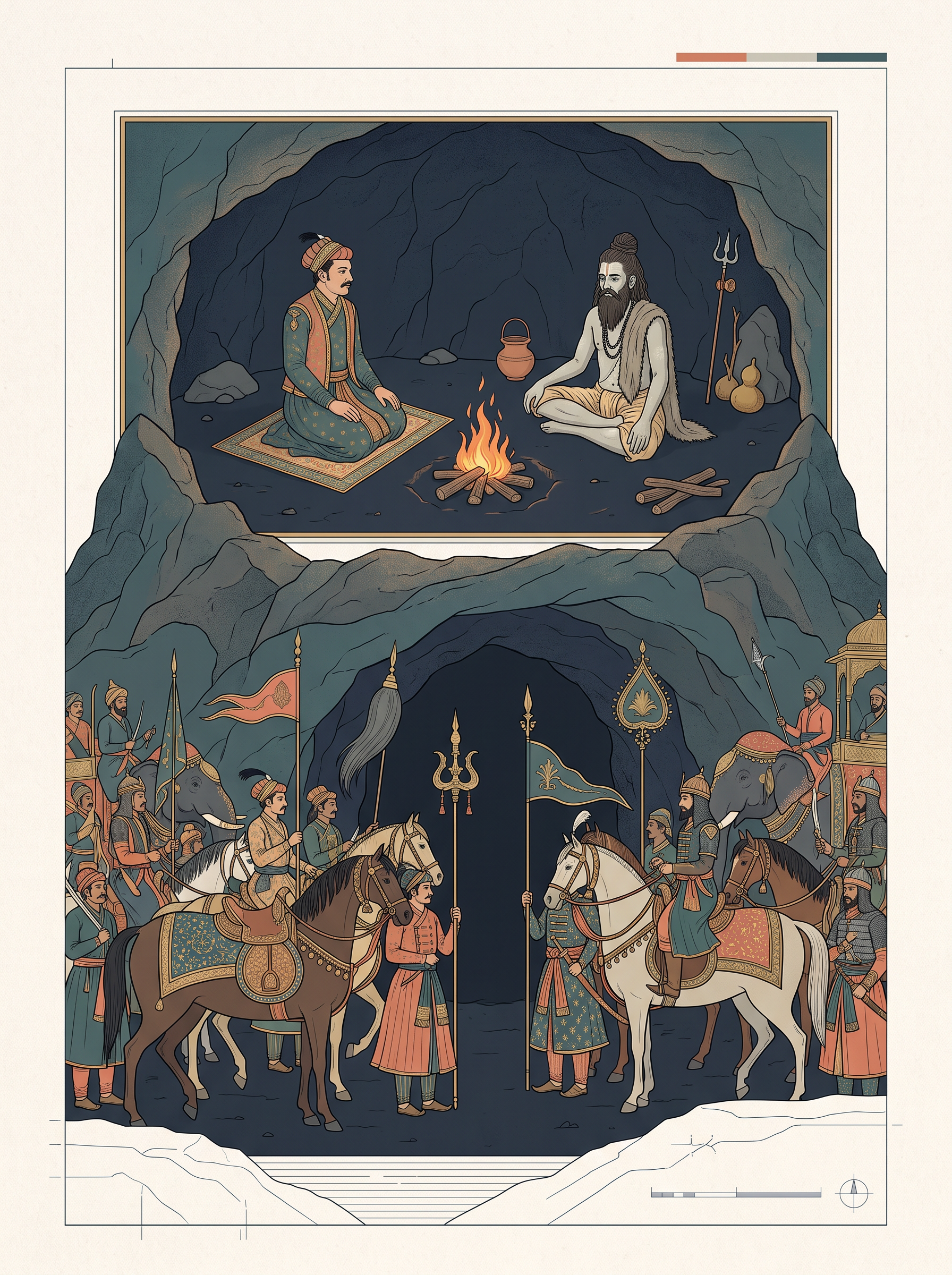
Fig. 6.8 – Emperor Jahangir with a Jogi.
Look at how the painting is built. The emperor sits with the Jogi in a bare hermitage, while his whole retinue — horses, banners, attendants — is kept below and outside. The picture makes a claim: the ruler of the world sets his power aside in the presence of the holy man.
6.5.2 The Popular Practice Of Islam
The Five Pillars
The developments that followed the coming of Islam were not confined to ruling elites. In fact they permeated far and wide through the subcontinent, amongst different social strata — peasants, artisans, warriors and merchants, to name a few.
All those who adopted Islam accepted, in principle, the five ‘pillars’ of the faith. There is one God, Allah, and Prophet Muhammad is his messenger — this is the shahada. Prayers are offered five times a day, the namaz or salat. Alms are given, the zakat. There is fasting during the month of Ramzan, the sawm. And there is the pilgrimage to Mecca, the hajj.
The Same Faith, Practised Differently
However, these universal features were often overlaid with diversities in practice. Two things produced the variation: sectarian affiliations, such as Sunni and Shi’a, and the local customary practices that converts brought with them from their earlier social worlds.
Take the Khojahs, a branch of the Ismailis, who are a Shi’a sect. They developed new modes of communication, disseminating ideas derived from the Qur’an through indigenous literary genres — that is, through the forms of poetry and song already familiar in the region.
These included the ginan, a word derived from the Sanskrit jnana, meaning ‘knowledge’. The ginan were devotional poems in Punjabi, Multani, Sindhi, Kachchi, Hindi and Gujarati, sung in special ragas during daily prayer meetings.
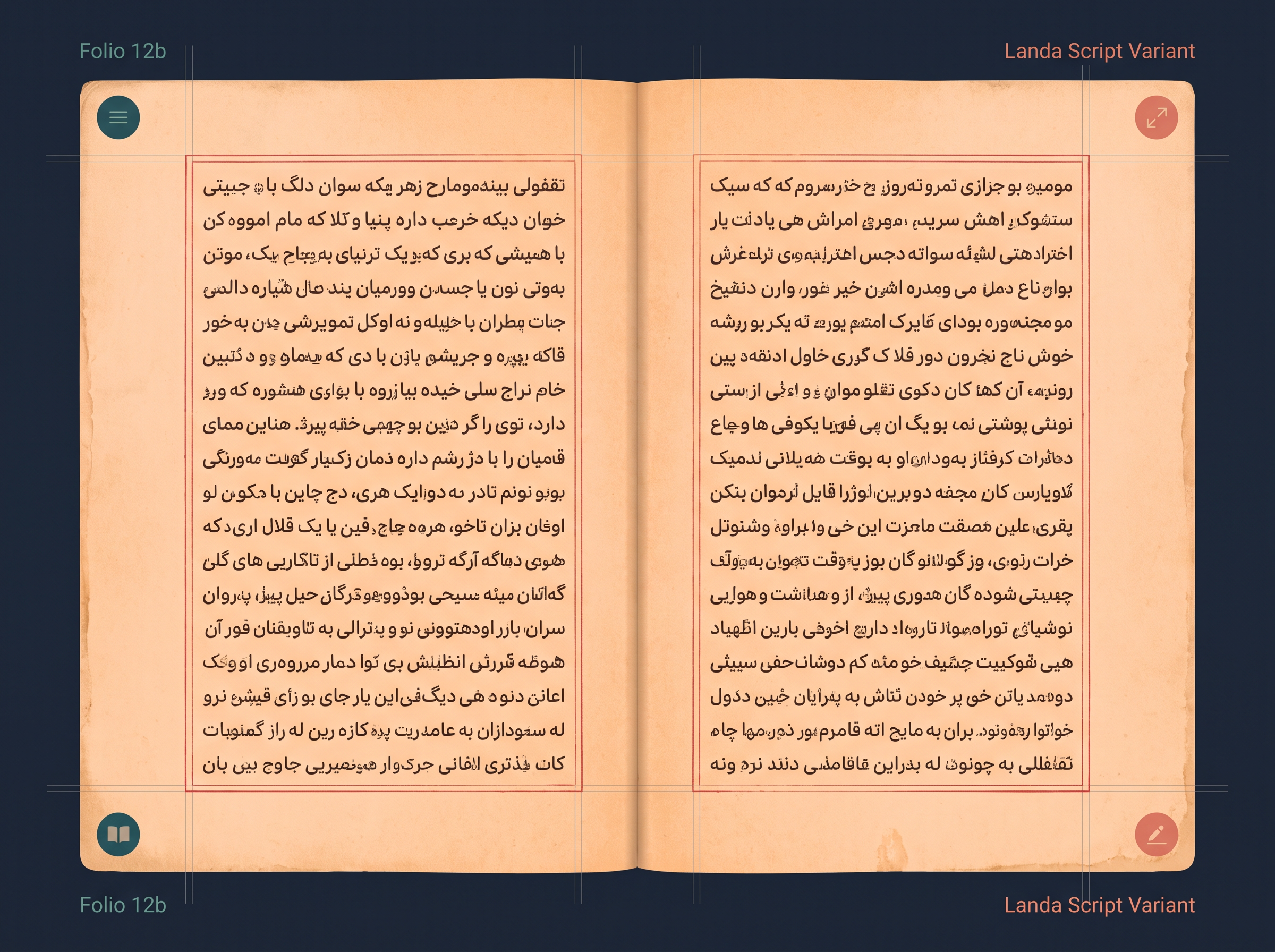
Fig. 6.9 – A Khojaki manuscript.
Notice the sequence in that caption, because it is the sequence of this whole chapter. The ginan were sung before they were written. The script they were finally written in was not a sacred script at all — it came from landa, the clipped shorthand that merchants used for their accounts.
Elsewhere, Arab Muslim traders who settled along the Malabar coast, in Kerala, adopted the local language, Malayalam. They also adopted local customs, such as matriliny, which you met in Chapter 3, and matrilocal residence.
Reading The Mosques
The complex blend of a universal faith with local traditions is perhaps best exemplified in the architecture of mosques.
Some architectural features of mosques are universal. Every mosque is oriented towards Mecca, and this orientation is evident in the placement of the mihrab, the prayer niche, and the minbar, the pulpit. Wherever a Muslim prays, the direction is fixed.
However, there are several features that show variations — such as roofs and building materials. Compare Figs. 6.10, 6.11 and 6.12, and the point makes itself.

Fig. 6.10 – Thirteenth-century mosque in Kerala.
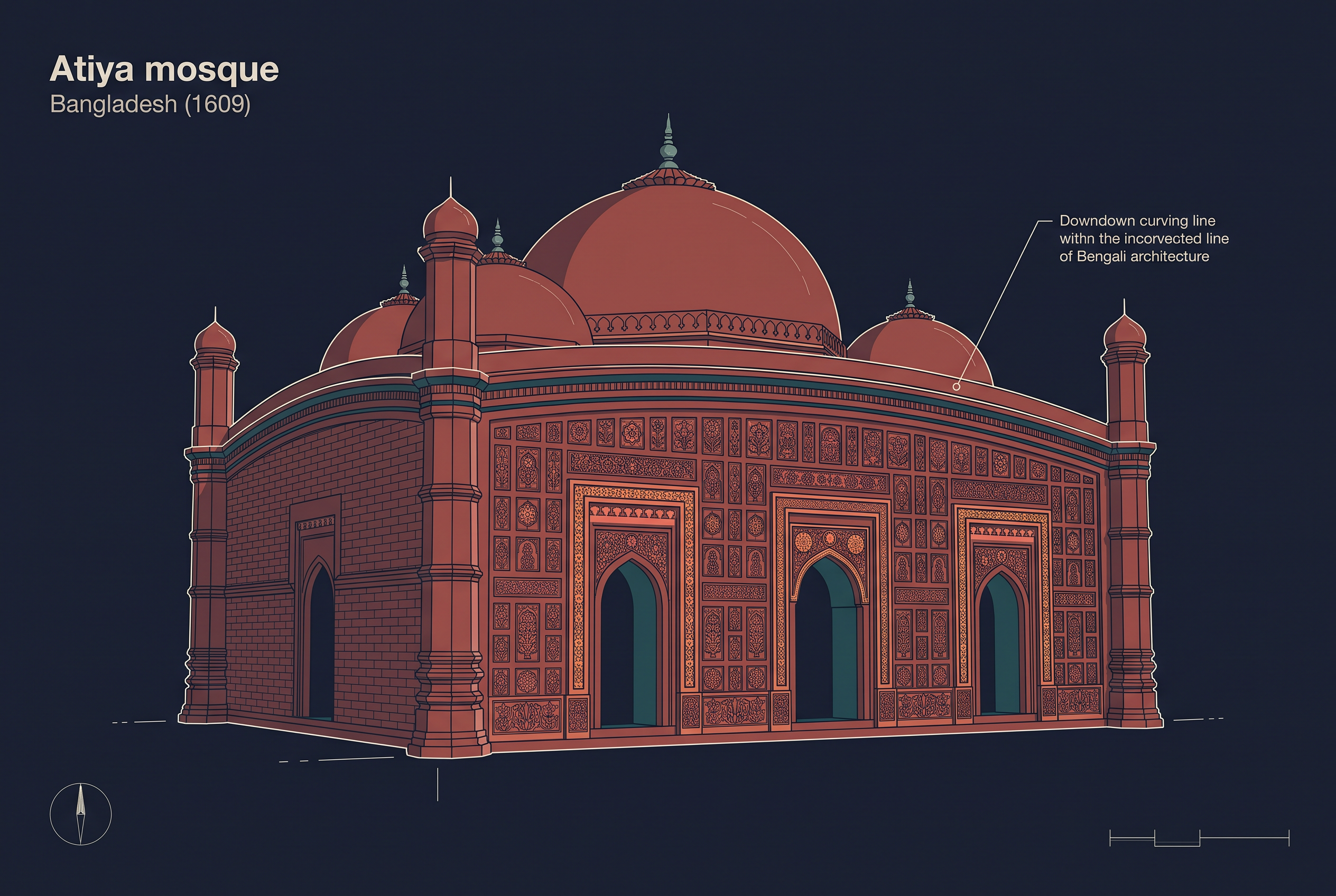
Fig. 6.11 – Atiya mosque in Bangladesh, built in 1609.

Fig. 6.12 – The wooden Shah Hamadan mosque in Srinagar.
6.5.3 Names For Communities
Words That Did Not Yet Exist
We often take the terms Hindu and Muslim for granted, as labels for religious communities. It feels as though they must always have been used. Yet these terms did not gain currency for a very long time.
Historians who have studied Sanskrit texts and inscriptions dating between the eighth and fourteenth centuries point out something remarkable. The term musalman, or Muslim, was virtually never used.
Instead, people were occasionally identified in terms of the region from which they came. So the Turkish rulers were designated as Turushka. Tajika were people from Tajikistan, and Parashika were people from Persia.
Sometimes terms already used for other peoples were simply applied to the new migrants. The Turks and Afghans were referred to as Shakas, whom you met in Chapters 2 and 3, and as Yavanas, a term used for Greeks. An old label was reached for and reused.
Mlechchha, And What It Meant
A more general term for these migrant communities was mlechchha. It indicated that they did not observe the norms of caste society, and that they spoke languages which were not derived from Sanskrit.
Such terms sometimes had a derogatory connotation. But — and this is the point of the whole subsection — they rarely denoted a distinct religious community of Muslims in opposition to Hindus. They marked a difference of origin and custom, not a religious frontier.
And as we saw in Chapter 5, the term ‘Hindu’ was itself used in a variety of ways, and was not necessarily restricted to a religious connotation.
6.6 The Growth Of Sufism
A Protest From Within
In the early centuries of Islam, a group of religious-minded people called sufis turned to asceticism and mysticism. Asceticism means the deliberate giving up of comfort and possessions; mysticism means the search for a direct, personal experience of God.
Their turn was a protest. The Caliphate — the political and religious institution that headed the Muslim world — was growing rich and worldly, and the sufis set their faces against that materialism.
They were also critical of the theologians. The scholars of the day interpreted the Qur’an and the sunna, the traditions of the Prophet, through dogmatic definitions and scholastic methods — that is, by argument, rule and technical debate.
The sufis wanted something else. They laid emphasis on seeking salvation through intense devotion and love for God, by following His commands and by following the example of the Prophet Muhammad, whom they regarded as a perfect human being. They sought an interpretation of the Qur’an on the basis of their own personal experience.
The Word Itself
The word Sufism is worth pausing over, because it is not the word the tradition used for itself. Sufism is an English word, coined only in the nineteenth century. The word used in Islamic texts is tasawwuf.
Historians have understood tasawwuf in several ways, and its origin is not settled. According to some scholars it is derived from suf, meaning wool, referring to the coarse woollen clothes worn by sufis. Others derive it from safa, meaning purity.
It may also have been derived from suffa, the platform outside the Prophet’s mosque, where a group of close followers assembled to learn about the faith. Each derivation points to something real about the sufis — the rough garment, the pursuit of purity, the circle of learners around a teacher.
6.6.1 Khanqahs And Silsilas
The Hospice And Its Master
By the eleventh century Sufism had evolved into a well-developed movement, with a body of literature on Quranic studies and on sufi practices. It now had books, and it was about to acquire institutions.
Institutionally, the sufis began to organise communities around the hospice, or khanqah, a Persian word. The khanqah was controlled by a teaching master, known as shaikh in Arabic, or as pir or murshid in Persian.
The master’s role was concrete and administrative, not merely spiritual. He enrolled disciples, called murids, and appointed a successor, called a khalifa. He established rules for spiritual conduct, and rules for interaction — both between the inmates of the hospice, and between the master and the laypersons who came to him.
The Chain
Sufi silsilas began to crystallise in different parts of the Islamic world around the twelfth century. The word silsila literally means a chain.
The chain signifies a continuous link between master and disciple, stretching backwards as an unbroken spiritual genealogy all the way to the Prophet Muhammad. It was through this channel that spiritual power and blessings were believed to be transmitted to devotees.
Because the chain mattered, joining it was formal. Special rituals of initiation were developed. Initiates took an oath of allegiance, wore a patched garment, and shaved their hair.
Most sufi lineages were named after a founding figure. The Qadiri order, for example, was named after Shaikh Abd’ul Qadir Jilani. Some, however, were named after their place of origin — the Chishti order takes its name from the town of Chisht, in central Afghanistan.
The Tomb Becomes A Shrine
When the shaikh died, his tomb-shrine, the dargah — a Persian term meaning court — became the centre of devotion for his followers. The master’s authority did not end with his death; it changed address.
This encouraged the practice of pilgrimage, or ziyarat, to his grave. Pilgrims came particularly on the anniversary of his death, called the urs, which means marriage — signifying the union of his soul with God.
The logic here is precise, and worth stating plainly. People believed that in death the saints were united with God, and were therefore closer to Him than they had been while living. So the dead shaikh was a better intercessor than the living one. People sought his blessings to attain benefits both material and spiritual. Thus evolved the cult of the shaikh revered as wali.
6.6.2 Outside The Khanqah
The Sufis Who Refused The Hospice
Not every mystic accepted this institution. Some initiated movements based on a radical interpretation of sufi ideals, and what they were radical about was the khanqah itself.
Many of them scorned the hospice. They took to mendicancy — living entirely on begging — and observed celibacy. They ignored rituals altogether, and observed extreme forms of asceticism.
They were known by different names: Qalandars, Madaris, Malangs, Haidaris, and others. Because of their deliberate defiance of the shari’a, they were often referred to as be-shari’a sufis. Those who complied with the shari’a were, in contrast, called ba-shari’a.
The two words are not simply labels for the strict and the lax. Defiance here was a spiritual position, taken on purpose, and the be-shari’a mystic would have said he was the more serious of the two.
6.7 The Chishtis In The Subcontinent
Why The Chishtis, And Not The Others
Of the groups of sufis who migrated to India in the late twelfth century, the Chishtis were the most influential. Several silsilas arrived; one took root far more deeply than the rest.
The reason given for this is not mysterious. They adapted successfully to the local environment, and they adopted several features of Indian devotional traditions. What follows in this section is, in effect, the evidence for that sentence.
6.7.1 Life In The Chishti Khanqah
The Hospice At Ghiyaspur
The khanqah was the centre of social life. We know a good deal about one in particular — the hospice of Shaikh Nizamuddin, of about the fourteenth century, on the banks of the river Yamuna at Ghiyaspur, on the outskirts of what was then the city of Delhi.
It comprised several small rooms and a big hall, the jama’at khana, where the inmates and visitors lived and prayed. The inmates included family members of the Shaikh, his attendants and his disciples.
The Shaikh himself lived in a small room on the roof of the hall. There he met visitors, in the morning and in the evening. A veranda surrounded the courtyard, and a boundary wall ran around the whole complex.
That wall mattered on at least one occasion. Fearing a Mongol invasion, people from the neighbouring areas flocked into the khanqah to seek refuge. The hospice was not only a place of prayer; when danger came, it was where the neighbourhood went.
Read the third column of the table, not just the first. These five men are remembered by the places where they are buried, and those places are spread from Ajmer in Rajasthan to Ajodhan, which is today in Pakistan. The silsila is a chain of teachers; on the ground, it is also a map of shrines.
The Open Kitchen
There was an open kitchen at the hospice, the langar, run on futuh — unasked-for charity. Nobody solicited the donations, and nobody was turned away from the food.
From morning till late night people from all walks of life came. The list is worth reading slowly: soldiers, slaves, singers, merchants, poets, travellers, rich and poor, Hindu jogis — that is, yogis — and qalandars.
They came seeking discipleship, amulets for healing, and the intercession of the Shaikh in various matters. A hospice that feeds anyone who arrives will be visited by anyone who is hungry, and by everyone who has a problem.
Other visitors included the poets Amir Hasan Sijzi and Amir Khusrau, and the court historian Ziyauddin Barani. All of them wrote about the Shaikh — which is precisely why we can describe his hospice at all.
Borrowed Practices
Certain practices at the hospice were adopted from the world around it. People bowed before the Shaikh. Water was offered to visitors. The heads of initiates were shaved. Yogic exercises were performed.
None of these is prescribed by the shari’a, and that is the point. They represented attempts to assimilate local traditions — to make the khanqah legible to people who had never entered one before.
The Chain Spreads
Shaikh Nizamuddin appointed several spiritual successors. He then deputed them to set up hospices in various parts of the subcontinent.
The consequence was rapid. The teachings, the practices and the organisation of the Chishtis spread — and so did the fame of the Shaikh himself. This in turn drew pilgrims to his shrine, and also to the shrines of his spiritual ancestors, the teachers who came before him in the chain.
6.7.2 Chishti Devotionalism: Ziyarat And Qawwali
Pilgrimage To A Grave
Pilgrimage to the tombs of sufi saints, called ziyarat, is prevalent all over the Muslim world. It is an occasion for seeking the sufi’s spiritual grace, the barakat.
For more than seven centuries, people of various creeds, classes and social backgrounds have expressed their devotion at the dargahs of the five great Chishti saints listed in Table 6.1. Amongst these, the most revered shrine is that of Khwaja Muinuddin, popularly known as ‘Gharib Nawaz’ — comforter of the poor.
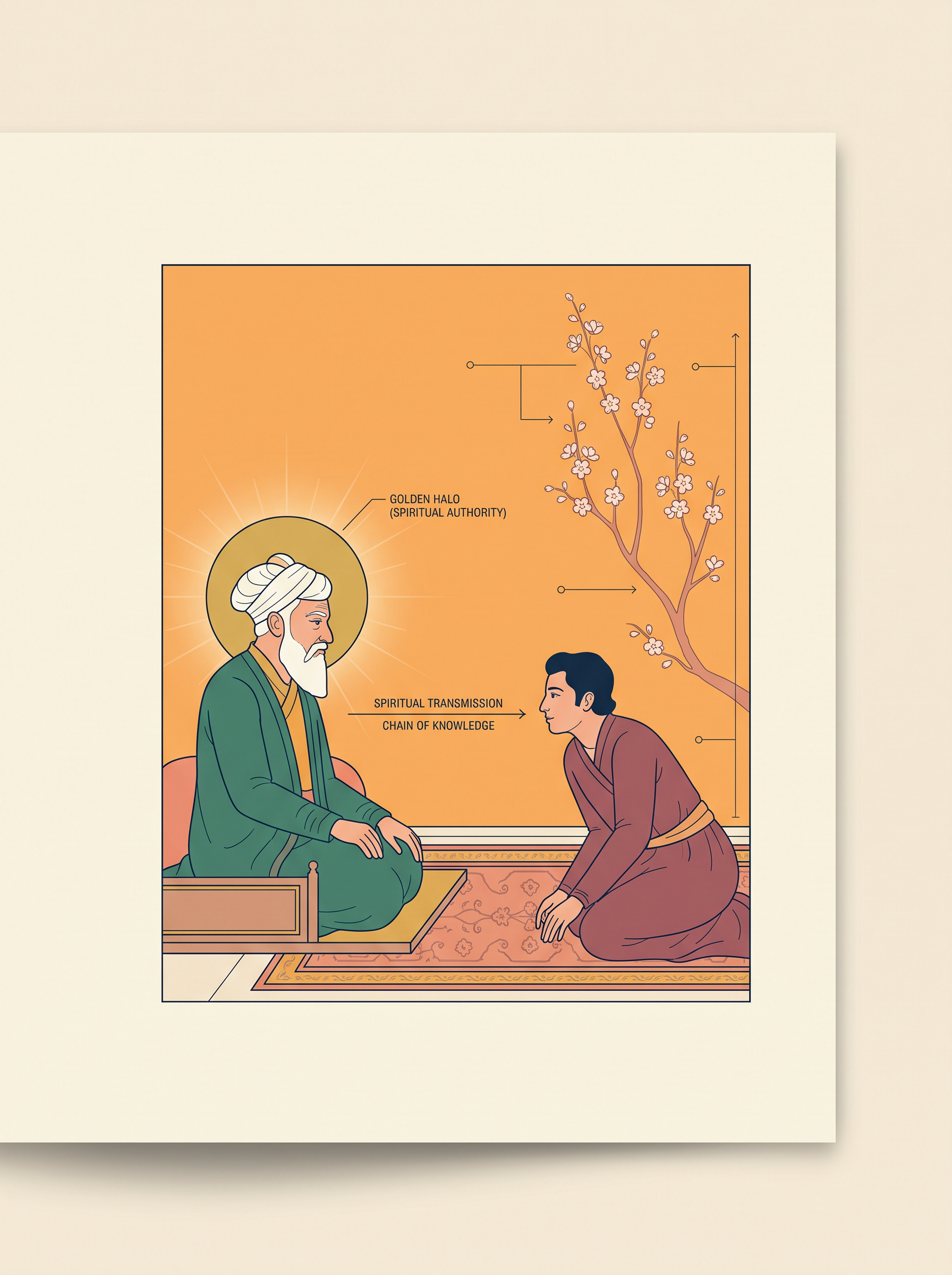
Fig. 6.13 – Shaikh Nizamuddin Auliya and Amir Khusrau.
How Ajmer Grew
The earliest textual references to Khwaja Muinuddin’s dargah date to the fourteenth century. Before that, we simply do not have written traces of it.
Why did it become popular? Three reasons are given, and they are worth separating. The first is the austerity and piety of the Shaikh himself. The second is the greatness of his spiritual successors. The third is the patronage of royal visitors — and that third one changes everything else.
Muhammad bin Tughlaq, who ruled from 1324 to 1351, was the first Sultan to visit the shrine. But the earliest construction to house the tomb was funded later, in the late fifteenth century, by Sultan Ghiyasuddin Khalji of Malwa.
Geography helped too. The shrine stood on the trade route linking Delhi and Gujarat, so it attracted a great many travellers who were already passing that way.
Akbar At The Shrine
By the sixteenth century the shrine had become very popular. In fact it was the spirited singing of pilgrims bound for Ajmer that first inspired Akbar to visit the tomb — he heard the pilgrims before he saw the shrine.
He went there fourteen times, sometimes two or three times in a single year. He sought blessings for new conquests, for the fulfilment of vows, and for the birth of sons. He maintained this tradition until 1580.
Each of these visits was celebrated by generous gifts, which were recorded in imperial documents. In 1568, for example, he offered a huge cauldron, a degh, to facilitate the cooking of food for pilgrims. He also had a mosque constructed within the compound of the dargah.
Look at what the emperor’s gift actually is. It is not a jewel or a banner. It is a cooking pot — an enormous one — which feeds the poor at the shrine of the comforter of the poor, in the emperor’s name, every day, whether he is present or not.
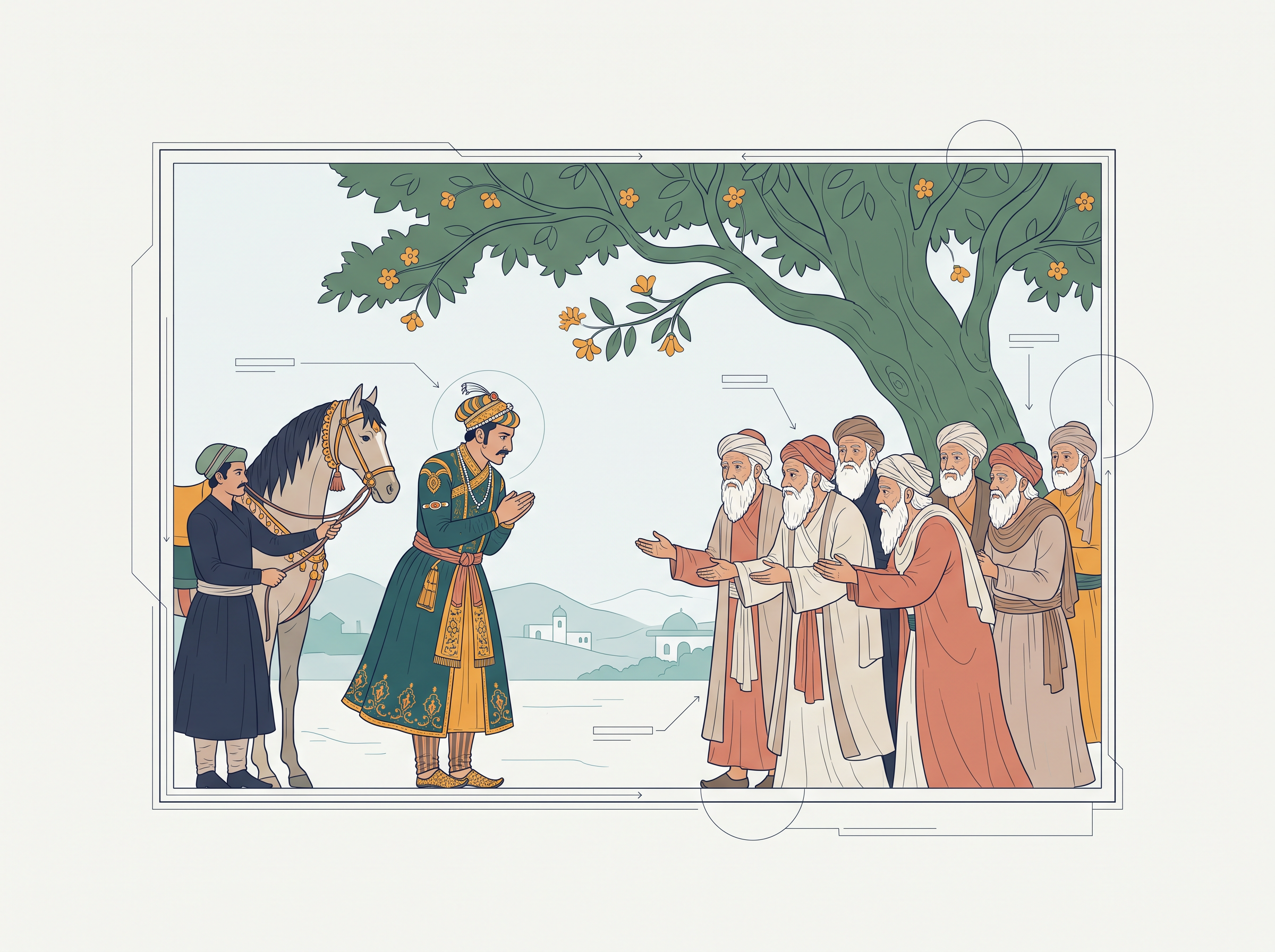
Fig. 6.14 – Shaikhs greeting Jahangir on his pilgrimage to Ajmer.
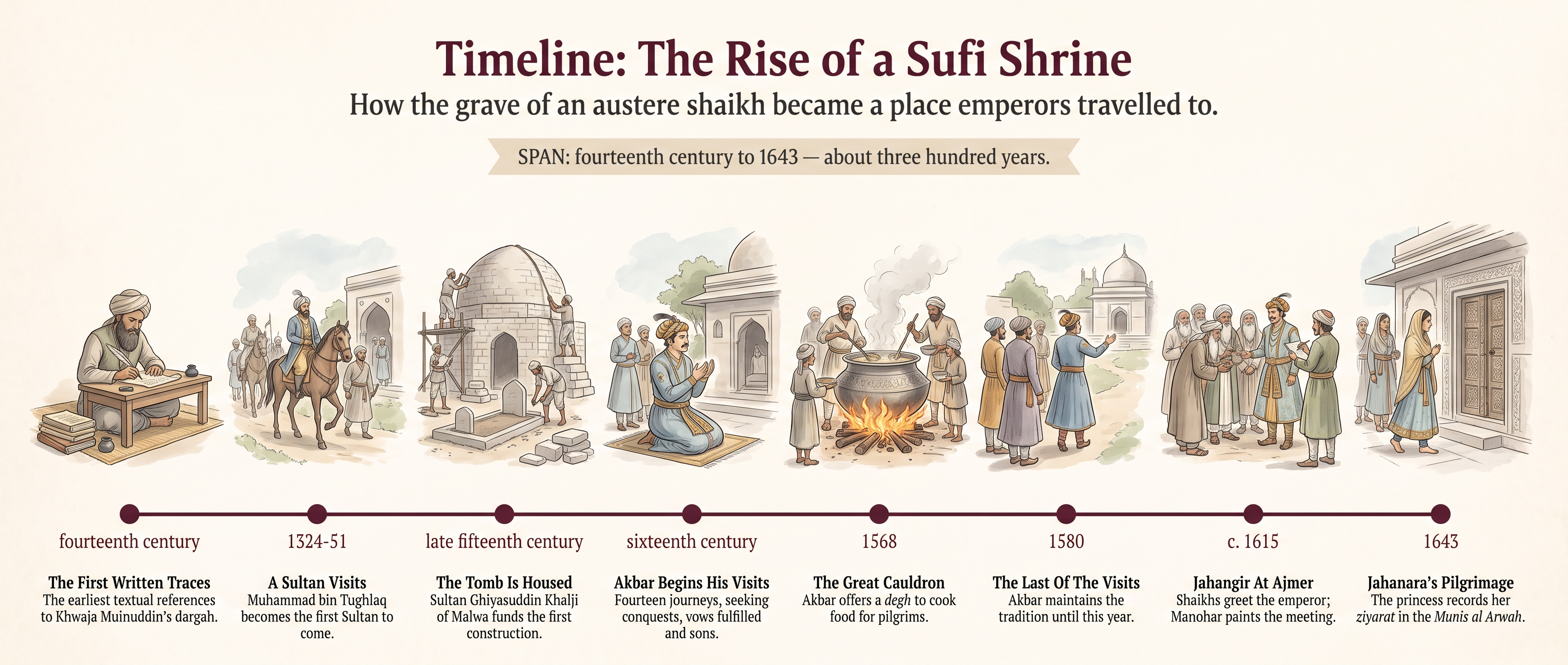
Fig. 6.15 – The shrine at Ajmer.
A Princess On Foot
Not every royal visitor came in state. Jahanara, daughter of Shah Jahan, wrote a biography of Shaikh Muinuddin Chishti, and in it she described her own pilgrimage to Ajmer in 1643. She calls herself faqira, a humble soul.
Count the gestures, because she counts them for you. She gives up the leopard skin and sleeps rough. She never points her feet towards the sanctuary and never turns her back on it. She rubs her face in the dust of the threshold, walks barefoot, kisses the ground, circles the tomb seven times, and finally lays her own scarf on it.
Every one of these is a lowering. A Mughal princess is systematically stripping away rank in the presence of a dead ascetic — and writing it down, so that it is known she did.
Muslims And Hindus At The Same Shrine
Each sufi shrine came to be associated with its own distinctive features. An eighteenth-century visitor from the Deccan, Dargah Quli Khan, described the shrine of Nasiruddin Chiragh-i Dehli in his Muraqqa-i Dehli, the Album of Delhi.
The Shaikh in the grave, he wrote, ‘is not the lamp of Delhi but of the entire country’. People turned up there in crowds, particularly on Sunday. In the month of Diwali the entire population of Delhi visited the shrine and stayed in tents around the spring tank for days.
They took baths there to obtain cures from chronic diseases. Muslims and Hindus, he records, paid their visits ‘in the same spirit’. From morning till evening people came, and also busied themselves in merrymaking in the shade of the trees.
Notice what an eighteenth-century observer takes to be perfectly ordinary. A Muslim saint’s shrine fills up at Diwali, with Hindus and Muslims arriving in the same spirit, and nobody in the account finds this worth explaining.
Zikr, Sama’ And The Qawwals
Also part of ziyarat is the use of music and dance, including mystical chants performed by specially trained musicians, or qawwals, to evoke divine ecstasy.
The sufis remember God in two main ways. One is by reciting the zikr, the Divine Names. The other is by evoking His Presence through sama’ — literally, ‘audition’ — the performance of mystical music.
Sama’ was integral to the Chishtis. And it is the clearest instance of what this section began by claiming: it exemplified their interaction with indigenous devotional traditions, in a subcontinent where devotion was already sung.
6.7.3 Languages And Communication
Speaking In Hindavi
It was not just in sama’ that the Chishtis adopted local languages. In Delhi, those associated with the Chishti silsila conversed in Hindavi, the language of the people — not in Persian, the language of the court.
Other sufis, such as Baba Farid, composed verses in the local language. Those verses were later incorporated in the Guru Granth Sahib. Hold on to that fact; it will matter again in Section 6.8.
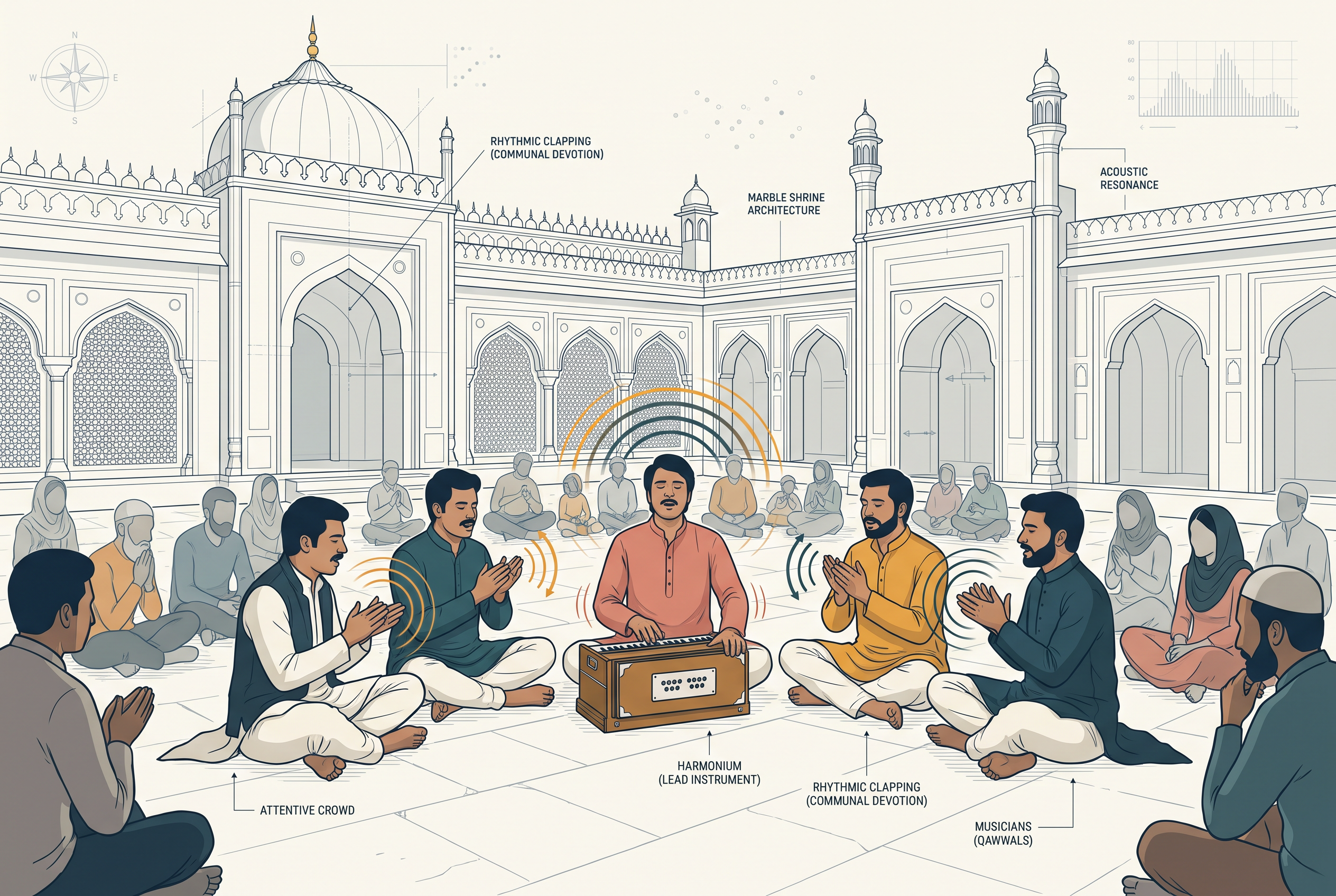
Fig. 6.16 – Qawwali at the dargah of Nizamuddin Auliya.
Love Stories As Theology
Yet other sufis composed long poems, or masnavis, to express ideas of divine love — and they did it by using human love as an allegory. The lovers in the poem stand for the soul and God.
The best-known example is the prem-akhyan, or love story, called Padmavat, composed by Malik Muhammad Jayasi. It revolved around the romance of Padmini and Ratansen, the king of Chittor.
Their trials — the obstacles and sufferings the lovers must pass through — were symbolic of the soul’s journey to the divine. Such poetic compositions were often recited in the hospices, usually during sama’.
Women Singing At The Grindstone
A different genre of sufi poetry was composed in and around the town of Bijapur, in Karnataka. These were short poems in Dakhani, a variant of Urdu, attributed to Chishti sufis who lived in this region during the seventeenth and eighteenth centuries.
These poems were probably sung by women while performing household chores — grinding grain, spinning thread. Other compositions took the form of lurinama, or lullabies, and shadinama, or wedding songs.
Think about where that places the religion. Not in a hospice, not in a mosque, but at the grindstone, at the cradle and at the wedding — inside the ordinary working day of a woman who never went anywhere.
It is likely that the sufis of this region were inspired by devotional traditions that were already there. The Kannada vachanas of the Lingayats, which you met in Section 6.3, and the Marathi abhangs of the sants of Pandharpur had come first. It is through this medium that Islam gradually gained a place in the villages of the Deccan.
Here is one of those Bijapur songs. It is set to the rhythm of the spinning wheel, so that the work and the remembrance of God keep the same time.
The song works by matching each stage of the spinning to a stage of the zikr. Taking the cotton, separating it, spooling the thread — each motion of the hand has a form of remembrance attached to it. Even the breath is threaded through the throat, as the cotton is threaded, and counted like thread.
The Discuss question asks you to set this beside Jahanara. Both are acts of devotion offered to a pir. But Jahanara travels to a shrine and lays down a scarf, while the woman at the wheel never leaves the house — her offering is the day’s work itself.
6.7.4 Sufis And The State
Austerity, And Its Limits
A major feature of the Chishti tradition was austerity, and that included maintaining a distance from worldly power. Poverty was not an accident of their situation; it was a claim about what mattered.
However, this was by no means a situation of absolute isolation from political power. The sufis accepted unsolicited grants and donations from the political elites — gifts they had not asked for.
The Sultans, for their part, set up charitable trusts, called auqaf, as endowments for hospices. They also granted tax-free land, called inam. A hospice that fed anyone who came needed to be fed itself, and the state was willing to do the feeding.
Spending, Not Saving
The Chishtis accepted donations in cash and in kind. What they did with them is the interesting part.
Rather than accumulate the donations, they preferred to use them fully on immediate requirements — food, clothes, living quarters and ritual necessities such as sama’. Nothing was banked, and nothing was held.
This had a consequence the givers could see. It enhanced the moral authority of the shaikhs, which in turn attracted people from all walks of life to them. A man who gives away everything he is given cannot be accused of taking anything.
Their piety and their scholarship, together with people’s belief in their miraculous powers, made the sufis popular among the masses. And the support of the masses is exactly what kings wished to secure.
What Kings Needed From Sufis
Kings did not simply need to demonstrate their association with sufis. They also required legitimation from them — a public acceptance that their rule was rightful.
The Turks faced a hard problem when they set up the Delhi Sultanate. The ulama insisted that the shari’a be imposed as the law of the state. The Sultans resisted, because they anticipated opposition from their subjects, the majority of whom were not Muslims.
So the Sultans looked elsewhere for their authority. They sought out the sufis, who derived their authority directly from God, and who therefore did not depend on jurists to interpret the shari’a. It is a striking move: the state turned to the mystics precisely because the mystics needed no lawyers.
Besides, it was believed that the auliya could intercede with God, in order to improve the material and spiritual conditions of ordinary human beings. This explains something you can still see on the ground — why kings so often wanted their tombs to be built in the vicinity of sufi shrines and hospices.
Where It Broke Down
However, there were instances of conflict between the Sultans and the sufis, and the cause of the conflict was authority itself.
To assert their standing, both the Sultan and the shaikh expected certain rituals to be performed — prostration, and the kissing of the feet. When both parties expect to be bowed to, a meeting becomes a problem.
Titles could be a flashpoint too. Occasionally the sufi shaikh was addressed with high-sounding titles. The disciples of Nizamuddin Auliya, for instance, addressed him as sultan-ul-mashaikh — literally, Sultan amongst shaikhs.
Other sufis were associated with the state in different ways. The Suhrawardi under the Delhi Sultans, and the Naqshbandi under the Mughals, were also linked to political power. But the modes of their association were not the same as those of the Chishtis: in some cases, these sufis accepted courtly offices outright.
The following account was written by Amir Hasan Sijzi, whom you met in the hospice at Ghiyaspur. He is reporting what happened when a local ruler tried to give Shaikh Nizamuddin Auliya two gardens and a great deal of land.
Look at the distinction the two shaikhs draw, because it is exact. Money can be accepted — and spent at once on the dervishes. Land cannot, because land is a permanent income, and a permanent income makes you a landholder like any other.
Notice also how the Shaikh teaches. He does not issue a rule. He tells a story about his own spiritual ancestor, Fariduddin, refusing the same thing — and the disciple, Amir Hasan Sijzi, writes the story down. That is how a sufi teaching travelled: as an anecdote, told in a room, remembered by a listener.
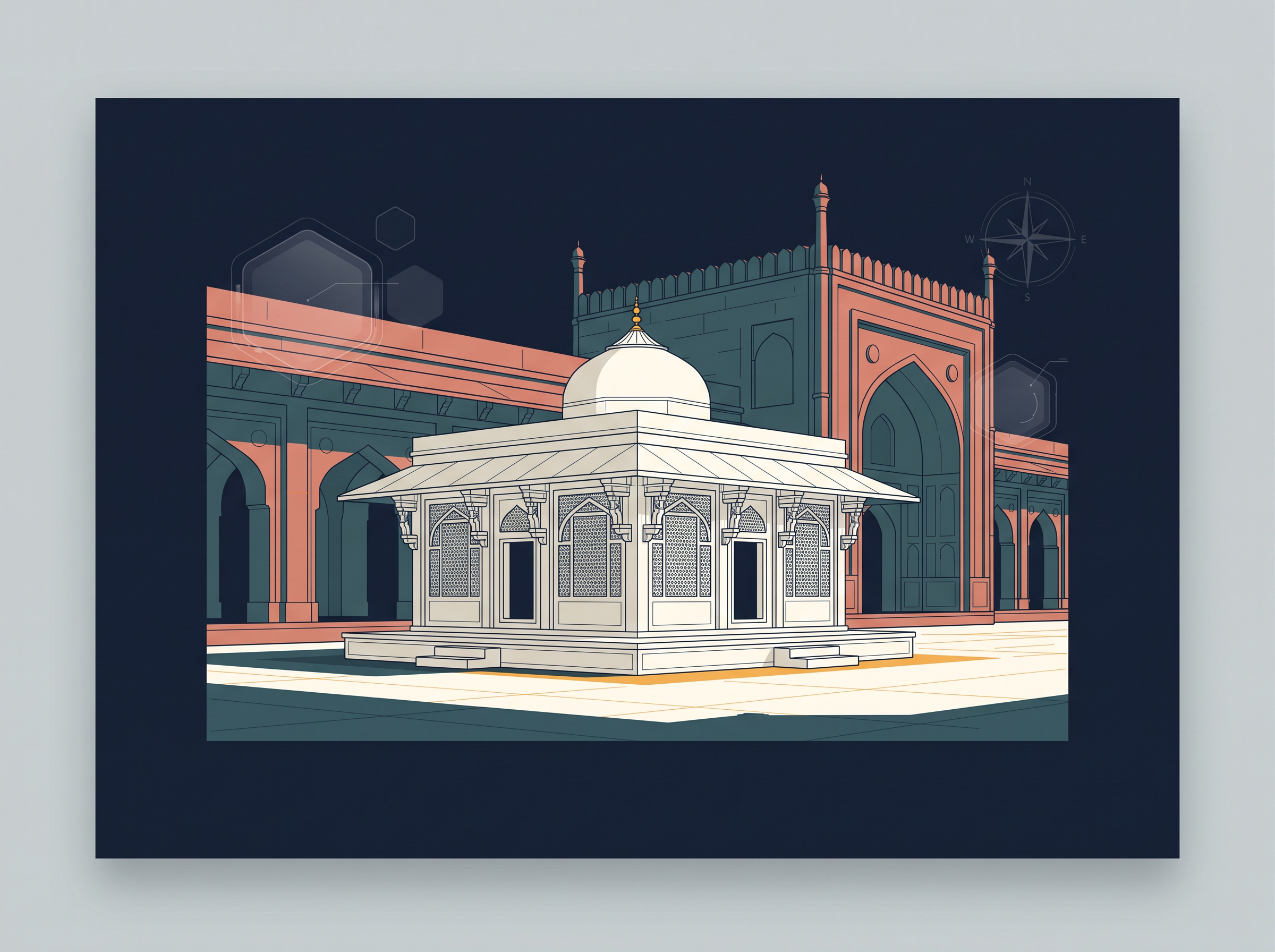
Fig. 6.17 – The dargah of Shaikh Salim Chishti in Fatehpur Sikri.
There is the whole argument of this subsection in one building. A Chishti shaikh in the tradition of Baba Farid — who took the money and returned the land deeds — lies buried in white marble at the centre of the emperor’s new capital, paid for by the emperor.
6.8 New Devotional Paths: Dialogue And Dissent In Northern India
Three Voices In A Changed World
Many poet-saints engaged in dialogue with the new social situations, ideas and institutions that this chapter has been describing. Sometimes the dialogue was explicit, and they named what they were arguing with. Sometimes it was implicit, and you have to listen for it.
Let us now see how this dialogue found expression. We focus here on three of the most influential figures of the time — Kabir, Baba Guru Nanak and Mirabai.
6.8.1 Weaving A Divine Fabric: Kabir
A Poet Who Left No Manuscript
Kabir, of about the fourteenth and fifteenth centuries, is perhaps the most outstanding example of a poet-saint who emerged within this context.
Historians have painstakingly tried to reconstruct his life and times. They have only two kinds of material to work with: the compositions attributed to him, and the hagiographies written later. Such exercises have proved to be challenging on a number of counts, and it is worth being exact about why.
Verses ascribed to Kabir have been compiled in three distinct but overlapping traditions. The Kabir Bijak is preserved by the Kabirpanth — the path or sect of Kabir — in Varanasi and elsewhere in Uttar Pradesh. The Kabir Granthavali is associated with the Dadupanth in Rajasthan. And many of his compositions are found in the Adi Granth Sahib, which we come to in Section 6.8.2.
Three traditions, then, each preserving a Kabir. And all these manuscript compilations were made long after the death of Kabir. By the nineteenth century, anthologies of verses attributed to him were circulating in print in regions as far apart as Bengal, Gujarat and Maharashtra.
Upside-Down Sayings
Kabir’s poems have survived in several languages and dialects. Some are composed in the special language of nirguna poets, the sant bhasha.
Others are known as ulatbansi, or upside-down sayings. These are written in a form in which everyday meanings are inverted — the sentence turns over in your hands as you read it.
They exist because of a real difficulty. How do you capture the nature of the Ultimate Reality in ordinary words, when ordinary words were made for ordinary things? Expressions such as ‘the lotus which blooms without flower’, or the ‘fire raging in the ocean’, convey a sense of Kabir’s mystical experiences precisely by refusing to make sense.
Borrowing From Everywhere
Also striking is the range of traditions Kabir drew on to describe the Ultimate Reality.
From Islam he took names: he described the Ultimate Reality as Allah, Khuda, Hazrat and Pir. From Vedantic traditions he took alakh, the unseen, and nirakar, the formless, as well as Brahman and Atman. From yogic traditions came terms with mystical connotations, such as shabda, meaning sound, and shunya, meaning emptiness.
The result is a body of verse in which diverse and sometimes conflicting ideas are expressed. Some poems draw on Islamic ideas, using monotheism — belief in one God — and iconoclasm, the rejection of images, to attack Hindu polytheism and idol worship. Others use the sufi concepts of zikr and ishq, meaning love, to express the Hindu practice of nam-simaran, the remembrance of God’s name.
Now read one of these poems. Kabir is addressing a listener directly, and telling him that the quarrel he is in is a quarrel about nothing.
The argument is carried by a single image: the gold. A ring and a bangle are different objects, and you can quarrel about which is finer. But melt them down and there is only gold, and there was only ever gold.
Kabir then refuses to take a side. He does not say that one community is right and the other wrong. He says both are mistaken, and he names the same failing in each — the killing of the goat, the killing of the cow — and calls the whole argument a waste of a life.
Whose Kabir?
Were all of these verses actually composed by Kabir? We may never be able to tell with certainty. Scholars have tried to analyse the language, the style and the content of the poems, to establish which verses could be his.
But there is something else this rich corpus of verses signifies, and it may matter more than the attribution. Kabir was — and to the present remains — a source of inspiration for those who questioned entrenched religious and social institutions, ideas and practices in their search for the Divine.
Kabir’s own ideas probably crystallised through dialogue and debate, explicit or implicit, with the traditions of the sufis and the yogis in the region of Awadh, part of present-day Uttar Pradesh. He argued his way into being. And in exactly the same way, his legacy was claimed by several groups afterwards, who remembered him and who continue to do so.
A Hindu Or A Muslim By Birth?
This is most evident in the later debates about whether Kabir was a Hindu or a Muslim by birth. Those debates are reflected in the hagiographies — and it is worth noticing when the hagiographies were written. Many of them were composed from the seventeenth century onwards, about 200 years after Kabir’s lifetime.
Hagiographies within the Vaishnava tradition attempted to suggest that he was born a Hindu, as Kabirdas. Kabir itself is an Arabic word meaning ‘great’. According to these accounts he was born a Hindu, but was raised by a poor Muslim family belonging to the community of weavers, or julahas, who were relatively recent converts to Islam.
They also suggested that he was initiated into bhakti by a guru, perhaps Ramananda. Look closely at what that claim achieves: it makes Kabir a Hindu at both ends of his life, at birth and at initiation.
However, the verses attributed to Kabir use the words guru and satguru — but they do not mention the name of any specific preceptor. The poems, in other words, do not support the story.
Historians have pointed out a further difficulty, and it is a plain one. It is very difficult to establish that Ramananda and Kabir were contemporaries, without assigning improbably long lives to either or to both. The two men do not fit into the same lifetime.
So, while the traditions linking the two cannot be accepted at face value, they are still evidence of something real. They show how important the legacy of Kabir was for later generations — important enough that a whole tradition wanted to claim him as its own.
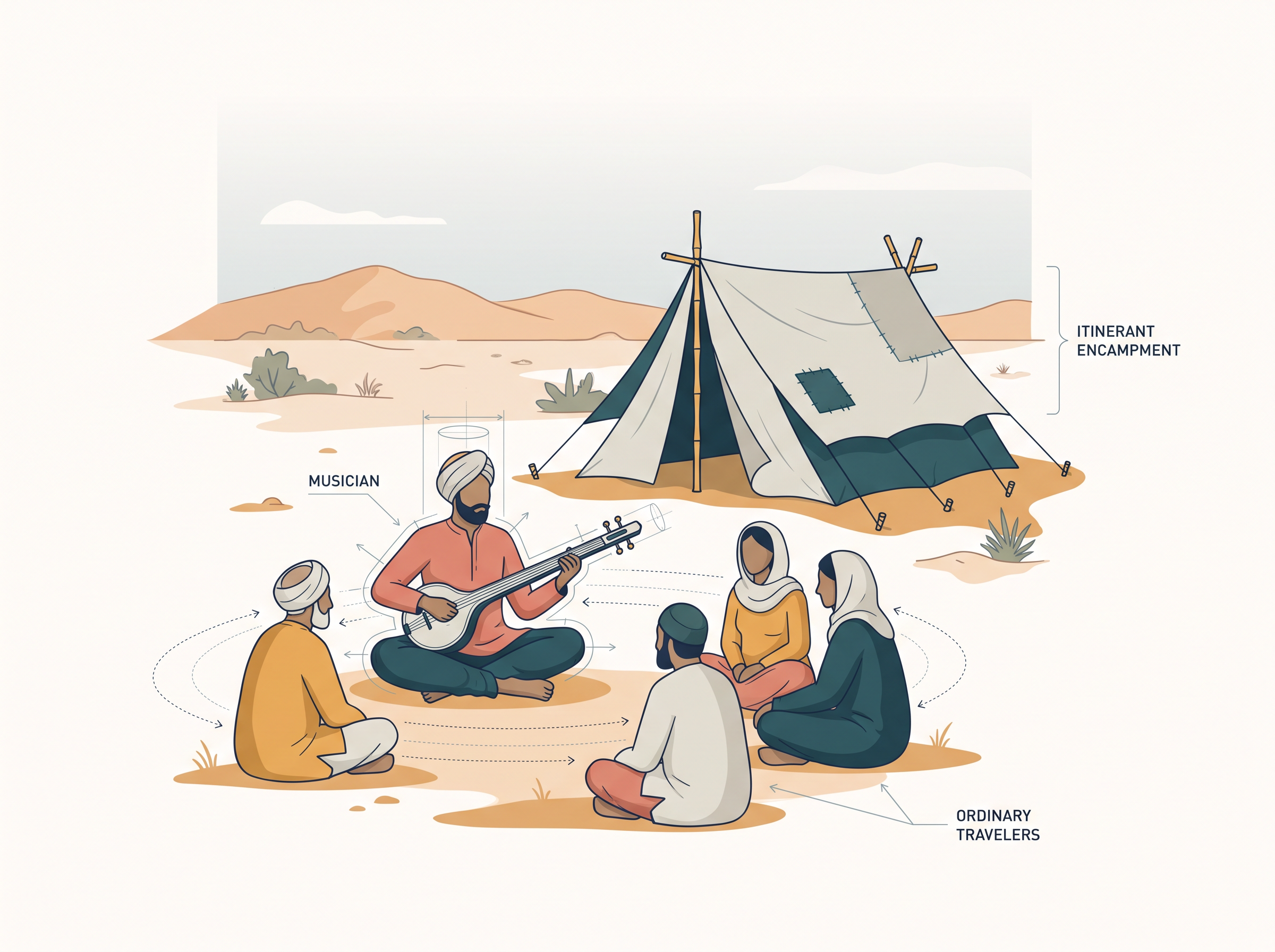
Fig. 6.18 – Seventeenth-century Mughal painting of roadside musicians.
That caption contains the whole problem of this subsection, put gently. The songs travelled on the road, in the mouths of musicians like these. They did not travel on paper.
6.8.2 Baba Guru Nanak And The Sacred Word
An Accountant Among The Saints
Baba Guru Nanak lived from 1469 to 1539. He was born in a Hindu merchant family, in a village called Nankana Sahib, near the river Ravi in the predominantly Muslim Punjab.
His early life was practical. He trained to be an accountant and studied Persian, the language of administration. He was married at a young age.
But he spent most of his time among sufis and bhaktas, and he travelled widely. The two worlds this chapter has been describing separately were, for him, simply the company he kept.
What He Taught
The message of Baba Guru Nanak is spelt out in his hymns and teachings. These suggest that he advocated a form of nirguna bhakti — devotion to a god without attributes, whom no image can hold.
He firmly repudiated the external practices of the religions he saw around him. He rejected sacrifices, ritual baths, image worship and austerities. He also rejected the scriptures of both Hindus and Muslims. For Baba Guru Nanak, the Absolute, or rab, had no gender and no form.
In place of all this he proposed something simple. The Divine could be reached by remembering and repeating the Divine Name.
He expressed his ideas through hymns called shabad, composed in Punjabi, the language of the region. He would sing these compositions in various ragas, while his attendant Mardana played the rabab, a stringed instrument. The teaching was sung, not read out.
Building A Community
Baba Guru Nanak organised his followers into a community. He set up rules for congregational worship, the sangat, involving collective recitation — everyone singing the same words together.
He also appointed one of his disciples, Angad, to succeed him as the preceptor, the guru. This practice of appointing a successor was then followed for nearly 200 years.
It appears that Baba Guru Nanak did not wish to establish a new religion. But after his death his followers consolidated their own practices, and distinguished themselves from both Hindus and Muslims.
From The Adi Granth Sahib To The Khalsa
The fifth preceptor, Guru Arjan, compiled Baba Guru Nanak’s hymns, together with those of his four successors. He also included the compositions of other religious poets — Baba Farid, Ravidas, who is also known as Raidas, and Kabir. This compilation is the Adi Granth Sahib, and these hymns, called gurbani, are composed in various languages.
Pause on that list of names. Baba Farid was a Chishti sufi whom you met in Section 6.7. Kabir was a nirguna poet claimed by three different sects. Ravidas was a leather worker. All three sit inside the same scripture.
In the late seventeenth century the tenth preceptor, Guru Gobind Singh, included the compositions of the ninth guru, Guru Tegh Bahadur. This scripture was called the Guru Granth Sahib.
Guru Gobind Singh also laid the foundation of the Khalsa Panth, the army of the pure, and defined its five symbols: uncut hair, a dagger, a pair of shorts, a comb and a steel bangle. Under him the community was consolidated as a socio-religious and military force.
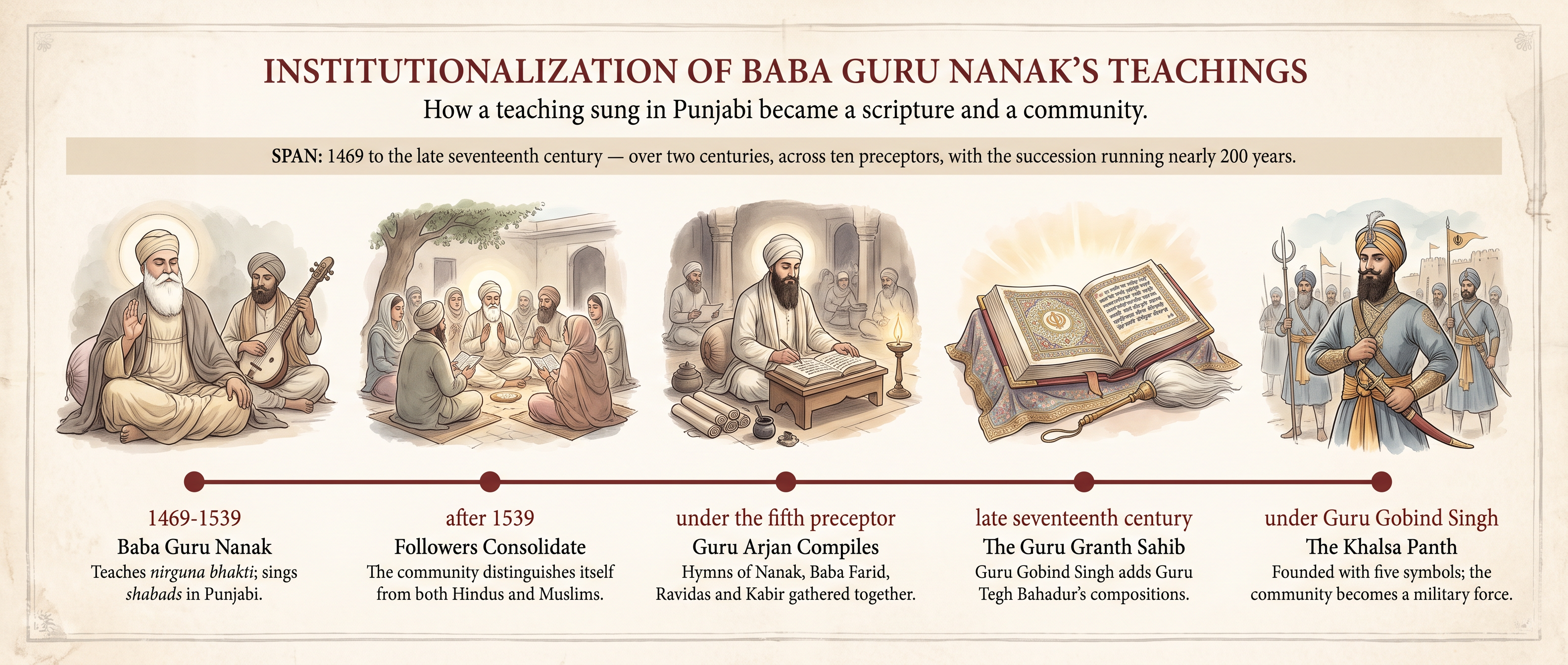
Fig. 6.19 – From Baba Guru Nanak to the Guru Granth Sahib.
6.8.3 Mirabai, The Devotee Princess
A Life Reconstructed From Songs
Mirabai, of about the fifteenth and sixteenth centuries, is perhaps the best-known woman poet within the bhakti tradition.
Notice at once how we know about her. Her biographies have been reconstructed primarily from the bhajans attributed to her, and these were transmitted orally for centuries before anyone wrote them down. What we have is a life inferred from songs.
According to these songs, she was a Rajput princess from Merta in Marwar. She was married against her wishes to a prince of the Sisodia clan of Mewar, in Rajasthan.
She defied her husband, and she did not submit to the traditional role of wife and mother. Instead she recognised Krishna, the avatar of Vishnu, as her lover.
Her in-laws tried to poison her. She escaped from the palace and lived as a wandering saint, composing songs that are characterised by intense expressions of emotion.
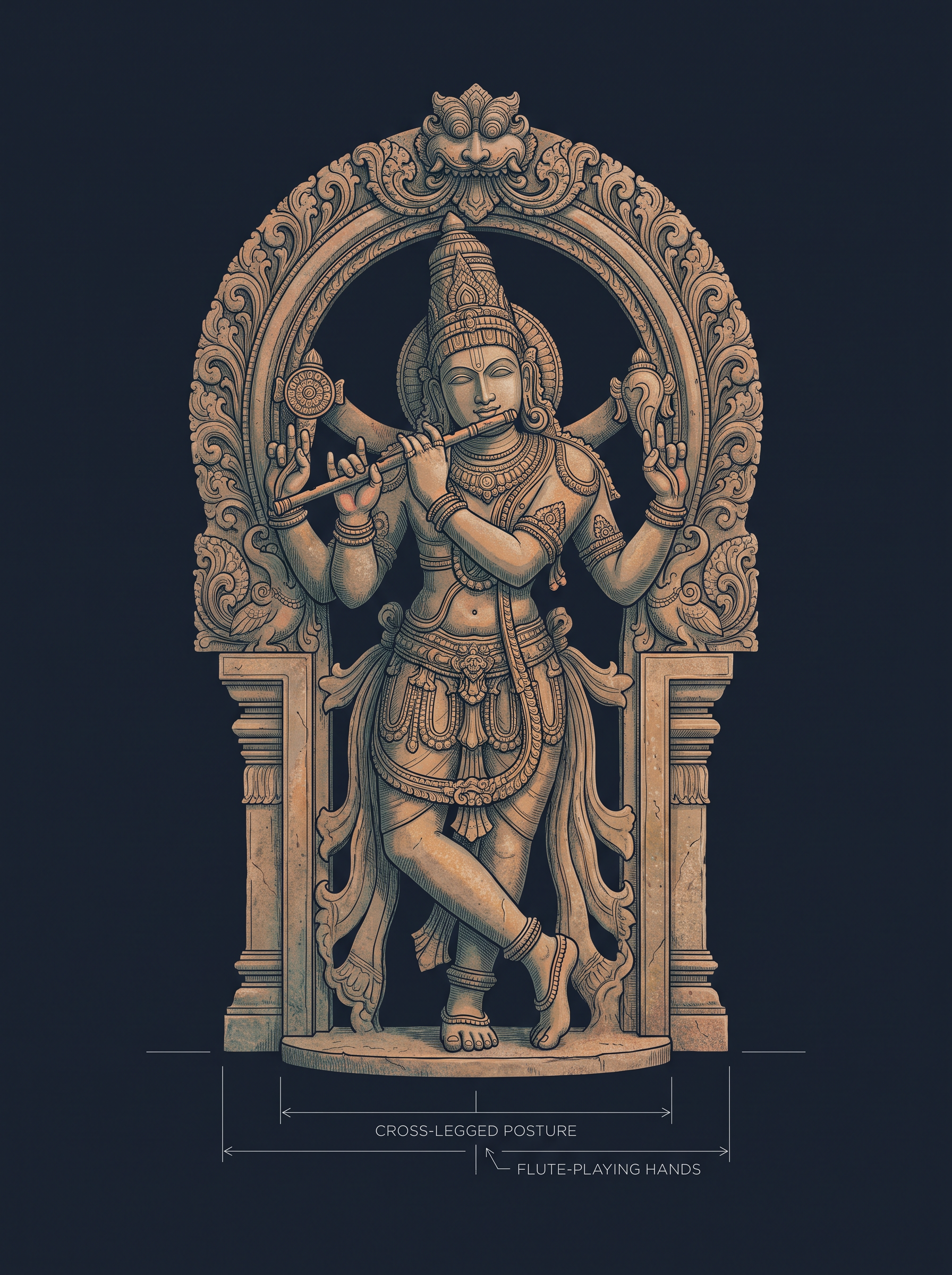
Fig. 6.20 – Krishna playing the flute.
In the song below, Mirabai speaks first of burning, and then of a ruler. Read the two verses together, because the second one explains what the first one costs her.
The first verse asks Krishna himself to light her pyre and to wear her ashes. The lover and the beloved are not merely united; one is burned into the other, until flame is lost in flame.
The second verse then measures the Rana of Mewar — her husband’s ruling house, the highest power she knows — against God, and finds him small. If God is angry, everything is lost. If the Rana is angry, what exactly can he do? A woman who has already given her body to the fire has taken away the only threat a king holds over her.
Preceptor, Robes And Followers
According to some traditions, her preceptor was Raidas, a leather worker. If that is so, it would indicate her defiance of the norms of caste society — a Rajput princess taking her spiritual instruction from a man whom that society placed at the bottom of it.
After rejecting the comforts of her husband’s palace, she is supposed to have donned the white robes of a widow, or the saffron robe of the renouncer. Either garment announces the same thing in public: this woman has left the household, and she is not coming back.
Although Mirabai did not attract a sect or a group of followers, she has been recognised as a source of inspiration for centuries. Her songs continue to be sung by women and men, especially by those who are poor and are considered ‘low caste’ in Gujarat and Rajasthan.
6.9 Reconstructing Histories Of Religious Traditions
What The Historian Has To Work With
We have seen that historians draw on a variety of sources to reconstruct the histories of religious traditions. These include sculpture and architecture. They include stories about religious preceptors. And they include compositions attributed to women and men engaged in the quest of understanding the nature of the Divine.
Notice the word attributed, which has been doing quiet work throughout this chapter. It marks the gap between the poet and the poem that reaches us.
As we saw in Chapters 1 and 4, sculpture and architecture can only be understood if we have a grasp of the context — the ideas, beliefs and practices of those who produced and used these images and buildings. A bronze or a mosque does not explain itself.
Reading Across Languages And Styles
What about textual traditions regarding religious beliefs? If you return to the sources in this chapter, you will notice at once that they include a wide variety, written in several different languages and in several different styles.
They range from the apparently simple, direct language of the vachanas of Basavanna in Source 4, to the ornate Persian of the farman of the Mughal emperors in Source 5. A saying meant for a listener in a Karnataka street, and an imperial order drafted for a city’s dignitaries, are not the same kind of writing at all.
Understanding each type of text therefore requires different skills. Apart from a familiarity with several languages, the historian has to be aware of the subtle variations in style that characterise each genre — each recognised type of writing, with its own conventions and its own purposes.
Four Kinds Of Sufi Text
A wide range of texts were produced in and around the sufi khanqahs. Historians of sufi traditions sort them into four kinds, and each kind carries its own possibilities and its own traps.
Treatises
The first are treatises, or manuals, dealing with sufi thought and practices. The Kashf-ul-Mahjub of Ali bin Usman Hujwiri, who died in about 1071, is an example of this genre. You met him in Section 6.7 as Data Ganj Bakhsh.
Its value is specific. It enables historians to see how traditions from outside the subcontinent influenced sufi thought within India.
Malfuzat
Second are the malfuzat, literally ‘uttered’ — conversations of sufi saints. An early text of this kind is the Fawa’id-al-Fu’ad, a collection of the conversations of Shaikh Nizamuddin Auliya, compiled by Amir Hasan Sijzi Dehlavi, a noted Persian poet. Source 9 in this chapter contains an excerpt from that very text.
Malfuzats were compiled by different sufi silsilas, with the permission of the shaikhs. They had obvious didactic purposes — that is, they were meant to teach, and a text meant to teach will select what is worth teaching.
Several examples have been found from different parts of the subcontinent, including the Deccan, and they were compiled over several centuries.
Maktubat
Third are the maktubat, literally ‘written’ — collections of letters written by sufi masters and addressed to their disciples and associates.
These tell us about the shaikh’s own experience of religious truth, which he wanted to share with others. But they do something else as well, and it is easy to miss. Because they are replies, they also reflect the life conditions of the recipients: they respond to the aspirations and difficulties, both spiritual and mundane, of the people who wrote in.
The best-known example is the Maktubat-i Imam Rabbani, the letters of the noted seventeenth-century Naqshbandi Shaikh Ahmad Sirhindi, who died in 1624. His ideology is often contrasted with the liberal and non-sectarian views of Akbar, and these letters are amongst those most frequently discussed by scholars.
Tazkiras
Fourth are the tazkiras, literally ‘to mention and memorialise’ — biographical accounts of saints.
The fourteenth-century Siyar-ul-Auliya of Mir Khwurd Kirmani was the first sufi tazkira written in India, and it dealt principally with the Chishti saints. The most famous tazkira is the Akhbar-ul-Akhyar of Abdul Haqq Muhaddis Dehlavi, who died in 1642.
Here the trap is stated openly. The authors of the tazkiras often sought to establish the precedence of their own orders and to glorify their spiritual genealogies. Many details are implausible, and the texts are full of elements of the fantastic.
And yet they are of great value for historians. A miracle story is poor evidence for what happened. It is excellent evidence for what an order wanted believed about itself, and that is a historical fact of a different kind.
What Was Kept, What Was Lost
Remember that each of the traditions we have been considering in this chapter generated a wide range of textual and oral modes of communication. Some of these have been preserved. Many were modified in the process of transmission. And others are probably lost forever.
That sentence should be read as a warning about everything you have just studied. What survives is not a fair sample of what existed. It is what somebody, at some point, thought worth writing down and worth copying again.
Traditions That Are Still Alive
Virtually all these religious traditions continue to flourish to date. That is unusual, and it changes the historian’s position.
This continuity has certain advantages. It allows historians to compare contemporary practices with those described in textual traditions, or shown in old paintings, and so to trace changes over time.
But it also creates a difficulty. Because these traditions are part of peoples’ lived beliefs and practices, there is often a lack of acceptance of the possibility that they may have changed over time. To be told that a practice has a history can feel like being told that it is not true.
The challenge for historians is therefore to undertake such investigations with sensitivity — while at the same time recognising that religious traditions, like all other traditions, are dynamic, and change over time.
6.10 Summary
A Mosaic Of Beliefs
- From the mid-first millennium CE, a wide range of gods and goddesses became increasingly visible in sculpture and in texts, with Vishnu, Shiva and the goddess each visualised in many forms.
- Two processes worked at once: Brahmanical ideas were disseminated through Puranic texts in simple Sanskrit, and the Brahmanas themselves accepted and reworked the beliefs of other social categories.
- Historians describe this as a continuous dialogue between ‘great’ Sanskritic Puranic traditions and ‘little’ traditions — terms borrowed from Robert Redfield, and used with discomfort because of the hierarchy they suggest.
- The integration is visible at Puri, where a local wooden deity, carved by tribal specialists, was identified by the twelfth century as Jagannatha, a form of Vishnu. Local goddesses were absorbed in the same way, as wives of the principal male deities.
- Tantric practices, often linked to the goddess, were open to women and men and ignored caste and class within the ritual, and influenced both Shaivism and Buddhism.
- These divergent beliefs came to be classified as Hindu over the next millennium, even though the Vedic and Puranic traditions have little in common — and conflict between them, and with Buddhism and Jainism, was real.
Poems Of Prayer
- Bhakti traditions were led by poet-saints, accommodated women and the ‘lower castes’, and are broadly classified as saguna, worship of a god with attributes, and nirguna, worship of an abstract god.
- From about the sixth century the Alvars, devotees of Vishnu, and the Nayanars, devotees of Shiva, travelled through the Tamil country singing hymns in Tamil; the shrines they identified later grew into great temples.
- Some historians see in them a movement of protest against caste and Brahmana dominance; others see only an attempt at reform. Bhaktas came from Brahmanas, artisans, cultivators and castes considered ‘untouchable’.
- Their compositions were claimed to be as important as the Vedas: the Nalayira Divyaprabandham was called the Tamil Veda, and the Tevaram was compiled in the tenth century.
- Women devotees — Andal and Karaikkal Ammaiyar — renounced their social obligations without joining any alternative order, and their compositions challenged patriarchal norms.
- The Chola rulers built temples for Vishnu and Shiva, cast Shiva in bronze, collected the Shaiva hymns, and around 945 Parantaka I consecrated metal images of three Nayanars — royal power binding itself to popular saints.
Karnataka And The North
- In twelfth-century Karnataka, Basavanna led the Virashaivas or Lingayats, who challenged caste and pollution, questioned rebirth, buried their dead, and encouraged post-puberty marriage and widow remarriage. We know them from vachanas composed in Kannada.
- In north India no compositions like those of the Alvars and Nayanars are found before the fourteenth century. Brahmanas were secure in the Rajput states, while the Naths, Jogis and Siddhas — often from artisanal groups — were popular but won no elite support.
- The coming of the Turks and the establishment of the Delhi Sultanate in the thirteenth century undermined the Rajput states and the Brahmanas attached to them, and brought marked changes in culture and religion.
Islamic Traditions
- Islam came with merchants, settlers and rulers: Sind in 711, the Delhi Sultanate in about the thirteenth century, the Deccan Sultanates, the Mughals in the sixteenth century and the regional states of the eighteenth.
- In theory rulers were guided by the ulama and the shari’a, which evolved from the Qur’an, hadis, qiyas and ijma. In practice, the zimmi category, the jizya, land endowments and tax exemptions produced a flexible policy — Akbar’s farman for a church at Khambat and Aurangzeb’s letter to a Jogi are both evidence of it.
- Ordinary Muslims accepted the five pillars, but practice was overlaid with sectarian and local variation: the ginan of the Khojahs, Malayalam and matriliny among Arab settlers in Kerala, and mosques whose orientation is universal while their roofs and materials are local.
- Between the eighth and fourteenth centuries the term musalman was virtually never used. Migrants were named by region — Turushka, Tajika, Parashika — or as mlechchha, and the word ‘Hindu’ was not necessarily religious.
Sufism And The Chishtis
- The sufis turned to asceticism and mysticism against the materialism of the Caliphate and the scholastic method of the theologians, seeking God through intense devotion and personal experience.
- By the eleventh century they had organised around the khanqah under a shaikh; from the twelfth, silsilas formed chains of transmission back to the Prophet. On a shaikh’s death, his dargah became a centre of ziyarat and urs.
- Radical mystics — Qalandars, Madaris, Malangs, Haidaris — scorned the khanqah and defied the shari’a, and were called be-shari’a, in contrast to the ba-shari’a sufis.
- The Chishtis were the most influential because they adapted locally. Nizamuddin’s hospice at Ghiyaspur had a langar run on futuh, and received soldiers, slaves, singers, poets, jogis and qalandars alike.
- Ajmer grew from an austere grave into a shrine visited by Sultans and emperors: Muhammad bin Tughlaq, Ghiyasuddin Khalji’s construction, Akbar’s fourteen visits and his degh of 1568, Jahangir’s pilgrimage, and Jahanara’s ziyarat of 1643.
- The Chishtis adopted local languages — Hindavi, the verses of Baba Farid, the masnavi Padmavat, and the Dakhani songs of Bijapur sung by women at the grindstone.
- Sufis kept a distance from worldly power yet accepted unsolicited grants, spending rather than accumulating them. Sultans needed their legitimation, since the shaikhs drew authority directly from God — but conflict over precedence and ritual was never far away.
Dialogue And Dissent
- Kabir, of about the fourteenth and fifteenth centuries, drew on Islamic, Vedantic and yogic vocabularies, wrote ulatbansi that invert ordinary meaning, and argued that the names of God are words we invent. His verses survive in three compilations, all made long after his death.
- Whether Kabir was born a Hindu or a Muslim cannot be settled: the hagiographies come about 200 years later, and Ramananda cannot be made his contemporary without improbably long lives.
- Baba Guru Nanak (1469-1539) taught nirguna bhakti, rejected external practice and the scriptures of both Hindus and Muslims, sang shabads in Punjabi, organised the sangat and appointed a successor. Guru Arjan compiled the Adi Granth Sahib; Guru Gobind Singh completed the Guru Granth Sahib and founded the Khalsa Panth.
- Mirabai, of about the fifteenth and sixteenth centuries, is known through bhajans transmitted orally. She refused the role of wife, took Krishna as her lover, ranked the Rana below God, and is still sung by the poor and those considered ‘low caste’.
How We Know Any Of This
- Historians reconstruct these traditions from sculpture, architecture, stories about preceptors, and compositions attributed to poet-saints — each requiring different languages and a feel for the conventions of each genre.
- Sufi history rests on four kinds of text: treatises such as the Kashf-ul-Mahjub; malfuzat such as the Fawa’id-al-Fu’ad; maktubat such as the Maktubat-i Imam Rabbani; and tazkiras such as the Siyar-ul-Auliya and the Akhbar-ul-Akhyar.
- Some of this material was preserved, much was modified in transmission, and a great deal is probably lost forever. Because these traditions are still alive, historians must study their changes with sensitivity.
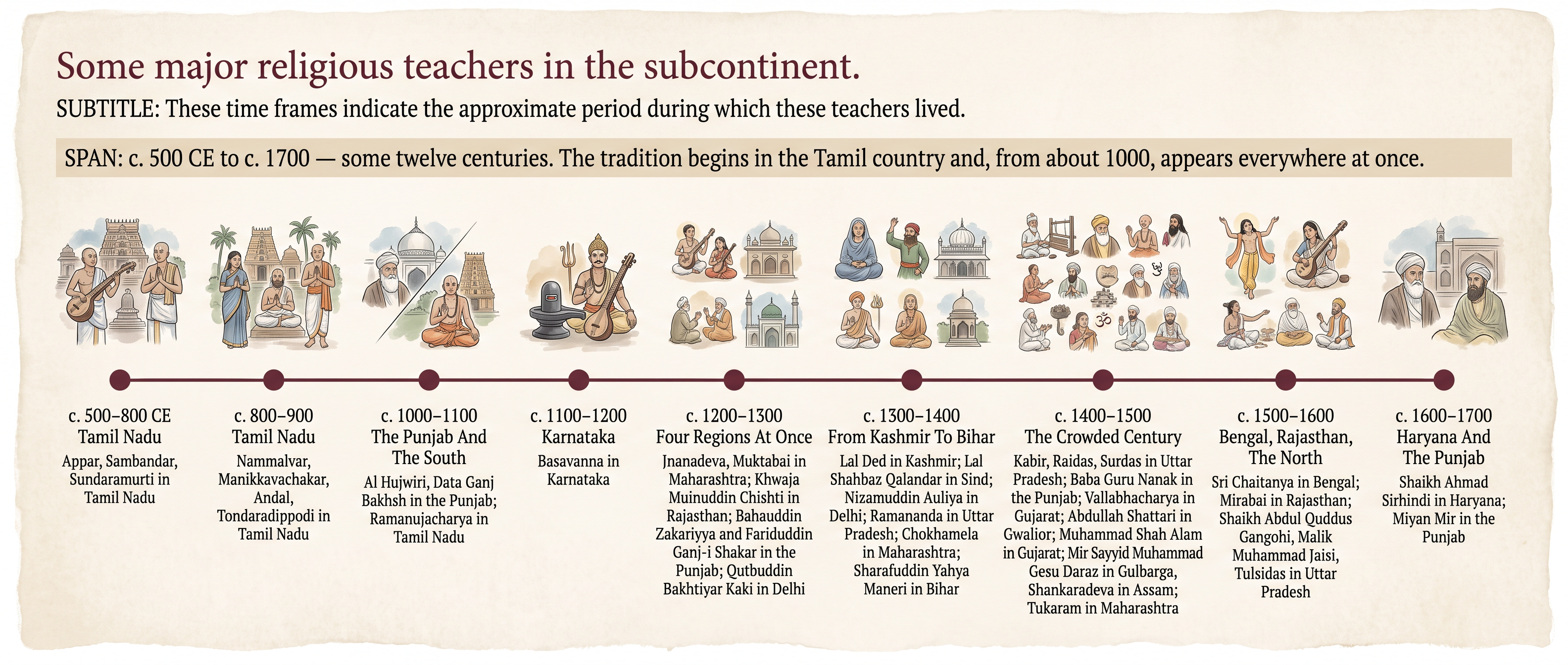
Fig. 6.21 – Some major religious teachers in the subcontinent.
What The Evidence Cannot Tell Us
Almost everything in this chapter reaches us through people who admired their subject. Disciples compiled the songs, followers wrote the hagiographies, poets and court historians described the hospice. We have no account of Nizamuddin’s khanqah by a critic, and none by the servants who cooked in its kitchen.
The poet-saints themselves are silent in the strictest sense: not one of the compositions in this chapter can be shown to have been written down by the person it is attributed to. What we hold is what devotees, decades or centuries later, chose to keep, elaborate, and sometimes quietly abandon.
And the largest silence is the ordinary worshipper. We can say that Muslims and Hindus visited the same shrine in the same spirit, because a visitor from the Deccan wrote it down. We cannot say what any of them believed while they were standing there.
6.11 NCERT Questions
Explain with examples what historians mean by the integration of cults. (in about 100-150 words)
To what extent do you think the architecture of mosques in the subcontinent reflects a combination of universal ideals and local traditions? (in about 100-150 words)
What were the similarities and differences between the be-shari’a and ba-shari’a sufi traditions? (in about 100-150 words)
Discuss the ways in which the Alvars, Nayanars and Virashaivas expressed critiques of the caste system. (in about 100-150 words)
Describe the major teachings of either Kabir or Baba Guru Nanak, and the ways in which these have been transmitted. (in about 100-150 words)
Discuss the major beliefs and practices that characterised Sufism. (in about 250-300 words)
Examine how and why rulers tried to establish connections with the traditions of the Nayanars and the sufis. (in about 250-300 words)
Analyse, with illustrations, why bhakti and sufi thinkers adopted a variety of languages in which to express their opinions. (in about 250-300 words)
Read any five of the sources included in this chapter and discuss the social and religious ideas that are expressed in them. (in about 250-300 words)
On an outline map of India, plot three major sufi shrines, and three places associated with temples (one each of a form of Vishnu, Shiva and the goddess).
Find out more about practices of pilgrimage associated with the shrines mentioned in this chapter. Are these pilgrimages still undertaken? When are these shrines visited? Who visits these shrines? Why do they do so? What are the activities associated with these pilgrimages?
6.12 Check Your Concepts
Look at the third column of Table 6.1. The dargahs of the five major Chishti teachers lie at Ajmer, at Ajodhan and at Delhi. What does this spread of burial places tell you about how the Chishti silsila grew in the subcontinent?
Scholars accept that the categories ‘great’ and ‘little’ traditions are useful, yet they are uncomfortable with the words themselves. Explain the discomfort, and explain how it is signalled in print.
The Lingayats bury their dead instead of cremating them. Reconstruct, step by step, the chain of reasoning that leads from what they believe happens at death to what they do with the body.
Read Source 3 again. The chapter says that women such as Karaikkal Ammaiyar posed a challenge to patriarchal norms, even though they founded no order and became nuns of no kind. Using the source, explain where the challenge lay.
No compositions resembling those of the Alvars and Nayanars have been found in north India before the fourteenth century. What explanations does the chapter offer for this? What are the limits of what an absence of evidence allows a historian to conclude?
Historians cannot establish that Ramananda was Kabir’s guru, nor whether Kabir was born a Hindu or a Muslim. Set out the evidence that makes both claims unsafe. If the hagiographies do not tell us about Kabir’s birth, what do they tell us about?