Chapter 5: Through The Eyes Of Travellers
In 1670, a book about India went on sale in France. Its author, François Bernier, was a doctor, a political philosopher and a historian. He had spent twelve years in India, from 1656 to 1668, close to the Mughal court — first as physician to Prince Dara Shukoh, the eldest son of Emperor Shah Jahan, and later as an intellectual and scientist attached to Danishmand Khan, an Armenian noble at the court. He dedicated his major writing to Louis XIV, the king of France.
The book did not stay in France. Within five years it had been translated into English, Dutch, German and Italian. Between 1670 and 1725 it was reprinted eight times in French, and by 1684 it had already been reprinted three times in English.
Now compare that with the other travellers in this chapter. Al-Biruni wrote in Arabic in the eleventh century; Ibn Battuta’s Rihla was dictated in Arabic in the fourteenth. Accounts in Arabic and Persian circulated as handwritten manuscripts, and were generally not published before 1800.
So one traveller’s India was printed, sold and reprinted across Europe, while another’s was copied slowly by hand. A century later, the French philosopher Montesquieu built his idea of oriental despotism on Bernier’s pages. What Europe came to ‘know’ about India depended on which traveller’s eyes it happened to be looking through.
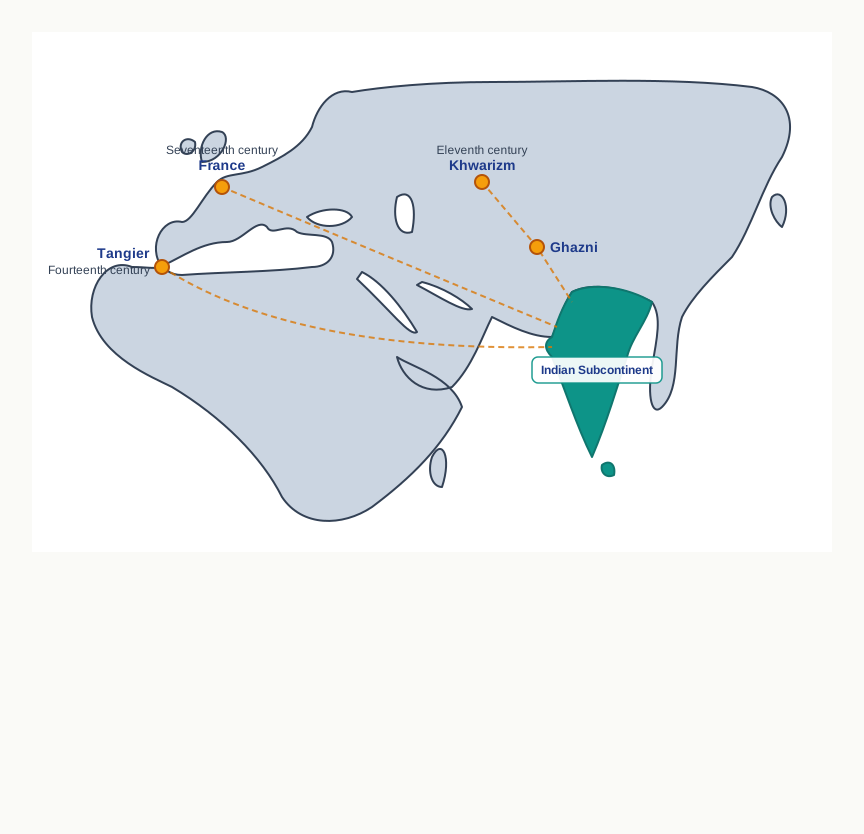
Fig. 5.0 – Origins of the three travellers.
5.1 Al-Biruni And The Kitab-ul-Hind
Why People Have Always Travelled
Women and men have travelled in search of work. They have travelled to escape from natural disasters, and they have travelled as traders, merchants, soldiers, priests and pilgrims. Some have travelled for no better reason than a sense of adventure.
Whoever visits a new land, or comes to stay in one, meets a world that is different. The landscape and the physical environment are unfamiliar. So are the customs, the languages, the beliefs and the practices of the people.
Many travellers simply try to adapt to these differences and get on with their lives. A few — and they are exceptional — do something else. They note the differences down carefully in accounts, generally recording whatever they find unusual or remarkable.
That is what makes such a traveller useful to a historian. An account written by someone who was actually there is a primary source: evidence produced at the time being studied, by a person who saw or heard the thing described. It is not a later historian’s summary. It is the raw material out of which history is written.
Unfortunately, we have practically no accounts of travel left by women, though we know that they travelled. The record we have is a record kept by men.
What The Accounts Contain
The accounts that survive vary a great deal in their subject matter. Some deal with the affairs of the court. Others are mainly focused on religious issues, or on architectural features and monuments.
Take one example. One of the most important descriptions of the city of Vijayanagara (Chapter 7) in the fifteenth century comes from Abdur Razzaq Samarqandi, a diplomat who came visiting from Herat, a city in what is now western Afghanistan. A diplomat is an official sent by one ruler to represent him at the court of another.
Not every traveller went to a distant land. In the Mughal Empire (Chapters 8 and 9), administrators sometimes travelled within the empire and recorded what they observed. Some of them were interested in looking at popular customs, and at the folklore and traditions of their own land.

Fig. 5.1a – Paan leaves.

Fig. 5.1b – A coconut.
The Three Men In This Chapter
In this chapter we shall see how our knowledge of the past can be enriched by the descriptions of social life left by travellers who visited the subcontinent. We shall focus on the accounts of three men.
Al-Biruni came from Uzbekistan, in Central Asia, in the eleventh century. Ibn Battuta came from Morocco, in north-western Africa, in the fourteenth century. The Frenchman François Bernier came in the seventeenth century. Between the first and the last of them lie roughly six hundred years.
These authors came from vastly different social and cultural environments. Because of that, they were often more attentive to everyday activities and practices which were taken for granted by indigenous writers. For a writer born in the subcontinent, these were routine matters, not worthy of being recorded.
It is this difference in perspective that makes the accounts of travellers interesting. A stranger notices the ordinary because, to him, it is not ordinary at all.
But there is a second question, and it runs through this whole chapter. Who did these travellers write for? As we will see, the answers vary from one instance to the next — and the answer changes what the traveller chose to put in, and what he left out.
5.1.1 From Khwarizm To The Punjab
Al-Biruni was born in 973, in Khwarizm in present-day Uzbekistan — a region south of the Aral Sea, watered by the Oxus. Khwarizm was an important centre of learning, and Al-Biruni received the best education available at the time.
He was well versed in several languages: Syriac, Arabic, Persian, Hebrew and Sanskrit. Although he did not know Greek, he was familiar with the works of Plato and other Greek philosophers, having read them in Arabic translations.
Before we follow him to India, it is worth hearing how he described the purpose of his own book. He is unusually clear about it.
Notice what Al-Biruni does not say. He does not claim to be writing for the people he is describing, and he does not claim to be settling the question of who is right. He offers a stock of information — a repertory — for outsiders who will have to argue with Indians, or live among them.
Carried Off To Ghazni
In 1017, Sultan Mahmud invaded Khwarizm. He took several scholars and poets back to his capital, Ghazni, in present-day eastern Afghanistan. Al-Biruni was one of them.
He arrived in Ghazni as a hostage. Gradually, however, he developed a liking for the city, and he spent the rest of his life there, until his death at the age of 70.
It was in Ghazni that Al-Biruni developed an interest in India. This was not unusual. Sanskrit works on astronomy, mathematics and medicine had been translated into Arabic from the eighth century onwards, so scholarly curiosity about India already existed in the Arabic-reading world.
When the Punjab became a part of the Ghaznavid empire, contacts with the local population helped create an environment of mutual trust and understanding. Al-Biruni spent years in the company of Brahmana priests and scholars, learning Sanskrit and studying religious and philosophical texts.
While his itinerary is not clear, it is likely that he travelled widely in the Punjab and parts of northern India.
A Scholar Who Translated Both Ways
Al-Biruni’s expertise in several languages allowed him to compare languages and to translate texts. He translated several Sanskrit works, including Patanjali’s work on grammar, into Arabic. For his Brahmana friends, he translated the works of Euclid, a Greek mathematician, into Sanskrit.
Read that again. Knowledge was not simply flowing in one direction. A Central Asian scholar was carrying Indian grammar into Arabic and Greek geometry into Sanskrit, in the same lifetime.
Travel literature was already an accepted part of Arabic literature by the time he wrote. This literature dealt with lands as far apart as the Sahara desert in the west and the River Volga in the north. So, while few people in India would have read Al-Biruni before 1500, many others outside India may have done so.
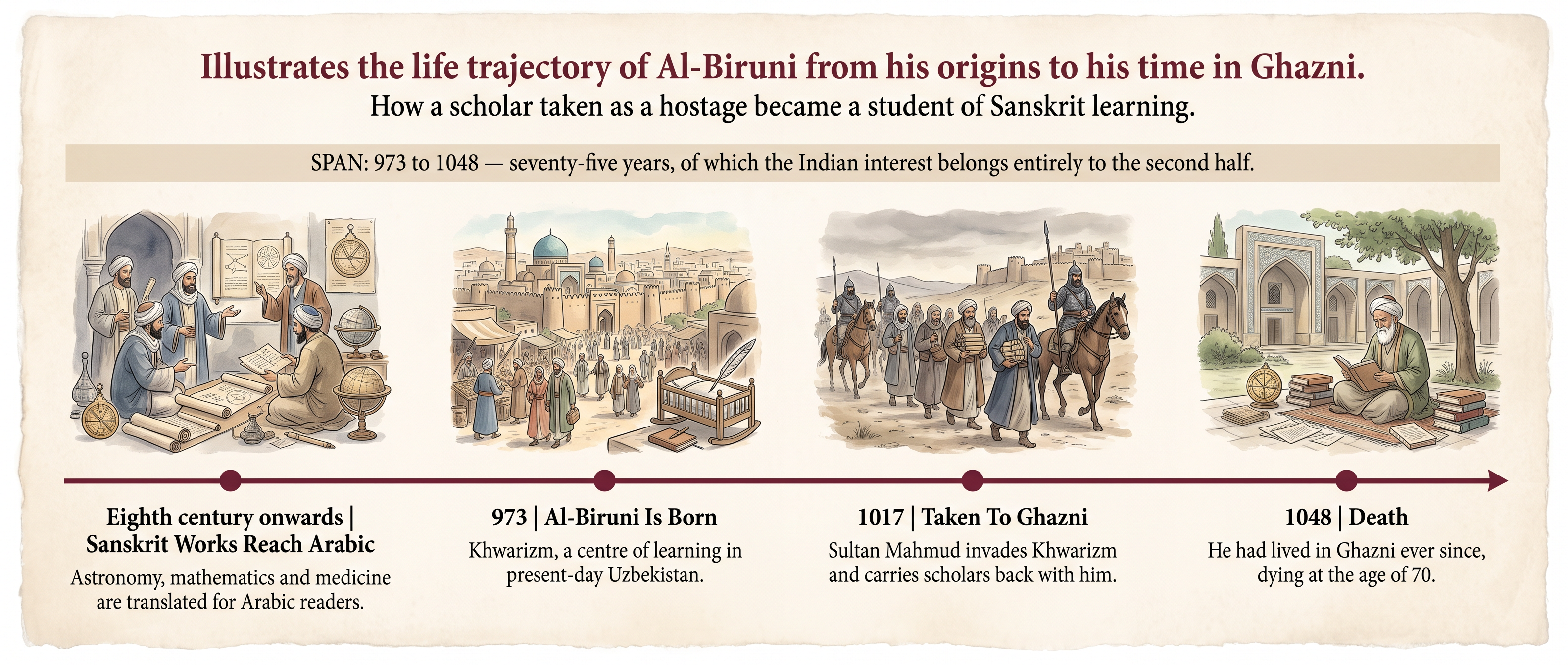
Fig. 5.2 – Al-Biruni: A life between two worlds.
5.1.2 The Kitab-ul-Hind
Al-Biruni’s Kitab-ul-Hind was written in Arabic. Its language is simple and lucid. It is a voluminous text, divided into 80 chapters, on subjects such as religion and philosophy, festivals, astronomy, alchemy, manners and customs, social life, weights and measures, iconography, laws and metrology.
Two of those subjects need a word of explanation. Iconography is the study of images — what a statue or painting shows, and what meanings its makers attached to it.
A Book Built Like A Proof
Generally, though not always, Al-Biruni adopted a distinctive structure in each chapter. He began with a question. He followed this up with a description based on Sanskritic traditions. He concluded with a comparison with other cultures.
Some present-day scholars have argued that this almost geometric structure, remarkable for its precision and predictability, owed much to his mathematical orientation. In other words, the man who translated Euclid built his book the way one builds a proof: state the problem, set out the case, then test it against something else.
Who Was The Book For?
Al-Biruni, who wrote in Arabic, probably intended his work for peoples living along the frontiers of the subcontinent — those who would actually have to deal with Indians.
He was familiar with translations and adaptations of Sanskrit, Pali and Prakrit texts into Arabic. These ranged from fables to works on astronomy and medicine. However, he was also critical about the ways in which these texts were written, and he clearly wanted to improve on them.
That last point matters. He was not merely reporting on India. He was correcting the existing Arabic picture of it.
Manuscripts of the period were often illustrated, and the illustrators drew the past in the clothes of their own present. Look carefully at the picture below before you answer the question under it.
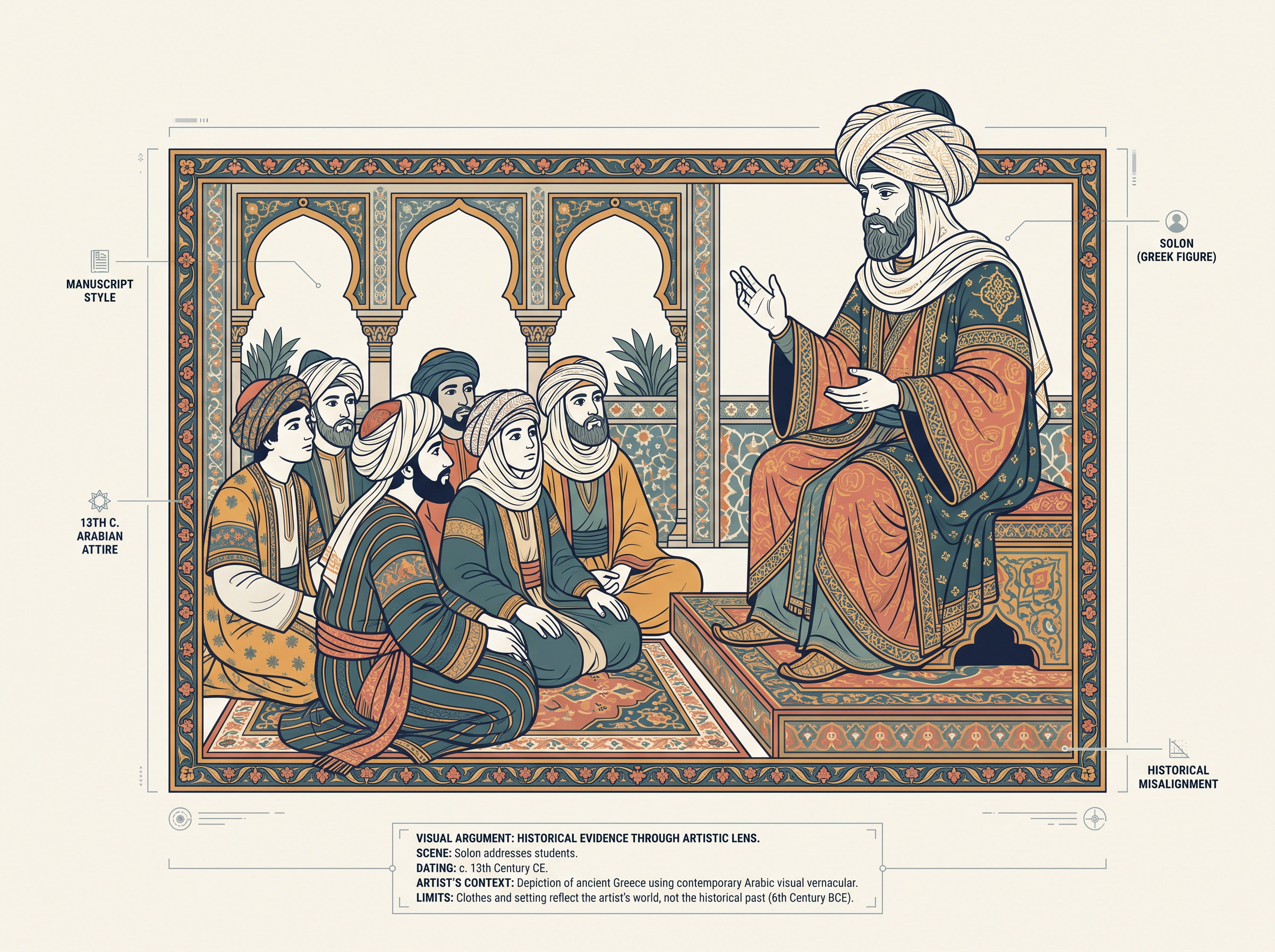
Fig. 5.3 – A thirteenth-century Arabic manuscript illustration of Solon.
5.2 Ibn Battuta’s Rihla
5.2.1 An Early Globe-Trotter
Ibn Battuta’s book of travels is called the Rihla. It was written in Arabic, and it provides extremely rich and interesting details about the social and cultural life of the subcontinent in the fourteenth century.
This Moroccan traveller was born in Tangier, a port on the northern tip of Morocco, facing Spain across the straits. His family was one of the most respectable and educated in the city, known for its expertise in Islamic religious law, or shari’a. True to the tradition of his family, Ibn Battuta received literary and scholastic education when he was quite young.
Unlike most other members of his class, Ibn Battuta considered experience gained through travels to be a more important source of knowledge than books. He simply loved travelling, and went to far-off places, exploring new worlds and peoples.
He left home very young, and he tells us so himself.
He was twenty-two when he left, and in his fifties when he came back. Almost the whole of his adult life was spent on the road.
The Route To India
Before he set off for India in 1332-33, he had made pilgrimage trips to Mecca. He had already travelled extensively in Syria, Iraq, Persia, Yemen, Oman, and a few trading ports on the coast of East Africa.
Travelling overland through Central Asia, Ibn Battuta reached Sind in 1333. He had heard about Muhammad bin Tughlaq, the Sultan of Delhi. Lured by the Sultan’s reputation as a generous patron of arts and letters, he set off for Delhi, passing through Multan and Uch.
The Sultan was impressed by his scholarship, and appointed him the qazi, or judge, of Delhi. He remained in that position for several years, until he fell out of favour and was thrown into prison. Once the misunderstanding between him and the Sultan was cleared, he was restored to imperial service, and was ordered in 1342 to proceed to China as the Sultan’s envoy to the Mongol ruler.
With this new assignment, Ibn Battuta proceeded to the Malabar coast through central India. From Malabar he went to the Maldives, where he stayed for eighteen months as the qazi, but eventually decided to proceed to Sri Lanka.
He then went back once more to the Malabar coast and the Maldives. Before resuming his mission to China, he visited Bengal and Assam as well. He took a ship to Sumatra, and from there another ship for the Chinese port town of Zaytun, now known as Quanzhou.
He travelled extensively in China, going as far as Beijing, but did not stay for long, deciding to return home in 1347. His account is often compared with that of Marco Polo, who visited China — and also India — from his home base in Venice in the late thirteenth century.
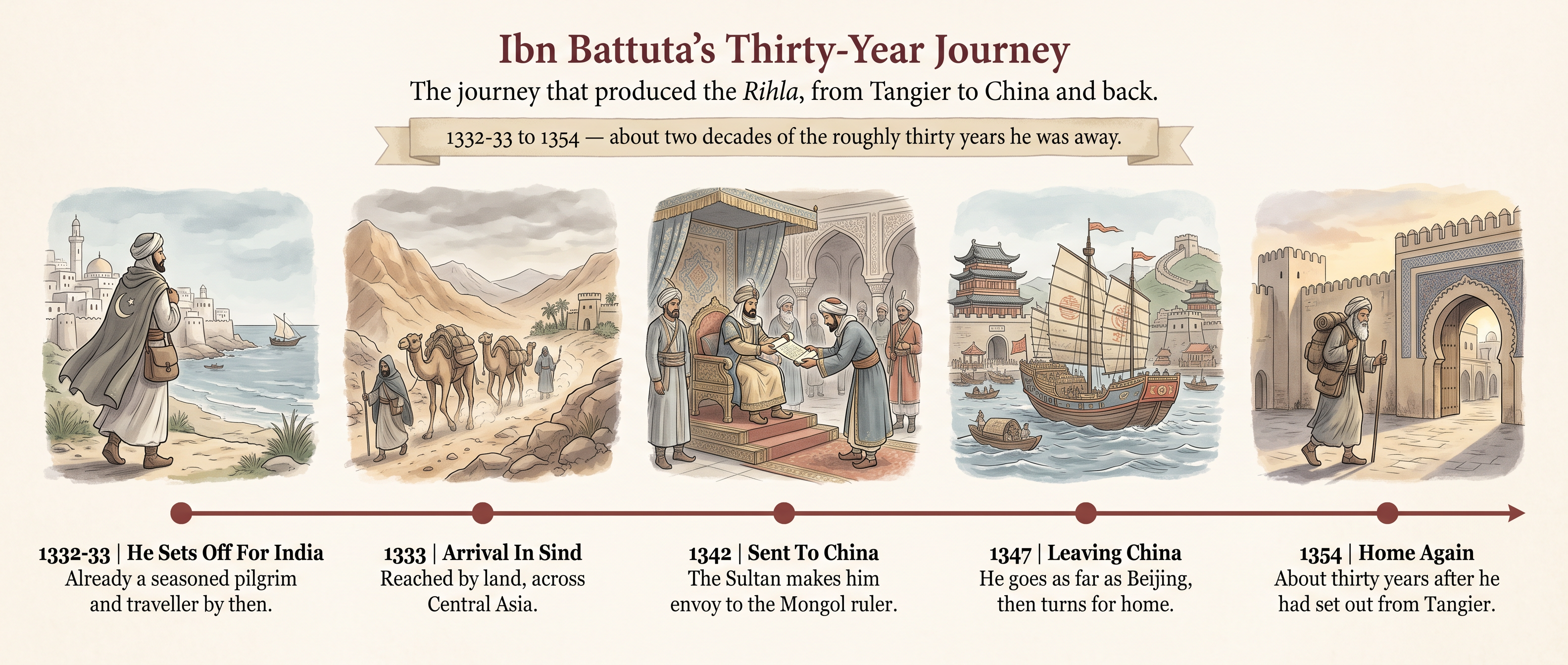
Fig. 5.4 – Thirty years on the road.
The Cost Of Getting There
Ibn Battuta meticulously recorded his observations about new cultures, peoples, beliefs, values and much else. We need to bear in mind that this globe-trotter was travelling in the fourteenth century, when it was much more arduous and hazardous to travel than it is today.
Distance is easiest to feel in days. According to Ibn Battuta, it took forty days to travel from Multan to Delhi, and about fifty days from Sind to Delhi. The distance from Daulatabad to Delhi was covered in forty days, while that from Gwalior to Delhi took ten days. A journey that a train now completes overnight then cost a traveller more than a month of his life.
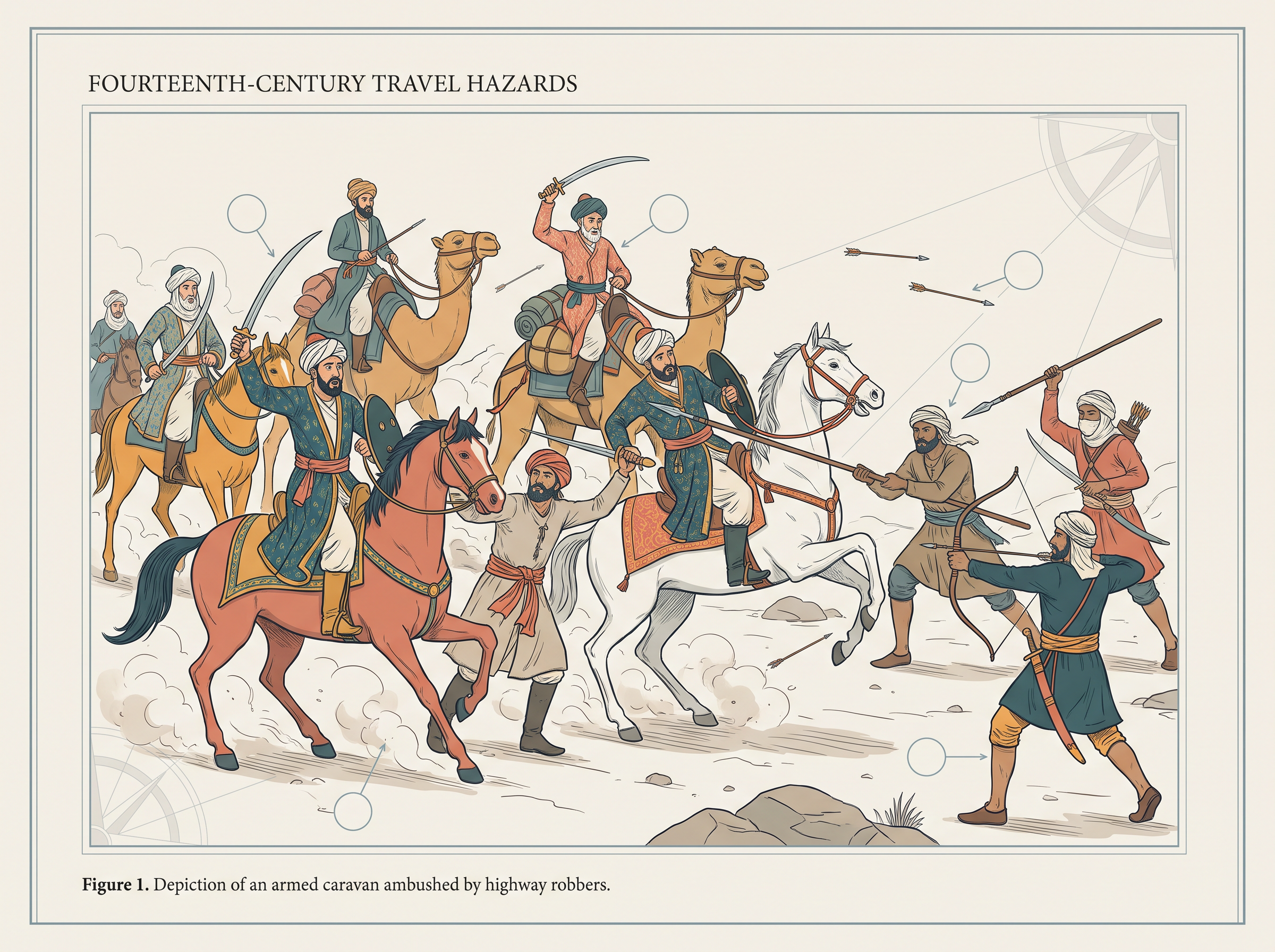
Fig. 5.5 – Robbers attacking travellers.
Travelling was also more insecure. Ibn Battuta was attacked by bands of robbers several times. He preferred travelling in a caravan along with companions, but this did not deter highway robbers. While travelling from Multan to Delhi, for instance, his caravan was attacked and many of his fellow travellers lost their lives. Those who survived, including Ibn Battuta, were severely wounded.
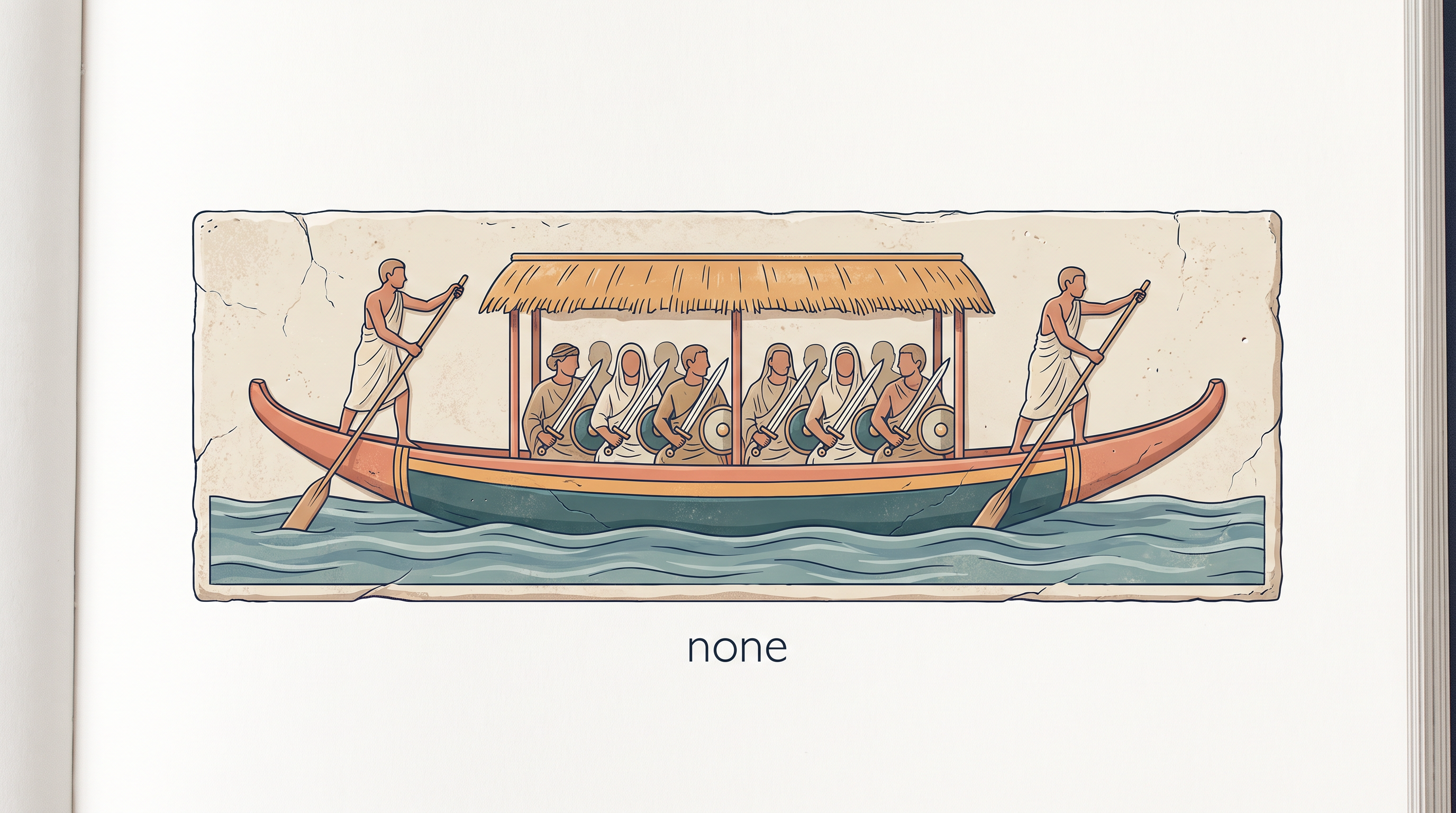
Fig. 5.6 – Armed passengers on a riverboat.
Robbers were not the only hazard on long journeys. The traveller could feel homesick, or fall ill. Here is another moment from the Rihla, in Ibn Battuta’s own words: ‘I was attacked by the fever, and I actually tied myself on the saddle with a turban-cloth in case I should fall off by reason of my weakness … So at last we reached the town of Tunis, and the townsfolk came out to welcome the shaikh … and … the son of the qazi … On all sides they came forward with greetings and questions to one another, but not a soul said a word of greeting to me, since there was none of them I knew. I felt so sad at heart on account of my loneliness that I could not restrain the tears that started to my eyes, and wept bitterly. But one of the pilgrims, realising the cause of my distress, came up to me with a greeting …’
A man tying himself to his saddle so that fever will not throw him off, and weeping in a crowded street because nobody knows his name — that is the ordinary price of the extraordinary book we are about to read.
The map below marks the places he passed through on his way into the subcontinent. Many of the place-names on it are spelt as he would have known them, not as they are spelt today.
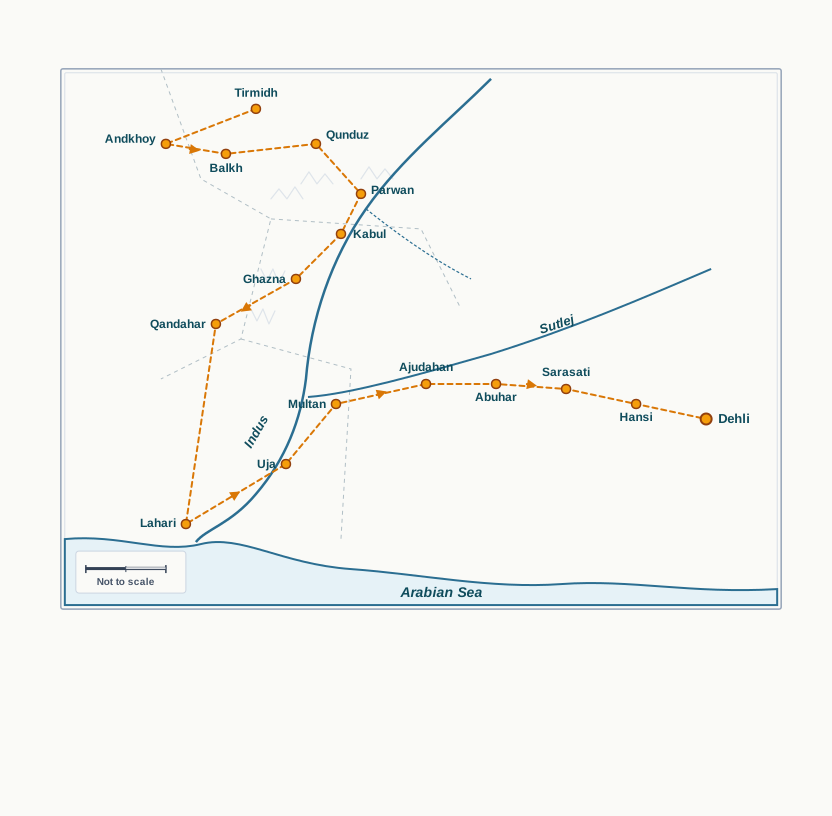
Fig. 5.7 – Places visited by Ibn Battuta in Afghanistan, Sind and Punjab.
5.2.2 The ‘Enjoyment Of Curiosities’
As we have seen, Ibn Battuta was an inveterate traveller. He spent several years travelling through north Africa, West Asia and parts of Central Asia — he may even have visited Russia — as well as the Indian subcontinent and China, before returning to his native land, Morocco.
When he returned, the local ruler issued instructions that his stories be recorded. This single fact changes how we must read the book. The Rihla is not a private diary kept on the road. It is a narrative produced at a ruler’s command, after the journeys were over.
The man who actually wrote it down explains the arrangement in his own introduction.
Read the last sentence slowly. Entertainment, delight, curious particulars, marvellous things. The book was meant to instruct — and to amaze. A traveller writing to amaze will linger on whatever is strange, and may pass quickly over whatever is merely ordinary.
Others Who Followed The Same Road
Ibn Battuta was not the last. In the centuries between 1400 and 1800, visitors to India wrote a number of travelogues in Persian. At the same time, Indian visitors to Central Asia, Iran and the Ottoman empire also sometimes wrote about their experiences. These writers followed in the footsteps of Al-Biruni and Ibn Battuta, and had sometimes read these earlier authors.
Among the best known of these writers were Abdur Razzaq Samarqandi, who visited south India in the 1440s; Mahmud Wali Balkhi, who travelled very widely in the 1620s; and Shaikh Ali Hazin, who came to north India in the 1740s.
Some of these authors were fascinated by India. One of them, Mahmud Balkhi, even became a sort of sanyasi for a time — a wandering ascetic who has renounced ordinary household life. Others, such as Hazin, were disappointed and even disgusted with India, where they expected to receive a red carpet treatment. Most of them saw India as a land of wonders.
That range is worth holding on to. The same country produced delight in one traveller and disgust in another. What a traveller reports depends partly on what he expected before he arrived.
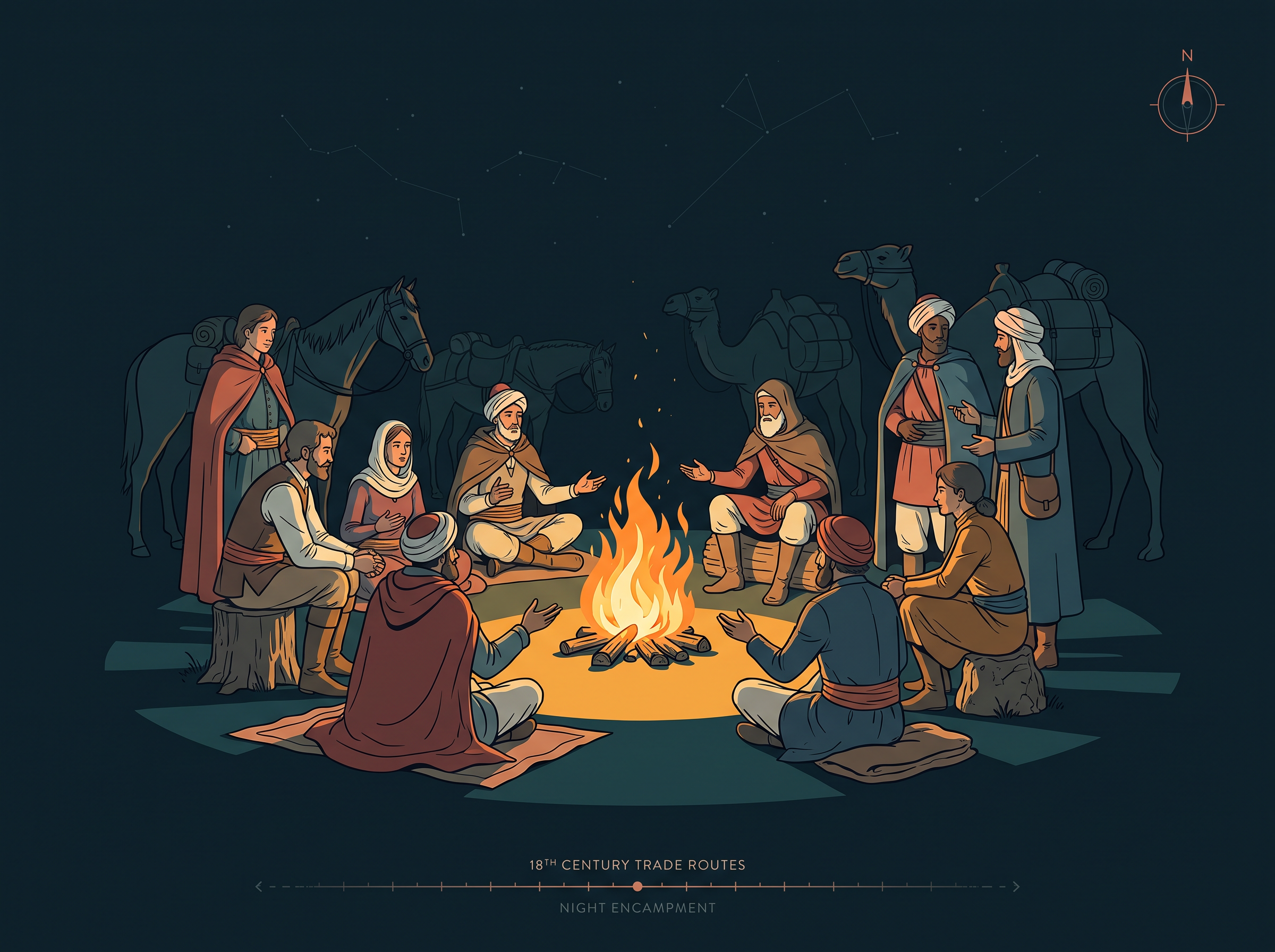
Fig. 5.8 – Travellers gathered around a campfire.
5.3 François Bernier — A Doctor With A Difference
Europeans Begin To Write About India
Once the Portuguese arrived in India in about 1500, a number of them wrote detailed accounts regarding Indian social customs and religious practices. A few of them, such as the Jesuit Roberto Nobili, even translated Indian texts into European languages. A Jesuit was a member of a Catholic religious order trained for teaching and missionary work.
Among the best known of the Portuguese writers is Duarte Barbosa, who wrote a detailed account of trade and society in south India.
Later, after 1600, we find growing numbers of Dutch, English and French travellers coming to India. One of the most famous was the French jeweller Jean-Baptiste Tavernier, who travelled to India at least six times. He was particularly fascinated with the trading conditions in India, and compared India to Iran and the Ottoman empire — the empire ruled from Istanbul, which then stretched across West Asia and south-eastern Europe.
Some of these travellers never went back. The Italian doctor Manucci, for instance, never returned to Europe, and settled down in India.
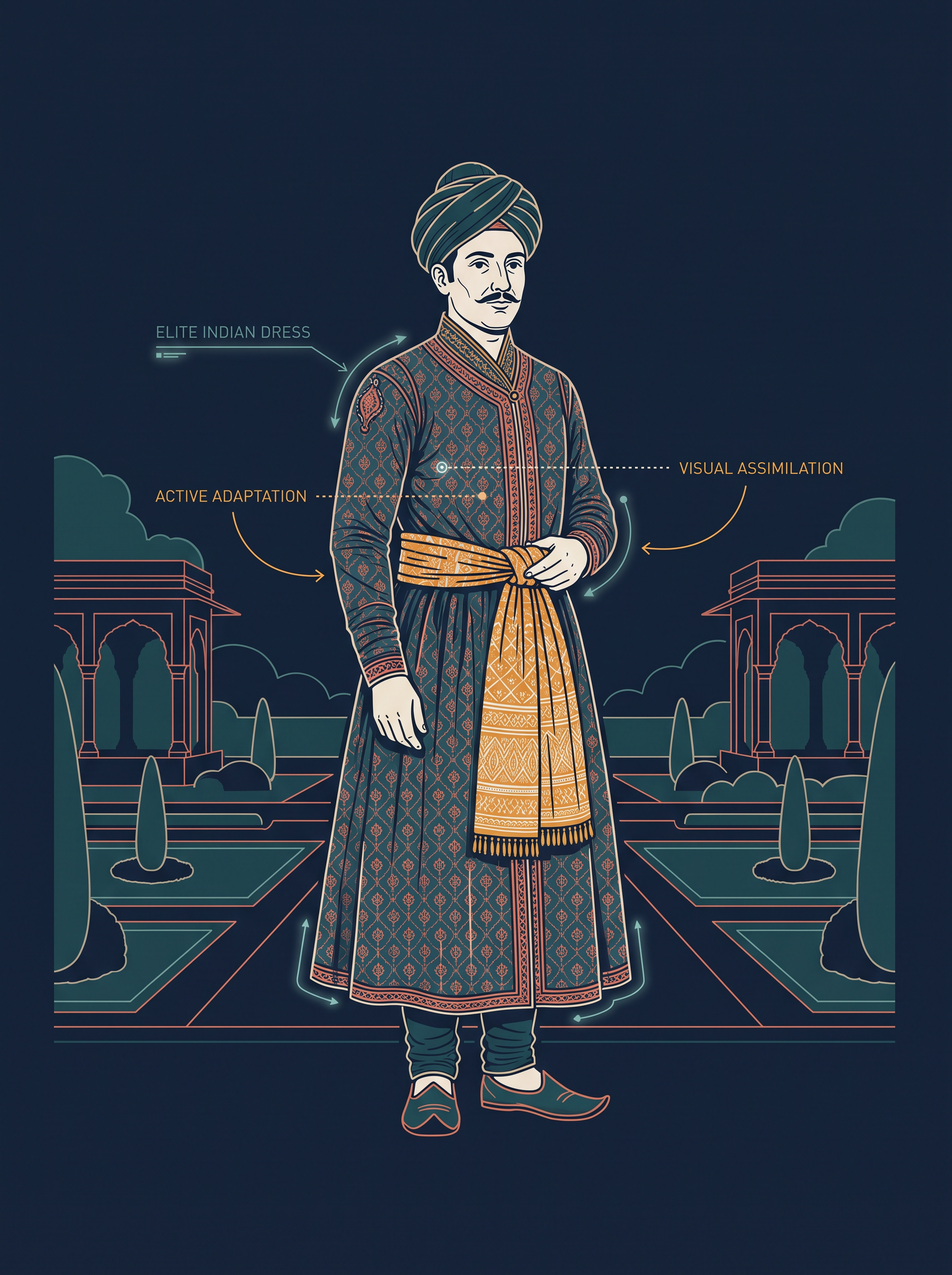
Fig. 5.9 – Jean-Baptiste Tavernier in Indian clothes.
Look at Fig. 5.9, and then at Fig. 5.10 below it. One European is painted in Indian clothes; the other is painted in European ones. Travellers did not all stand at the same distance from the society they were describing, and a painter could show that distance simply by choosing what to dress a man in.
Who Bernier Was
François Bernier, a Frenchman, was a doctor, political philosopher and historian. Like many others, he came to the Mughal Empire in search of opportunities.
He was in India for twelve years, from 1656 to 1668. He was closely associated with the Mughal court — first as a physician to Prince Dara Shukoh, the eldest son of Emperor Shah Jahan, and later as an intellectual and scientist with Danishmand Khan, an Armenian noble at the Mughal court.
That position mattered. Bernier did not observe the Mughal Empire from a merchant’s ship or a caravan halt. He observed it from inside the households of the powerful, which is both his great advantage and, as we shall see, one of his limits.
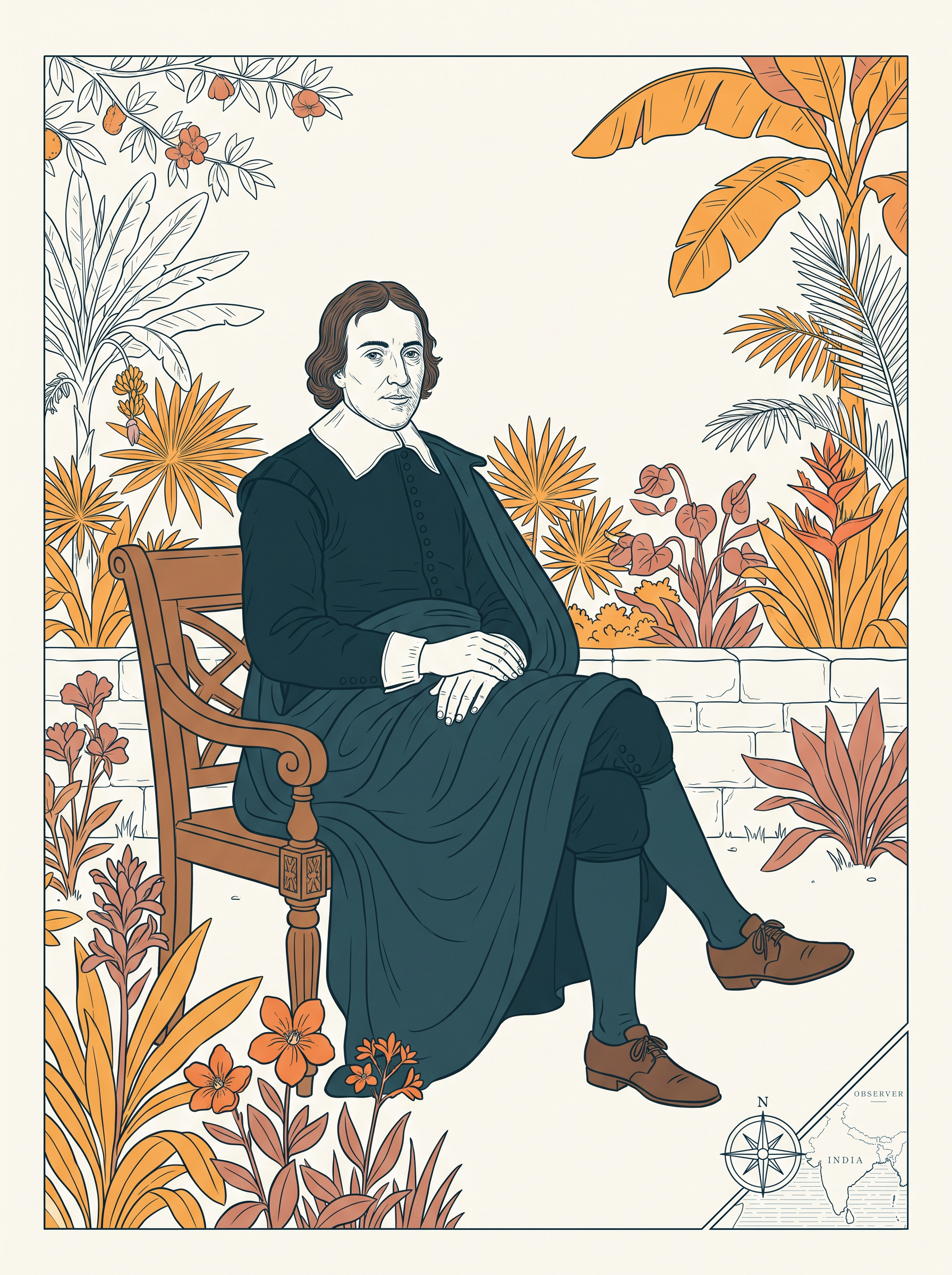
Fig. 5.10 – François Bernier in European clothes.
5.3.1 Comparing ‘East’ And ‘West’
Bernier travelled to several parts of the country, and wrote accounts of what he saw. He was frequently comparing what he saw in India with the situation in Europe.
He dedicated his major writing to Louis XIV, the king of France, and many of his other works were written in the form of letters to influential officials and ministers. This tells us something important about his purpose. He was not writing for scholars alone. He was writing for the people who ran a state.
In virtually every instance, Bernier described what he saw in India as a bleak situation in comparison to developments in Europe. As we will see, this assessment was not always accurate. However, when his works were published, Bernier’s writings became extremely popular.
Travelling With The Army
Bernier often travelled with the Mughal army on its marches. Because he was writing for European readers who had never seen such a march, he tells us exactly what a man of his standing had to carry with him. Very few sources of this period bother to list such ordinary things.
Notice how much of the list is other people: a driver, a groom, a cook, a servant walking ahead with water. A single European traveller on the march required the labour of several Indians, and he mentions them in the same breath as the tent and the carpet.
Printed In Europe, Copied By Hand In Asia
You met the fate of Bernier’s book at the opening of this chapter. The figures deserve to be set down carefully, because they explain why his India, and not somebody else’s, became Europe’s India.
Bernier’s works were published in France in 1670-71, and translated into English, Dutch, German and Italian within the next five years. Between 1670 and 1725 his account was reprinted eight times in French, and by 1684 it had been reprinted three times in English.
This was in marked contrast to the accounts in Arabic and Persian, which circulated as manuscripts and were generally not published before 1800. A manuscript must be copied by hand, one copy at a time. A printed book can be run off in hundreds.
The writings of European travellers helped produce an image of India for Europeans through the printing and circulation of their books. That image did not go unchallenged for ever. Later, after 1750, when Indians like Shaikh Itisamuddin and Mirza Abu Talib visited Europe and confronted this image that Europeans had of their society, they tried to influence it by producing their own version of matters.
5.4 Making Sense Of An Alien World — Al-Biruni And The Sanskritic Tradition
5.4.1 Overcoming Barriers To Understanding
As we have seen, travellers often compared what they saw in the subcontinent with practices with which they were already familiar. Each traveller adopted distinct strategies to understand what he observed.
Al-Biruni was unusual in one respect. He was aware of the problems built into the task he had set himself, and he said so. He discussed several ‘barriers’ that he felt obstructed understanding.
The Three Barriers
The first among these was language. According to him, Sanskrit was so different from Arabic and Persian that ideas and concepts could not be easily translated from one language into another.
He explained the difficulty in his own words: ‘If you want to conquer this difficulty (i.e. to learn Sanskrit), you will not find it easy, because the language is of an enormous range, both in words and inflections, something like the Arabic, calling one and the same thing by various names, both original and derivative, and using one and the same word for a variety of subjects, which, in order to be properly understood, must be distinguished from each other by various qualifying epithets.’
A single word standing for several things, and several words standing for a single thing — that is a translator’s nightmare. And Al-Biruni is not complaining as an outsider who failed. He is complaining as a man who had actually learnt the language.
The second barrier he identified was the difference in religious beliefs and practices. The third, according to him, was the self-absorption and consequent insularity of the local population — that is, their tendency to keep to themselves and to take little interest in the ways of others.
The Barrier He Did Not Cross
What is interesting is that even though he was aware of these problems, Al-Biruni depended almost exclusively on the works of Brahmanas. He often cited passages from the Vedas, the Puranas, the Bhagavad Gita, the works of Patanjali and the Manusmriti to provide an understanding of Indian society.
These are normative texts: they lay down how society ought to be ordered, from the point of view of those who wrote them. They are not reports of how people actually lived.
That said, Al-Biruni did not simply swallow what he was told. Travellers did not always believe what they were told, and he was among the most sceptical of them. When he was faced with the story of a wooden idol that had supposedly lasted for 216,432 years, he asked: ‘How, then, could wood have lasted such a length of time, and particularly in a place where the air and the soil are rather wet? God knows best!’
That is a scholar’s question, not a tourist’s. He weighs the claim against what he knows about wood, air and damp soil, and finds it will not stand.
5.4.2 Al-Biruni’s Description Of The Caste System
Al-Biruni tried to explain the caste system by looking for parallels in other societies.
He noted that in ancient Persia, four social categories were recognised. These were the knights and princes; the monks, fire-priests and lawyers; the physicians, astronomers and other scientists; and finally, the peasants and artisans. In other words, he attempted to suggest that social divisions were not unique to India.
At the same time, he pointed out that within Islam all men were considered equal, differing only in their observance of piety.
The One Thing He Rejected
In spite of his acceptance of the Brahmanical description of the caste system, Al-Biruni disapproved of the notion of pollution — the idea that contact with certain people or things makes a person impure.
He remarked that everything which falls into a state of impurity strives, and succeeds, in regaining its original condition of purity. The sun cleanses the air. The salt in the sea prevents the water from becoming polluted. If it were not so, insisted Al-Biruni, life on earth would have been impossible.
The conception of social pollution, intrinsic to the caste system, was, according to him, contrary to the laws of nature.
Now read his own account of that fourfold order. Watch how closely it follows the language of the texts he had been reading.
Notice the phrase ‘as they say’. Al-Biruni is reporting a claim made by his informants, and he is careful to mark it as theirs. But he reports the ranking without challenging it, and the ranking is the whole point of the passage.
The Text And The Village
As we have seen, Al-Biruni’s description of the caste system was deeply influenced by his study of normative Sanskrit texts, which laid down the rules governing the system from the point of view of the Brahmanas.
However, in real life the system was not quite as rigid. For instance, the categories defined as antyaja — literally, born outside the system — were often expected to provide inexpensive labour to both peasants and zamindars (see also Chapter 8).
Hold those two facts together. Such people were often subjected to social oppression, and yet they were included within economic networks. The village could not function without their labour, and the texts that ranked society did not admit them into it at all.
5.5 Ibn Battuta And The Excitement Of The Unfamiliar
A World Already Connected
By the time Ibn Battuta arrived in Delhi in the fourteenth century, the subcontinent was part of a global network of communication. That network stretched from China in the east to north-west Africa and Europe in the west.
As we have seen, Ibn Battuta himself travelled through these lands. He visited sacred shrines, spent time with learned men and rulers, often officiated as qazi, and enjoyed the cosmopolitan culture of urban centres — cities where people who spoke Arabic, Persian, Turkish and other languages shared ideas, information and anecdotes.
The stories that circulated in such places included tales about men noted for their piety, and about kings who could be both cruel and generous. They also included stories about the lives of ordinary men and women.
In this world of storytellers, anything unfamiliar was particularly highlighted. The aim was to ensure that the listener, or the reader, was suitably impressed by accounts of distant yet accessible worlds. Keep that aim in mind through everything that follows. Ibn Battuta is not only recording. He is performing.
5.5.1 The Coconut And The Paan
Some of the best examples of Ibn Battuta’s strategies of representation are evident in the ways in which he described the coconut and the paan. These were two kinds of plant produce that were completely unfamiliar to his audience.
Think about the problem he faced. How do you describe a fruit to someone who has never seen one, in a language that has no word for it? You have only one tool: comparison with something the reader already knows.
Every comparison in that passage reaches for something his readers already knew: the date-palm, a human head, hair, rope. And notice the last two sentences. Having astonished the reader, he tells him what the thing is actually for — sewing ships together, without iron nails.
He does the same with the paan, which is even harder to explain, because it is not eaten for its fruit at all.
5.5.2 Ibn Battuta And Indian Cities
Ibn Battuta found cities in the subcontinent full of exciting opportunities for those who had the necessary drive, resources and skills. They were densely populated and prosperous, except for the occasional disruptions caused by wars and invasions.
It appears from his account that most cities had crowded streets, and bright and colourful markets stacked with a wide variety of goods.
Ibn Battuta described Delhi as a vast city, with a great population, the largest in India. Daulatabad, in Maharashtra, was no less, and easily rivalled Delhi in size.
A cubit is roughly the length of a forearm, so a wall eleven cubits thick is wide enough for horsemen and foot soldiers to move along inside it — which is exactly what he says they did. A rampart, here, is not simply a wall. It is a fortified structure with rooms, granaries, an armoury and a road inside it.
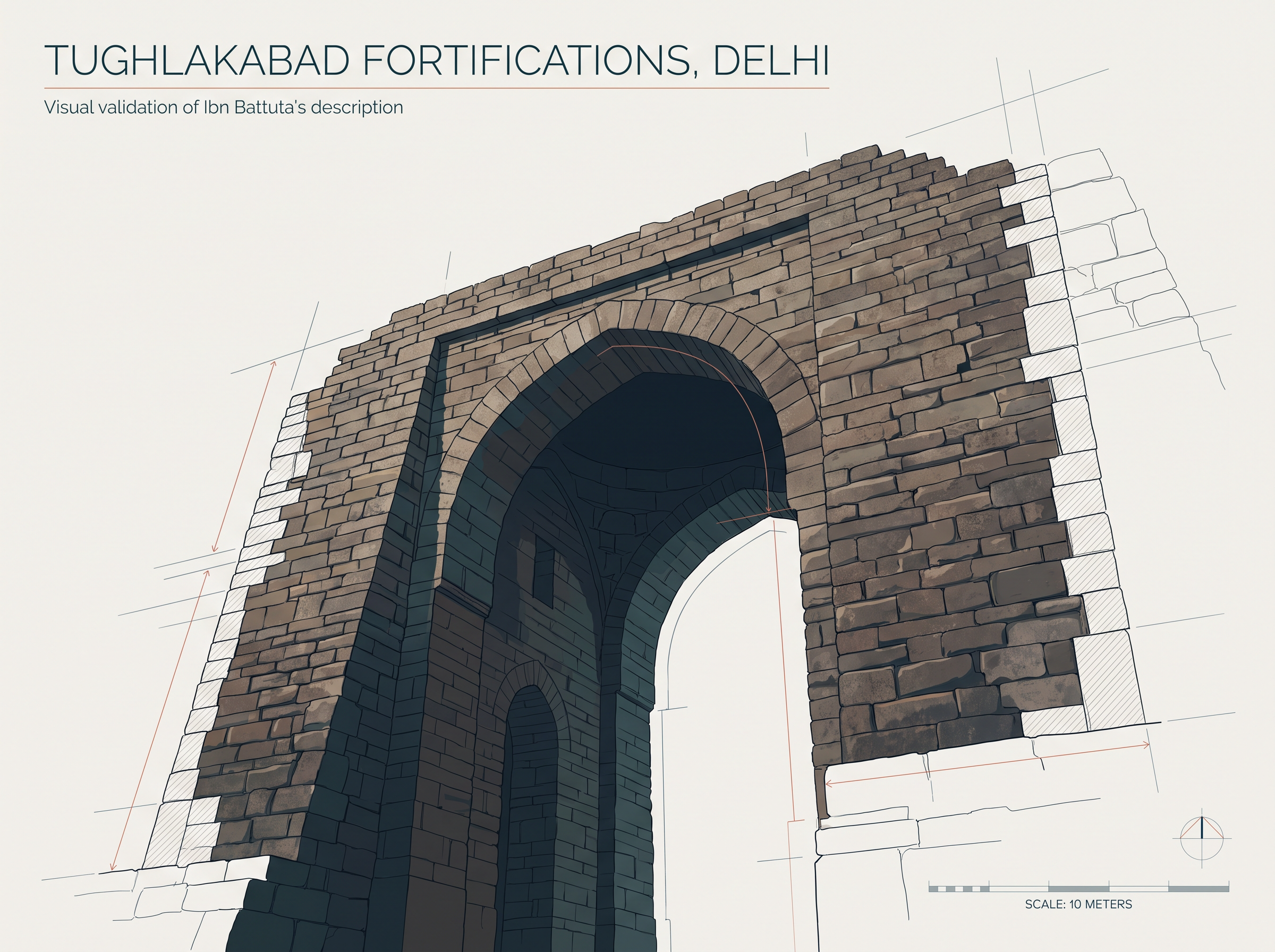
Fig. 5.11 – An arch in Tughlakabad, Delhi.
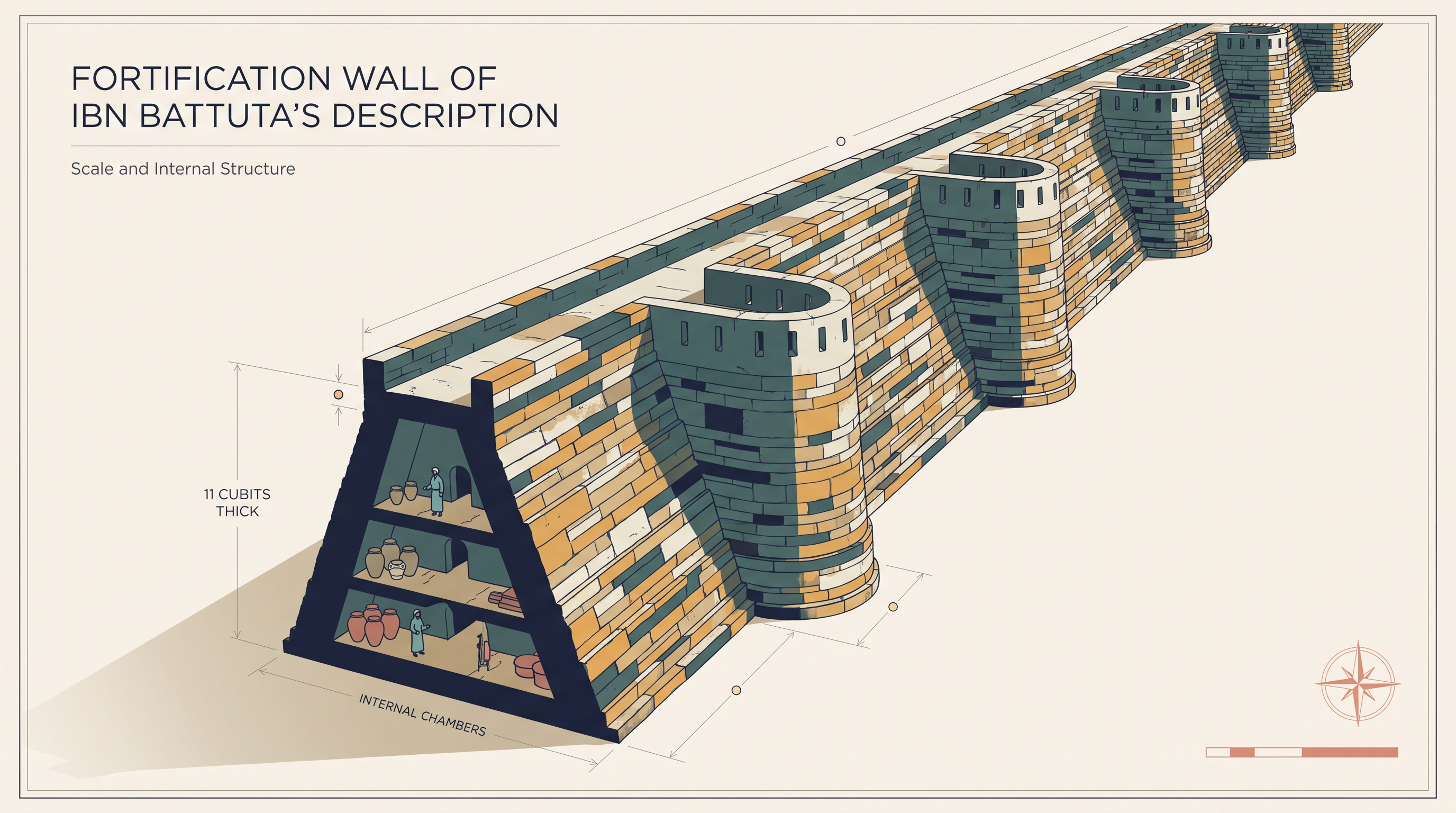
Fig. 5.12 – Fortification wall of the settlement.
The Bazaar Was More Than A Market
The bazaars were not only places of economic transactions. They were also the hub of social and cultural activities. Most bazaars had a mosque and a temple, and in some of them at least, spaces were marked for public performances by dancers, musicians and singers.
Ibn Battuta himself gives us a picture of one such quarter, in Daulatabad.
Read the last two sentences again. Hindu and Muslim rulers alike stopped at the same cupola to hear the same singers. Whatever else the bazaar was, it was a shared space.

Fig. 5.13 – Ikat weaving pattern.
Where The Wealth Of The Towns Came From
Ibn Battuta was not particularly concerned with explaining the prosperity of towns. He simply described what he saw. Historians, however, have used his account to suggest that towns derived a significant portion of their wealth through the appropriation of surplus from villages — that is, from the produce that peasants grew but did not get to keep.
Ibn Battuta found Indian agriculture very productive because of the fertility of the soil, which allowed farmers to cultivate two crops a year. He also noted that the subcontinent was well integrated with inter-Asian networks of trade and commerce. Indian manufactures were in great demand in both West Asia and Southeast Asia, fetching huge profits for artisans and merchants.
Indian textiles — particularly cotton cloth, fine muslins, silks, brocade and satin — were in great demand. Ibn Battuta informs us that certain varieties of fine muslin were so expensive that they could be worn only by the nobles and the very rich.
5.5.3 A Unique System Of Communication
The state evidently took special measures to encourage merchants. Almost all trade routes were well supplied with inns and guest houses, where a merchant and his goods could halt safely for the night.
Ibn Battuta was also amazed by the efficiency of the postal system. It allowed merchants not only to send information and remit credit across long distances, but also to dispatch goods required at short notice.
The postal system was so efficient that while it took fifty days to reach Delhi from Sind, the news reports of spies would reach the Sultan through the postal system in just five days.
The system was built for the state before it was built for anyone else. Spies’ reports reached the Sultan first; merchants’ credit and fruit from Khurasan travelled on the same roads afterwards.
Not every traveller was impressed by what he found in India, and it is worth setting Ibn Battuta’s wonder beside somebody else’s discomfort. The travelogue of Abdur Razzaq, written in the 1440s, is an interesting mixture of emotions and perceptions. On the one hand, he did not appreciate what he saw in the port of Calicut, present-day Kozhikode, in Kerala, which was populated by ‘a people the likes of whom I had never imagined’, describing them as ‘a strange nation’.
Later in his visit to India, he arrived in Mangalore and crossed the Western Ghats. Here he saw a temple that filled him with admiration: ‘Within three leagues (about nine miles) of Mangalore, I saw an idol-house the likes of which is not to be found in all the world. It was a square, approximately ten yards a side, five yards in height, all covered with cast bronze, with four porticos. In the entrance portico was a statue in the likeness of a human being, full stature, made of gold. It had two red rubies for eyes, so cunningly made that you would say it could see. What craft and artisanship!’
The same traveller, in the same country, within the same journey: repelled in one place, filled with admiration in another. A traveller’s account is not a single verdict. It is a record of a man changing his mind.
5.6 Bernier And The ‘Degenerate’ East
A Different Kind Of Traveller
If Ibn Battuta chose to describe everything that impressed and excited him because of its novelty, François Bernier belonged to a different intellectual tradition.
He was far more preoccupied with comparing and contrasting what he saw in India with the situation in Europe in general, and France in particular. He focused on situations which he considered depressing. His idea seems to have been to influence policy-makers and the intelligentsia — the educated, opinion-forming class — so that they made what he considered to be the ‘right’ decisions.
Bernier’s Travels in the Mughal Empire is marked by detailed observations, critical insights and reflection. His account contains discussions that try to place the history of the Mughals within some sort of a universal framework.
He constantly compared Mughal India with contemporary Europe, generally emphasising the superiority of the latter. His representation of India works on the model of binary opposition: a way of thinking in which two things are treated as exact opposites, so that India is presented as the inverse of Europe. He also ordered the perceived differences hierarchically, so that India appeared to be inferior to the Western world.
Notice what that method does before a single fact is gathered. If India must be the opposite of Europe, then whatever Europe has, India must lack.
5.6.1 The Question Of Landownership
According to Bernier, one of the fundamental differences between Mughal India and Europe was the lack of private property in land in the former.
He was a firm believer in the virtues of private property, and saw crown ownership of land as being harmful for both the state and its people. He thought that in the Mughal Empire the emperor owned all the land and distributed it among his nobles, and that this had disastrous consequences for the economy and society.
This perception was not unique to Bernier. It is found in most travellers’ accounts of the sixteenth and seventeenth centuries.
The Chain Bernier Argued For
Owing to crown ownership of land, argued Bernier, landholders could not pass on their land to their children. So they were averse to any long-term investment in the sustenance and expansion of production.
The absence of private property in land had, therefore, prevented the emergence of the class of ‘improving’ landlords, as in Western Europe, with a concern to maintain or improve the land.
The result, in his account, was uniform ruination of agriculture, excessive oppression of the peasantry, and a continuous decline in the living standards of all sections of society, except the ruling aristocracy.
Bernier was not the only European struck by Indian poverty. Pelsaert, a Dutch traveller, visited the subcontinent during the early decades of the seventeenth century. Like Bernier, he was shocked to see the widespread poverty — ‘poverty so great and miserable that the life of the people can be depicted or accurately described only as the home of stark want and the dwelling place of bitter woe’. Holding the state responsible, he says: ‘So much is wrung from the peasants that even dry bread is scarcely left to fill their stomachs.’
In this instance, Bernier was participating in contemporary debates in Europe concerning the nature of state and society. He intended that his description of Mughal India would serve as a warning to those who did not recognise the ‘merits’ of private property.
That does not mean the suffering he describes was imaginary. It means the description had a job to do in an argument being conducted thousands of miles away, and we must weigh it accordingly.
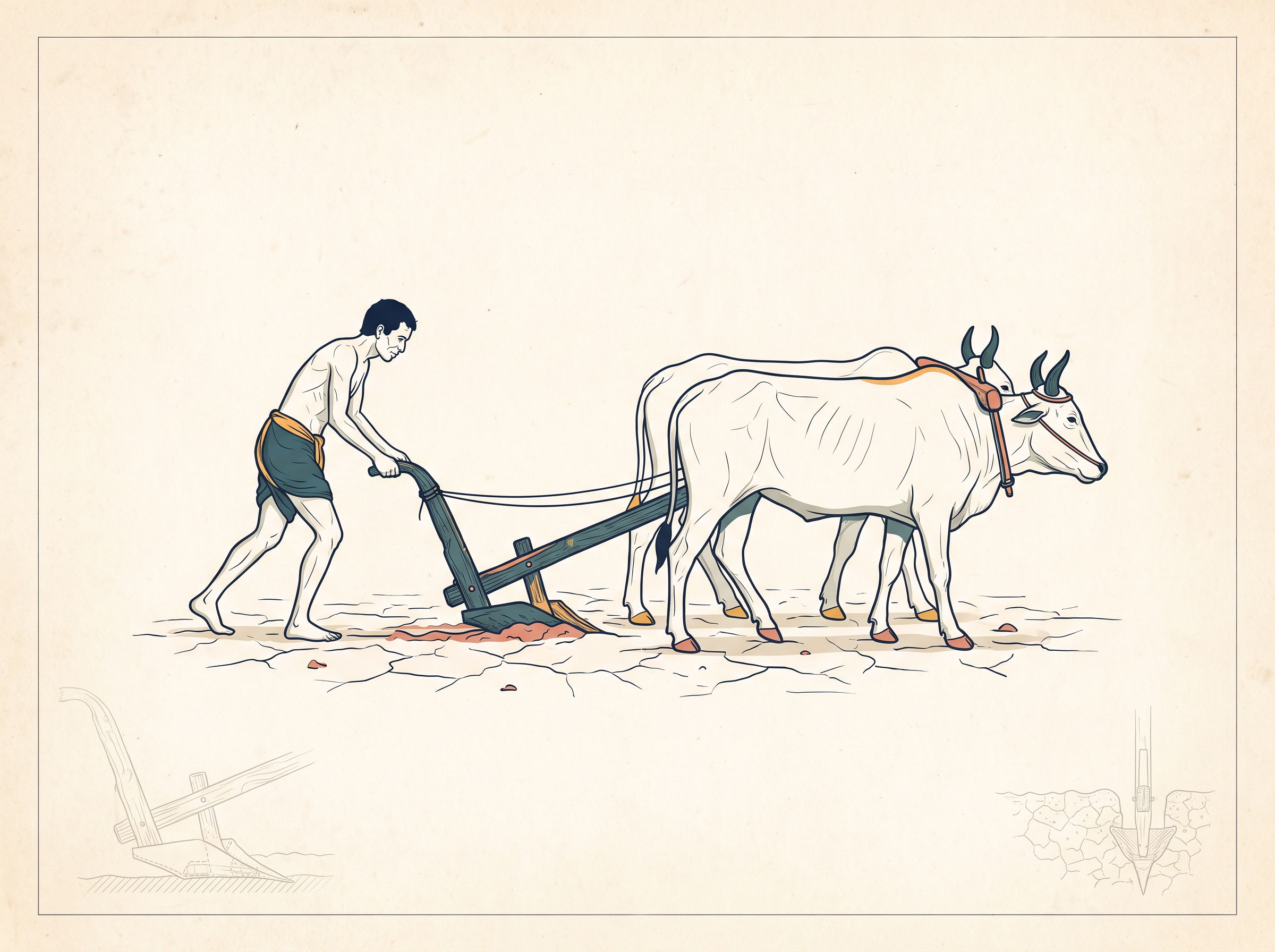
Fig. 5.14 – A peasant with his bullocks and plough.
‘No Middle State In India’
As an extension of this, Bernier described Indian society as consisting of undifferentiated masses of impoverished people, subjugated by a small minority of a very rich and powerful ruling class. Between the poorest of the poor and the richest of the rich, he said, there was no social group or class worth the name. Bernier confidently asserted: ‘There is no middle state in India.’
This, then, is how Bernier saw the Mughal Empire. Its king was the king of ‘beggars and barbarians’. Its cities and towns were ruined and contaminated with ‘ill air’. Its fields were ‘overspread with bushes’ and full of ‘pestilential marishes’ — that is, disease-breeding marshes. And all this, he said, was because of one reason: crown ownership of land.
Read Source 12 as what it is: a message to Europe, written about India. The ‘Mughals’ in it are a warning label, and the argument is really about French kings.
What The Mughal Records Actually Say
Curiously, none of the Mughal official documents suggest that the state was the sole owner of land.
For instance, Abu’l Fazl, the sixteenth-century official chronicler of Akbar’s reign, describes the land revenue as ‘remunerations of sovereignty’. This was a claim made by the ruler on his subjects for the protection he provided, rather than rent on land that he owned.
It is possible that European travellers regarded such claims as rent because land revenue demands were often very high. However, this was actually not a rent, or even a land tax, but a tax on the crop. For more details, see Chapter 8.
An Idea That Outlived The Man
Bernier’s descriptions influenced Western theorists from the eighteenth century onwards.
The French philosopher Montesquieu, for instance, used this account to develop the idea of oriental despotism. According to this idea, rulers in Asia — the Orient, or the East — enjoyed absolute authority over their subjects, who were kept in conditions of subjugation and poverty. All land, on this view, belonged to the king, and private property was non-existent. Everybody, except the emperor and his nobles, barely managed to survive.
This idea was further developed as the concept of the Asiatic mode of production by Karl Marx in the nineteenth century. He argued that in India, and other Asian countries, surplus was appropriated by the state before colonialism. This led to the emergence of a society composed of a large number of autonomous and internally egalitarian village communities. The imperial court presided over these village communities, respecting their autonomy as long as the flow of surplus was unimpeded. This was regarded as a stagnant system — one that did not change from within.
However, as we will see in Chapter 8, this picture of rural society was far from true. In fact, during the sixteenth and seventeenth centuries, rural society was characterised by considerable social and economic differentiation.
At one end of the spectrum were the big zamindars, who enjoyed superior rights in land. At the other end were the ‘untouchable’ landless labourers. In between was the big peasant, who used hired labour and engaged in commodity production, and the smaller peasant who could barely produce for his subsistence.
That is four distinct groups, not the flat mass of poverty Bernier described. A traveller who arrives certain that a society has no classes will not find any.
5.6.2 A More Complex Social Reality
Bernier’s preoccupation with projecting the Mughal state as tyrannical is obvious. Yet his descriptions occasionally hint at a more complex social reality — and he sometimes records facts that work against his own argument.
For instance, he felt that artisans had no incentive to improve the quality of their manufactures, since profits were appropriated by the state. Manufactures were, consequently, everywhere in decline.
At the same time, he conceded that vast quantities of the world’s precious metals flowed into India, as manufactures were exported in exchange for gold and silver. He also noticed the existence of a prosperous merchant community engaged in long-distance exchange.
Both statements cannot be equally true. Goods from a country whose manufactures are ‘everywhere in decline’ do not pull in the gold and silver of the world.
Set Source 13 beside Source 11 and the contradiction is plain. In one, the land is sand and barren mountain, badly cultivated. In the other, Bengal surpasses Egypt. Even here, though, the prejudice survives in an adjective: the artisan is ‘naturally indolent’, and works only because necessity compels him. The fact of the carpets, brocades and embroideries is Bernier’s evidence. The laziness is Bernier’s assumption.
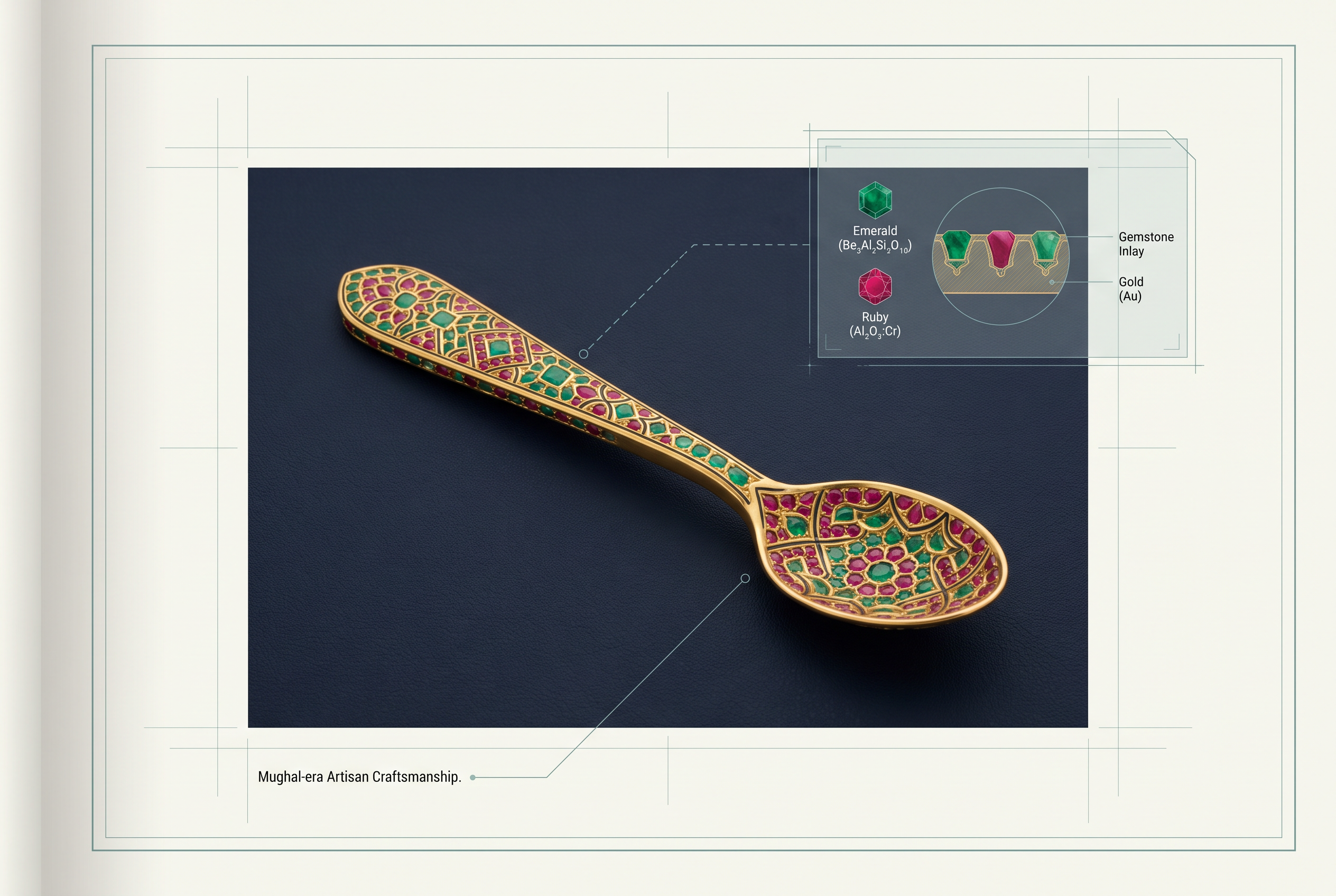
Fig. 5.15 – Gold spoon studded with emeralds and rubies.
Count what he actually records: six halls, six crafts, embroiderers under a master, goldsmiths, painters, lacquer-workers, joiners, turners, tailors, shoe-makers, weavers of silk and fine muslin. That is a picture of organised, skilled, large-scale production. The judgement — that nobody aspired to rise — is added on top of it, and it is not something he could have observed.
The Towns He Would Not See
In fact, during the seventeenth century about 15 per cent of the population lived in towns. This was, on average, higher than the proportion of urban population in Western Europe in the same period.
In spite of this, Bernier described Mughal cities as ‘camp towns’. By this he meant towns that owed their existence, and depended for their survival, on the imperial camp. He believed that these came into existence when the imperial court moved in, and rapidly declined when it moved out. He suggested that they did not have viable social and economic foundations, but were dependent on imperial patronage.
As in the case of the question of landownership, Bernier was drawing an oversimplified picture. There were all kinds of towns: manufacturing towns, trading towns, port-towns, sacred centres, pilgrimage towns, and more. Their existence is an index of the prosperity of merchant communities and professional classes. A town built around a temple or a port does not pack up and leave when the emperor rides away.
Merchants often had strong community or kin ties, and were organised into their own caste-cum-occupational bodies. In western India these groups were called mahajans, and their chief was the sheth. In urban centres such as Ahmedabad, the mahajans were collectively represented by the chief of the merchant community, who was called the nagarsheth.
Other urban groups included professional classes such as physicians (hakim or vaid), teachers (pundit or mulla), lawyers (wakil), painters, architects, musicians and calligraphers. While some depended on imperial patronage, many made their living by serving other patrons, and still others served ordinary people in crowded markets or bazaars.
5.7 Women — Slaves, Sati And Labourers
Who Was Doing The Looking
Travellers who left written accounts were generally men. They were interested in, and sometimes intrigued by, the condition of women in the subcontinent.
Sometimes they took social inequities for granted, as a ‘natural’ state of affairs. That is worth saying plainly. A traveller could record an injustice in the same even tone in which he recorded the price of muslin, because he did not think of it as an injustice at all.
Slavery, Recorded In Passing
Slaves were openly sold in markets, like any other commodity, and were regularly exchanged as gifts.
When Ibn Battuta reached Sind, he purchased ‘horses, camels and slaves’ as gifts for Sultan Muhammad bin Tughlaq. When he reached Multan, he presented the governor with ‘a slave and horse together with raisins and almonds’. Muhammad bin Tughlaq, Ibn Battuta informs us, was so happy with the sermon of a preacher named Nasiruddin that he gave him ‘a hundred thousand tankas (coins) and two hundred slaves’.
Read those three sentences again, and notice the grammar of them. Human beings appear in the same list as horses, raisins and almonds. That is not the historian’s judgement. That is the source’s own arrangement of the world.
Not All Slaves Lived The Same Life
It appears from Ibn Battuta’s account that there was considerable differentiation among slaves.
Some female slaves in the service of the Sultan were experts in music and dance, and Ibn Battuta enjoyed their performance at the wedding of the Sultan’s sister. Female slaves were also employed by the Sultan to keep a watch on his nobles.
So a slave woman could be a musician at a royal wedding, or an informer inside a noble’s household, or a scavenger sent into houses unannounced. The word ‘slave’ covers all three, and hides the difference between them.
Slaves were generally used for domestic labour. Ibn Battuta found their services particularly indispensable for carrying women and men on palanquins, or dola. The price of slaves, particularly female slaves required for domestic labour, was very low, and most families who could afford to do so kept at least one or two of them.
Sati — And Why Bernier Wrote About It
Contemporary European travellers and writers often highlighted the treatment of women as a crucial marker of difference between Western and Eastern societies. Not surprisingly, Bernier chose the practice of sati — the burning of a widow on her husband’s funeral pyre — for detailed description.
Keep his purpose in view as you read him. He was building a case about the difference between Europe and India, and this was the sharpest piece of evidence available to him. That does not make what he saw untrue. It does mean he selected it.
He noted that while some women seemed to embrace death cheerfully, others were forced to die. The account below is of a girl who was forced.
The passage records a killing. A child was held down, tied, and burnt alive, in public, while grown men and women made sure she could not escape. Bernier says he could barely contain his rage, and he did nothing.
The Lives The Travellers Walked Past
However, women’s lives revolved around much else besides the practice of sati.
Their labour was crucial in both agricultural and non-agricultural production. Women from merchant families participated in commercial activities, sometimes even taking mercantile disputes to the court of law. It therefore seems unlikely that women were confined to the private spaces of their homes.
Hold that beside the sources you have just read. A woman arguing her family’s trading dispute before a judge appears in no traveller’s account of wonders. She was simply not the sort of thing a visitor came to see.
What Travellers’ Accounts Can And Cannot Give Us
You may have noticed that travellers’ accounts provide us with a tantalising glimpse of the lives of men and women during these centuries. However, their observations were often shaped by the contexts from which they came. At the same time, there were many aspects of social life that these travellers did not notice at all.
Also relatively unknown are the experiences and observations of men — and possibly women — from the subcontinent who crossed seas and mountains and ventured into lands beyond it. What did they see and hear? How were their relations with peoples of distant lands shaped? What were the languages they used? These and other questions will hopefully be systematically addressed by historians in the years to come.
That last paragraph is a rare thing in a textbook: an admission that the work is not finished. The archive is not closed, and some of the questions in it are still waiting for someone to answer them.
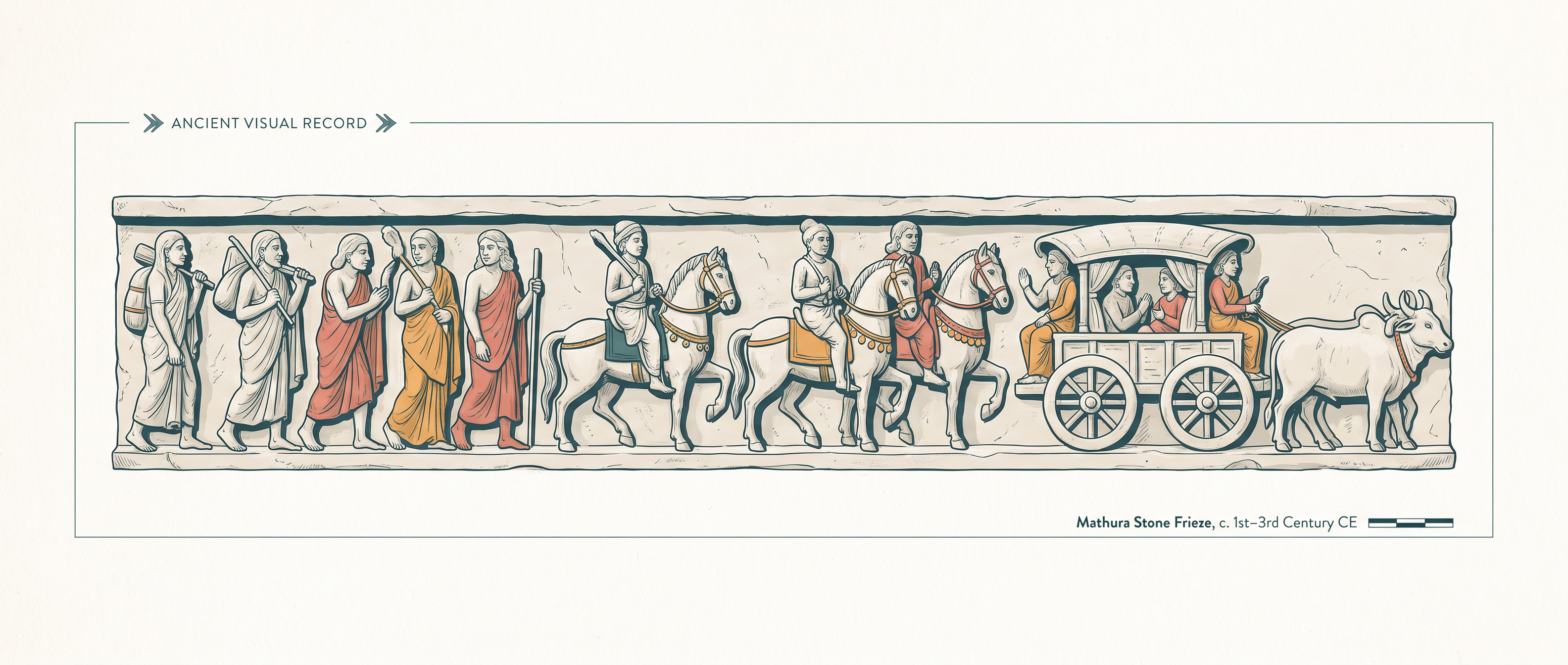
Fig. 5.16 – A sculpted panel from Mathura depicting travellers.
5.8 Summary
The Travellers And Their Books
- People travelled for work, in flight from disaster, as traders, soldiers, priests, pilgrims, or out of sheer adventure. A few wrote down what they found unusual. Almost no accounts of travel by women survive, though women certainly travelled.
- A traveller notices what a local writer takes for granted. That is exactly why these accounts are useful — and why the question ‘who was he writing for?’ must be asked of every one of them.
- Al-Biruni was born in Khwarizm in 973 and was carried to Ghazni as a hostage in 1017, after Sultan Mahmud’s invasion. He learnt Sanskrit, lived among Brahmana scholars, and translated Patanjali into Arabic and Euclid into Sanskrit.
- His Kitab-ul-Hind, written in Arabic, runs to 80 chapters, is simple and lucid, and is arranged almost like a mathematical proof: a question, a description drawn from Sanskritic traditions, then a comparison with other cultures. He wrote for readers along the frontiers of the subcontinent, not for Indians.
- Ibn Battuta left Tangier at twenty-two, reached Sind in 1333, served Muhammad bin Tughlaq as qazi of Delhi, was sent towards China in 1342, and returned home in 1354. The Rihla was dictated on a ruler’s orders and written down by Ibn Juzayy, to instruct and to amaze.
- François Bernier, a French doctor and political philosopher, spent twelve years in India, from 1656 to 1668, attached to Prince Dara Shukoh and later to Danishmand Khan. His book was printed in France in 1670-71 and reprinted repeatedly, while Arabic and Persian accounts were still being copied by hand.
What Each Traveller Saw
- Al-Biruni named three barriers to understanding: language, religious difference, and the insularity of the local population. Yet he relied almost entirely on normative Brahmana texts, and so described varna as those texts prescribed it. He rejected only the idea of pollution, as contrary to the laws of nature.
- In practice the system was less rigid than the texts claimed. The antyaja, placed outside the four varnas, supplied cheap labour to peasants and zamindars — socially oppressed, yet economically indispensable.
- Ibn Battuta explained the unfamiliar by comparison: a coconut became a man’s head, the paan a plant grown like a grape-vine and chewed with areca nut and chalk.
- He found Indian cities crowded, prosperous and full of opportunity. Delhi was the largest, with a rampart eleven cubits thick and twenty eight gates; Daulatabad rivalled it, and its Tarababad bazaar drew Hindu and Muslim rulers alike.
- Agriculture yielded two crops a year, Indian textiles were exported across Asia, and the state’s relay postal system carried a letter from Sind to Delhi in five days, against fifty for a traveller.
- Bernier saw India as Europe’s inverse, and worse. He blamed one cause for everything: crown ownership of land, which he said destroyed inheritance, investment, agriculture and finally society itself.
- Mughal records do not support him. Abu’l Fazl called land revenue ‘remunerations of sovereignty’ — a tax on the crop, not rent on land the emperor owned.
- Bernier’s picture fed Montesquieu’s oriental despotism and, later, Marx’s Asiatic mode of production. Yet rural society had zamindars, big peasants and poor ones; about 15 per cent of people lived in towns; and merchants, mahajans, nagarsheths, physicians, teachers, lawyers and architects filled the ‘middle state’ he denied existed.
- His own evidence contradicted him: fertile Bengal surpassing Egypt, gold and silver flowing into Hindustan, and six halls of skilled artisans in the imperial karkhanas.
- Slaves were sold openly and given as gifts, and were cheap enough for ordinary households to keep. Some were musicians at royal weddings; others spied on nobles for the Sultan; most female slaves were taken in raids.
- Bernier described sati, including the forced burning of a girl of about twelve at Lahore, using it as a marker of difference between East and West. But women also worked the fields, made goods, traded and took disputes to court — and none of that interested the travellers.
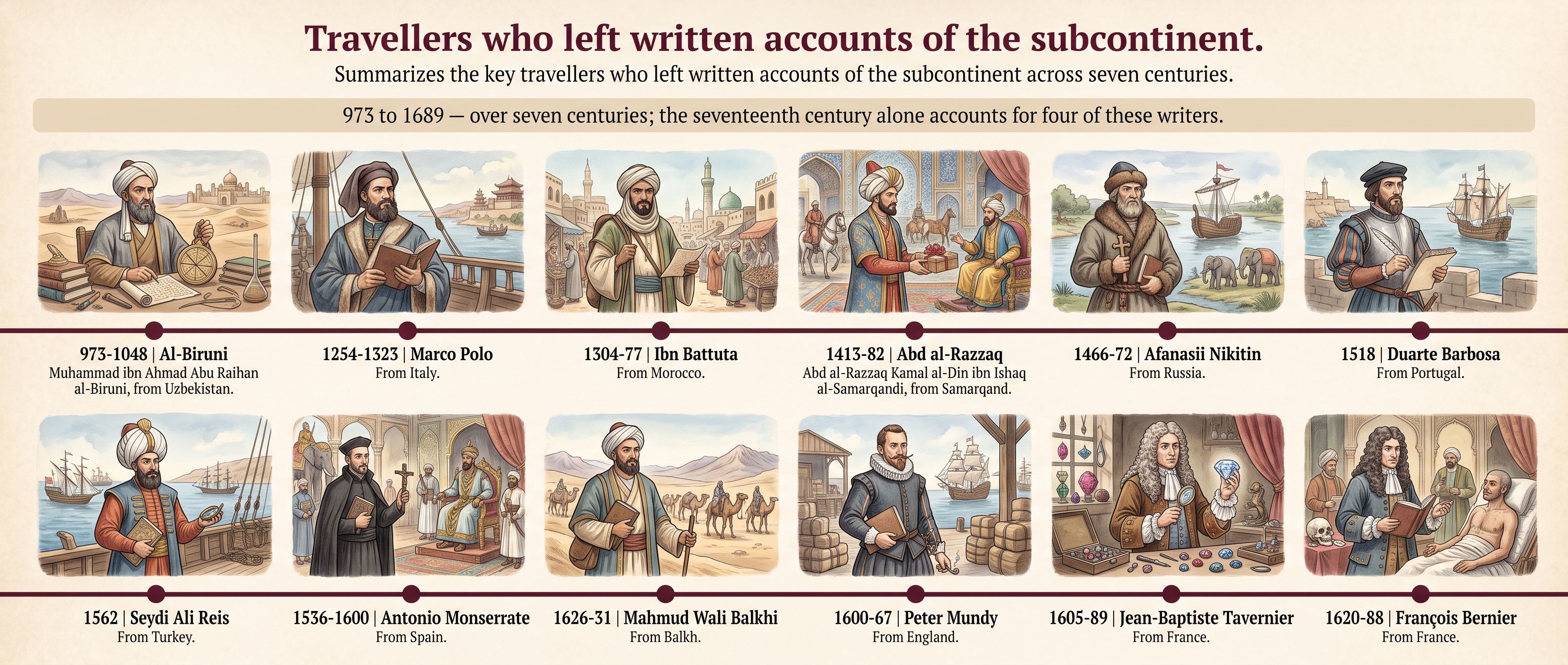
Fig. 5.17 – Some travellers who left accounts.
What The Evidence Cannot Tell Us
Every account in this chapter was written by a man, for readers who were not Indian, by someone who chose what was worth recording. The peasant, the artisan, the working woman and the enslaved appear only when a visitor happened to find them strange, useful or shocking.
We have no travel writing by the women of these centuries, and almost none by the people of the subcontinent who went abroad. The archive we possess is therefore not a picture of the past. It is a picture of what a few literate outsiders thought worth writing down.
That silence is not a gap to be filled with guesses. It is a fact about our evidence, and a historian must say so before saying anything else.
5.9 NCERT Questions
Write a note on the Kitab-ul-Hind. (in about 100-150 words)
Compare and contrast the perspectives from which Ibn Battuta and Bernier wrote their accounts of their travels in India. (in about 100-150 words)
Discuss the picture of urban centres that emerges from Bernier’s account. (in about 100-150 words)
Analyse the evidence for slavery provided by Ibn Battuta. (in about 100-150 words)
What were the elements of the practice of sati that drew the attention of Bernier? (in about 100-150 words)
Discuss Al-Biruni’s understanding of the caste system. (in about 250-300 words)
Do you think Ibn Battuta’s account is useful in arriving at an understanding of life in contemporary urban centres? Give reasons for your answer. (in about 250-300 words)
Discuss the extent to which Bernier’s account enables historians to reconstruct contemporary rural society. (in about 250-300 words)
Read this excerpt from Bernier:
‘Numerous are the instances of handsome pieces of workmanship made by persons destitute of tools, and who can scarcely be said to have received instruction from a master. Sometimes they imitate so perfectly articles of European manufacture that the difference between the original and copy can hardly be discerned. Among other things, the Indians make excellent muskets, and fowling-pieces, and such beautiful gold ornaments that it may be doubted if the exquisite workmanship of those articles can be exceeded by any European goldsmith. I have often admired the beauty, softness, and delicacy of their paintings.’
List the crafts mentioned in the passage. Compare these with the descriptions of artisanal activity in the chapter. (in about 250-300 words)
- On an outline map of the world mark the countries visited by Ibn Battuta. What are the seas that he may have crossed?
Fig. 5.18 – Travellers at rest.
5.10 Check Your Concepts
Read Source 3 again. Who ordered that Ibn Battuta’s stories be recorded, and who actually wrote them down? Explain how these two facts should change the way a historian uses the Rihla.
Using Source 10, describe step by step how a letter travelled from Sind to Delhi in about five days. Why was the foot-post quicker than the horse-post?
Look carefully at Fig. 5.3. Solon lived in the sixth century BCE, but the manuscript was made in the thirteenth century CE. What does the clothing in the illustration tell you about the artist? What does it fail to tell you about Solon?
Al-Biruni named three barriers that obstructed his understanding of India. State them. Then explain why his dependence on the works of Brahmanas amounted to a fourth barrier, which he never named.
The antyaja were placed outside the four varnas, yet their labour was used by both peasants and zamindars. What does this contradiction tell us about the difference between what normative texts prescribe and how society actually worked?
Source 11 and Source 13 were written by the same man. Set them side by side and explain how Bernier could produce two such different pictures of the same country. What should a historian do with such a contradiction?
Abu’l Fazl described land revenue as ‘remunerations of sovereignty’. Explain what this meant, and why it weakens Bernier’s central claim that the Mughal emperor owned all the land.
Travellers recorded what struck them as strange. Using the chapter, identify two aspects of social life in the subcontinent that these travellers largely left out of their accounts, and explain why each was left out.