Chapter 4: Thinkers, Beliefs And Buildings
Between 1835 and 1842, one of the earliest modern art historians, James Fergusson, travelled across the subcontinent surveying its major archaeological sites. One of the places he studied was Sanchi, in central India: a hill crowned by a huge stone mound, ringed by a railing and entered through richly carved gateways.
He looked hard at the carvings, and he counted what he saw. Trees, again and again. Women swinging from the branch of a tree. Serpents coiled on pillars. Elephants. He put the evidence together and reached a conclusion that seemed to follow from it: Sanchi had been a centre of tree and serpent worship.
He was wrong. He was not, however, careless. Almost none of the Buddhist literature that explains these carvings had yet been translated into a language he could read. So he did the only thing left to him. He studied the images entirely on their own.
That is the trap this chapter is about. A carving is evidence, but it is not a caption. The tree at Sanchi is not there because someone loved trees; it stands for something that happened to a man who sat under one. To recover that meaning, historians had to hold two kinds of evidence together — what was cut into stone, and what was written in texts.
Fergusson had only half of it. You are about to get both halves.
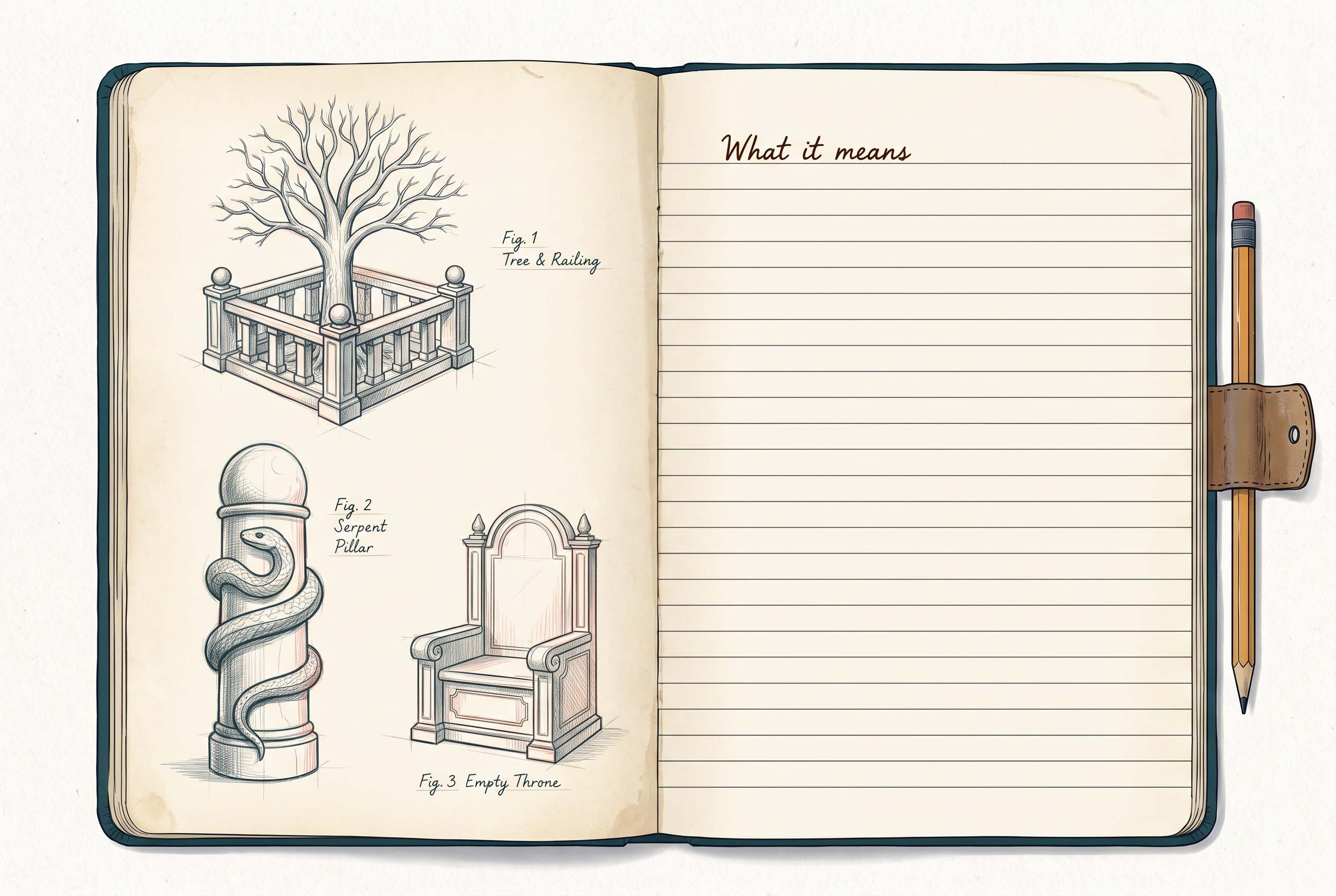
Fig. 4.0 – A nineteenth-century surveyor’s notebook.
4.1 A Glimpse Of Sanchi
What This Chapter Is About
In this chapter we travel across a thousand years, from about 600 BCE to about 600 CE, to read about philosophers and their attempts to understand the world they lived in. These thinkers asked what human life was for, what happened after death, and how human beings stood in relation to the cosmic order.
Their ideas did not stay inside their own heads. They were compiled as oral and written texts, and they were also expressed in architecture and sculpture — in buildings and in stone. That is a sign of how deep and how lasting the influence of these thinkers was on ordinary people.
We will focus on Buddhism. But it is important to remember that this tradition did not develop in isolation. There were several other traditions alongside it, each engaged in debates and dialogues with the others. A tradition that argues with its neighbours is shaped by them, and Buddhism was no exception.
What can historians actually use to reconstruct this world of ideas and beliefs? Two kinds of evidence. The first is texts — Buddhist, Jaina and Brahmanical. The second is a large and impressive body of material remains, including monuments and inscriptions. Inscriptions are writings cut into stone or metal, which is why so many of them survive when paper and palm leaf do not. Among the best preserved monuments of the time is the stupa at Sanchi, a great mound built over sacred remains, which is a major focus of this chapter.
A Begum Describes The Ruins
Sanchi lies in central India, in what is now Madhya Pradesh, a short distance north-east of Bhopal. In the nineteenth century Bhopal was a state with its own hereditary rulers, who governed under the overall authority of the British. One of them was Shahjehan Begum, Nawab of Bhopal, who ruled from 1868 to 1901 and who wrote a history of her own state.
In it she described a visit to the ruins. ‘The most wonderful ancient buildings in the state of Bhopal are at Sanchi Kanakhera, a small village under the brow of a hill some 20 miles north-east of Bhopal which we visited yesterday. We inspected the stone sculptures and statues of the Buddha and an ancient gateway … The ruins appear to be the object of great interest to European gentlemen. Major Alexander Cunningham … stayed several weeks in this neighbourhood and examined these ruins most carefully. He took drawings of the place, deciphered the inscription, and bored shafts down these domes. The results of his investigations were described by him in an English work …’
That passage comes from Shahjehan Begum’s Taj-ul Iqbal Tarikh Bhopal (A History of Bhopal), translated by H.D. Barstow in 1876. Read it slowly and you will notice that she is describing two things at once — an ancient site, and the Europeans who were busy digging into it.
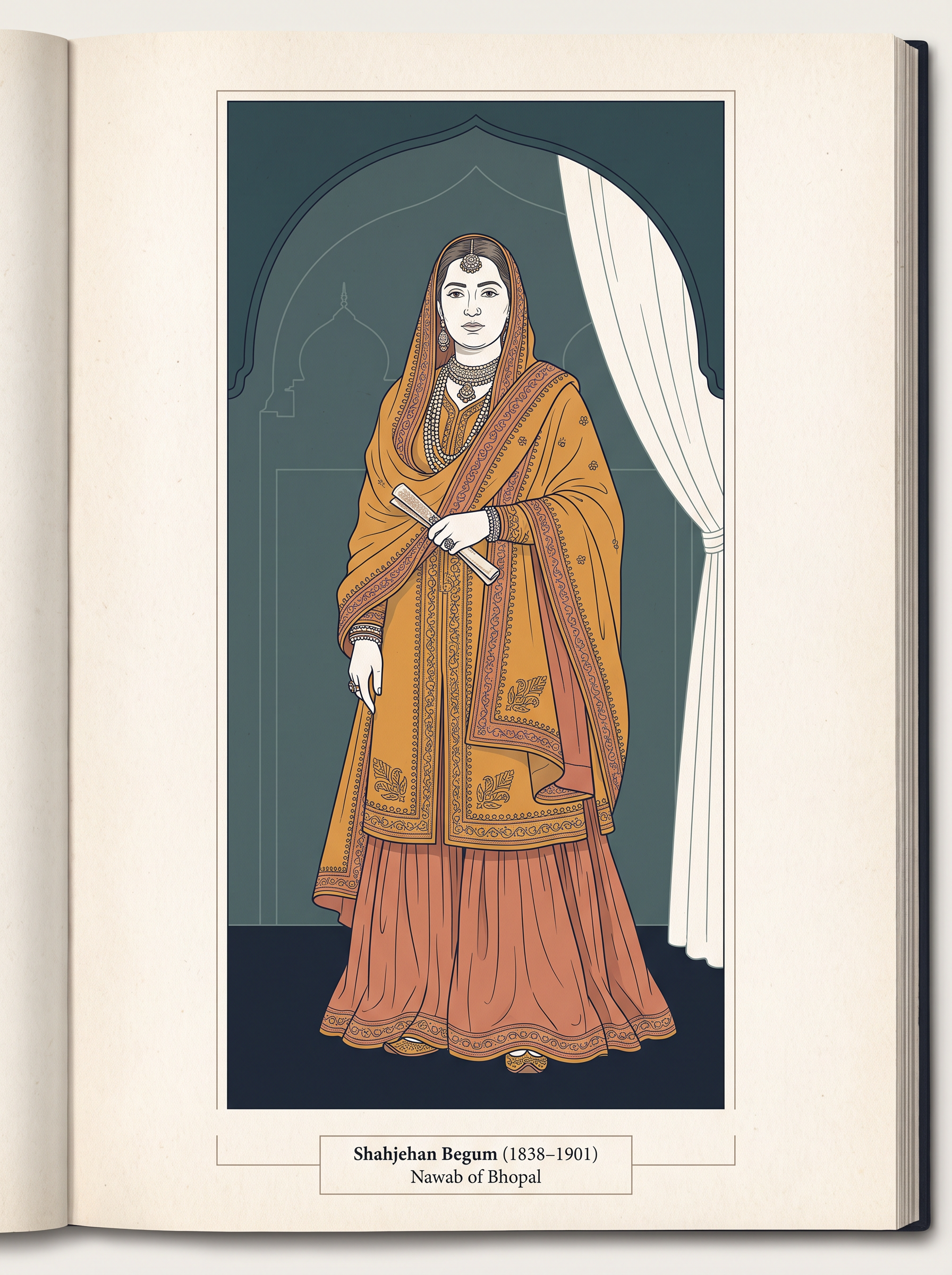
Fig. 4.1 – Shahjehan Begum, Nawab of Bhopal.
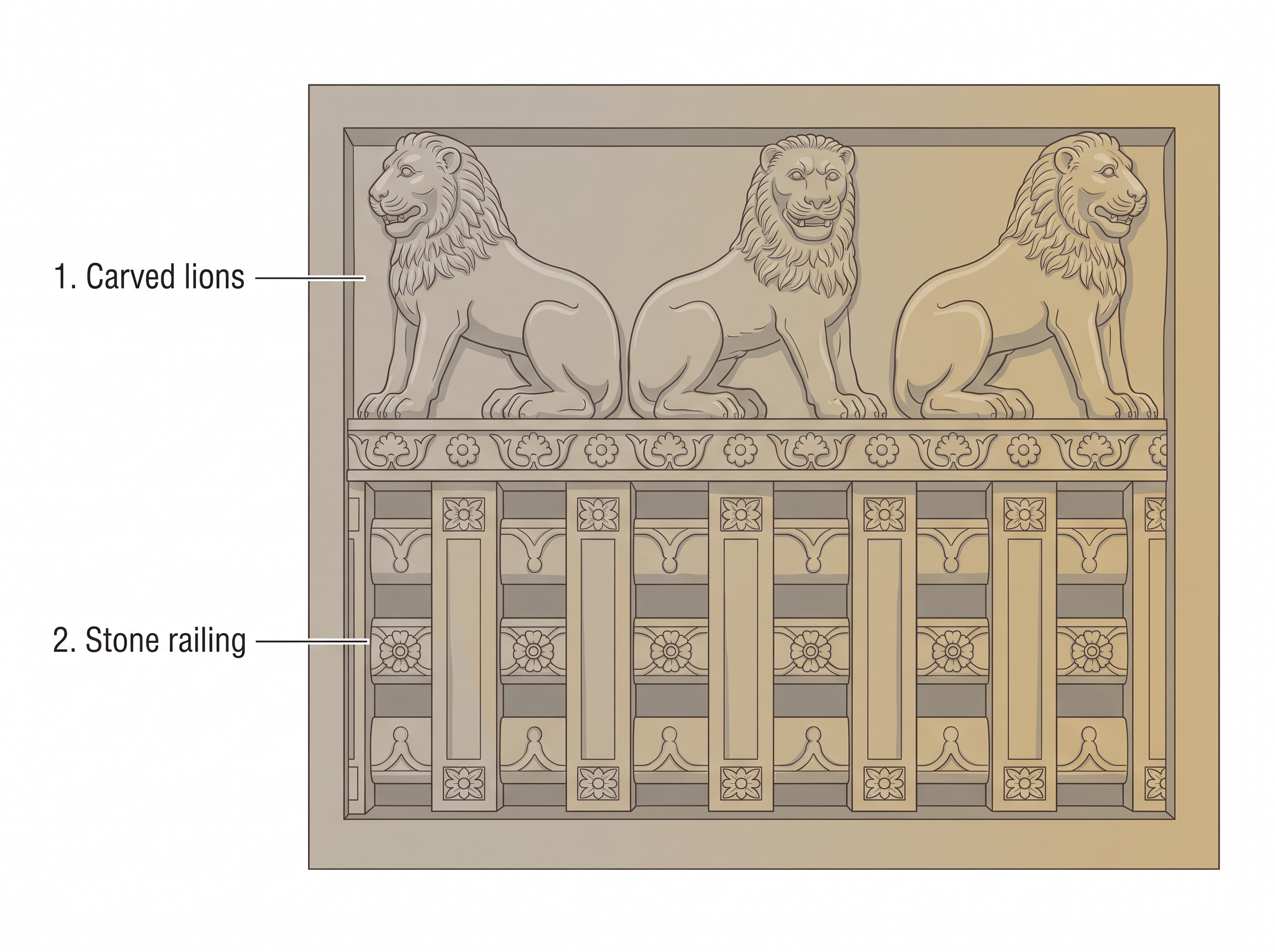
Fig. 4.2 – Carved stone panel from Sanchi.
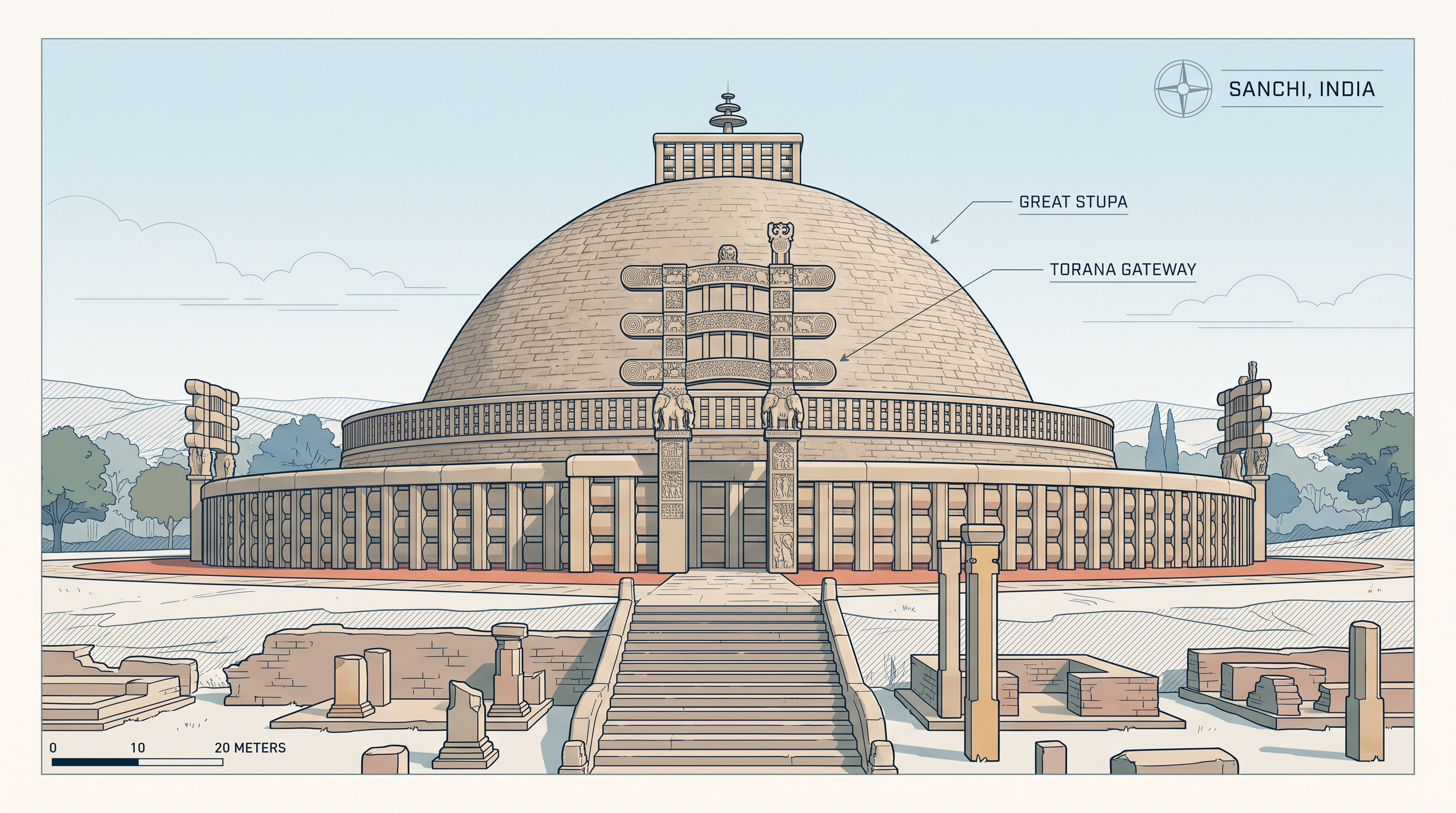
Fig. 4.3 – The Great Stupa at Sanchi.
The Gateway That Nearly Left India
Nineteenth-century Europeans were very interested in the stupa at Sanchi. The interest was not always harmless. The French sought Shahjehan Begum’s permission to take away the eastern gateway, which was the best preserved of the four, and display it in a museum in France. For a while some Englishmen wanted to do exactly the same thing.
Fortunately, both the French and the English were satisfied in the end with carefully prepared plaster-cast copies. A plaster cast is a mould taken from the original: it reproduces the shape and the carving, but it is not the stone that the sculptors cut. The original gateway therefore remained where it stood, on the site, part of the Bhopal state.
Why Sanchi Still Stands
The rulers of Bhopal, Shahjehan Begum and her successor Sultan Jehan Begum, provided money for the preservation of the ancient site. This was patronage on a serious scale, and it left its mark on the scholarship.
No wonder, then, that John Marshall, an archaeologist of the Archaeological Survey of India, dedicated his important volumes on Sanchi to Sultan Jehan. She funded the museum that was built there, as well as the guesthouse in which he lived while he wrote those volumes. She funded their publication too.
So if the stupa complex has survived, it is in no small measure due to wise decisions — and to good luck. The site escaped the eyes of railway contractors and builders, who wanted stone, and of those looking for finds to carry away to the museums of Europe. Sanchi is one of the most important Buddhist centres, and its discovery has vastly transformed our understanding of early Buddhism. Today it stands as testimony to the successful restoration and preservation of a key archaeological site by the Archaeological Survey of India.
The Questions This Chapter Must Answer
But what is the significance of this monument? Why was the mound built at all, and what did it contain? Why is there a stone railing around it? Who built the complex, or paid for its construction? When was it ‘discovered’, and by whom?
There is a fascinating story that we can uncover at Sanchi. To uncover it we must combine information from four kinds of evidence at once: texts, sculpture, architecture and inscriptions. No single one of them will do it alone.
Let us begin, then, not with the mound but with the world of ideas that produced it — the background of the early Buddhist tradition.
4.2 The Background: Sacrifices And Debates
A Turning Point In World History
The mid-first millennium BCE is often regarded as a turning point in world history. Within a few generations, in places that had almost no contact with one another, people began asking the same kinds of very hard questions.
It saw the emergence of thinkers such as Zarathustra in Iran, Kong Zi in China, Socrates, Plato and Aristotle in Greece, and Mahavira and Gautama Buddha, among many others, in India. They tried to understand the mysteries of existence, and the relationship between human beings and the cosmic order.
This was also a time of visible change on the ground. New kingdoms and cities were developing, and social and economic life was changing in a variety of ways in the Ganga valley, the great plain watered by the Ganga in the north of the subcontinent. You have met these changes already in Chapters 2 and 3.
The two things are connected. These thinkers were not floating above their world; they attempted to understand these developments as well. When a village becomes a city, when a chief becomes a king, when some people grow rich and others do not, questions about what is right and what is real become urgent.
4.2.1 The Sacrificial Tradition
New ideas do not arrive in an empty room. There were several pre-existing traditions of thought, religious belief and practice already in place, and the new teachers had to argue with them.
One of these was the early Vedic tradition, known to us from the Rigveda, compiled between c. 1500 and 1000 BCE. The Rigveda consists of hymns in praise of a variety of deities, especially Agni, Indra and Soma. Many of these hymns were chanted when sacrifices were performed. At a sacrifice, offerings were made into the fire, and people prayed for cattle, sons, good health, long life and similar things.
Notice what is being asked for. These are not requests for escape from the world. They are requests for more of it — more animals, more children, more years.
A Prayer Recited At The Fire
The hymn below is addressed to Agni, the god of fire, who was often identified with the sacrificial fire itself. Offerings were poured into that fire so that they would reach the other deities. Agni, in other words, is the carrier.
Verses such as these were composed in a special kind of Sanskrit, known as Vedic Sanskrit. They were taught orally to men belonging to priestly families. That single sentence tells you a great deal about who could and could not take part.
The knowledge was not written down and circulated; it was spoken, memorised and passed on inside a small group. If you were not born into a priestly family, the words were not taught to you.
From The Household Fire To The King’s Fire
At first, sacrifices were performed collectively. A group made the offering together, and the benefit was understood to be shared.
Later, from about 1000 BCE to 500 BCE onwards, some sacrifices were performed by the heads of households for the well-being of the domestic unit. The ritual had moved indoors, so to speak, and had acquired an owner.
More elaborate sacrifices, such as the rajasuya and the ashvamedha, were performed by chiefs and kings. These were expensive, public and long, and the chief or king could not conduct them himself. He depended on Brahmana priests to carry out the ritual correctly.
4.2.2 New Questions
Meanwhile, other people were asking questions that a sacrifice could not answer. Many ideas found in the Upanishads, composed from about the sixth century BCE onwards, show that people were curious about the meaning of life, the possibility of life after death, and rebirth.
Was rebirth due to past actions? Such issues were hotly debated. Some thinkers were concerned with understanding and expressing the nature of the ultimate reality — the one thing that lies behind everything that changes.
Others, outside the Vedic tradition, went further and asked whether there even was a single ultimate reality. And people also began speculating on the significance of the sacrificial tradition itself. Once you ask what a ritual actually does, you have already changed your relationship with it.
The two verses below come from one such text. Read the second one carefully, because it quietly redefines a word.
The first verse holds two opposite statements together on purpose. The self is smaller than the smallest seed, and larger than the world — which means it cannot be measured at all, and cannot be found by looking harder.
The second verse does something bolder. It takes the word ‘sacrifice’, which had meant a fire, a priest, an offering and a fee, and applies it to the wind. If the blowing wind is a sacrifice, then the ritual is no longer the only route to the sacred.
4.2.3 Debates And Discussions
We get a glimpse of lively discussions and debates from Buddhist texts, which mention as many as 64 sects or schools of thought. A sect here simply means a group that follows one teacher’s understanding of the world, and 64 is a large number for any society.
Teachers travelled from place to place, trying to convince one another, as well as laypersons, about the validity of their philosophy or the way they understood the world. Debates took place in the kutagarashala — literally, a hut with a pointed roof — or in groves where travelling mendicants, wanderers who lived on alms, halted for a while.
The rules of this contest were high-stakes. If a philosopher succeeded in convincing one of his rivals, the followers of the latter also became his disciples. Support for any particular sect could therefore grow and shrink over time, and quite fast.
What The New Teachers Refused
Many of these teachers, including Mahavira and the Buddha, questioned the authority of the Vedas. That was not a small thing to say. It meant that a text could not settle an argument merely because it was old and sacred.
They also emphasised individual agency — the idea that a person’s own effort decides their fate. They suggested that men and women could strive to attain liberation from the trials and tribulations of worldly existence.
This was in marked contrast to the Brahmanical position. There, as we have just seen, an individual’s existence was thought to be determined by his or her birth in a specific caste or gender. Under one view your birth fixes you; under the other, your effort moves you.
How The Buddha’s Words Reached Us
Before we read what these teachers said, it is worth asking how anything they said survived at all. The answer is a long chain, and every link in it could have broken.
The Buddha, and other teachers, taught orally — through discussion and debate. Men and women, and perhaps children as well, attended these discourses and discussed what they heard. None of the Buddha’s speeches were written down during his lifetime.
After his death, in about the fifth to fourth century BCE, his teachings were compiled by his disciples at a council of ‘elders’, or senior monks, at Vesali. Vesali is the Pali form of Vaishali, in present-day Bihar. These compilations were known as the Tipitaka — literally, three baskets to hold different types of texts. They were first transmitted orally, and only later written down and classified according to length as well as subject matter.
The three baskets divided the material. The Vinaya Pitaka included rules and regulations for those who joined the sangha, or monastic order. The Buddha’s teachings were included in the Sutta Pitaka. The Abhidhamma Pitaka dealt with philosophical matters. Each pitaka comprised a number of individual texts, and later, commentaries were written on these texts by Buddhist scholars.
As Buddhism travelled to new regions such as Sri Lanka, other texts were written there. The Dipavamsa, literally the chronicle of the island, and the Mahavamsa, the great chronicle, contained regional histories of Buddhism. Many of these works contained biographies of the Buddha. Some of the oldest texts are in Pali, while later compositions are in Sanskrit.
When Buddhism spread to East Asia, pilgrims such as Fa Xian and Xuan Zang travelled all the way from China to India in search of texts. These they took back to their own country, where they were translated by scholars. Indian Buddhist teachers also travelled to faraway places, carrying texts to disseminate the teachings of the Buddha.
Buddhist texts were preserved in manuscripts — books written and copied by hand — for several centuries, in monasteries in different parts of Asia. Modern translations have been prepared from Pali, Sanskrit, Chinese and Tibetan texts. The procedure is set out in Fig. 4.4.
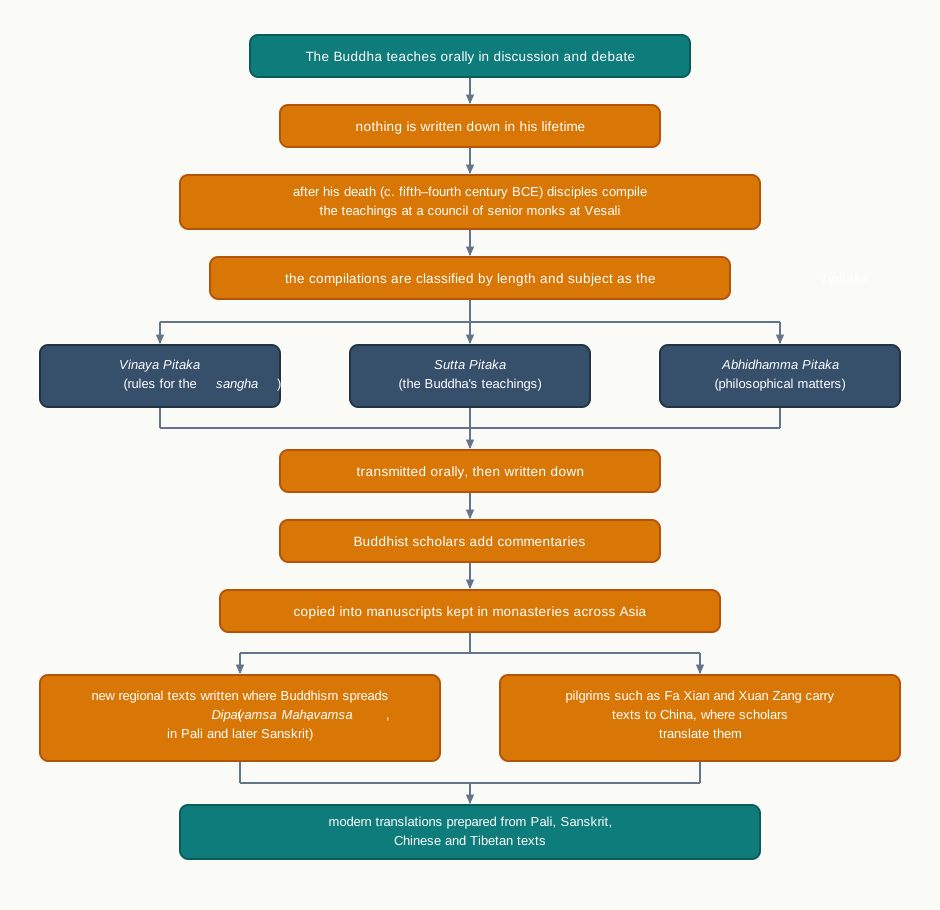
Fig. 4.4 – How the Buddha’s words reached us.
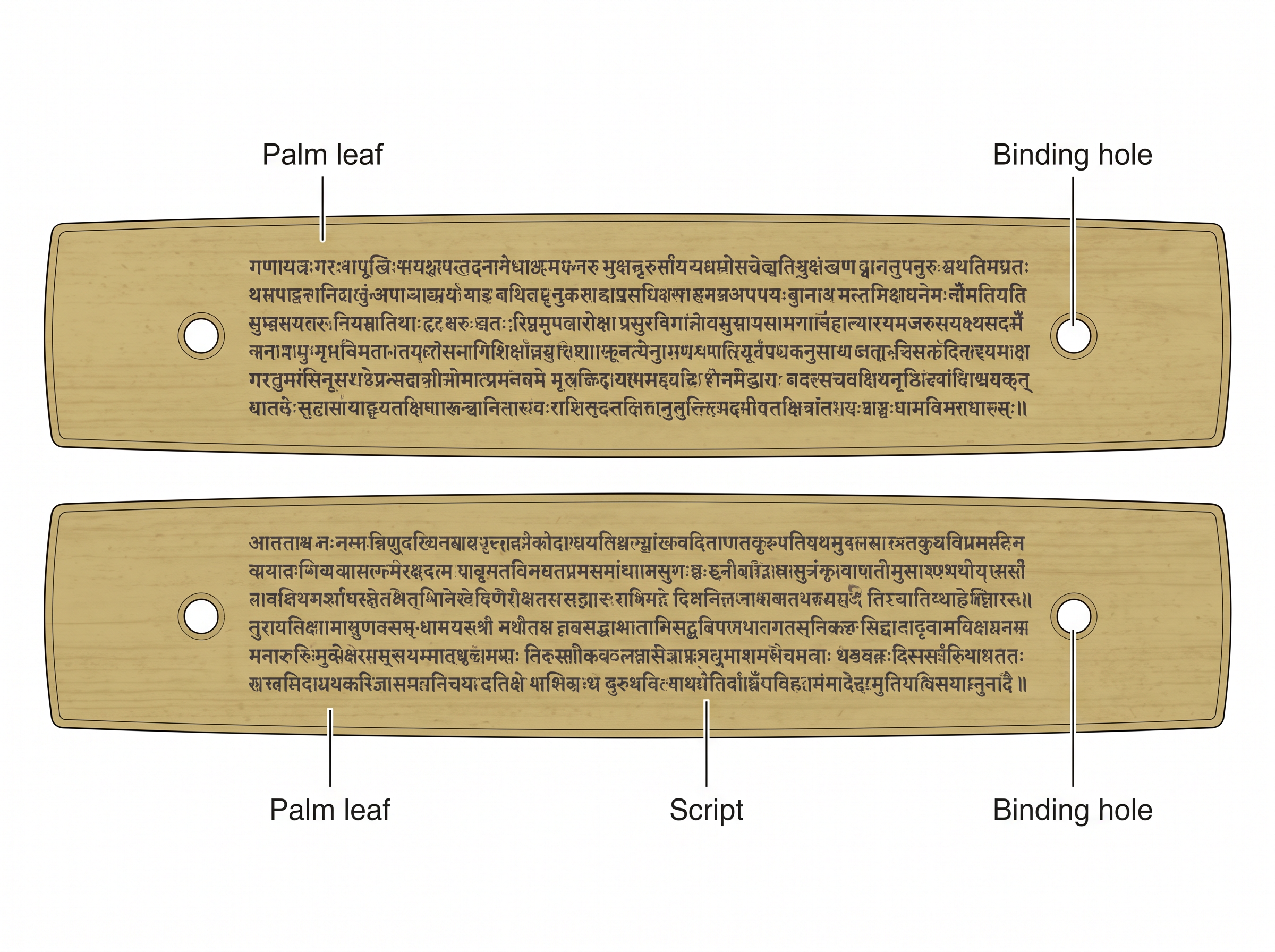
Fig. 4.5 – A twelfth-century Sanskrit Buddhist manuscript.
Fatalists, Materialists, And The Texts That Vanished
Not every teacher of this period left a tradition behind. Some schools argued fiercely, gathered followers, and then disappeared so completely that not one of their own texts survives.
We hear of two of them in the passage below, and we hear of them from a Buddhist text — that is, from the writings of people who disagreed with them. Keep that in mind as you read.
The first teacher, Makkhali Gosala, belonged to the tradition of the Ajivikas. They have often been described as fatalists: those who believe that everything is predetermined, so that effort changes nothing. The image of the ball of string makes the point exactly — it unwinds to its full length, and no one decides where it stops.
The second teacher, Ajita Kesakambalin, belonged to the tradition of the Lokayatas, usually described as materialists: those who hold that only matter is real, and that nothing of a person survives death. Notice what follows from that position. If there is no next world, then gifts to priests and monks buy you nothing at all.
Here is the problem for the historian. Texts from these traditions have not survived. We know about them only from the works of other traditions — in this case, from a Buddhist text that had every reason to present them as extreme. The labels ‘fatalist’ and ‘materialist’ were not necessarily chosen by these thinkers themselves.
4.3 Beyond Worldly Pleasures: The Message Of Mahavira
An Older Tradition, A New Teacher
It is tempting to think that a religion begins with the teacher whose name we remember. Jainism warns us against that assumption at once.
The basic philosophy of the Jainas was already in existence in north India before the birth of Vardhamana, who came to be known as Mahavira, in the sixth century BCE. He did not invent the ideas he taught. He inherited them, sharpened them, and gave them a voice that carried.
According to Jaina tradition, Mahavira was preceded by 23 other teachers, or tirthankaras — literally, those who guide men and women across the river of existence. The image is worth pausing on. Worldly life is a river you are stuck in; a tirthankara is the one who shows you the crossing.
Notice the careful phrasing: ‘according to Jaina tradition’. That is how the tradition itself tells its story. It is not the same kind of statement as a date recovered from an inscription, and a historian keeps the difference in view.
A World That Is Alive
The most important idea in Jainism is that the entire world is animated: even stones, rocks and water have life. Not merely animals and plants — the ground you walk on, the water you pour away.
Once that is accepted, everything else follows from it. Non-injury to living beings, especially to humans, animals, plants and insects, is central to Jaina philosophy. If life is everywhere, then harm is possible everywhere, and the burden of avoiding it never lifts.
The principle of ahimsa, non-injury, emphasised within Jainism, has left its mark on Indian thinking as a whole. It travelled far beyond the community that first insisted on it, which is exactly what makes it worth studying.
Karma, Penance And Renunciation
According to Jaina teachings, the cycle of birth and rebirth is shaped through karma — the moral weight of what a person does, carried forward into the next life. Actions are not spent when they end. They accumulate.
To free oneself from that cycle, asceticism and penance are required. Asceticism is a deliberate denial of comfort to the body; penance is hardship undertaken to burn away what has already been accumulated. Neither is a punishment imposed from outside. Both are chosen.
And this can be achieved only by renouncing the world. That is a strong claim, and Jainism draws the obvious conclusion from it: monastic existence is a necessary condition of salvation. You cannot, on this view, reach liberation while keeping your household, your property and your place in society.
Jaina monks and nuns therefore took five vows: to abstain from killing, stealing and lying; to observe celibacy, abstaining from sexual relations; and to abstain from possessing property. Read the five together and you will see they are not five separate rules. They are one commitment, cut into five surfaces of a life.
The chapter’s own image of a tirthankara, in Fig. 4.6, was carved centuries after Mahavira, and shows how long the tradition went on giving these teachers a face.
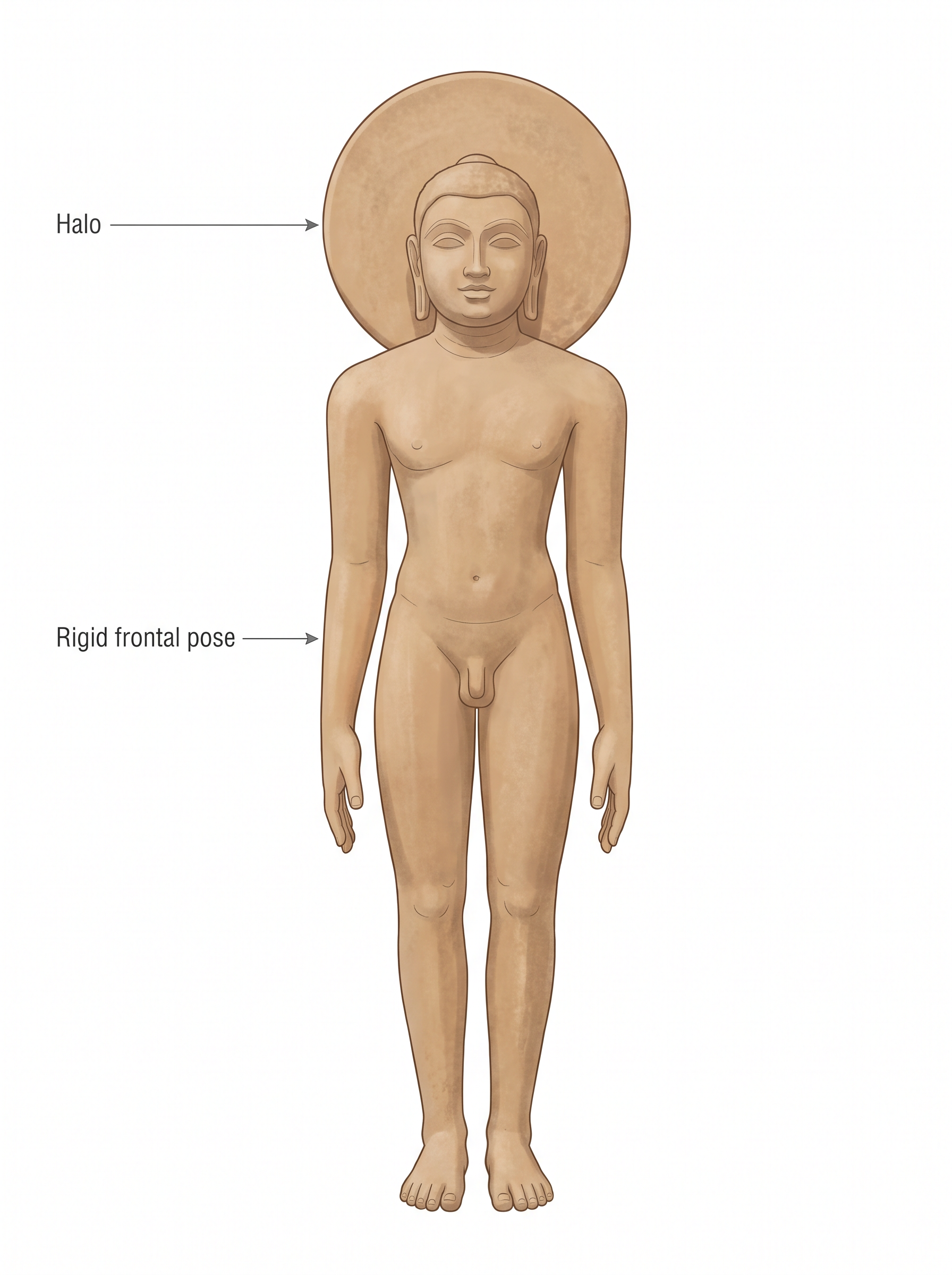
Fig. 4.6 – A tirthankara image from Mathura.
A Queen Argues With A King
Just as the Buddha’s teachings were compiled by his followers, the teachings of Mahavira were also recorded by his disciples. Nothing survives in his own hand, and there is no reason to expect that it should.
What his disciples produced were often stories, which could appeal to ordinary people. A philosophical argument about karma will hold a scholar. A story about a queen and a king will hold a village.
The extract below is one such story, from a Prakrit text known as the Uttaradhyayana Sutta. In it a queen named Kamalavati tries to persuade her husband to renounce the world. She is not scolding him. She is reasoning with him, and she does it in images.
Look at what the queen actually argues. Not that wealth is wicked, but that it is useless — it cannot satisfy, and it cannot save. She then offers a second argument, quite different from the first: renunciation is not a loss but a release, and the renouncer moves like the wind, or like a bird out of a cage.
The story also does something a treatise could not. It puts the case for renunciation in a woman’s mouth, and it is she who declares that she will live as a nun. Whatever else it tells us, it tells us that a Jaina audience could imagine a queen choosing that road.
What it does not tell us is what any real king or queen did. This is a teaching story, written to persuade. It is evidence for what Jaina teachers wanted people to believe, not for what people actually chose.
4.3.1 The Spread Of Jainism
Gradually, Jainism spread to many parts of India. It did not stay in the region where Mahavira had taught, and it did not stay in one language.
Like the Buddhists, Jaina scholars produced a wealth of literature in a variety of languages — Prakrit, Sanskrit and Tamil. Three languages means three audiences, in different parts of the subcontinent, and it is the surest sign we have that the tradition was reaching people far from where it began.
For centuries, manuscripts of these texts were carefully preserved in libraries attached to temples. That is a quiet sentence with a great deal inside it. A manuscript is fragile; it must be copied before it decays, and copying takes trained hands, materials and money. A temple library is an institution built to keep words alive across generations, and without it we would have almost nothing to read.
Stone lasted better than palm leaf, and it too was used. Some of the earliest stone sculptures associated with religious traditions in the subcontinent were produced by devotees of the Jaina tirthankaras, and have been recovered from several sites throughout the subcontinent.
Put the two together — the copied manuscript and the carved image — and you have the two kinds of evidence this chapter keeps insisting on: what was written, and what was made. The Jaina tradition supplies both, across a very long stretch of time, as Fig. 4.7 sets out.
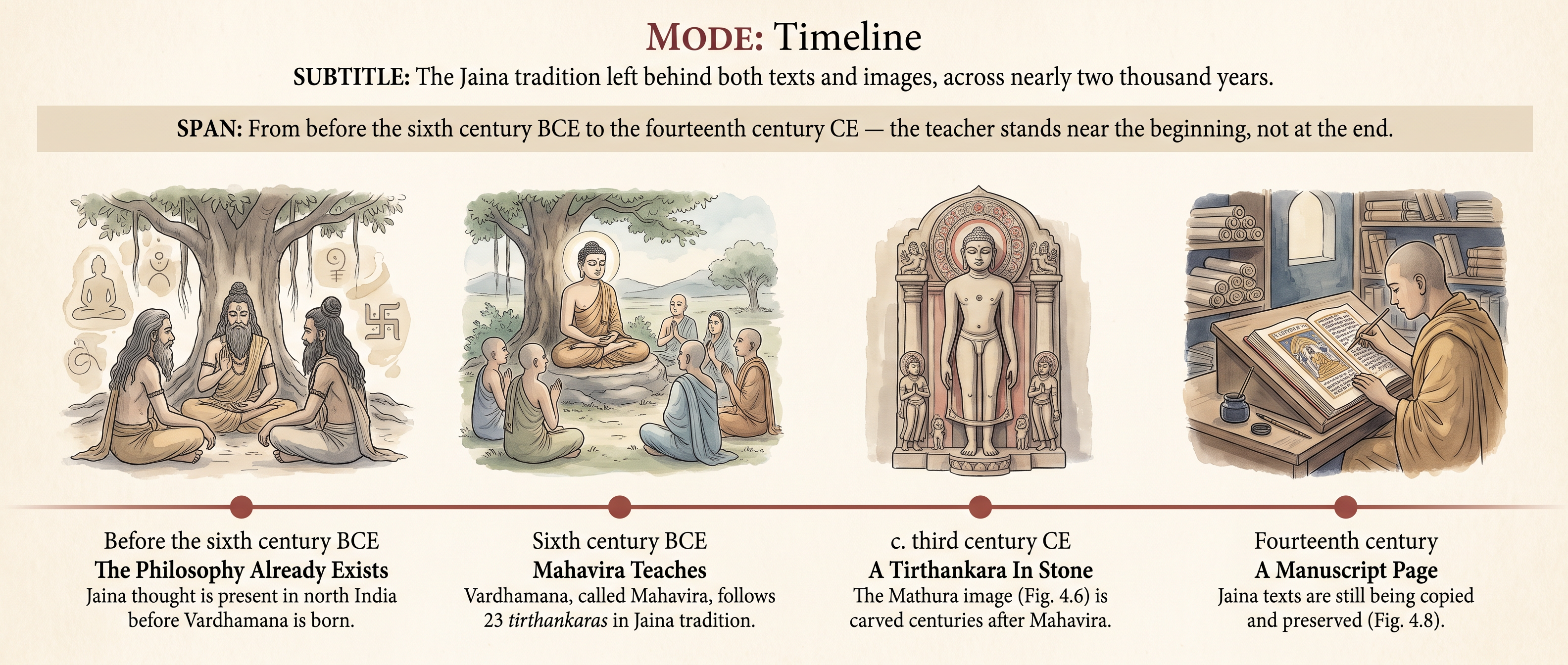
Fig. 4.7 – A Tradition That Kept Producing Evidence.
The manuscript page in Fig. 4.8 is the far end of that chain — a text kept in use for so long that it was still being copied more than eighteen centuries after Mahavira taught.
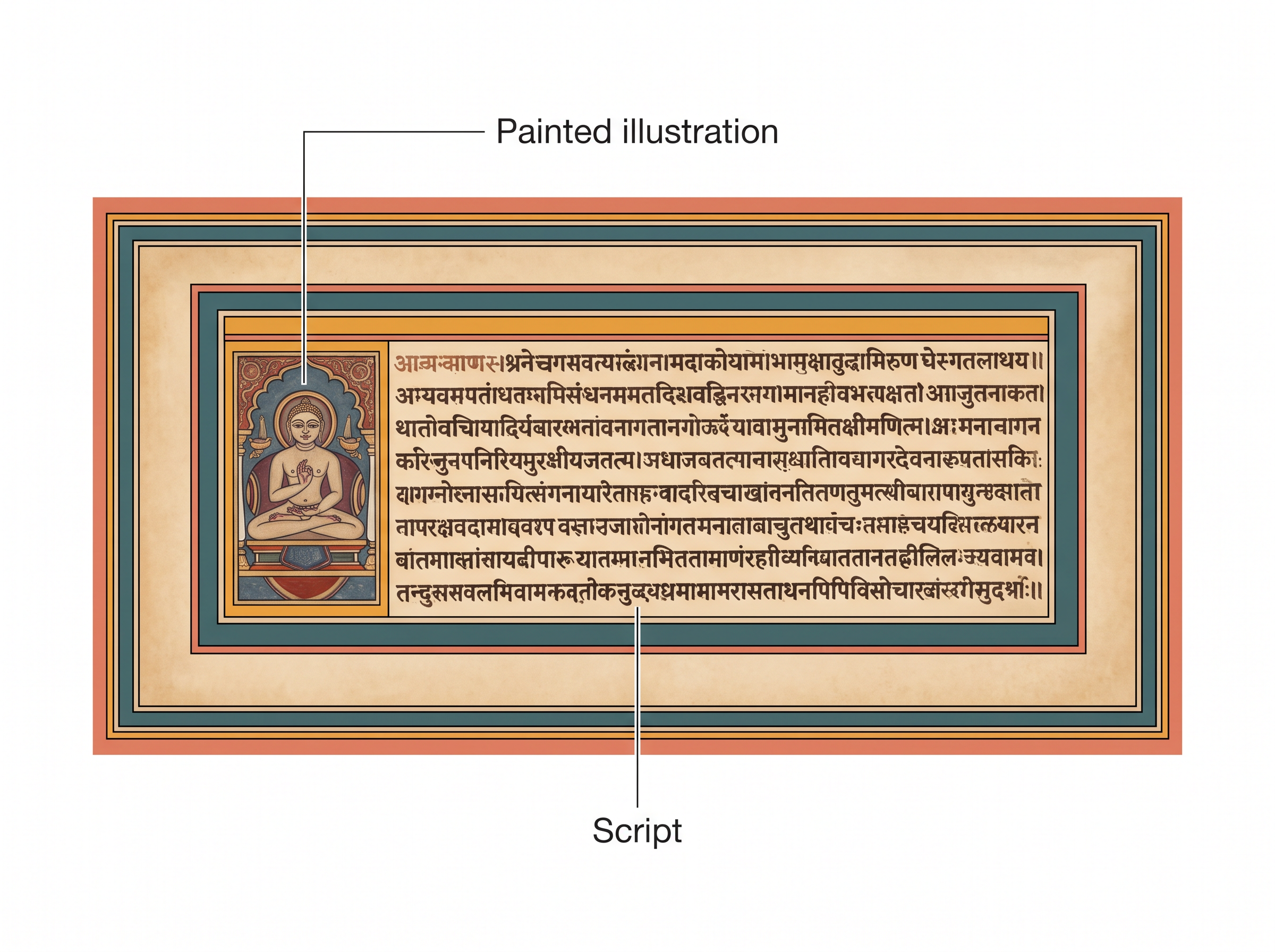
Fig. 4.8 – A fourteenth-century Jaina manuscript page.
Mahavira, then, was one voice among many in the world of debate we met earlier. He was not the only teacher of his time who asked people to look beyond worldly pleasures. The other, whose message travelled further than any, we turn to next.
4.4 The Buddha And The Quest For Enlightenment
A Message That Travelled
One of the most influential teachers of the time was the Buddha. Of all the voices arguing in the groves and the debating halls, his carried furthest — not in his own lifetime alone, but over the centuries that followed.
His message spread across the subcontinent and beyond. It went north and west, through Central Asia to China, and from there to Korea and Japan. It went south, through Sri Lanka, and then across the seas to Myanmar, Thailand and Indonesia. Map 4.A1 shows the two great routes.
Two things are worth noticing about that spread. It followed the roads and sea lanes that traders and travellers were already using; ideas rarely cut new paths of their own. And it moved into societies with their own languages and beliefs, which is why Buddhism looks different in each of them.
Map
Map 4.A1 Caption: The two routes by which the Buddha’s message travelled out of the subcontinent. Brief: Map of Asia showing the subcontinent, Central Asia, China, Korea, Japan, Sri Lanka, Myanmar, Thailand and Indonesia. Mark two broad arrows only — one overland route from the subcontinent through Central Asia to China and on to Korea and Japan; one sea route from the subcontinent through Sri Lanka across to Myanmar, Thailand and Indonesia. Show the full extent of India as officially defined. Use present-day names for orientation, and state in the key that modern national boundaries are shown for reference only and did not exist in this period. Do not mark individual sites.
How Do We Know Anything About Him?
Here is a question the chapter asks openly, and it is the right one. How do we know about the Buddha’s teachings?
They have been reconstructed by carefully editing, translating and analysing the Buddhist texts we met earlier — the compilations made by his followers. That is patient, unglamorous work, and it is where the history of ideas actually begins.
His life is a harder problem than his teachings. Historians have tried to reconstruct details of it from hagiographies, which are biographies of holy figures. Many of these were written down at least a century after the time of the Buddha, in an attempt to preserve memories of the great teacher.
Sit with that gap. A century is three or four generations. Everything in the story that follows reaches us through people who never met the man, writing down what their tradition remembered — and what it wished to remember.
What The Traditions Say
According to these traditions, Siddhartha — as the Buddha was named at birth — was the son of a chief of the Sakya clan. He had a sheltered upbringing within the palace, insulated from the harsh realities of life.
One day he persuaded his charioteer to take him into the city. His first journey into the world outside was traumatic. He was deeply anguished when he saw an old man, a sick man and a corpse.
He realised in that moment that the decay and destruction of the human body was inevitable. Not unlikely, not avoidable by wealth or rank — inevitable, and true of him as well.
He also saw a homeless mendicant who, it seemed to him, had come to terms with old age, disease and death, and had found peace. Here was a man who owned nothing and was not afraid. Siddhartha decided that he too would adopt the same path. Soon after, he left the palace and set out in search of his own truth.
The Middle Path
What followed was not an immediate answer. Siddhartha explored several paths, including bodily mortification — the deliberate starving and punishing of the body, in the belief that it frees the spirit. It led him to a situation of near death.
So he abandoned these extreme methods. That decision matters as much as anything he later taught. He had tried the hardest road available and judged it to be a road to nowhere.
He then meditated for several days and finally attained enlightenment. After this he came to be known as the Buddha, or the Enlightened One. For the rest of his life, he taught dhamma, the path of righteous living.
A Departure Cut In Stone
Some three centuries later, sculptors were still telling this story. Fig. 4.9 is a sculpture of about 200 CE from Amaravati, in present-day Andhra Pradesh, showing the moment the Buddha left his palace.
Look at it before you read the caption. There is a horse, there are attendants, there is movement — but where, exactly, is the man the whole scene is about? The question is not a trick. It is the beginning of the problem we will take up when we come to the sculpture at Sanchi.
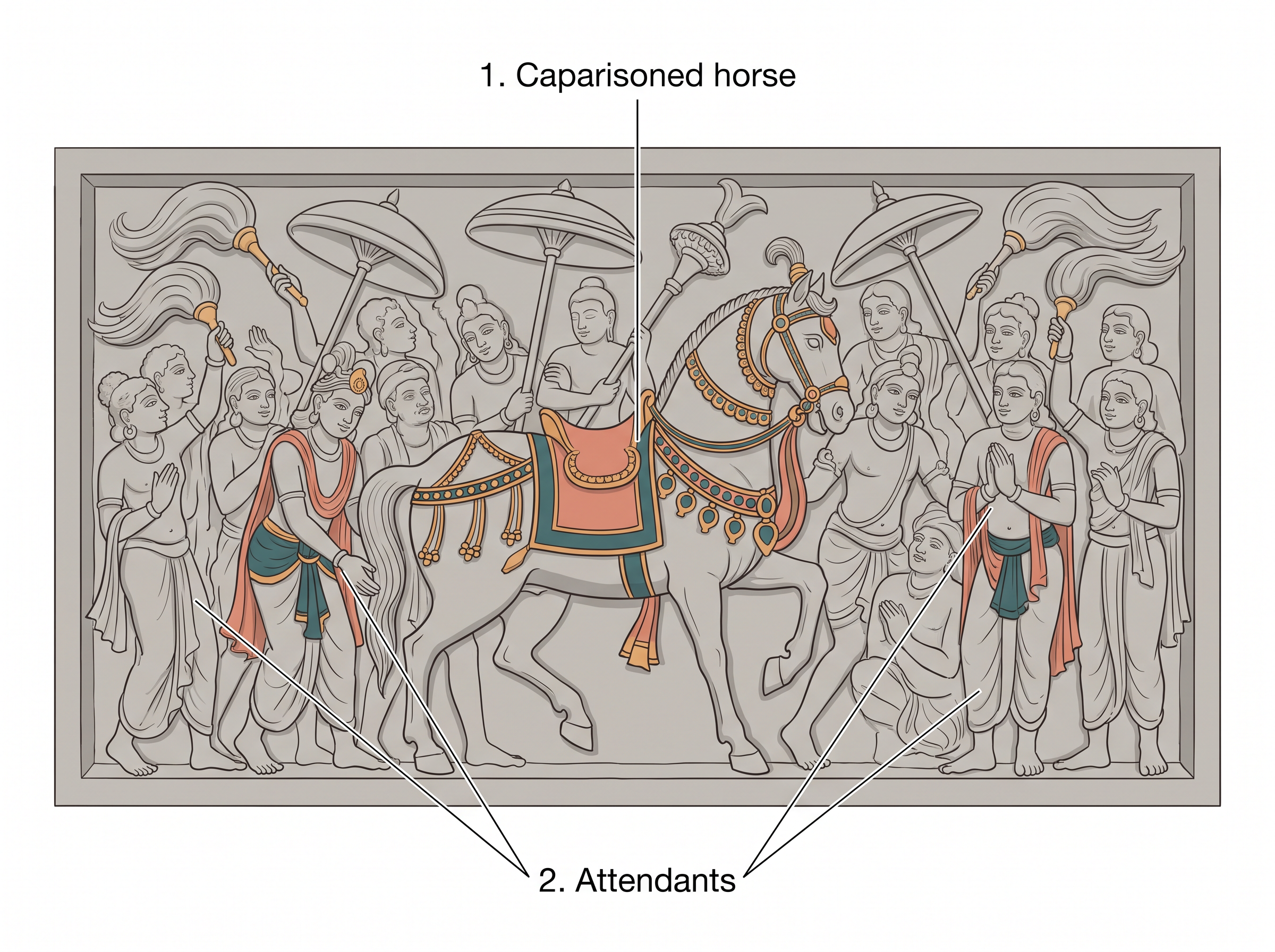
Fig. 4.9 – Sculpture from Amaravati depicting the Buddha’s departure.
4.5 The Teachings Of The Buddha
Teaching By Story, Not By Miracle
The Buddha’s teachings have been reconstructed from stories, found mainly in the Sutta Pitaka. Not from a treatise he wrote, and not from a creed he dictated — from stories about him, told and retold.
Some of these stories describe his miraculous powers. Others suggest something quite different: that the Buddha tried to convince people through reason and persuasion, rather than through displays of supernatural power. Both kinds sit side by side in the same collection, and a historian has to hold both in view.
The second kind is the more revealing. When a grief-stricken woman whose child had died came to the Buddha, he did not bring her son back to life. He gently convinced her instead about the inevitability of death.
Read that again, because it is not a small thing. A teacher with a reputation for miracles refuses to perform the one miracle a mother is begging for, and offers her an understanding instead. His authority rests on what he can make her see, not on what he can make happen.
These stories were narrated in the language spoken by ordinary people, so that they could be easily understood. A teaching meant for everyone had to be told in the words everyone used.
A World That Will Not Hold Still
According to Buddhist philosophy, the world is transient — anicca — and constantly changing. Nothing you can point to stays as it is.
It is also soulless, anatta, as there is nothing permanent or eternal in it. This is a deliberate and pointed claim. The Upanishadic thinkers you met earlier were searching for an unchanging self within the heart; Buddhist philosophy denies that any such permanent thing is there to be found.
Within this transient world, sorrow — dukkha — is intrinsic to human existence. Sorrow is not an accident that befalls unlucky people. It is built into a life spent clinging to things that cannot last.
So what is a person to do? It is by following the path of moderation, between severe penance and self-indulgence, that human beings can rise above these worldly troubles. Neither the starving ascetic nor the comfortable householder has solved anything; each has merely chosen a way of being ruled by the body.
And in the earliest forms of Buddhism, whether or not god existed was irrelevant. Not denied, and not affirmed — set aside, because the question does nothing to reduce sorrow.
Advice To A Householder
If sorrow comes from clinging, is the teaching only for those who leave the world behind? The next extract answers that. It is advice given by the Buddha to a wealthy householder named Sigala, and it is entirely about how to live well inside ordinary life.
There are similar instructions to Sigala about how to behave with his parents, his teacher and his wife. The advice, in other words, works its way through every relationship a householder has.
Notice what the first set of instructions assumes. There are masters, and there are servants and employees; the Buddha does not tell Sigala to stop being a master. What he does is fill the role with obligations — work matched to strength, food and wages, care in sickness, leave at times.
Notice also the second set. Those who have renounced the world do not grow their own food. A samana eats because a householder feeds him. The renouncer and the householder are two halves of one arrangement, and the teaching binds each to the other.
Be Lamps Unto Yourselves
The Buddha emphasised individual agency and righteous action as the means to escape from the cycle of rebirth, and to attain self-realisation and nibbana — literally, the extinguishing of the ego and desire — and thus end the cycle of suffering for those who renounced the world.
According to Buddhist tradition, his last words to his followers were: ‘Be lamps unto yourselves as all of you must work out your own liberation.’
It is worth ending the section on that sentence. A dying teacher, surrounded by disciples who have given up everything to follow him, tells them not to follow him. No priest can carry you, and no scripture can either. Each of you does this work, or it is not done.
4.6 Followers Of The Buddha
An Organisation Of Monks
A teacher who tells his disciples to be lamps unto themselves might be expected to leave no institution behind. In fact the opposite happened. Soon there grew a body of disciples around the Buddha, and he founded a sangha — an organisation of monks who themselves became teachers of dhamma.
That is the point of the sangha. It was not a retreat from the world, but a means of carrying the teaching into it. Each monk was, in effect, a teacher in training.
These monks lived simply, possessing only the essential requisites for survival — among them a bowl, to receive food once a day from the laity. The laity are the ordinary followers of a religion who have not taken monastic vows, and who go on living in households.
As the monks lived on alms, they were known as bhikkhus. The word is worth holding on to, because it describes a relationship, not just a person. A bhikkhu eats only what a householder chooses to place in his bowl.
Women Enter The Sangha
Initially, only men were allowed into the sangha. That was the starting position, and it was not quietly abandoned; it had to be argued away.
According to Buddhist texts, the change was made possible through the mediation of Ananda, one of the Buddha’s dearest disciples, who persuaded him to allow women into the sangha. The Buddha’s foster mother, Mahapajapati Gotami, was the first woman to be ordained as a bhikkhuni.
Many women who entered the sangha became teachers of dhamma. Some went on to become theris — respected women who had attained liberation. The tradition, in other words, did not merely admit women; it recognised that women had reached the goal it existed to reach.
Notice, though, what the story itself concedes. Women were admitted after an argument, through the mediation of a man, and the texts that record this were written by the order they were admitted into.
Equal Inside, Unequal Outside
The Buddha’s followers came from many social groups. They included kings, wealthy men and gahapatis, and also humbler folk: workers, slaves and craftspeople.
Once within the sangha, all were regarded as equal, having shed their earlier social identities on becoming bhikkhus and bhikkhunis. A slave who was ordained did not carry the status of a slave into the order. Neither did a king carry a crown into it.
Hold both halves of that sentence together, because the sentence is doing careful work. Equality inside the sangha is not the same as equality in society. The order offered an escape from birth-given rank to those who entered it; it did not abolish rank in the villages and cities the monks walked through each morning with their bowls.
The internal functioning of the sangha was based on the traditions of ganas and sanghas, which you met in Chapter 2 — states governed not by a single king but by groups of men who took decisions together. Consensus was arrived at through discussions. If that failed, decisions were taken by a vote on the subject.
A Slave Woman Argues At The River
The next extract is unlike anything else in this chapter. It is not a king speaking, or a chronicler, or a monk laying down rules. It is a slave woman, and she is winning an argument.
Punna was a dasi, a slave woman, who went to the river each morning to fetch water for her master’s household. There she would daily see a Brahmana performing bathing rituals. One morning she spoke to him.
Punna begins with a fact about her own life, not with an argument. She goes into the cold water because she is afraid — of punishment, and of the angry words of high class women. Her body is in that river because of her place in society.
Then she turns the question round. You are shaking in the same cold water, she says. What are you afraid of?
Her reasoning that follows is exact. If washing removed evil, then frogs, turtles, water snakes and crocodiles — who never leave the water — would be the holiest creatures alive. The ritual cannot do what it claims. And her advice is the Buddha’s advice, stripped to one line: do not do the thing you are afraid of having done.
The sculpture in Fig. 4.10 shows a woman carrying water, from about the same centuries. It is not a portrait of Punna, and no one claims that it is. But it is a reminder that fetching water was daily, heavy, unremarkable work, done by women whose names the texts almost never record.
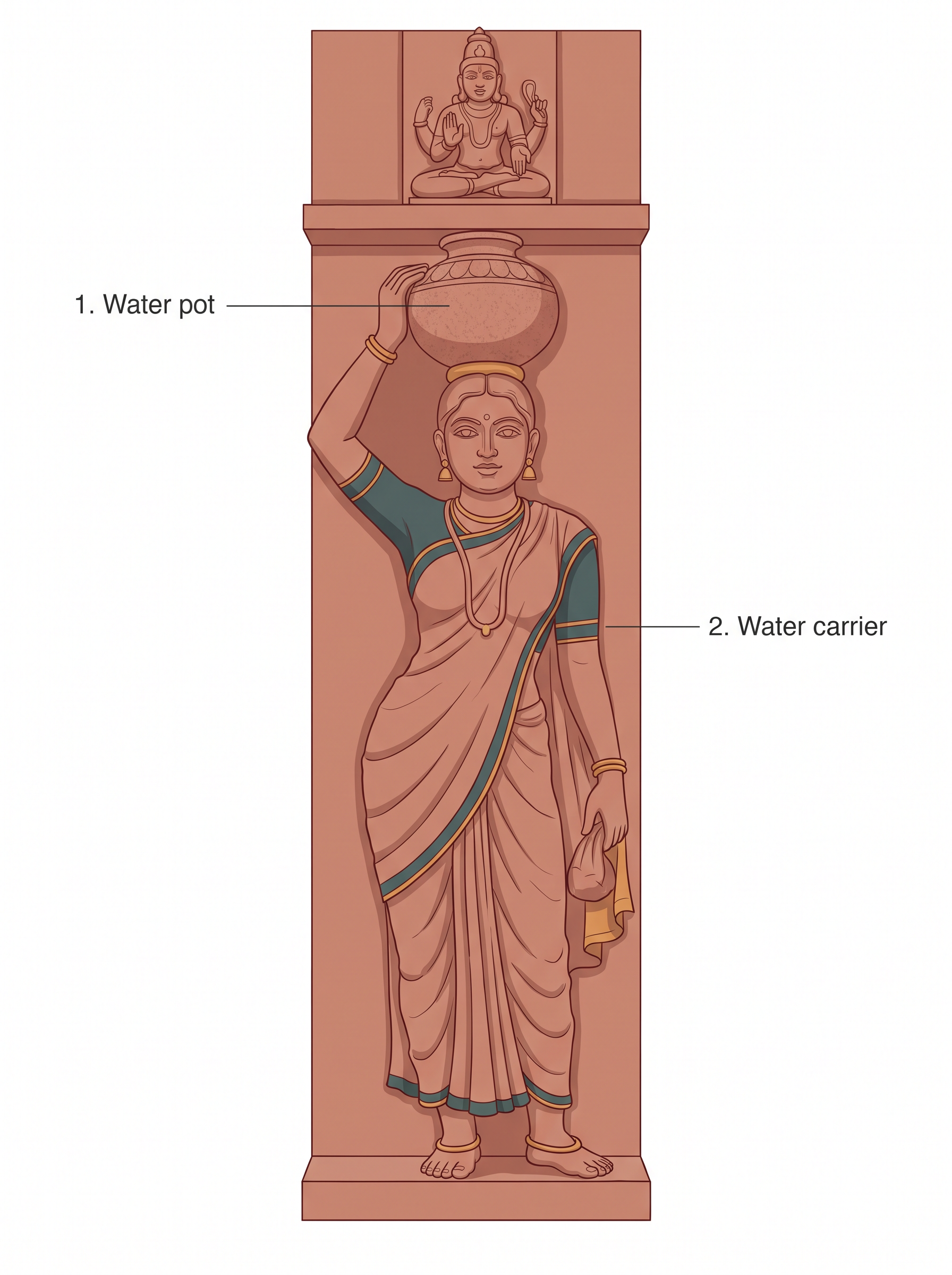
Fig. 4.10 – Mathura sculpture of a water carrier.
Rules For Those Who Owned Nothing
An order of people who possess almost nothing still needs rules — and the rules it writes tell us a great deal about the difficulties it actually faced. The extract below is from the Vinaya Pitaka, the basket of monastic discipline.
Look at what each rule is guarding against. A monk replacing a perfectly good blanket is accumulating property. A monk taking more than two or three bowlfuls is taking more than his share, and eating into what a household can spare. A monk who leaves the bedding lying and walks off without a word is treating the sangha’s property as nobody’s business.
None of these are dramatic offences. That is exactly why they had to be written down. An order held together by voluntary poverty is undone not by great crimes but by small, reasonable-sounding claims on things.
Why So Many People Came
Buddhism grew rapidly, both during the lifetime of the Buddha and after his death. Two conditions made people ready to listen.
The first was dissatisfaction with existing religious practices. The second was confusion, as rapid social changes took place around them — the new kingdoms and new cities we met at the start of this chapter, which unsettled the old certainties about who a person was.
And there was what the teaching offered in return. Importance was attached to conduct and values, rather than to claims of superiority based on birth. Emphasis was placed on metta, fellow feeling, and karuna, compassion — especially for those who were younger and weaker than oneself. These were the ideas that drew men and women to Buddhist teachings.
4.7 Stupas
Sacred Places Before Buddhism
We have seen that Buddhist ideas and practices emerged out of a process of dialogue with other traditions — including those of the Brahmanas, the Jainas and several others, not all of whose ideas and practices were preserved in texts. Some of those others left no writing at all, and we shall have to catch them indirectly.
One place where we can catch them is in the way sacred places came to be identified. Buddhism did not invent the idea that a particular spot on the ground could be holy. It inherited it.
From earliest times, people tended to regard certain places as sacred. These included sites with special trees or unique rocks, or sites of awe-inspiring natural beauty. Nothing had to be built for such a place to matter; it was already there.
These sites, with small shrines attached to them, were sometimes described as chaityas. Buddhist literature mentions several chaityas, which tells us that the older practice was absorbed rather than swept away.
The Places Where He Had Been
Buddhist literature also describes places associated with the Buddha’s life. Four of them matter most: where he was born (Lumbini), where he attained enlightenment (Bodh Gaya), where he gave his first sermon (Sarnath), and where he attained nibbana (Kusinagara). You can find all four on Map 1.
Gradually, each of these places came to be regarded as sacred. Notice how this works. It is not a tree or a rock that makes the place holy now, but something that happened there — a biography written onto a landscape.
We know that about 200 years after the time of the Buddha, Asoka erected a pillar at Lumbini to mark the fact that he had visited the place. That pillar is a useful thing for a historian. It is a dated, physical object that shows the site was already being treated as worth marking.
Map
Map 1 Caption: Major Buddhist sites. Brief: Redraw NCERT’s sketch map of the subcontinent, marking Shravasti, Lumbini, Kusinagara, Sarnath, Bodh Gaya, Barabar, Bharhut, Sanchi, Ajanta, Nasik, Junnar, Karle, Nagarjunakonda and Amaravati, with the Indus, Ganga, Yamuna, Narmada, Mahanadi, Godavari and Krishna, and the Arabian Sea and Bay of Bengal. Show the full extent of India as officially defined. Carry NCERT’s own note that this is a sketch map, not to scale. Mark no modern boundaries.
4.7.1 Why Were Stupas Built?
There were other places too that were regarded as sacred, and for a different reason. Relics of the Buddha — his bodily remains, or objects used by him — were buried there. The mounds raised over them were known as stupas.
The tradition of erecting stupas may have been pre-Buddhist. Once again, Buddhism took over a practice that was already in use. But the stupas came to be associated with Buddhism so completely that we now think of them as Buddhist buildings and nothing else.
Since they contained relics regarded as sacred, the entire stupa came to be venerated as an emblem of both the Buddha and Buddhism. The mound was not merely a container for something holy. It became holy itself.
According to a Buddhist text known as the Ashokavadana, Asoka distributed portions of the Buddha’s relics to every important town, and ordered the construction of stupas over them. By the second century BCE a number of stupas — including those at Bharhut, Sanchi and Sarnath — had been built.
The passage below explains why anyone thought this was worth doing, and it is stranger than you might expect.
Read the Buddha’s two answers side by side, because they do not say the same thing. The first tells Ananda not to bother with the body: do not let a funeral distract you from your own liberation. The second, given only when he is pressed, concedes the monument — and even sets out what people will do there, placing garlands and perfume, bowing, growing calm of heart.
This is a text written by followers who had already built the stupas. It records both the teacher’s reluctance and the practice they had settled on, and it makes no attempt to hide the gap between them.
4.7.2 How Were Stupas Built?
Who paid for all this? For once, the evidence is unusually good, and it is written on the buildings themselves.
Inscriptions found on the railings and pillars of stupas record donations made for building and decorating them. These are called votive inscriptions: a votive inscription records a gift made in fulfilment of a vow, and it names the giver.
Some donations were made by kings, such as the Satavahanas, a ruling dynasty of the Deccan. Others were made by guilds — associations of craftspeople or merchants in the same trade — such as the guild of ivory workers who financed part of one of the gateways at Sanchi.
And then there are the hundreds. Hundreds of donations were made by women and men who mention their names, sometimes adding the name of the place they came from, as well as their occupations and the names of their relatives. Bhikkhus and bhikkhunis also contributed towards building these monuments.
Stop and take in what that means. Monks and nuns who had renounced property were giving money. Ivory carvers, who worked with their hands for a living, paid for part of a gateway. The Great Stupa was not the gift of a king. It was assembled out of a very large number of ordinary gifts.
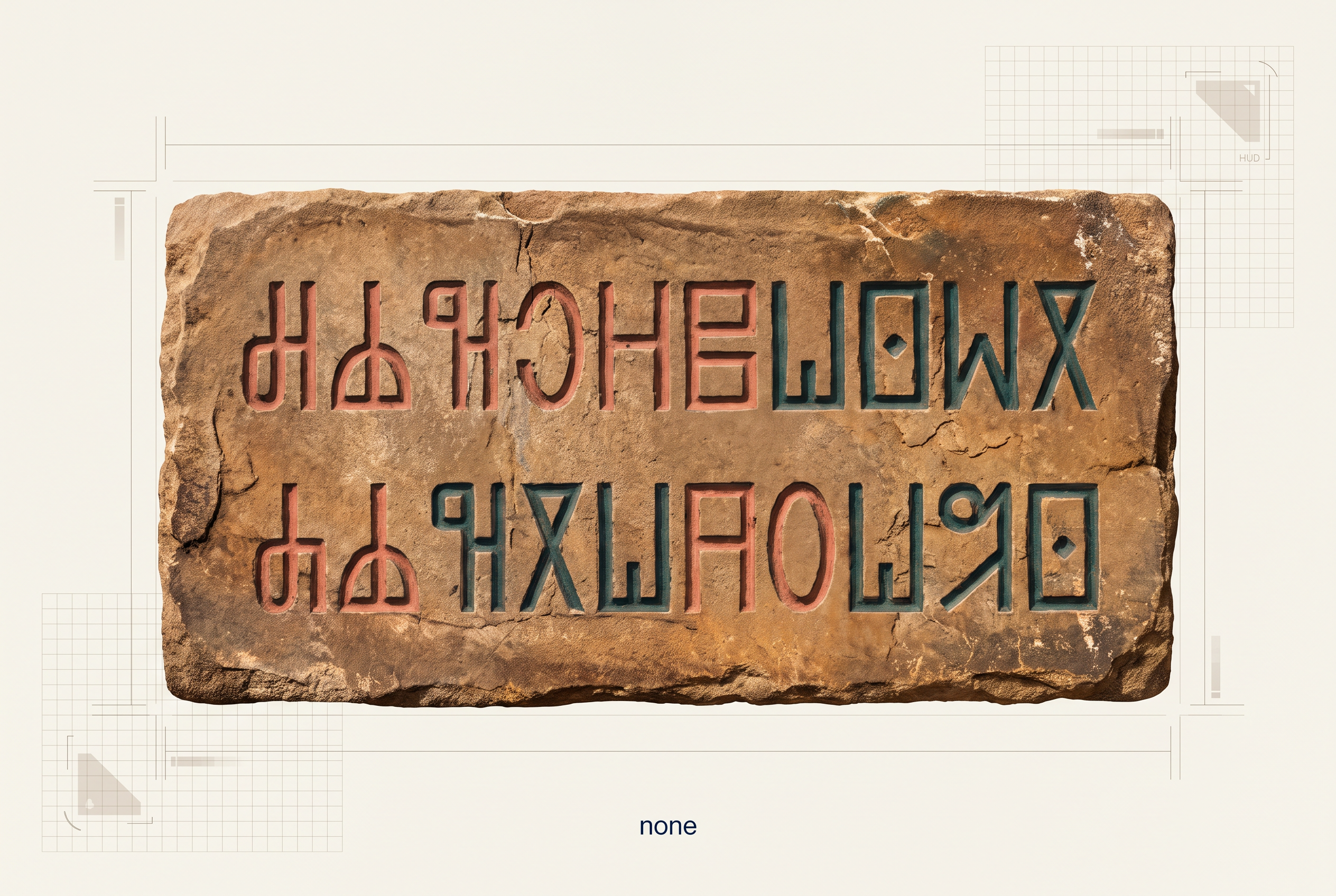
Fig. 4.12 – Votive inscription from Sanchi.
4.7.3 The Structure Of The Stupa
The word tells you where the building began. Stupa is a Sanskrit word meaning a heap, and the stupa originated as a simple semi-circular mound of earth, later called the anda.
Gradually it evolved into a more complex structure, balancing round and square shapes. Above the anda was the harmika, a balcony-like structure that represented the abode of the gods. Arising from the harmika was a mast called the yashti, often surmounted by a chhatri, or umbrella.
Around the mound was a railing. Its job was not to keep the building up but to mark a boundary: it separated the sacred space from the secular world outside it. To cross the railing was to enter a different kind of place.
Plain Mounds, Carved Gateways
The early stupas at Sanchi and Bharhut were plain, except for two things. The stone railings, which resembled a bamboo or wooden fence — stone imitating the shape of the cheaper material it had replaced. And the gateways, which were richly carved and installed at the four cardinal points.
Worshippers entered through the eastern gateway and walked around the mound in a clockwise direction, keeping the mound on their right. They were imitating the sun’s course through the sky. The building, in other words, was not meant to be looked at from a distance. It was meant to be walked around.
Later, the mound of the stupas came to be elaborately carved with niches and sculptures, as at Amaravati and at Shah-ji-ki-Dheri in Peshawar, in present-day Pakistan. The plain heap of earth had become a surface covered in stories.
Fig. 4.13a and Fig. 4.13b show the Great Stupa in two ways that an architect would recognise, and they answer different questions.
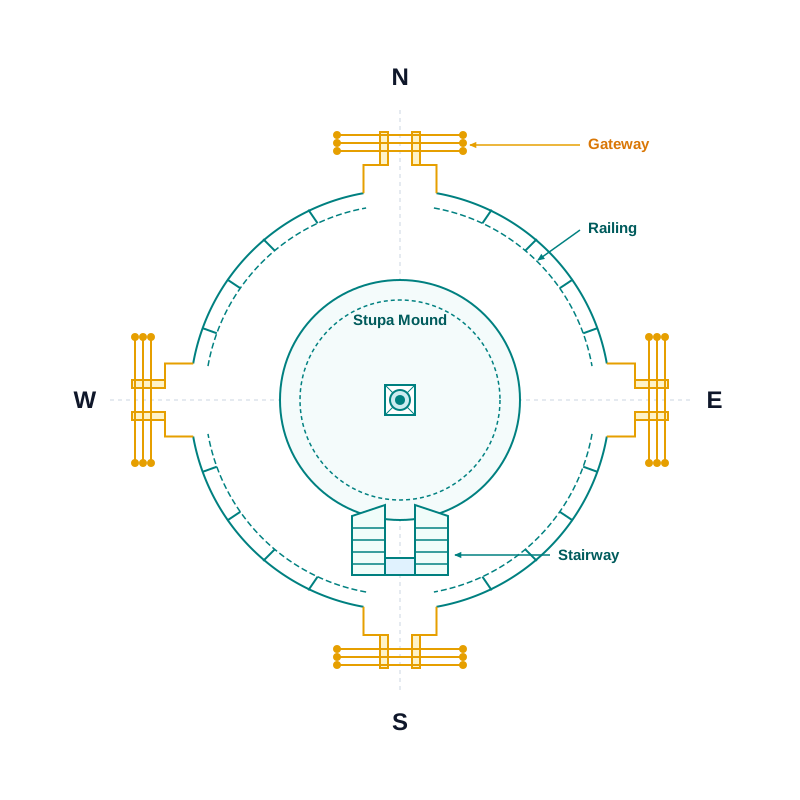
Fig. 4.13a – Plan of the Great Stupa at Sanchi.
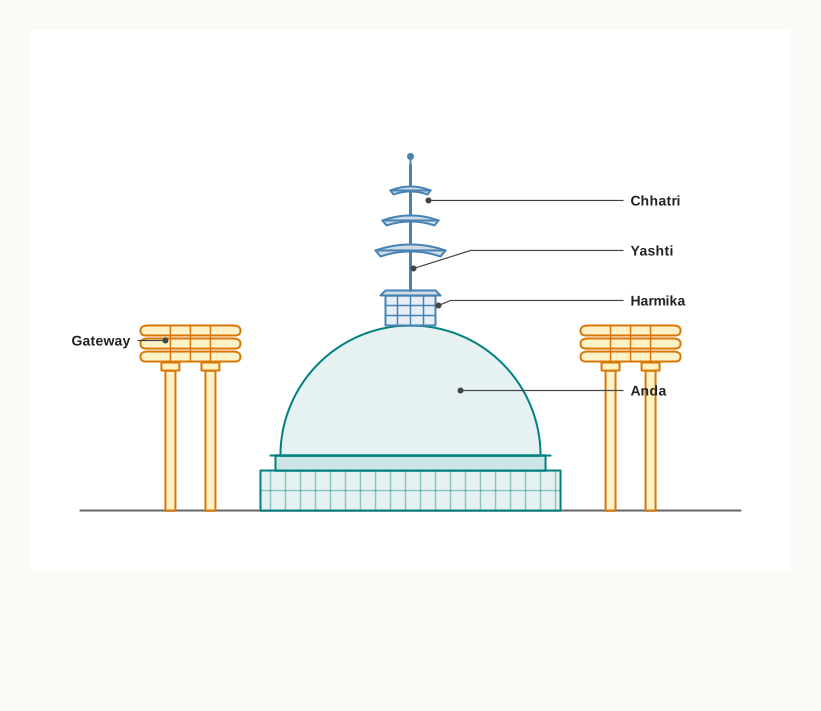
Fig. 4.13b – Elevation of the Great Stupa at Sanchi.
A plan looks straight down, so it shows you where things are in relation to one another — the circle of the railing, the four gateways, the path a worshipper walks. An elevation looks from the side, so it shows you height, and the parts stacked above the mound.
4.8 ‘Discovering’ Stupas: The Fate Of Amaravati And Sanchi
Two Kinds Of History
Each stupa has a history of its own. Some of these, as we have just seen, are histories of how they were built — of relics, donors and carved railings.
But there are histories of discoveries as well, and they are not always comfortable reading. A monument that has survived two thousand years can still be destroyed in fifty, and the story of Amaravati shows exactly how.
What Happened At Amaravati
In 1796, a local raja who wanted to build a temple stumbled upon the ruins of the stupa at Amaravati. He decided to use the stone. He also thought there might be some treasure buried in what seemed to him to be a hill.
Notice that nothing here is malicious. He did not know he was standing on a mahachaitya — a great sacred monument. He saw a mound and a supply of cut stone, which is what anyone would have seen who had not been told otherwise.
Some years later, a British official named Colin Mackenzie visited the site; you will meet him again in Chapter 7. He found several pieces of sculpture and made detailed drawings of them. Those reports were never published — so his record, which might have told us where each piece lay, went into a drawer.
In 1854, Walter Elliot, the commissioner of Guntur, in present-day Andhra Pradesh, visited Amaravati. He collected several sculpture panels and took them away to Madras, where they came to be called the Elliot marbles after him. He also discovered the remains of the western gateway, and came to the conclusion that the structure at Amaravati was one of the largest and most magnificent Buddhist stupas ever built.
That judgement is worth pausing on. Elliot recognised that he was dealing with something extraordinary — and removed pieces of it anyway.
A Monument Carried Away
By the 1850s, some of the slabs from Amaravati had begun to be taken to different places: to the Asiatic Society of Bengal at Calcutta, to the India Office in Madras, and some even to London. It was not unusual to find these sculptures adorning the gardens of British administrators.
Then comes the sentence that explains how a monument disappears. Any new official in the area continued to remove sculptures from the site on the grounds that earlier officials had done the same.
No single person decided to destroy Amaravati. Each official simply did what his predecessor had done, and treated the precedent as permission. A great stupa was dismantled by a succession of reasonable men, none of whom thought of himself as a looter.
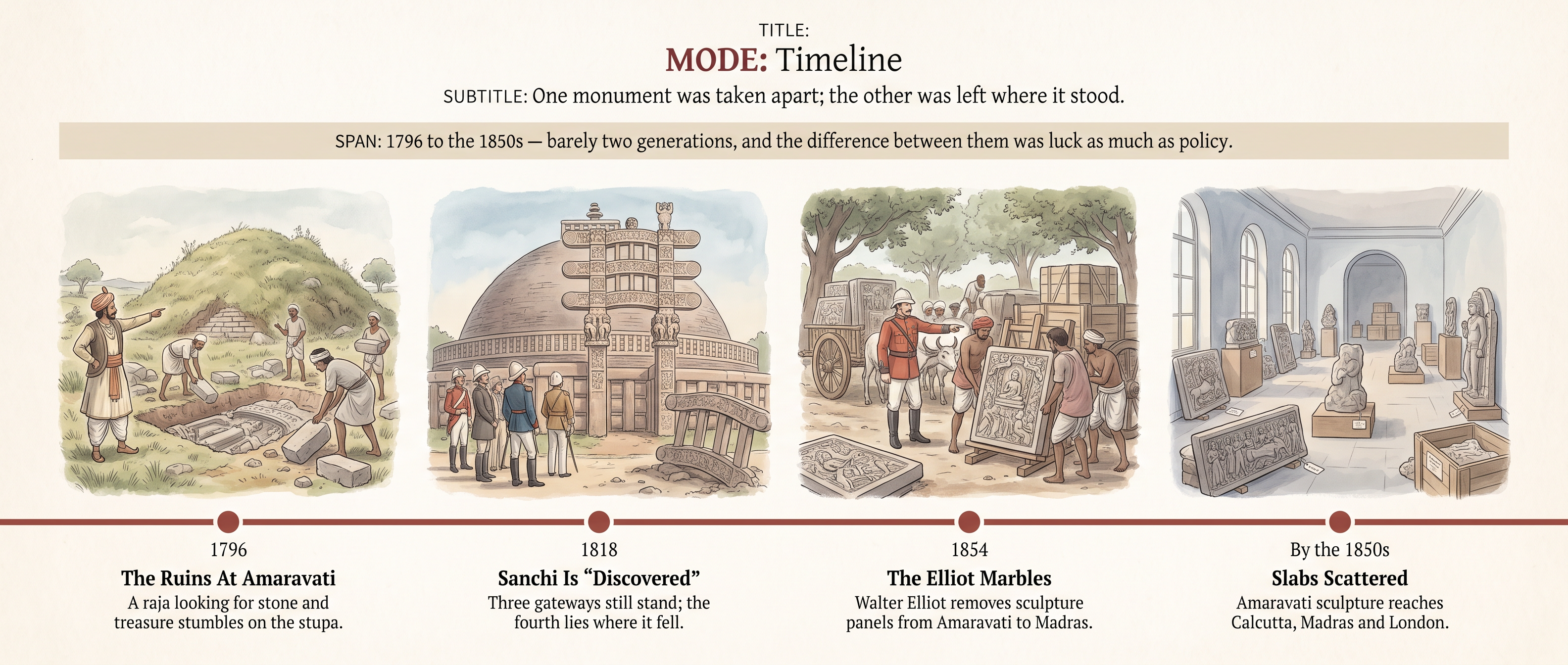
Fig. 4.15 – Sixty Years That Decided Two Stupas.
The Man Who Objected
One of the few men who had a different point of view was an archaeologist named H.H. Cole. He wrote that it seemed to him ‘a suicidal and indefensible policy to allow the country to be looted of original works of ancient art.’
Read his words carefully. He does not say the sculptures are being collected, or transferred, or rescued. He says the country is being looted, and he says so as a servant of the government doing the looting.
Cole believed that museums should have plaster-cast facsimiles of sculpture, whereas the originals should remain where they had been found. Unfortunately, he did not succeed in convincing the authorities about Amaravati — although his plea for in situ preservation was adopted in the case of Sanchi.
Why Sanchi Survived
So why did Sanchi survive while Amaravati did not? The chapter offers an explanation, and marks it as a possibility rather than a proof — ‘perhaps’.
Perhaps Amaravati was discovered before scholars understood the value of the finds, and before they realised how critical it was to preserve things where they had been found, instead of removing them from the site. Amaravati was found too early, in other words, in the history of the discipline itself.
By the time Sanchi was ‘discovered’ in 1818, matters stood differently on the ground as well. Three of its four gateways were still standing. The fourth was lying on the spot where it had fallen. The mound was in good condition.
Even so, the danger was real: it was suggested that the gateway be taken to either Paris or London. Finally a number of factors helped to keep Sanchi as it was, and so it stands. The mahachaitya at Amaravati, meanwhile, is now just an insignificant little mound, totally denuded of its former glory.
What Still Stands
Fig. 4.16 shows the eastern gateway at Sanchi — the very gateway the French had asked to take away. It is standing because a series of decisions went the other way.
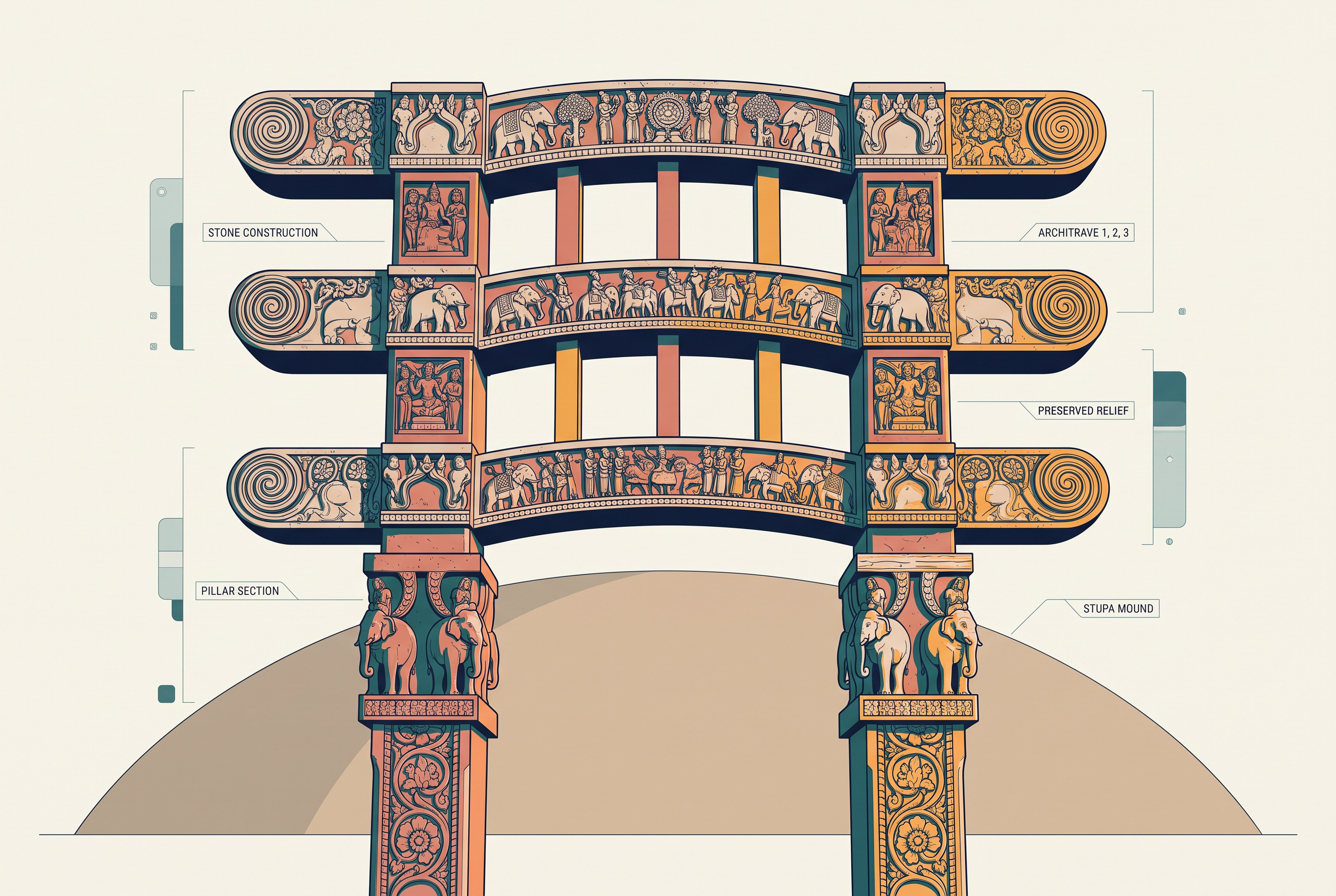
Fig. 4.16 – The eastern gateway at Sanchi.
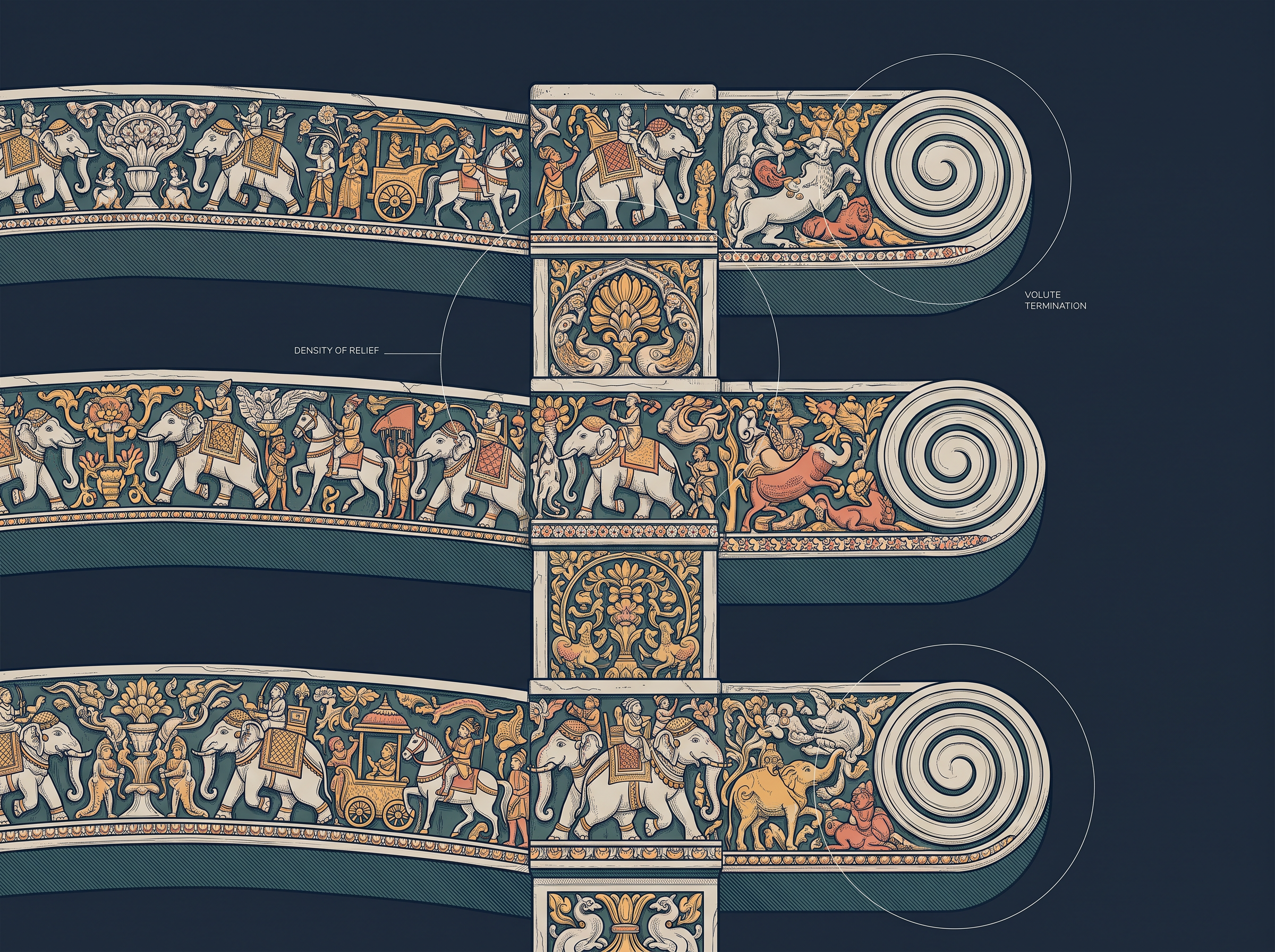
Fig. 4.17 – A section of the gateway with spiral ends.
4.9 Sculpture
We have just seen how sculptures were removed from stupas and transported all the way to Europe. This happened partly because those who saw them considered them to be beautiful and valuable, and wanted to keep them for themselves.
That is worth holding on to as we now look at these carvings closely. They were taken because they were admired. Admiration and understanding, however, are not Carolina the same thing — and the difference is what this section is about.
4.9.1 Stories In Stone
You may have seen wandering storytellers carrying scrolls — charanachitras — of cloth or paper with pictures on them, pointing to the pictures as they tell the story. The picture does not replace the telling. It holds the audience while the teller does the work.
Now look at Fig. 4.18. At first sight the sculpture seems to depict a rural scene, with thatched huts and trees. Nothing about it announces that it is religious at all.
However, art historians who have carefully studied the sculpture at Sanchi identify it as a scene from the Vessantara Jataka. This is a story about a generous prince who gave away everything to a Brahmana, and went to live in the forest with his wife and children.
Once you know the story, the huts and the trees stop being scenery. They are the forest, and the family in them is a royal family that has given away everything it owned.
As you can see in this case, historians often try to understand the meaning of sculpture by comparing it with textual evidence. The stone alone will not tell you what it is of. The text alone will not tell you that anybody cared enough to carve it.
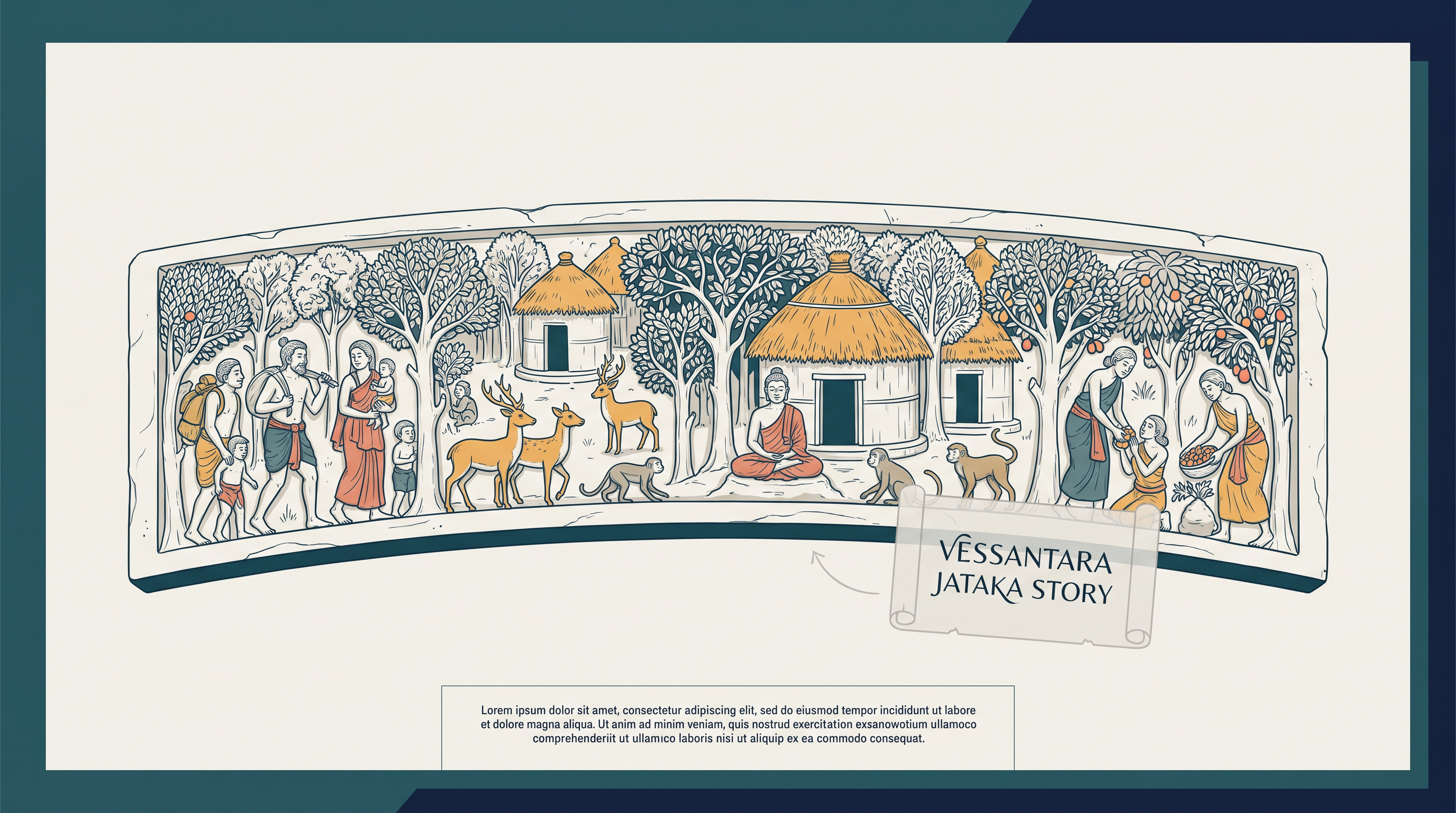
Fig. 4.18 – A scene from the Vessantara Jataka.
4.9.2 Symbols Of Worship
Art historians had to acquire familiarity with the hagiographies of the Buddha in order to understand Buddhist sculpture at all. Without them, the carvings are handsome and unreadable.
According to the hagiographies, the Buddha attained enlightenment while meditating under a tree. Hold that in mind, because it explains a great deal of what you are about to see.
Many early sculptors did not show the Buddha in human form. Instead, they showed his presence through symbols. This was not a failure of skill — these are the same workshops that carved crowded processions and lifelike animals. It was a choice.
The empty seat, in Fig. 4.19, was meant to indicate the meditation of the Buddha. The stupa, in Fig. 4.20, was meant to represent the mahaparinibbana, his final passing away. Another frequently used symbol was the wheel, in Fig. 4.21, which stood for the first sermon of the Buddha, delivered at Sarnath.
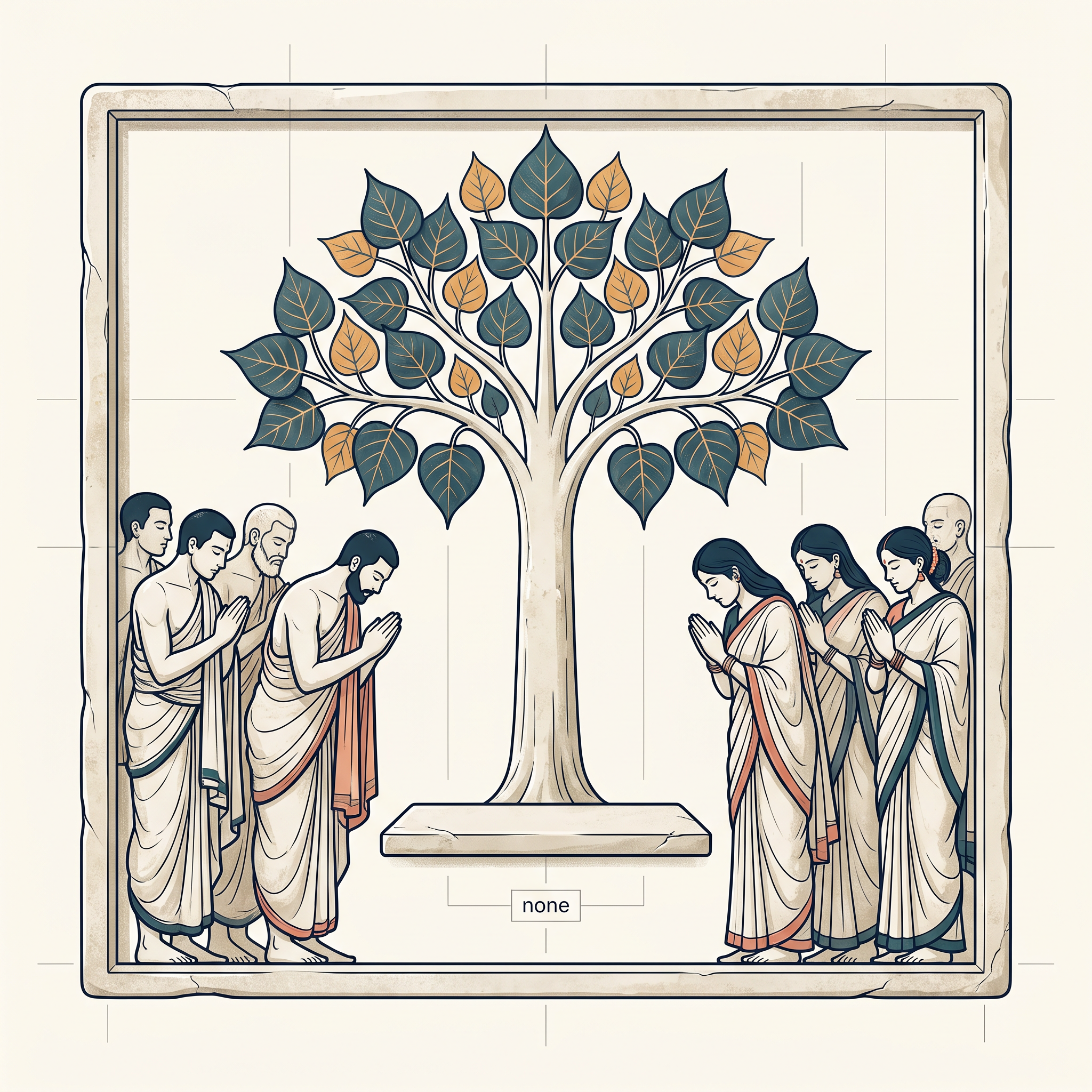
Fig. 4.19 – Worshipping the Bodhi tree.
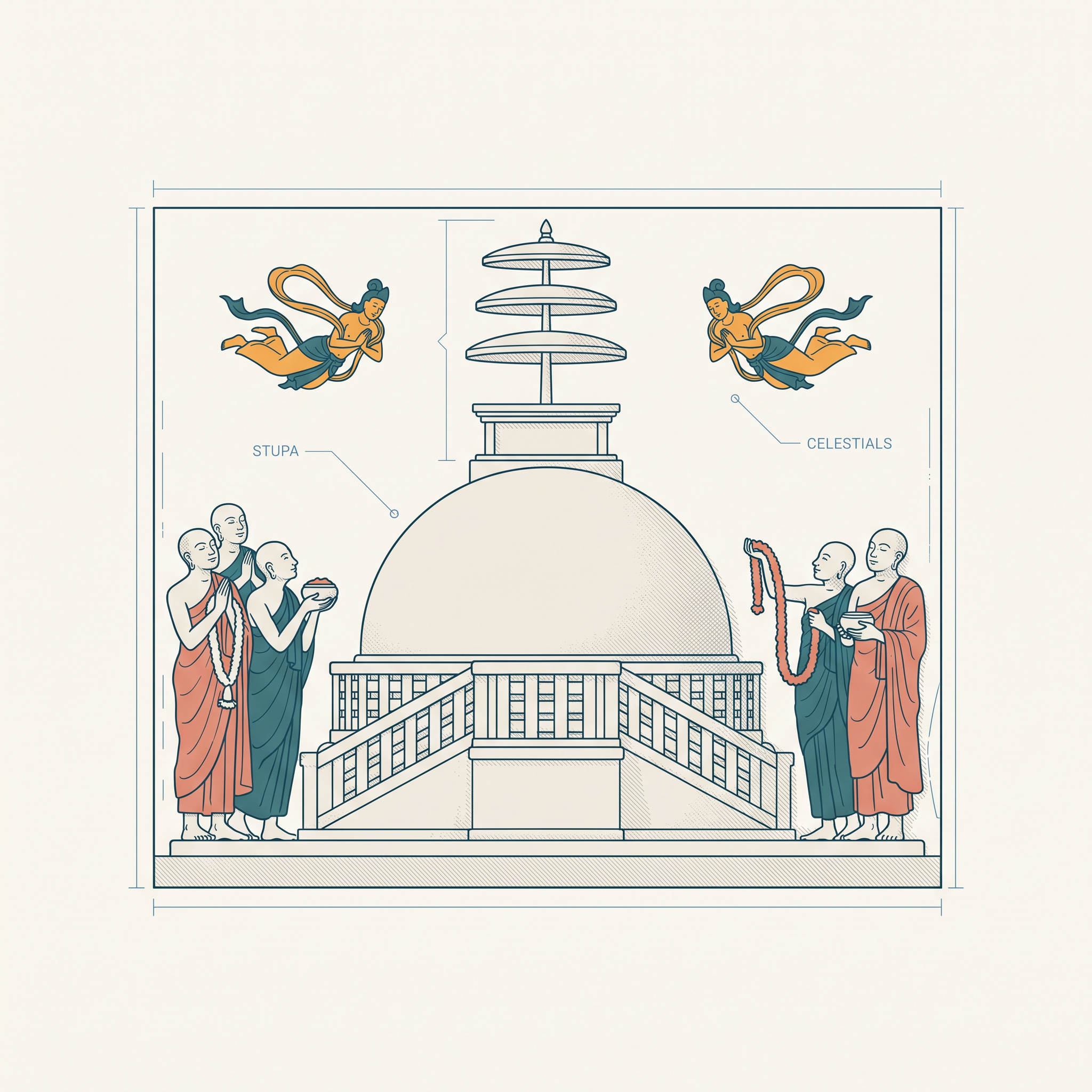
Fig. 4.20 – Worshipping the stupa.
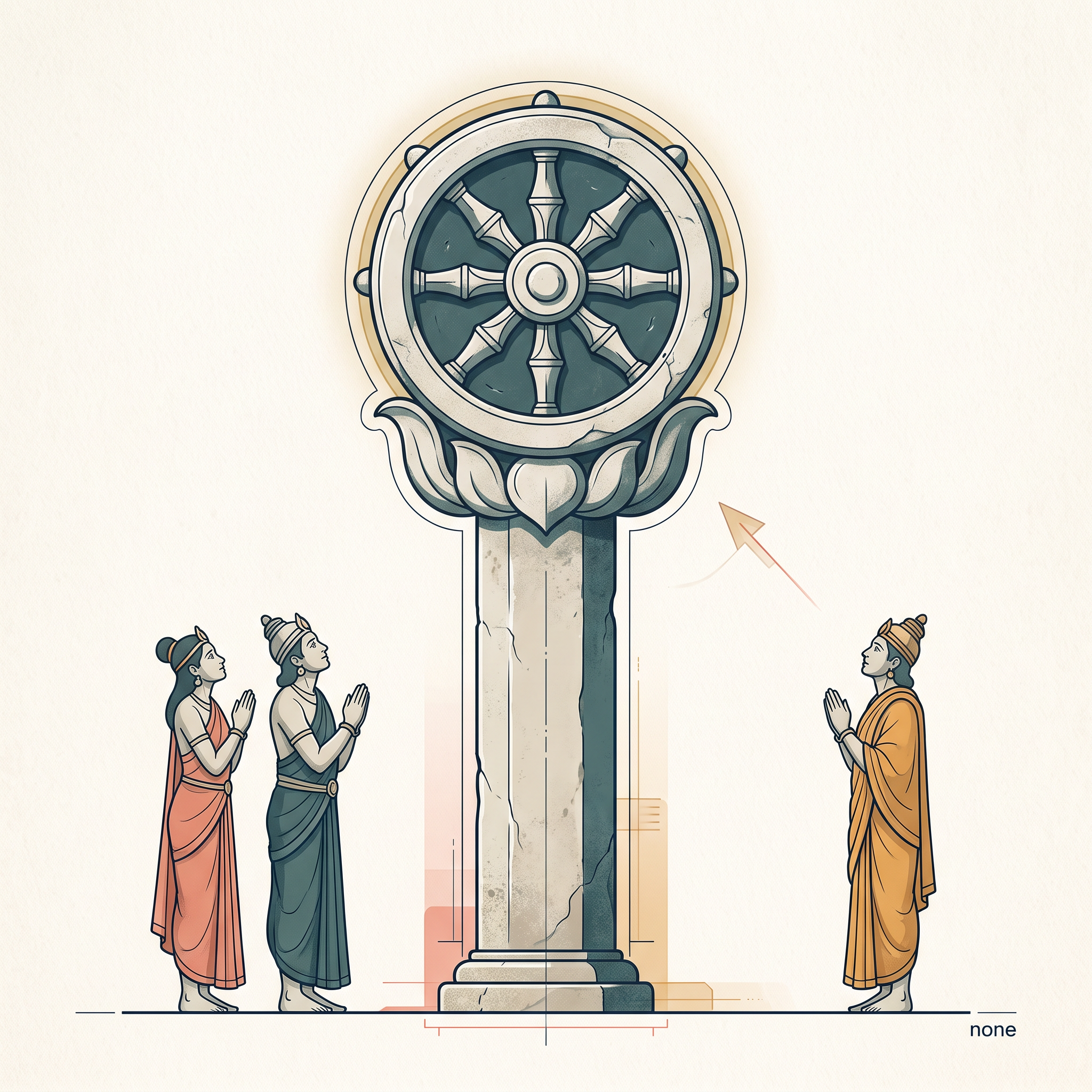
Fig. 4.21 – Setting in motion the wheel of dharma.
As is obvious, such sculptures cannot be understood literally. The tree does not stand simply for a tree. It symbolises an event in the life of the Buddha — the moment he became the Buddha.
So a scholar who counts trees at Sanchi and concludes that these people worshipped trees has made a reasonable-looking mistake. In order to understand such symbols, historians have to familiarise themselves with the traditions of those who produced these works of art. You have to learn what a community meant by its own signs.
4.9.3 Popular Traditions
Other sculptures at Sanchi were perhaps not directly inspired by Buddhist ideas at all. The clearest example stands right at the gateway.
These include beautiful women swinging from the edge of the gateway, holding on to a tree, as in Fig. 4.22. Initially, scholars were a bit intrigued by this image, which seemed to have very little to do with renunciation. A religion that teaches detachment from desire had placed a sensuous figure at its entrance.
However, after examining other literary traditions, they realised that it could be a representation of what is described in Sanskrit as a shalabhanjika. According to popular belief, this was a woman whose touch caused trees to flower and bear fruit.
It is likely that this was regarded as an auspicious symbol and integrated into the decoration of the stupa. The motif — a design element used again and again in a tradition of art — had a life of its own before Buddhism reached it.
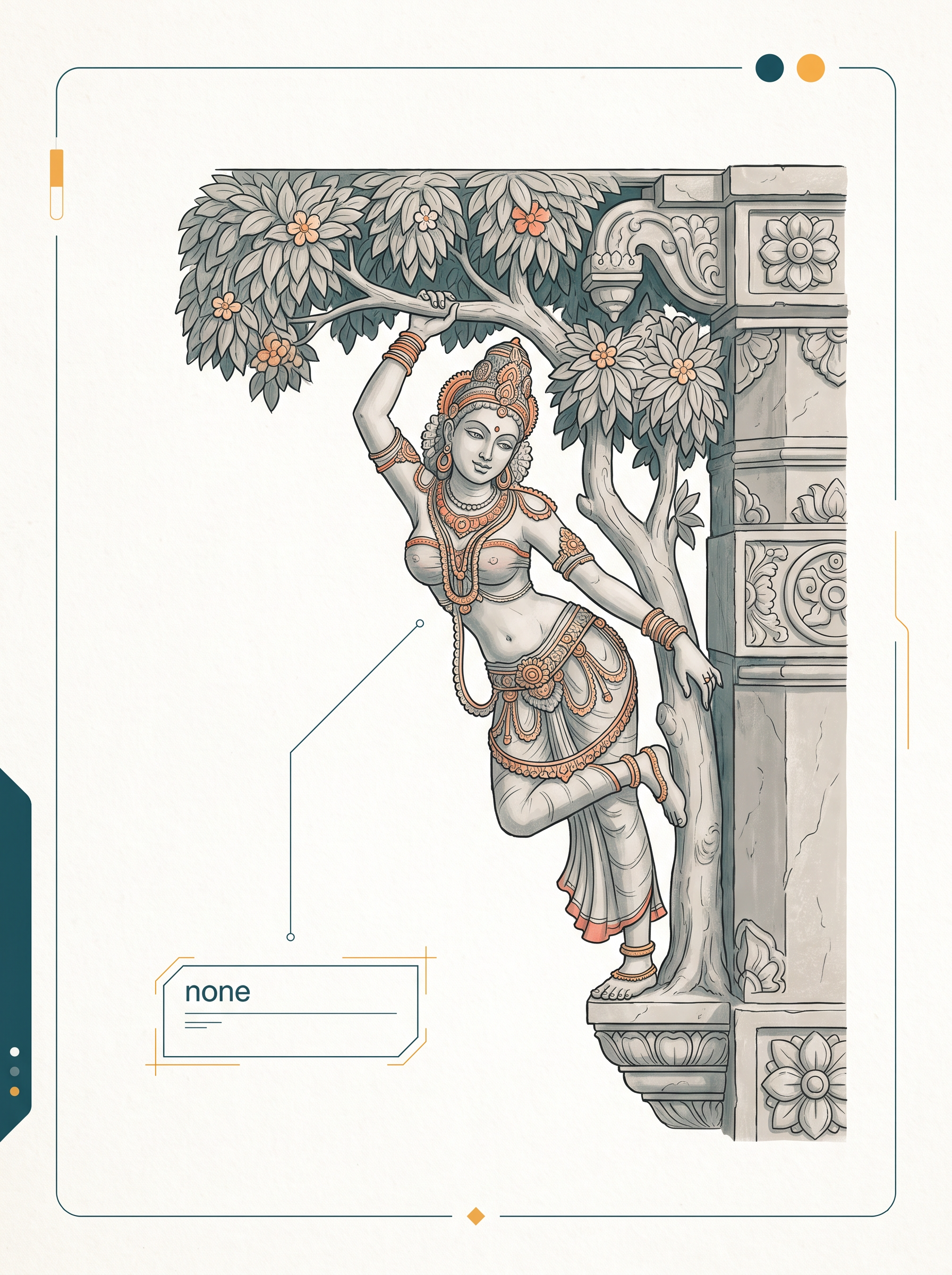
Fig. 4.22 – The shalabhanjika motif at Sanchi.
The shalabhanjika motif suggests that many people who turned to Buddhism enriched it with their own pre-Buddhist, and even non-Buddhist, beliefs, practices and ideas. Some of the recurrent motifs in the sculpture at Sanchi were evidently derived from these traditions.
Animals On The Gateways
There are other images as well. Some of the finest depictions of animals anywhere are found at Sanchi — elephants, horses, monkeys and cattle.
Why are they there? The Jatakas contain several animal stories that are depicted at Sanchi, so some of them illustrate a text. But it is likely that many of these animals were carved simply to create lively scenes that would draw viewers. A crowded, moving gateway holds the eye.
Animals were also often used as symbols of human attributes. Elephants, for example, were depicted to signify strength and wisdom.
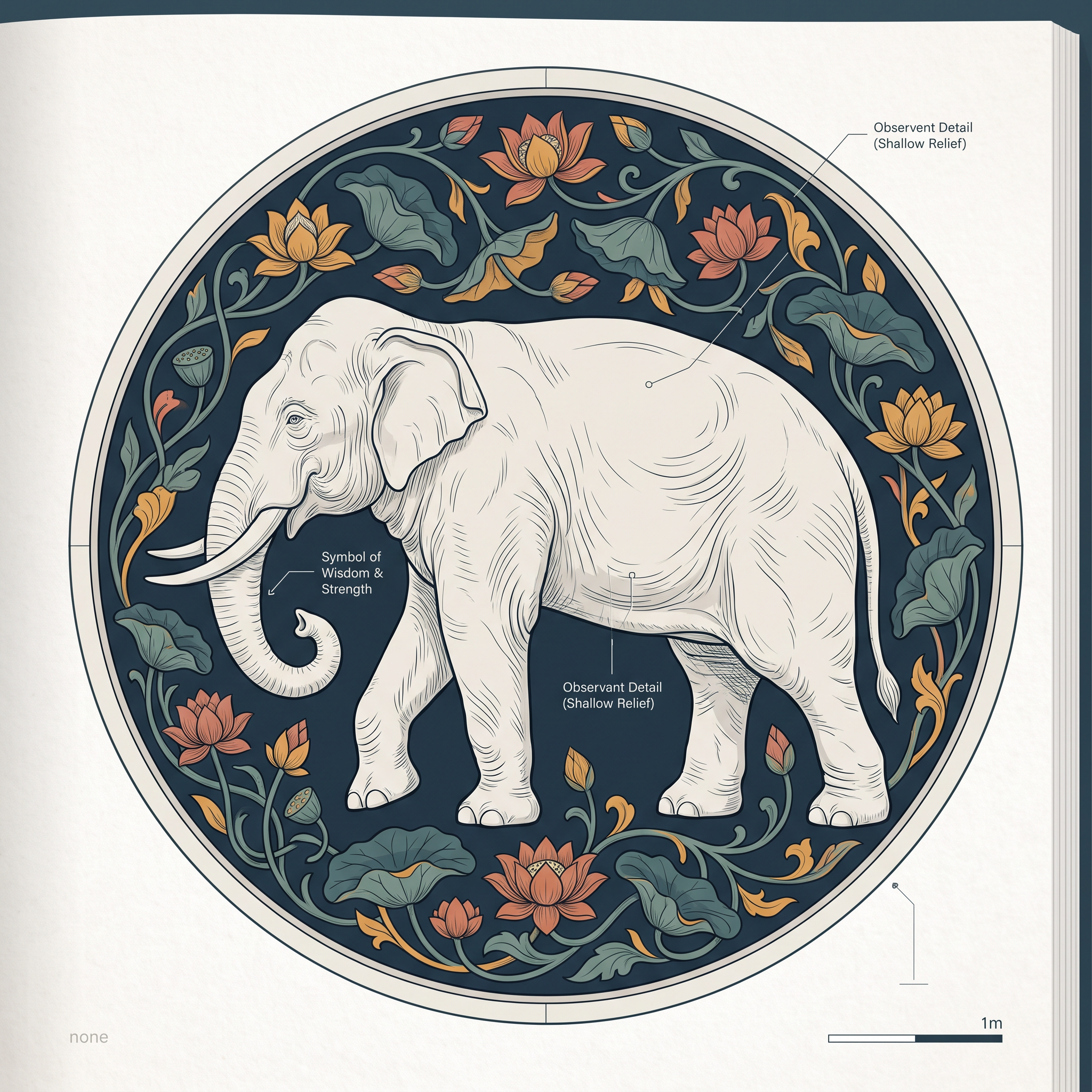
Fig. 4.23 – An elephant at Sanchi.
Paintings From The Past
Stone sculpture survives the ravages of time, and is therefore most easily available to the historian. That is a fact about survival, not about what people actually made — and it quietly distorts our picture.
Other visual means of communication, including paintings, were also used in the past. Those that have survived best are on the walls of caves, of which those from Ajanta, in Maharashtra, are the most famous.
The paintings at Ajanta depict stories from the Jatakas. They include depictions of courtly life, processions, men and women at work, and festivals. The artists used the technique of shading — varying the darkness of a colour — to give a three-dimensional quality, and some of the paintings are extremely naturalistic, meaning that they show people and things much as the eye would see them.
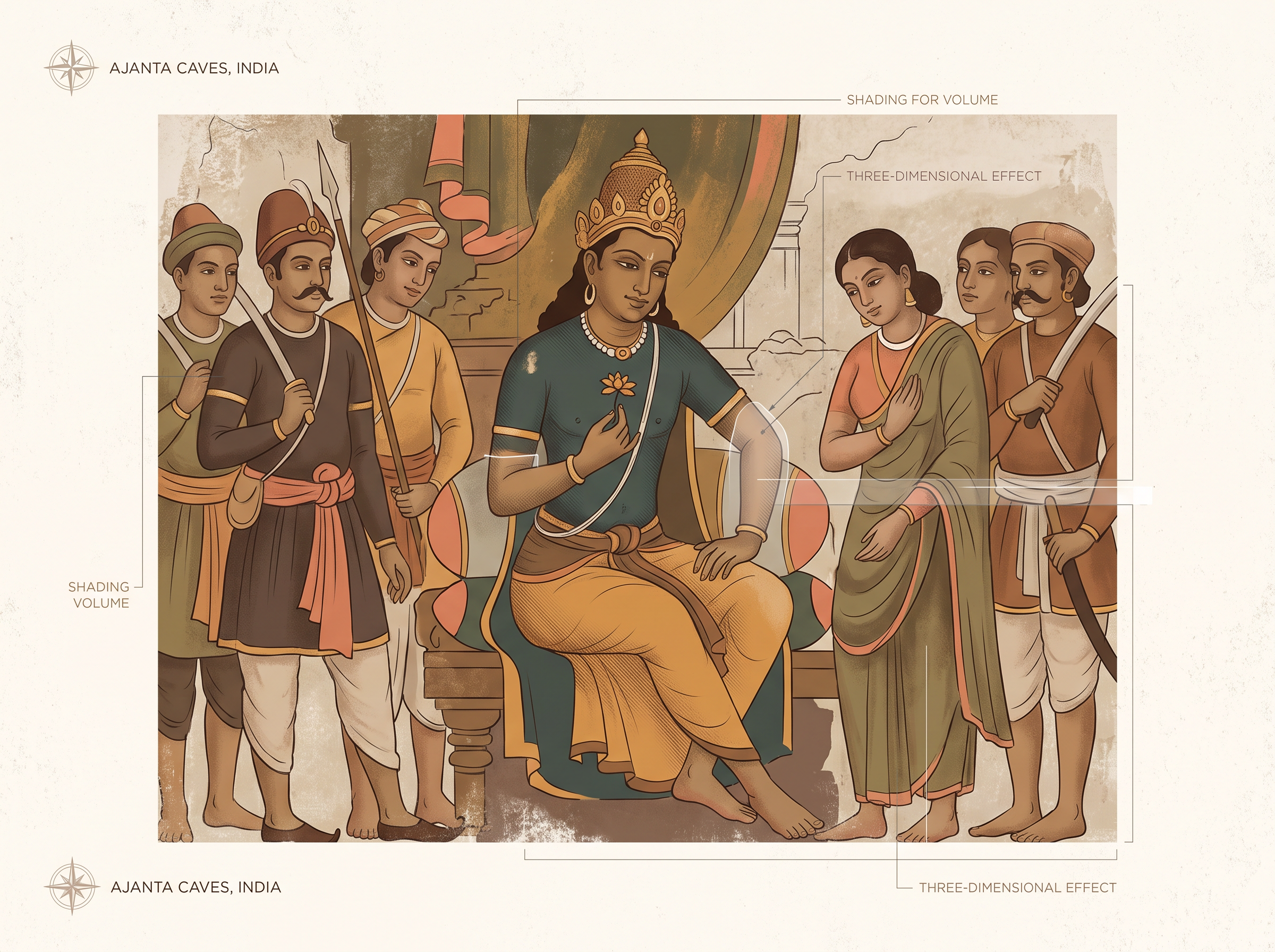
Fig. 4.24 – A wall painting from Ajanta.
The Woman With The Elephants
Another motif is that of a woman surrounded by lotuses and elephants, in Fig. 4.25. The elephants seem to be sprinkling water on her, as if performing an abhisheka, or consecration — the ritual pouring of water over someone to mark them out as sacred or royal.
Who is she? Here the historians part company, and the chapter does not settle the matter for us.
Some historians identify the figure as Maya, the mother of the Buddha. Others identify her with a popular goddess, Gajalakshmi — literally, the goddess of good fortune — who is associated with elephants. And it is also possible that devotees who saw these sculptures identified the figure with both Maya and Gajalakshmi at once.
That last possibility is the most interesting of the three, because it does not treat the two readings as rivals. A worshipper standing at the gateway was not obliged to choose.
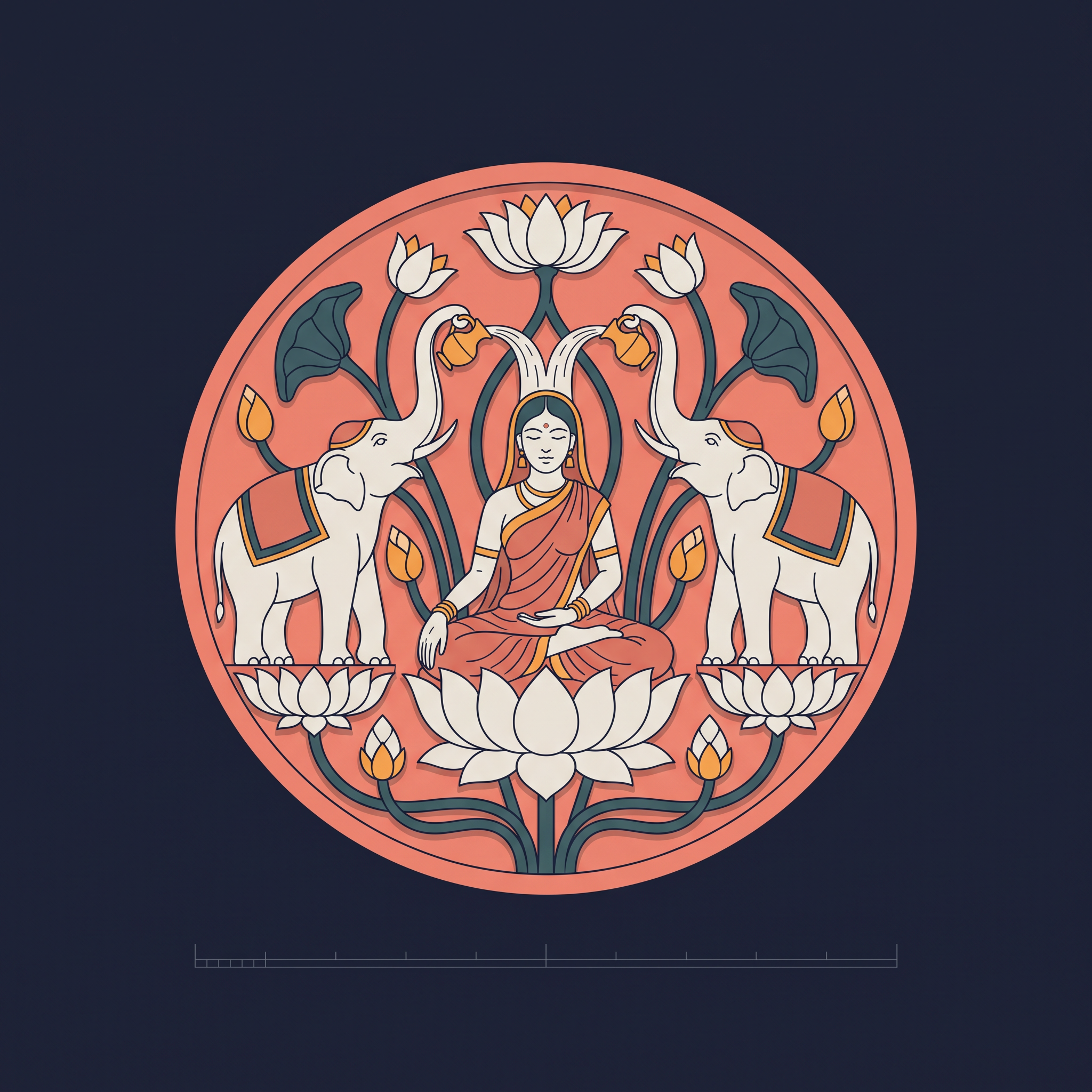
Fig. 4.25 – Gajalakshmi or Maya.
The Serpent, And A Famous Mistake
Consider, too, the serpent, which is found on several pillars, as in Fig. 4.26. This motif seems to be derived from popular traditions, which were not always recorded in texts — and that is precisely why it is hard to interpret. There is no book to check it against.
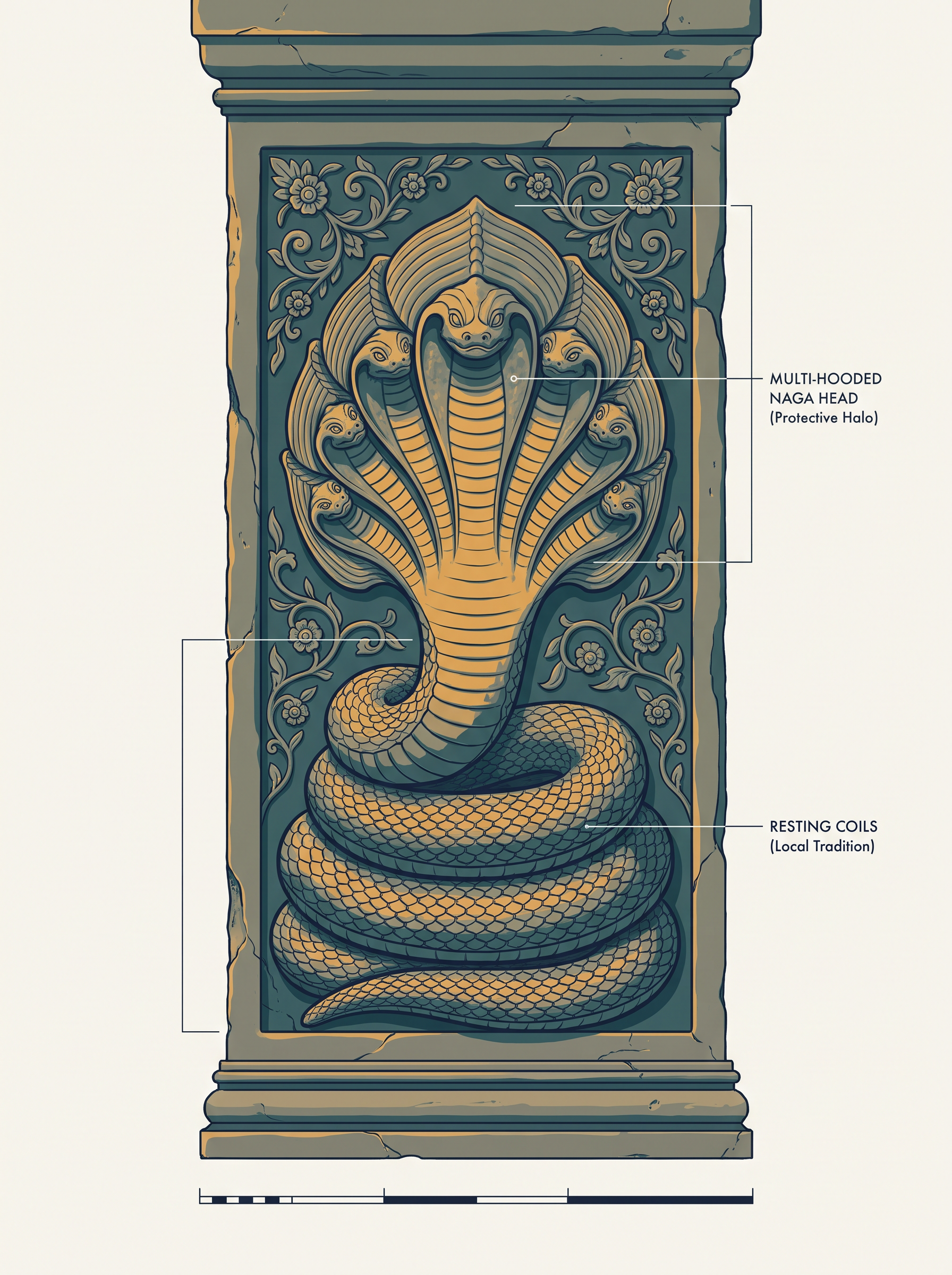
Fig. 4.26 – A serpent at Sanchi.
Which brings us back to where this chapter began. One of the earliest modern art historians, James Fergusson, considered Sanchi to be a centre of tree and serpent worship. He was not familiar with Buddhist literature — most of which had not yet been translated — and he arrived at this conclusion by studying only the images on their own.
Now you can see exactly why he went wrong. He counted the trees and the serpents, which are really there, and he read them literally. The tree was an event in a life; the serpent came from a tradition his books could not reach. He had the evidence, and no way to interpret it.
4.10 New Religious Traditions
4.10.1 The Development Of Mahayana Buddhism
By the first century CE, there is evidence of changes in Buddhist ideas and practices. Five centuries had passed since the Buddha taught, and what people wanted from his teaching had shifted.
Recall where the tradition started. Early Buddhist teachings had given great importance to self-effort in achieving nibbana — be lamps unto yourselves, work out your own liberation. And the Buddha himself was regarded as a human being, who attained enlightenment and nibbana through his own efforts.
However, gradually the idea of a saviour emerged. It was believed that he was the one who could ensure salvation. This is a genuine reversal: liberation is no longer something each person must win alone, but something that can be granted.
Simultaneously, the concept of the Bodhisatta developed. Bodhisattas were perceived as deeply compassionate beings who accumulated merit — the spiritual credit earned by good actions — through their own efforts. But they used this merit not to attain nibbana and thereby abandon the world. They used it to help others.
Read that idea slowly, because it is a striking one. A Bodhisatta has done everything needed to escape suffering, and chooses to stay.
The worship of images of the Buddha and Bodhisattas became an important part of this tradition. Once you have a saviour, you need somewhere to stand and ask.
Great Vehicle, Lesser Vehicle
This new way of thinking was called Mahayana — literally, the ‘great vehicle’. A vehicle is something that carries you across, and the name is a claim: this road takes more people.
Those who adopted these beliefs described the older tradition as Hinayana, or the ‘lesser vehicle’. That name was not a neutral description. It was a label given by rivals, and it stuck because the people who used it wrote a great deal.
The followers of the older tradition did not call themselves that at all. They described themselves as theravadins — those who followed the path of old, respected teachers, the theras. Every time a historian writes ‘Hinayana’, they are borrowing the winner’s word for the loser, and it is worth knowing whose word it is.
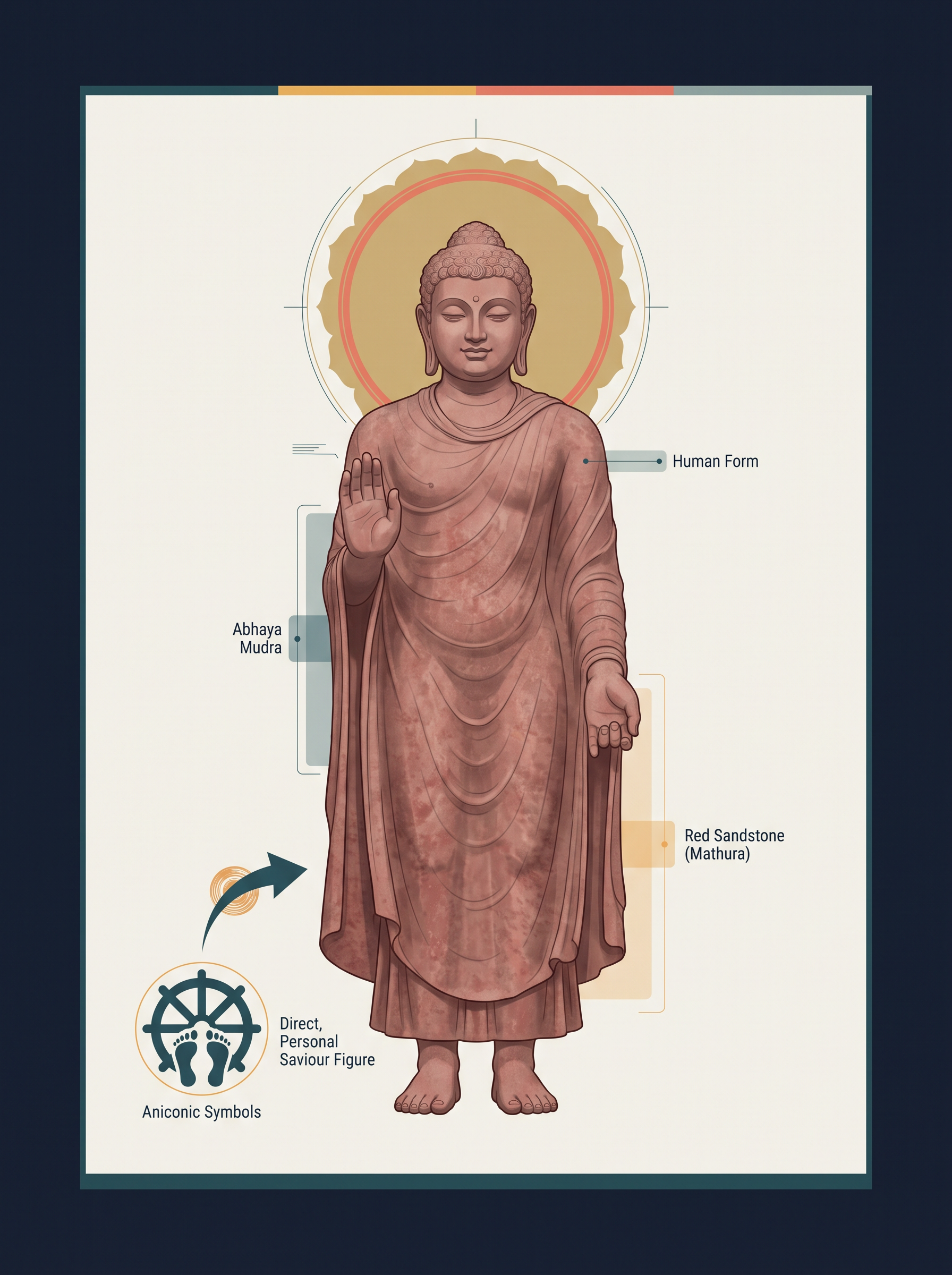
Fig. 4.27 – Buddha from Mathura, first century CE.
4.10.2 The Growth Of Puranic Hinduism
The notion of a saviour was not unique to Buddhism. We find similar ideas being developed, in different ways, within traditions that we now consider part of Hinduism.
These included Vaishnavism, a form of Hinduism within which Vishnu was worshipped as the principal deity, and Shaivism, a tradition within which Shiva was regarded as the chief god. In both there was a growing emphasis on the worship of a chosen deity.
And the relationship changed. In such worship, the bond between the devotee and the god was visualised as one of love and devotion, or bhakti. Not a contract sealed by a correctly performed sacrifice, but an attachment — which is something a person can have without a priest.
One God, Ten Forms
In the case of Vaishnavism, cults developed around the various avatars, or incarnations, of the deity. Ten avatars were recognised within the tradition.
These were forms that the deity was believed to have assumed in order to save the world whenever it was threatened by disorder and destruction, because of the dominance of evil forces. The saviour idea again, in a different tradition and a different vocabulary.
It is likely that different avatars were popular in different parts of the country. And here is the historical point, which is easy to miss. Recognising each of these local deities as a form of Vishnu was one way of creating a more unified religious tradition.
Think about what that involved. A deity worshipped in one region did not have to be abandoned. It could be identified as a form of Vishnu — and a scatter of local cults became a single tradition, without anyone being told to stop.
Reading A Sculpted God
Some of these forms were represented in sculptures, as were other deities. Shiva, for instance, was symbolised by the linga, although he was occasionally represented in human form too.
All such representations depicted a complex set of ideas about the deities and their attributes. The ideas were conveyed through symbols: head-dresses, ornaments, and ayudhas — the weapons or auspicious objects the deities hold in their hands — as well as how they are seated, and much else.
None of this is decoration. Each element is information, and a viewer who knew the code could read a figure the way you read a sentence.
To understand the meanings of these sculptures, historians have to be familiar with the stories behind them. Many of these stories are contained in the Puranas, compiled by Brahmanas by about the middle of the first millennium CE.
The Puranas contained much that had been composed and had been in circulation for centuries, including stories about gods and goddesses. Generally, they were written in simple Sanskrit verse, and were meant to be read aloud to everybody — including women and Shudras, who did not have access to Vedic learning.
That last clause matters. The Vedic hymns you met at the start of this chapter were taught orally within priestly families. The Puranas were composed to be heard by people who had been shut out of exactly that.
Much of what is contained in the Puranas evolved through interaction amongst people — priests, merchants, and ordinary men and women who travelled from place to place, sharing ideas and beliefs. These texts were not handed down from a single authority. They were assembled from what was already being said on the roads.
We know, for instance, that Vasudeva-Krishna was an important deity in the Mathura region. Over centuries, his worship spread to other parts of the country as well.
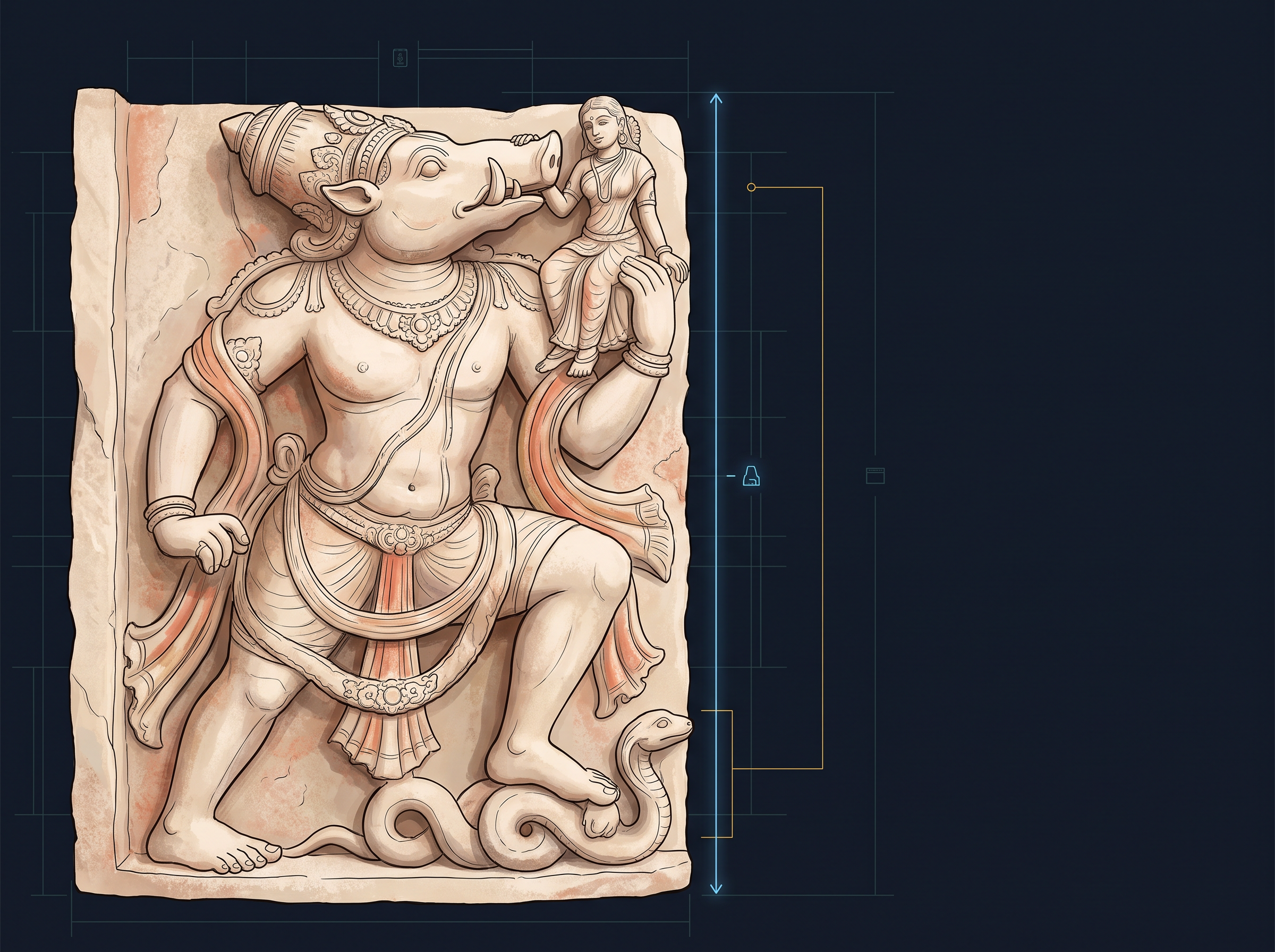
Fig. 4.28 – The Varaha avatar of Vishnu at Aihole.
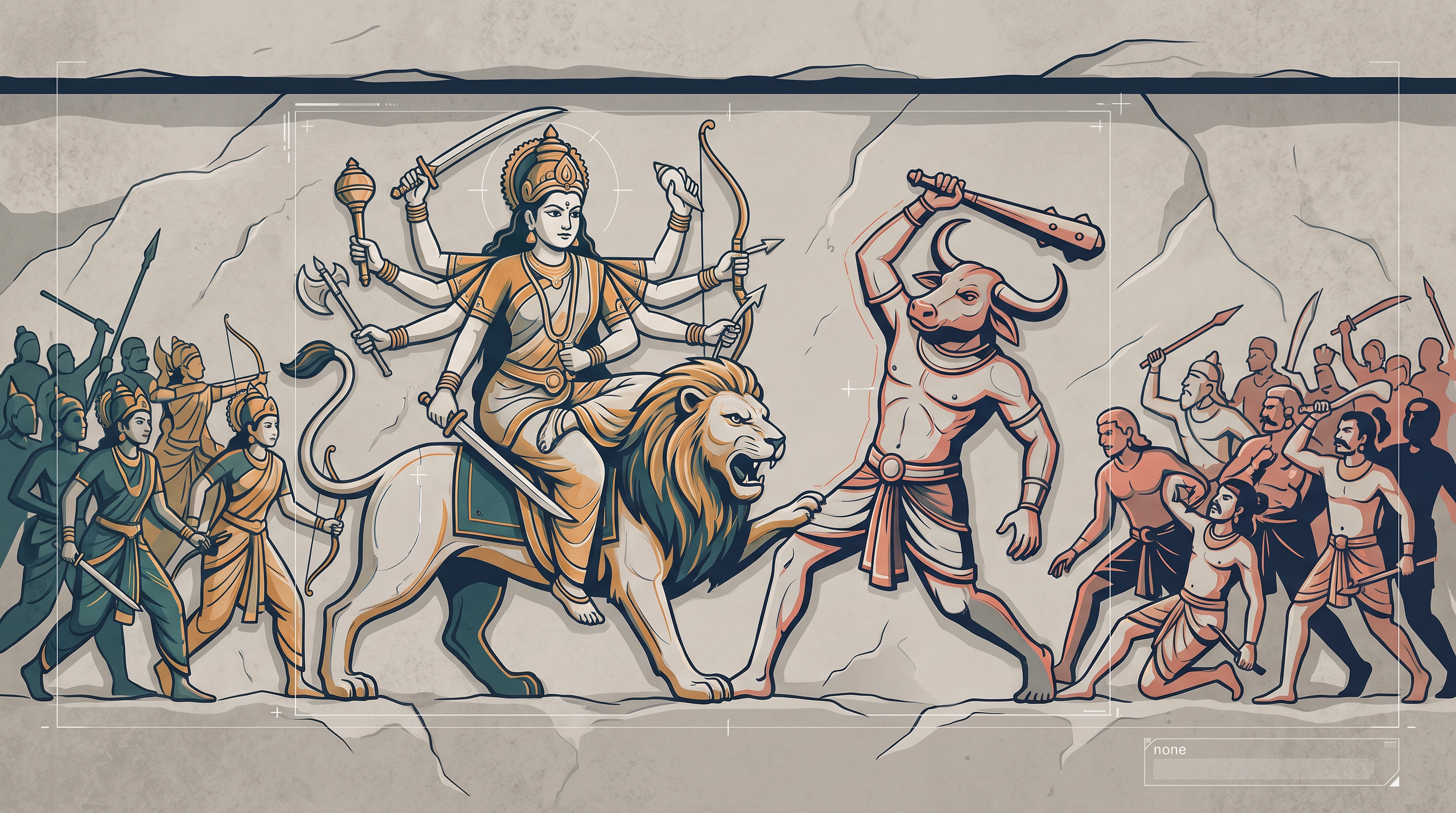
Fig. 4.29 – Durga at Mahabalipuram.
4.10.3 Building Temples
Around the time that the stupas at sites such as Sanchi were acquiring their present form, the first temples to house images of gods and goddesses were also being built. The two things belong together: once a deity is shown as an image, the image needs a house.
The early temple was a small square room, called the garbhagriha, with a single doorway for the worshipper to enter and offer worship to the image. One room, one door, one image. Nothing else.
Gradually, a tall structure known as the shikhara was built over the central shrine, and temple walls were often decorated with sculpture. Later temples became far more elaborate — with assembly halls, huge walls and gateways, and arrangements for supplying water. You will see what that finally grew into when you reach Chapter 7.
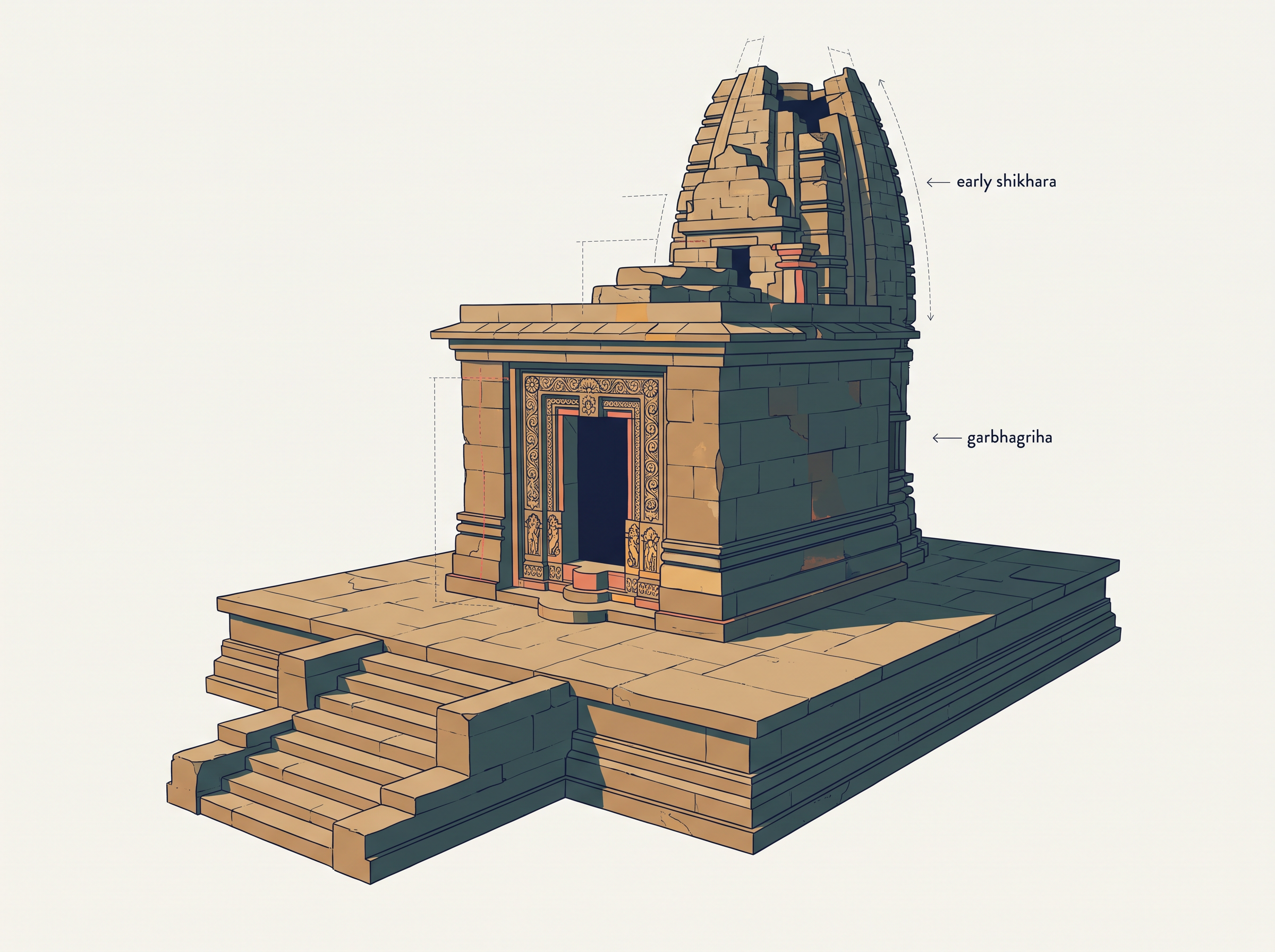
Fig. 4.30 – Temple in Deogarh, fifth century CE.
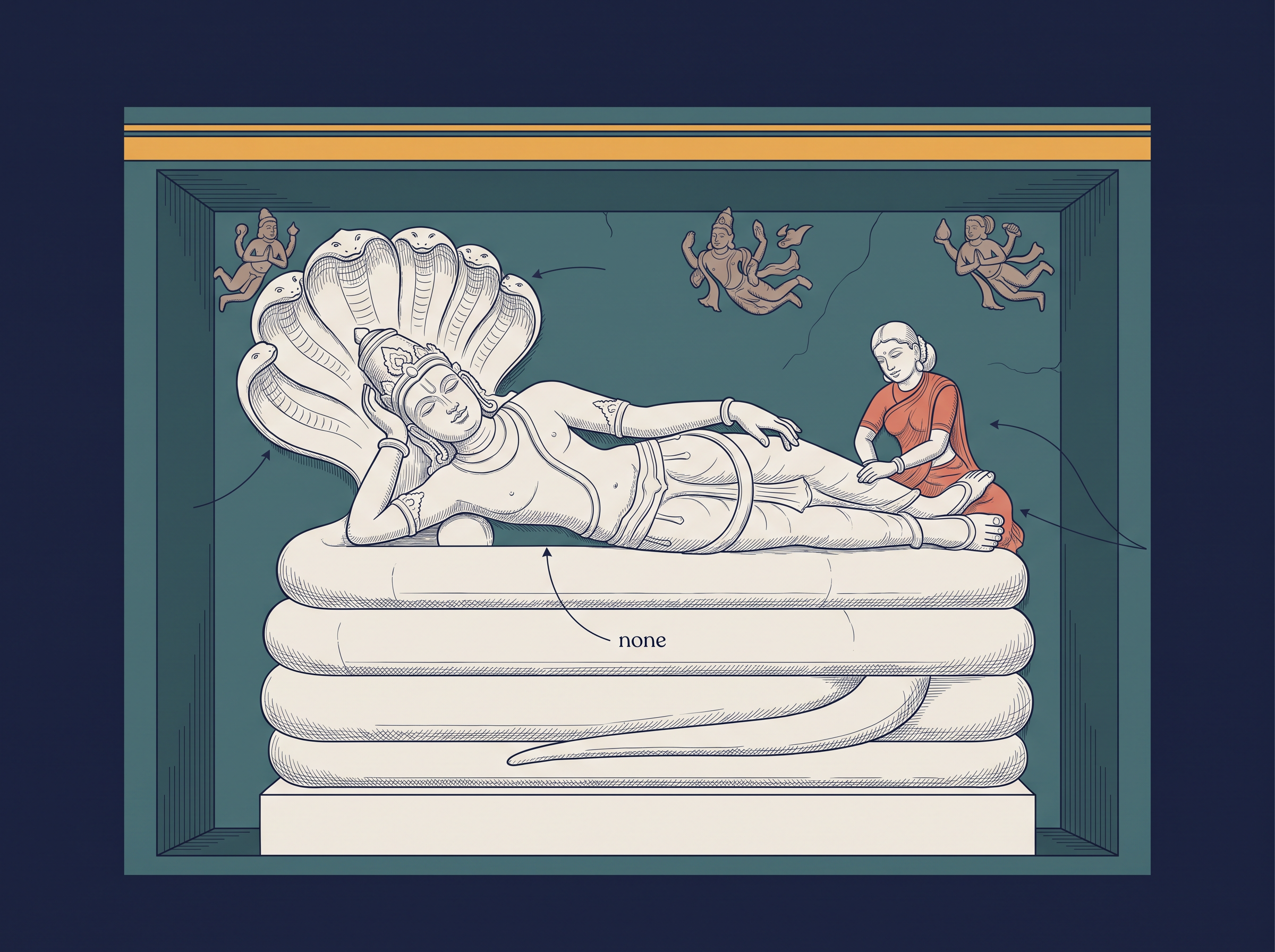
Fig. 4.31 – Vishnu reclining on Sheshnag, Deogarh.
Temples Cut Out Of Rock
One of the unique features of early temples was that some of them were not built at all. They were hollowed out of huge rocks, as artificial caves — carved downwards and inwards, so that the walls were never assembled, only left behind.
The tradition of building artificial caves was an old one. Some of the earliest, in Fig. 4.32, were constructed in the third century BCE on the orders of Asoka, for renouncers who belonged to the Ajivika sect. The Ajivikas, you will recall, were the school we met through a Buddhist text, whose own writings did not survive — and yet here is a king cutting caves in rock for them.
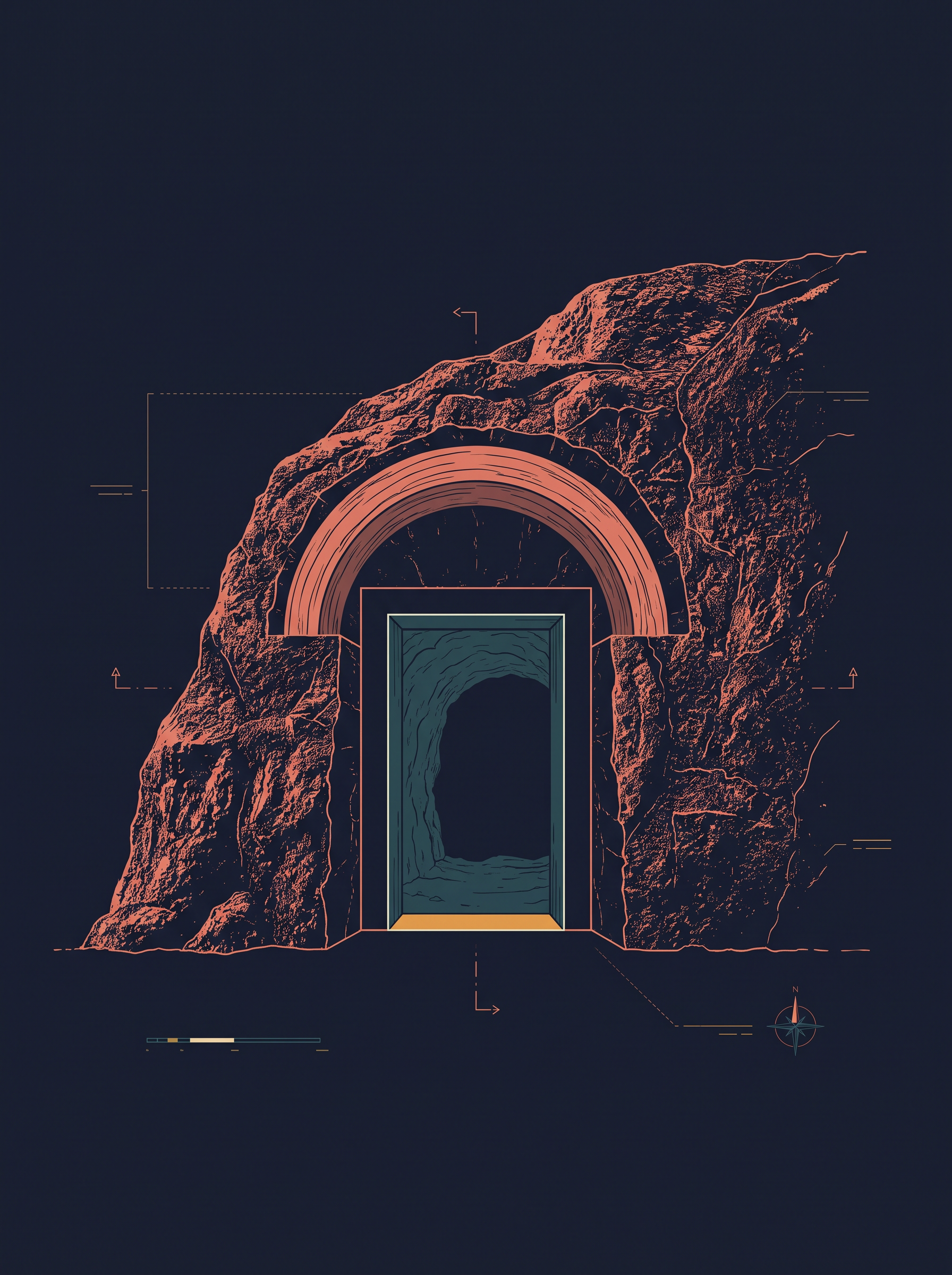
Fig. 4.32 – Entrance to a cave at Barabar.
This tradition evolved through various stages, and culminated much later — in the eighth century — in the carving out of an entire temple, that of Kailashnatha, which is a name of Shiva.
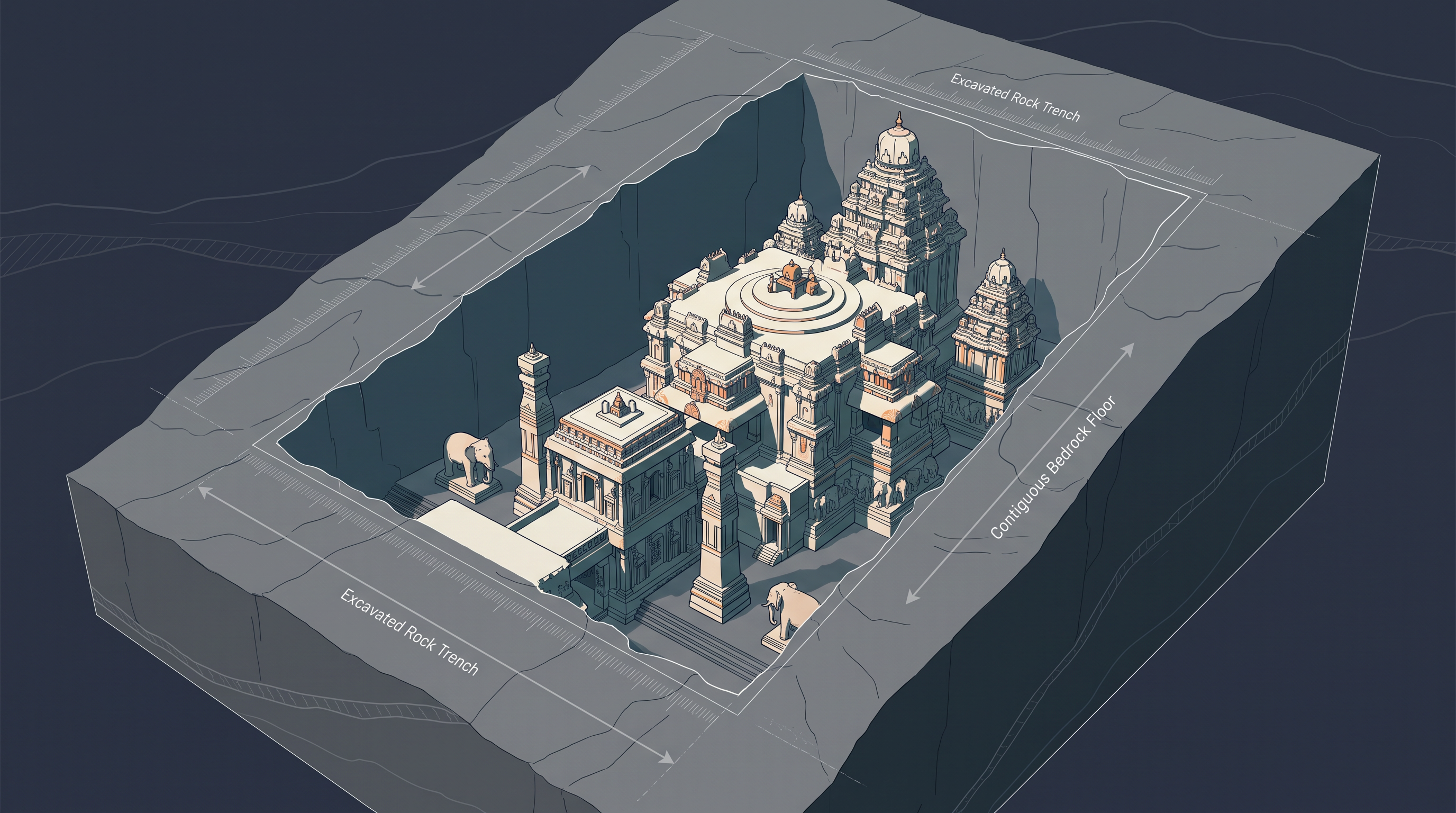
Fig. 4.33 – Kailashnatha Temple, Ellora.
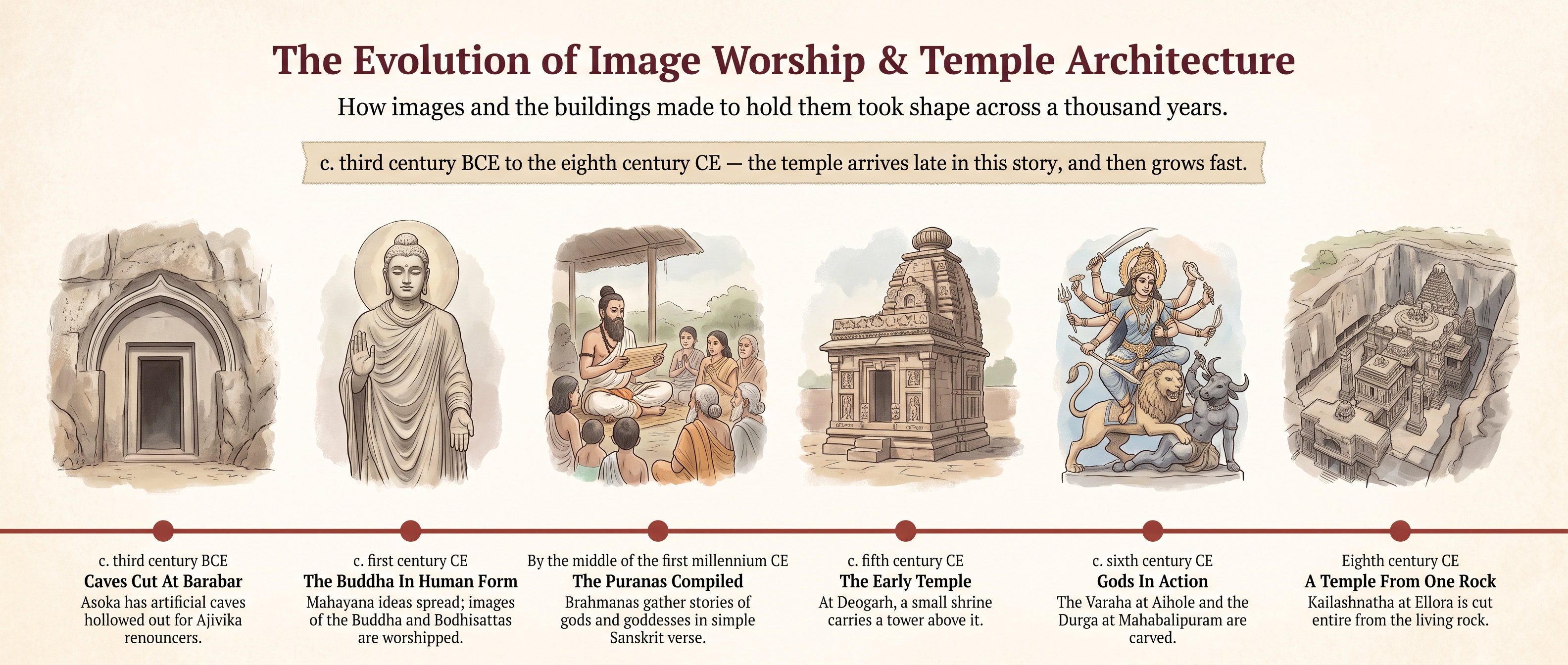
Fig. 4.34 – Housing the gods.
4.11 Can We ‘See’ Everything?
By now you have had a glimpse of the rich visual traditions that existed in the past — expressed in brick and stone architecture, in sculpture and in painting. We have also seen that much has been destroyed and lost over the centuries.
Nevertheless, what remains and has been preserved conveys a sense of the vision of the artists, sculptors, masons and architects who created these spectacular works. We can still stand in front of what they made.
Yet do we always automatically understand what they wanted to convey? Can we ever know what these images meant to the people who saw them, and venerated them, about 2,000 years ago?
These are not rhetorical questions. They are the questions this final section takes seriously, and the honest answers are uncomfortable.
4.11.1 Grappling With The Unfamiliar
It will be useful to recall that when nineteenth-century European scholars first saw some of the sculptures of gods and goddesses, they could not understand what these were about. Sometimes they were horrified by what seemed to them grotesque figures — with multiple arms and heads, or with combinations of human and animal forms.
Notice the word ‘seemed’. Nothing about a four-armed deity is grotesque in itself. It looked that way to a viewer who did not know that the extra arms were carrying attributes, and that the attributes were the meaning.
These early scholars tried to make sense of what appeared to be strange images by comparing them with sculpture they were familiar with — that from ancient Greece. Having no key of their own, they reached for the only one they had.
While they often found early Indian sculpture inferior to the works of Greek artists, they were very excited when they discovered images of the Buddha and Bodhisattas that were evidently based on Greek models. These were, more often than not, found in the northwest, in cities such as Taxila and Peshawar, where Indo-Greek rulers had established kingdoms in the second century BCE.
As these images were closest to the Greek statues these scholars were familiar with, they were considered to be the best examples of early Indian art. Look hard at that reasoning. The sculpture was not judged best because it was the finest, but because it was the most European.
In effect, these scholars adopted a strategy we all frequently use — devising yardsticks derived from the familiar to make sense of the unfamiliar. That is not a crime. It is how minds work. The danger is in forgetting that a yardstick is a choice, and that it will always flatter whatever it was cut from.
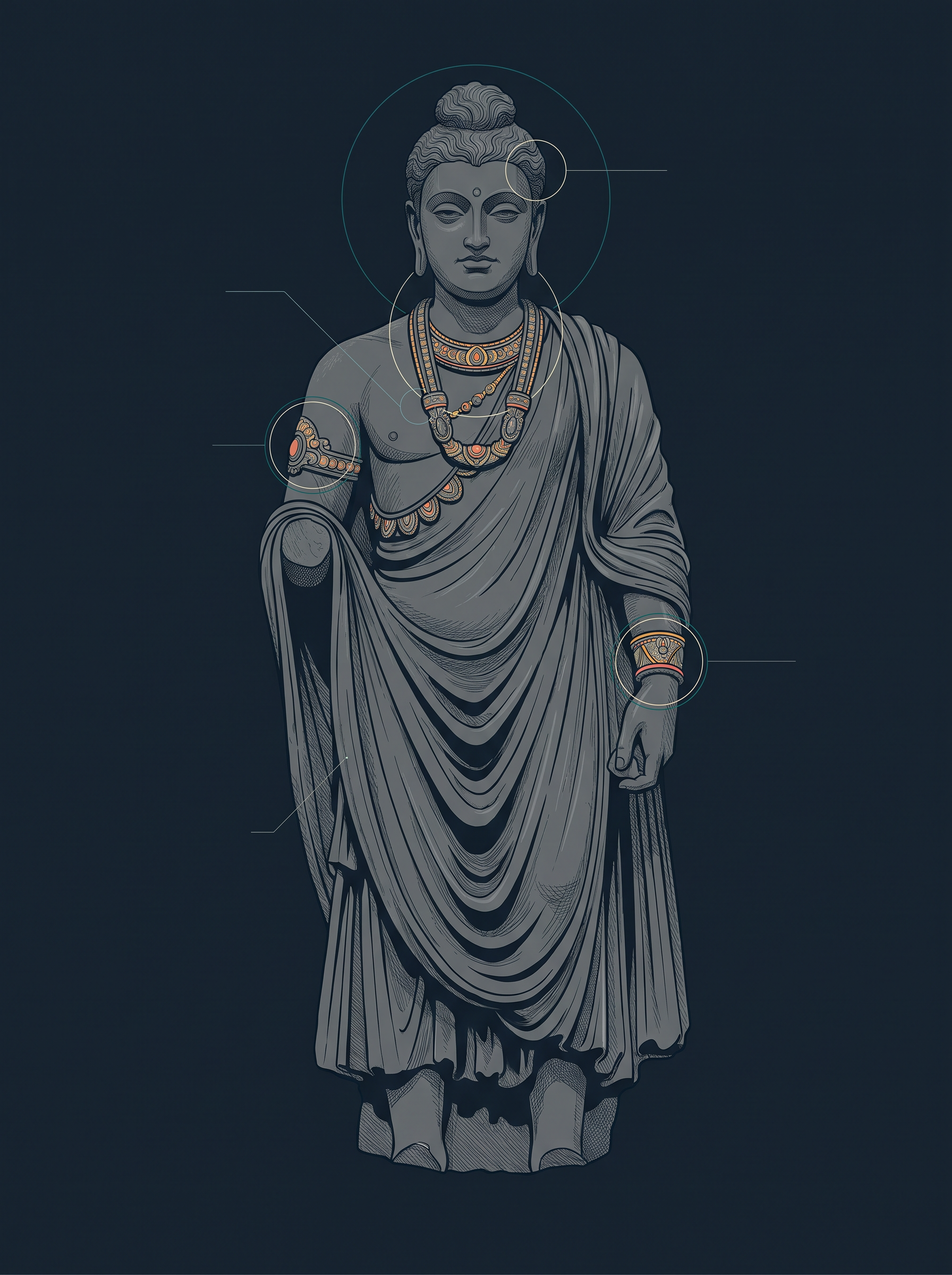
Fig. 4.35 – A Bodhisatta from Gandhara.
4.11.2 If Text And Image Do Not Match …
Consider another problem. We have seen that art historians often draw upon textual traditions to understand the meaning of sculptures — the Jataka behind the huts and trees, the Purana behind the head-dress and the ayudha.
This is certainly a far more efficacious strategy than comparing Indian images with Greek statues. It asks what the makers meant, rather than what a stranger recognises. But it is not always easy to use.
One of the most intriguing examples of this is a famous sculpture along a huge rock surface in Mahabalipuram, in Tamil Nadu.
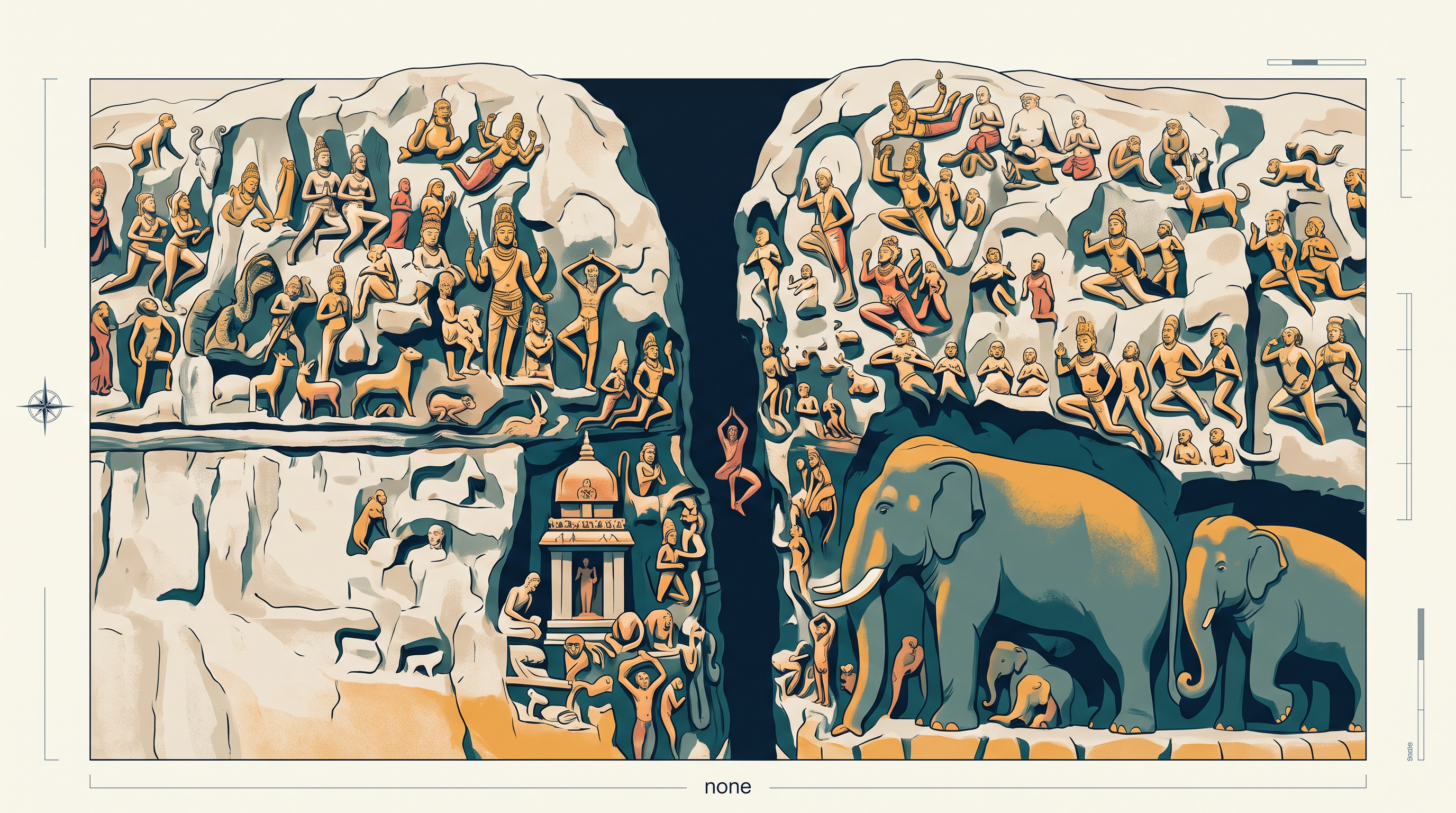
Fig. 4.36 – Rock-cut sculptural panel at Mahabalipuram.
Clearly, Fig. 4.36 is a vivid depiction of a story. Figures crowd the rock; something important is happening. But which story is it?
Art historians have searched through the Puranas to identify it, and they are sharply divided in their opinions. This is not a case of one careless reading against one careful one. Both sides are careful, and both have evidence.
Some feel that this depicts the descent of the river Ganga from heaven. They point to the natural cleft running through the centre of the rock surface, which might represent the river itself. The story is narrated in the Puranas and the epics.
Others feel that it represents a story from the Mahabharata — Arjuna doing penance on the river bank in order to acquire arms. They point to the central figure of an ascetic.
The disagreement will not be settled by looking harder at the rock. Both readings fit what is carved; the panel carries no inscription telling us which text the sculptors had in mind.
The Tip Of The Iceberg
Finally, remember that many rituals, religious beliefs and practices were not recorded in a permanent, visible form at all — not as monuments, not as sculpture, not even as paintings.
These included daily practices, as well as those associated with special occasions. A prayer said each morning, a song at a wedding, an offering left at the foot of a tree — none of these leave anything for an archaeologist to find.
Many communities and peoples may not have felt the need for keeping lasting records, even as they may have had vibrant traditions of religious activities and philosophical ideas. Not writing something down is not the same as not having it.
In fact, the spectacular instances we have focused on in this chapter are just the tip of the iceberg. Everything you have studied here — the stupa, the gateway, the painted cave, the temple cut from rock — survives because someone had the wealth, the stone and the desire to make it last. That is a small and unrepresentative slice of what people actually believed and did.
4.12 Summary
The Argument Of This Chapter
Sanchi survived because of wise decisions and good luck. The rulers of Bhopal, Shahjehan Begum and Sultan Jehan Begum, paid to preserve the site, and the original gateway was never shipped to a European museum.
The mid-first millennium BCE was a turning point. Thinkers in Iran, China, Greece and India began asking what existence was, while new kingdoms and cities were changing life in the Ganga valley.
The early Vedic tradition, known from the Rigveda, centred on sacrifice. People prayed for cattle, sons, health and long life, and elaborate sacrifices such as the rajasuya and ashvamedha were performed by chiefs and kings through Brahmana priests.
The Upanishads recorded new questions — about the meaning of life, life after death, rebirth, and the nature of ultimate reality. Some thinkers began to doubt the value of sacrifice itself.
Buddhist texts mention 64 sects. Teachers travelled and debated, and a philosopher who defeated a rival gained the rival’s followers.
Mahavira and the Buddha questioned the authority of the Vedas and emphasised individual agency. In the Brahmanical position, birth decided a person’s existence; in theirs, effort did.
Some schools, such as the Ajivikas and the Lokayatas, left no texts of their own. We know them only through the writings of their opponents.
Jaina philosophy existed before Mahavira, who was preceded by 23 tirthankaras. Its central idea is that the whole world is animated, from which follow ahimsa, the necessity of asceticism, and the five vows of monks and nuns.
The Buddha’s life is known from hagiographies written at least a century after his time. He renounced the palace after seeing an old man, a sick man and a corpse, rejected extreme penance, and attained enlightenment.
Buddhist philosophy holds that the world is transient (anicca) and soulless (anatta), and that sorrow (dukkha) is intrinsic to existence. Liberation comes by the middle path, between penance and self-indulgence.
The Buddha regarded the social world as made by humans, not gods, and expected individual effort to transform it. His last words told his followers to be lamps unto themselves.
The sangha admitted kings, gahapatis, workers, slaves and craftspeople, and later women. Inside it all were equal; outside it, society was not.
Stupas were mounds raised over relics. Sacred places existed before Buddhism — chaityas attached to trees, rocks and beautiful spots — and the stupa tradition itself may have been pre-Buddhist.
Inscriptions on railings and pillars show who paid. Kings, guilds, bhikkhus, bhikkhunis and hundreds of ordinary women and men gave, and had their names cut in stone.
Amaravati was carried away piece by piece; Sanchi was not. H.H. Cole argued for keeping originals in situ, and lost at Amaravati but won at Sanchi.
Early sculptors showed the Buddha through symbols — the empty seat, the stupa, the wheel. Sculpture at Sanchi cannot be read literally, and it absorbed popular motifs such as the shalabhanjika.
By the first century CE, Mahayana Buddhism turned on a saviour and on compassionate Bodhisattas, and images of the Buddha became objects of worship.
Within Puranic Hinduism, Vaishnavism and Shaivism grew around a chosen deity and the bond of bhakti. Recognising local deities as avatars of Vishnu drew scattered cults into one tradition.
The first temples housed an image in a small room, the garbhagriha, later topped by a shikhara. Some were cut from rock, a tradition running from the Barabar caves to Kailashnatha at Ellora.
Nineteenth-century European scholars judged Indian sculpture by Greek yardsticks, and ranked Gandhara images highest because they looked most familiar.
Where a text cannot be matched to an image, historians disagree — as they do, sharply, over the rock-cut panel at Mahabalipuram.
The Chronology
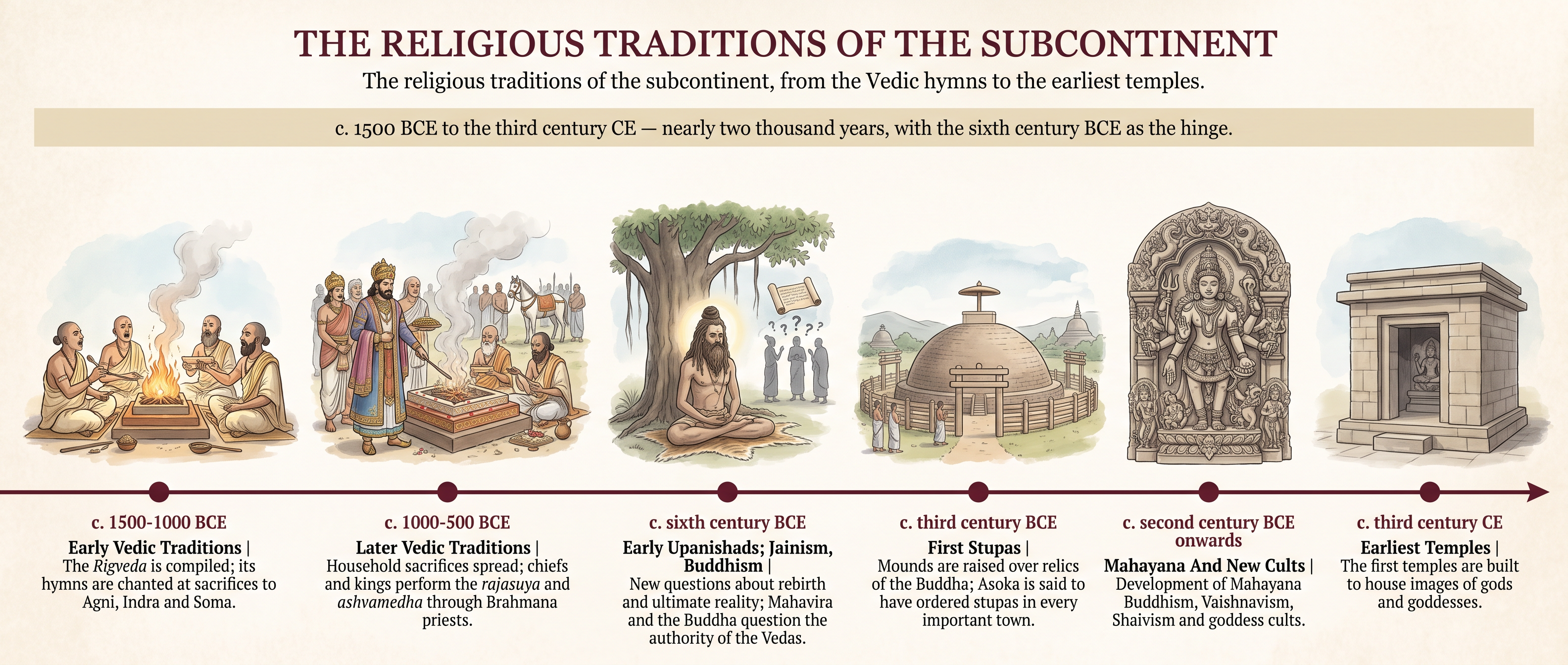
Fig. 4.37 – Major religious developments.
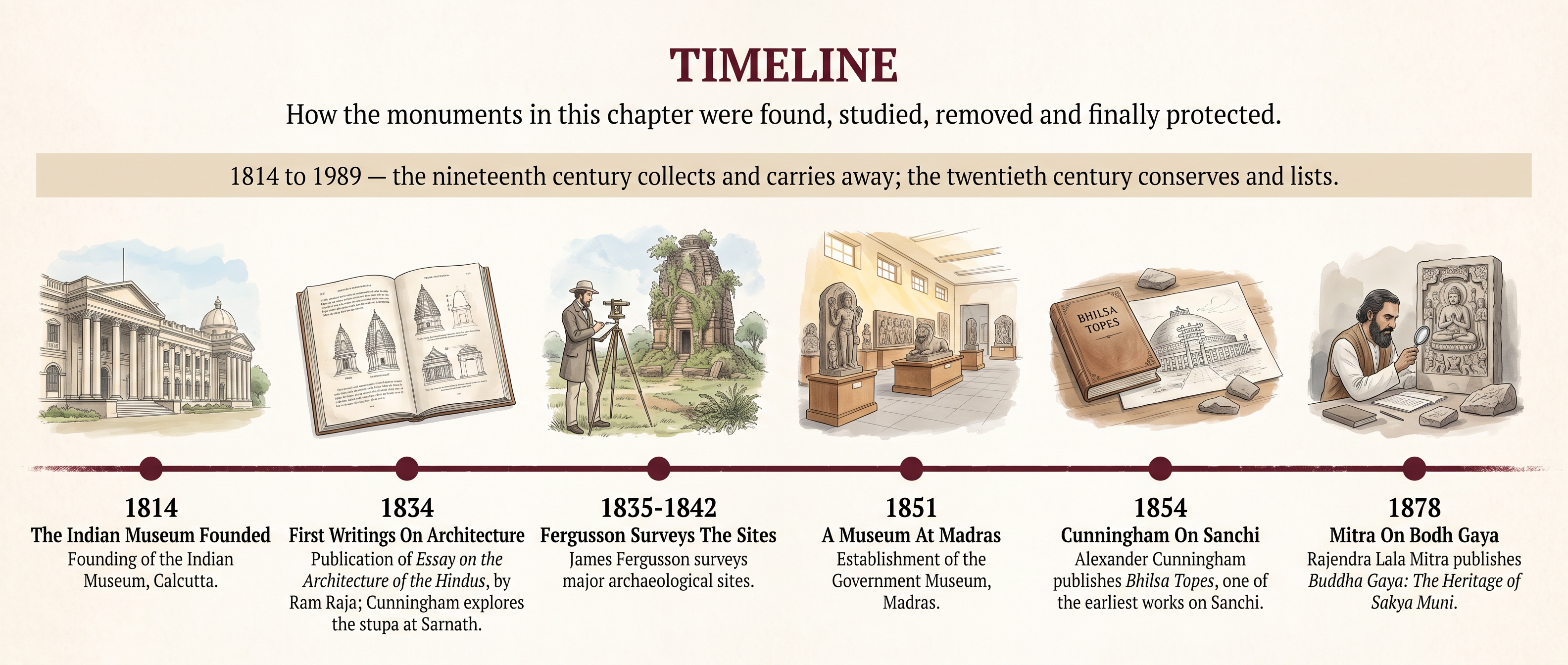
Fig. 4.38 – Landmarks in discovery and preservation.
What The Evidence Cannot Tell Us
The Ajivikas and the Lokayatas argued, gathered followers and vanished. Not one of their own texts survives, so we meet them only in the words of the people who disagreed with them — and we can never check the report against the original.
The stupas, the caves and the temples survive because they were made of stone, and stone was expensive. The daily prayer, the song at a birth, the offering left at a tree — the ordinary religion of most people, most of the time — left nothing behind at all. What we study is not what was believed; it is what was built.
And even the stone will not speak on demand. The sculptors at Mahabalipuram carved no caption, so their panel can be read two ways and settled neither. A historian who tells you which one is right is telling you more than the evidence knows.
4.13 NCERT Questions
Were the ideas of the Upanishadic thinkers different from those of the fatalists and materialists? Give reasons for your answer. (in about 100-150 words)
Summarise the central teachings of Jainism. (in about 100-150 words)
Discuss the role of the begums of Bhopal in preserving the stupa at Sanchi. (in about 100-150 words)
Read this short inscription and answer (in about 100-150 words):
In the year 33 of the maharaja Huvishka (a Kushana ruler), in the first month of the hot season on the eighth day, a Bodhisatta was set up at Madhuvanaka by the bhikkhuni Dhanavati, the sister’s daughter of the bhikkhuni Buddhamita, who knows the Tipitaka, the female pupil of the bhikkhu Bala, who knows the Tipitaka, together with her father and mother.
How did Dhanavati date her inscription?
Why do you think she installed an image of the Bodhisatta?
Who were the relatives she mentioned?
What Buddhist text did she know?
From whom did she learn this text?
Why do you think women and men joined the sangha? (in about 100-150 words)
To what extent does knowledge of Buddhist literature help in understanding the sculpture at Sanchi? (in about 500 words)
Figs. 4.27 and 4.28 are two scenes from Sanchi. Describe what you see in each of them, focusing on the architecture, plants and animals, and the activities. Identify which one shows a rural scene and which an urban scene, giving reasons for your answer. (in about 500 words)
Discuss the development in sculpture and architecture associated with the rise of Vaishnavism and Shaivism. (in about 500 words)
Discuss how and why stupas were built. (in about 500 words)
On an outline world map, mark the areas to which Buddhism spread. Trace the land and sea routes from the subcontinent to these areas.
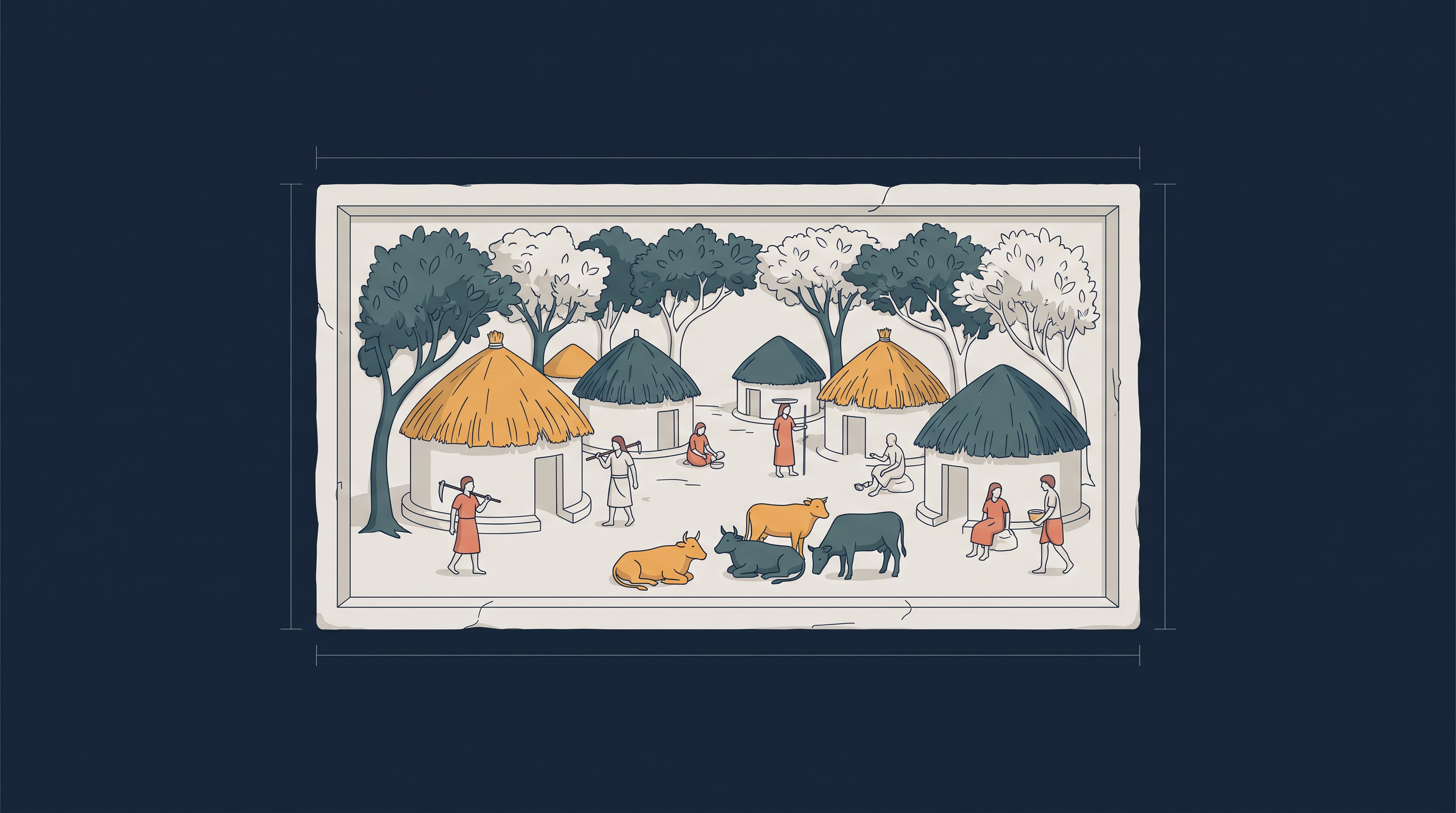
Fig. 4.39 – A rural scene from Sanchi.
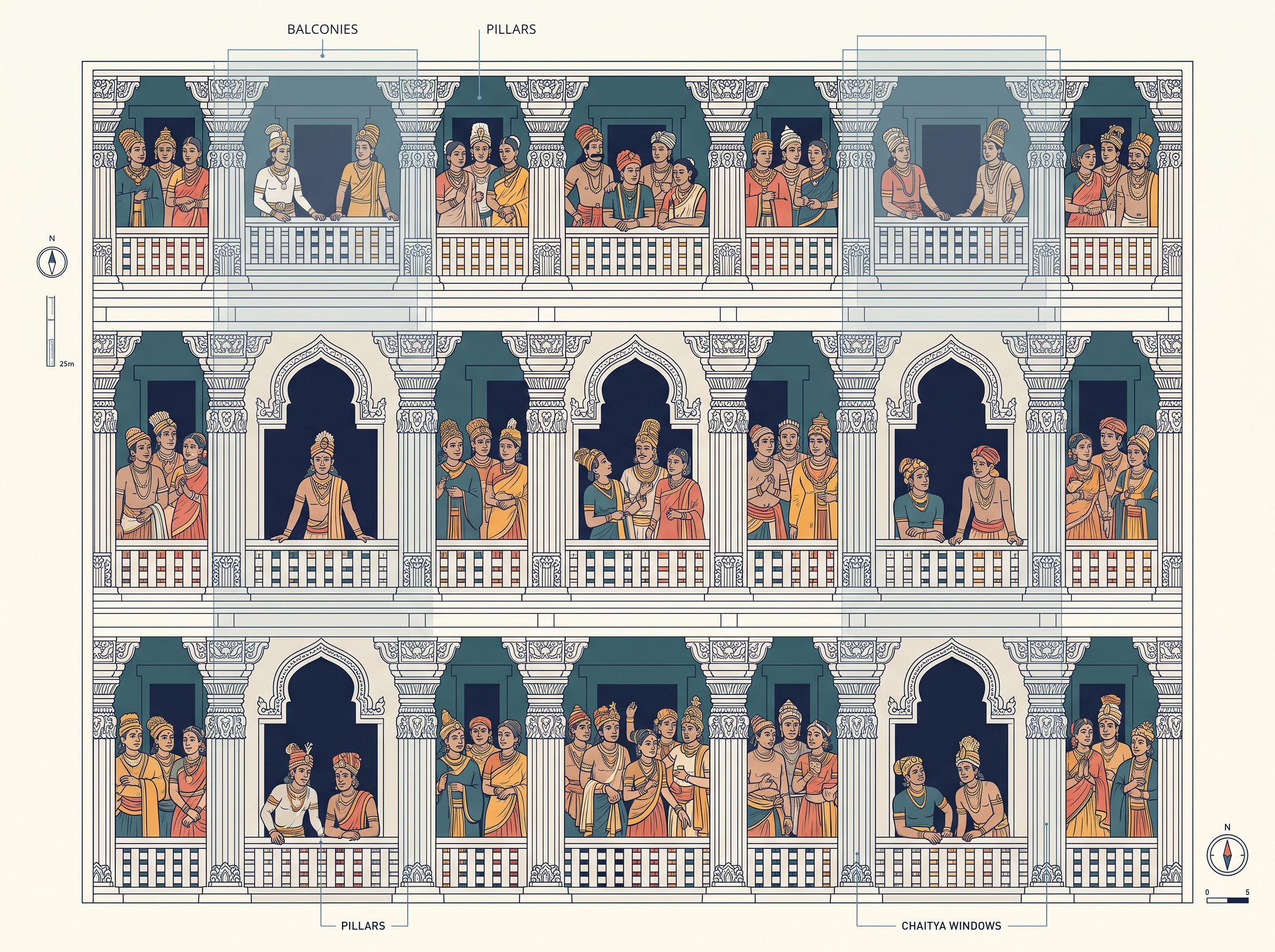
Fig. 4.40 – An urban scene from Sanchi.

Fig. 4.41 – A single animal carved in relief at Sanchi.
4.14 Check Your Concepts
The verses of the Rigveda were composed in Vedic Sanskrit and taught orally to men of priestly families. Explain what this tells us about who could take part in the sacrificial tradition, and what it means for the kind of evidence that has come down to us from it.
No text composed by the Ajivikas or the Lokayatas has survived. Explain how this changes what historians can say about them, and why the labels ‘fatalist’ and ‘materialist’ must be used with care.
Jaina teaching held that only asceticism, penance and renunciation could free a person from karma. The Buddha tried severe penance and abandoned it. Set the two positions side by side, and explain what each one implies about how liberation is achieved.
Read Source 6 (the Therigatha) again. What does it allow us to know about the life and thinking of a dasi like Punna — and what does it still not tell us about the lives of enslaved women?
Read Source 8 again. The Buddha first tells Ananda not to occupy himself with the remains, and only when pressed does he permit a thupa to be erected. Why might a Buddhist text have preserved both answers instead of only the second?
Look at Fig. 4.25. Some historians identify the figure as Maya, others as Gajalakshmi. Set out the case for each identification, and explain what the disagreement suggests about how popular traditions entered the sculpture at Sanchi.
The mahachaitya at Amaravati is now an insignificant mound, while Sanchi still stands. Reconstruct the chain of decisions that led to this difference, and explain what historians lost when the Amaravati sculpture was removed from the site.
Look at Fig. 4.36. Art historians are sharply divided about the story carved on this rock. Explain why the disagreement cannot be settled by examining the sculpture more closely, and what kind of evidence would be needed to settle it.