Chapter 11: Mahatma Gandhi And The Nationalist Movement
On 12 March 1930, a thin, ageing man in a loincloth walked out of an ashram at Sabarmati and turned towards the sea. Behind him, at a careful distance, walked other men with a different job. They were police officials, deputed by the colonial government to watch him, to sit at the back of his village meetings, and to write down what he said.
Those watchers were not admirers. Yet it is their secret reports that now let us follow the march almost village by village. They copied out his speeches. They counted the crowds. They noticed that villagers of every caste came, and women as well as men, and that officials were resigning their government posts to join him. One District Superintendent of Police wrote to his superiors, in the flat language of duty, that Mr Gandhi appeared calm and collected, and was gathering more strength as he proceeded.
Higher up, the Home Department preferred not to believe it. Its confidential fortnightly reports described the march as a drama, an antic, a desperate effort to stir up people who were perfectly content under British rule.
Both things cannot be true. Somewhere between the spy’s notebook and the official’s summary lies the history of this chapter — and the skill of reading such sources against themselves is what you will practise here.
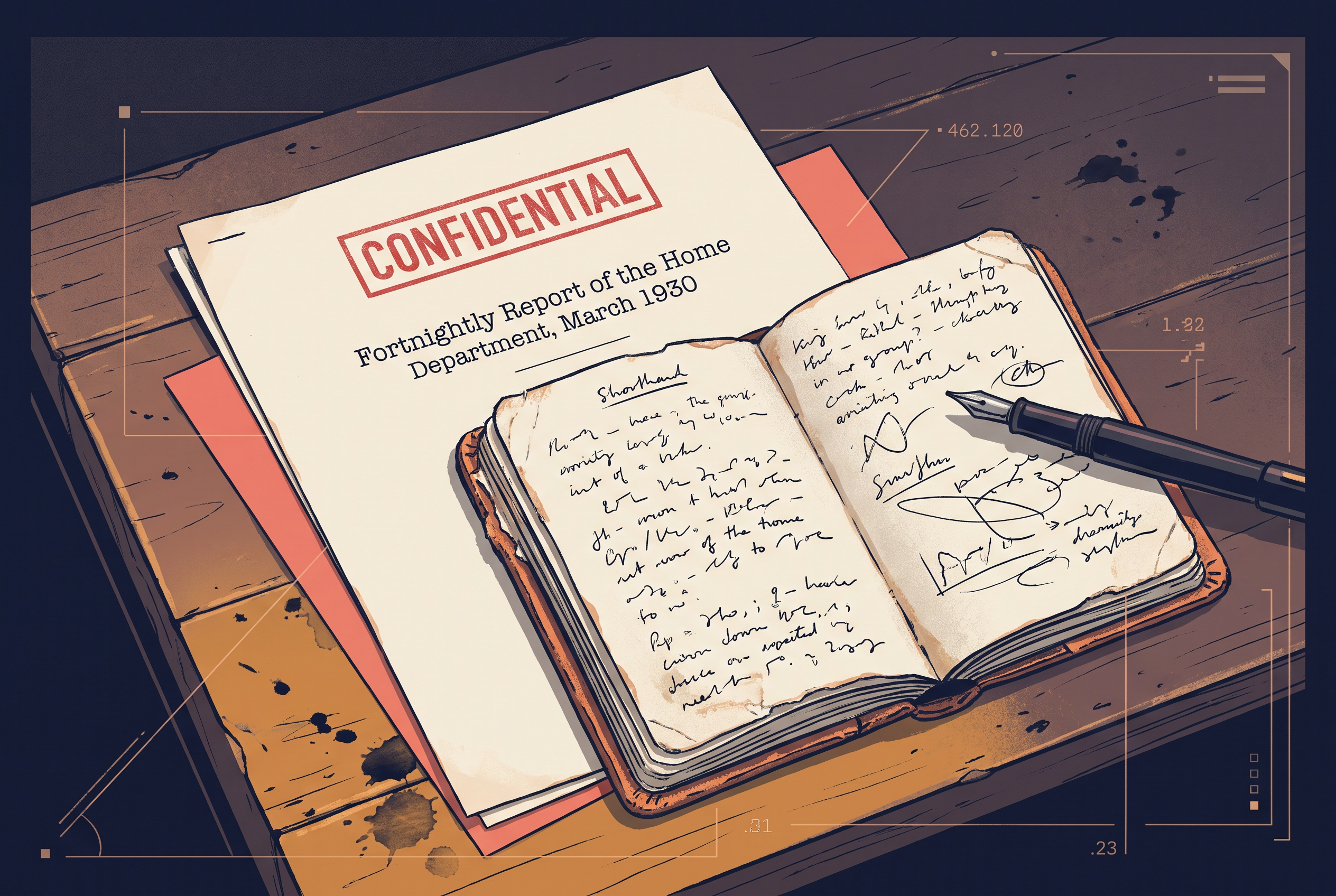
Fig. 11.0 – The fortnightly report and the police notebook.
11.1 A Leader Announces Himself
One Man, One Nation?
In the history of nationalism a single individual is often identified with the making of a nation. We associate Garibaldi with the making of Italy, George Washington with the American War of Independence, and Ho Chi Minh with the struggle to free Vietnam from colonial rule. In the same manner, Mahatma Gandhi has been regarded as the ‘Father’ of the Indian nation.
Nationalism, an idea you first met in earlier classes, is the belief that a people who share a land and a history should govern themselves rather than be ruled by outsiders. Movements built on that belief tend to gather around a name. The name becomes a shorthand for millions of people whose own names we never learn.
In so far as Gandhiji was the most influential and revered of all the leaders who participated in the freedom struggle, that characterisation is not misplaced. However, like Washington or Ho Chi-Minh, Mahatma Gandhi’s political career was shaped and constrained by the society in which he lived. For individuals, even great ones, are made by history even as they make history.
That last sentence is the argument of this whole chapter, so it is worth slowing down over. It does not say that Gandhiji was unimportant. It says that what he could do depended on what the society around him would accept, join, ignore or twist to its own purposes.
This chapter analyses Gandhiji’s activities in India during the crucial period 1915-1948. It explores his interactions with different sections of Indian society and the popular struggles that he inspired and led. It also introduces you to the different kinds of sources that historians use in reconstructing the career of a leader and of the social movements he was associated with.
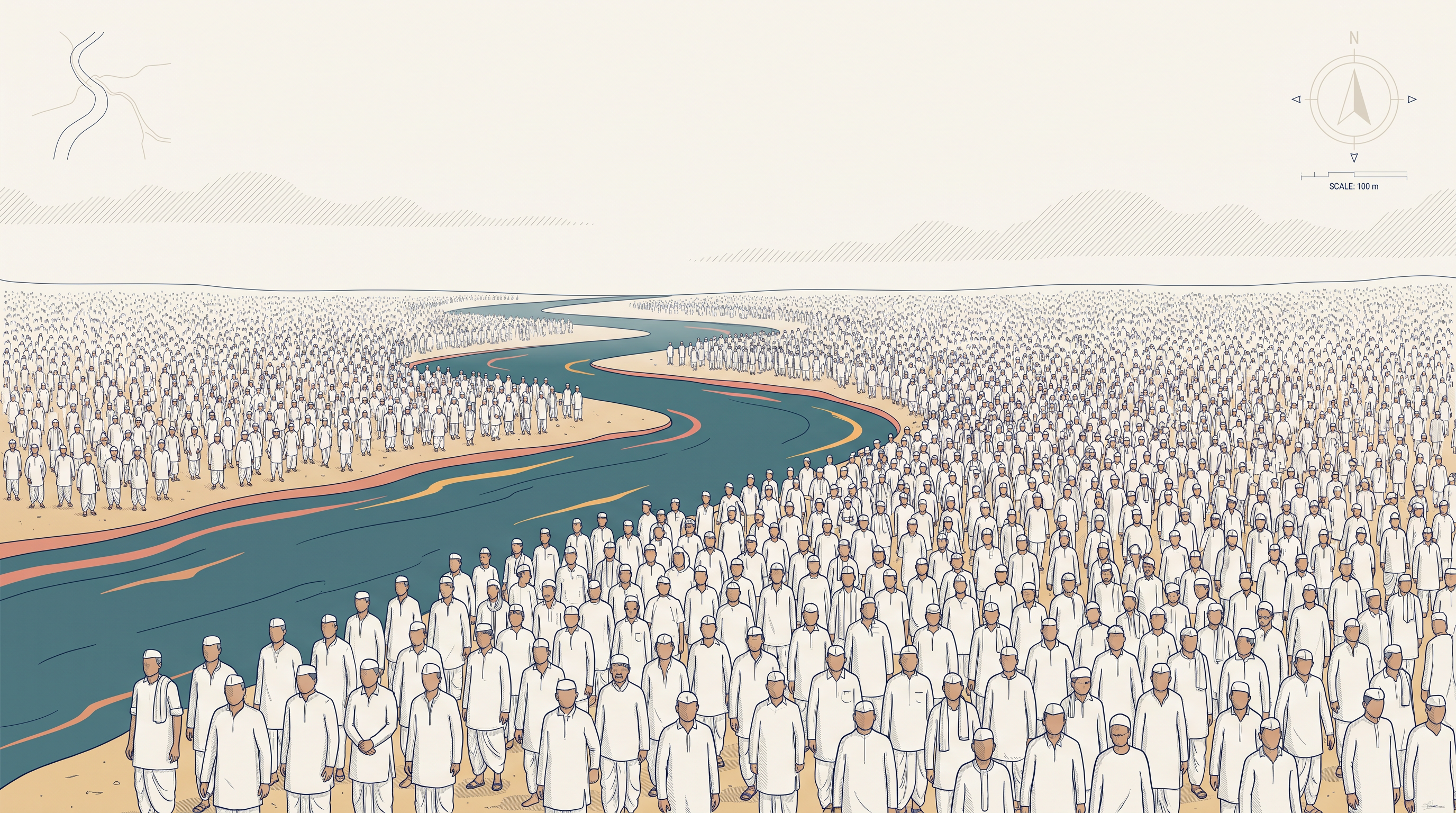
Fig. 11.1 – Crowd at the Sabarmati riverbank, 1930.
Home After Two Decades
In January 1915, Mohandas Karamchand Gandhi returned to his homeland after two decades of residence abroad. These years had been spent for the most part in South Africa, where he went as a lawyer, and in time became a leader of the Indian community in that territory.
As the historian Chandran Devanesan has remarked, South Africa was ‘the making of the Mahatma’. It was in South Africa that Mahatma Gandhi first forged the distinctive techniques of non-violent protest known as satyagraha — a method in which the protester refuses to obey a law he holds to be unjust, but neither hides from the punishment nor answers force with force. It was also in South Africa that he first promoted harmony between religions, and first alerted upper-caste Indians to their discriminatory treatment of low castes and women.
Notice how much is already there in that one sentence. The three causes that would occupy the rest of his life — non-violent resistance, Hindu-Muslim harmony, and the fight against caste discrimination — were not discovered in India. He brought them home with him.
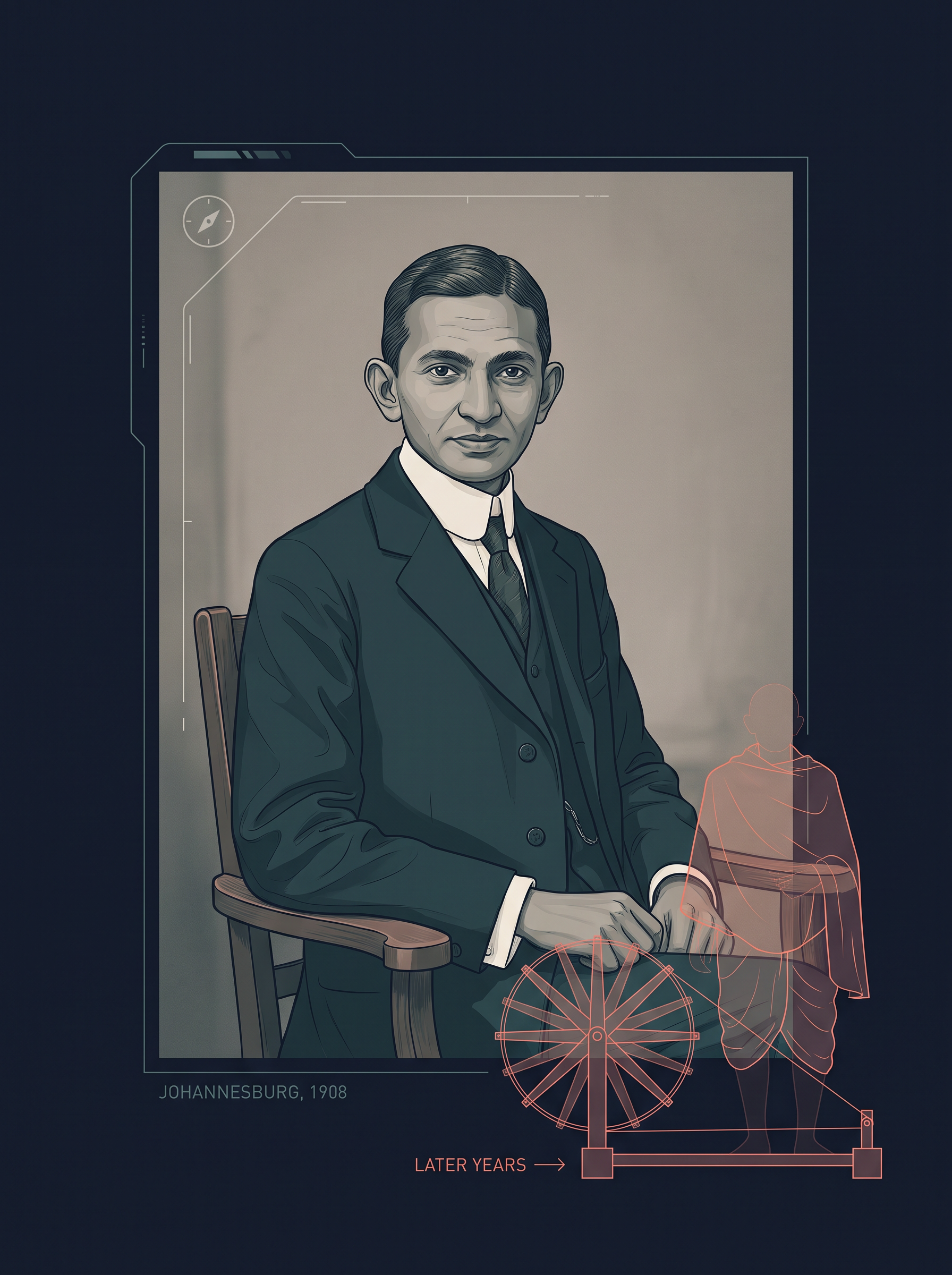
Fig. 11.2 – Mahatma Gandhi in Johannesburg, 1908.
The India He Came Back To
The India that Mahatma Gandhi came back to in 1915 was rather different from the one that he had left in 1893. Although still a colony of the British, it was far more active in a political sense.
The Indian National Congress now had branches in most major cities and towns. Through the Swadeshi movement of 1905-07 — the campaign, which you have met in earlier classes, to boycott foreign goods and use Indian-made ones instead — it had greatly broadened its appeal among the middle classes.
That movement had thrown up some towering leaders. Among them were Bal Gangadhar Tilak of Maharashtra, Bipin Chandra Pal of Bengal, and Lala Lajpat Rai of Punjab. The three were known as ‘Lal, Bal and Pal’, the alliteration conveying the all-India character of their struggle, since their native provinces were very distant from one another.
Where these leaders advocated militant opposition to colonial rule, there was a group of ‘Moderates’ who preferred a more gradual and persuasive approach. The Moderates believed in petitioning the government, arguing their case in its councils and winning concessions step by step, rather than confronting it.
Among these Moderates was Gandhiji’s acknowledged political mentor, Gopal Krishna Gokhale — the senior figure whose judgement he trusted and whose advice he took. Also among them was Mohammad Ali Jinnah who, like Gandhiji, was a lawyer of Gujarati extraction trained in London.
That detail is worth holding on to. In 1915 the two men were not opponents. They belonged to the same broad political camp, had the same professional training, and came from the same region.
A Year Of Listening
On Gokhale’s advice, Gandhiji spent a year travelling around British India, getting to know the land and its peoples. A returning leader who begins by listening for twelve months is already telling us something about how he intended to work.
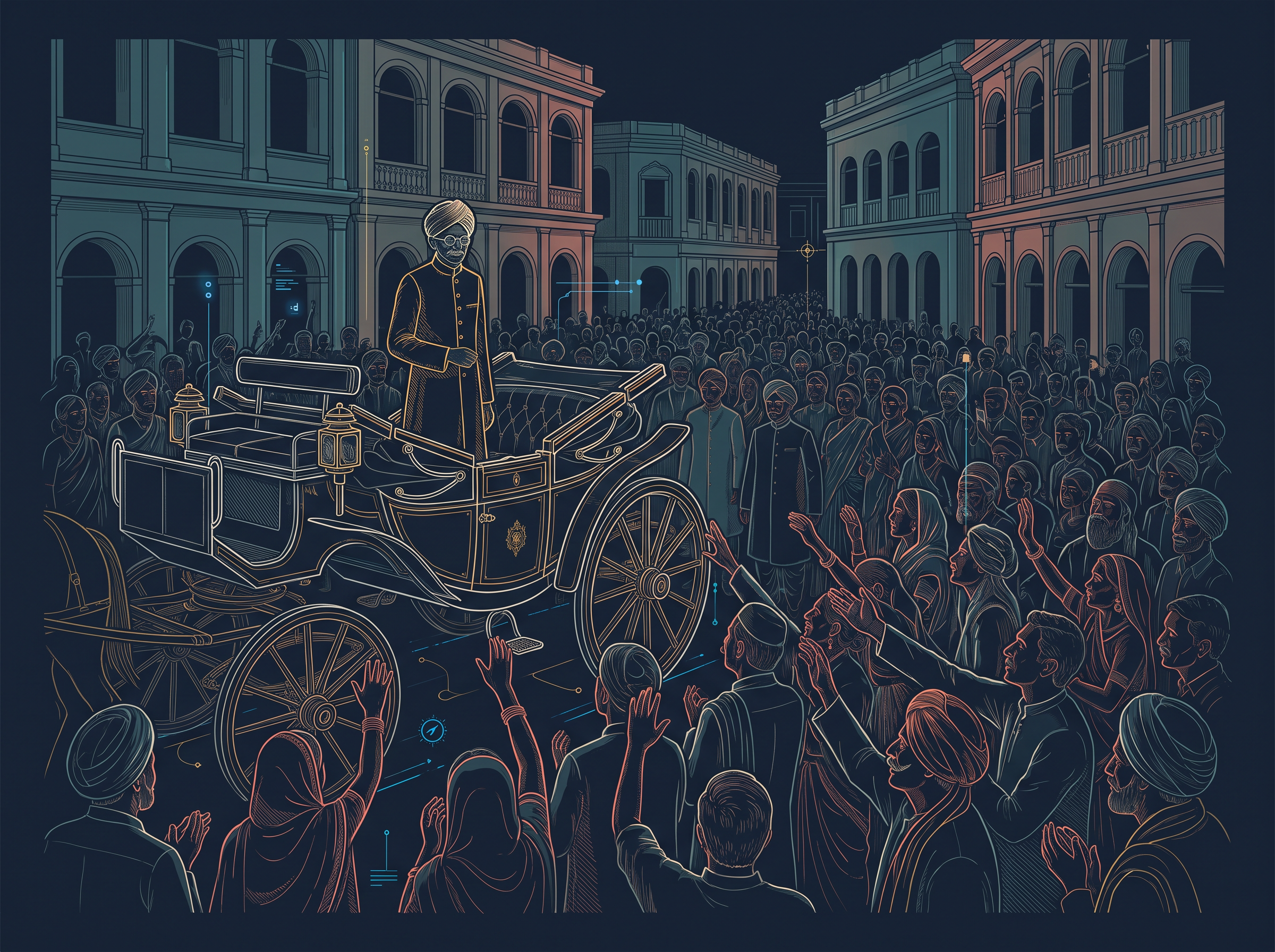
Fig. 11.3 – Mahatma Gandhi arriving in Karachi, 1916.
The Speech At Banaras
His first major public appearance was at the opening of the Banaras Hindu University (BHU) in February 1916. Among the invitees to this event were the princes and philanthropists whose donations had contributed to the founding of the BHU. Also present were important leaders of the Congress, such as Annie Besant.
Compared to these dignitaries, Gandhiji was relatively unknown. He had been invited on account of his work in South Africa, rather than his status within India. He was, in other words, the least important person on that platform.
When his turn came to speak, Gandhiji charged the Indian elite with a lack of concern for the labouring poor. The opening of the BHU, he said, was ‘certainly a most gorgeous show’. But he worried about the contrast between the ‘richly bedecked noblemen’ present and ‘millions of the poor’ Indians who were absent.
Gandhiji told the privileged invitees that ‘there is no salvation for India unless you strip yourself of this jewellery and hold it in trust for your countrymen in India’. ‘There can be no spirit of self-government about us,’ he went on, ‘if we take away or allow others to take away from the peasants almost the whole of the results of their labour. Our salvation can only come through the farmer. Neither the lawyers, nor the doctors, nor the rich landlords are going to secure it.’
Read the last three sentences again slowly. He is not asking the rich to be kinder to the poor. He is saying that the rich in that hall — the lawyers, the doctors, the landlords — cannot deliver freedom at all, because freedom taken by a small class on behalf of everyone else would not be self-government.
The opening of the BHU was an occasion for celebration, marking as it did the opening of a nationalist university, sustained by Indian money and Indian initiative. But rather than adopt a tone of self-congratulation, Gandhiji chose instead to remind those present of the peasants and workers who constituted a majority of the Indian population, yet were unrepresented in the audience.
Statement Of Fact, Statement Of Intent
Gandhiji’s speech at Banaras in February 1916 was, at one level, merely a statement of fact — namely, that Indian nationalism was an elite phenomenon, a creation of lawyers and doctors and landlords.
But, at another level, it was also a statement of intent. It was the first public announcement of Gandhiji’s own desire to make Indian nationalism more properly representative of the Indian people as a whole.
A statement of fact describes what is. A statement of intent announces what the speaker means to change. This single speech does both, which is why it is remembered.
A Peasant From Champaran
In the last month of that year, Gandhiji was presented with an opportunity to put his precepts into practice. At the annual Congress, held in Lucknow in December 1916, he was approached by a peasant from Champaran in Bihar.
The peasant told him about the harsh treatment of peasants by British indigo planters — European planters who grew indigo, a dye crop, on land worked by the local cultivators. Ten months after saying that India’s salvation could only come through the farmer, a farmer walked up to him and asked for help.
The sequence of these years is set out in Fig. 11.4.
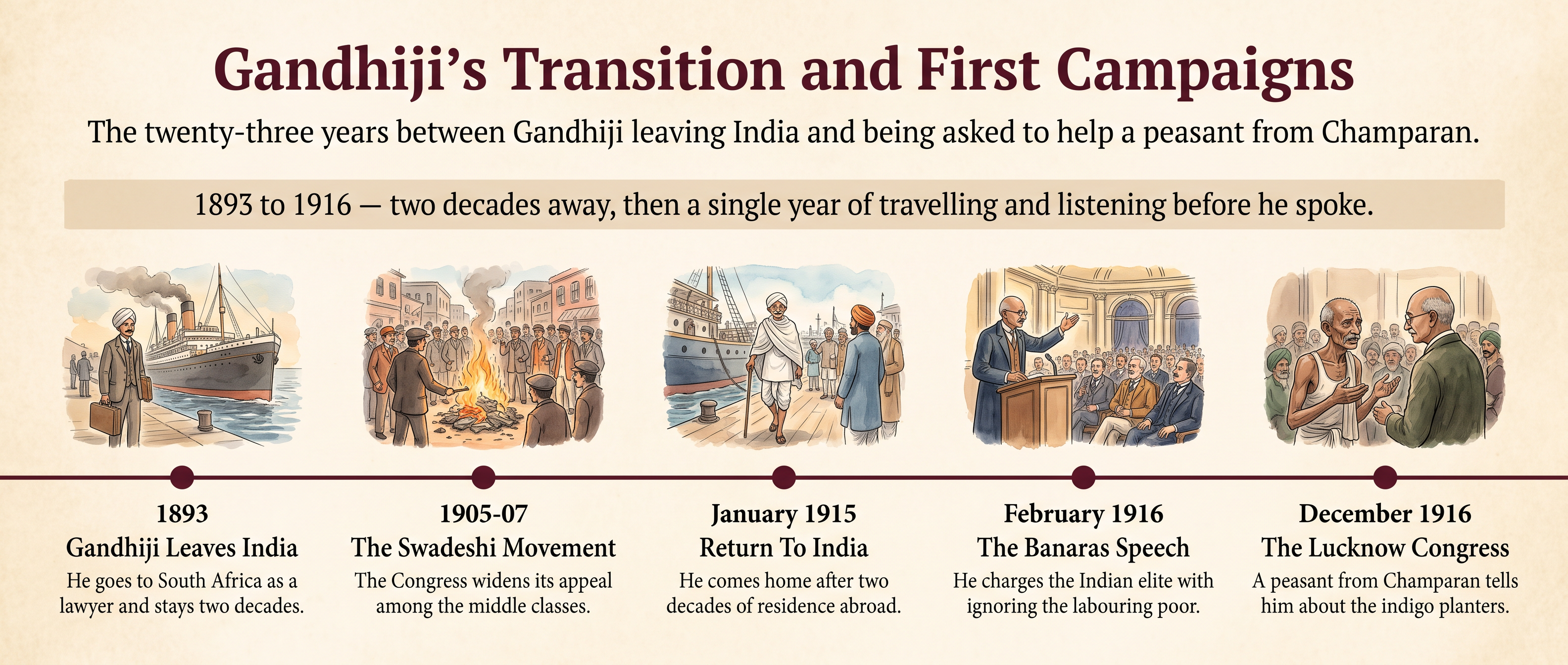
Fig. 11.4 – From South Africa To Champaran.
11.2 The Making And Unmaking Of Non-cooperation
Three Local Campaigns
Mahatma Gandhi was to spend much of 1917 in Champaran, seeking to obtain for the peasants security of tenure as well as the freedom to cultivate the crops of their choice. Security of tenure simply means the right to stay on the land you till and not be thrown off it at the landlord’s will.
The following year, 1918, Gandhiji was involved in two campaigns in his home state of Gujarat. First, he intervened in a labour dispute in Ahmedabad, demanding better working conditions for the textile mill workers. Then he joined peasants in Kheda in asking the state for the remission of taxes following the failure of their harvest.
These initiatives in Champaran, Ahmedabad and Kheda marked Gandhiji out as a nationalist with a deep sympathy for the poor. At the same time, these were all localised struggles. Each was fought over one district’s grievance, and each ended within that district.
An Issue Handed To Him
Then, in 1919, the colonial rulers delivered into Gandhiji’s lap an issue from which he could construct a much wider movement. During the Great War of 1914-18, the British had instituted censorship of the press and permitted detention without trial. Detention without trial means the state can lock a person up without producing evidence before a judge.
These were emergency powers, taken for a war. Now, on the recommendation of a committee chaired by Sir Sidney Rowlatt, these tough measures were continued. The war was over; the emergency was not.
In response, Gandhiji called for a countrywide campaign against the ‘Rowlatt Act’. In towns across North and West India, life came to a standstill, as shops shut down and schools closed in response to the bandh call — a bandh being a general shutdown in which normal work and trade stop as a mark of protest.
The protests were particularly intense in the Punjab, where many men had served on the British side in the War — expecting to be rewarded for their service. Instead they were given the Rowlatt Act.
Gandhiji was detained while proceeding to the Punjab, even as prominent local Congressmen were arrested. The situation in the province grew progressively more tense, reaching a bloody climax in Amritsar in April 1919, when a British Brigadier ordered his troops to open fire on a nationalist meeting. More than four hundred people were killed in what is known as the Jallianwala Bagh massacre.
From Protest To Non-cooperation
It was the Rowlatt satyagraha that made Gandhiji a truly national leader. Emboldened by its success, Gandhiji called for a campaign of ‘non-cooperation’ with British rule.
The logic was simple and unfamiliar. A colonial state is not held up only by its army; it is held up by Indians who attend its schools, argue in its courts, staff its offices and pay its taxes. Withdraw all of that, and the machine slows down without a single blow being struck.
Indians who wished colonialism to end were therefore asked to stop attending schools, colleges and law courts, and not pay taxes. In sum, they were asked to adhere to a ‘renunciation of (all) voluntary association with the (British) Government’. If non-cooperation was effectively carried out, said Gandhiji, India would win swaraj — self-rule — within a year.
To further broaden the struggle he had joined hands with the Khilafat Movement that sought to restore the Caliphate, a symbol of Pan-Islamism which had recently been abolished by the Turkish ruler Kemal Attaturk.
11.2.1 Knitting A Popular Movement
Gandhiji hoped that by coupling non-cooperation with Khilafat, India’s two major religious communities, Hindus and Muslims, could collectively bring an end to colonial rule. These movements certainly unleashed a surge of popular action that was altogether unprecedented in colonial India.
Who Answered The Call
Students stopped going to schools and colleges run by the government. Lawyers refused to attend court. The working class went on strike in many towns and cities: according to official figures, there were 396 strikes in 1921, involving 600,000 workers and a loss of seven million workdays.
Those are official figures, which matters. They are the strikes the government managed to count. A strike the state did not notice does not appear in that number, so 396 is a floor, not a ceiling.
The countryside was seething with discontent too. Hill tribes in northern Andhra violated the forest laws. Farmers in Awadh did not pay taxes. Peasants in Kumaun refused to carry loads for colonial officials.
Look closely at what each group actually did. The forest laws, the land tax and forced porterage were their own local burdens. They were not obeying a plan drawn up in a Congress office; they were seizing a moment.
These protest movements were sometimes carried out in defiance of the local nationalist leadership. Peasants, workers, and others interpreted and acted upon the call to ‘non-cooperate’ with colonial rule in ways that best suited their interests, rather than conform to the dictates laid down from above.
‘Non-cooperation,’ wrote Mahatma Gandhi’s American biographer Louis Fischer, ‘became the name of an epoch in the life of India and of Gandhiji. Non-cooperation was negative enough to be peaceful but positive enough to be effective. It entailed denial, renunciation, and self-discipline. It was training for self-rule.’
Fischer’s last sentence is the sharpest. If a people can organise themselves to refuse, in an orderly way and without violence, they have already begun to govern themselves.
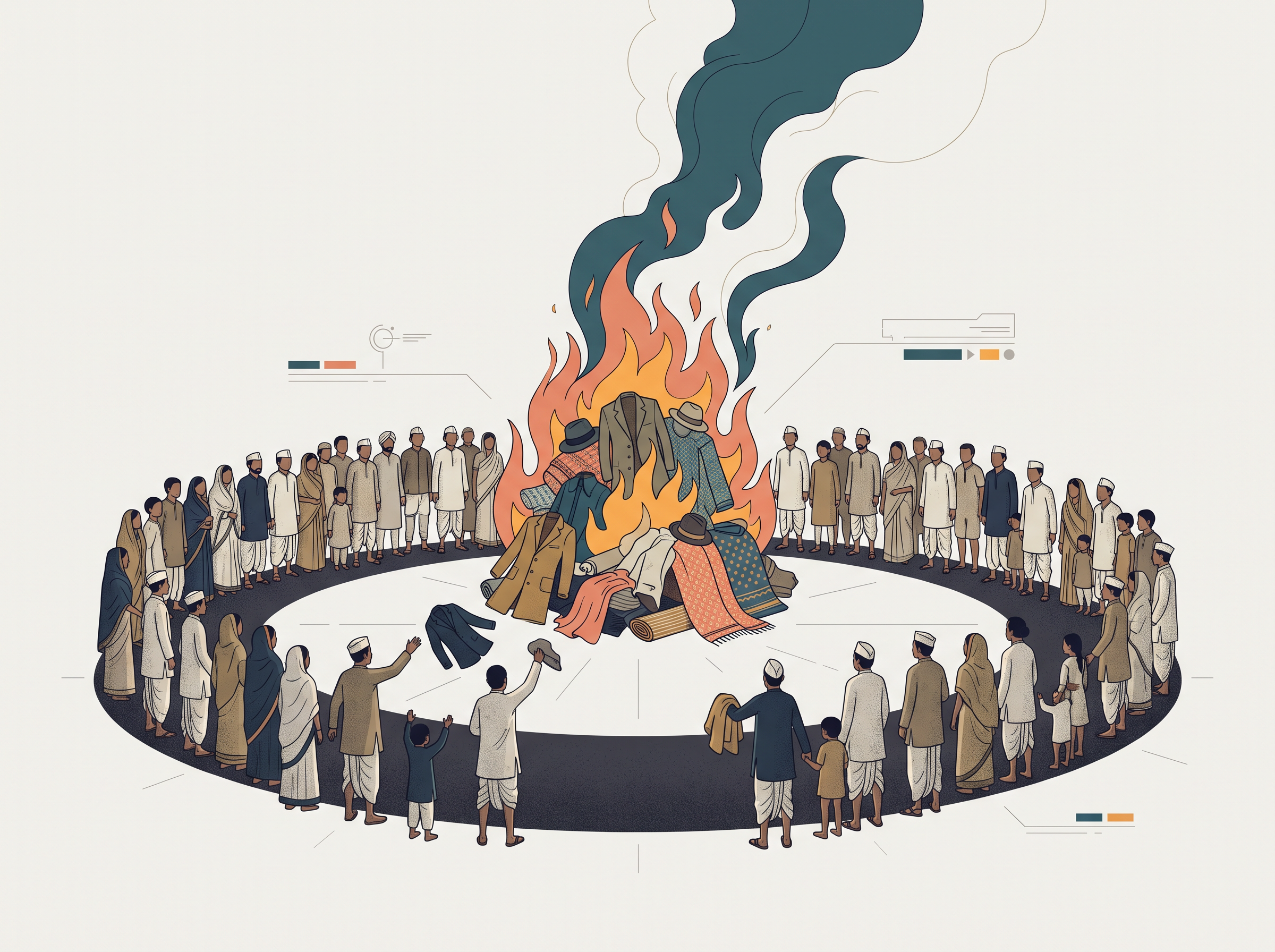
Fig. 11.5 – Foreign cloth bonfire during Non-cooperation.
As a consequence of the Non-Cooperation Movement the British Raj was shaken to its foundations for the first time since the Revolt of 1857 — the uprising you studied in the previous chapter, when the Company’s rule was challenged across northern India.
The Movement Is Called Off
Then, in February 1922, a group of peasants attacked and torched a police station in the hamlet of Chauri Chaura, in the United Provinces (now, Uttar Pradesh and Uttaranchal). Several constables perished in the conflagration.
This act of violence prompted Gandhiji to call off the movement altogether. ‘No provocation,’ he insisted, ‘can possibly justify (the) brutal murder of men who had been rendered defenceless and who had virtually thrown themselves on the mercy of the mob.’
Read that decision carefully, because it is one of the hardest in the chapter. A movement at its height was stopped by its own leader, not by the government. For Gandhiji, a movement that killed defenceless men had already lost the thing that made it worth leading.
During the Non-Cooperation Movement thousands of Indians were put in jail. Gandhiji himself was arrested in March 1922, and charged with sedition — the offence of stirring up disaffection against the government.
The judge who presided over his trial, Justice C.N. Broomfield, made a remarkable speech while pronouncing his sentence. ‘It would be impossible to ignore the fact,’ remarked the judge, ‘that you are in a different category from any person I have ever tried or am likely to try. It would be impossible to ignore the fact that, in the eyes of millions of your countrymen, you are a great patriot and a leader. Even those who differ from you in politics look upon you as a man of high ideals and of even saintly life.’
Since Gandhiji had violated the law it was obligatory for the Bench to sentence him to six years’ imprisonment, but, said Judge Broomfield, ‘If the course of events in India should make it possible for the Government to reduce the period and release you, no one will be better pleased than I’.
A colonial judge, applying a colonial law, paused in open court to say that the man in the dock was revered by millions. The sentence still came. Both halves of that are the point.
11.2.2 A People’s Leader
By 1922, Gandhiji had transformed Indian nationalism, thereby redeeming the promise he made in his BHU speech of February 1916. It was no longer a movement of professionals and intellectuals; now, hundreds of thousands of peasants, workers and artisans also participated in it.
Many of them venerated Gandhiji, referring to him as their ‘Mahatma’. They appreciated the fact that he dressed like them, lived like them, and spoke their language. Unlike other leaders he did not stand apart from the common folk, but empathised and even identified with them.
The Dhoti And The Charkha
This identification was strikingly reflected in his dress. While other nationalist leaders dressed formally, wearing a Western suit or an Indian bandgala — a high-collared formal coat — Gandhiji went among the people in a simple dhoti or loincloth.
Meanwhile, he spent part of each day working on the charkha (spinning wheel), and encouraged other nationalists to do likewise. The act of spinning allowed Gandhiji to break the boundaries that prevailed within the traditional caste system, between mental labour and manual labour.
That boundary was not a small one. In a social order where working with the hands was left to those ranked low, a leader who sat down and spun was making a claim about caste, not only about cloth.
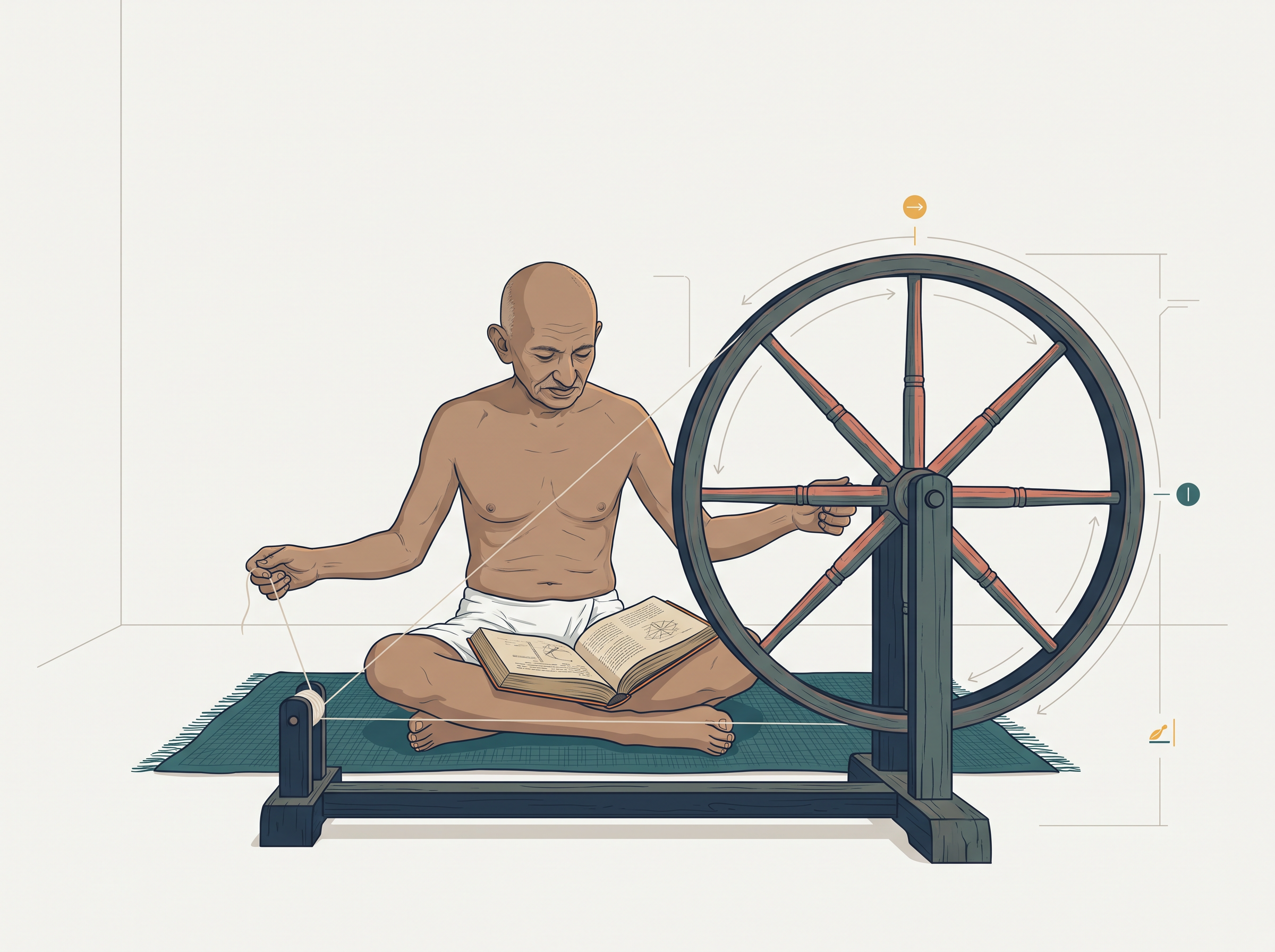
Fig. 11.6 – Mahatma Gandhi and the charkha.
Gandhiji explained his own objection to machinery in his journal Young India, which he wrote for a reading public of nationalists. He was profoundly critical of the modern age in which machines enslaved humans and displaced labour. He saw the charkha as a symbol of a human society that would not glorify machines and technology. The spinning wheel, moreover, could provide the poor with supplementary income and make them self-reliant.
The second extract is a useful check on the first. He is not asking India to give up machinery. He says the wheel is itself a machine — one that a poor family can own and work in its own cottage, rather than one that owns them.
The Mahatma Of The Rumours
In a fascinating study, the historian Shahid Amin has traced the image of Mahatma Gandhi among the peasants of eastern Uttar Pradesh, as conveyed by reports and rumours in the local press. When he travelled through the region in February 1921, Gandhiji was received by adoring crowds everywhere.
This is how a Hindi newspaper in Gorakhpur reported the atmosphere during his speeches:
At Bhatni Gandhiji addressed the local public and then the train started for Gorakhpur. There were not less than 15,000 to 20,000 people at Nunkhar, Deoria, Gauri Bazar, Chauri Chaura and Kusmhi (stations) … Mahatmaji was very pleased to witness the scene at Kusmhi, as despite the fact that the station is in the middle of a jungle there were not less than 10,000 people here. Some, overcome with their love, were seen to be crying. At Deoria people wanted to give bhent (donations) to Gandhiji, but he asked them to give these at Gorakhpur. But at Chauri Chaura one Marwari gentleman managed to hand over something to him. Then there was no stopping. A sheet was spread and currency notes and coins started raining. It was a sight … Outside the Gorakhpur station the Mahatma was stood on a high carriage and people had a good darshan of him for a couple of minutes.
Wherever Gandhiji went, rumours spread of his miraculous powers. In some places it was said that he had been sent by the King to redress the grievances of the farmers, and that he had the power to overrule all local officials. In other places it was claimed that Gandhiji’s power was superior to that of the English monarch, and that with his arrival the colonial rulers would flee the district.
There were also stories reporting dire consequences for those who opposed him. Rumours spread of how villagers who criticised Gandhiji found their houses mysteriously falling apart or their crops failing.
Some of these rumours were recorded in the local newspapers of the United Provinces, and the historian Shahid Amin has collected them. Read them for what they tell us about the people who repeated them.
Known variously as ‘Gandhi baba’, ‘Gandhi Maharaj’, or simply as ‘Mahatma’, Gandhiji appeared to the Indian peasant as a saviour, who would rescue them from high taxes and oppressive officials and restore dignity and autonomy to their lives.
Gandhiji’s appeal among the poor, and peasants in particular, was enhanced by his ascetic lifestyle, and by his shrewd use of symbols such as the dhoti and the charkha. Mahatma Gandhi was by caste a merchant, and by profession a lawyer; but his simple lifestyle and love of working with his hands allowed him to empathise more fully with the labouring poor and for them, in turn, to empathise with him.
Where most other politicians talked down to them, Gandhiji appeared not just to look like them, but to understand them and relate to their lives.
Organisation, Not Only Devotion
While Mahatma Gandhi’s mass appeal was undoubtedly genuine — and in the context of Indian politics, without precedent — it must also be stressed that his success in broadening the basis of nationalism was based on careful organisation. Devotion filled the meetings; organisation kept them coming.
New branches of the Congress were set up in various parts of India. A series of ‘Praja Mandals’ were established to promote the nationalist creed in the princely states — the territories still ruled by Indian princes under British paramountcy, where the Congress could not simply open an office.
Gandhiji encouraged the communication of the nationalist message in the mother tongue, rather than in the language of the rulers, English. Thus the provincial committees of the Congress were based on linguistic regions, rather than on the artificial boundaries of British India.
Those provincial boundaries were artificial because they had been drawn for the convenience of administration, not because the people inside them shared a language. A party that organised itself by language could be understood without a translator. In these different ways nationalism was taken to the farthest corners of the country and embraced by social groups previously untouched by it.
Peasants And Industrialists
By now, among the supporters of the Congress were some very prosperous businessmen and industrialists. Indian entrepreneurs were quick to recognise that, in a free India, the favours enjoyed by their British competitors would come to an end.
Some of these entrepreneurs, such as G.D. Birla, supported the national movement openly; others did so tacitly. Thus, among Gandhiji’s admirers were both poor peasants and rich industrialists, although the reasons why peasants followed Gandhiji were somewhat different from, and perhaps opposed to, the reasons of the industrialists.
That sentence carries a warning. A peasant who wanted lower rents and an industrialist who wanted the British competitor removed were both in the same movement, but they were not asking for the same India. What would happen when freedom came and the two demands met?
The Men Around Him
While Mahatma Gandhi’s own role was vital, the growth of what we might call ‘Gandhian nationalism’ also depended to a very substantial extent on his followers. Between 1917 and 1922, a group of highly talented Indians attached themselves to Gandhiji.
They included Mahadev Desai, Vallabh Bhai Patel, J.B. Kripalani, Subhas Chandra Bose, Abul Kalam Azad, Jawaharlal Nehru, Sarojini Naidu, Govind Ballabh Pant and C. Rajagopalachari. Notably, these close associates of Gandhiji came from different regions as well as different religious traditions. In turn, they inspired countless other Indians to join the Congress and work for it.
The Social Reformer
Mahatma Gandhi was released from prison in February 1924, and now chose to devote his attention to the promotion of home-spun cloth (khadi), and the abolition of untouchability. For, Gandhiji was as much a social reformer as he was a politician.
Untouchability was the practice by which people of certain castes were treated as polluting, kept out of temples, wells and schools, and forced into the work no one else would do. Gandhiji held that a society which did this to its own people had no right to demand freedom from anyone.
He believed that in order to be worthy of freedom, Indians had to get rid of social evils such as child marriage and untouchability. Indians of one faith had also to cultivate a genuine tolerance for Indians of another — hence his emphasis on Hindu-Muslim harmony.
Meanwhile, on the economic front Indians had to learn to become self-reliant — hence his stress on the significance of wearing khadi rather than mill-made cloth imported from overseas.
Notice that the three programmes are one argument. A nation divided by caste, split by religion and clothed by another country’s mills was, in his view, not yet ready to be free — and would not become ready by waiting.
The sequence of these years is set out in Fig. 11.7.
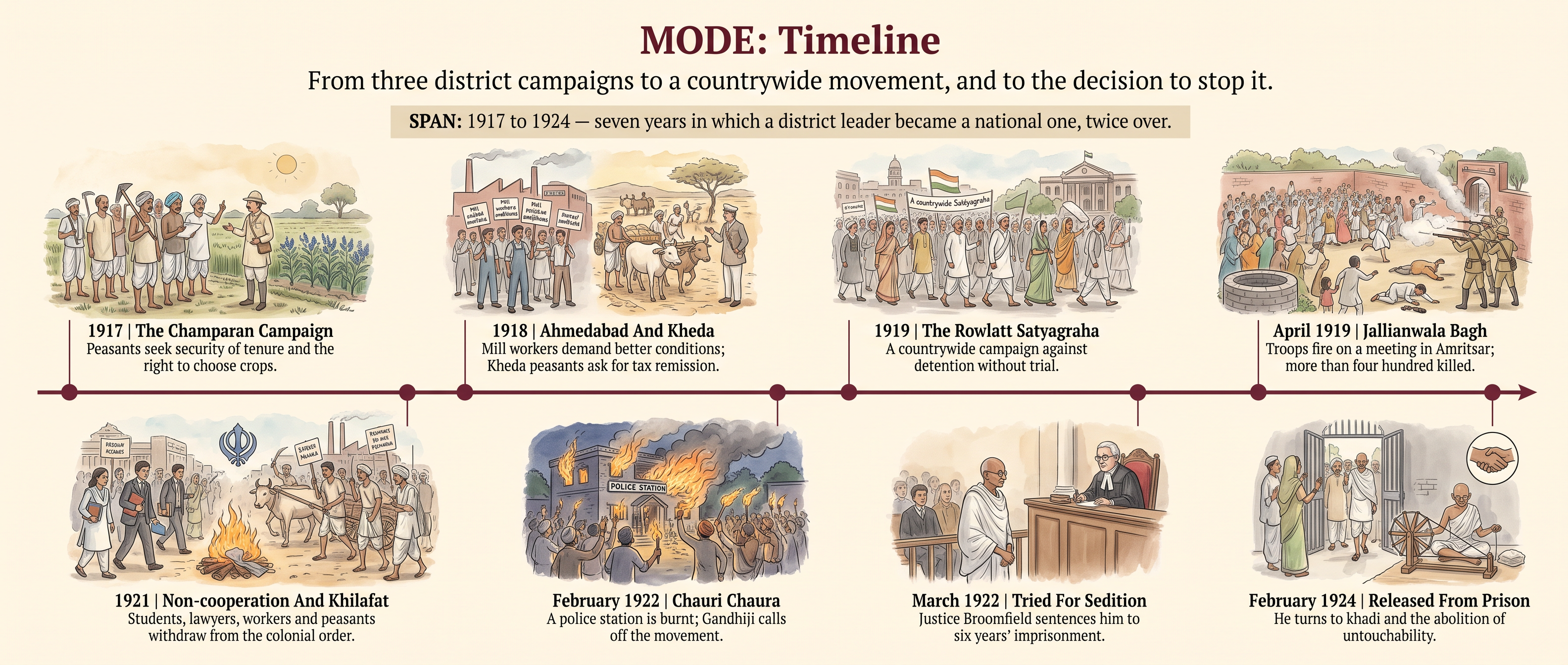
Fig. 11.7 – The Making And Unmaking Of Non-cooperation.
11.3 The Salt Satyagraha — A Case Study
Back Into Politics
For several years after the Non-cooperation Movement ended, Mahatma Gandhi focused on his social reform work. In 1928, however, began to think of re-entering politics.
That year there was an all-India campaign in opposition to the all-White Simon Commission, sent from England to enquire into conditions in the colony. A commission of enquiry sent to decide India’s political future, with not one Indian on it, made its own argument for Indians.
Gandhiji did not himself participate in this movement, although he gave it his blessings, as he also did to a peasant satyagraha in Bardoli in the same year.
Lahore, And A New Goal
In the end of December 1929, the Congress held its annual session in the city of Lahore. The meeting was significant for two things.
The first was the election of Jawaharlal Nehru as President, signifying the passing of the baton of leadership to the younger generation. The second was the proclamation of commitment to ‘Purna Swaraj’, or complete independence.
That second decision changed the terms of the argument. Until then the Congress had asked for a larger share of power inside the British system. Now it asked for the system to end.
Now the pace of politics picked up once more. On 26 January 1930, ‘Independence Day’ was observed, with the national flag being hoisted in different venues, and patriotic songs being sung.
Gandhiji himself issued precise instructions as to how the day should be observed. ‘It would be good,’ he said, ‘if the declaration [of Independence] is made by whole villages, whole cities even … It would be well if all the meetings were held at the identical minute in all the places.’
Notice what he was after. If every village declared independence at the same minute, a scattered country would feel, for one moment, like a single people acting together.
Gandhiji suggested that the time of the meeting be advertised in the traditional way, by the beating of drums. The celebrations would begin with the hoisting of the national flag.
The rest of the day would be spent ‘in doing some constructive work, whether it is spinning, or service of “untouchables”, or reunion of Hindus and Mussalmans, or prohibition work, or even all these together, which is not impossible’.
Participants would take a pledge affirming that it was ‘the inalienable right of the Indian people, as of any other people, to have freedom and to enjoy the fruits of their toil’, and that ‘if any government deprives a people of these rights and oppresses them, the people have a further right to alter it or abolish it’.
That pledge is doing something careful. It does not say that the British are cruel; it says that any government which takes a people’s freedom may be altered or abolished by them. The claim is about rights, not about grievances.
11.3.1 Dandi
Soon after the observance of this ‘Independence Day’, Mahatma Gandhi announced that he would lead a march to break one of the most widely disliked laws in British India, which gave the state a monopoly in the manufacture and sale of salt.
His picking on the salt monopoly was another illustration of Gandhiji’s tactical wisdom. For in every Indian household, salt was indispensable; yet people were forbidden from making salt even for domestic use, compelling them to buy it from shops at a high price.
The state monopoly over salt was deeply unpopular; by making it his target, Gandhiji hoped to mobilise a wider discontent against British rule. A tax on cloth touches those who buy cloth. A tax on salt touches everyone who eats.
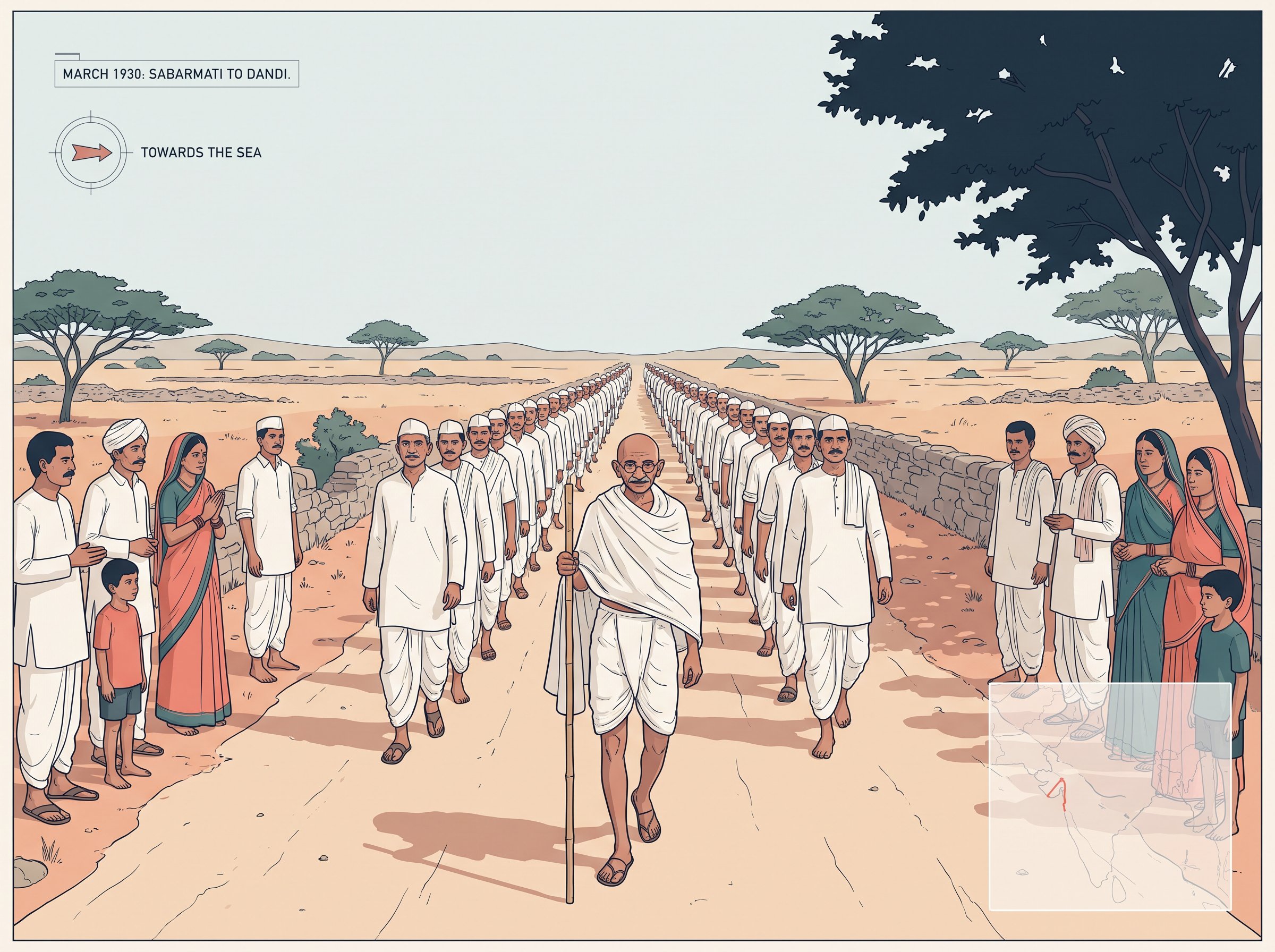
Fig. 11.8 – The Dandi March, March 1930.
The Raj Misses The Point
Where most Indians understood the significance of Gandhiji’s challenge, the British Raj apparently did not. Although Gandhiji had given advance notice of his ‘Salt March’ to the Viceroy Lord Irwin, Irwin failed to grasp the significance of the action.
Giving notice was itself part of the method. Civil disobedience means breaking a law you hold to be unjust, openly and without violence, and then accepting the punishment. A conspirator hides his plan; a satyagrahi posts it to the Viceroy.
On 12 March 1930, Gandhiji began walking from his ashram at Sabarmati towards the ocean. He reached his destination three weeks later, making a fistful of salt as he did and thereby making himself a criminal in the eyes of the law. Meanwhile, parallel salt marches were being conducted in other parts of the country.
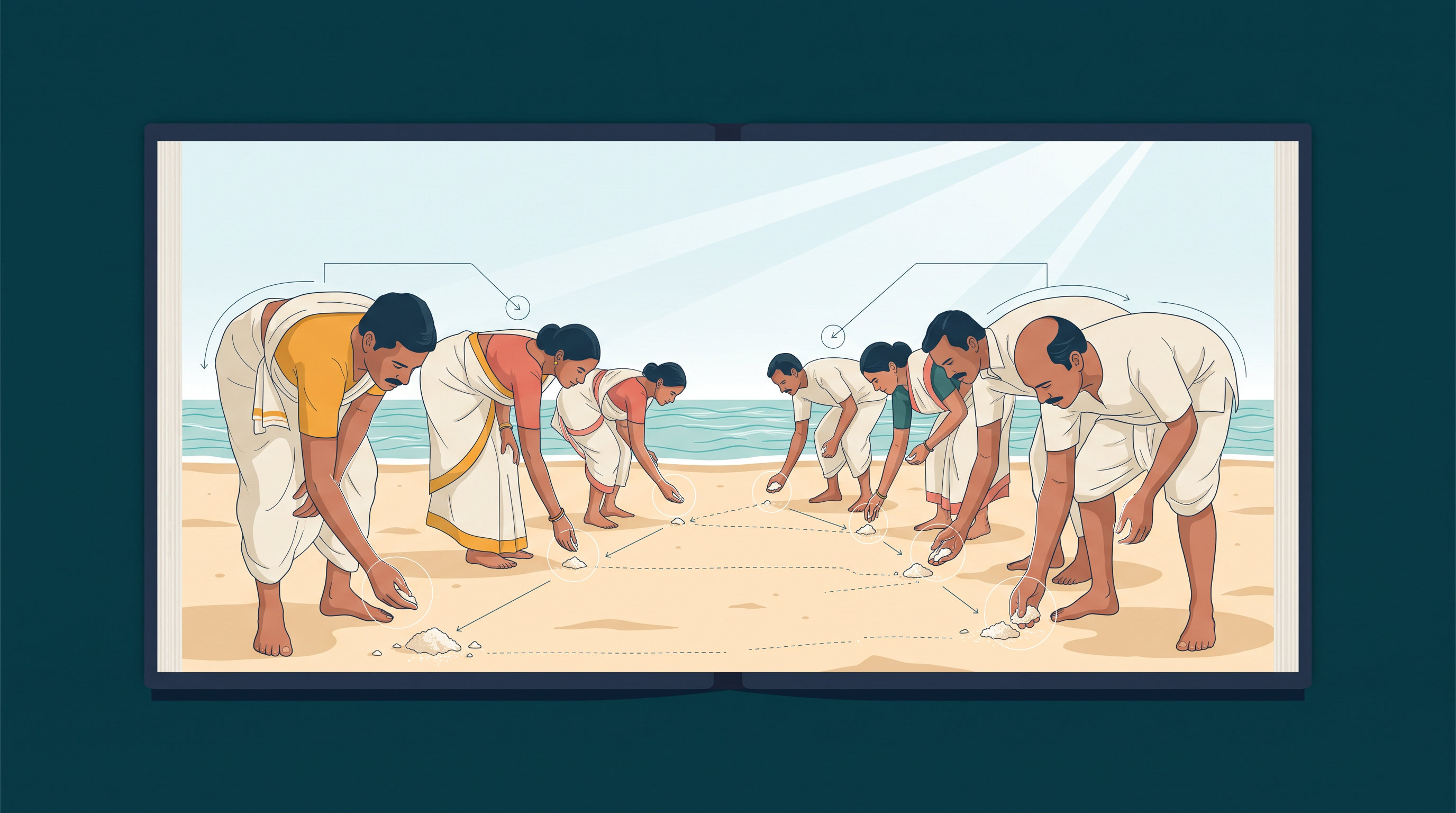
Fig. 11.9 – Satyagrahis picking up natural salt.
Gandhiji explained in writing why salt, and not some other law, deserved this attack. Read his argument as an argument, and notice that most of it is about money and waste rather than about insult.
The state destroyed salt because untaxed salt lying on a beach threatened the revenue. If people could simply scoop it up, no one would buy it from a licensed shop. Salt officers were posted to ruin what nature had made — which is why Gandhiji called the monopoly a fourfold curse rather than merely an expensive one.
On 5 April 1930, the evening before the law was broken, Gandhiji spoke at Dandi. He is speaking to people who expect to be arrested, and he uses the moment to make an argument about what the government’s restraint reveals.
The praise in that speech is a weapon. By congratulating the government on being too ashamed to arrest an army of peace, Gandhiji traps it: arrest us now and you admit the shame was fear. And by saying that a roused nation needs no leader, he removes the government’s simplest option — taking him away.
The Streams Around The March
As with Non-cooperation, apart from the officially sanctioned nationalist campaign, there were numerous other streams of protest. Across large parts of India, peasants breached the hated colonial forest laws that kept them and their cattle out of the woods in which they had once roamed freely.
In some towns, factory workers went on strike while lawyers boycotted British courts and students refused to attend government-run educational institutions. As in 1920-22, now too Gandhiji’s call had encouraged Indians of all classes to make manifest their own discontent with colonial rule.
The rulers responded by detaining the dissenters. In the wake of the Salt March, nearly 60,000 Indians were arrested, among them, of course, Gandhiji himself.
Watched By The Police, Read By The World
The progress of Gandhiji’s march to the seashore can be traced from the secret reports filed by the police officials deputed to monitor his movements. These reproduce the speeches he gave at the villages en route, in which he called upon local officials to renounce government employment and join the freedom struggle.
In one village, Wasna, Gandhiji told the upper castes that ‘if you are out for Swaraj you must serve untouchables. You won’t get Swaraj merely by the repeal of the salt taxes or other taxes. For Swaraj you must make amends for the wrongs which you did to the untouchables. For Swaraj, Hindus, Muslims, Parsis and Sikhs will have to unite. These are the steps towards Swaraj.’
The march was about salt; the speech at Wasna was about caste and about religion. He was telling the marchers that repealing a tax would not by itself make them a free people.
The police spies reported that Gandhiji’s meetings were very well attended, by villagers of all castes, and by women as well as men. They observed that thousands of volunteers were flocking to the nationalist cause, and that among them were many officials who had resigned from their posts with the colonial government. Writing to the government, the District Superintendent of Police remarked, ‘Mr Gandhi appeared calm and collected. He is gathering more strength as he proceeds.’
The progress of the Salt March can also be traced from another source: the American newsmagazine, Time. This, to begin with, scorned at Gandhiji’s looks, writing with disdain of his ‘spindly frame’ and his ‘spidery loins’.
Thus in its first report on the march, Time was deeply sceptical of the Salt March reaching its destination. It claimed that Gandhiji ‘sank to the ground’ at the end of the second day’s walking; the magazine did not believe that ‘the emaciated saint would be physically able to go much further’.
But within a week it had changed its mind. The massive popular following that the march had garnered, wrote Time, had made the British rulers ‘desperately anxious’. Gandhiji himself they now saluted as a ‘Saint’ and ‘Statesman’, who was using ‘Christian acts as a weapon against men with Christian beliefs’.
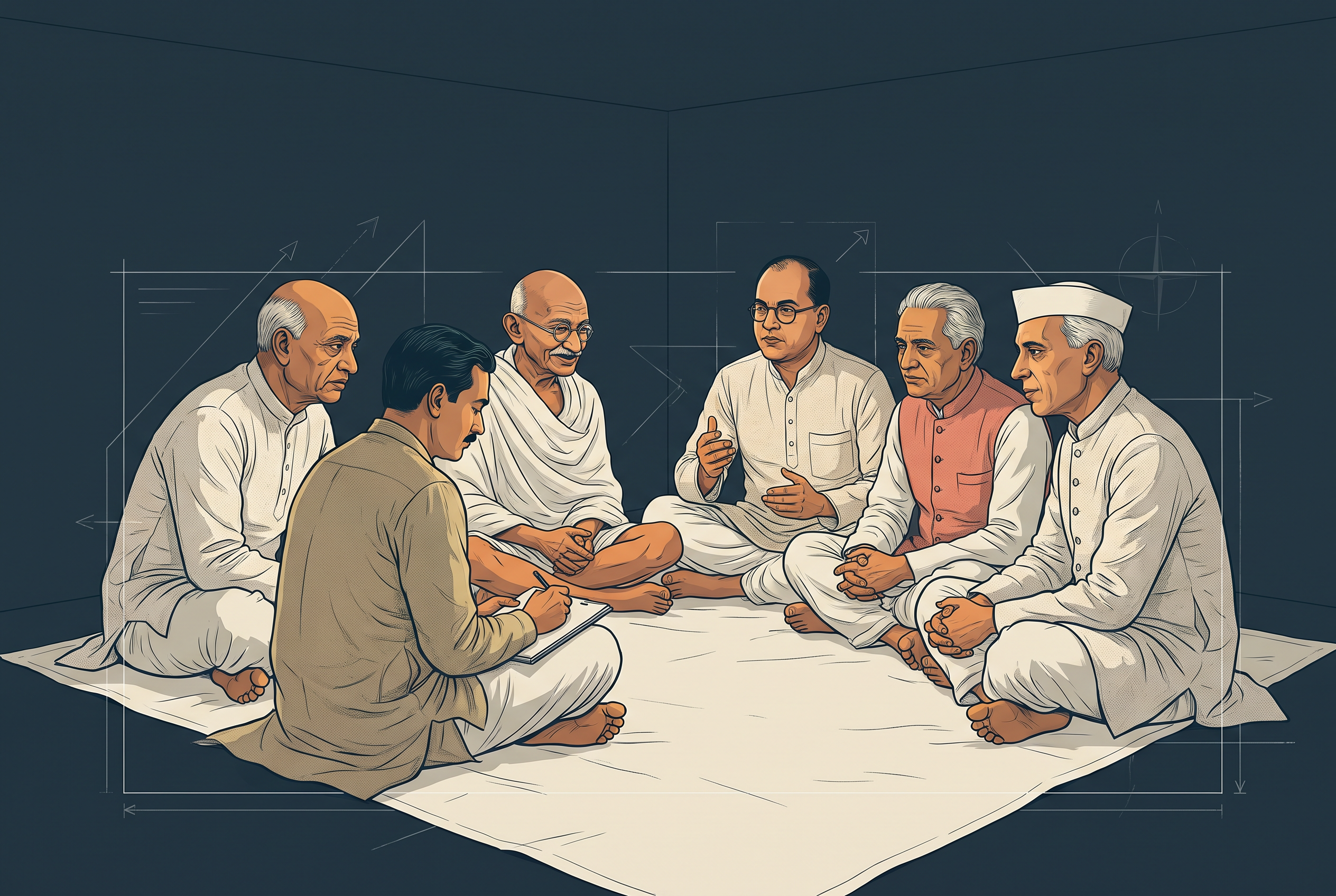
Fig. 11.10 – Congress leaders at Allahabad, 1931.
The road from the Simon Commission to Dandi is set out in Fig. 11.11.
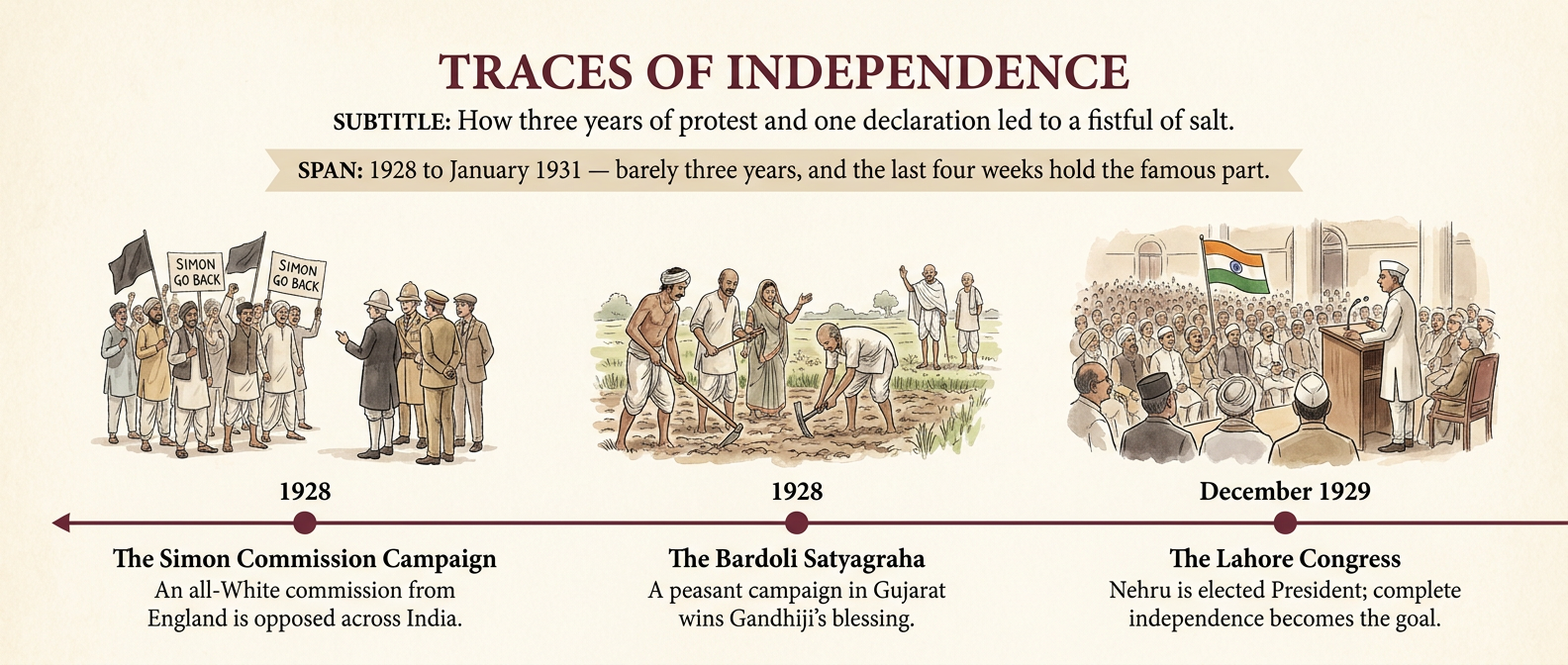
Fig. 11.11 – The Road To Dandi.
11.3.2 Dialogues
The Salt March was notable for at least three reasons.
First, it was this event that first brought Mahatma Gandhi to world attention. The march was widely covered by the European and American press.
Second, it was the first nationalist activity in which women participated in large numbers. The socialist activist Kamaladevi Chattopadhyay had persuaded Gandhiji not to restrict the protests to men alone. Kamaladevi was herself one of numerous women who courted arrest by breaking the salt or liquor laws.
That second point deserves a pause. The change did not come from Gandhiji’s own plan; it came because a woman activist argued him out of it. Movements are shaped by the people inside them, and this one had to be pushed.
Third, and perhaps most significant, it was the Salt March which forced upon the British the realisation that their Raj would not last forever, and that they would have to devolve some power to the Indians.
The Round Table Conferences
To that end, the British government convened a series of ‘Round Table Conferences’ in London. The first meeting was held in November 1930, but without the pre-eminent political leader in India, thus rendering it an exercise in futility.
Gandhiji was released from jail in January 1931 and the following month had several long meetings with the Viceroy. These culminated in what was called the ‘Gandhi-Irwin Pact’, by the terms of which civil disobedience would be called off, all prisoners released, and salt manufacture allowed along the coast.
The pact was criticised by radical nationalists, for Gandhiji was unable to obtain from the Viceroy a commitment to political independence for Indians; he could obtain merely an assurance of talks towards that possible end.
A second Round Table Conference was held in London in the latter part of 1931. Here, Gandhiji represented the Congress.
However, his claims that his party represented all of India came under challenge from three parties. The Muslim League claimed to stand for the interests of the Muslim minority. The Princes claimed that the Congress had no stake in their territories. And the brilliant lawyer and thinker B.R. Ambedkar argued that Gandhiji and the Congress did not really represent the lowest castes.
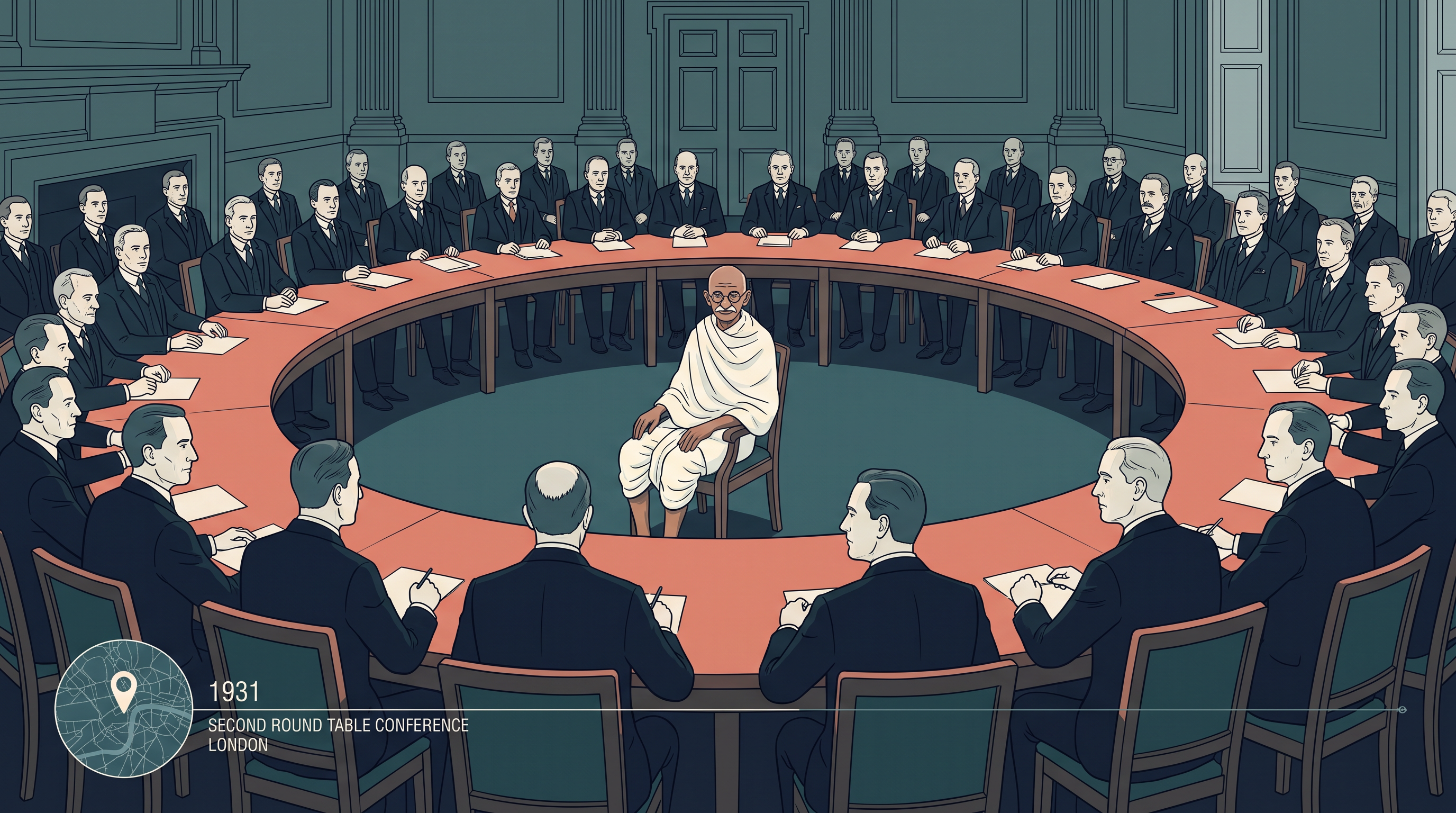
Fig. 11.12 – The Second Round Table Conference, 1931.
Separate Electorates
The sharpest disagreement at the conference was over separate electorates. Under such an arrangement, a specified group would have seats set aside for it, and only members of that group would vote for those seats. The Depressed Classes — the term then used for the castes subjected to untouchability — would thus elect their own representatives, apart from everyone else.
Gandhiji opposed the demand. His argument was that a separate electorate would freeze the very separation it was meant to protect against.
Ambedkar answered him, and his answer began not with theory but with the condition of the people concerned. He was writing as a member of the Depressed Classes himself, and as a lawyer who had watched every door in society close on them.
Set the two arguments side by side. Gandhiji is thinking about the future — about a society healed of untouchability, in which separate seats would only keep the wound open. Ambedkar is thinking about the present — about a community with no land, no independent livelihood and no protection, which cannot wait for the healing of a society that has never yet chosen to heal.
A Hostile Viceroy
The Conference in London was inconclusive, so Gandhiji returned to India and resumed civil disobedience. The new Viceroy, Lord Willingdon, was deeply unsympathetic to the Indian leader.
In a private letter to his sister, Willingdon wrote: ‘It’s a beautiful world if it wasn’t for Gandhi … At the bottom of every move he makes which he always says is inspired by God, one discovers the political manouevre. I see the American Press is saying what a wonderful man he is … But the fact is that we live in the midst of very unpractical, mystical, and superstitious folk who look upon Gandhi as something holy, …’
This is a private letter, and it shows what a public despatch would have hidden. Willingdon was the head of the government of India, and he thought the people he governed were superstitious and unpractical. Read against the Viceroy’s official correspondence, such a letter tells us less about Gandhiji than about the contempt on which colonial rule rested.
Ministries, And Then A War
In 1935, however, a new Government of India Act promised some form of representative government. Two years later, in an election held on the basis of a restricted franchise, the Congress won a comprehensive victory.
A restricted franchise means that only a small, mostly propertied, minority could vote. The victory was therefore real, but it was won in an electorate that left most Indians out.
Now eight out of 11 provinces had a Congress ‘Prime Minister’, working under the supervision of a British Governor. The quotation marks matter: the Governor, appointed by London, still stood above the elected minister.
In September 1939, two years after the Congress ministries assumed office, the Second World War broke out. Mahatma Gandhi and Jawaharlal Nehru had both been strongly critical of Hitler and the Nazis. Accordingly, they promised Congress support to the war effort if the British, in return, promised to grant India independence once hostilities ended.
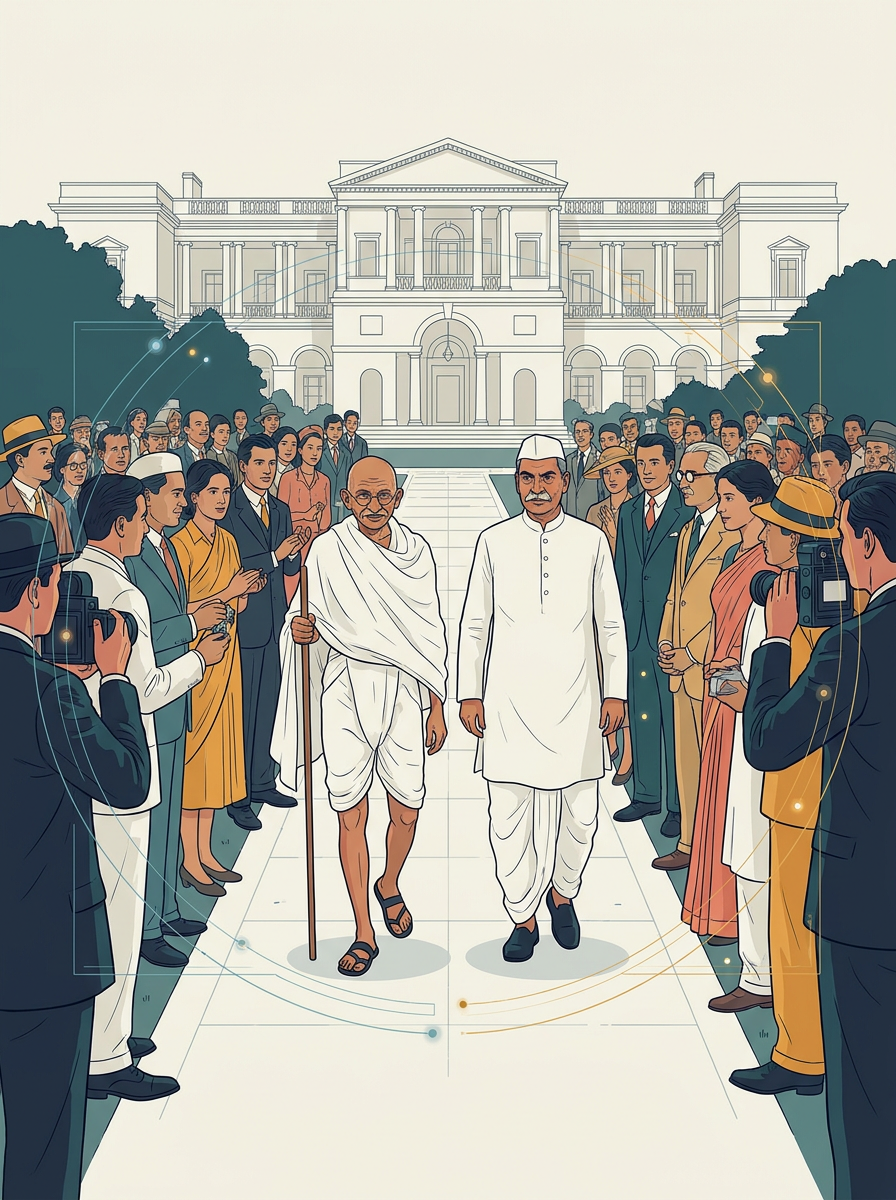
Fig. 11.13 – Mahatma Gandhi and Rajendra Prasad, 1939.
The offer was refused. In protest, the Congress ministries resigned in October 1939. Through 1940 and 1941, the Congress organised a series of individual satyagrahas to pressure the rulers to promise freedom once the war had ended.
A Three-Way Struggle
Meanwhile, in March 1940, the Muslim League passed a resolution demanding a measure of autonomy for the Muslim-majority areas of the subcontinent.
The political landscape was now becoming complicated: it was no longer Indians versus the British; rather, it had become a three-way struggle between the Congress, the Muslim League, and the British. Every proposal from now on had to satisfy three parties, and each could veto the others.
At this time Britain had an all-party government, whose Labour members were sympathetic to Indian aspirations, but whose Conservative Prime Minister, Winston Churchill, was a diehard imperialist. He insisted that he had not been appointed the King’s First Minister in order to preside over the liquidation of the British Empire.
In the spring of 1942, Churchill was persuaded to send one of his ministers, Sir Stafford Cripps, to India to try and forge a compromise with Gandhiji and the Congress.
Talks broke down, however, after the Congress insisted that if it was to help the British defend India from the Axis powers, then the Viceroy had first to appoint an Indian as the Defence Member of his Executive Council. The Executive Council was the Viceroy’s own body of advisers, and the Defence Member controlled the war effort. The Congress was asking for real power now, not a promise of power later.
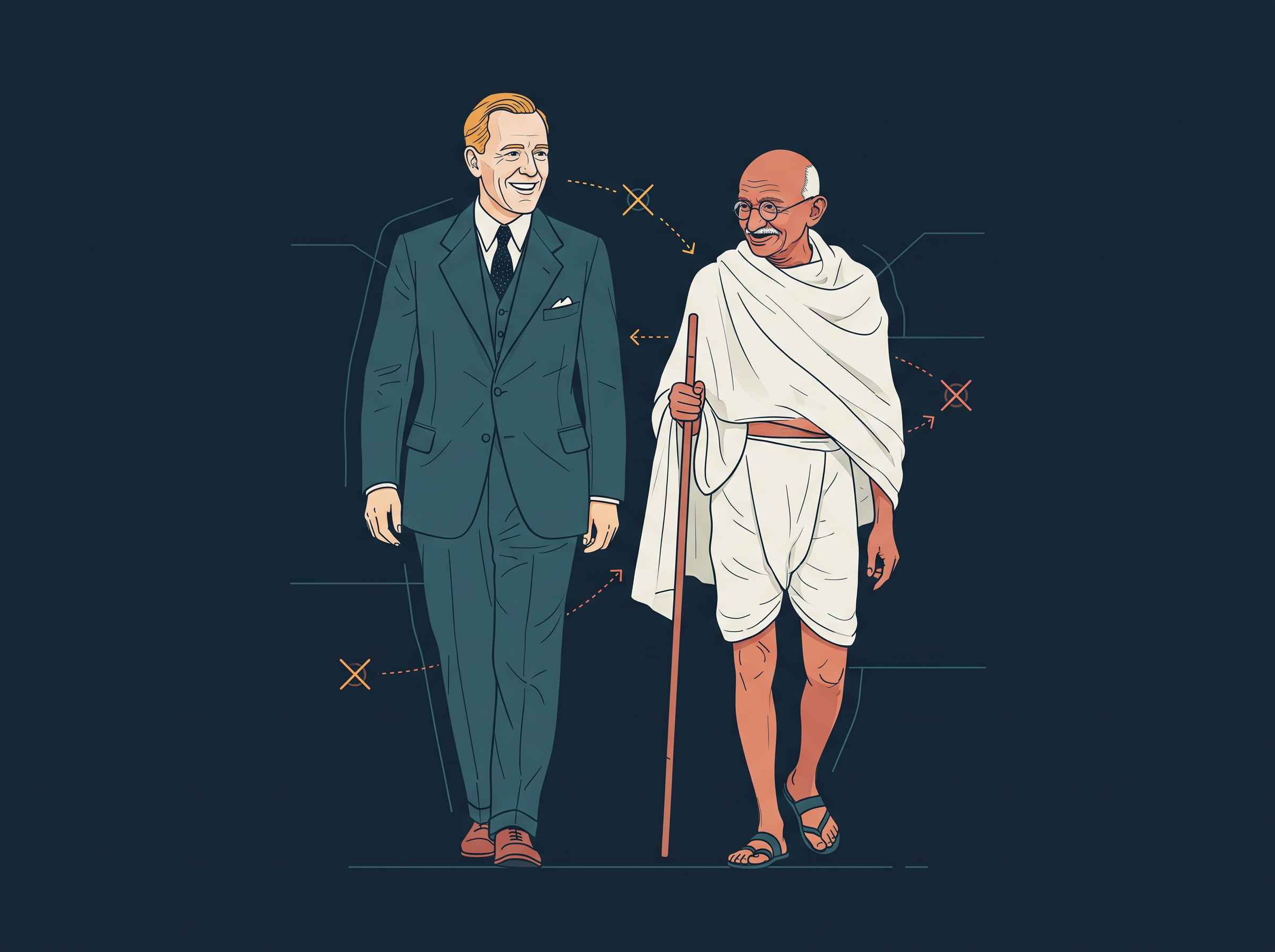
Fig. 11.14 – Mahatma Gandhi with Stafford Cripps, 1942.
The years of negotiation are set out in Fig. 11.15. Read it against Fig. 11.11: the moment mass action stopped, the story moved into conference rooms — and stalled there.
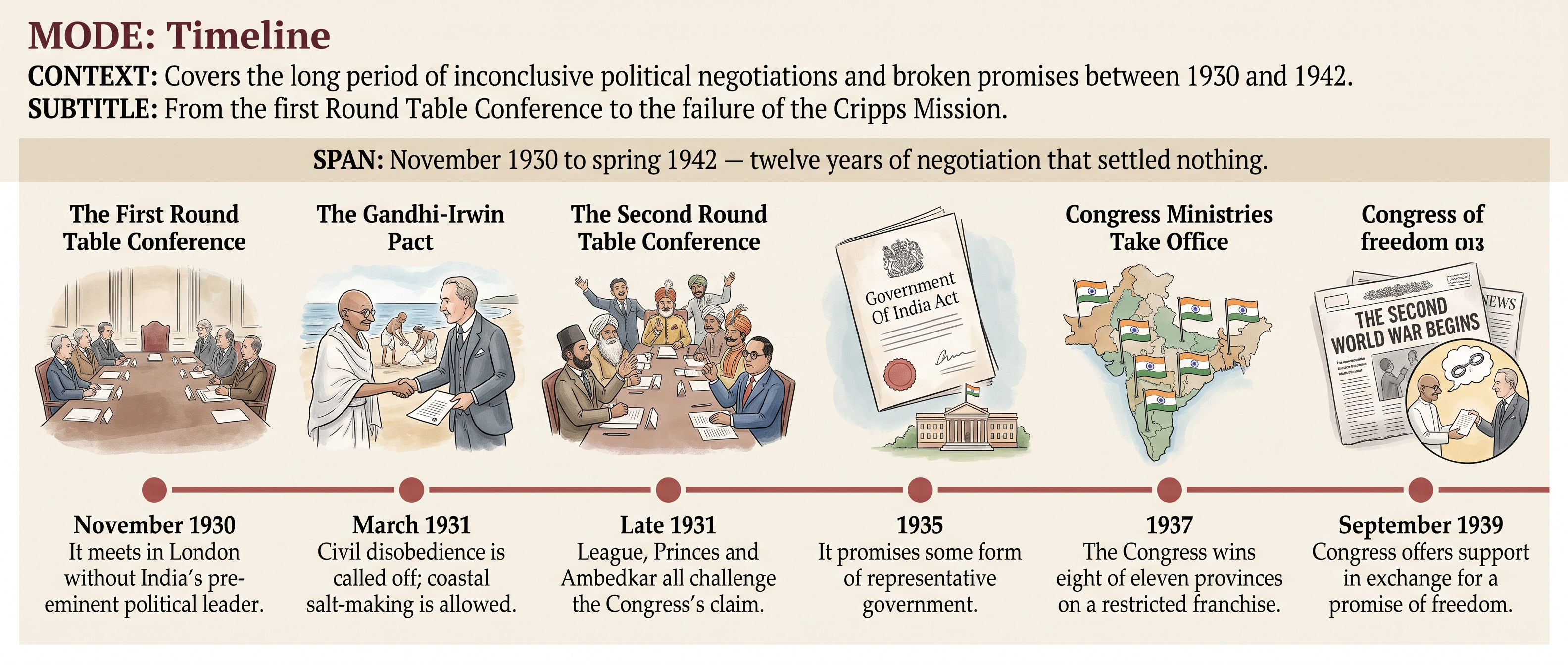
Fig. 11.15 – Twelve Years Of Talks.
11.4 Quit India
The Third Great Movement
After the failure of the Cripps Mission, Mahatma Gandhi decided to launch his third major movement against British rule. This was the ‘Quit India’ campaign, which began in August 1942.
The name itself was new in tone. Non-cooperation had asked Indians to withdraw from the government; civil disobedience had asked them to break one unjust law. Quit India addressed the rulers directly and told them to go.
Although Gandhiji was jailed at once, younger activists organised strikes and acts of sabotage all over the country. Particularly active in the underground resistance were socialist members of the Congress, such as Jayaprakash Narayan.
In several districts, such as Satara in the west and Medinipur in the east, ‘independent’ governments were proclaimed. The British responded with much force, yet it took more than a year to suppress the rebellion.
A movement whose leader was imprisoned on the first day, and which the state still could not put down for over a year, was clearly not being run from the top.
Read that box carefully, because it complicates the story. The Satara government lasted three years and ran courts of its own — and it did so despite the disapproval of the Congress. As in 1921, people took the national call and used it for the fight they already had, here against caste and landlordism.
A Mass Movement, And Its Cost
‘Quit India’ was genuinely a mass movement, bringing into its ambit hundreds of thousands of ordinary Indians. It especially energised the young who, in very large numbers, left their colleges to go to jail.
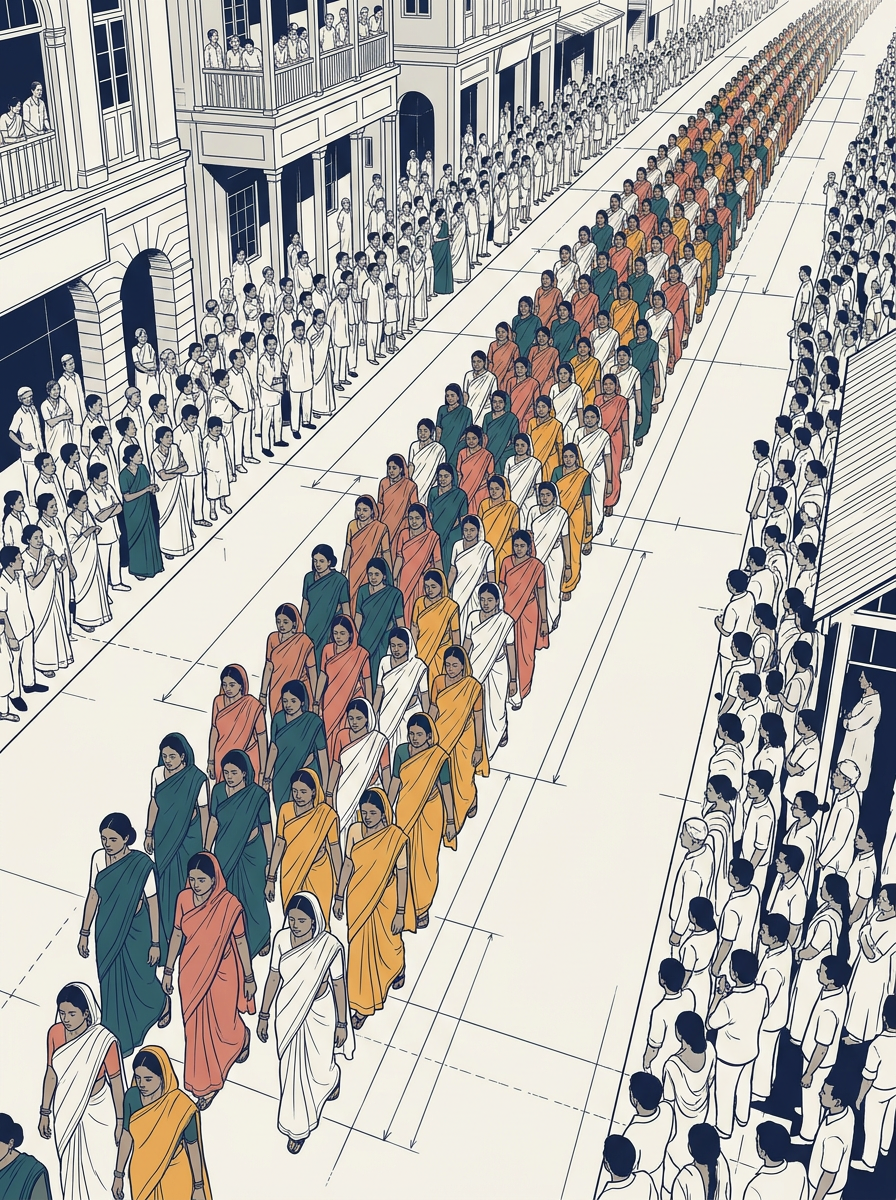
Fig. 11.16 – Women’s procession in Bombay.
However, while the Congress leaders languished in jail, Jinnah and his colleagues in the Muslim League worked patiently at expanding their influence. It was in these years that the League began to make a mark in the Punjab and Sind, provinces where it had previously had scarcely any presence.
Talks, And An Election
In June 1944, with the end of the war in sight, Gandhiji was released from prison. Later that year he held a series of meetings with Jinnah, seeking to bridge the gap between the Congress and the League.
In 1945, a Labour government came to power in Britain and committed itself to granting independence to India. Meanwhile, back in India, the Viceroy, Lord Wavell, brought the Congress and the League together for a series of talks.
Early in 1946 fresh elections were held to the provincial legislatures. The Congress swept the ‘General’ category, but in the seats specifically reserved for Muslims the League won an overwhelming majority. The political polarisation was complete.
Look at what the result actually measured. Voters in the general seats and voters in the reserved seats were choosing in separate contests. Each community was, in effect, being asked who spoke for it — and each gave a clear answer.
The Talks Break Down
A Cabinet Mission sent in the summer of 1946 failed to get the Congress and the League to agree on a federal system that would keep India together while allowing the provinces a degree of autonomy.
A federal system is one in which power is shared between a central government and the provinces, each with its own settled sphere. The Mission’s hope was that enough autonomy for the provinces might make a single India acceptable to the League. It did not.
After the talks broke down, Jinnah called for a ‘Direct Action Day’ to press the League’s demand for Pakistan. On the designated day, 16 August 1946, bloody riots broke out in Calcutta.
The violence spread to rural Bengal, then to Bihar, and then across the country to the United Provinces and the Punjab. In some places, Muslims were the main sufferers, in other places, Hindus.
That last sentence must be read exactly as it stands. Neither community was only a victim and neither was only an attacker. Ordinary people were killed by neighbours in the places where their own community was outnumbered.
Freedom, And Division
In February 1947, Wavell was replaced as Viceroy by Lord Mountbatten. Mountbatten called one last round of talks, but when these too proved inconclusive he announced that British India would be freed, but also divided.
The formal transfer of power was fixed for 15 August. When that day came, it was celebrated with gusto in different parts of India.
In Delhi, there was ‘prolonged applause’ when the President of the Constituent Assembly — the body of elected members that was to write India’s Constitution — began the meeting by invoking the Father of the Nation, Mohandas Karamchand Gandhi. Outside the Assembly, the crowds shouted ‘Mahatma Gandhi ki jai’.
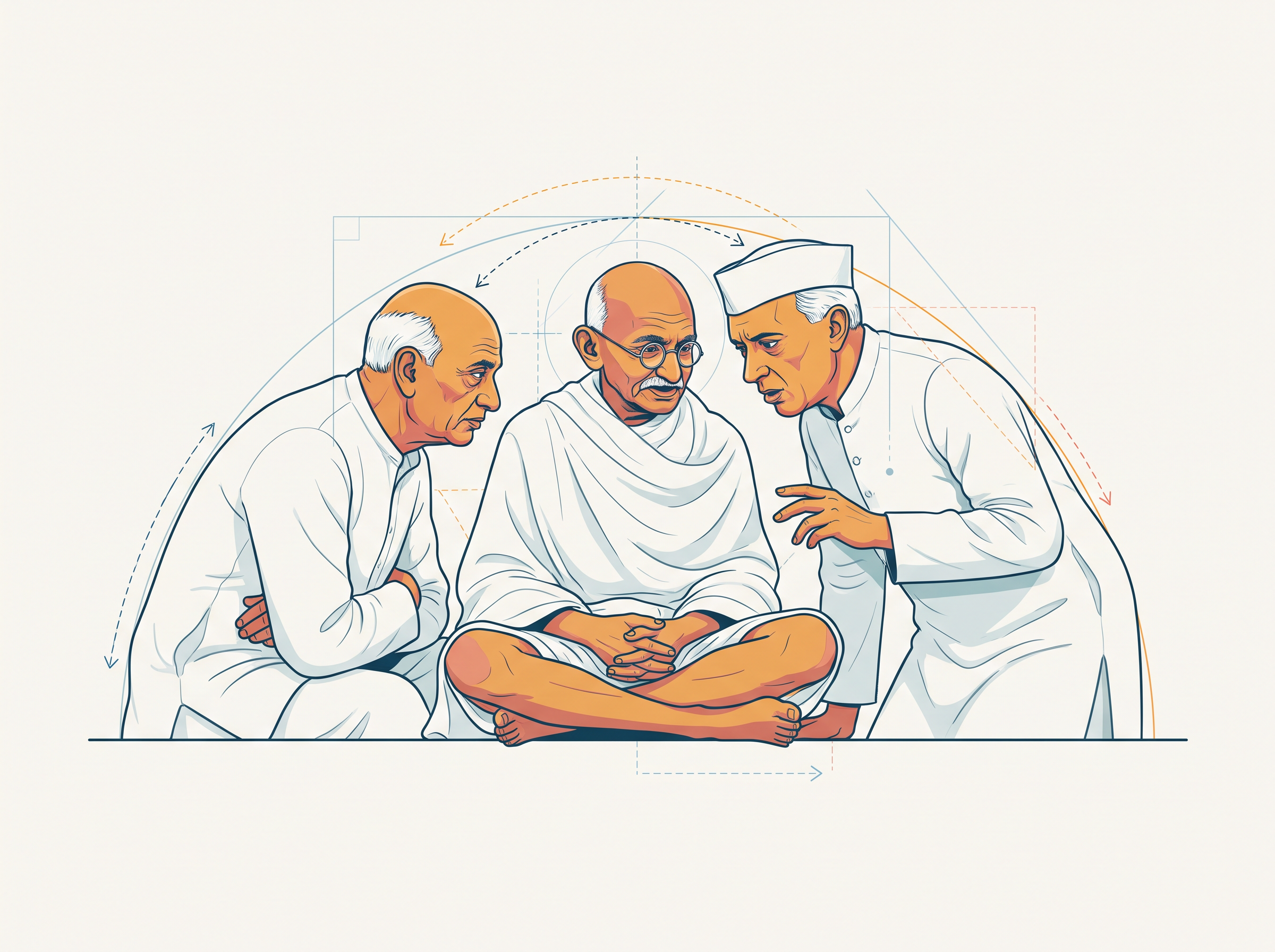
Fig. 11.17 – Conferring with Nehru and Patel.
Hold on to that caption. The Congress was not one mind. It contained a socialist wing and a conservative wing, and the man they both accepted as arbiter was the one whose name the crowds were shouting outside the Assembly. Where he stood on 15 August 1947 is the subject of the next section.
The five years from Quit India to the transfer of power are set out in Fig. 11.18.
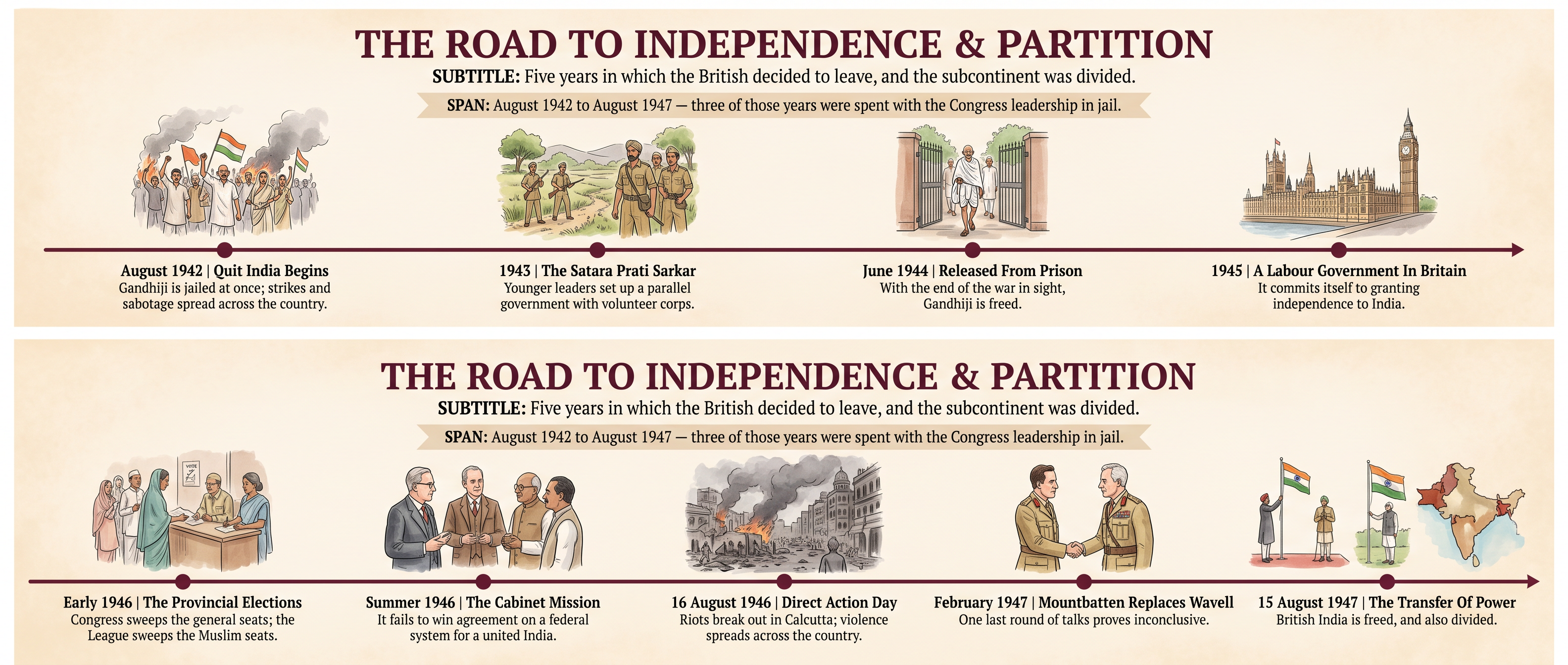
Fig. 11.18 – From Quit India To 15 August 1947.
11.5 The Last Heroic Days
The Man Who Was Not There
As it happened, Mahatma Gandhi was not present at the festivities in the capital on 15 August 1947. He was in Calcutta, but he did not attend any function or hoist a flag there either.
Gandhiji marked the day with a 24-hour fast. In Delhi the Assembly was applauding his name; in Calcutta the man himself refused to eat.
The freedom he had struggled so long for had come at an unacceptable price, with a nation divided and Hindus and Muslims at each other’s throats. He had spent thirty years arguing that Indians of different faiths could win freedom together. Freedom had arrived, and they were killing one another.
Hospitals And Refugee Camps
Through September and October, writes his biographer D.G. Tendulkar, Gandhiji ‘went round hospitals and refugee camps giving consolation to distressed people’.
He ‘appealed to the Sikhs, the Hindus and the Muslims to forget the past and not to dwell on their sufferings but to extend the right hand of fellowship to each other, and to determine to live in peace …’
Note where he chose to be. Not in the new government, not in the Constituent Assembly, but in the wards and the camps, among people who had lost their homes and their families in the violence of Partition.
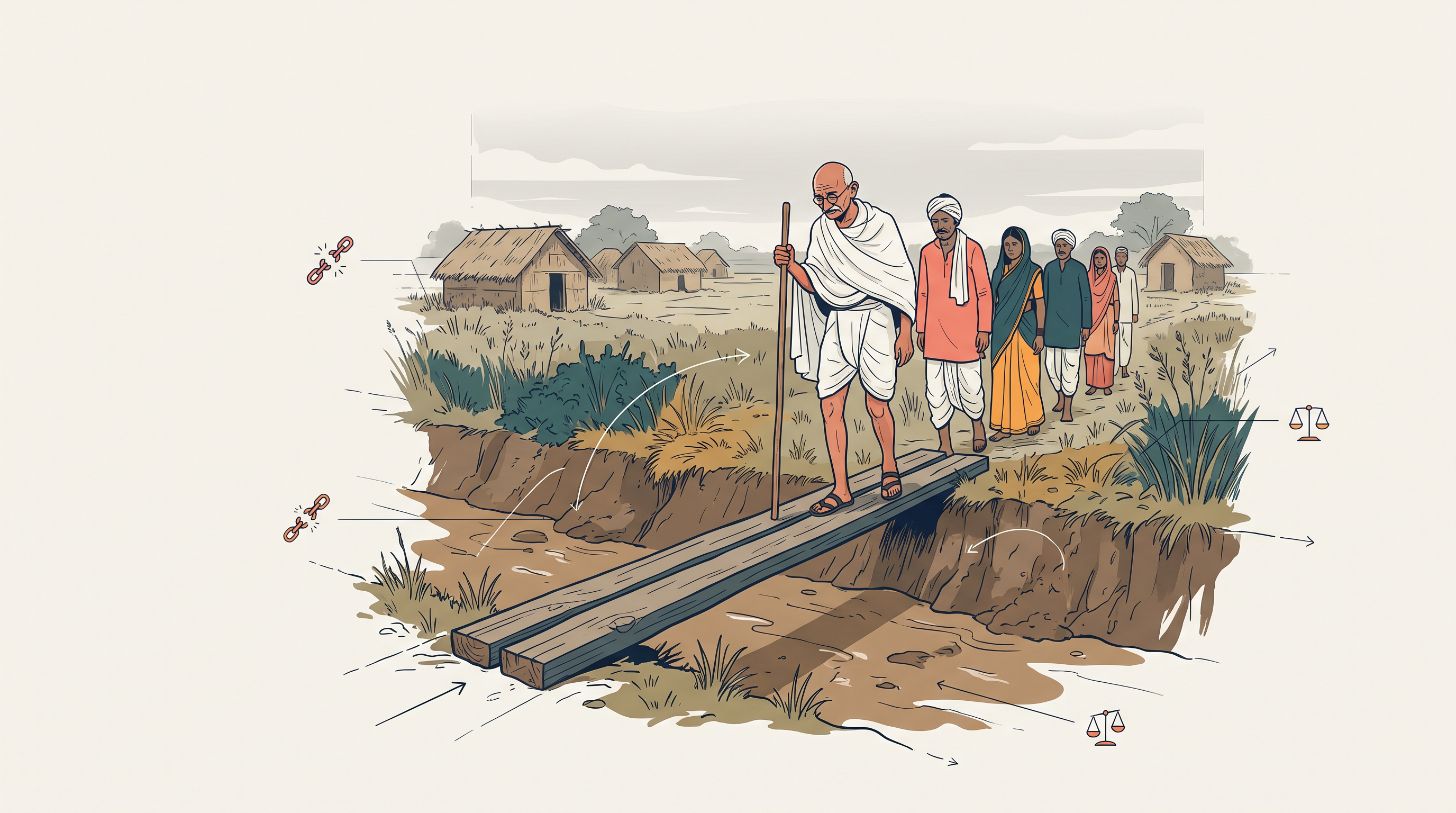
Fig. 11.19 – On the way to a riot-torn village.
A Promise To The Minorities
At the initiative of Gandhiji and Nehru, the Congress now passed a resolution on ‘the rights of minorities’. The party had never accepted the ‘two-nation theory’ — the claim that Hindus and Muslims formed two separate nations, each needing a state of its own.
Forced against its will to accept Partition, the Congress still believed that ‘India is a land of many religions and many races, and must remain so’.
Whatever be the situation in Pakistan, India would be ‘a democratic secular State where all citizens enjoy full rights and are equally entitled to the protection of the State, irrespective of the religion to which they belong’. A secular state, in this sense, is one that does not belong to any religion, and owes the same protection to a citizen of every faith.
The Congress wished to ‘assure the minorities in India that it will continue to protect, to the best of its ability, their citizen rights against aggression’.
The timing of that resolution is the point. It was passed at the very moment when religion had just been made the basis of a new border, and when minorities on both sides were fleeing for their lives.
The Finest Hour, And Its Cost
Many scholars have written of the months after Independence as being Gandhiji’s ‘finest hour’. After working to bring peace to Bengal, Gandhiji now shifted to Delhi, from where he hoped to move on to the riot-torn districts of Punjab.
While in the capital, his meetings were disrupted by refugees who objected to readings from the Koran, or shouted slogans asking why he did not speak of the sufferings of those Hindus and Sikhs still living in Pakistan.
These were people who had lost everything and arrived in Delhi with nothing. Their anger is not hard to understand. What they were demanding was that his sympathy stop at the border.
In fact, as D.G. Tendulkar writes, Gandhiji ‘was equally concerned with the sufferings of the minority community in Pakistan. He would have liked to be able to go to their succour. But with what face could he now go there, when he could not guarantee full redress to the Muslims in Delhi?’
Twenty-Sixth Of January, 1948
There was an attempt on Gandhiji’s life on 20 January 1948, but he carried on undaunted.
On 26 January, he spoke at his prayer meeting of how that day had been celebrated in the past as Independence Day. That was the pledge of 1930, taken in villages and cities at the same minute — and now, eighteen years later, freedom had actually come.
But its first few months had been deeply disillusioning. However, he trusted that ‘the worst is over’, that Indians would henceforth work collectively for the ‘equality of all classes and creeds, never the domination and superiority of the major community over a minor, however insignificant it may be in numbers or influence’.
He also permitted himself the hope ‘that though geographically and politically India is divided into two, at heart we shall ever be friends and brothers helping and respecting one another and be one for the outside world’.
Gandhiji had fought a lifelong battle for a free and united India; and yet, when the country was divided, he urged that the two parts respect and befriend one another.
The Thirtieth Of January
Other Indians were less forgiving. At his daily prayer meeting on the evening of 30 January, Gandhiji was shot dead by a young man. The assassin, who surrendered afterwards, was Nathuram Godse.
He was killed for the belief he had held longest and defended last: that Indians of different faiths could live as one people. He was killed at a prayer meeting, in the open, among ordinary people, which is where he had always been.
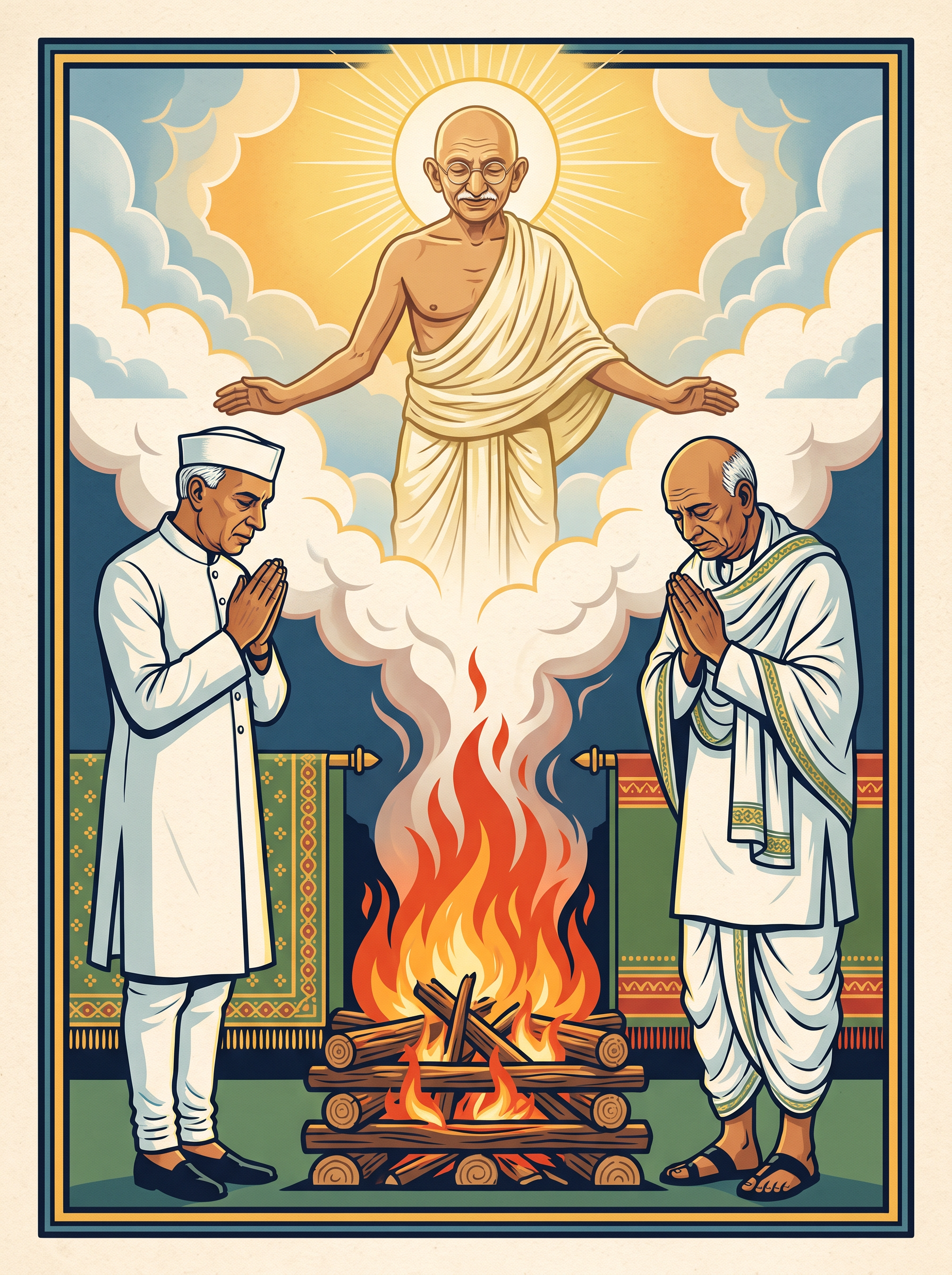
Fig. 11.20 – The death of the Mahatma, a popular print.
Grief, And A Comparison
Gandhiji’s death led to an extraordinary outpouring of grief, with rich tributes being paid to him from across the political spectrum in India, and moving appreciations coming from such international figures as George Orwell and Albert Einstein.
Time magazine, which had once mocked Gandhiji’s physical size and seemingly non-rational ideas, now compared his martyrdom to that of Abraham Lincoln. It was a bigoted American who had killed Lincoln for believing that human beings were equal regardless of their race or skin colour; and it was a bigoted Hindu who had killed Gandhiji for believing that friendship was possible, indeed necessary, between Indians of different faiths.
In this respect, as Time wrote, ‘The world knew that it had, in a sense too deep, too simple for the world to understand, connived at his (Gandhiji’s) death as it had connived at Lincoln’s.’
That is a heavy word, connived. Time is saying that a man who insisted on friendship across faiths was killed by a world that had already accepted hatred as normal, and that the world therefore had a share in his death.
The last months are set out in Fig. 11.21.
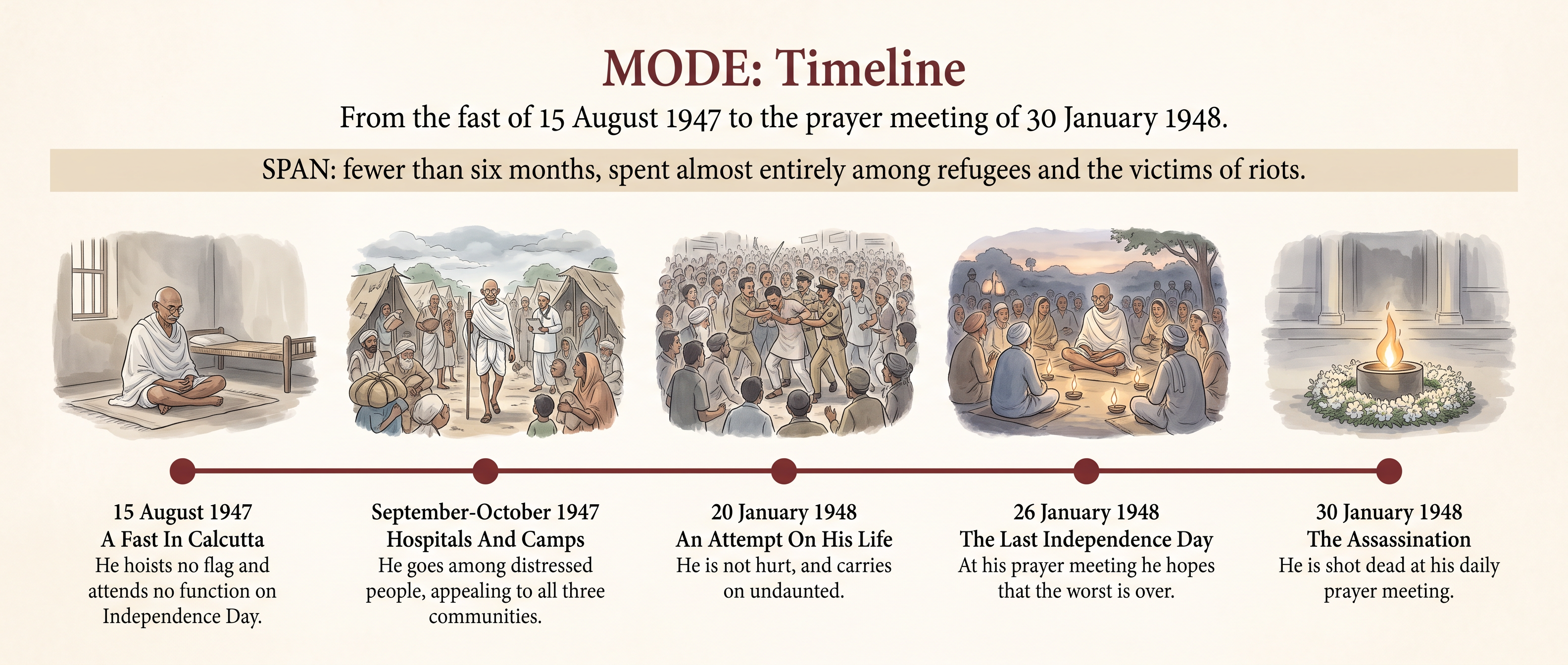
Fig. 11.21 – The Last Months.
11.6 Knowing Gandhi
There are many different kinds of sources from which we can reconstruct the political career of Gandhiji and the history of the nationalist movement.
This section is not one more chapter of the story. It is a section about how the story was made — and about how a careful reader can tell a fact from a fear.
11.6.1 Public Voice And Private Scripts
One important source is the writings and speeches of Mahatma Gandhi and his contemporaries, including both his associates and his political adversaries.
Within these writings we need to distinguish between those that were meant for the public and those that were not. Speeches, for instance, allow us to hear the public voice of an individual, while private letters give us a glimpse of his or her private thoughts.
In letters we see people expressing their anger and pain, their dismay and anxiety, their hopes and frustrations in ways in which they may not express themselves in public statements.
Where The Distinction Breaks Down
But we must remember that this private-public distinction often breaks down. Many letters are written to individuals, and are therefore personal, but they are also meant for the public.
The language of the letters is often shaped by the awareness that they may one day be published. Conversely, the fear that a letter may get into print often prevents people from expressing their opinion freely in personal letters.
So a letter can be a performance, and the absence of a sentence in a letter can be a decision. Mahatma Gandhi regularly published in his journal, Harijan, letters that others wrote to him. Nehru edited a collection of letters written to him during the national movement and published A Bunch of Old Letters.
One Quarrel, Three Letters
The letters that follow record a real crisis inside the Congress, and they let us watch it from three sides.
In the 1920s, Jawaharlal Nehru was increasingly influenced by socialism, and he returned from Europe in 1928 deeply impressed with the Soviet Union. As he began working closely with the socialists — Jayaprakash Narayan, Narendra Dev, N.G. Ranga and others — a rift developed between the socialists and the conservatives within the Congress.
After becoming the Congress President in 1936, Nehru spoke passionately against fascism, and upheld the demands of workers and peasants.
Worried by Nehru’s socialist rhetoric, the conservatives, led by Rajendra Prasad and Sardar Patel, threatened to resign from the Working Committee, and some prominent industrialists in Bombay issued a statement attacking Nehru.
Both Prasad and Nehru turned to Mahatma Gandhi and met him at his ashram at Wardha. The latter acted as the mediator, as he often did, restraining Nehru’s radicalism and persuading Prasad and others to see the significance of Nehru’s leadership. In A Bunch of Old Letters, 1958, Nehru reprinted many of the letters that were exchanged at the time.
Notice how much these letters give us that no public statement would. Prasad’s hurt, Nehru’s exhaustion, Gandhiji’s teasing — the sentence about the crown of thorns is a joke and a command at once. Yet Nehru later chose to print them, which means we are reading a private quarrel that its own participant decided the country should see.
11.6.2 Framing A Picture
Autobiographies similarly give us an account of the past that is often rich in human detail. An autobiography is the story of a life told by the person who lived it.
But here again we have to be careful of the way we read and interpret autobiographies. We need to remember that they are retrospective accounts written very often from memory.
They tell us what the author could recollect, what he or she saw as important, or was keen on recounting, or how a person wanted his or her life to be viewed by others.
Writing an autobiography is a way of framing a picture of yourself. A frame does two things at once: it shows you what is inside it, and it decides what is left outside.
So in reading these accounts we have to try and see what the author does not tell us. We need to understand the reasons for that silence — those wilful or unwitting acts of forgetting.
11.6.3 Through Police Eyes
Another vital source is government records, for the colonial rulers kept close tabs on those they regarded as critical of the government. The letters and reports written by policemen and other officials were secret at the time; but now can be accessed in archives.
An archive is a collection of records preserved by a state or an institution. What was once a confidential file, written so that officials could act on it, is today an open document that a historian may read.
Let us look at one such source: the fortnightly reports that were prepared by the Home Department from the early twentieth century.
These reports were based on police information from the localities, but often expressed what the higher officials saw, or wanted to believe. While noticing the possibility of sedition and rebellion, they liked to assure themselves that these fears were unwarranted.
If you see the Fortnightly Reports for the period of the Salt March you will notice that the Home Department was unwilling to accept that Mahatma Gandhi’s actions had evoked any enthusiastic response from the masses.
The march was seen as a drama, an antic, a desperate effort to mobilise people who were unwilling to rise against the British and were busy with their daily schedules, happy under the Raj.
That last phrase is the giveaway. A government which is confident that its subjects are happy does not need to send a fortnightly report about them to headquarters.
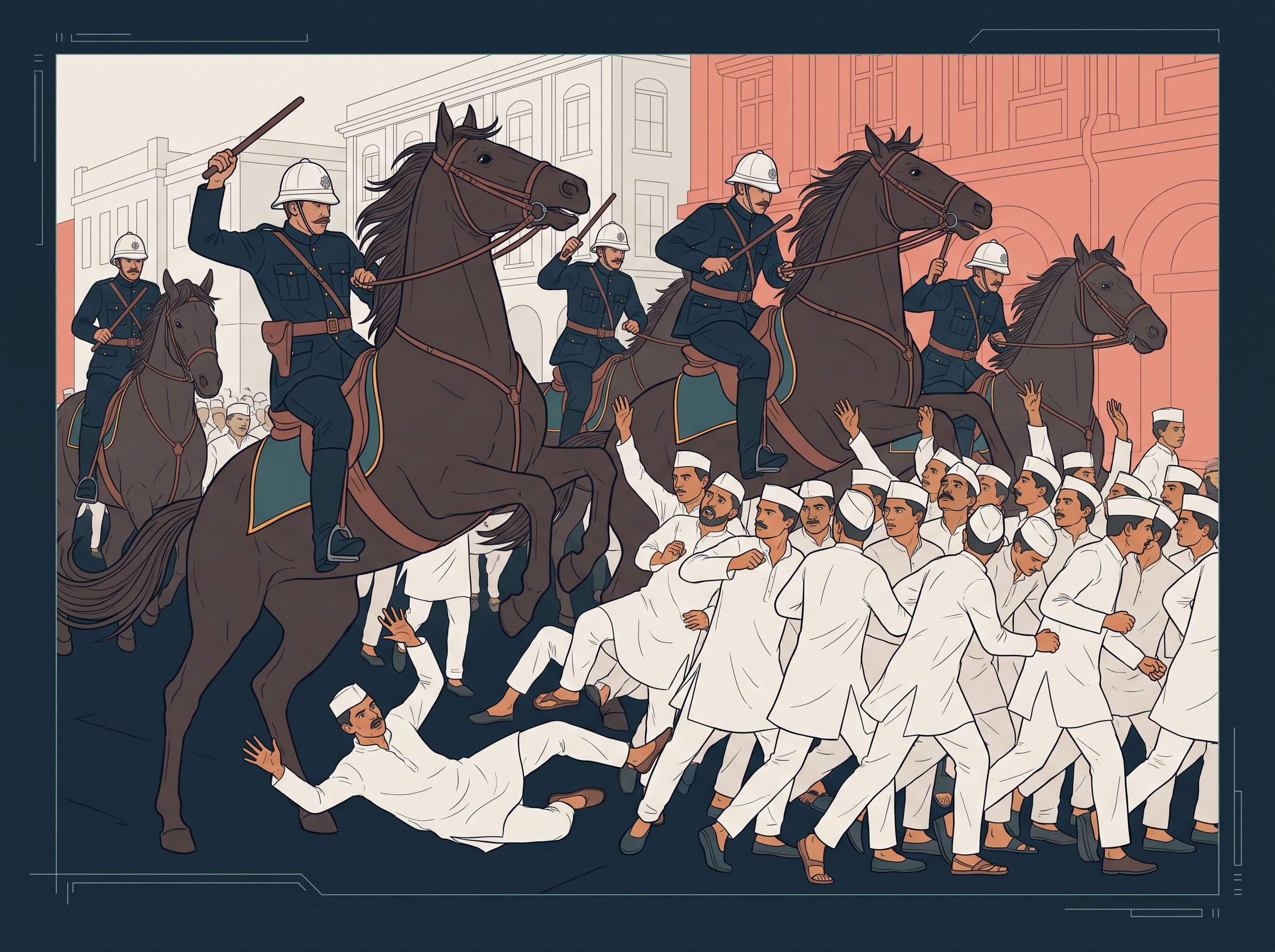
Fig. 11.22 – Police clash with volunteers in Bombay.
Now read the reports themselves. They were written for officials, by officials, and were never meant to be seen by you.
Read the reports twice, and the second reading is the useful one. The first tells you the government thought nothing was happening. The second shows you what it was counting: schools deserted, volunteers enrolled, the Salt Act openly defied in eleven towns of one province, utensils destroyed. The panic is in the detail, not in the summary.
11.6.4 From Newspapers
One more important source is contemporary newspapers, published in English as well as in the different Indian languages, which tracked Mahatma Gandhi’s movements and reported on his activities, and also represented what ordinary Indians thought of him.
Newspaper accounts, however, should not be seen as unprejudiced. They were published by people who had their own political opinions and world views.
These ideas shaped what was published and the way events were reported. The accounts that were published in a London newspaper would be different from the report in an Indian nationalist paper.
You have already seen this in action. The same three weeks of walking produced a Gorakhpur paper describing crowds weeping with love, a Home Department file describing an antic, and an American magazine describing a spindly frame — and then, a week later, a statesman.
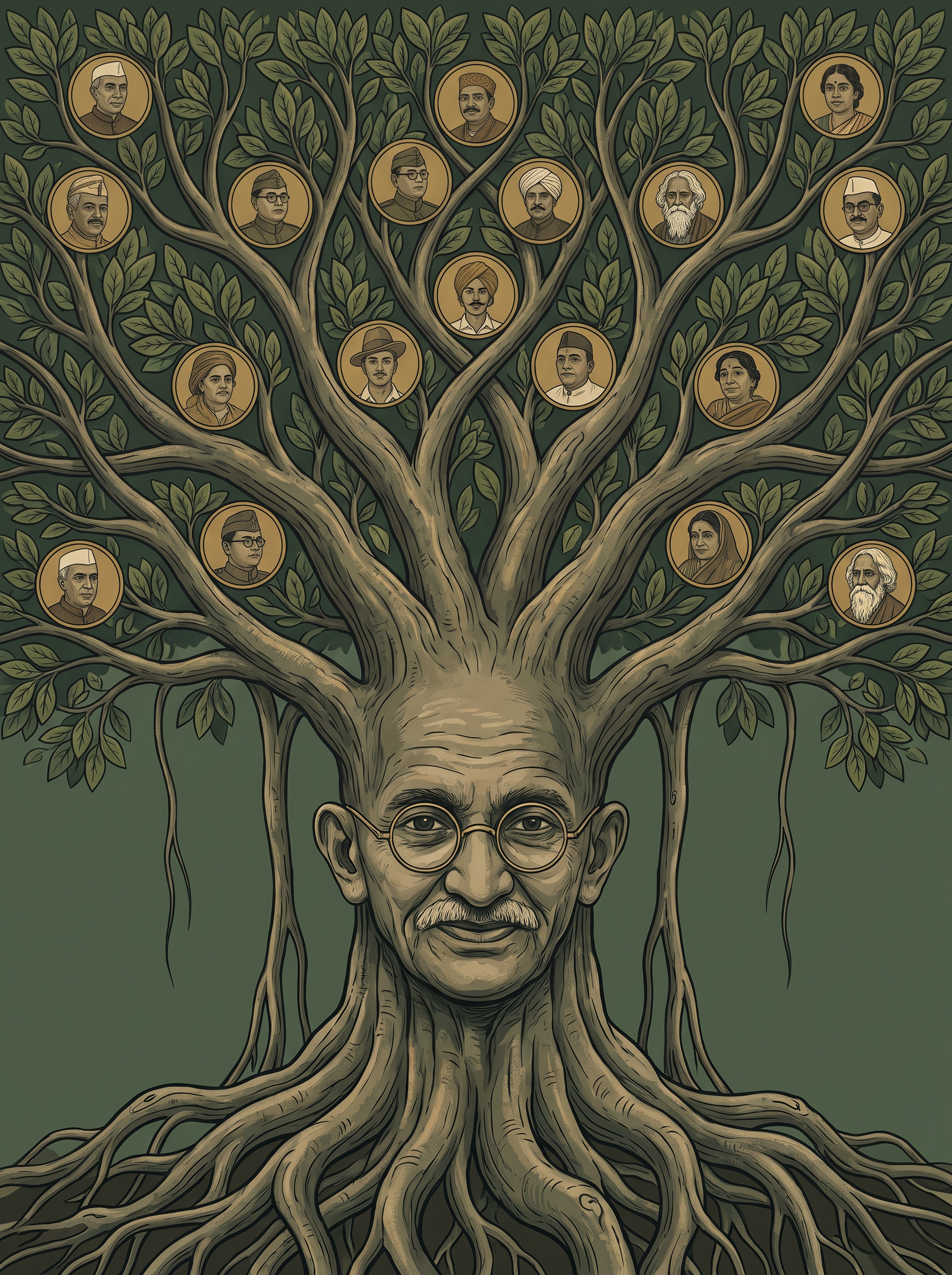
Fig. 11.23 – The tree of nationalism.
We need to look at these reports but should be careful while interpreting them. Every statement made in these cannot be accepted literally as representing what was happening on the ground.
They often reflect the fears and anxieties of officials who were unable to control a movement and were anxious about its spread. They did not know whether to arrest Mahatma Gandhi or what an arrest would mean.
The more the colonial state kept a watch on the public and its activities, the more it worried about the basis of its rule.
That sentence is the lesson of this whole section, and it works for every source you have read here. A speech, a letter, an autobiography, a police file, a newspaper — each was made by someone with an interest. The historian’s job is not to find the one source with no interest. It is to read each one knowing what its maker wanted.
11.7 Summary
A Leader Announces Himself
- Mahatma Gandhi returned to India in January 1915, after two decades in South Africa, where he had first forged satyagraha, first promoted harmony between religions, and first challenged upper-caste Indians about their treatment of low castes and women.
- The India he returned to was politically active but narrow: the Congress had branches in the towns, and its leaders were lawyers, doctors and landlords.
- At the opening of the Banaras Hindu University in February 1916 he told that elite audience that India’s salvation could only come through the farmer, and not through lawyers, doctors or rich landlords.
- That speech was both a statement of fact and a statement of intent: he meant to make Indian nationalism representative of the Indian people as a whole.
The Making And Unmaking Of Non-cooperation
- Champaran (1917), Ahmedabad and Kheda (1918) marked him out as a nationalist with sympathy for the poor, but all three were localised struggles.
- The Rowlatt Act of 1919 gave him an all-India grievance; the bandh, the repression in Punjab and the Jallianwala Bagh massacre made him a truly national leader.
- Non-cooperation asked Indians to withdraw from the government’s schools, courts and taxes, and was joined to the Khilafat Movement in the hope that Hindus and Muslims would act together.
- The response was unprecedented, but people acted on their own grievances — forest laws, land tax, forced porterage — sometimes in defiance of the local nationalist leadership.
- After the burning of the police station at Chauri Chaura in February 1922, Gandhiji called the movement off; he was then tried for sedition and sentenced to six years.
- He became a people’s leader through dress, the charkha and a life the poor recognised, but also through careful organisation, work in the mother tongue, and Congress committees built on linguistic regions.
- Both poor peasants and rich industrialists supported him, for reasons that were different from, and perhaps opposed to, one another.
- After his release in February 1924 he turned to khadi and to the abolition of untouchability, holding that a society divided by caste and religion was not yet fit to be free.
The Salt Satyagraha
- The Lahore Congress of December 1929 elected Nehru as President and declared complete independence as its goal; Independence Day was observed on 26 January 1930.
- Gandhiji chose the salt monopoly because salt was indispensable in every household, yet no household was allowed to make it.
- He walked from Sabarmati on 12 March 1930 and broke the salt law at Dandi three weeks later; nearly 60,000 Indians were arrested in the wake of the march.
- The march brought him world attention, brought women into the movement in large numbers, and forced on the British the realisation that they would have to devolve power.
- The Round Table Conferences failed. At the second, the Congress’s claim to speak for all India was challenged by the Muslim League, by the Princes, and by B.R. Ambedkar.
- Gandhiji held that separate electorates would make the stigma of untouchability permanent; Ambedkar held that a community with every door bolted against it needed political power at once.
- The Congress won eight of eleven provinces in 1937, offered support in the war in exchange for independence, was refused, and resigned office in October 1939.
- The Cripps Mission of 1942 broke down over the Congress demand that an Indian be made Defence Member of the Viceroy’s Executive Council.
Quit India And Partition
- Quit India began in August 1942; Gandhiji was jailed at once, yet strikes, sabotage and even parallel governments — as at Satara — kept it alive for more than a year.
- While the Congress leaders were in prison, the Muslim League built its strength in the Punjab and Sind.
- In the elections of early 1946 the Congress swept the general seats and the League swept the Muslim seats; the political polarisation was complete.
- The Cabinet Mission failed, Direct Action Day on 16 August 1946 was followed by riots in Calcutta and then across northern India, and Mountbatten announced that British India would be freed and divided.
The Last Heroic Days
- Gandhiji spent 15 August 1947 in Calcutta, fasting, and then went among the hospitals and refugee camps, appealing to Sikhs, Hindus and Muslims to live in peace.
- The Congress, which had never accepted the two-nation theory, resolved that India would be a democratic secular state protecting every citizen’s rights, whatever their religion.
- He was shot dead at his prayer meeting on 30 January 1948 by Nathuram Godse, for the belief he had held longest: that Indians of different faiths could live as one people.
Knowing Gandhi
- Speeches carry a public voice; private letters carry private thought — but the distinction breaks down, because letters too are written in the knowledge that they may be printed.
- Autobiographies are written from memory, and frame a picture of the writer; the historian must ask what has been left outside the frame.
- Confidential police and Home Department records tell us what the state watched, and what its officials wanted to believe.
- Newspapers are not neutral either: a London paper and an Indian nationalist paper reported the same event differently.
- The more closely the colonial state watched the public, the more it worried about the basis of its own rule.
The Chronology Of The Chapter
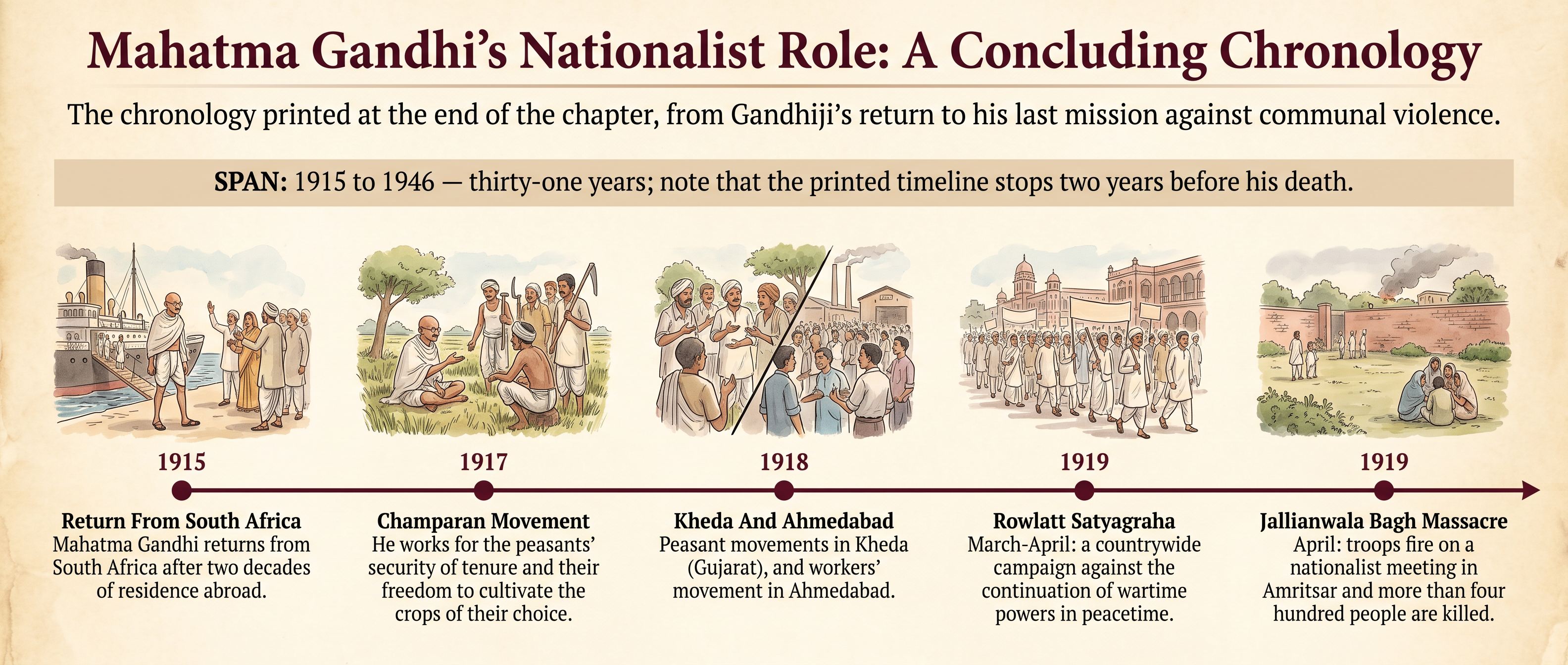
Fig. 11.24 – Mahatma Gandhi And The Nationalist Movement.
What The Evidence Cannot Tell Us
The peasants who filled the meetings of 1921 and 1930 left almost no writing of their own. We know them chiefly through the police officer who counted them, the newspaper that reported the rumours about them, and the leaders who spoke on their behalf — never in their own voice, and never in their own words.
The sources that survive best are those the state made or the educated wrote: confidential files, letters between leaders, autobiographies, printed newspapers. Each was made by someone with an interest, and none was made to record what an ordinary villager, a mill worker or a woman in a procession actually wanted from freedom.
So when this chapter tells you that hundreds of thousands joined, it can show you that they came. It cannot tell you, for most of them, why.
11.8 NCERT Questions
How did Mahatma Gandhi seek to identify with the common people? (in about 100-150 words)
How was Mahatma Gandhi perceived by the peasants? (in about 100-150 words)
Why did the salt laws become an important issue of struggle? (in about 100-150 words)
Why are newspapers an important source for the study of the national movement? (in about 100-150 words)
Why was the charkha chosen as a symbol of nationalism? (in about 100-150 words)
How was non-cooperation a form of protest? (in about 250-300 words)
Why were the dialogues at the Round Table Conference inconclusive? (in about 250-300 words)
In what way did Mahatma Gandhi transform the nature of the national movement? (in about 250-300 words)
What do private letters and autobiographies tell us about an individual? How are these sources different from official accounts? (in about 250-300 words)
Find out about the route of the Dandi March. On a map of Gujarat plot the line of the march and mark the major towns and villages that it passed along the route.
Read any two autobiographies of nationalist leaders. Look at the different ways in which the authors represent their own life and times, and interpret the national movement. See how their views differ. Write an account based on your studies.
Choose any event that took place during the national movement. Try and read the letters and speeches of the leaders of the time. Some of these are now published. He could be a local leader from the region where you live. Try and see how the local leaders viewed the activities of the national leadership at the top. Write about the movement based on your reading.
11.9 Check Your Concepts
Look again at Fig. 11.20, the popular print of the death of the Mahatma. What does the way the figures are arranged tell us about how people wished to see Mahatma Gandhi? Name one thing this print cannot tell us.
Read Source 8. The Home Department insisted that the Salt March was evoking no enthusiastic response, yet its own reports list deserted colleges, enrolled volunteers and eleven towns where the Salt Act was openly defied. What does this contradiction tell you about the colonial state at that moment?
In 1921 the hill tribes of northern Andhra broke the forest laws, the farmers of Awadh withheld taxes, and the peasants of Kumaun refused to carry loads for officials. What does this variety tell us about the relationship between the national leadership and local movements?
Set out the chain of events that runs from the launch of Quit India in August 1942 to the complete political polarisation revealed by the elections of early 1946. At which point in that chain could the outcome have been different, and why?
Read Sources 5 and 6 side by side. What did Mahatma Gandhi fear would happen if separate electorates were granted, and what did Ambedkar fear would happen if they were not? On what did the two men agree?
Mahatma Gandhi called off Non-cooperation after Chauri Chaura, at a moment when the movement was at its height. Using the chapter, explain what he believed was at stake — and state the strongest objection a critic of that decision could have raised.
The peasants, workers and women who filled these movements left almost no writings of their own. Which sources in this chapter allow us to hear them at all, and what is the limit of each of those sources?