Chapter 12: Framing The Constitution
Between December 1946 and November 1949, a few hundred Indians sat in a chamber in New Delhi and argued, clause by clause, about what kind of country India should be. They met in eleven sessions. Their sittings were spread over 165 days. Between the sessions, committees and sub-committees revised and refined the drafts, and then the arguing began again.
Almost every word of it was taken down. That is why this chapter can exist at all. The discussions were printed, and the printed record of them fills eleven bulky volumes. A student today can open those volumes and hear the men and women of the Constituent Assembly disagreeing with one another — sometimes politely, sometimes not — about language, about rights, about who counted as a minority, about how much power a government at the Centre should hold.
While they argued indoors, the country outside was being torn apart. The Constitution they finally signed in December 1949, and which came into effect on 26 January 1950, has the dubious distinction of being the longest in the world. Its length is a clue, not an embarrassment. A country this large, this diverse and this deeply divided could not be held together by a short document.
So this chapter does not ask only what the Constitution says. It asks how it came to say it — and what the eleven volumes let us hear.

Fig. 12.0 – The eleven volumes of the Constituent Assembly Debates.
12.1 A Tumultuous Time
Why The Document Is So Long
The Indian Constitution came into effect on 26 January 1950. It has the dubious distinction of being the longest constitution in the world. That is usually said as a complaint, but it is better read as a clue.
The length and the complexity become understandable the moment you consider the country’s size and diversity. At Independence, India was not merely large and diverse. It was also deeply divided. A constitution — the supreme legal document that sets out how a country is governed, what powers its institutions hold, and what rights its citizens have — was being written for a society that had just torn itself apart.
A document designed to keep such a country together, and to take it forward, had necessarily to be elaborate, carefully worked out and painstakingly drafted. For one thing, it sought to heal wounds of the past and the present, and to make Indians of different classes, castes and communities come together in a shared political experiment. For another, it sought to nurture democratic institutions in what had long been a culture of hierarchy and deference.
That second task was the harder one. Deference means the habit of accepting that some people are naturally above you and are owed obedience. A democracy asks the opposite: that every adult counts equally, whatever their birth. The Constitution was trying to build one habit inside a society long shaped by the other.
Three Years Of Argument
The Constitution of India was framed between December 1946 and November 1949. During this time its drafts were discussed clause by clause in the Constituent Assembly of India — the body of members chosen to write a constitution, and to do nothing else. In all, the Assembly held eleven sessions, with sittings spread over 165 days. In between the sessions, the work of revising and refining the drafts was carried out by various committees and sub-committees.
From your political science textbooks you already know what the Constitution of India is, and you have seen how it has worked over the decades since Independence. This chapter will introduce you to the history that lies behind that document, and to the intense debates that were part of its making. If we try to hear the voices within the Constituent Assembly, we get an idea of the process through which the Constitution was framed, and of the vision of the new nation that was formulated there.
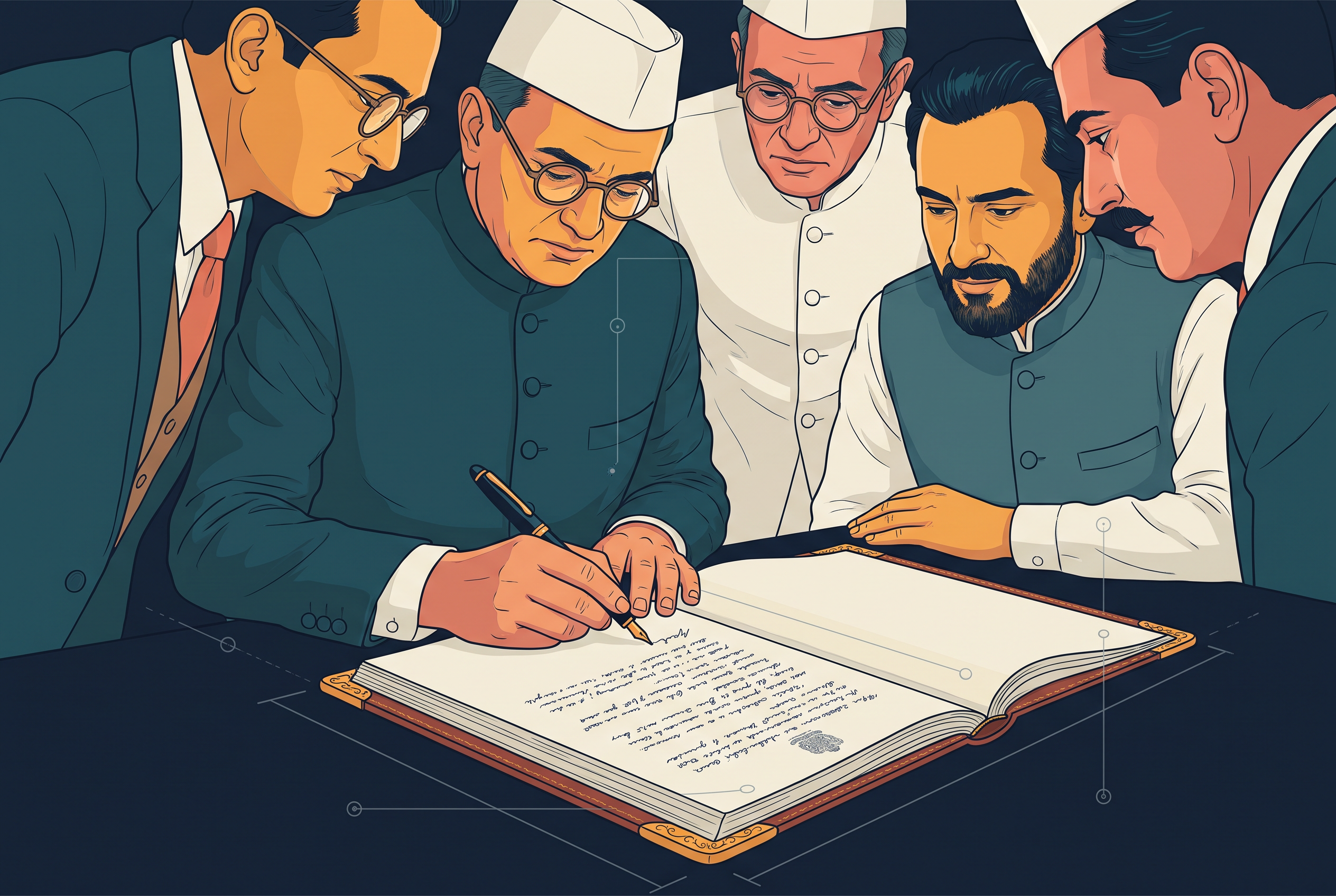
Fig. 12.1 – Members signing the Constitution in December 1949.
A Time Of Hope And Disappointment
The years immediately preceding the making of the Constitution had been exceptionally tumultuous. They were a time of great hope, but also of abject disappointment. On 15 August 1947, India had been made free — but it had also been divided.
Several struggles were fresh in popular memory. One was the Quit India struggle of 1942, perhaps the most widespread popular movement against the British Raj. Another was the bid by Subhas Chandra Bose to win freedom through armed struggle with foreign aid.
An even more recent upsurge had also evoked much popular sympathy. This was the rising of the ratings of the Royal Indian Navy in Bombay and other cities in the spring of 1946. Ratings are ordinary sailors, not officers — the men at the bottom of the naval order — and their revolt showed how far the loyalty of the armed forces could be shaken. Through the late 1940s there were periodic, if scattered, mass protests of workers and peasants in different parts of the country.
One striking feature of these popular upsurges was the degree of Hindu-Muslim unity they manifested. Ordinary people, when they acted together, often acted across religious lines.
Politics at the top told a different story. The two leading Indian political parties, the Congress and the Muslim League, had repeatedly failed to arrive at a settlement that would bring about religious reconciliation and social harmony. The Great Calcutta Killings of August 1946 began a year of almost continuous rioting across northern and eastern India (see Chapter 11). The violence culminated in the massacres that accompanied the transfer of populations when the Partition of India was announced.
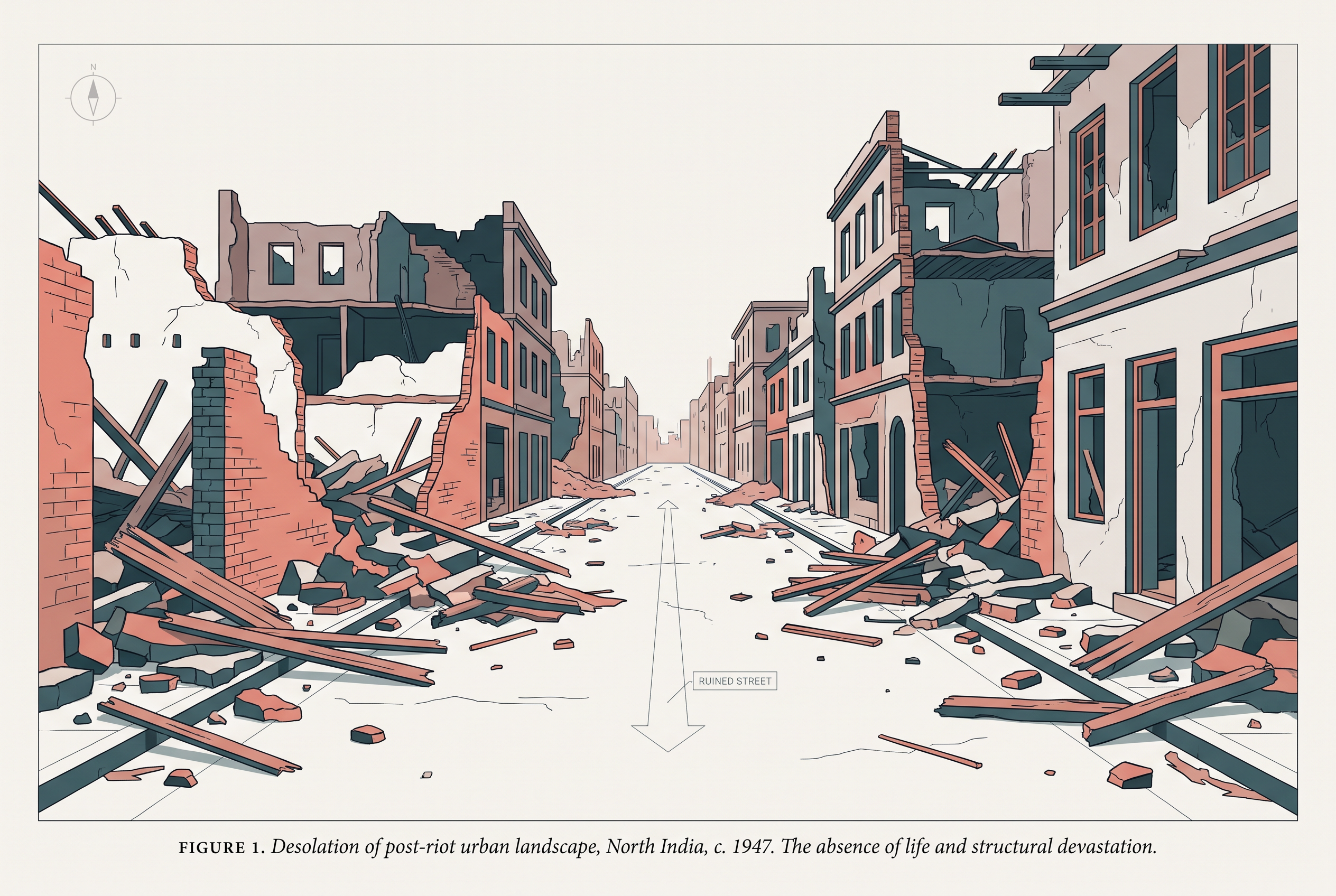
Fig. 12.2 – A wrecked urban street following the Partition riots.
The word ‘haunt’ in that caption is doing real work. The men and women who framed the Constitution were not writing in a calm room, at a distance from events. They were reading the same newspapers as everybody else, and many of them had seen the ruins themselves.
Freedom, And Its Cruel Choice
On Independence Day, 15 August 1947, there was an outburst of joy and hope, unforgettable for those who lived through that time. It was on this day that Jawaharlal Nehru gave his famous speech that began with the lines: ‘Long years ago we made a tryst with destiny, and now the time comes when we shall redeem our pledge, not wholly or in full measure, but very substantially. At the stroke of the midnight hour, when the world sleeps, India will awake to life and freedom.’
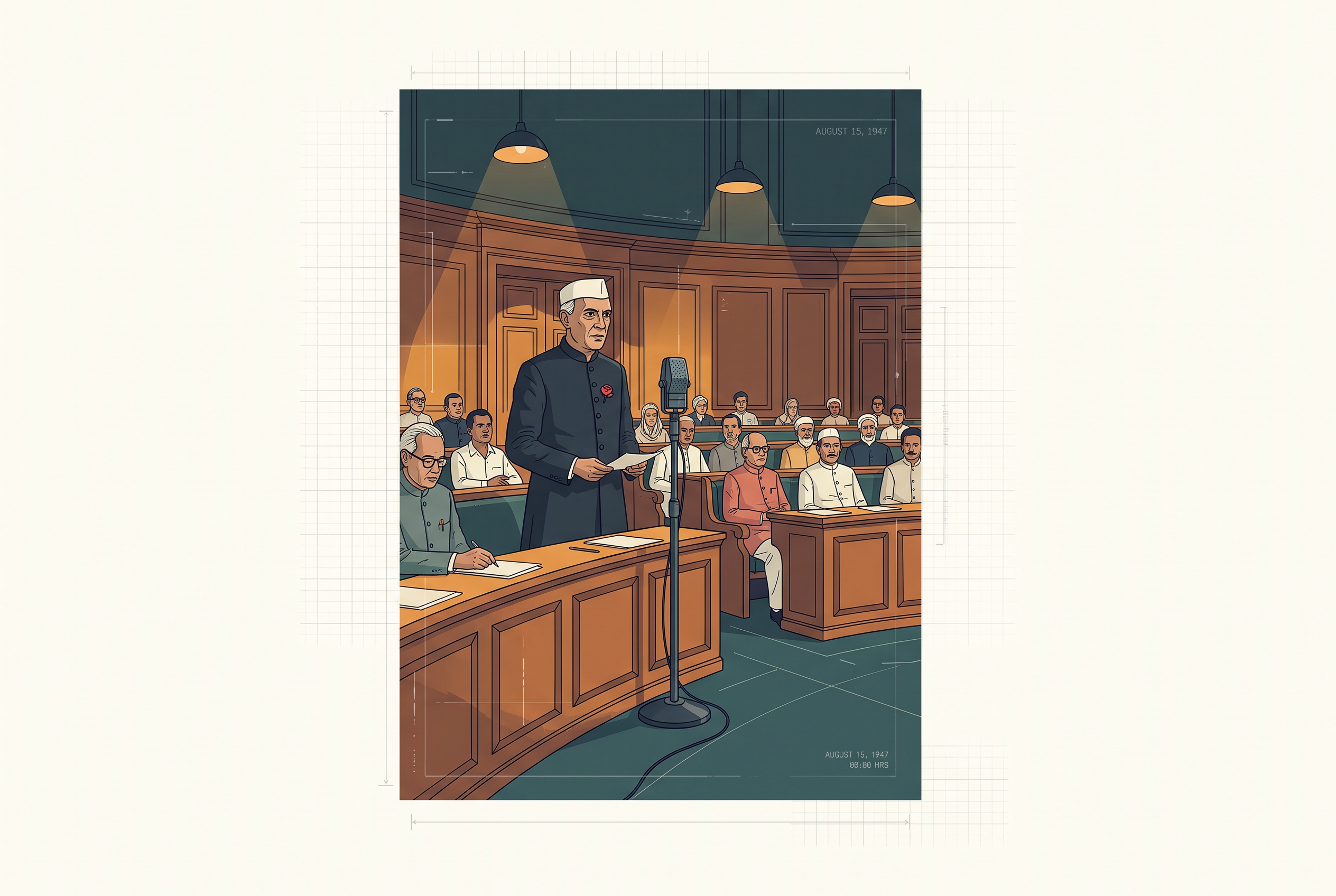
Fig. 12.3 – Jawaharlal Nehru speaking in the Constituent Assembly, midnight, 14 August 1947.
But for innumerable Muslims in India, and for Hindus and Sikhs in Pakistan, that same moment brought a cruel choice. On one side lay the threat of sudden death, or the squeezing of opportunities. On the other lay a forcible tearing away from their age-old roots.
Millions of refugees were on the move. Muslims went into East and West Pakistan; Hindus and Sikhs came into West Bengal and the eastern half of the Punjab. Many perished before they reached their destination.
The Problem Of The Princely States
Another, and scarcely less serious, problem faced by the new nation was that of the princely states. During the period of the Raj, approximately one-third of the area of the subcontinent was under the control of nawabs and maharajas. These rulers owed allegiance to the British Crown, but were otherwise left mostly free to rule — or misrule — their territory as they wished.
One-third of the land is an enormous share. It meant that a great deal of the map was not directly administered by the British at all, and had never been part of the provinces that elected legislatures.
When the British left India, the constitutional status of these princes remained ambiguous. Nobody could say with certainty whether they were now independent, or whether they belonged to India. As one contemporary observer remarked, some maharajas now began ‘to luxuriate in wild dreams of independent power in an India of many partitions’.
This was the background in which the Constituent Assembly met. How could the debates within the Assembly remain insulated from what was happening outside?
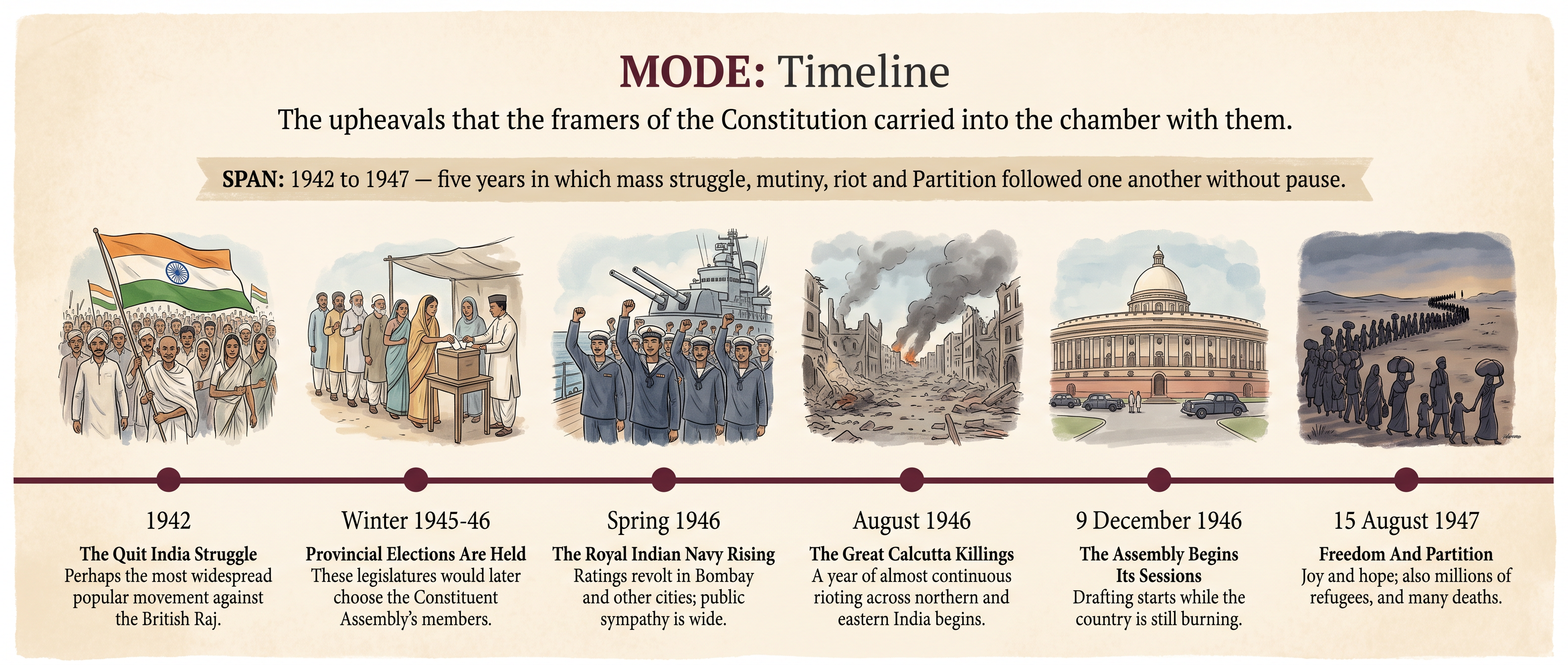
Fig. 12.4 – The Years Before The Drafting.
12.1.1 The Making Of The Constituent Assembly
The members of the Constituent Assembly were not elected on the basis of universal franchise. Universal adult franchise means that every adult citizen gets one vote, regardless of property, education, sex or caste. India would grant that right in the Constitution — but the body that wrote the Constitution was not itself chosen that way.
What happened instead was indirect. In the winter of 1945-46, provincial elections were held in India, on a restricted franchise. The Provincial Legislatures — the elected assemblies of provinces such as Madras, Bombay, the United Provinces and Bengal — then chose the representatives to the Constituent Assembly.
A House Dominated By One Party
The Constituent Assembly that came into being was dominated by one party: the Congress. The Congress swept the general seats in the provincial elections, and the Muslim League captured most of the reserved Muslim seats.
But the League chose to boycott the Constituent Assembly, pressing its demand for Pakistan with a separate constitution. The Socialists too were initially unwilling to join, for they believed the Constituent Assembly was a creation of the British, and therefore incapable of being truly autonomous.
In effect, therefore, 82 per cent of the members of the Constituent Assembly were also members of the Congress. Four out of every five people in the room belonged to a single party — and the party’s largest organised opponent had walked away from the table.
Why One Party Did Not Mean One Voice
The Congress, however, was not a party with one voice. Its members differed in their opinion on critical issues. Some members were inspired by socialism, while others were defenders of landlordism. Some were close to communal parties, while others were assertively secular.
Through the national movement, Congress members had learnt to debate their ideas in public and to negotiate their differences. Within the Constituent Assembly too, Congress members did not sit quiet. This is why a house that was 82 per cent one party still produced three years of hard argument.
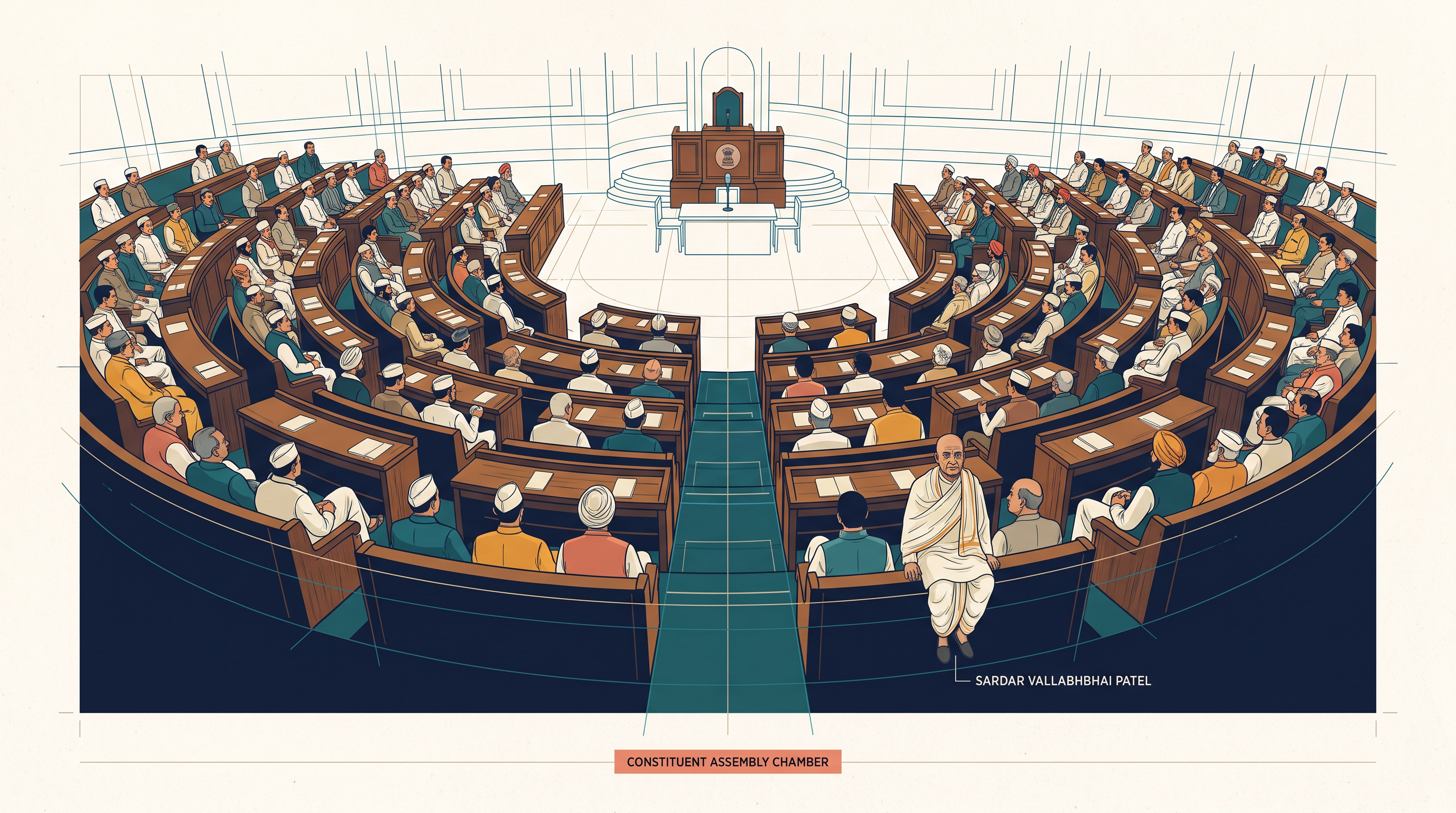
Fig. 12.5 – The Constituent Assembly in session.
The Public Outside The Chamber
The discussions within the Constituent Assembly were also influenced by the opinions expressed by the public. As the deliberations continued, the arguments were reported in newspapers, and the proposals were publicly debated. Criticisms and counter-criticisms in the press in turn shaped the nature of the consensus that was ultimately reached on specific issues.
In order to create a sense of collective participation, the public was also asked to send in their views on what needed to be done. The letters that came in were not a poll, but they were a signal.
Many of the linguistic minorities wanted the protection of their mother tongue. Religious minorities asked for special safeguards. Dalits demanded an end to all caste oppression, and reservation of seats in government bodies. Important issues of cultural rights and social justice raised in these public discussions were debated on the floor of the Assembly.
The table is worth reading slowly. It shows that the work was split up: rules, flag, states, fundamental rights, minorities, drafting. It also shows how few names keep reappearing at the head of these committees — which brings us to the members who mattered most.
12.1.2 The Dominant Voices
The Constituent Assembly had 300 members. Of these, six members played particularly important roles.
The Congress Trio
Three were representatives of the Congress, namely Jawaharlal Nehru, Vallabh Bhai Patel and Rajendra Prasad.
It was Nehru who moved the crucial ‘Objectives Resolution’ — the statement of aims that would frame everything else, and which we will read in the next section. He also moved the resolution proposing that the National Flag of India be a ‘horizontal tricolour of saffron, white and dark green in equal proportion’, with a wheel in navy blue at the centre.
Patel, on the other hand, worked mostly behind the scenes. He played a key role in the drafting of several reports, and worked to reconcile opposing points of view. Rajendra Prasad’s role was as President of the Assembly. He had to steer the discussion along constructive lines, while making sure all members had a chance to speak.
Ambedkar And The Drafting Committee
Besides this Congress trio, a very important member of the Assembly was the lawyer and economist B. R. Ambedkar.
During the period of British rule, Ambedkar had been a political opponent of the Congress. But, on the advice of Mahatma Gandhi, he was asked at Independence to join the Union Cabinet as law minister. In this capacity, he served as Chairman of the Drafting Committee of the Constitution — the committee that actually wrote the text that the Assembly then argued over.
Serving with him were two other lawyers, K. M. Munshi from Gujarat and Alladi Krishnaswamy Aiyar from Madras, both of whom gave crucial inputs in the drafting of the Constitution.
The Two Civil Servants
These six members were given vital assistance by two civil servants.
One was B. N. Rau, Constitutional Advisor to the Government of India, who prepared a series of background papers based on a close study of the political systems obtaining in other countries. The other was the Chief Draughtsman, S. N. Mukherjee, who had the ability to put complex proposals in clear legal language. A draughtsman’s job is exactly that: turning a political decision into words that a court can later apply without ambiguity.
Ambedkar himself had the responsibility of guiding the Draft Constitution — the working text, revised again and again — through the Assembly. This took three years in all, with the printed record of the discussions taking up eleven bulky volumes.
But while the process was long, it was also extremely interesting. The members of the Constituent Assembly were eloquent in expressing their sometimes very divergent points of view. In their presentations we can discern many conflicting ideas of India: of what language Indians should speak, of what political and economic systems the nation should follow, and of what moral values its citizens should uphold or disavow.
Those three disagreements are the subject of the rest of this chapter.
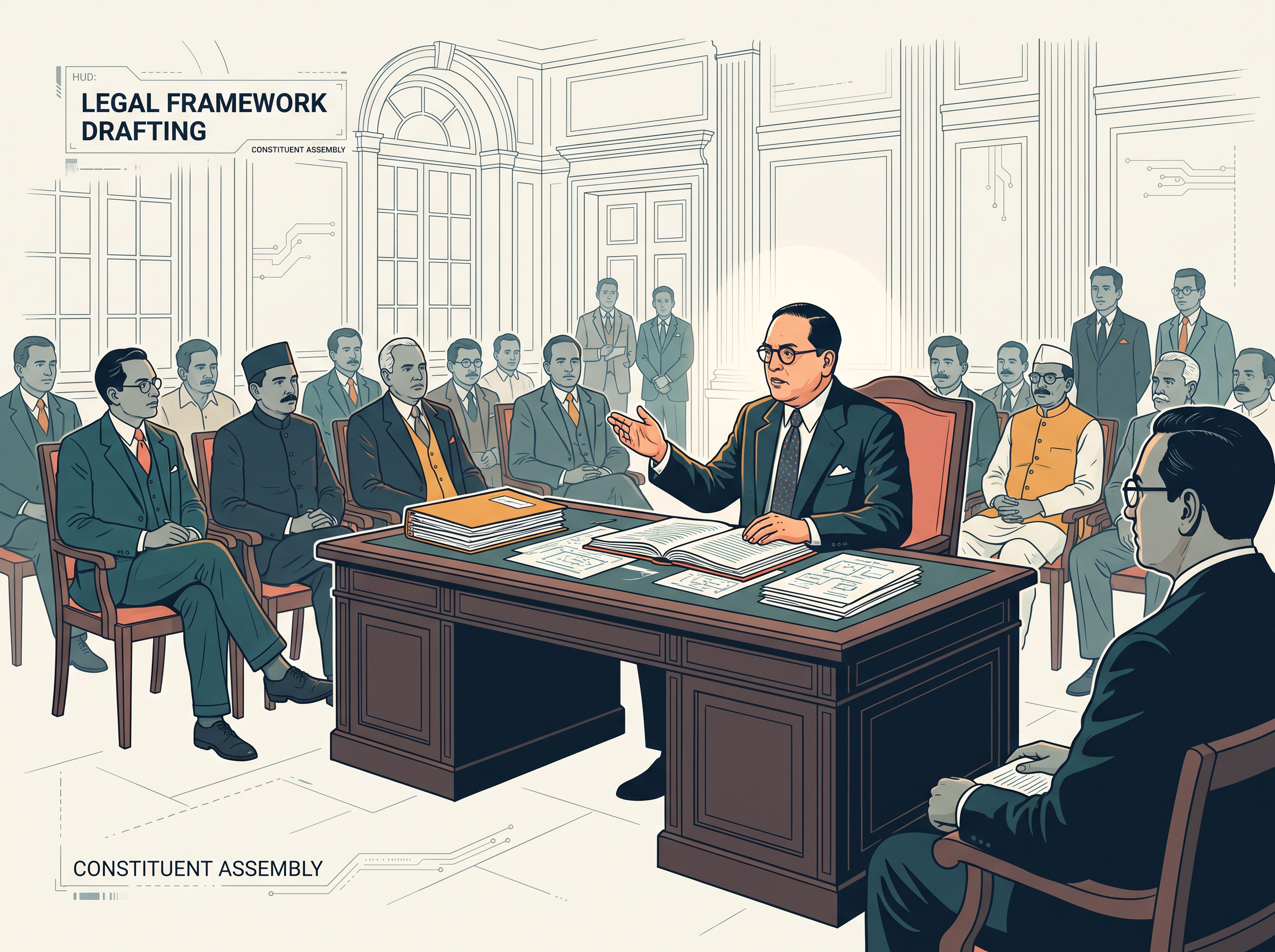
Fig. 12.6 – B. R. Ambedkar presiding over a discussion in the Assembly.
12.2 The Vision Of The Constitution
On 13 December 1946, Jawaharlal Nehru introduced the ‘Objectives Resolution’ in the Constituent Assembly. It was a momentous resolution. It outlined the defining ideals of the Constitution of Independent India, and provided the framework within which the work of constitution-making was to proceed.
Think of it as the statement of aims that a drafting committee can then be held to. Nothing was law yet; but from this day on, every clause could be tested against it.
The Objectives Resolution proclaimed India to be an ‘Independent Sovereign Republic’. Each of those words carries a claim. Independent meant no longer ruled from London. Sovereign meant answerable to no power outside its own borders. A republic is a state whose head is not a hereditary king or queen, but a person the people themselves put there.
The Resolution guaranteed its citizens justice, equality and freedom. It also assured that ‘adequate safeguards shall be provided for minorities, backward and tribal areas, and Depressed and Other Backward Classes …’. That single sentence would generate months of argument, because it did not say who counted as a minority, or what a safeguard should look like.
After outlining these objectives, Nehru placed the Indian experiment in a broad historical perspective. As he spoke, he said, his mind went back to the historic efforts in the past to produce such documents of rights.
The Speech That Framed Everything
Nehru was not merely introducing a resolution. He was telling the House what kind of company it was keeping — the Americans who wrote their constitution, the French revolutionaries who met on a tennis court, the Russians who built a new type of State. Read what he actually does with those examples, because he does not end where you might expect.
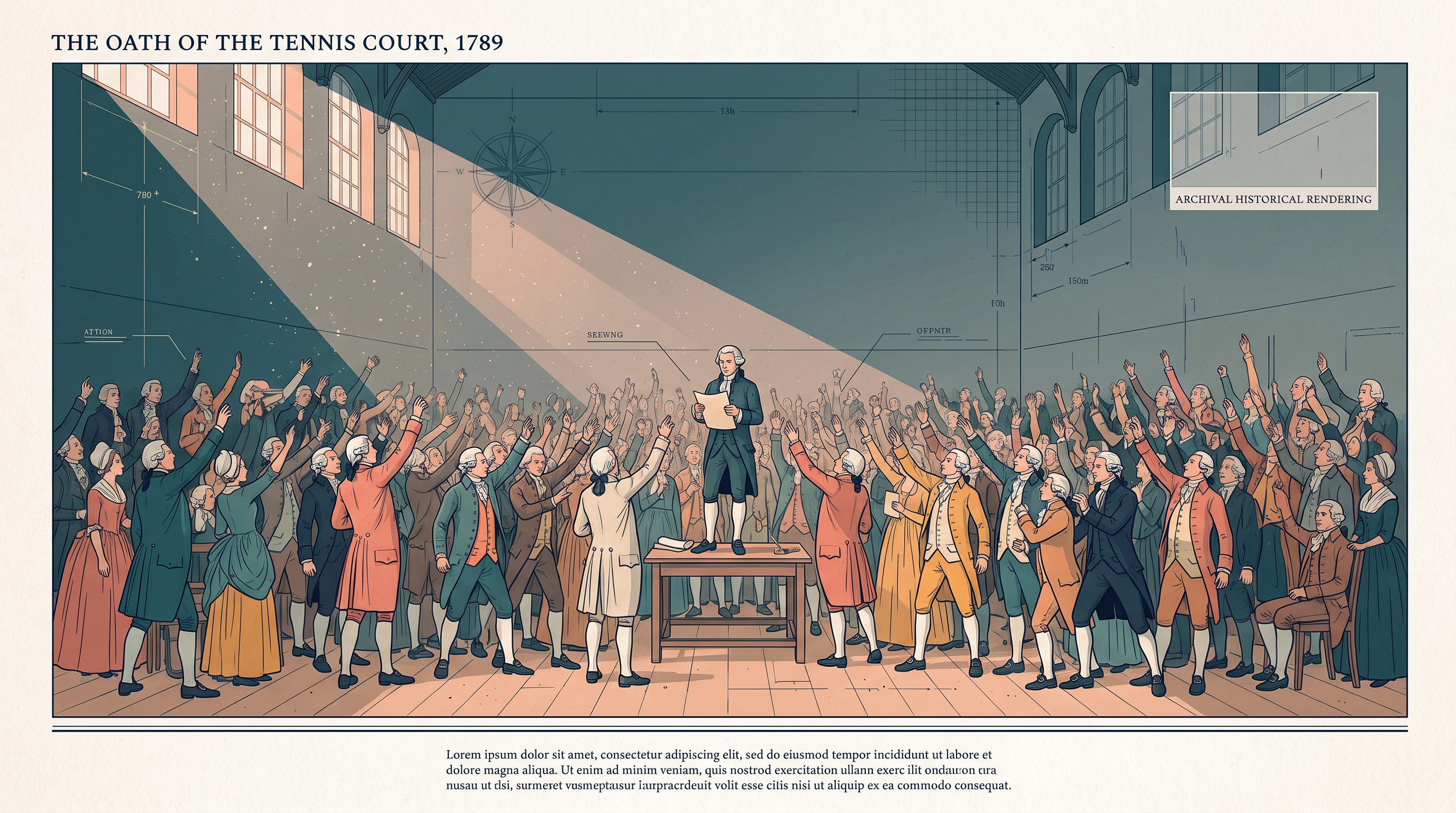
Fig. 12.7 – The Oath of the Tennis Court.
What Nehru Was Actually Saying
Nehru’s speech (Source 1) merits careful scrutiny. What exactly was being stated here? What did Nehru’s seemingly nostalgic return to the past reflect? What was he saying about the origin of the ideas embodied in the vision of the Constitution?
In returning to the past, and referring to the American and French Revolutions, Nehru was locating the history of constitution-making in India within a longer history of struggle for liberty and freedom. The momentous nature of the Indian project was emphasised by linking it to revolutionary moments in the past.
But Nehru was not suggesting that those events were to provide any blueprint for the present. Nor was he suggesting that the ideas of those revolutions could be mechanically borrowed and applied in India. He did not define the specific form of democracy, and suggested that this had to be decided through deliberations.
And he stressed that the ideals and provisions of the constitution introduced in India could not be just derived from elsewhere. ‘We are not going just to copy’, he said. The system of government established in India, he declared, had to ‘fit in with the temper of our people and be acceptable to them’.
It was necessary to learn from the people of the West, from their achievements and their failures. But the Western nations too had to learn from experiments elsewhere; they too had to change their own notions of democracy. The objective of the Indian Constitution would be to fuse the liberal ideas of democracy with the socialist idea of economic justice, and to re-adapt and re-work all these ideas within the Indian context. Nehru’s plea was for creative thinking about what was appropriate for India.
12.2.1 The Will Of The People
A Communist member, Somnath Lahiri, saw the dark hand of British imperialism hanging over the deliberations of the Constituent Assembly. He thus urged the members, and Indians in general, to fully free themselves from the influences of imperial rule.
He had a plain fact on his side. In the winter of 1946-47, as the Assembly deliberated, the British were still in India. An interim administration headed by Jawaharlal Nehru was in place, but it could only operate under the directions of the Viceroy and the British Government in London. The men in the photograph below were ministers — and were not yet a sovereign government.
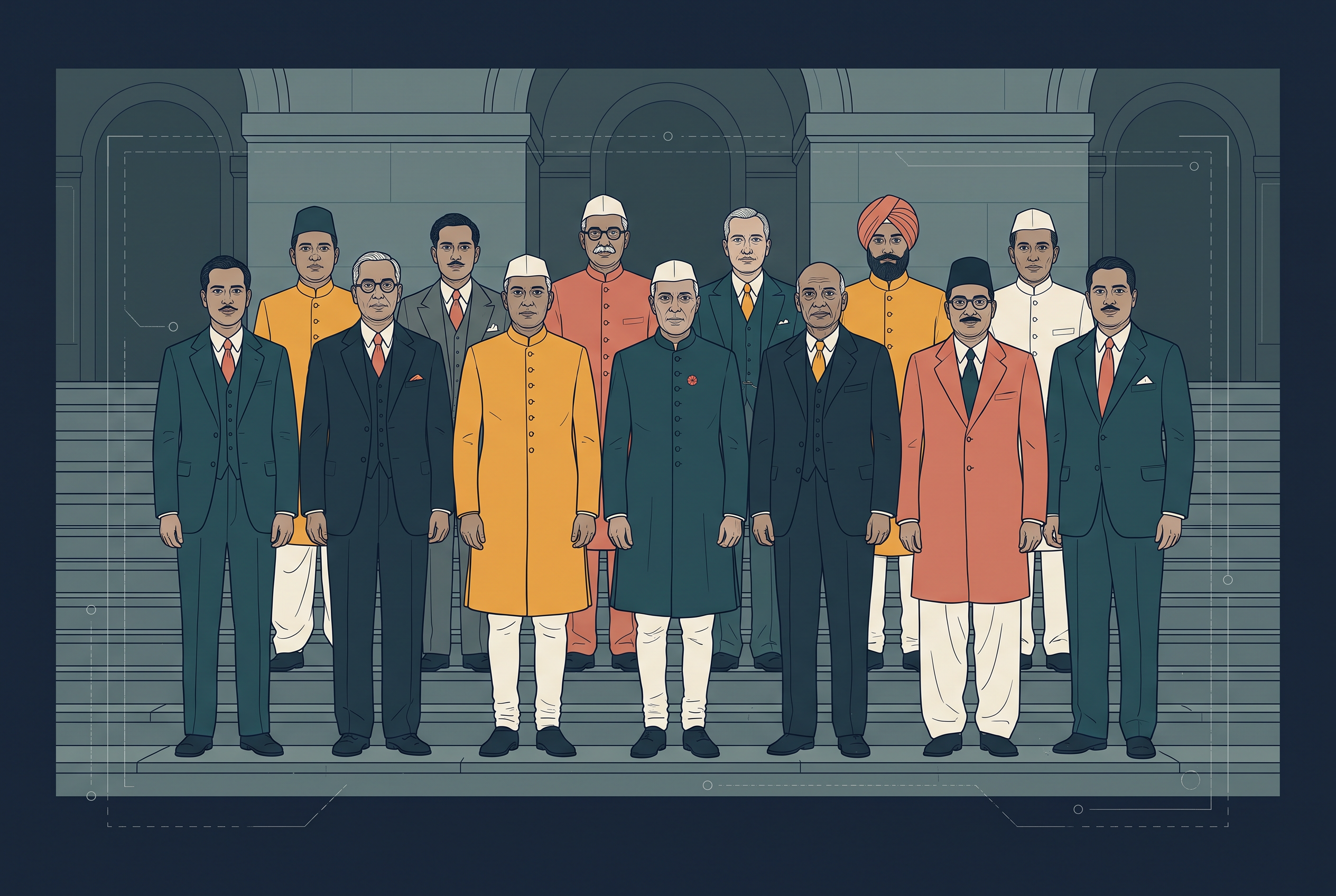
Fig. 12.8 – Members of the Interim Government, 1946.
Lahiri exhorted his colleagues to realise that the Constituent Assembly was British-made and was ‘working the British plans as the British should like it to be worked out’. He said so on the floor of the House, in reply to Nehru, and the reply was printed alongside the speech it attacked.
Notice the shape of Lahiri’s attack. He does not say Nehru is wrong. He says Nehru is late — that fine words about refusing imposition are useless while the imposition is already in the room, in the form of British troops, British courts and British money.
Nehru’s Reply: The Source Of Strength
Nehru admitted that most nationalist leaders had wanted a different kind of Constituent Assembly. It was also true, in a sense, that the British Government had a ‘hand in its birth’, and that it had attached certain conditions within which the Assembly had to function.
‘But,’ emphasised Nehru, ‘you must not ignore the source from which this Assembly derives its strength.’ Nehru added:
‘Governments do not come into being by State Papers. Governments are, in fact the expression of the will of the people. We have met here today because of the strength of the people behind us and we shall go as far as the people – not of any party or group but the people as a whole – shall wish us to go. We should, therefore, always keep in mind the passions that lie in the hearts of the masses of the Indian people and try to fulfil them.’
A State Paper is an official document issued by a government. Nehru’s point is that no piece of paper, British or Indian, can create authority; only people can. The Assembly’s legitimacy, on this argument, came not from the plan that convened it but from the movement behind it.
The Long Roots Of Democracy And Justice
The Constituent Assembly was expected to express the aspirations of those who had participated in the movement for independence. Democracy, equality and justice were ideals that had become intimately associated with social struggles in India since the nineteenth century.
When the social reformers in the nineteenth century opposed child marriage and demanded that widows be allowed to remarry, they were pleading for social justice. When Swami Vivekananda campaigned for a reform of Hinduism, he wanted religions to become more just.
When Jyotiba Phule in Maharashtra pointed to the suffering of the depressed castes, or when Communists and Socialists organised workers and peasants, they were demanding economic and social justice. The national movement against a government that was seen as oppressive and illegitimate was inevitably a struggle for democracy and justice, for citizens’ rights and equality.
What The British Had Already Conceded
In fact, as the demand for representation grew, the British had been forced to introduce a series of constitutional reforms. A number of Acts were passed — in 1909, 1919 and 1935 — gradually enlarging the space for Indian participation in provincial governments.
The executive was made partly responsible to the provincial legislature in 1919, and almost entirely so under the Government of India Act of 1935. To say the executive is responsible to a legislature is to say that ministers can be questioned, and removed, by the elected house. When elections were held in 1937, under the 1935 Act, the Congress came to power in eight out of the 11 provinces.
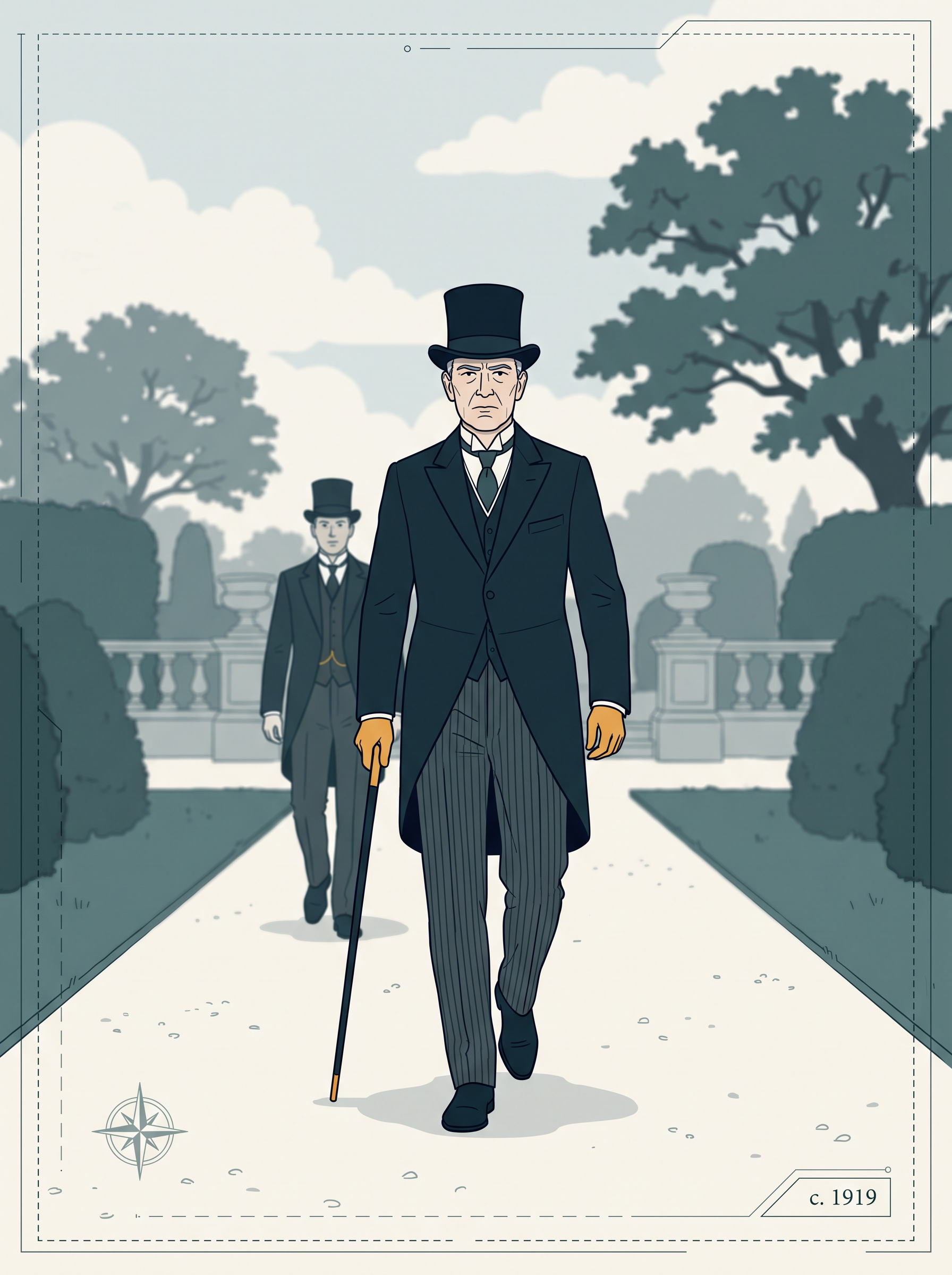
Fig. 12.9 – Edwin Montague, author of the 1919 provincial reforms.
Why This Was Not A Straight Line
Yet we should not see an unbroken continuity between the earlier constitutional developments and what happened in the three years from 1946.
The earlier constitutional experiments were a response to the growing demand for a representative government. But the Acts of 1909, 1919 and 1935 were not directly debated and formulated by Indians. They were enacted by the colonial government.
The electorate that elected the provincial bodies had expanded over the years, but even in 1935 it remained limited to no more than 10 to 15 per cent of the adult population. There was no universal adult franchise. Put plainly: at least 85 out of every 100 adults had no vote at all. The legislatures elected under the 1935 Act operated within the framework of colonial rule, and were responsible to the Governor appointed by the British.
The vision that Nehru was trying to outline on 13 December 1946 was of something else entirely: the Constitution of an independent, sovereign Republic of India.
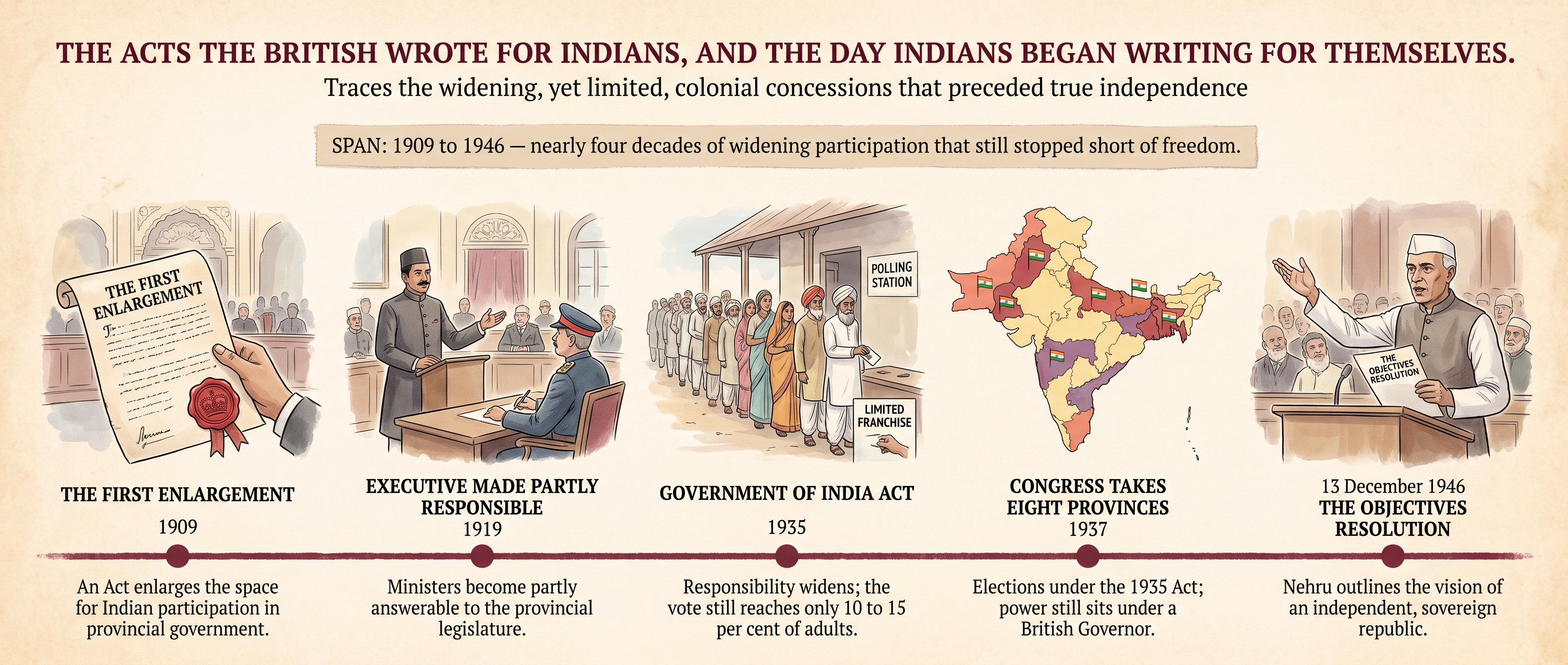
Fig. 12.10 – From Colonial Reform To Sovereign Republic.
12.3 Defining Rights
How were the rights of individual citizens to be defined? Were the oppressed groups to have any special rights? What rights would minorities have? Who, in fact, could be defined as a minority?
As the debate on the floor of the Constituent Assembly unfolded, it was clear that there were no collectively shared answers to any of these questions. The answers were evolved through the clash of opinions and the drama of individual encounters.
In his inaugural speech, Nehru had invoked the ‘will of the people’ and declared that the makers of the Constitution had to fulfil ‘the passions that lie in the hearts of the masses’. This was no easy task. With the anticipation of Independence, different groups expressed their will in different ways, and made different demands. These would have to be debated, and conflicting ideas would have to be reconciled, before a consensus could be forged.
12.3.1 The Problem With Separate Electorates
On 27 August 1947, B. Pocker Bahadur from Madras made a powerful plea for continuing separate electorates.
Under separate electorates, a community votes only for candidates of its own community, in seats set aside for it. Muslim voters had elected Muslim representatives in this way under colonial rule. Bahadur wanted the arrangement kept.
Minorities exist in all lands, argued Bahadur. They could not be wished away; they could not be ‘erased out of existence’. The need was to create a political framework in which minorities could live in harmony with others, and the differences between communities could be minimised.
This was possible only if minorities were well represented within the political system, their voices heard, and their views taken into account. Only separate electorates, he said, would ensure that Muslims had a meaningful voice in the governance of the country. The needs of Muslims, Bahadur felt, could not be properly understood by non-Muslims; nor could a true representative of Muslims be chosen by people who did not belong to that community.
The Nationalist Reaction
This demand for separate electorates provoked anger and dismay amongst most nationalists. In the passionate debate that followed, a range of arguments were offered against the demand.
Most nationalists saw separate electorates as a measure deliberately introduced by the British to divide the people. ‘The English played their game under the cover of safeguards,’ R. V. Dhulekar told Bahadur. ‘With the help of it they allured you (the minorities) to a long lull. Give it up now … Now there is no one to misguide you.’
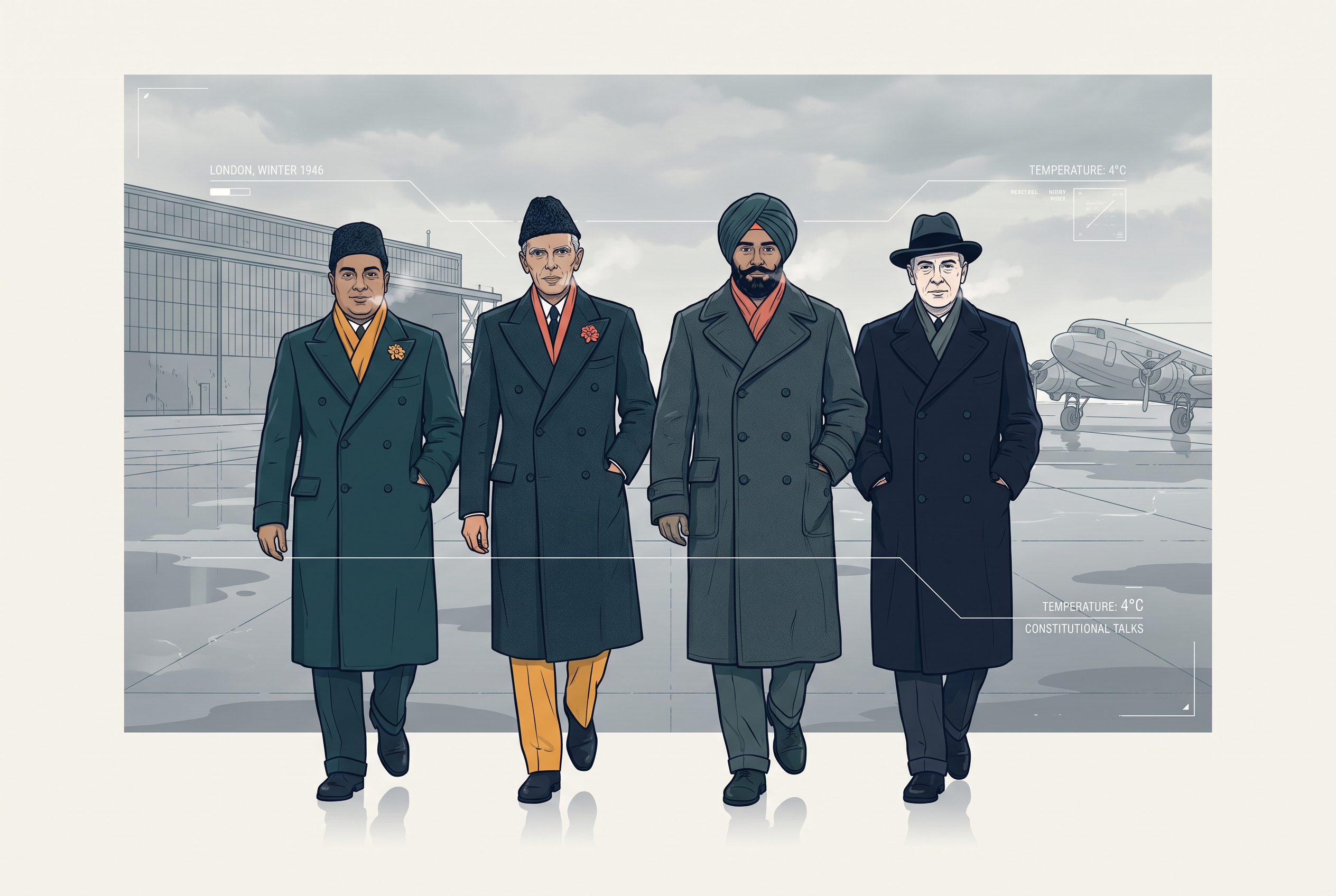
Fig. 12.11 – Indian leaders arriving in London for talks, winter 1946.
Partition had made nationalists fervently opposed to the idea of separate electorates. They were haunted by the fear of continued civil war, riots and violence.
Separate electorates was a ‘poison that has entered the body politic of our country’, declared Sardar Patel. It was a demand that had turned one community against another, divided the nation, caused bloodshed, and led to the tragic partition of the country. ‘Do you want peace in this land? If so do away with it (separate electorates),’ urged Patel.
Patel was speaking within weeks of the massacres. His anger is not a debating position; it is the anger of a man who believes he has just watched where the argument ends.
Pant’s Objection: Suicidal For The Minorities
Countering the demand for separate electorates, Govind Ballabh Pant declared that it was not only harmful for the nation but also for the minorities themselves.
He agreed with Bahadur that the success of a democracy was to be judged by the confidence it generated amongst different sections of people. He agreed too that every citizen in a free state should be treated in a manner that satisfied ‘not only his material wants but also his spiritual sense of self-respect’, and that the majority community had an obligation to try and understand the problems of minorities, and to empathise with their aspirations.
Yet Pant opposed the idea of separate electorates. It was a suicidal demand, he argued, that would permanently isolate the minorities, make them vulnerable, and deprive them of any effective say within the government.
Notice that Sources 3 and 4 argue on quite different grounds. Patel argues from the recent past: this device produced Partition. Pant argues from the future: this device will trap the minority inside a permanent minority. Neither of them is answering Bahadur’s actual worry, which was that a Muslim representative chosen by non-Muslim voters may not really speak for Muslims.
Citizens First
Behind all these arguments was the concern with the making of a unified nation state. In order to build political unity and forge a nation, every individual had to be moulded into a citizen of the State, and each group had to be assimilated within the nation.
The Constitution would grant to citizens rights, but citizens had to offer their loyalty to the State. Communities could be recognised as cultural entities and assured cultural rights. Politically, however, members of all communities had to act as equal members of one State, or else there would be divided loyalties.
‘There is the unwholesome and to some extent degrading habit of thinking always in terms of communities and never in terms of citizens,’ said Pant. And he added: ‘Let us remember that it is the citizen that must count. It is the citizen that forms the base as well as the summit of the social pyramid.’
Even as the importance of community rights was being recognised, there was a lurking fear among many nationalists that this may lead to divided loyalties, and make it difficult to forge a strong nation and a strong State.
Pant’s demand is a heavy one, and it is worth seeing the cost. He is asking people whose deepest attachments were to caste, village and community to place the State above all of them. What if a community’s own experience of the State had been one of neglect?
Not all Muslims supported the demand for separate electorates. Begum Aizaas Rasul, for instance, felt that separate electorates were self-destructive, since they isolated the minorities from the majority.
By 1949, most Muslim members of the Constituent Assembly were agreed that separate electorates were against the interests of the minorities. Instead, Muslims needed to take an active part in the democratic process, to ensure that they had a decisive voice in the political system.
12.3.2 ‘We Will Need Much More Than This Resolution’
While welcoming the Objectives Resolution, N. G. Ranga, a socialist who had been a leader of the peasant movement, urged that the term minorities be interpreted in economic terms.
The real minorities for Ranga were the poor and the downtrodden. He welcomed the legal rights the Constitution was granting to each individual, but pointed to their limits.
In his opinion, it was meaningless for the poor people in the villages to know that they now had the fundamental right to live, and to have full employment, or that they could have their meetings, their conferences, their associations and various other civil liberties. It was essential to create the conditions where these constitutionally enshrined rights could be effectively enjoyed. For this they needed protection. ‘They need props. They need a ladder,’ said Ranga.
The ladder is the image to hold on to. A right you cannot reach is not yet a right.
A zamindar here is a landholder who collects rent from those who till the soil; a malguzar is a village revenue collector of central India. Ranga’s list of oppressors — merchant, money-lender, zamindar, malguzar — is a list of the people a poor villager actually met, and none of them were mentioned in the Objectives Resolution.
Ranga also drew attention to the gulf that separated the broad masses of Indians and those claiming to speak on their behalf in the Constituent Assembly:
‘Whom are we supposed to represent? The ordinary masses of our country. And yet most of us do not belong to the masses themselves. We are of them, we wish to stand for them, but the masses themselves are not able to come up to the Constituent Assembly. It may take some time; in the meanwhile, we are here as their trustees, as their champions, and we are trying our best to speak for them.’
A trustee is someone who holds something on another’s behalf, and is answerable for it. Ranga is admitting, on the floor of the House, that the Assembly is speaking for the masses rather than as them.
Fifteen women, in a house of 300. Read the table beside Ranga’s confession about trustees, and his point sharpens: this was a body speaking on behalf of a country most of whose people were not in the room.
The Tribals: Jaipal Singh
One of the groups mentioned by Ranga, the tribals, had among its representatives to the Assembly the gifted orator Jaipal Singh. In welcoming the Objectives Resolution, Singh said:
‘… as an Adibasi, I am not expected to understand the legal intricacies of the Resolution. But my common sense tells me that every one of us should march in that road to freedom and fight together. Sir, if there is any group of Indian people that has been shabbily treated it is my people. They have been disgracefully treated, neglected for the last 6,000 years. … The whole history of my people is one of continuous exploitation and dispossession by the non-aboriginals of India punctuated by rebellions and disorder, and yet I take Pandit Jawaharlal Nehru at his word. I take you all at your word that now we are going to start a new chapter, a new chapter of independent India where there is equality of opportunity, where no one would be neglected.’
Singh spoke eloquently on the need to protect the tribes, and to ensure conditions that could help them come up to the level of the general population. Tribes were not a numerical minority, he argued, but they needed protection.
They had been dispossessed of the land they had settled, deprived of their forests and pastures, and forced to move in search of new homes. Perceiving them as primitive and backward, the rest of society had turned away from them, and spurned them.
He made a moving plea for breaking the emotional and physical distance that separated the tribals from the rest of society: ‘Our point is that you have got to mix with us. We are willing to mix with you …’.
Singh was not asking for separate electorates. But he felt that reservation of seats in the legislature was essential to allow tribals to represent themselves. It would be a way, he said, of compelling others to hear the voice of tribals, and to come near them.
12.3.3 ‘We Were Suppressed For Thousands Of Years’
How were the rights of the Depressed Castes to be defined by the Constitution? The Depressed Castes was the term then used for those communities placed at the very bottom of the caste order and treated as untouchable.
During the national movement Ambedkar had demanded separate electorates for the Depressed Castes, and Mahatma Gandhi had opposed it, arguing that this would permanently segregate them from the rest of society. How could the Constituent Assembly resolve this opposition? What kinds of protection were the Depressed Castes to be provided?
Not Safeguards Alone
Some members of the Depressed Castes emphasised that the problem of the ‘Untouchables’ could not be resolved through protection and safeguards alone.
Their disabilities were caused by the social norms and the moral values of caste society. Society had used their services and their labour, but kept them at a social distance, refusing to mix with them, or dine with them, or allow them entry into temples.
‘We have been suffering, but we are prepared to suffer no more,’ said J. Nagappa from Madras. ‘We have realised our responsibilities. We know how to assert ourselves.’
Nagappa pointed out that numerically the Depressed Castes were not a minority: they formed between 20 and 25 per cent of the total population. That is one in four or five Indians. Their suffering was due to their systematic marginalisation, not their numerical insignificance. They had no access to education, and no share in the administration.
Addressing the assembly, K. J. Khanderkar of the Central Provinces said:
‘We were suppressed for thousands of years. … suppressed… to such an extent that neither our minds nor our bodies and now even our hearts work, nor are we able to march forward. This is the position.’
Velayudhan is not asking for shelter. She is asking for the removal of the conditions that made shelter necessary — a change in how the rest of society behaved, which no clause can order into existence. ‘Harijan’ was Mahatma Gandhi’s term for these communities, widely used at the time; the members themselves argued over what they should be called and, more urgently, over what they should be given.
Hansa Mehta of Bombay made a parallel argument for women. She demanded justice for women, not reserved seats, or separate electorates.
Read Sources 7 and 8 together and a pattern appears. Both speakers refuse the language of favours and special treatment. Both ask instead for equality — which is a larger demand, and a harder one to grant.
What The Assembly Decided
After the Partition violence, Ambedkar too no longer argued for separate electorates.
The Constituent Assembly finally recommended that untouchability be abolished, that Hindu temples be thrown open to all castes, and that seats in legislatures and jobs in government offices be reserved for the lowest castes.
Many recognised that this could not solve all problems. Social discrimination could not be erased only through constitutional legislation; there had to be a change in the attitudes within society. But the measures were welcomed by the democratic public.
12.4 The Powers Of The State
One of the topics most vigorously debated in the Constituent Assembly was the respective rights of the Central Government and the states.
This is the question of federalism — the arrangement by which power is divided between a government at the Centre and the governments of the units, each with a sphere of its own. Everyone in the Assembly agreed India would be a federation of some kind. What they fought over was where the line should fall.
Among those arguing for a strong Centre was Jawaharlal Nehru. As he put it in a letter to the President of the Constituent Assembly, ‘Now that partition is a settled fact, … it would be injurious to the interests of the country to provide for a weak central authority which would be incapable of ensuring peace, of coordinating vital matters of common concern and of speaking effectively for the whole country in the international sphere’.
The Three Lists
The Draft Constitution provided for three lists of subjects: Union, State, and Concurrent.
The subjects in the first list were to be the preserve of the Central Government. Those in the second list were vested with the states. As for the third list, here Centre and state shared responsibility — which in practice means both may legislate, and the Union’s law prevails if the two collide.
However, many more items were placed under exclusive Union control than in other federations, and more were placed on the Concurrent list too than desired by the provinces. The Union also had control of minerals and key industries.
Besides, Article 356 gave the Centre the powers to take over a state administration on the recommendation of the Governor. That is a formidable power: an elected state government can be displaced, and the state run from the Centre.
Who Gets The Money
The Constitution also mandated for a complex system of fiscal federalism — the division of taxing powers and tax revenues between the Centre and the states. This is not a technicality. A government with duties but no money is a government that cannot act.
In the case of some taxes (for instance, customs duties and Company taxes) the Centre retained all the proceeds. In other cases (such as income tax and excise duties) it shared them with the states. In still other cases (for instance, estate duties) it assigned them wholly to the states.
The states, meanwhile, could levy and collect certain taxes on their own. These included land and property taxes, sales tax, and the hugely profitable tax on bottled liquor.
12.4.1 ‘The Centre Is Likely To Break’
The rights of the states were most eloquently defended by K. Santhanam from Madras.
A reallocation of powers was necessary, he felt, to strengthen not only the states but also the Centre. This sounds like a paradox, and Santhanam meant it to. ‘There is almost an obsession that by adding all kinds of powers to the Centre we can make it strong.’ This was a misconception, said Santhanam. If the Centre was overburdened with responsibilities, it could not function effectively. By relieving it of some of its functions, and transferring them to the states, the Centre could, in fact, be made stronger.
The Fear Of Impoverished Provinces
As for the states, Santhanam felt that the proposed allocation of powers would cripple them.
The fiscal provisions would impoverish the provinces, since most taxes, except land revenue, had been made the preserve of the Centre. Without finances, how could the states undertake any project of development?
‘I do not want any constitution in which the Unit has to come to the Centre and say “I cannot educate my people. I cannot give sanitation, give me a dole for the improvement of roads, of industries.” Let us rather wipe out the federal system and let us have Unitary system.’ A dole is a handout given to the needy; Santhanam’s point is that a state reduced to begging is not a state at all. Better an honest unitary system, where all power openly rests at the Centre, than a federation that only pretends to share.
Santhanam predicted a dark future if the proposed distribution of powers was adopted without further scrutiny. In a few years, he said, all the provinces would rise in ‘revolt against the Centre’.
Many others from the provinces echoed the same fears. They fought hard for fewer items to be put on the Concurrent and Union lists. A member from Orissa warned that ‘the Centre is likely to break’, since powers had been excessively centralised under the Constitution.
Both warnings are worth noticing, because they run in opposite directions. Santhanam feared the provinces would revolt against an overbearing Centre. The member from Orissa feared the Centre itself would crack under a weight it could not carry.
Some members were also uneasy about the way the argument was being conducted. To favour the provinces was being treated as a failure of patriotism, and one member said so plainly.
12.4.2 ‘What We Want Today Is A Strong Government’
The argument for greater power to the provinces provoked a strong reaction in the Assembly.
The need for a strong centre had been underlined on numerous occasions since the Constituent Assembly had begun its sessions. Ambedkar had declared that he wanted ‘a strong and united Centre (hear, hear) much stronger than the Centre we had created under the Government of India Act of 1935’.
Reminding the members of the riots and violence that was ripping the nation apart, many members had repeatedly stated that the powers of the Centre had to be greatly strengthened, to enable it to stop the communal frenzy.
Reacting to the demands for giving power to the provinces, Gopalaswami Ayyangar declared that ‘the Centre should be made as strong as possible’. One member from the United Provinces, Balakrishna Sharma, reasoned at length that only a strong centre could plan for the well-being of the country, mobilise the available economic resources, establish a proper administration, and defend the country against foreign aggression.
Why The Congress Changed Its Mind
Before Partition, the Congress had agreed to grant considerable autonomy to the provinces. This had been part of an effort to assure the Muslim League that within the provinces where the Muslim League came to power, the Centre would not interfere.
After Partition, most nationalists changed their position. They felt that the earlier political pressures for a decentralised structure were no longer there. The party that had demanded provincial autonomy had left the Assembly, and its state had left the map.
There was also already a unitary system in place, imposed by the colonial government. Centralisation was not a new invention; it was an inheritance.
The violence of the times gave a further push to centralisation, now seen as necessary both to forestall chaos and to plan for the country’s economic development. The Constitution thus showed a distinct bias towards the rights of the Union of India over those of its constituent states.
12.5 The Language Of The Nation
How could the nation be forged when people in different regions spoke different languages, each associated with its own cultural heritage? How could people listen to each other, or connect with each other, if they did not know each other’s language?
Within the Constituent Assembly, the language issue was debated over many months, and it often generated intense arguments. Of all the questions before the House, this was the one that came closest to breaking its temper.
Gandhi And The Case For Hindustani
By the 1930s, the Congress had accepted that Hindustani ought to be the national language. Mahatma Gandhi felt that everyone should speak in a language that common people could easily understand.
Hindustani — a blend of Hindi and Urdu — was a popular language of a large section of the people of India. It was a composite language, enriched by the interaction of diverse cultures. Over the years it had incorporated words and terms from very many different sources, and was therefore understood by people from various regions.
This multi-cultural language, Mahatma Gandhi thought, would be the ideal language of communication between diverse communities. It could unify Hindus and Muslims, and people of the north and the south.
A Language Pulled Apart
From the end of the nineteenth century, however, Hindustani as a language had been gradually changing.
As communal conflicts deepened, Hindi and Urdu also started growing apart. On the one hand, there was a move to Sanskritise Hindi, purging it of all words of Persian and Arabic origin. On the other hand, Urdu was being increasingly Persianised.
As a consequence, language became associated with the politics of religious identities. The words a person used were now read as a declaration of which community they belonged to. Mahatma Gandhi, however, retained his faith in the composite character of Hindustani.
Gandhi returned to this argument again and again, including a few months before his death.
12.5.1 A Plea For Hindi
In one of the earliest sessions of the Constituent Assembly, R. V. Dhulekar, a Congressman from the United Provinces, made an aggressive plea that Hindi be used as the language of constitution-making.
When told that not everyone in the Assembly knew the language, Dhulekar retorted: ‘People who are present in this House to fashion a constitution for India and do not know Hindustani are not worthy to be members of this Assembly. They better leave.’
As the House broke up in commotion over these remarks, Dhulekar proceeded with his speech in Hindi. On this occasion peace in the House was restored through Jawaharlal Nehru’s intervention. But the language issue continued to disrupt proceedings and to agitate members over the subsequent three years.
The Committee’s Compromise
Almost three years later, on 13 September 1949, Dhulekar’s speech on the language of the nation once again sparked off a huge storm.
By now the Language Committee of the Constituent Assembly had produced its report, and had thought of a compromise formula to resolve the deadlock between those who advocated Hindi as the national language and those who opposed it.
It had decided, but not yet formally declared, that Hindi in the Devanagari script would be the official language — the language in which the government does its own business. The transition to Hindi would be gradual. For the first fifteen years, English would continue to be used for all official purposes. Each province was to be allowed to choose one of the regional languages for official work within the province.
The distinction the Committee was drawing was a careful one. A national language carries the identity of a nation, and implies that other tongues are somehow less national. An official language is only a working tool of administration. By referring to Hindi as the official rather than the national language, the Language Committee of the Constituent Assembly hoped to placate ruffled emotions, and to arrive at a solution that would be acceptable to all.
Dhulekar Refuses The Compromise
Dhulekar was not one who liked such an attitude of reconciliation. He wanted Hindi to be declared not an Official Language, but a National Language.
He attacked those who protested that Hindi was being forced on the nation. He mocked at those who said, in the name of Mahatma Gandhi, that Hindustani rather than Hindi ought to be the national language.
‘Sir, nobody can be more happy than myself that Hindi has become the official language of the country … Some say that it is a concession to Hindi language. I say “no”. It is a consummation of a historic process.’
A consummation is a completion — the finishing of something long under way. Dhulekar is claiming that Hindi has not been granted anything; it has simply arrived where history was always taking it.
What particularly perturbed many members was the tone in which Dhulekar was arguing his case. Several times during his speech, the President of the Assembly interrupted Dhulekar and told him: ‘I do not think you are advancing your case by speaking like this.’ But Dhulekar continued nonetheless.
12.5.2 The Fear Of Domination
A day after Dhulekar spoke, Shrimati G. Durgabai from Madras explained her worries about the way the discussion was developing:
‘Mr President, the question of national language for India which was an almost agreed proposition until recently has suddenly become a highly controversial issue. Whether rightly or wrongly, the people of non-Hindi-speaking areas have been made to feel that this fight, or this attitude on behalf of the Hindi-speaking areas, is a fight for effectively preventing the natural influence of other powerful languages of India on the composite culture of this nation.’
Durgabai informed the House that the opposition in the south against Hindi was very strong: ‘The opponents feel perhaps justly that this propaganda for Hindi cuts at the very root of the provincial languages …’
The Bitterness Of A Hindi Campaigner
What gives Durgabai’s speech its force is that she was not an opponent of Hindi. She had been one of its workers.
She, along with many others, had obeyed the call of Mahatma Gandhi and carried on Hindi propaganda in the south. They had braved resistance, started schools and conducted classes in Hindi.
‘Now what is the result of it all?’ asked Durgabai. ‘I am shocked to see this agitation against the enthusiasm with which we took to Hindi in the early years of the century.’
She had accepted Hindustani as the language of the people. But now that language was being changed: words from Urdu and other regional languages were being taken out. Any move that eroded the inclusive and composite character of Hindustani, she felt, was bound to create anxieties and fears amongst different language groups.
Appeals For Accommodation
As the discussion became acrimonious, many members appealed for a spirit of accommodation.
A member from Bombay, Shri Shankarrao Deo, stated that as a Congressman and a follower of Mahatma Gandhi he had accepted Hindustani as a language of the nation. But he warned: ‘if you want my whole-hearted support (for Hindi) you must not do now anything which may raise my suspicions and which will strengthen my fears.’
T. A. Ramalingam Chettiar from Madras emphasised that whatever was done had to be done with caution. The cause of Hindi would not be helped if it was pushed too aggressively. The fears of the people, even if they were unjustified, had to be allayed, or else ‘there will be bitter feelings left behind’.
‘When we want to live together and form a united nation,’ he said, ‘there should be mutual adjustment and no question of forcing things on people …’
That sentence is a fair summary of how the Assembly finally worked. Not a victory for one side, but a formula both sides could live with — and a warning that a nation cannot be assembled out of resentment.
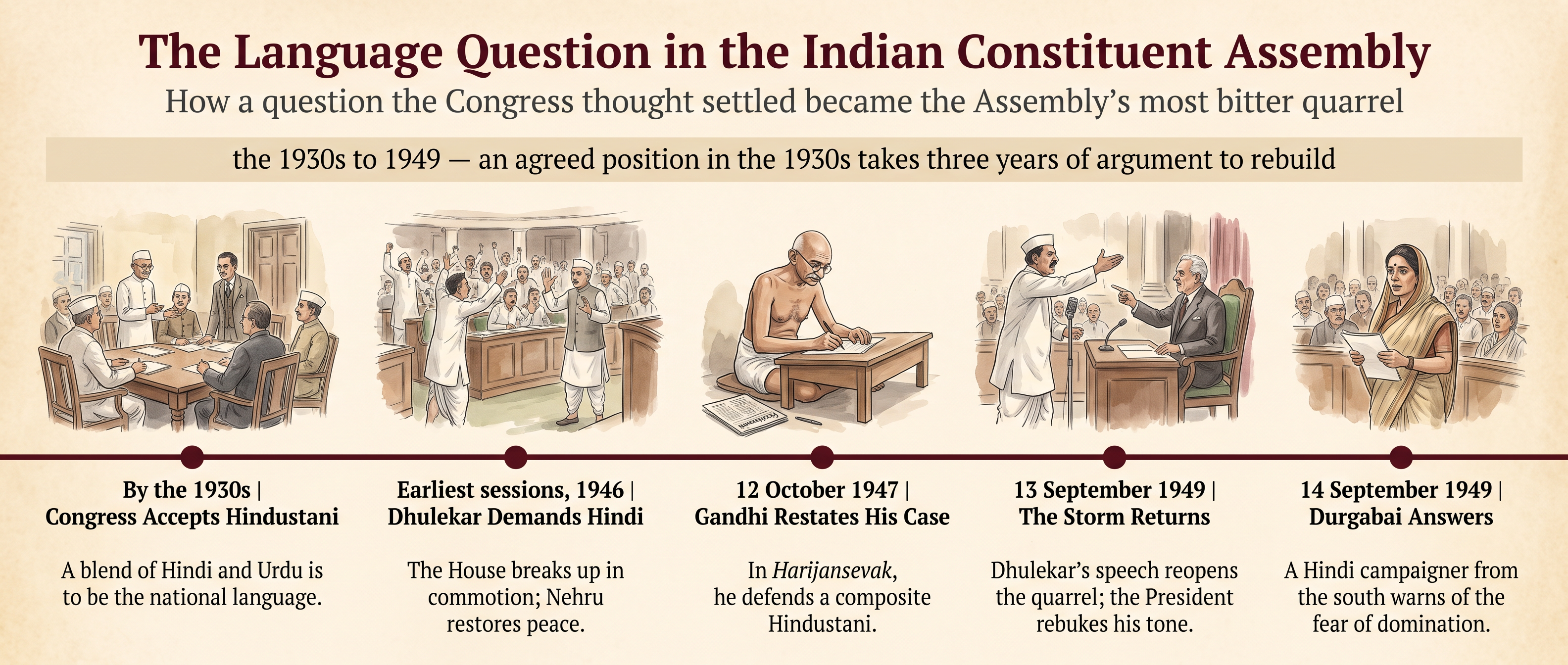
Fig. 12.12 – The Language Question In The Assembly.
12.6 Summary
The Argument In Brief
- The Constitution came into effect on 26 January 1950 and is the longest in the world. Its length follows from the country it was written for: large, diverse and, at Independence, deeply divided.
- It was framed between December 1946 and November 1949, in eleven sessions spread over 165 days, with committees revising the drafts in between.
- The framers worked in the shadow of Partition: refugee columns, massacres, the Great Calcutta Killings of August 1946, and the unsettled question of the princely states, which covered about one-third of the subcontinent.
- The Assembly was not elected by universal franchise. Provincial legislatures chose its members; the Muslim League boycotted it and the Socialists at first stayed away, so 82 per cent of its 300 members were Congressmen — though the Congress itself held many conflicting views.
- Six members mattered most: Nehru, Patel, Rajendra Prasad, Ambedkar as Chairman of the Drafting Committee, and the lawyers K. M. Munshi and Alladi Krishnaswamy Aiyar. B. N. Rau and S. N. Mukherjee assisted them.
- Nehru’s Objectives Resolution of 13 December 1946 proclaimed India an Independent Sovereign Republic, promised justice, equality and freedom, and assured safeguards for minorities, backward and tribal areas, and Depressed and Other Backward Classes.
- Nehru drew on the American, French and Russian examples but refused to copy them: any system adopted had to fit the temper of India’s own people.
- Somnath Lahiri attacked the Assembly as British-made. Nehru answered that its strength came not from a British plan but from the people behind it.
- The colonial Acts of 1909, 1919 and 1935 had widened Indian participation, but they were enacted by the colonial government, and even in 1935 only 10 to 15 per cent of adults could vote.
- On rights, the Assembly could agree on no ready definition of a minority. B. Pocker Bahadur defended separate electorates; Patel called them a poison and Pant called them suicidal for minorities themselves. By 1949 most Muslim members agreed, and the device was dropped.
- N. G. Ranga redefined the real minorities as the poor and the downtrodden, who needed props and a ladder to reach the rights the Constitution gave them. Jaipal Singh demanded protection and reserved seats for the tribals, not separate electorates.
- Nagappa pointed out that the Depressed Castes were 20 to 25 per cent of the population, marginalised rather than few. The Assembly finally recommended abolishing untouchability, opening Hindu temples to all castes, and reserving seats in legislatures and jobs in government offices — while recognising that law alone could not change social attitudes.
- On the powers of the State, the Draft Constitution created Union, State and Concurrent lists, gave the Union more subjects than most federations and control of minerals, key industries and the major taxes, and gave the Centre Article 356. Santhanam warned the provinces would be impoverished and would revolt; Ambedkar and others insisted only a strong Centre could stop the communal frenzy and plan the economy. The Constitution tilted towards the Union.
- On language, the Congress had accepted Hindustani, Gandhi’s composite blend of Hindi and Urdu. But Hindi was being Sanskritised and Urdu Persianised, and language had become tied to religious identity. Dhulekar demanded Hindi as a national language; Durgabai voiced the south’s fear of domination. The Language Committee’s compromise made Hindi in the Devanagari script the official language, with English continuing for fifteen years and each province free to choose a regional language for its own work.
Where The Assembly Agreed
The Constitution of India thus emerged through a process of intense debate and discussion. Many of its provisions were arrived at through a process of give-and-take, by forging a middle ground between two opposed positions.
However, on one central feature of the Constitution there was substantial agreement. This was on the granting of the vote to every adult Indian.
This was an unprecedented act of faith, for in other democracies the vote had been granted slowly, and in stages. In countries such as the United States and the United Kingdom, only men of property were first granted the vote; then, men with education were also allowed into the charmed circle. After a long and bitter struggle, men of working-class or peasant background were also given the right to vote. An even longer struggle was required to grant this right to women. India gave it to everyone at once, in a country where most adults could not read.
The Indian Form Of Secularism
A second important feature of the Constitution was its emphasis on secularism.
There was no ringing pronouncement of secularism in the Preamble. But operationally, its key features as understood in Indian contexts were spelled out in an exemplary manner. This was done through the carefully drafted series of Fundamental Rights to ‘freedom of religion’ (Articles 25-28), ‘cultural and educational rights’ (Articles 29, 30), and ‘rights to equality’ (Articles 14, 16, 17).
All religions were guaranteed equal treatment by the State and given the right to maintain charitable institutions. The State also sought to distance itself from religious communities, banning compulsory religious instructions in State-run schools and colleges, and declaring religious discrimination in employment to be illegal.
However, a certain legal space was created for social reform within communities. This space was used to ban untouchability and to introduce changes in personal and family laws. In the Indian variant of political secularism, then, there has been no absolute separation of State from religion, but a kind of judicious distance between the two.
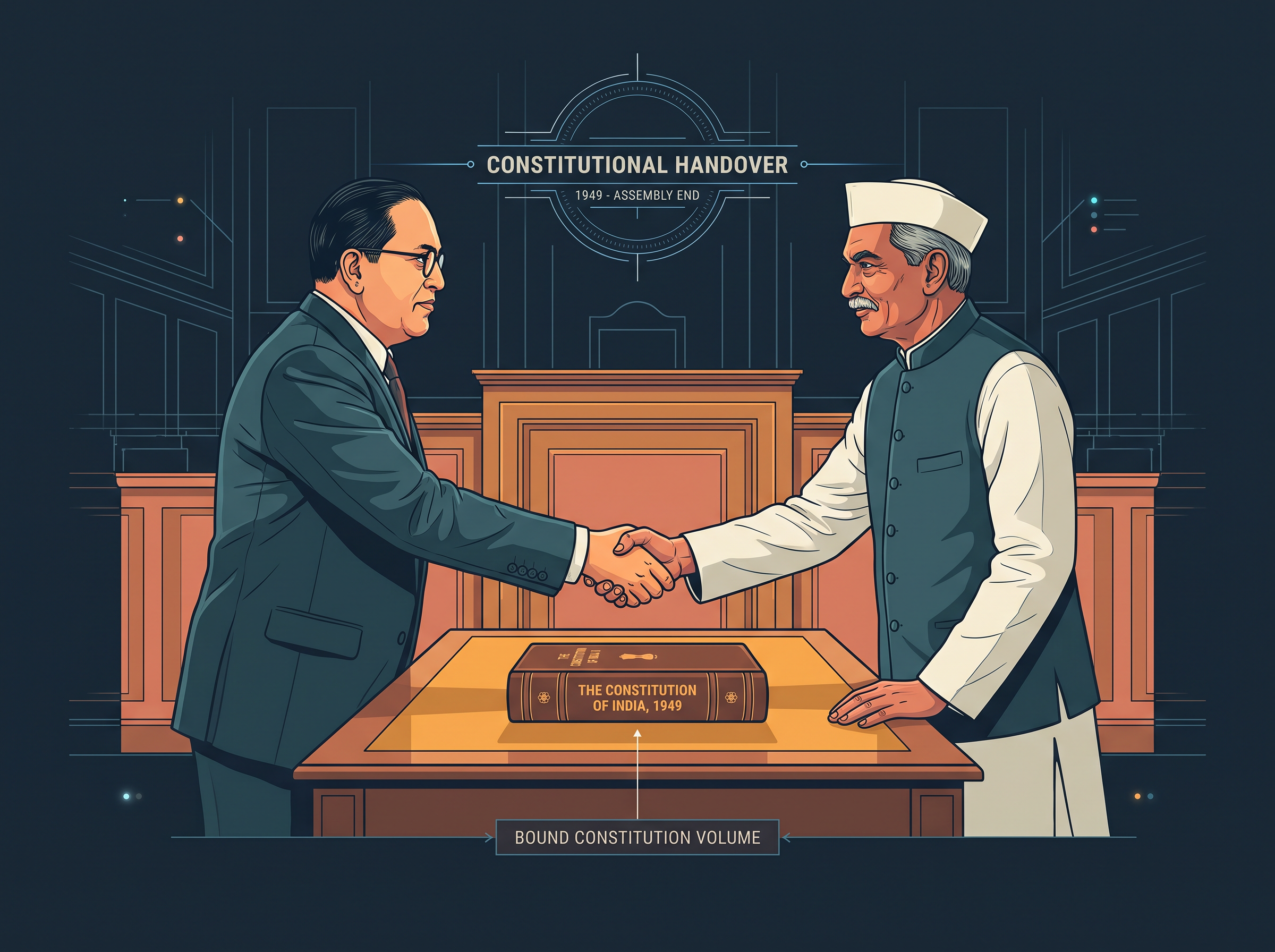
Fig. 12.13 – B. R. Ambedkar and Rajendra Prasad at the handover of the Constitution.
How To Read These Debates
The Constituent Assembly debates help us understand the many conflicting voices that had to be negotiated in framing the Constitution, and the many demands that were articulated. They tell us about the ideals that were invoked, and the principles that the makers of the Constitution operated with.
But in reading these debates we need to be aware that the ideals invoked were very often re-worked according to what seemed appropriate within a context. At times the members of the Assembly also changed their ideas as the debate unfolded over three years. Hearing others argue, some members rethought their positions, opening their minds to contrary views, while others changed their views in reaction to the events around them.
A speech, in other words, is not a fixed belief. It is a position taken on a particular day, in a particular storm.
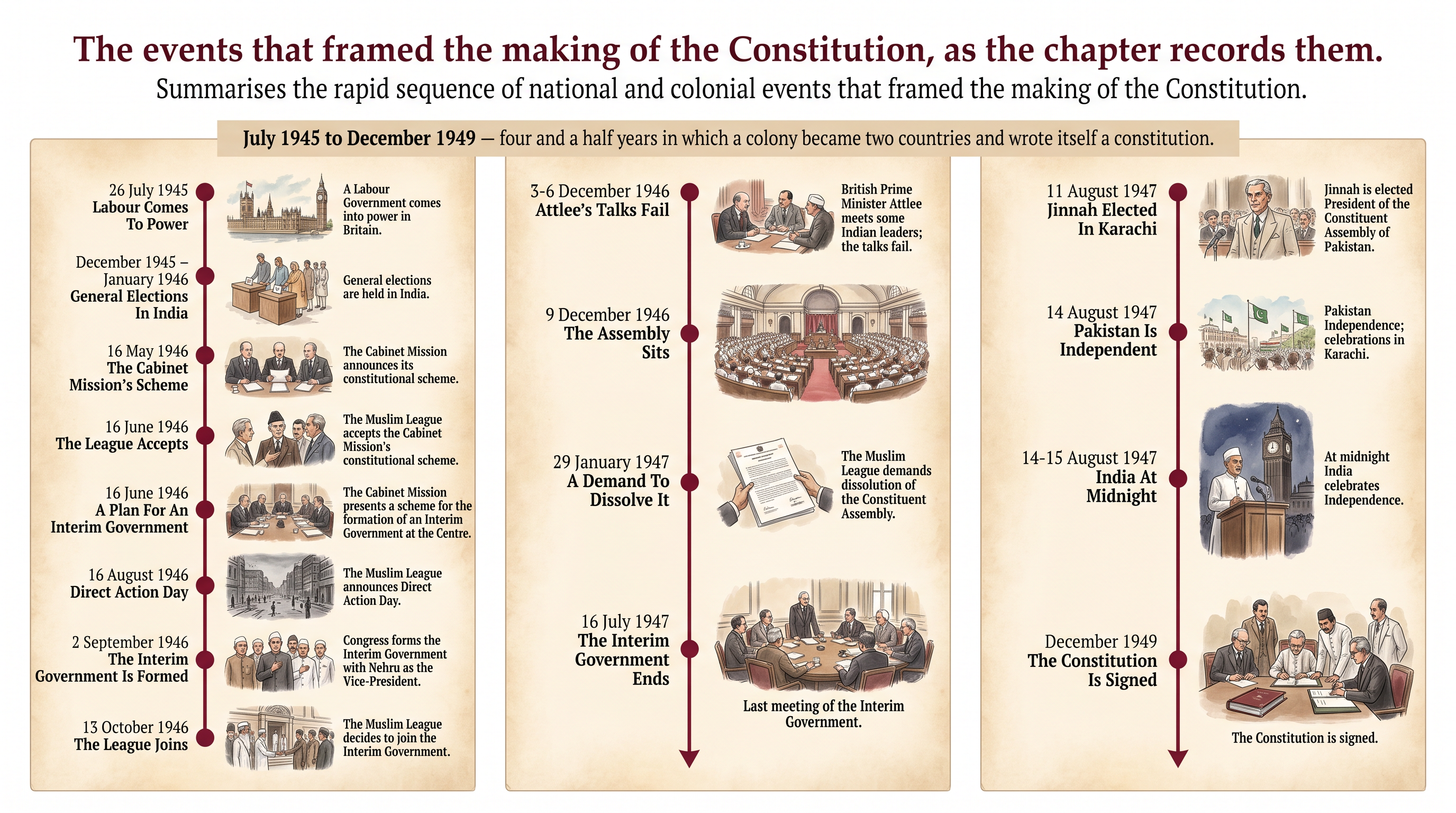
Fig. 12.14 – Timeline of events framing the Constitution.
What The Evidence Cannot Tell Us
The eleven volumes of debates are an extraordinary record, but they record only one room. The people whose lives the Constitution would govern — the villagers Ranga described, the tribals Jaipal Singh spoke for, the refugees still on the roads — did not elect this Assembly and left no speech in it.
We can hear what members said in public. We cannot hear what was conceded quietly in committee, nor why a member fell silent, nor what the 82 per cent who wore the Congress label argued about among themselves before they entered the chamber.
And a constitution is a promise, not a description. The text tells us what powers were granted and what rights were guaranteed in 1950. It cannot tell us, on its own, what untouchability, or the vote, or a strong Centre actually came to mean in the life of an ordinary Indian afterwards.
12.7 NCERT Questions
What were the ideals expressed in the Objectives Resolution? (in about 100-150 words)
How was the term minority defined by different groups? (in about 100-150 words)
What were the arguments in favour of greater power to the provinces? (in about 100-150 words)
Why did Mahatma Gandhi think Hindustani should be the national language? (in about 100-150 words)
What historical forces shaped the vision of the Constitution? (in about 250-300 words)
Discuss the different arguments made in favour of protection of the oppressed groups. (in about 250-300 words)
What connection did some of the members of the Constituent Assembly make between the political situation of the time and the need for a strong Centre? (in about 250-300 words)
How did the Constituent Assembly seek to resolve the language controversy? (in about 250-300 words)
On a present-day political map of India, indicate the different languages spoken in each state and mark out the one that is designated as the language for official communication. Compare the present map with a map of the early 1950s. What differences do you notice? Do the differences say something about the relationship between language and the organisation of the states?
Choose any one important constitutional change that has happened in recent years. Find out why the change was made, what different arguments were put forward for the change, and the historical background to the change. If you can, try and look at the Constitutional Assembly Debates (http://parliamentofindia.nic.in/ls/debates/debates.htm) to see how the issue was discussed at that time. Write about your findings.
Compare the Constitution of America, France or South Africa with the Indian Constitution, focusing on any two of the following themes: secularism, minority rights, realtions between the Centre and the states. Find out how these differences and similarities are linked to the histories of the regions.
12.8 Check Your Concepts
Look carefully at Table 12.2, the list of women members of the Constituent Assembly. Read it alongside N. G. Ranga’s remark that the members were sitting in the Assembly as trustees of the masses. What does the table, read with that remark, tell you about who was speaking for whom in 1946-49?
B. Pocker Bahadur asked for separate electorates; Jaipal Singh asked for reserved seats and explicitly not for separate electorates. Explain the difference between the two arrangements, and why Jaipal Singh’s demand was acceptable to the Assembly when Bahadur’s was not.
Read Source 9. What was Sir A. Ramaswamy Mudaliar objecting to in the way the debate on Centre-state powers was being conducted? Why might such an objection matter in a house where one party held 82 per cent of the seats?
K. Santhanam argued that the fiscal provisions would impoverish the provinces. Using the chapter’s account of which taxes went to the Centre, which were shared, and which were left to the states, explain the basis of his fear.
Before Partition the Congress had promised considerable autonomy to the provinces; by 1949 the Constitution tilted clearly towards the Union. Reconstruct, step by step, the chain of causes that produced this change of position.
Read Source 1. Nehru spent much of his speech recalling the American, French and Russian revolutions, and then declared, ‘We are not going just to copy.’ Explain what he was doing with those examples, and what he was refusing to do with them.
The printed debates of the Constituent Assembly run to eleven volumes. State two things about the making of the Constitution that these volumes can tell a historian, and two things they cannot. Give a reason in each case.